9/25 – 10/19 I aim to post words and photos daily once the journey commences.
Feel free to leave a comment at the bottom of the page.
Or send me an email at
poetguy@foothillspublishing.com
9/26 – 10/10 Exploring Basho’s Narrow Road to the Far North
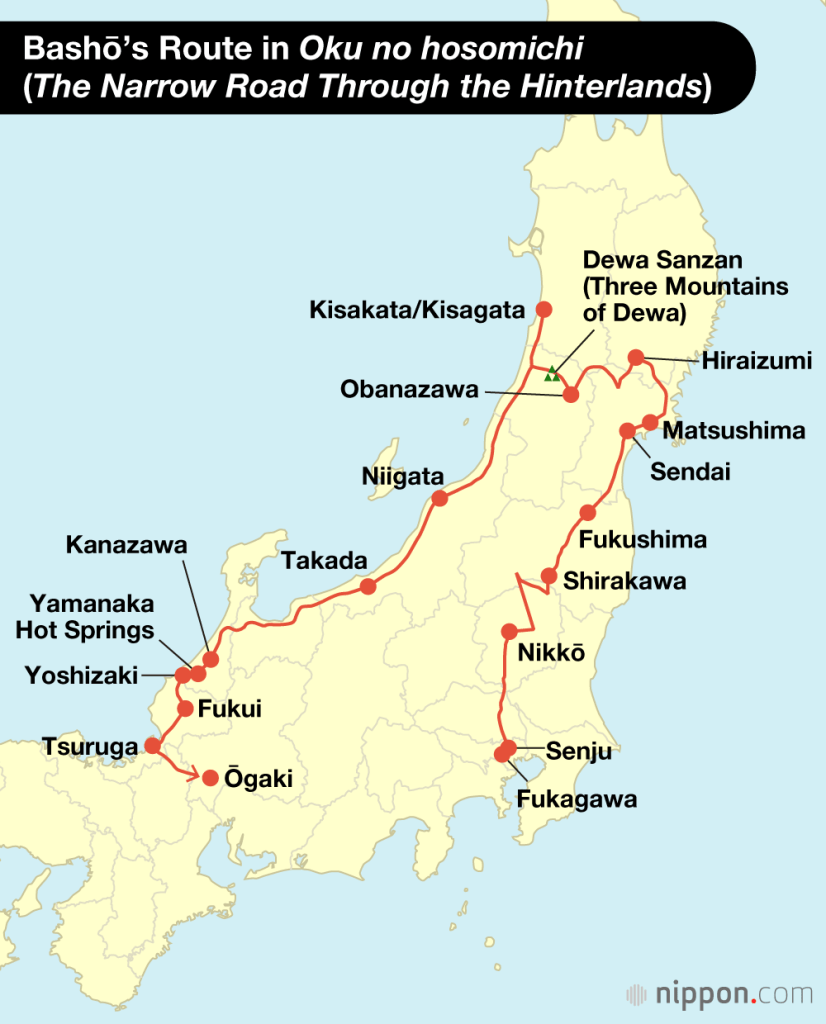
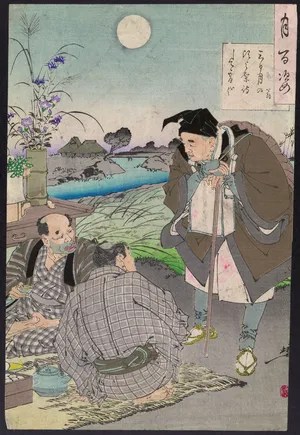
Bashō (standing), woodblock print by Tsukioka Yoshitoshi, late 19th century.
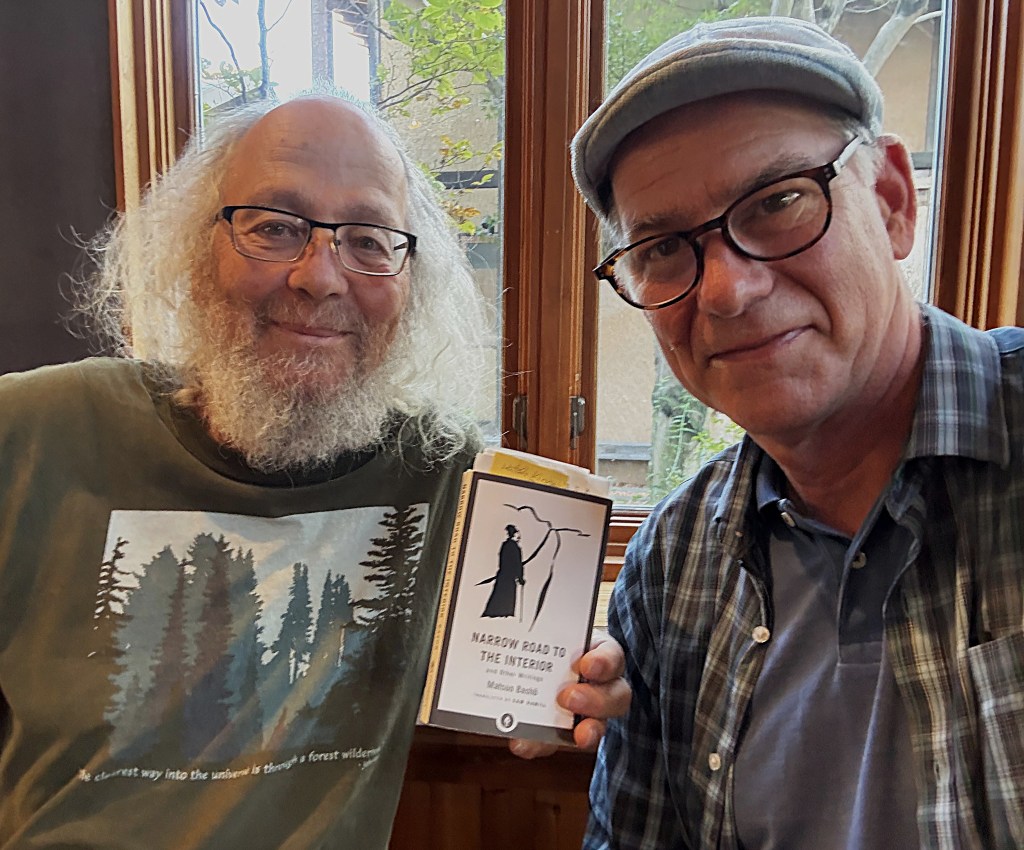
With traveling companion Bart White
9/25 Buffalo→Tokyo
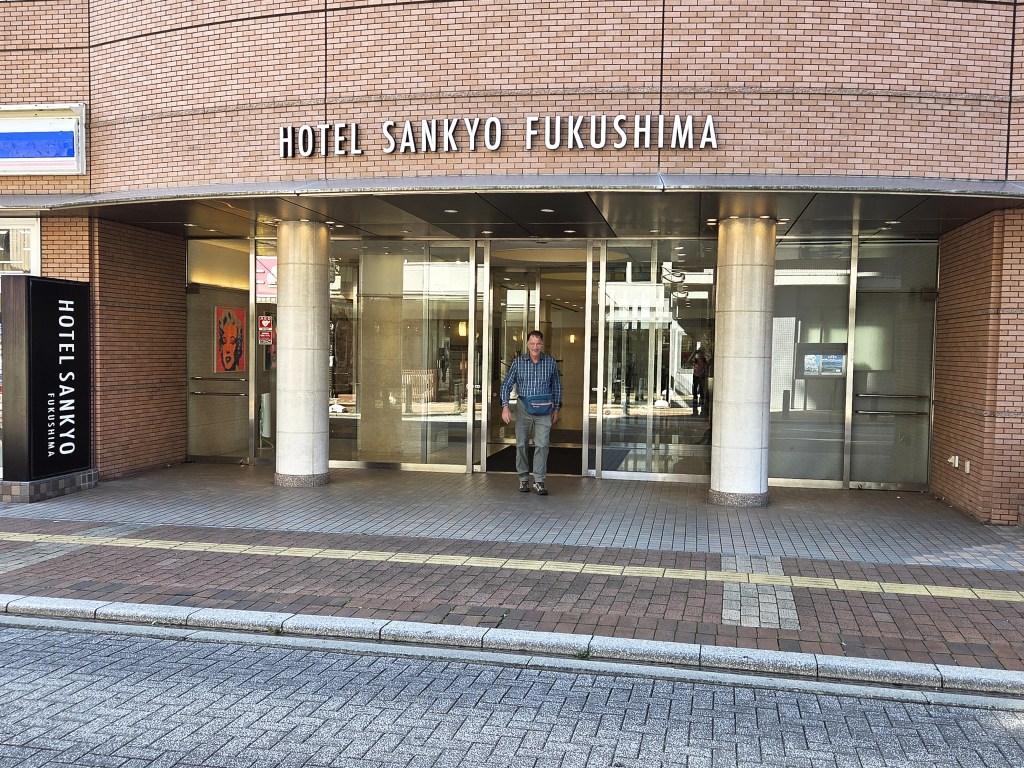
9/26-27 Fukushima
9/28-29-30-10/1 Matsushima
10/2-3-4 Yamagata
10/5-6 Hiraizumi
10/7-8-9 Nikko
10/10 Bart returns home and I continue on to other places in Japan through October 19.
The Journey
10/10 – 10/19 Solo Journey
October 20
Back home after a long day of travel.
Yesterday’s journal:
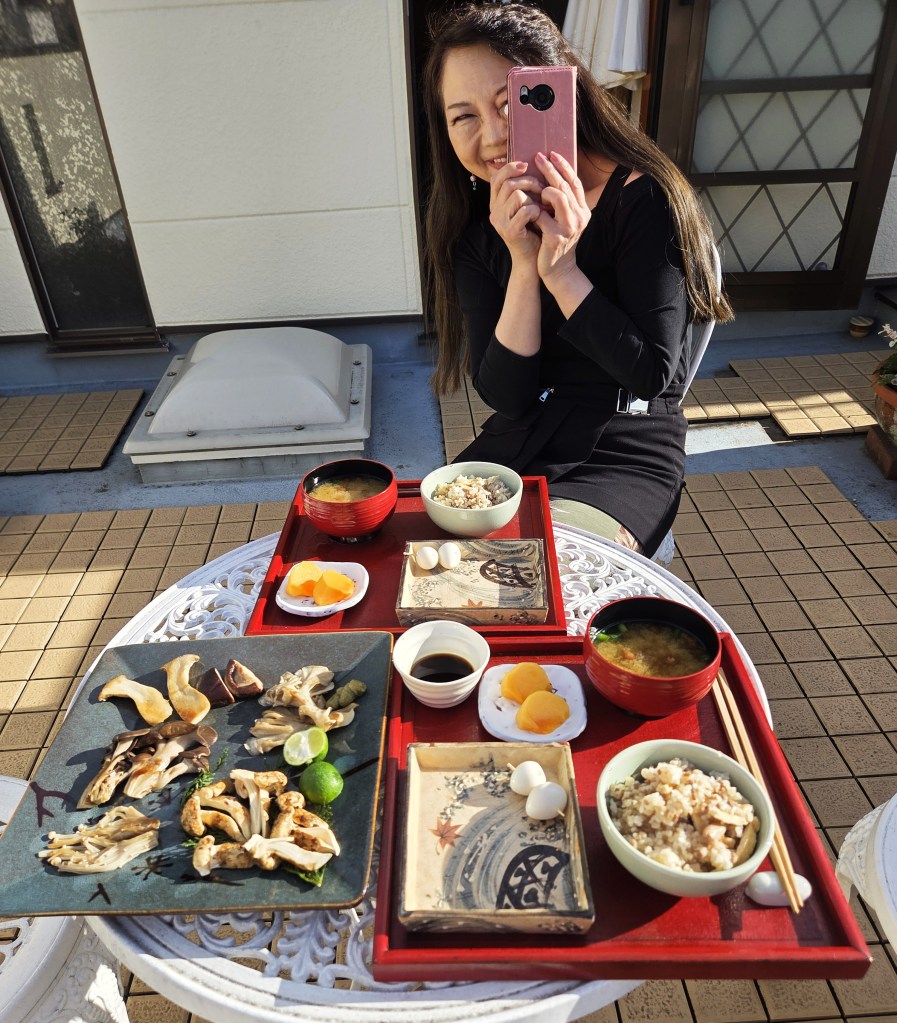
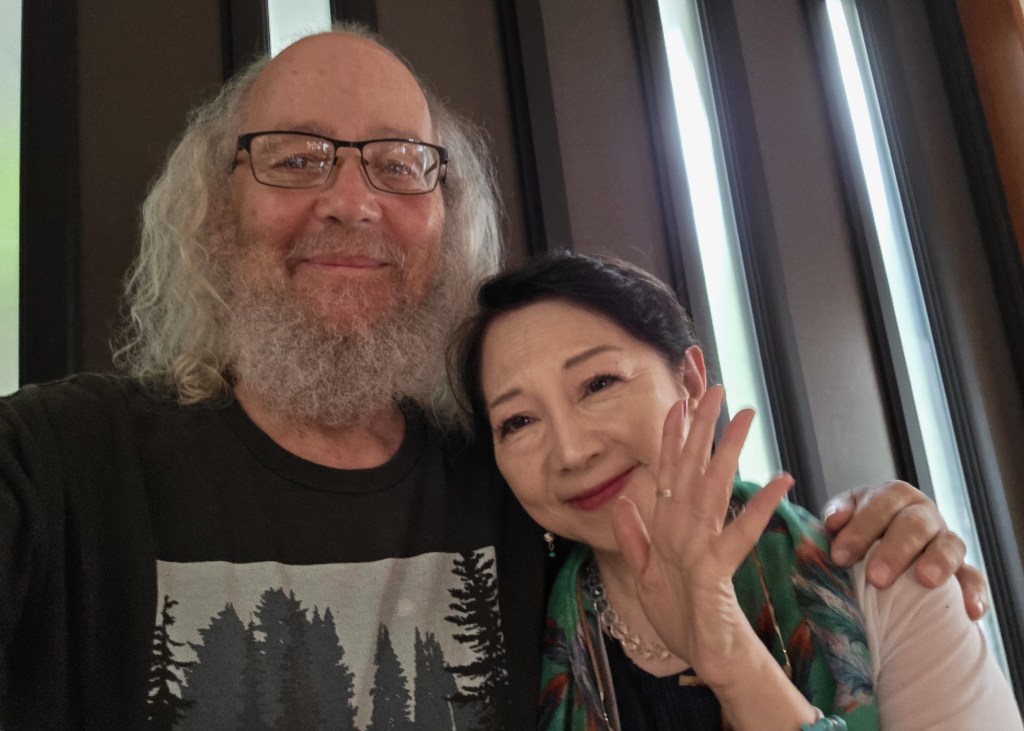
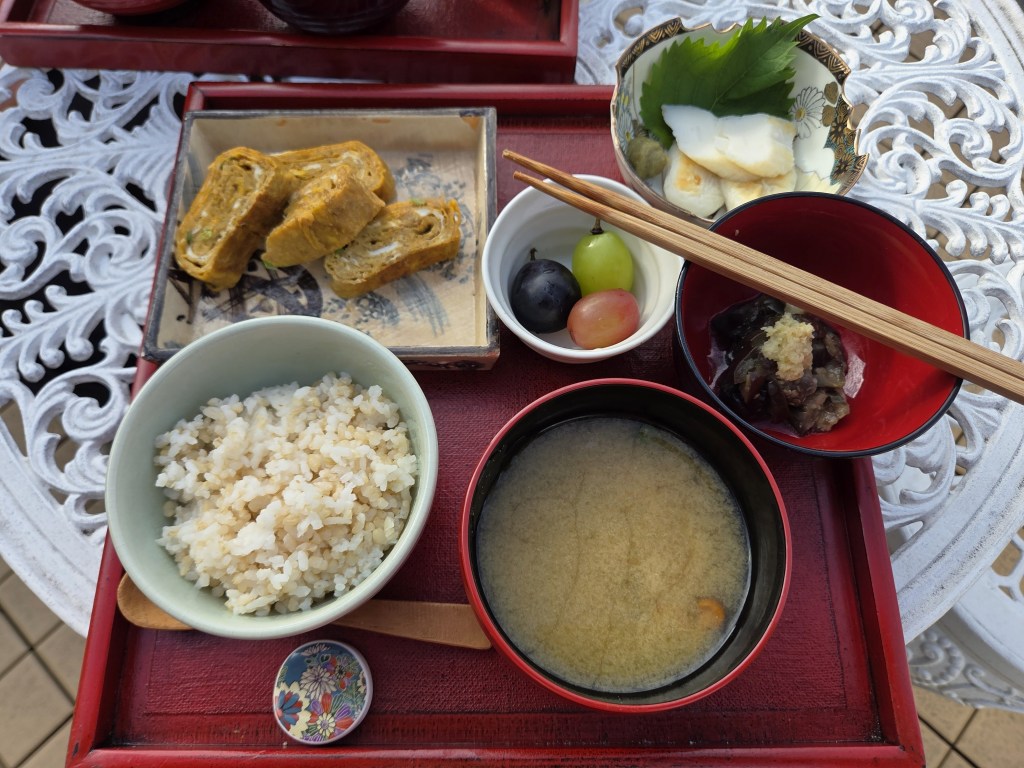
A final morning in Japan. I’m out on Mariko’s patio. I’ve had my cup of tea and am working on my computer. The patio door opens and there is Mariko, saying good morning. We share a beginning of the day hug and she thanks me again for being here, then runs her fingers down her cheeks as if crying because I have to leave. We hug again and then discuss plans for the rest of the morning. She will be fixing a mushroom breakfast for me. I have mentioned, and she has seen my pictures of, mushrooms I’ve taken while on this journey. So yesterday, she made two trips to grocery stores to purchase a variety of mushrooms. I’m looking forward to what she will prepare.
So, today I’m at my desk, having my morning tea and writing a final entry for the Japan Journal webpage.
The mushroom breakfast was such a delightful treat. Eight different varieties: Matsutake, Maitake, Shiitake, Enoki, Hiratake, Eringi, Shimeji (in rice) and Nameko (in Miso soup)!
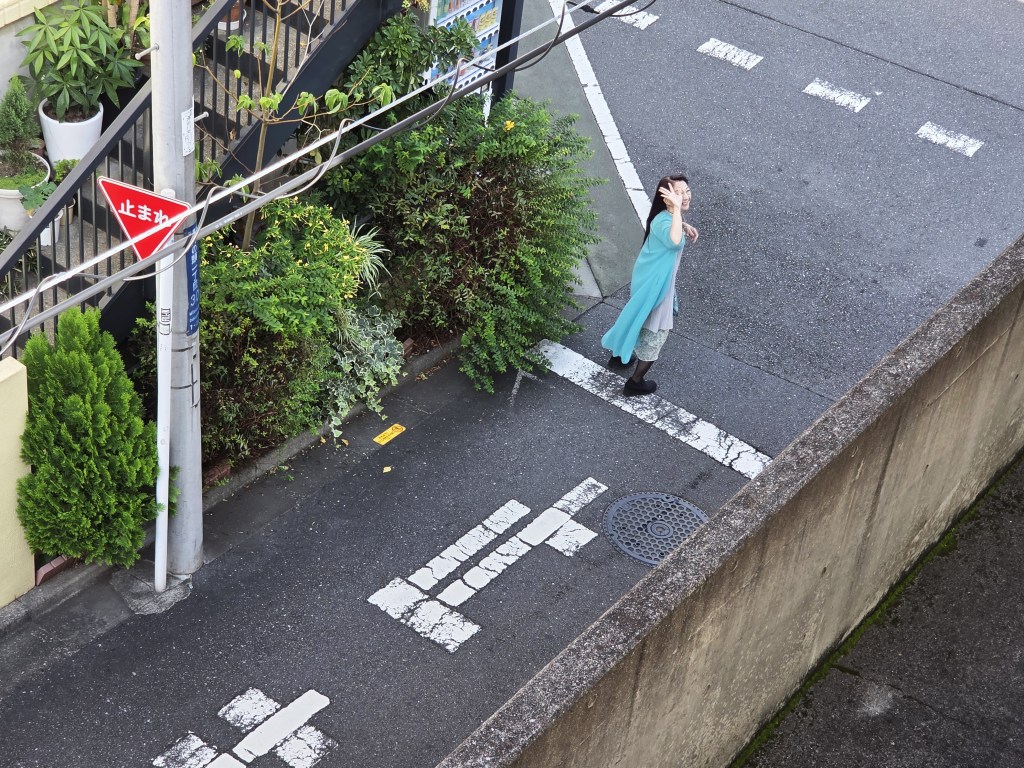
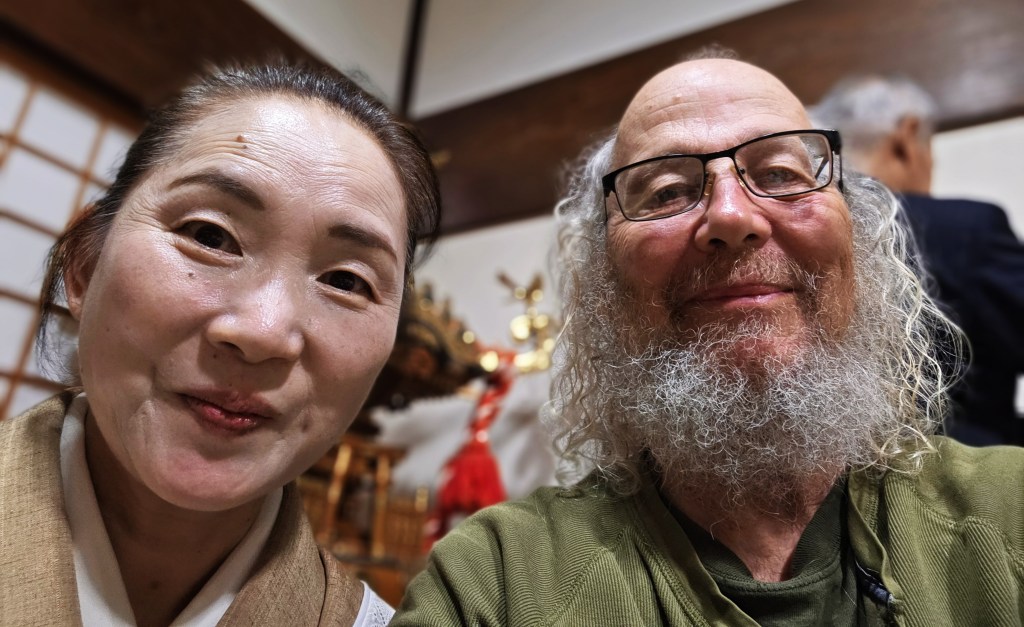
After breakfast, Mariko rode the train with me to the station where I caught a bus to Haneda Airport. She stepped on the bus with me to say goodbye, then when the bus started driving away I heard her voice from outside on the sidewalk as she called out to me and then waved goodbye. A lasting final picture in my mind.
The bus ride and then the long plane ride across the world (12½ hours) were uneventful. I flew from Tokyo to Washington DC and then had a couple of hours layover before the flight to Buffalo.
On that flight I had one last memorable encounter on the journey. Near the end of the short flight (a little over an hour) I had a fascinating conversation with Rashid, a young man sitting next to me.
It was one of those short conversations that delve deeper into relating than just surface talk. Spirituality, questioning life, personal history. He is currently living in Buffalo and I feel we will connect again in person sometime down the road.
I landed in rainy night Buffalo with Carolyn waiting to pick me up. It was a little strange, both in the DC and Buffalo airports, to walk by so many people and not exchanging little bows to each other. That is only one of many readjustments I will have to make now that the Japanese Journey is over and I’ve returned home to America.
I will be presenting a review of the first two weeks of the journey, along with Bart White, on my Tuesday ZOOM at 7:00 PM EDT 10/21. Anyone is welcome to join in.
Join Zoom Meeting
https://us02web.zoom.us/j/82961993975
(Click on thumbnail for larger picture.)

October 18
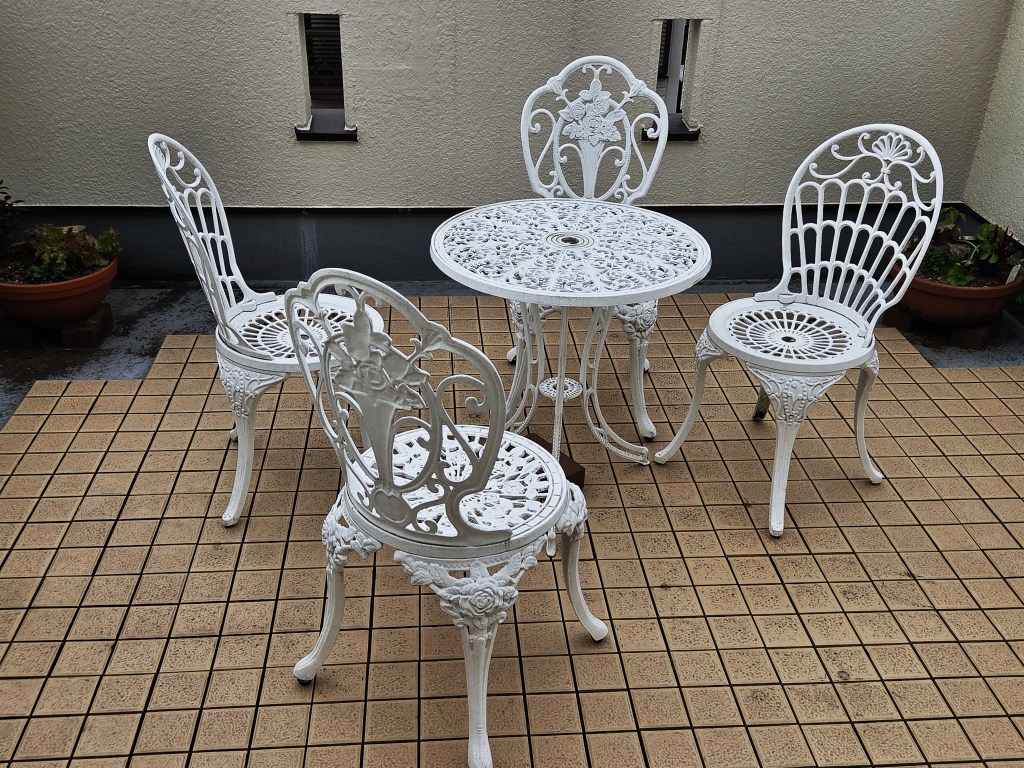
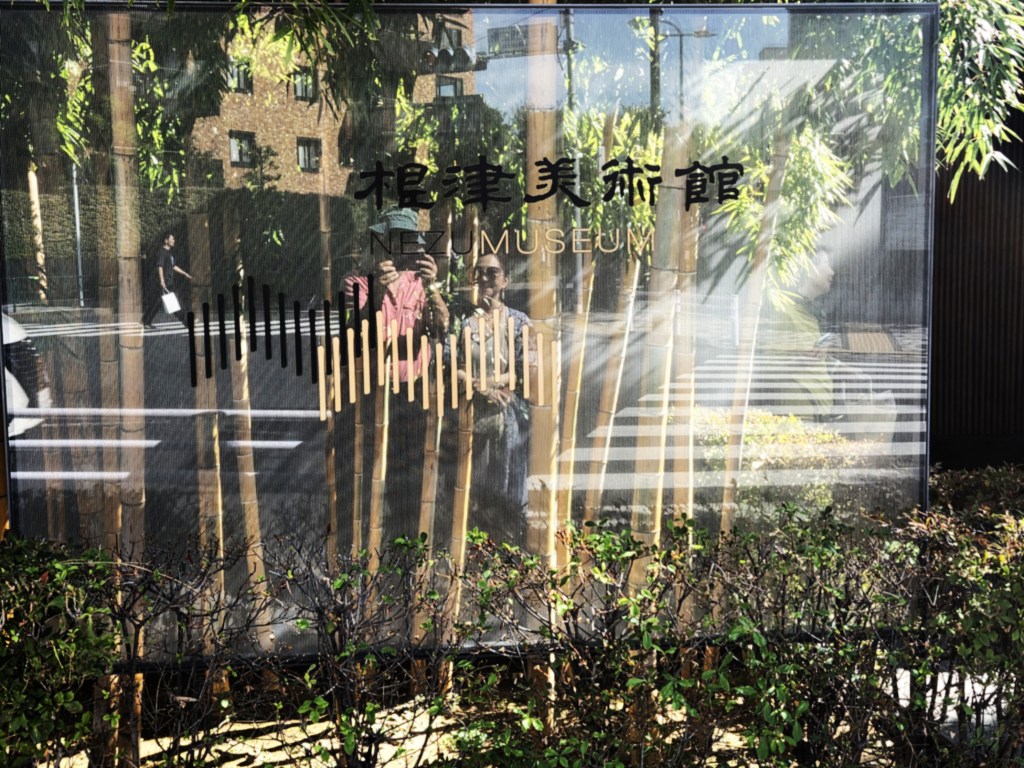
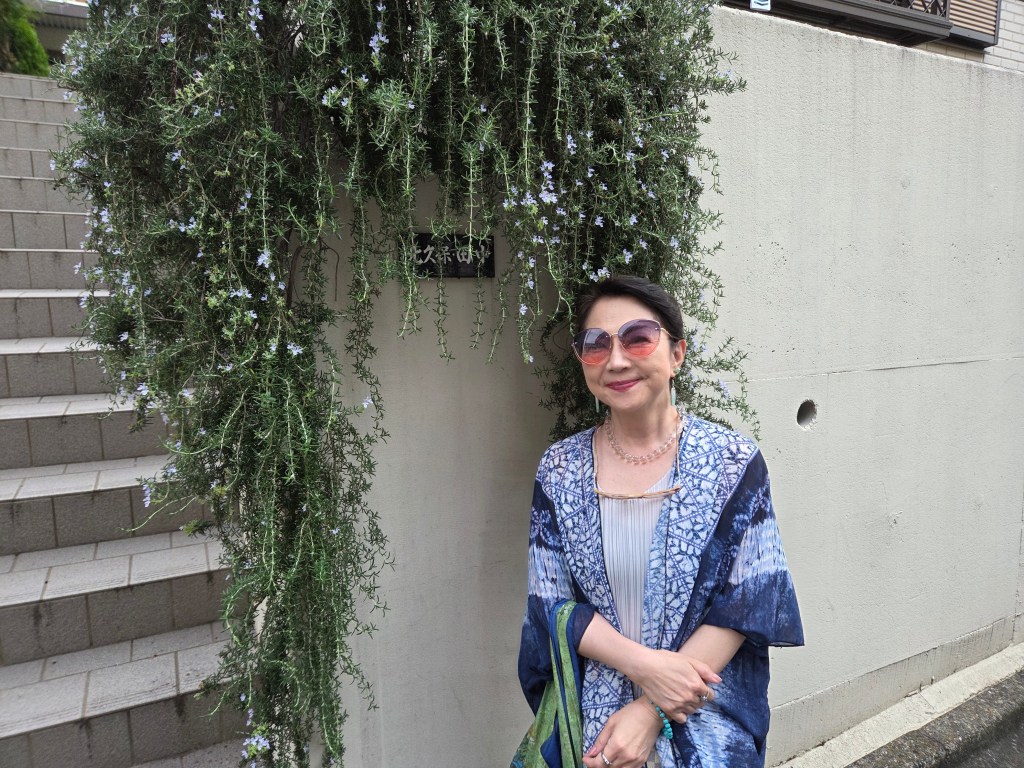
Breakfast on the patio at Mariko’s and then a trip to the Nezu Museum in downtown Tokyo.
Before that, Mariko went out to a nearby store to get mushrooms for tomorrow’s breakfast. As she left I stepped to the edge of the patio and looked down to see her waving at me. This inspired the tanka I wrote:
three floors up
I look down
as she walks away
three times she stops
looks up and waves
The museum has a wonderful collection of pre-modern art and artifacts that included ancient bronze work, pottery from over a thousand years ago, old tea ceremony items and painted scrolls. All of it quite enlightening.
Items that I was most drawn to were painted scrolls depicting the Life Story of Saigyo, another revered Japanese poet (12th Century) who was admired by Basho. These two segments of the larger work were fascinating. One was of Saigyo going to Mount Yoshino to see flowers but the landscape was covered in snow. (No photographs allowed.)
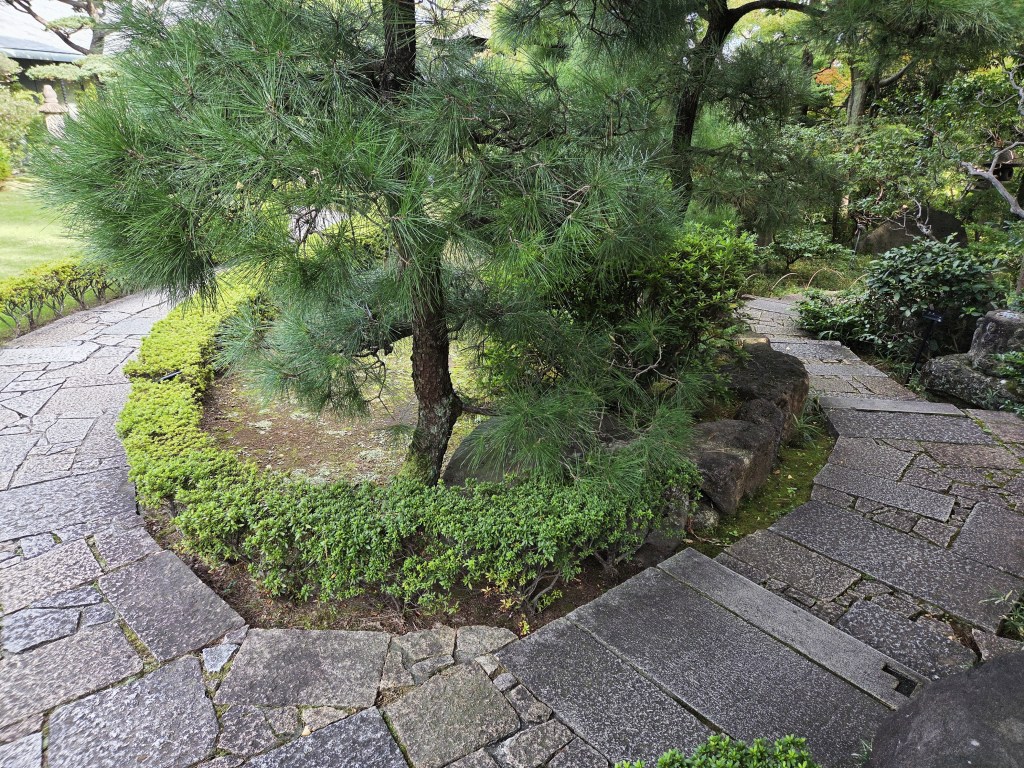
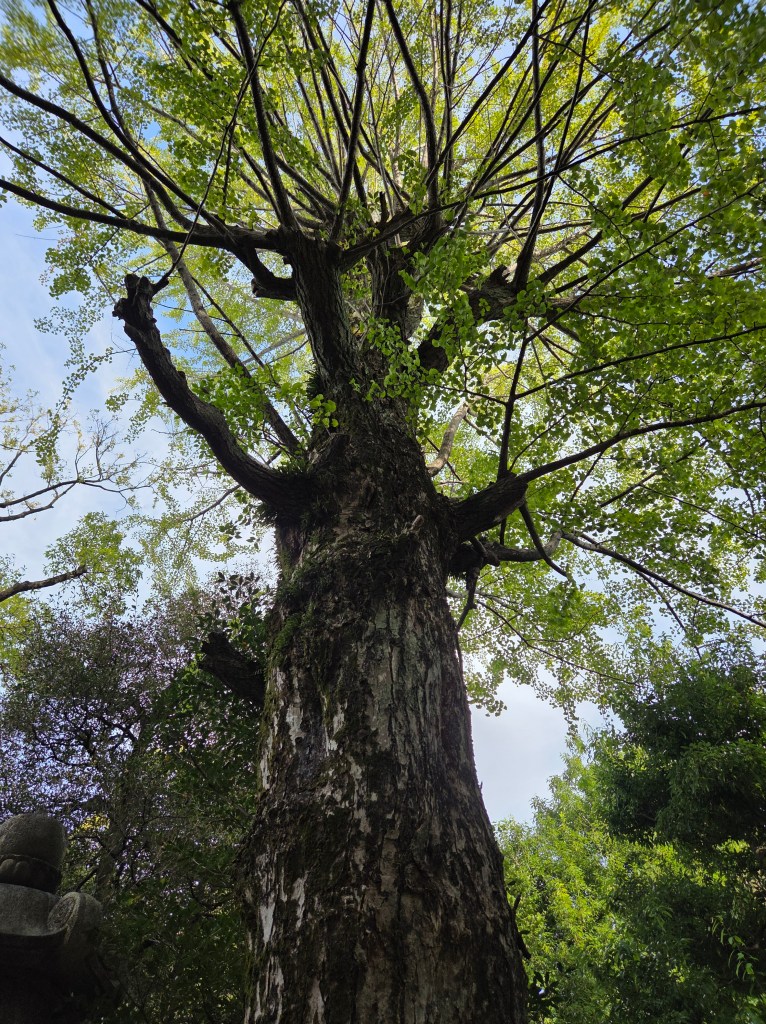
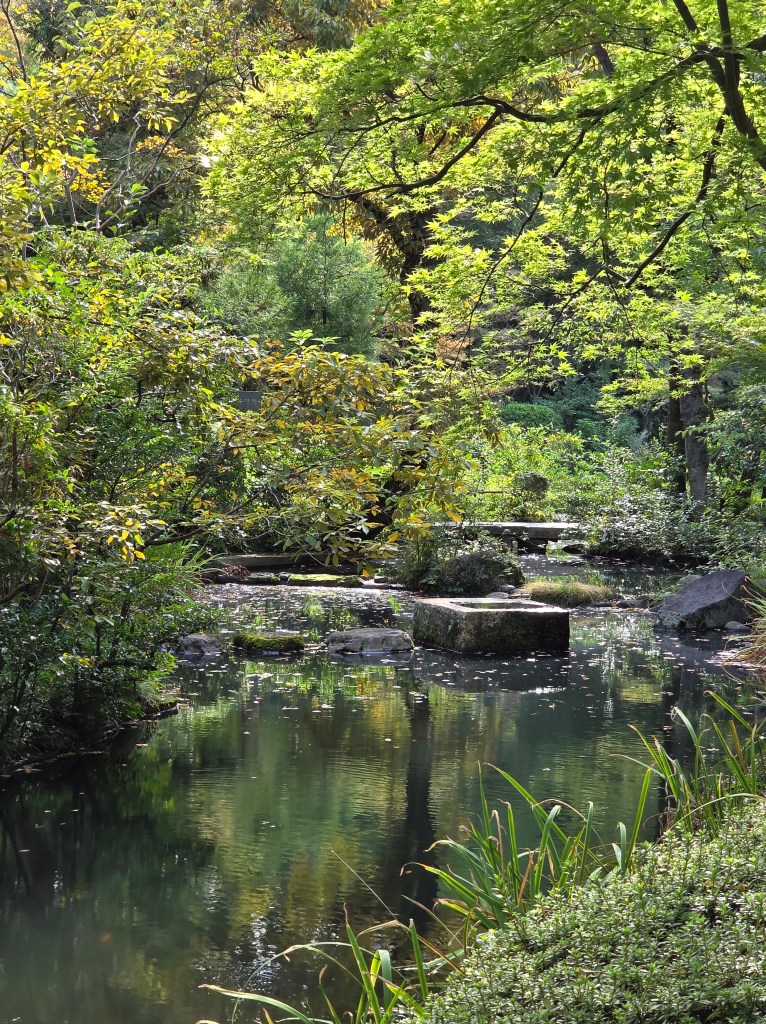
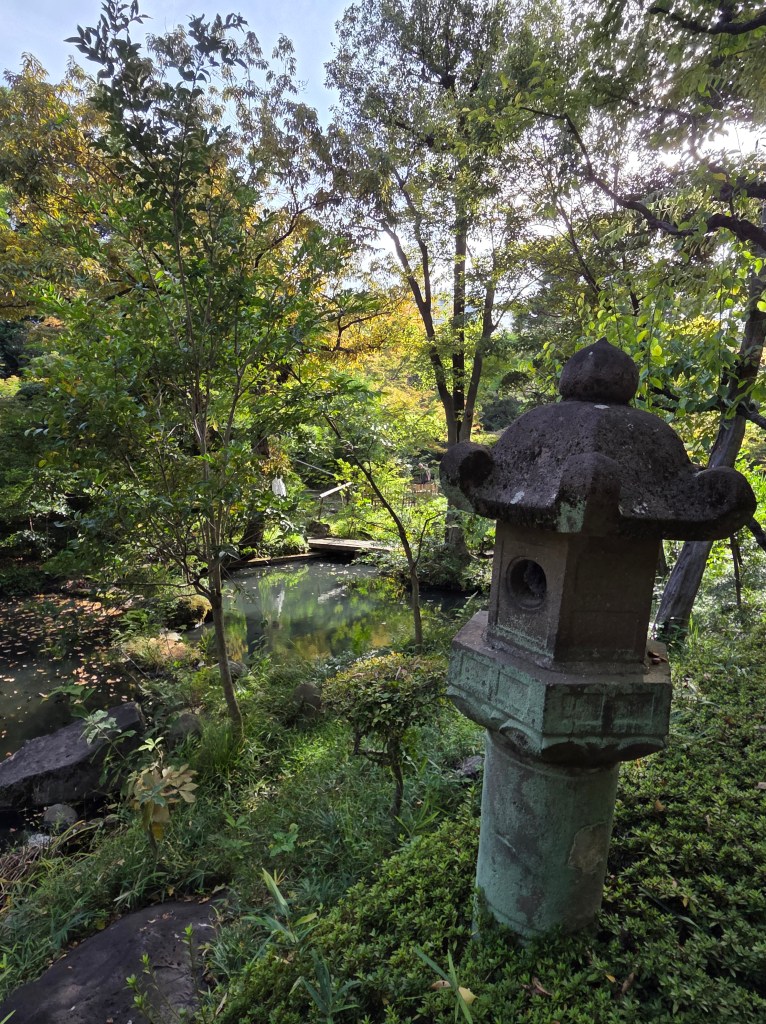
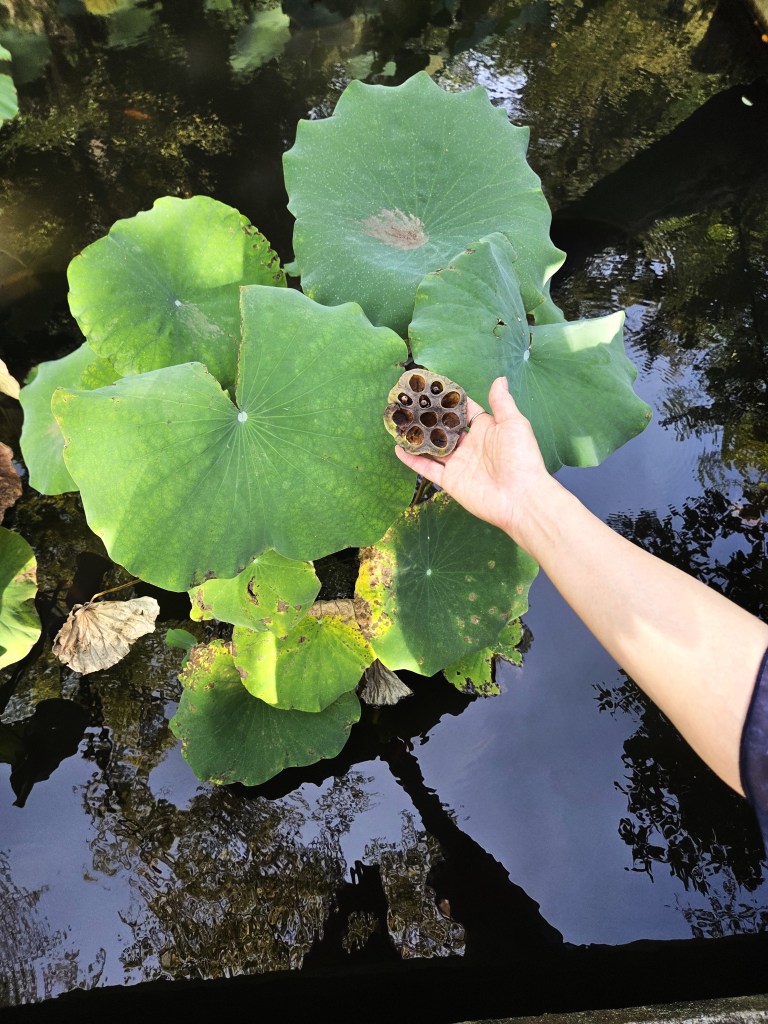
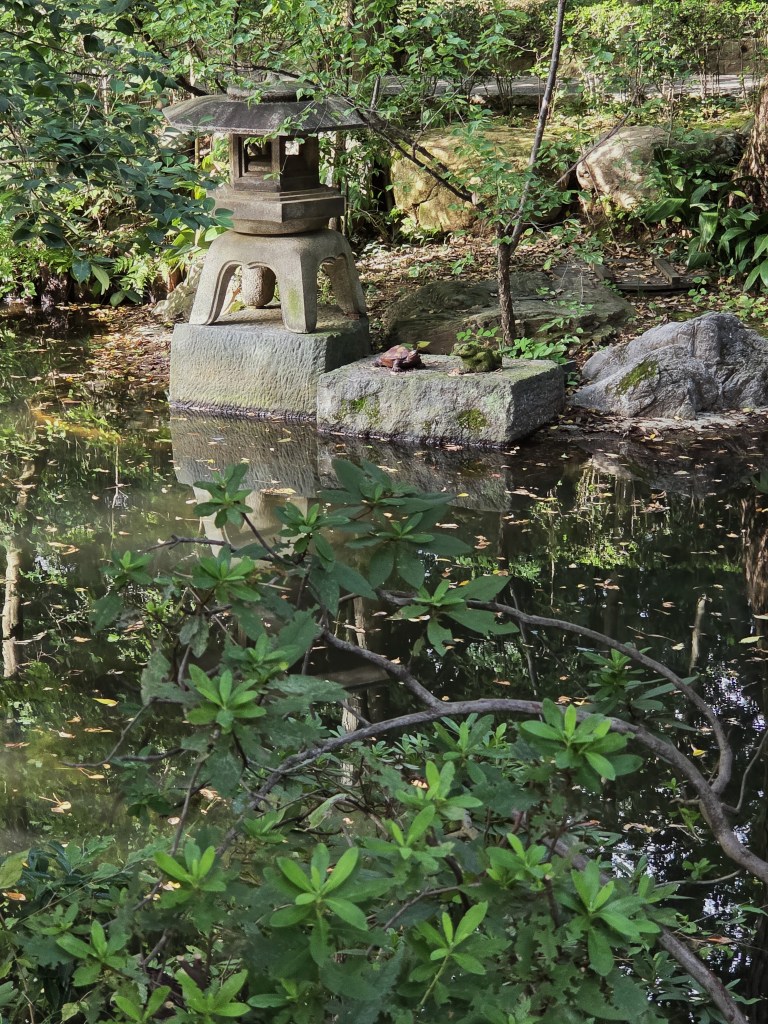
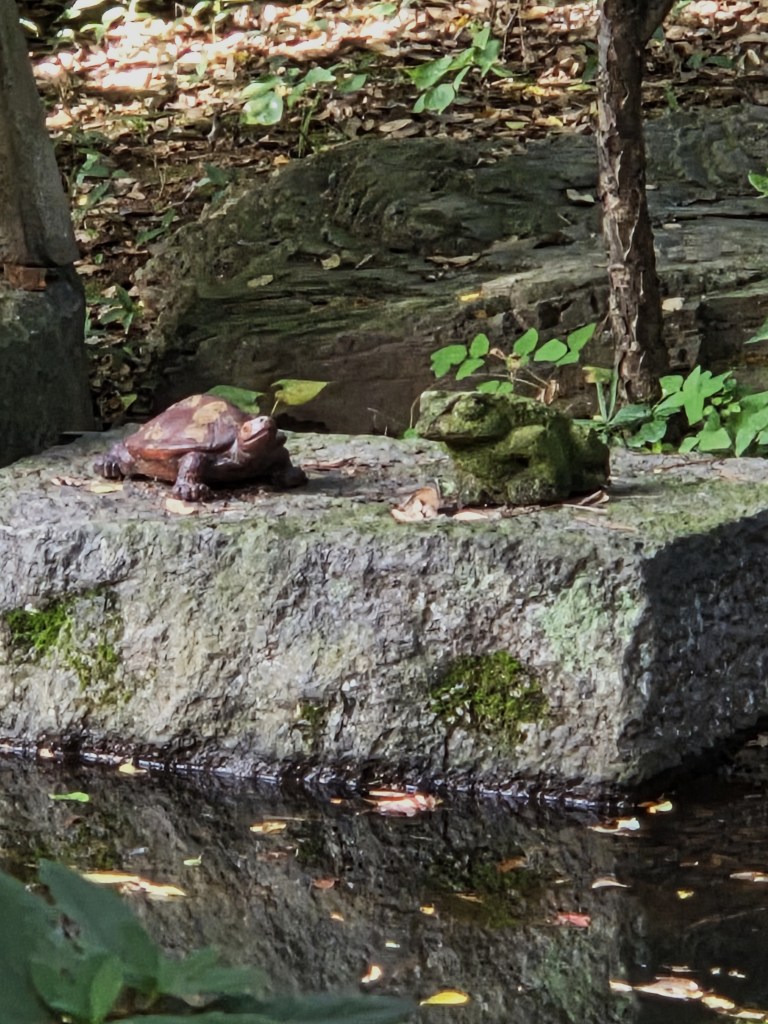
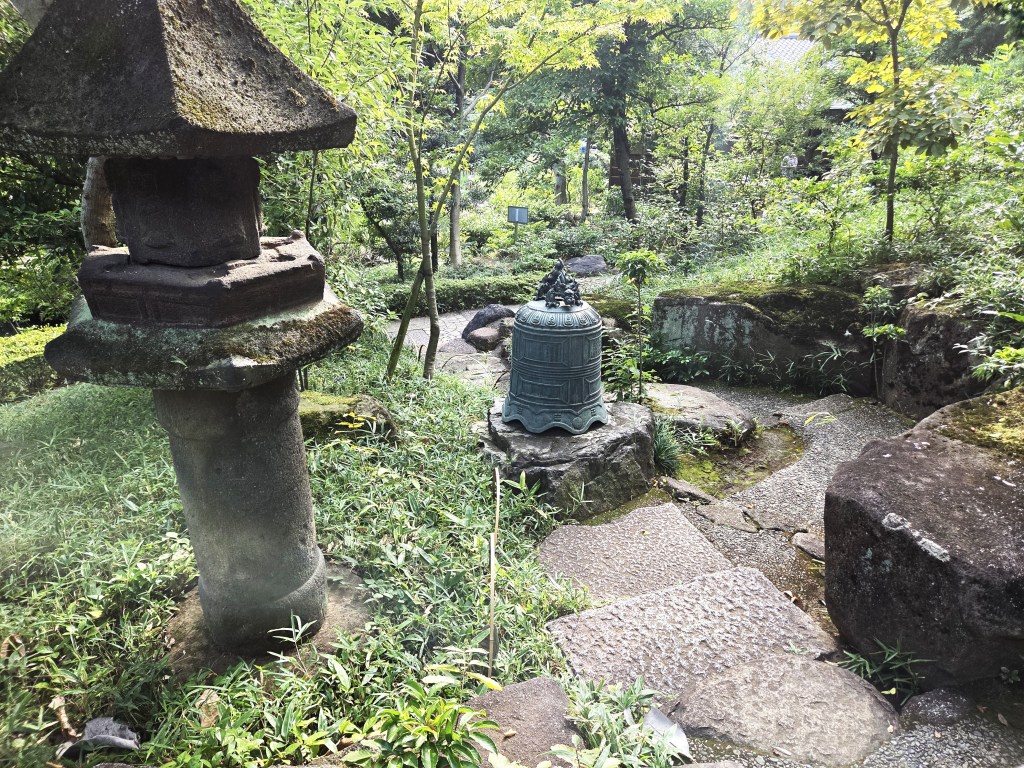
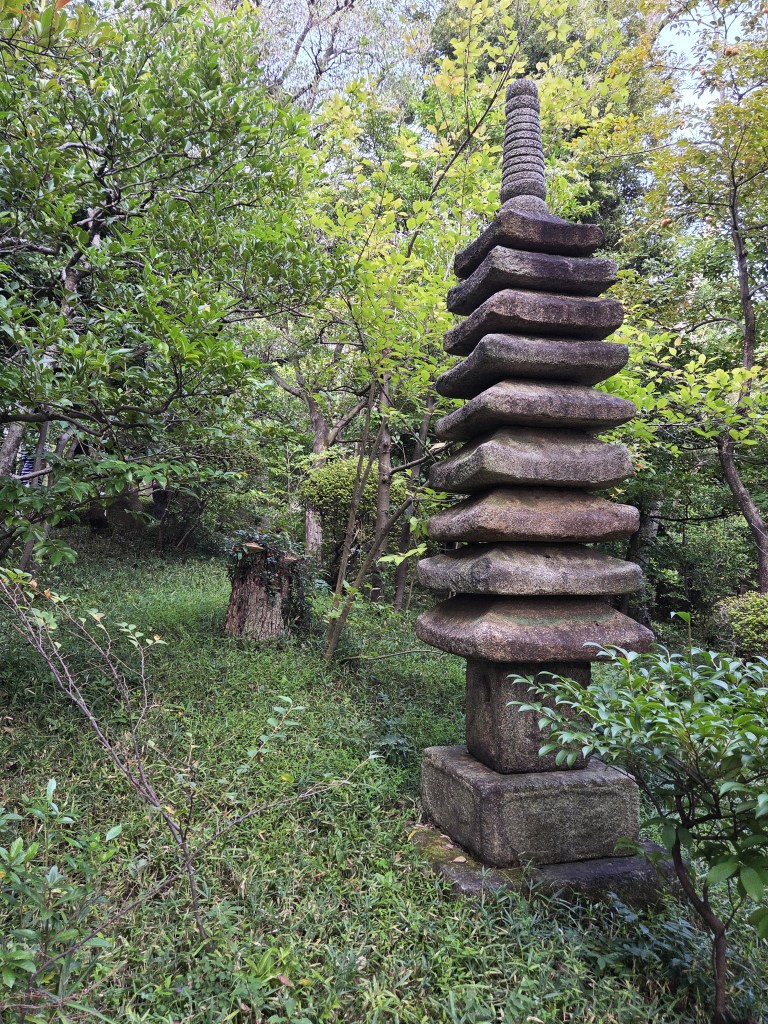
After viewing the exhibits we went outside to stroll through the garden of the museum. Paths wound along the little hillside and pond, underneath a canopy of trees. One large tree was a Ginko. I wondered what the age of this one was.
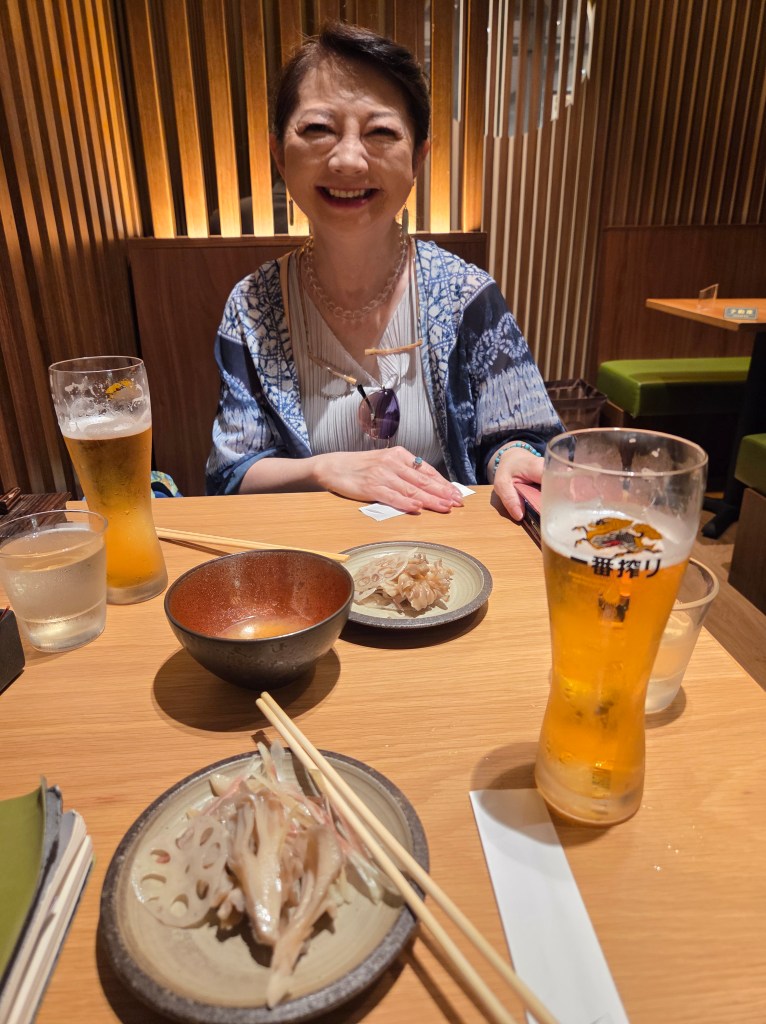
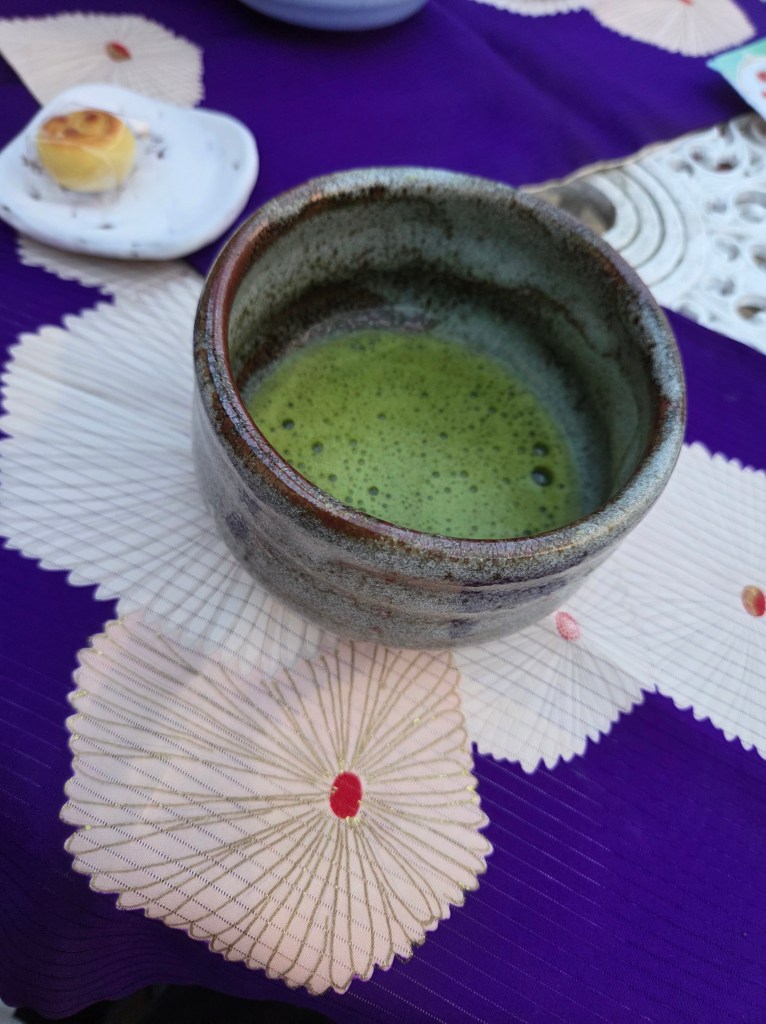
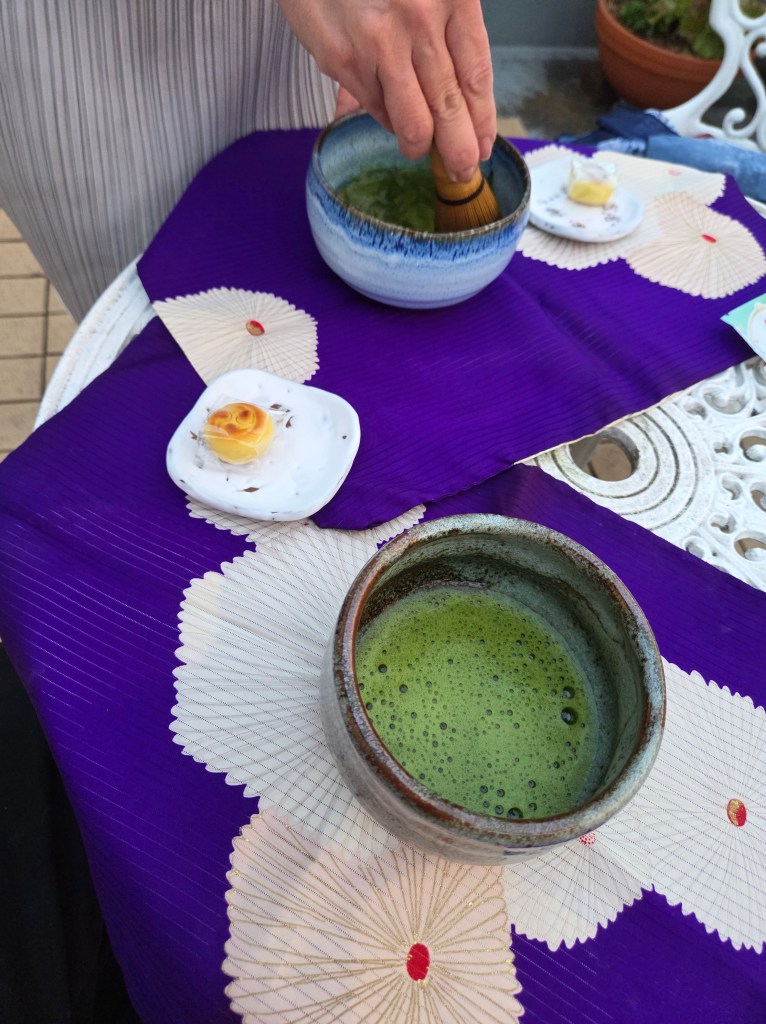
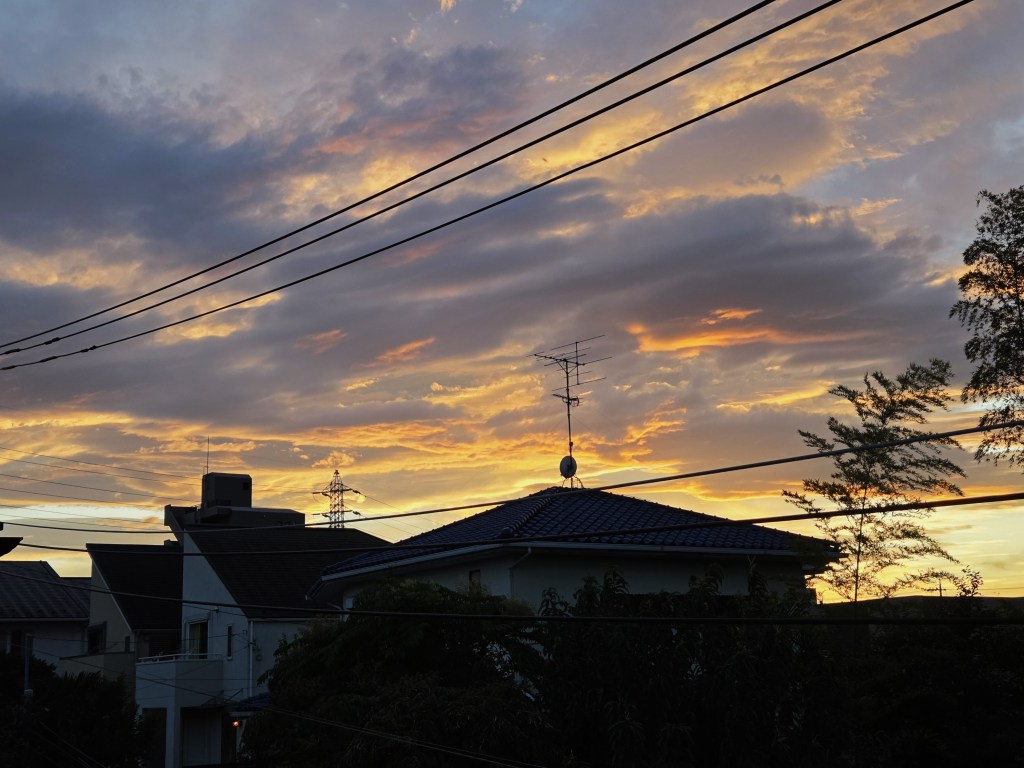
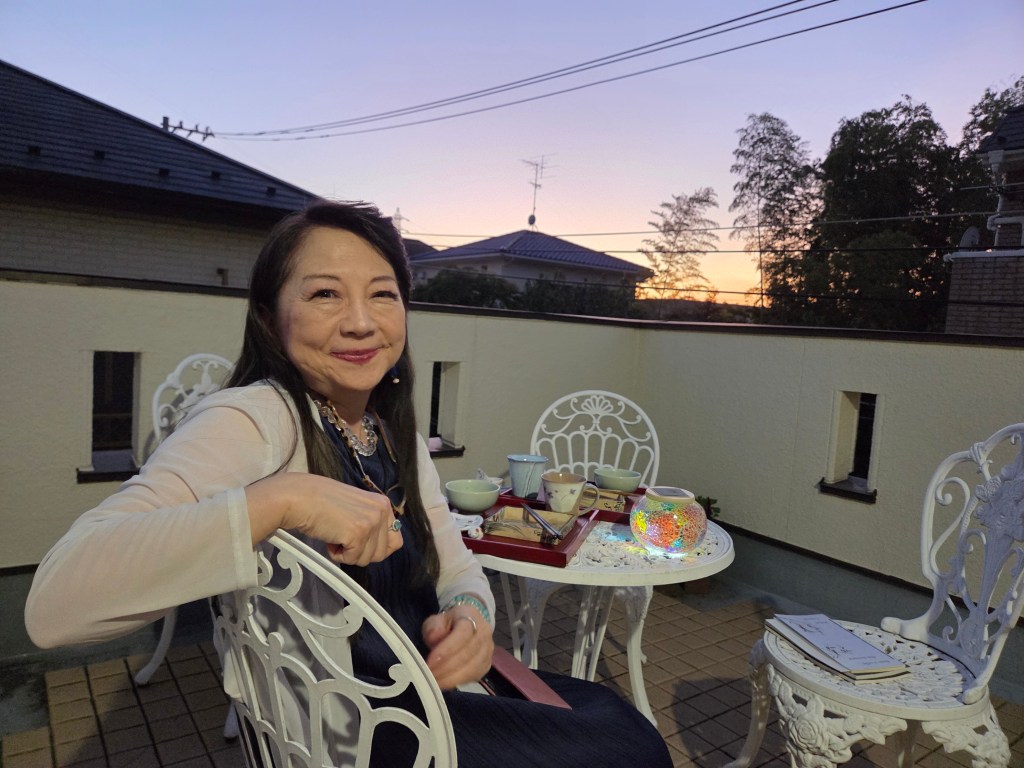
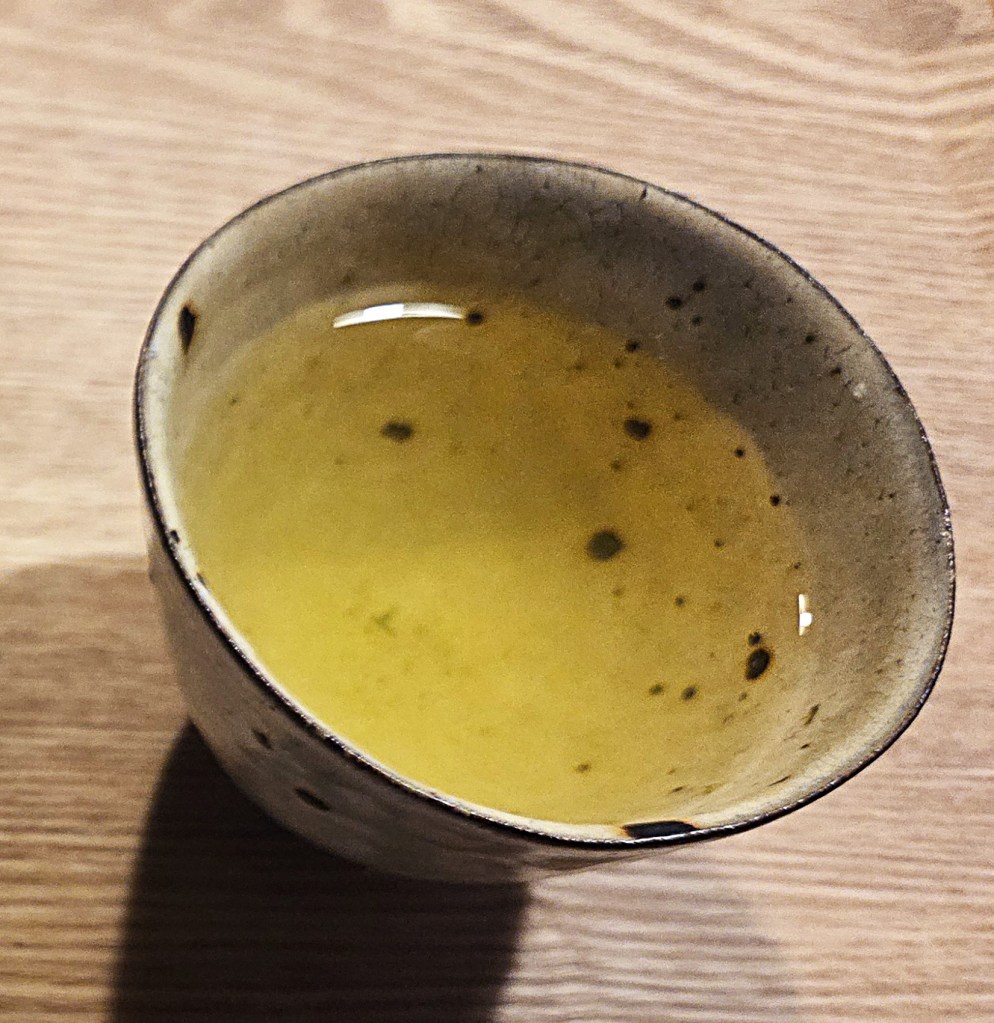
We had a small bite to eat (since we hadn’t had lunch) and a beer at a restaurant at Shibuya Station before heading back home. A little later Mariko whisked up a couple of cups of macha for us that we had on the patio as the day crept toward night.
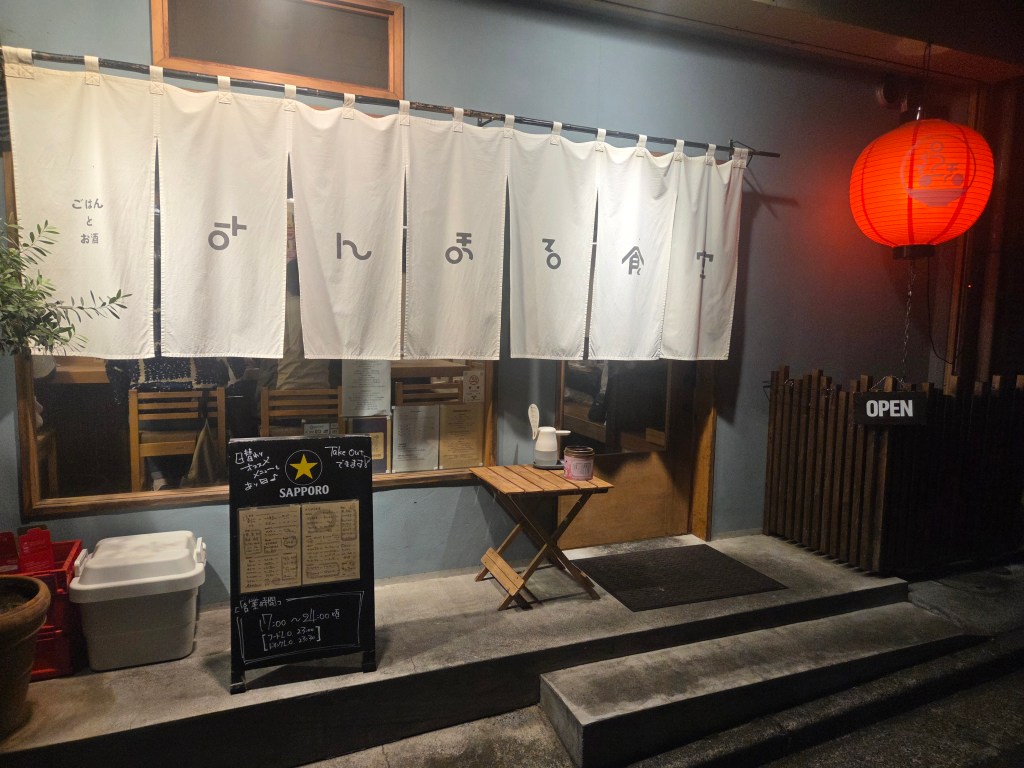
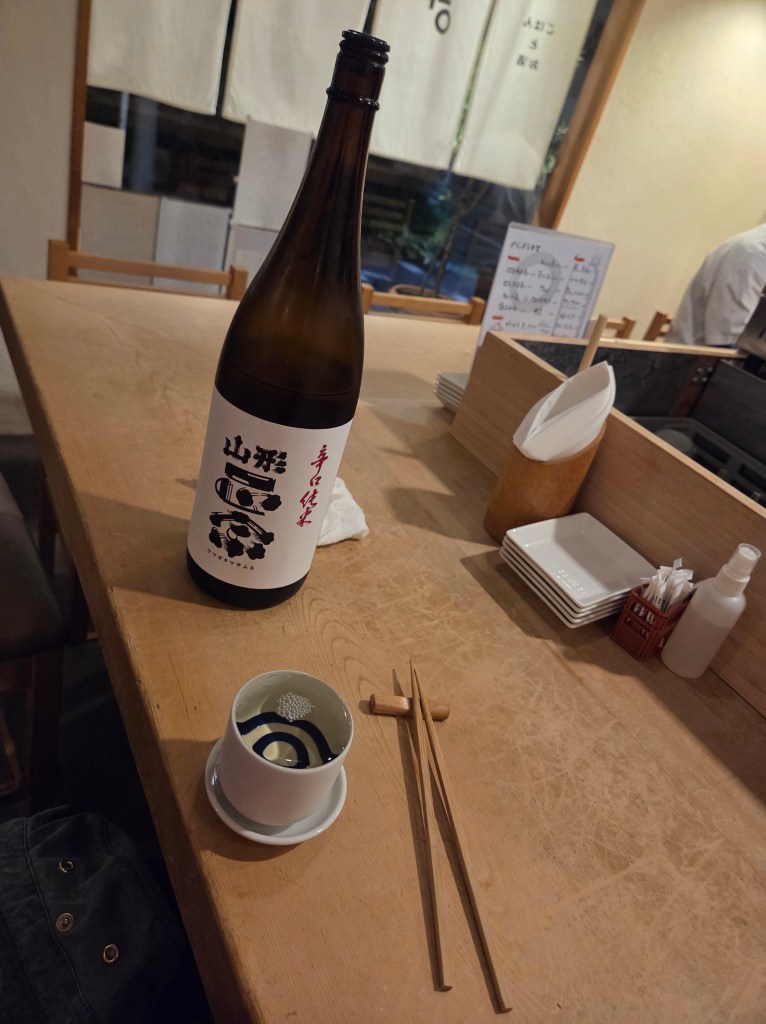
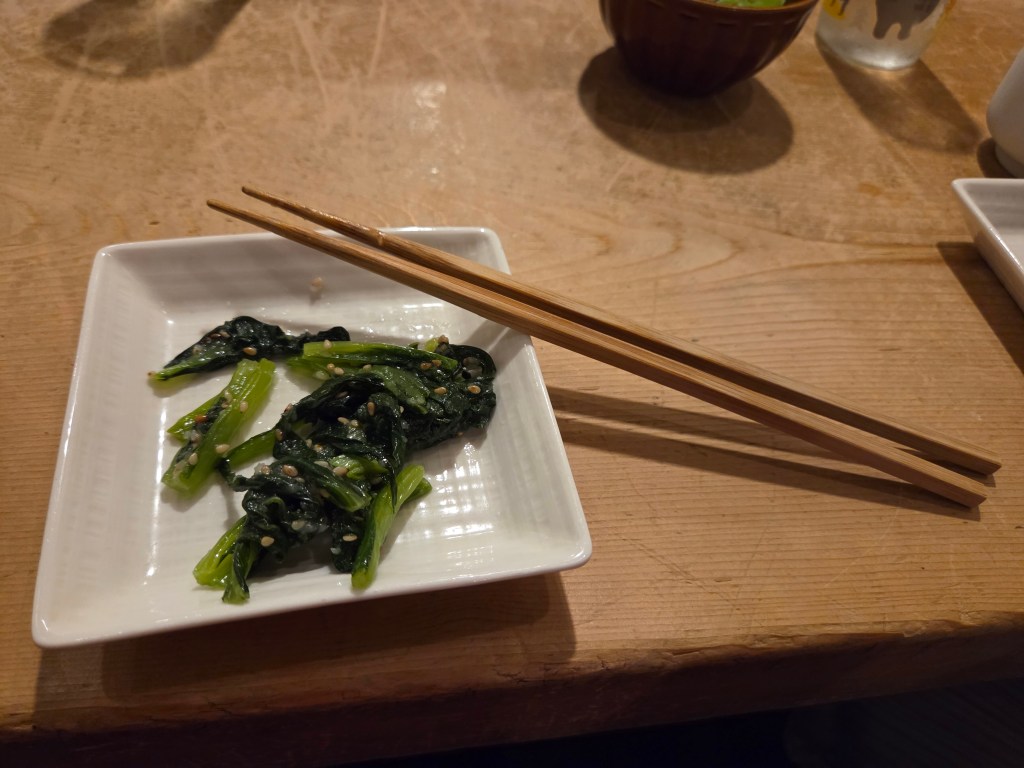
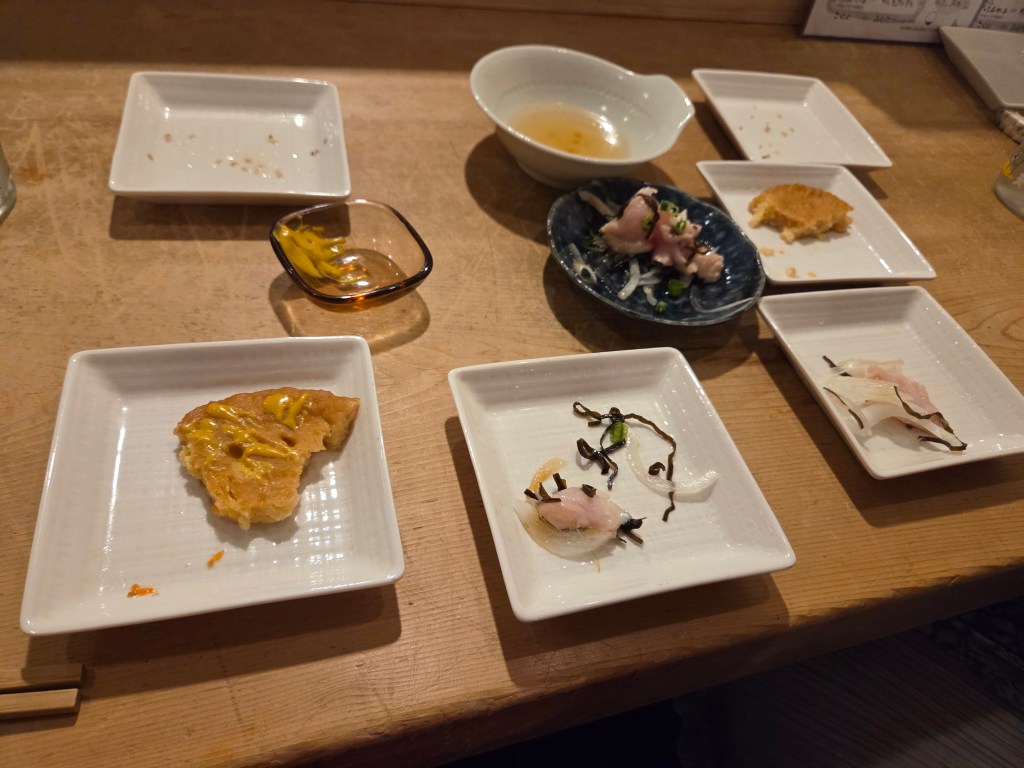
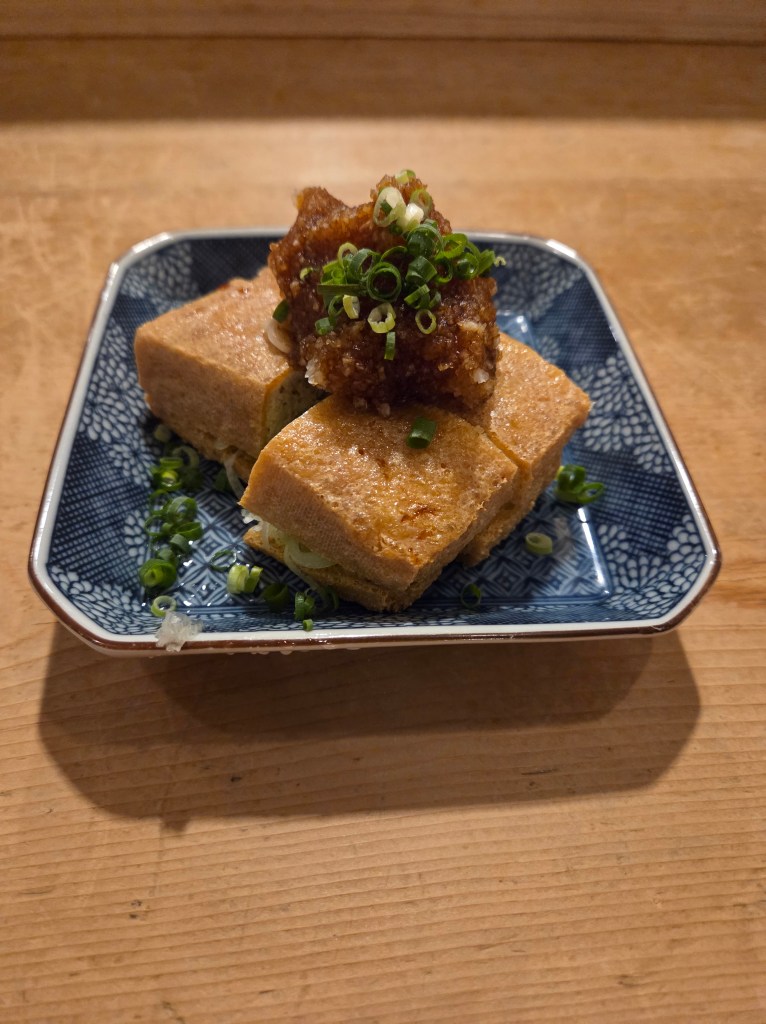
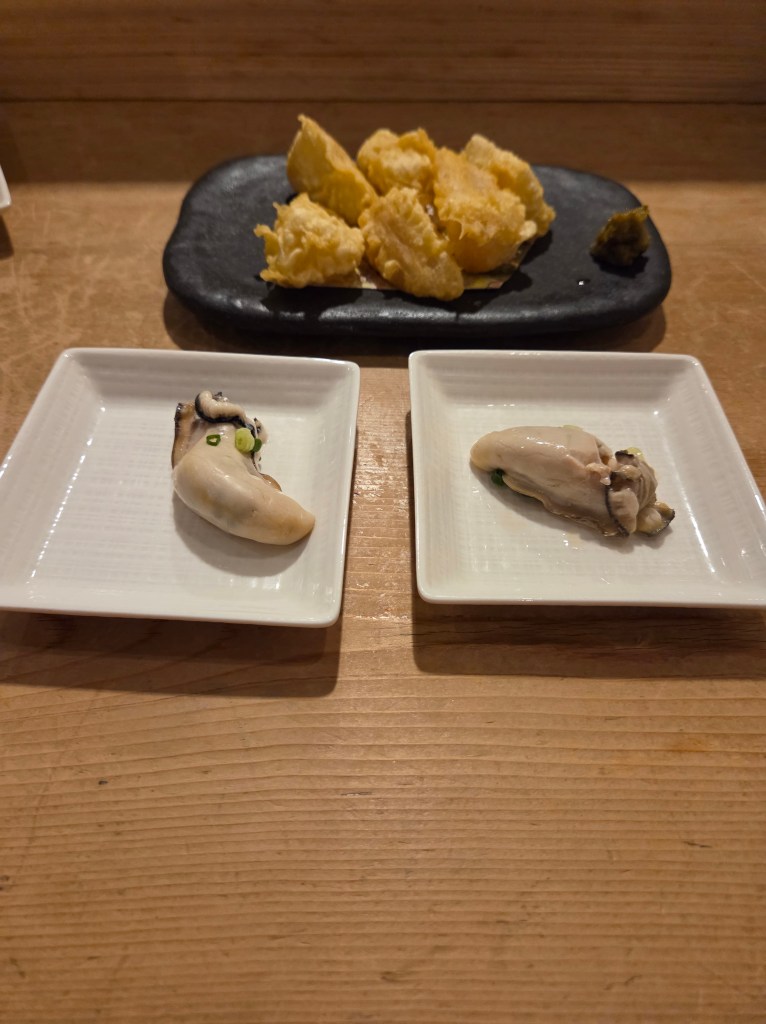
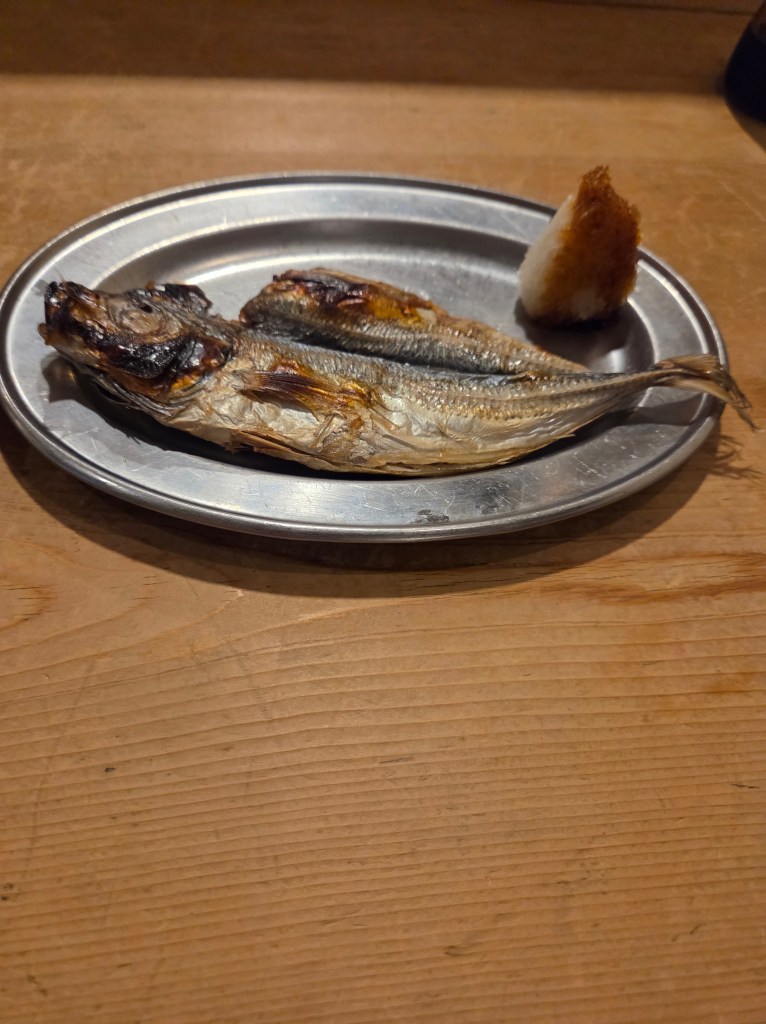
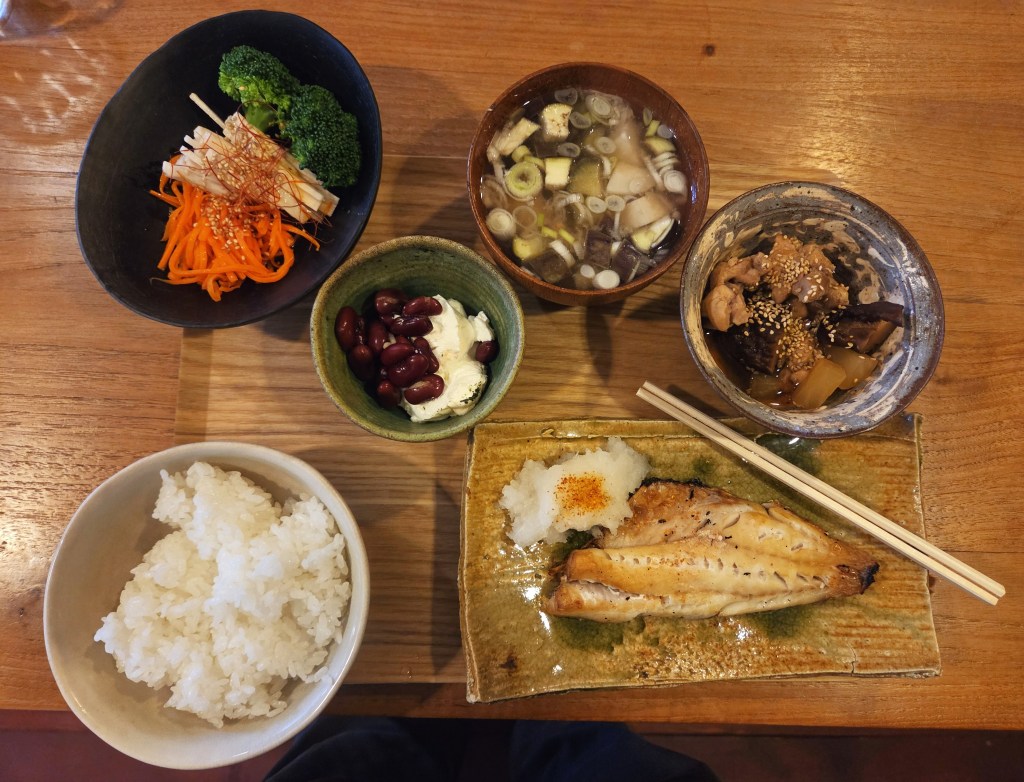
For dinner we ate at the restaurant on the ground floor of the building, Sanmaru Shokudo. A final dinner in Japan that was as good as any I’ve had on this journey. Various small dishes of vegetables, tofu, fish, oysters, chicken. I’m going to miss these types of dinners when I get back home. More on that later in the wrap up of the journey.
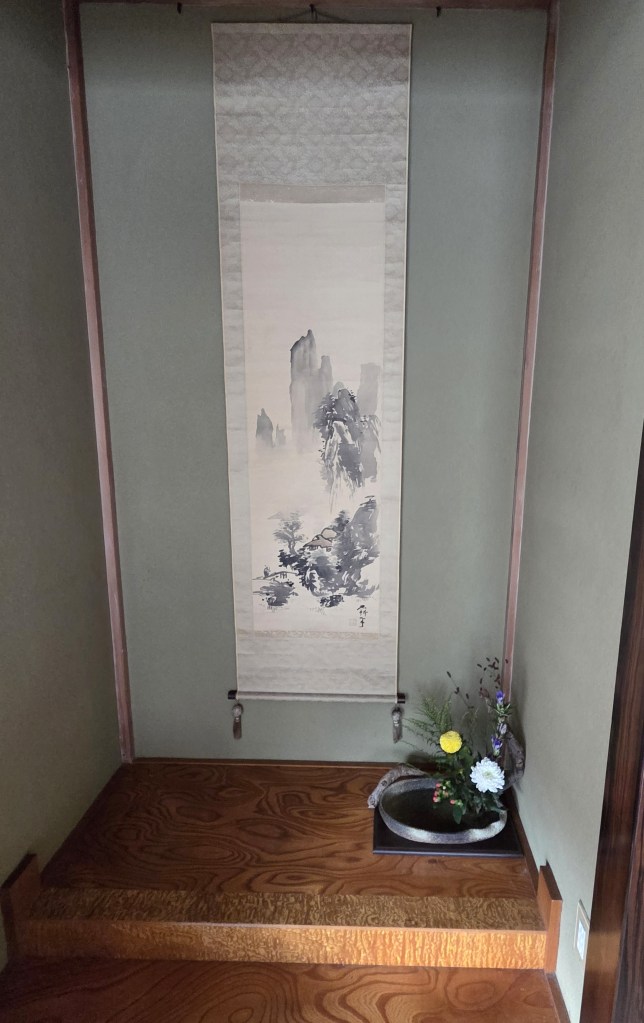
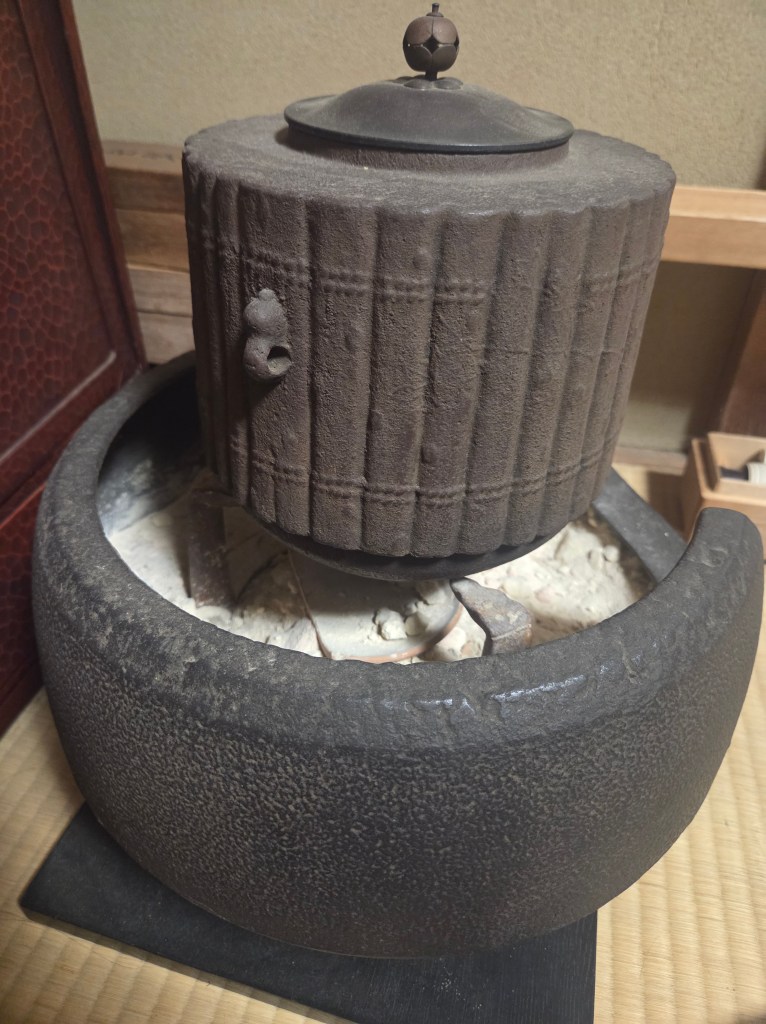
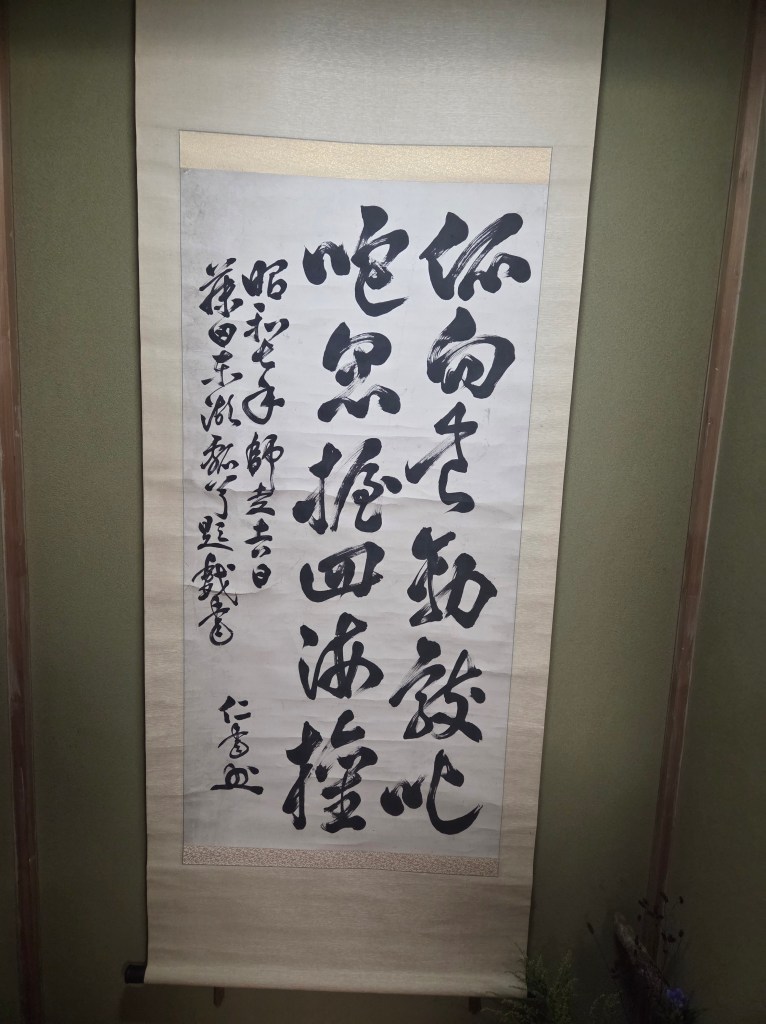
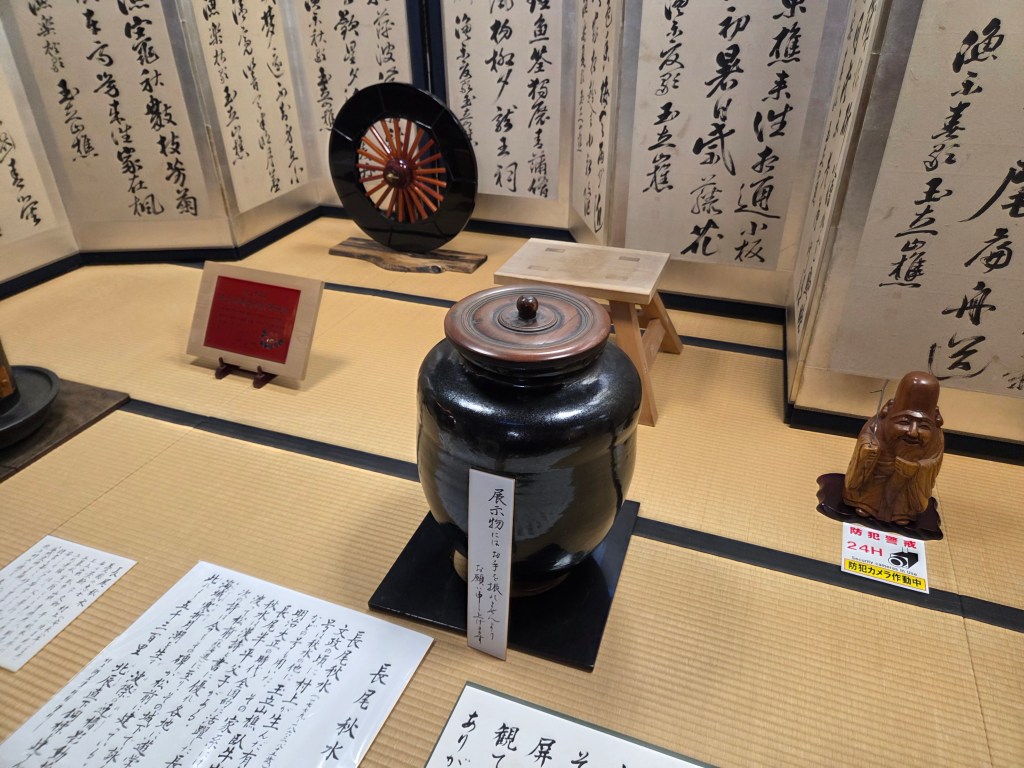
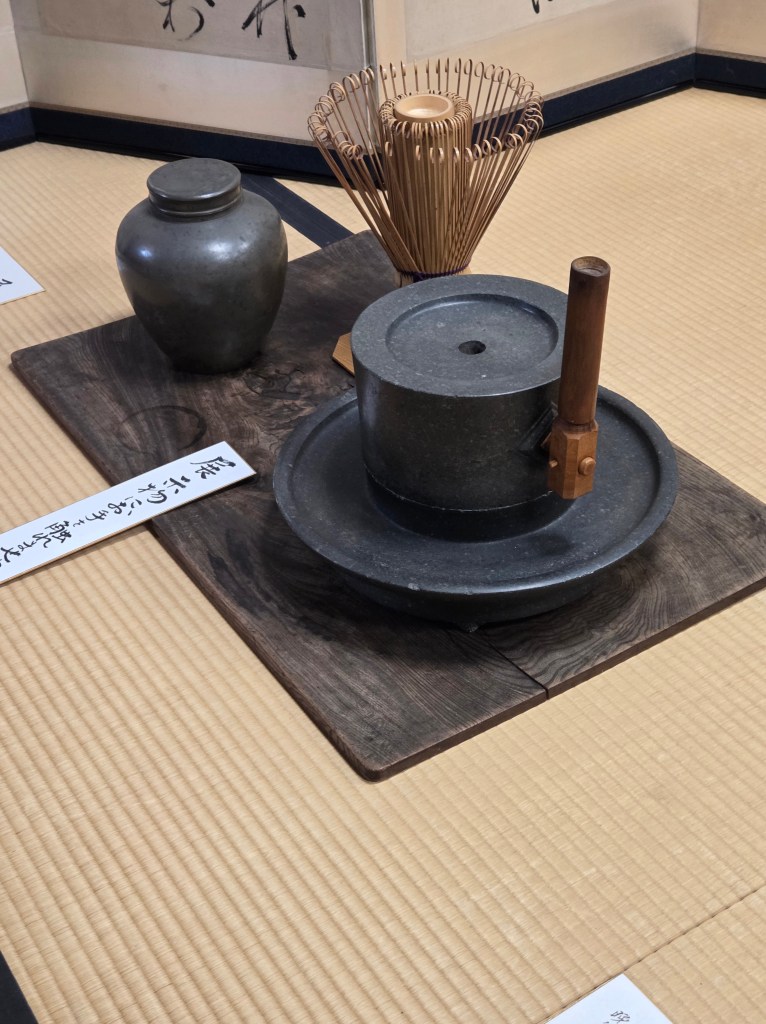
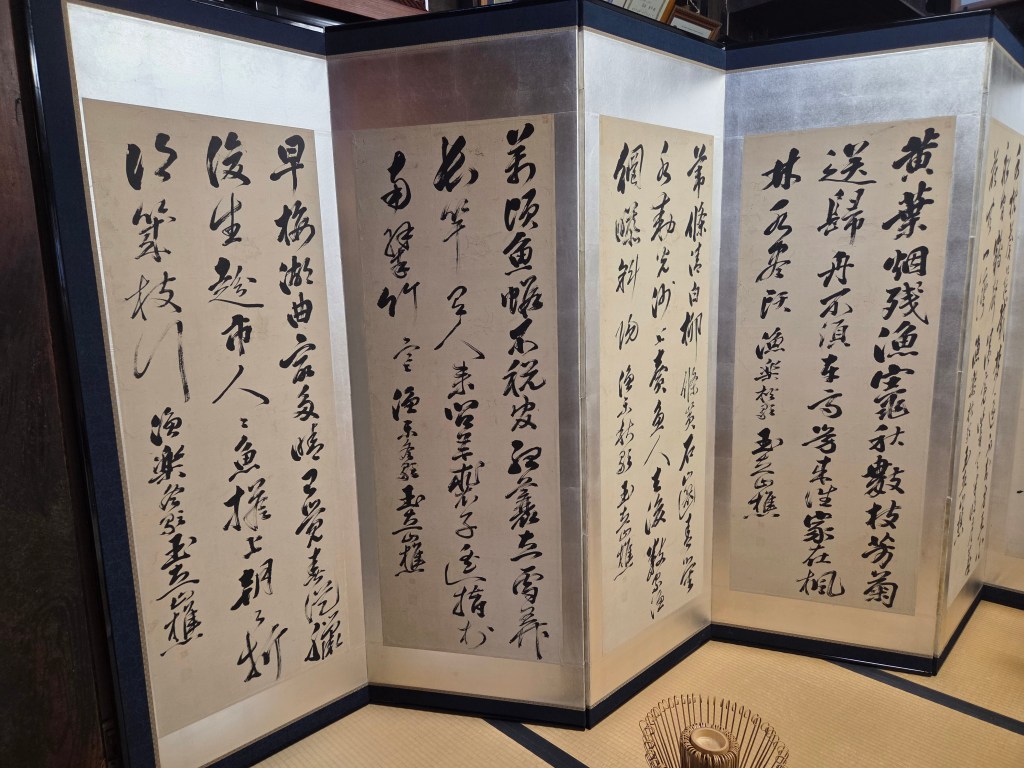
At the house Mariko showed me an old water pot set on top of a charcoal burner that her grandmother used when she performed tea ceremonies. Then a large calligraphy scroll that was made by her grandfather. A couple of meaningful family treasures.
So, the last full day draws to a close. Tomorrow a mushroom breakfast with Mariko and then I head off to the airport and the long passage home. There is a lot to digest and a long plane ride to begin that process.
(Click on thumbnail for larger picture.)

October 17
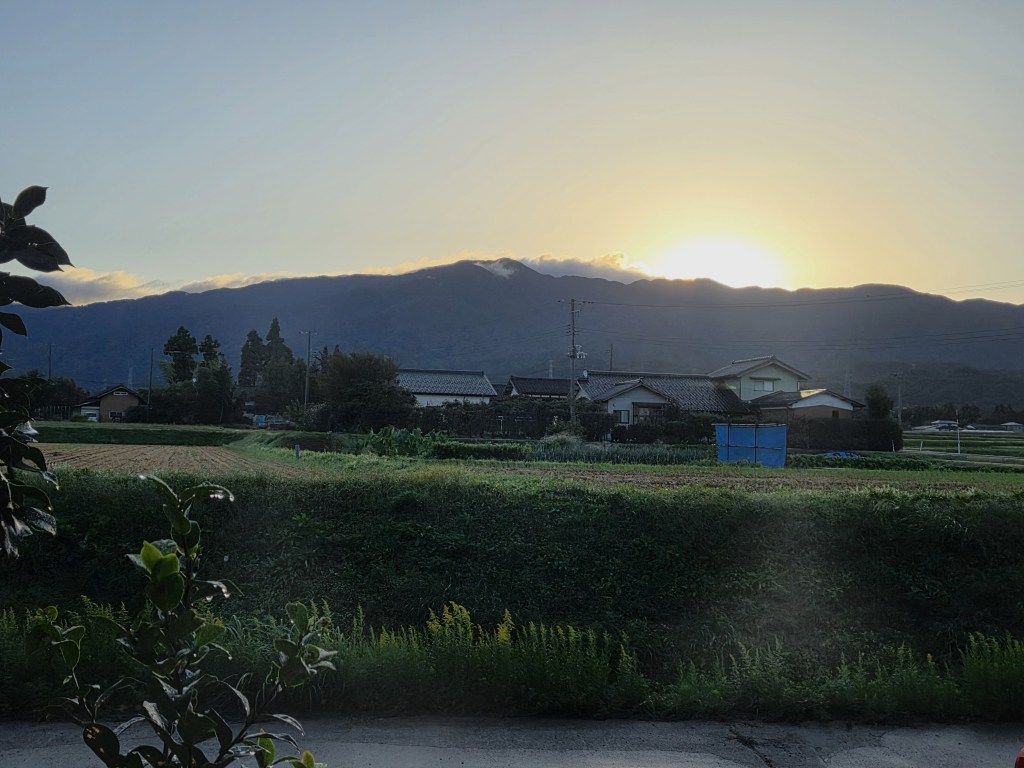
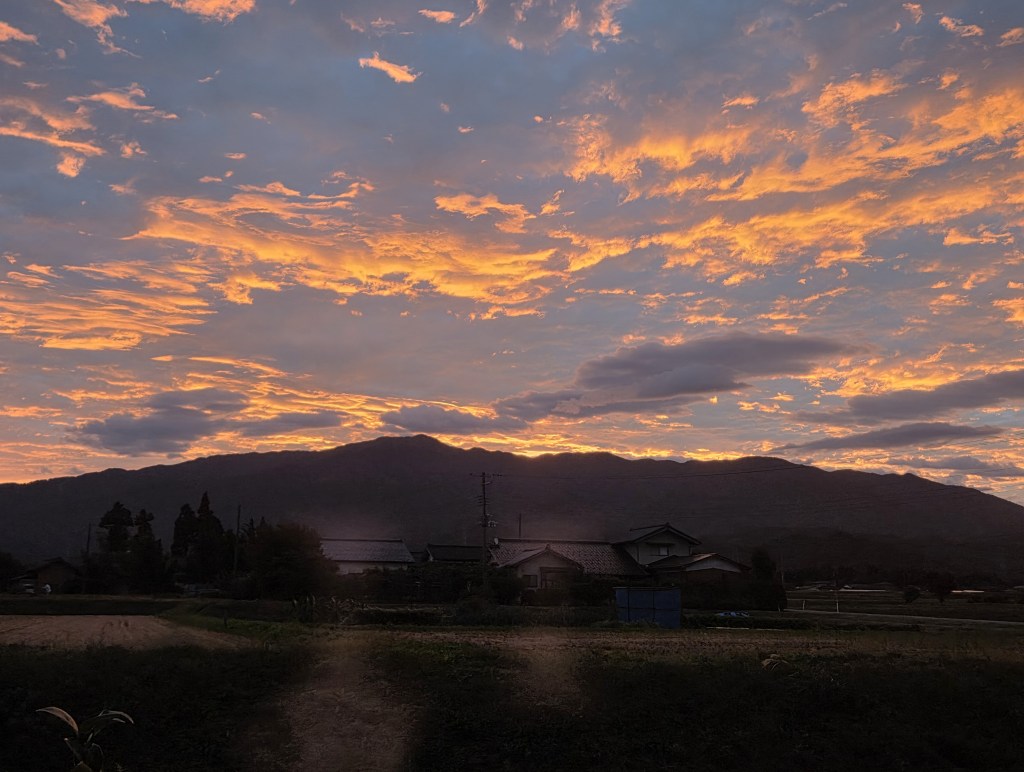
The last morning here dawned clear and as I looked out of my bedroom window the sun was just coming up over the mountains.
I arrived here at Kazuaki’s a week ago. Plans to come here were only made a couple of days prior. We had only “met” on two of my recent ZOOMs. I was going to visit for a day or two. Circumstances changed and the day or two turned into a week. What a wonderful week it was, too.
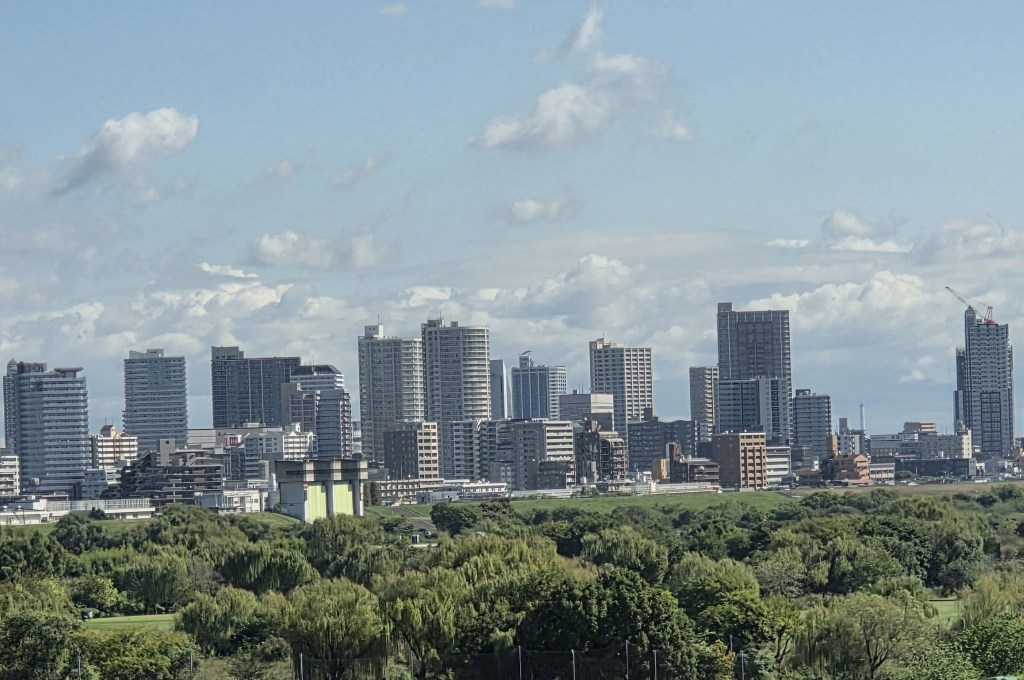
Kazuaki drove me to the Niigata Train station to catch the shinkansen to Tokyo. We had a light breakfast at the train station, said our farewells and I boarded the train for the two-hour ride into Tokyo.
As seems to be the case anywhere in Japan, there were mountains always in view, sometimes close, sometimes far.
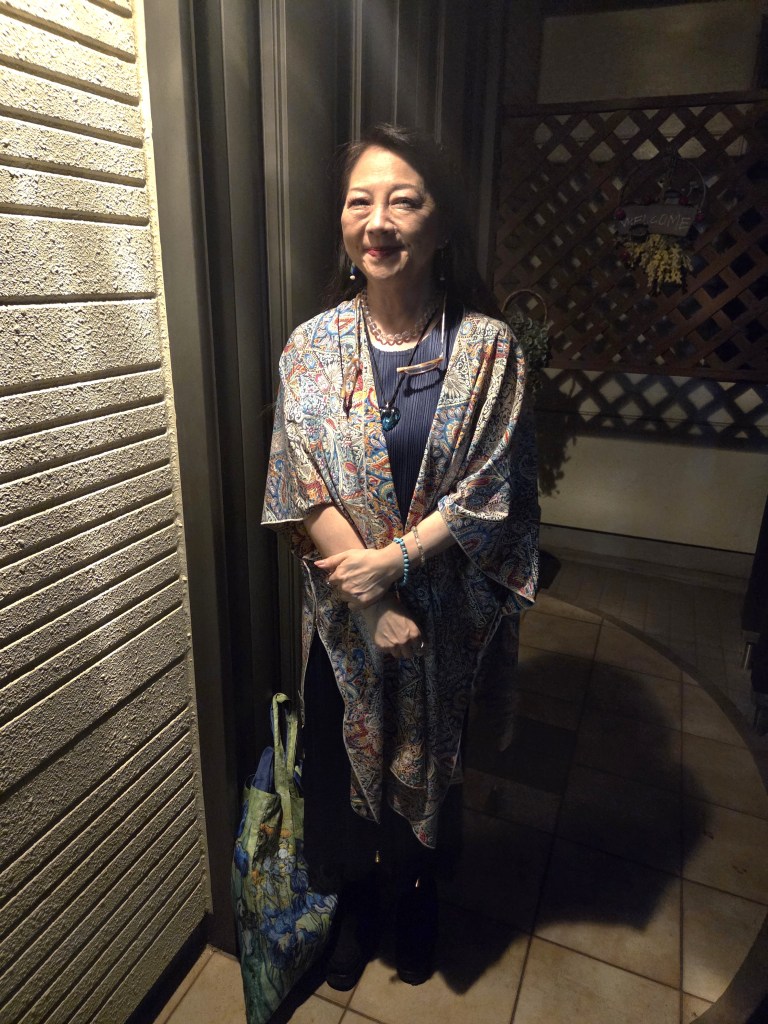
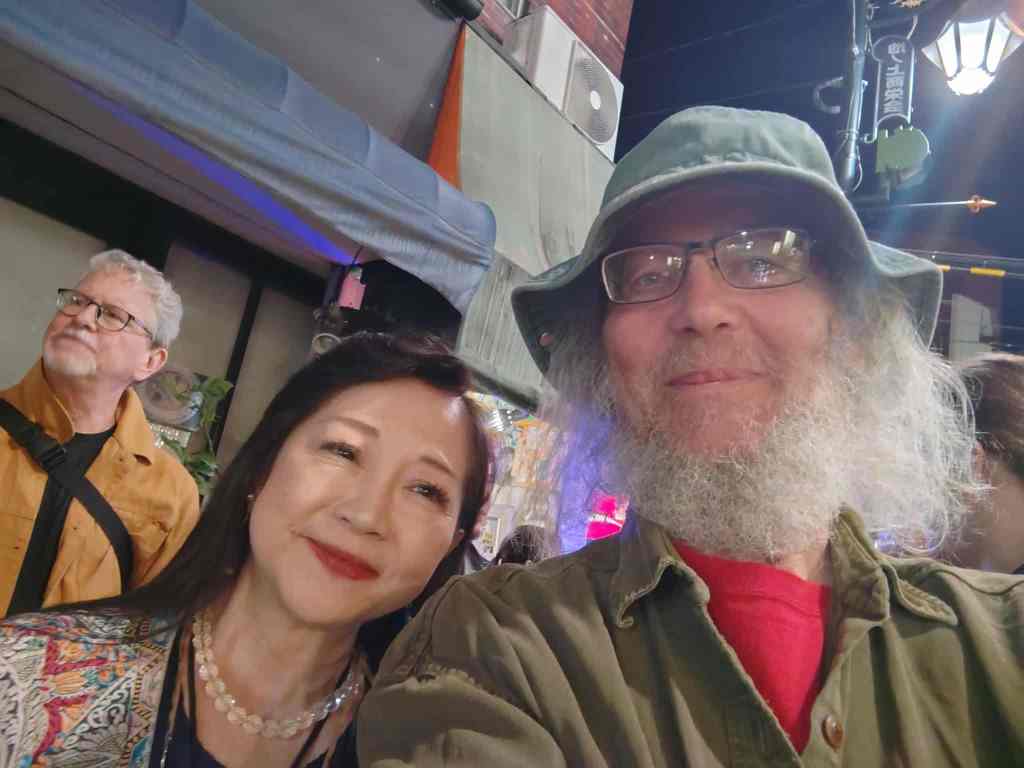
Mariko, who met me at the station, and I have met twice in the past. First in Los Angeles in 2015 and then a year or two later in New York City. She graciously offered to let me stay at her place for my final two days in Japan.
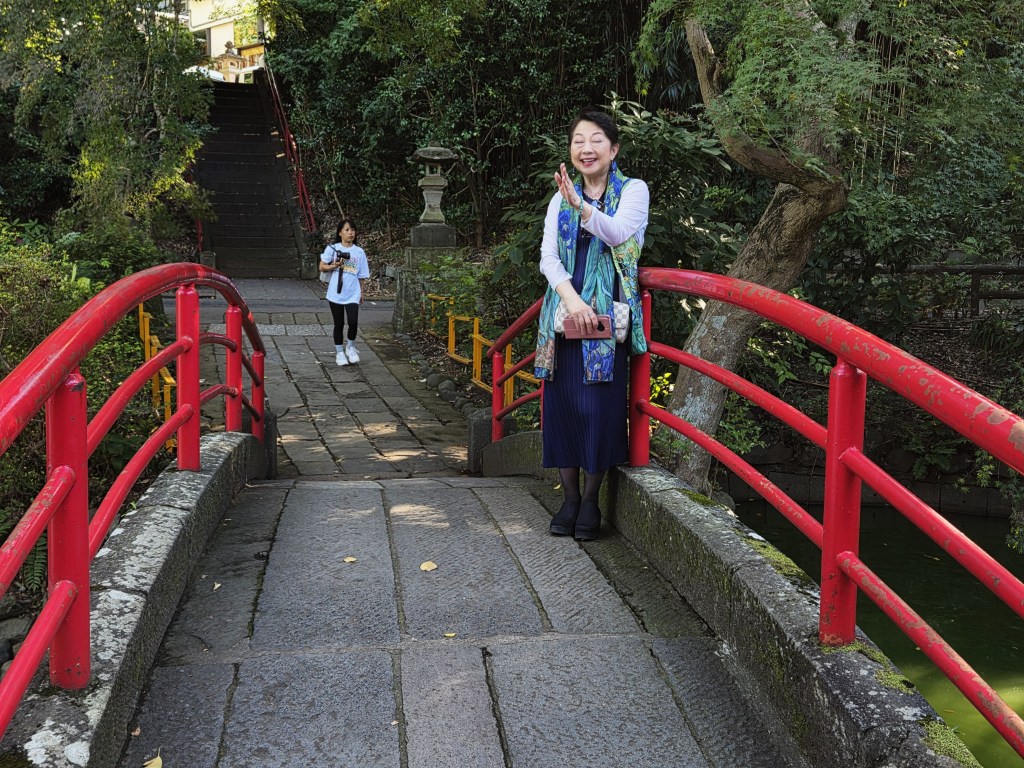
Mariko has an infectious joy for life. She was waiting for me just beyond the exit gate at the super busy Tokyo Station. When we noticed each other she became very animated and excited and her phone/camera went flying to the ground on my side of the gate! It was a precious welcome.
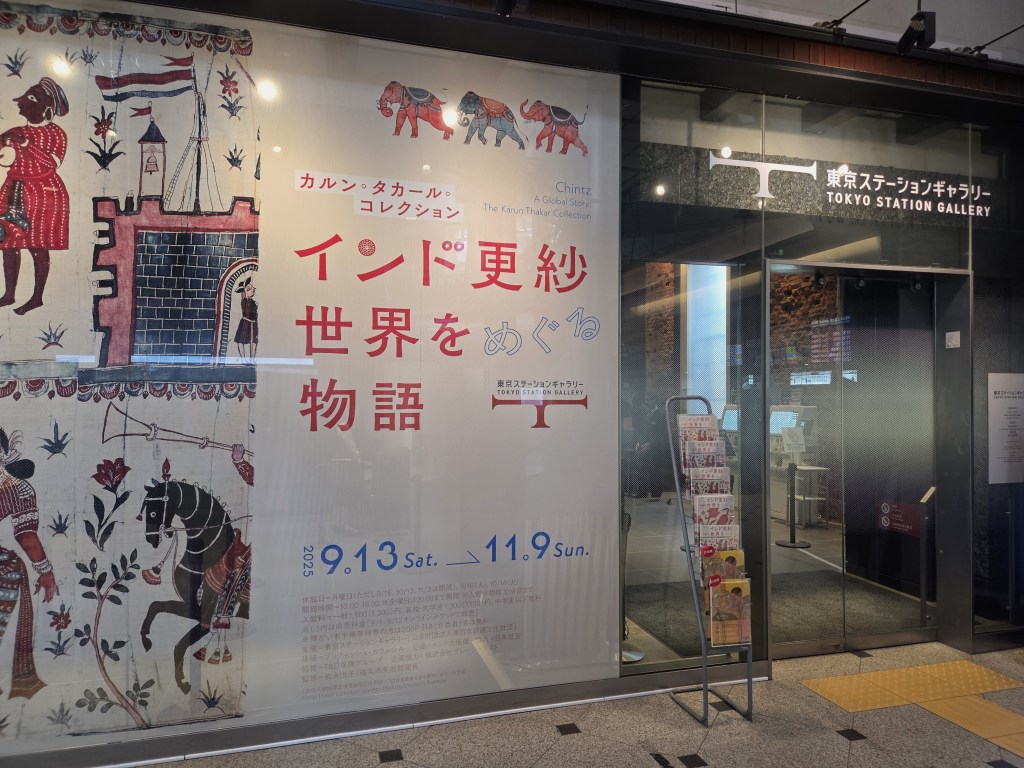
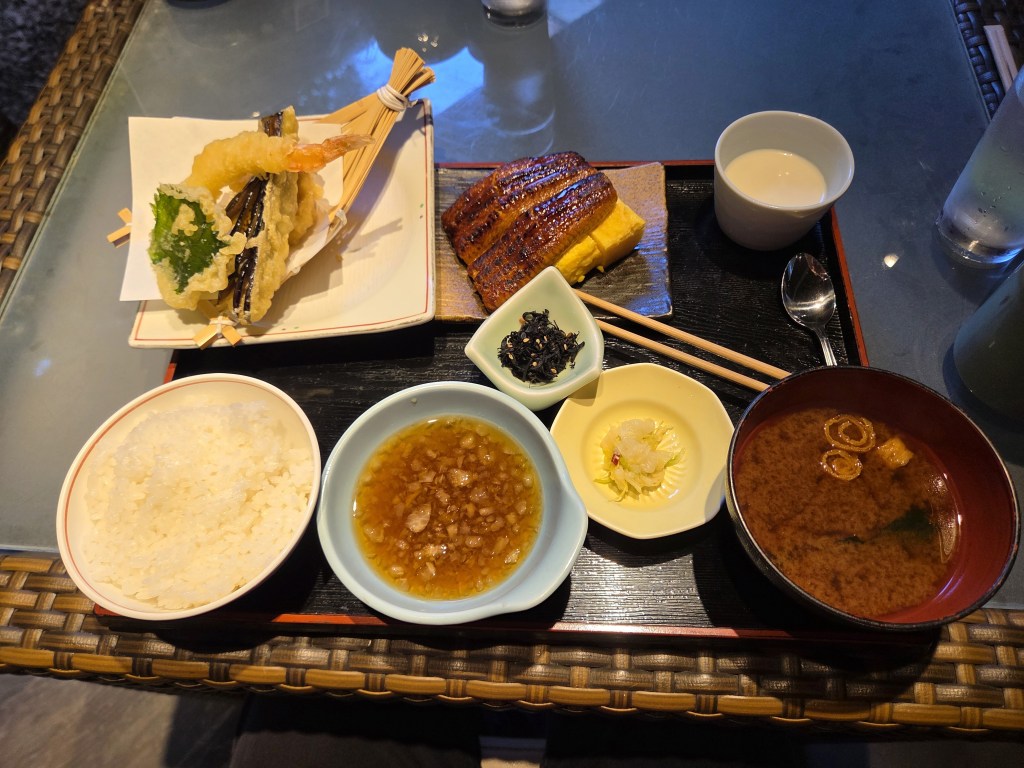
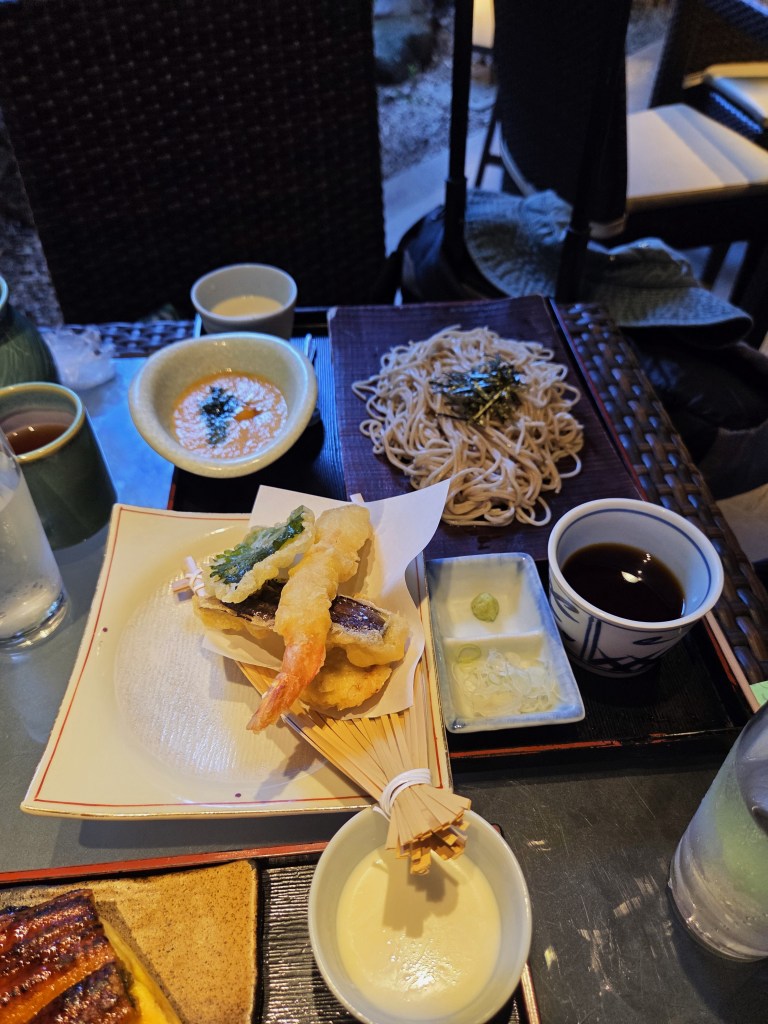
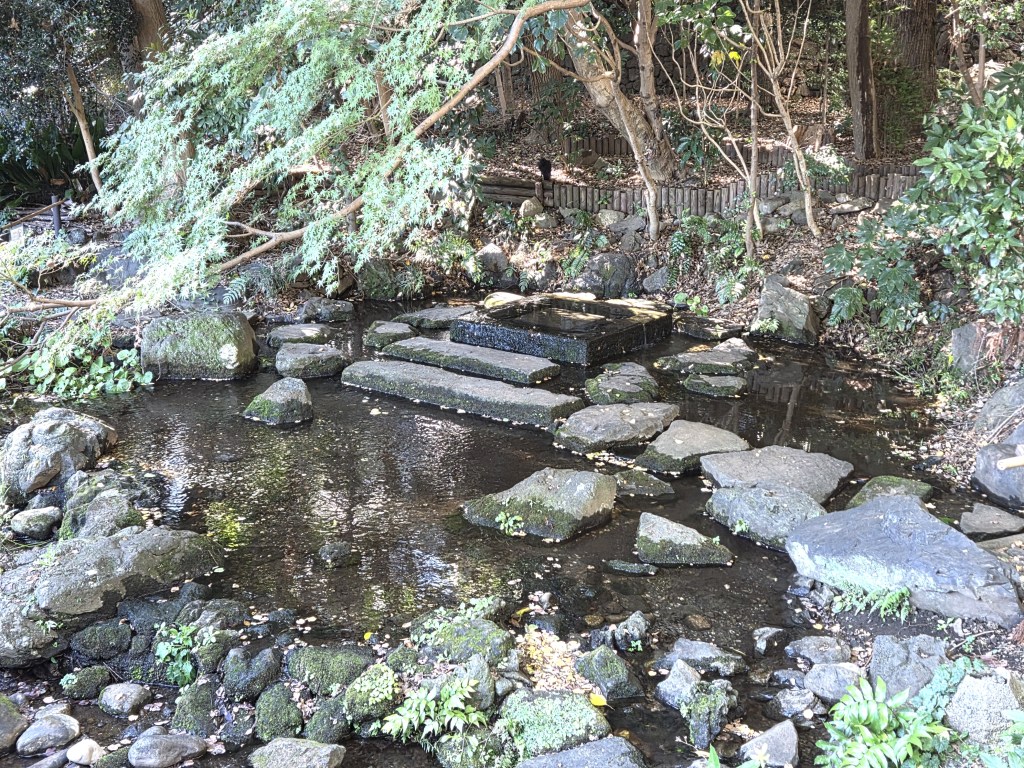
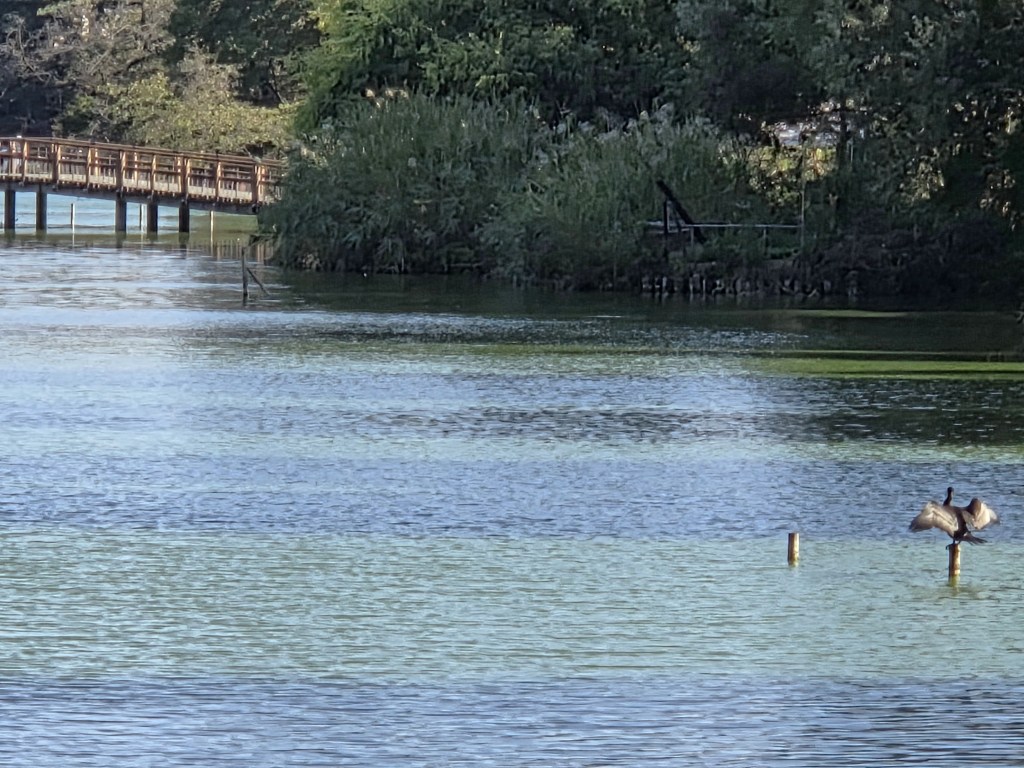
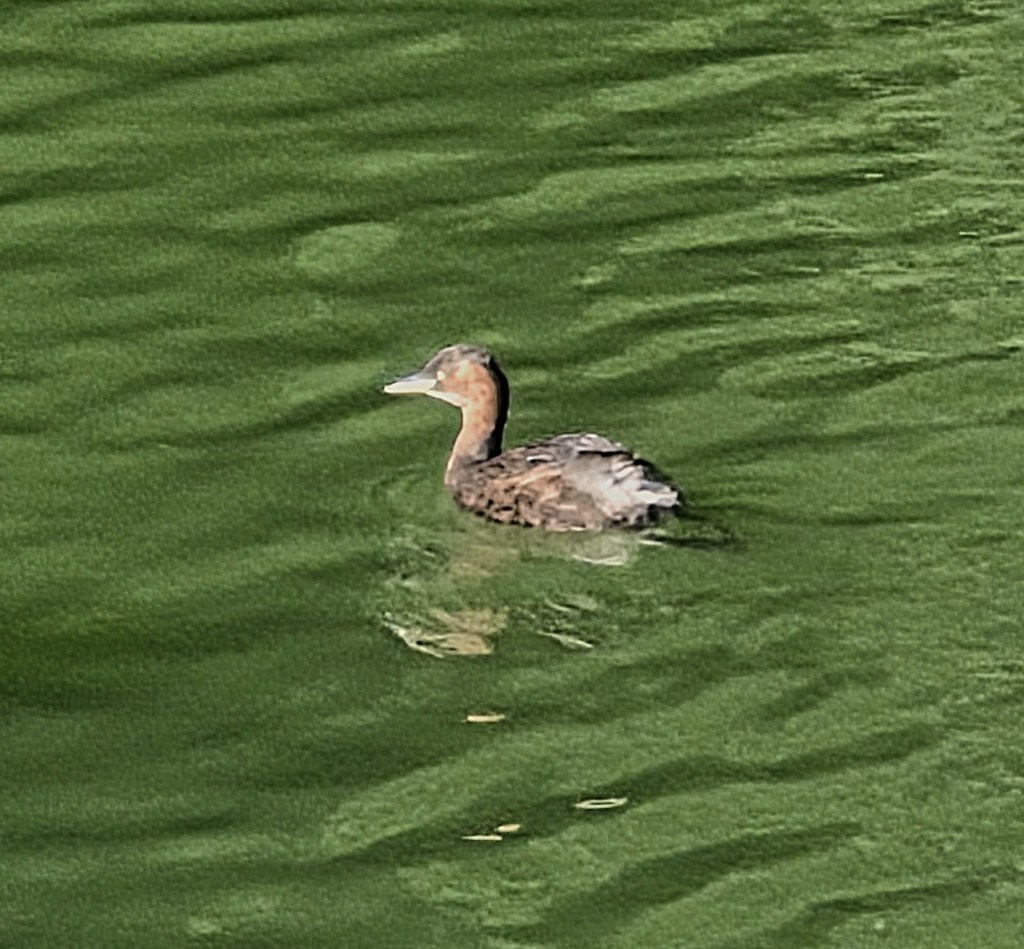
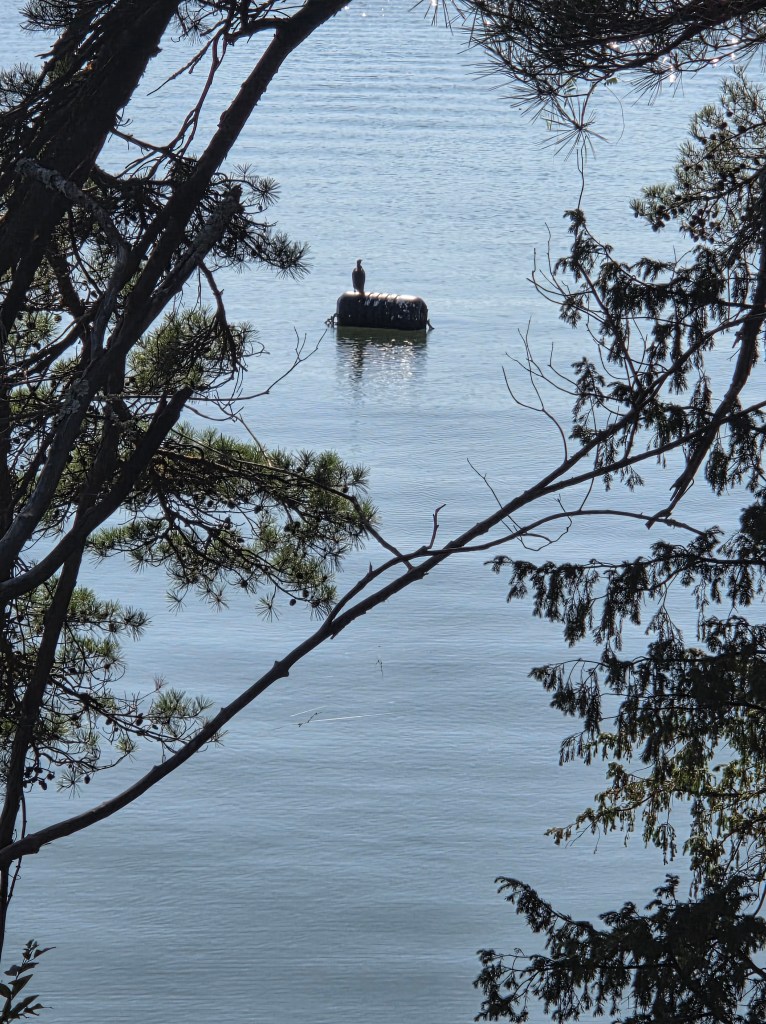
We took a train ride toward the area where she lives in Tokyo. She treated me to a wonderful lunch (I had eel and tempura) and then we strolled through nearby Inokashiraonsi Park. The park is a wonderful refuge in the midst of the city, with ponds, walking trails and paths, a shrine and a lot of people and birds. The pictures of the birds are Great Cormorants and Little Grebe.
I wanted to do a little shopping, so we entered a very large indoor open market place that seemed to go on forever and had many kinds of stores within. I purchased some green tea at a tea shop and two sake cups.
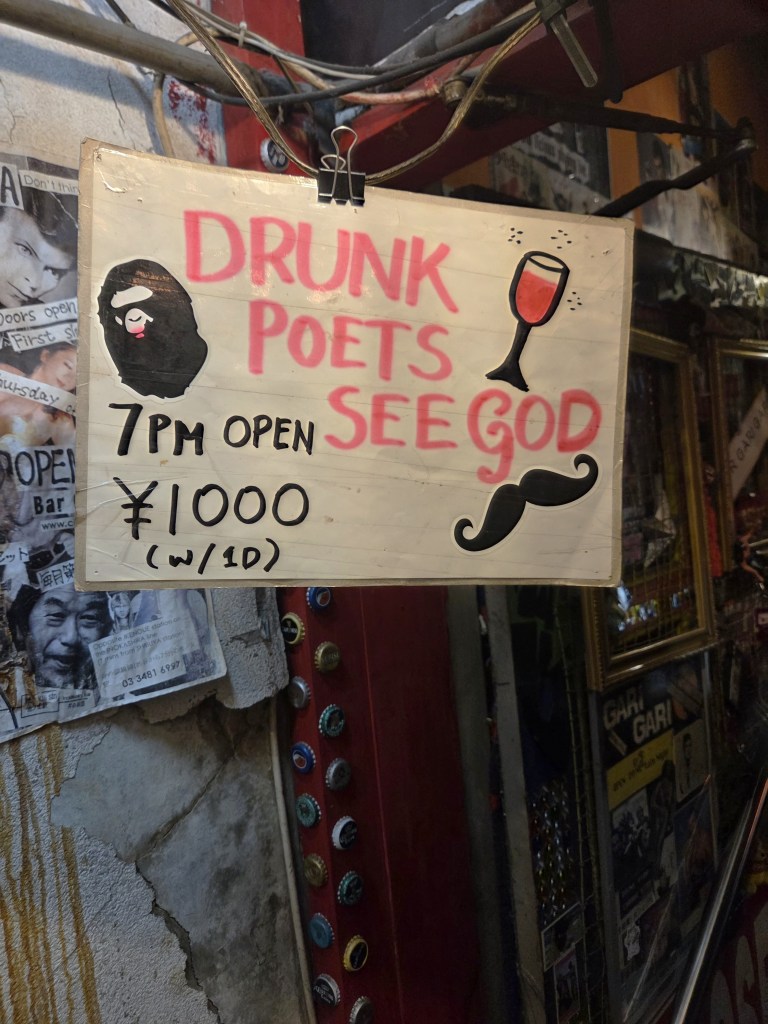
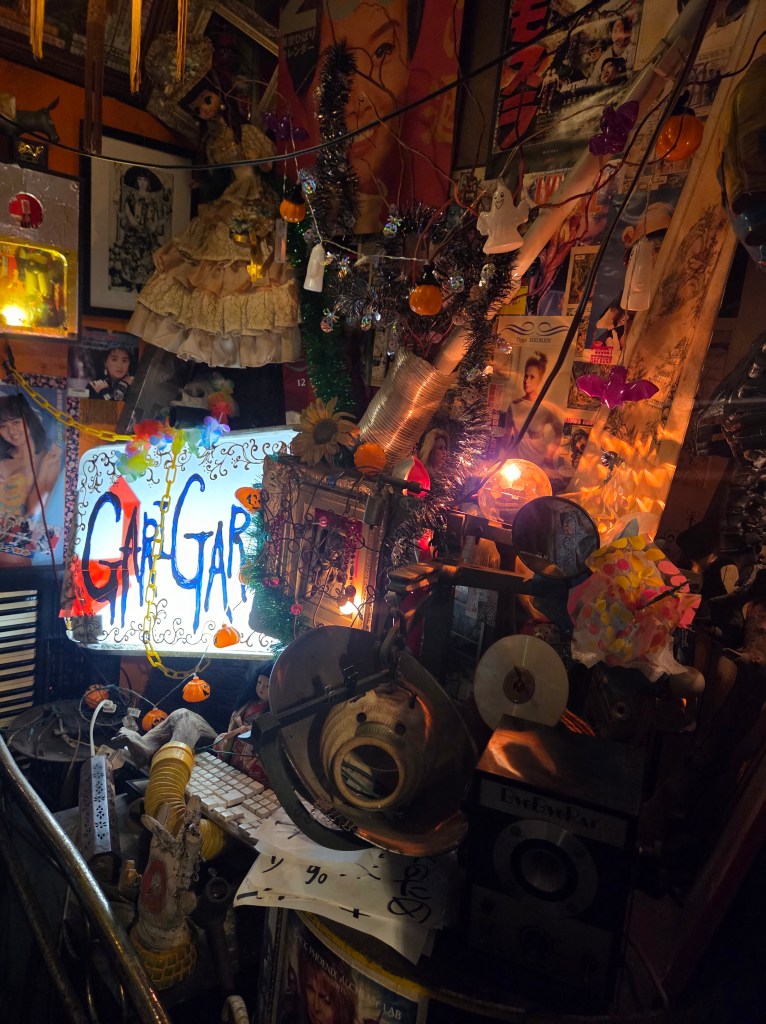
Back at her house, a small beautiful place that has two floors and a nice patio on the second floor. We sat out there and had a little bit of food before heading out to the Drunk Poets See God monthly open mic that she had mentioned to me a couple of days ago.
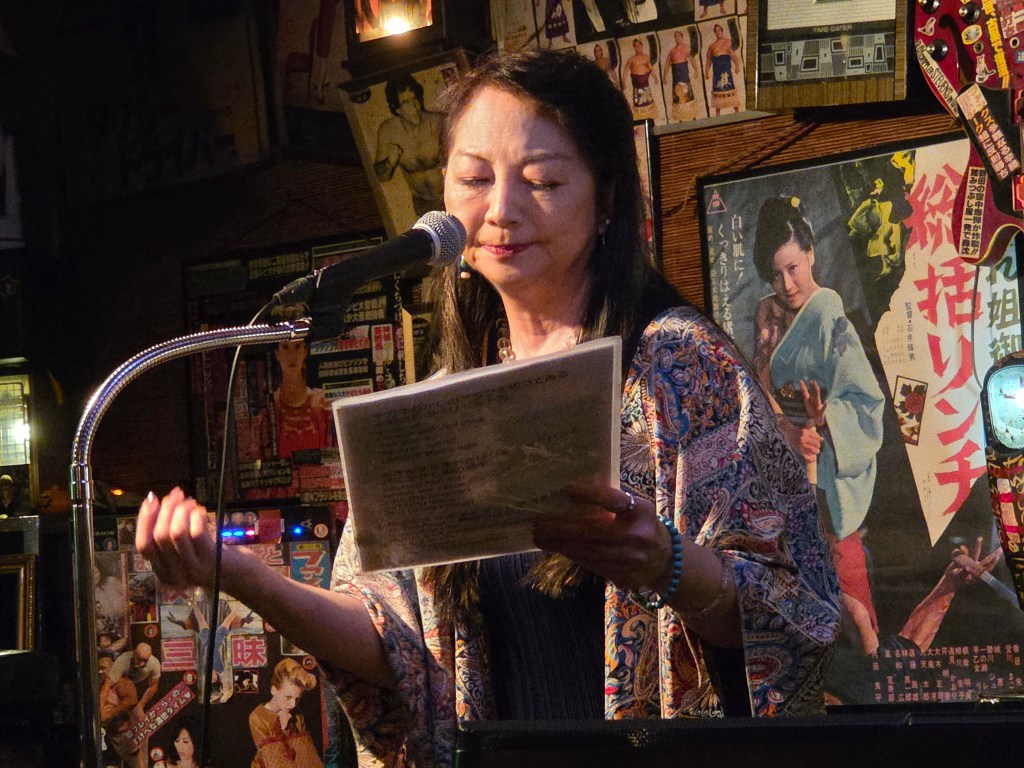
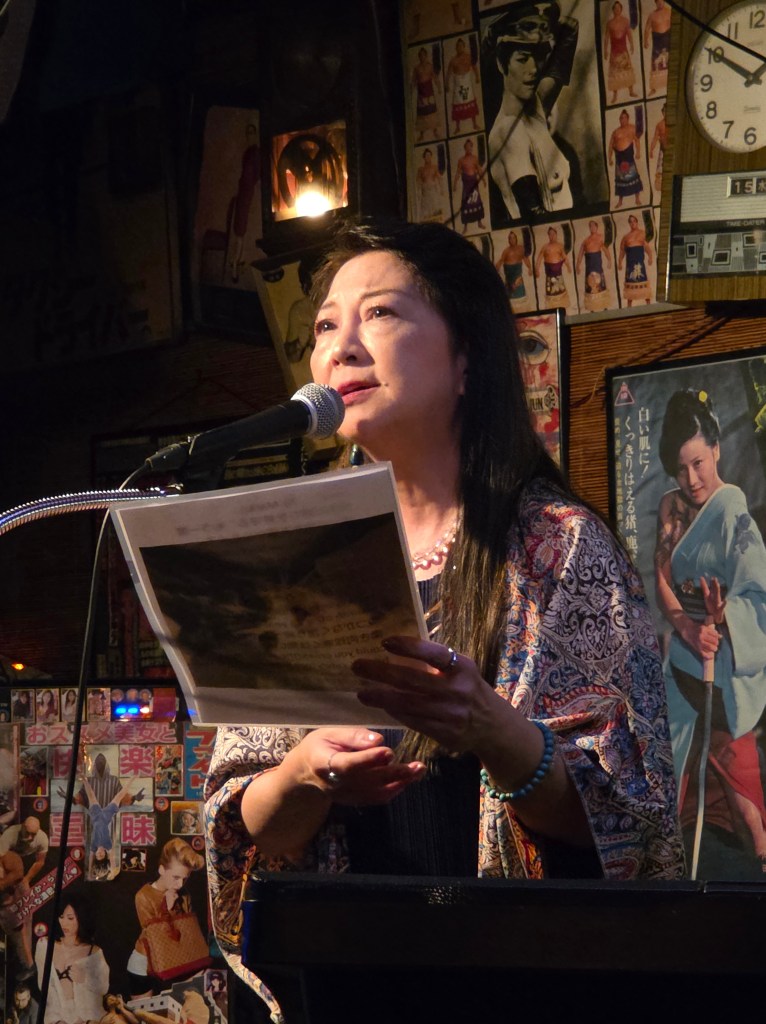
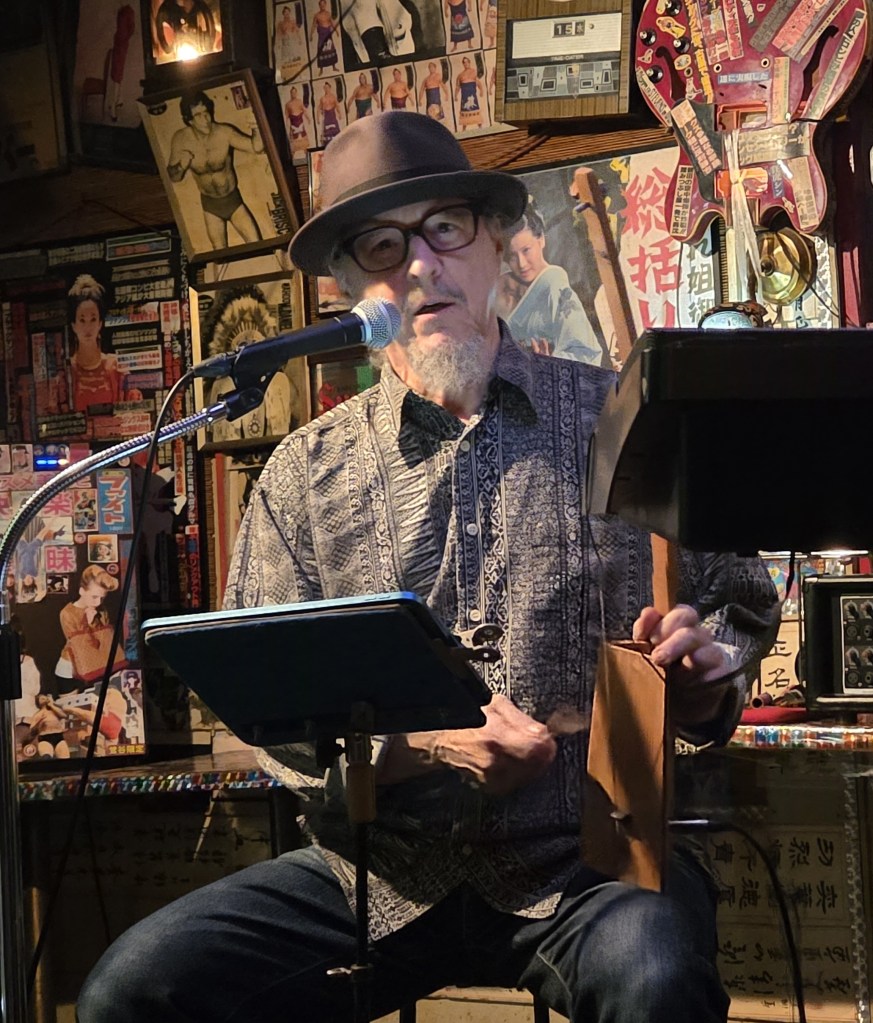
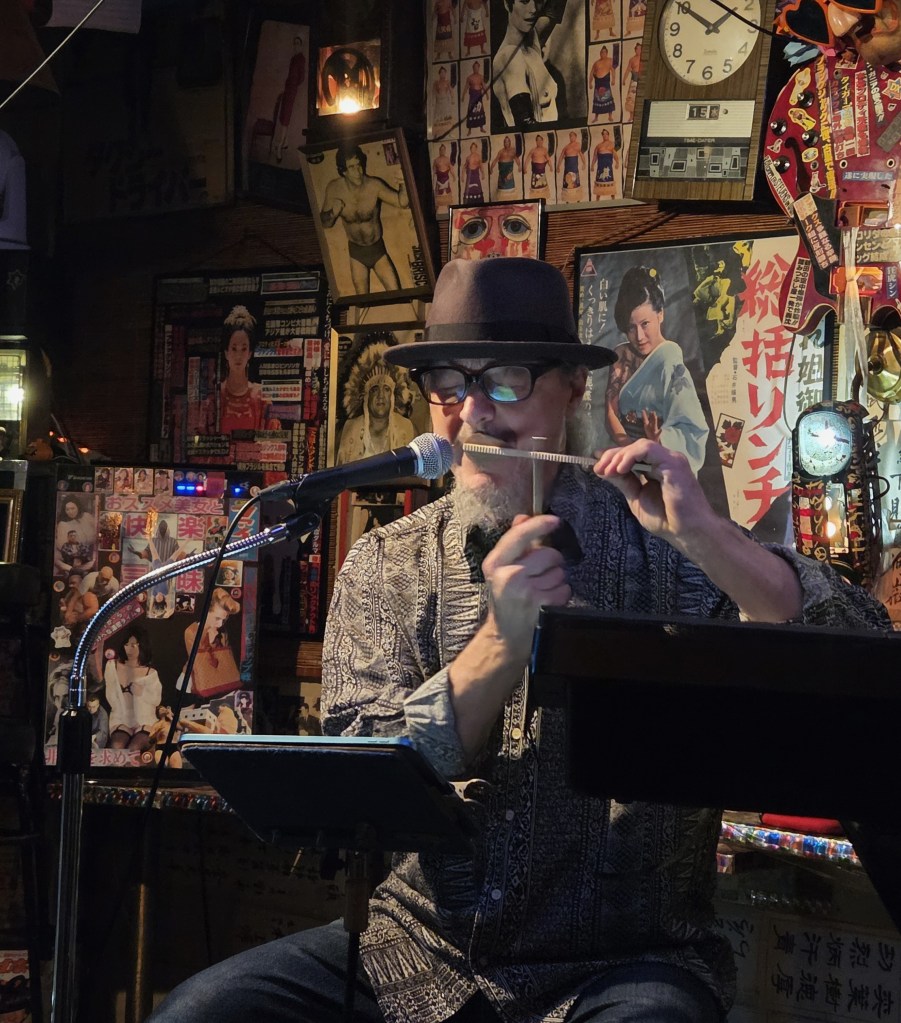
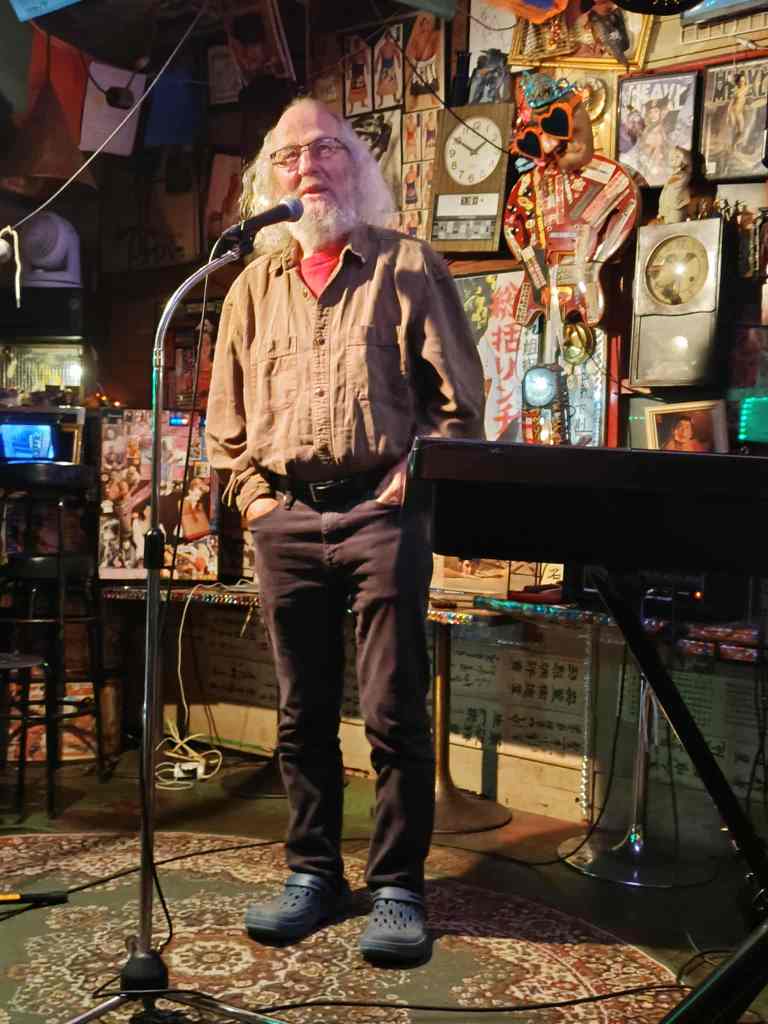
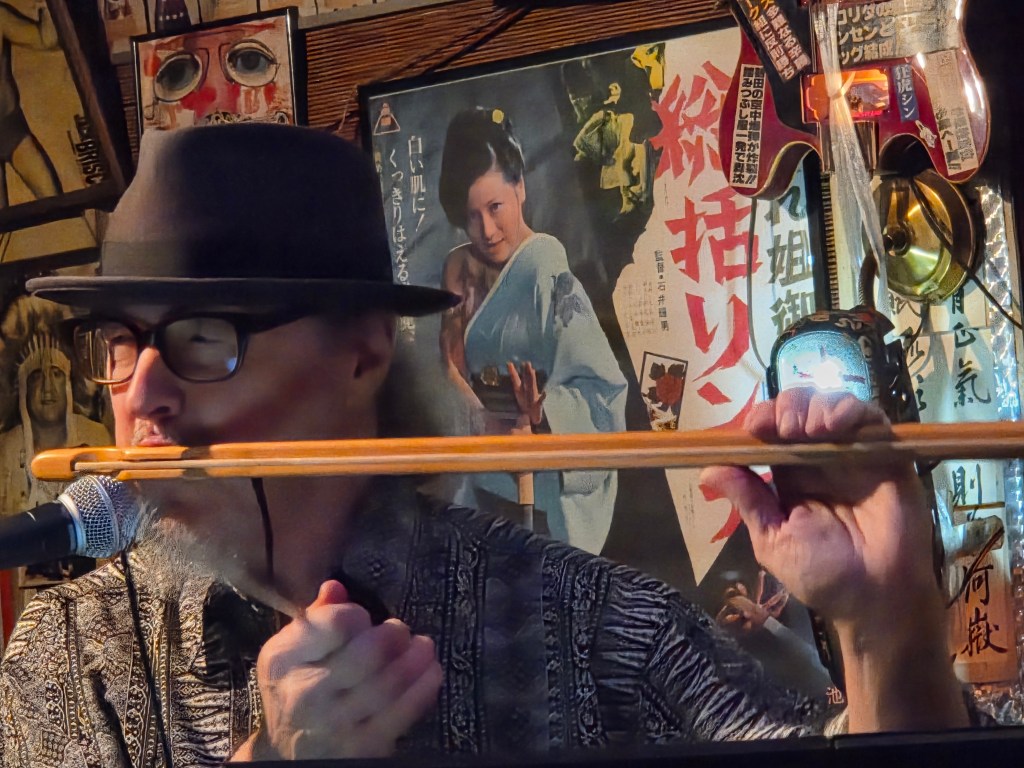
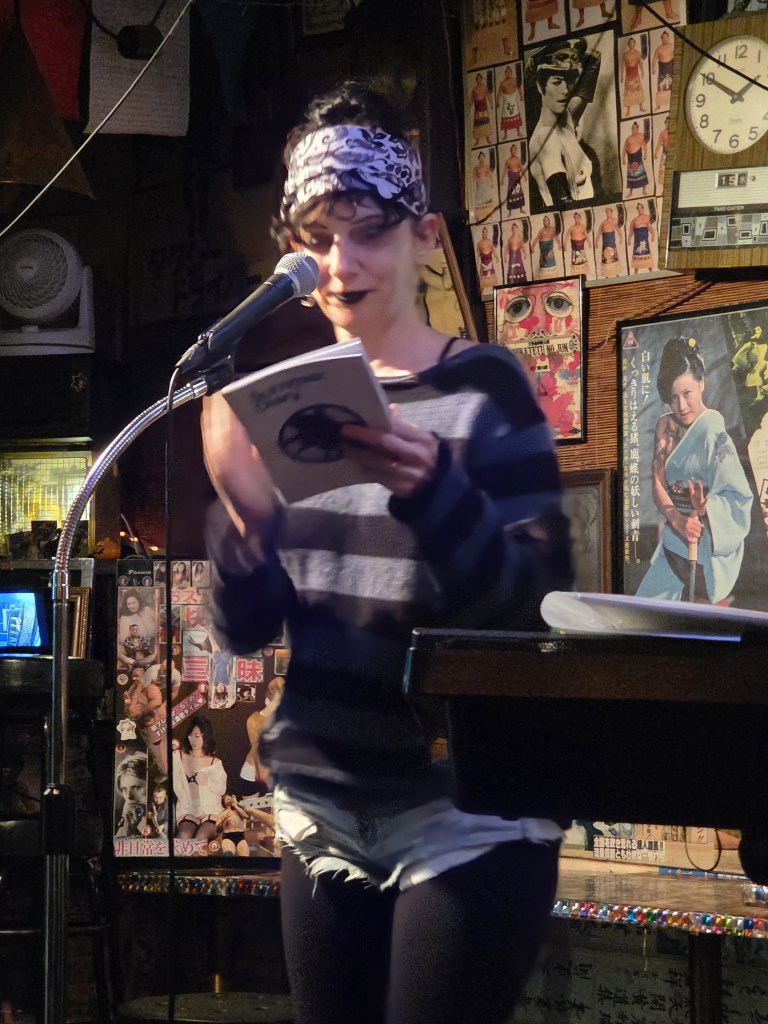
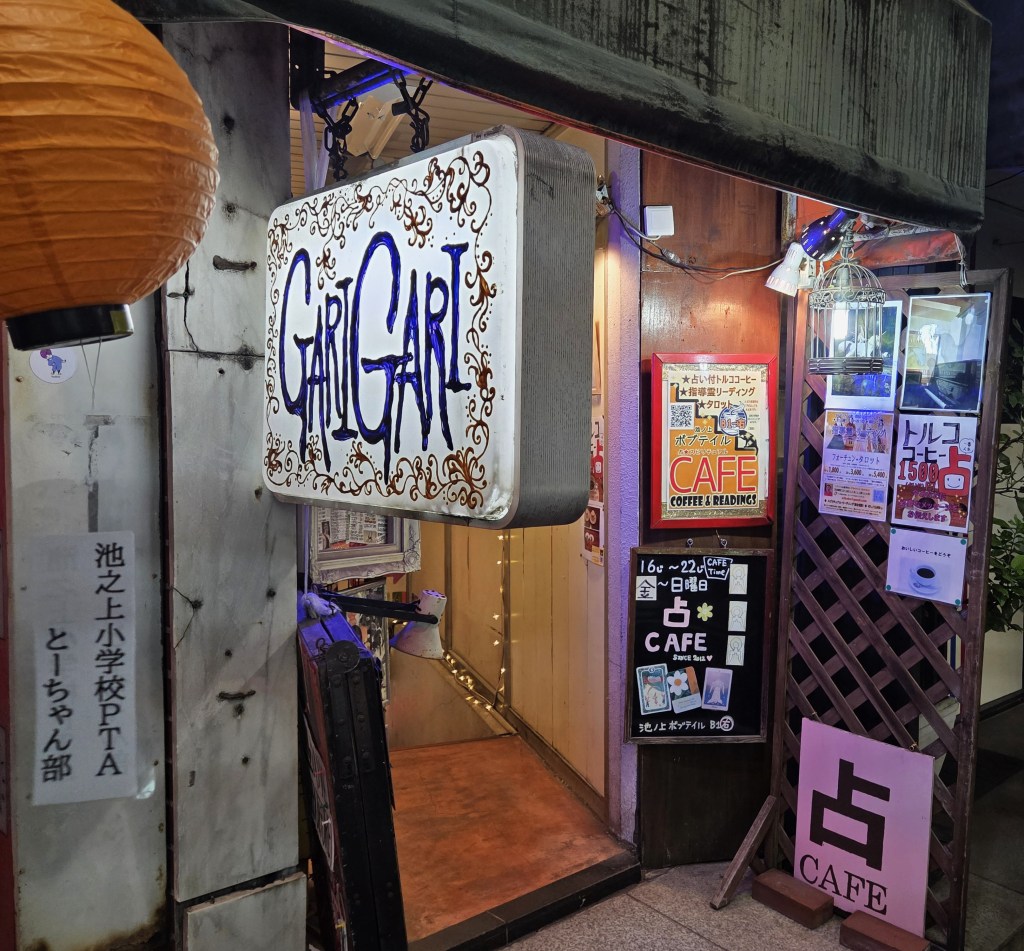
A short train ride took us there and we had a fantastic time. The two hosts, Samm and Joy, were very welcoming and excellent emcees. The series is held at what you might call a dive bar that is located down a long flight of steps. The open mic is for music and poetry and there was a combination of both presented. Mariko performed a series of tanka written after her 23 year-old cat recently died. Very moving. I recited three poems and then told my ginseng hunter story and had a very positive response from the audience. When leaving, Samm said everyone was really into what I shared and if ever back in Japan. . .
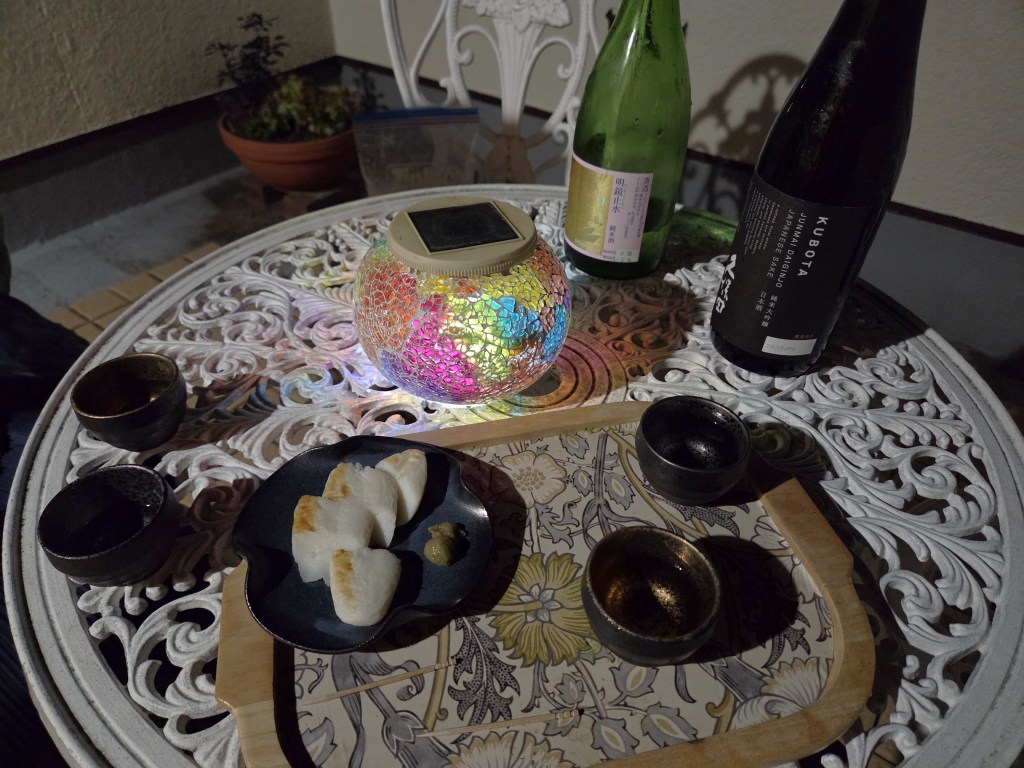
Back at the house, late, we had another small bite to eat and shared a little sake on the patio. It was a very fulfilling, vibrant and memorable first day in Tokyo!
(Click on thumbnail for larger picture.)
October 16
Rain day. Steady rain falling throughout.
One last wonderful Kazuaki breakfast, as I leave early tomorrow in the morning to catch a train to Tokyo and my final two full days in Japan. I fly out Sunday afternoon and arrive back in Buffalo about 6:45 PM on Sunday, with a two-hour layover in Washington DC. But enough of that.
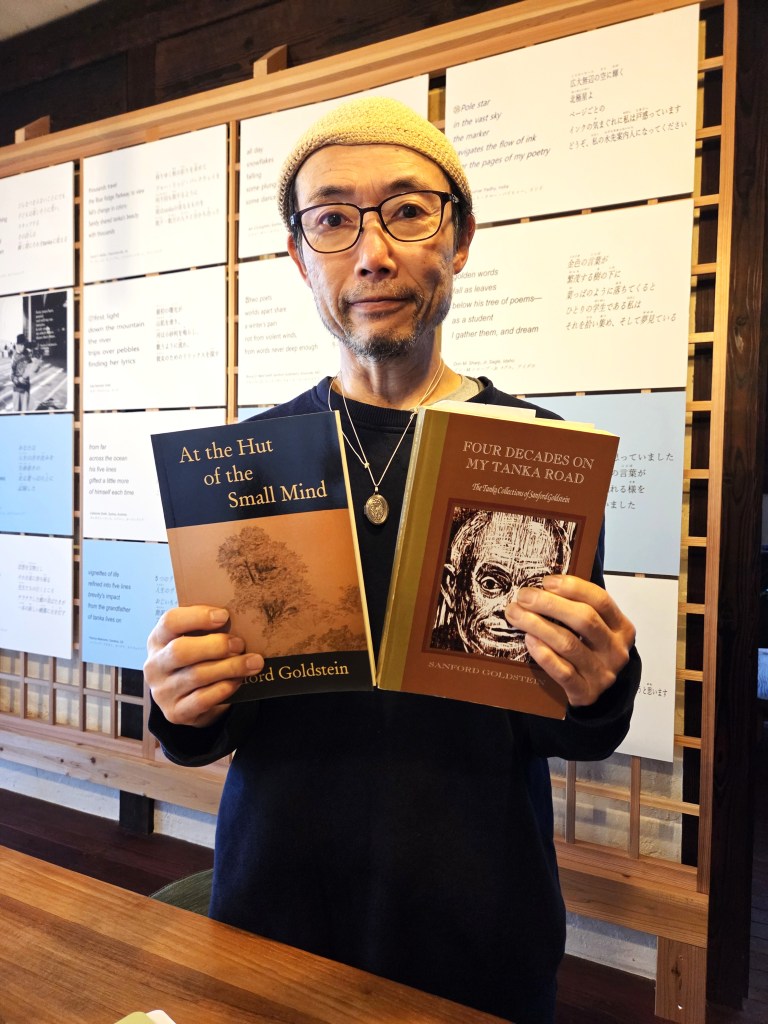
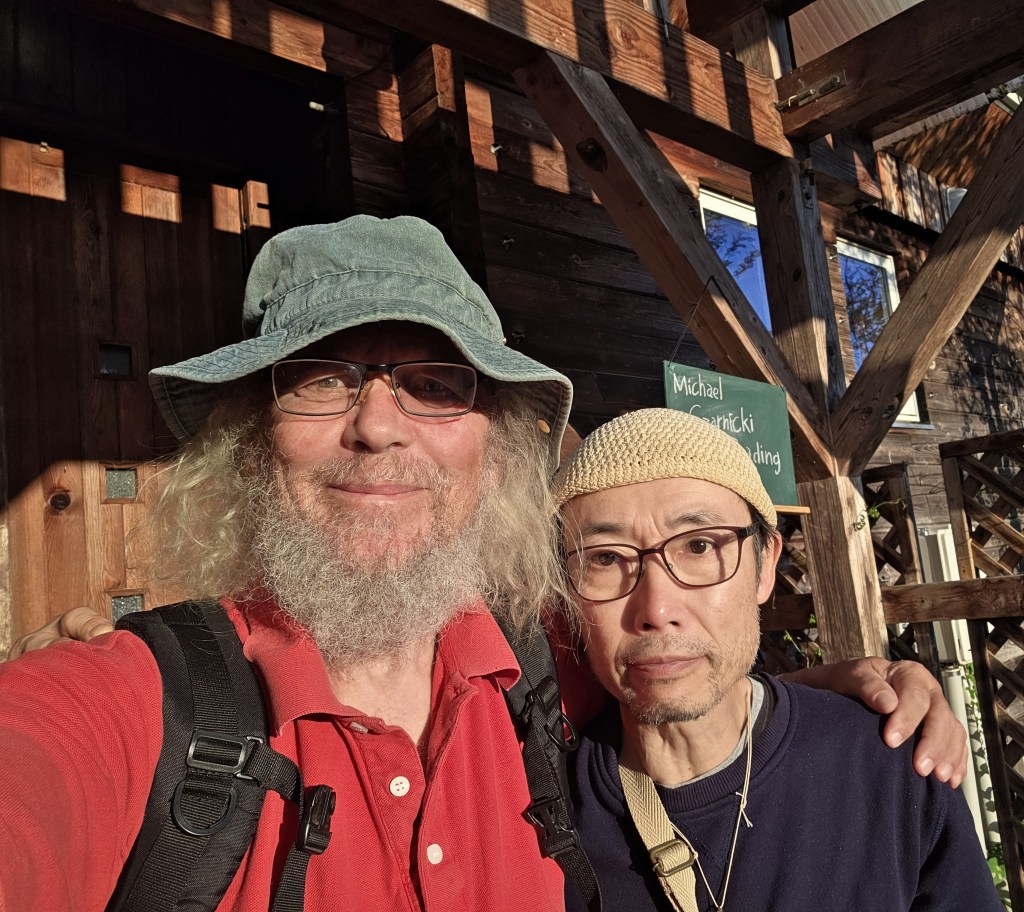
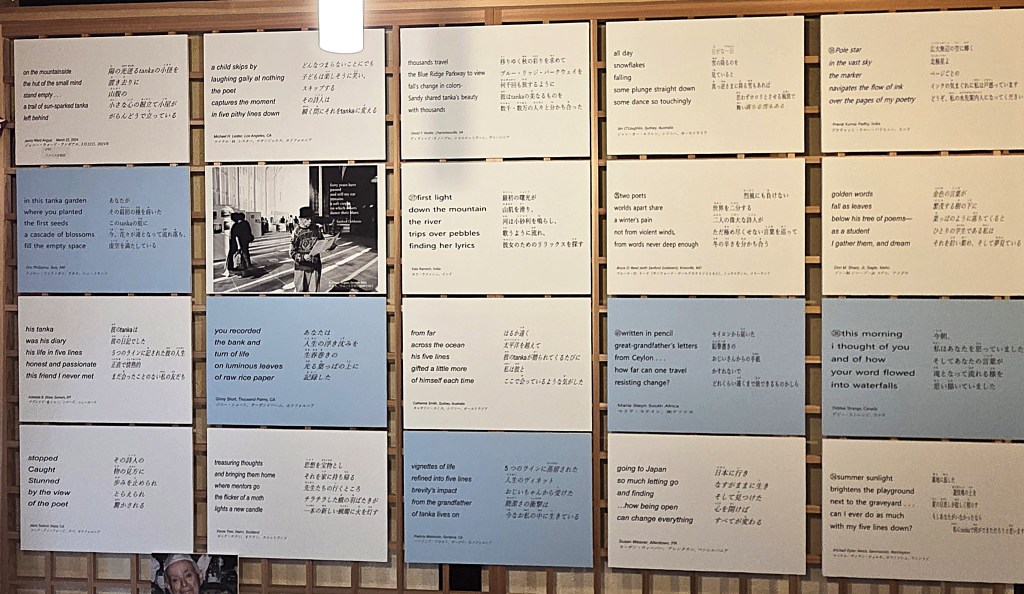
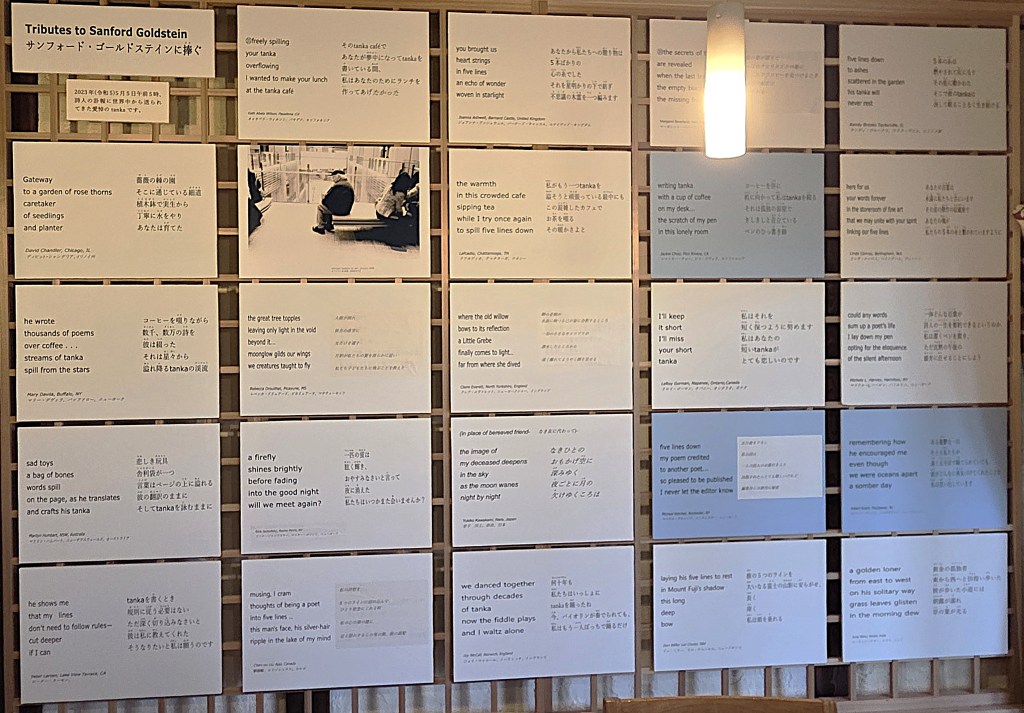
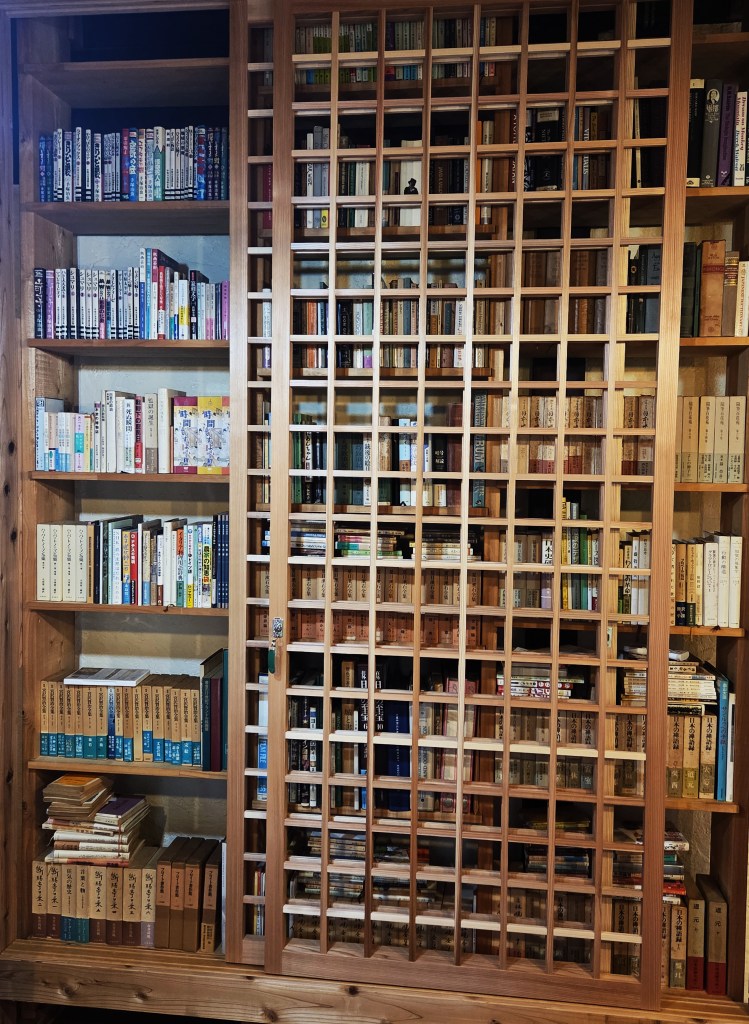
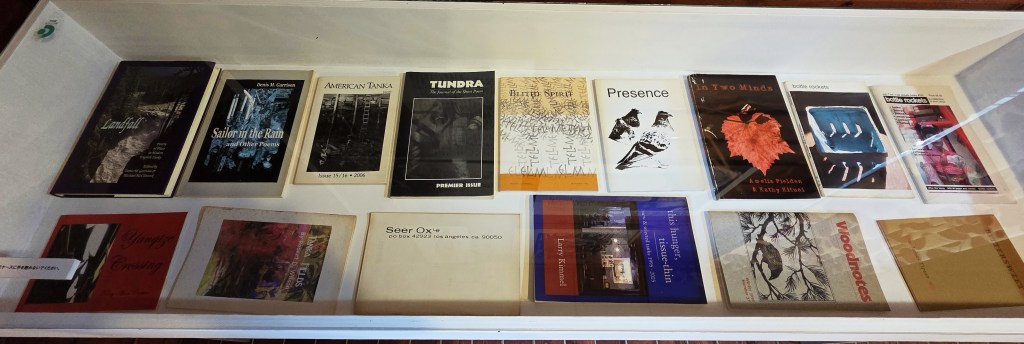
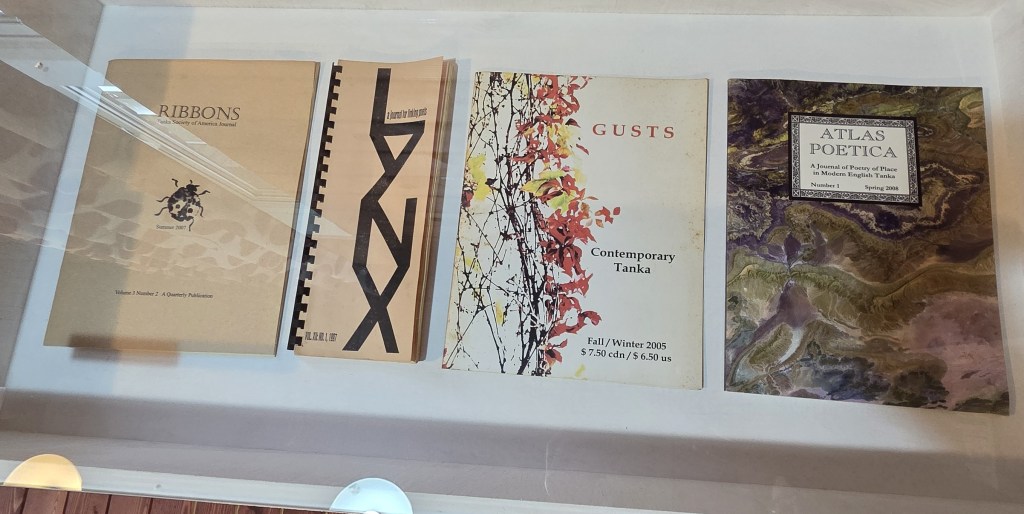
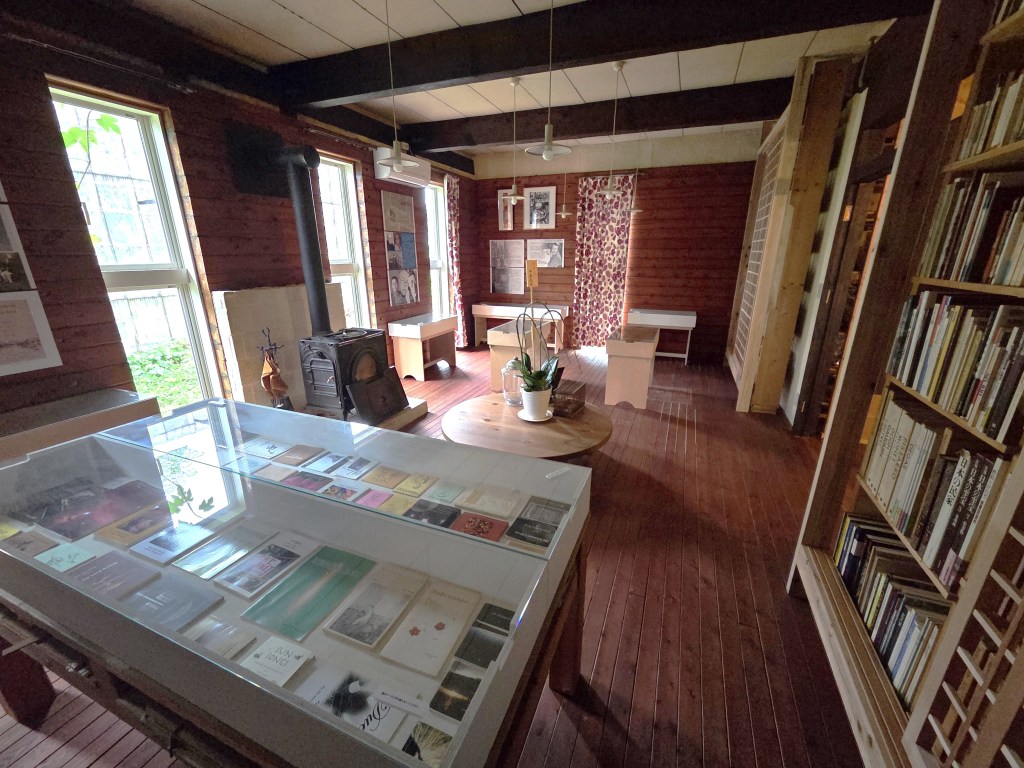
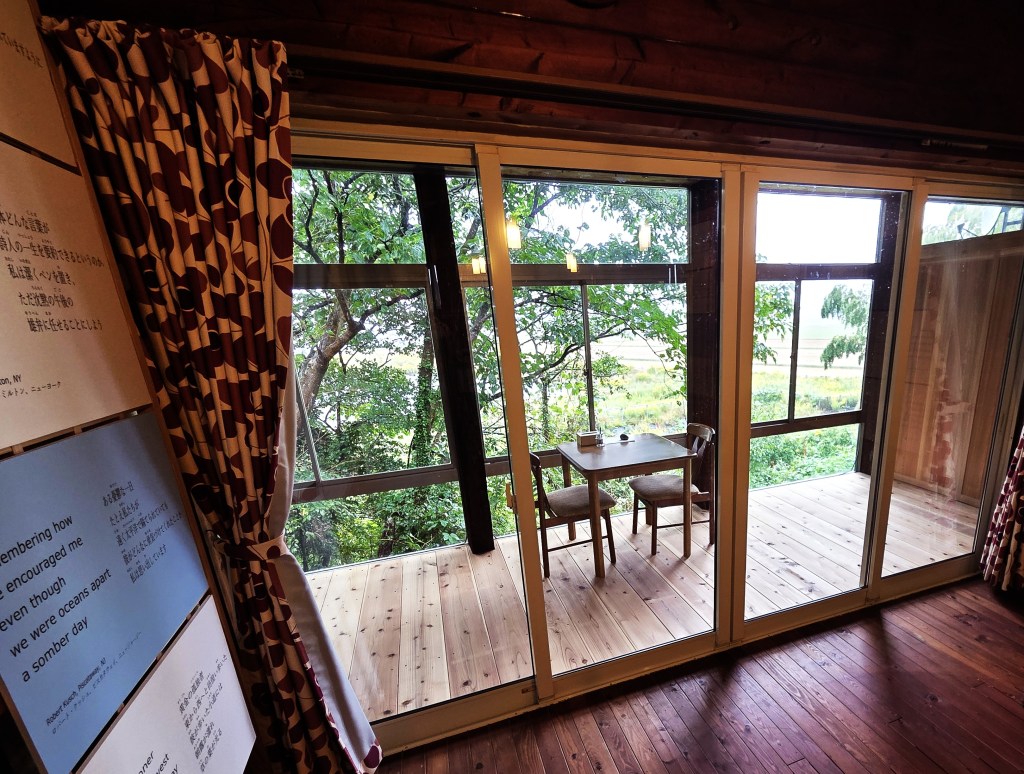
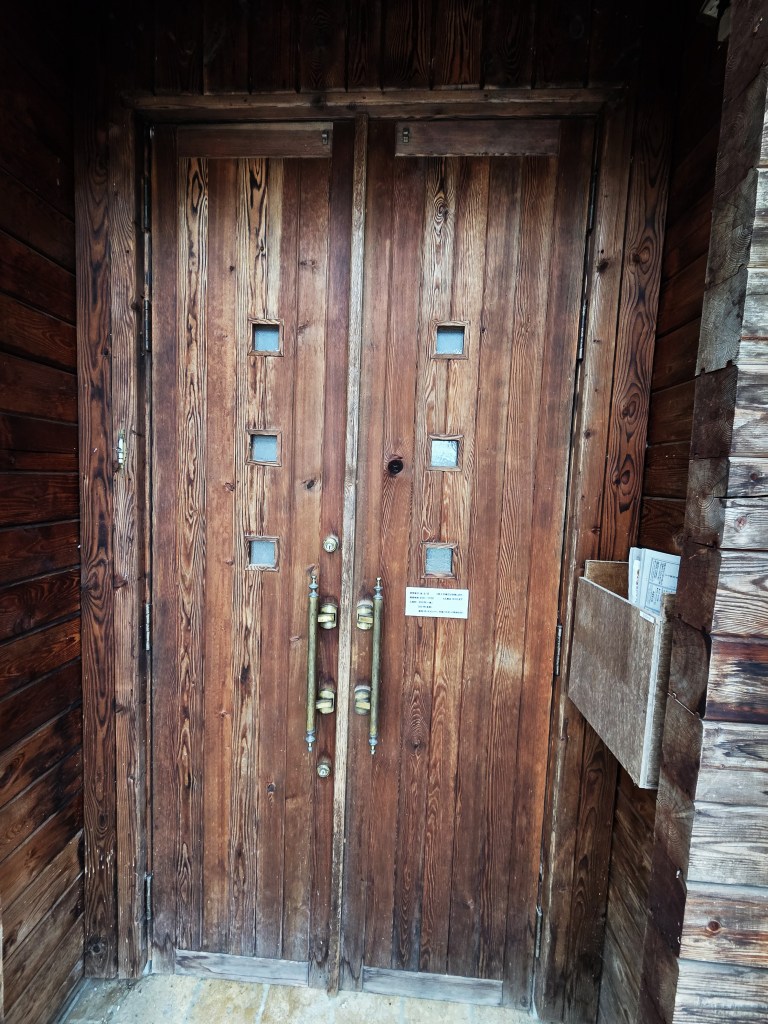
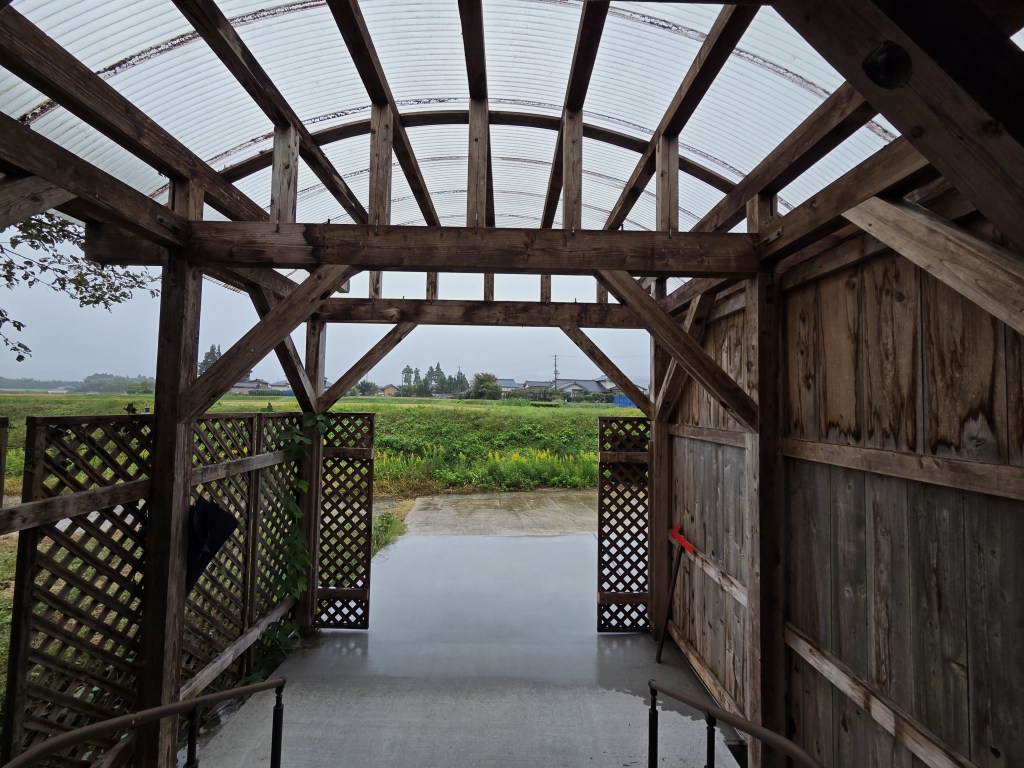
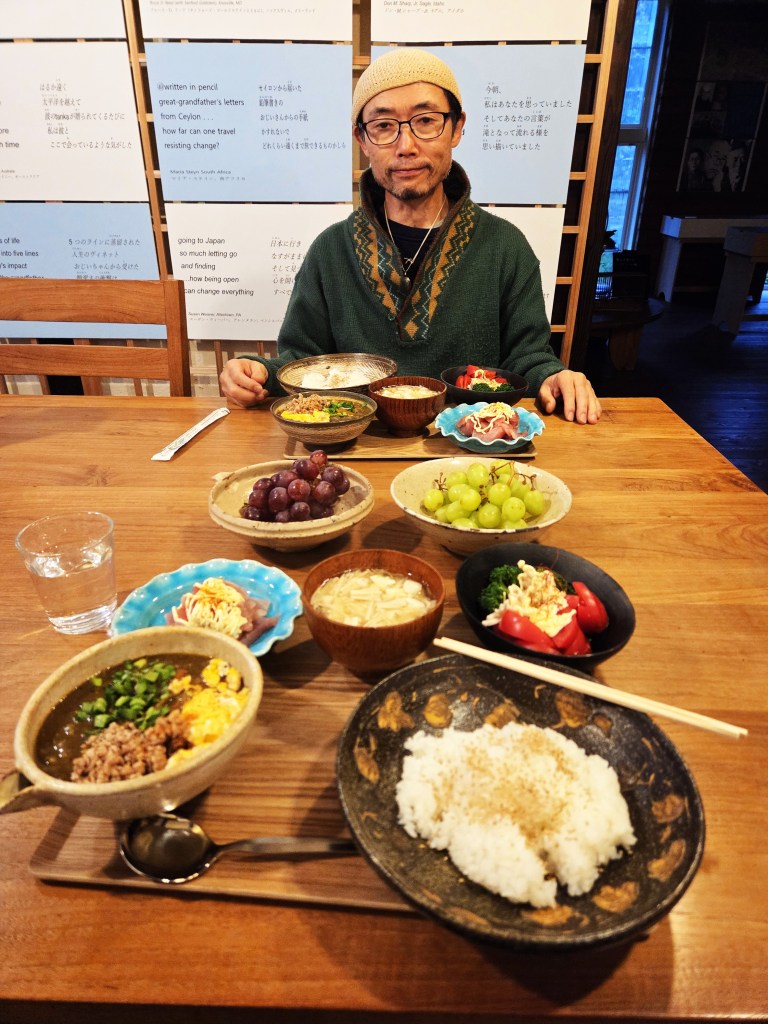
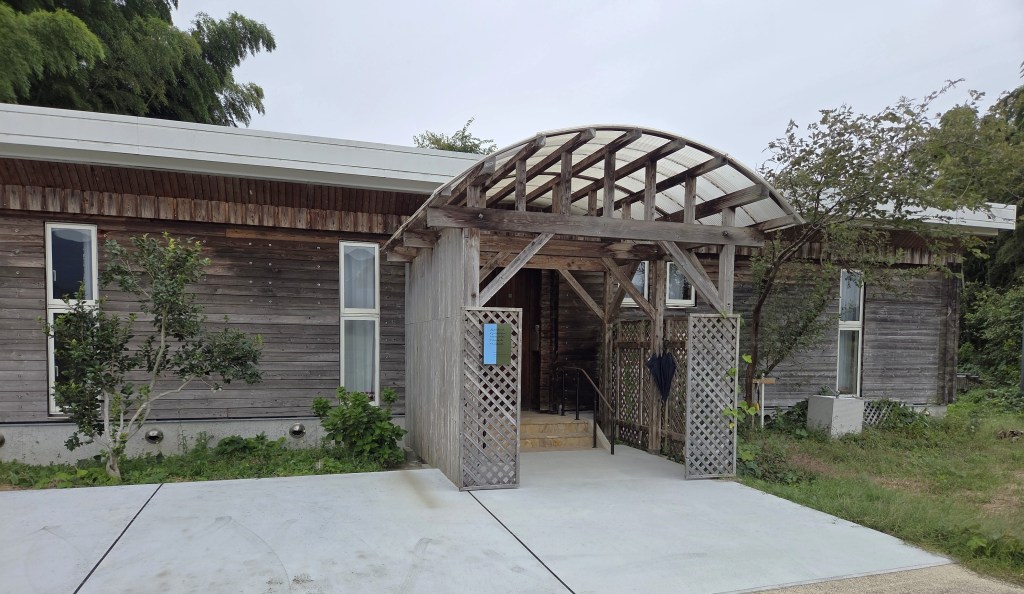
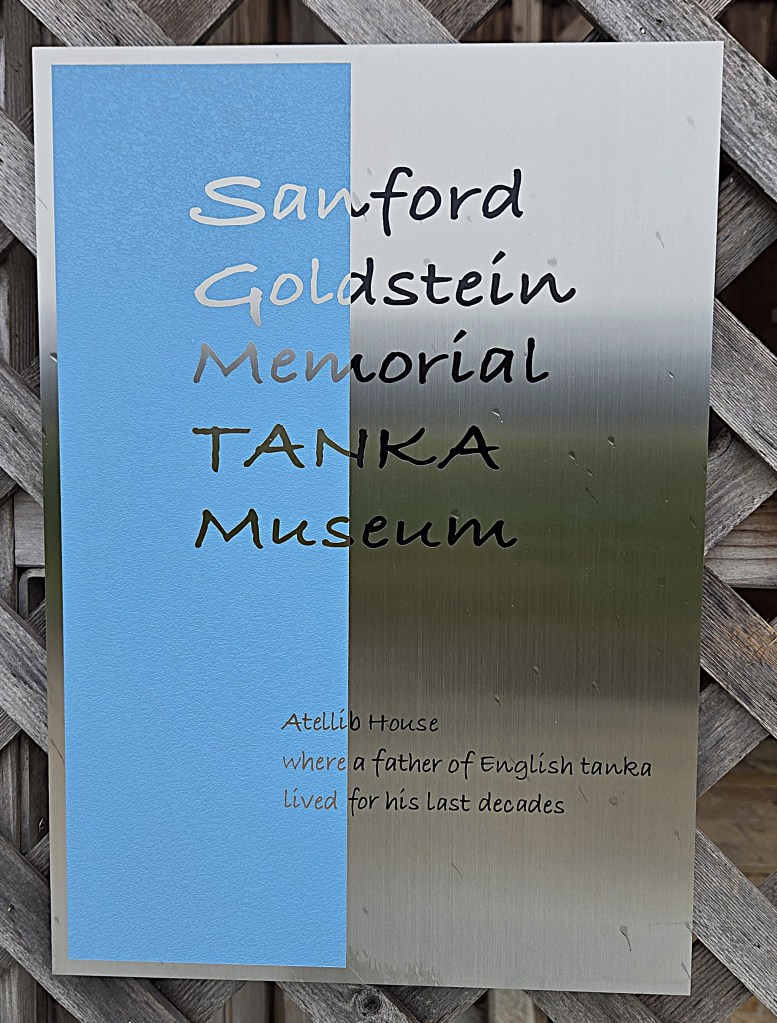
I took a number of pictures of Kazuaki’s house and the museum he has started here to honor Sanford Goldstein, the “Grandfather of English Tanka.” The museum is in its early stages, just begun only a few months ago. Here’s a link to the webpage:
I’ll be working with Kazuaki to help promote the museum after I settle in for the Winter. Or, as he says, hibernating.
Had a wonderfully pleasant surprise this afternoon. As I was working in the study, somebody knocked on the door. When Kazuaki opened it the woman said “You must be Kazuaki.” He then replied, “and you are Kiyo.” They had never met before, but knew each other through what I have said and written.
Kiyo and I met September 30 in Matsushima on Oshima Island. We had a brief talk that I wrote about on the webpage for that day. She was visiting Matsushima and lives in nearby Niigata. After our meeting we have kept in touch via email and she has been following my words and photos on the Japan Journey webpage. Knowing she was in the region here, I invited her to the house reading last weekend but she was out of the area. As she has been following me on my webpage, she knew this was my last day at Kazuaki’s. So, without notifying me, she decided to drive the 45 minutes over and pay a surprise visit!
We sat around the table and talked and I showed pictures of back home on my computer. She hasn’t written poetry but said she’d maybe try to do so. I told her that this Winter I am going to start using a calligraphy set I’ve had around for a few years but have never touched. Then I suggested that she should send me some poems when she starts to write and that I would send her pictures of my calligraphy work when I begin that. I told her it won’t be till December, when I settle in for the Winter on the hill. She agreed to do so. A little incentive for both of us to try something new.
When she left I felt bad that I didn’t get a picture. But, I did write this tanka that I sent to her:
after Kiyo’s surprise visit
grey rainy day continued
but inside lightened
by her youthful nature
her bright clear smile
Did a little more work that was related to home today as it was such a rainy day. Scheduled my next Tuesday ZOOM program for next week, October 21, when I’m back home. This will be about the Japan Journey, Part 1, traveling with Bart. The Tuesday ZOOMs I’ve been doing since covid started. I took a break from them while in Japan, but will start presenting them regularly again. ZOOM link and info can be found on my Facebook page. Or, you can drop me an email for info if you are interested but don’t do Facebook.
Had one last dinner with Kazuaki. He has fixed amazing meals for me while I’ve been here. He is a generous, gentle soul and we have established a meaningful friendship.
Packing to move after six days in one place. Moving to another “home”, with Mariko, in Tokyo, for a couple of days before departing the country. Three weeks ago I left Wheeler Hill. I’ll be back on Wheeler Hill in a little over three days. But two days lie ahead before that and who knows what adventures lie in waiting.
(Click on thumbnail for larger picture.)
October 15
After two days of excursions, today was a relatively quiet and relaxing day. For the first time on this journey I needed to get some work done related to back home, so I spent the morning doing that. I have very much tried to avoid thinking about home while on this journey. Have tried to stay as present as possible and have succeeded fairly well at that. But, there were some things I needed to attend to that have to do with programs I’ll be presenting when I return. Between October 29 and November 23 I have nine events scheduled with a possible tenth one being considered. Four of these will be Adventures in Japan programs where I’ll show photos and read some of the poetry I’ve written while here.
After the morning work Kazuaki had a meeting to go to in Shibata. We first stopped at the train station where I bought a ticket for a Friday morning ride on the shinkansen train for Tokyo. The final two days of my journey will find me in Tokyo, staying with Mariko, a Japanese poet/friend. It will include going to a poetry event that has an open mic in which I should be able to share some of my poetry. Sunday morning she will accompany me to the bus station and I’ll ride a bus to Haneda Airport for my flight back home.
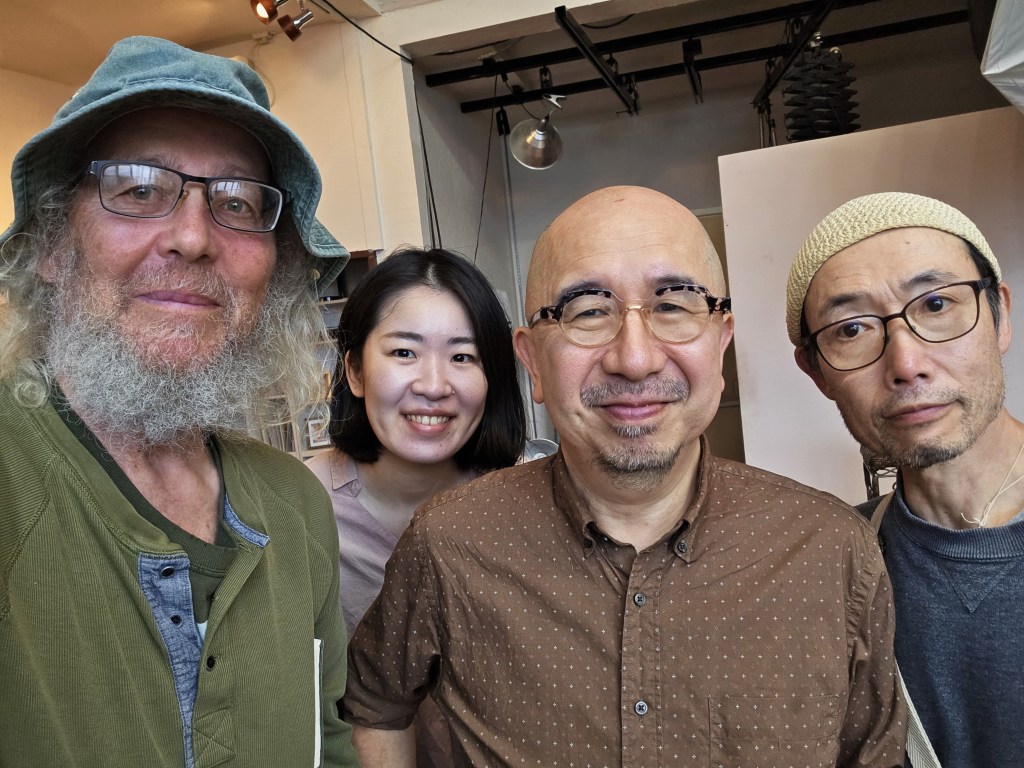
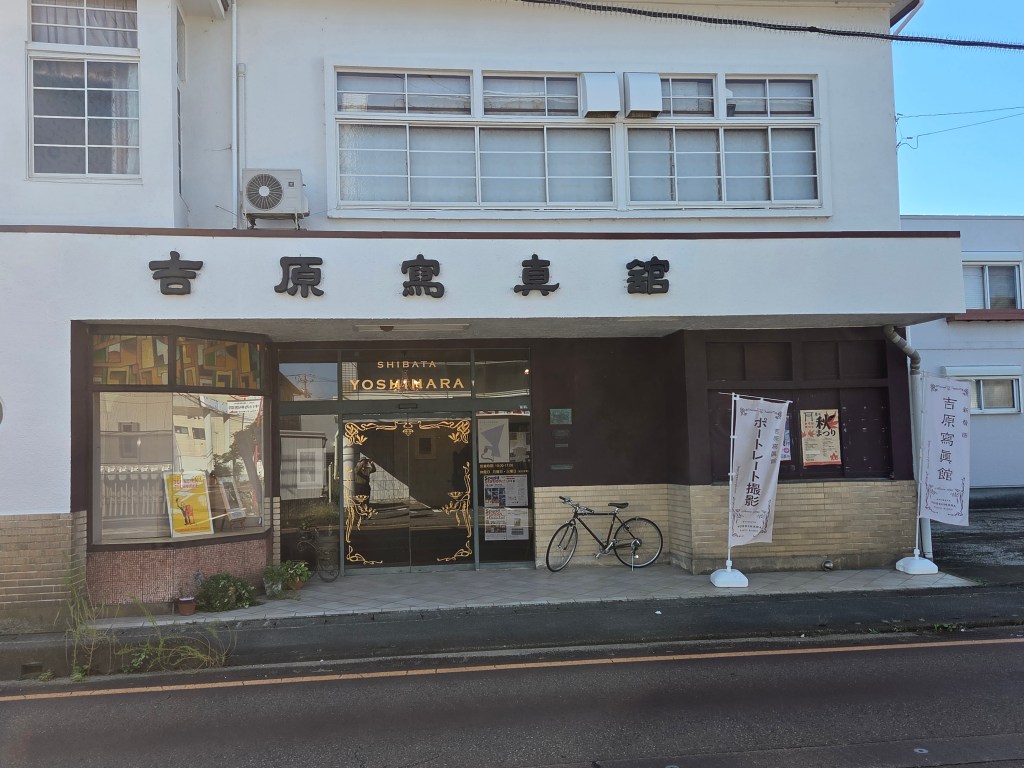
We then stopped at Yoshiwara Photo Studio to visit a friend of Kazuaki’s. The current owner is photographer Yukihiro Yoshiwara, the sixth generation of photographers in his family!
He showed us around and we had a pleasant conversation about the history of the studio and about Shibata. We were joined by Naoko Hasegawa. She is another photographer who works with the studio.
I find it amazing that six generations of the Yoshiwara Family have continued the photographic tradition! I wonder if there’s any other family in the world that could claim that?
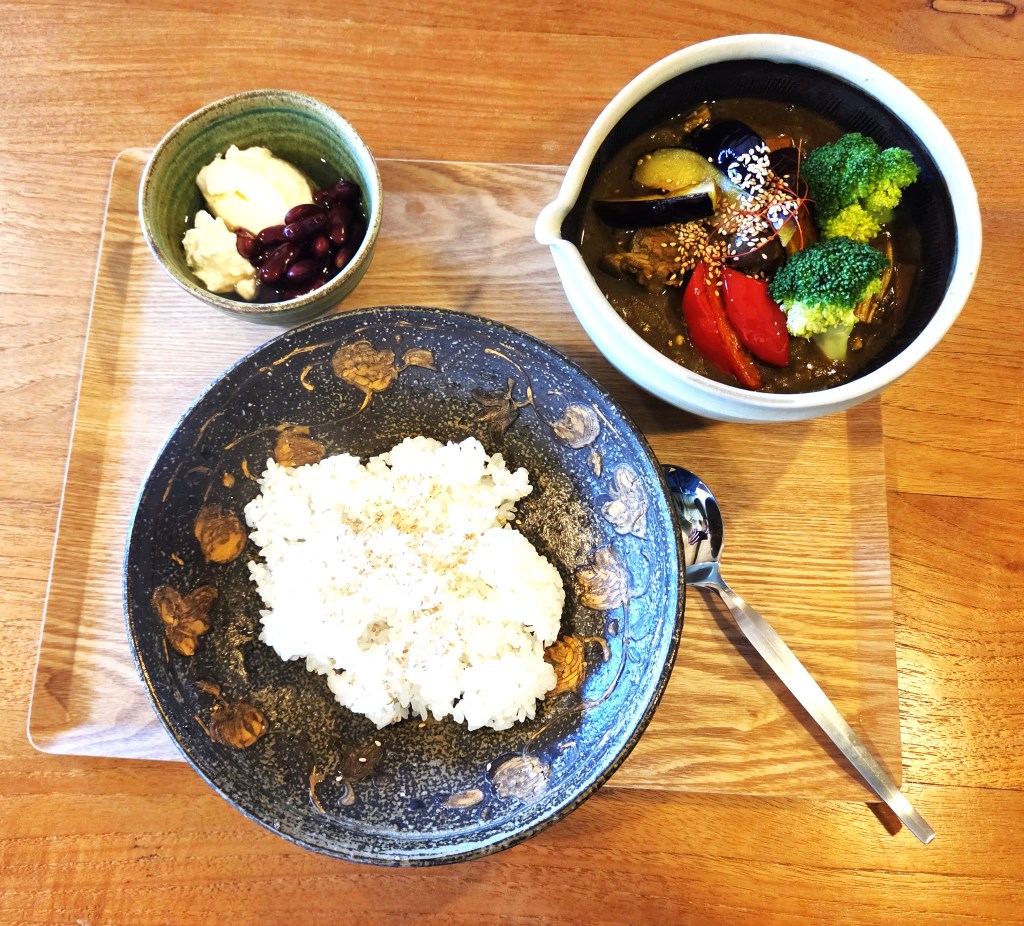
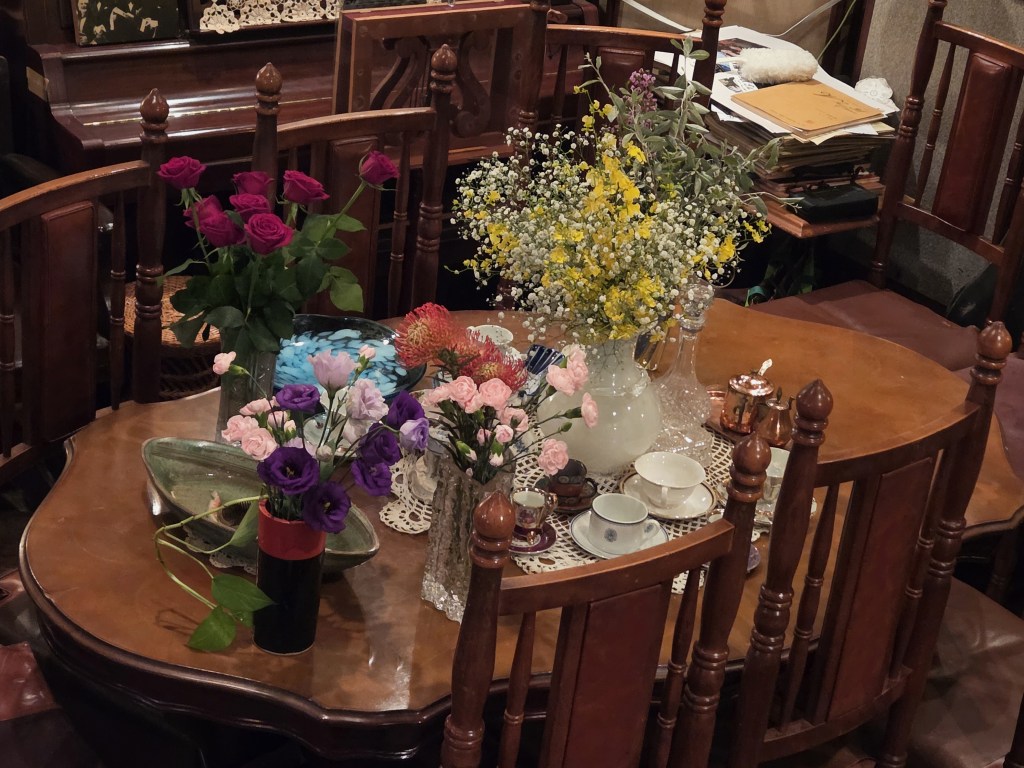
Before leaving Shibata we stopped one more time at Tanka Café for a little meal. The owner, Shiigehasu had just put a number of flower arrangements on the dining table in the café. Once again, a contented time in this quiet, comfortable place in Shibata.
In the evening we shared a little sake, food and poetry back at the house. The journey is getting near the end and this is the Daily Spontaneous Poem I wrote before turning in:
trying to stay present
harder when getting close
to leaving
when getting close
to returning
(Click on thumbnail for larger picture.)
October 14
An exhilarating, and somewhat unexpected day!
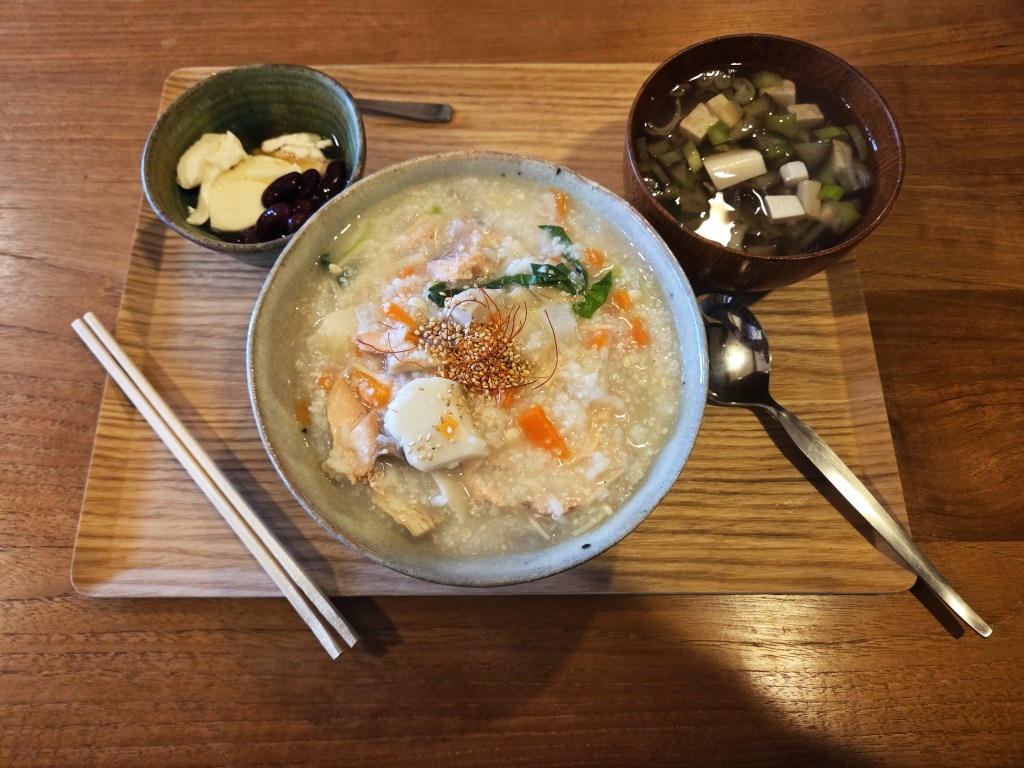
This was the second day of our planned excursions. After another superb breakfast, this time of rice porridge, we headed south to touch base with Ryokan’s past, a 19th Century Zen Monk poet beloved in Japan and one of my favorite poets.
Akio, one of the people who attended my reading at Kazuaki’s the other day, wanted to meet with us, along with two of his friends, while we were out today. He and his friends were going to meet us for lunch. But when they called Kazuaki while we were driving, they had us meet them at Iwamuro Onsen, which has an over 300 year history!
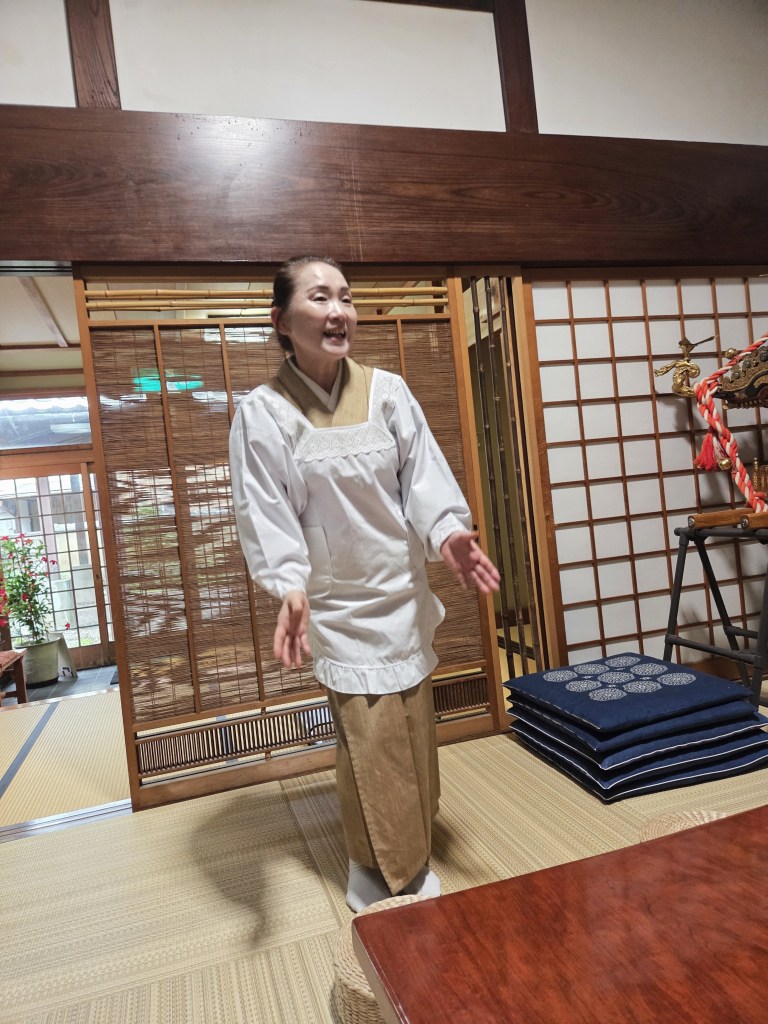
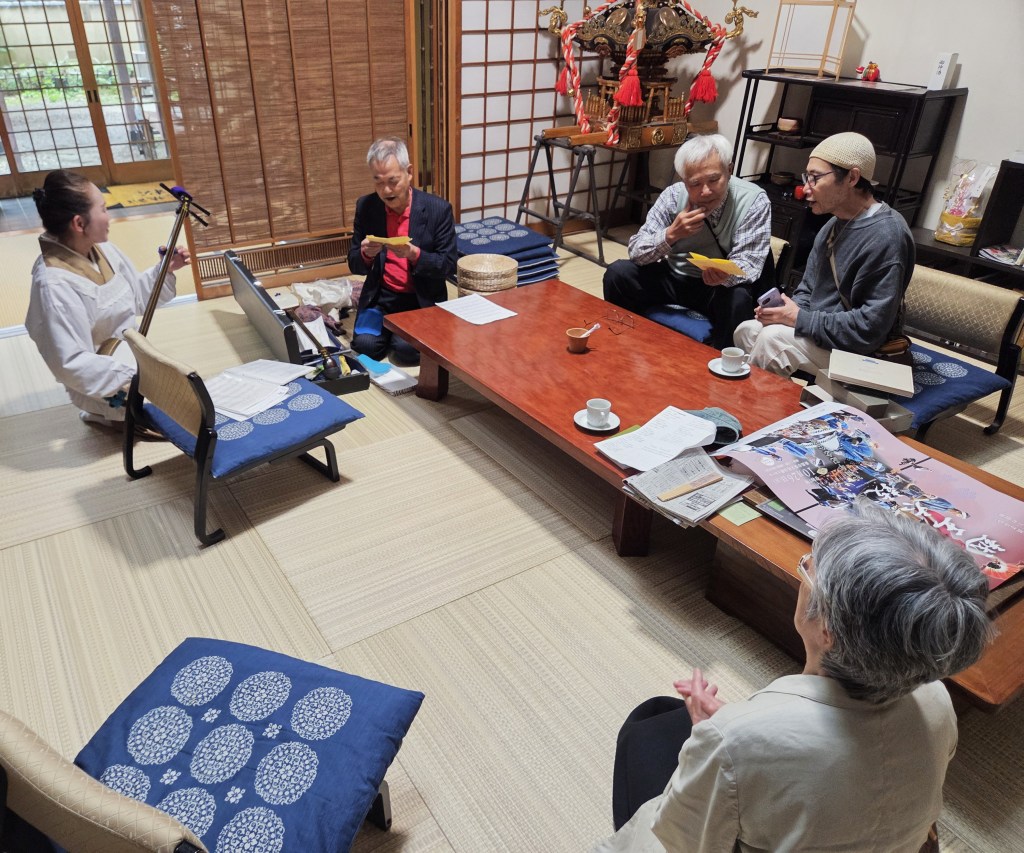
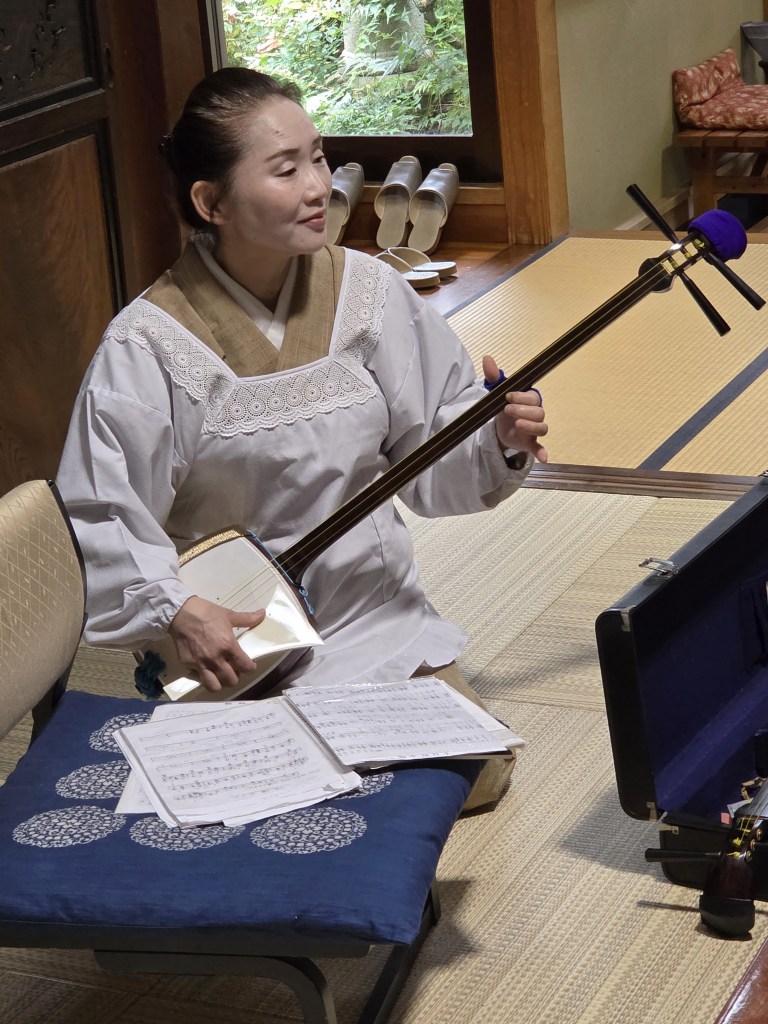
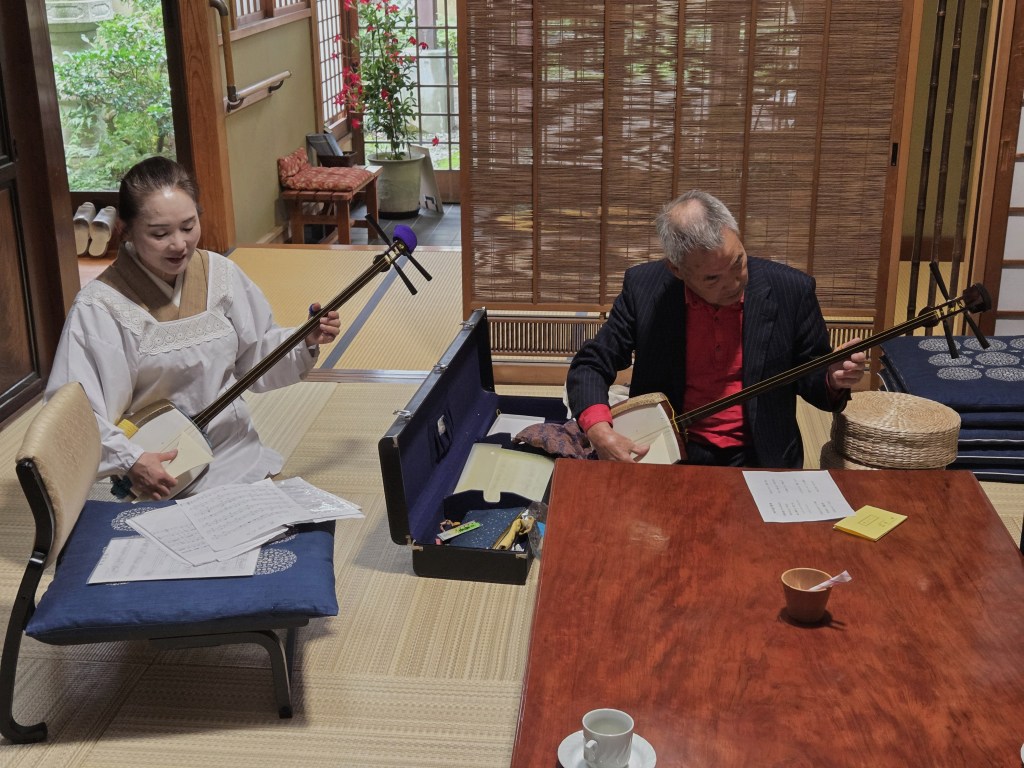
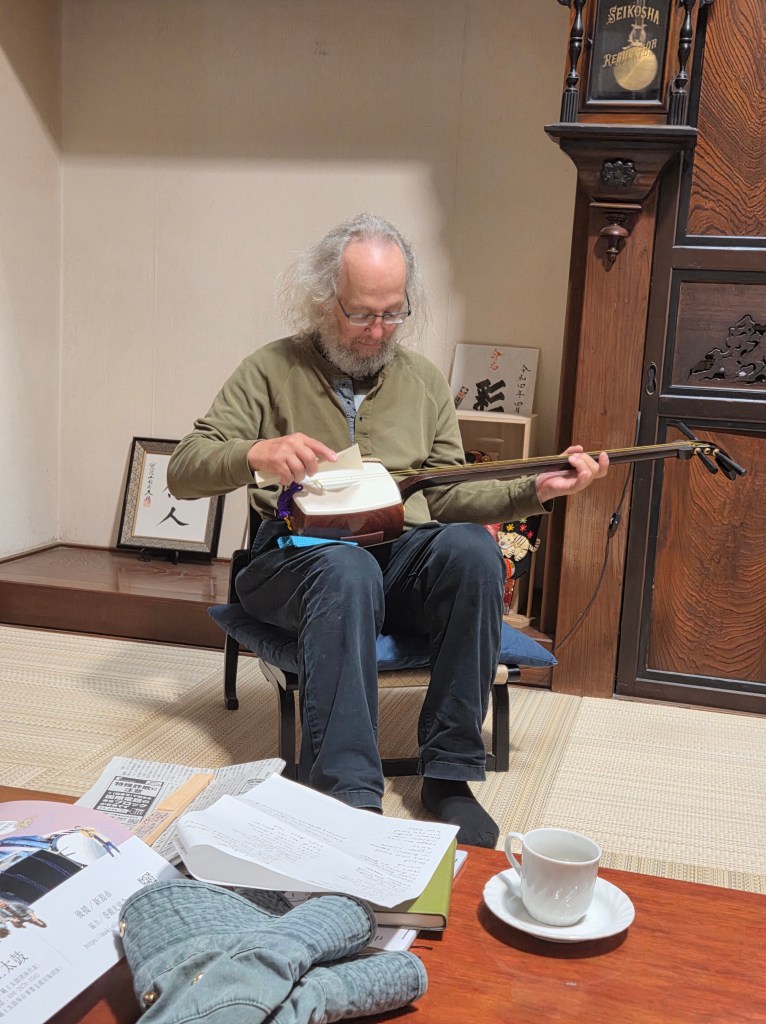
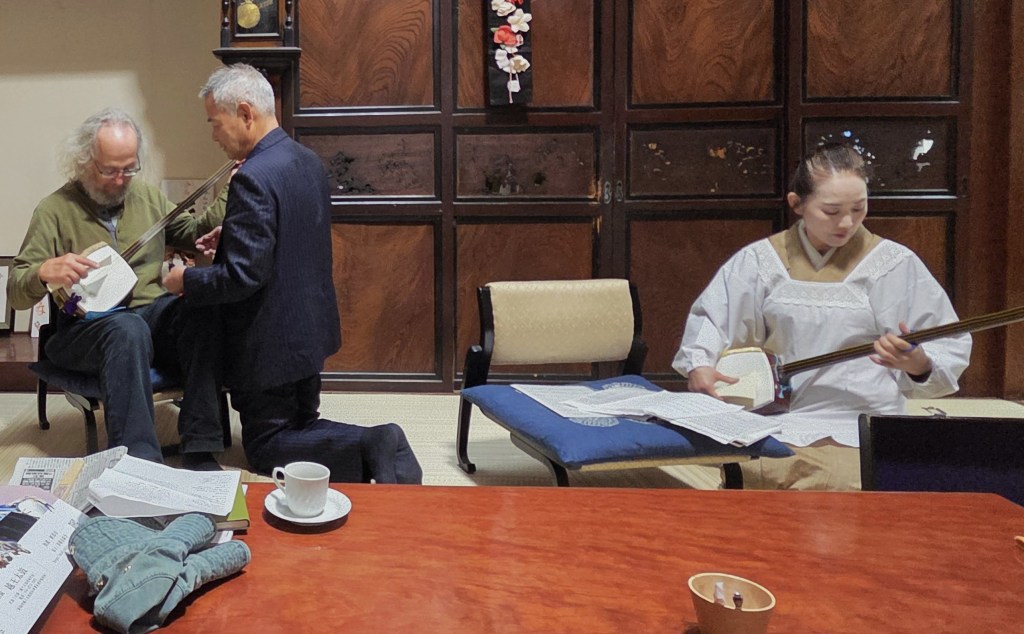
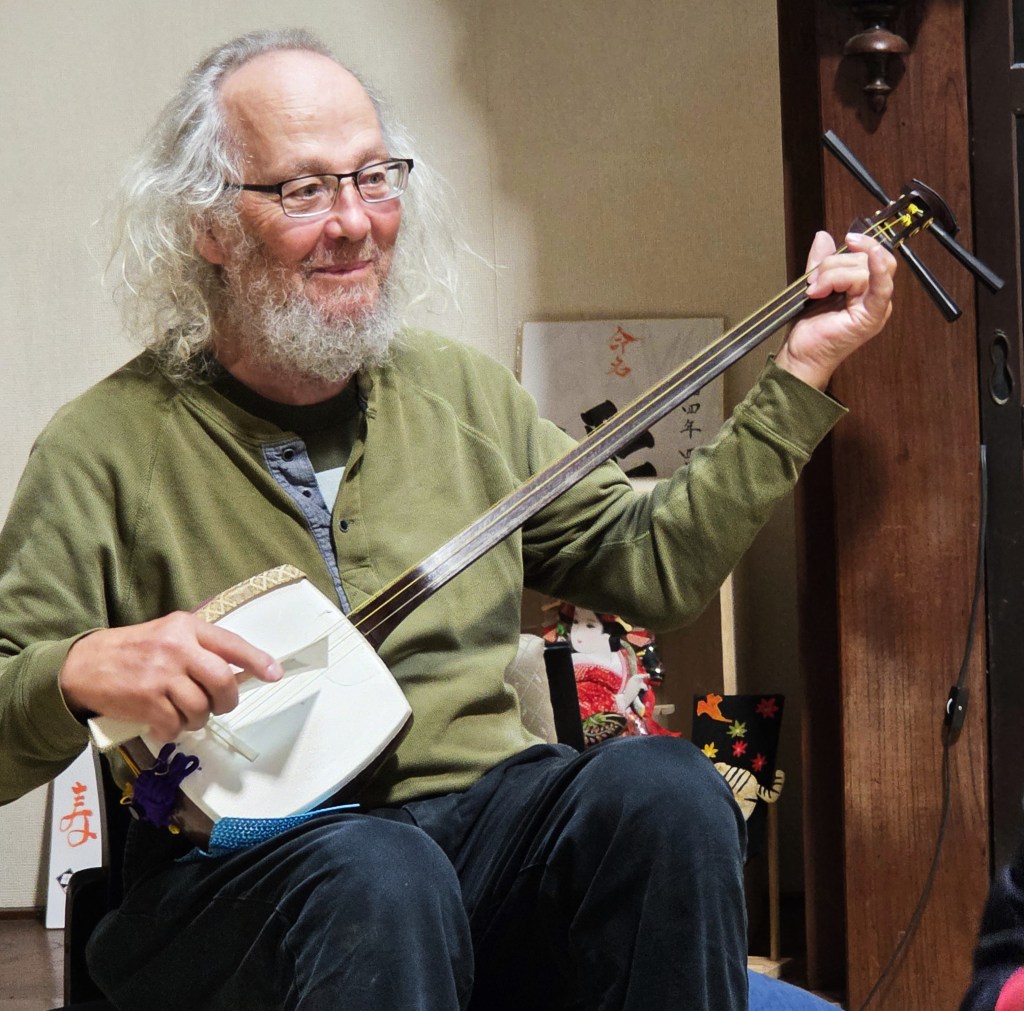
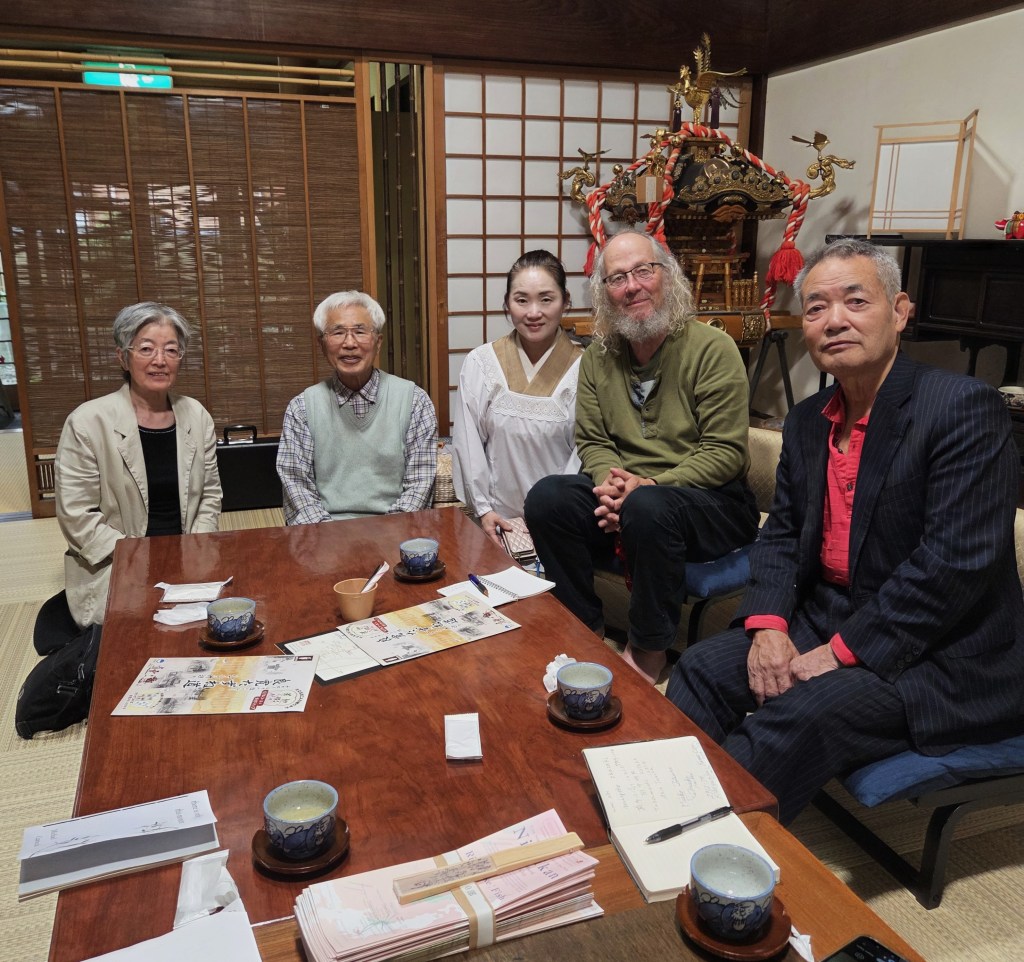
The five of us, four men and a woman, had an amazing three-hour visit there. We sat in a Japanese tatami parlor room and were entertained by Miyoko, an Echigo Geiko, or female entertainer. Echigo Geiko is a variation of the word Geisha and originated at this onsen. Miyoko entertained us with playing the shamisen, singing, serving tea and food and sharing conversation. She wasn’t with us all of the time, so we also had much time for conversation amongst ourselves. At one point, Yoshio said “we lost WWII and are a better country for it.” Meiko, the woman who was with us, read me one of her tanka in English and Japanese and we discussed some of my poetry. Yoshio, who treated us to this experience, brought along his shamisen and played it for a little bit. When Miyoko played for us the others sang along on some traditional Japanese songs. Earlier, Miyoko sang a couple of songs that related stories about Ryokan. Before lunch, three of us went into the onsen for a wonderful soak. This onsen is a rare “black hot spring” wherein the sulphur water combines naturally with carbon and is a slight dark milky color and is reported to be very healing. It is one of 79 health onsens in Japan certified by the government.
This was truly an amazing very Japanese experience for me. Thank you Yoshio!
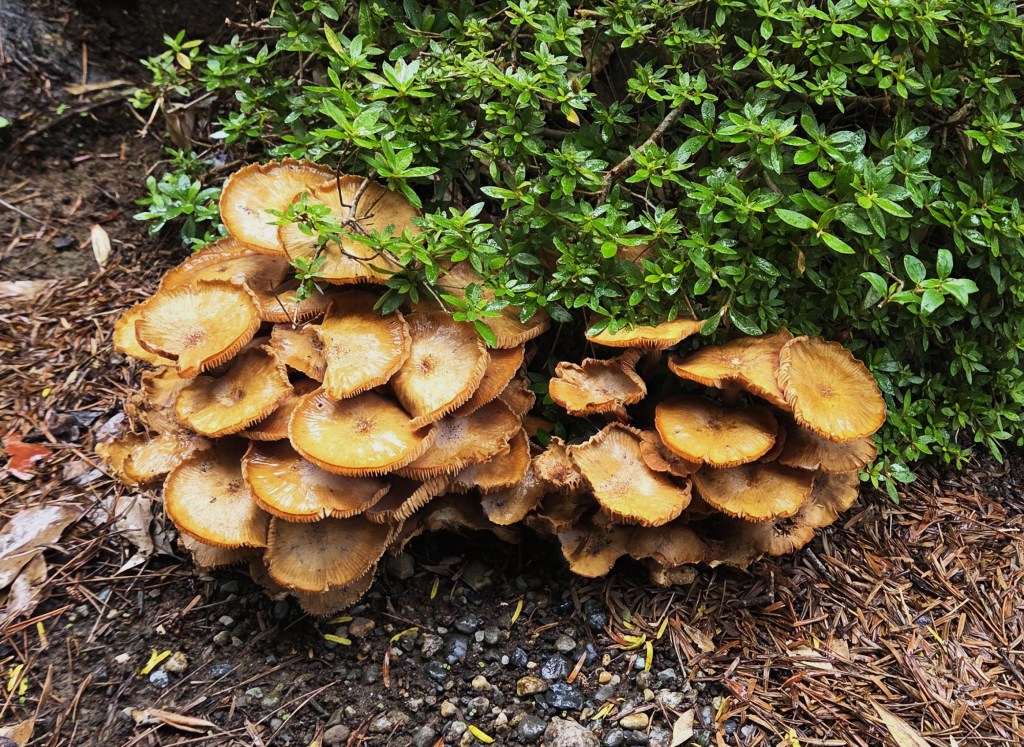
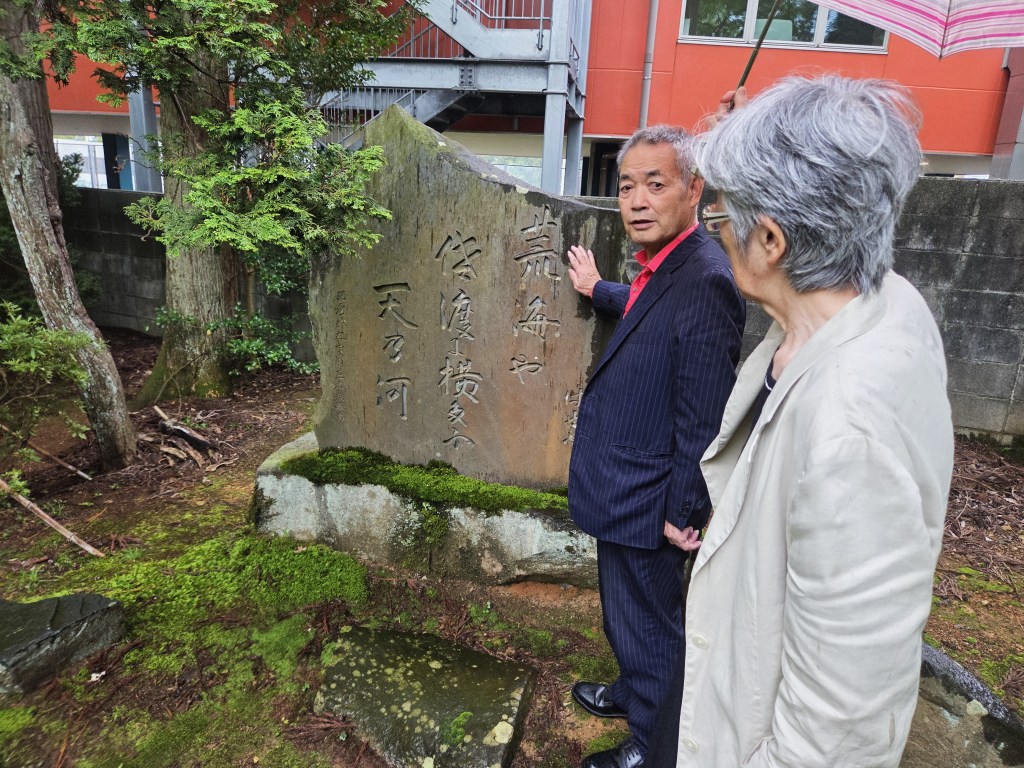
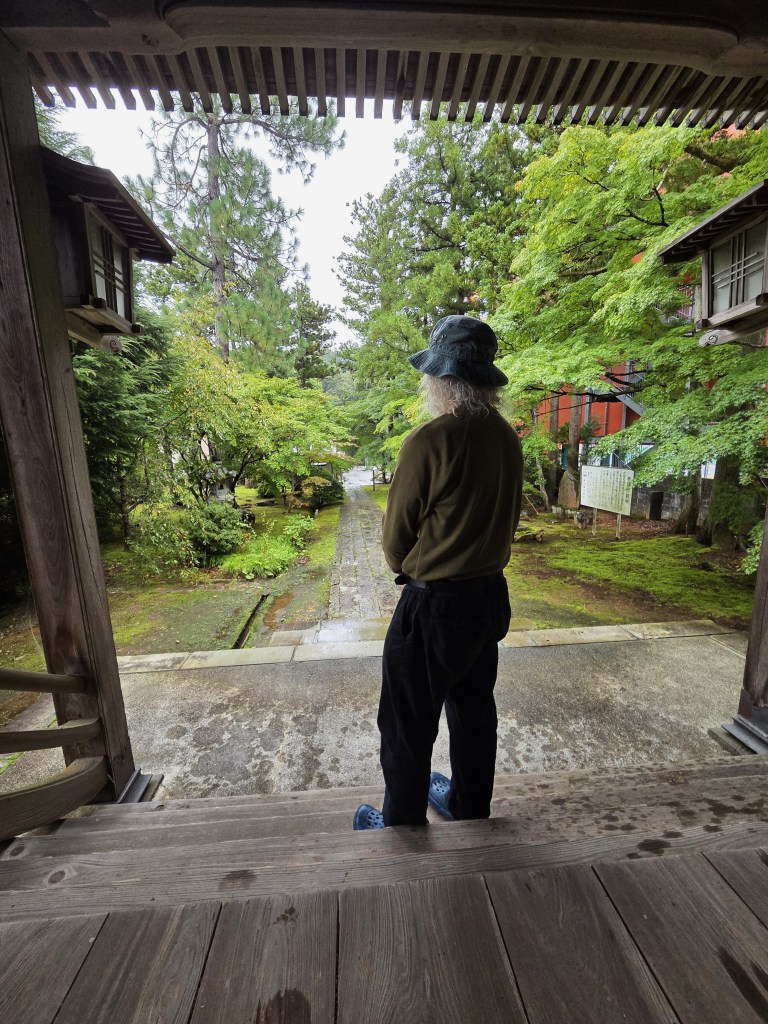
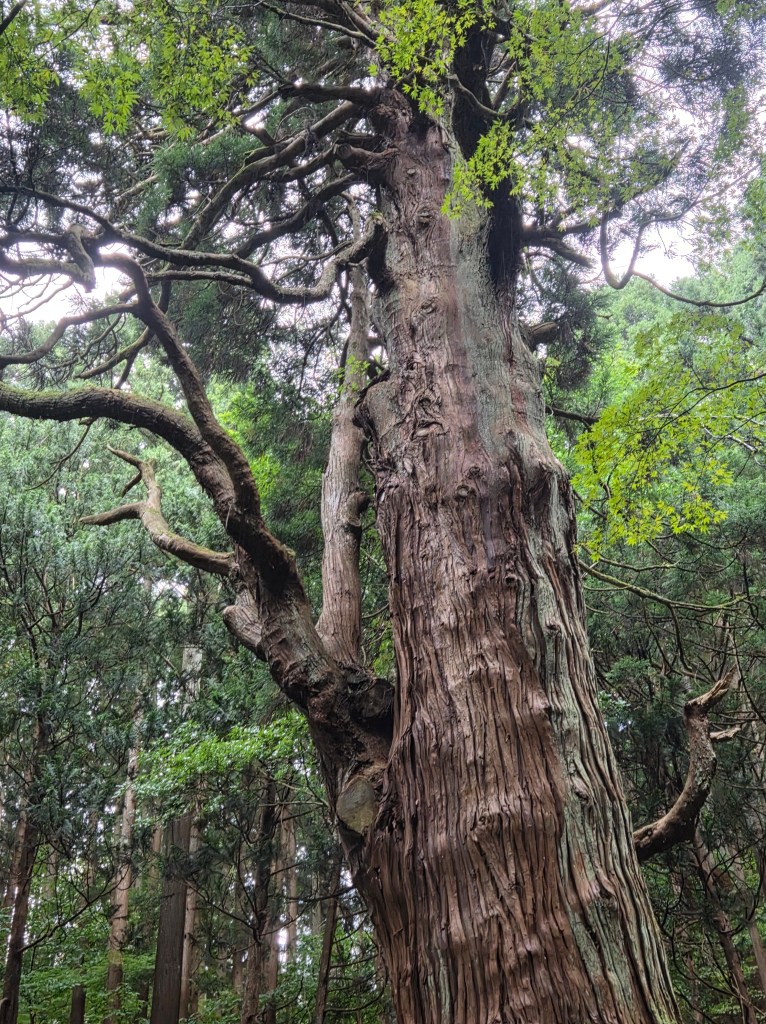
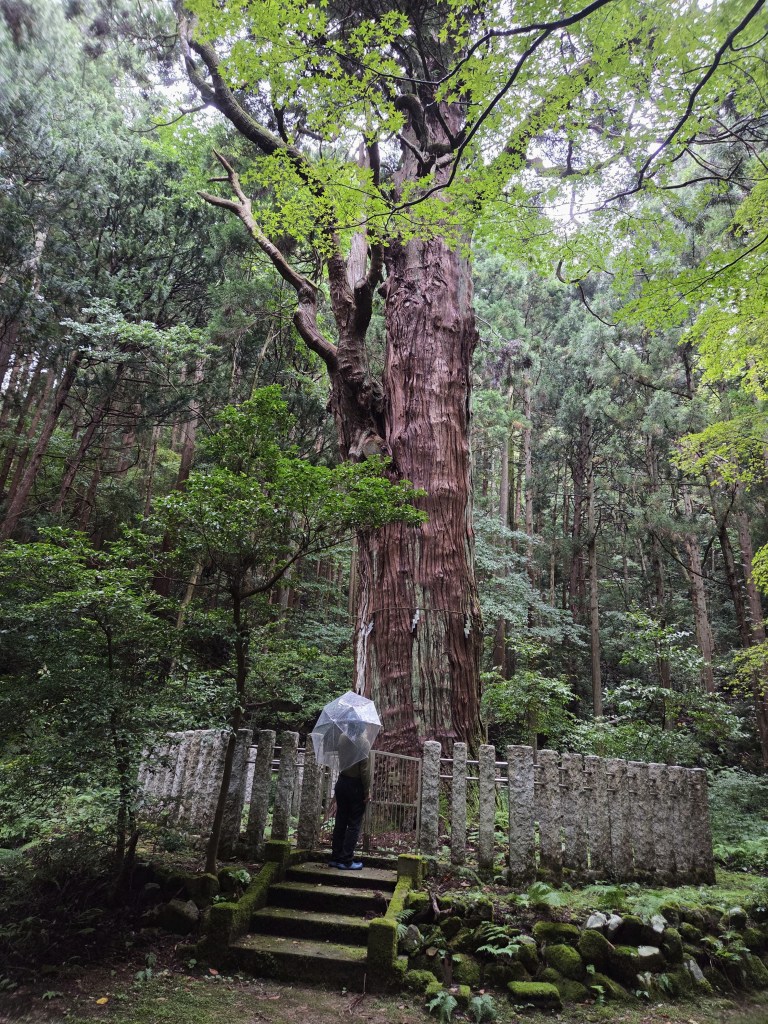
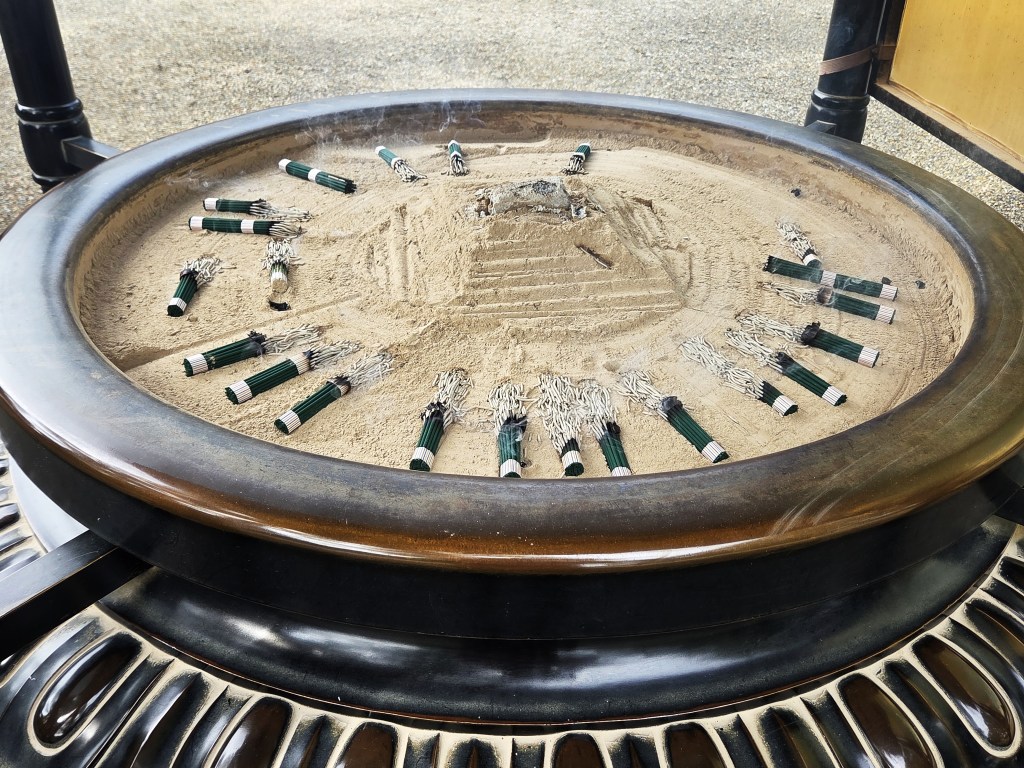
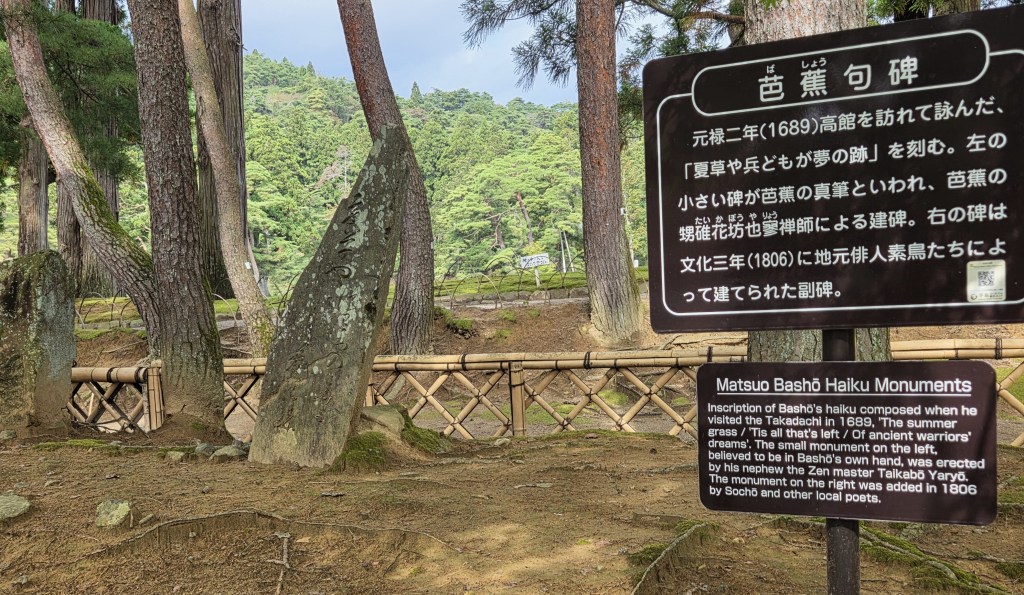
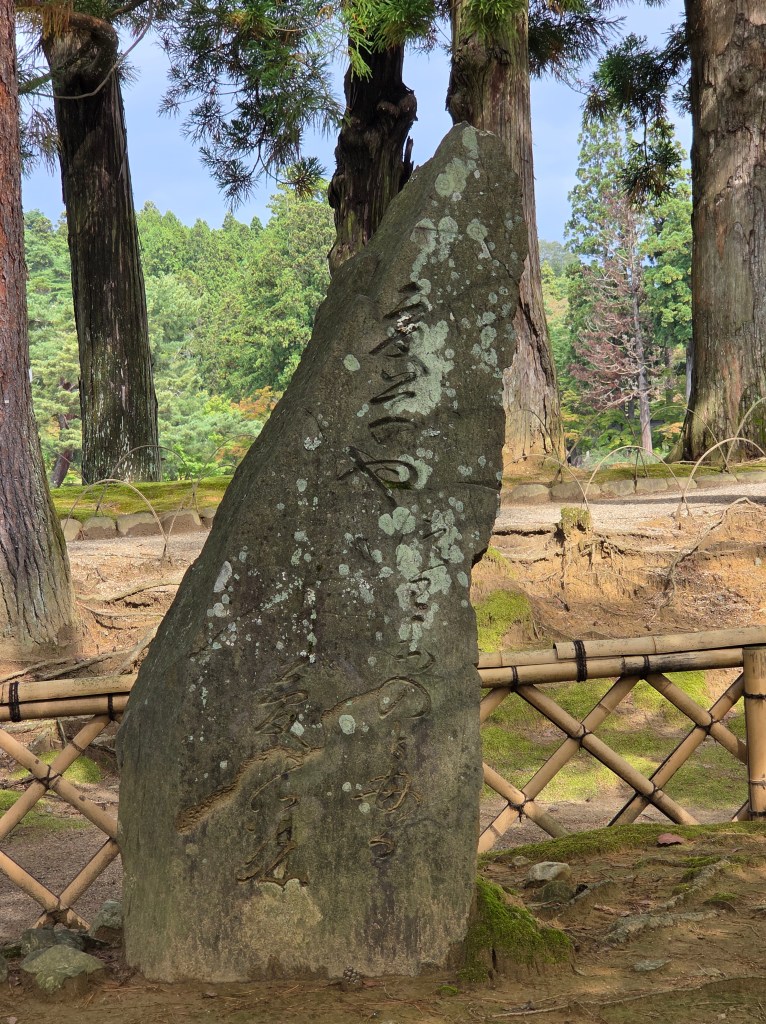
After we departed the onsen we all stopped at Hokoin Temple where there are stone monuments with poems by Basho and Ryokan. The others then departed and Kazuaki and I walked the temple grounds. A monk there gave us each an umbrella and said we should keep them. Besides stone monuments and a cemetery there is a giant Cedar tree that is thought to be over 1,000 years old!
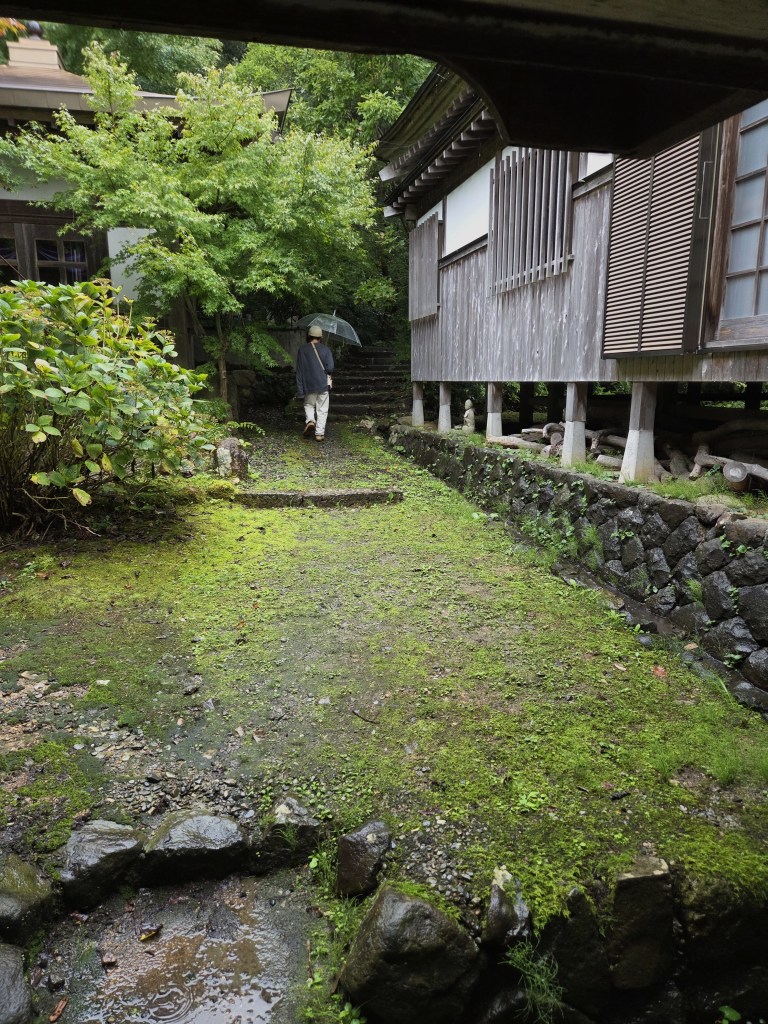
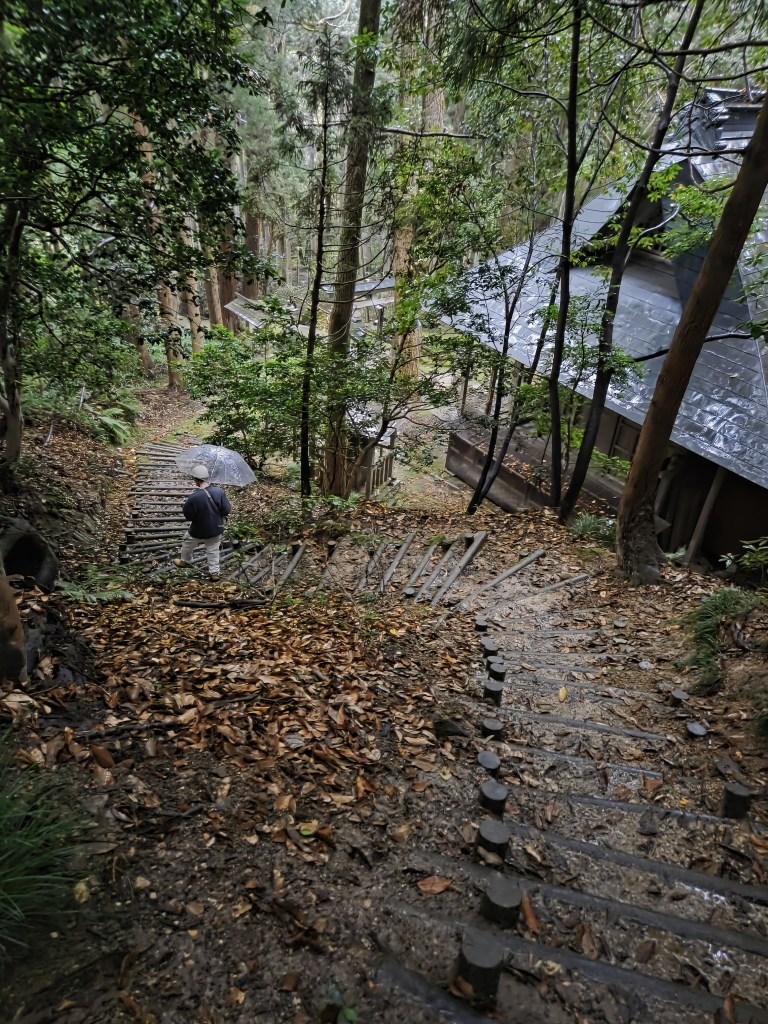
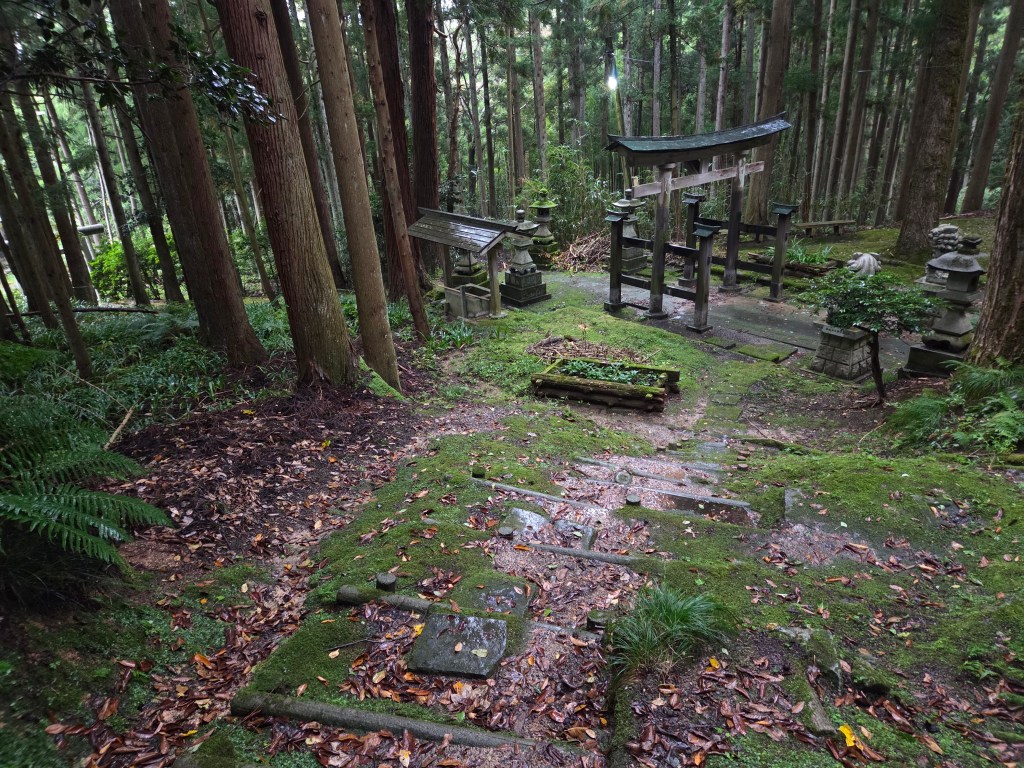
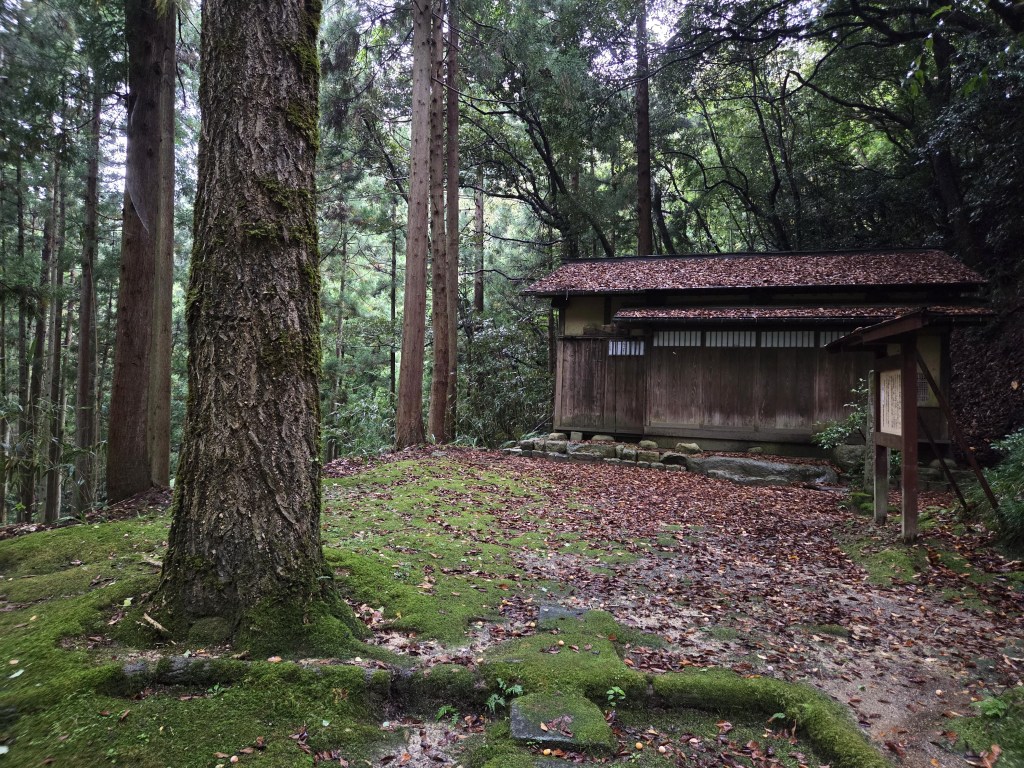
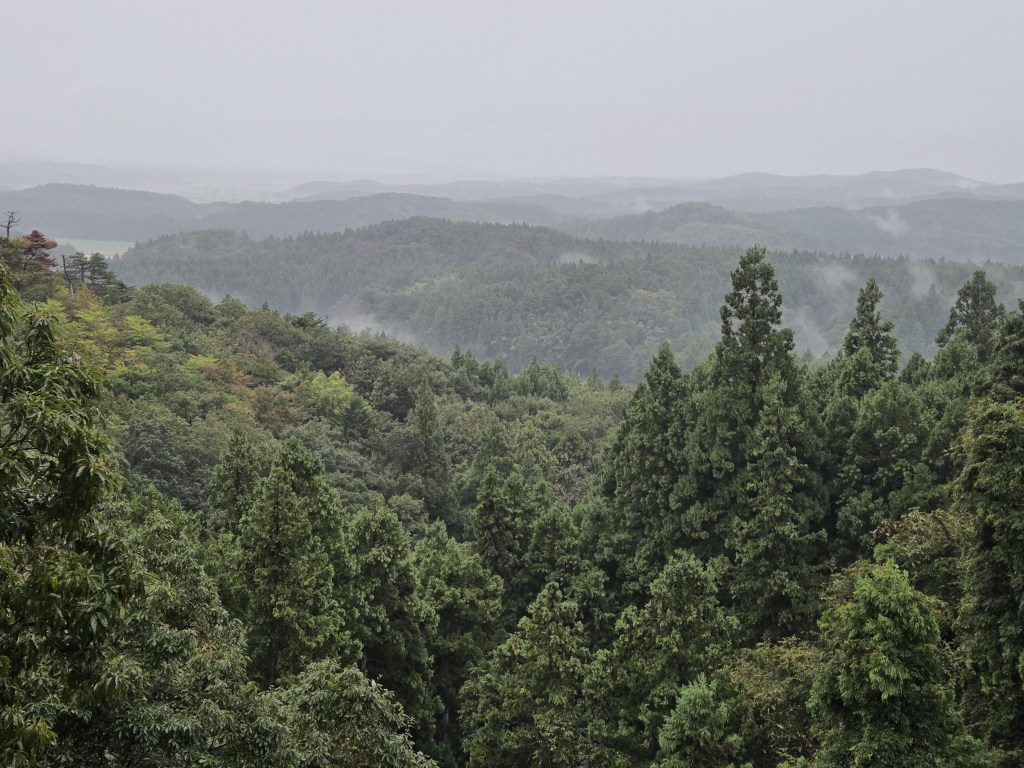
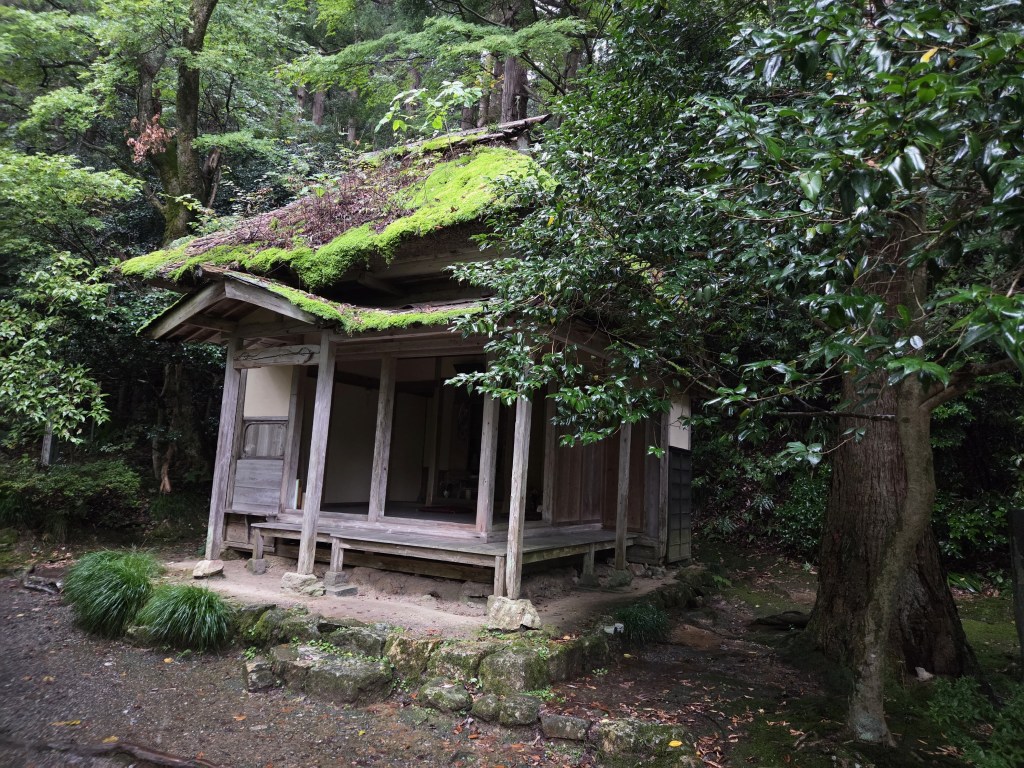
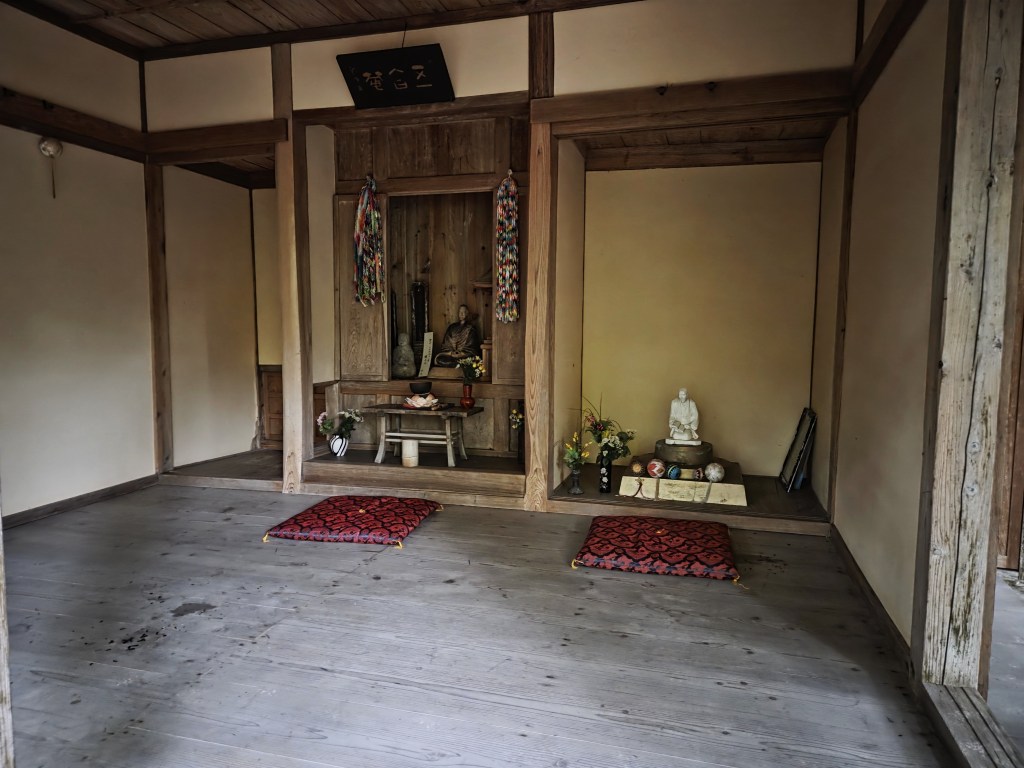
Kazuaki and I then drove to Mount Kugami where Ryokan lived. In a steady rain we walked on paths through the deep woods to the two rebuilt dwellings that he resided in. The first, and larger one, was the one he moved into after his other nearby place was difficult for him as his health deteriorated.
It was a very moving experience to see the rebuilt buildings and the setting for where he lived and where much of his poetry was written. I’m sure some of the larger trees here were around during his time, which was 175 or so years ago. Now, when I read his poems, they will be even more precious to me having seen where he resided.
We then drove a little further south and, at the edge of dark, stopped at the place where Ryokan was born, in the village of Izumozaki, just a good stone’s throw from the Sea of Japan.
After the long ride back in the dark, rainy night we sipped a little sake and ate some fresh fruit. A long, tiring but vibrant day in Japan.
(Click on thumbnail for larger picture.)


October 13
The first of two excursion days.
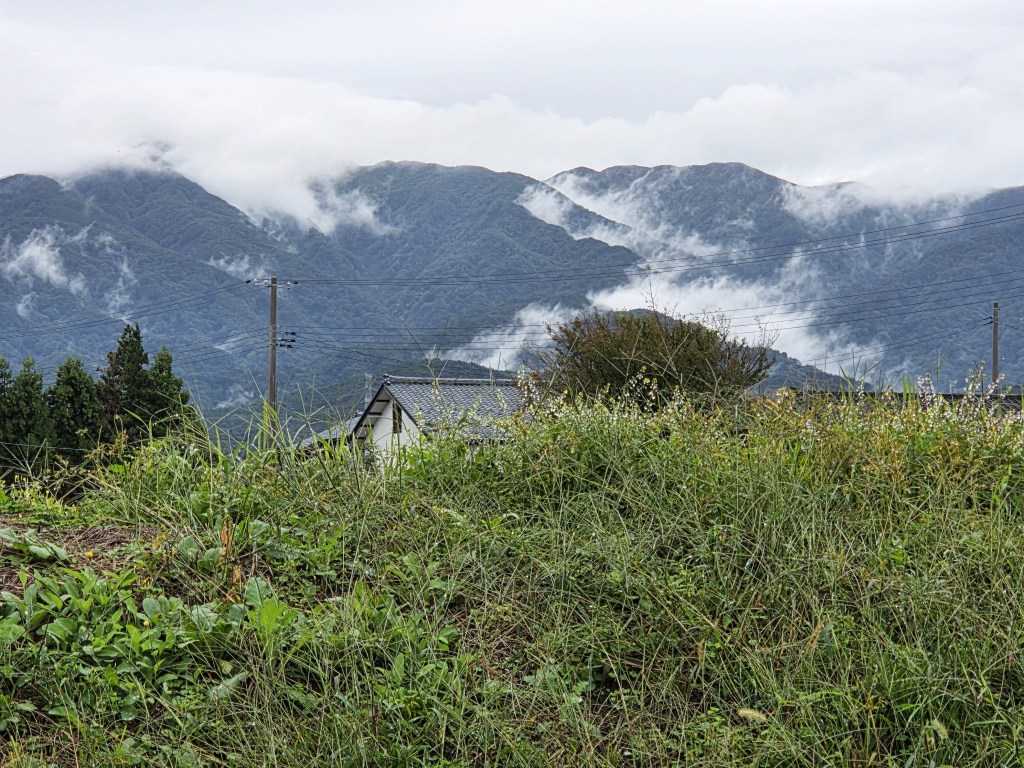
Headed north from the house after morning tea and then another great breakfast by Kazuaki. Mist was hanging on the hills as we exited the house.
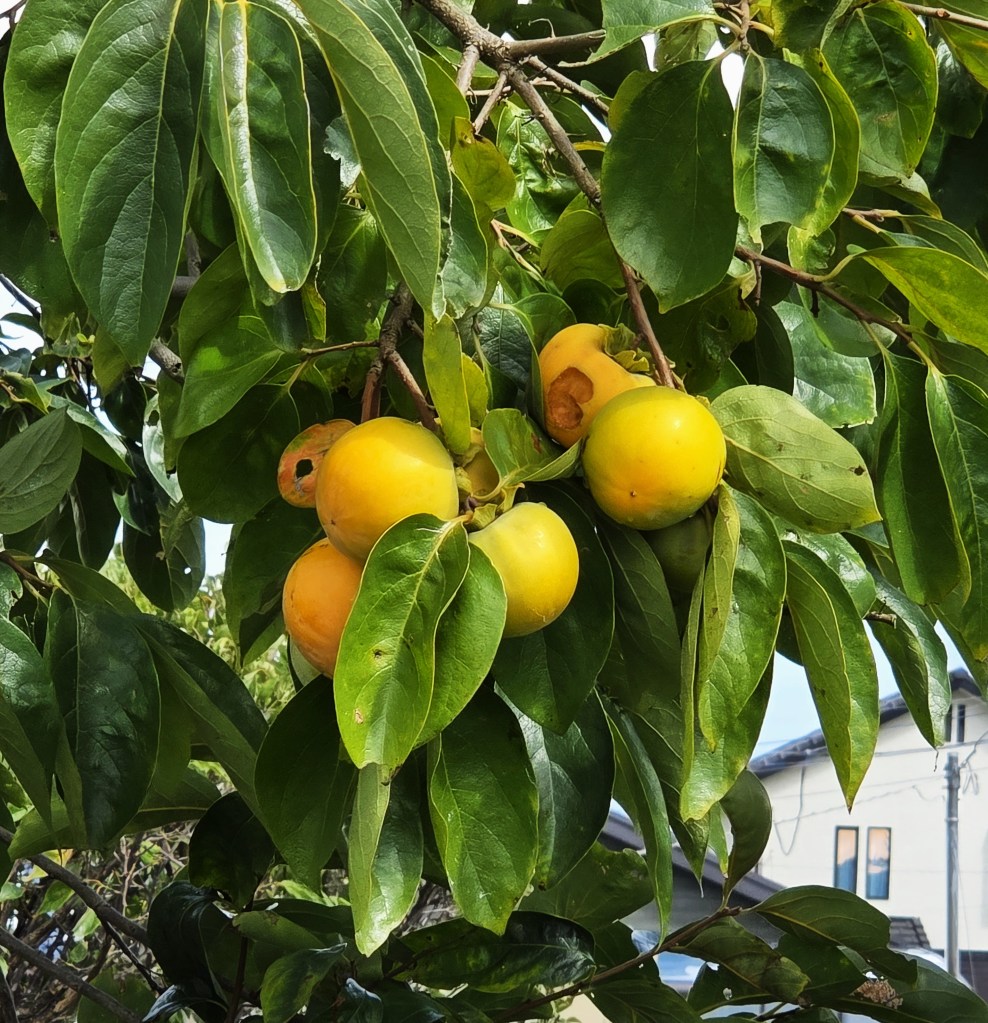
We drove back roads north, some small and windy through the mountains. Along the way saw an old couple picking persimmons from a tree. A small apple orchard and a vineyard.
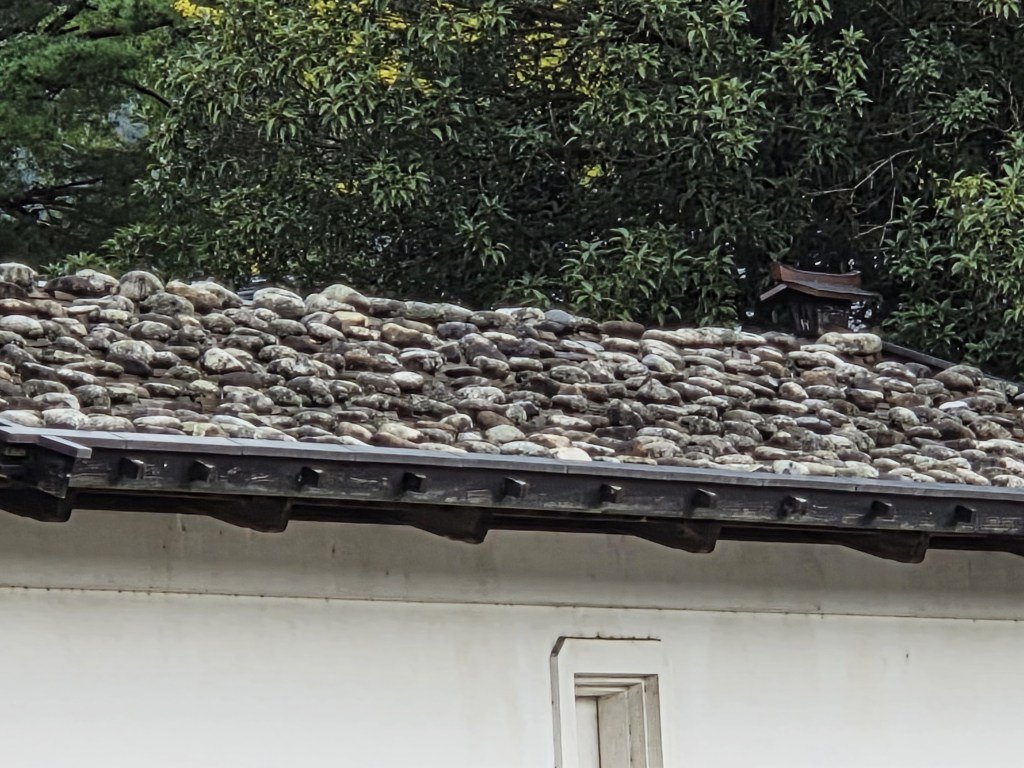
At one place Kazuaki pointed out a building that had rocks placed all over the roof. It helps to protect the roof against the heavy winds that blow there.
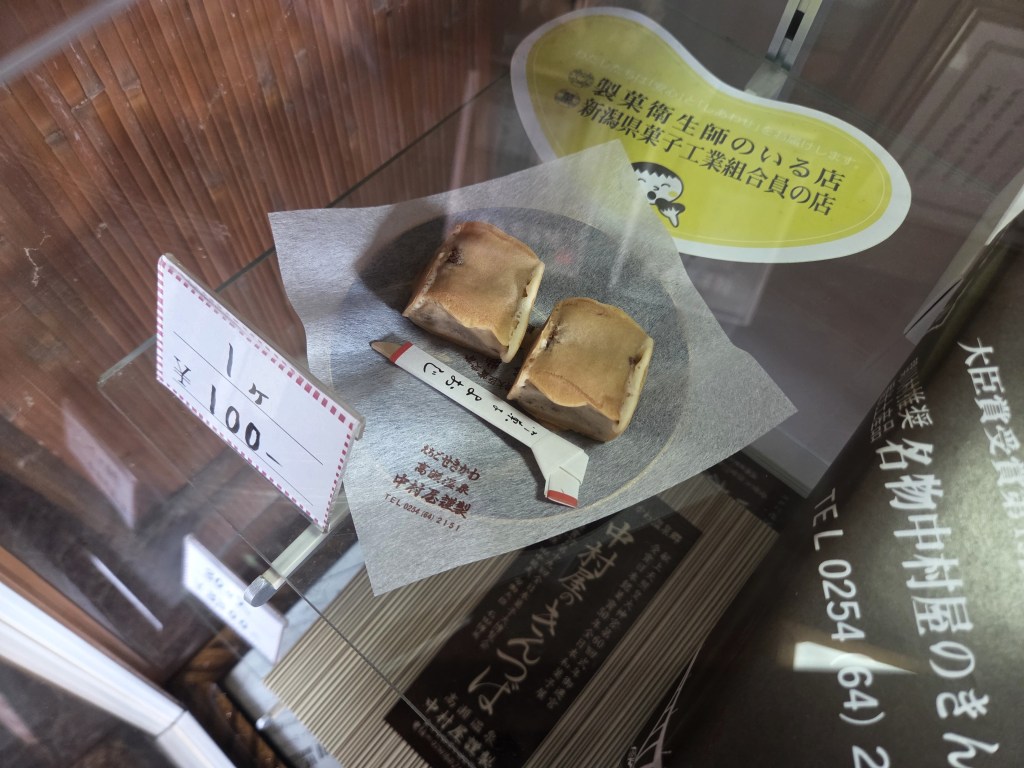
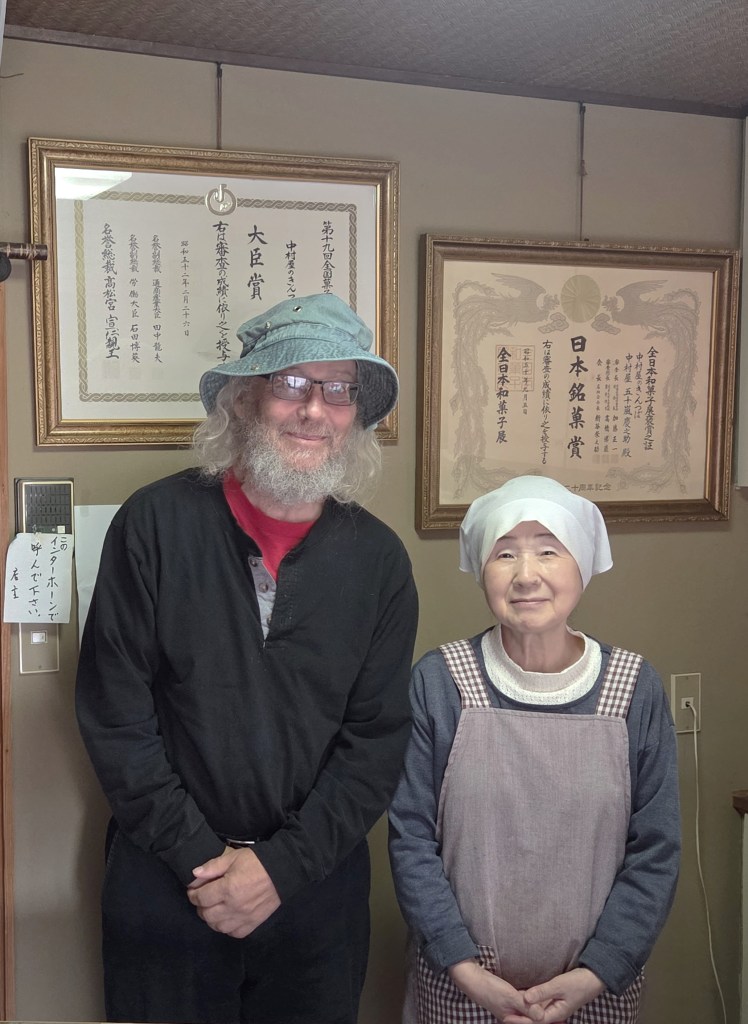
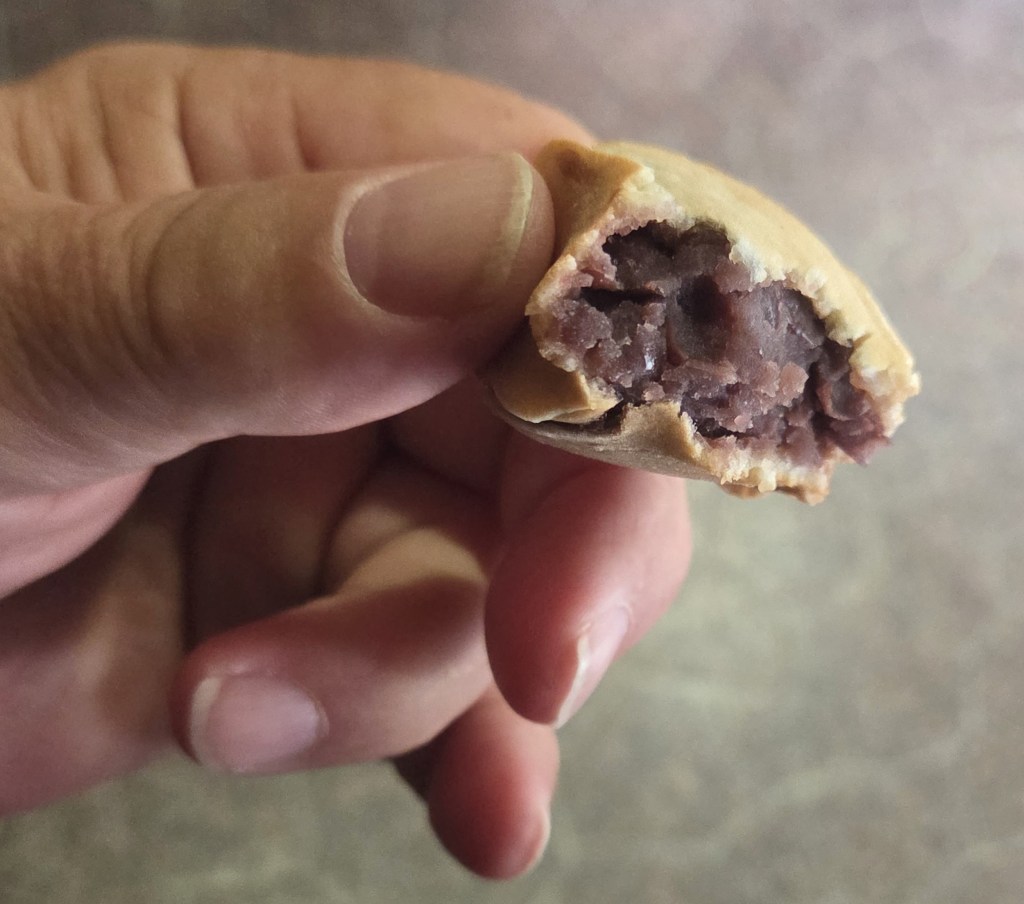
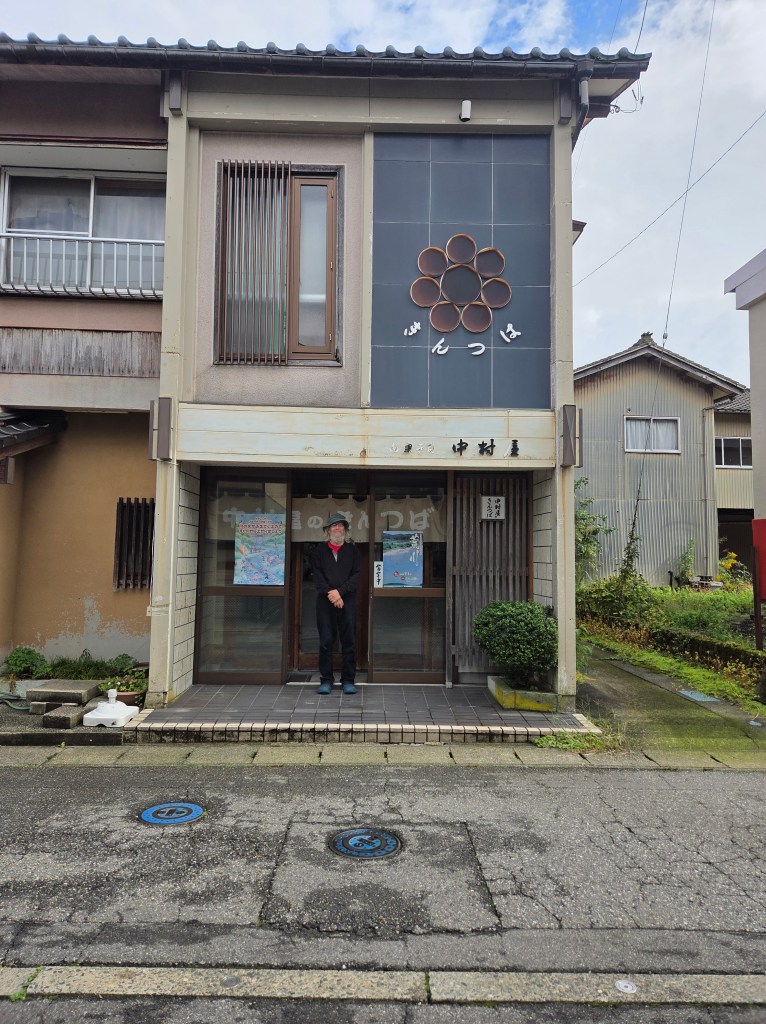
We stopped at a shop, Nakamura Ya located in Sekikawa Village, that specializes in making kintsuba, a confectionary treat made with adzuki beans. The shop has been in existence for over 100 years and this is the only item that they make, and it is handmade! The exterior was firm but soft and the interior moist and very tasty. A special treat.
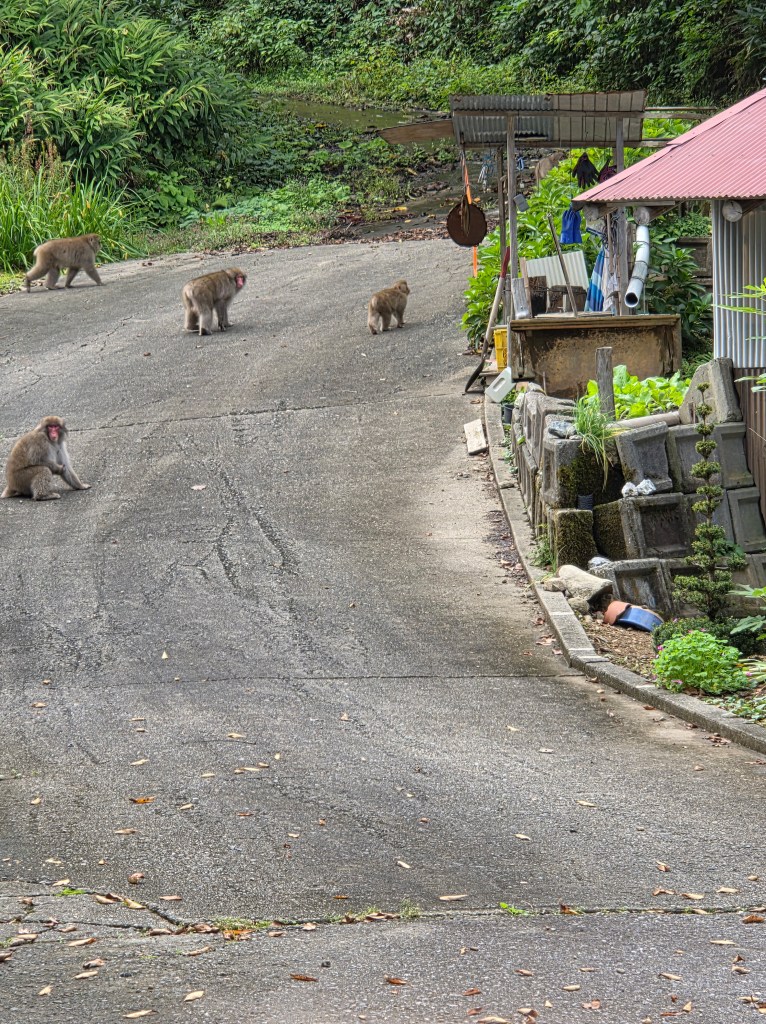
On one of the back roads we ran into a small pack of Japanese macaque or Snow Monkeys.
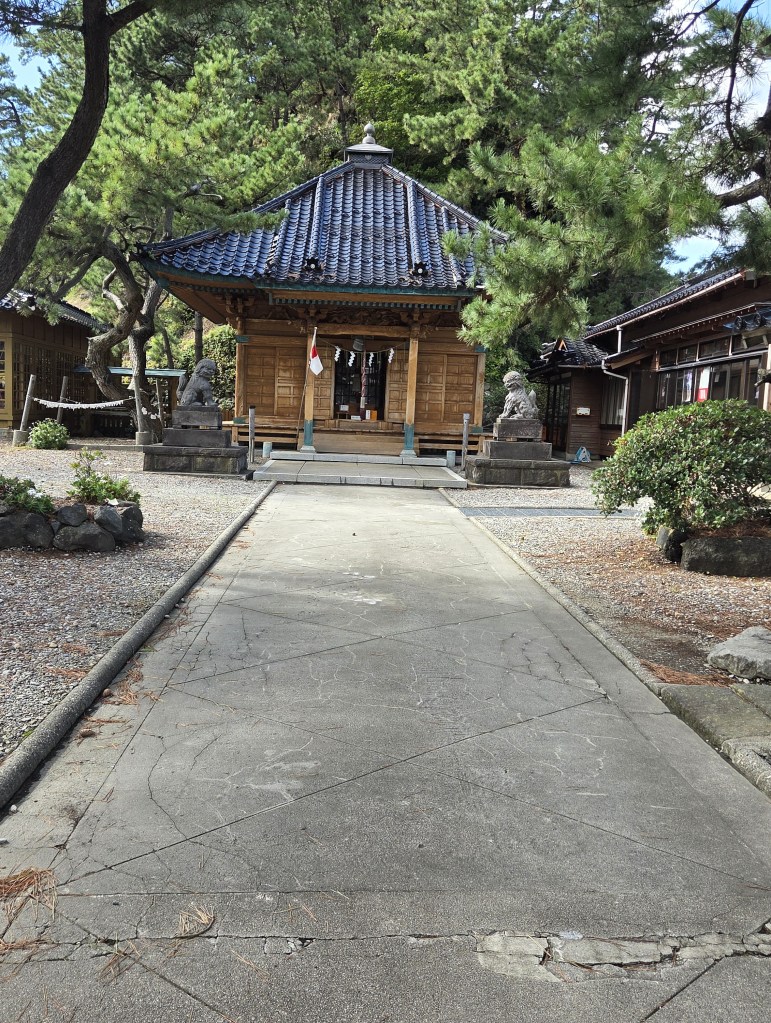
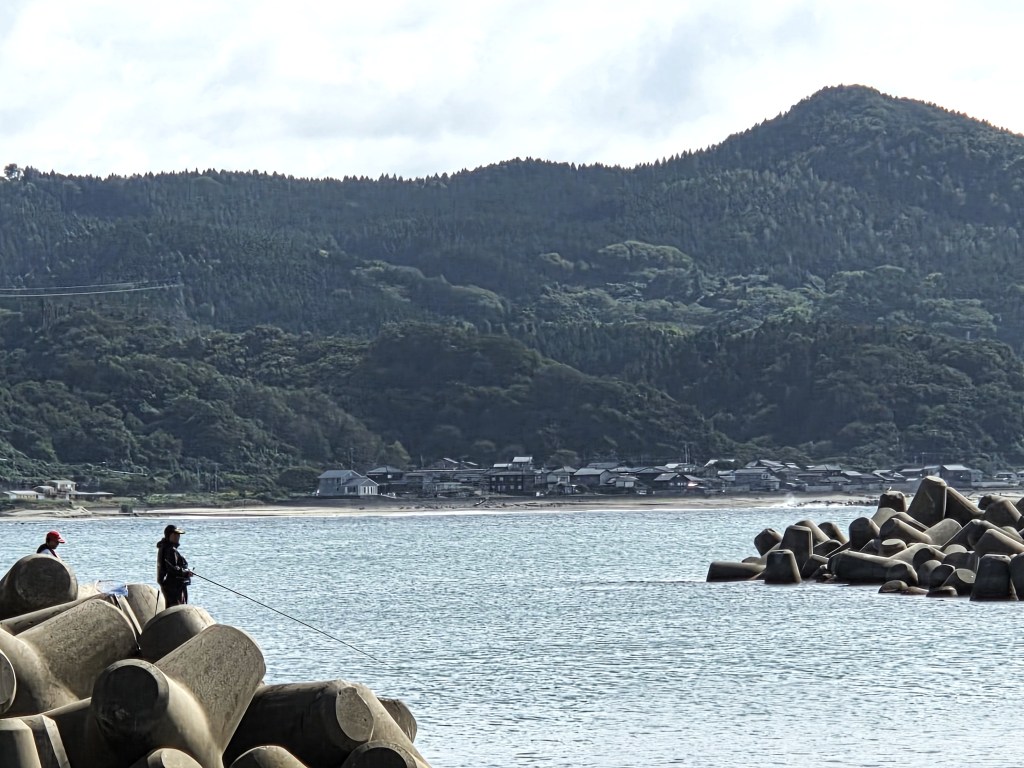
There was a shrine at Nezugaseki that was for the protection of fisherman.
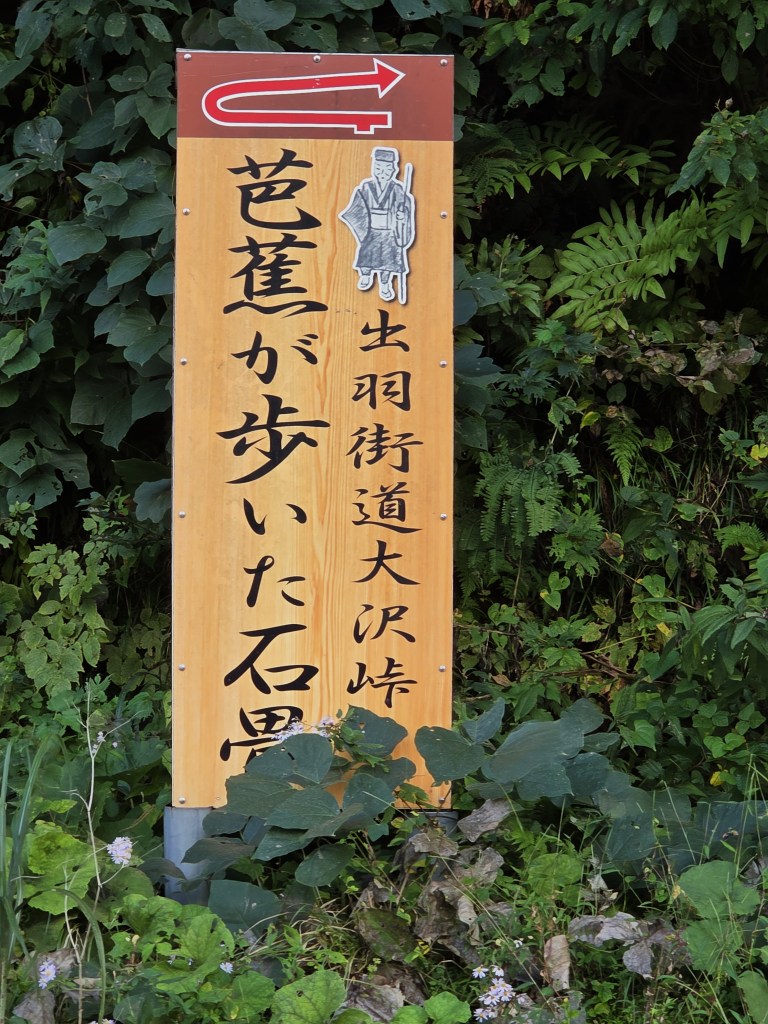
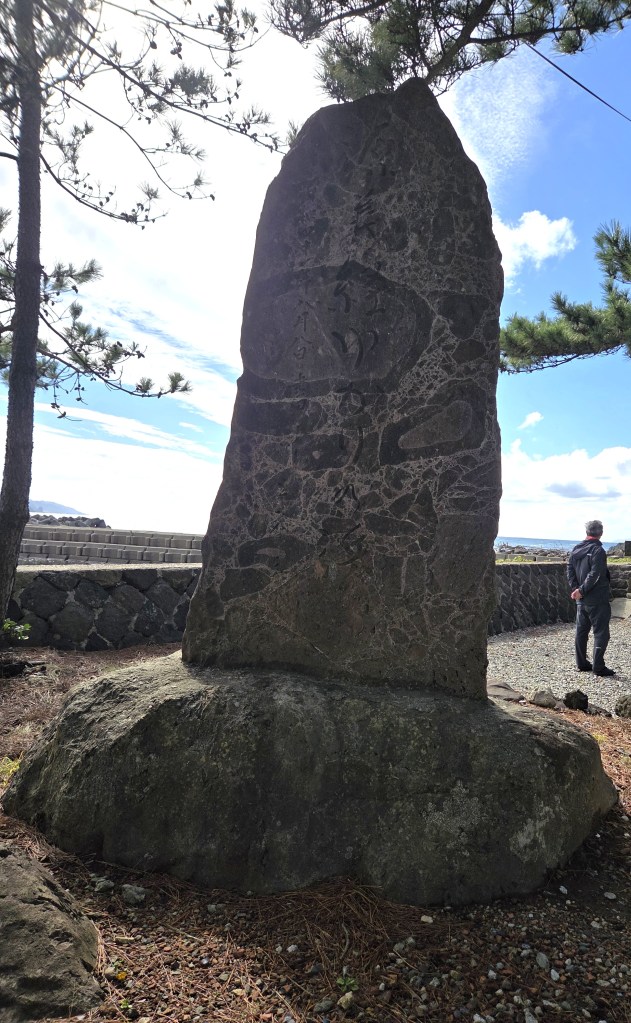
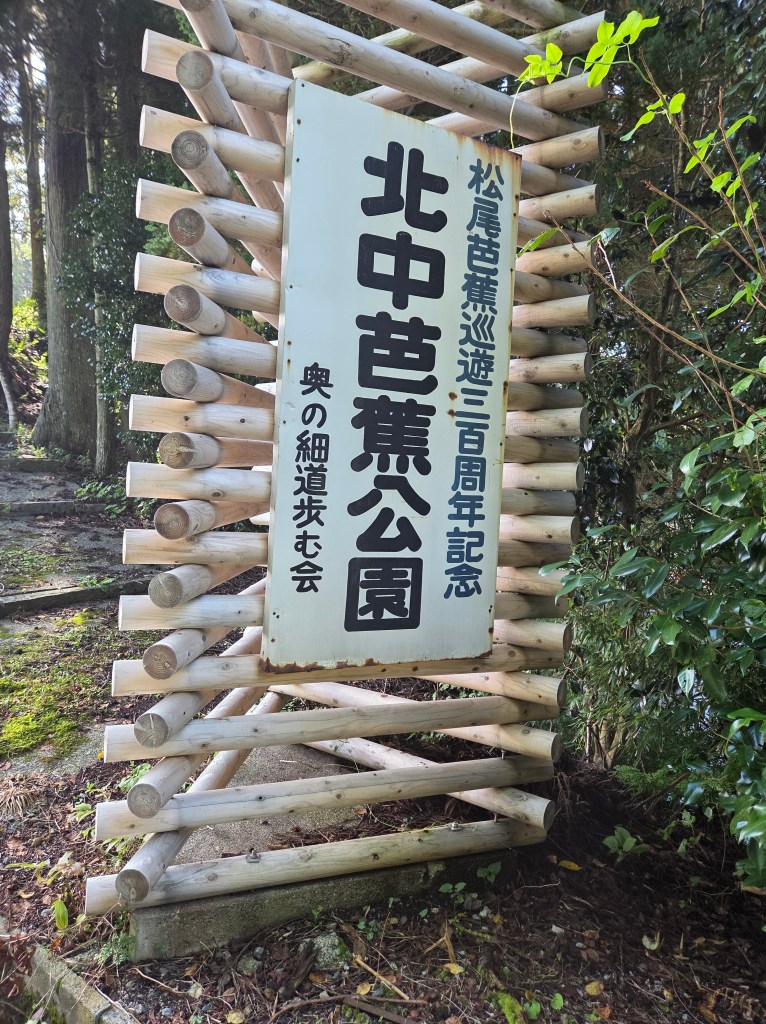
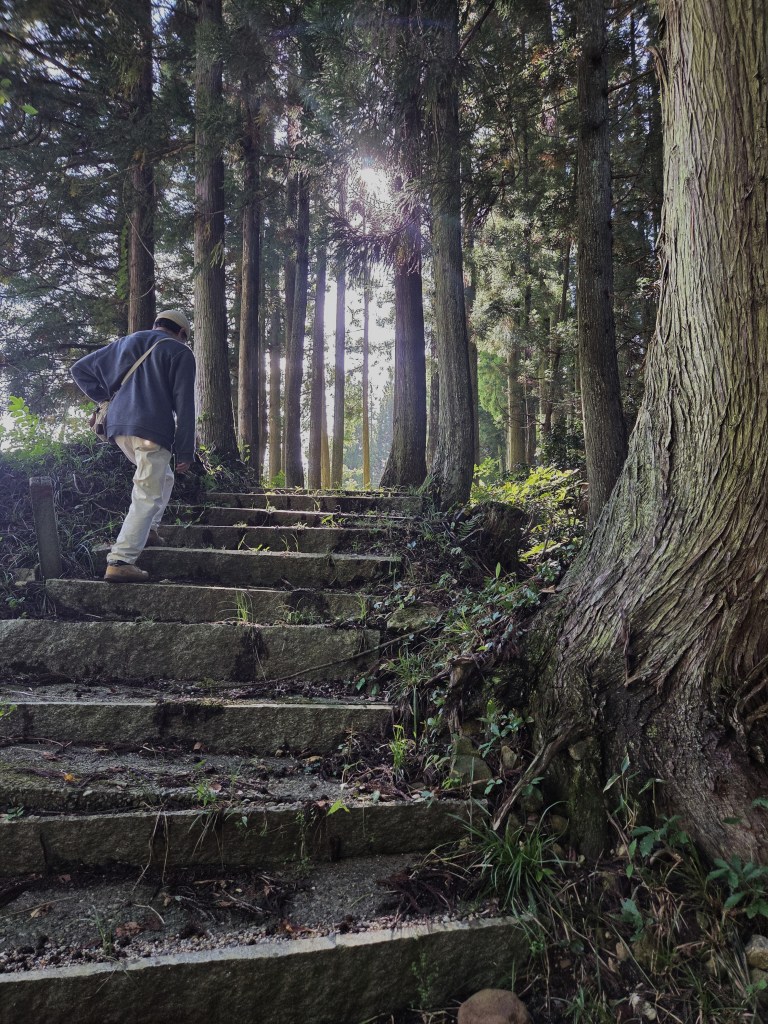
At Kitanaka Basho Park we saw a monument to Basho and the path we walked may have been walked by him those many centuries ago.
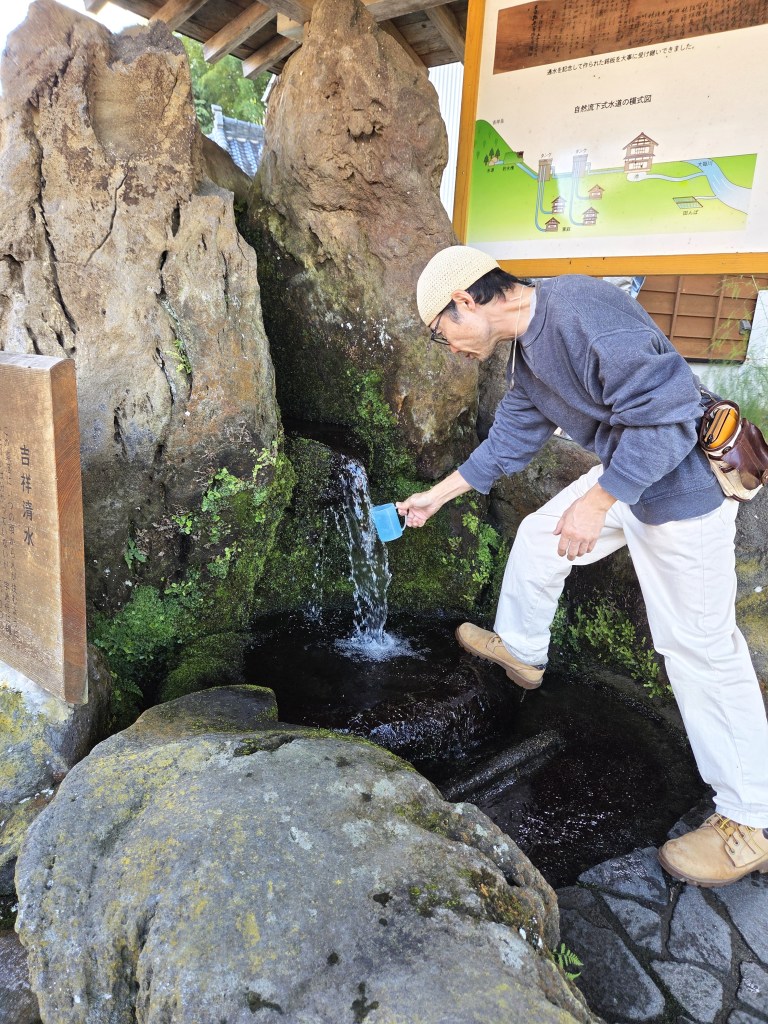
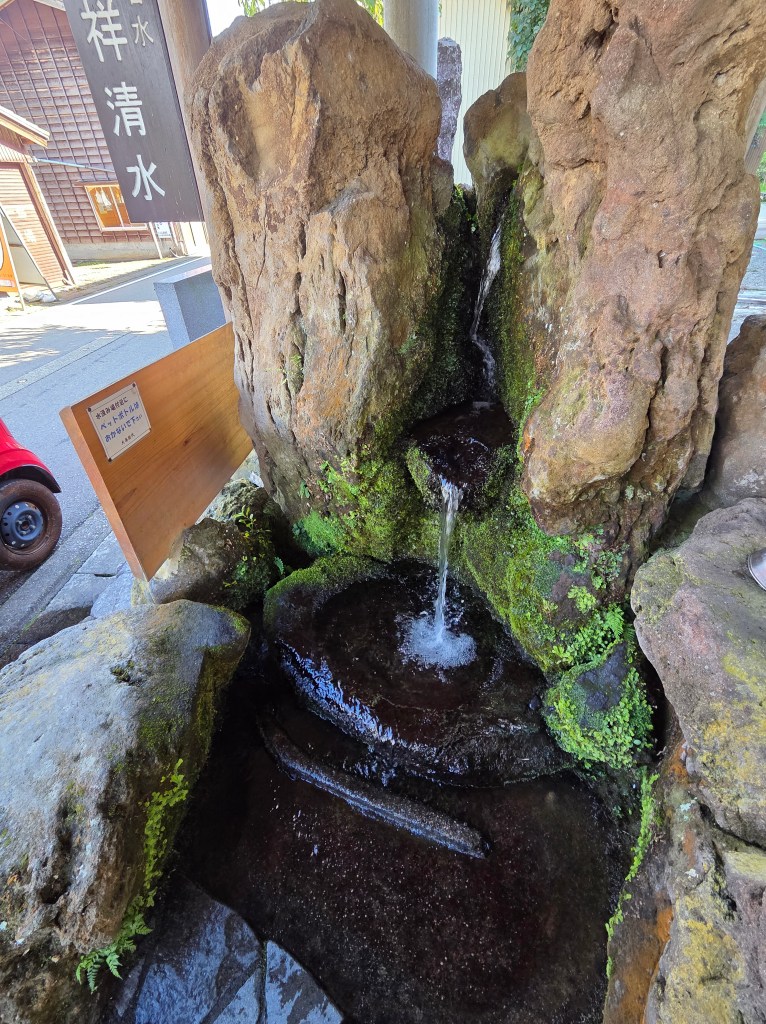
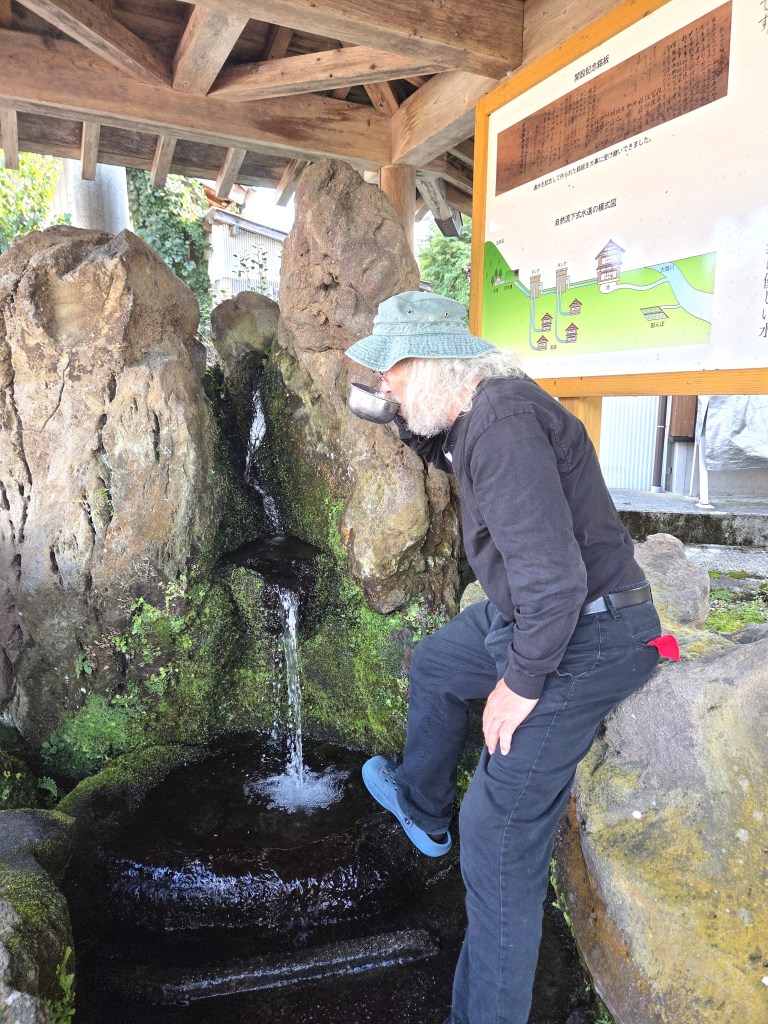
Leaving there, we drove through an itriguing small community of narrow streets and interesting dwellings. Then there was a place where water for drinking was available flowing out of a sort of rock fountain. This was the Ogoto Waterworks and the flow was spring water from Mount Kisho and was installed 101 years ago. It’s gravity fed and is the sourse of water for nearly 100 houses in the community.
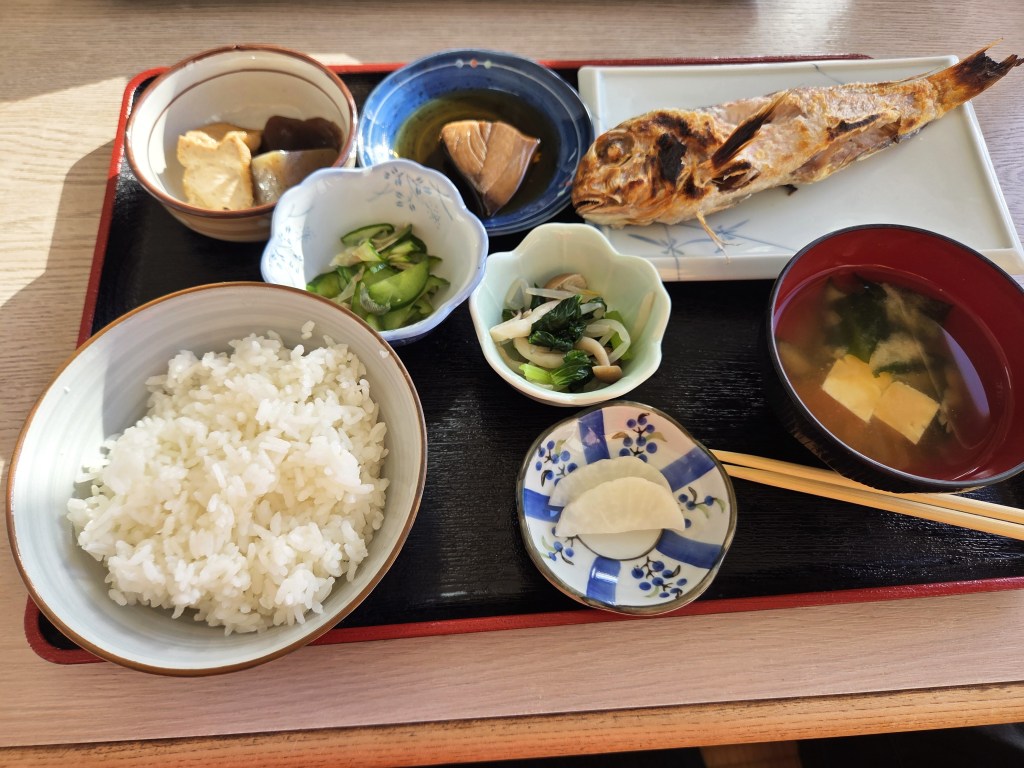
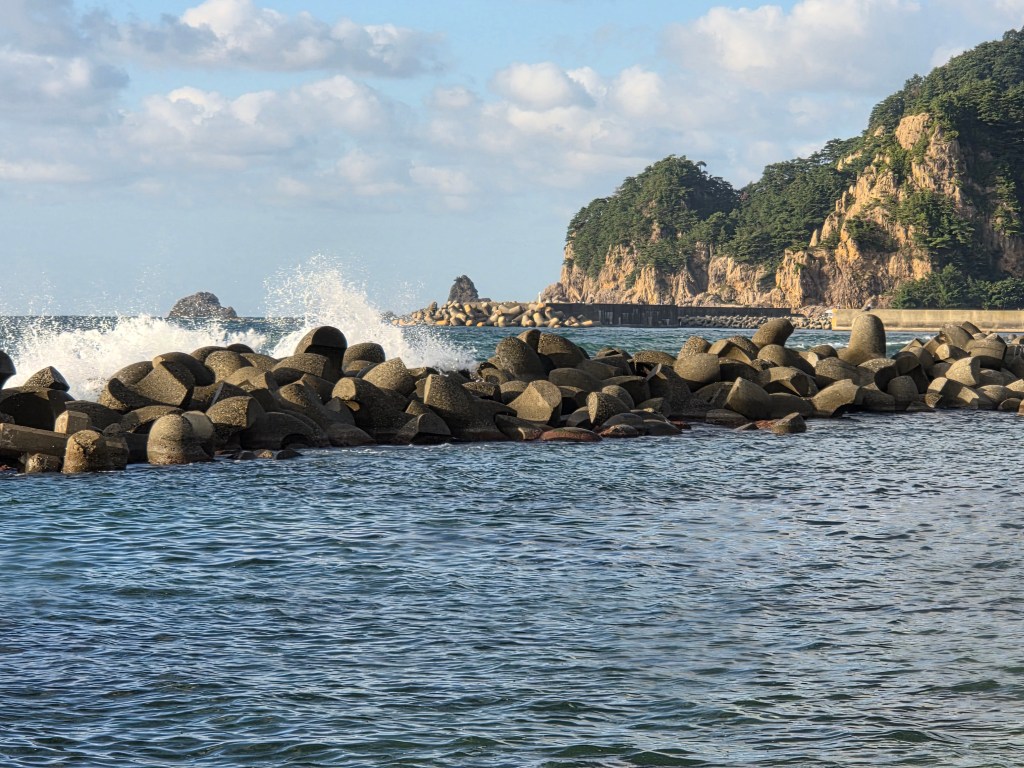
That was followed by a late lunch/early dinner at a restaurant that faced the Sea of Japan. The food was good and the scene as well.
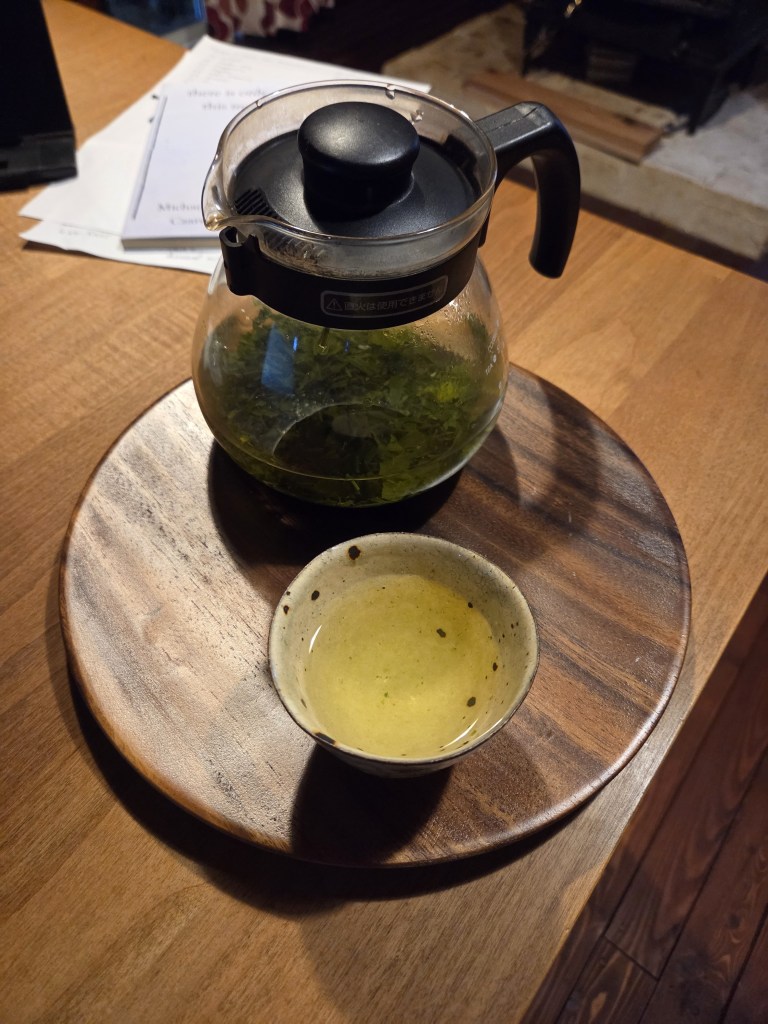
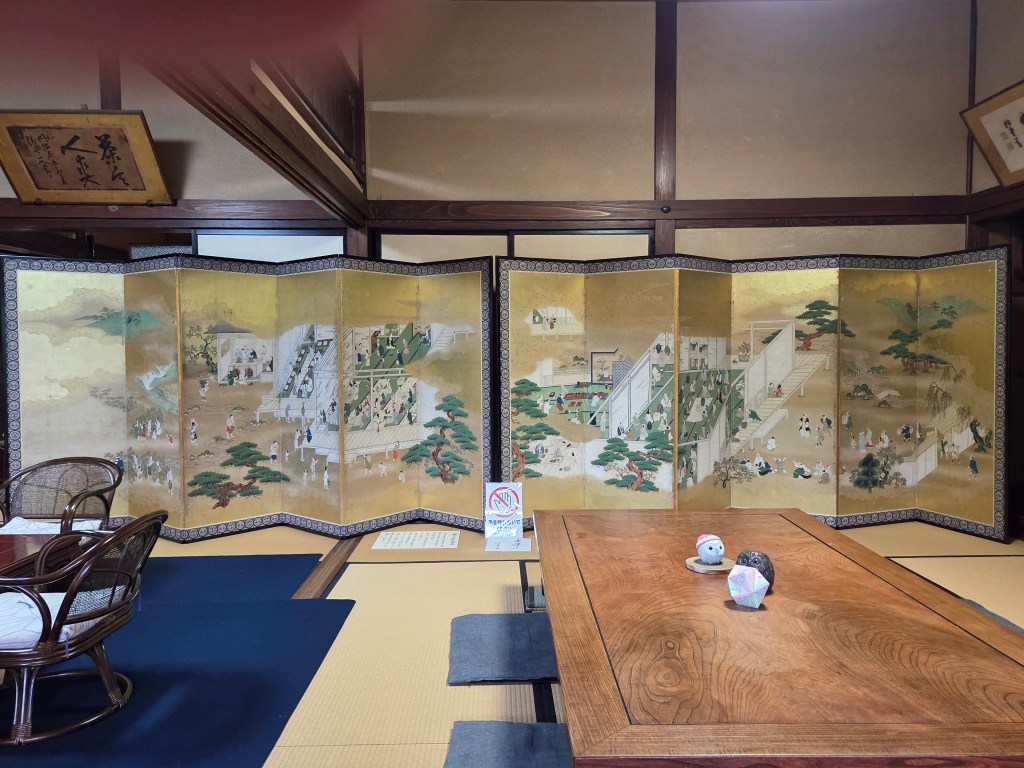
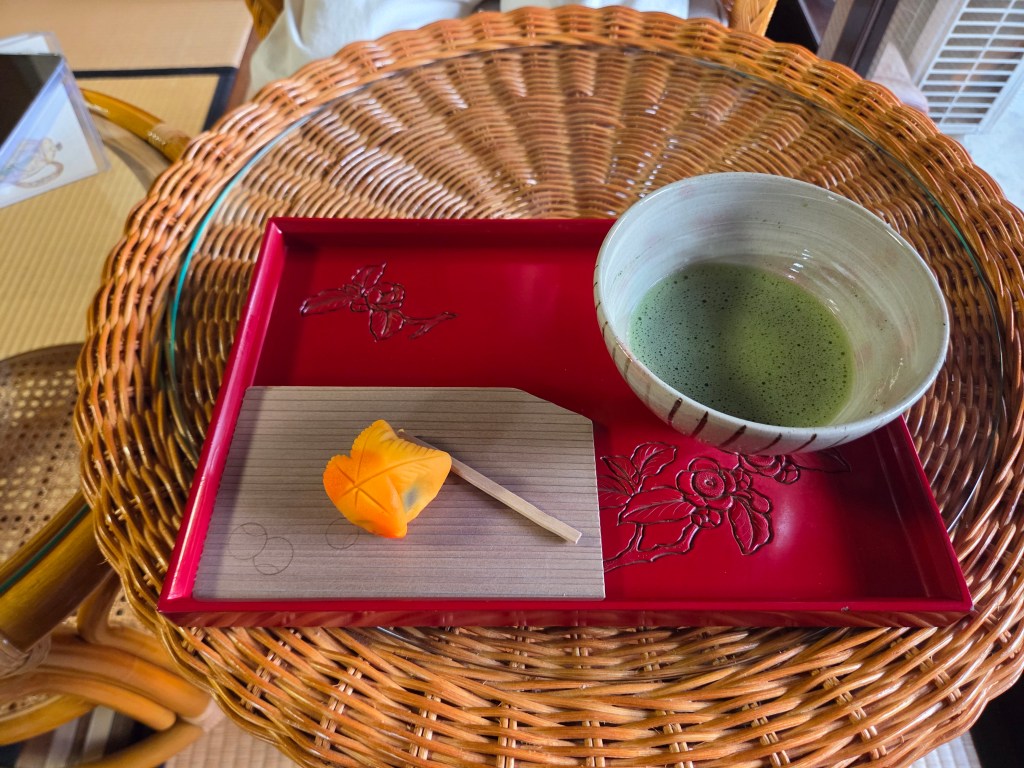
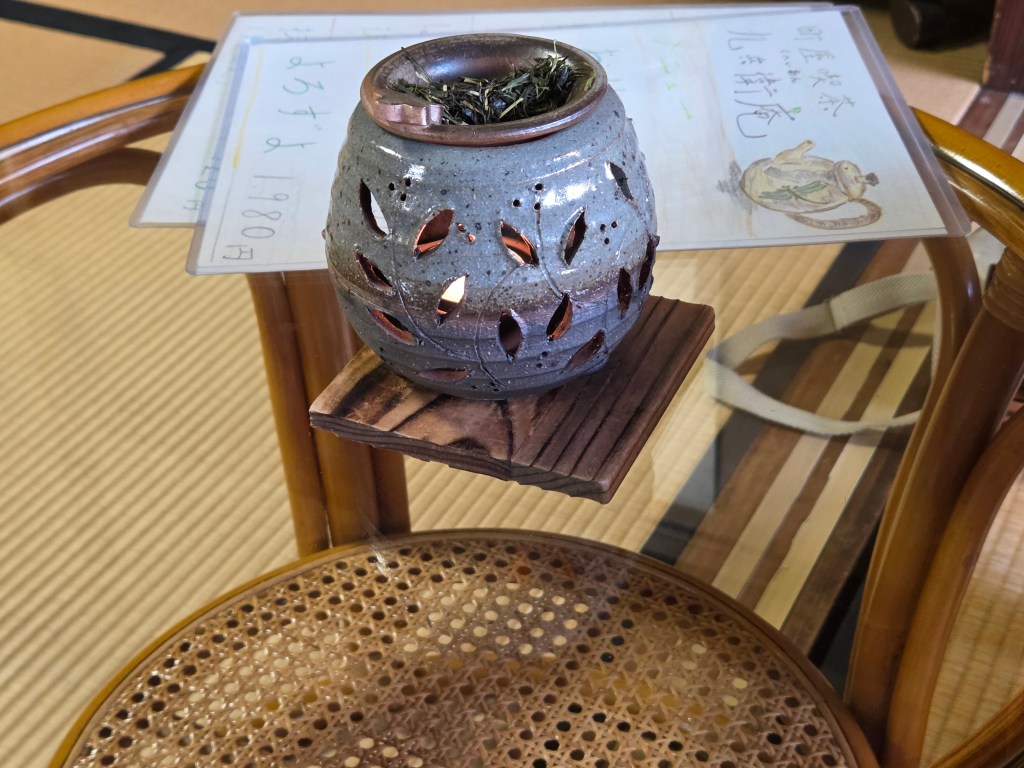
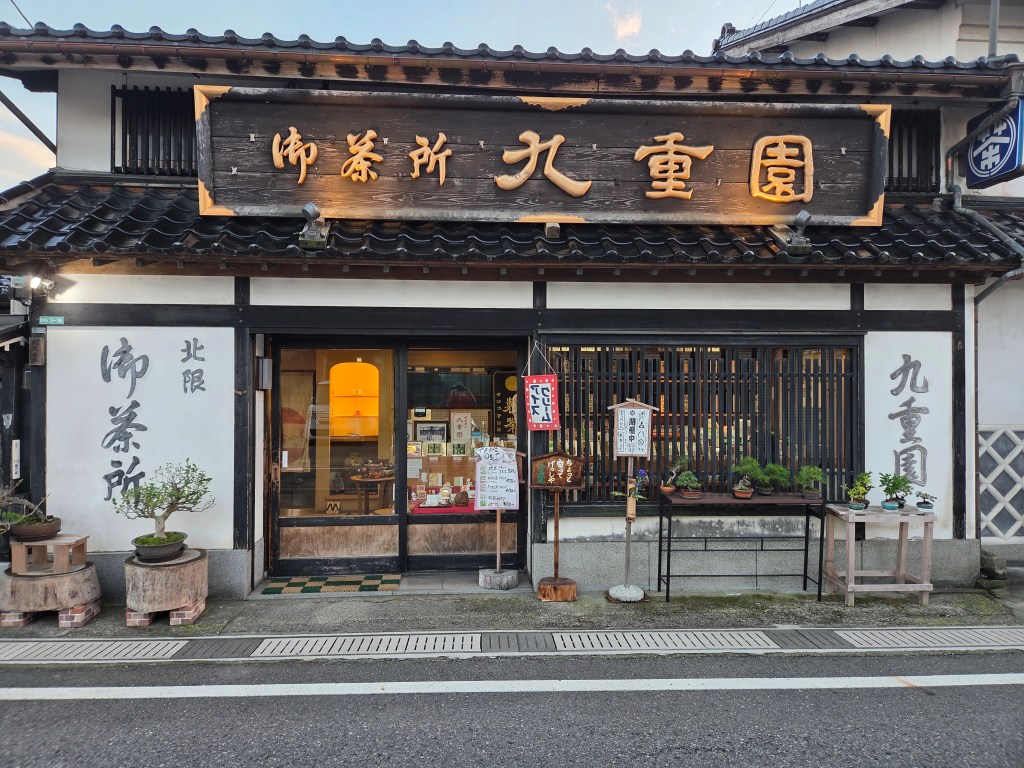
Afterwards we stopped at Murakami Kokonoeen, a teahouse that has been growing and serving tea for a long time. It is almost like a museum inside, with displays and utensils used in the production of tea. We were served matcha and a maple leaf shaped sweet followed by a cup of hot Hojicha tea, which was strong in flavor but very enjoyable.
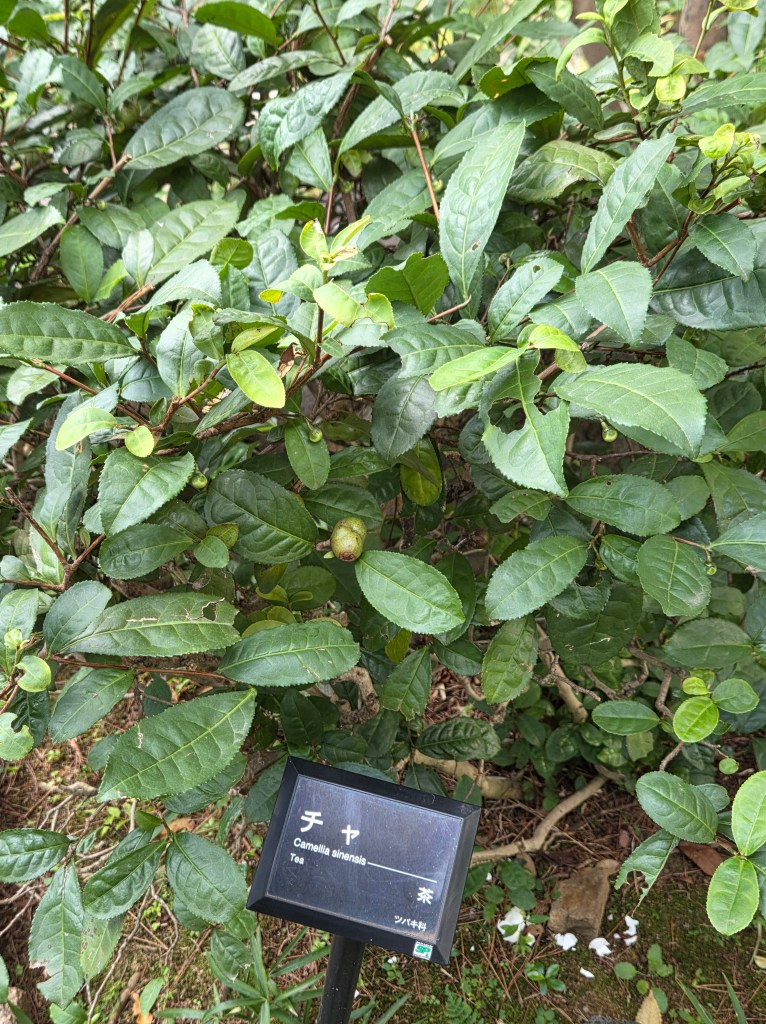
When driving out of Murakami, we passed a field of tea bushes. This is the most northern spot in Japan where tea is grown.
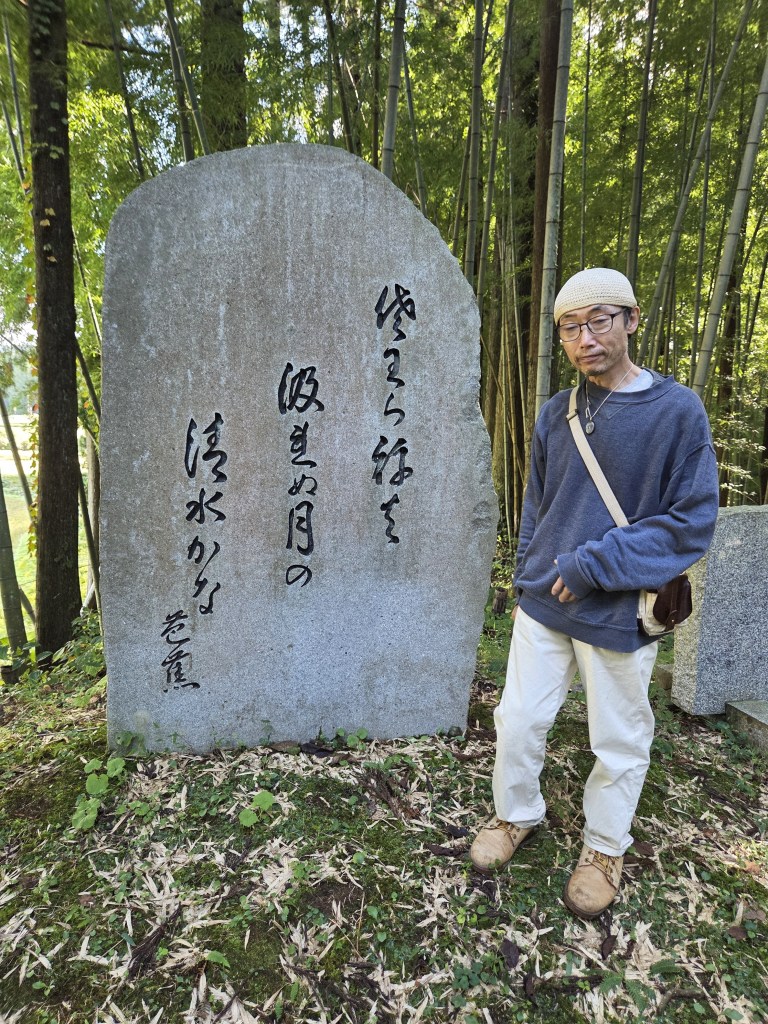
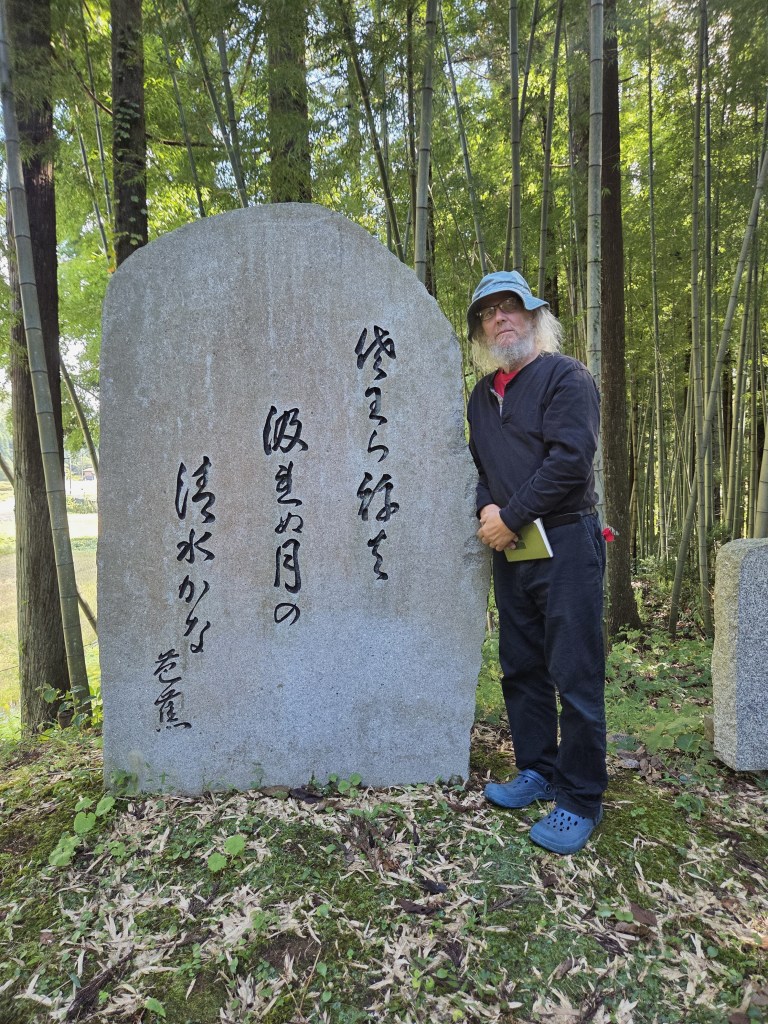
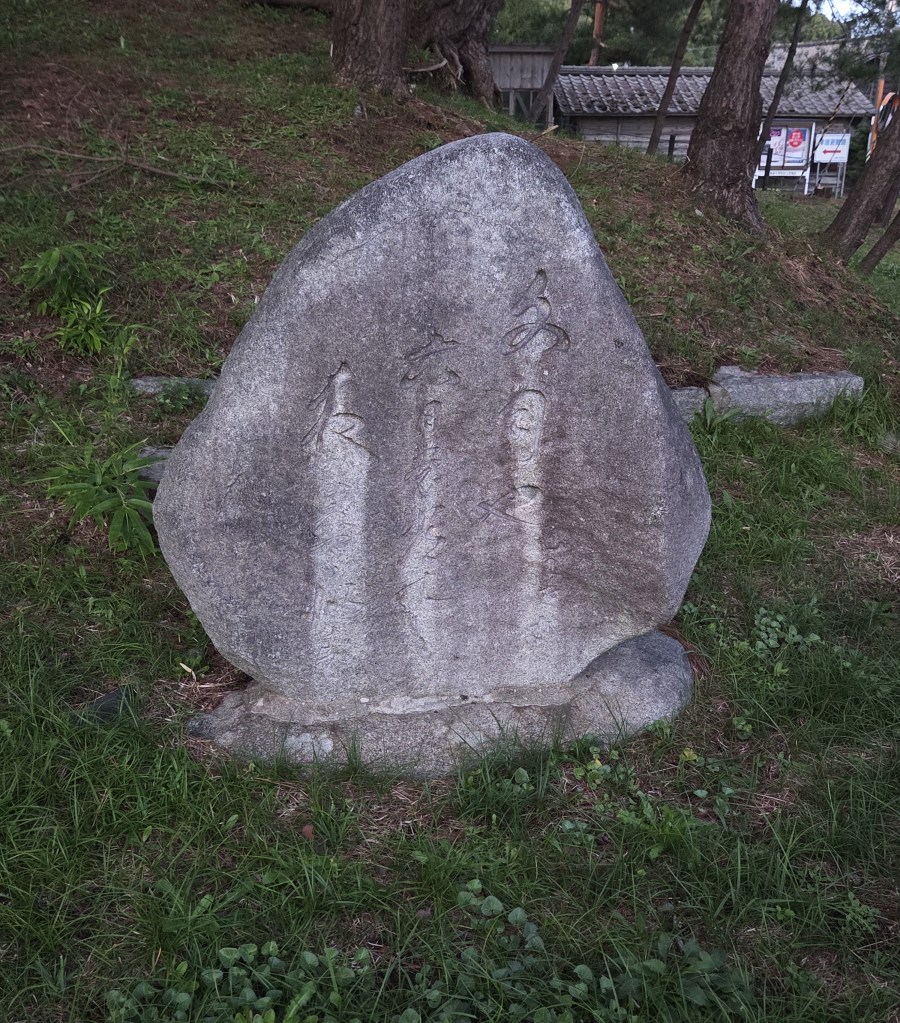
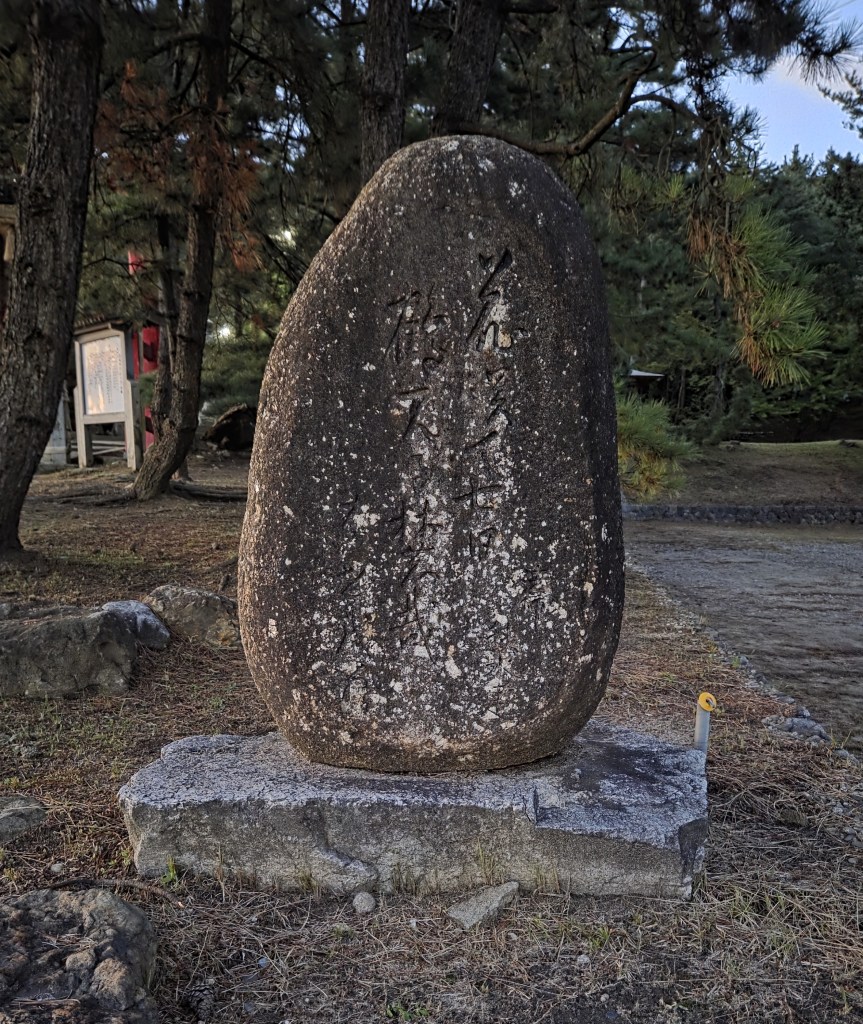
Near dark, we located two more monuments to Basho in a park at the edge of Murakami.
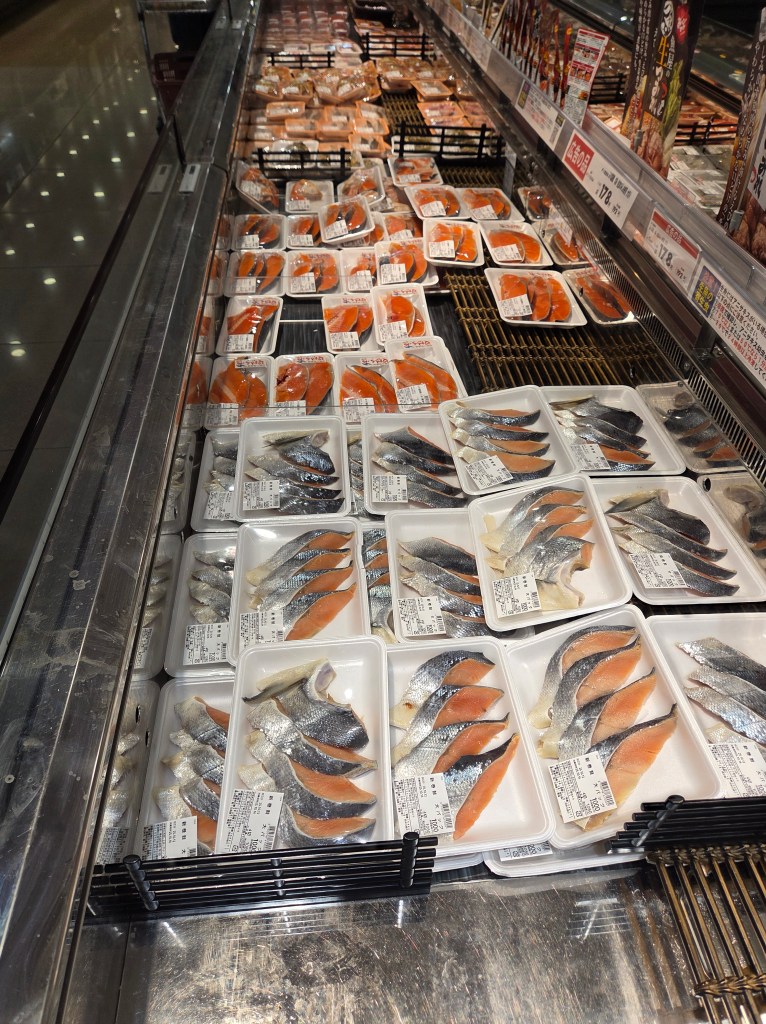
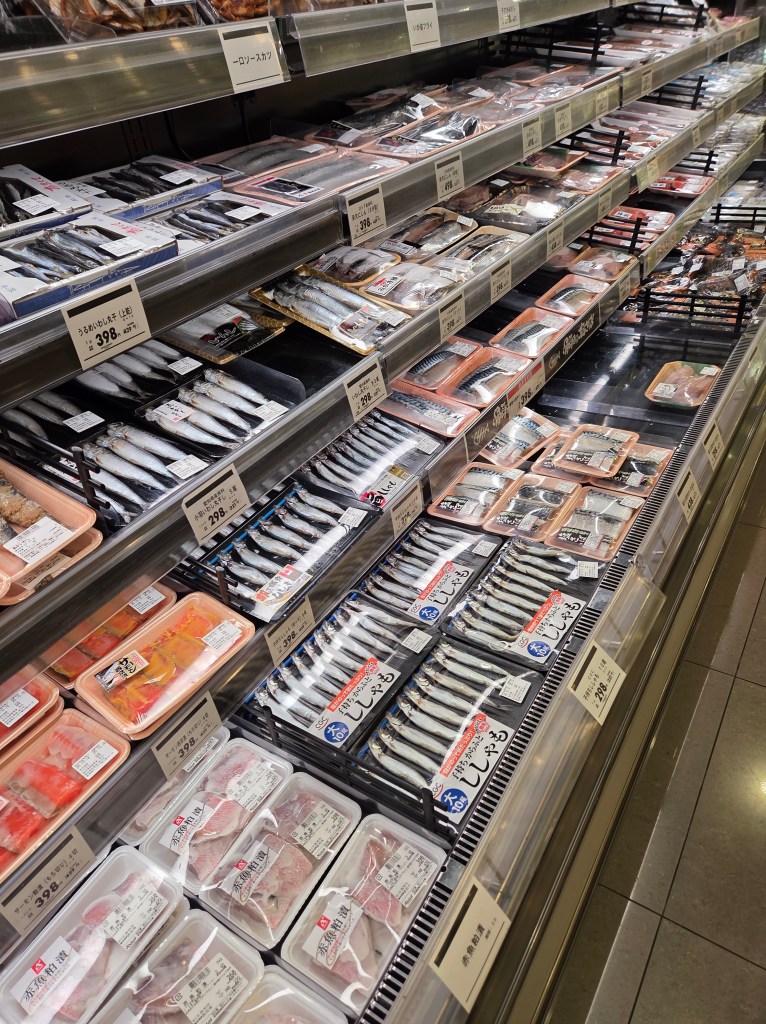
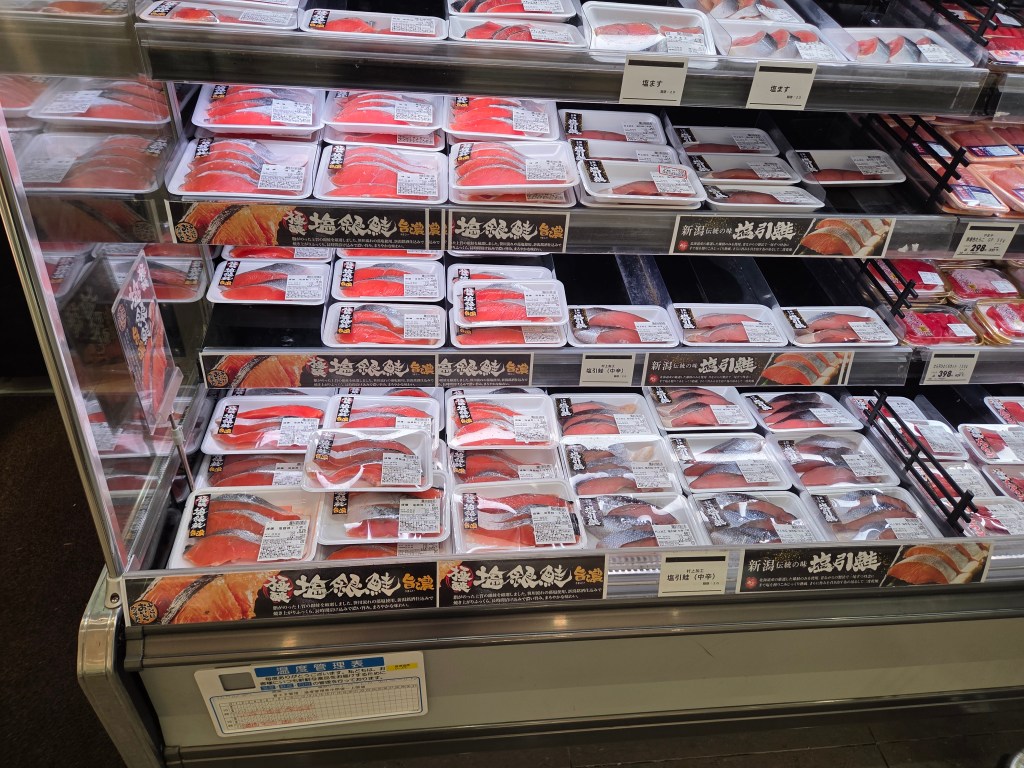
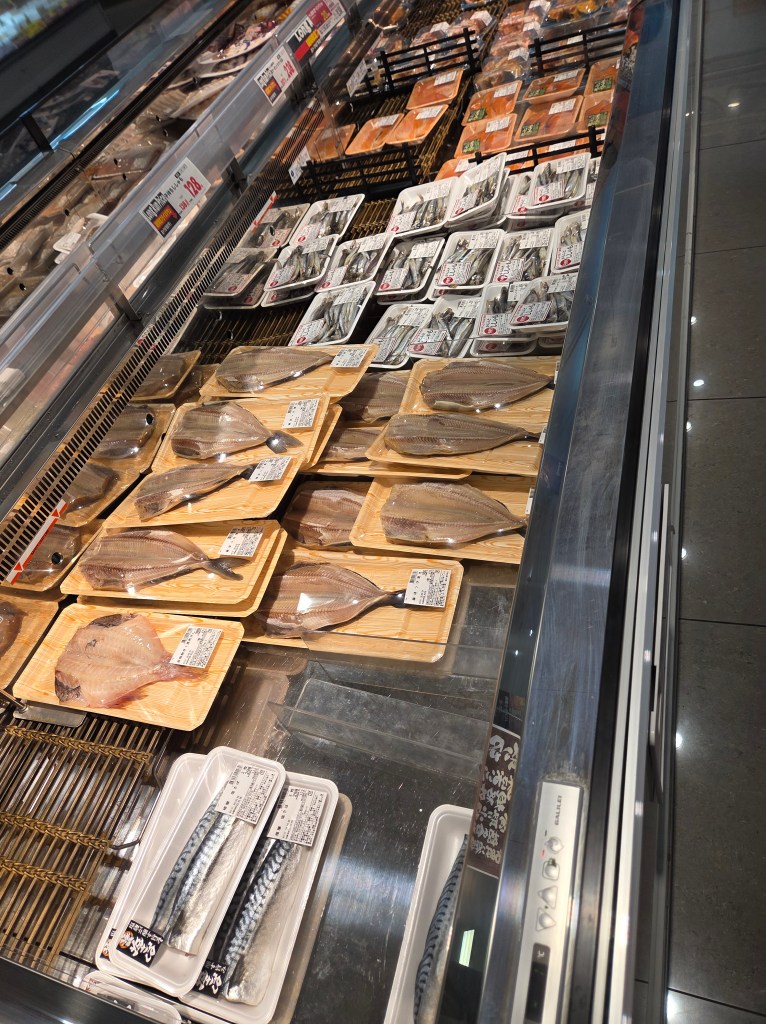
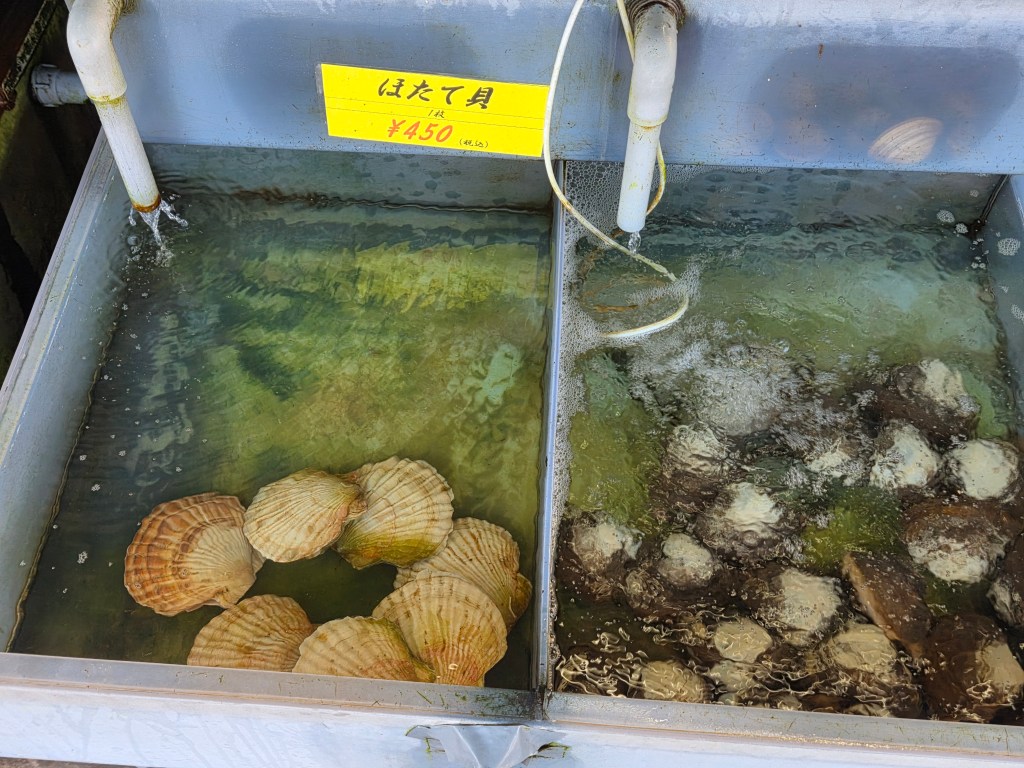
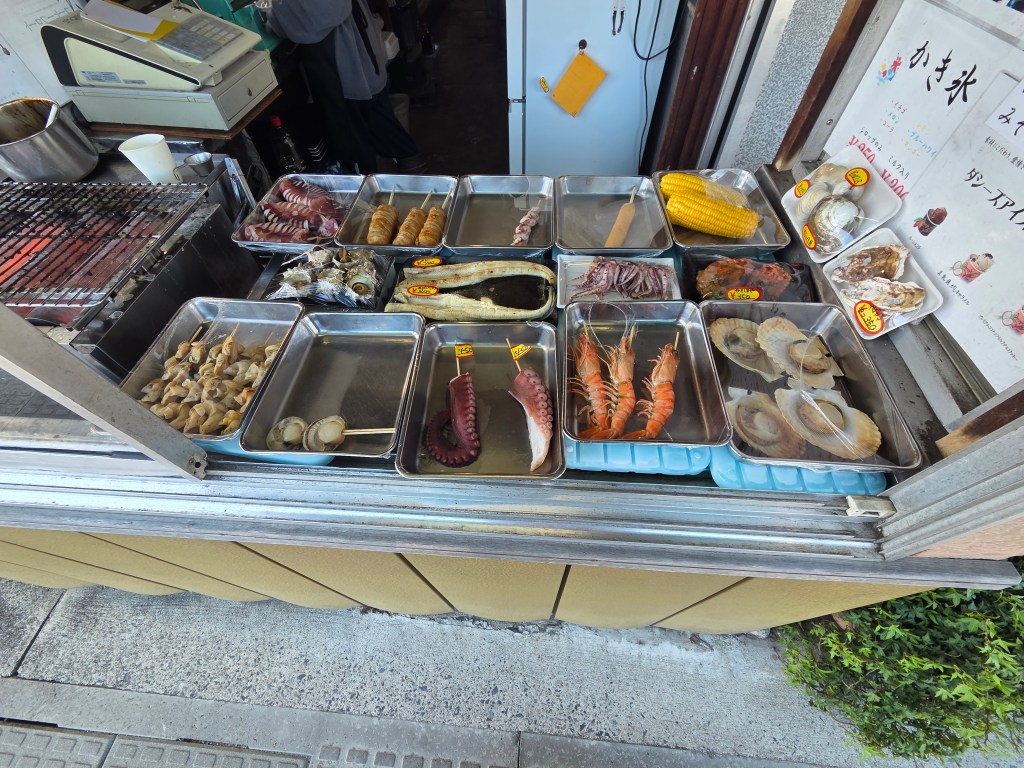
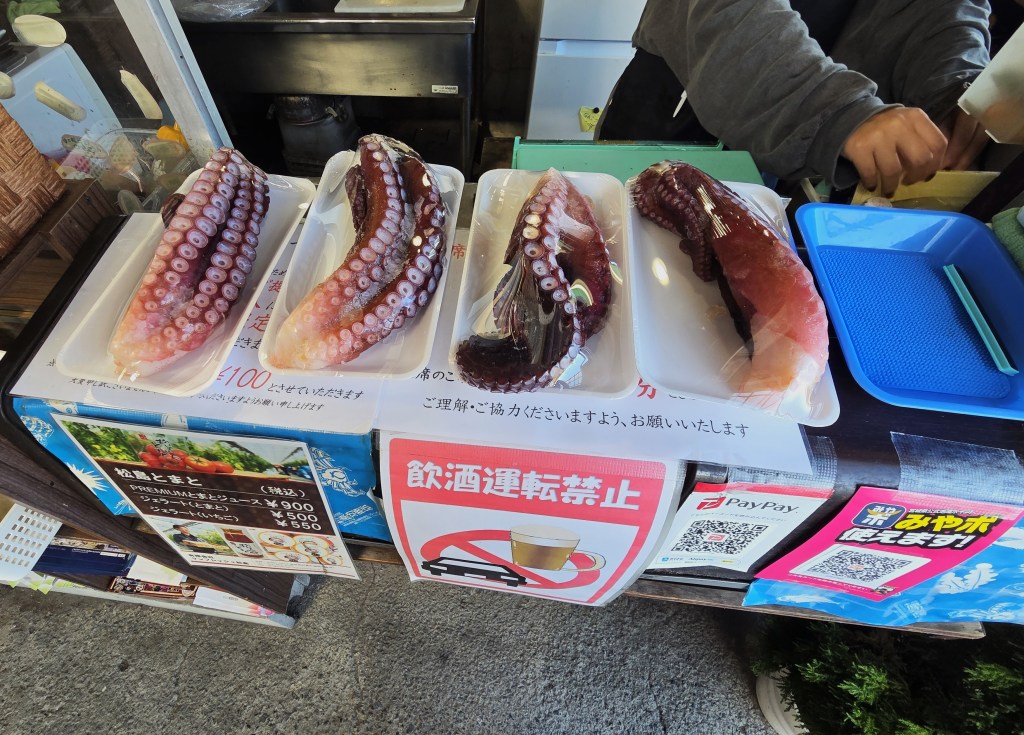
Before getting back home we stopped at a large grocery store. I took a few pictures of the seafood that is available there. Ah, if only back home. . .
(Click on thumbnail for larger picture.)
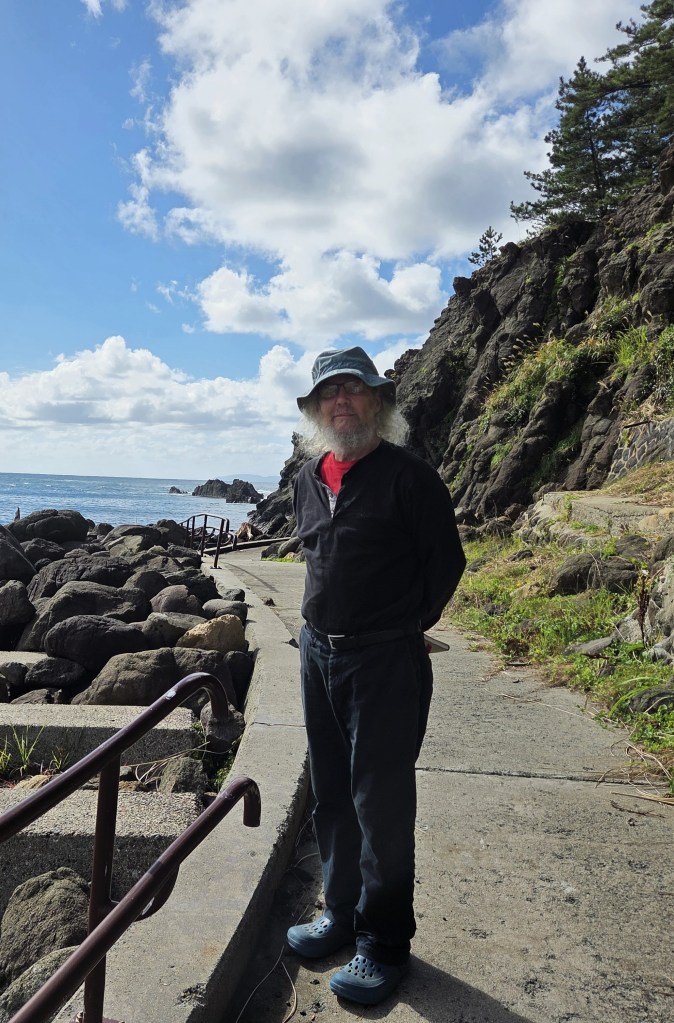
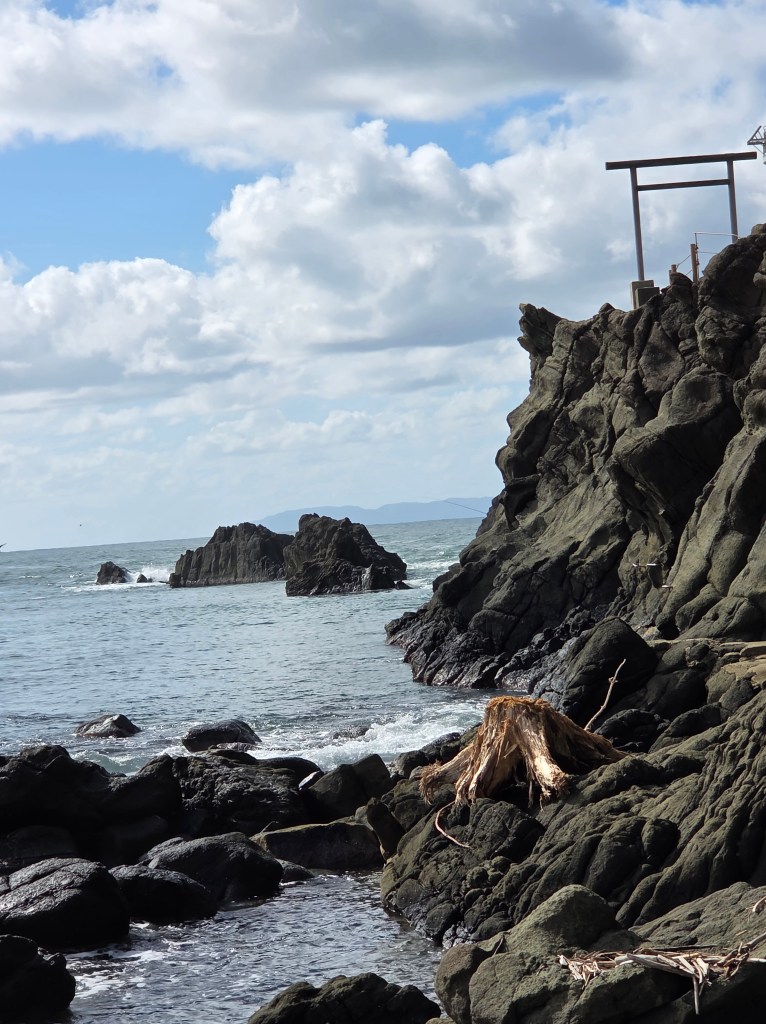
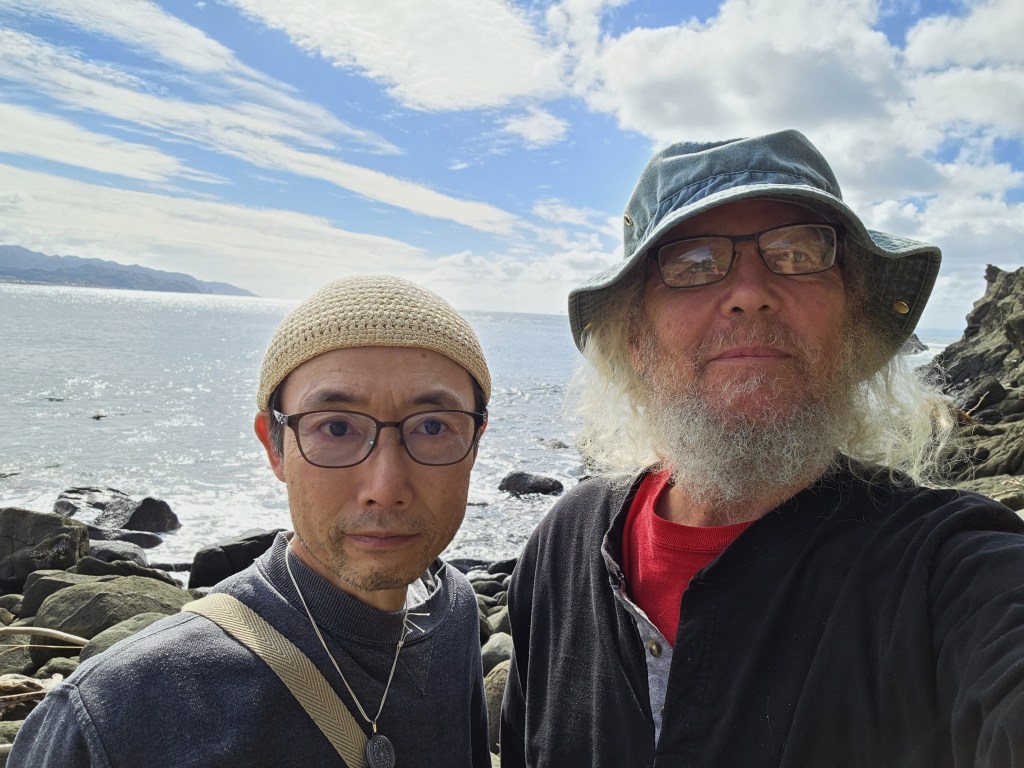
October 12
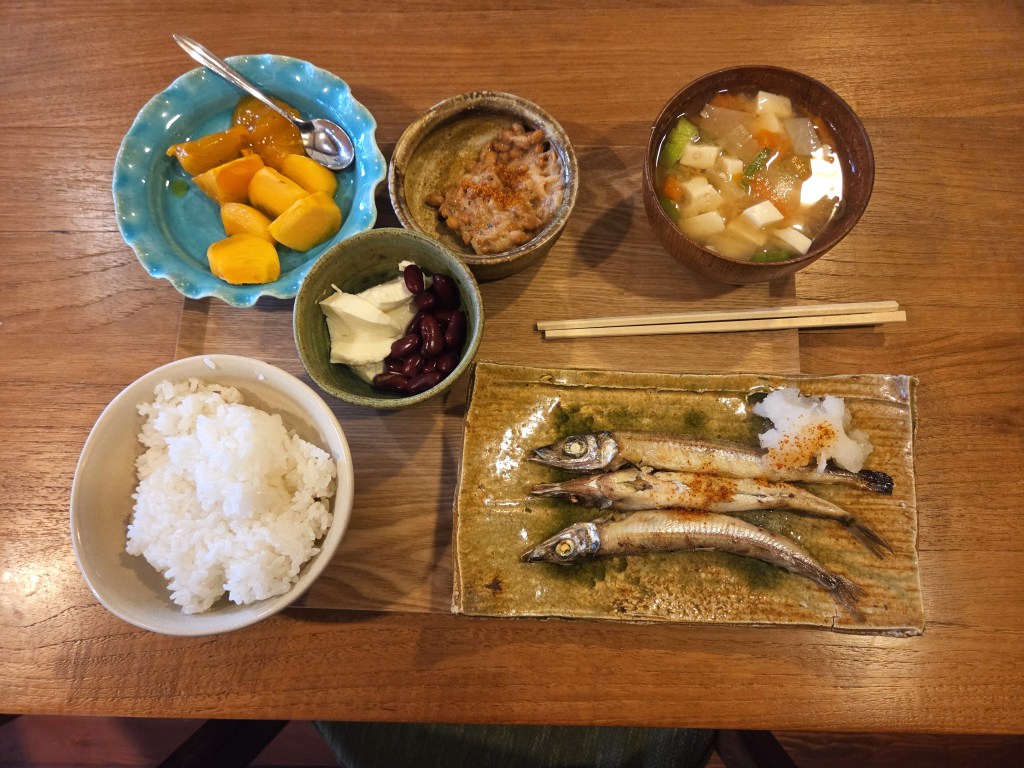
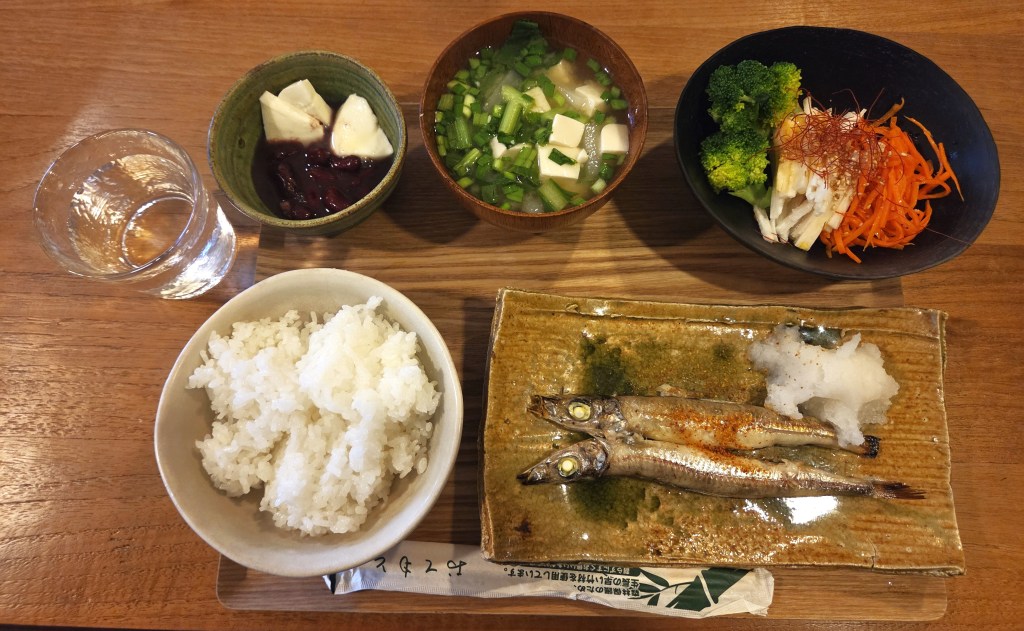
Another terrific Japanese breakfast fixed by Kazuaki.
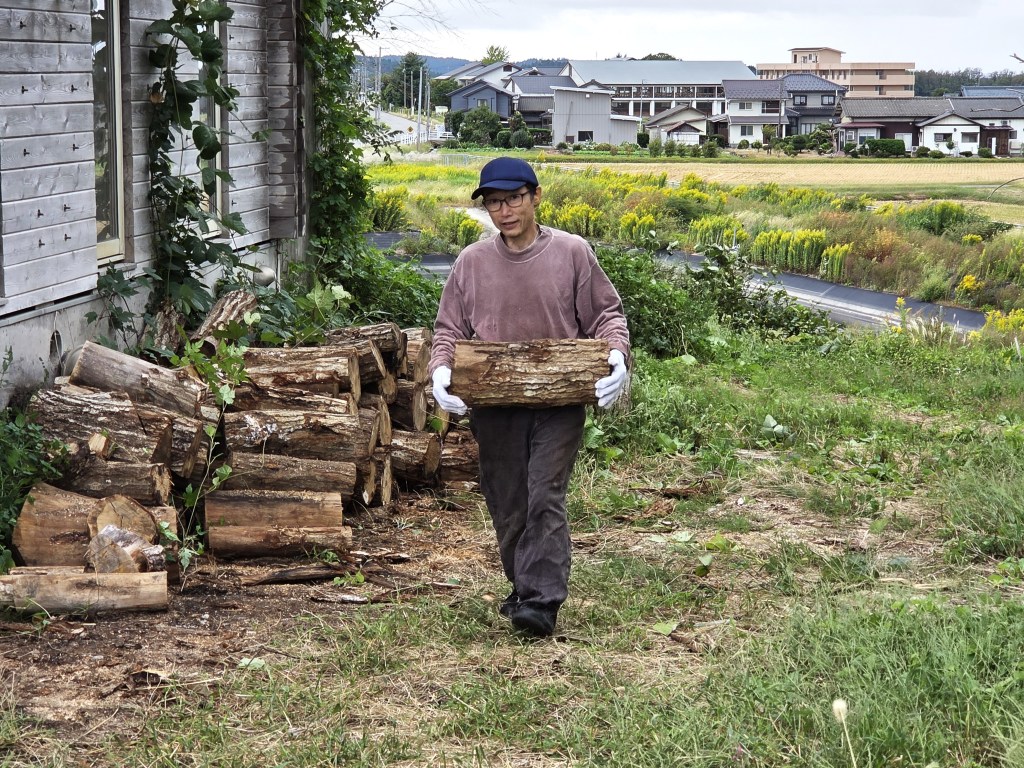
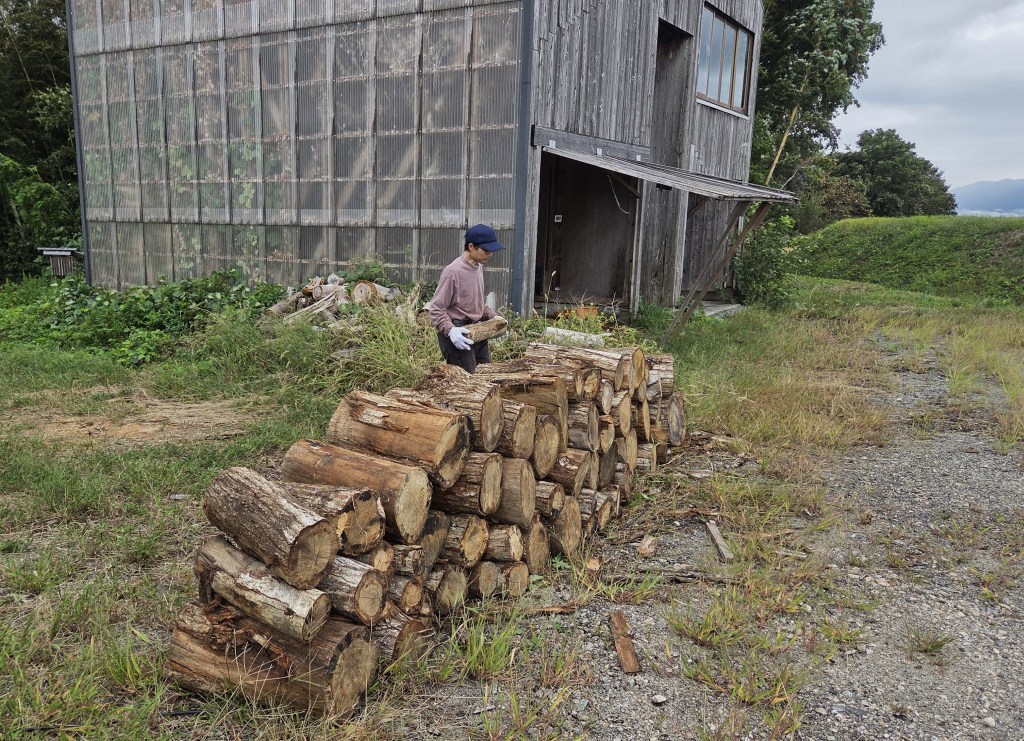
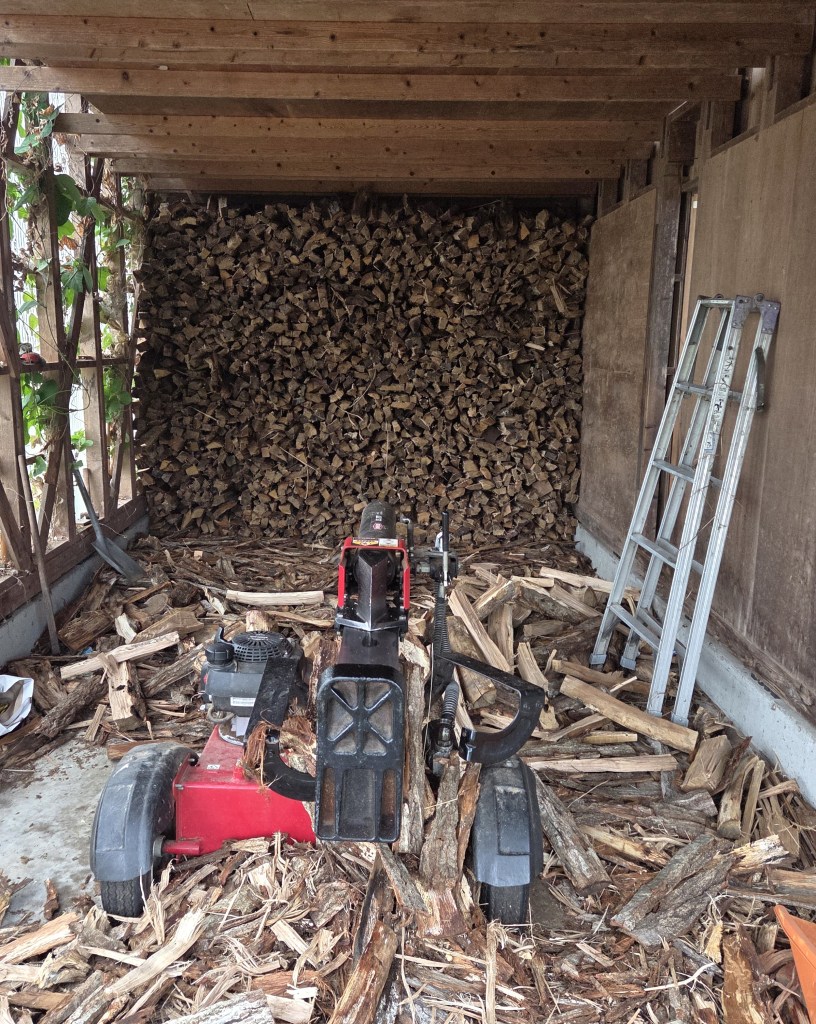
Afterwards, I helped him with firewood, stacking pieces he had split with a log splitter and bringing larger pieces to be split closer to the splitting area. It was good to do a bit of physical work. Also reminded me of the firewood work I’ll need to do after getting back home.
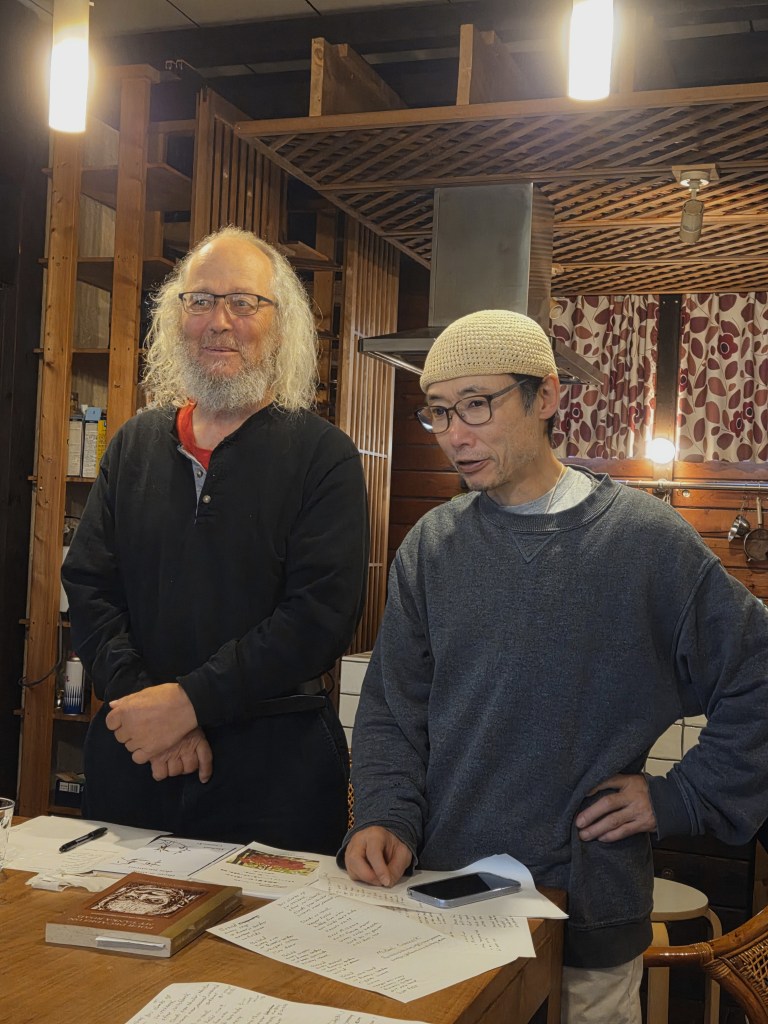
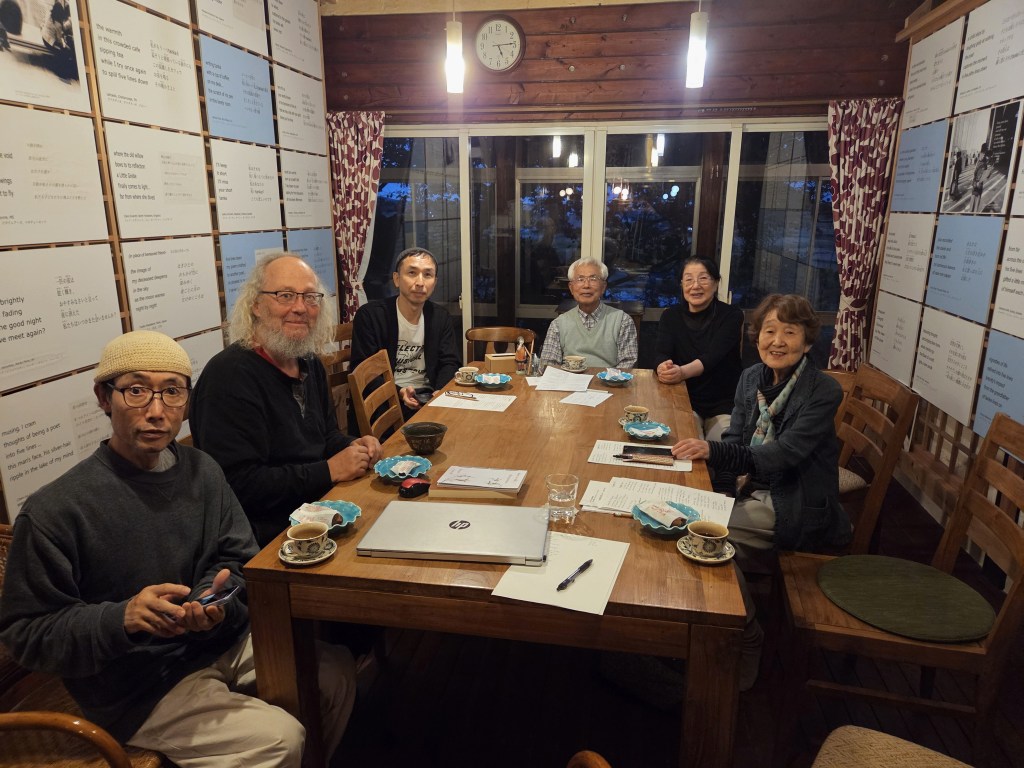
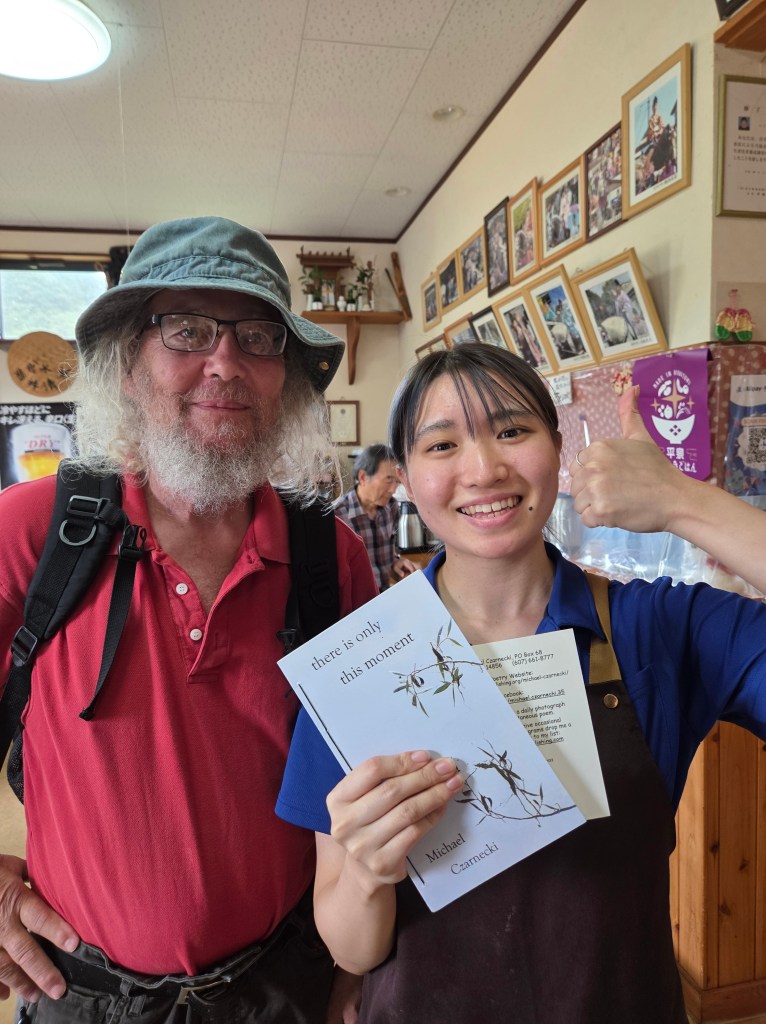
This afternoon was the house reading that Kazuaki had arranged. Nine people attended and it was very fulfilling event. Kazuaki was the interpreter. I have never read that way before and it went very well. Most of the people there didn’t speak English, so interpretating was a necessity. Kazuaki did a wonderful job of it. I read twenty tanka I have written while on this journey and he translated after I read each one. After the tanka I read a few poems from my book “there is only this moment”. For these he translated after each segment of a poem. I told two oral memoirs and he translated those like the poems, after every sentence or two. It flowed smoothly, even though we didn’t talk ahead of time how to do it.
Afterwards, five of the people stayed around and we had tea and a snack and continued enjoyable conversation.
I was more than pleased with how the reading was received. One couple said they were moved by the reading and that I captured the Japanese feeling and the scenery with my poems. Another commented that my tanka reminded him of Basho. Another person spoke on how she was concerned about the violence in the world and how people seemed to disagree all the time and that my reading dissolved her of those feelings! Some of the folks, in parting, said they hope to see me again.
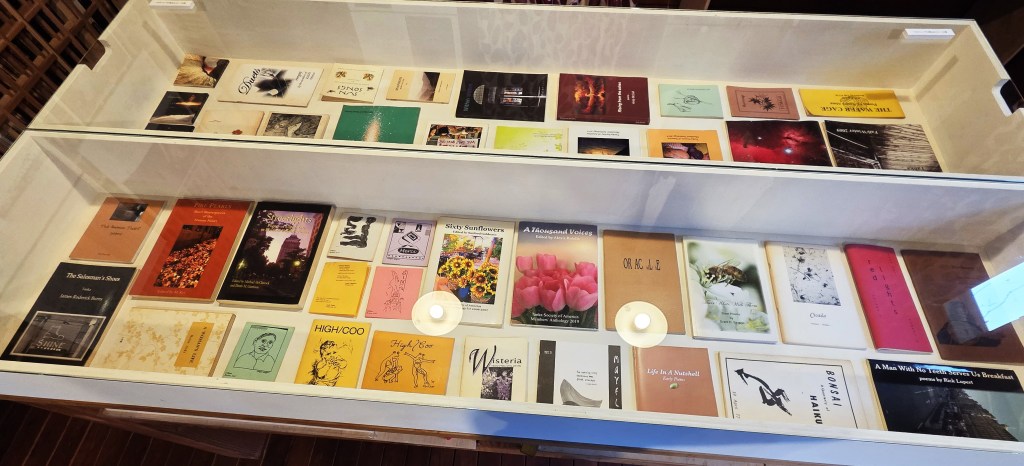
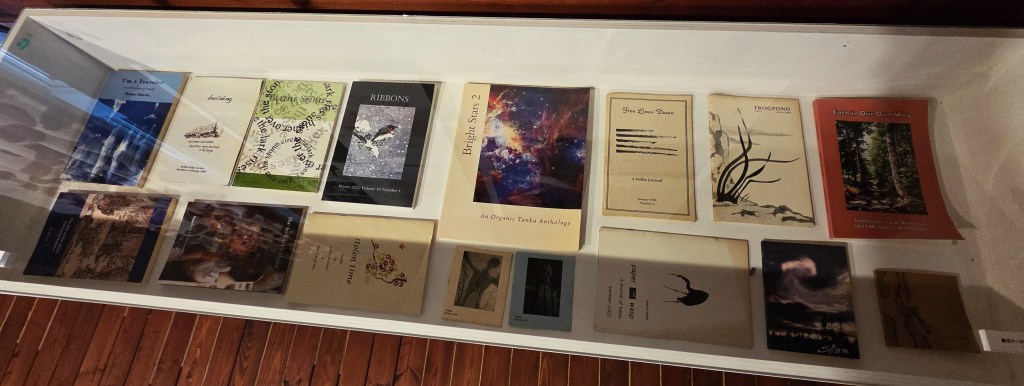
This was the first reading that was held at Kazuaki’s and the Sanford Goldstein museum. I started out the reading with three of Sanford’s tanka. He is called the grandfather of English language tanka, so it was fitting to start with a few of his and then to follow with my tanka from the journey.
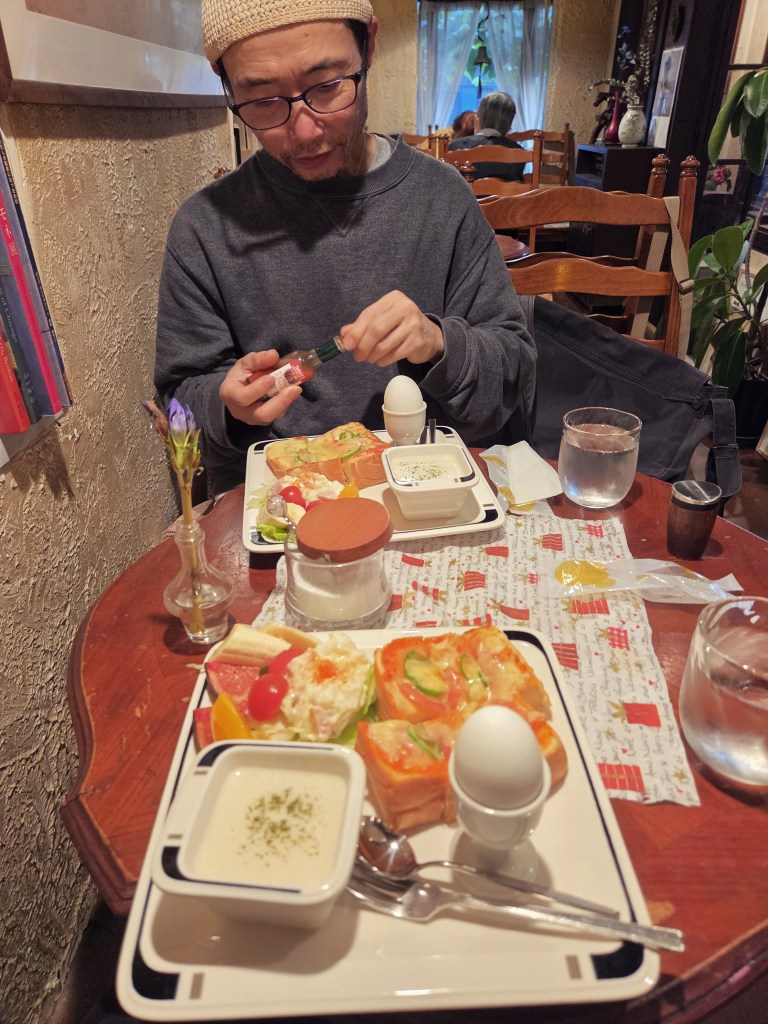
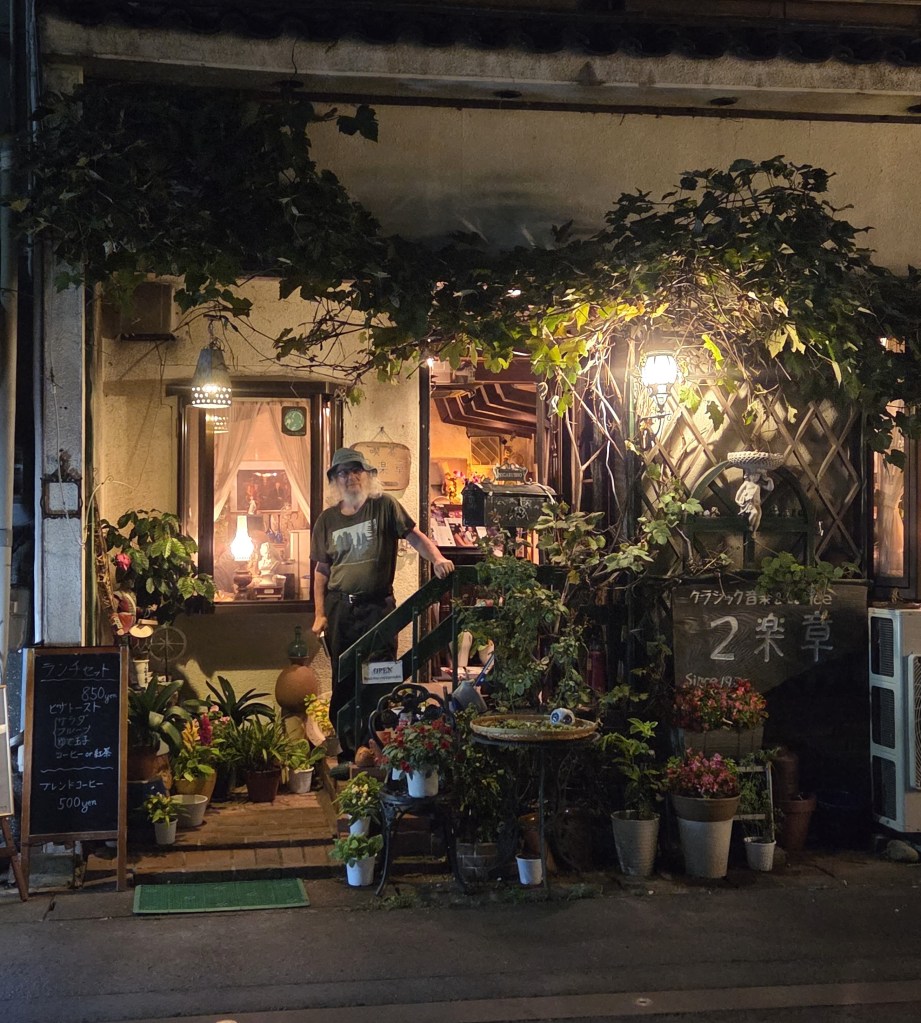
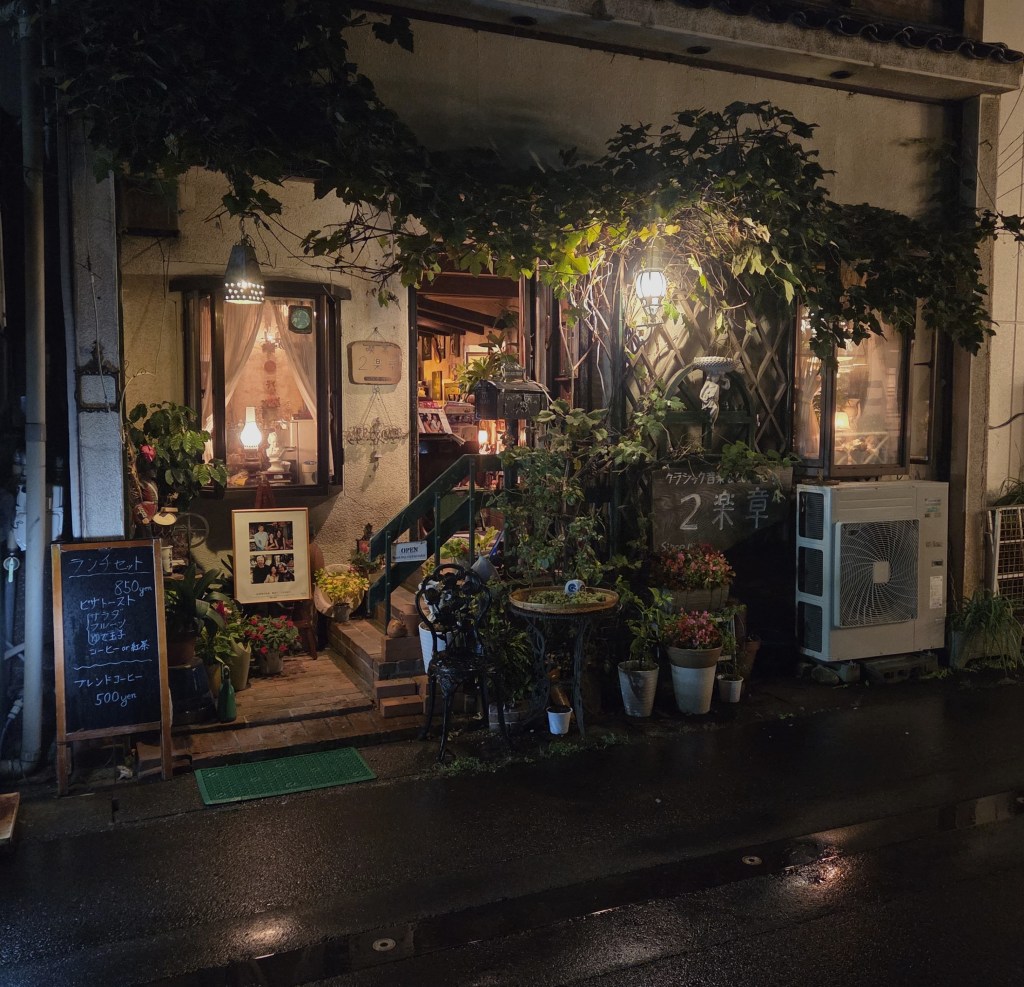
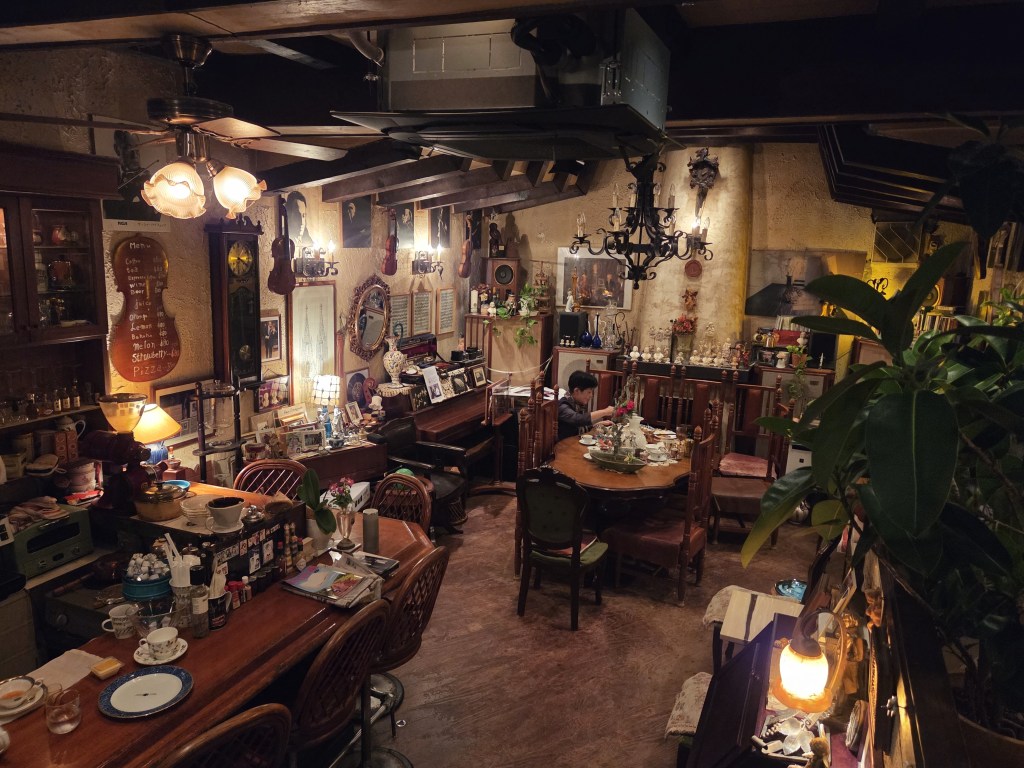
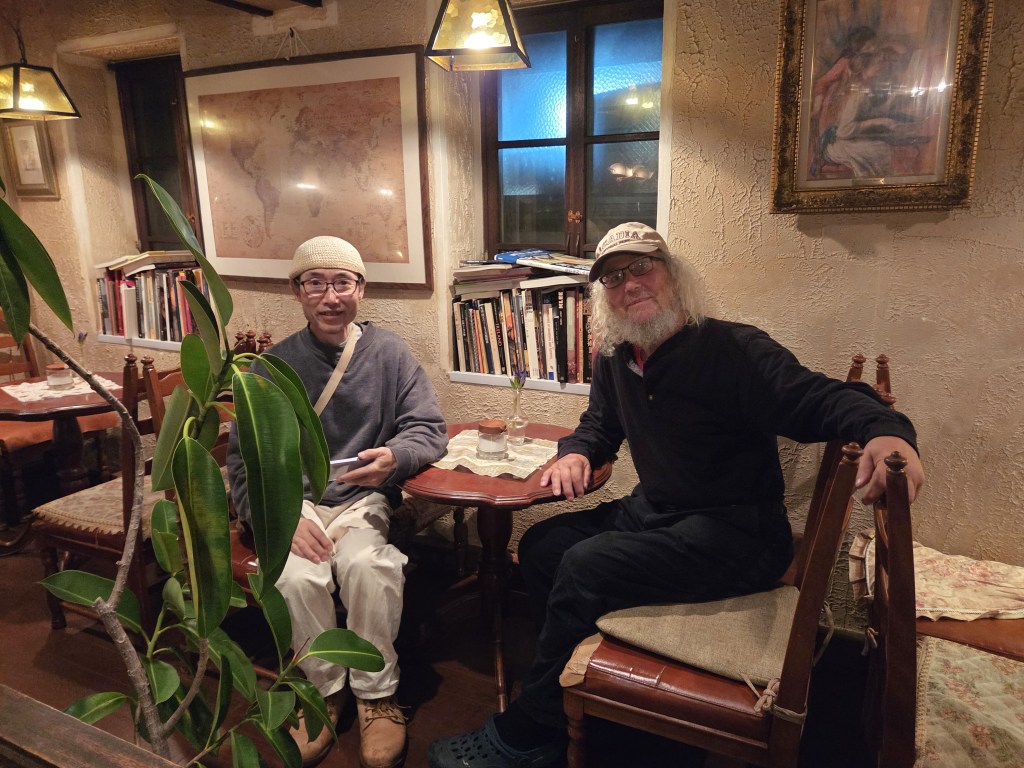
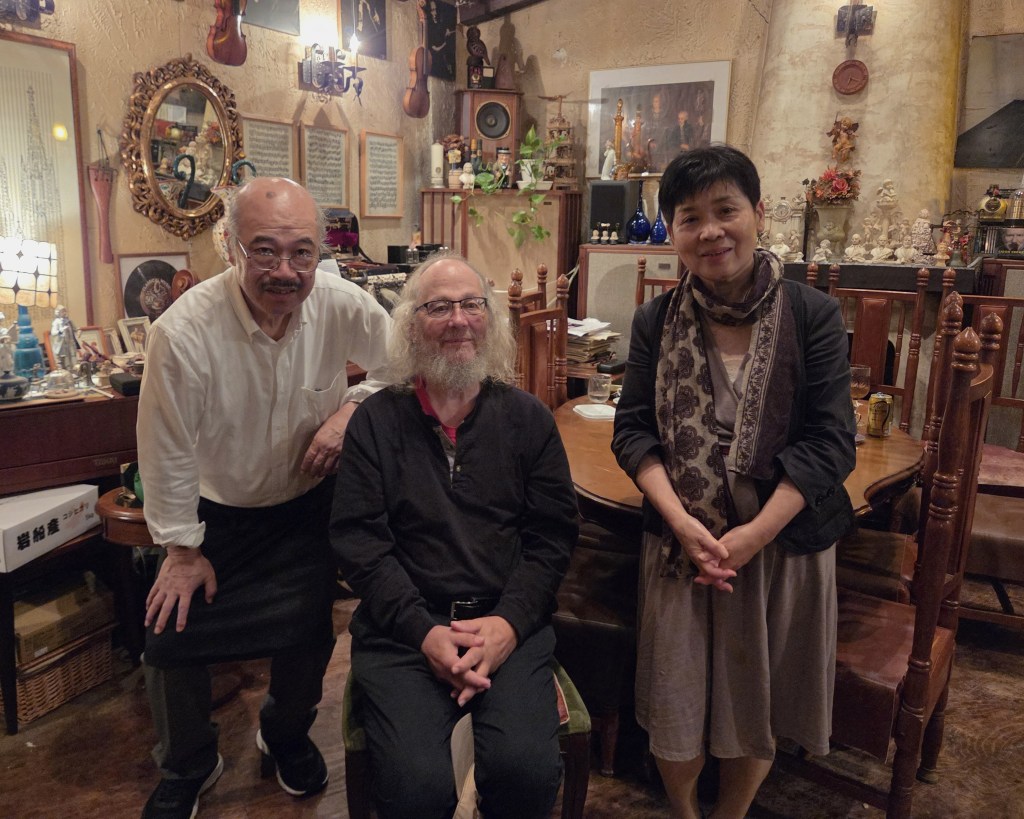
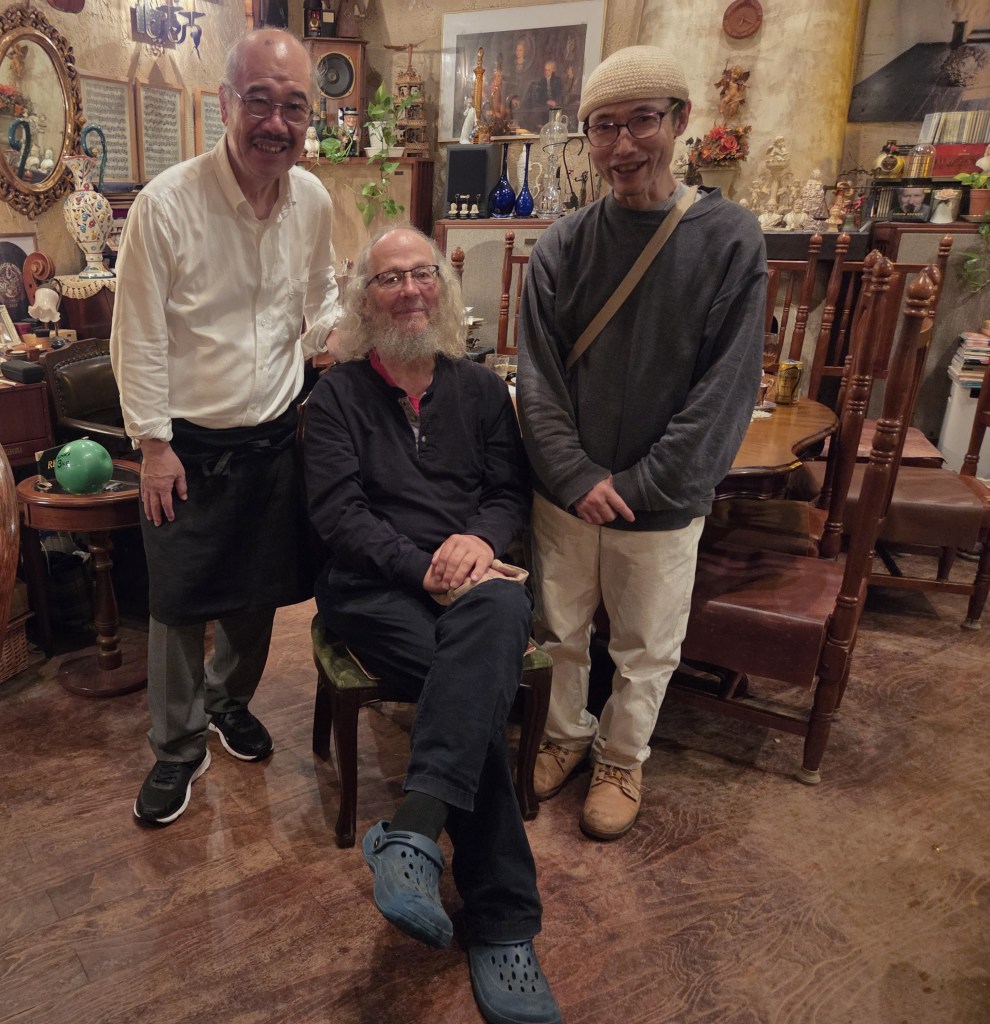
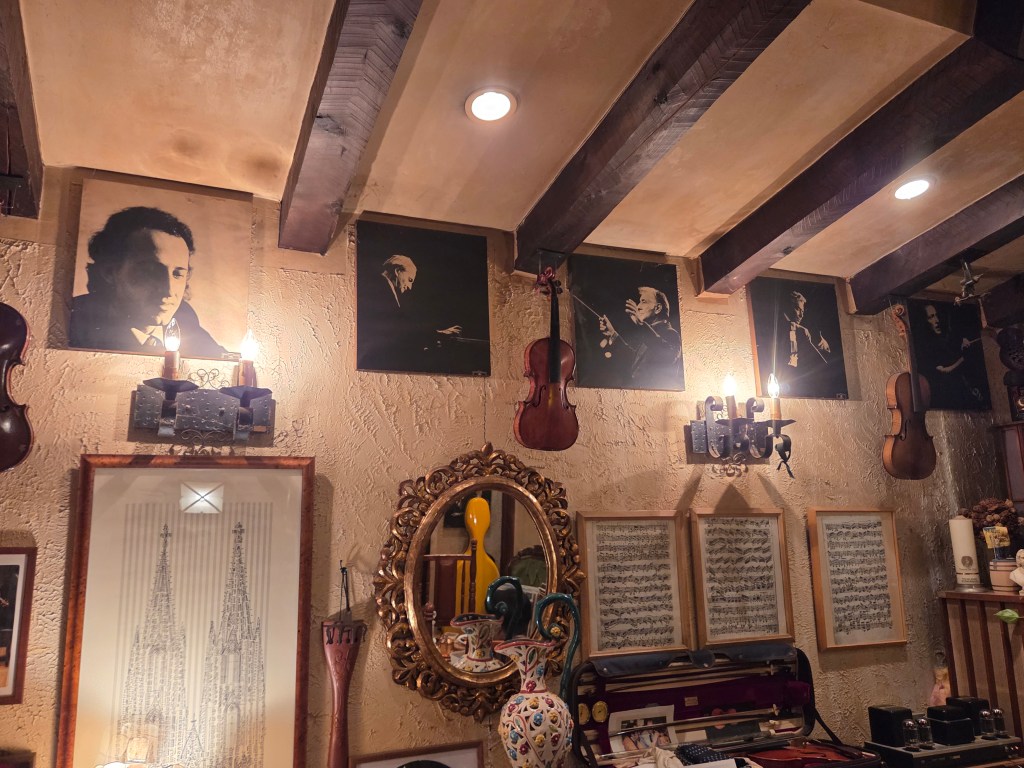
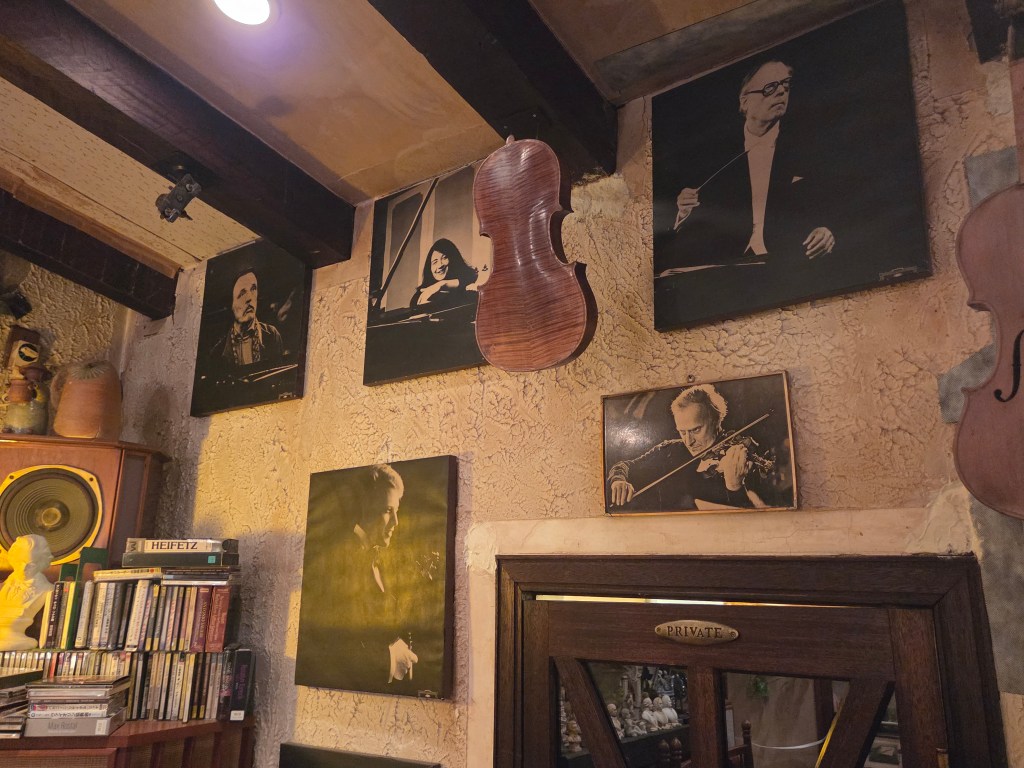
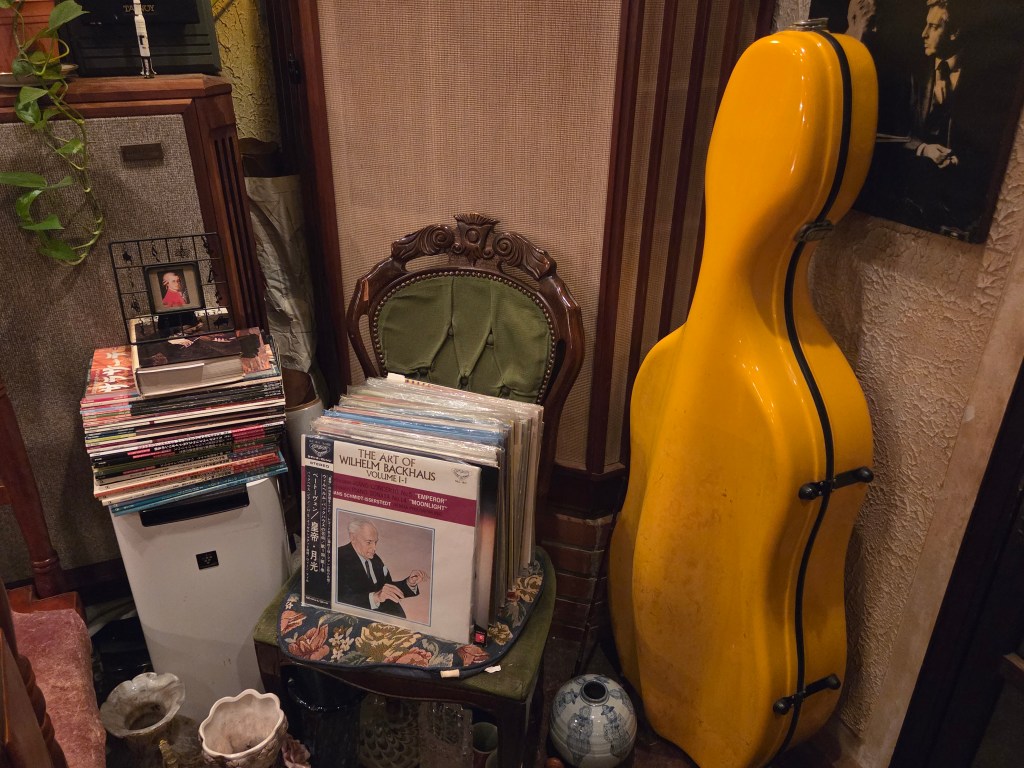
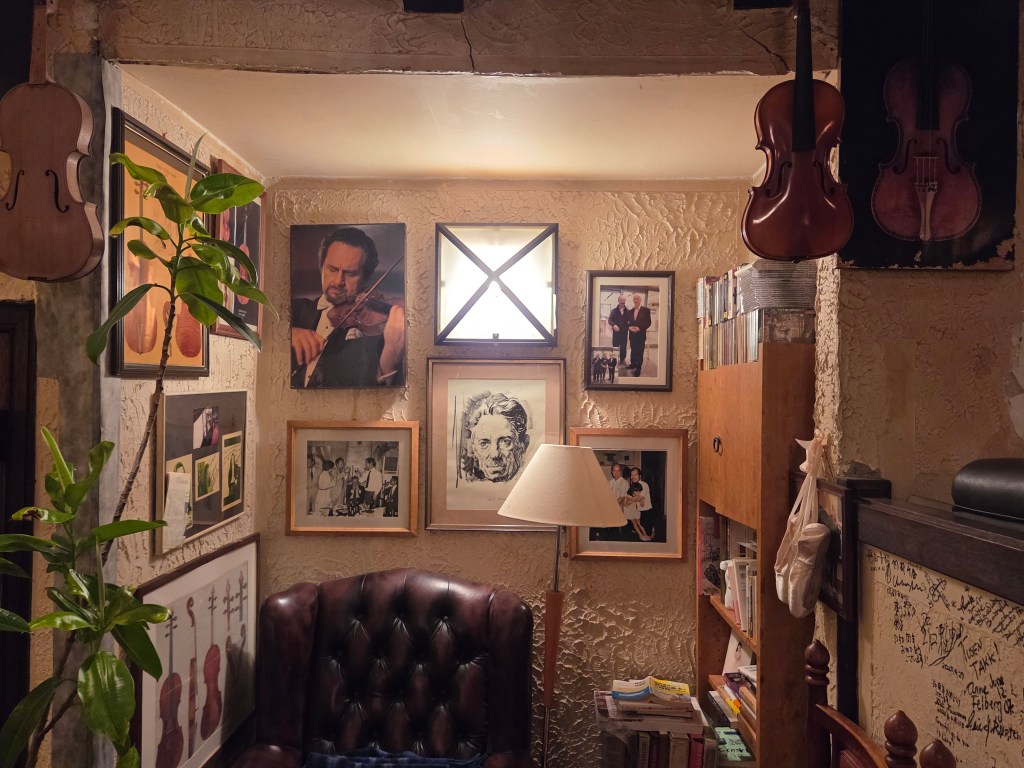
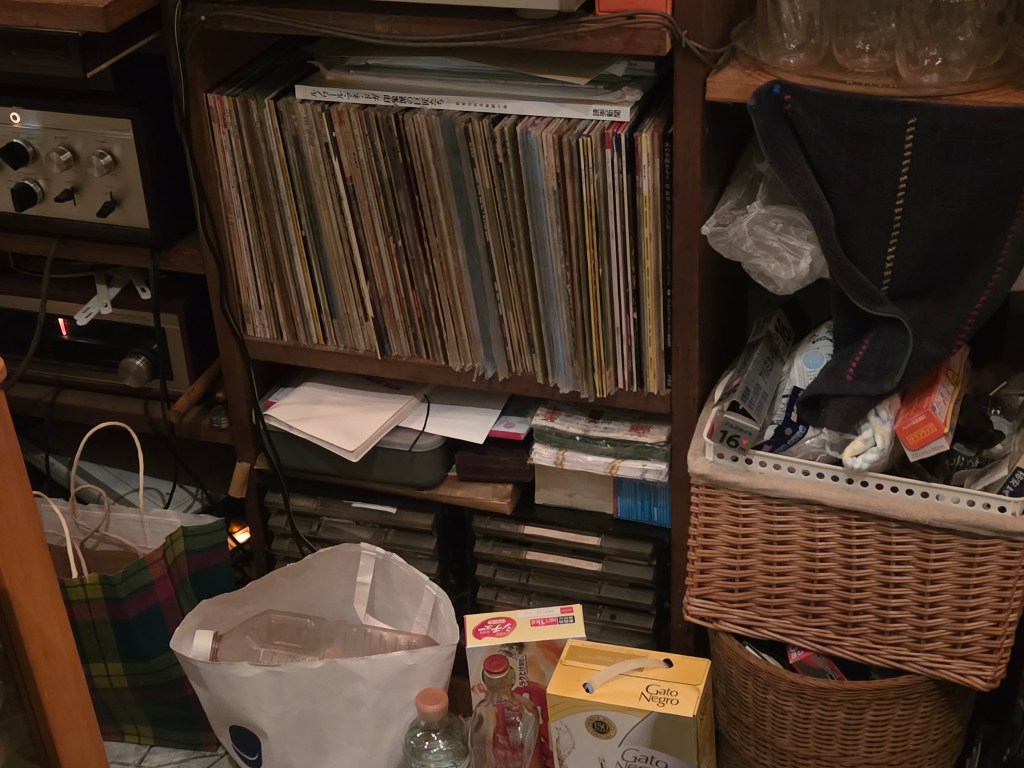
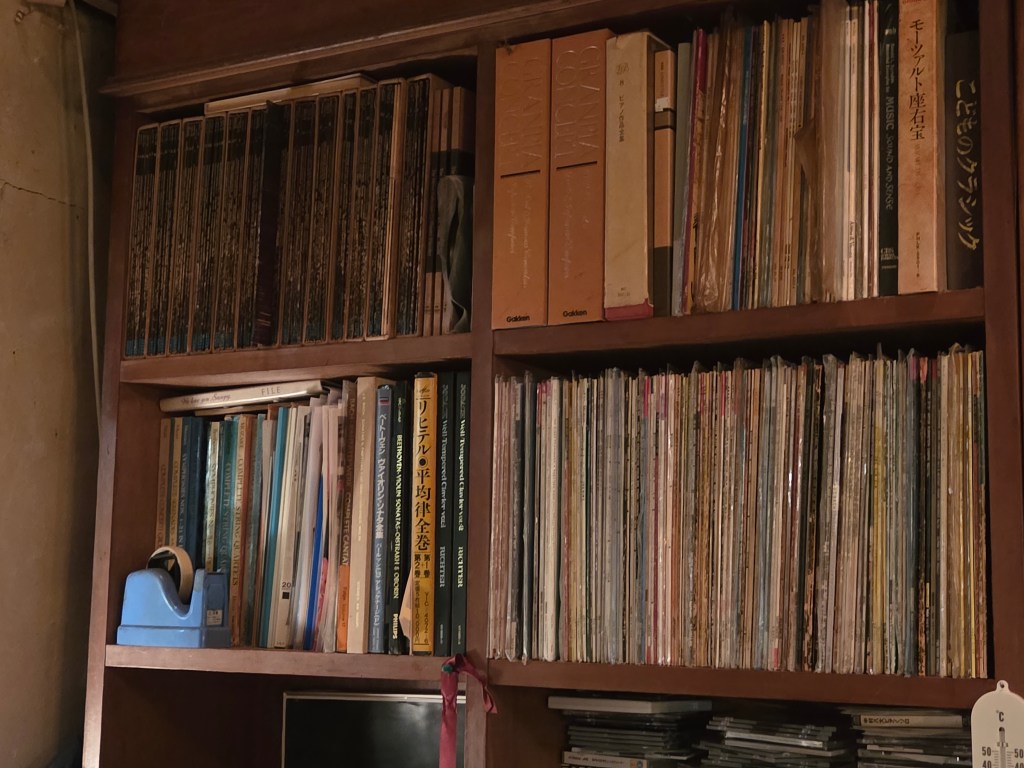
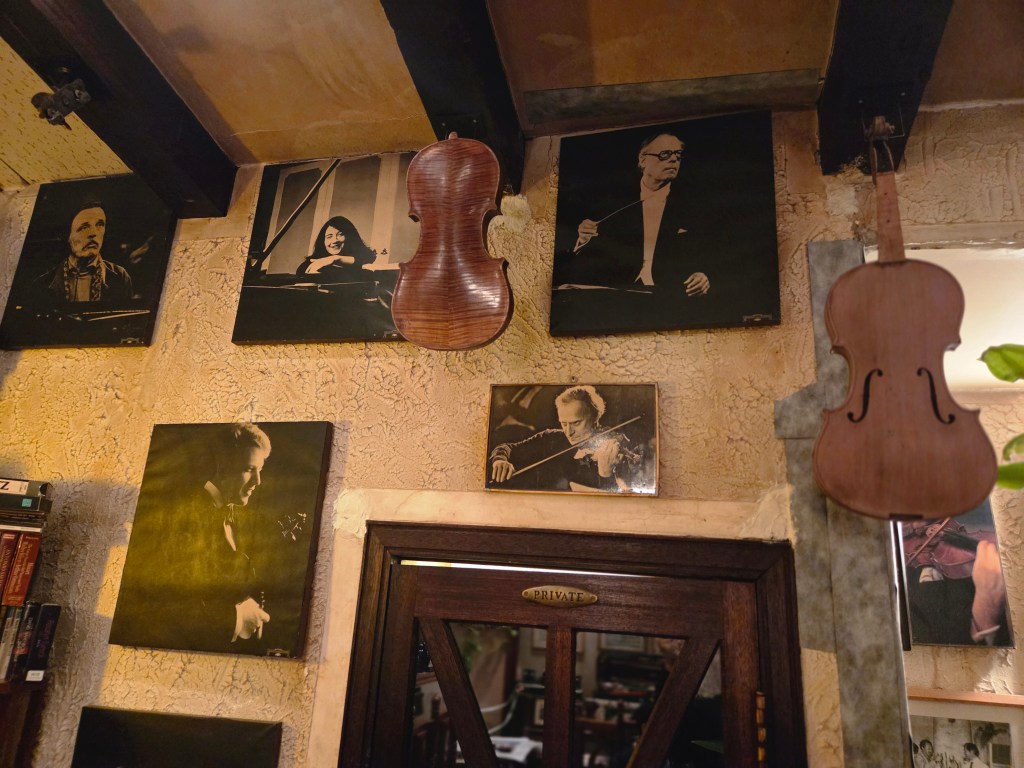
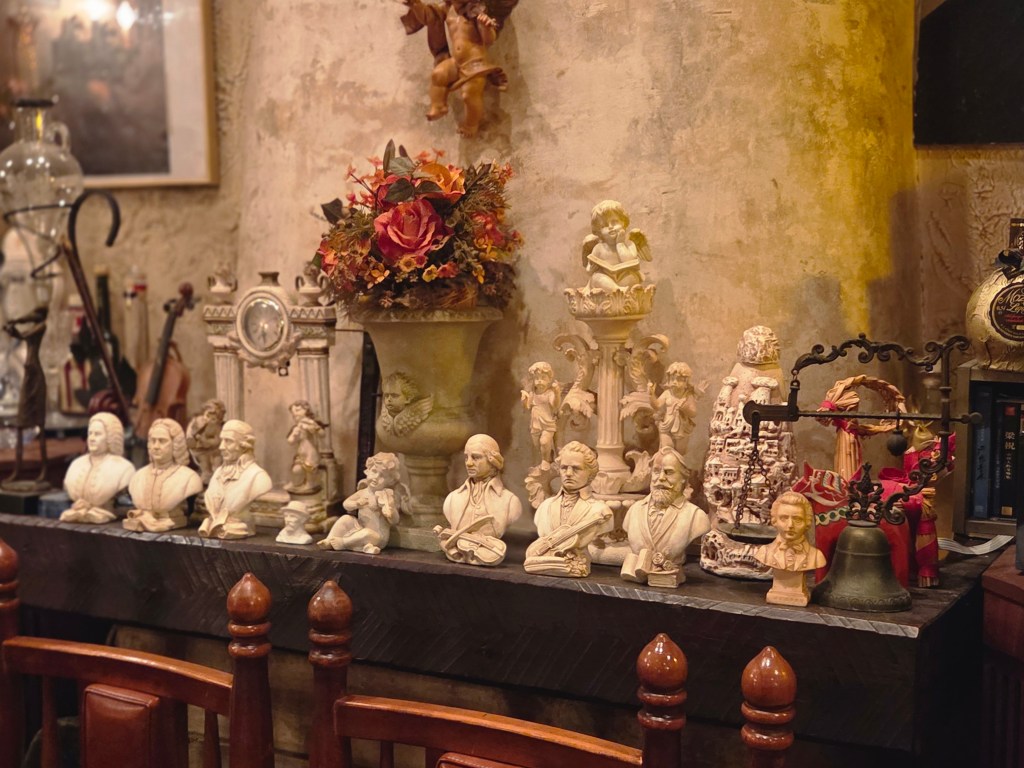
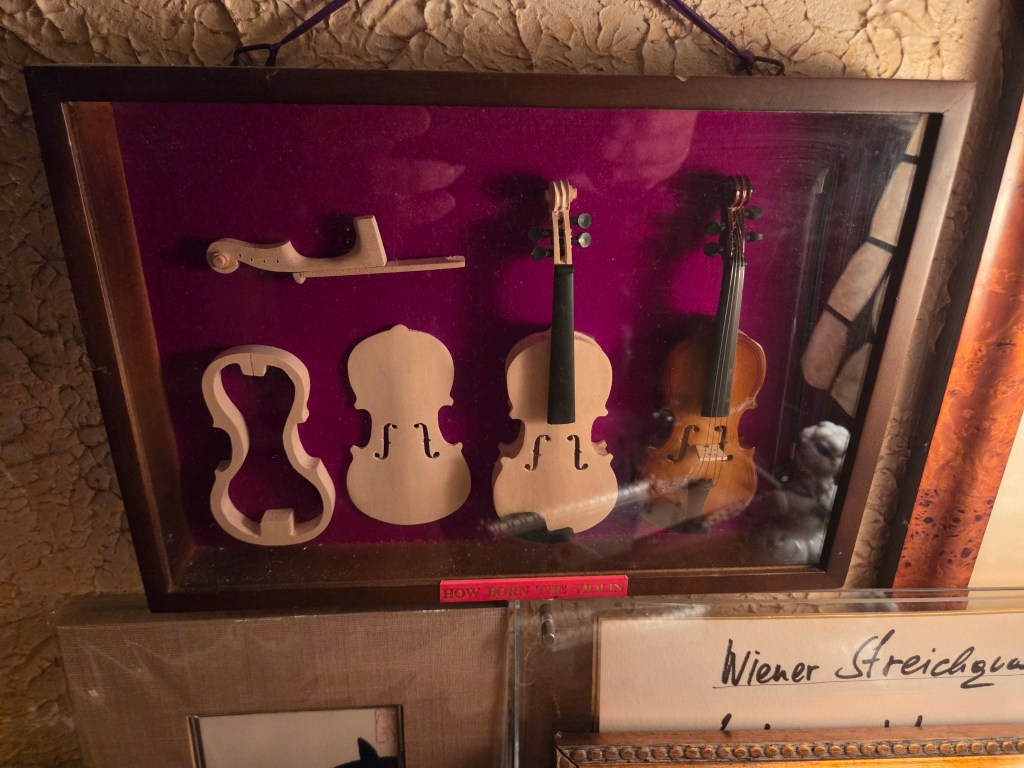
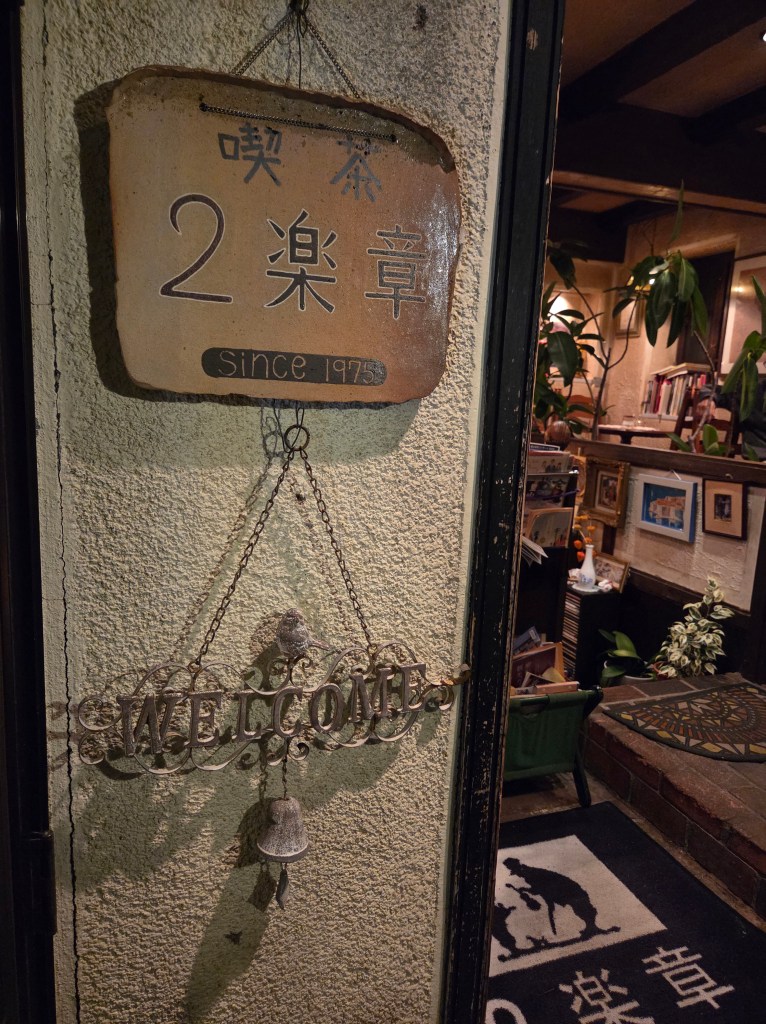
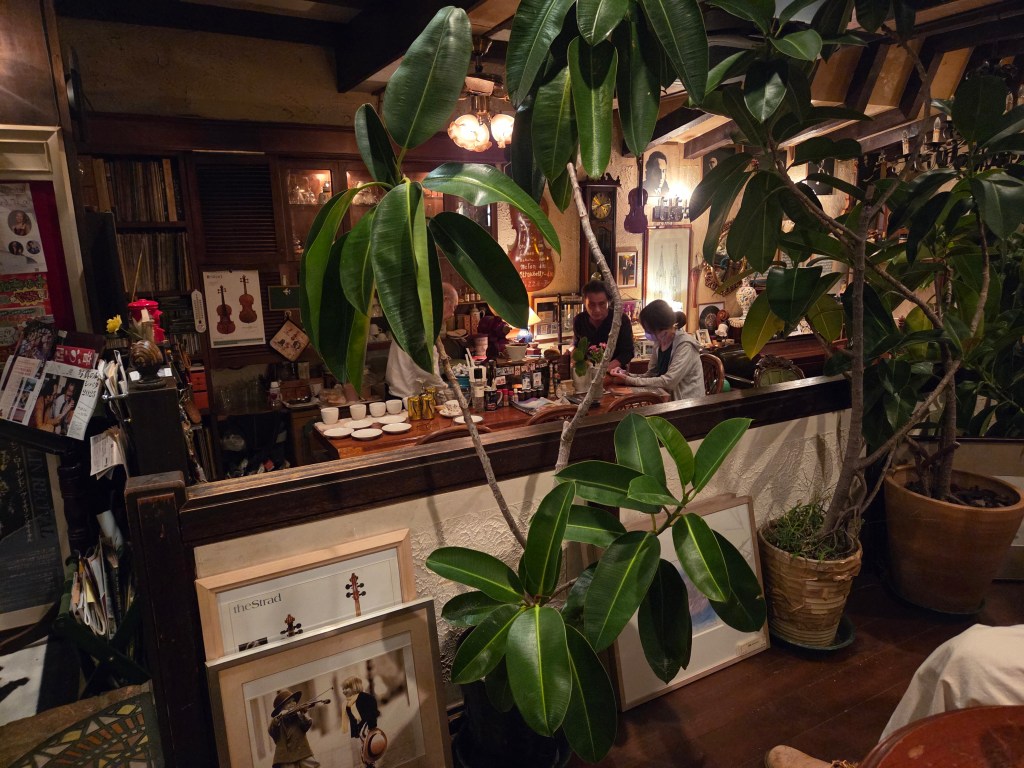
Afterwards we went again to the Tanka Café, this time taking along my phone for pictures. The café is in its fifty-first year and has hardly changed over the course of time. The owner plays the violin and his wife the piano and they love classical music. The interior is loaded with music and other paraphernalia. (See pics.) It is a cozy and comfortable place and one in which Kazuaki and Sanford attended a couple of times a week or so. If I lived here, I’m sure I would be doing that, too.
(Click on thumbnail for larger picture.)
October 11
Morning tea at Kazuaki’s house. Then, a little later, an amazing breakfast that he prepared. While eating, joined a ZOOM of Kathabela’s tanka group. I muted and paused video of me while I was eating. A nice experience to listen to a reading of tanka by different voices while breakfasting.
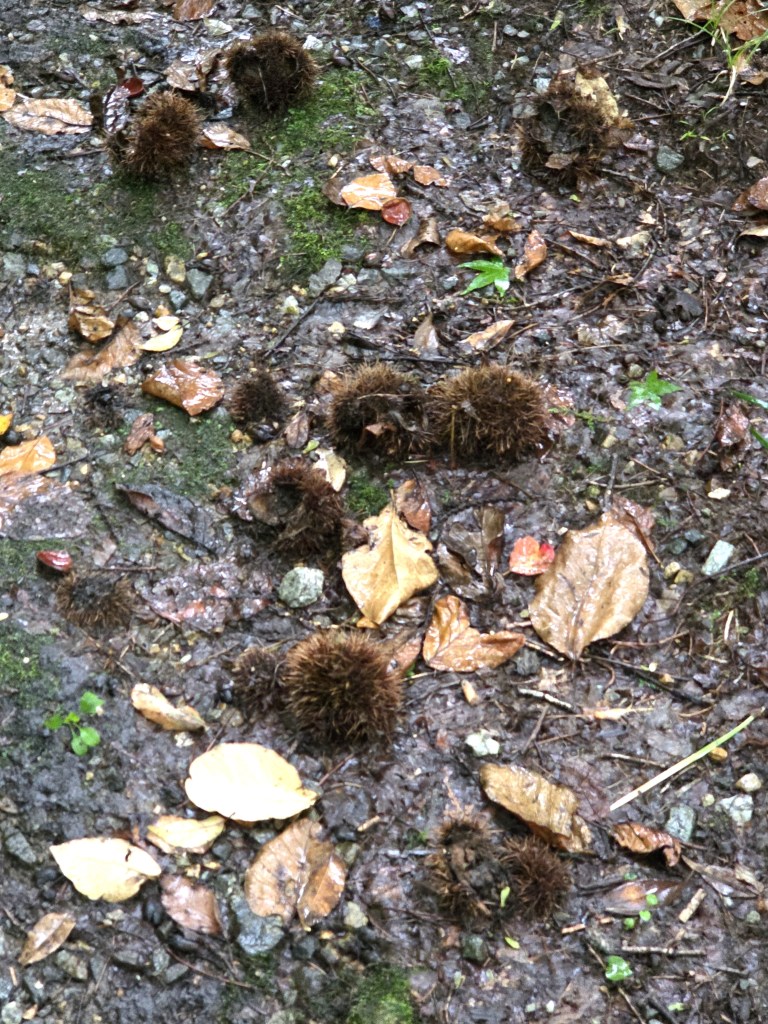
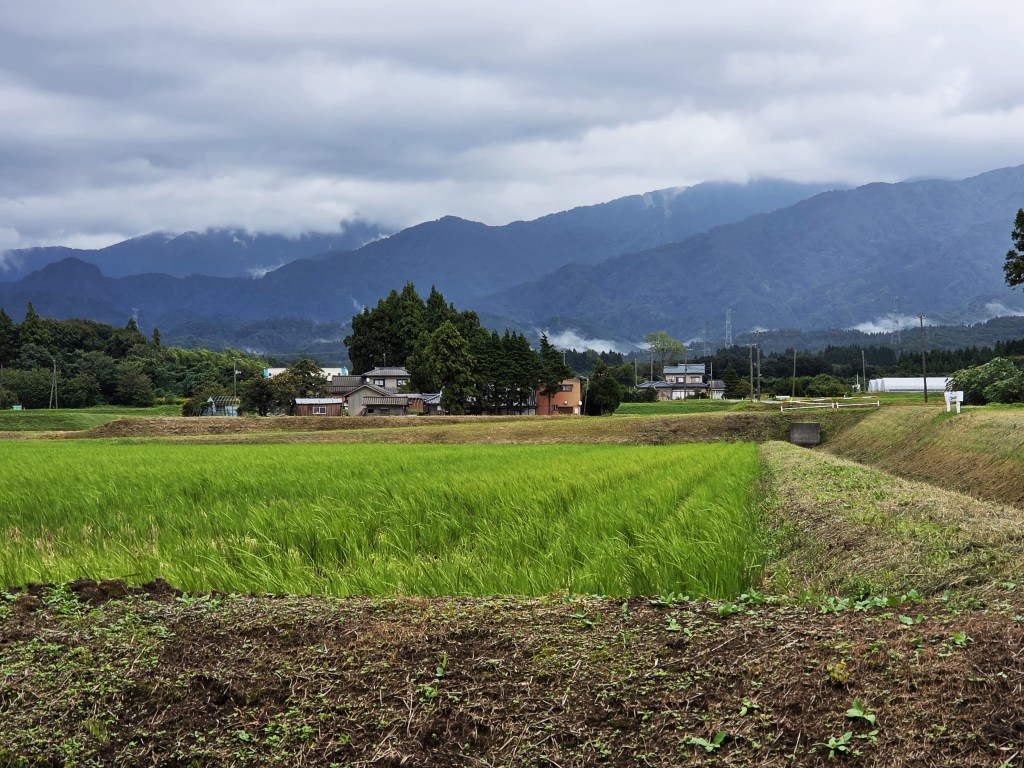
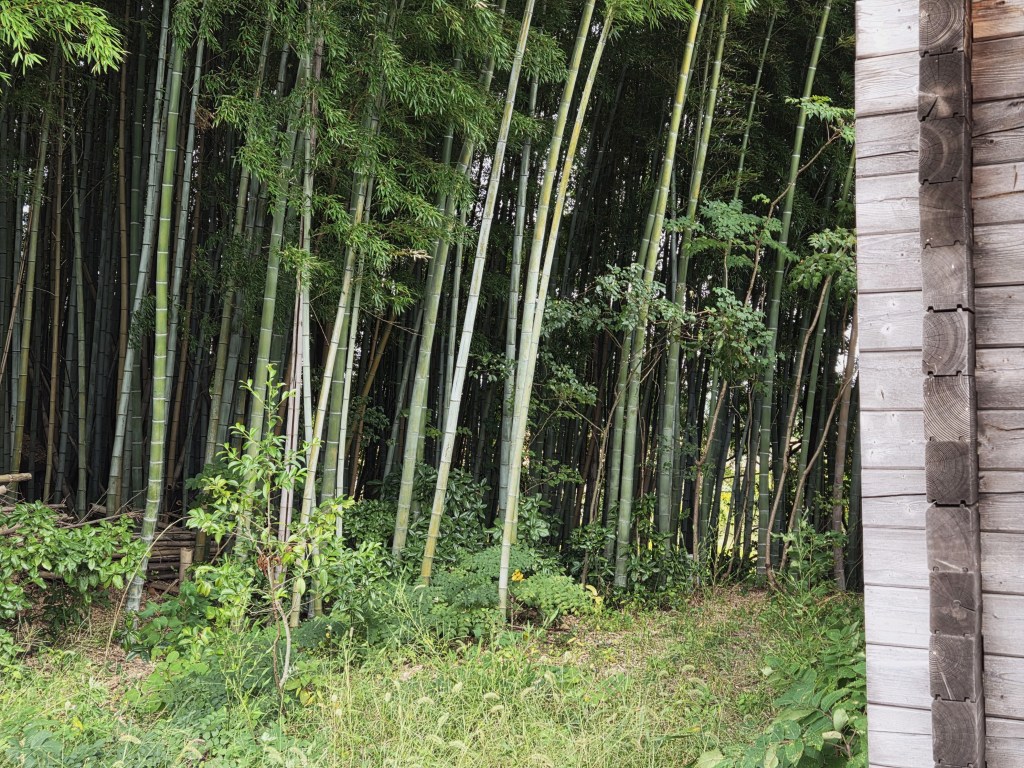
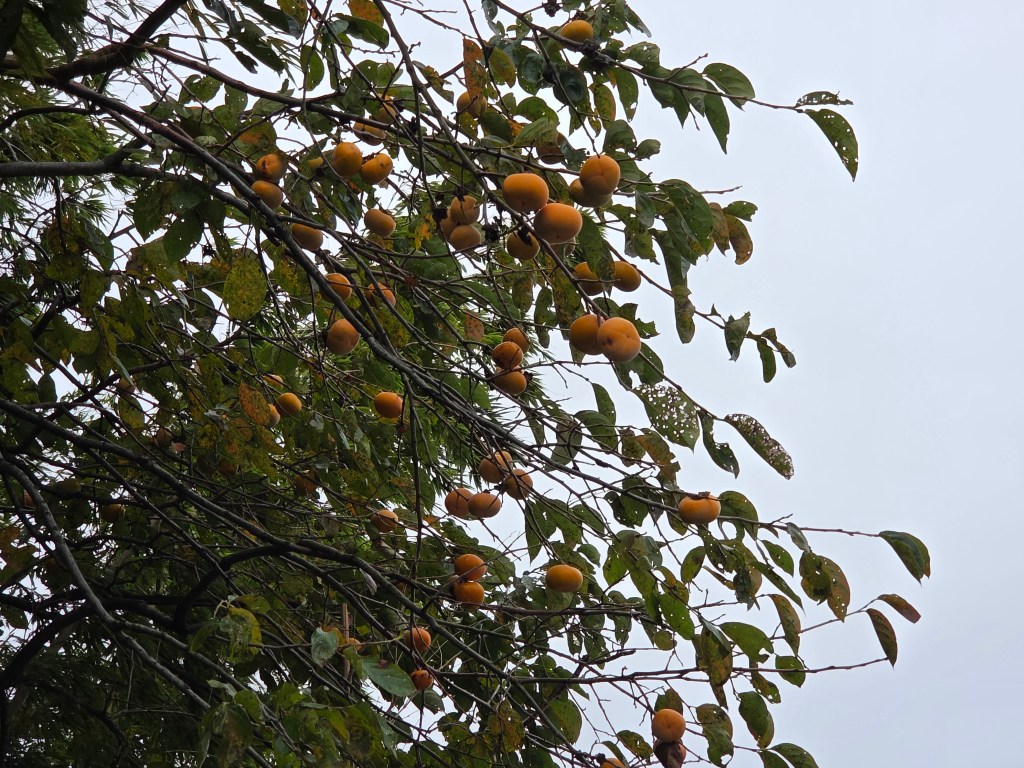
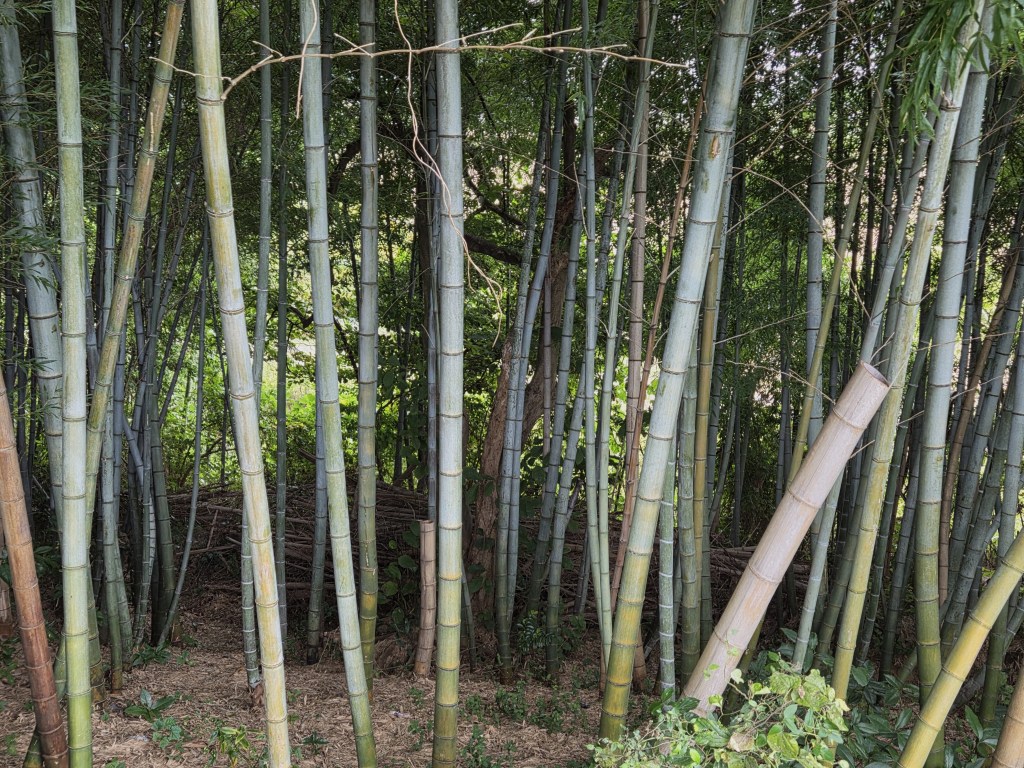
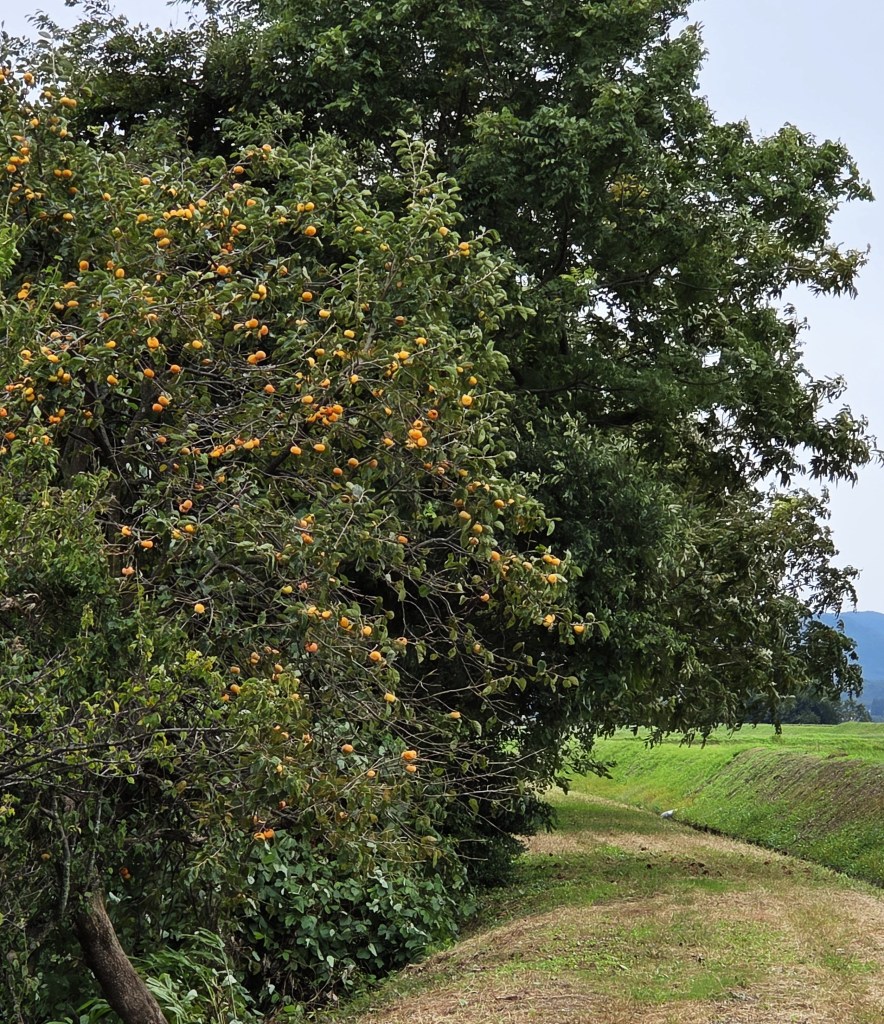
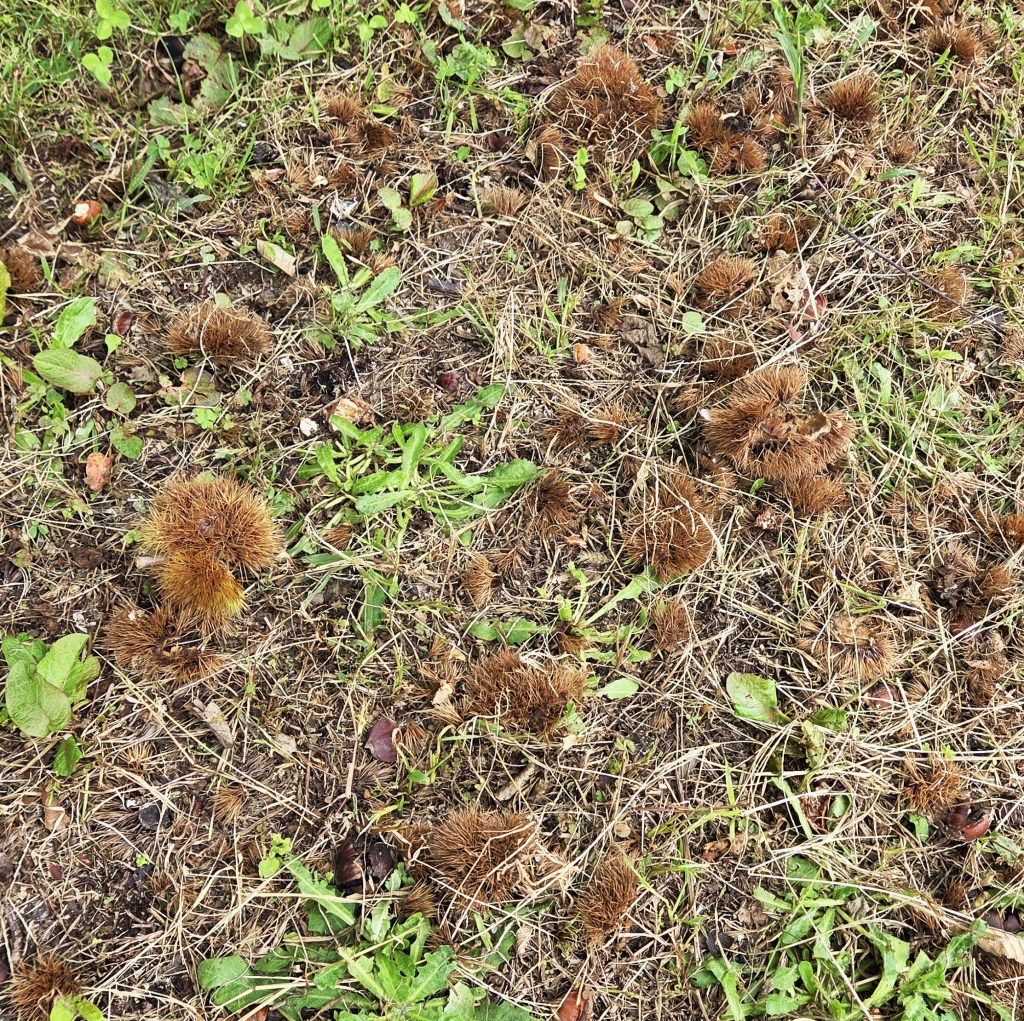
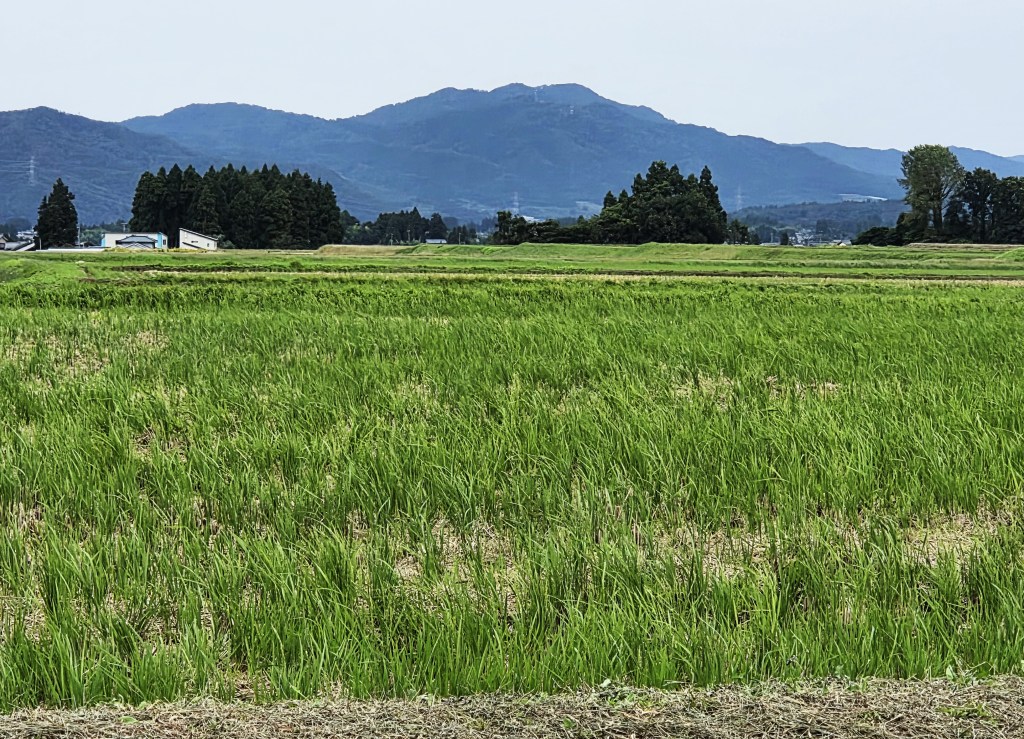
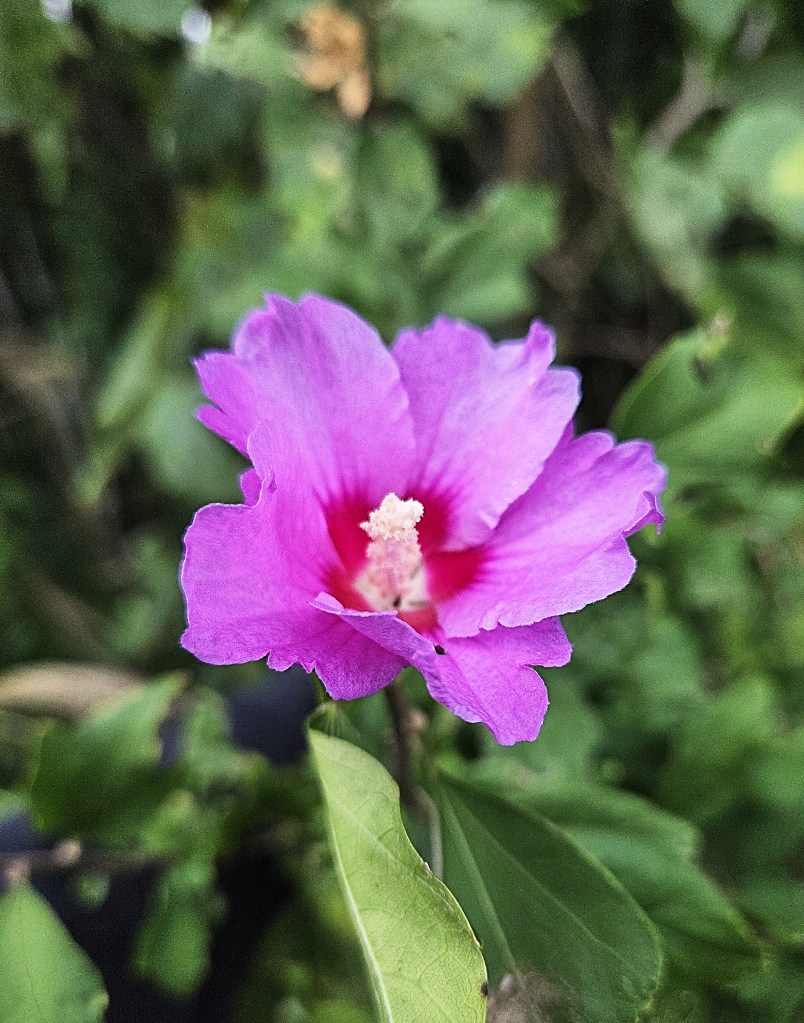
After the ZOOM I took a walk outside. Bamboo tees, persimmons, chestnuts, rice fields, nearby mountains and Hibiscus syriacus, also known as Korean hibiscus or Rose of Sharon.
The chestnuts on the ground reminded me of a tanka by Ryokan:
wait for the
light of the moon
before you head home:
on the mountain trail
chestnut shells are scattered
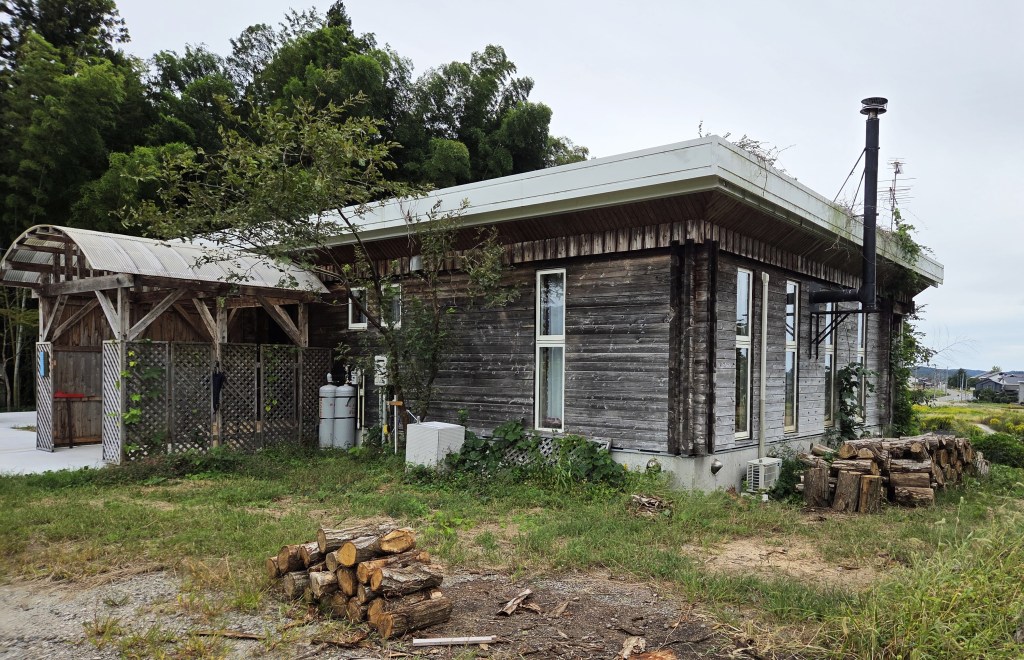
Kazuaki has set up a museum in the house here for the deceased tanka poet, Sanford Goldstein. He lived here in this house and passed away 2 years ago. He was an American who lived in much of his life in Japan and is given credit for helping to make tanka an English language poem too, besides being Japanese. He was 97 when he passed away and Kazuaki cared for him for 20 years. I’ll write more about that in the next few days.
Kazuaki and I drove into Niigata to attend a calligraphy exhibit opening with some people he knew. They were very friendly and interested in who I was. The exhibit had me thinking about maybe taking out my unused calligraphy set and trying it this winter. Kazuaki encouraged me saying I don’t have to be good at it and to just flow along with the process freely.
Afterwards we stopped at Tanka Café, a special place in Shibata that has been open for fifty-one years. More on that later, as we will stop by again since I didn’t have my phone with me to take pictures.
Back at home, we had a little sake with light food – apple and banana and a few pieces of chicken breast. To go along with that, good conversation. A pleasant ending to a pleasant day.
Tomorrow afternoon, I am honored to say that Kazuaki is hosting a small gathering for a reading by me at his house/museum.
(Click on thumbnail for larger picture.)
October 10
Transition day.
Bart left the ryokan early in the morning to make his way to Tokyo and then a flight back home the following day. Fifteen days together sharing the experience of Japan and some of the places Basho had visited on his Journey to the Far North 336 years ago.
With the shutdown of the US Government, I hope he doesn’t have any difficulties in his journeying back home.
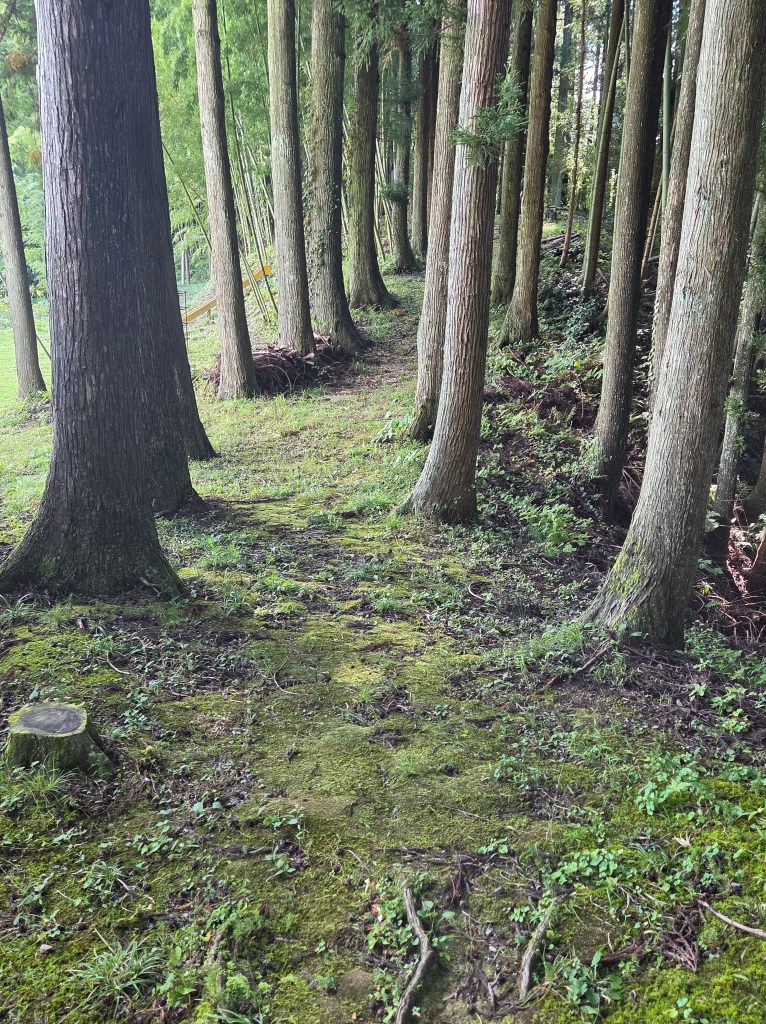
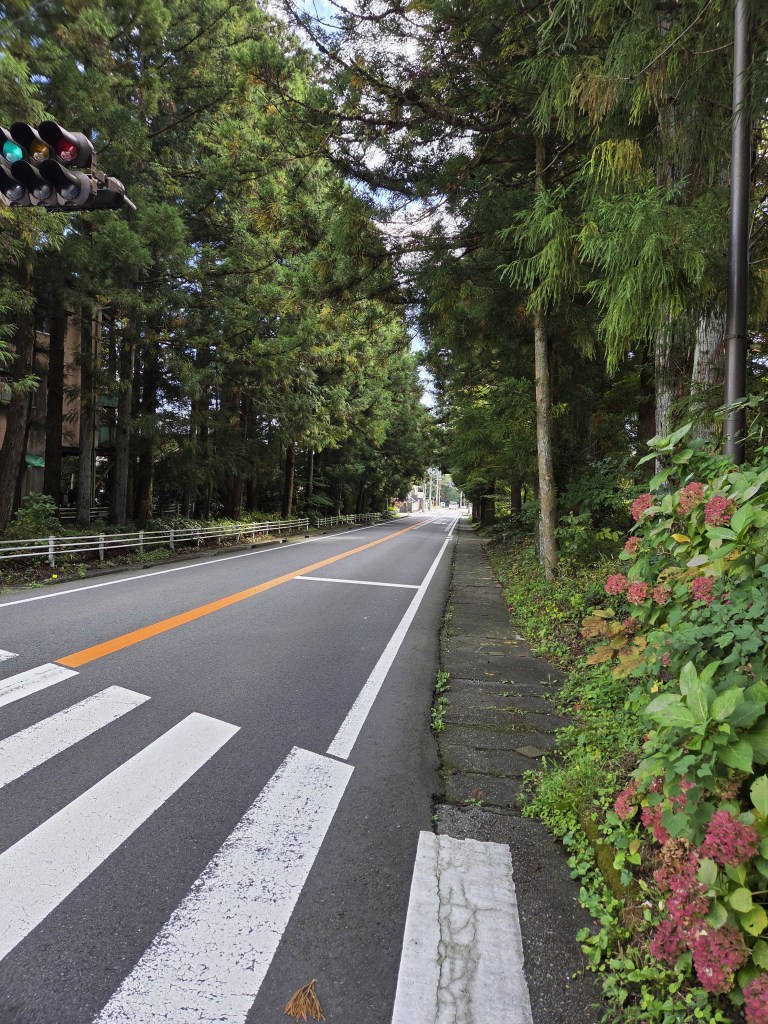
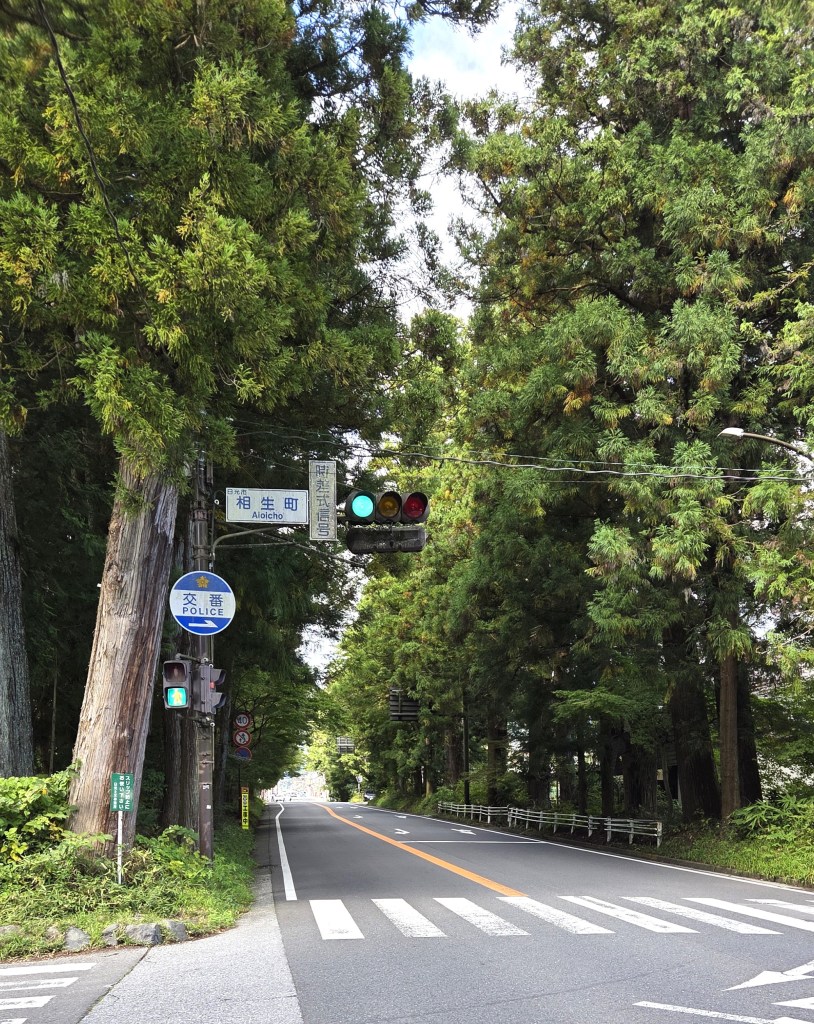
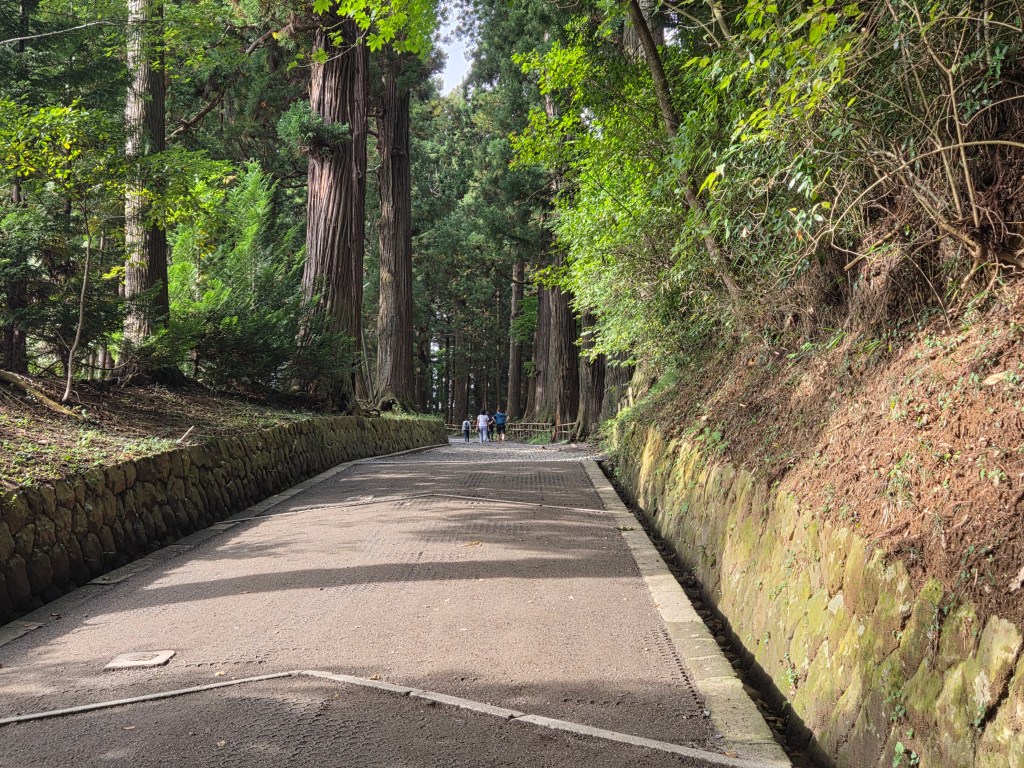
I left the ryokan an hour or so later and stopped at a laundromat to replenish my clean clothes supply. I was down to what I was wearing, everything else needed washing. While walking there I came across a couple of the streets in Nikko that are lined with tall cypress trees. Nice to see a couple of streets so bedecked, even though the pictures aren’t very good.
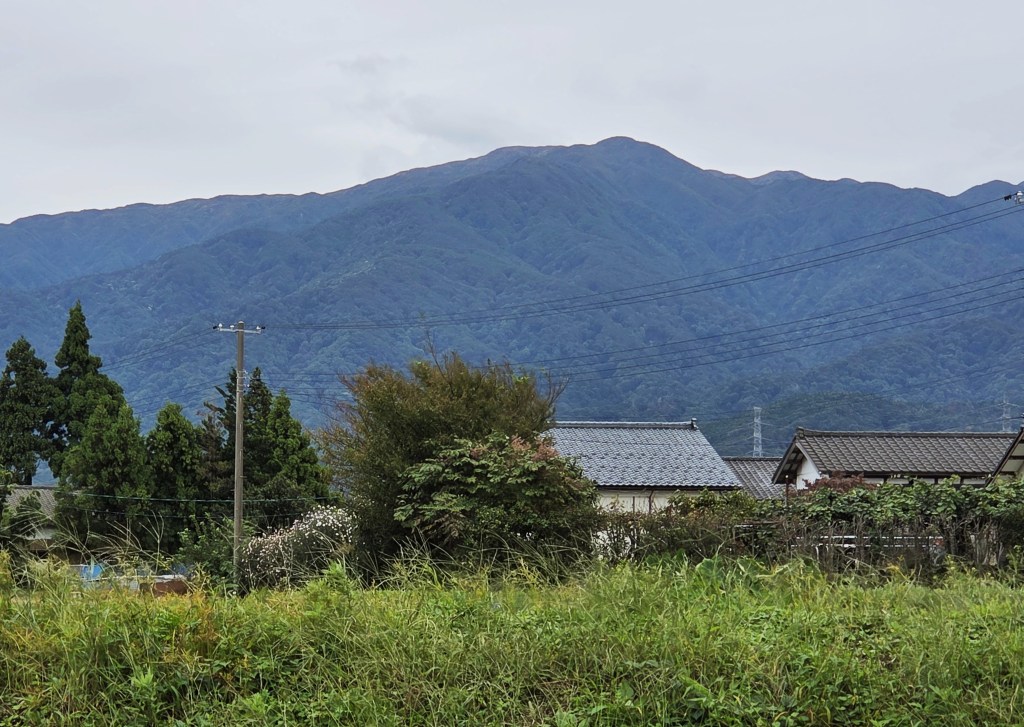
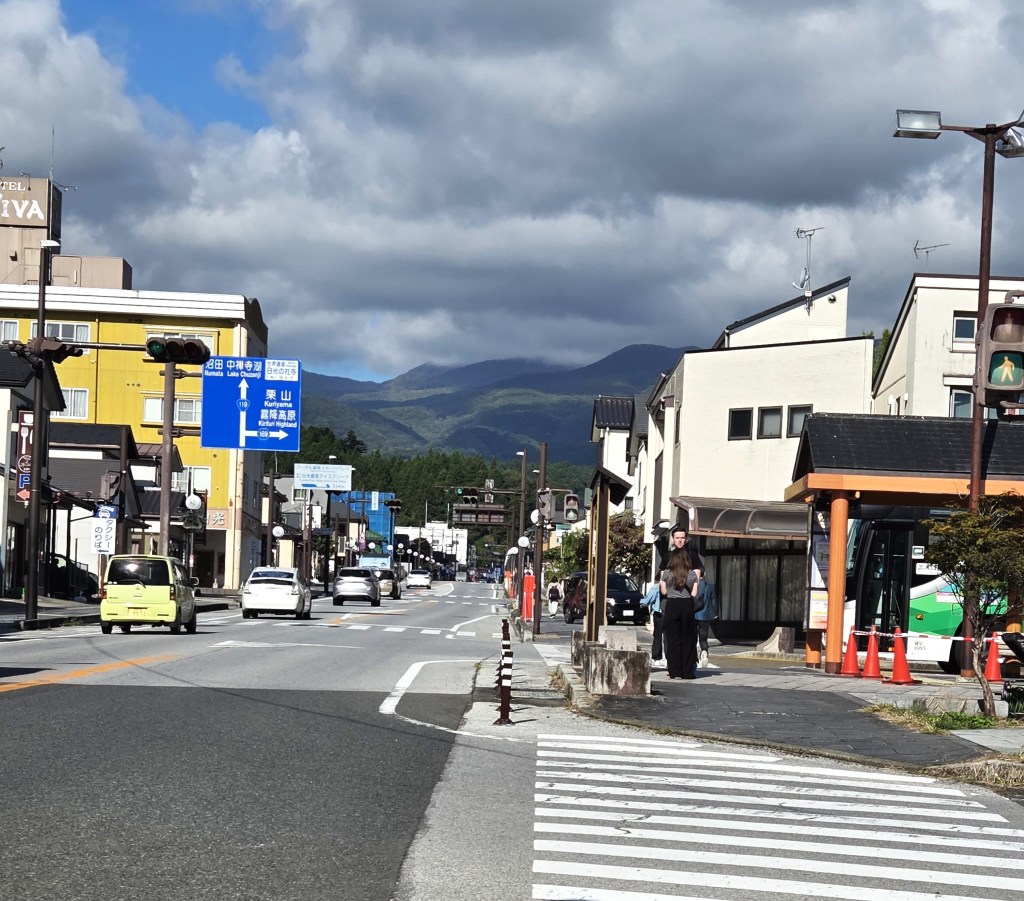
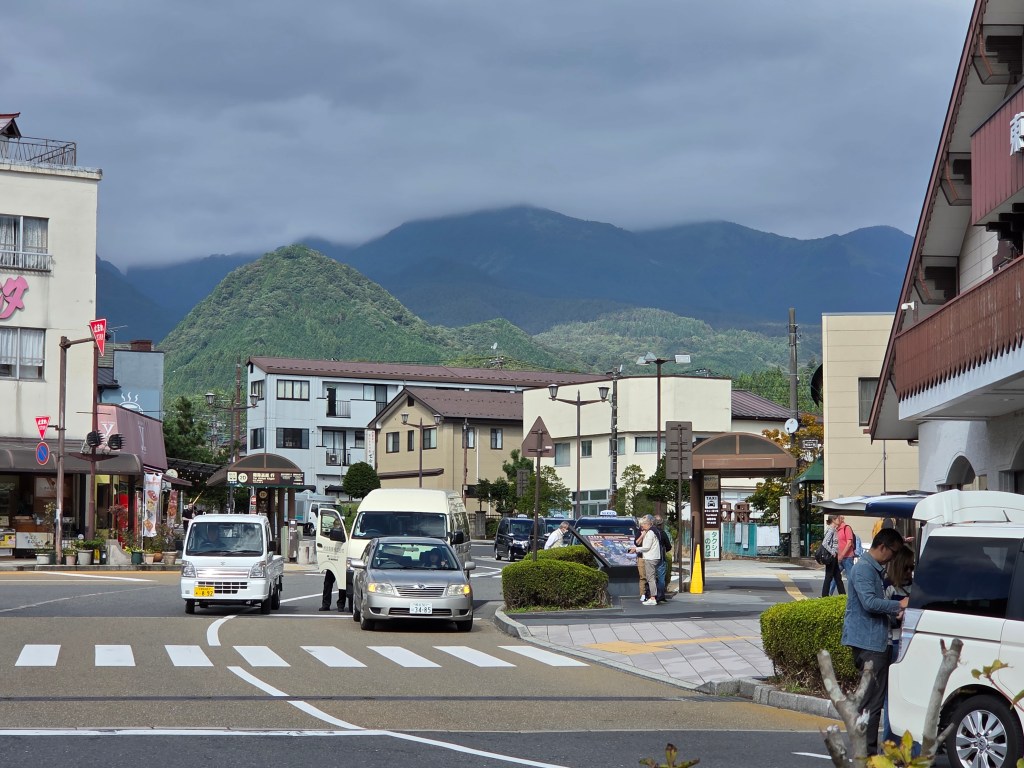
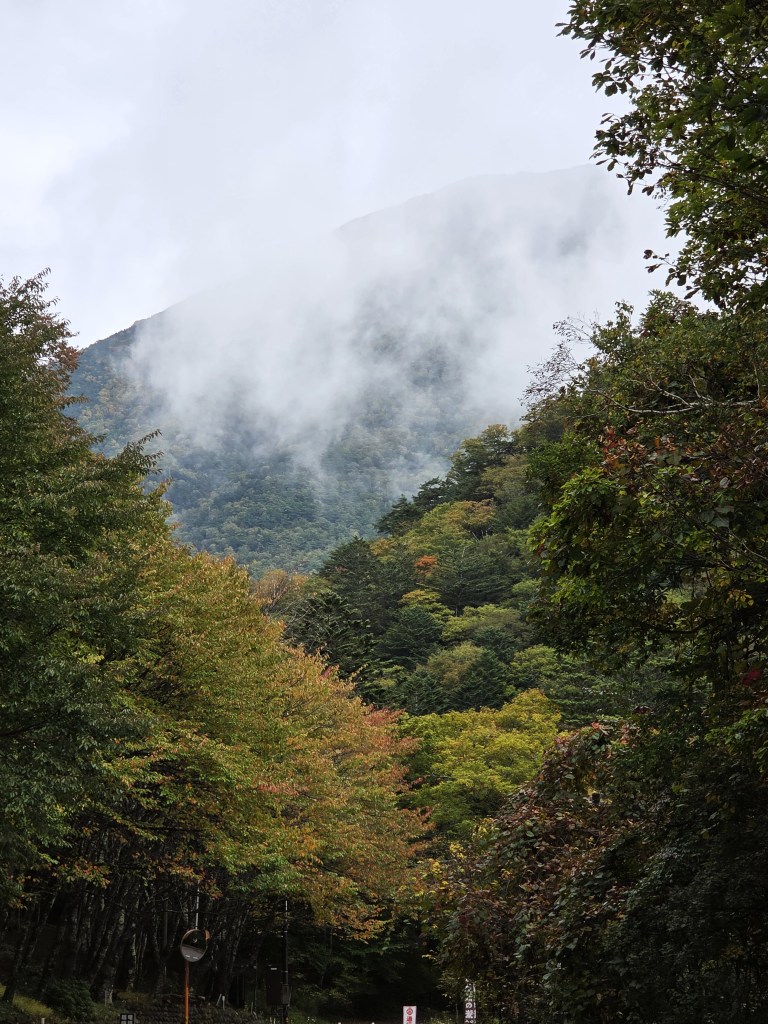
Also took a couple of last pictures of the view from near the train station. Clouds hovered on the mountain tops once again. I wondered if Kegon Falls was visible this morning.
This was mostly a travel day for me. I was taking trains to Shibata to visit with Kazuaki, a Japanese poet who I met when he joined my ZOOM on Ryokan, thanks to Kathabela, who invited him. The ride encompassed four trains, with only a few minutes between two of the trains to make the next connection. I was a little concerned ahead of time, even though I now had a fair amount of experience and comfortability in how to manage getting to where I needed to be at the stations. To add to the concern, at my first changeover, something seemed not quite right on the schedule board in relation to the Shinkansen train I was to ride on. There were big lines of people on the boarding platform and a train was coming in about ten minutes earlier than what mine was scheduled for. This was confusing to me as up until that point every train ride I had been on was extremely punctual, leaving at exactly the scheduled time. I wasn’t sure if I should board this one coming in or not. It seemed strange to have another train on the same route come through 10 minutes later. Just before the train arrived I saw an employee and inquired. He didn’t speak English, but wrote a reply on his pad that was translated. “The Shinkansen was delayed” and then motioned for me to board this train. Whew! My major concern was that for the next connection I had only six minutes from what was my scheduled trip. This train then gave me a couple of extra minutes for that connection.
The train was extra-crowded so I stood just inside one of the cars with my luggage. Next to me was a young man, Janus, with a huge backpack who was also on the earlier train from Nikko. We talked the whole 24 minutes before I reached my exit. 19 years old, traveling through Japan. Had been to Malaysia earlier and has started taking photographs of wildlife. I told him he reminded me of my backpacking days when I was about his age. I showed him pictures of Wheeler Hill and he shared some of his wildlife photos from Malaysia. He was interested in where and how I lived. I invited him to visit if he came to the states. He would like to, but won’t while the current political situation continues as it is.
I caught the next train with no problem and the following one. Kazuaki
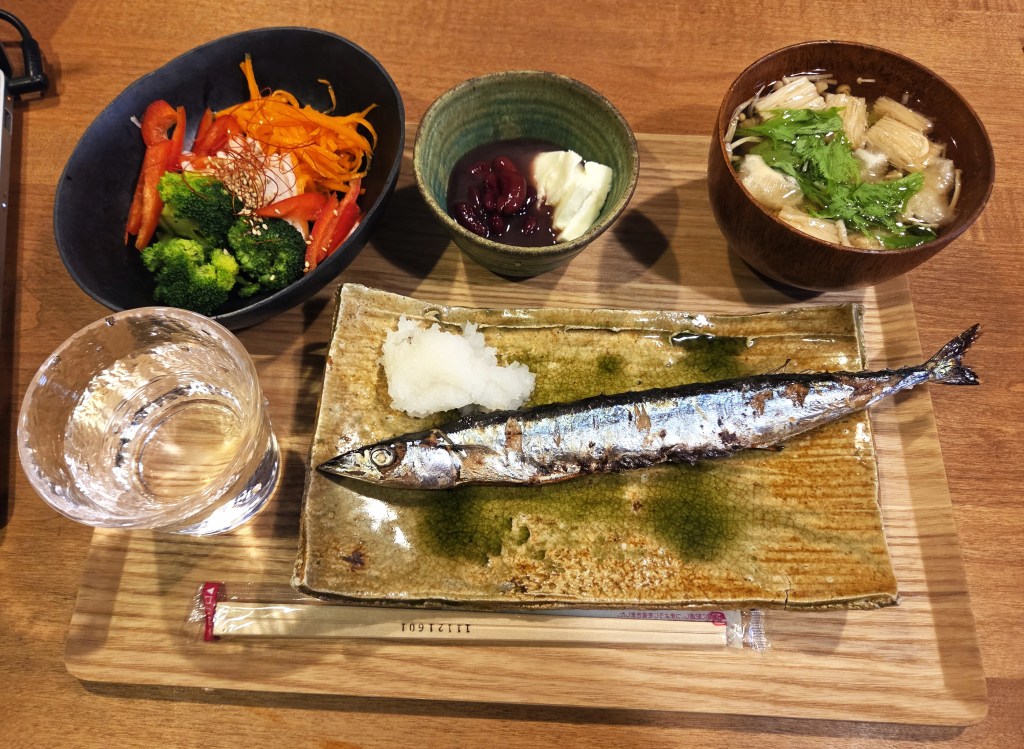
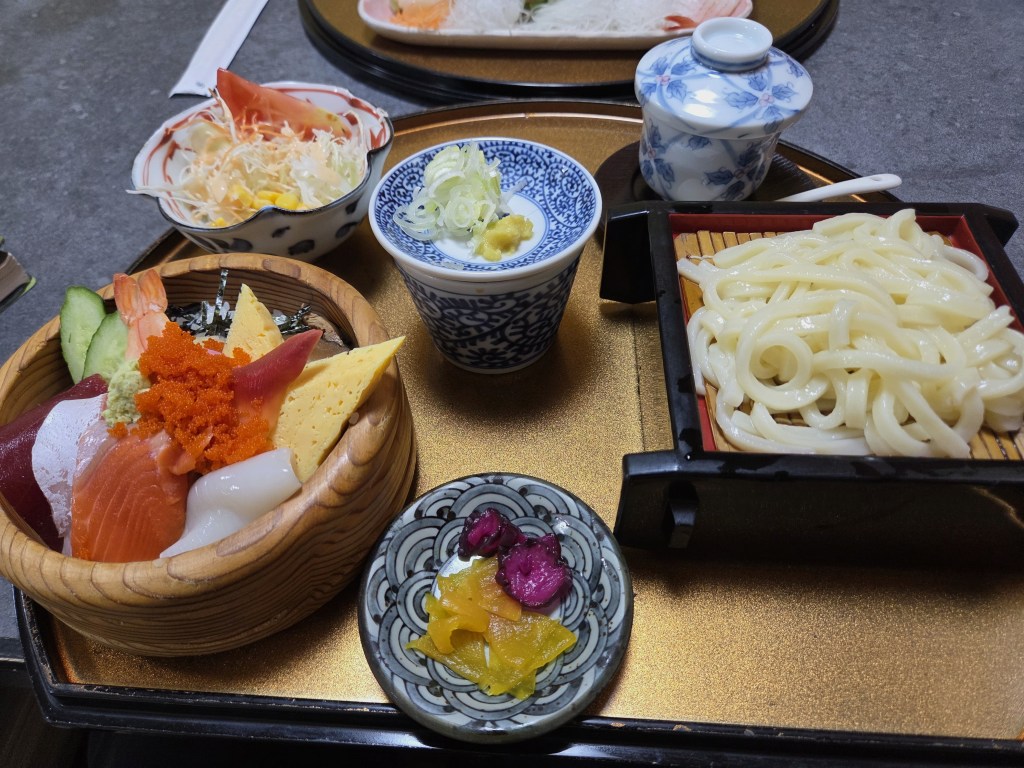
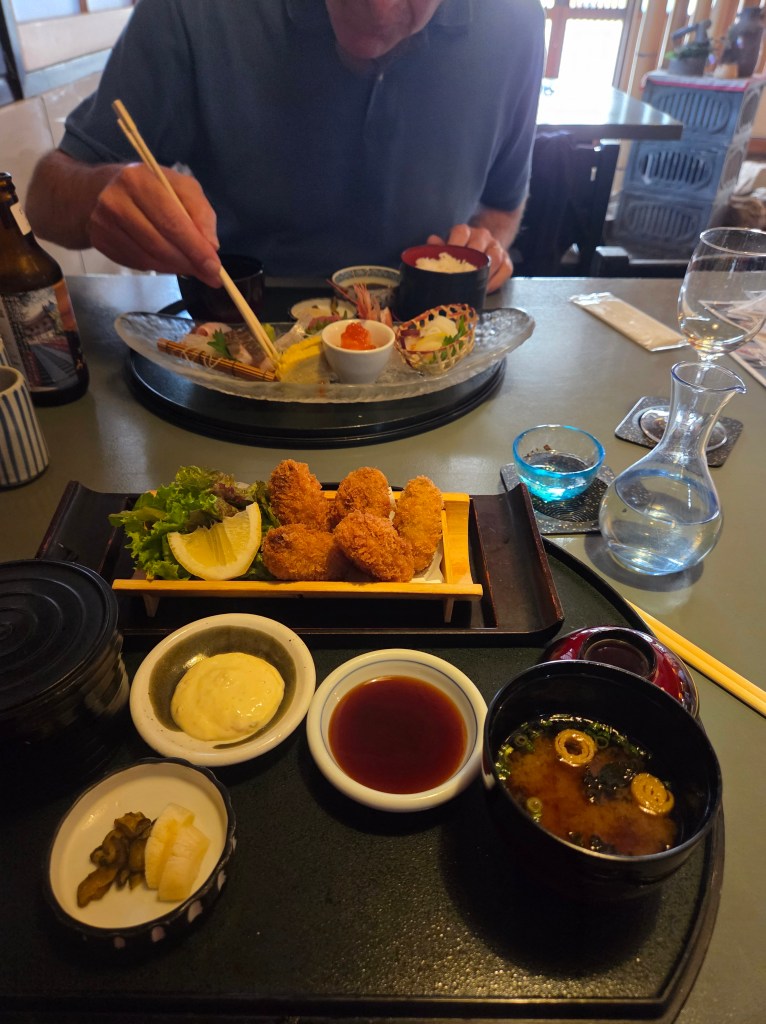
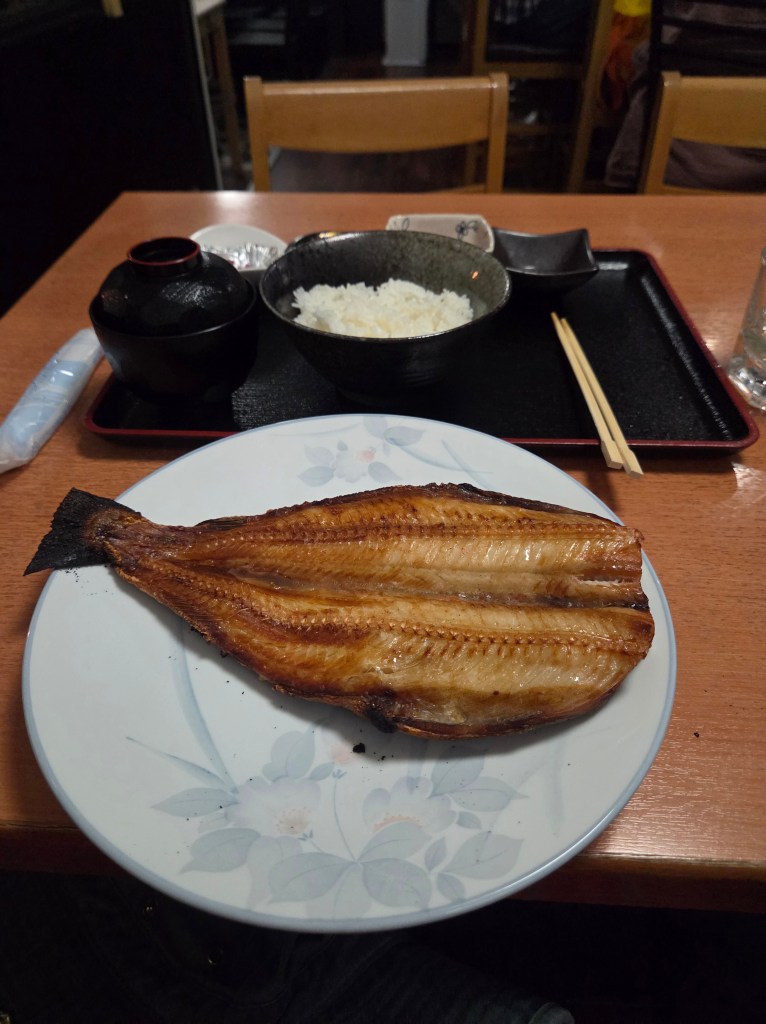
Met me at the train station and then treated me to another exquisite Japanese meal. The pictures are what we each ordered, the first mine, the second, his. To just give you a sense of cost. Each of them was the equivalent of about $11 US!
Kazuaki’s house is about 15 minutes outside of Shibata. It is a house he designed himself and took two and a half years to build. It is beautiful. But more about the house, the museum and Kazuaki in the next postings.
(Click on thumbnail for larger picture.)
October 9
A day of mountains and waterfalls.
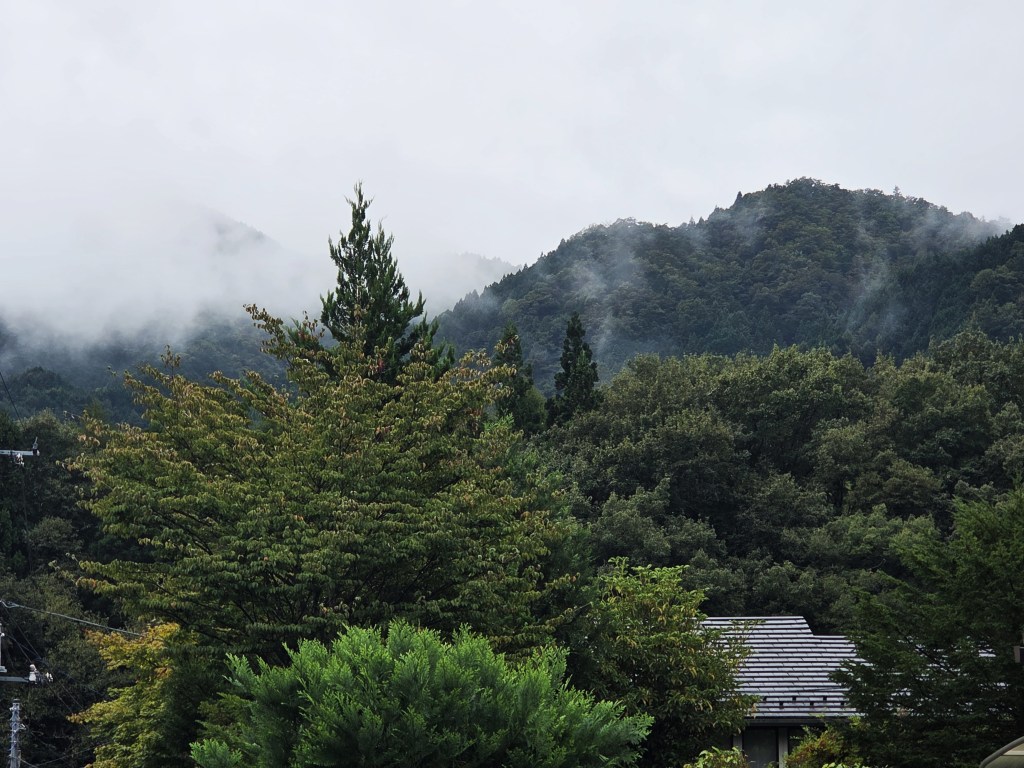
The morning dawned with clouds hovering over the mountains. We set out on the bus to Kegon Falls, one of the three most beautiful waterfalls in all of Japan.
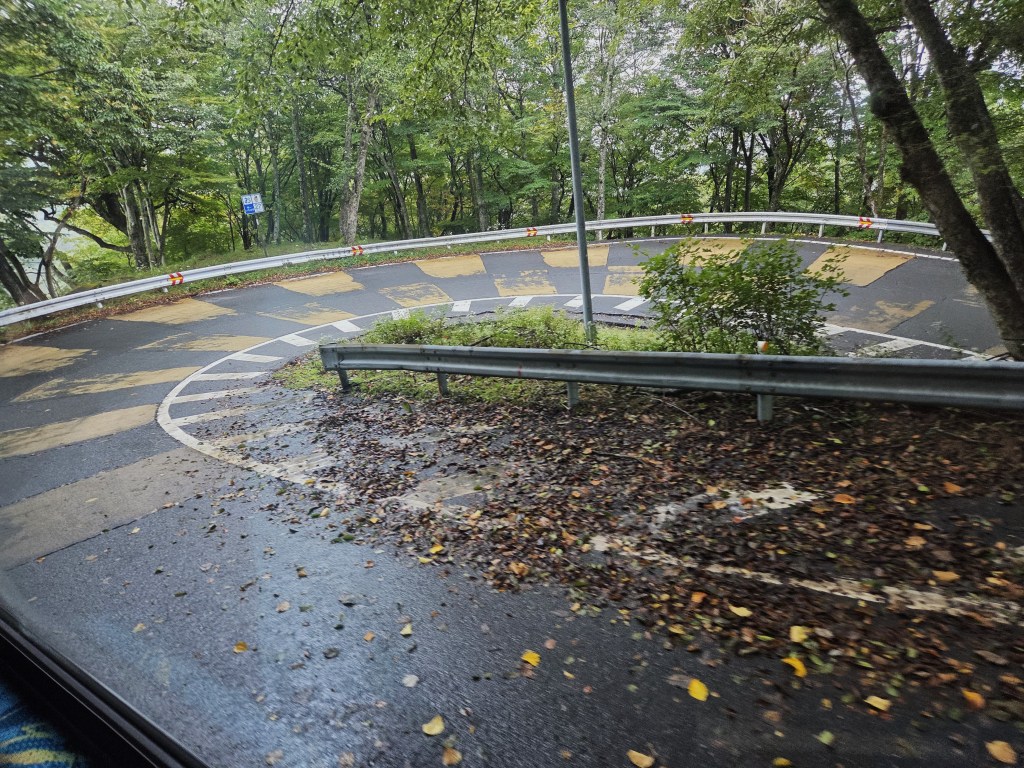
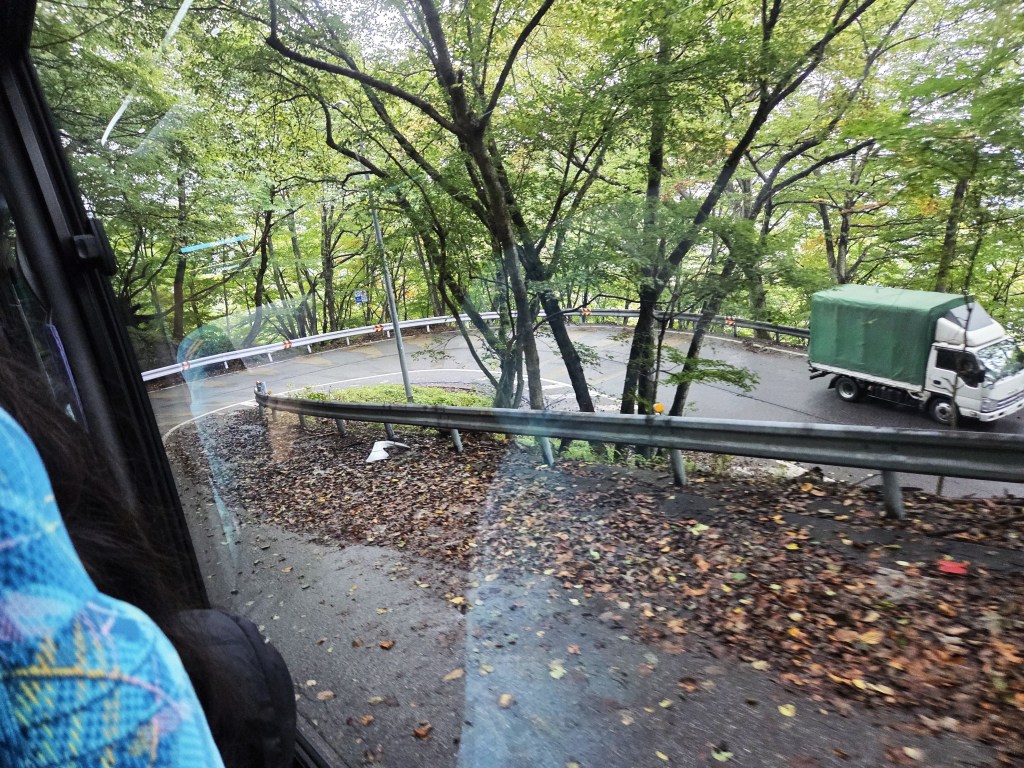
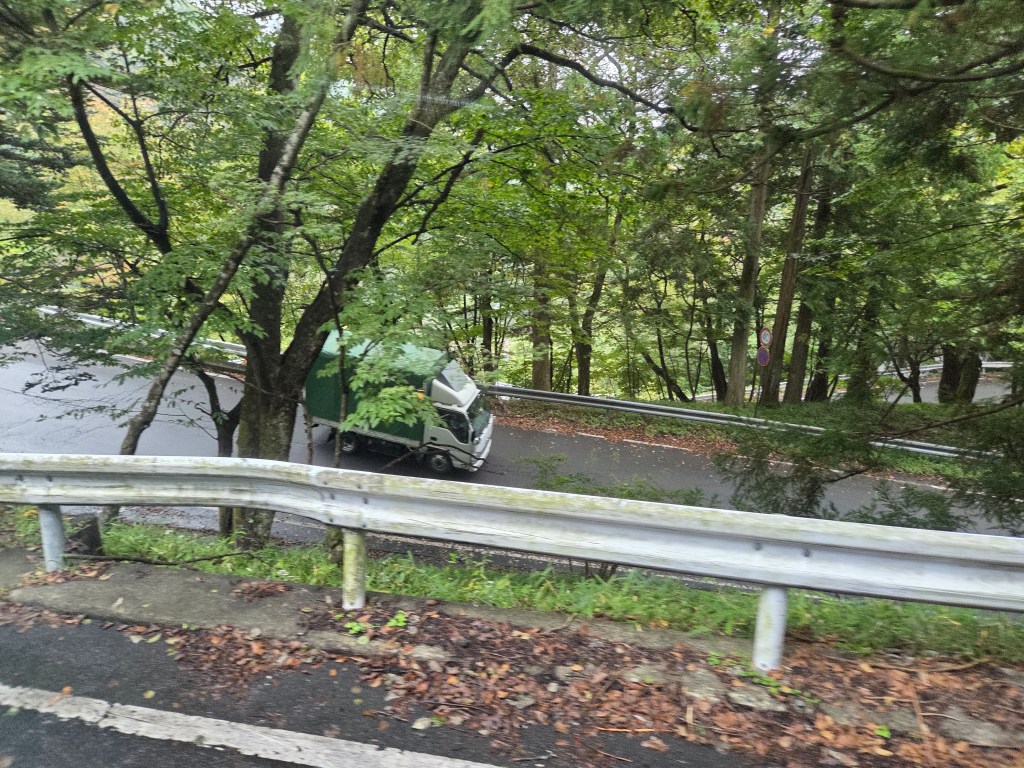
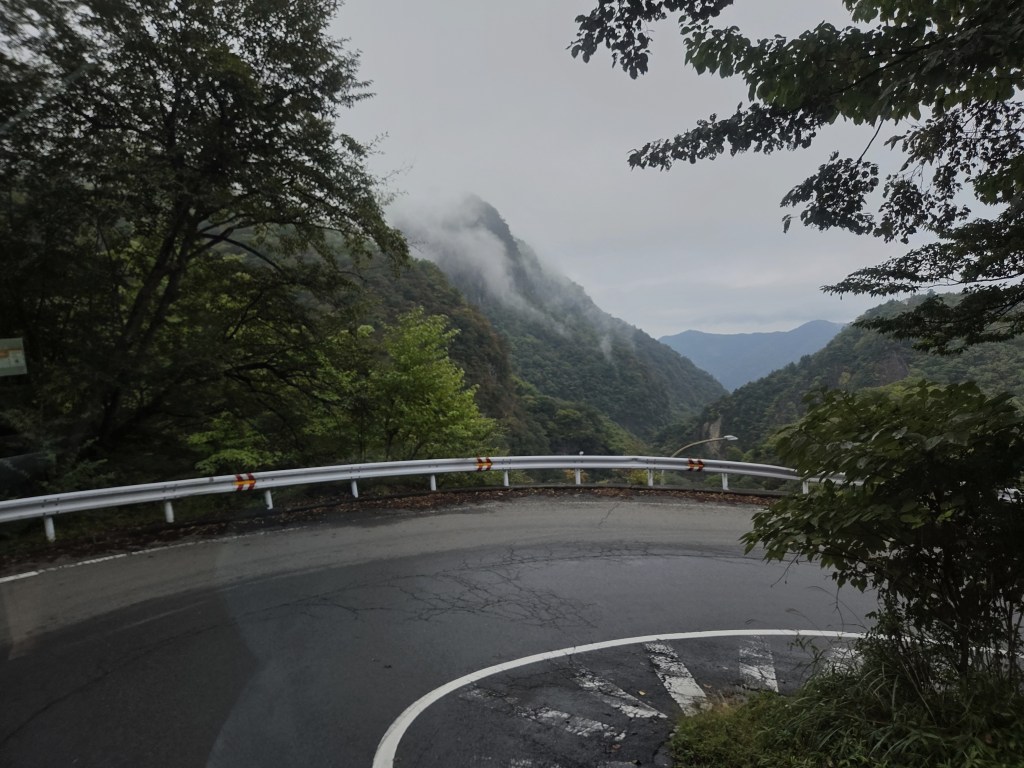
The bus ride on the way was in itself an adventure. It climbs up into the mountains on a road that has 48 hairpin turns! Each turn is even numbered with a highway sign. I’ve been on many mountain roads but never one quite like this.
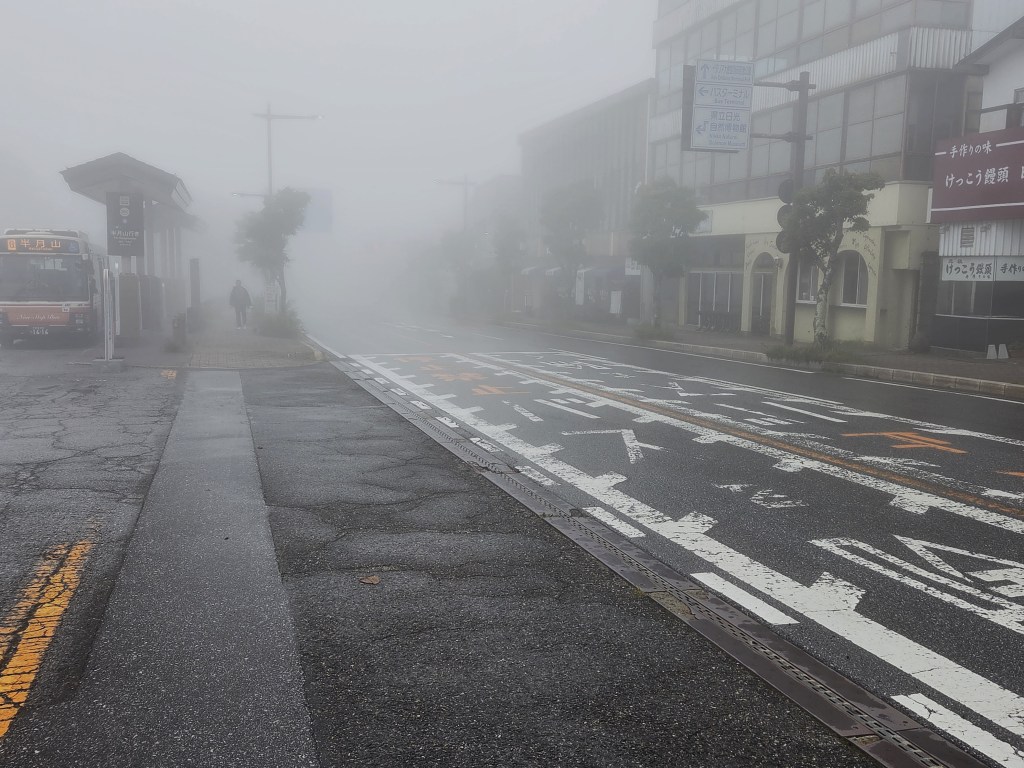
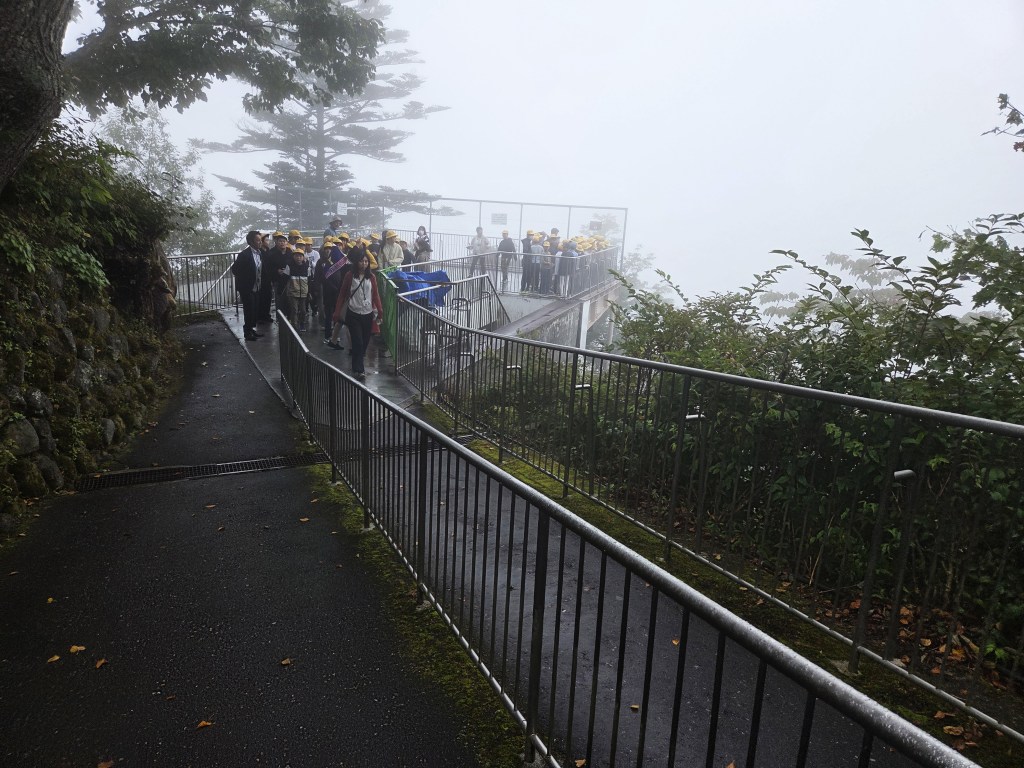
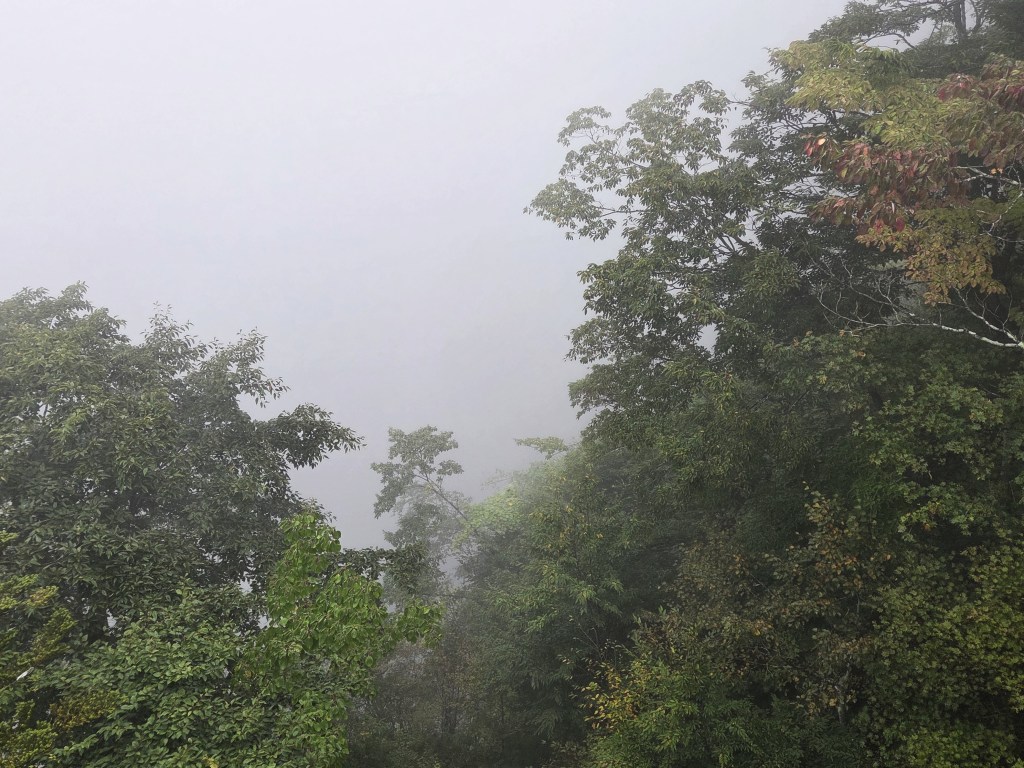
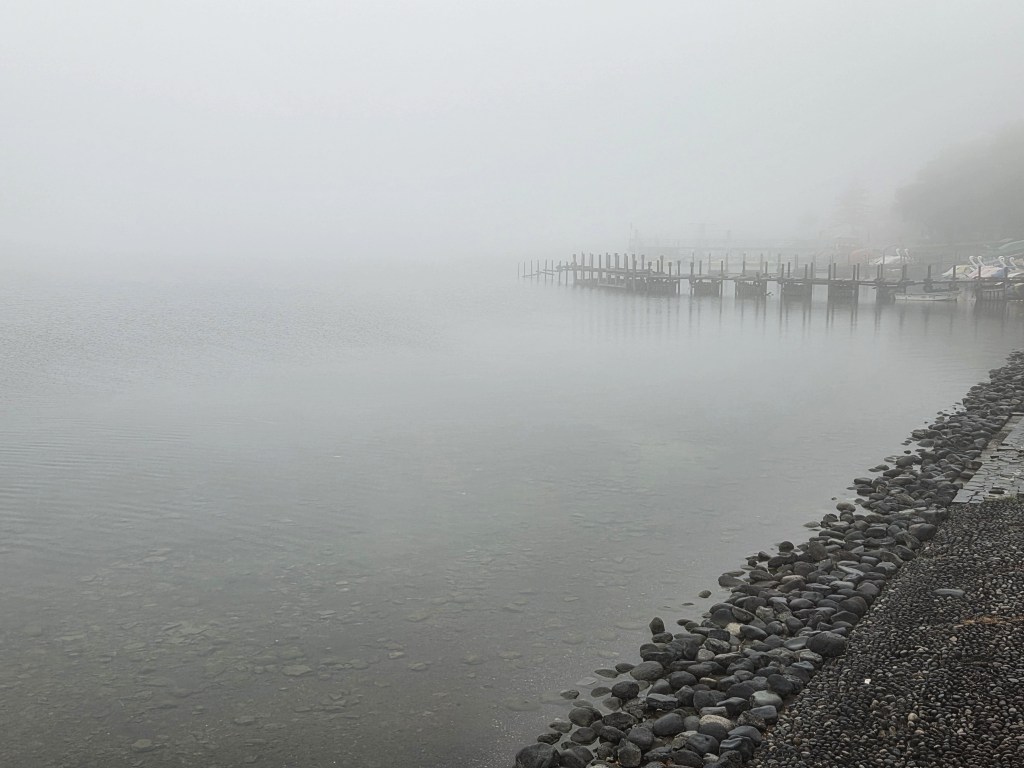
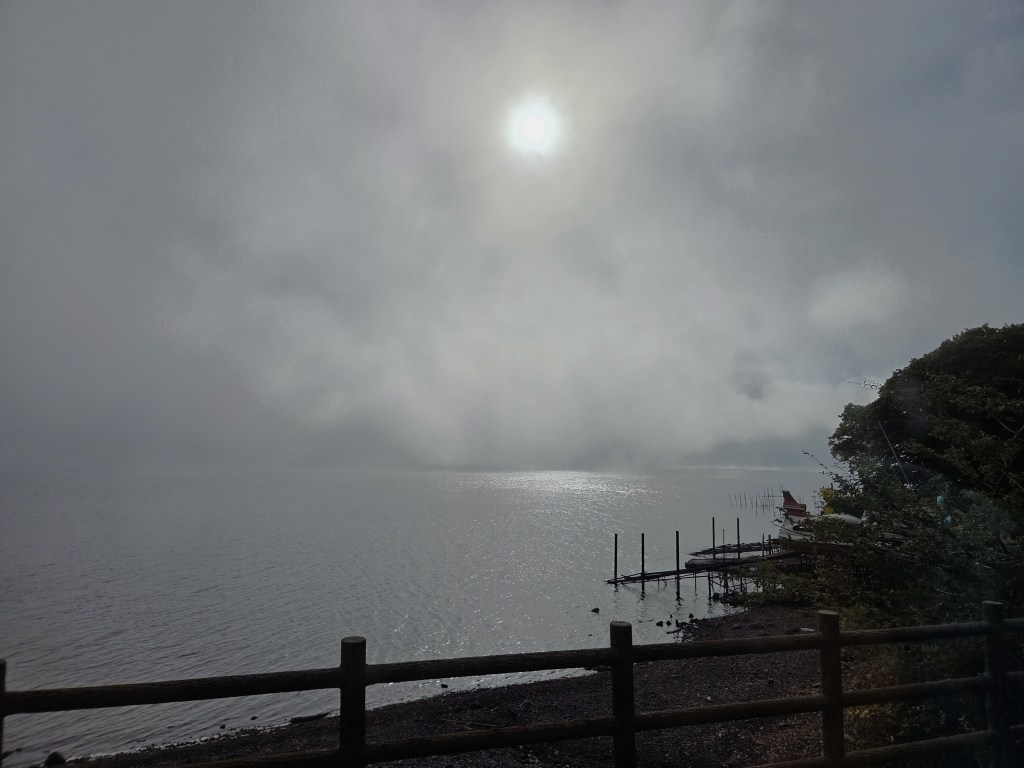
When we arrived at Kegon Falls the view was, how should I say, non-existent. Heavy fog blanketed the area and there was no view at all of the falls. A group of school kids were just departing the viewing area as we arrived. I’m sure it was a disappointment to them. For me, it would have been nice to have seen the falls, but I like foggy days like this too. Here’s a tanka I wrote while there:
fog so thick
Kegon Falls
hidden from view
but fog couldn’t hide
Kegon’s song
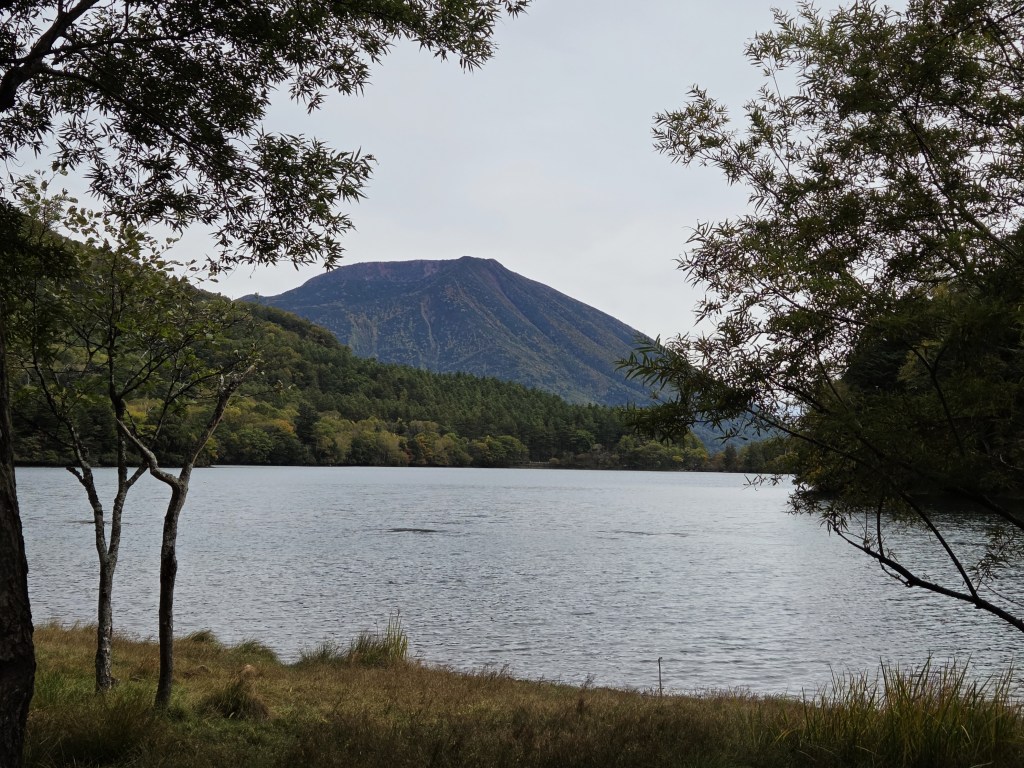
From there we took another bus north to Ryuzu Waterfalls. The bus ride traveled along Lake Chuzenji, which is surrounded by mountains, which too, were hidden in fog.
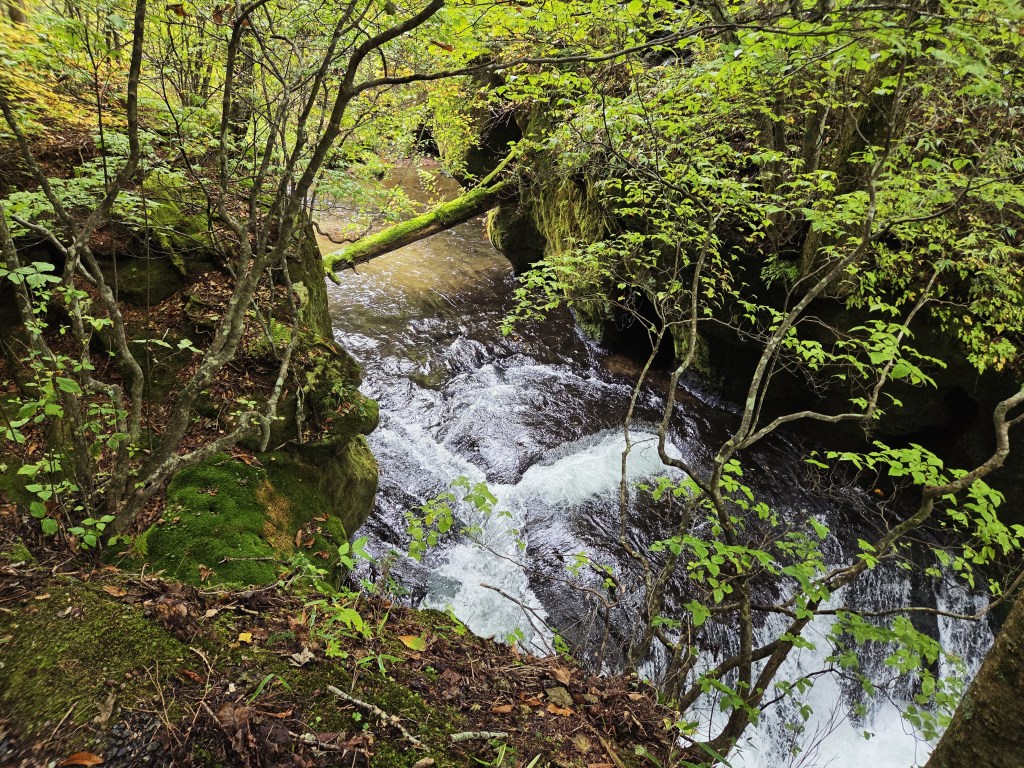
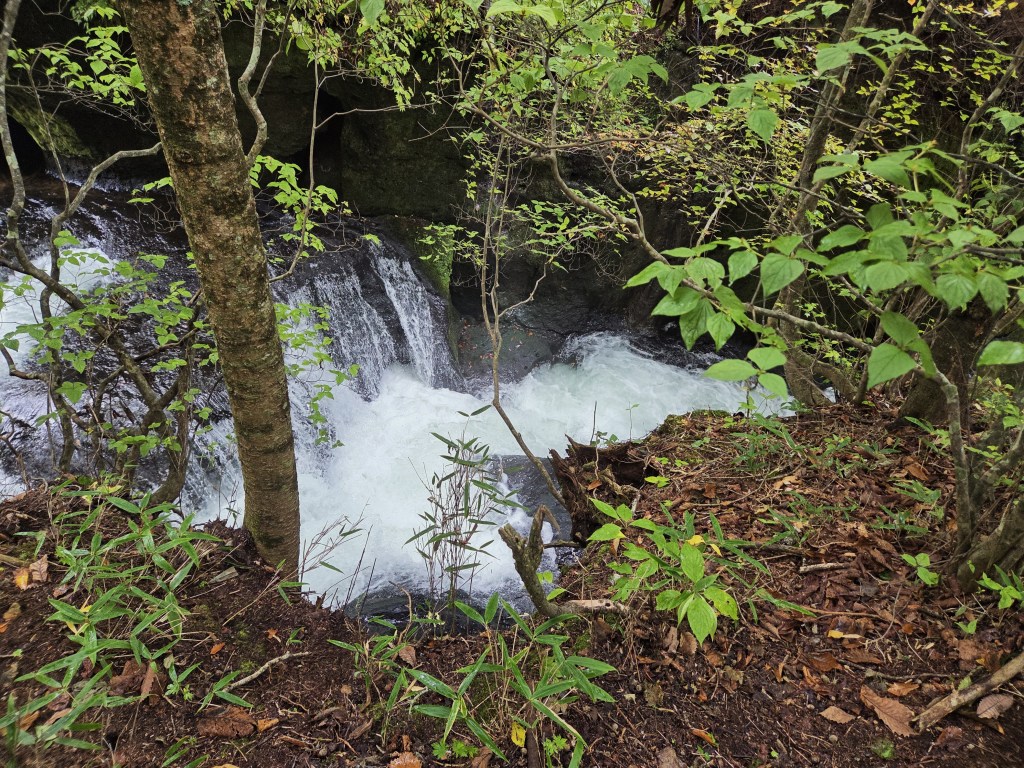
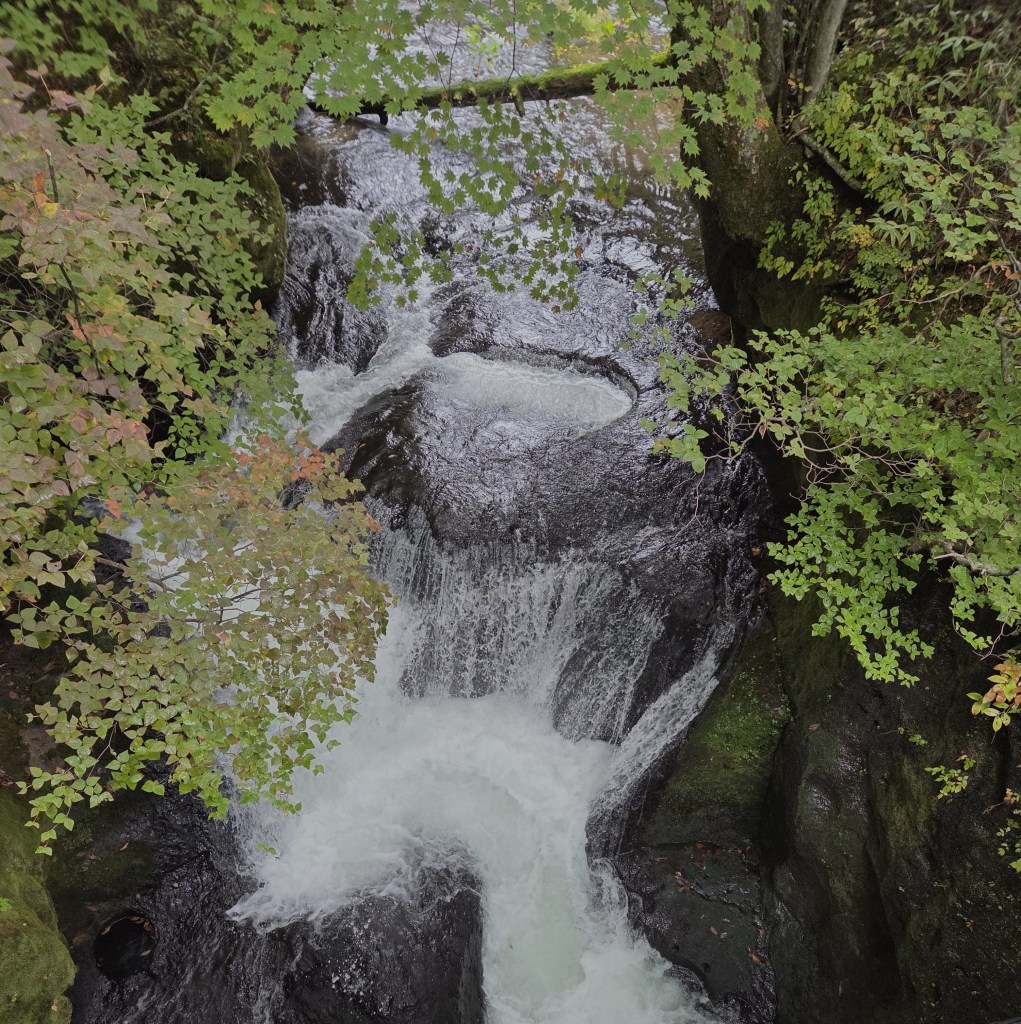
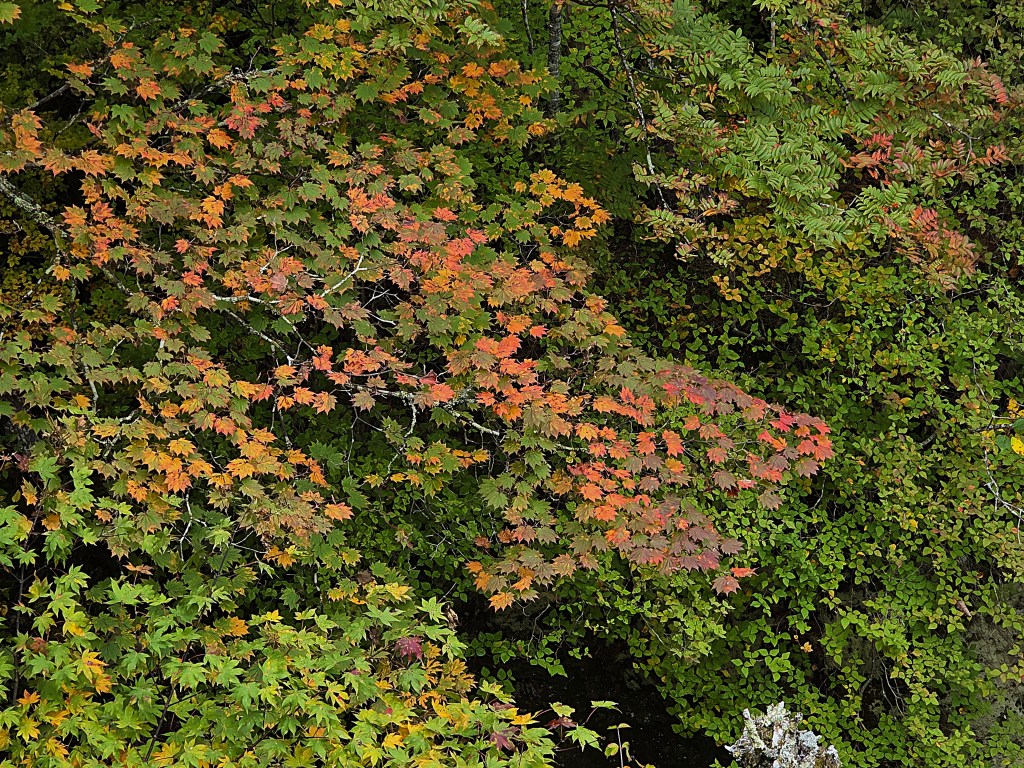
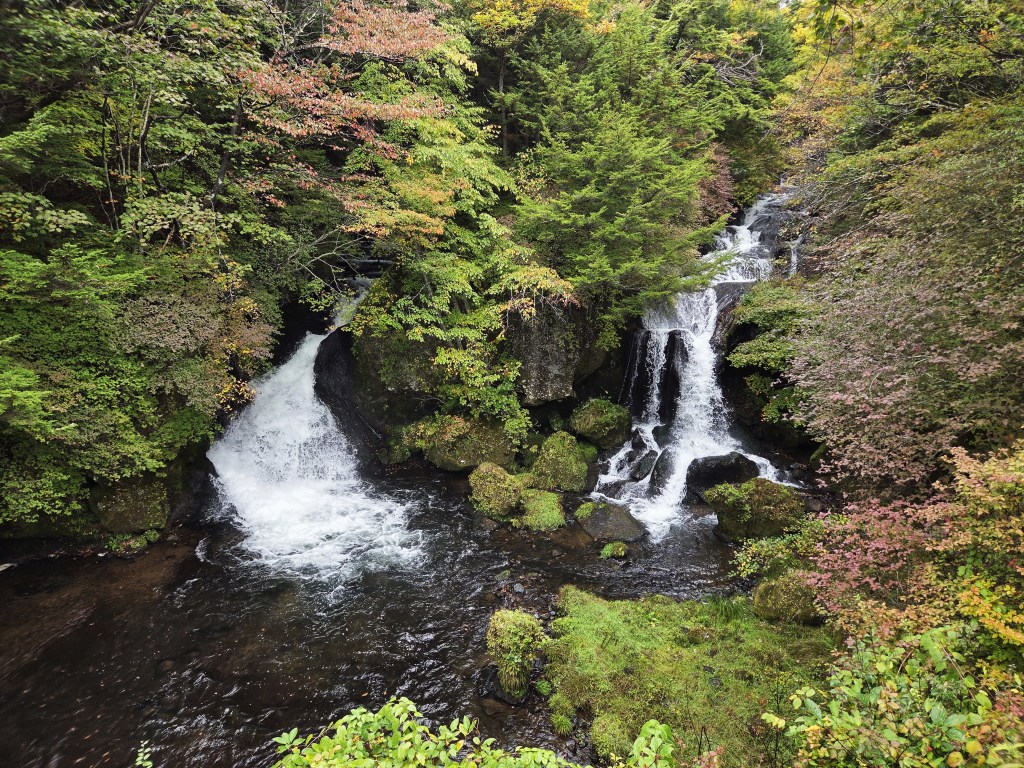
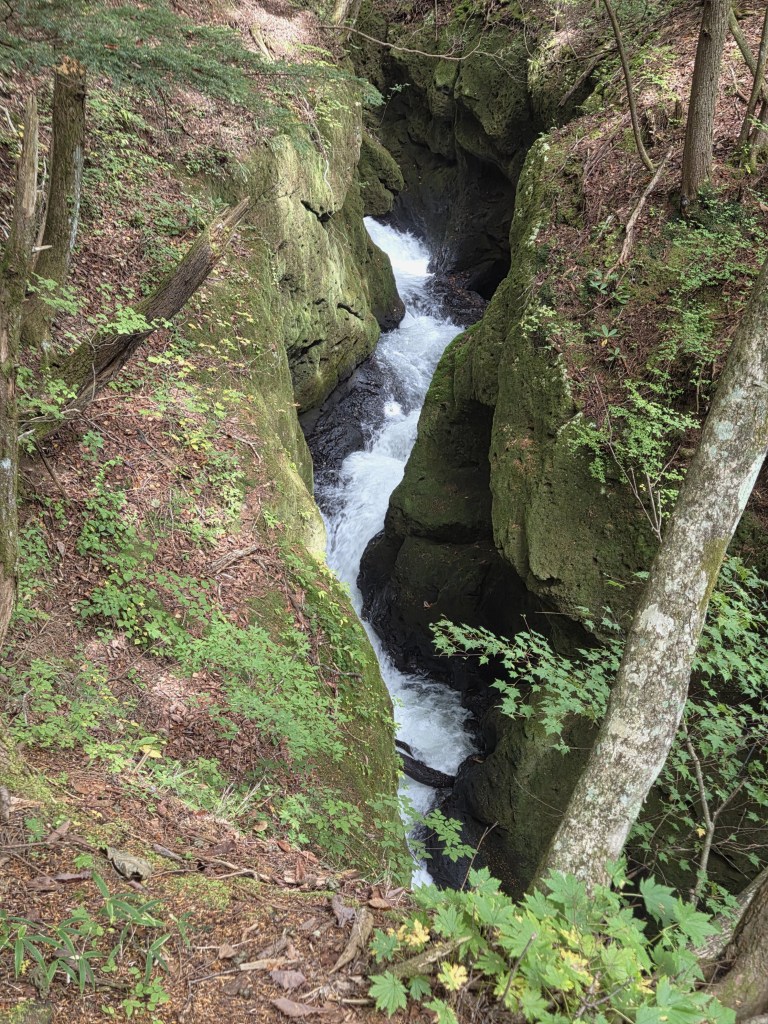
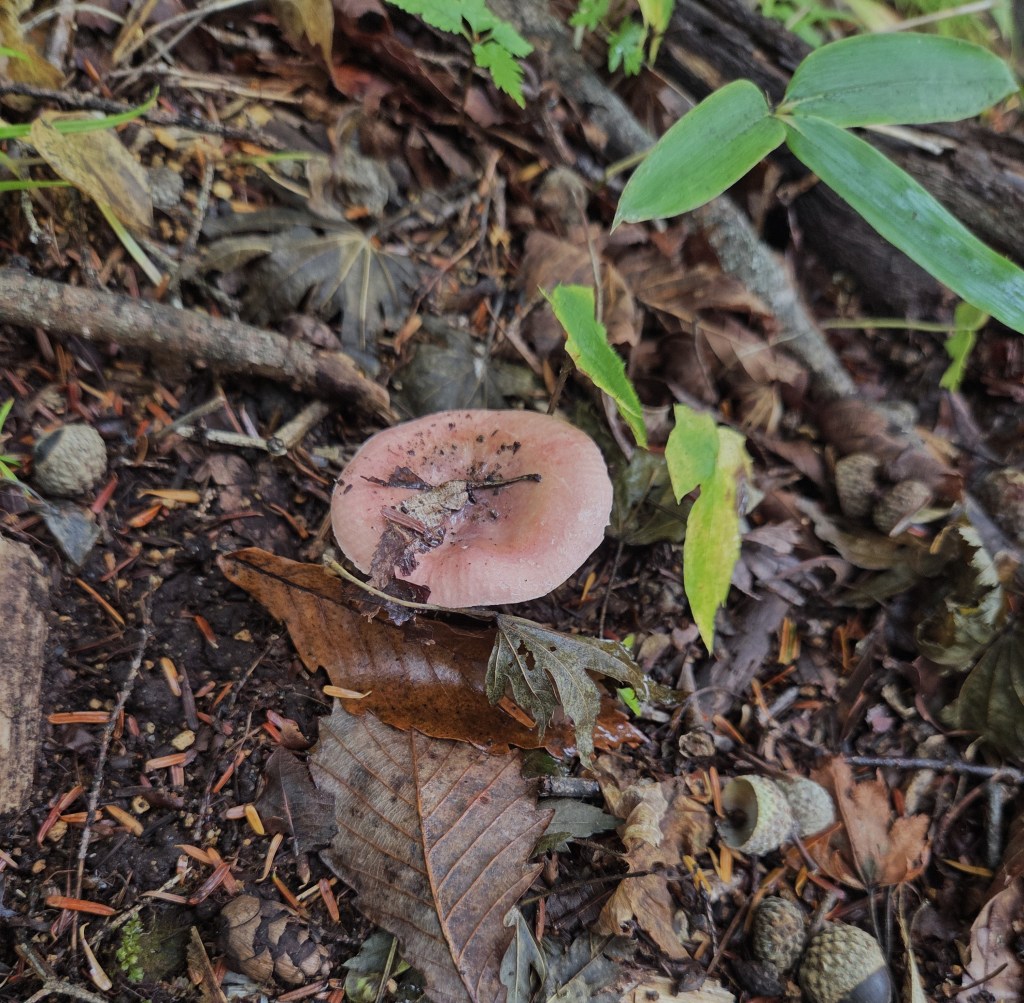
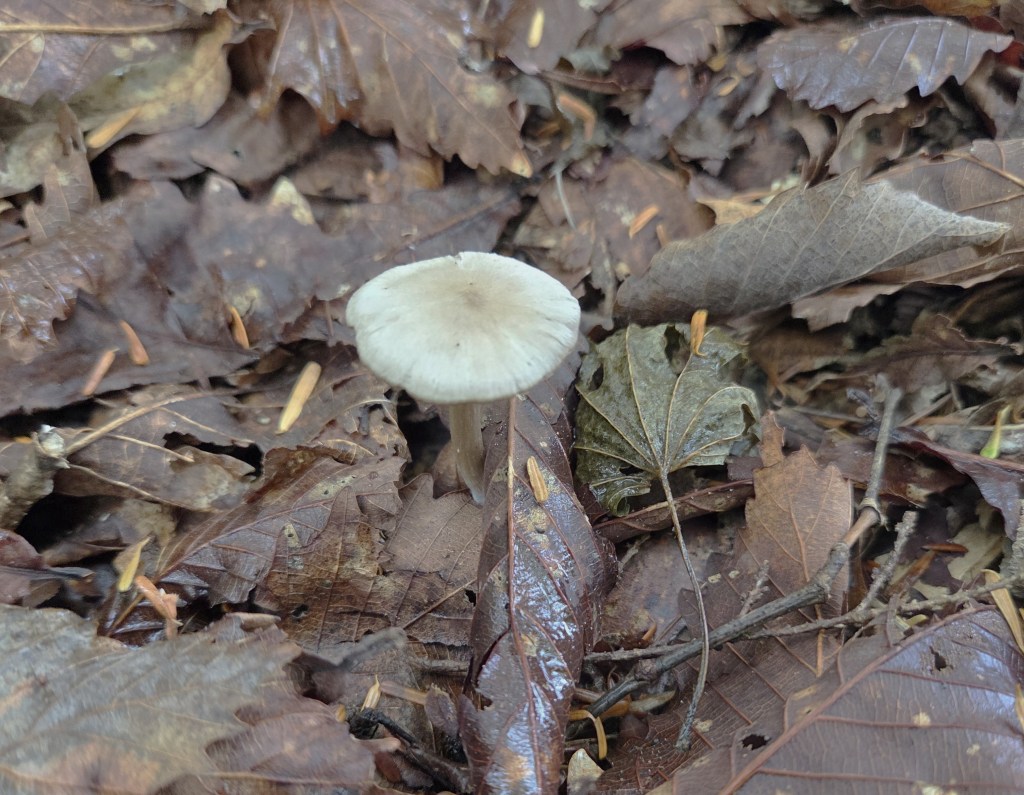
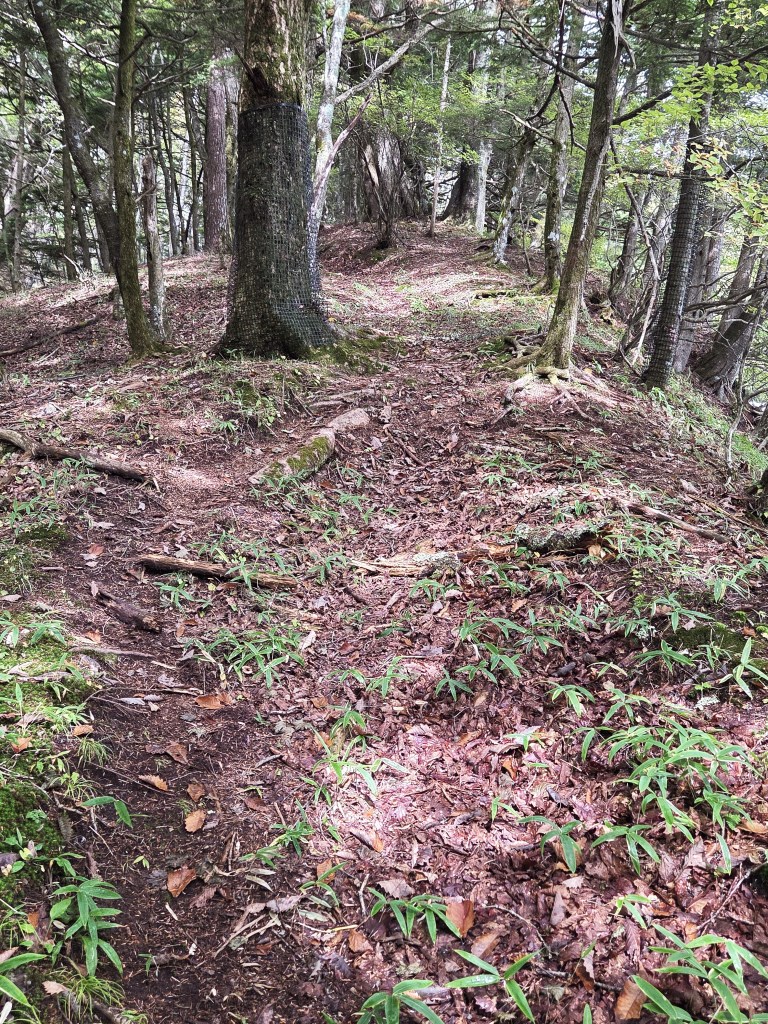
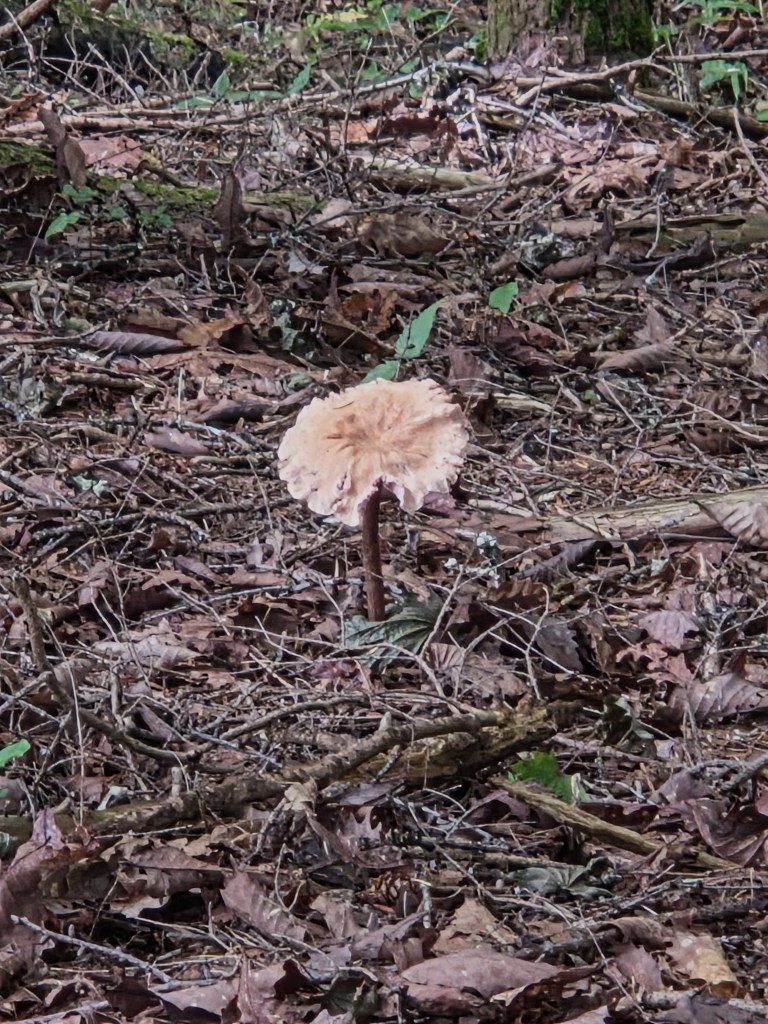
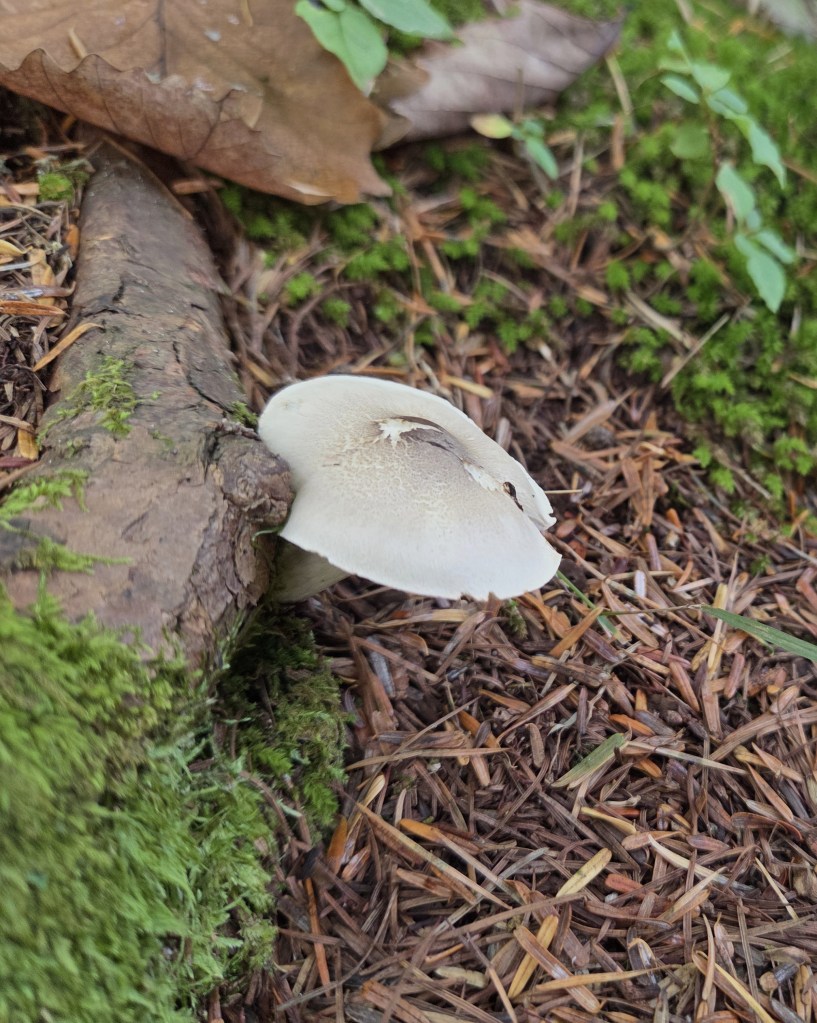
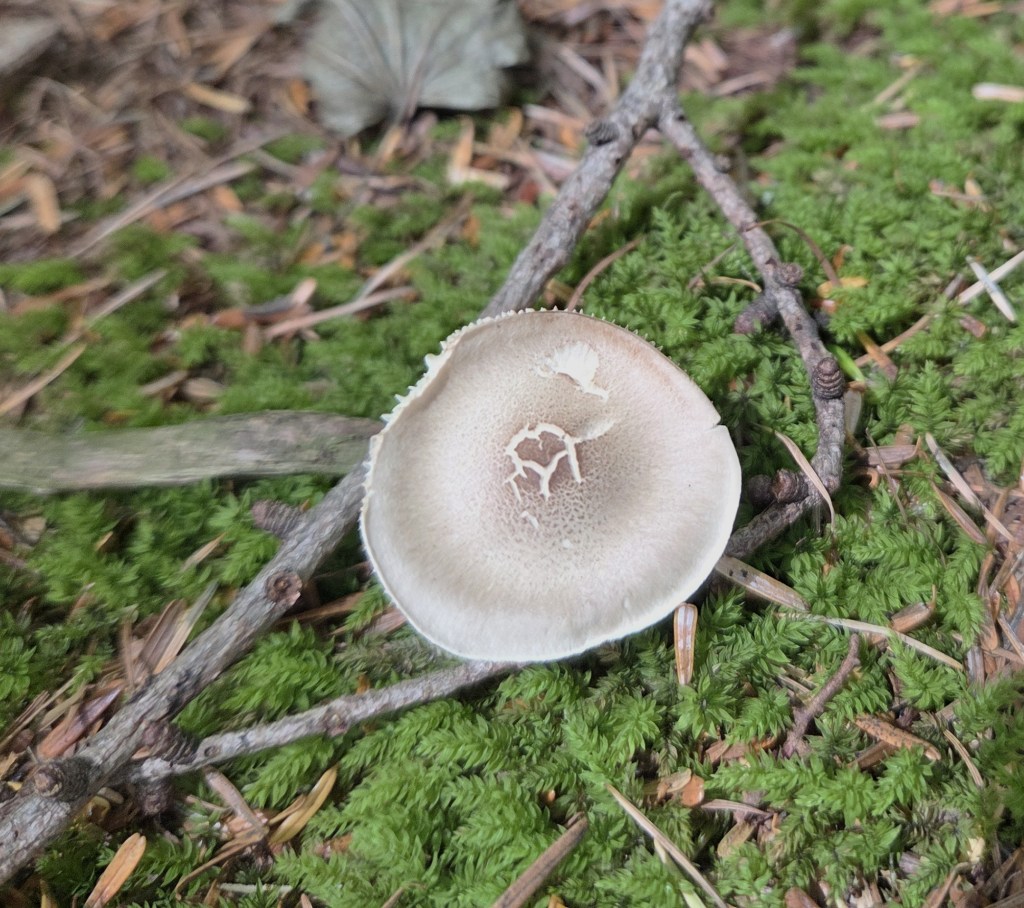
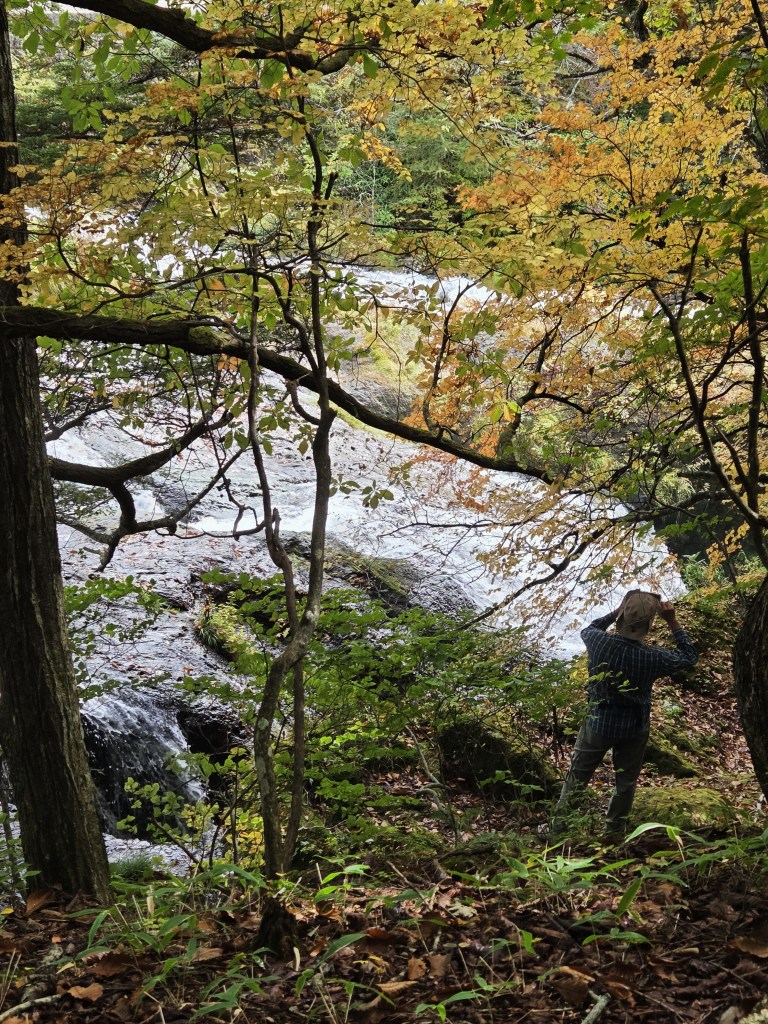
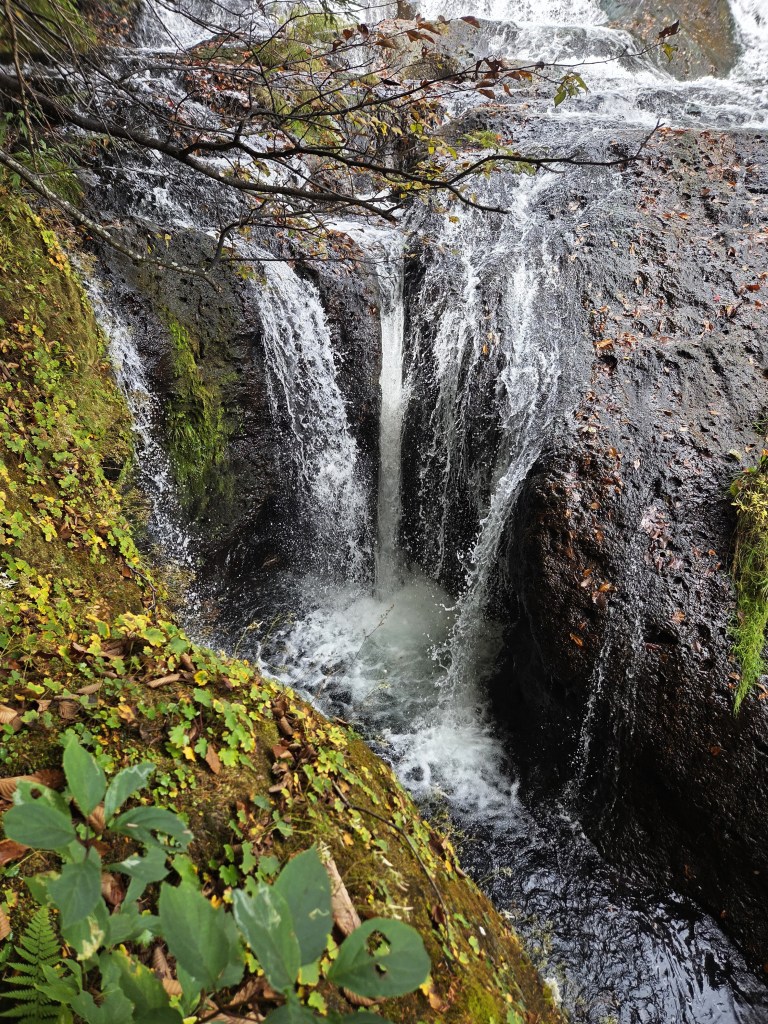
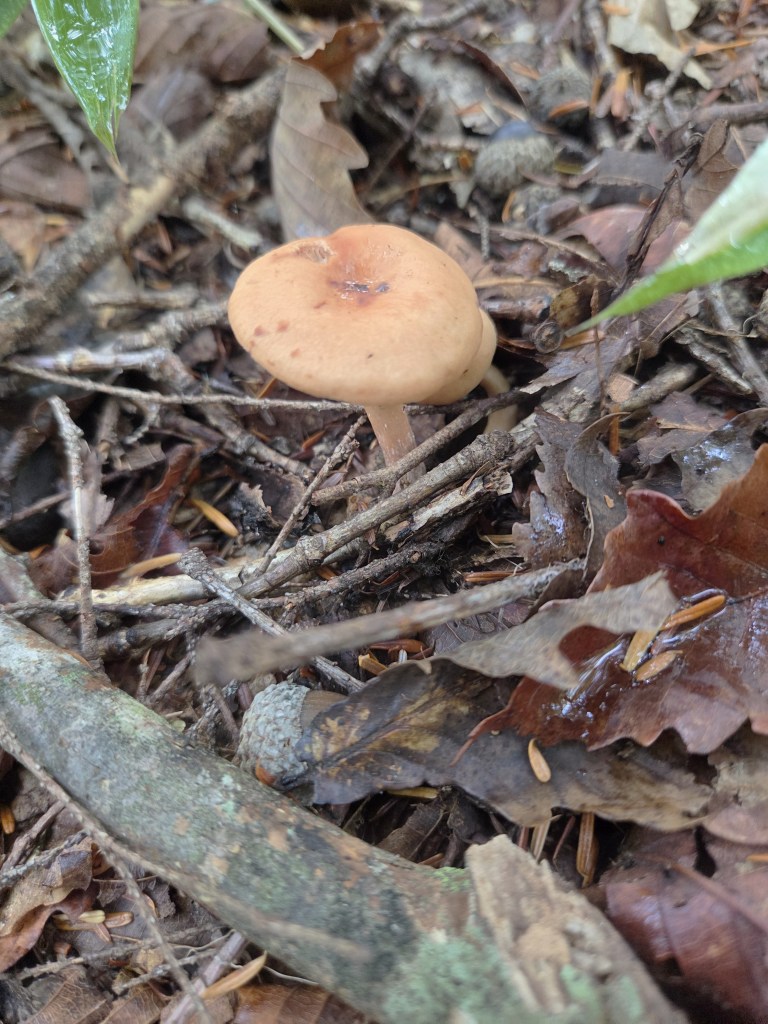
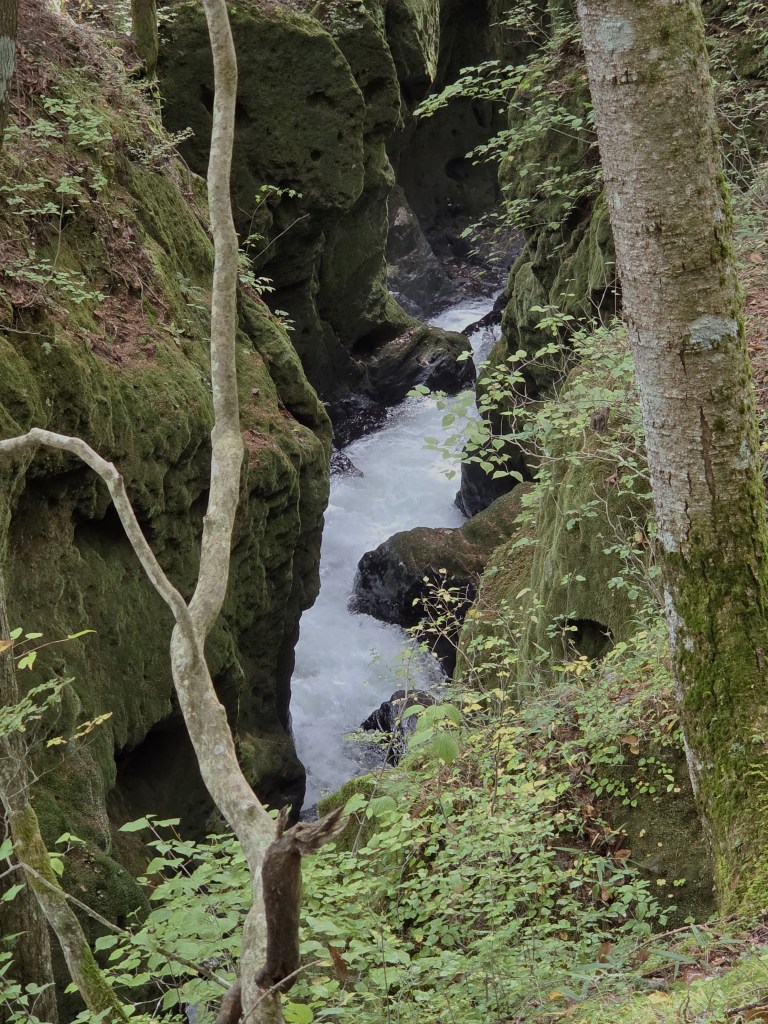
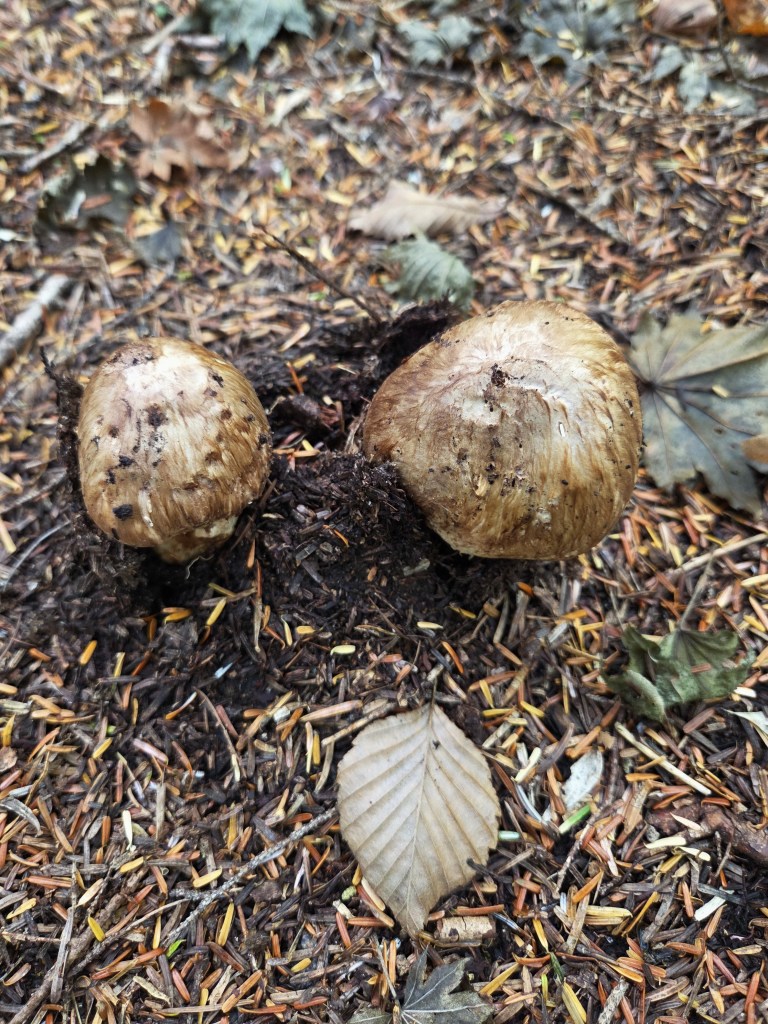
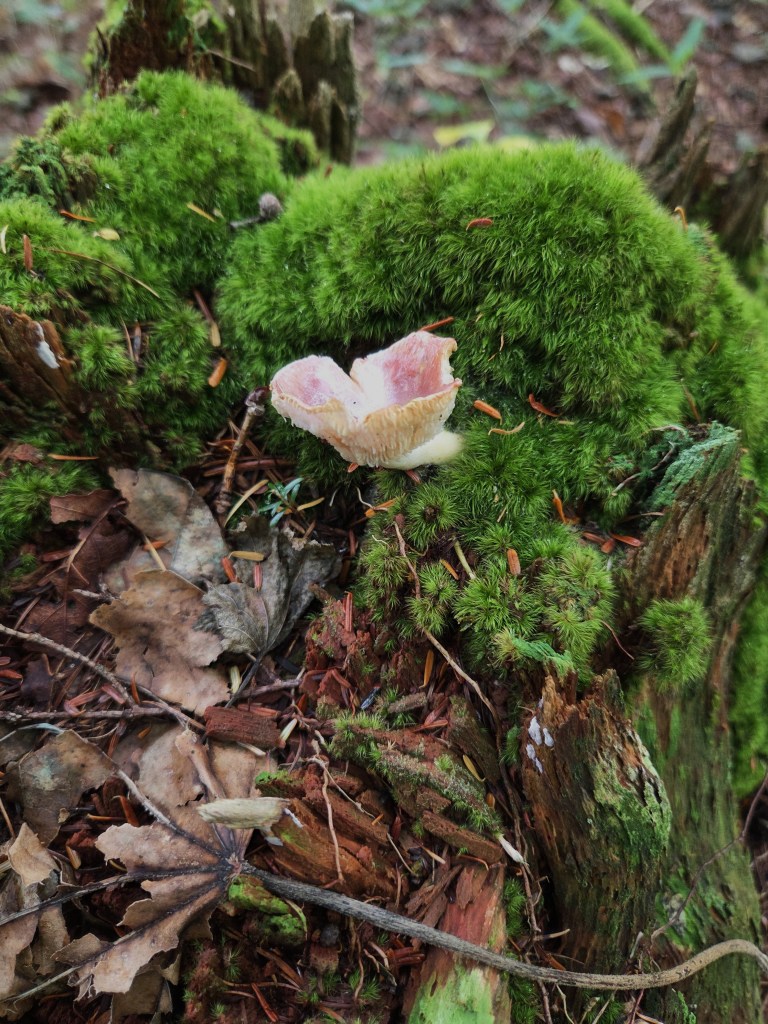
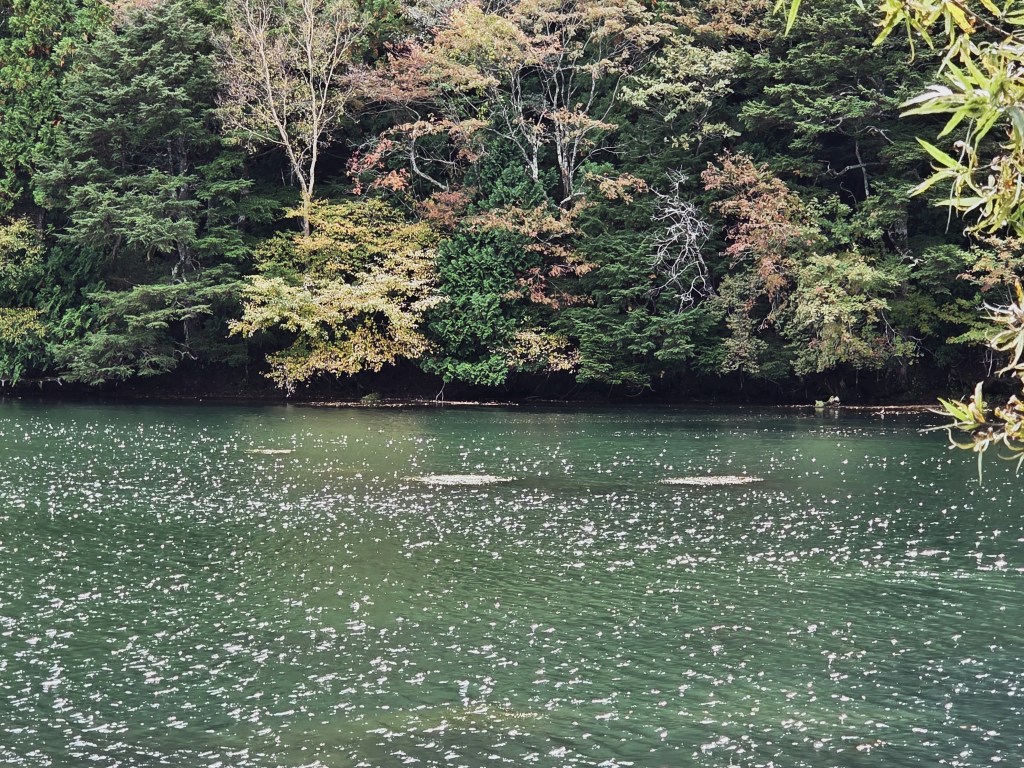
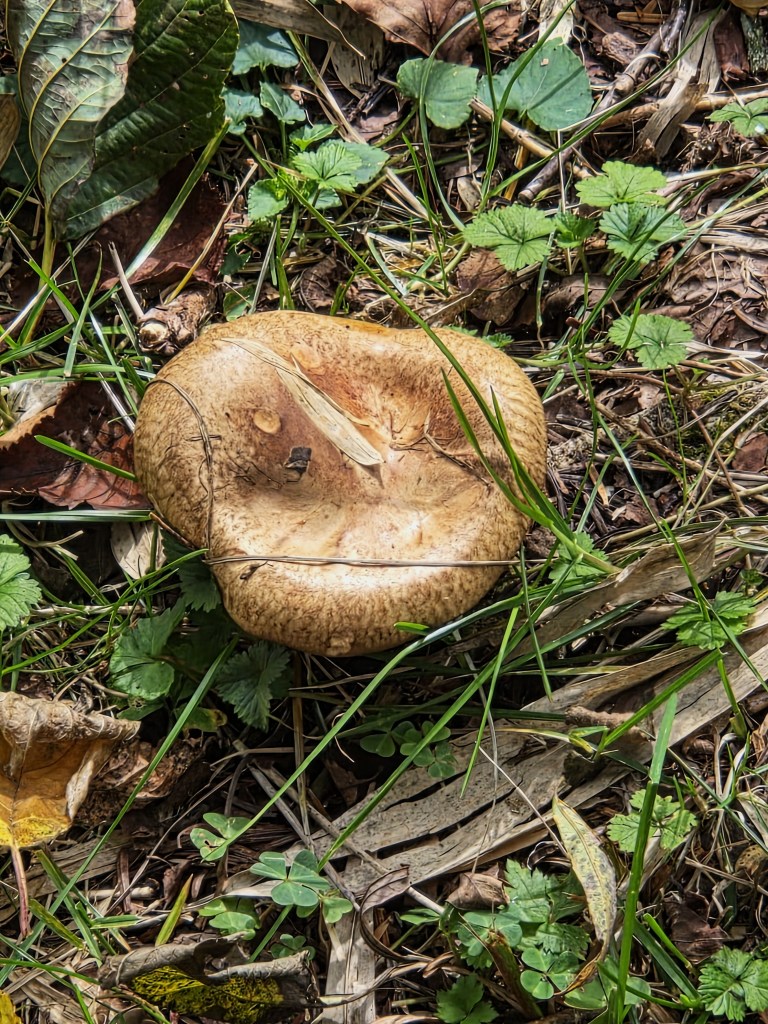
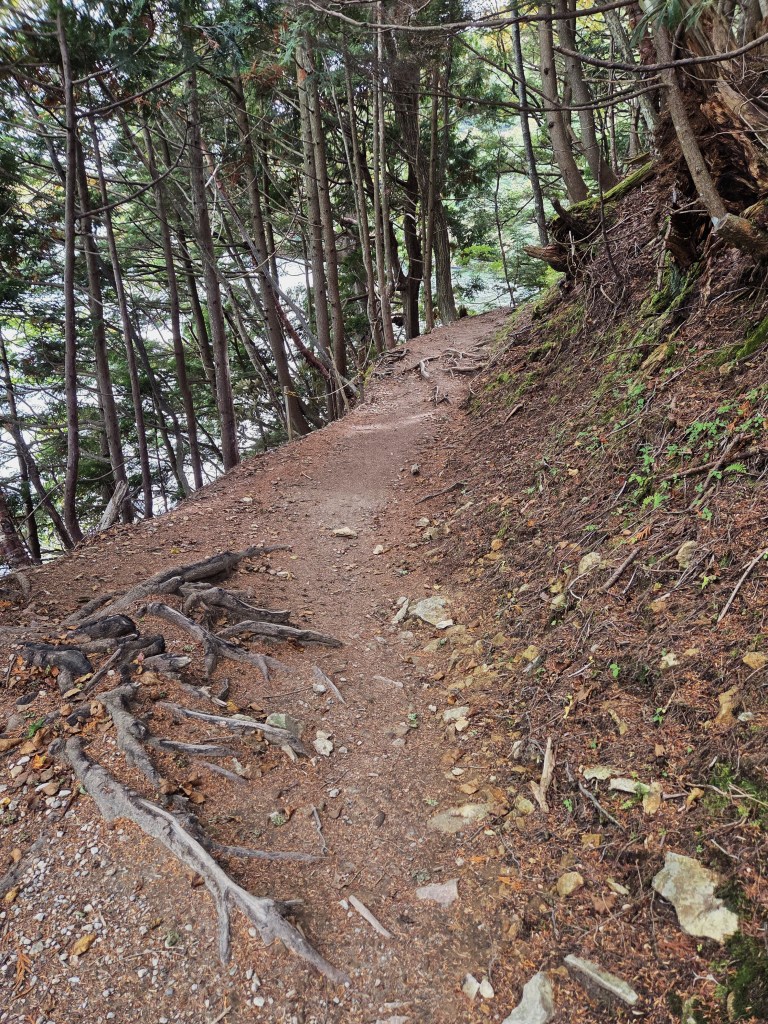
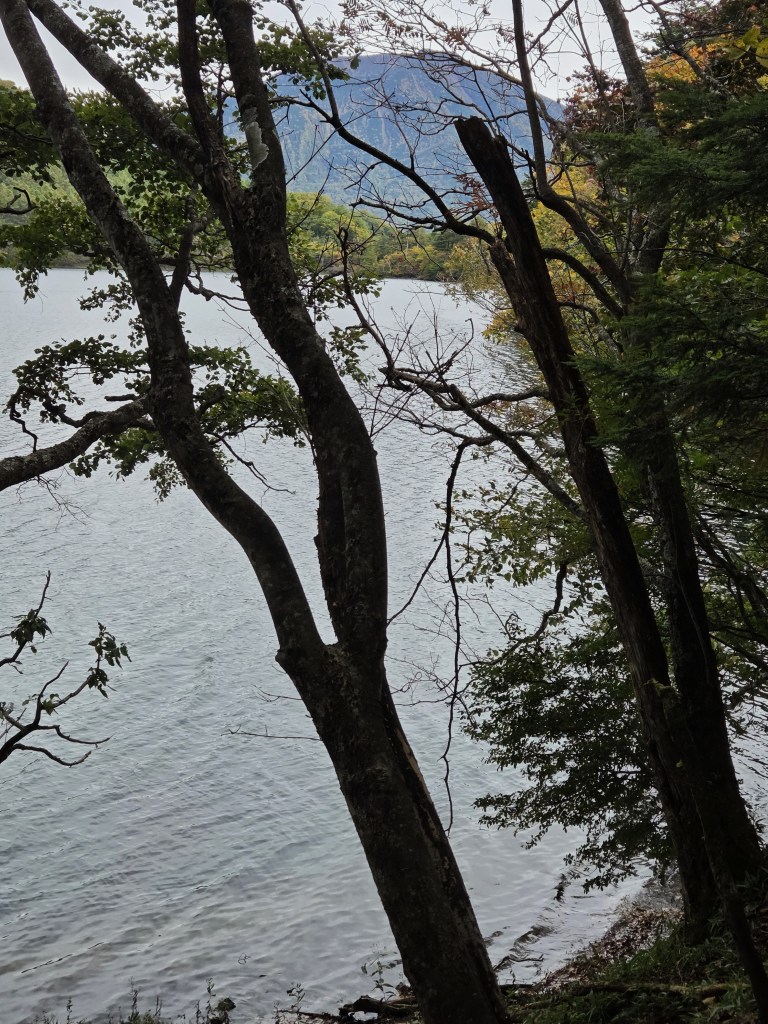
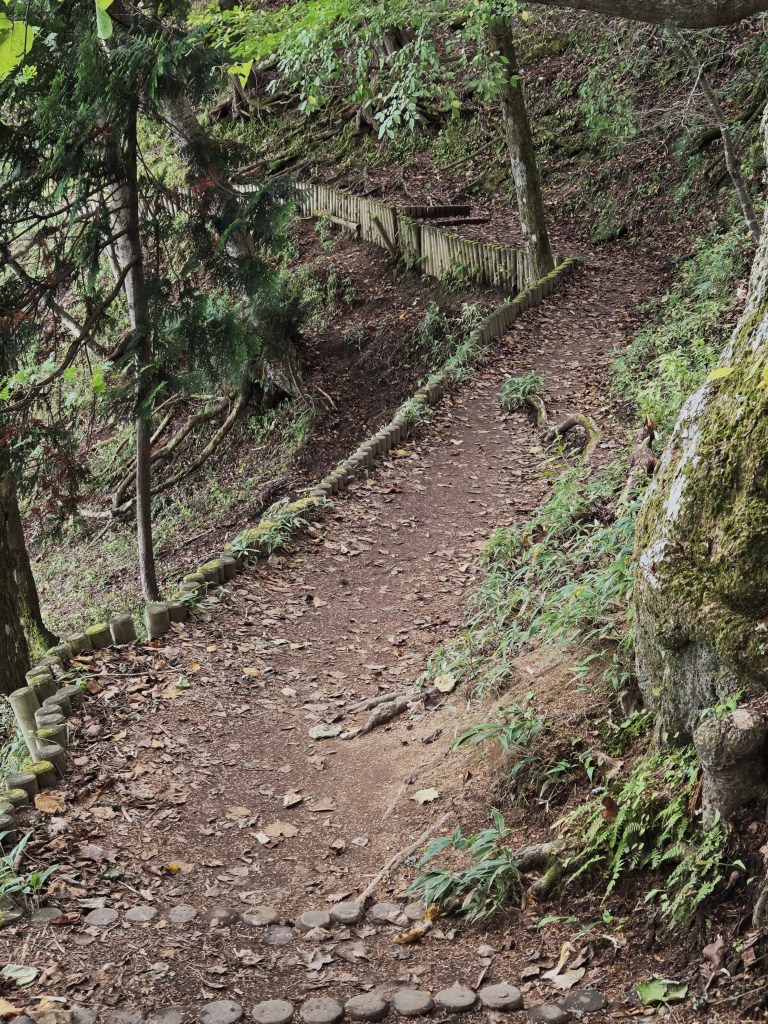
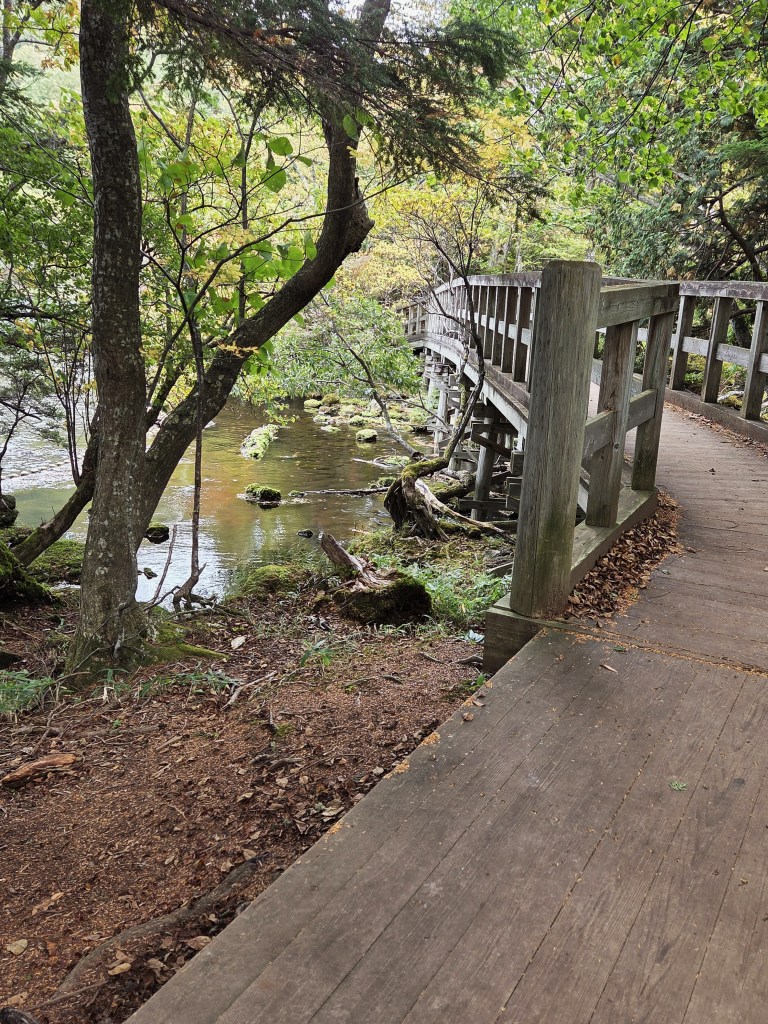
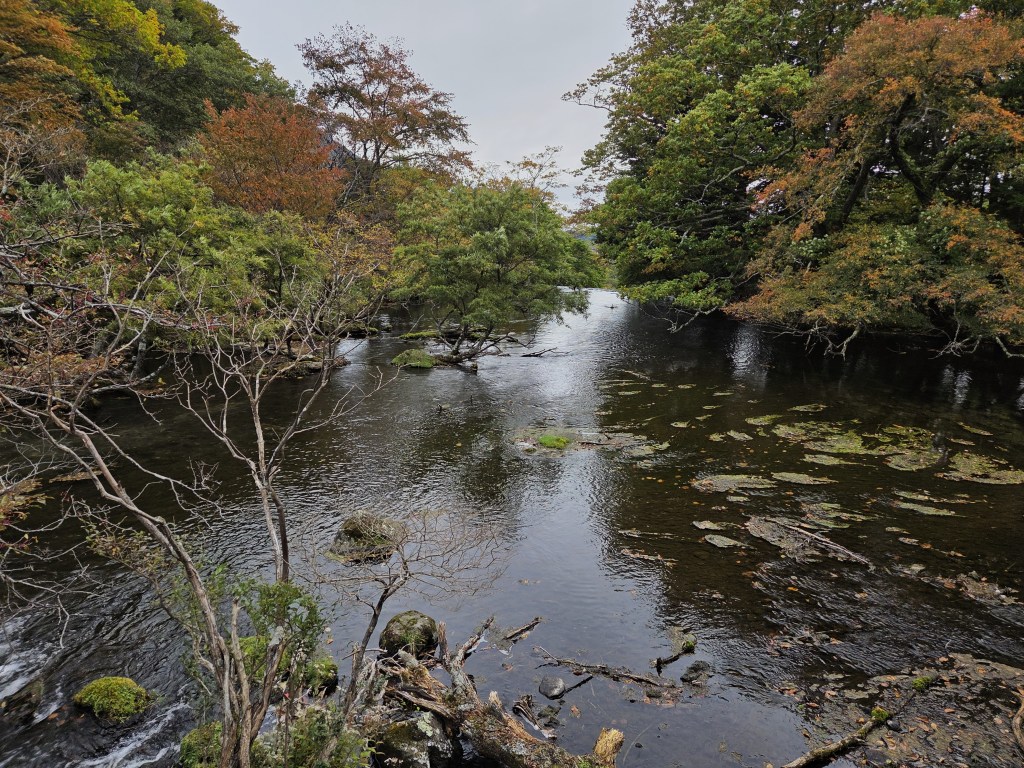
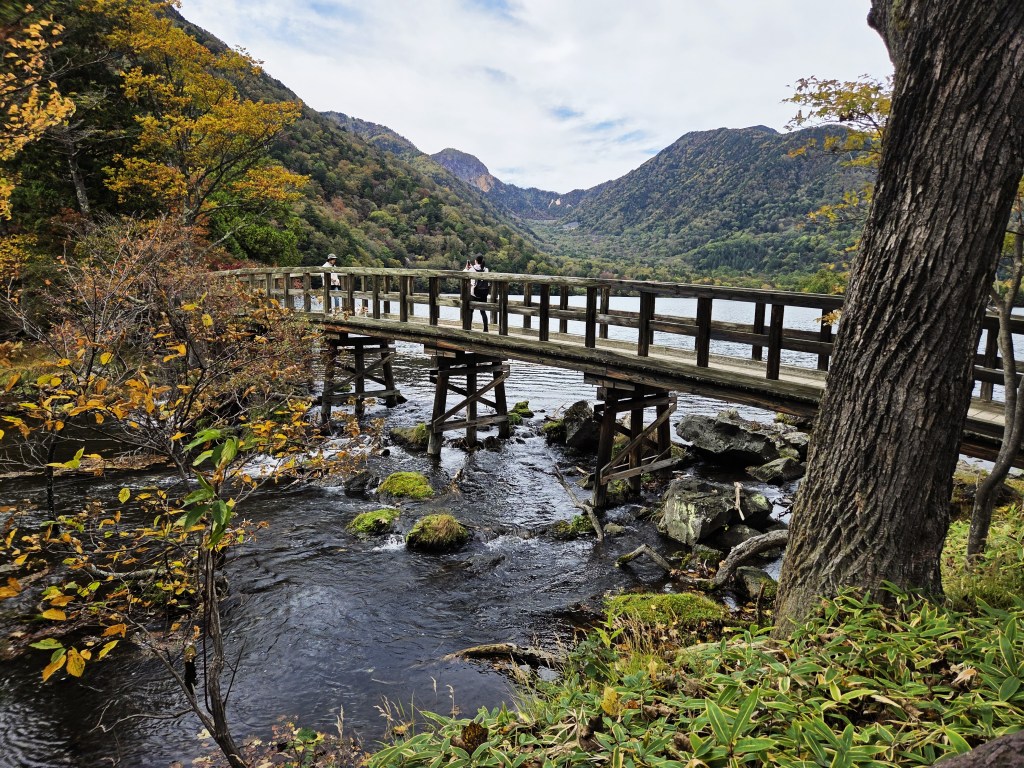
At Ryuzu the fog had lifted. The waterfall, also called cascades, was spectacular. After viewing from the observation deck, Bart and I walked up through the woods on the other side of the river, away from the crowds. The pictures below tell the story of the adventure. The cascades have worked through the rocks in various channels and passages. Reminded us a little of Watkins Glen back home. The woods also contained quite a number of mushrooms, which I enjoyed seeing, especially because there had been so few back home this year because of the dryness.
It was wonderful to be able to view the cascades from the woods and away from the crowds that lined the observation sites on the other side. We had the woods and river to ourselves there.
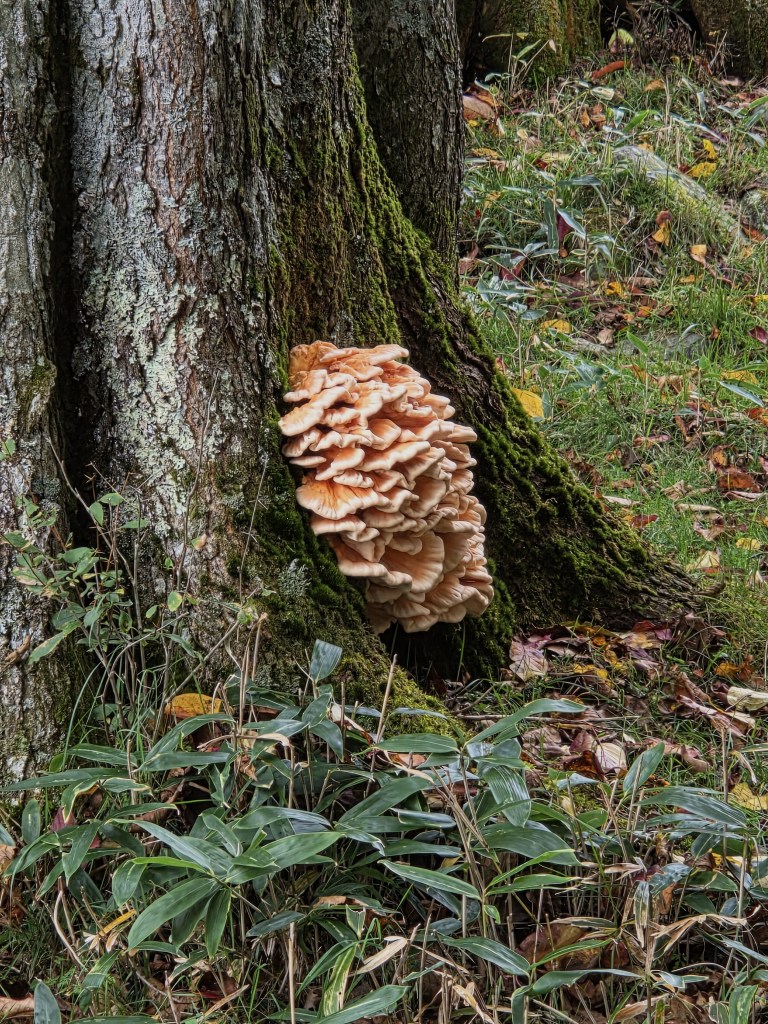
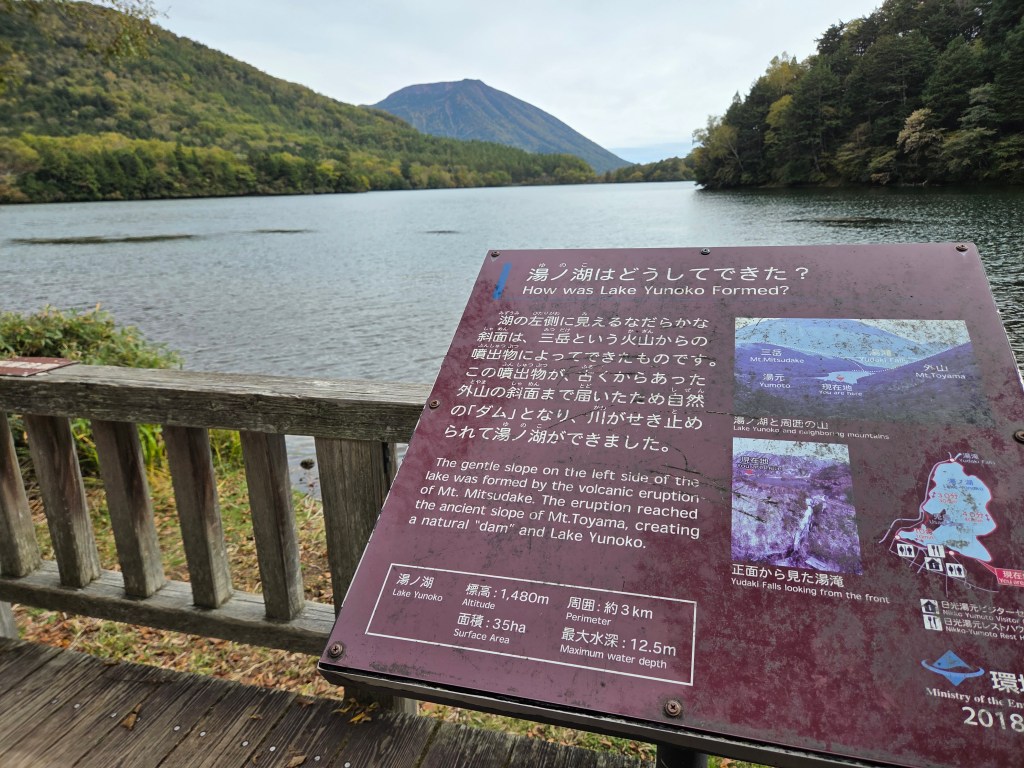
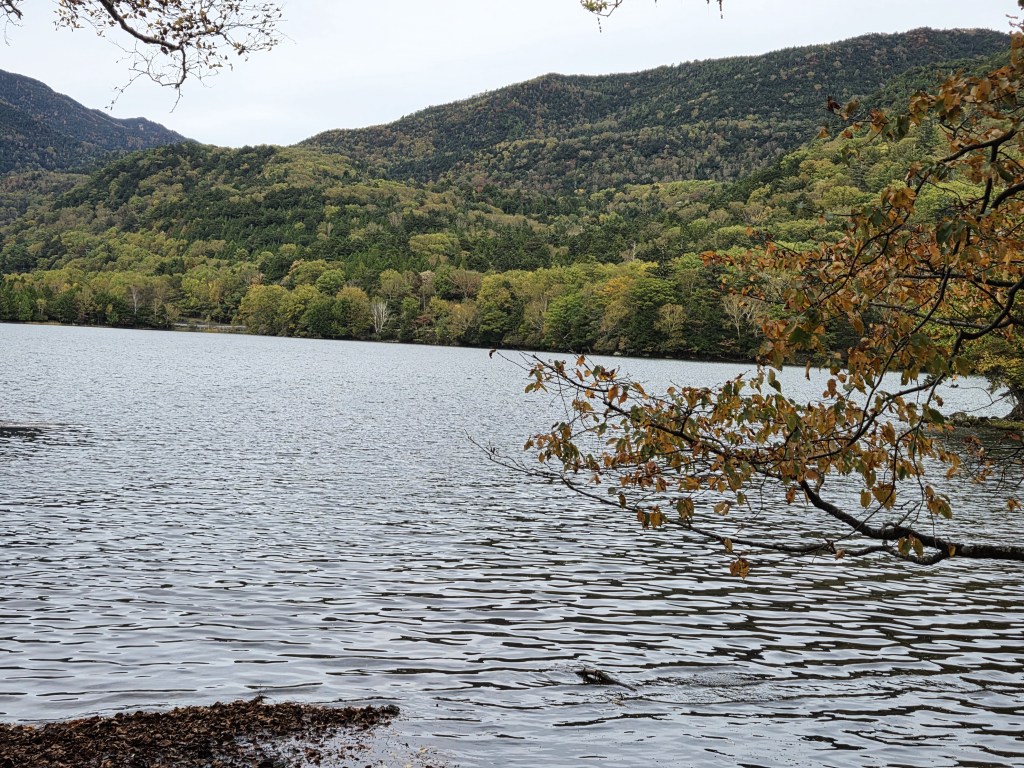
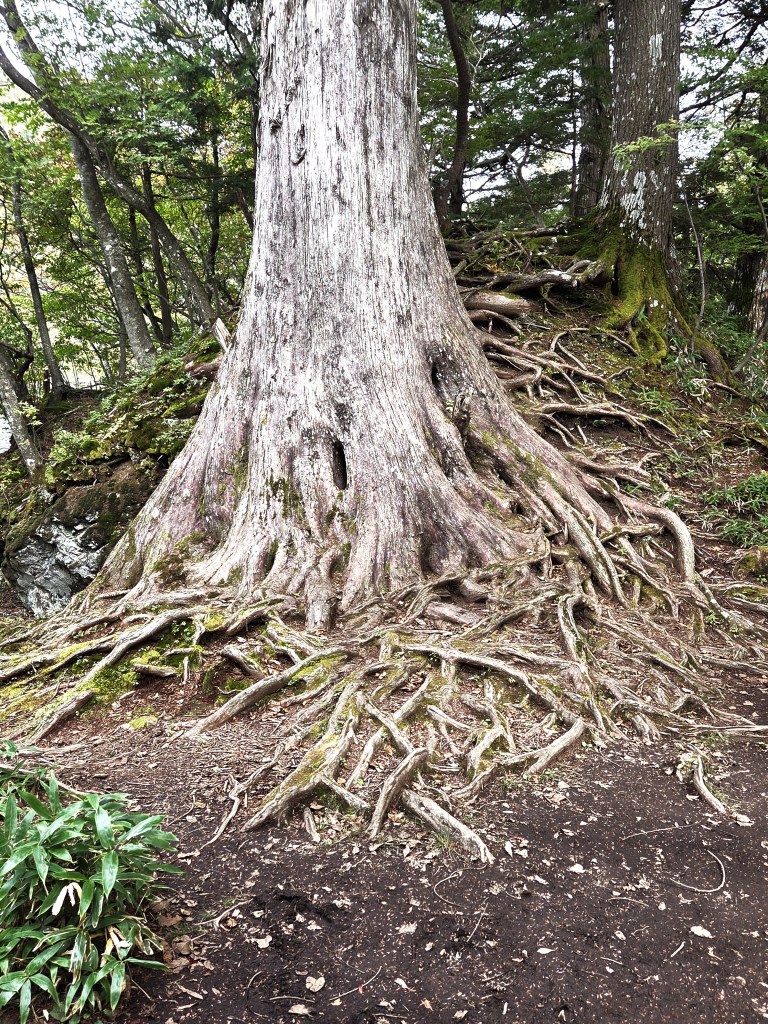
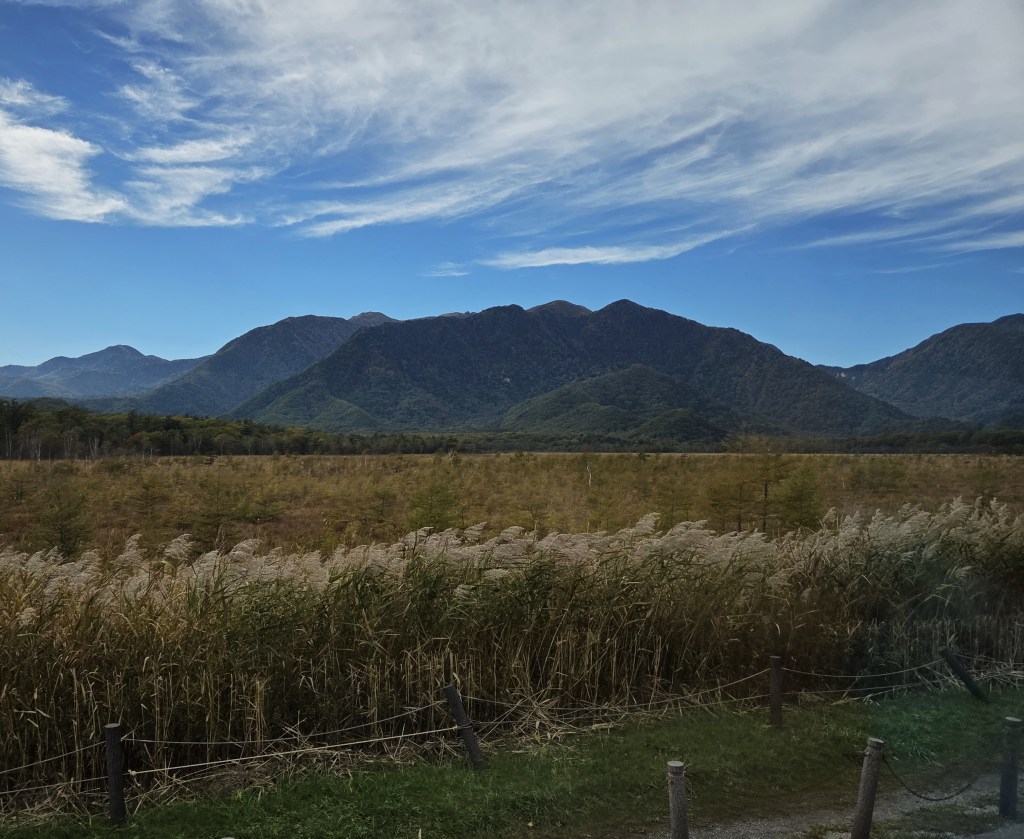
From there we hopped on another bus to Lake Unoko. There we hiked half way around the lake. What made me a little envious was different clumps of chicken of the woods mushrooms growing on trees. They are an excellent edible mushroom and these were in perfect condition. Ah, if we only had a kitchen to cook them in back at the ryokan!
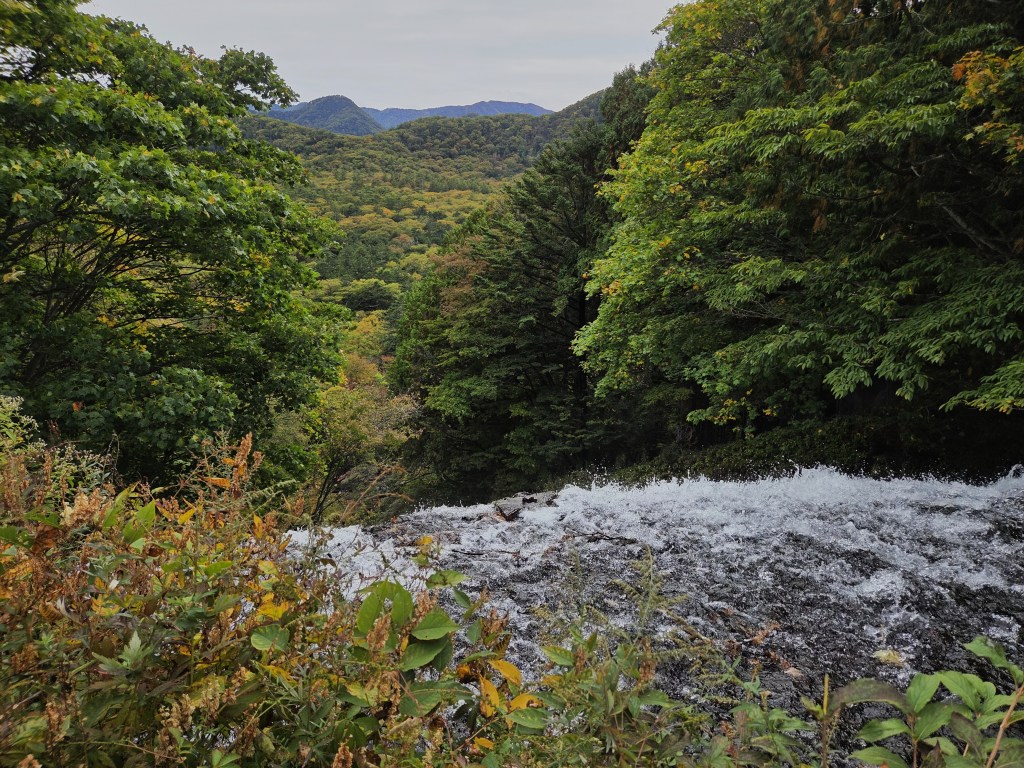
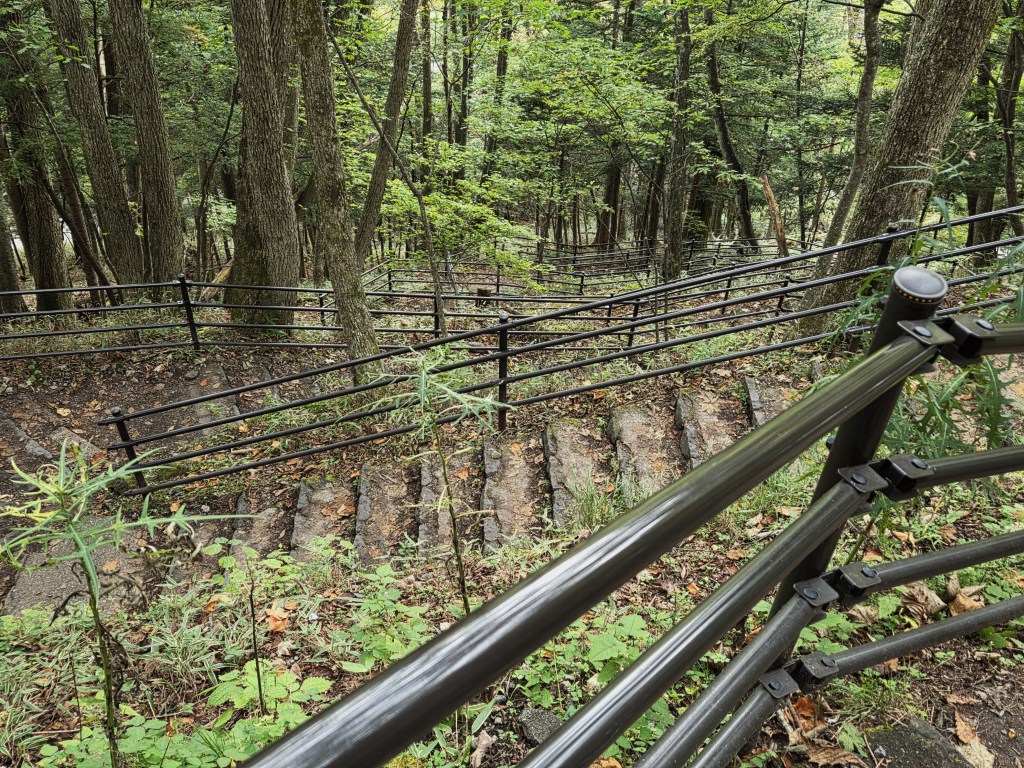
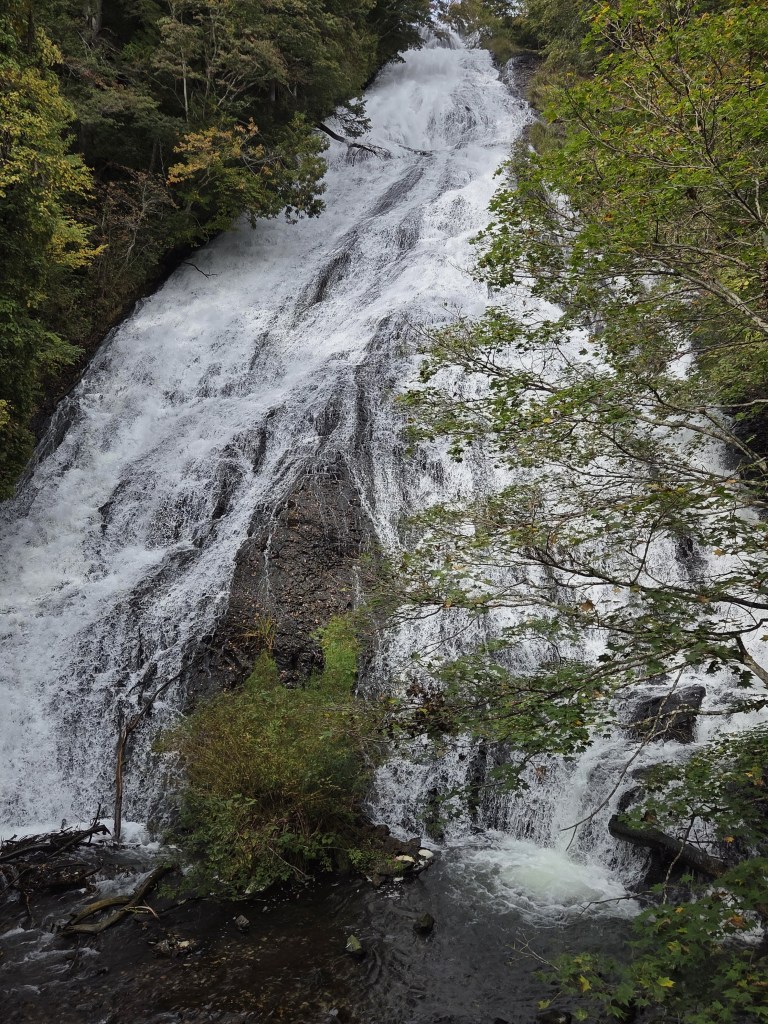
At the outlet of the lake was another waterfall, Yudaki. We walked down a long series of switchback steps to get there. Reminded me of Hiraizumi. But here, the sound of water replaced the silence of temples there.
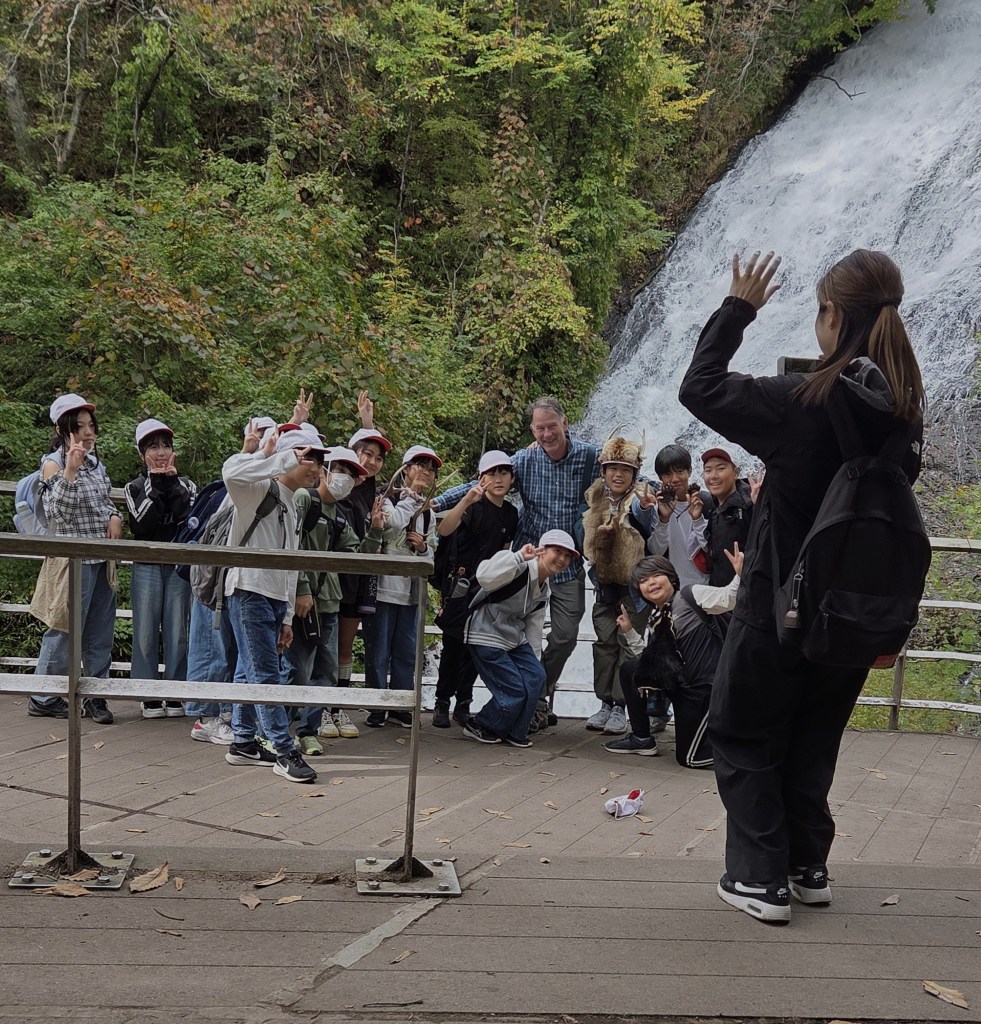
When we reached the bottom of the stairs we came to the observation area where crowds were again assembled. This was accessible from the road and there were numerous groups of school children there. Bart, the retired teacher, couldn’t help but to be drawn to them and gathered with them for a picture. He even shared hats with one of the students who was wearing one with antlers on! Unfortunately, I didn’t get a picture of that.
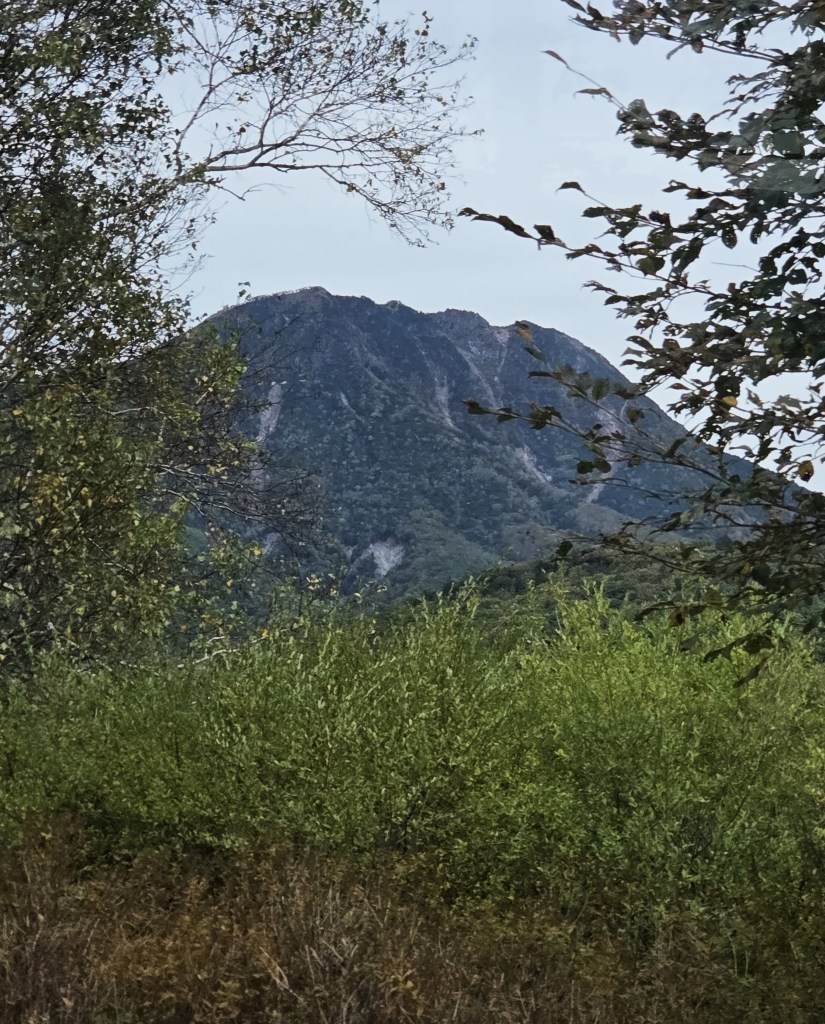
On the way back, late afternoon, the fog had gotten thick again and the mountains around Lake Unoko were once again hidden from view.
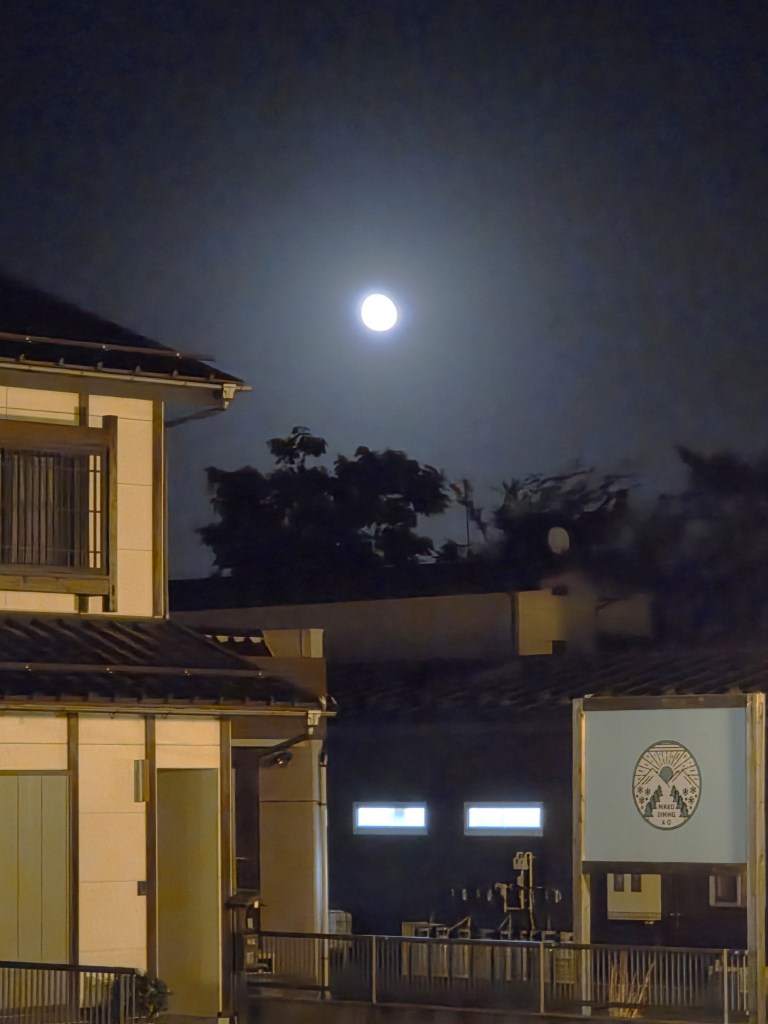
After one last dinner together, just before entering the ryokan, the waxing moon was visible over the town. Nice to see after the previous cloudy evenings here when the moon was full.
Tomorrow Bart makes his way back home and I continue alone on my Japan Journey. It has been a good 15 days traveling with Bart. But now, on to more adventures.
(Click on thumbnail for larger picture.)

October 8
A terrific day out in Nikko.
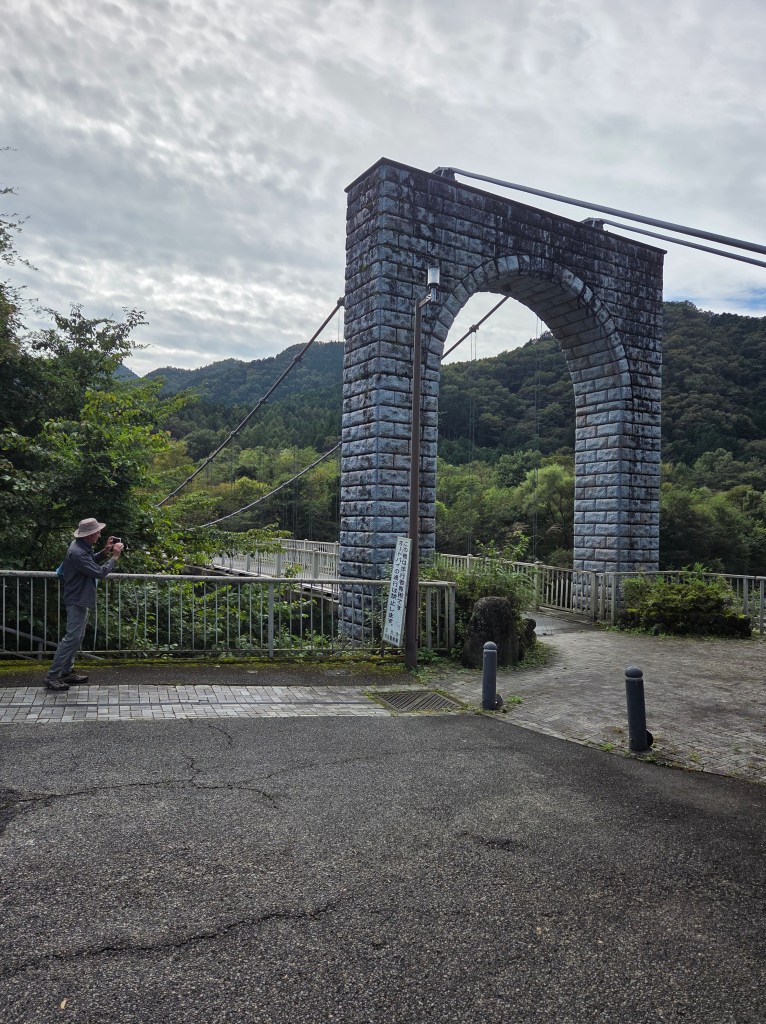
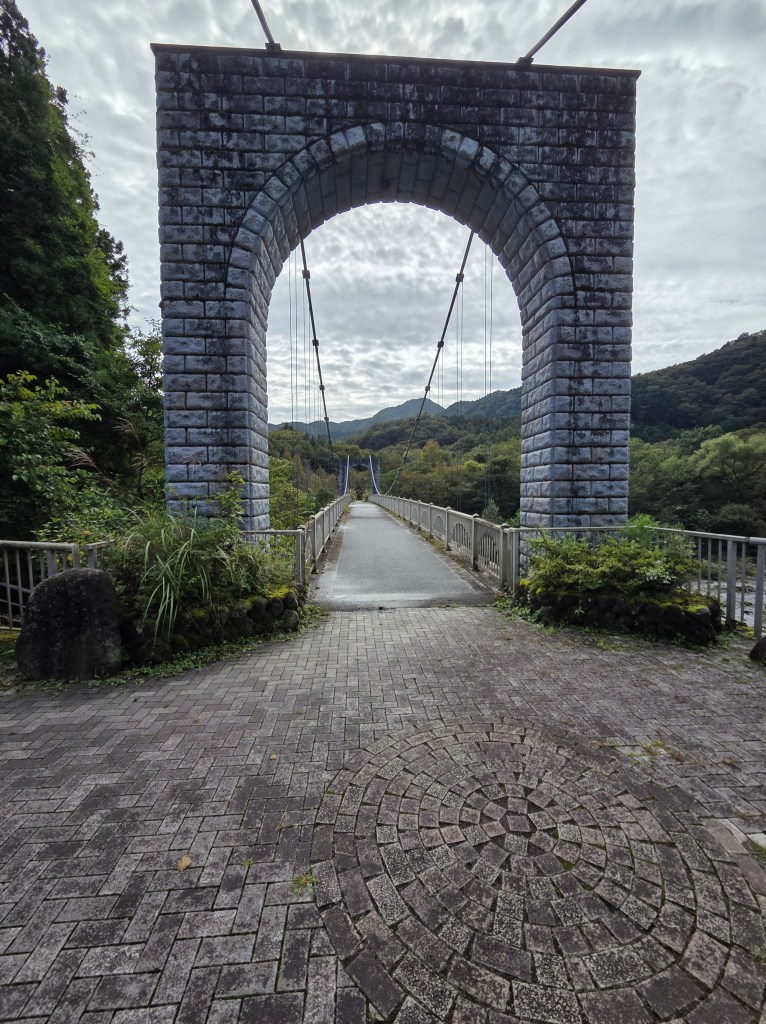
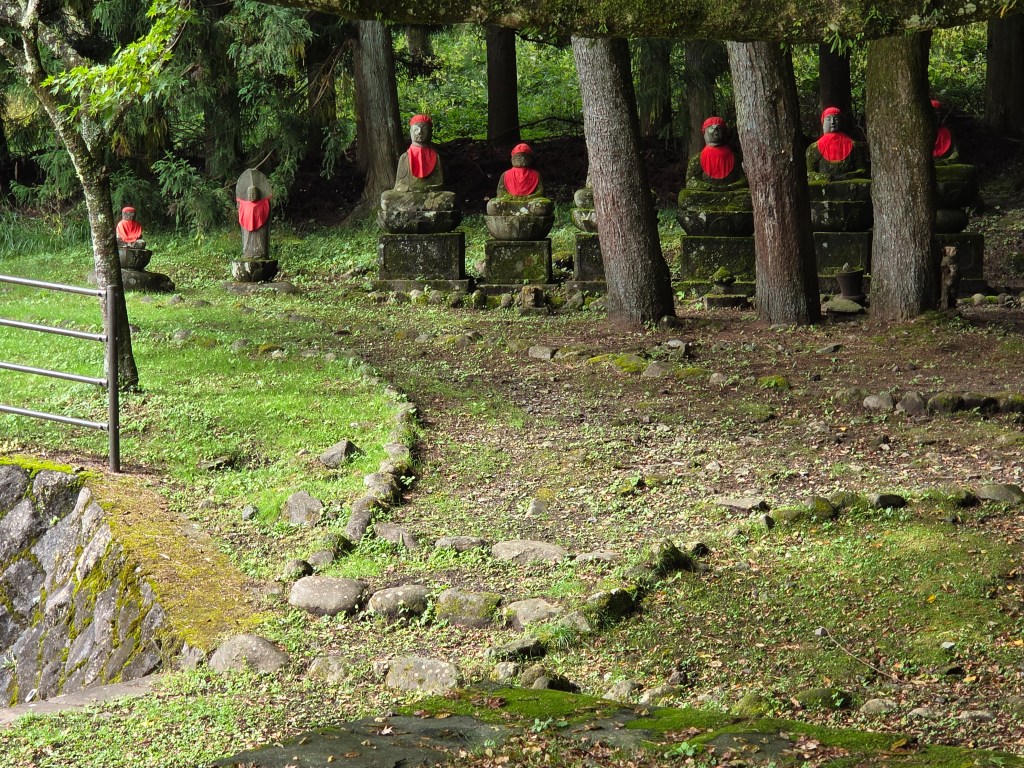
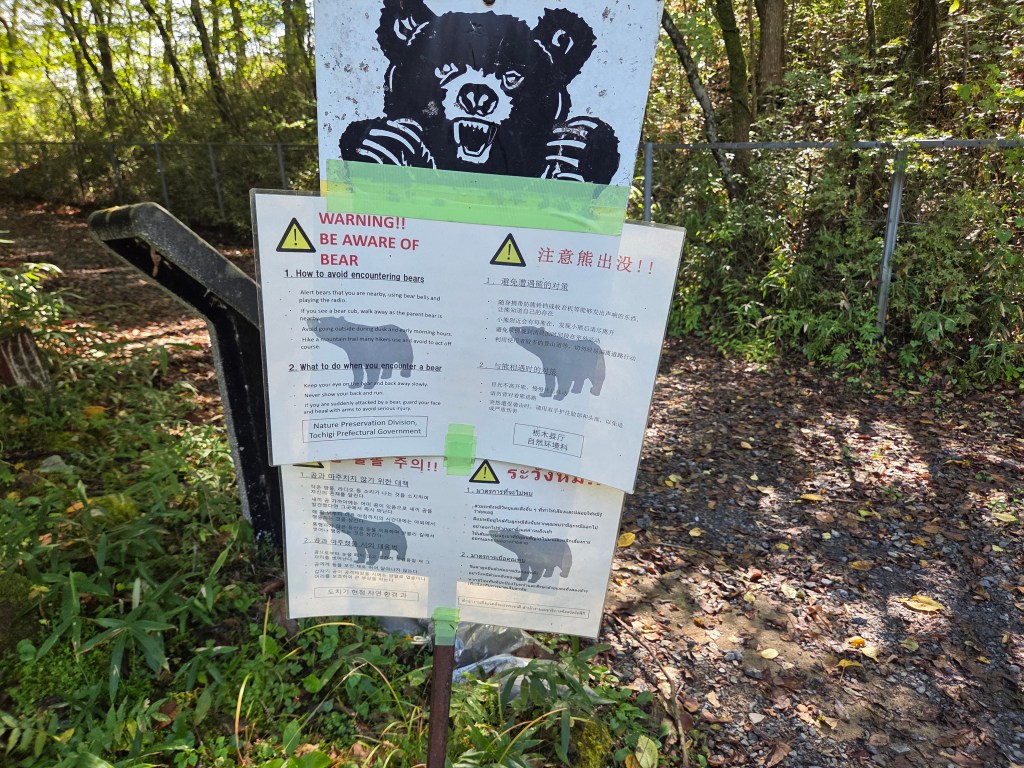
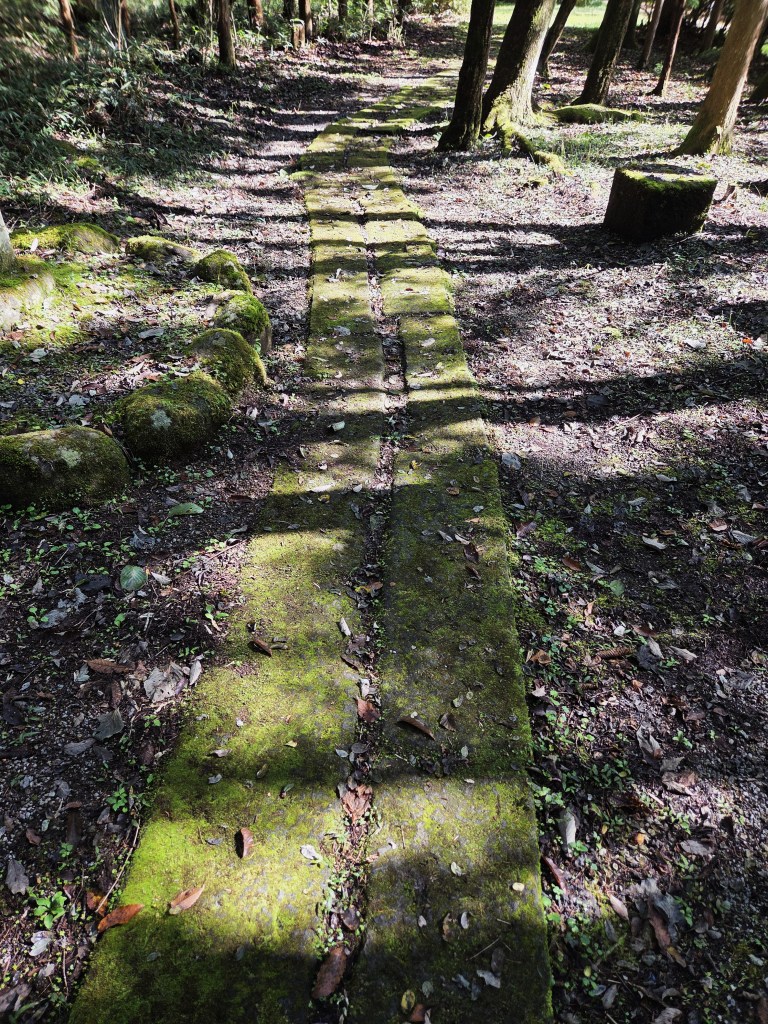
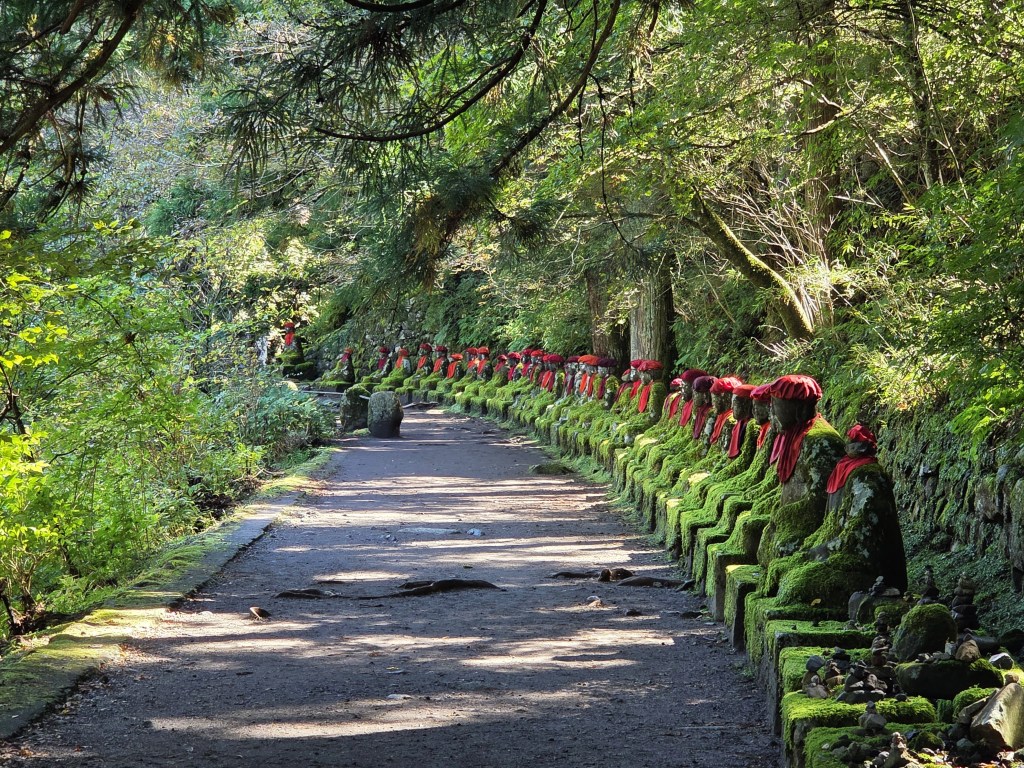
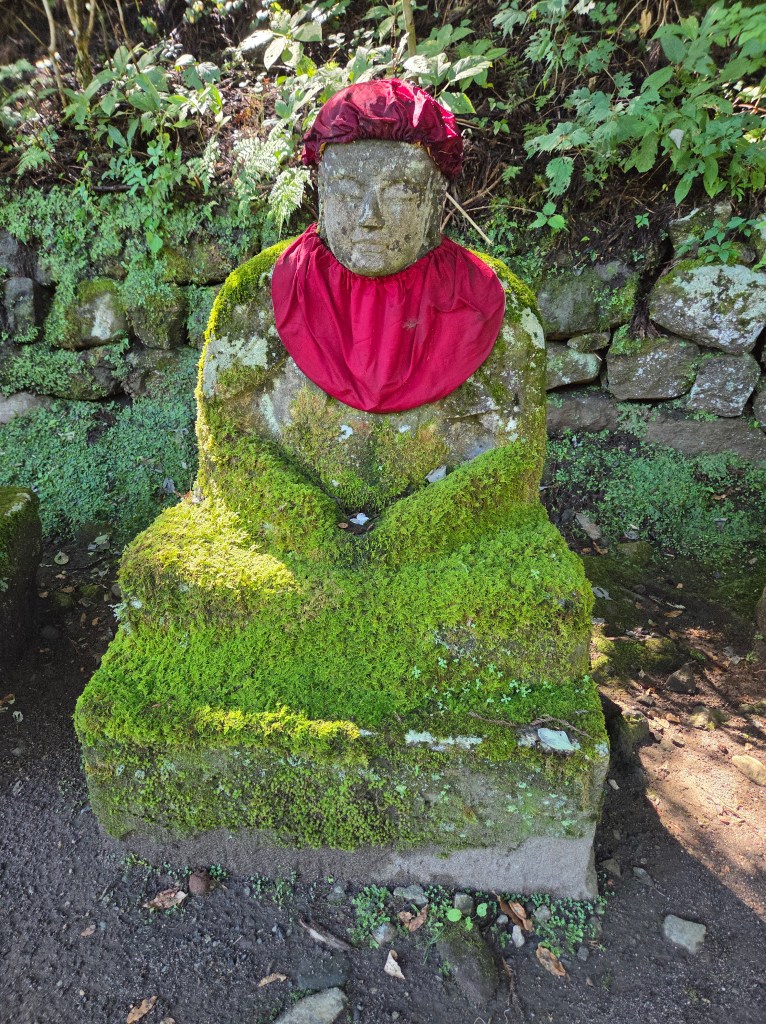
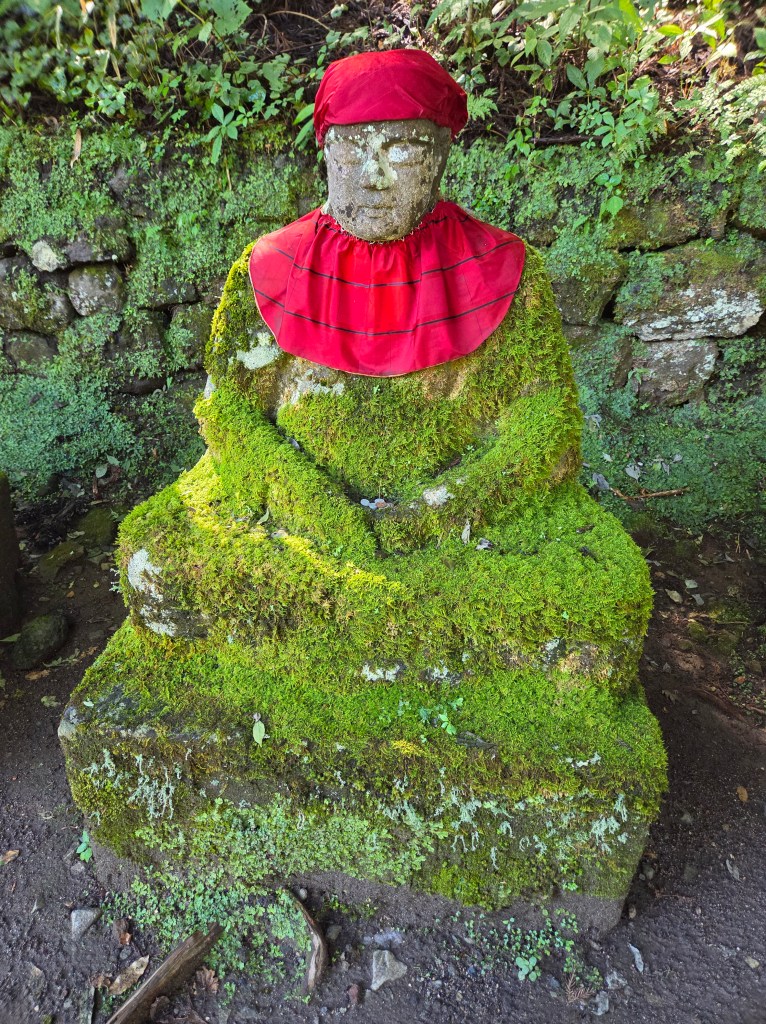
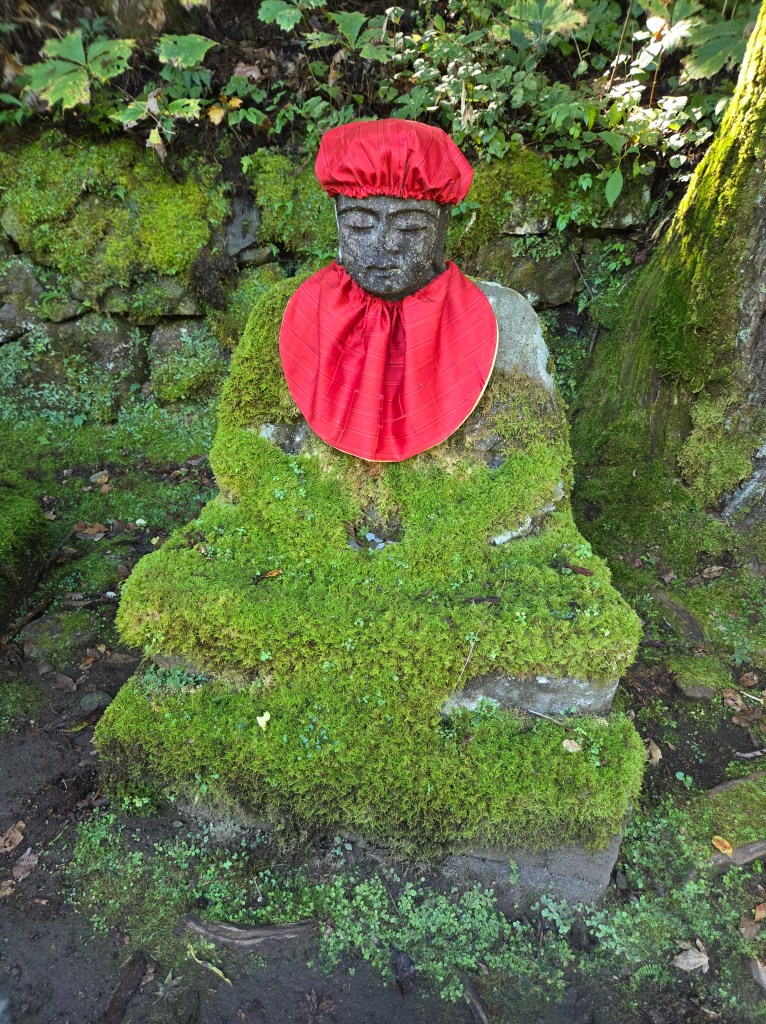
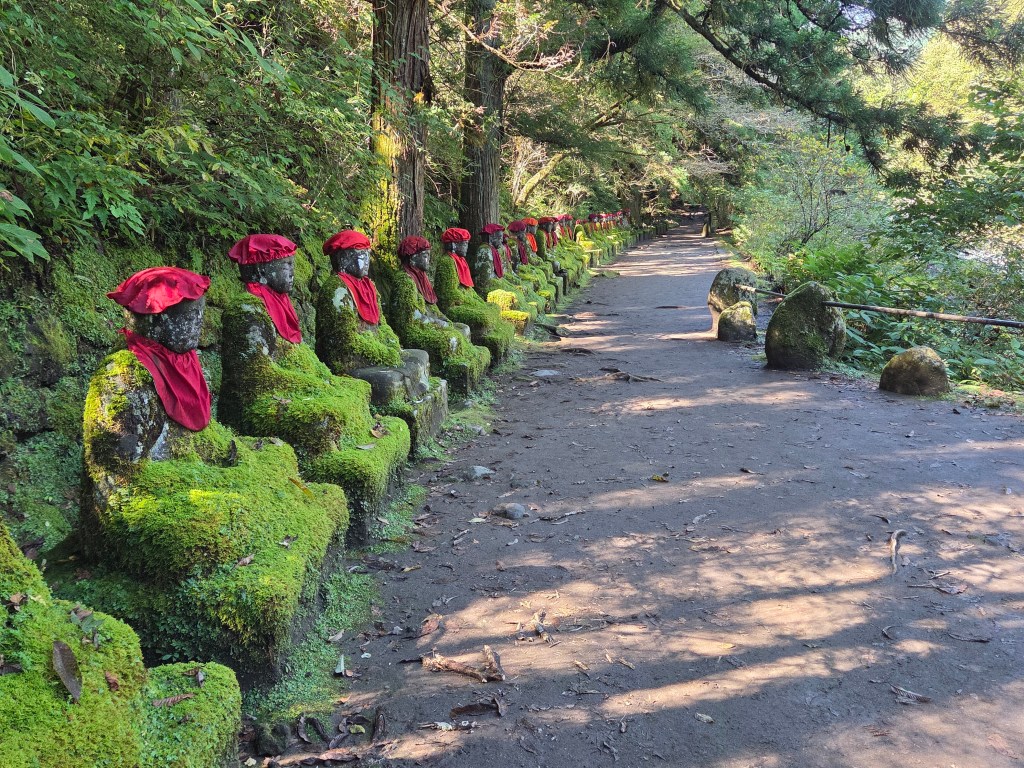
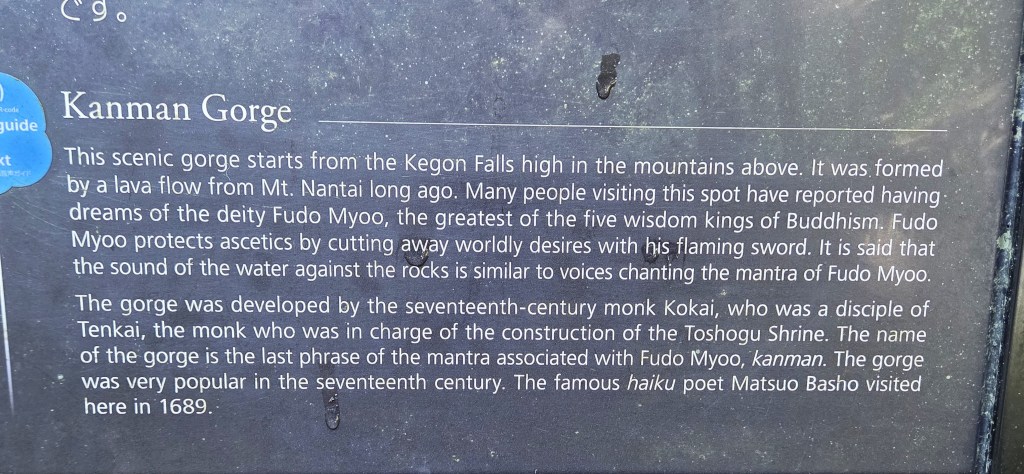
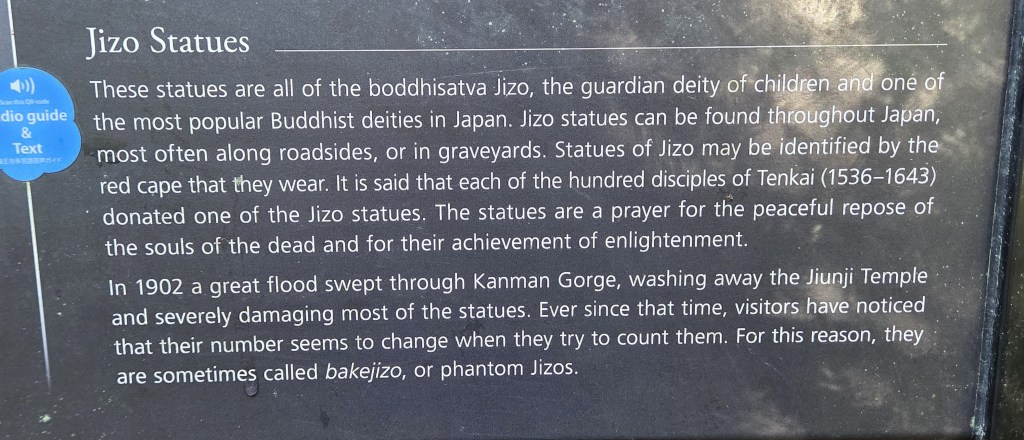
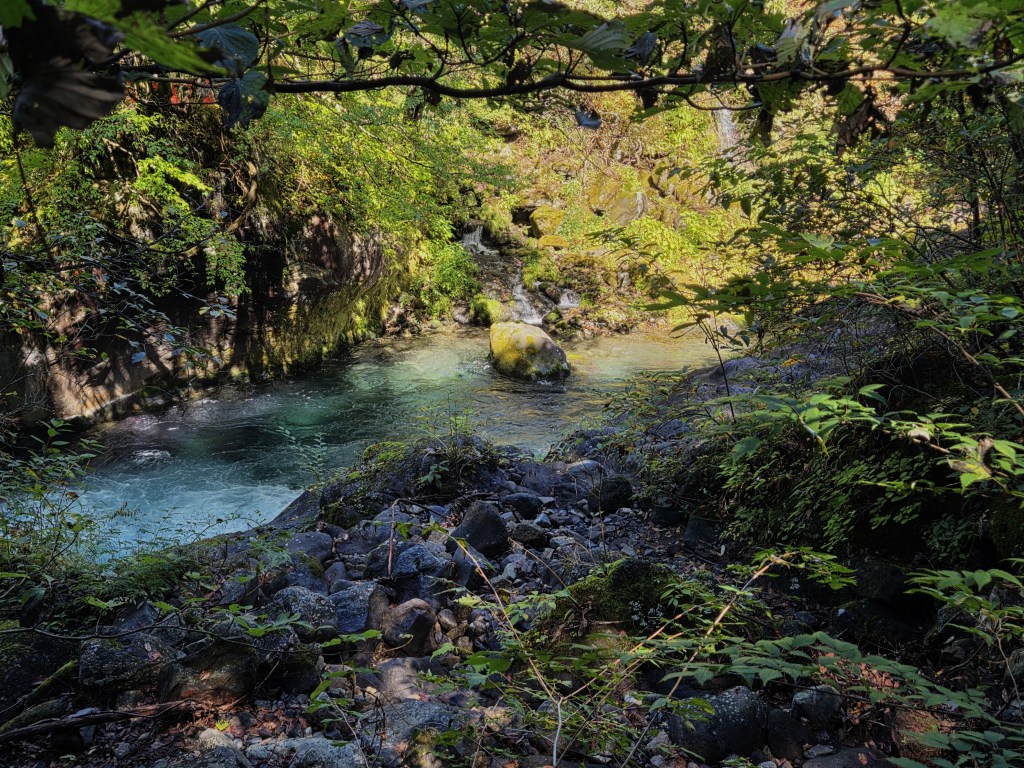
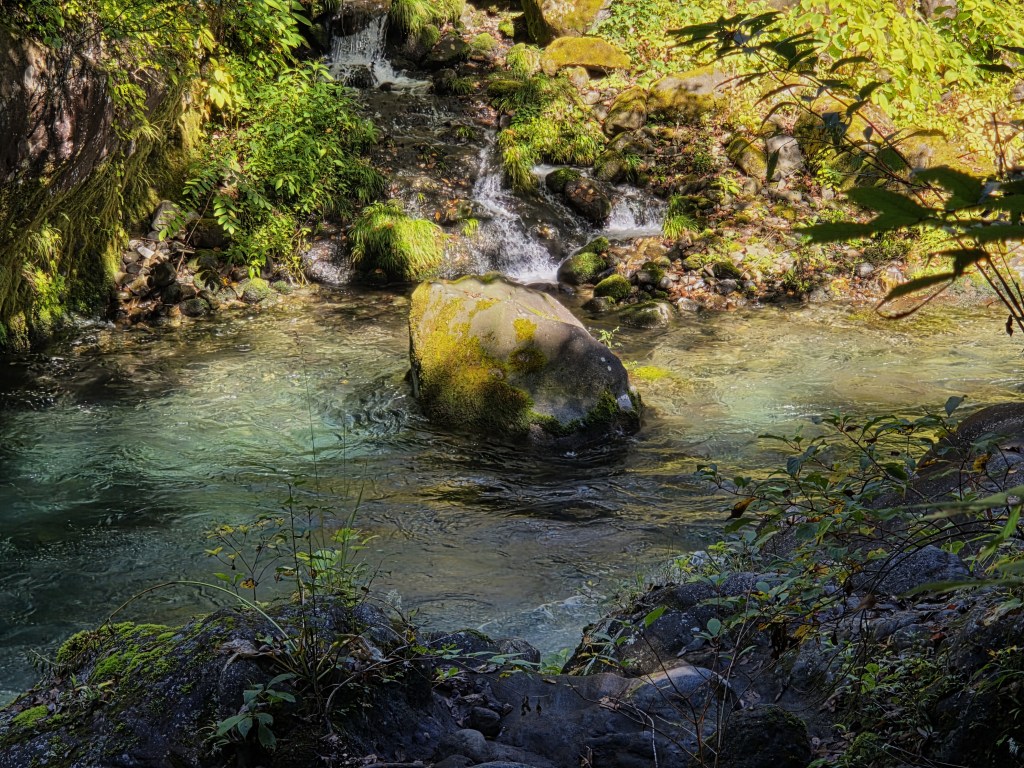
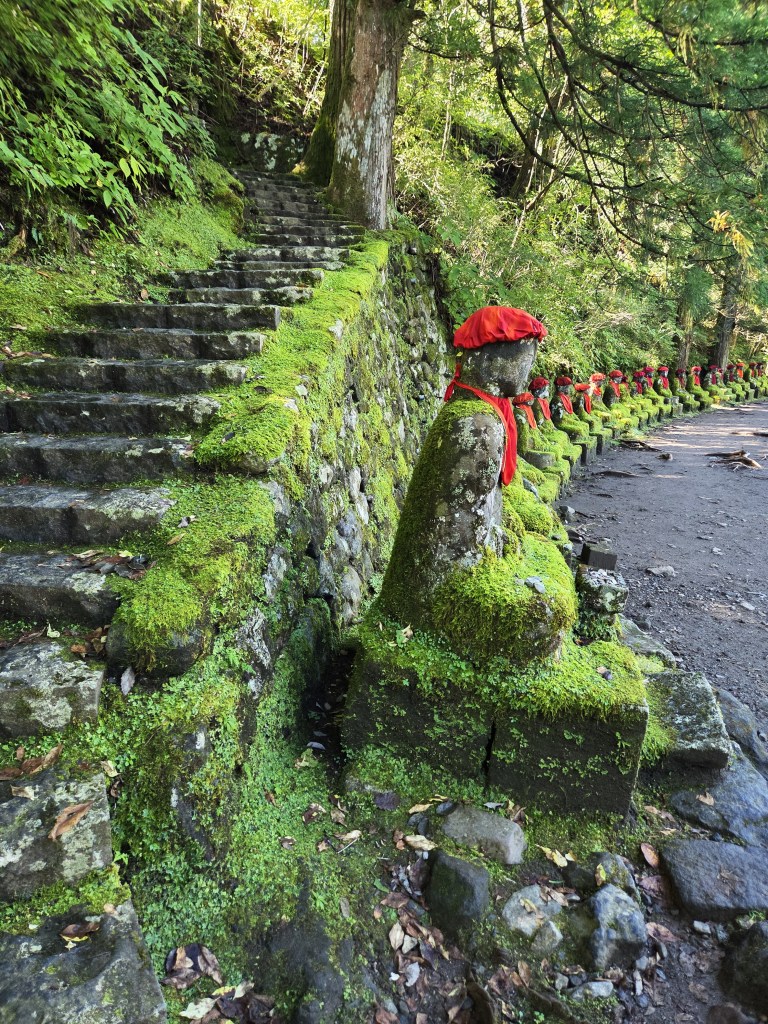
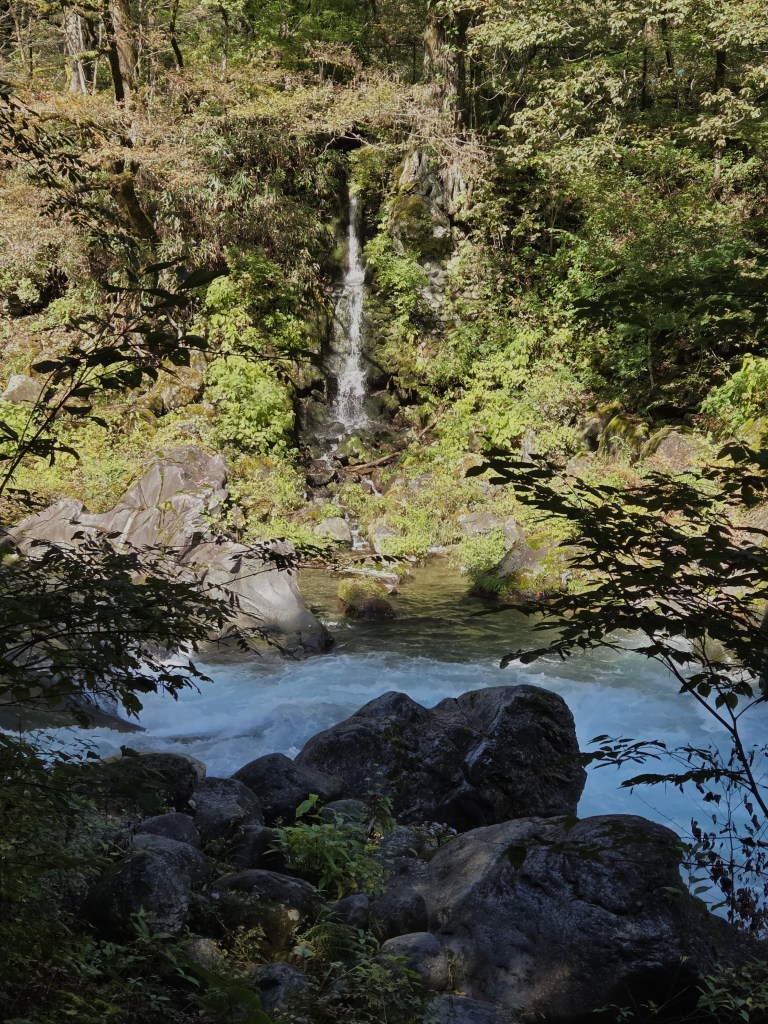
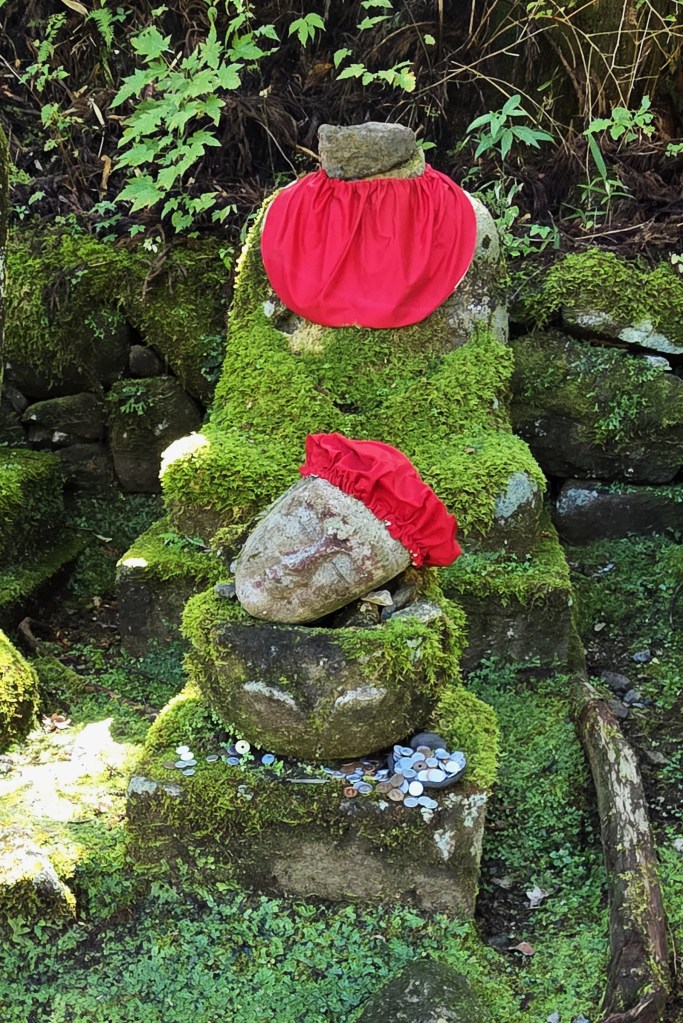
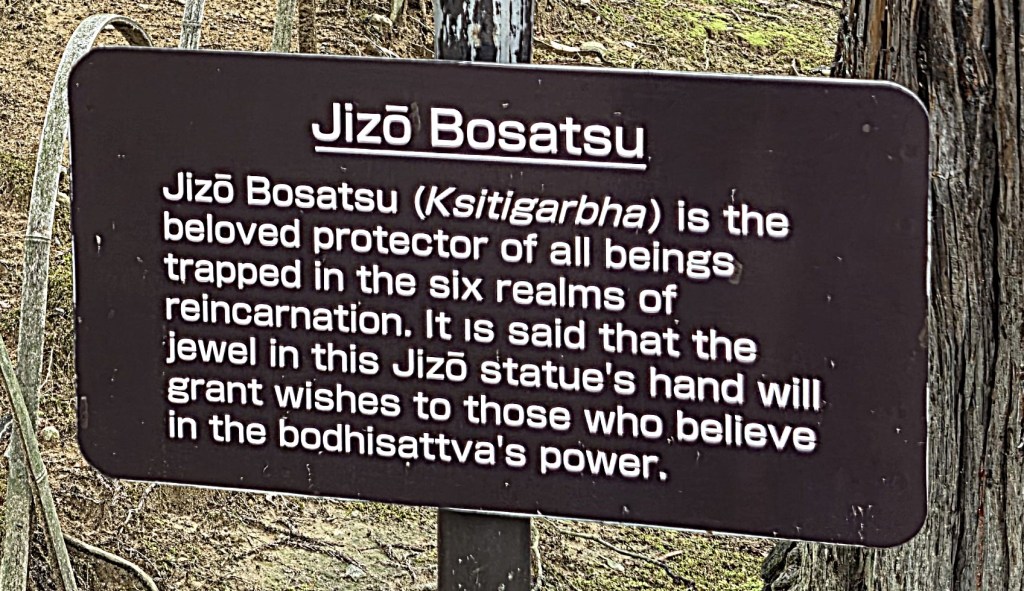
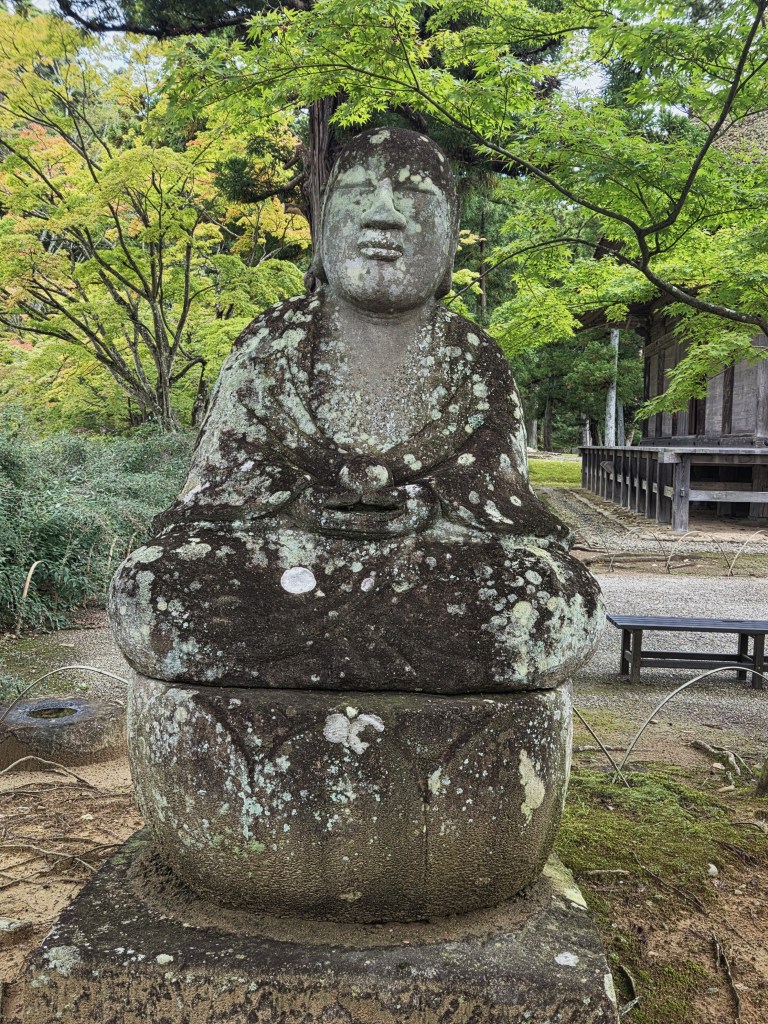
We started out by walking along Kanmangafuchi Abyss. This is an old path along the Daiya River that has a series of old statues of Jizo, the patron of children and travelers. Legend has it that the number changes each time you try to count them. These were erected in the mid-16th Century. Basho visited this place in 1689, so I wonder if he had seen these then.
As we were leaving the area we got into a conversation with Mark and Hilary from England. It started when Mark asked about the poem that was referred to at the monument we were by. I showed and read him the poem and that led into a long conversation between all of us. Another spontaneous encounter that is part of the joy of traveling.
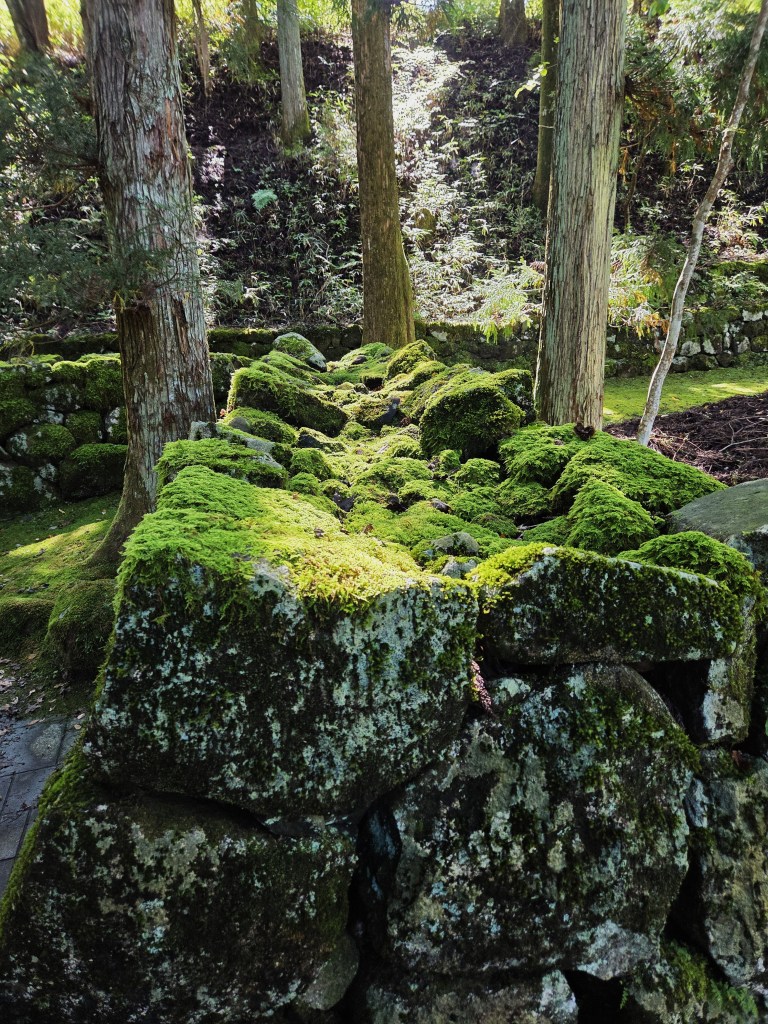
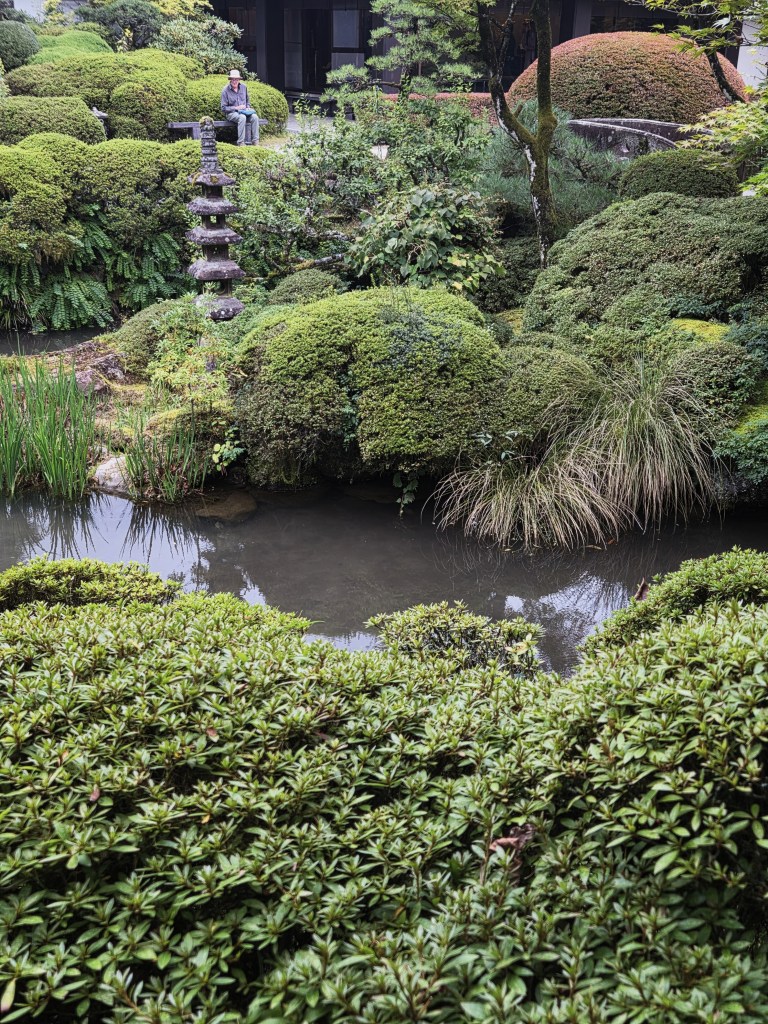
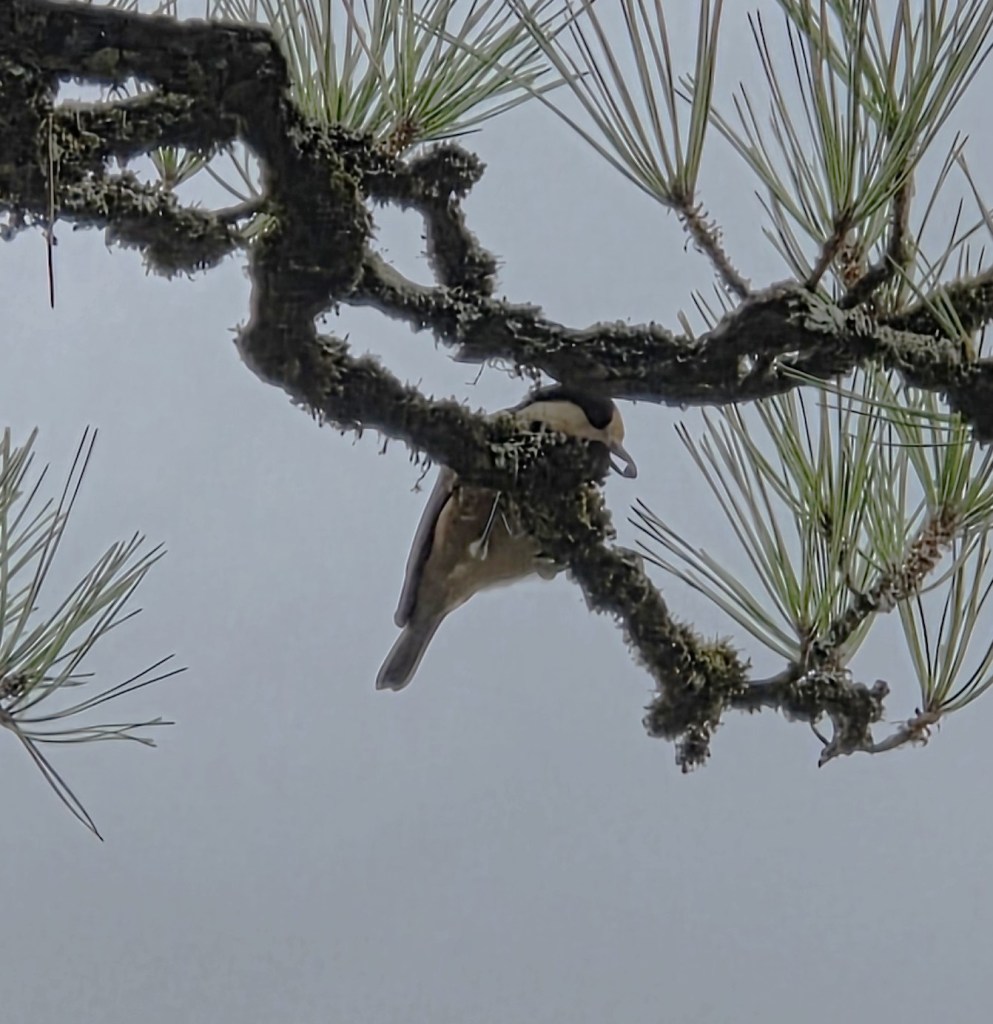
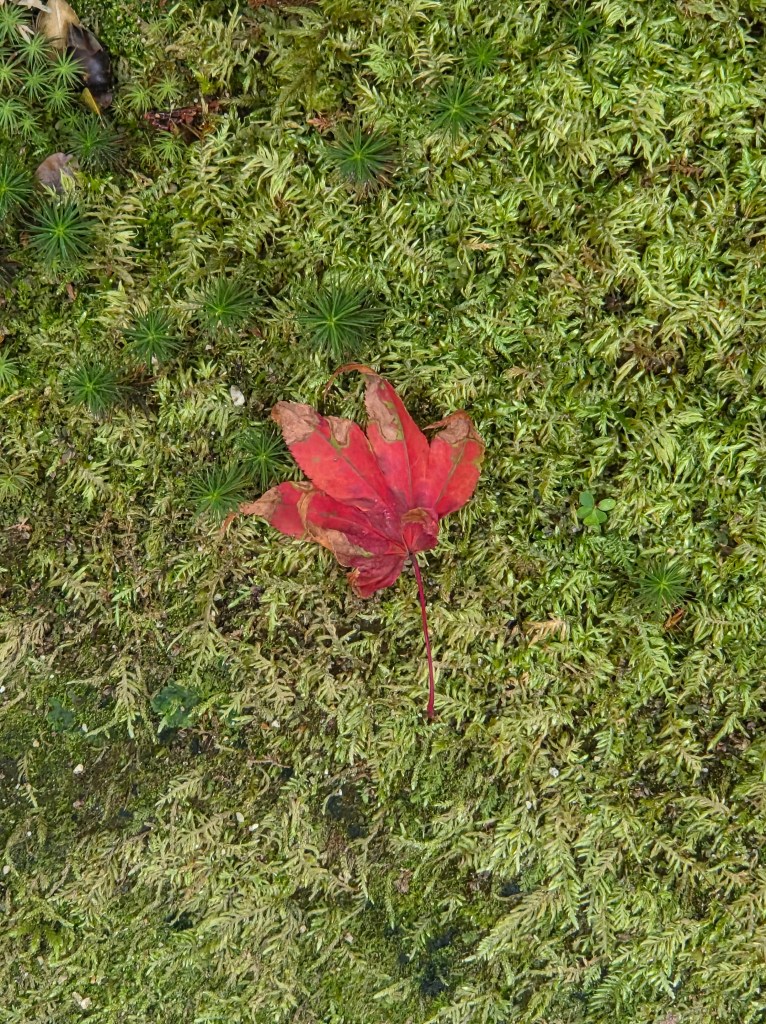
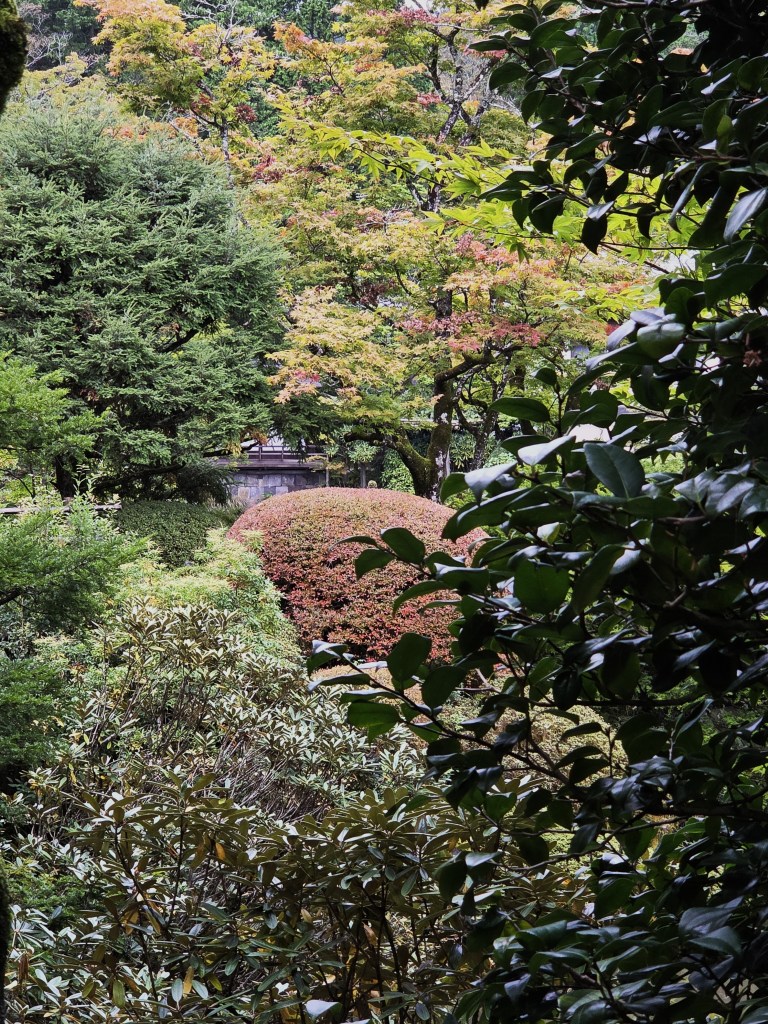
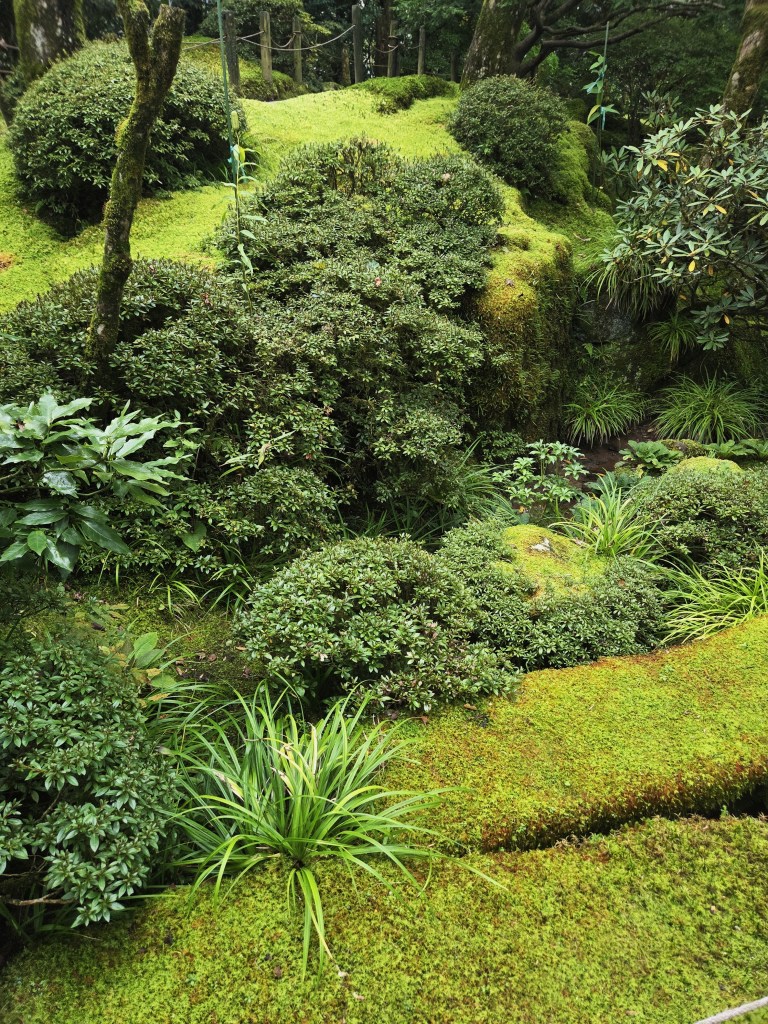
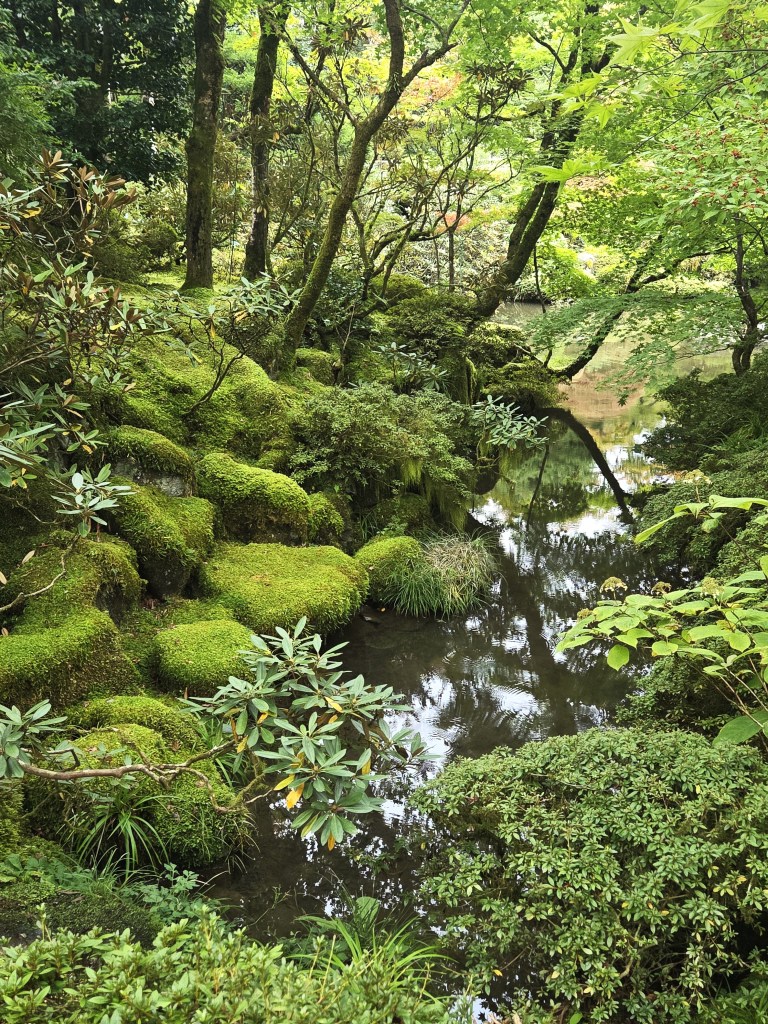
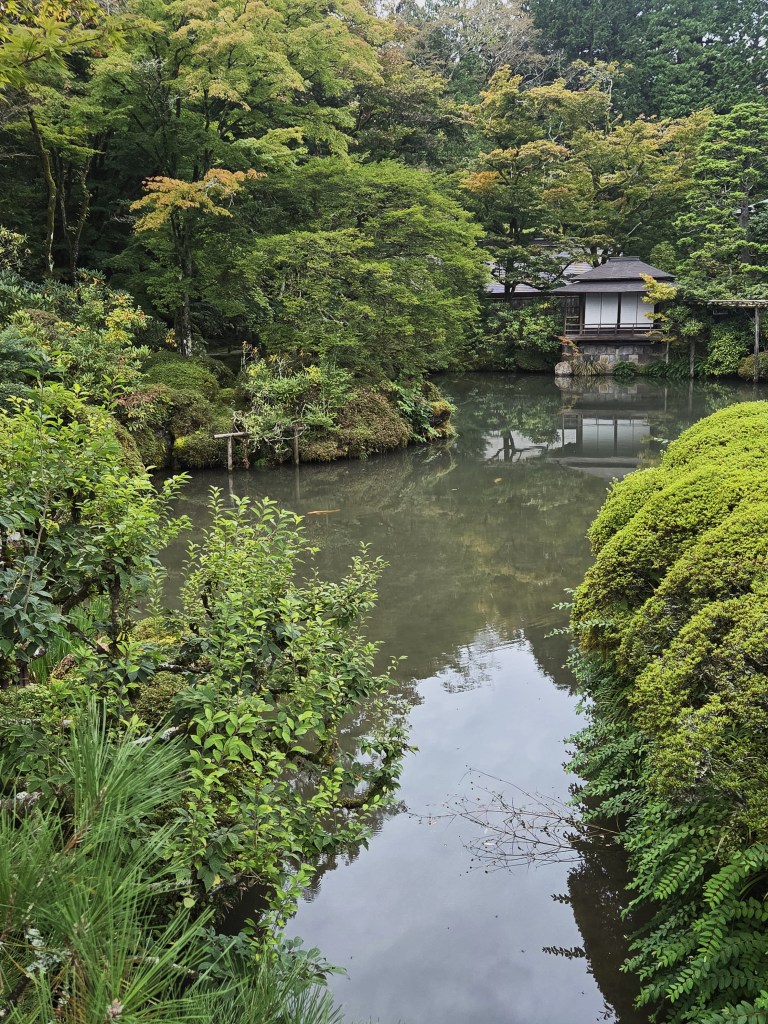
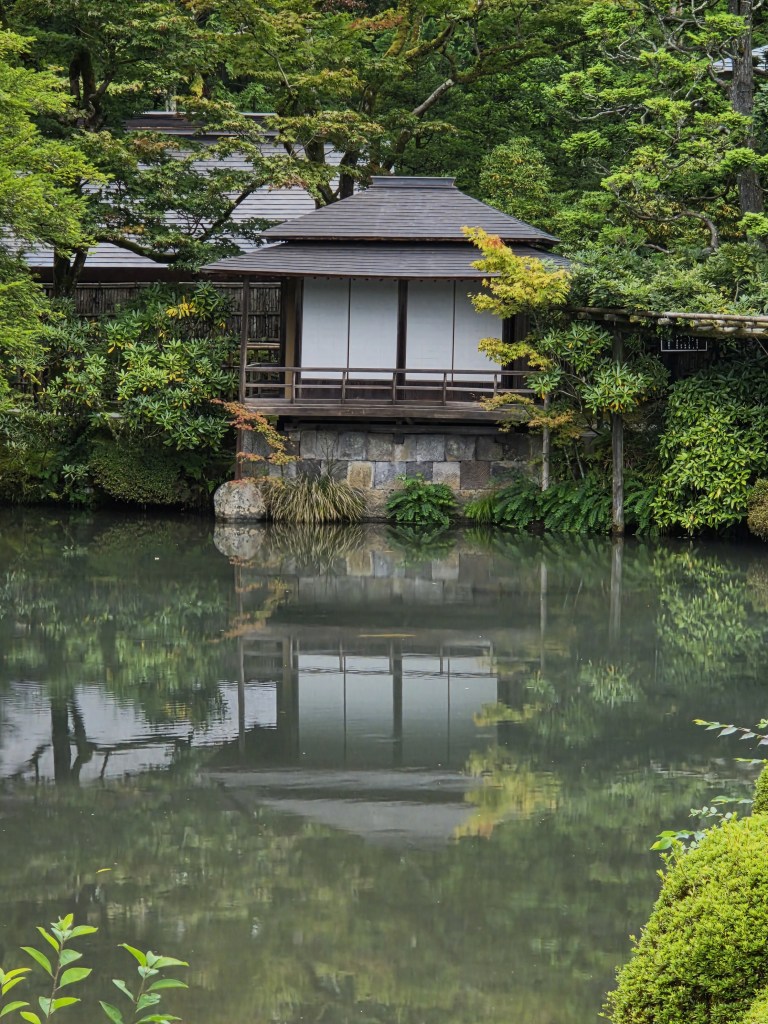
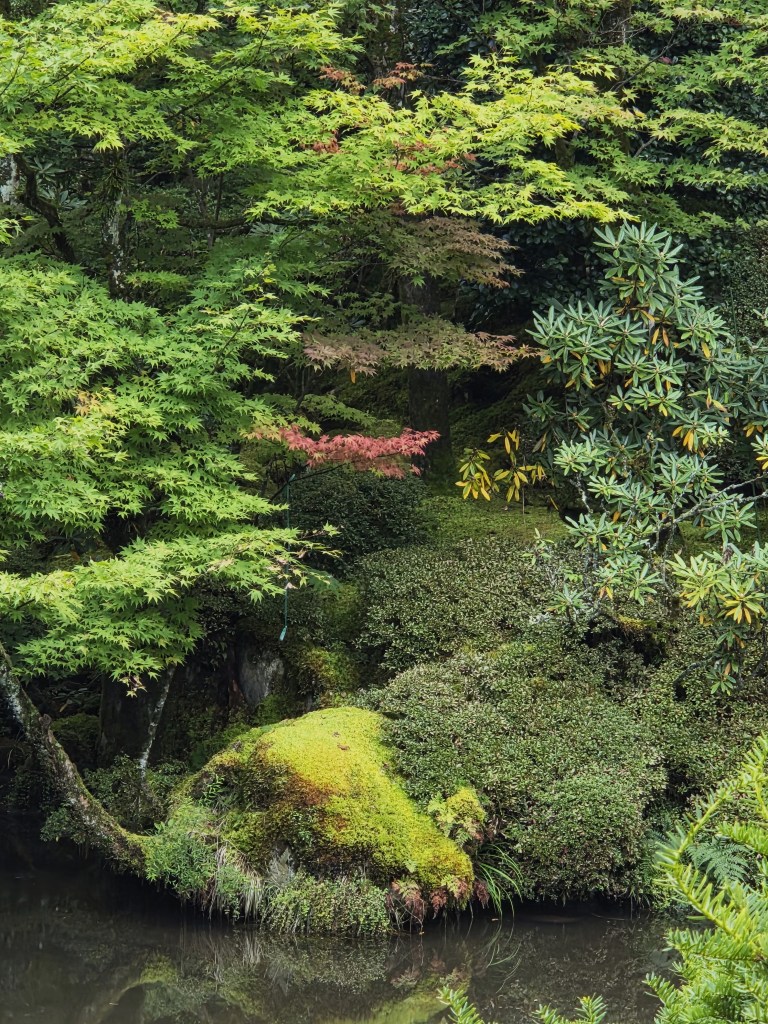
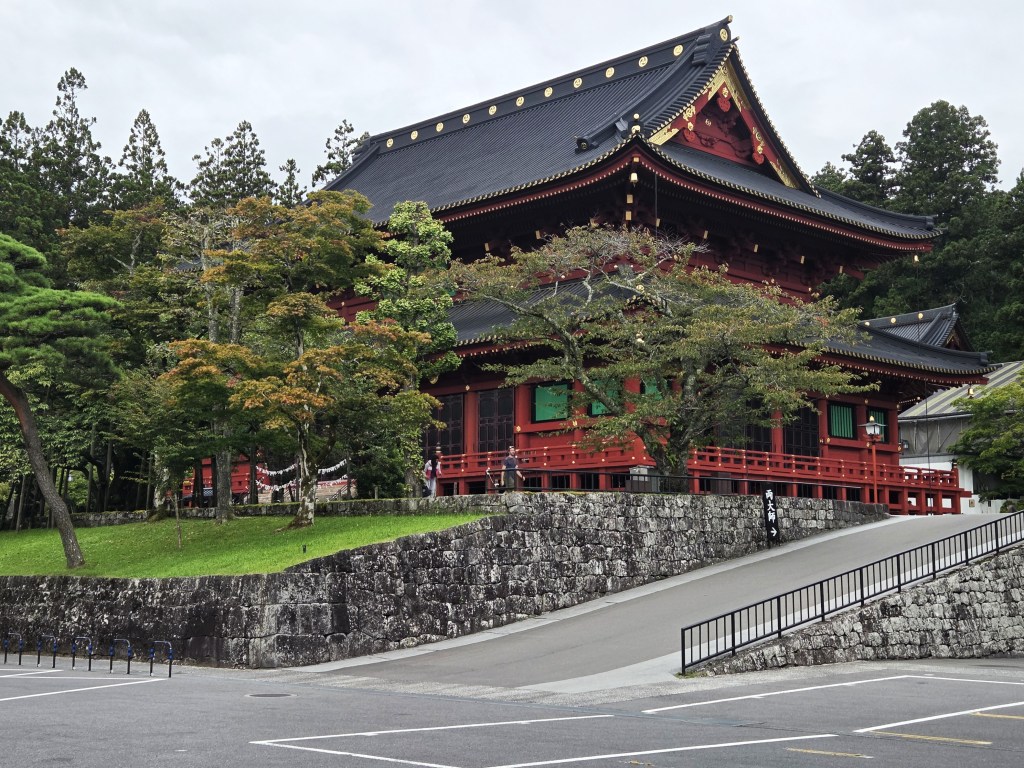
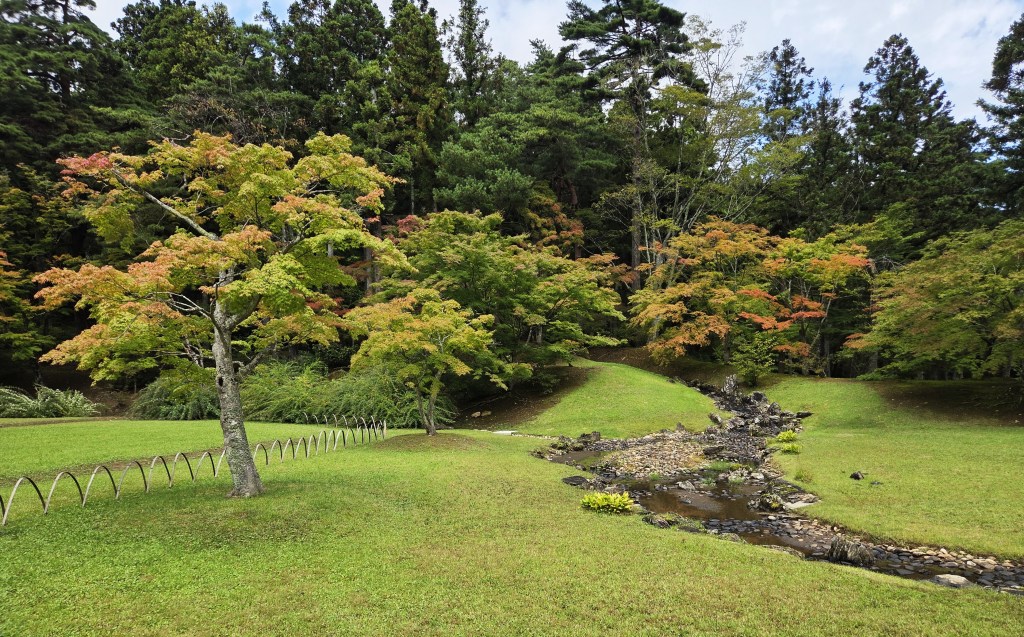
Later we went to Rinno-ji Temple. We first visited the garden that was so wonderful that I stayed the whole time at the temple there and never visited the other sites in this amazing place. I was templed out and it was refreshing to just be in one place and not amongst a lot of people. I almost wrote crowds of people, but it wasn’t quite like that.
There are a lot of pictures below from there.
Here is one tanka I wrote while there:
behold
every site
in Rinno-ji garden
whispers softly
slow down
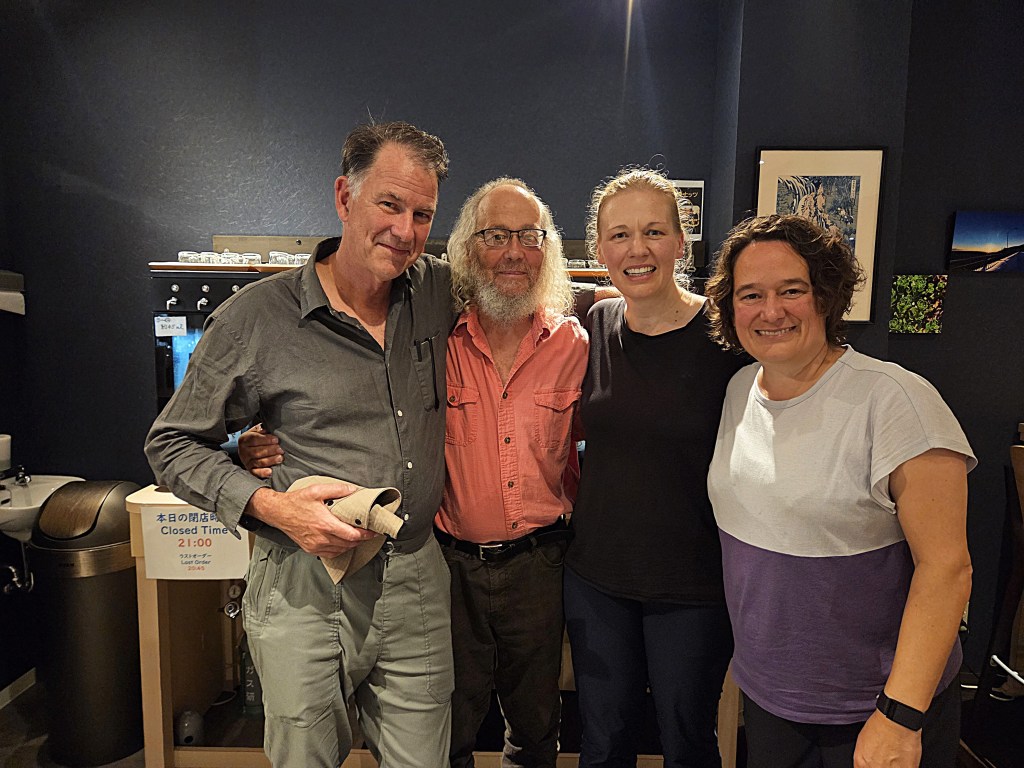
After dinner, on our way back, at the bus stop I got into a conversation with two women from Germany who were waiting at the same stop. We started by sort of confirming that we were reading the schedule right and that a bus should be arriving soon. We had a flowing conversation and I started to read some of the tanka I wrote in the garden. Then the bus came and we jumped on. Carolin wanted me to read some more of my tanka, so I did. They mentioned they were going to a sake bar to taste different sakes, a new experience for them. Since our conversation had been flowing smoothly we asked if we could join them. They were all for it.
So, we had a very pleasant hour tasting different sakes and continuing our conversations. Carolin and Simone were a pleasure to spend a little time with. We took the requisite group picture, and then when hugging goodbye Carolin told me how much she liked my poems. Pleasing goodbye words to hear!
(Click on thumbnail for larger picture.)
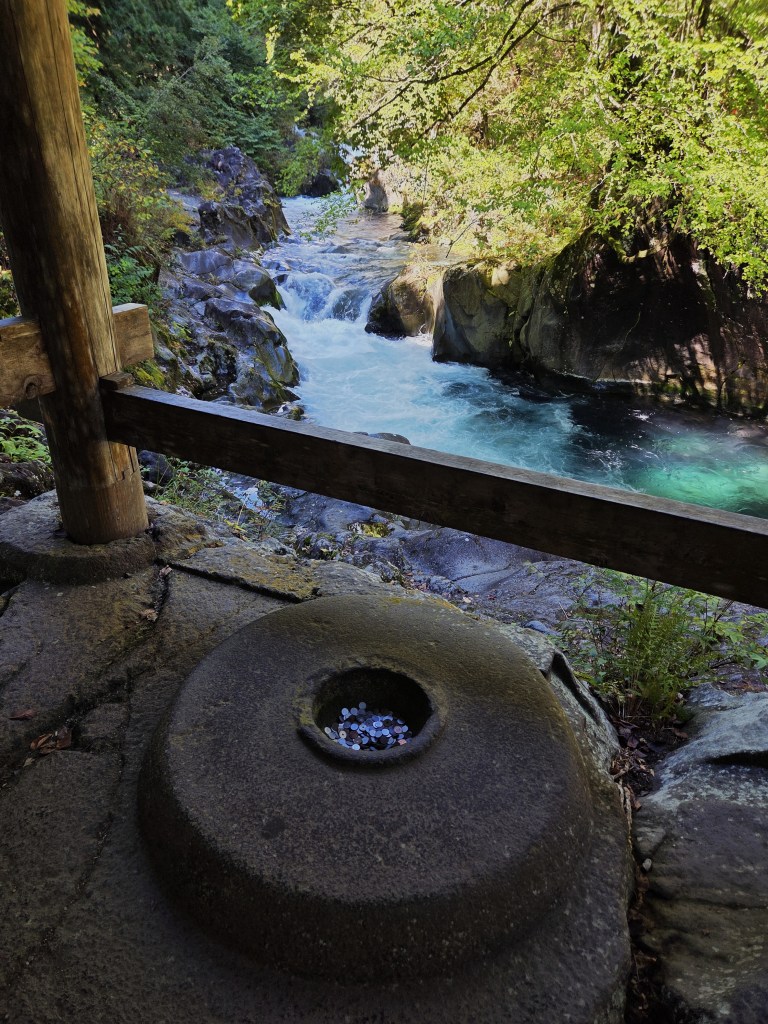
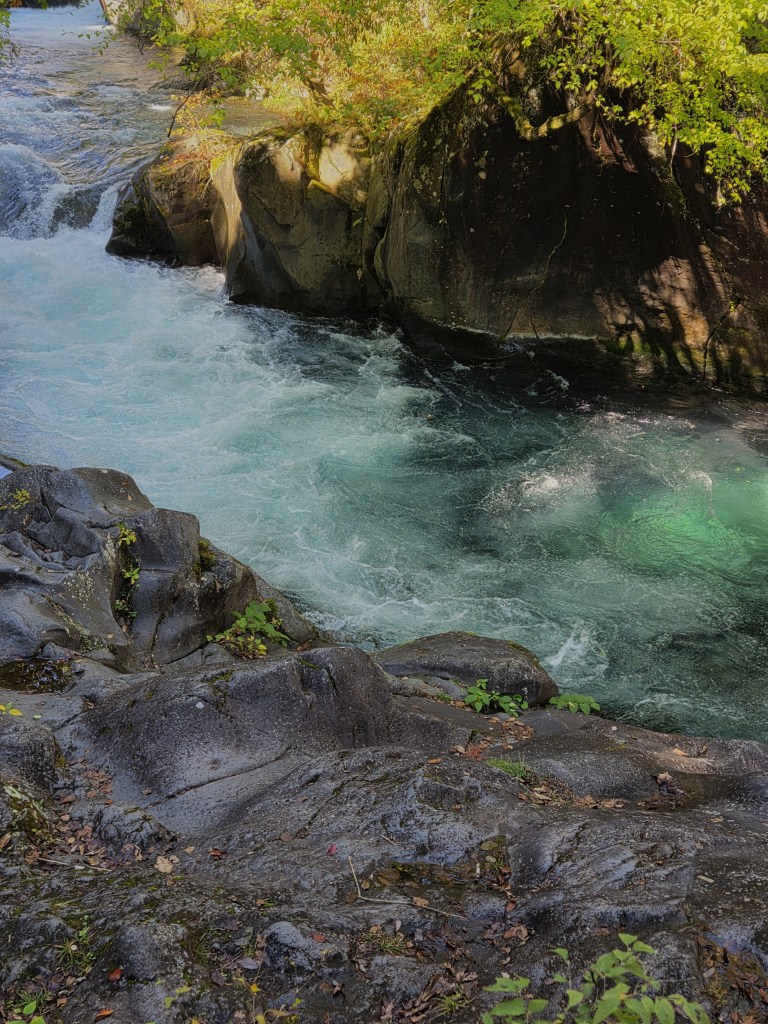
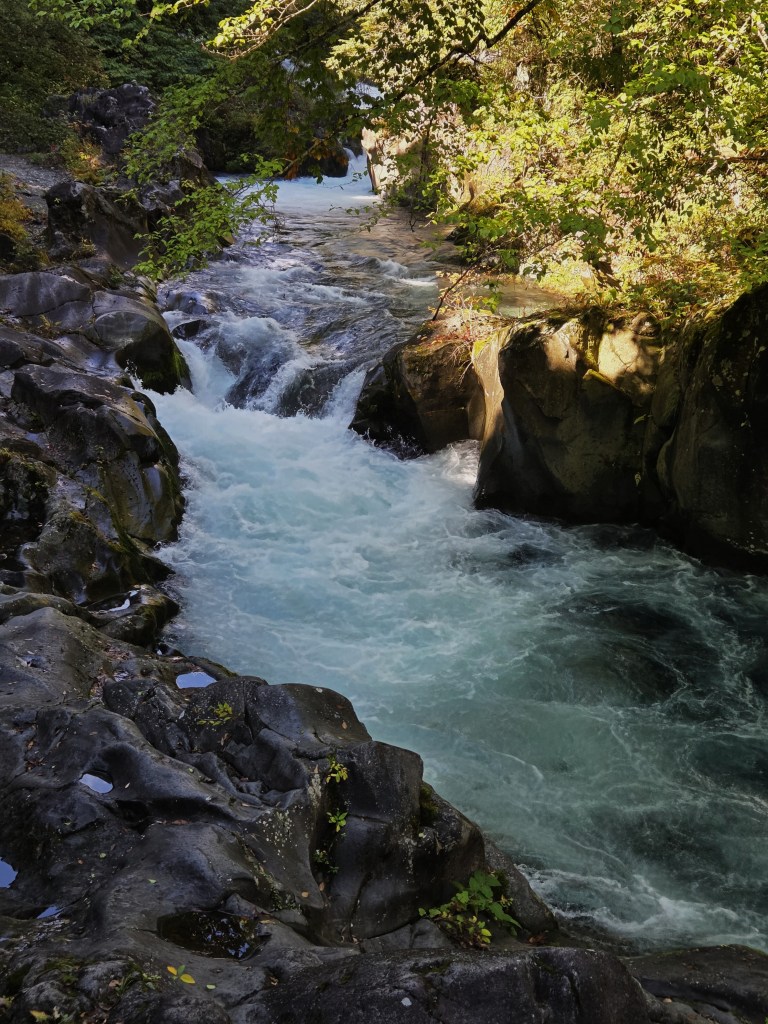
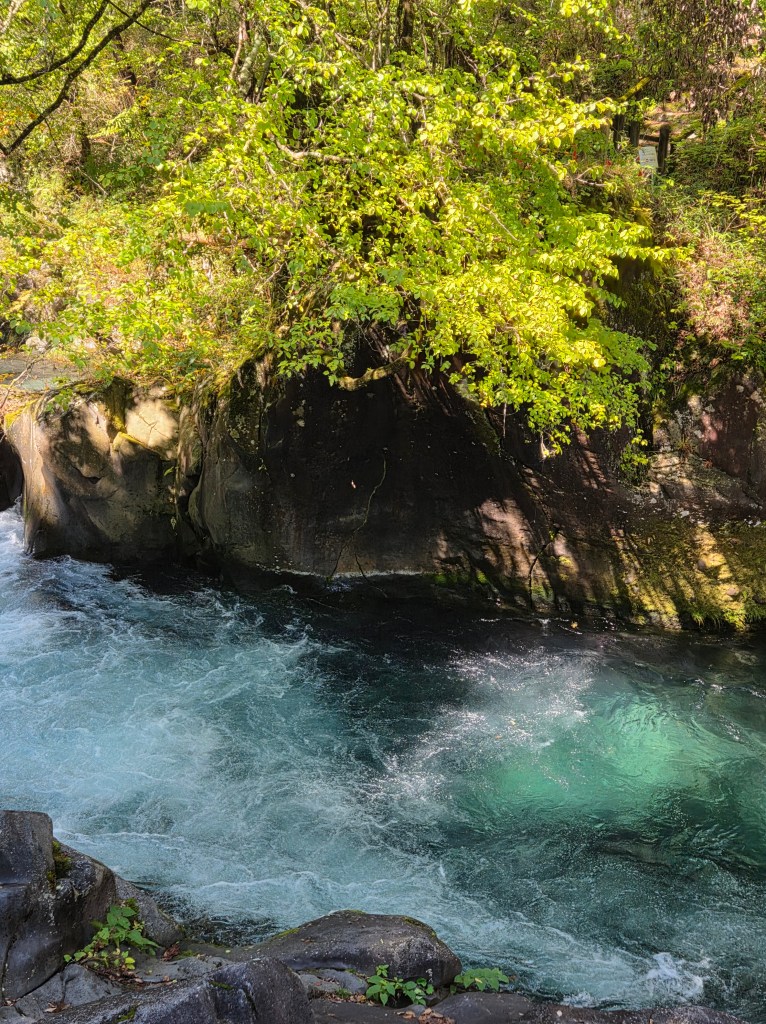

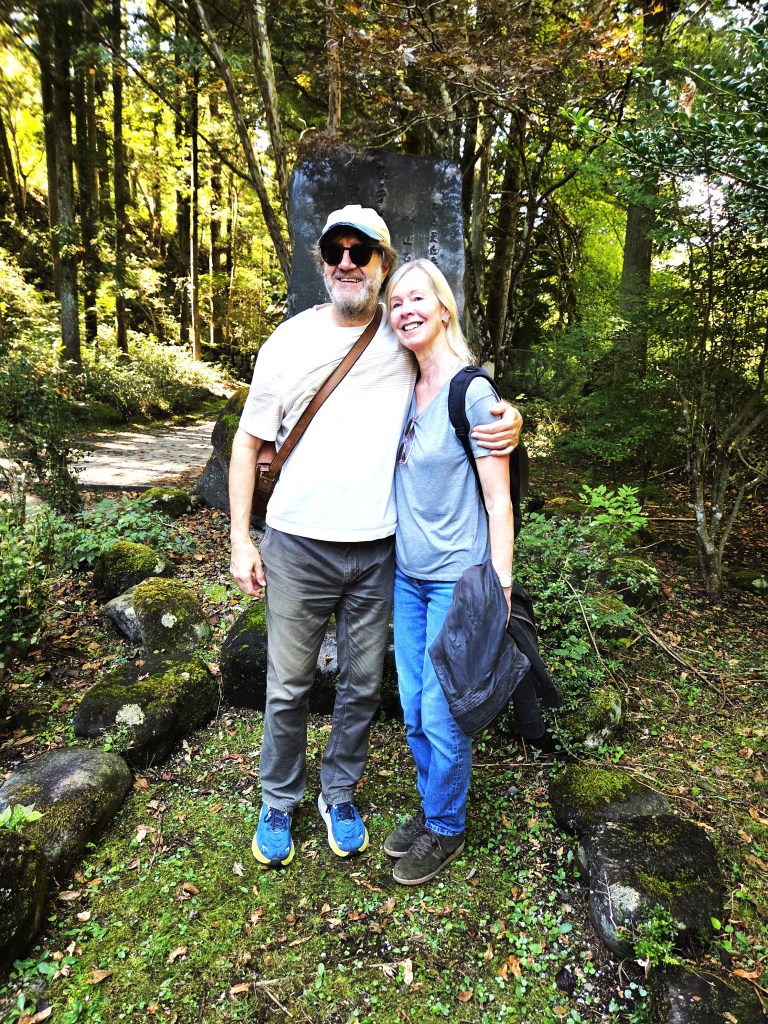
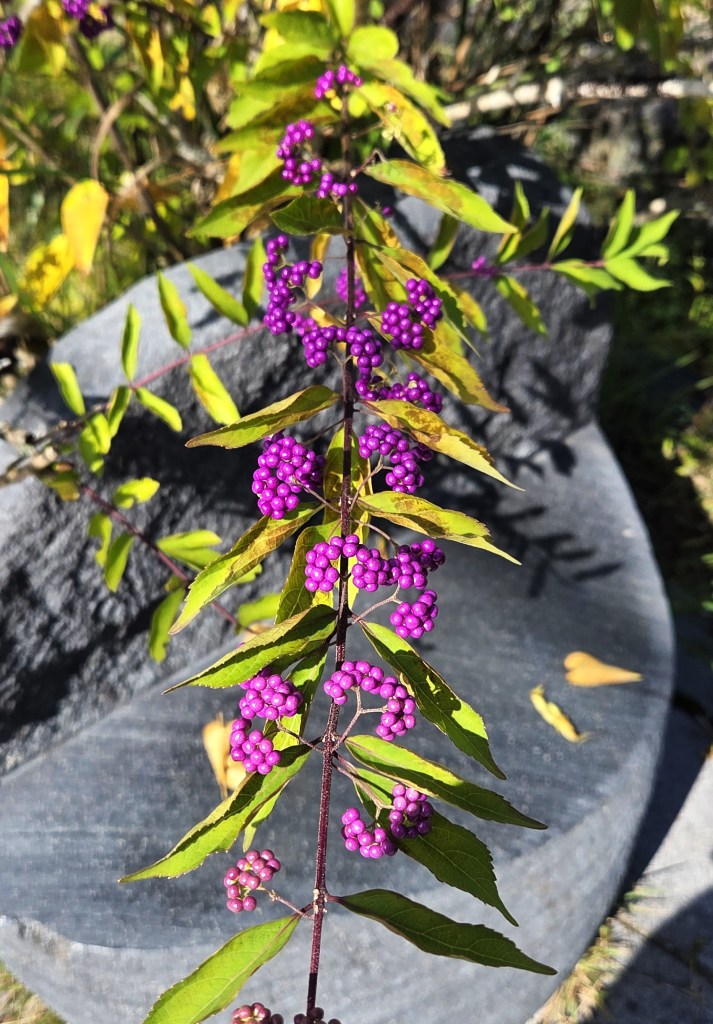
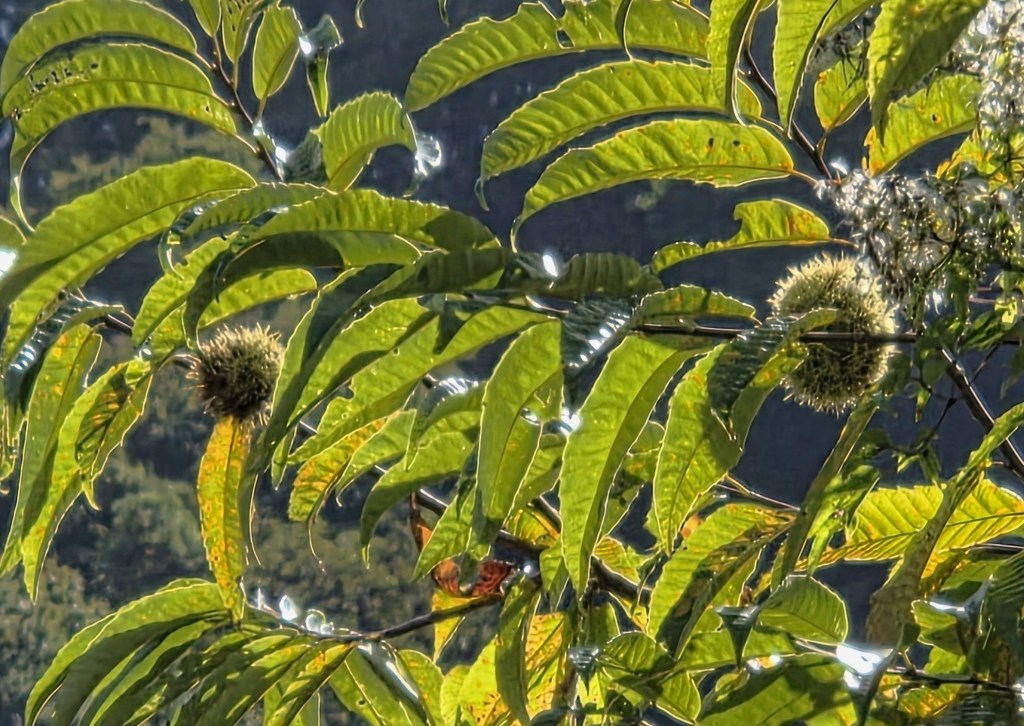
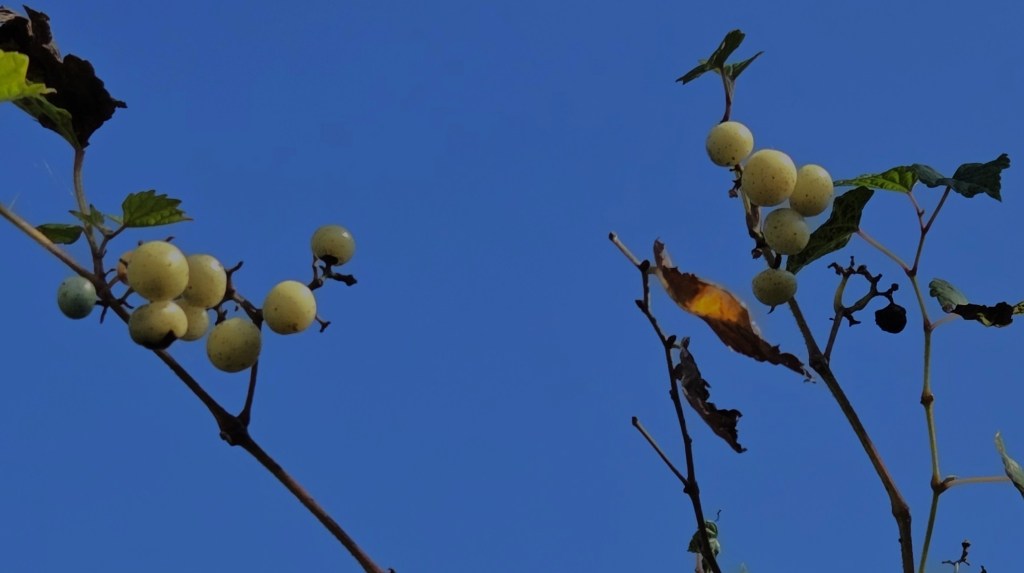
October 7
After another wonderful breakfast at our ryokan, we were driven into Hiraizumi to catch the train to Ichinoseki. From there we rode the Shinkansen to Utsunomiya and then one more train to Nikko.
The four and a half hour journey was uneventful. We have gotten pretty used to buying train tickets and finding where to catch the trains. The trains run exactly on schedule here. Every train we have been on has departed at the exact time as listed on the schedule.
We arrived in Nikko early afternoon. It is a little more of a tourist town than I expected. A lot of people walking along the main street that was lined with shops and restaurants. More non-Japanese people than we have seen when in the other locations we have spent time in.
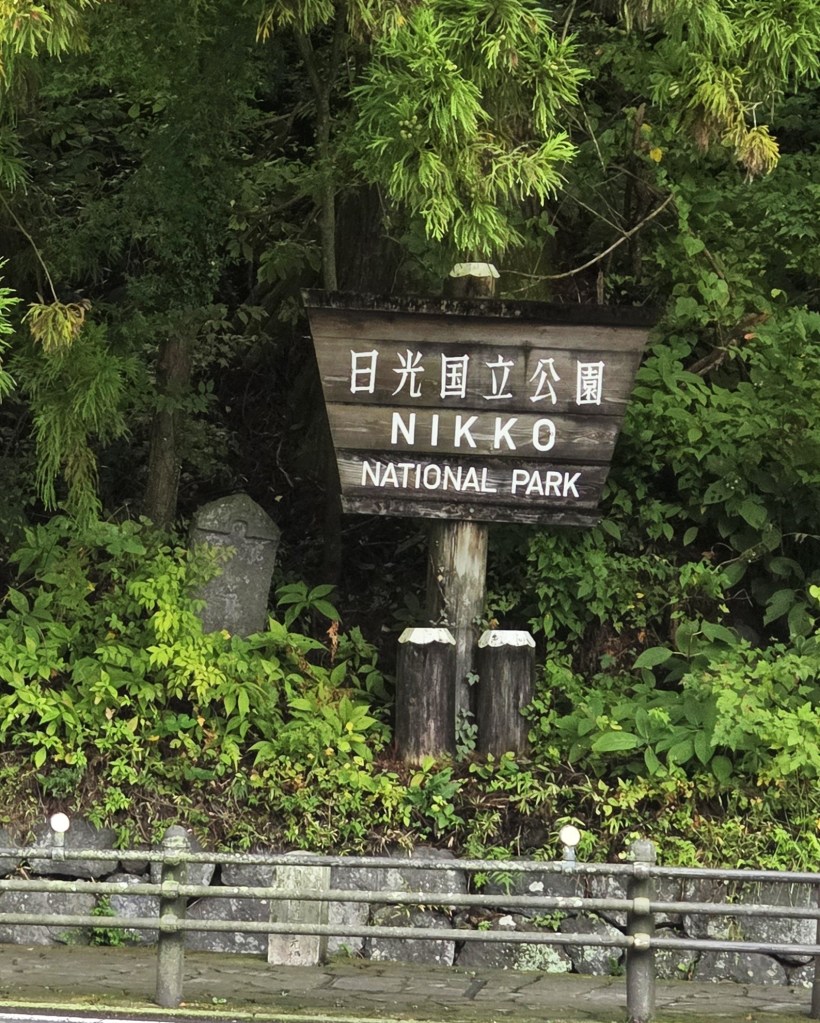
Nikko is set in the mountains and has been an attraction for visitors for a long time. There are many Shinto and Buddhist shrines here. UNESCO has listed Nikko as a world heritage site.
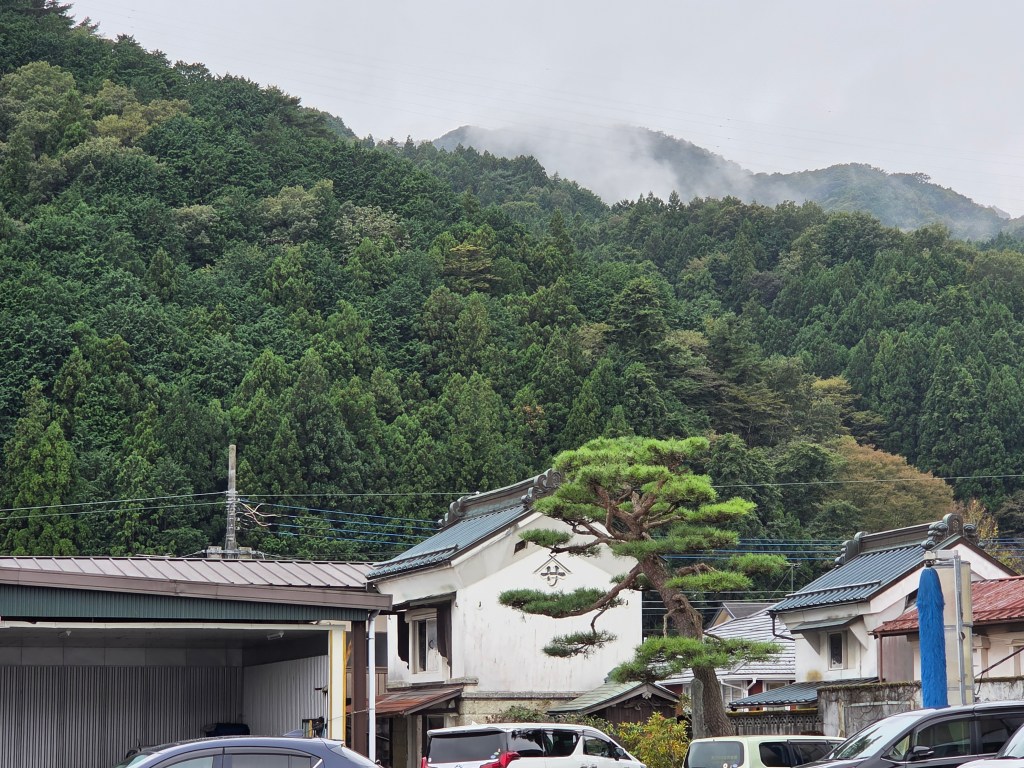
The mountains and hills surround the city. Low clouds misted over some of them as we slowly walked with our luggage for an hour to the ryokan we had booked for three nights. We chose to walk instead of catching a bus or taxi so we could get a feel for the area.
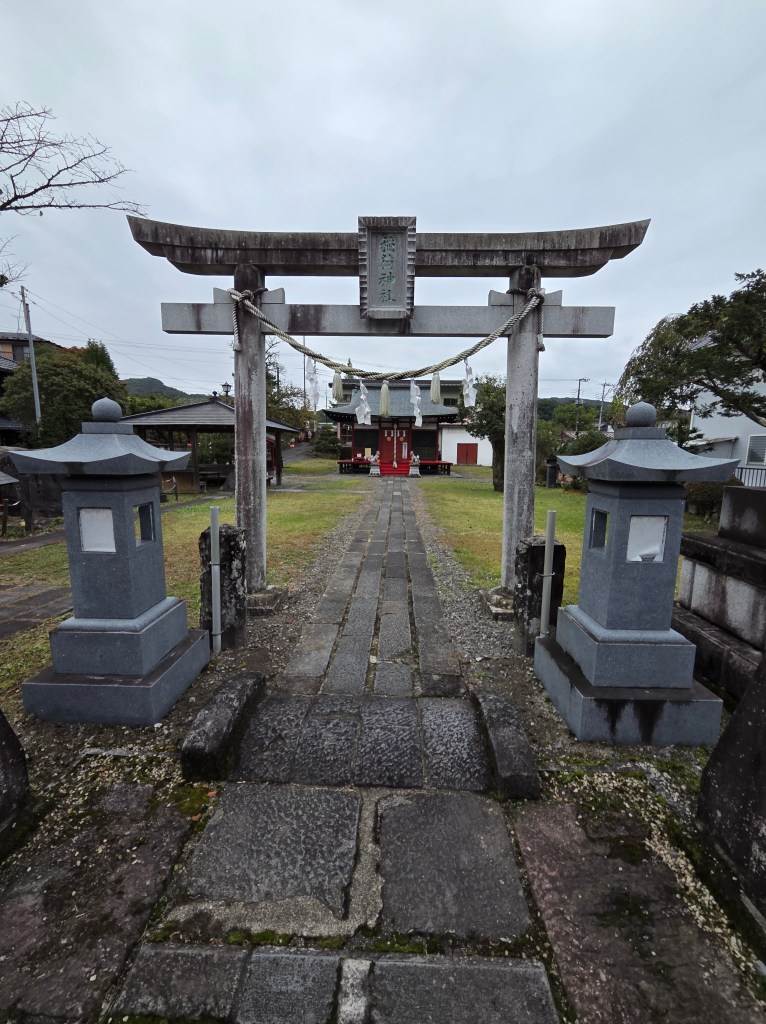
Besides tourist businesses, we passed a number of shrines along the way.
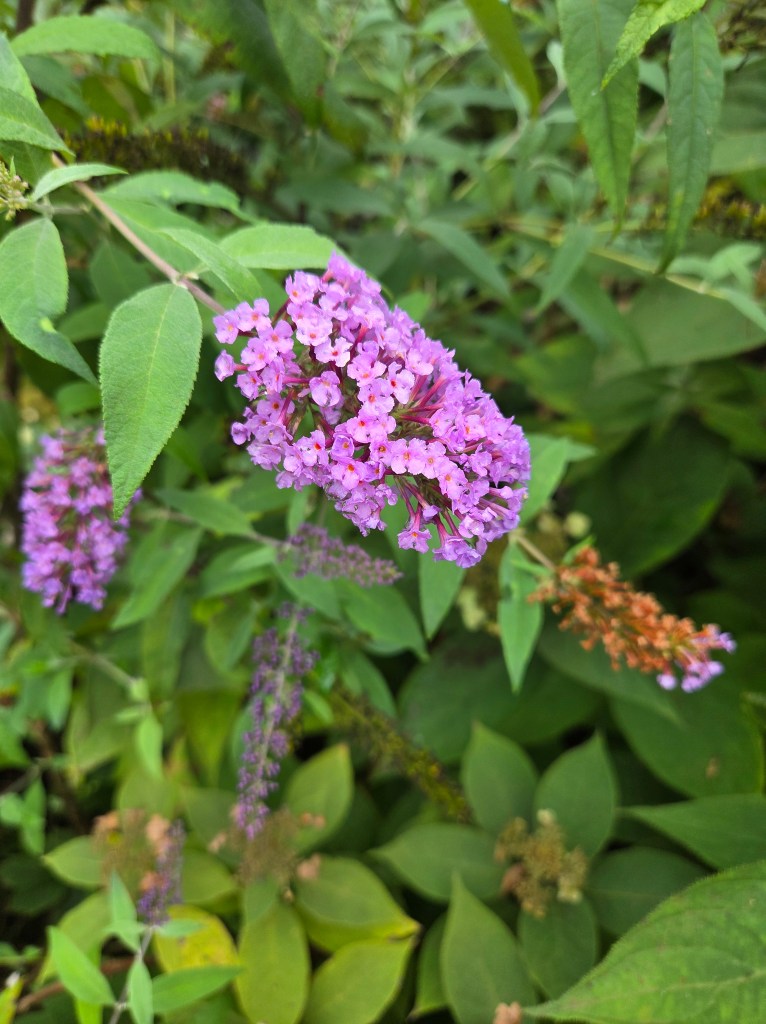
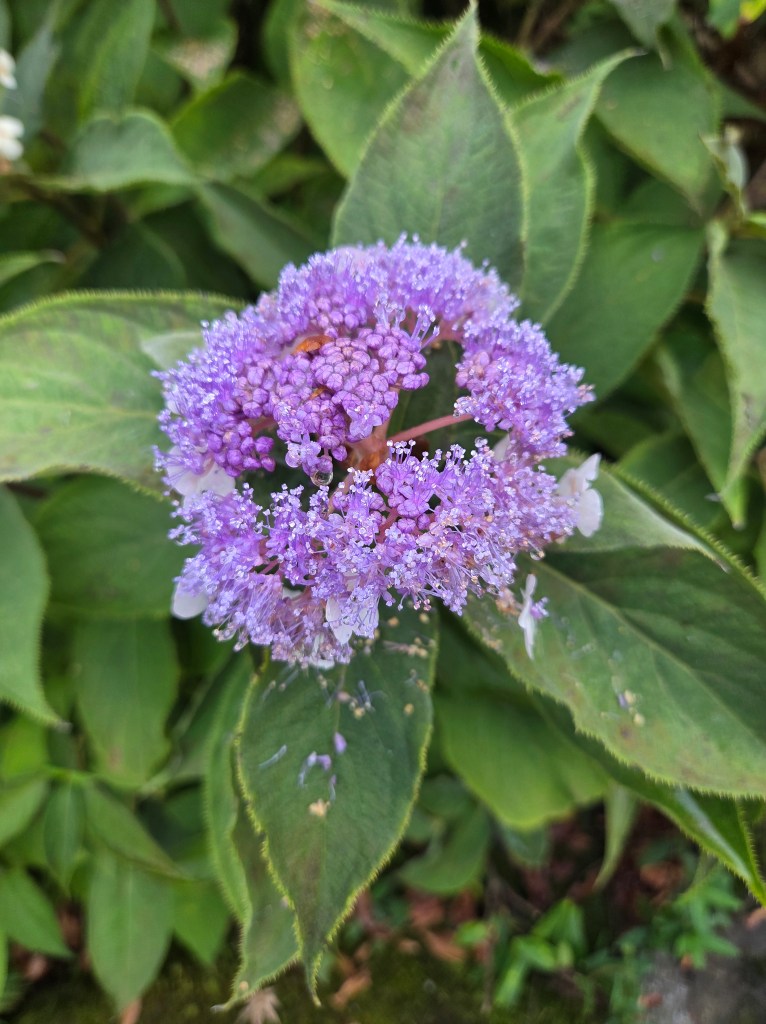
Bart identified a couple of wildflowers we saw, mostly because they are cultivated ones back home that he knew, Butterfly bush and a hydrangea.
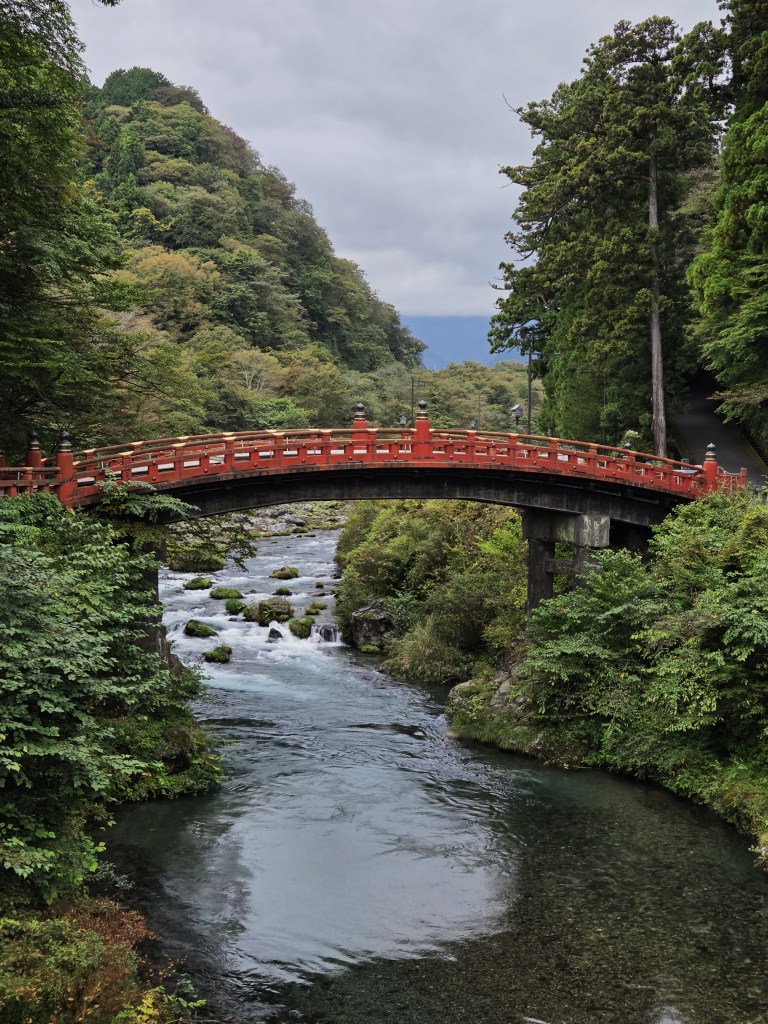
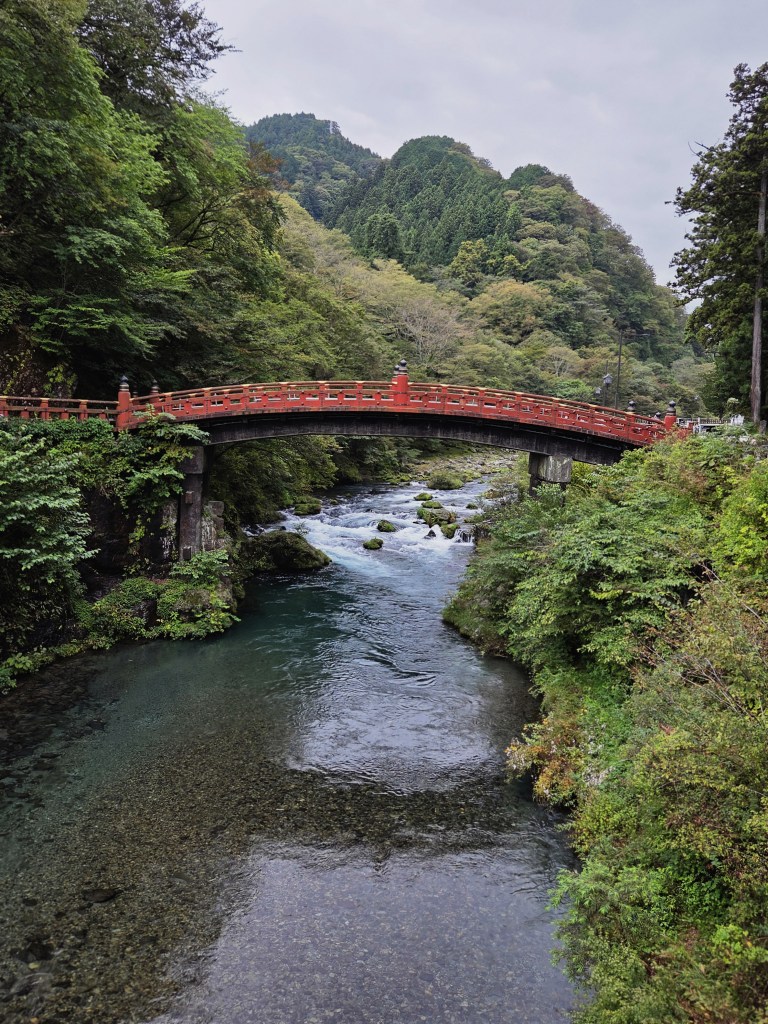
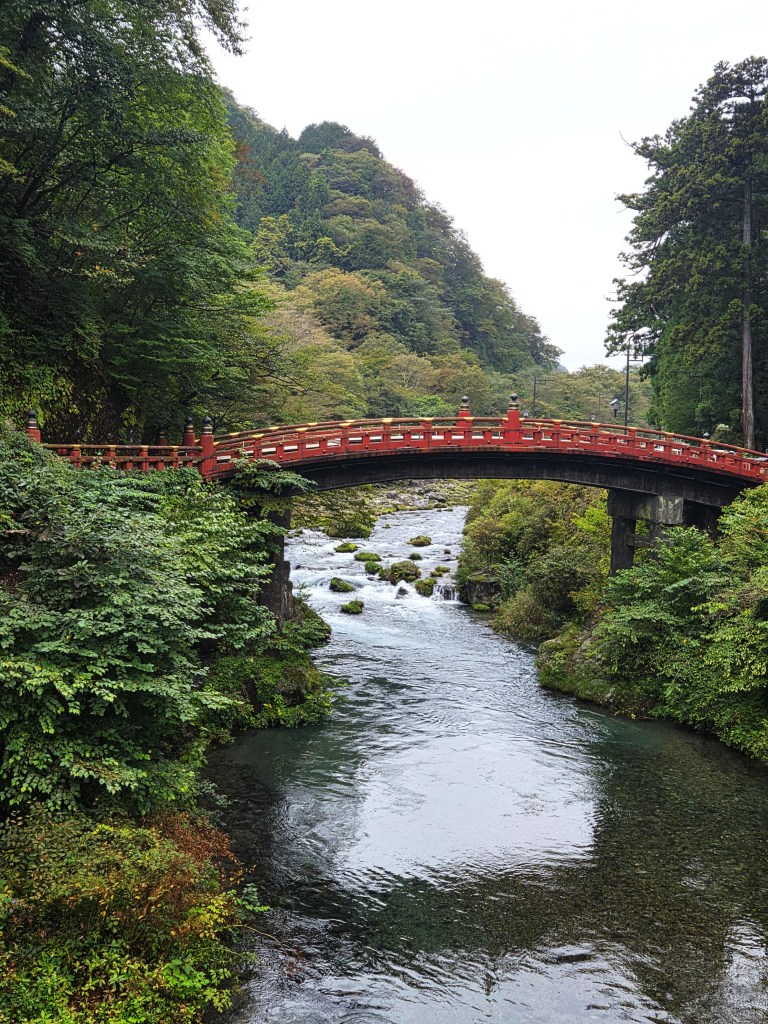
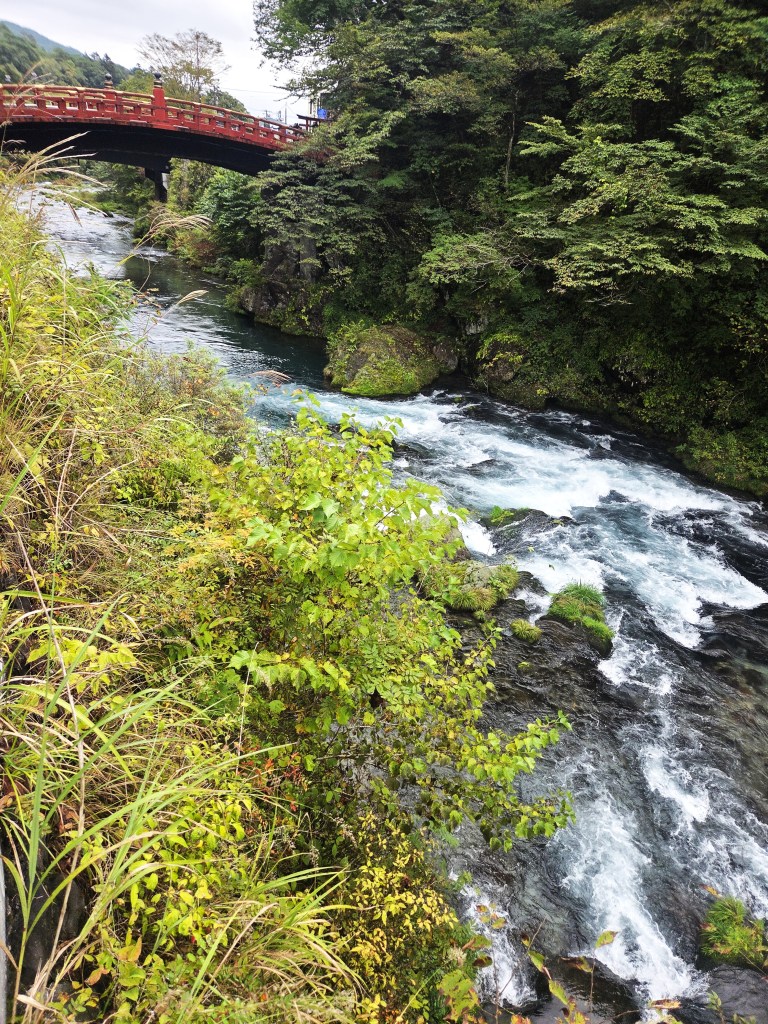
We also passed by Shinkyo Bridge, built in 1636 and part of Futarasan Shrine. We will look into that more during our stay here.
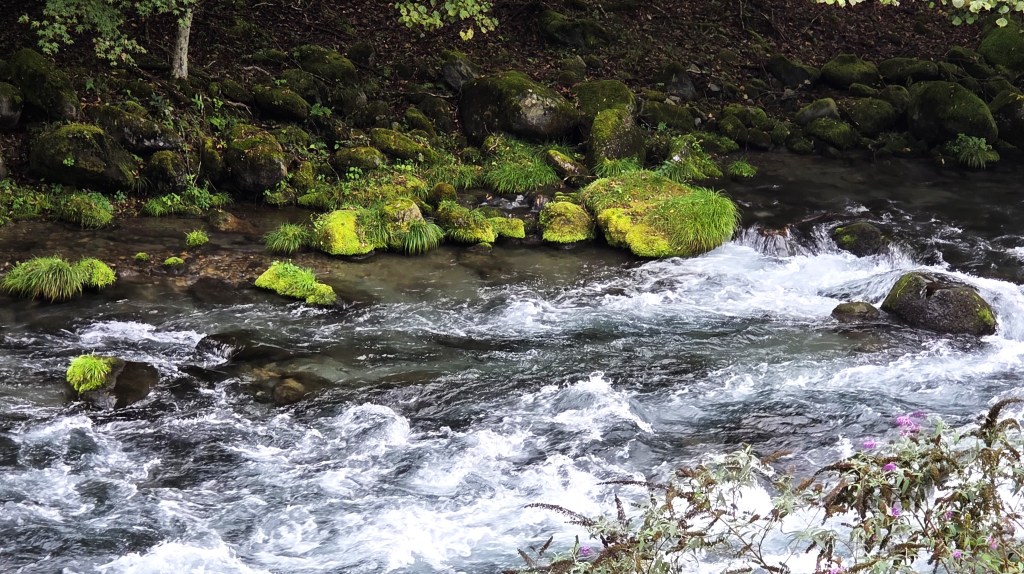
The bridge crosses over the Daiya River, a swift flowing, rocky mountain river whose water looks clear and inviting.
After settling in at the ryokan we took a bus into town. Our first bus ride in Japan. The center of town was a totally different experience at 6:00 pm as opposed to 2:00 pm. It seemed mostly deserted. There were some people around, but what a contrast to the busyness of a few hours earlier!
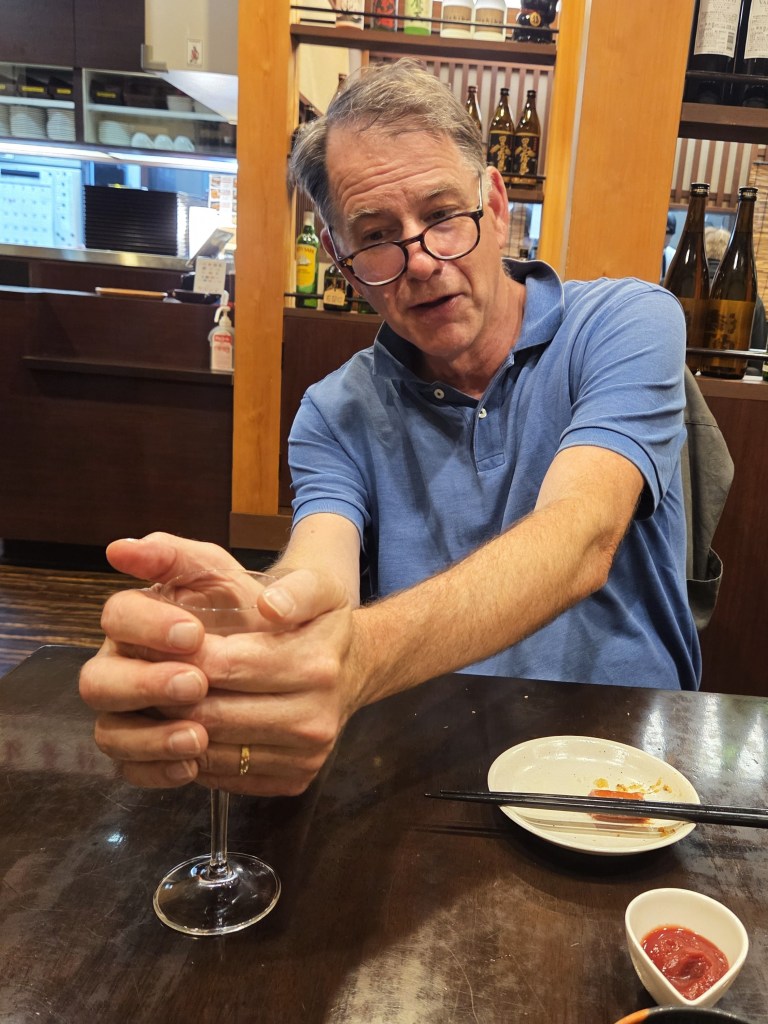
We had a good meal at a small place, though Bart’s red wine was served cold!
So, two days ahead exploring Nikko then Bart heads back home and I continue on for the next nine days alone.
(Click on thumbnail for larger picture.)
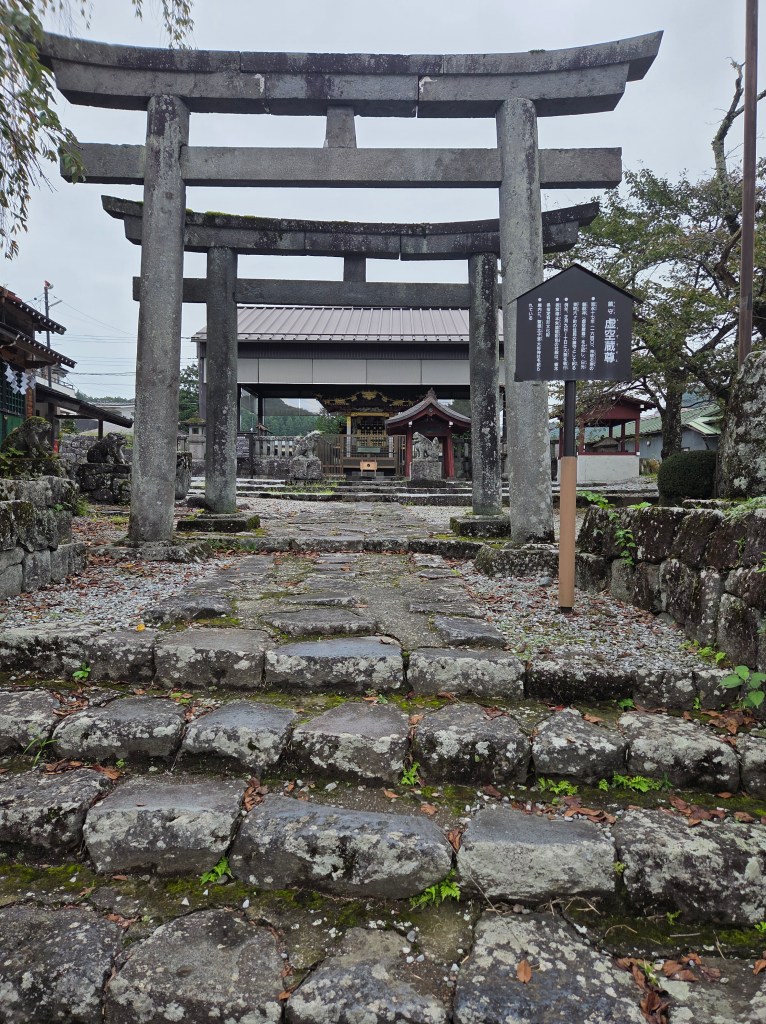
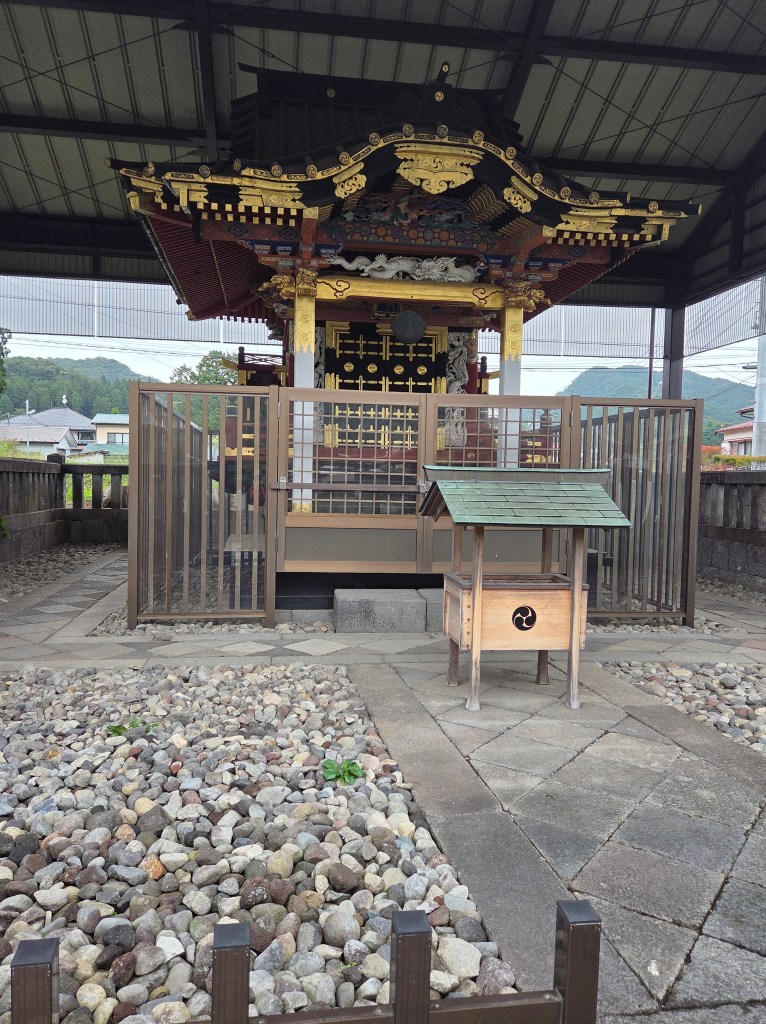
October 6
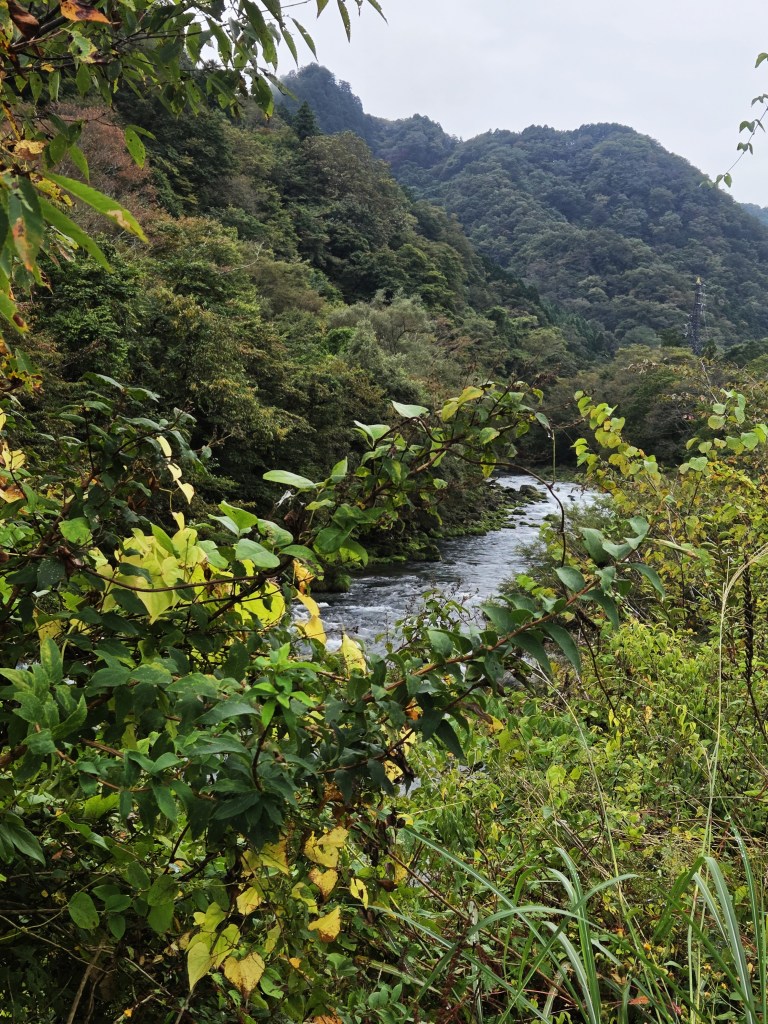
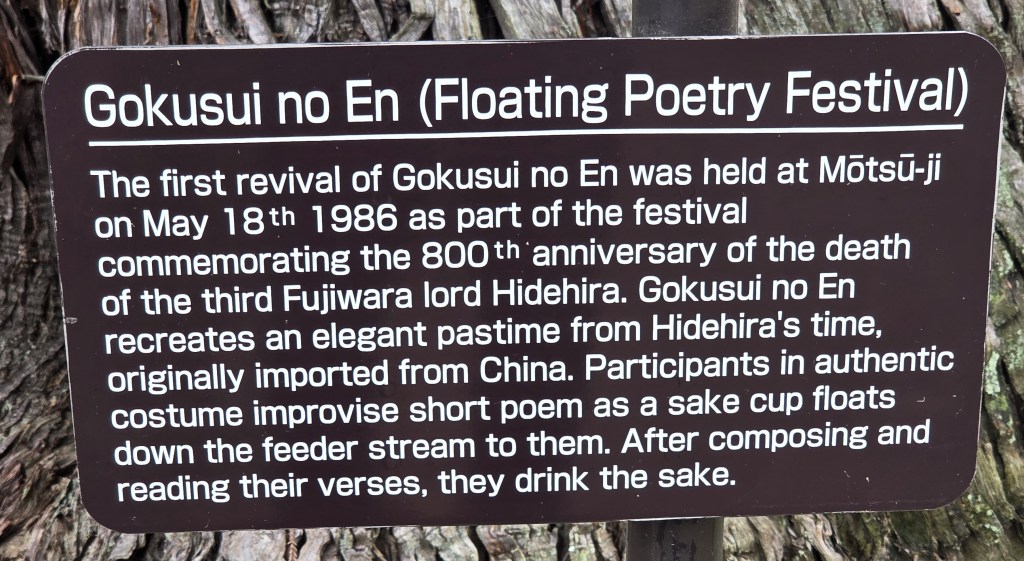
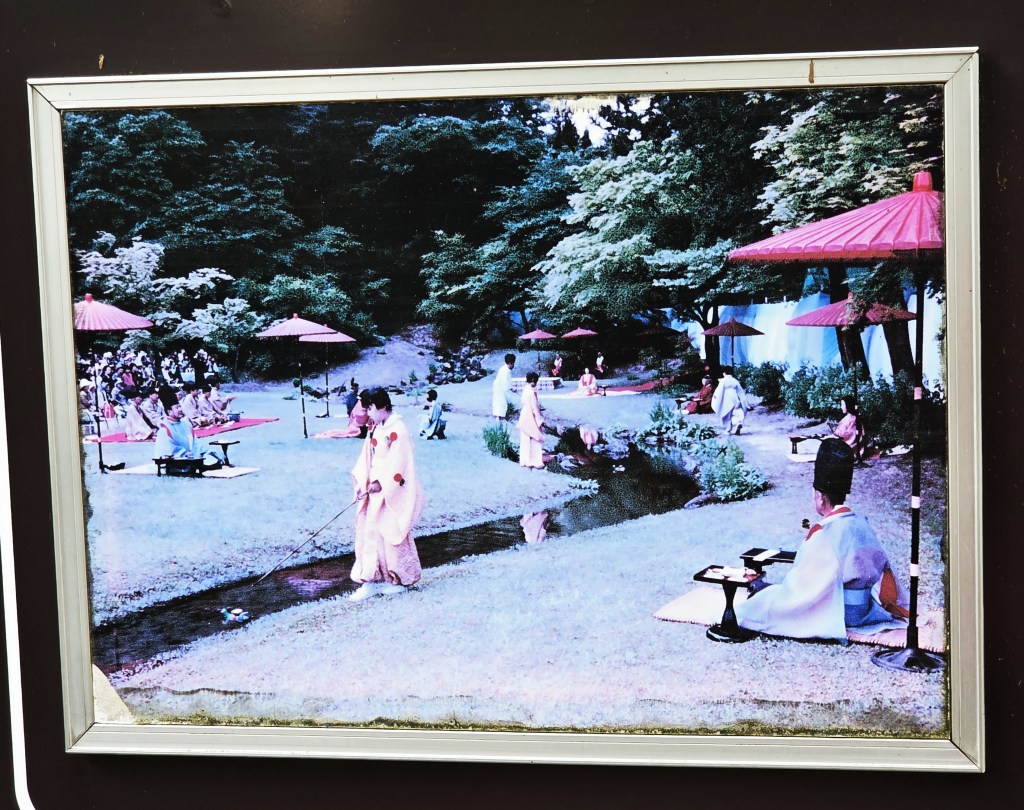
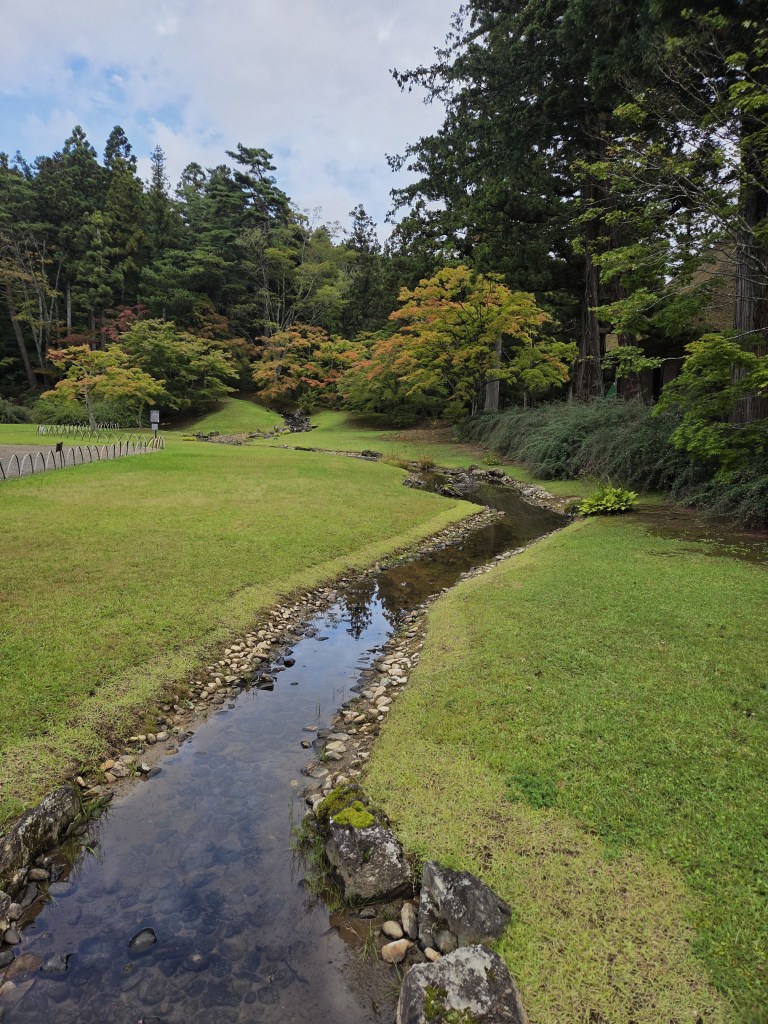
After a wonderful breakfast at our ryokan, we were driven into town and spent the day walking to various sites in Hiraizumi. This was the site of the Northern Fujiwara clan back in the 12th Century. There are many historic sites throughout the town and two famous temples, Chusonji Temple and Motsuji Temple. Hiraizumi is an UNESCO World Heritage site.
Here is a link that is worth exploring about some of these sites:
https://www.town.hiraizumi.iwate.jp/heritage/en/asset/index.html
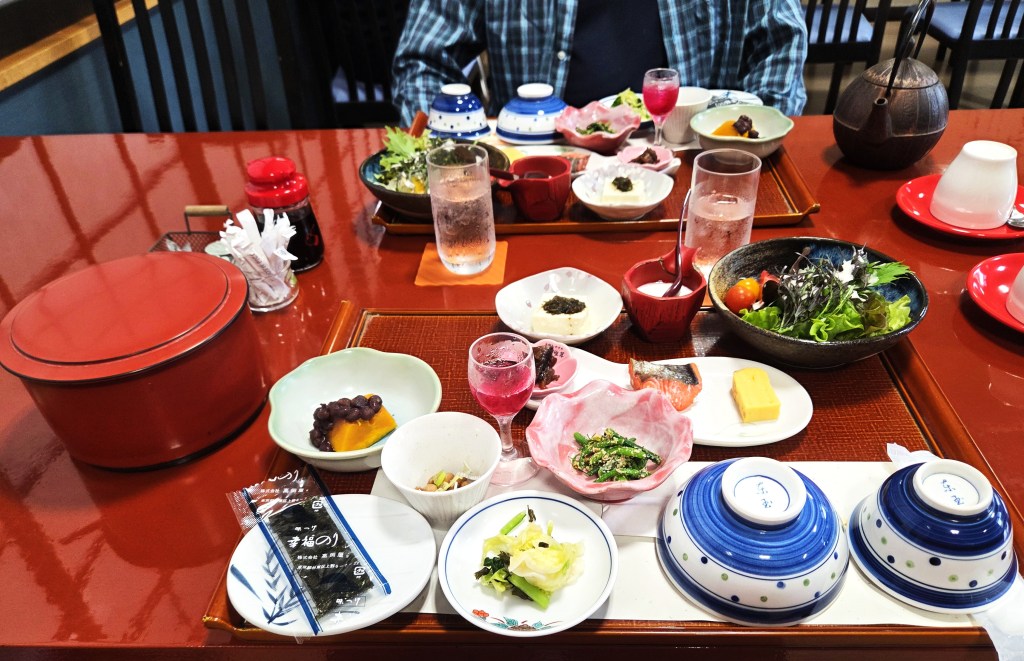
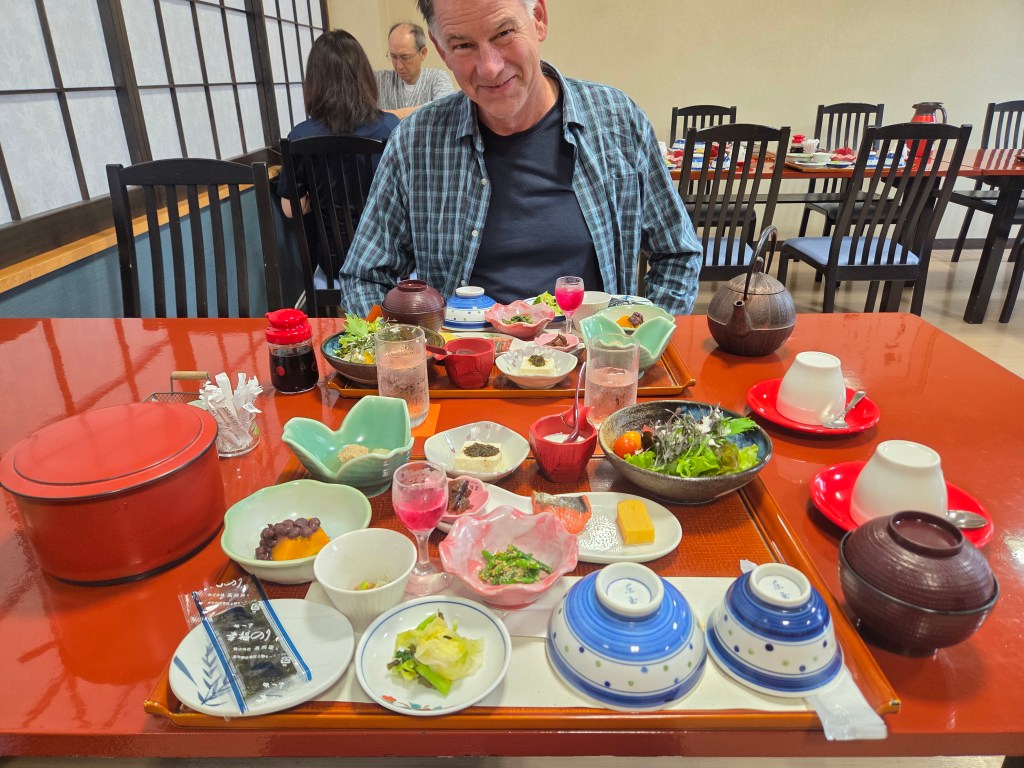
As I’m writing this it is Tuesday morning. Breakfast at the ryokan is being served shortly and then we are moving on to Nikko, so I don’t have much time for putting down too many words. The pictures below will show a lot of what we experienced.
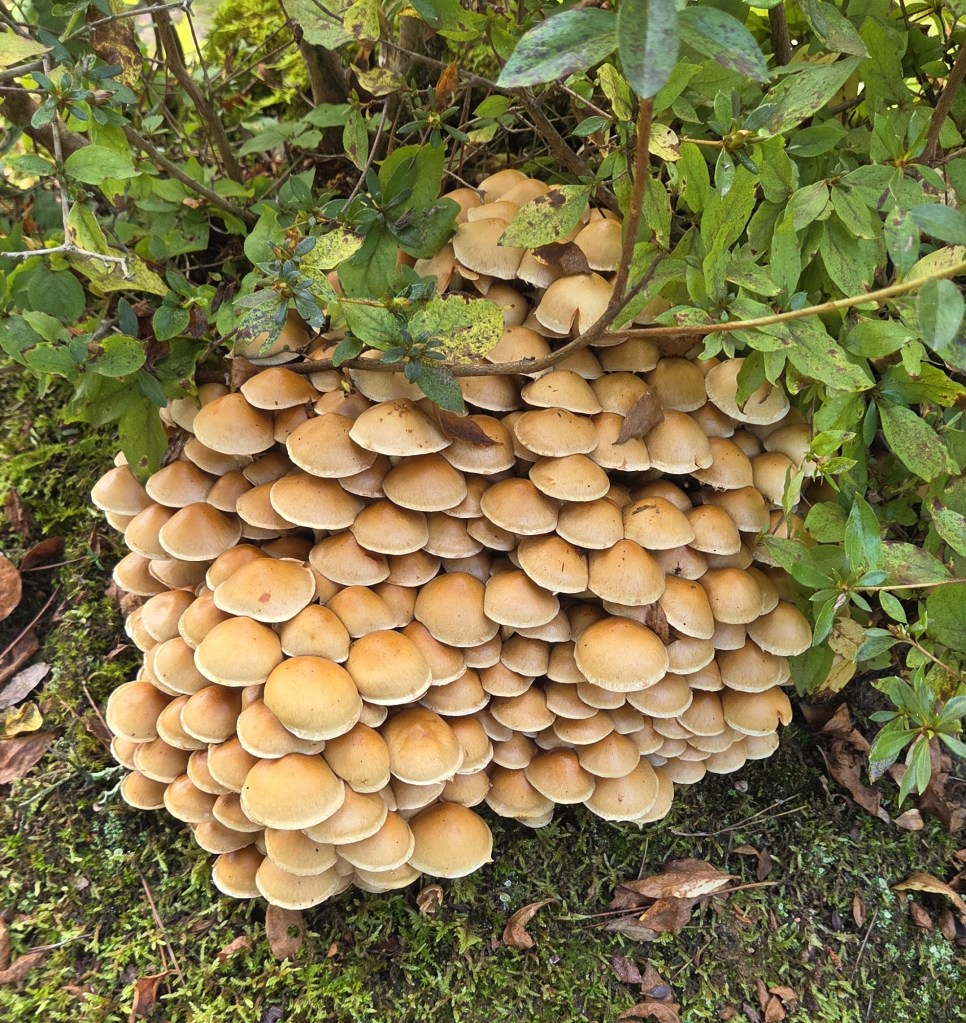
A few quick notes having to do with the pics.
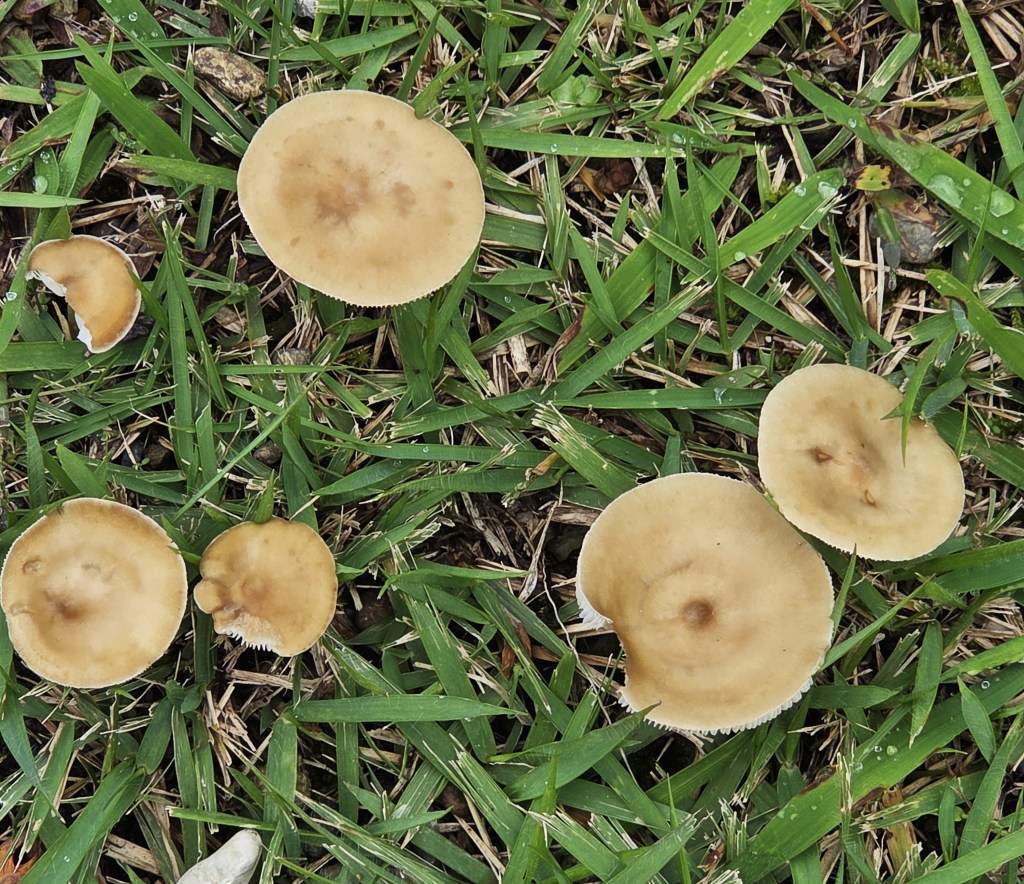
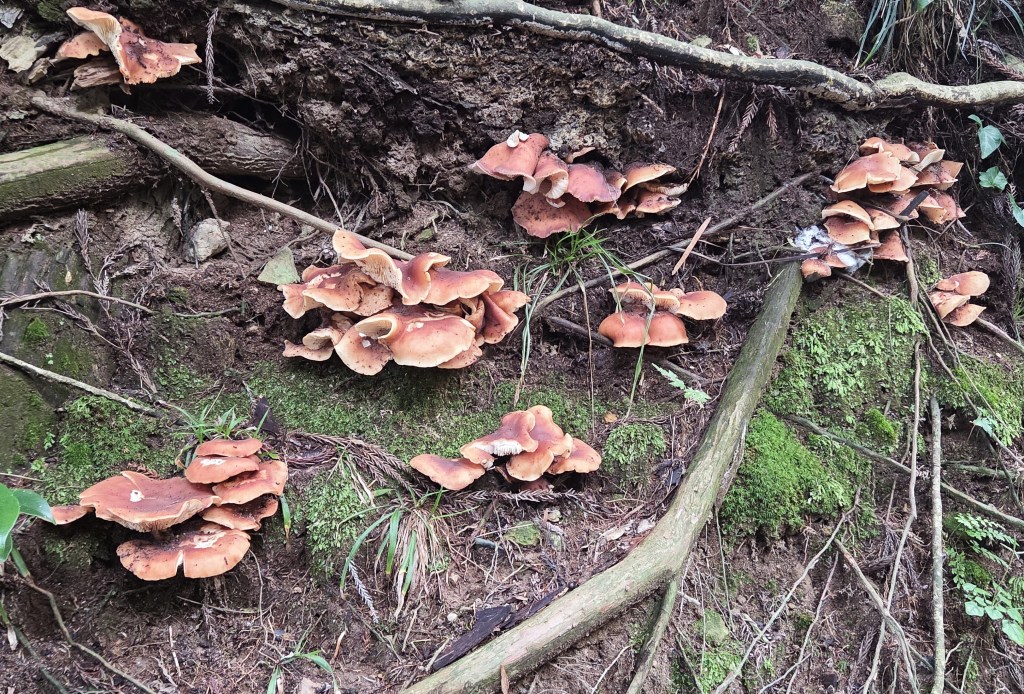
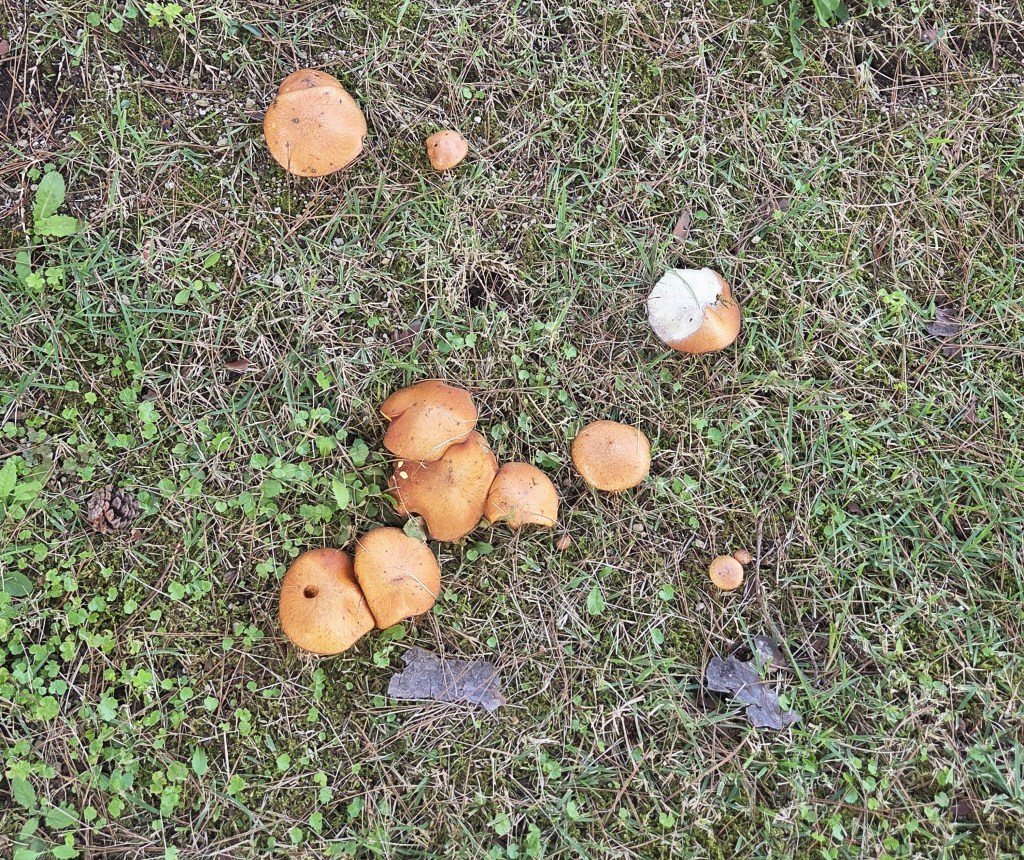
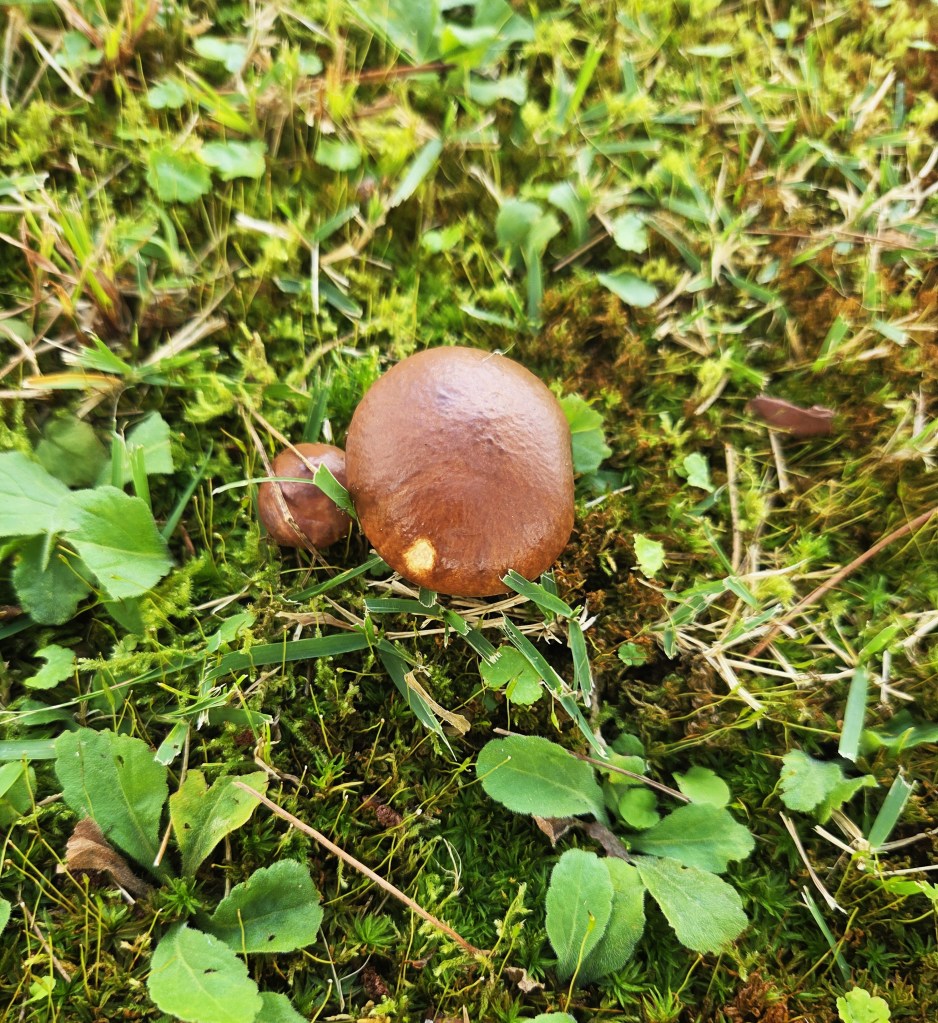
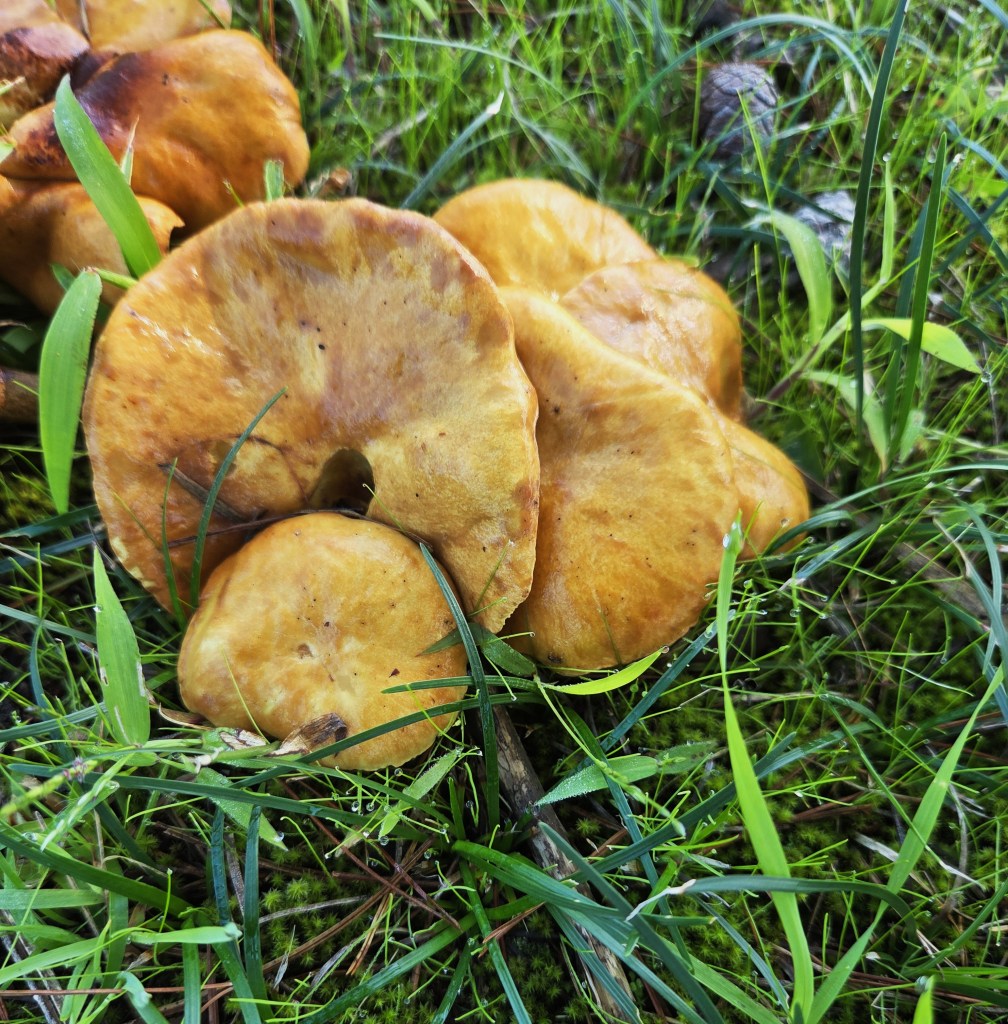
Mushrooms – nice to see them here as back home it was such a dry summer there were very few mushrooms around.
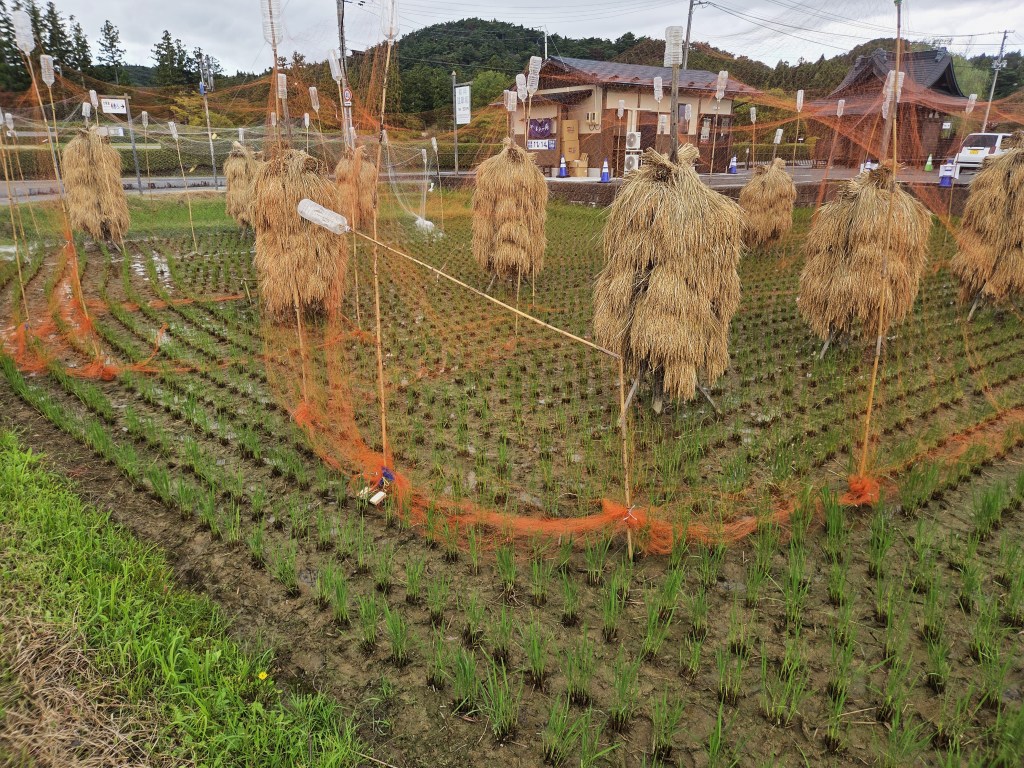
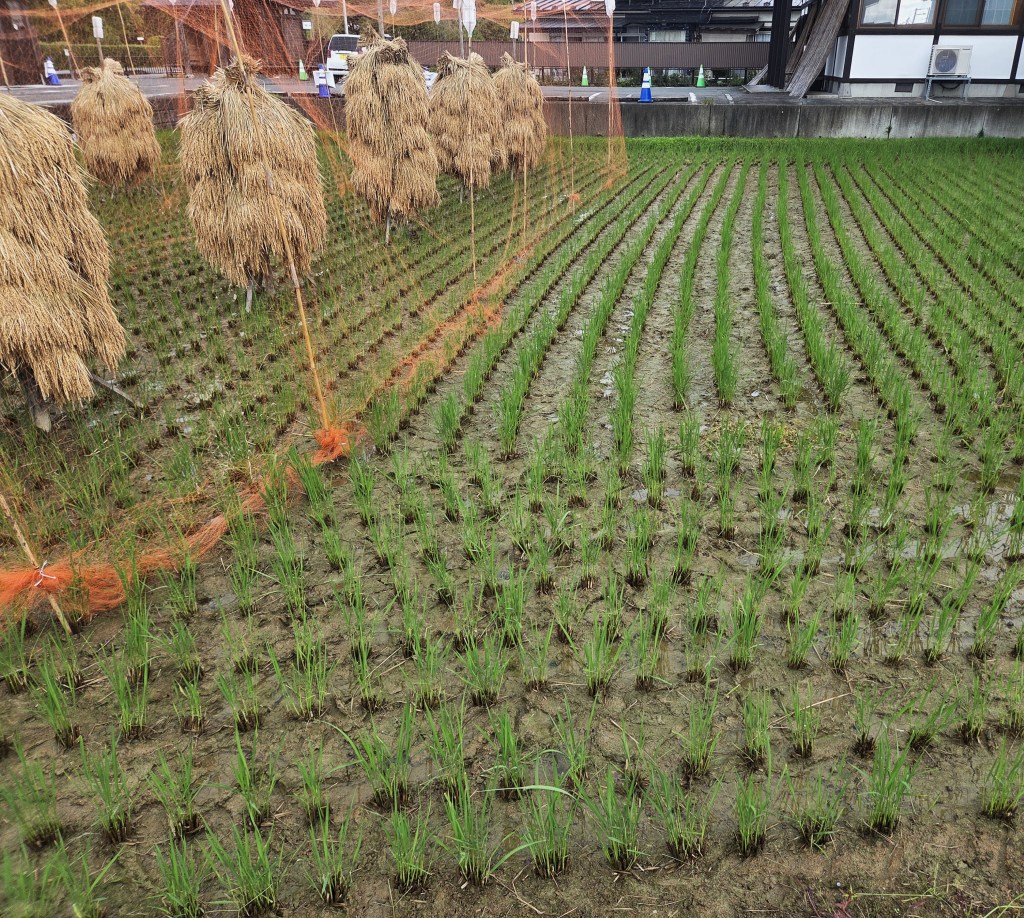
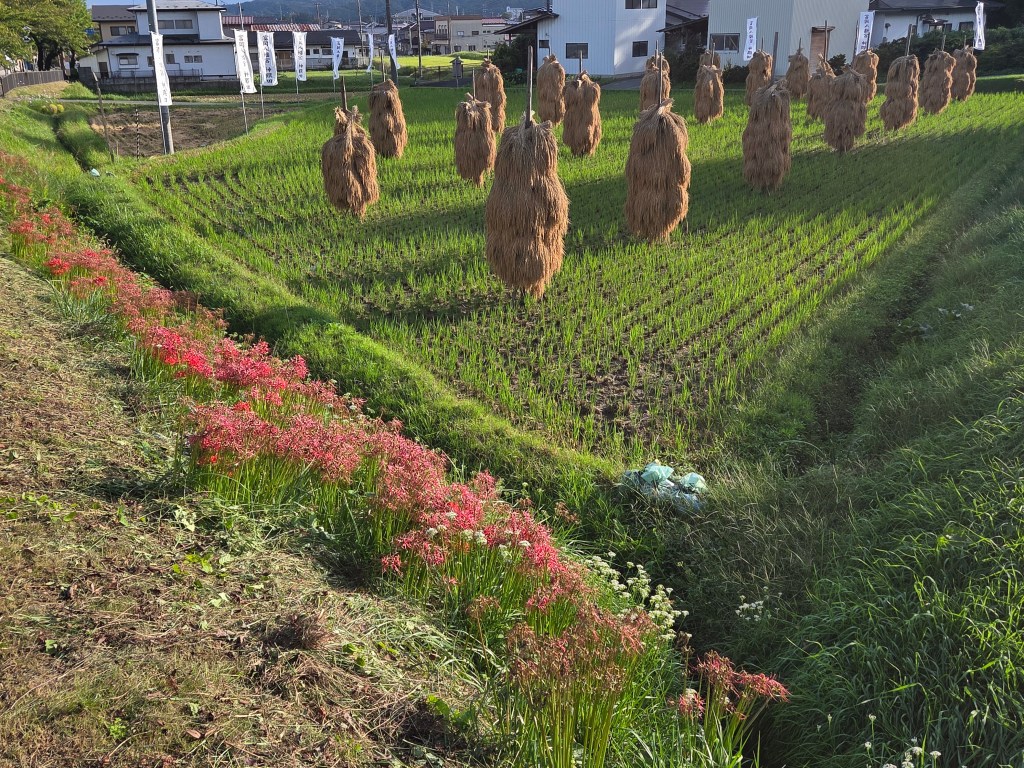
The brown hanging bundles are rice drying.
Nice to see some autumnal color in the leaves.
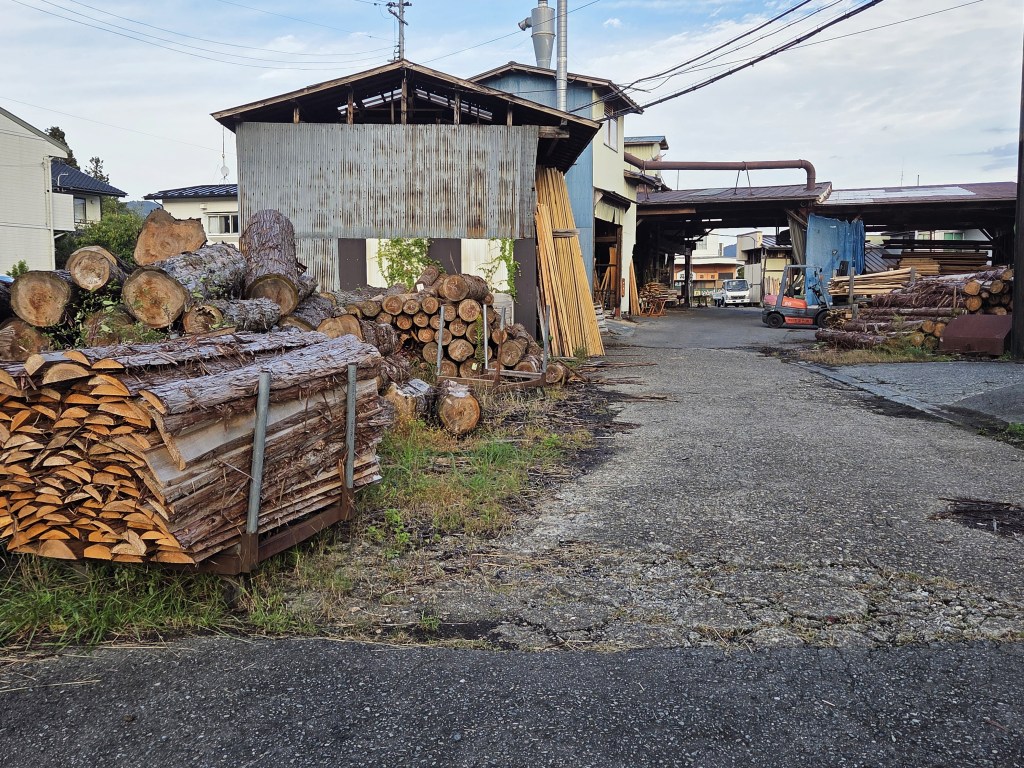
Firewood stack reminded me of home. I’ll need to get working on that after returning.
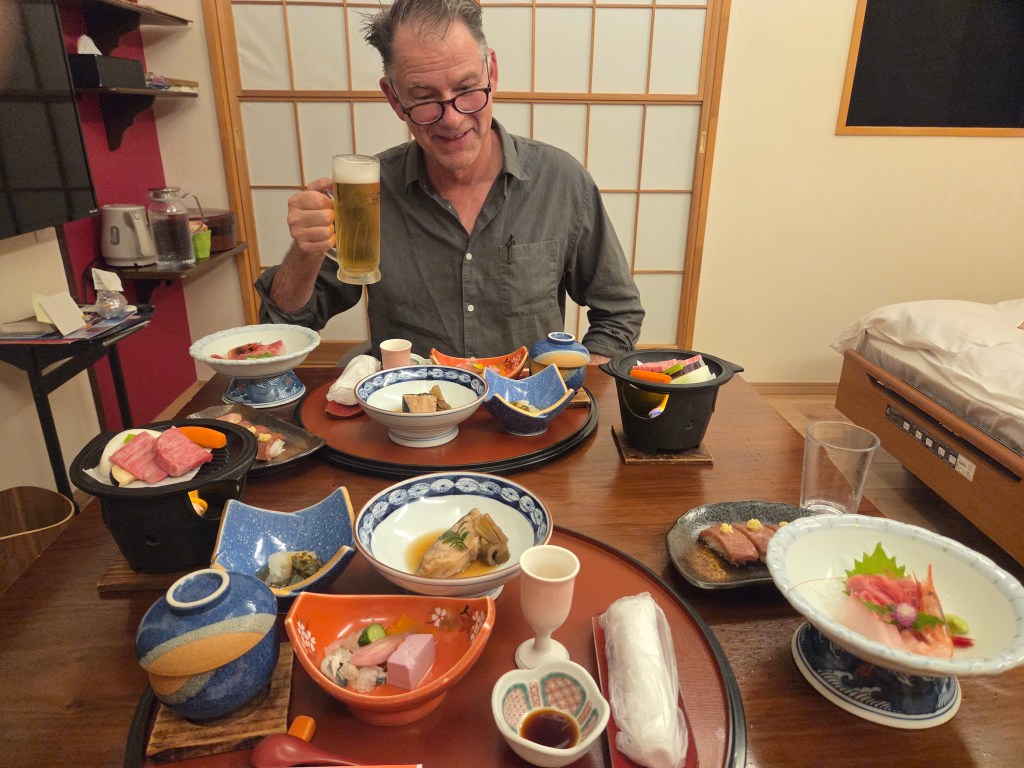
The three women are three generations working at their restaurant: Katuko, Yakiko, Haruka – Grandmother, Mother, Daughter.
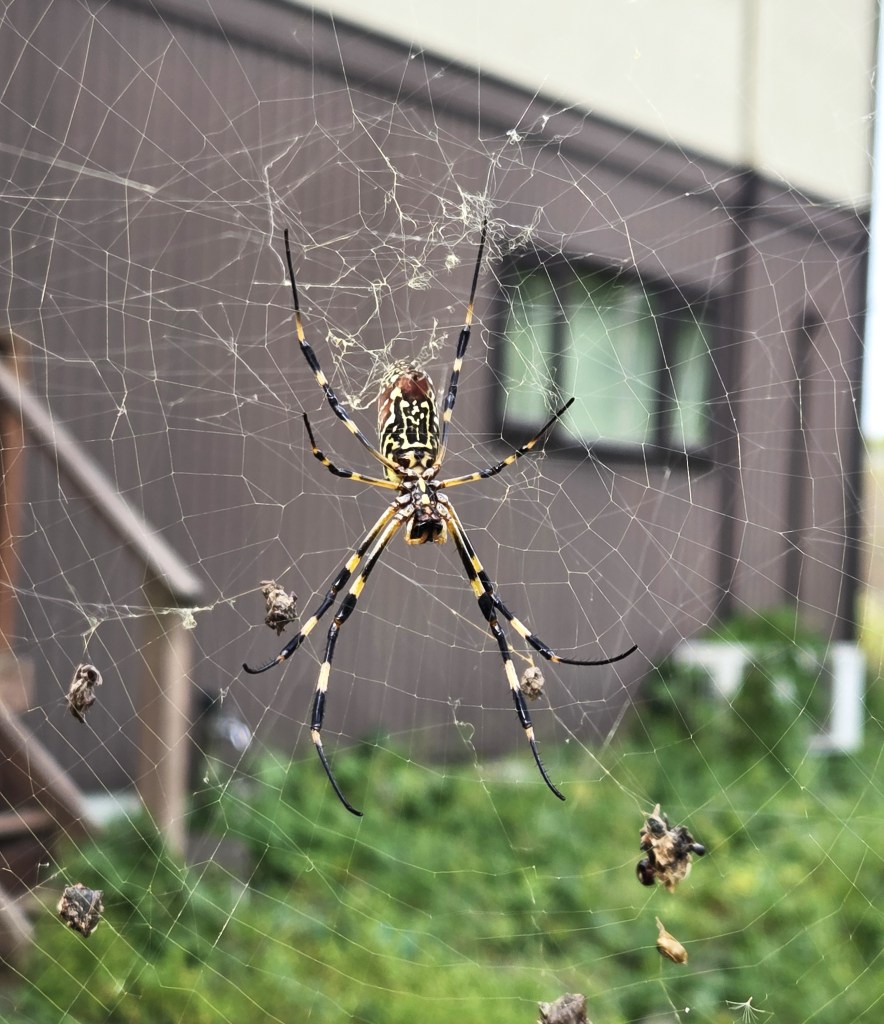
The spider is a Joro spider. They have been common and we’ve seen them in every location we’ve been.
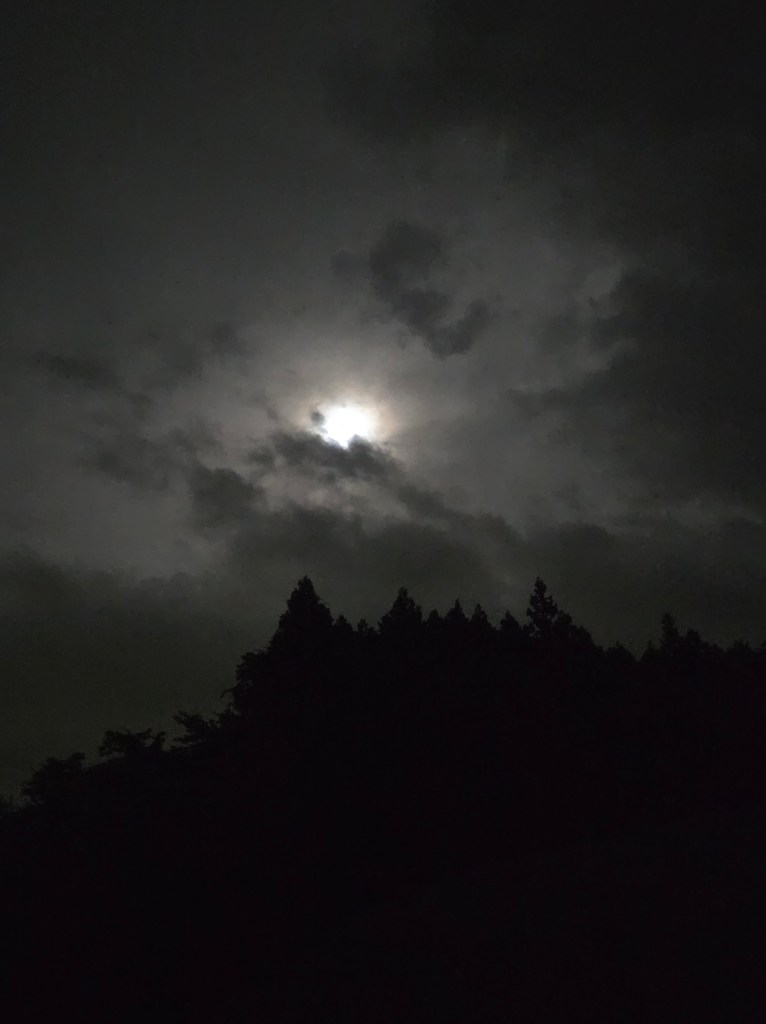
Full moon last night. After another amazing dinner we walked out to cloudy skies, but got a brief glimpse of the moon through some thin clouds.
Now, on to Nikko for three days, our last stop together. Then Bart heads home and I continue on for another nine days.
(Click on thumbnail for larger picture.)
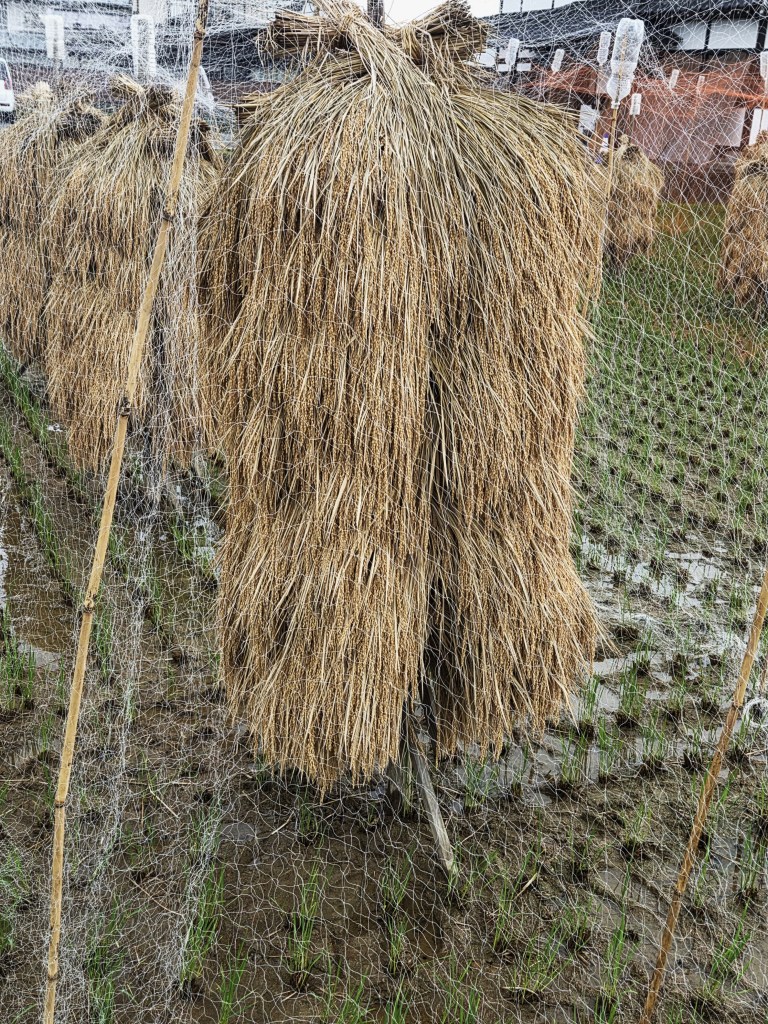
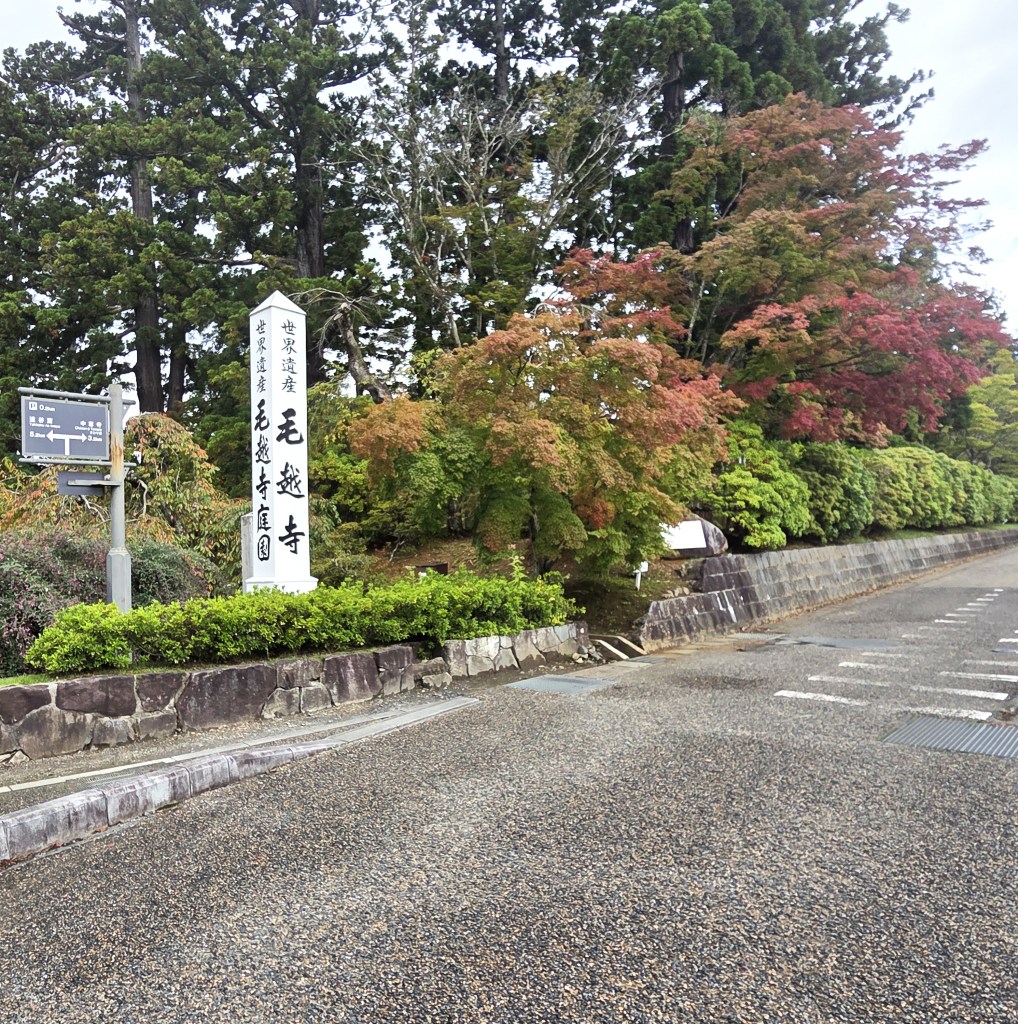
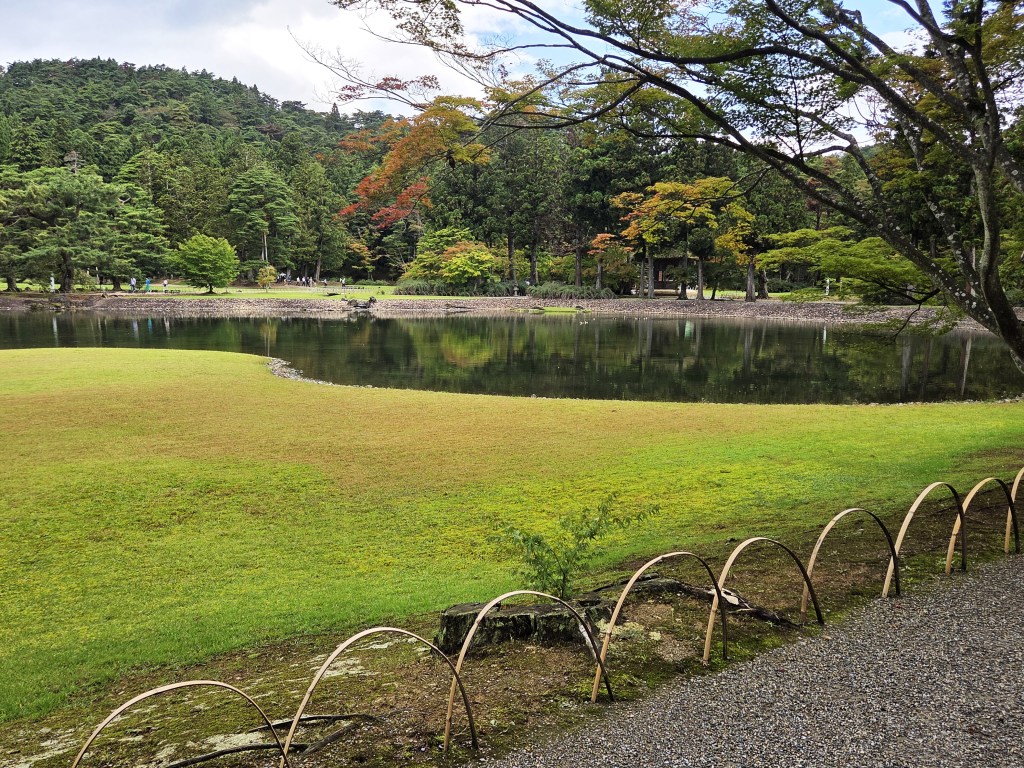
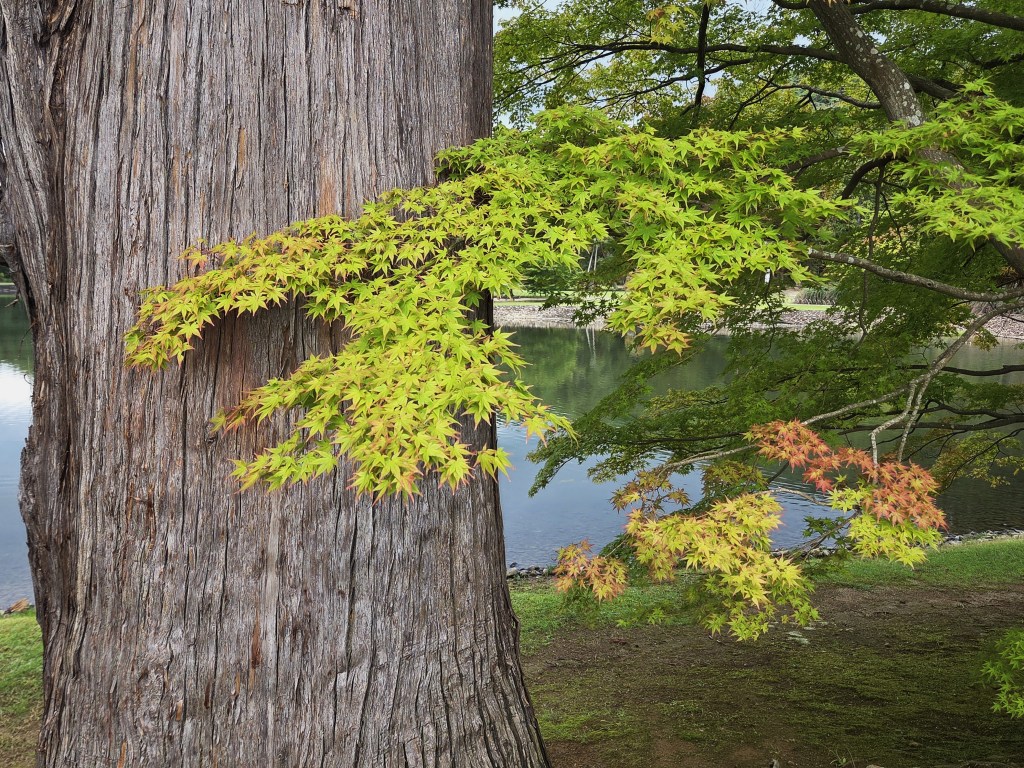
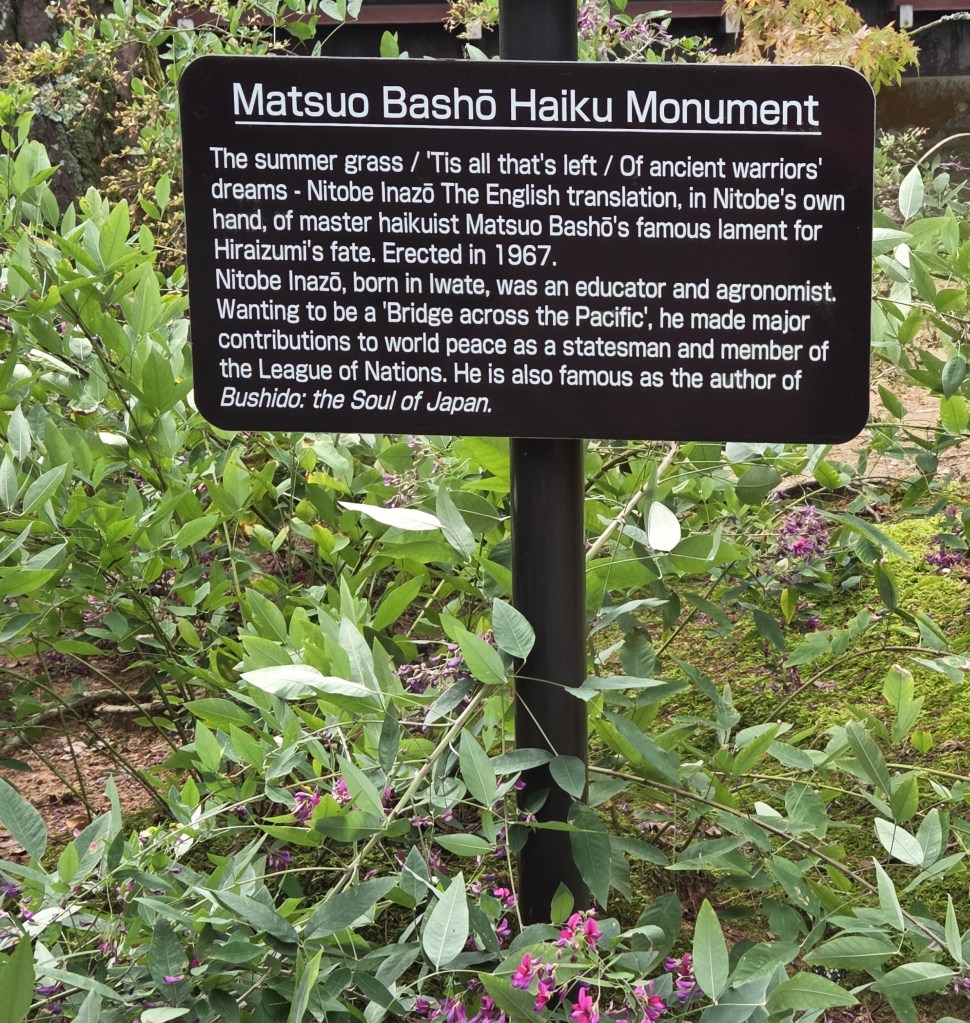
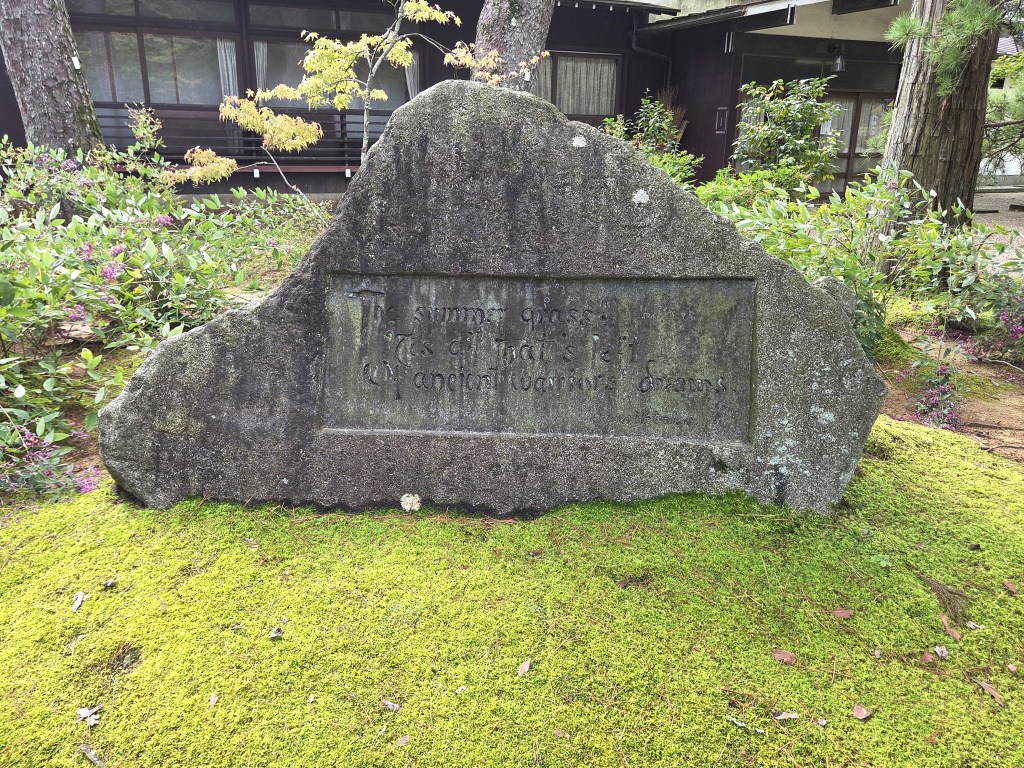
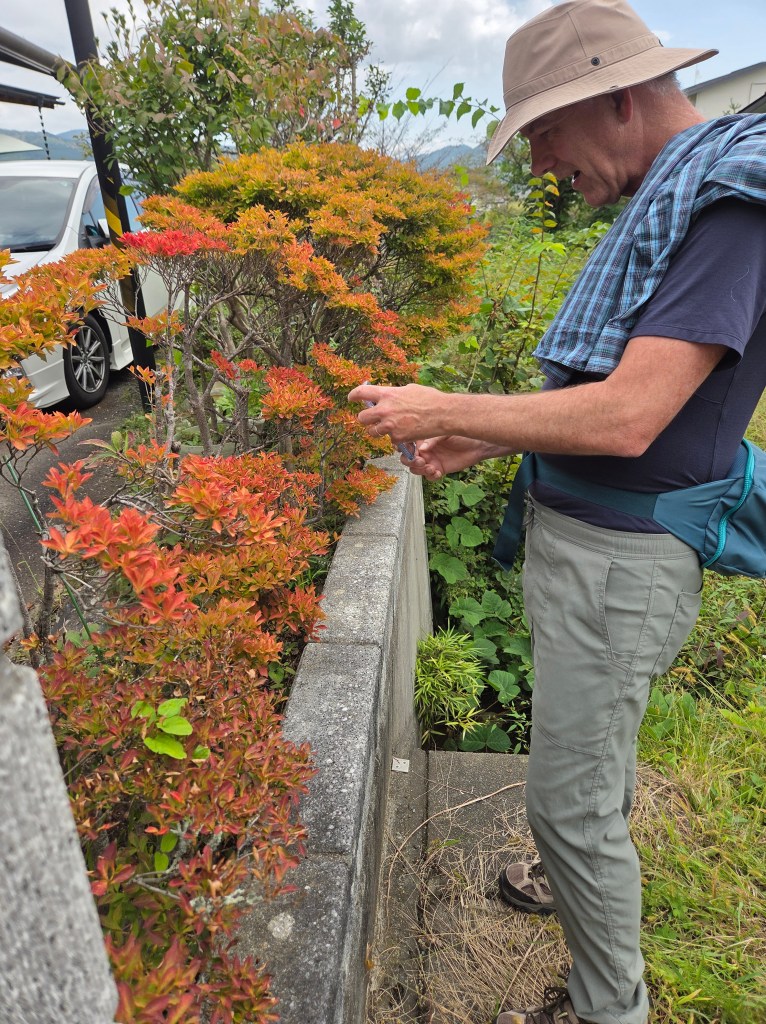
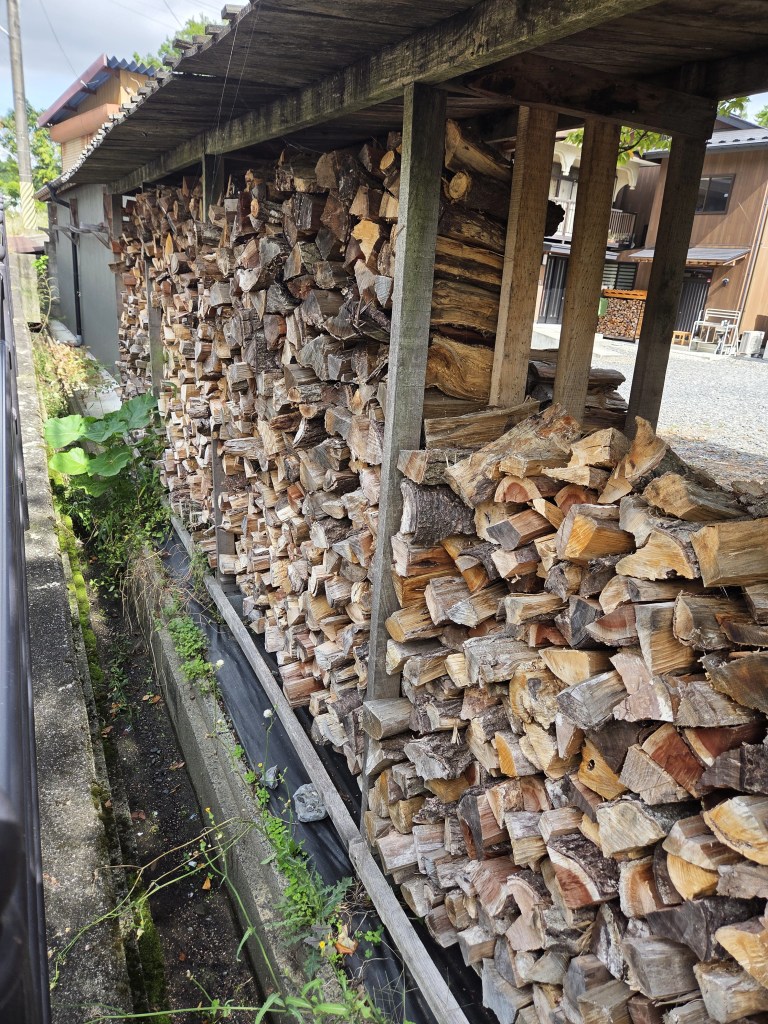
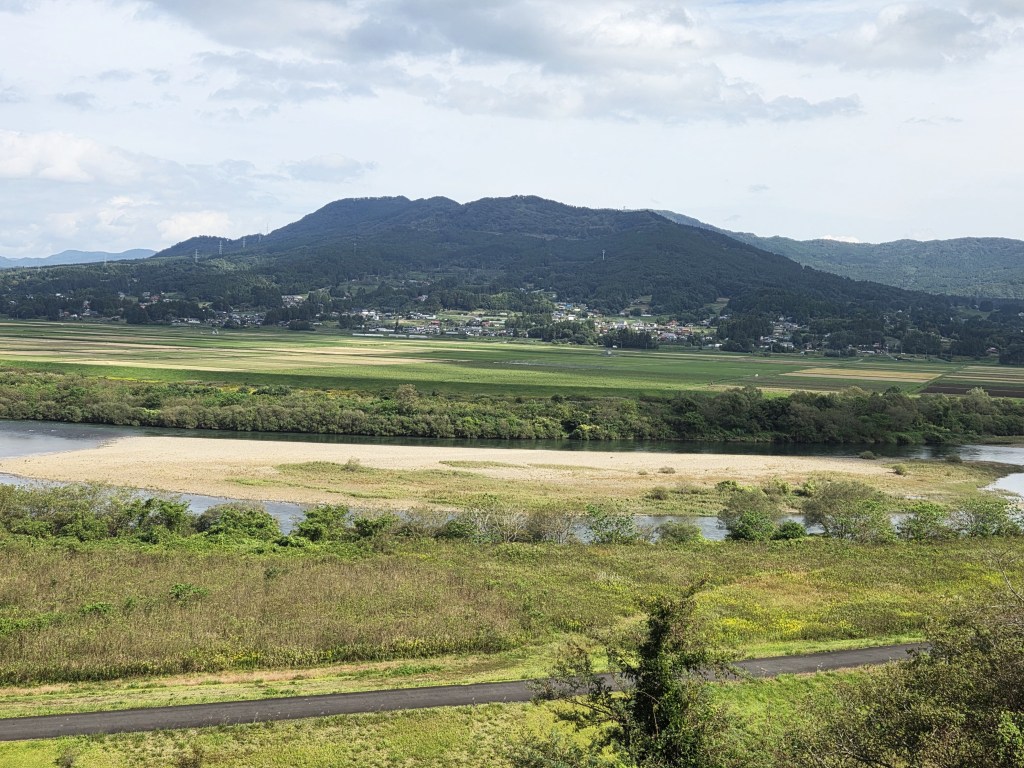
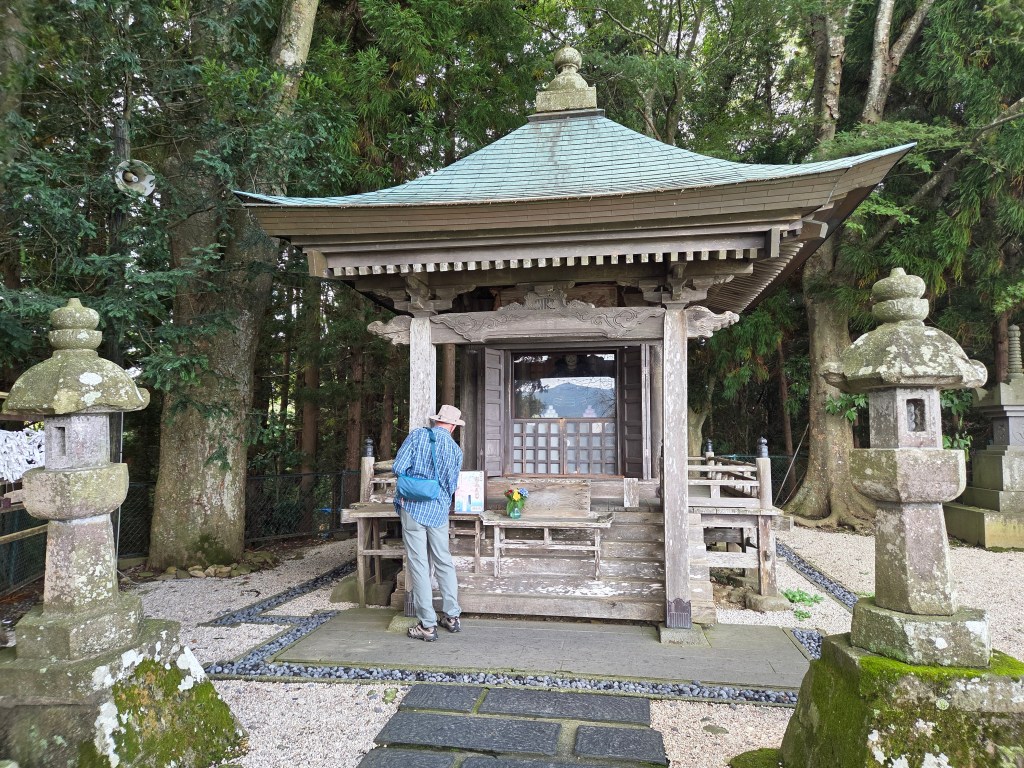
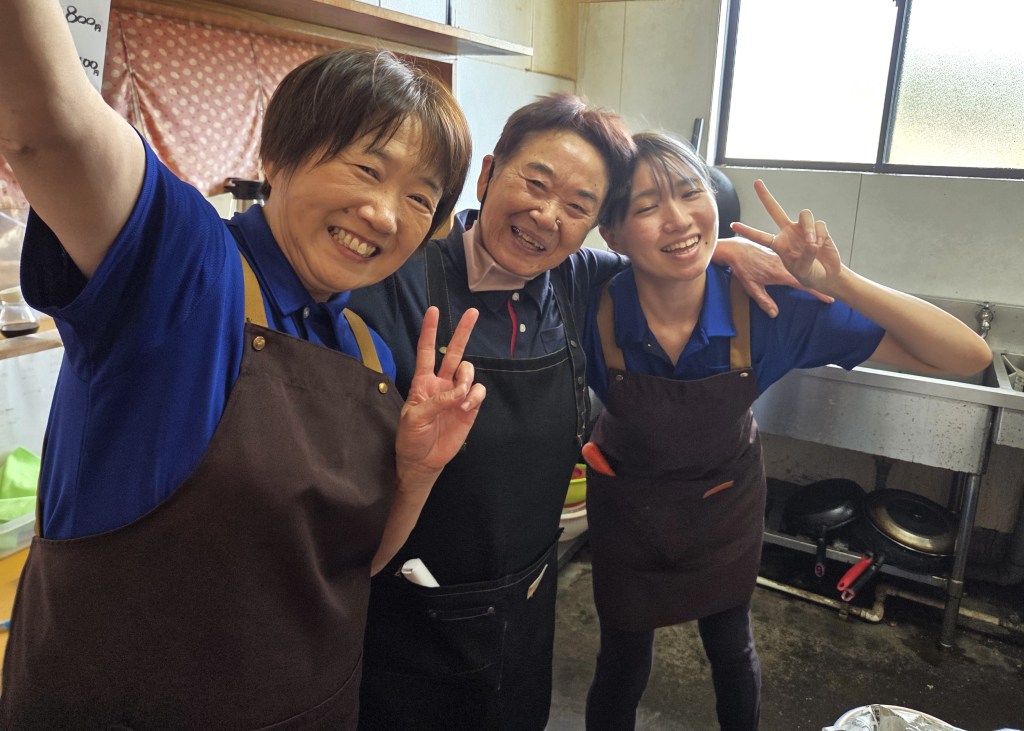
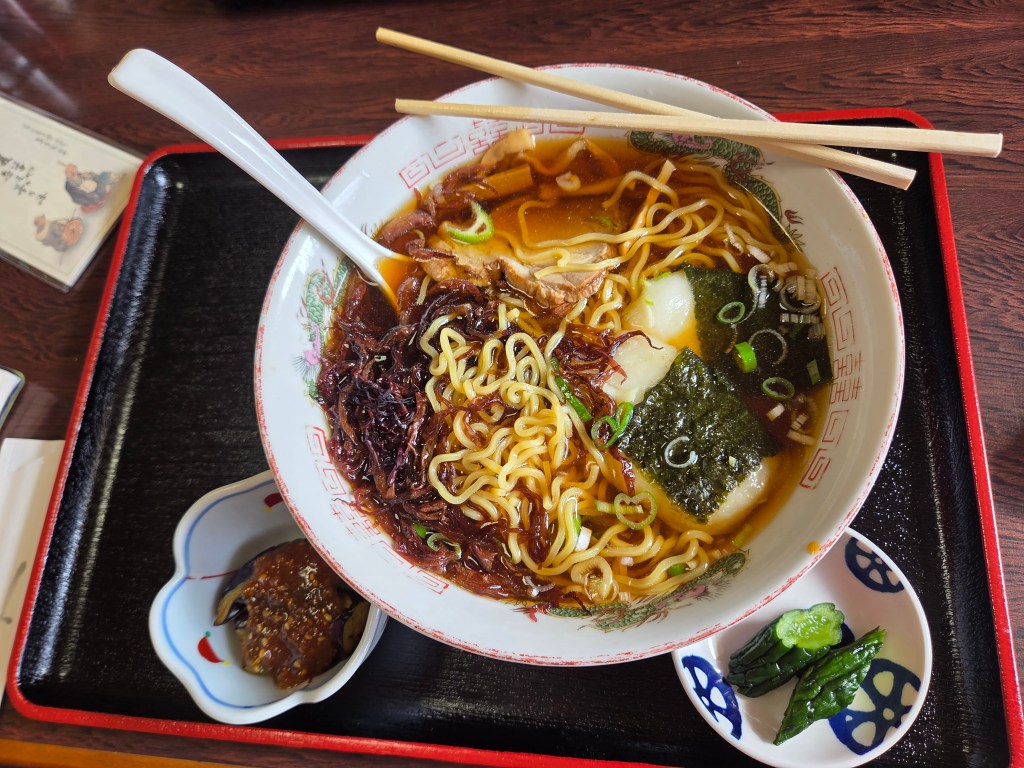
October 5
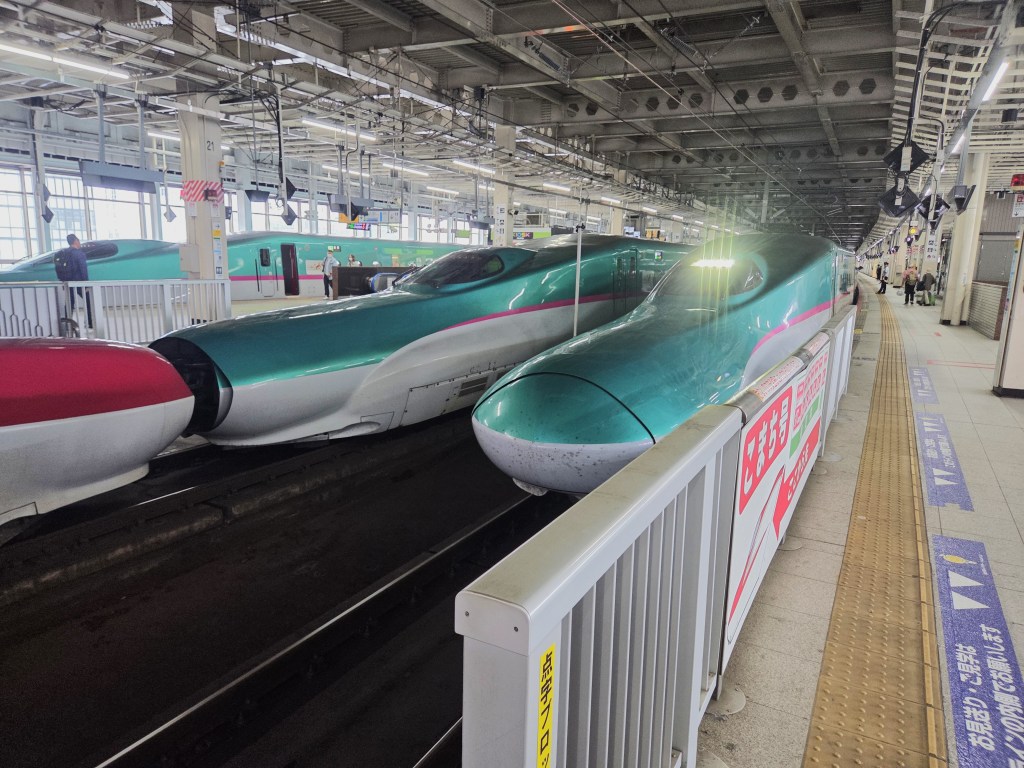
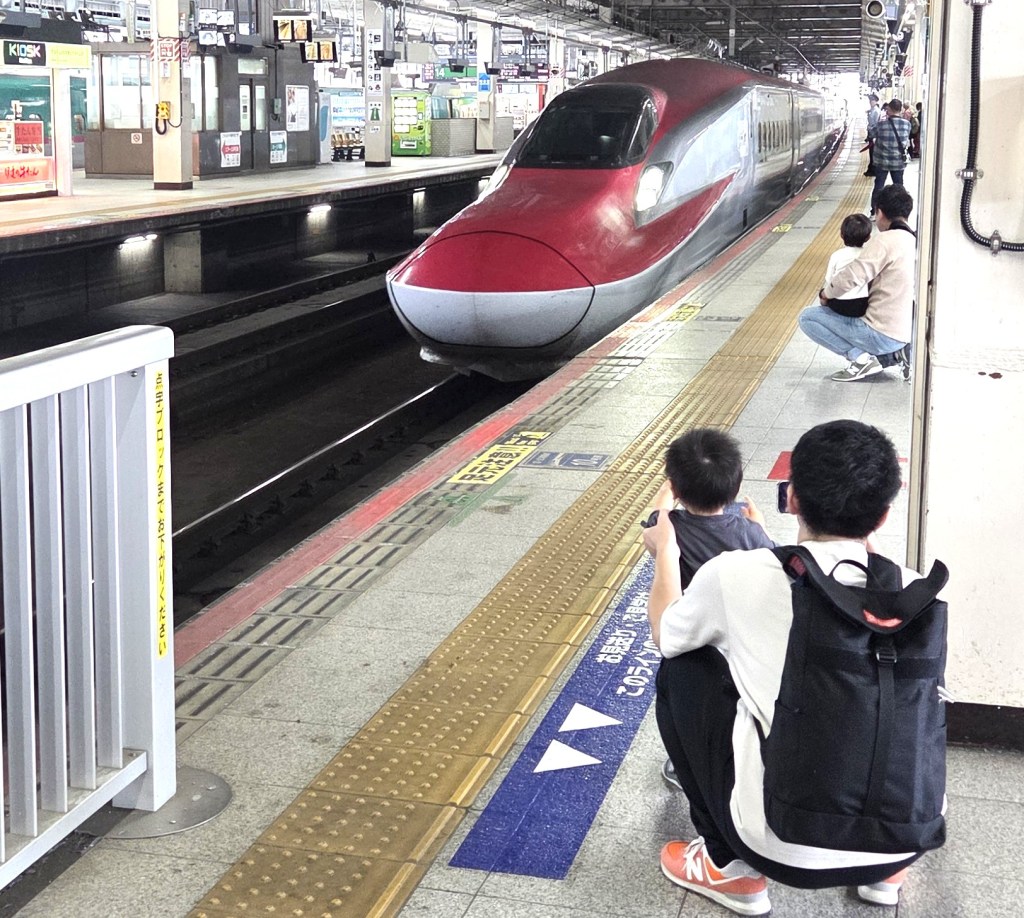
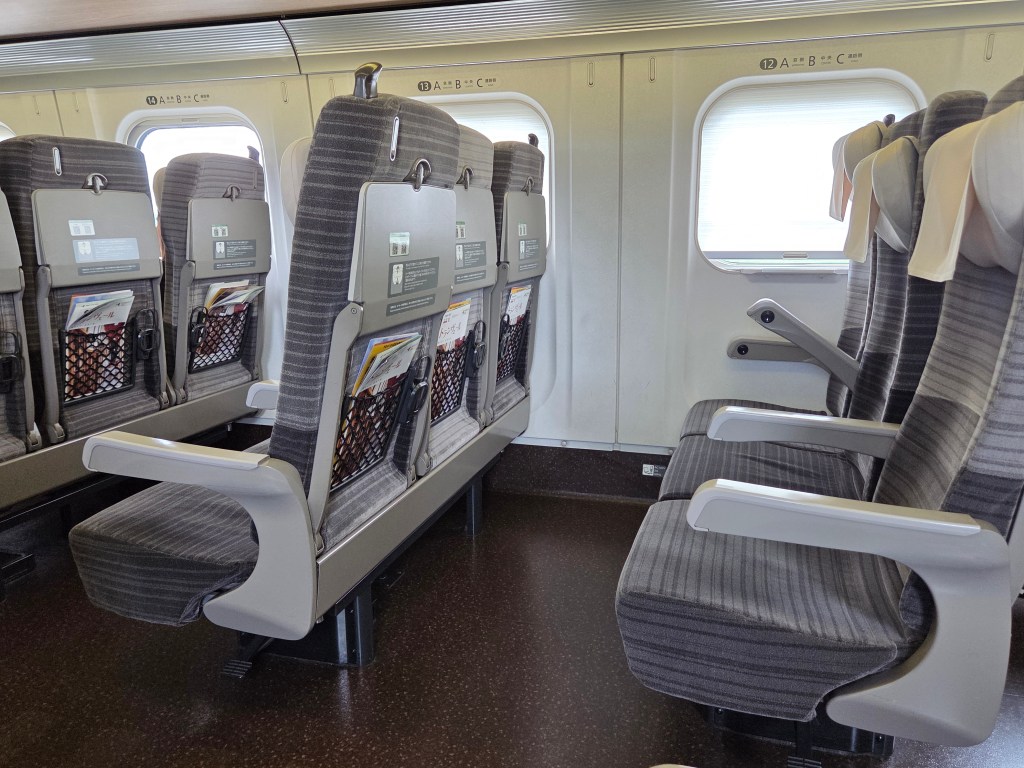
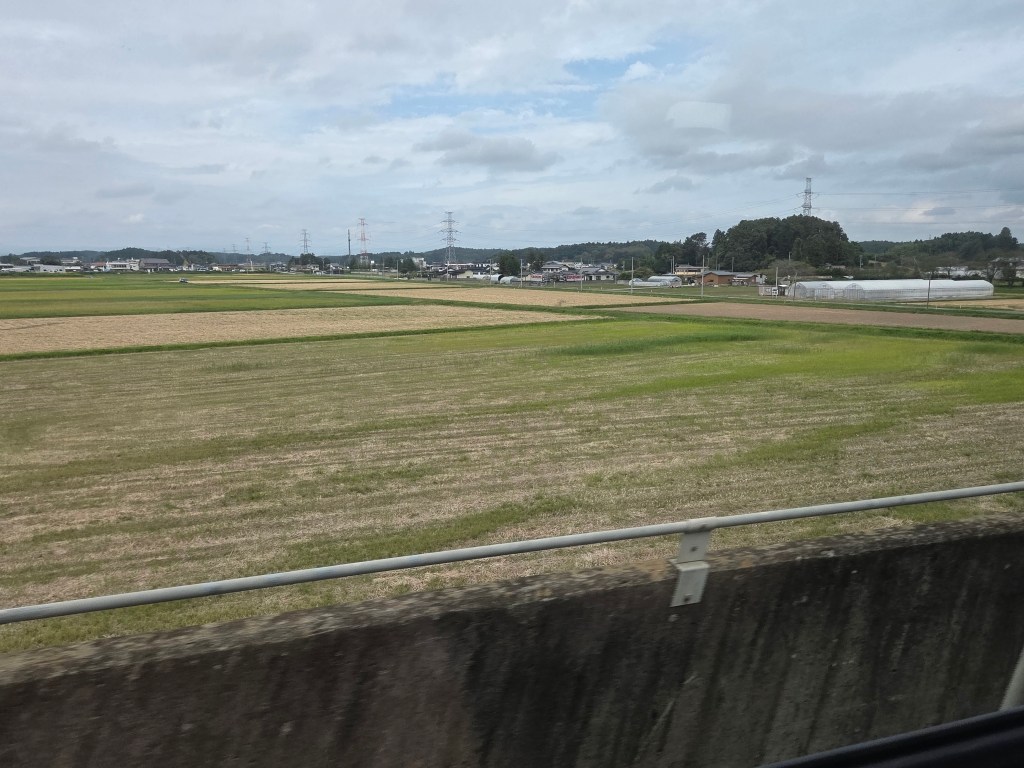
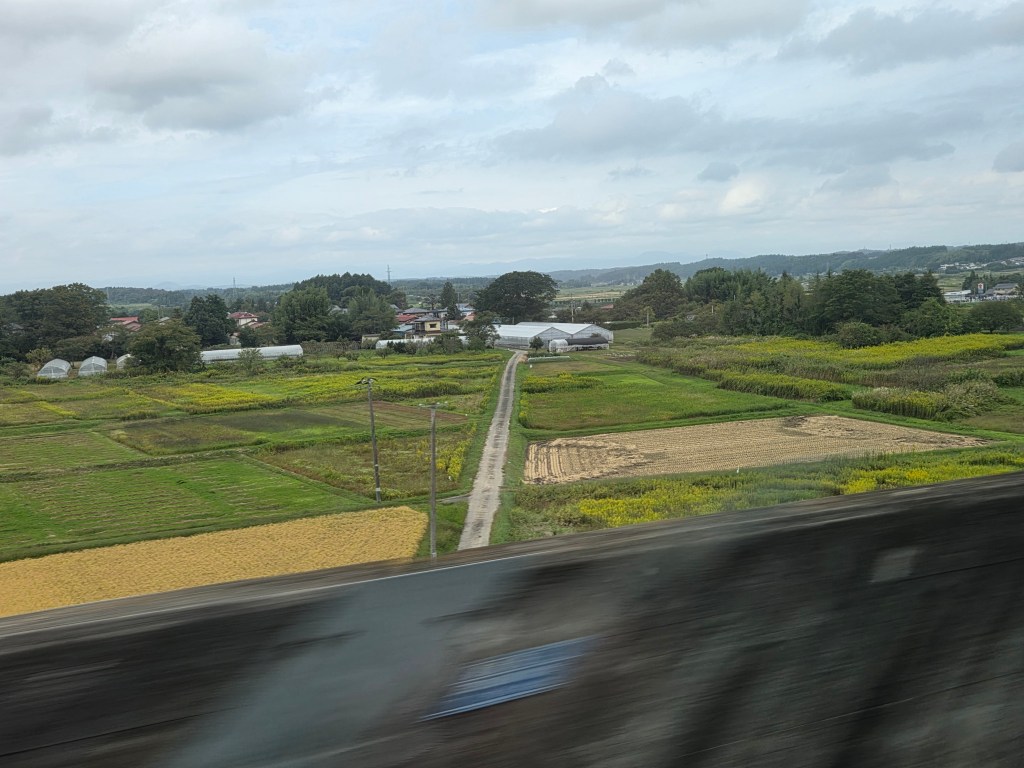
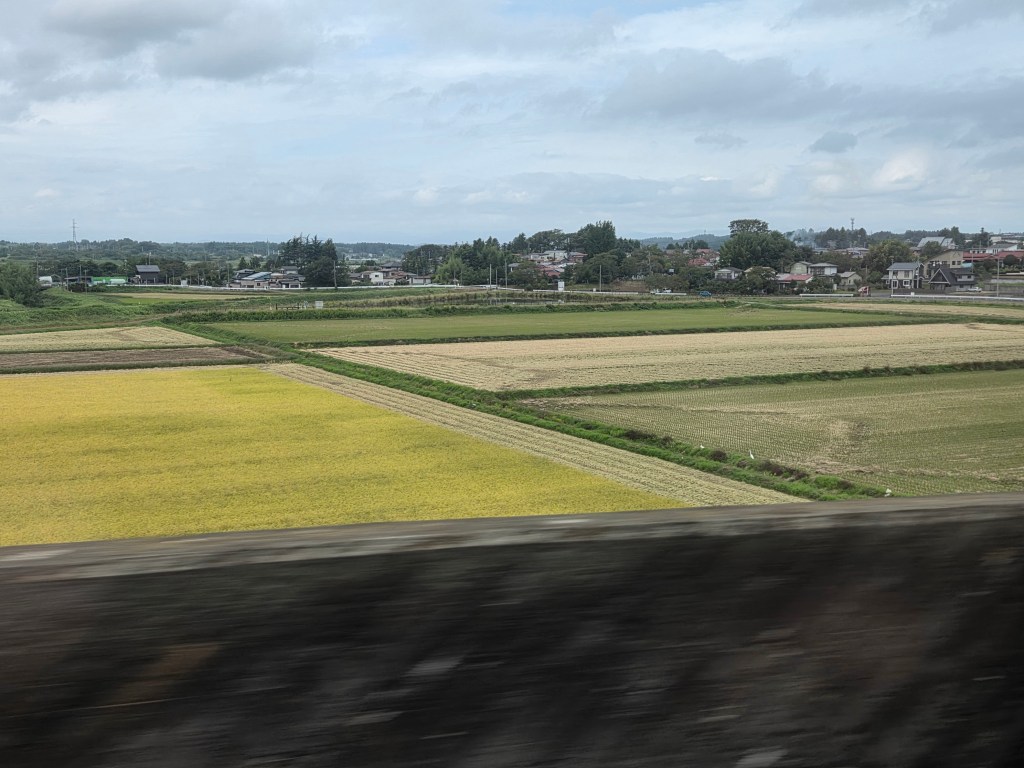
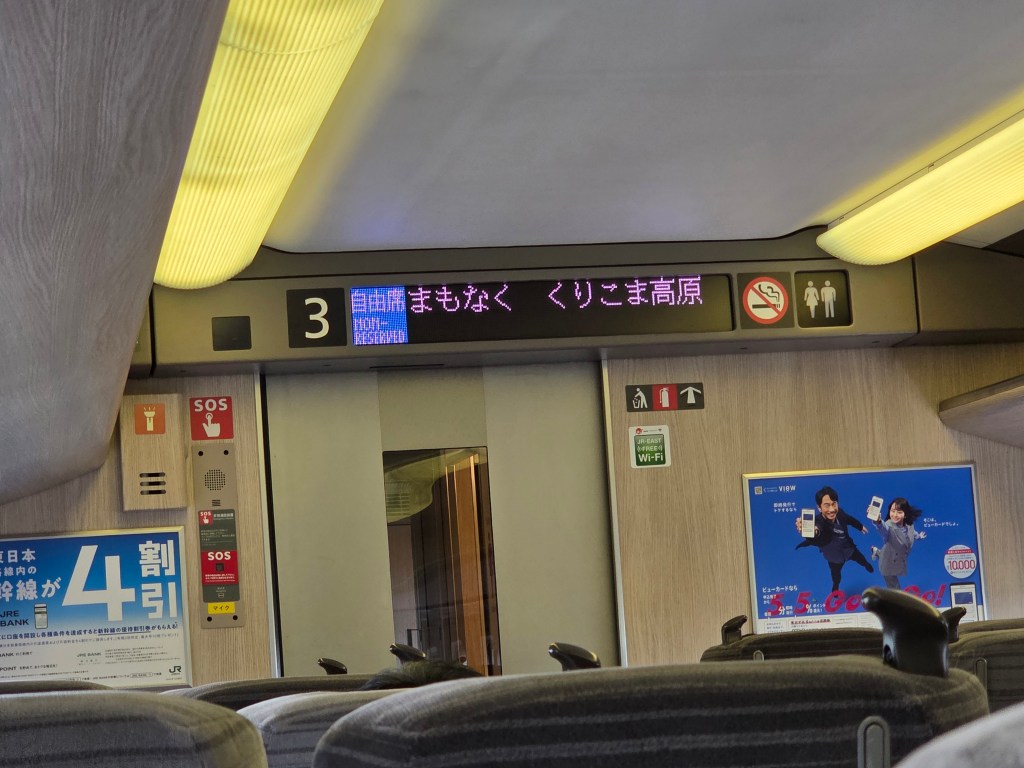
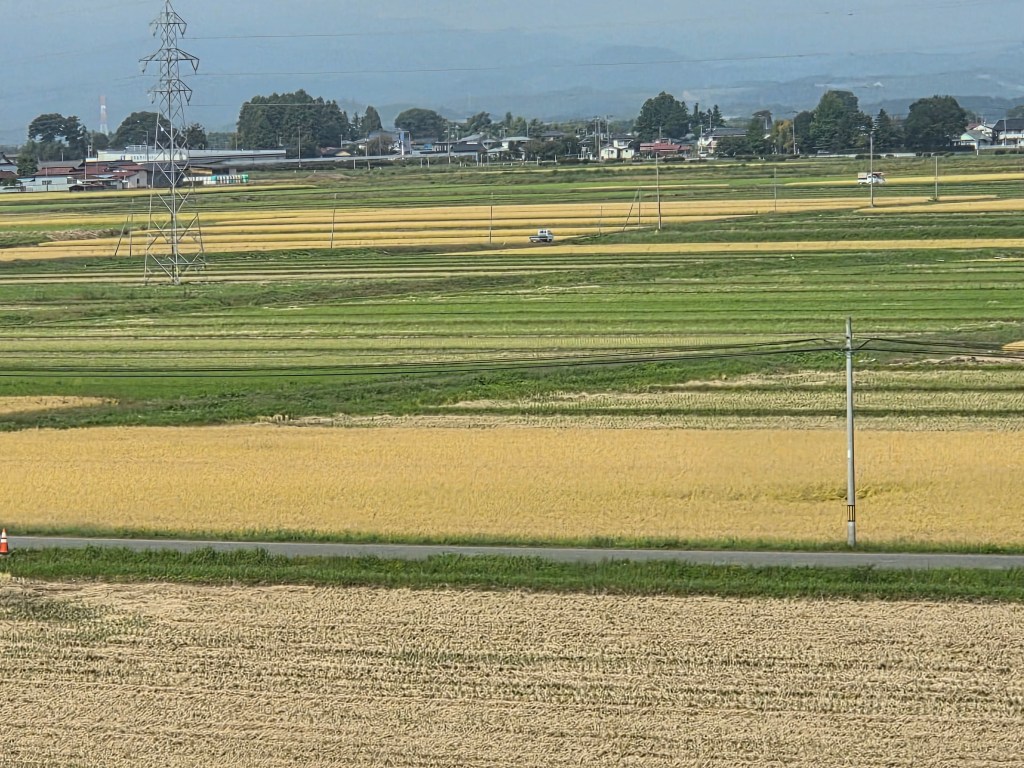
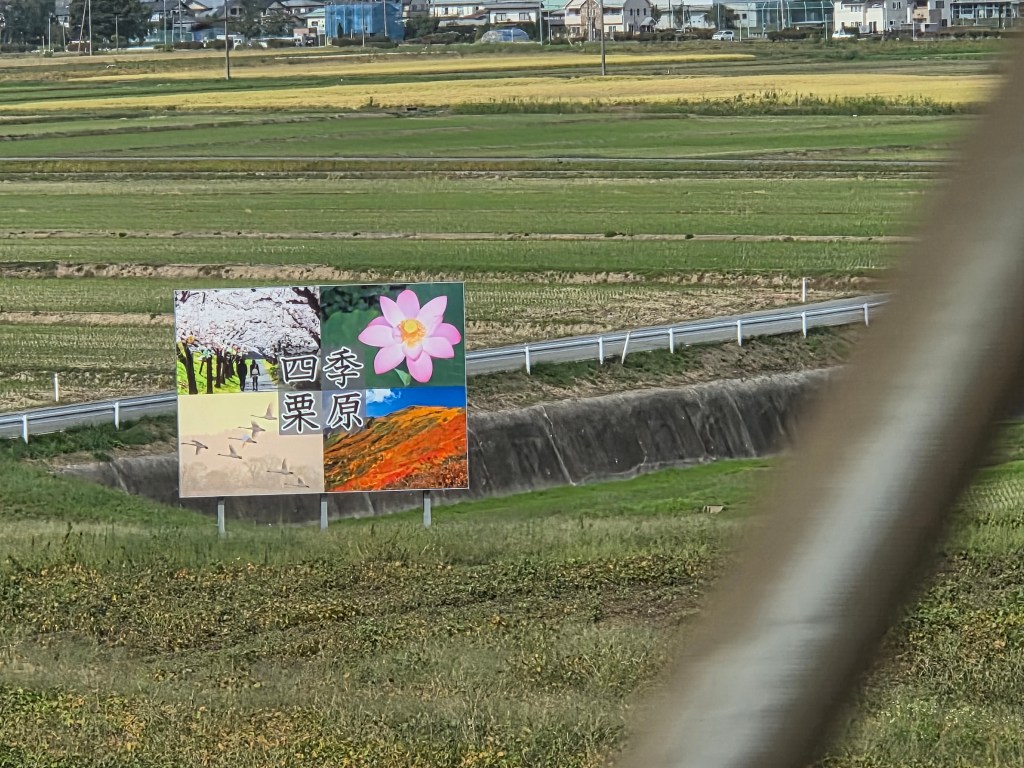
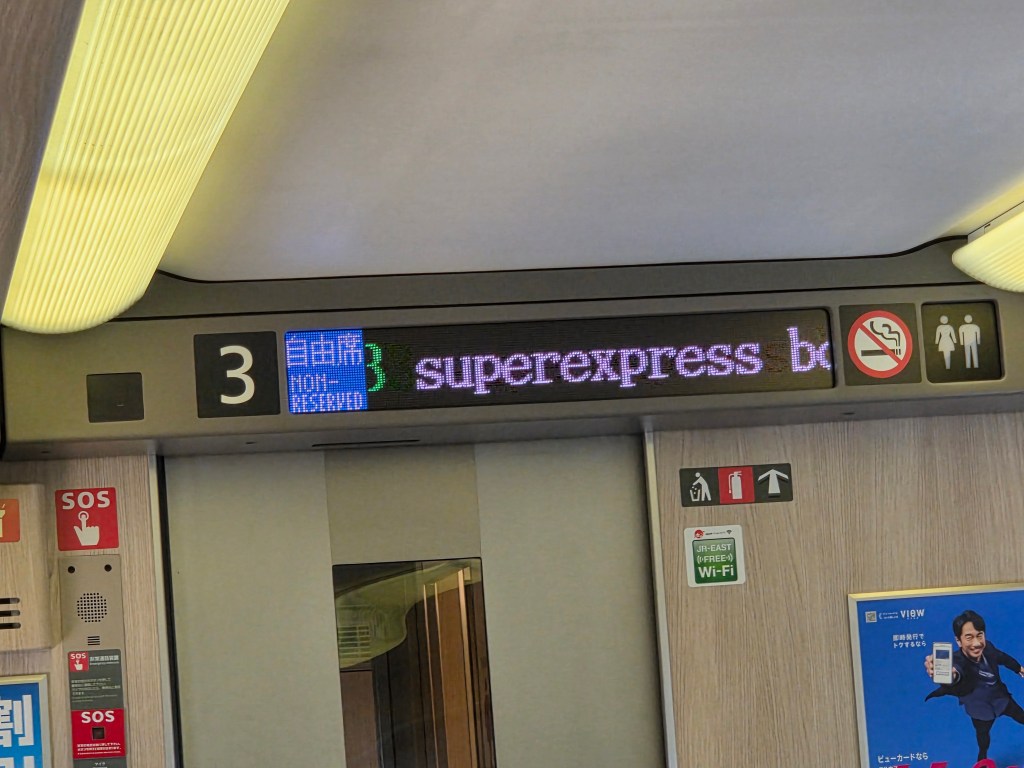
A day of morning travel. Three trains to get from Yamagata to Hiraizumi. We first retraced our path back to Sendai. From there we took the Shinkansen, Japan’s bullet train. The cars are sleek, fast, comfortable and safe, with no fatalities reported since they were first introduced in 1964. We rode that train to Ichinoseki. Once we were out of the Sendai area the landscape became mostly agricultural flatlands.
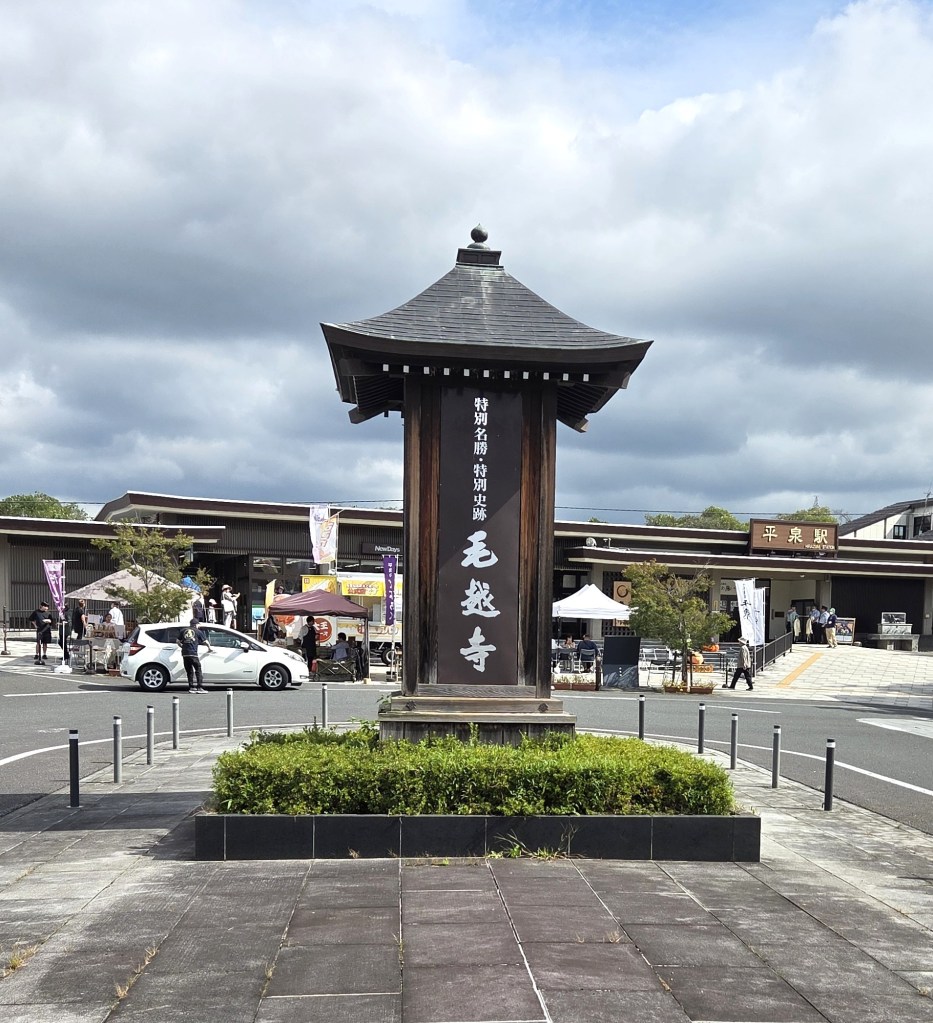
Hiraizumi is a small town, less than 8,000 people, with much historical significance. More about that tomorrow.
We had about three hours to spend in town before our ride from the ryokan we’re staying in for two days picked us up. It’s a few miles out of town out in the country. It was a very enjoyable three hours.
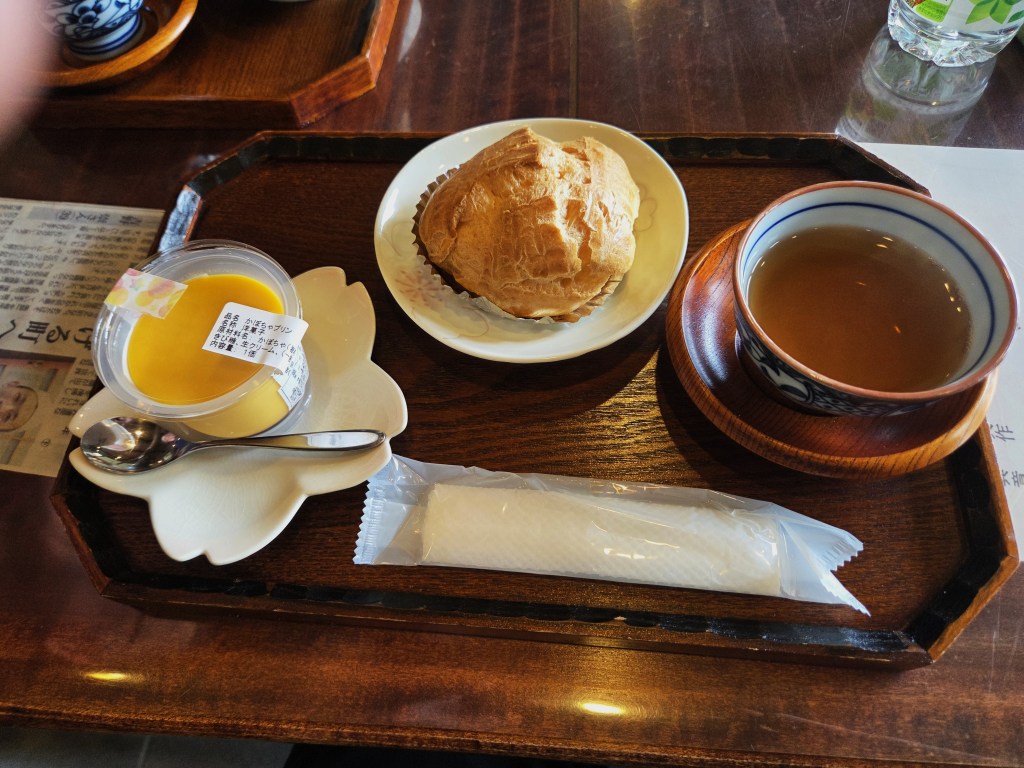
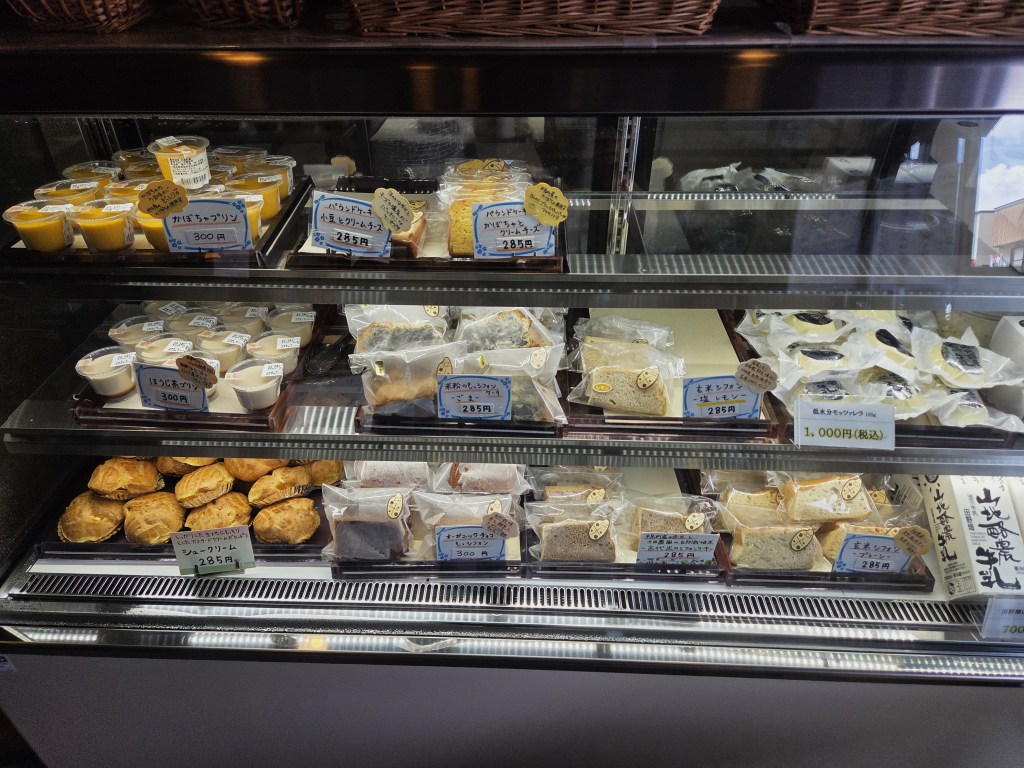
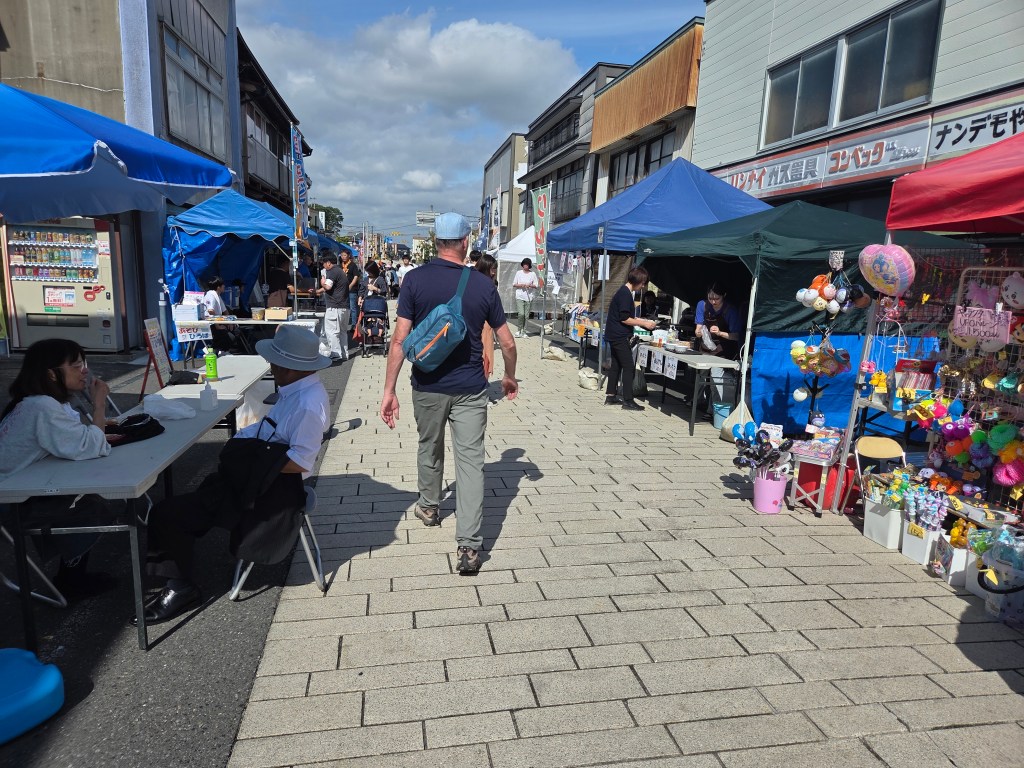
There was a street festival happening with mostly food vendors and live entertainment. Bart suggested we get something at a small pastry shop, I think mainly to get out of the hot sun for a little while. The pastries were good. We both had a cream puff and some pumpkin pudding. When leaving Bart got into a long conversation with the chef, who had gone to school in Illinois. I wandered around outside while he talked.
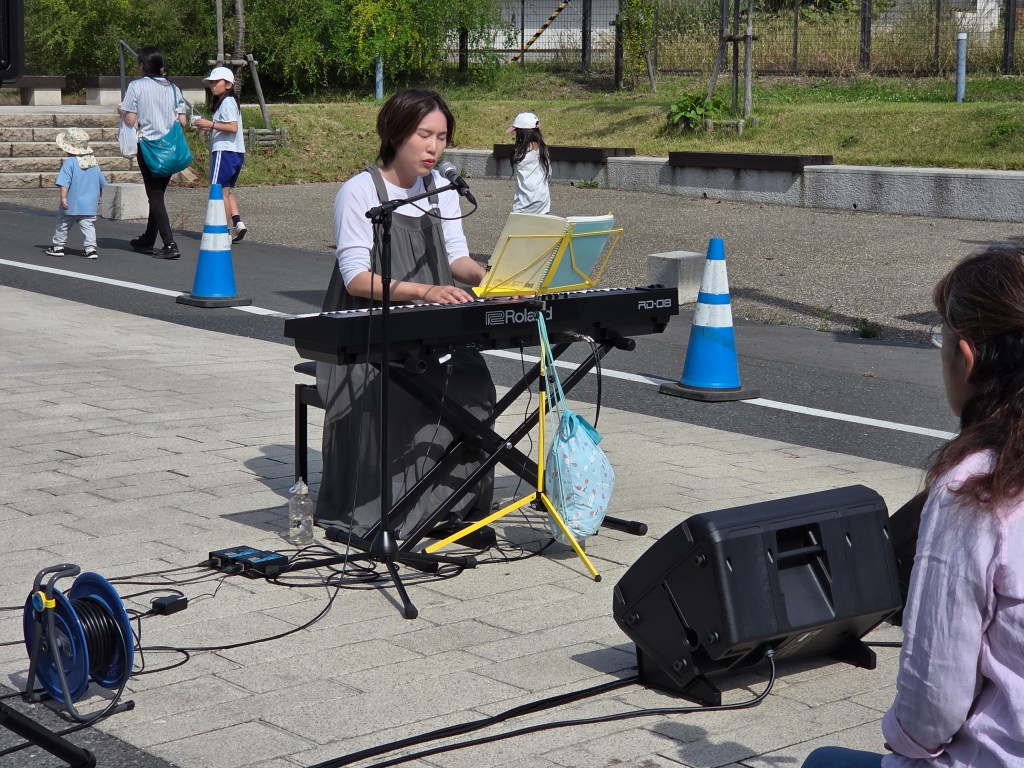
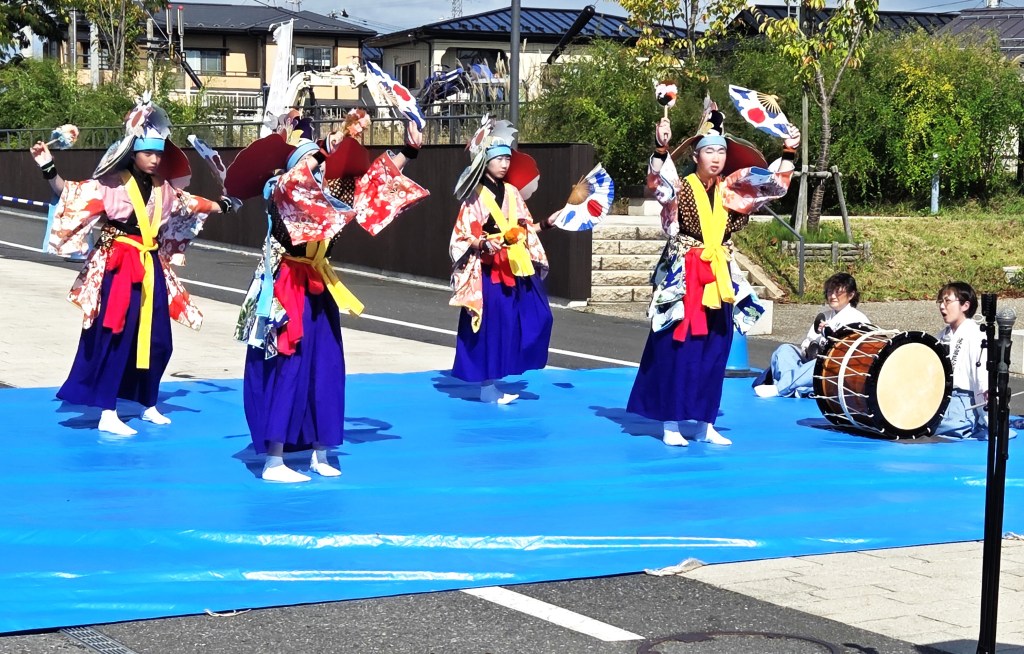
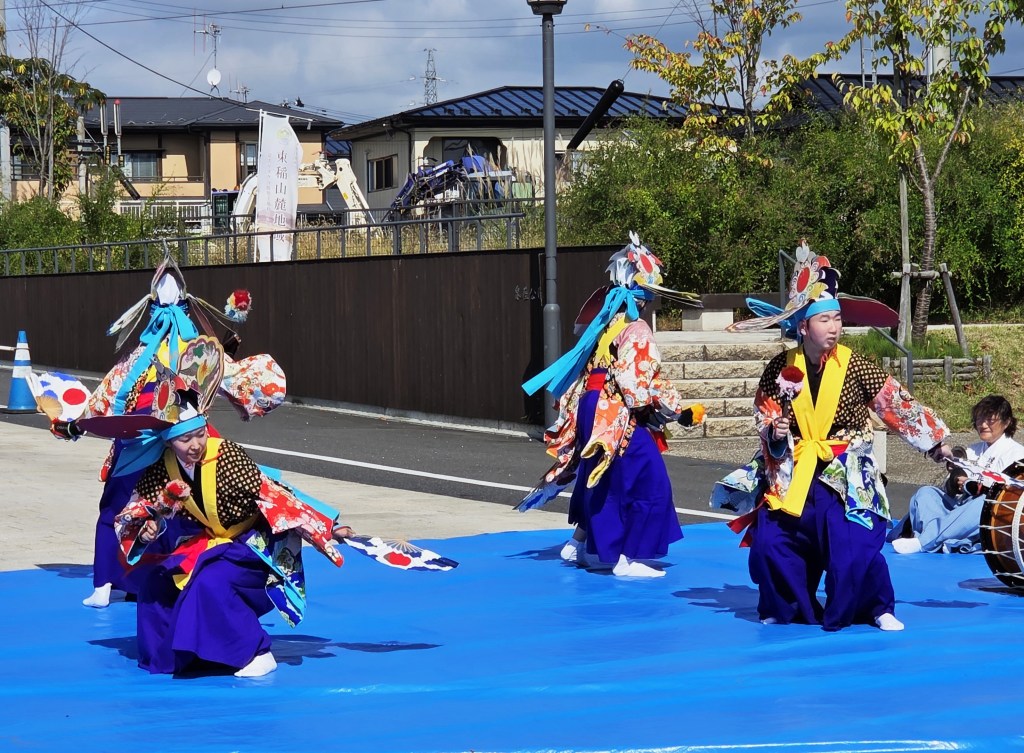
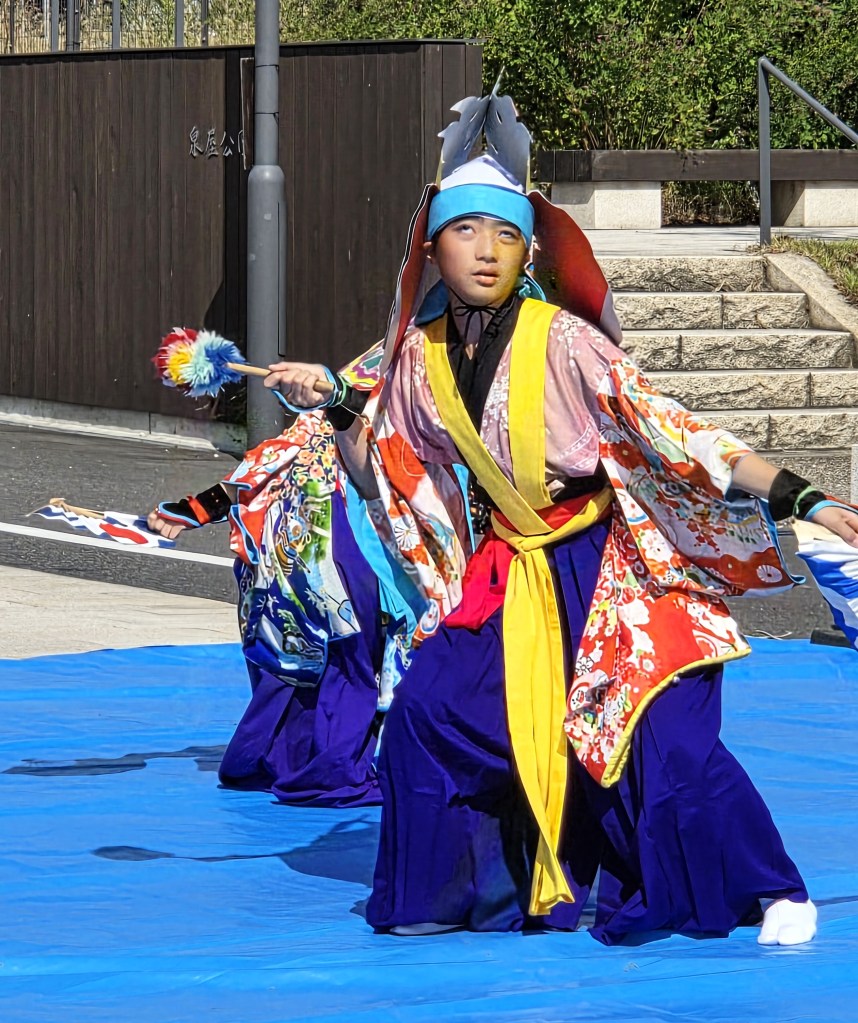
As far as entertainment, there was quite a variety and we only saw some of what was offered. First we heard was a woman playing electric piano and singing. A good voice and good piano playing. That was followed by some traditional dance and percussion by dancers who were dressed in colorful traditional outfits. It reminded us both of Native American dances.
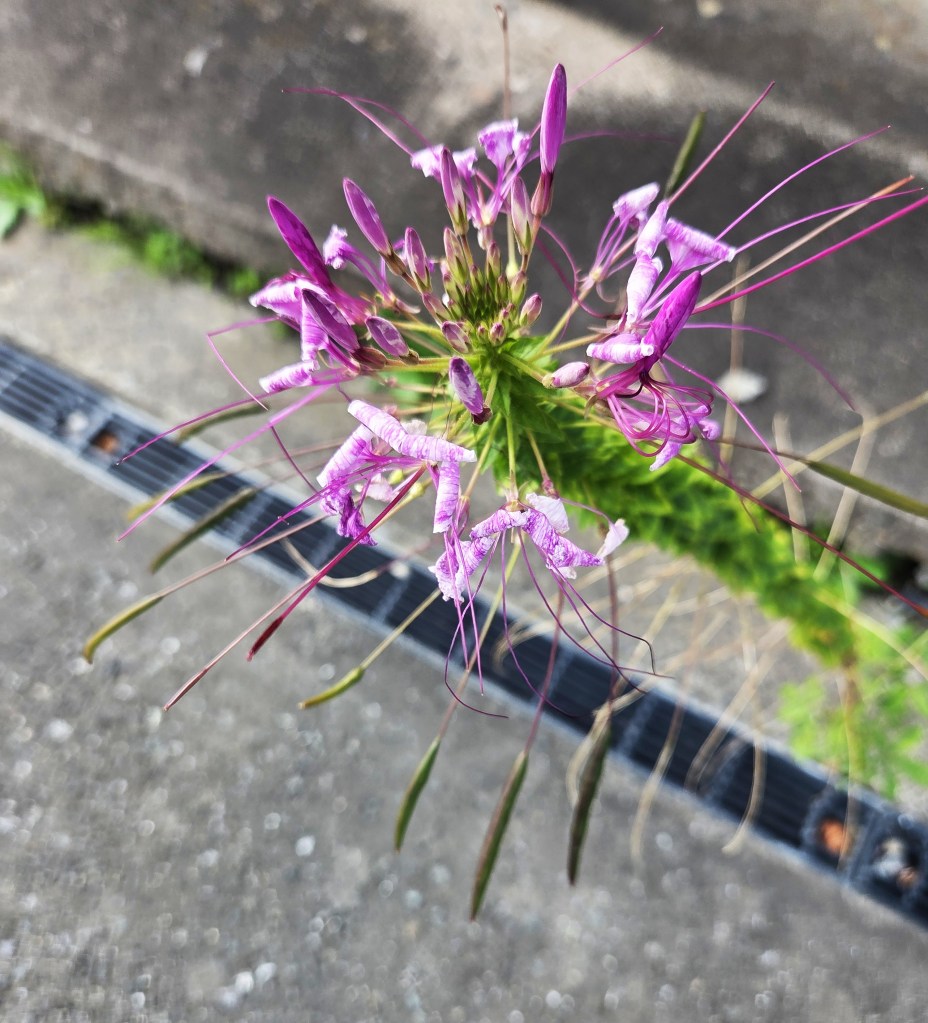
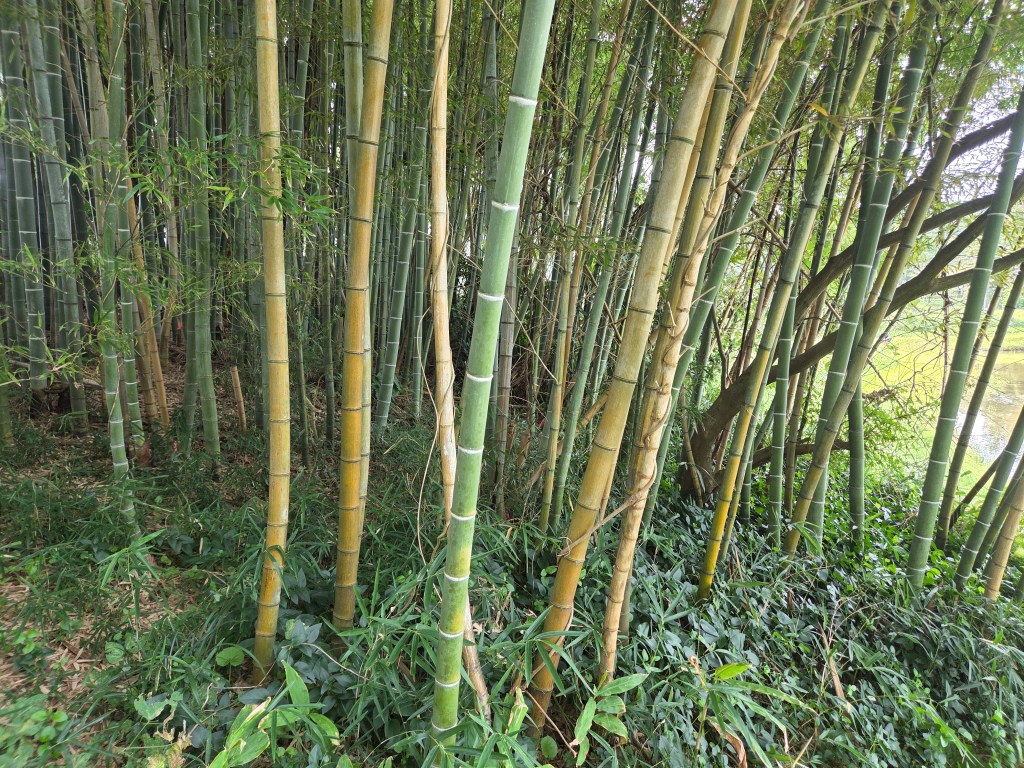
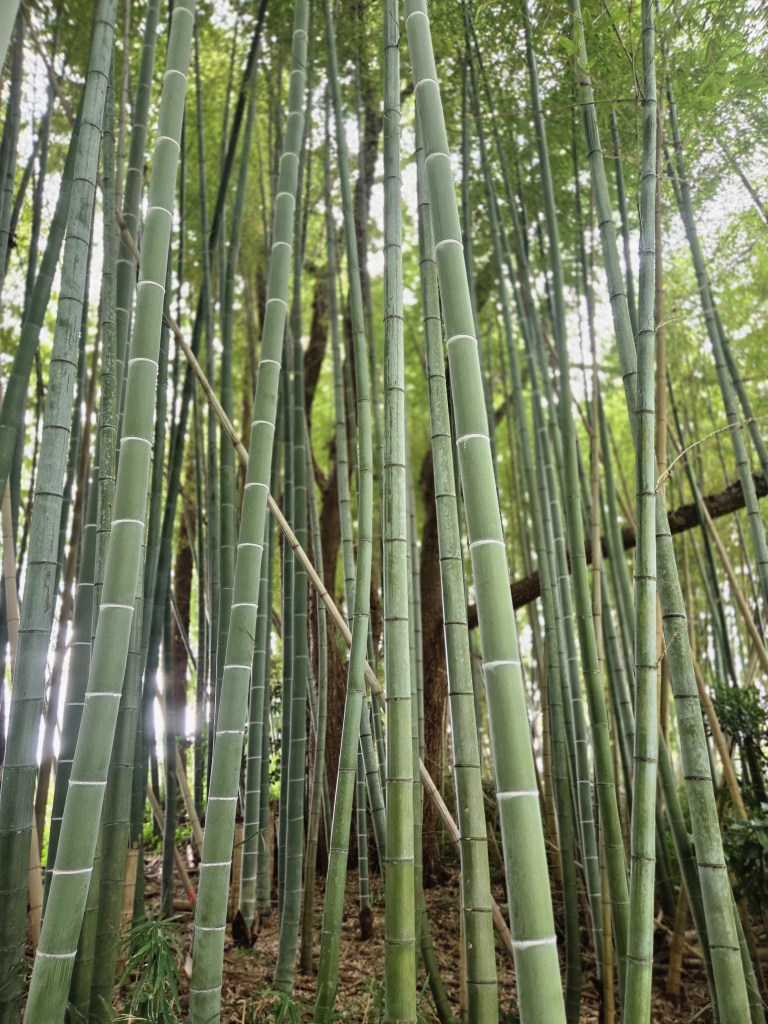
We took a little walk after that. I came across another type of spider flower, not quite as showy as the Red Spider Lily flowers we had been seeing in Matsushima, but pretty anyway. Also came across a small grove of bamboo, that was quite impressive, to me anyway. I find it fascinating that it is actually a grass and not a tree.
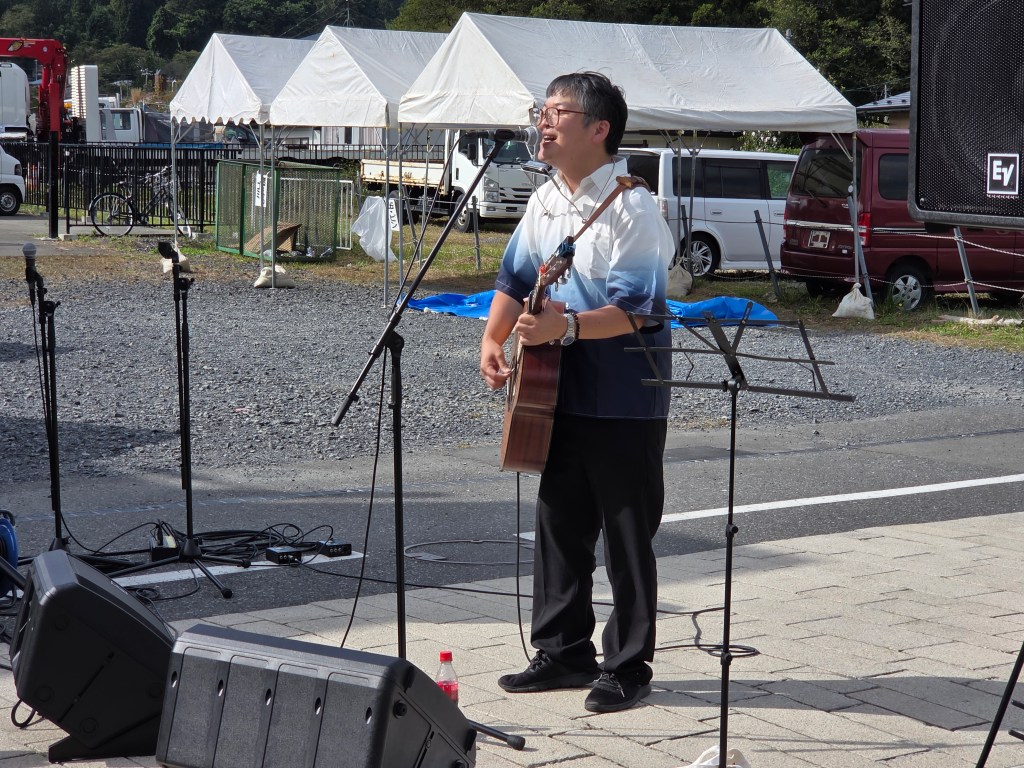
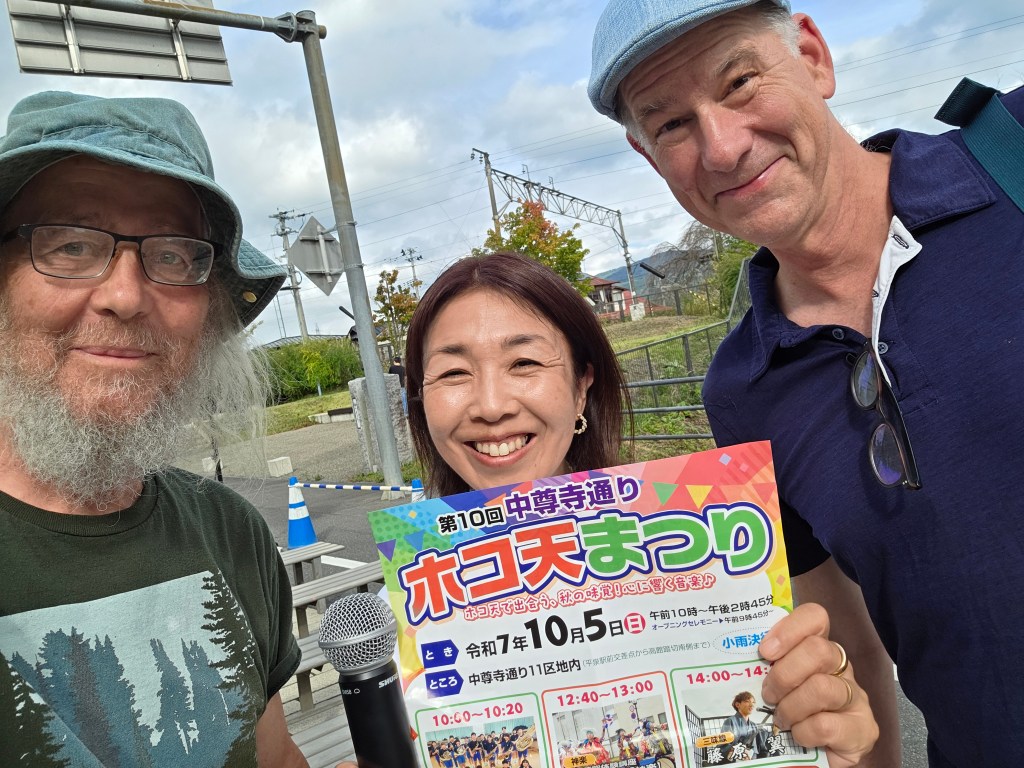
Back at the entertainment area was a young singer songwriter playing guitar. While he was playing a woman came over to me and asked where we were from. She was the emcee of the event. When I mentioned Matsuo Basho and that we were poets, she exclaimed and grabbed my hand in her two hands. Kawai and I had a nice conversation and she has already followed me on Facebook. It was gratifying to see and feel her response when she learned we were poets.
Earlier I had seen a soup stand where I had planned to buy a bowl from a little later. I asked the young woman what time they were open until and she said 3:00. About 2:00 I walked over to get a bowl and they were taking down the set-up already. As I approached the young woman saw me coming and immediately looked at me with an apologetic look. We ended up conversing a little and learned that she, Haruka, and her mother, Yakiko, have a little restaurant in town and she really wanted us to stop there tomorrow. So, we’ll plan on lunch there and maybe I’ll get to try the soup. It did look awfully good.
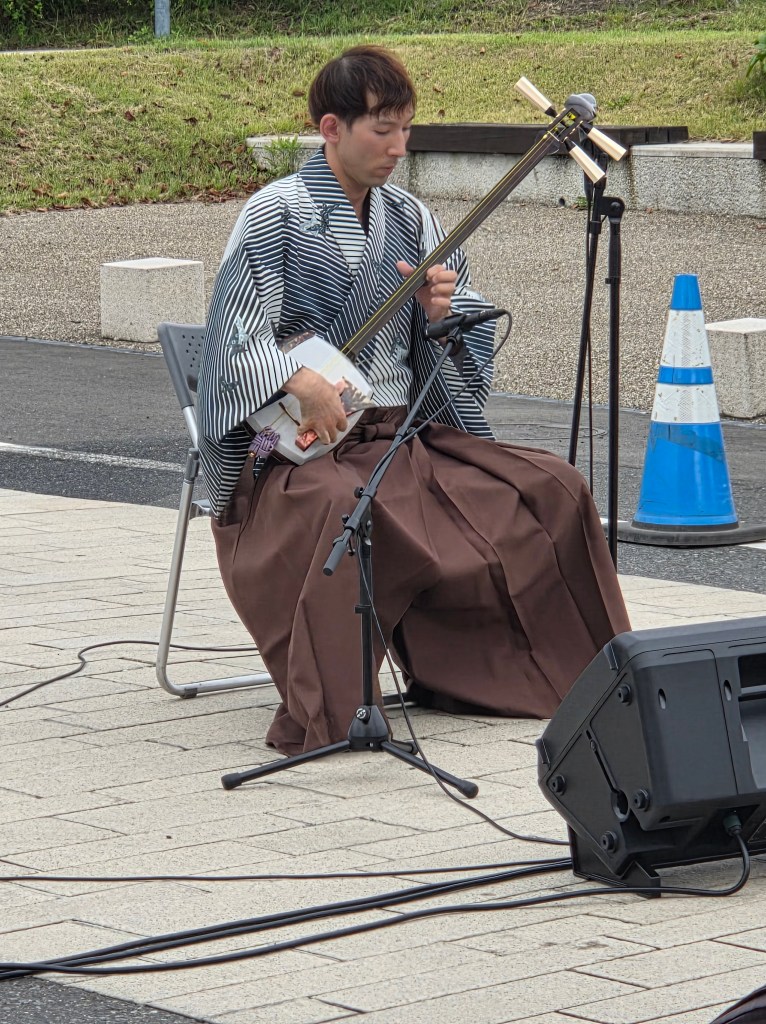
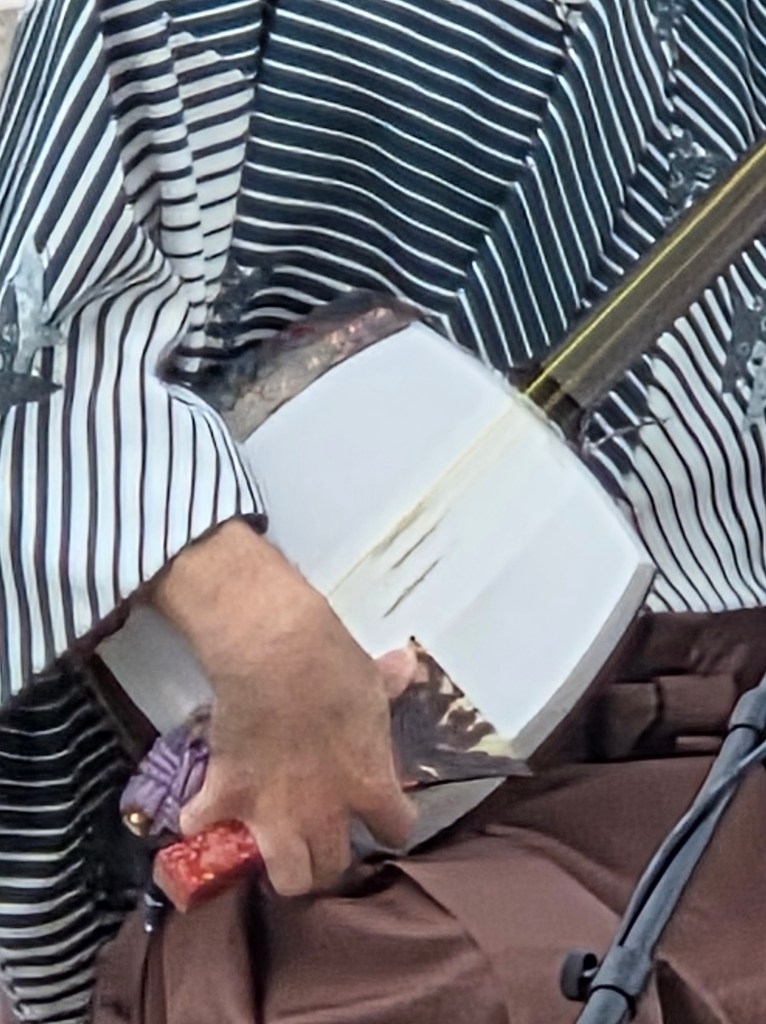
The final entertainment we took in was a young man playing a shamisen, a traditional three stringed instrument that is played with a bachi, which looked a bit like a car windshield ice scraper.
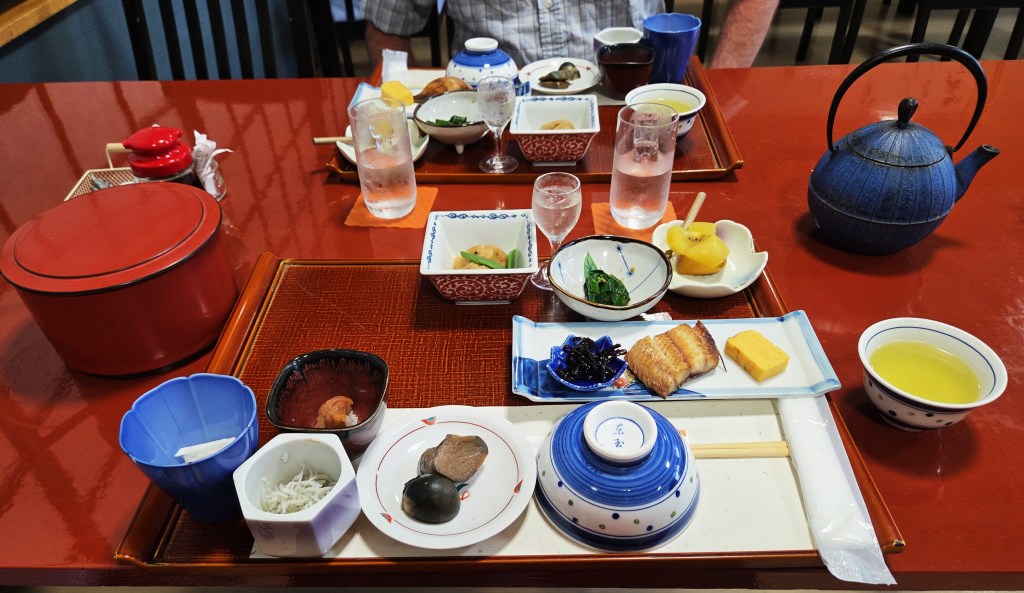
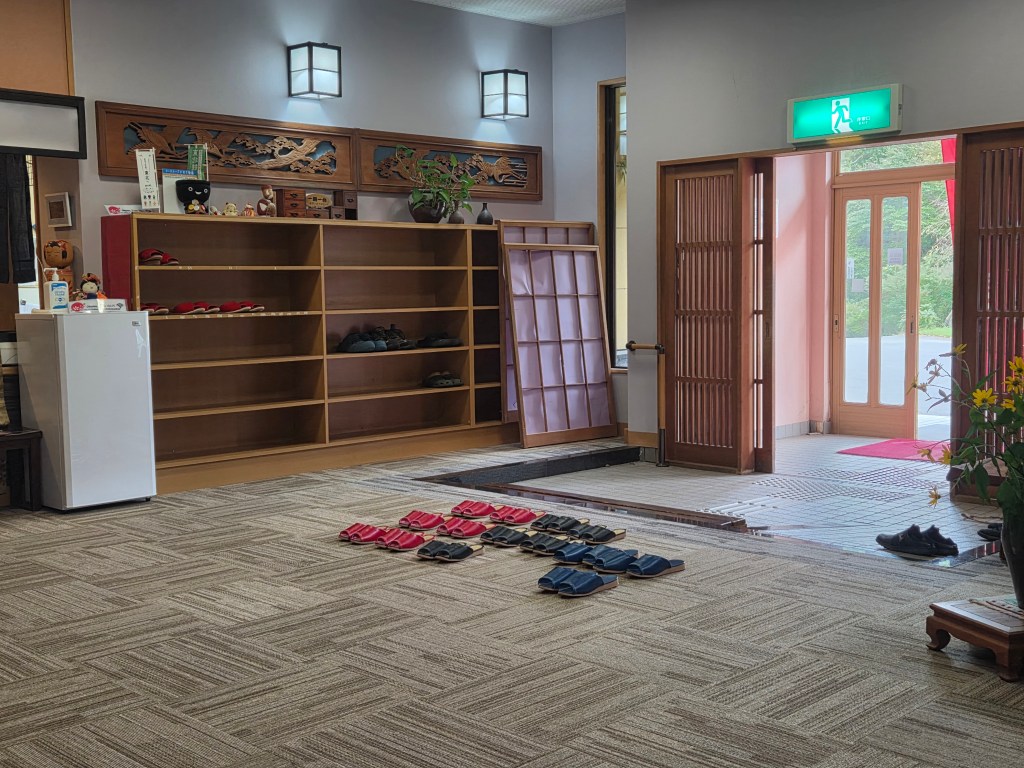
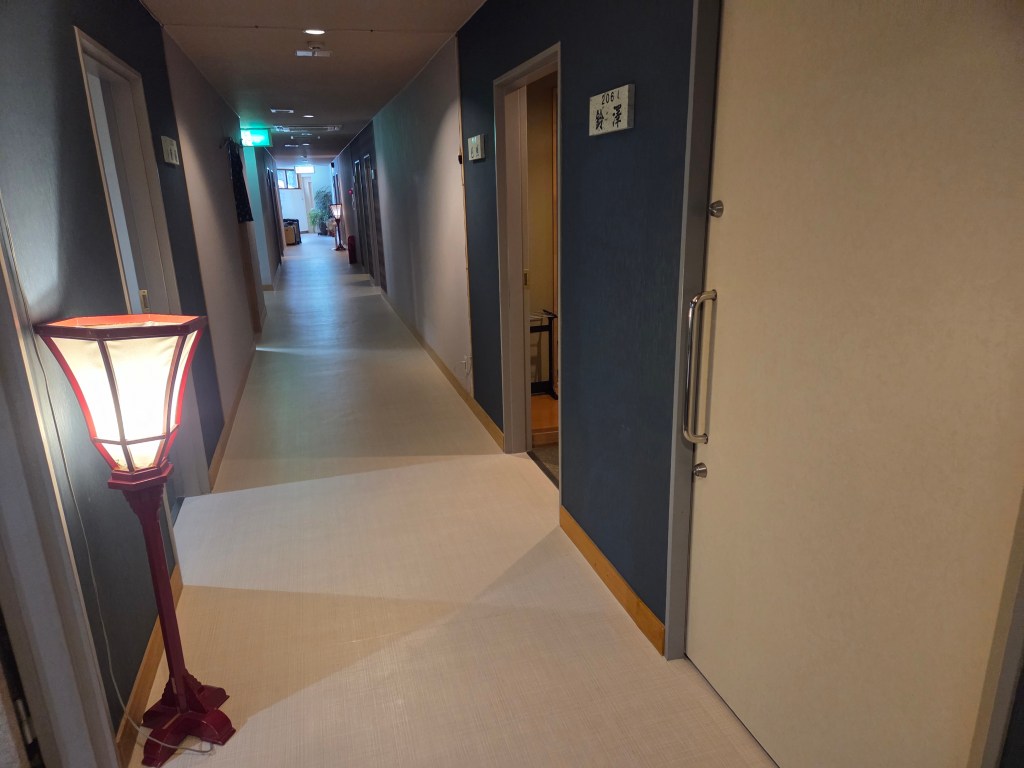
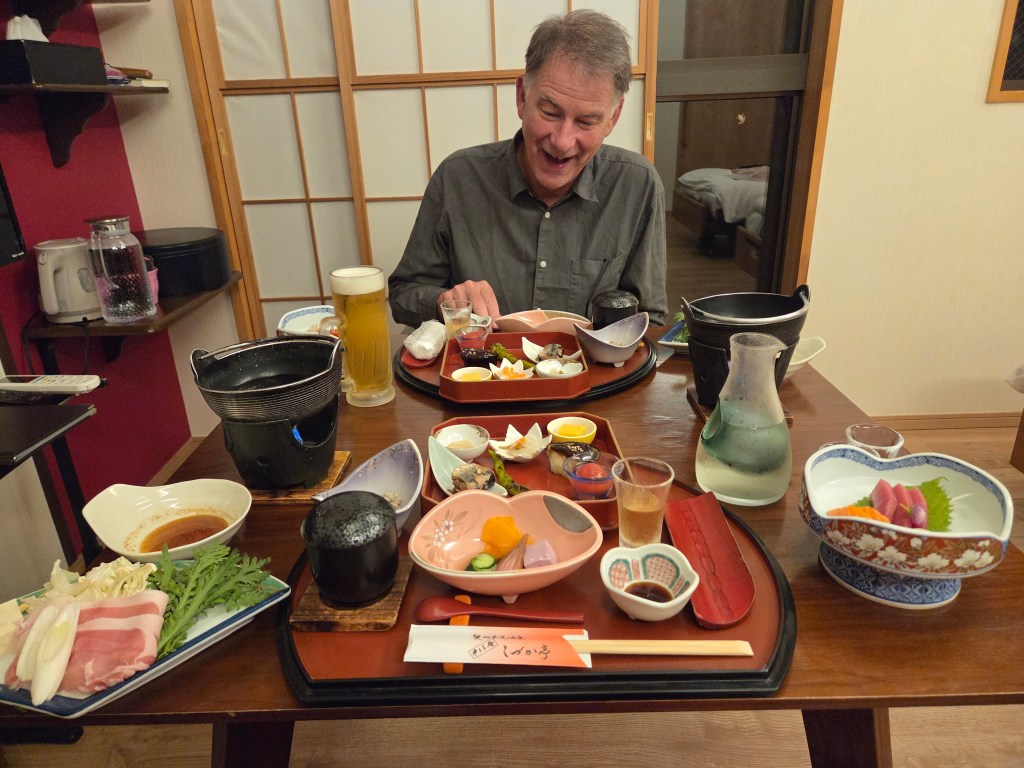
The driver picked us up at the prearranged time of 2:30 and we took a 15 minute ride to the ryokan we are staying at, Shizukatei. It is a beautiful country place and the food is beyond exceptional, much of it grown in their extensive gardens. Dinner and breakfast is included in the price. I’ll write more about the place tomorrow and just let the pictures I took tell the story for now.
(Click on thumbnail for larger picture.)
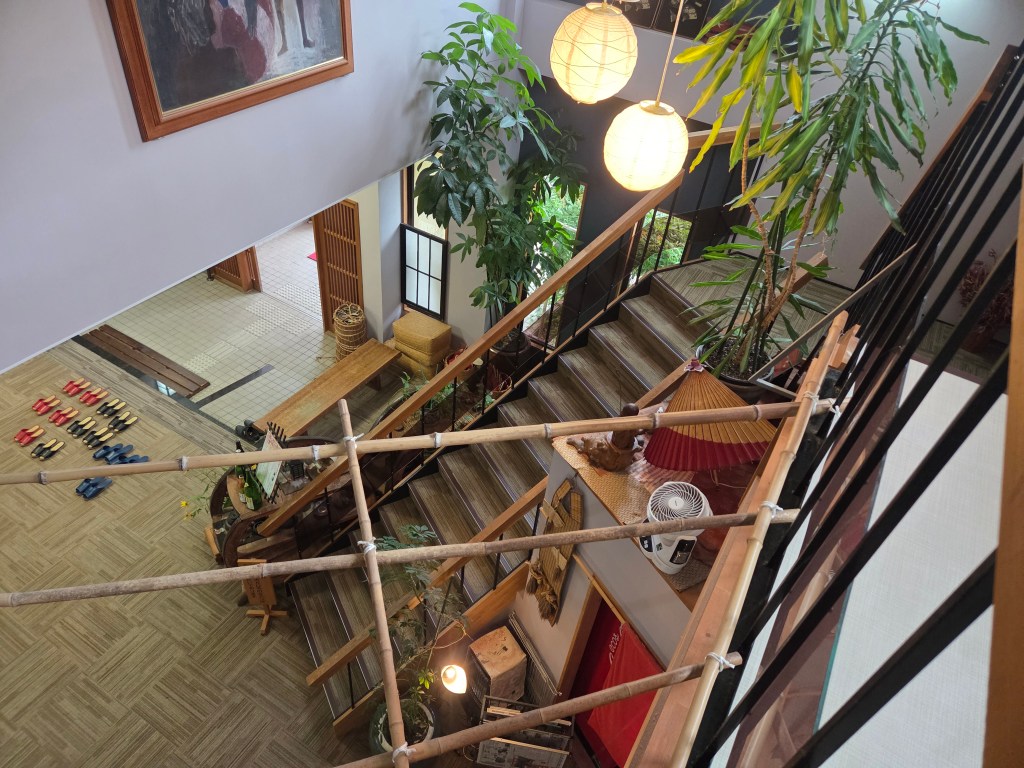
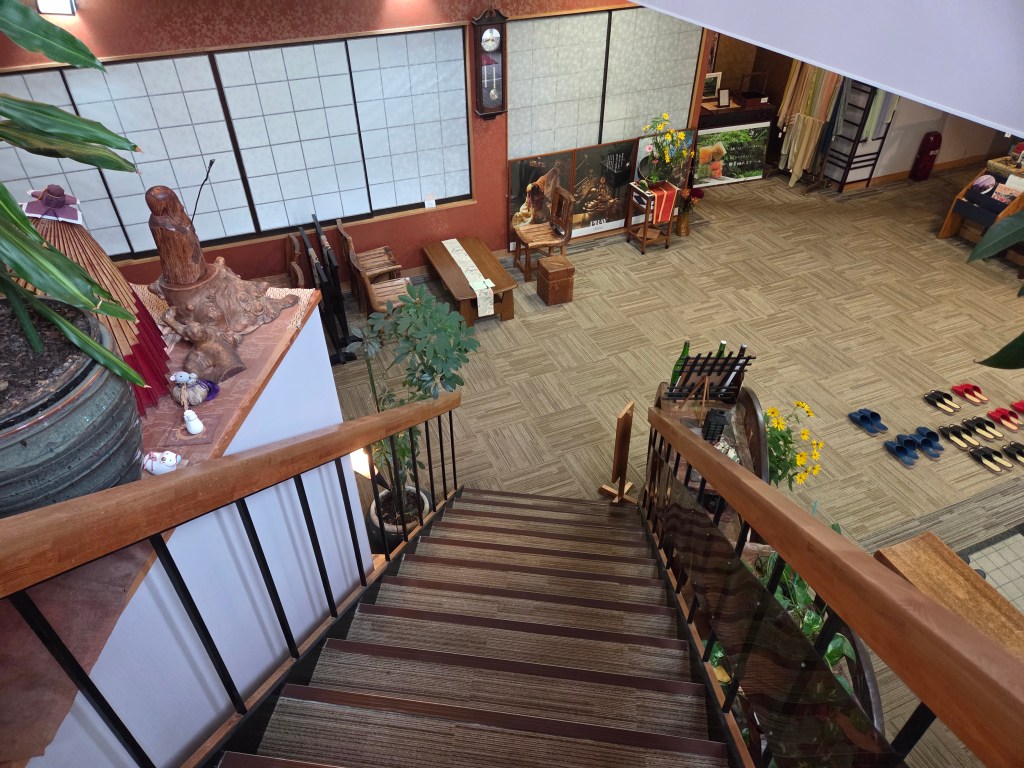
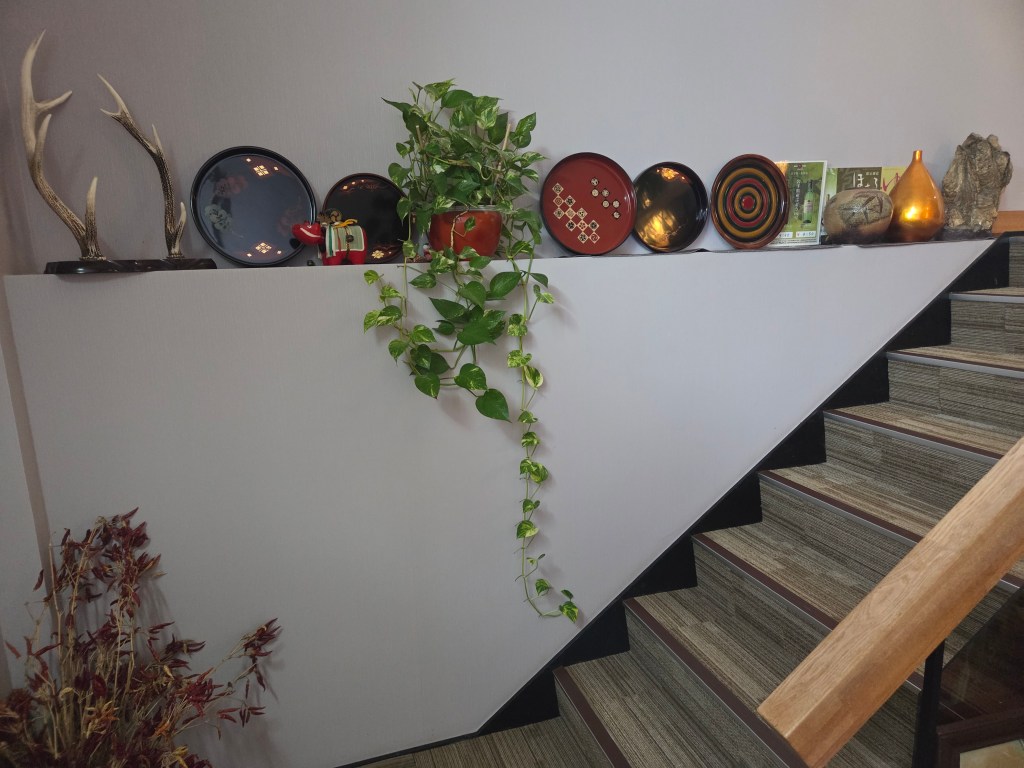
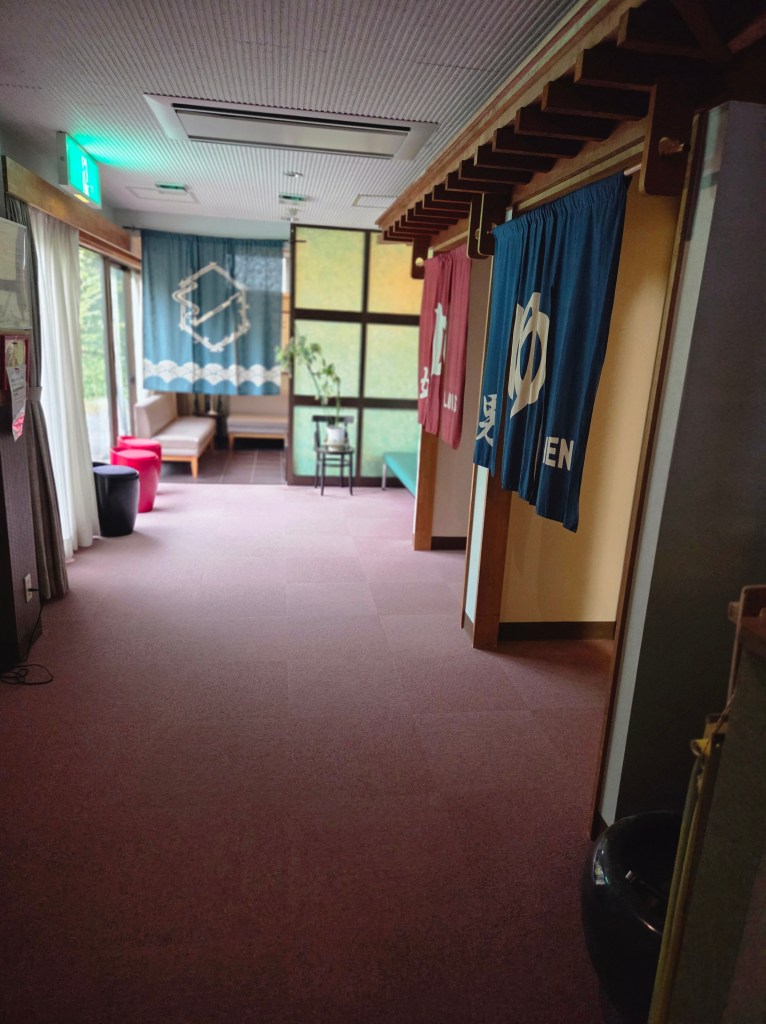
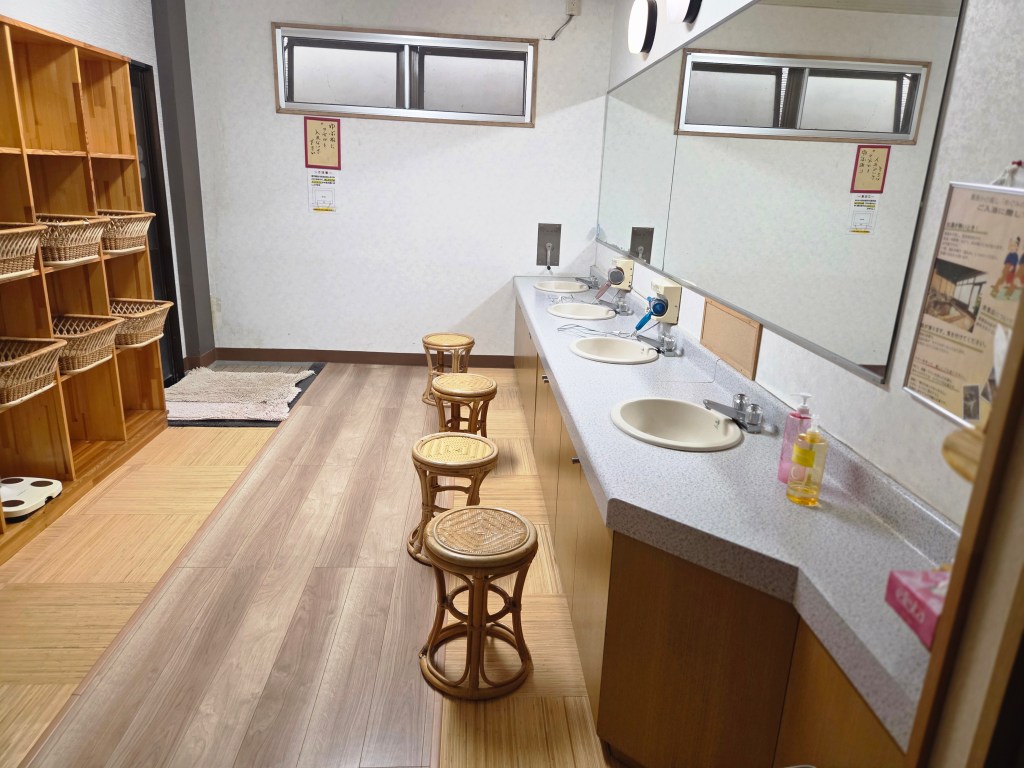

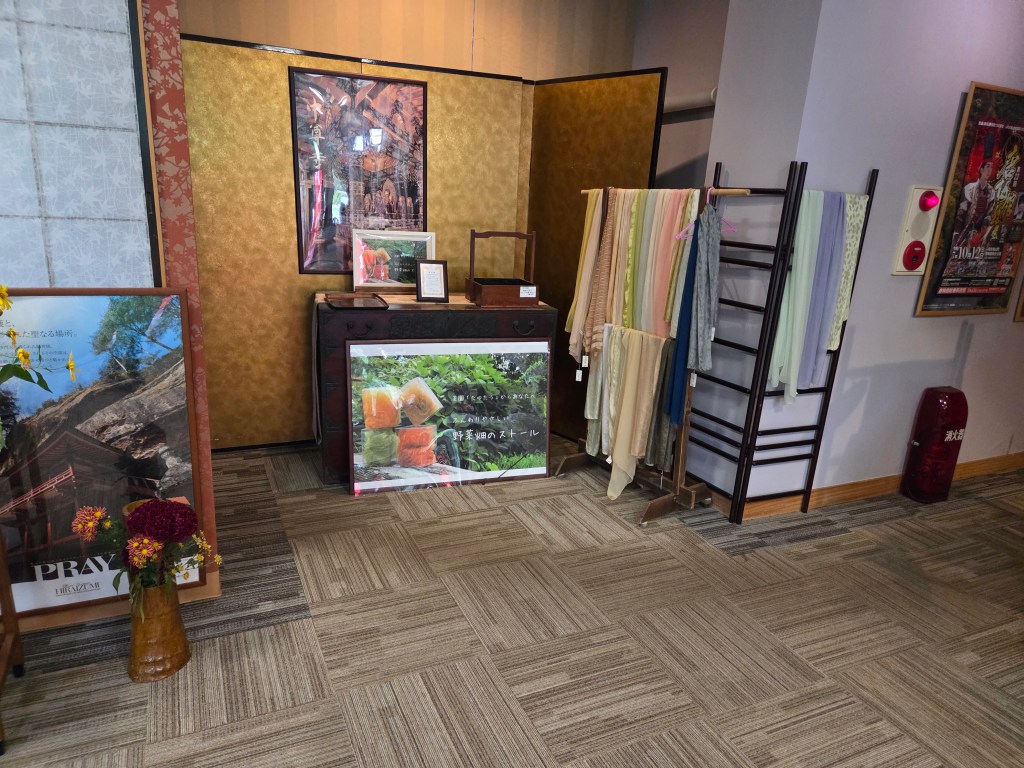
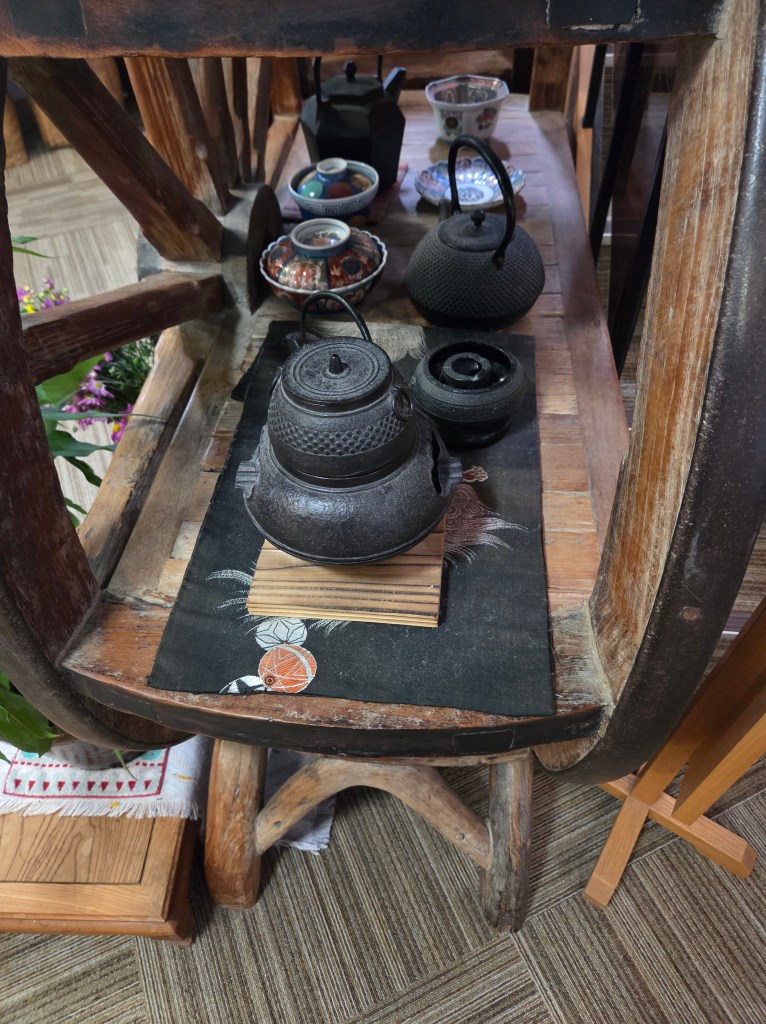
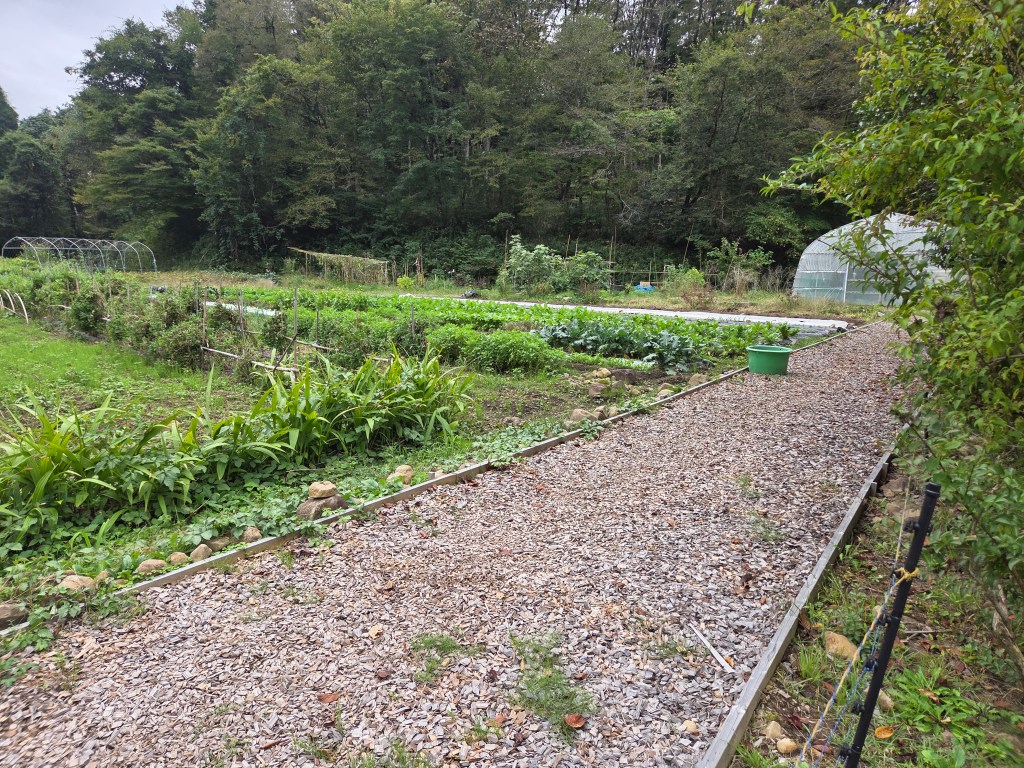
October 4
A Yamagata day.
After another good breakfast at the hotel we decided to stay in the city today. We took a little over an hour walk to downtown to visit the Yamagata Art Museum and Kajo Park, which is set inside the ruins of the ancient Yamagata Castle.
In my travels I’ve always enjoyed walking in the cities I’ve stayed in.
Today was no exception.
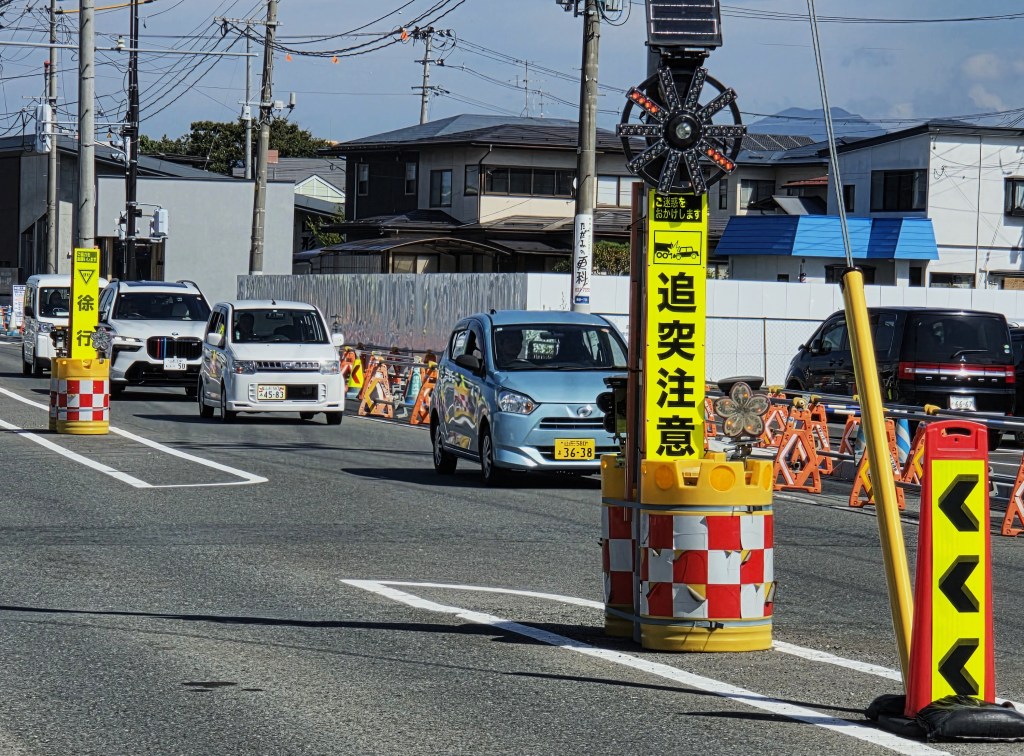
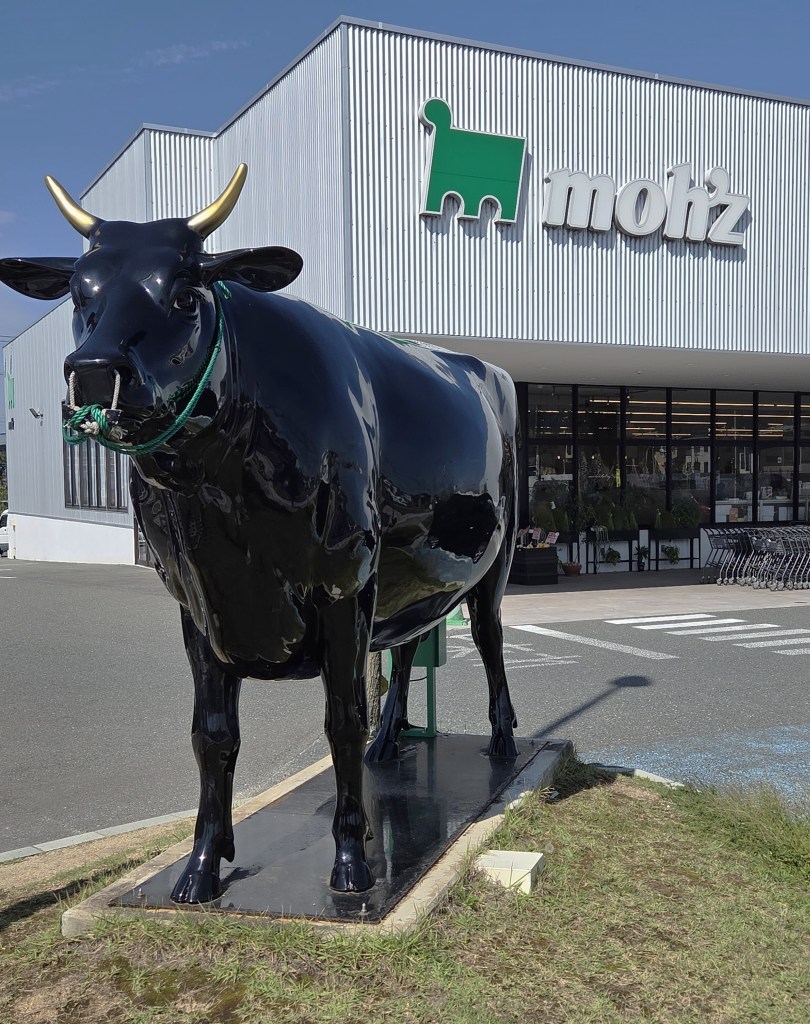
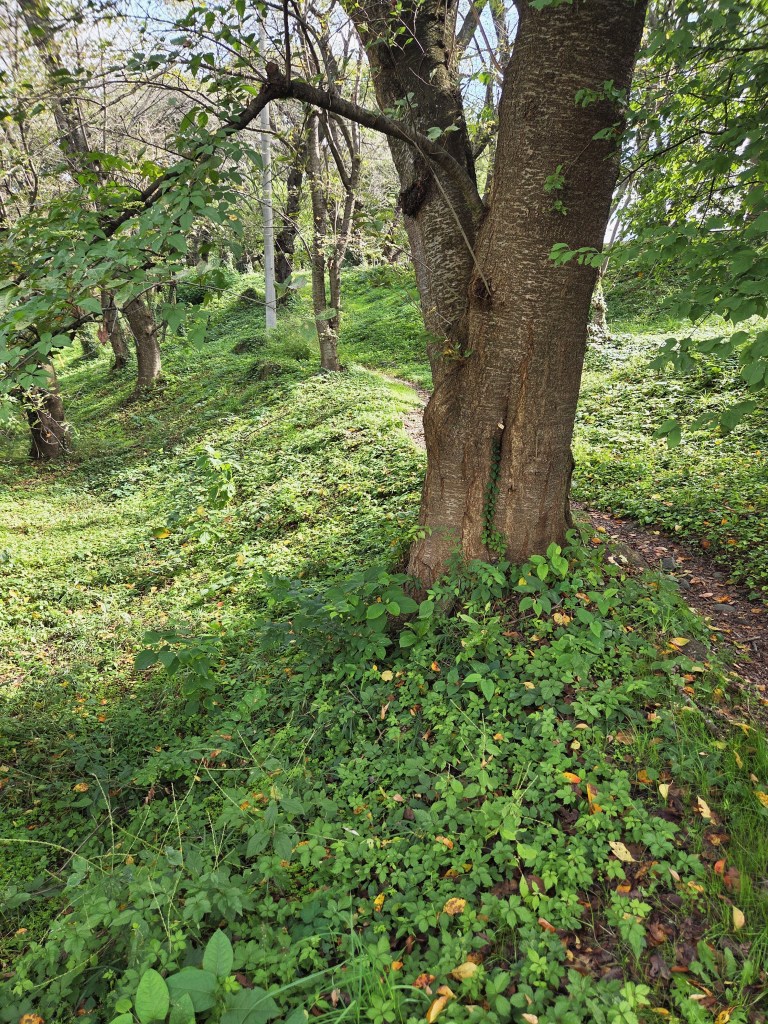
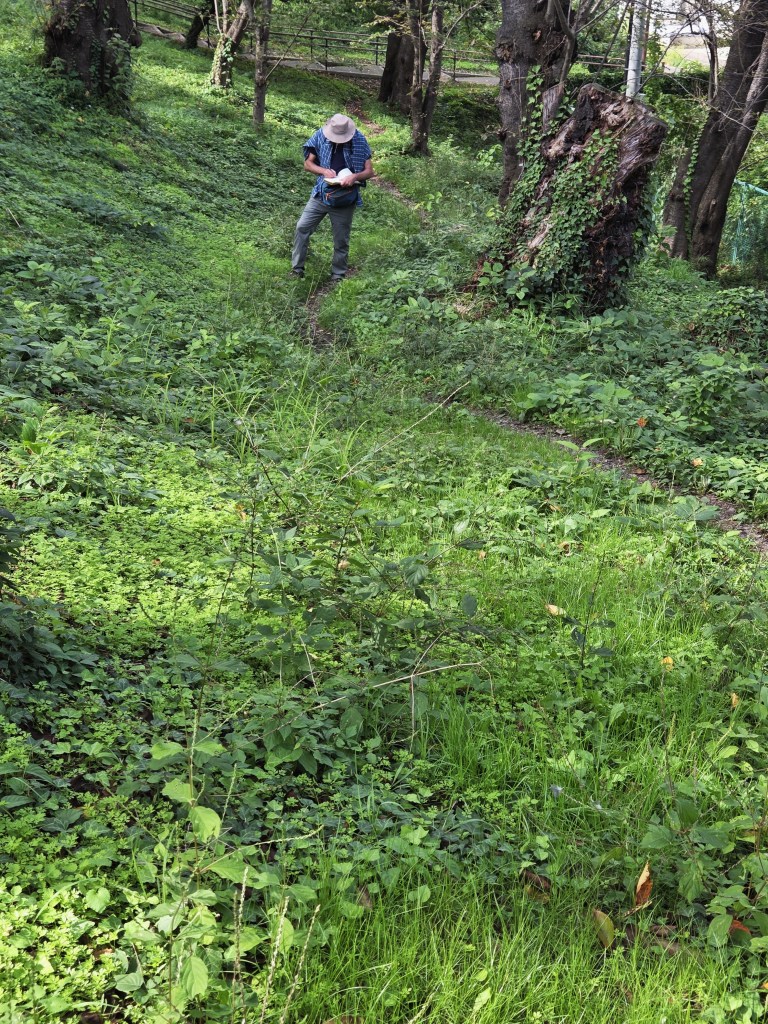
Little notices: (see pics)
Pinwheel light warning about road construction
Statue of a Yonezawa steer in front of a grocery store. Nationally renowned Yonezawa beef is a breed of cattle raised in the Yonezawa basin.
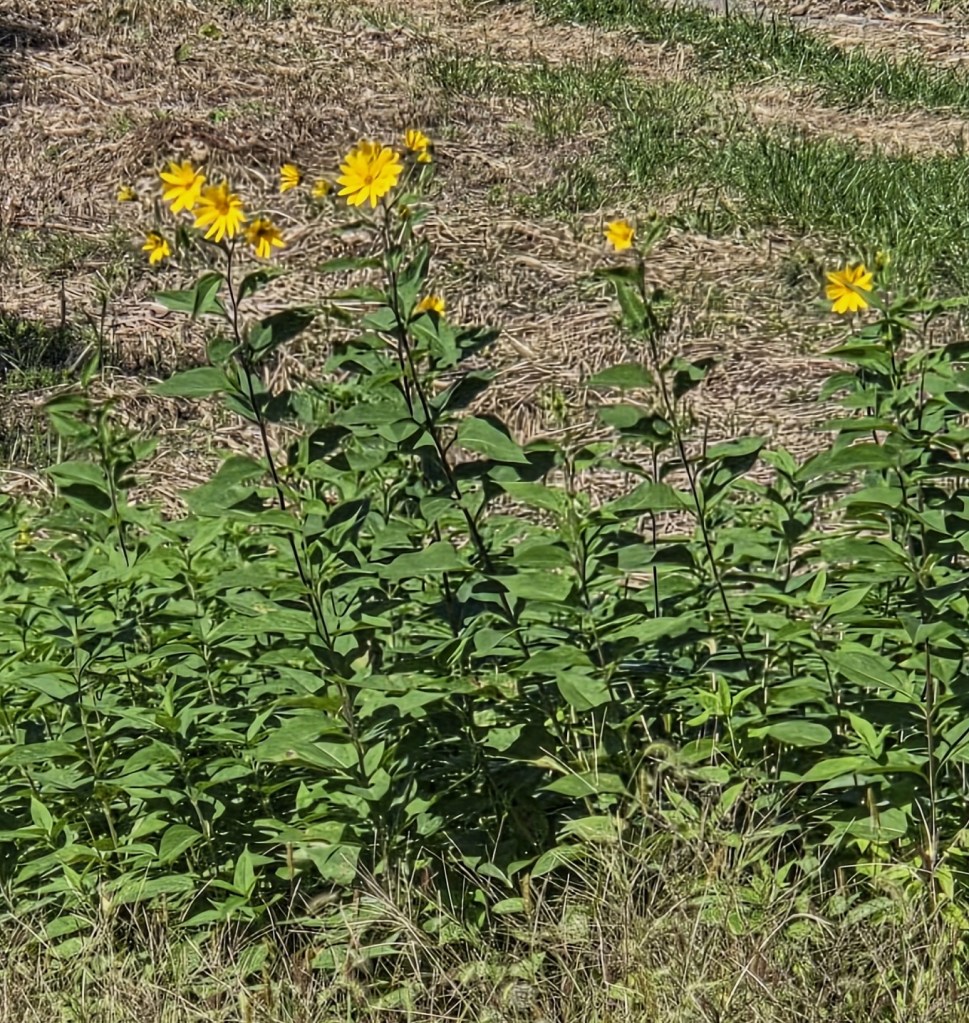
Small patch of flowers that I think might be Jerusalem Artichokes.
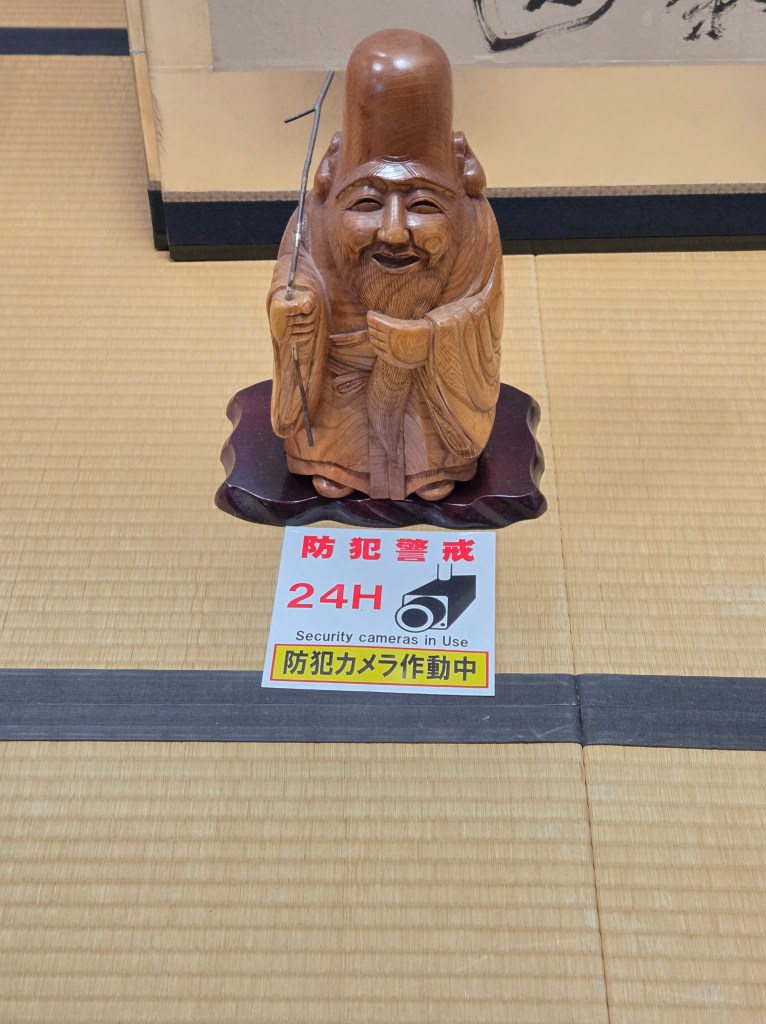
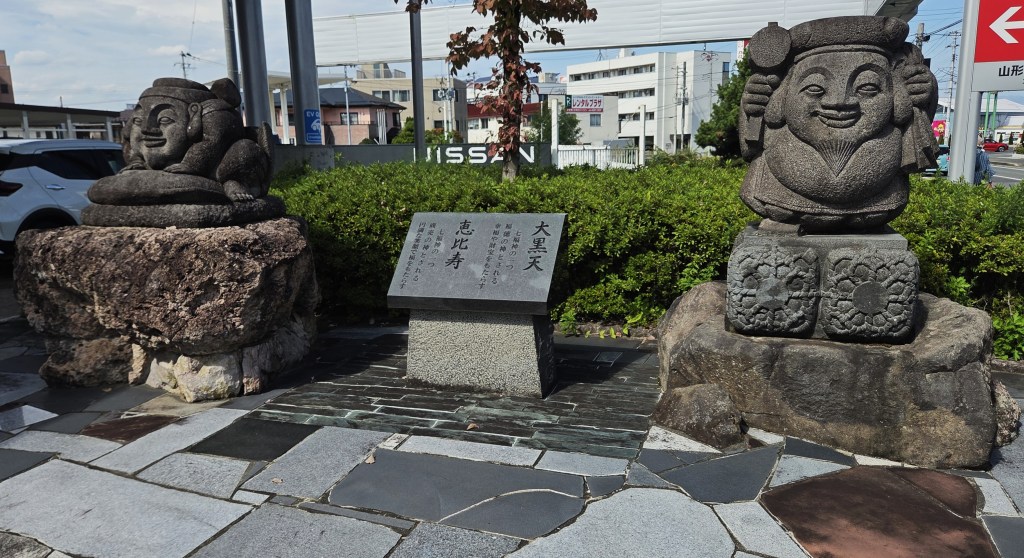
Two statues outside on a car dealer’s lot of Daikokuten, the deity that brings fortune and wealth.
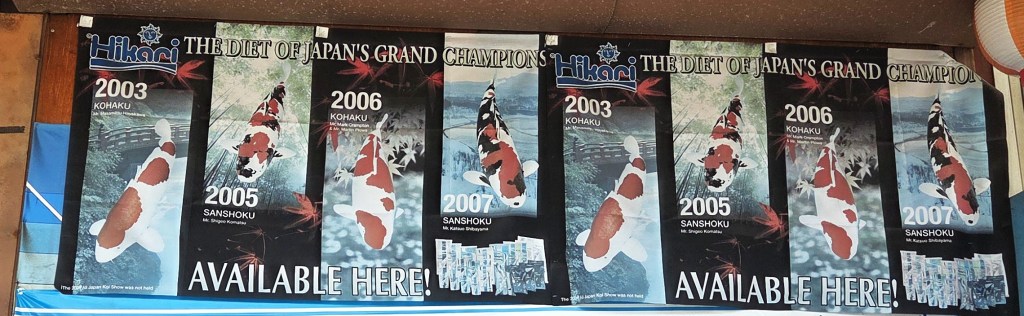
A fish store’s advertising poster.
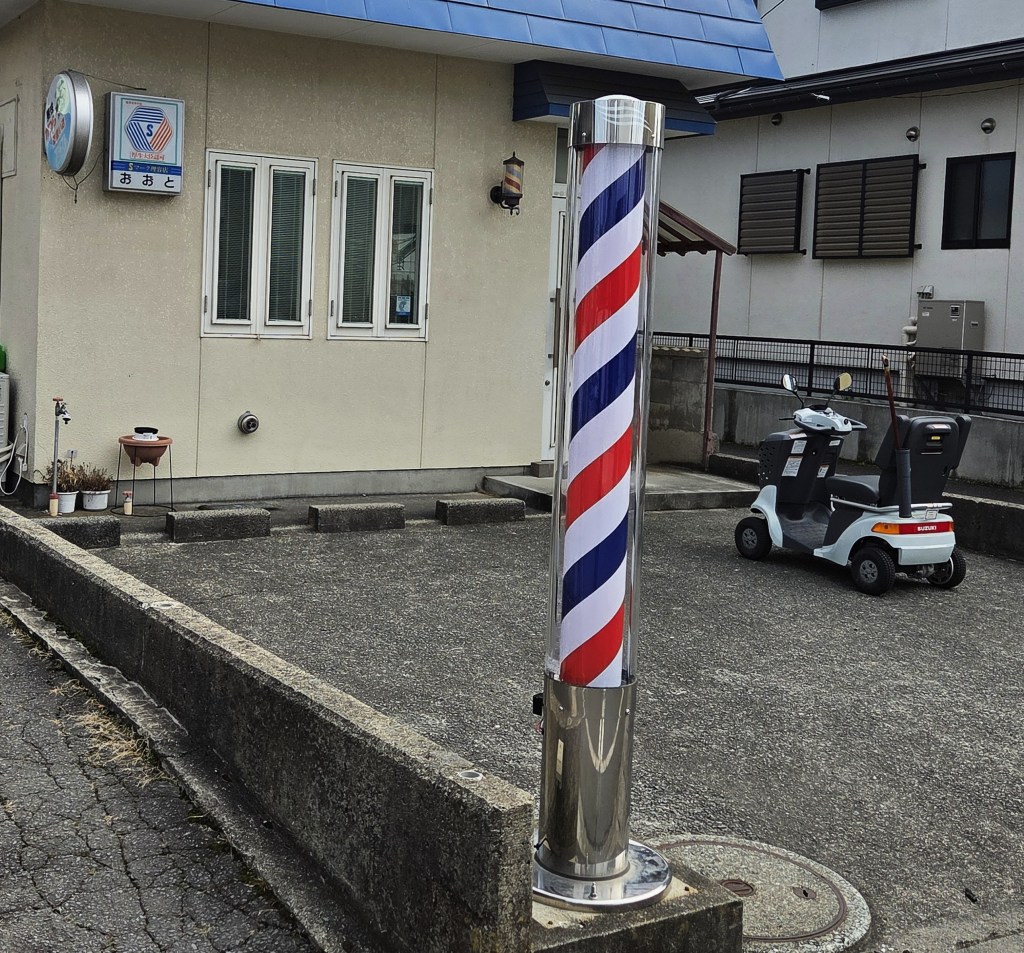
A barber shop.
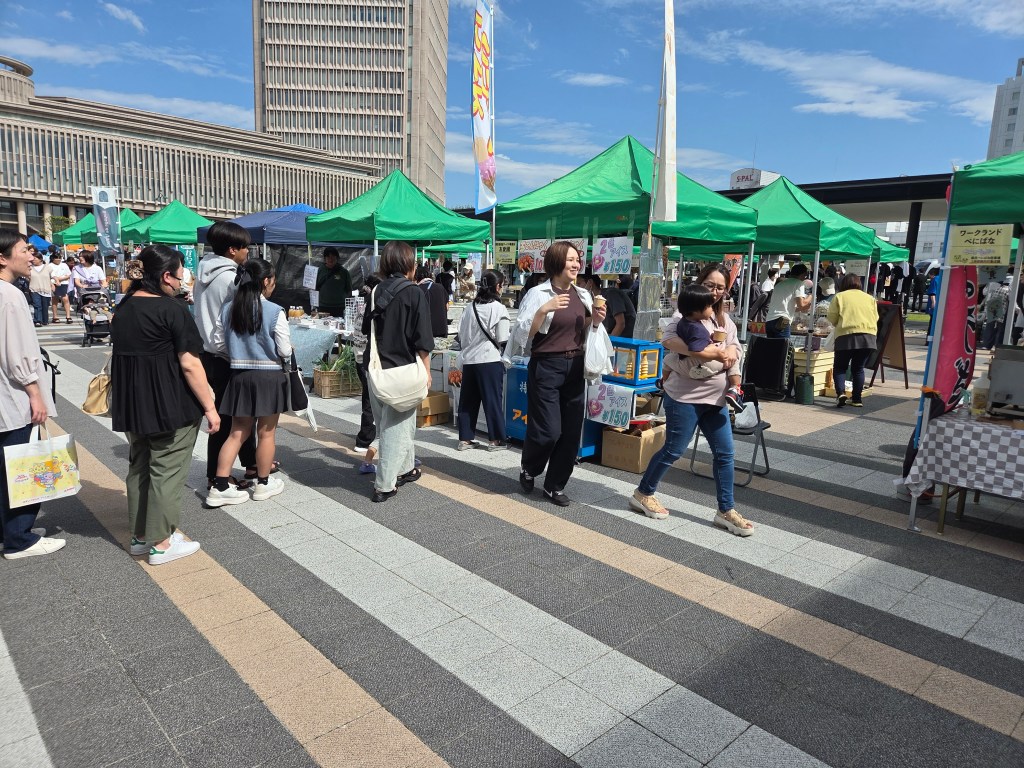
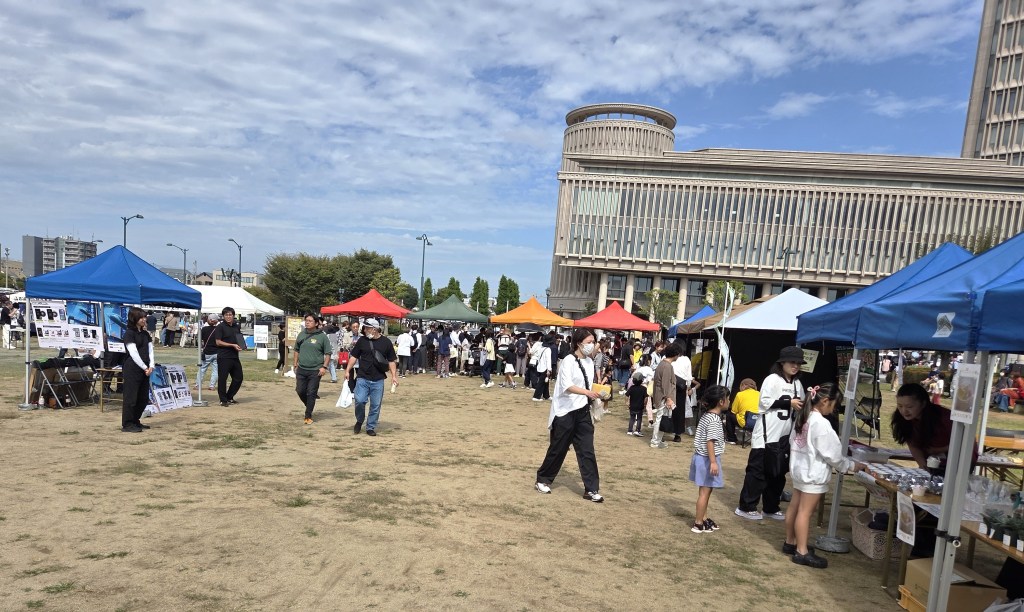
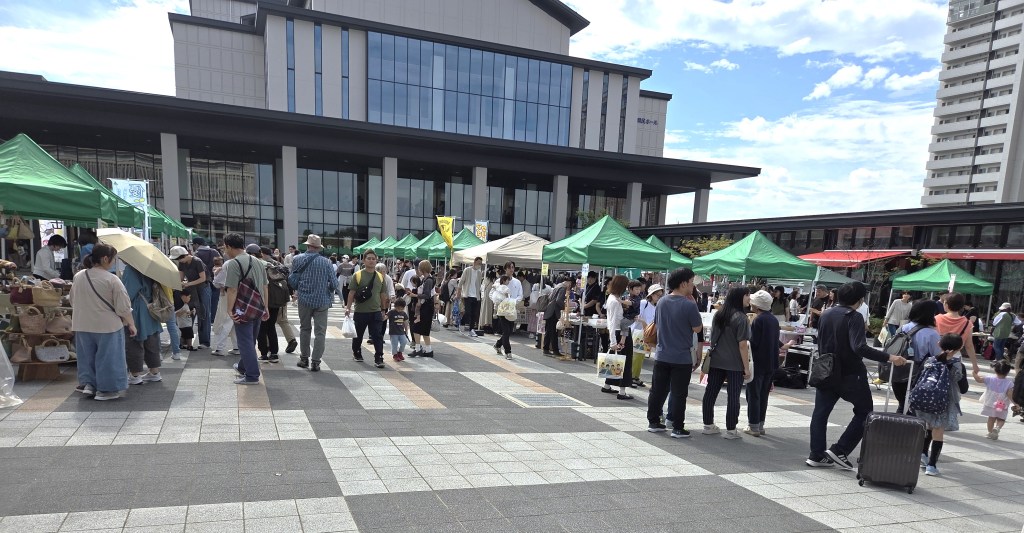
When we reached the central city area we came across an outdoor market where there were vendors of all sorts: agricultural products, arts and crafts, food vendors. There was even a children’s area with games and petting animals!
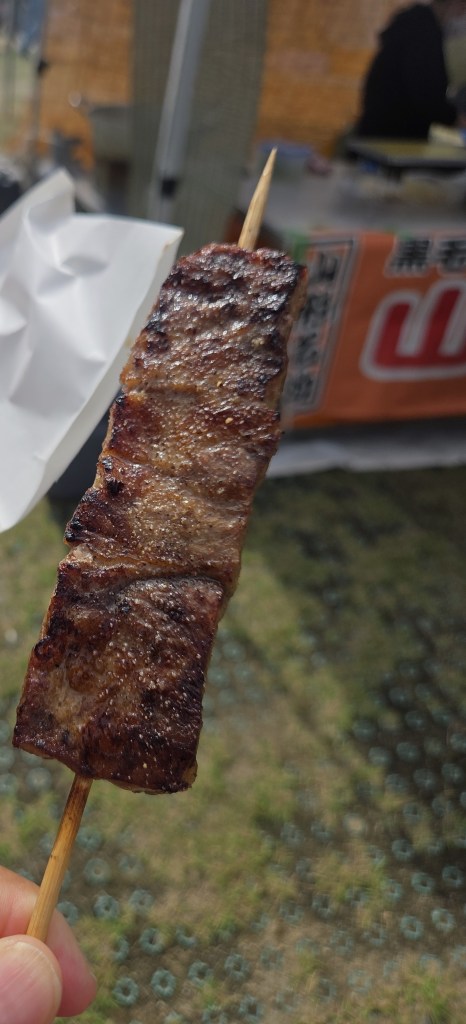
Bart bought a skewered grilled beef tongue that was actually delicious.
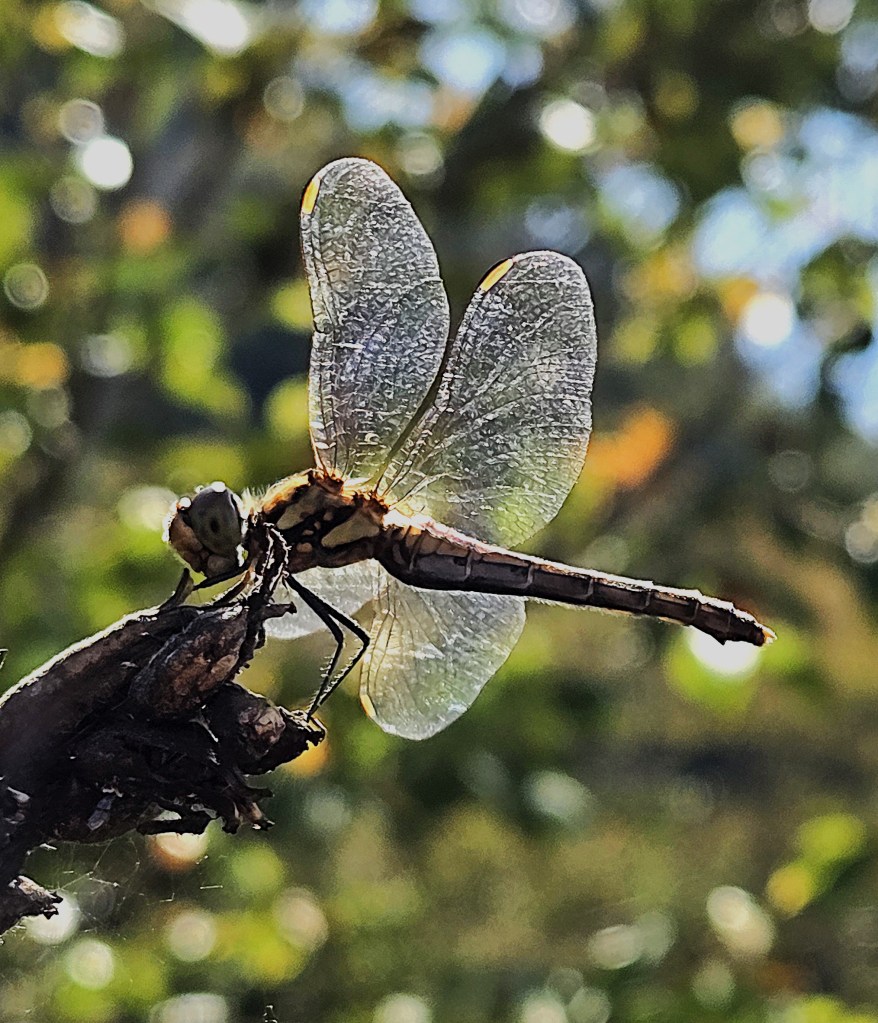
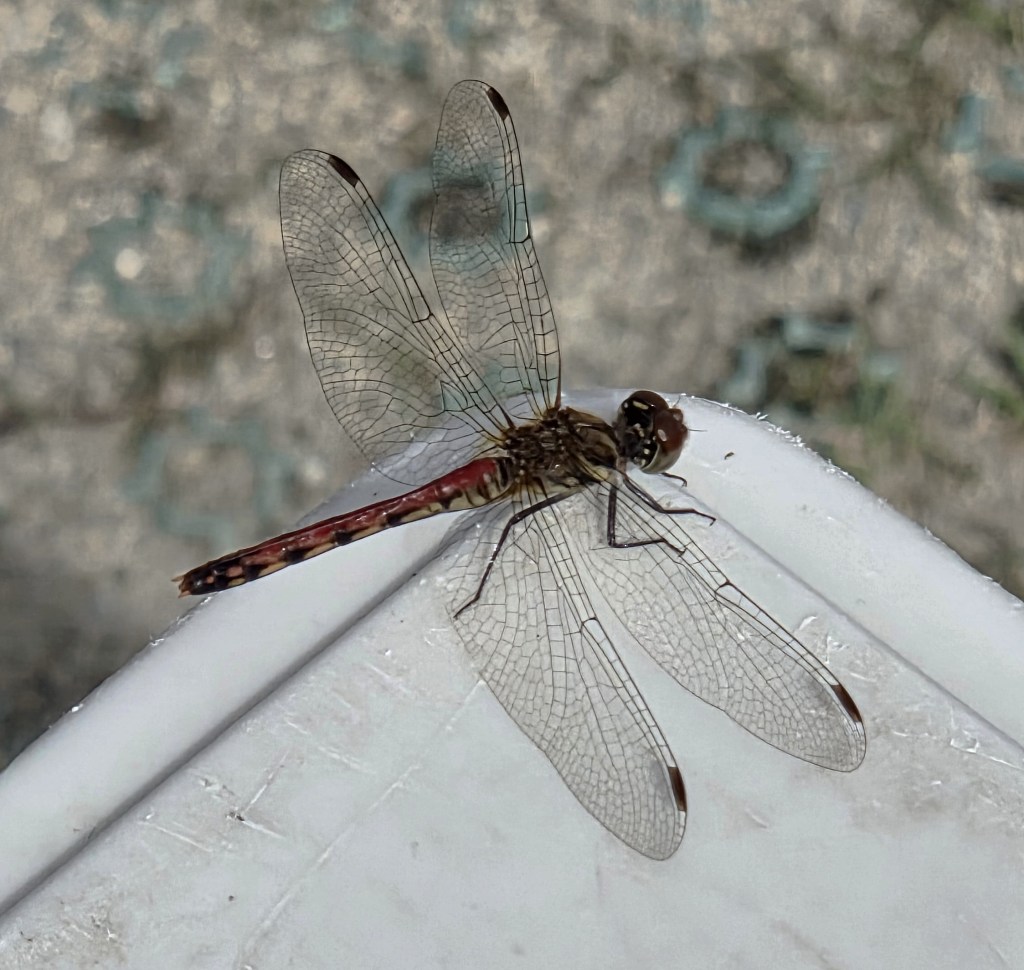
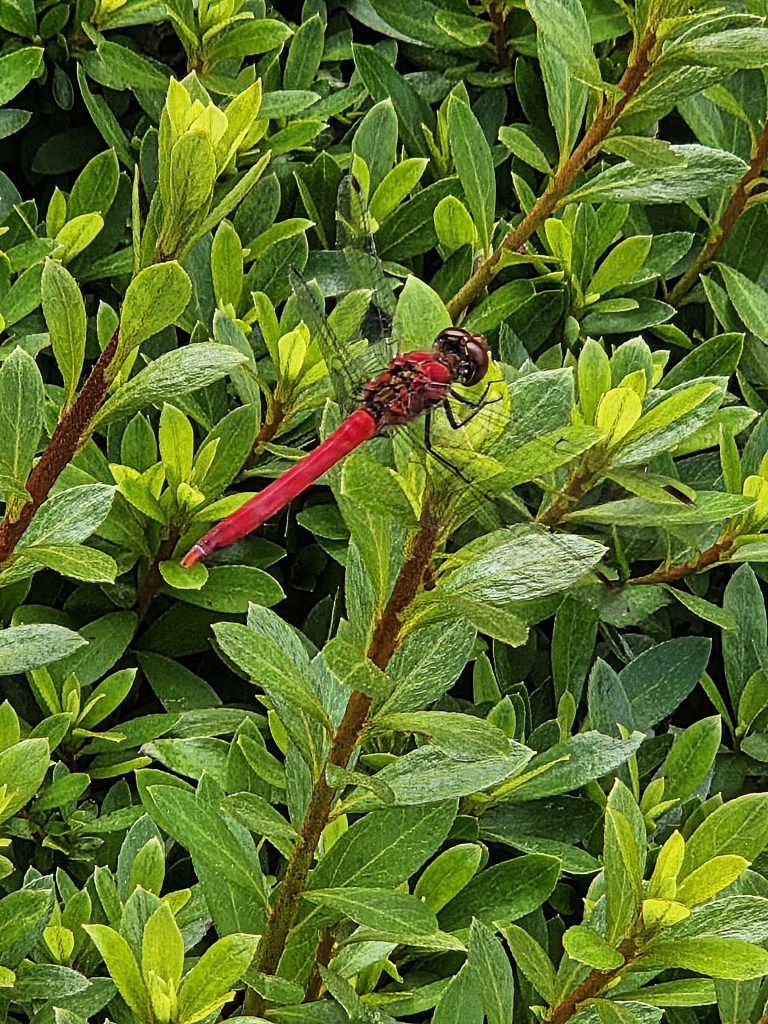
The dragonfly may be a Red Rock Skimmer.
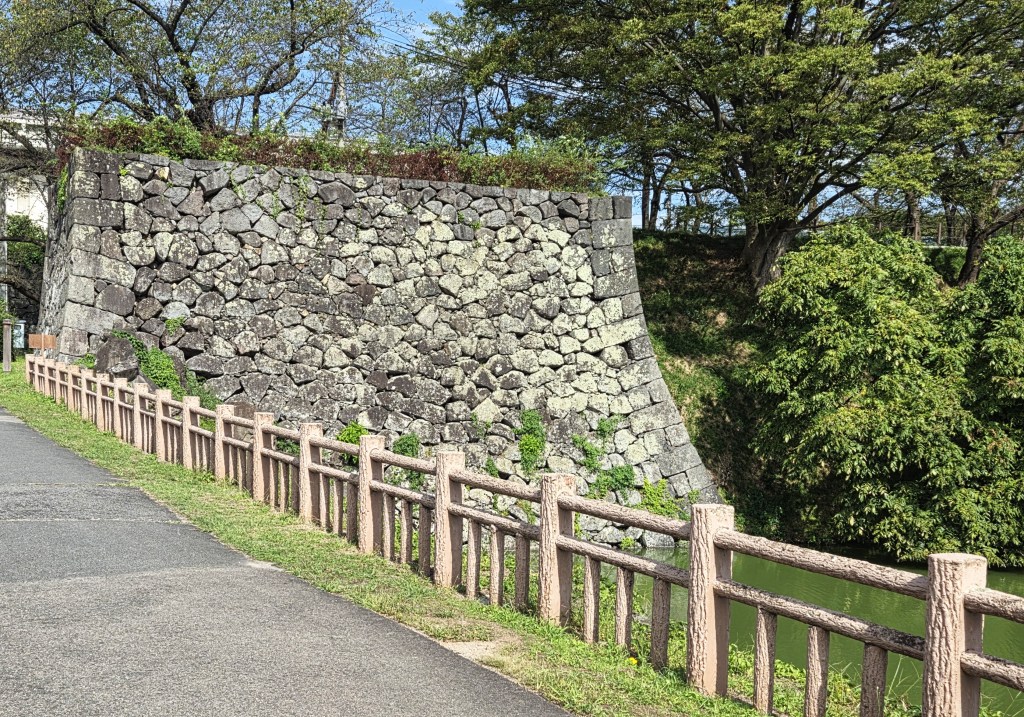
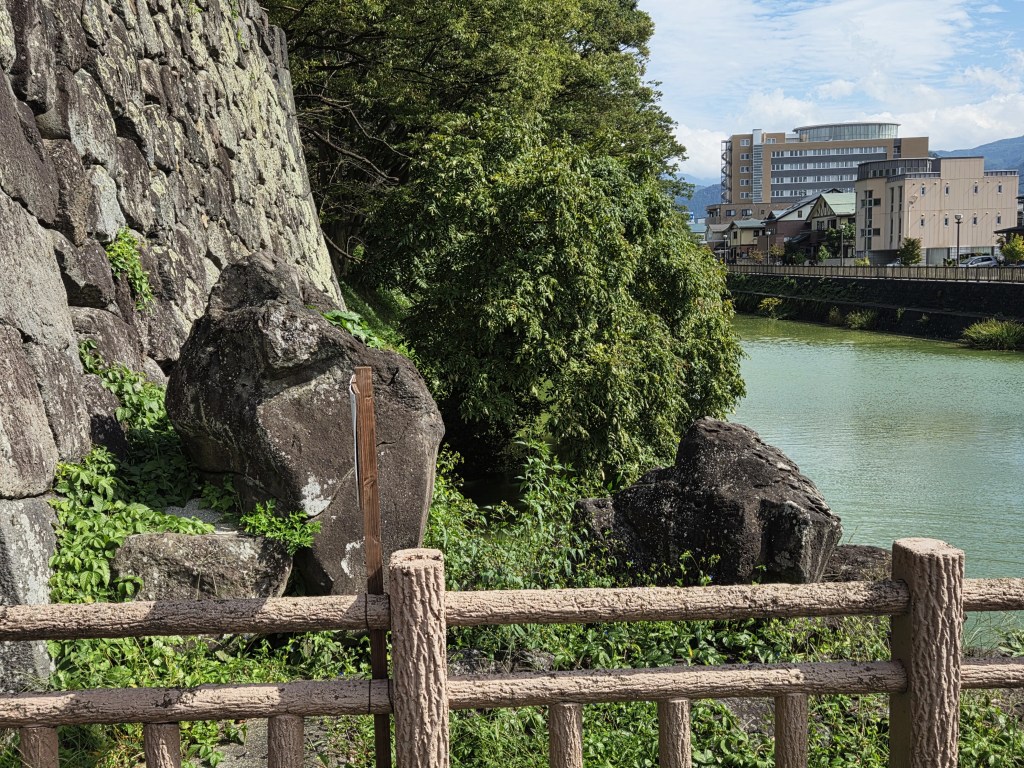
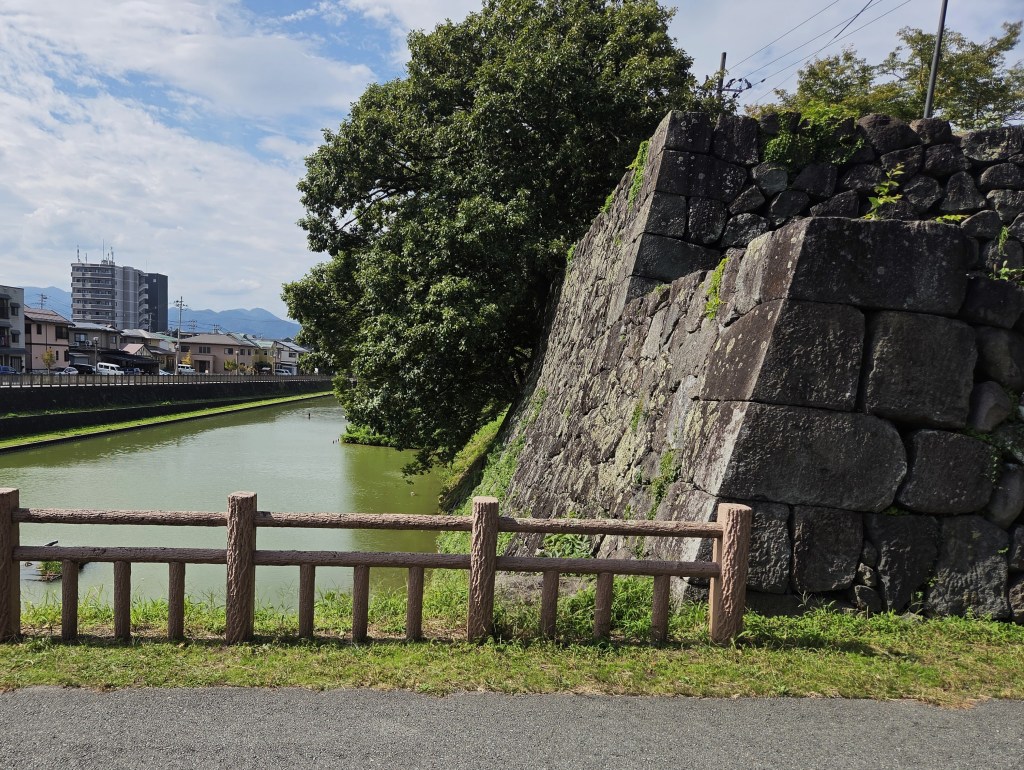
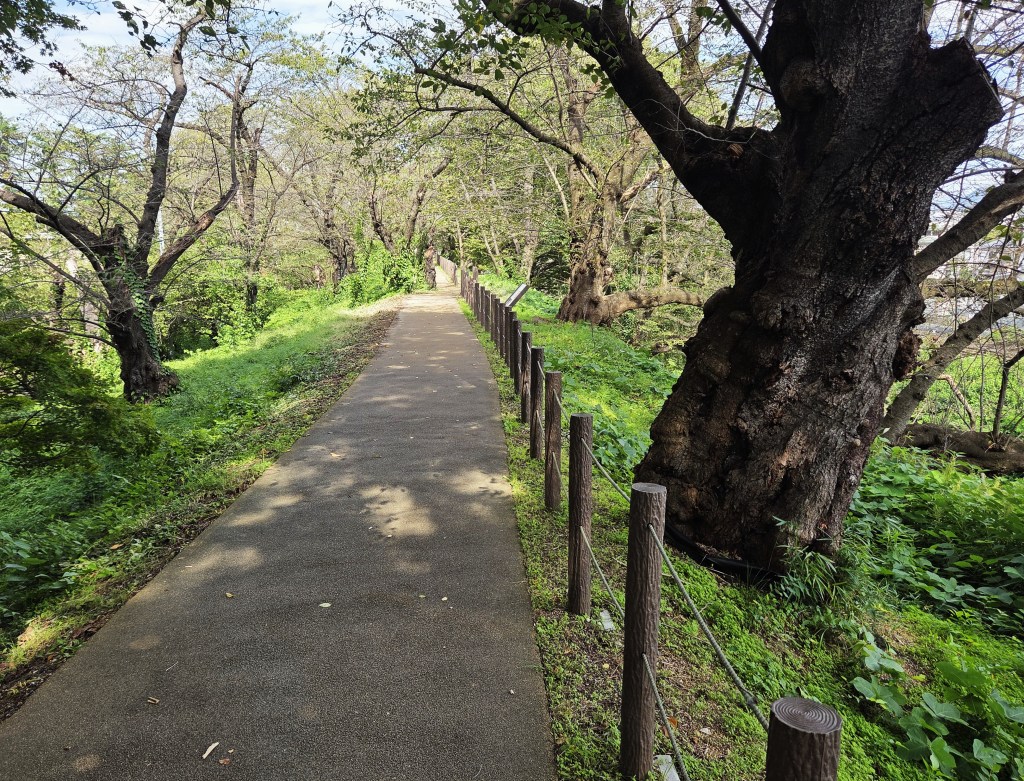
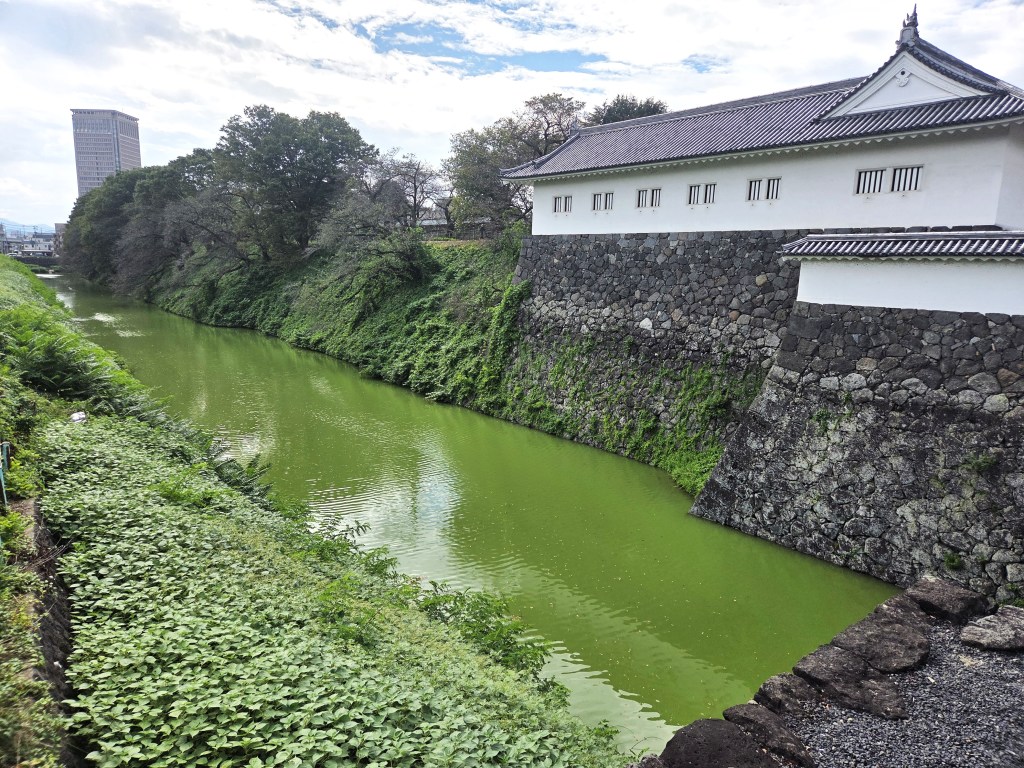
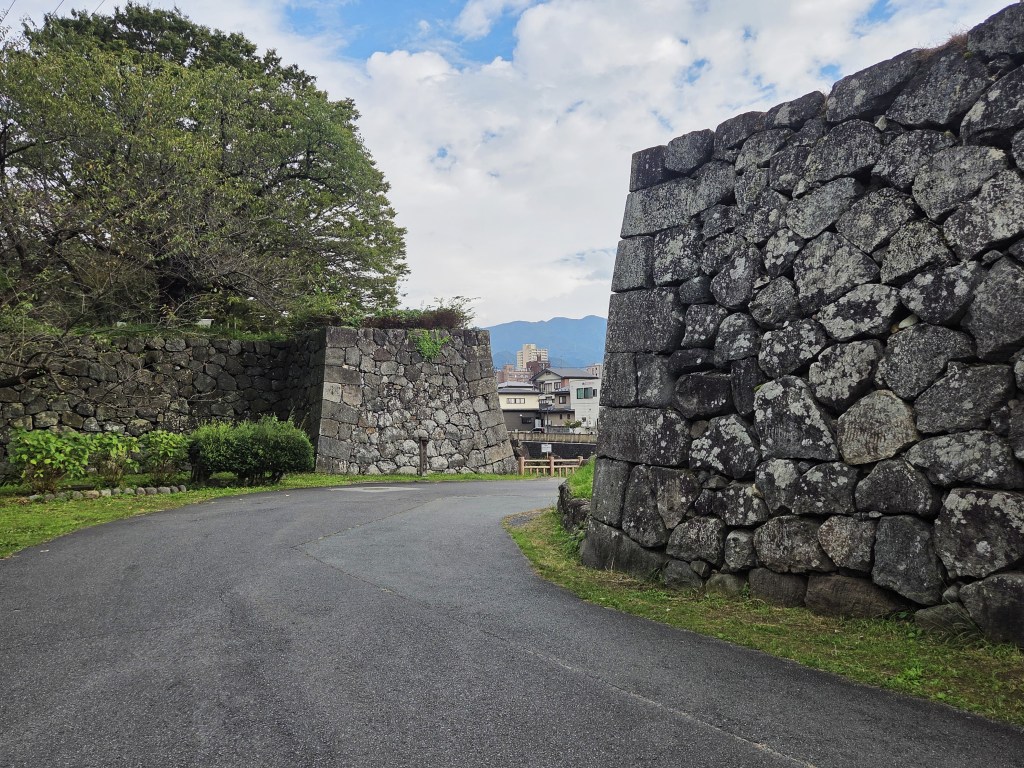
We then went over to Kajo Park that sets in the ruins of Yamagata Castle, originally built in 1357 and was in use through 1872. Some of the remains of the castle are still there, along with the original moat, which is quite impressive.
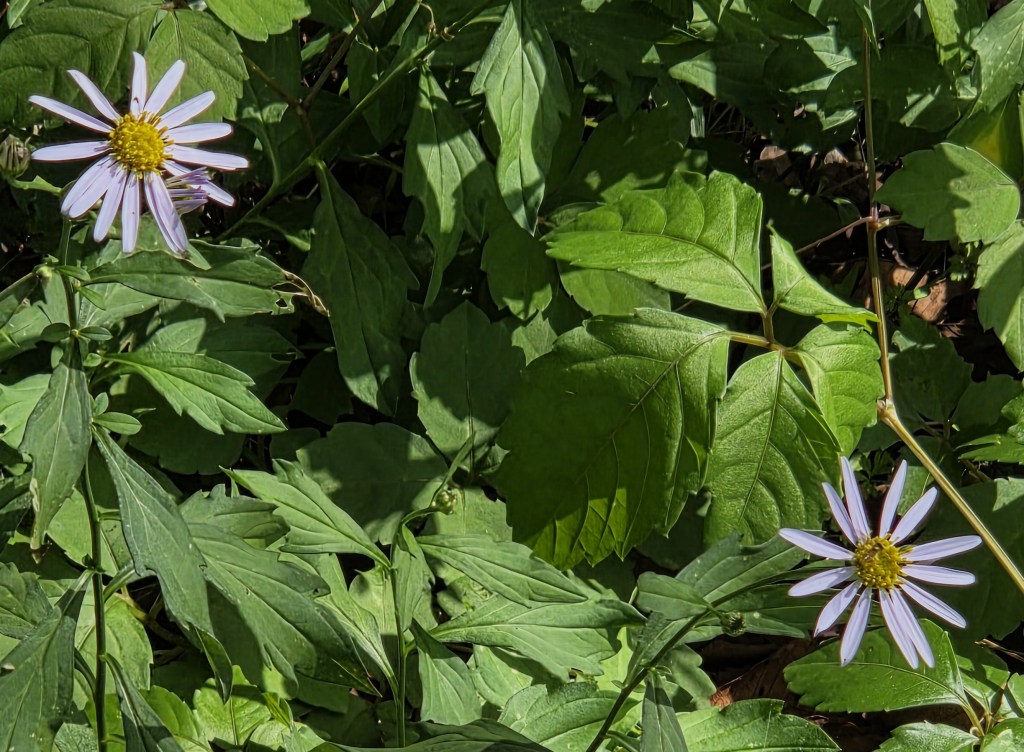
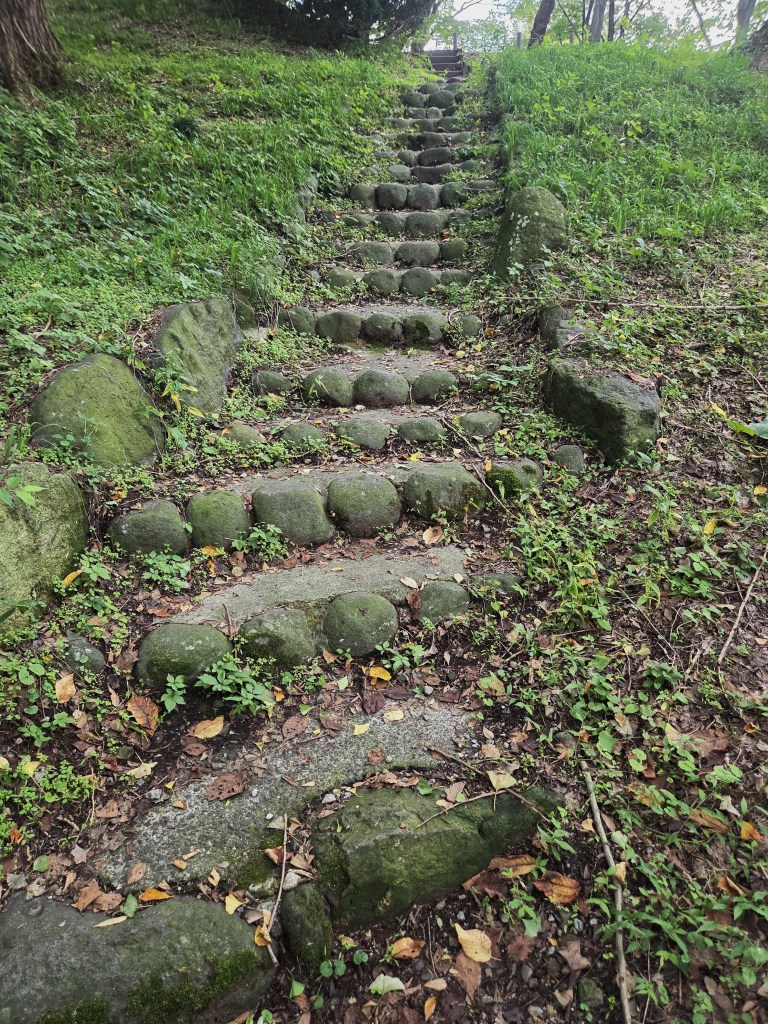
There are walking trails inside the castle ruins. We walked along one that followed the exterior walls. At one point I was looking at some flowers that looked like asters when a woman nearby was curious about what I was doing. I identified it (using the app Seek) as Kalimeris indica, which is indeed a member of the aster family. We then got into a conversation via Google Translate about flowers. She, Yoshima, showed us, on her phone, pictures of the cherry blossoms in the park which is an amazing sight. In 1906, over 1,000 cherry blossom trees were planted around the castle to commemorate the Russo-Japanese war. The pictures she shared were wonderful.
Bart noticed another dragonfly that I got a pretty good picture of. Google Search identifies it as Sympetrum darwinianum, also known as the Summer Darter.
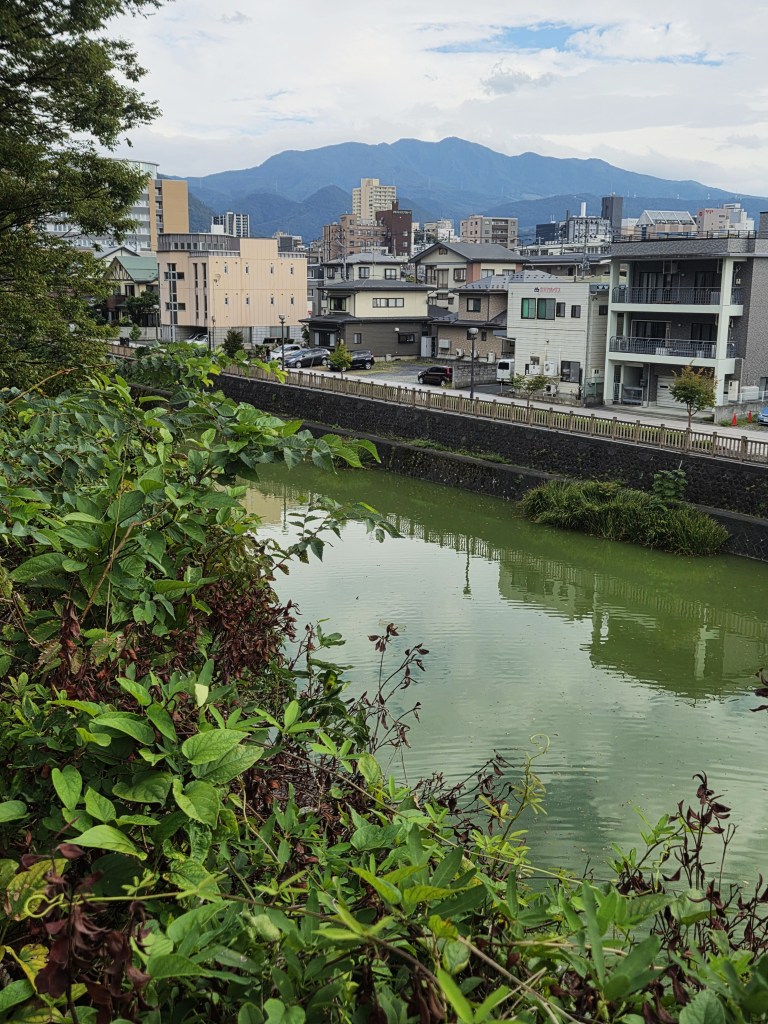
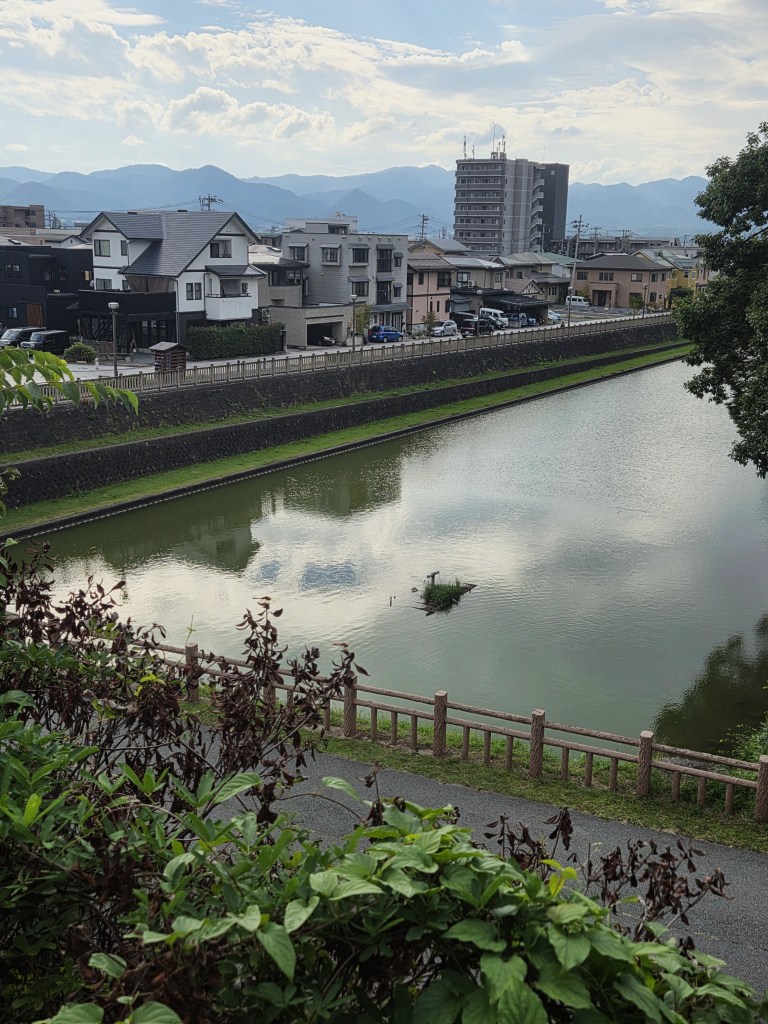
There are a number of pictures of the remains and restorations of the castle ruins and the moat.
Afterwards, we visited the Yamagata Art Museum. The main attraction there was a reproduction of Buson’s rendition of Basho’s “Narrow Road to the Far North.” It is a six panel piece that Buson made with the whole text of Basho’s work along with a number of drawings of Buson’s. It was very moving to be able to see this, even though it was a realistic reproduction and not the original. The museum has the original, but it is too delicate and valuable to put on display.
Being with it for a long time, I realized the gratitude and admiration Buson felt for Basho to have put so much energy into producing this masterpiece.
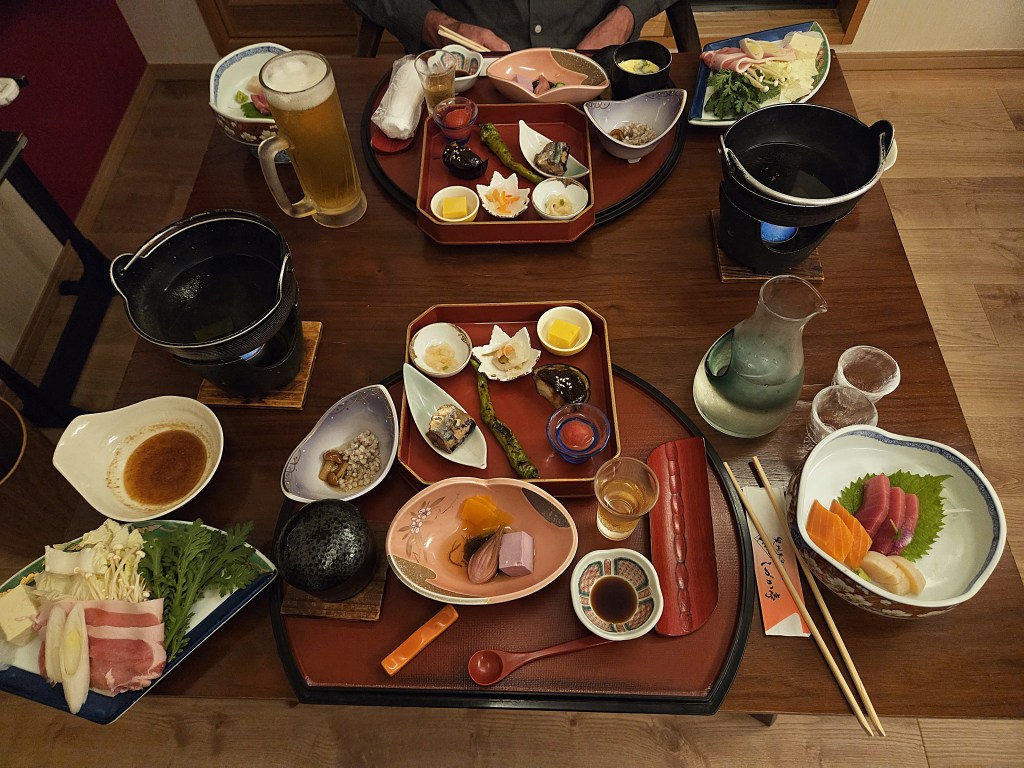
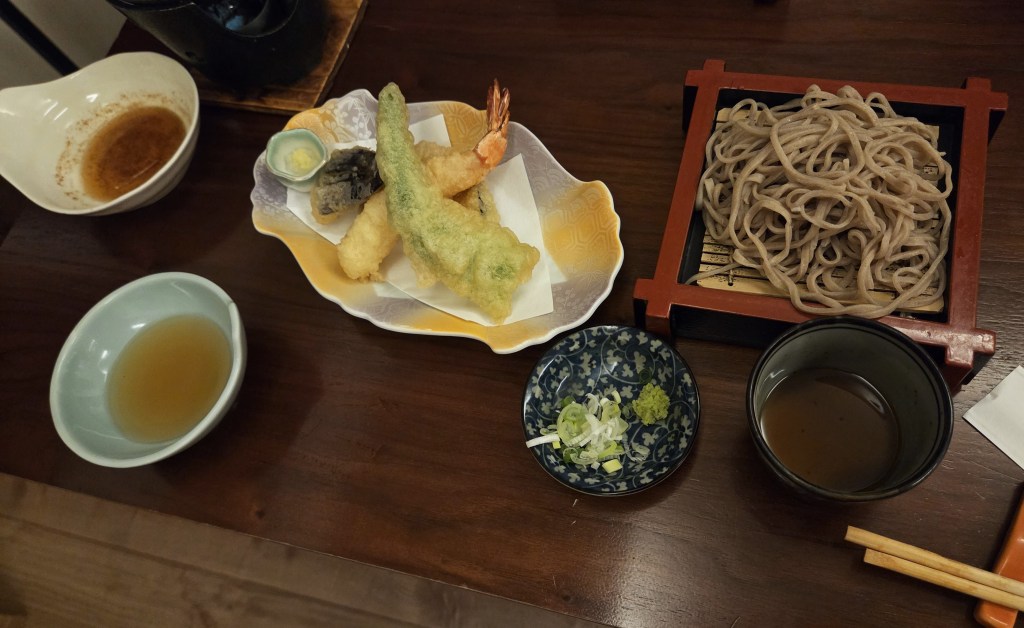
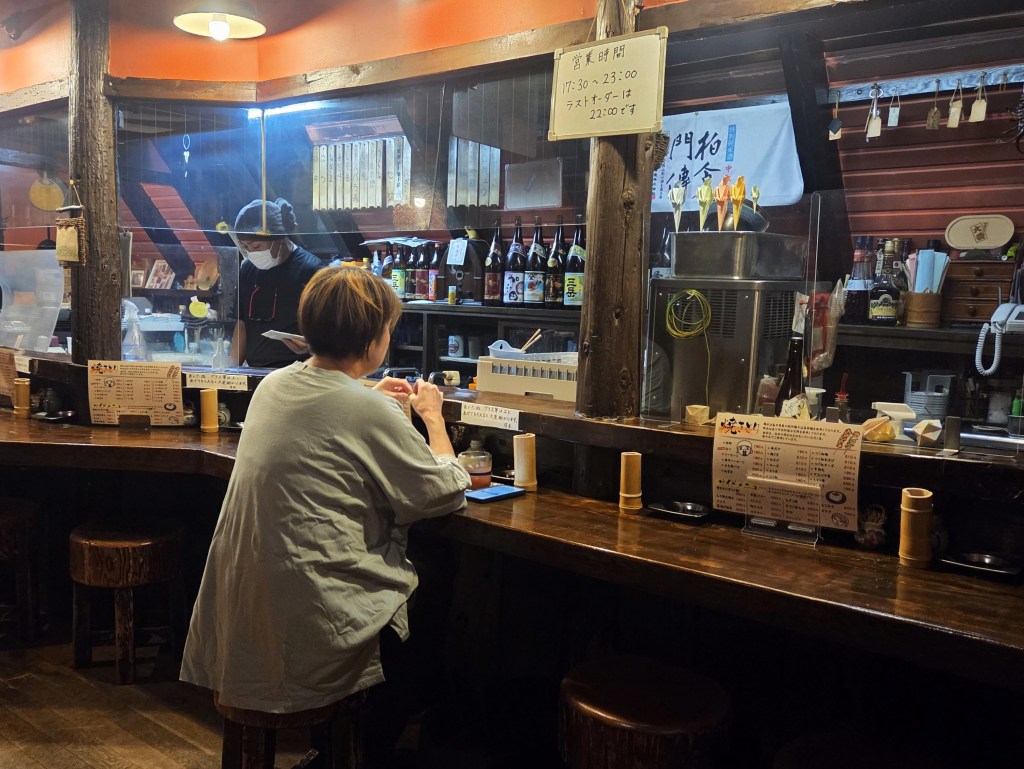
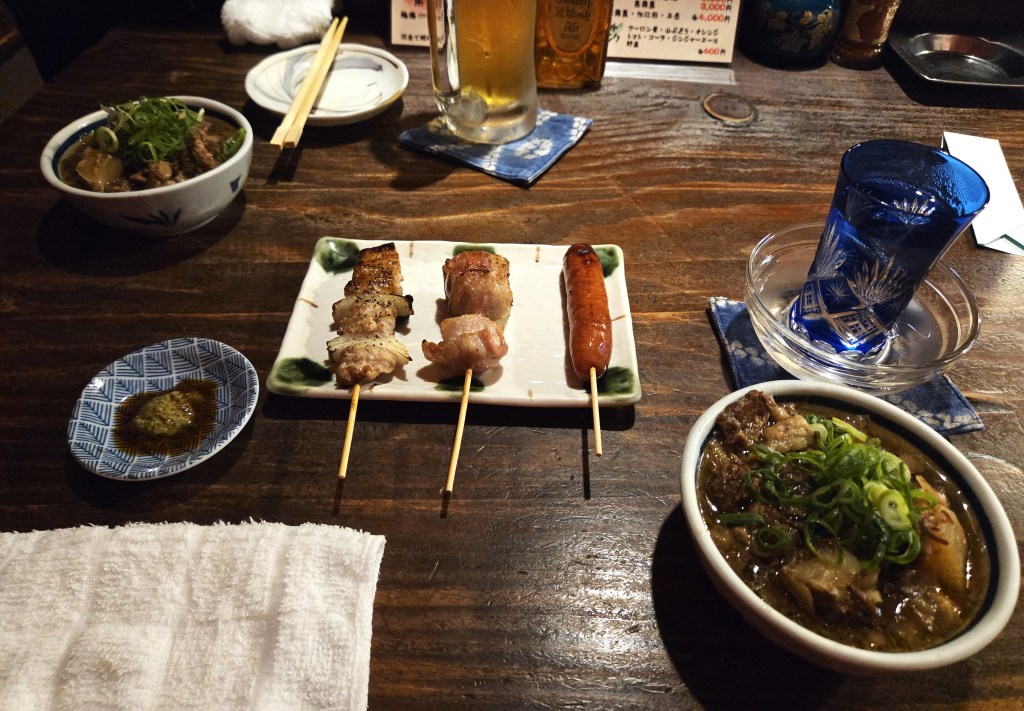
We took a cab back to the hotel and then had one more amazing meal at a small out of the way side street restaurant. I had Imoni, a traditional stew of Yamagata.
After just a little over a week of Japanese restaurant food, I wonder how I will relate to what we have available back home.
Tomorrow on to Hiraizumi for two days, a UNESCO World Heritage Site.
(Click on thumbnail for larger picture.)
October 3
Breakfast included at the hotel stay here in Yamagata. A good breakfast with a fair amount of variety of foods. Nowhere near though, what the hotel in Fukushima offered.
Today was a Yamadera day. The ocean shore at Matsushima is behind. Now it’s mountain time.
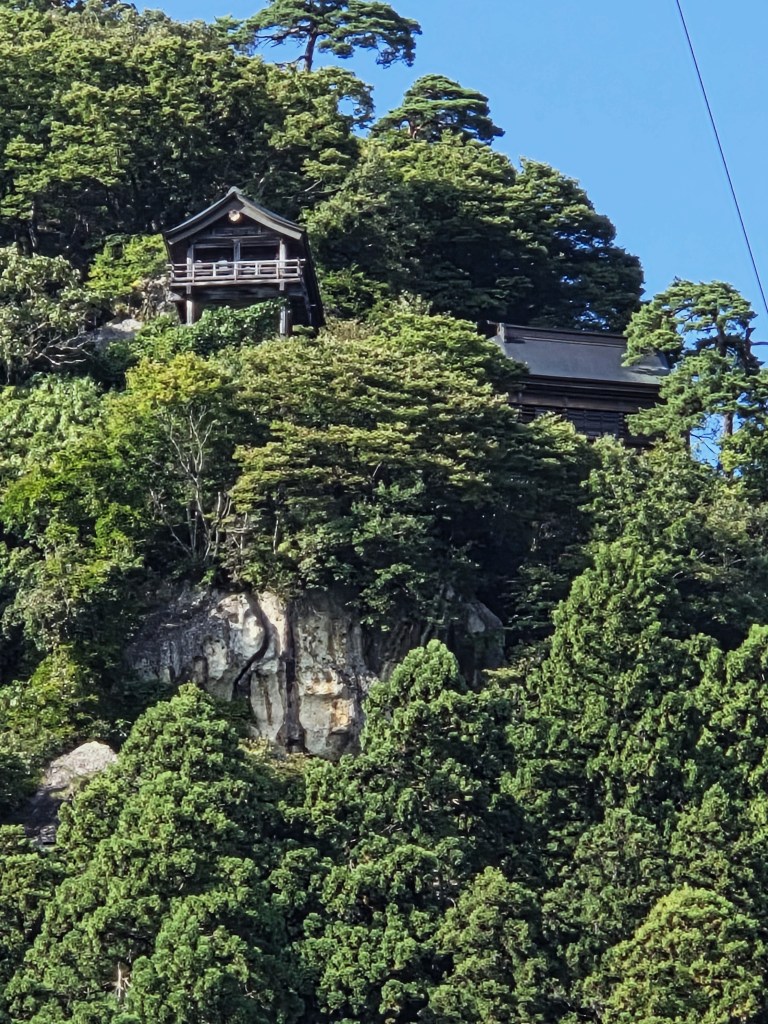
Yamadera means “mountain temple.” It is a much sought out destination for visitors to Japan, and for many Japanese residents.
We needed to take a train ride to Yamadera. When we got to the Yamagata train station we bought tickets but then missed the next train by two minutes! So, we had to wait a little over an hour for the next train.
Something others who have been to Japan mentioned to me, and what we have now experienced, is that Japan trains are always precisely on time. Every train we have taken has been EXACTLY on time.
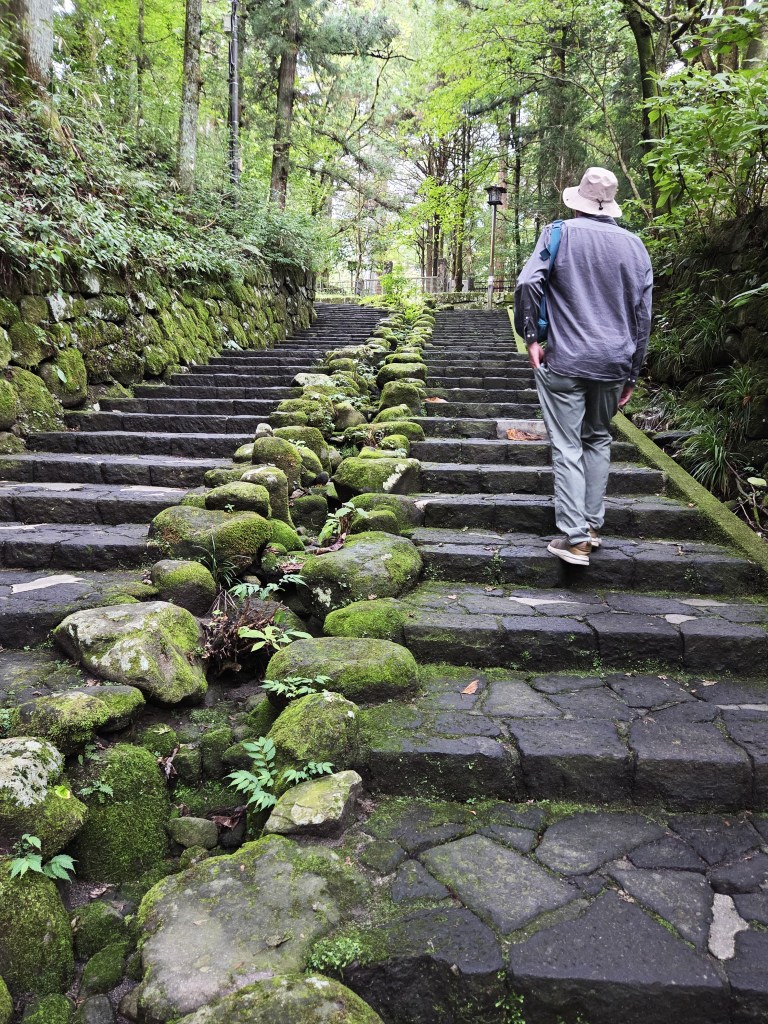
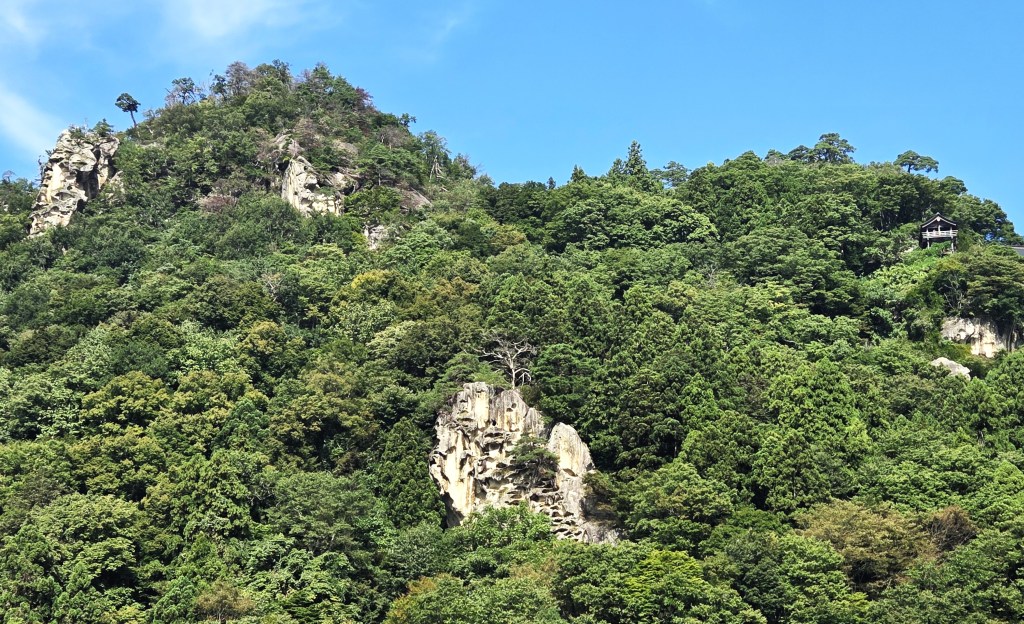
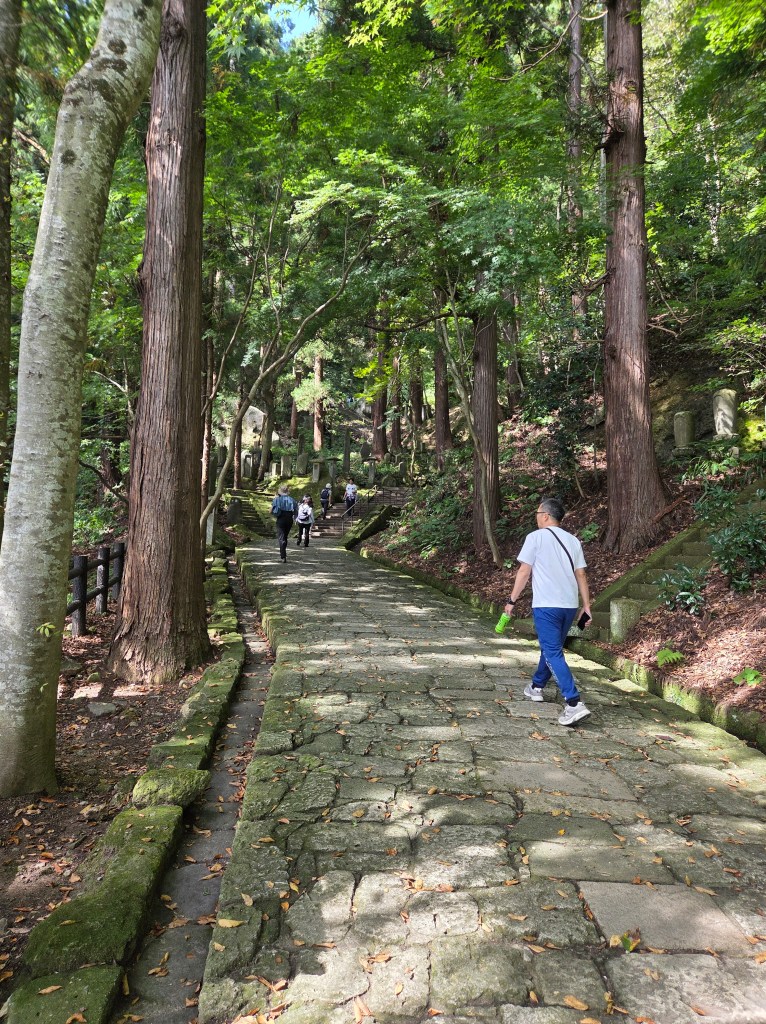
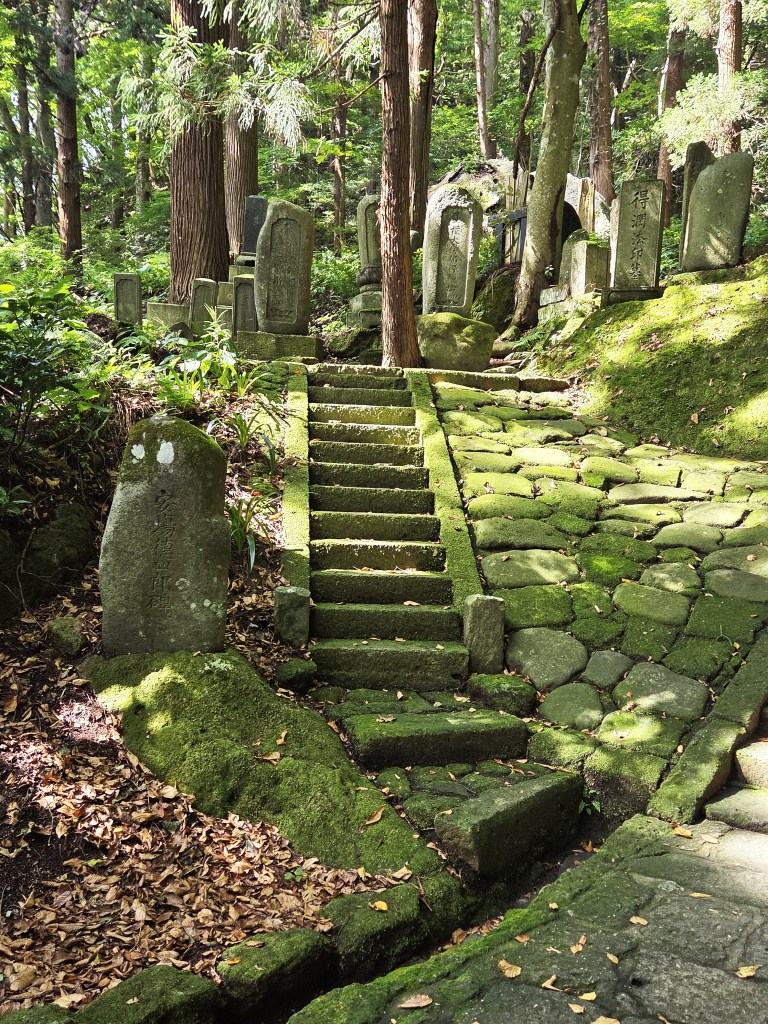
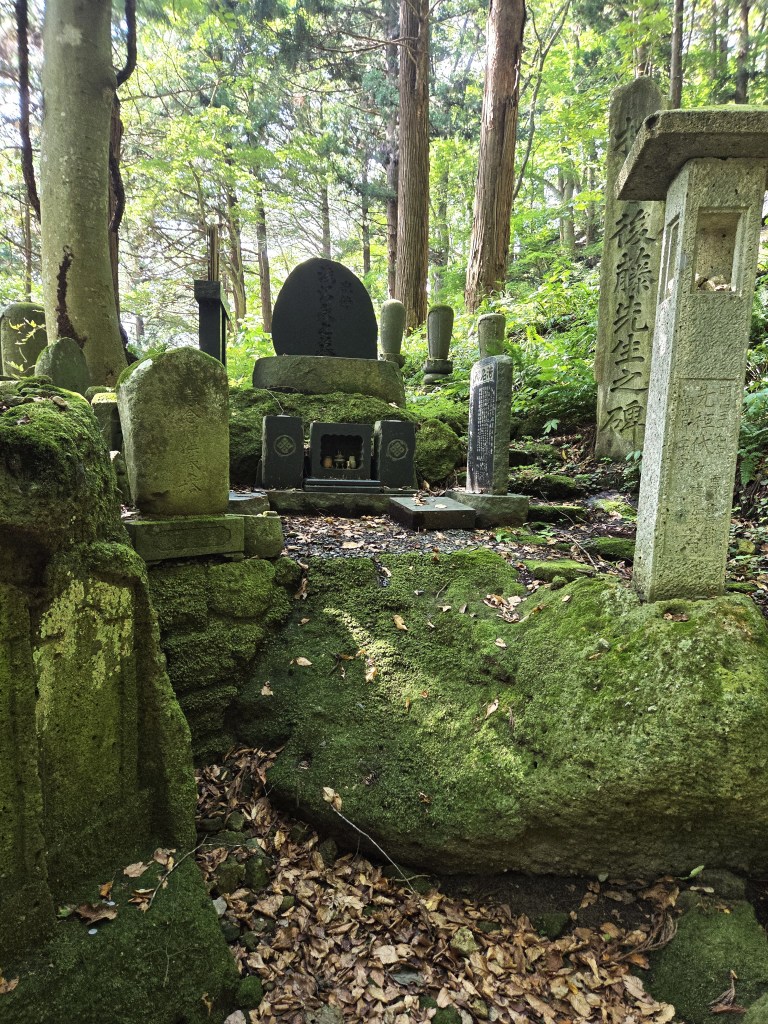
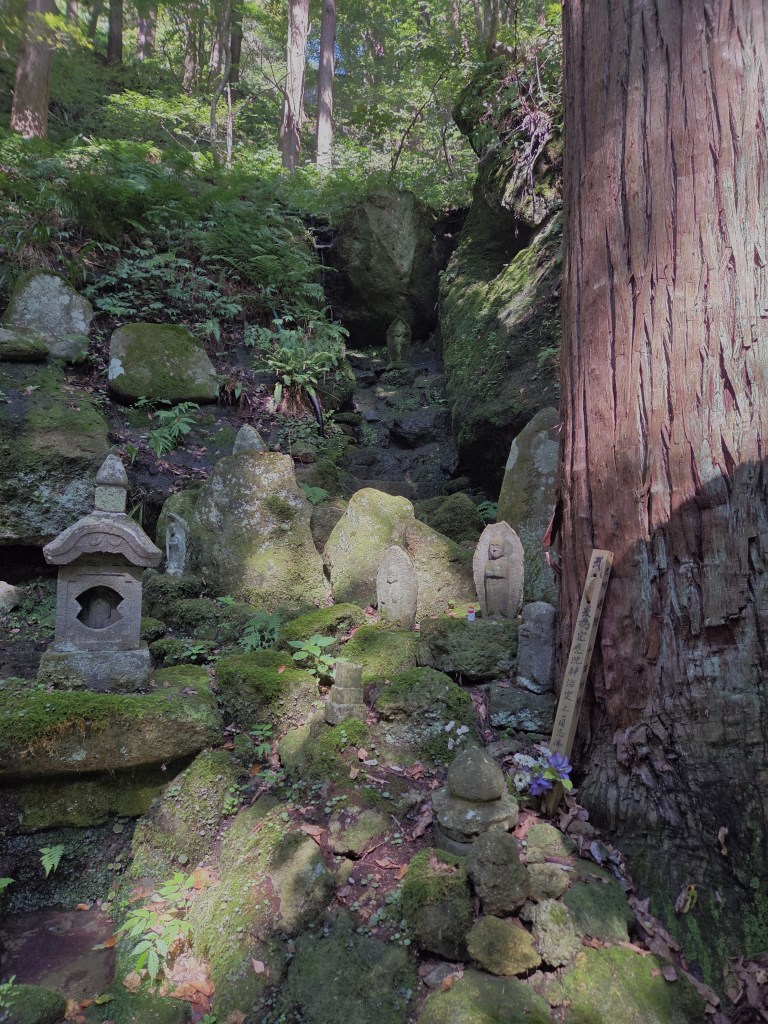
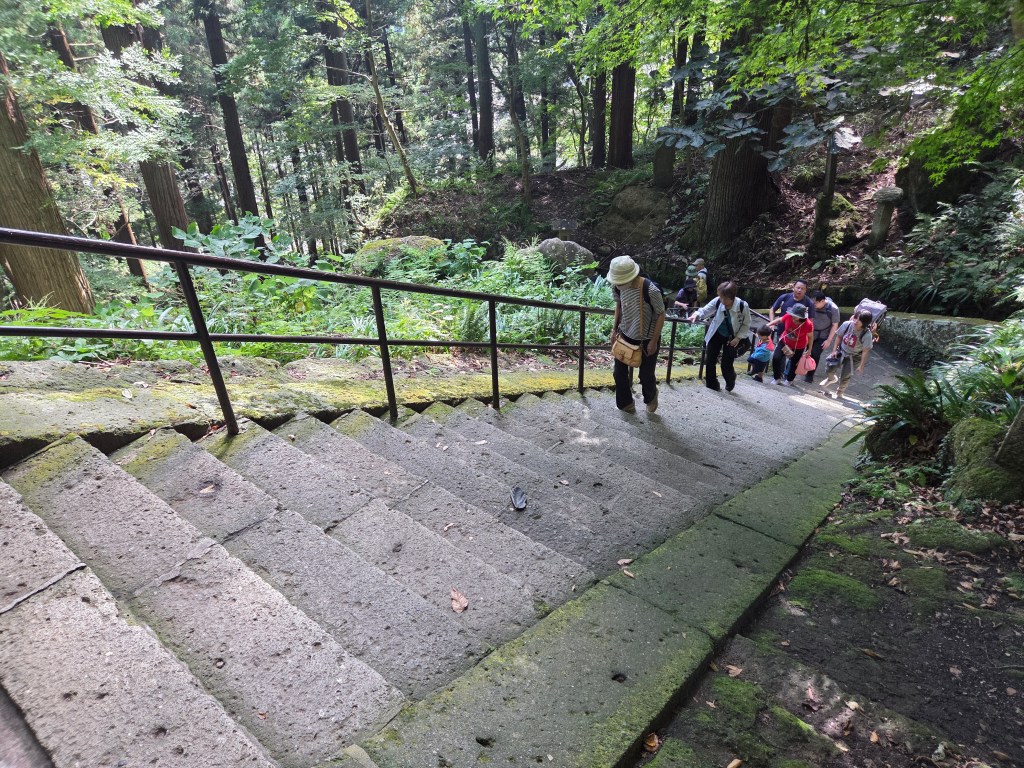
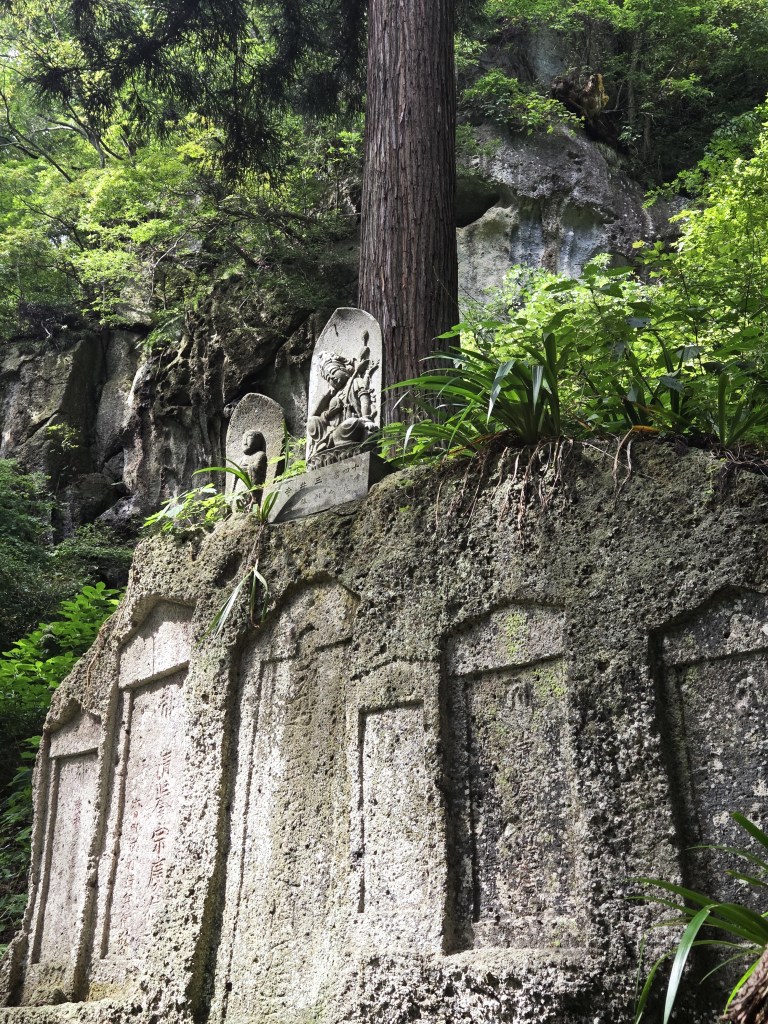
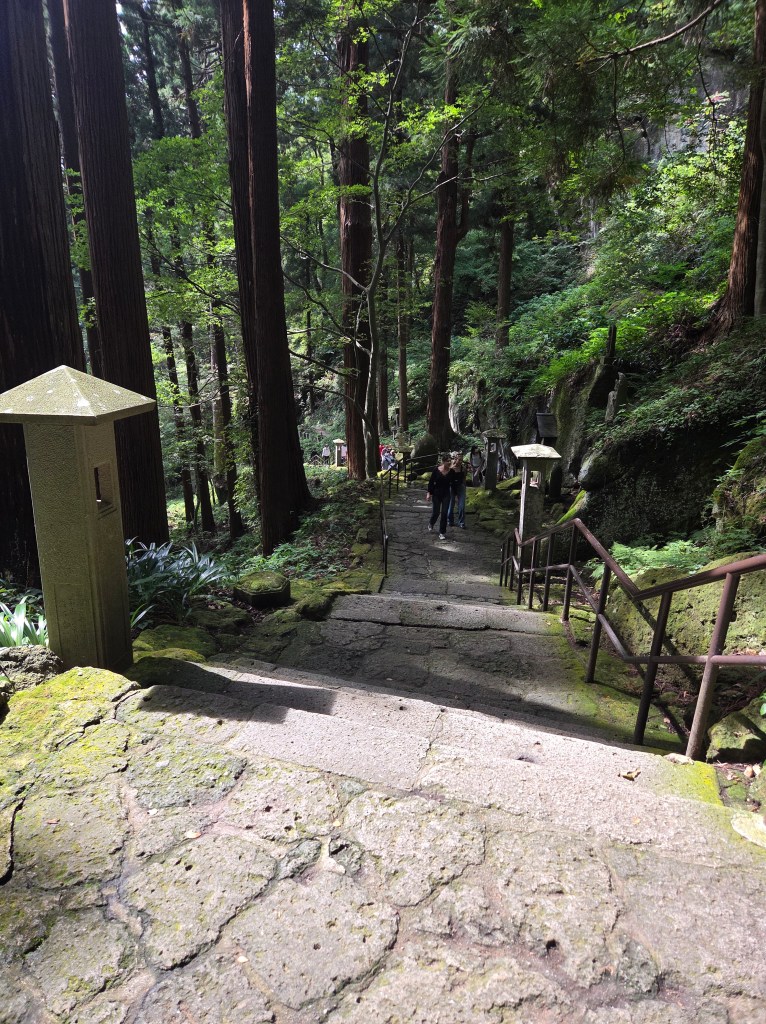
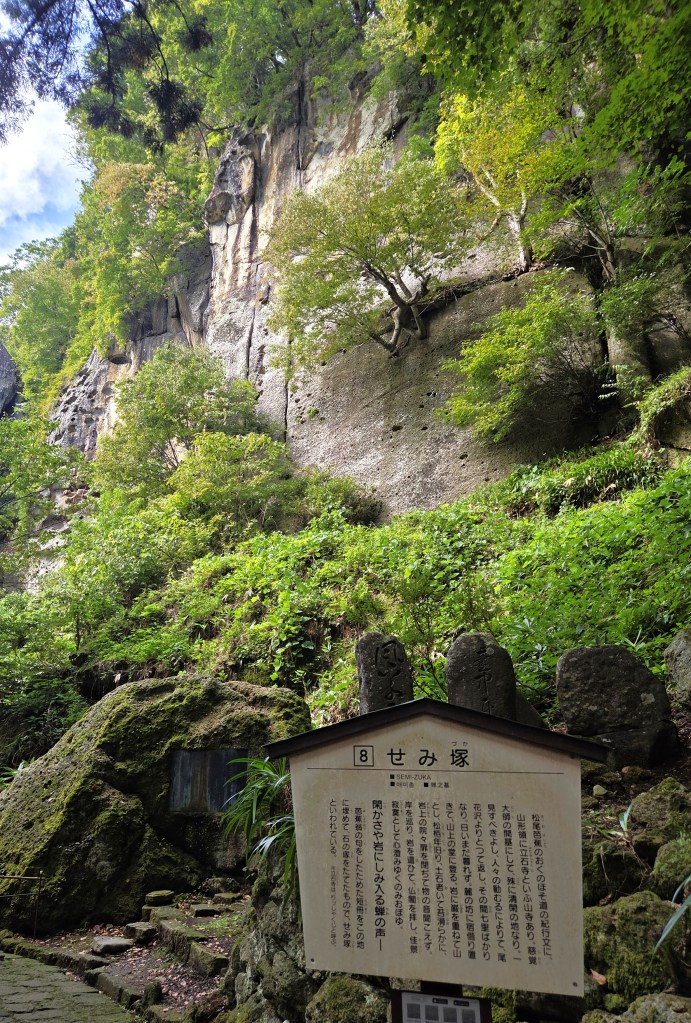
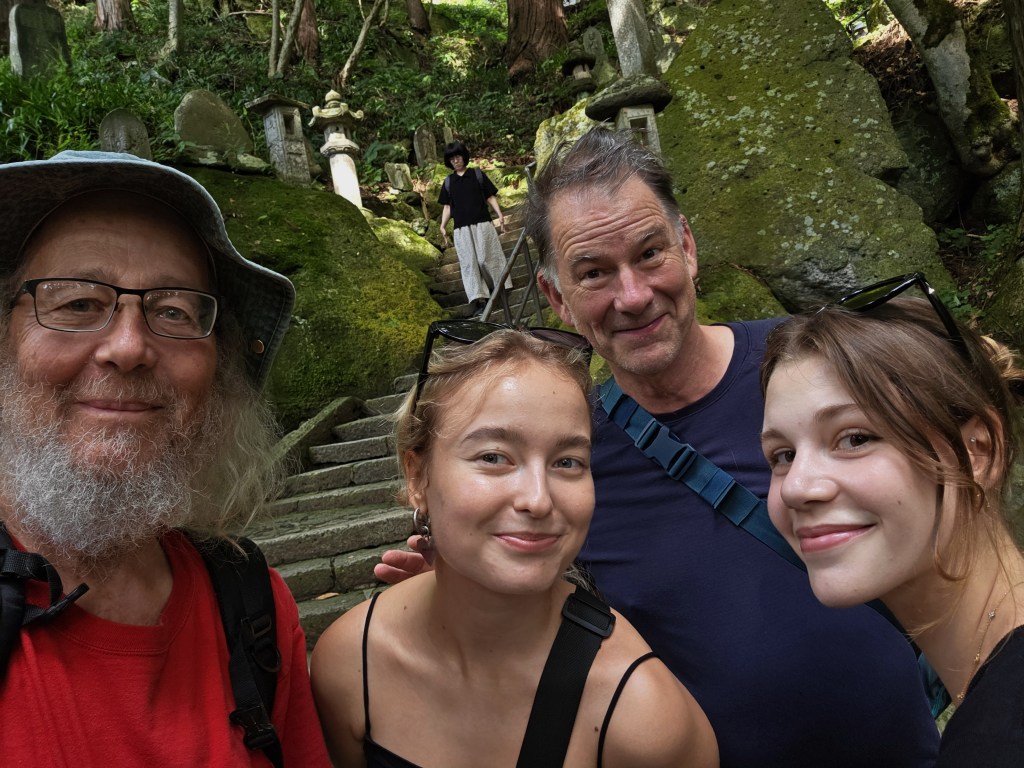
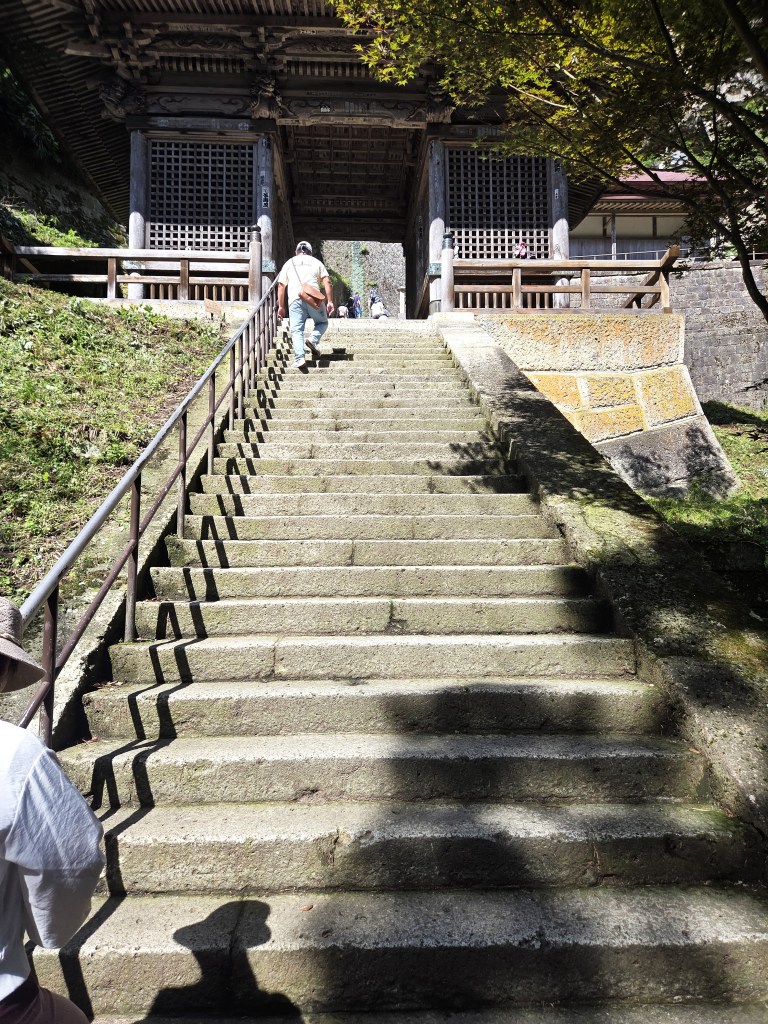
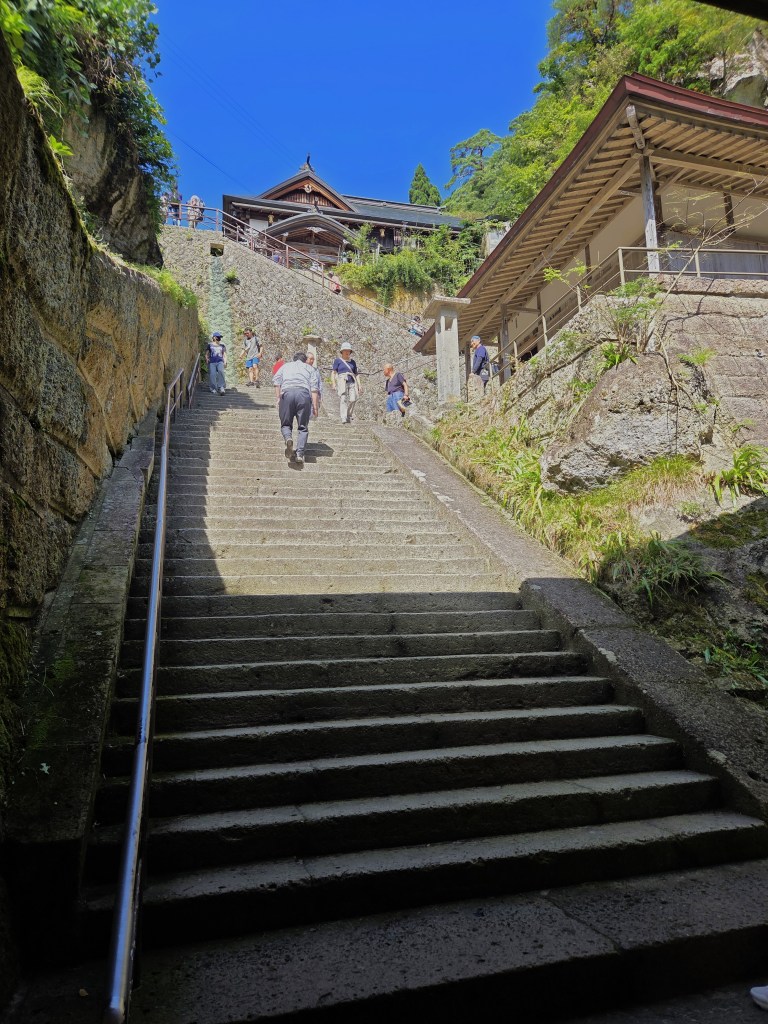
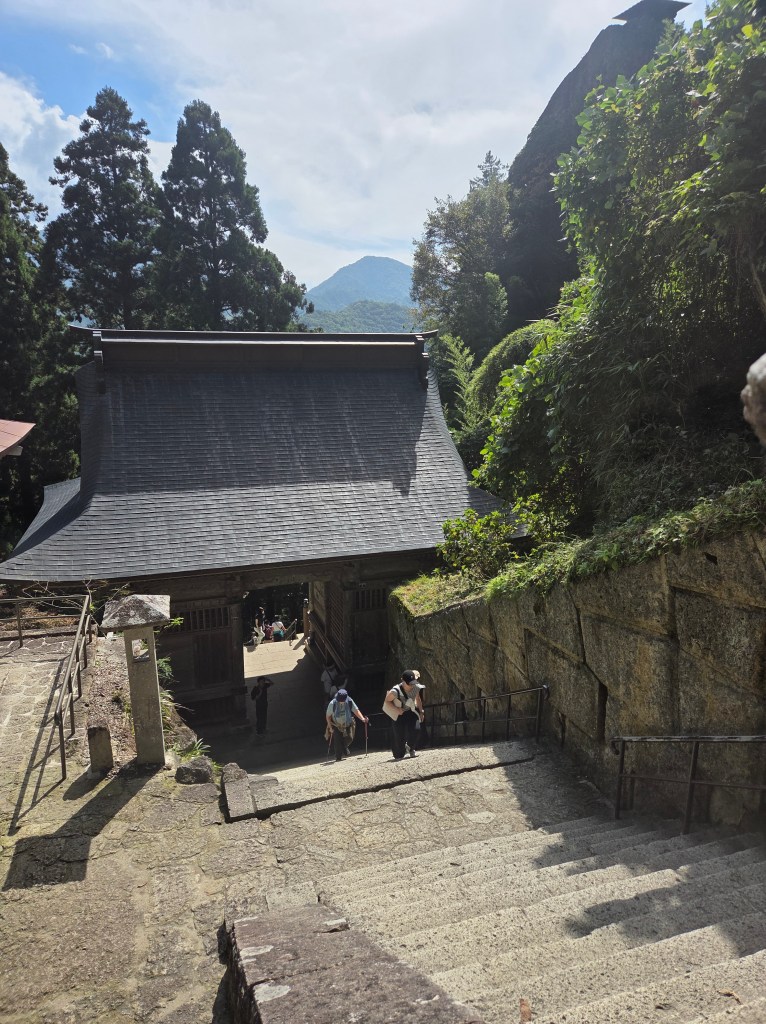
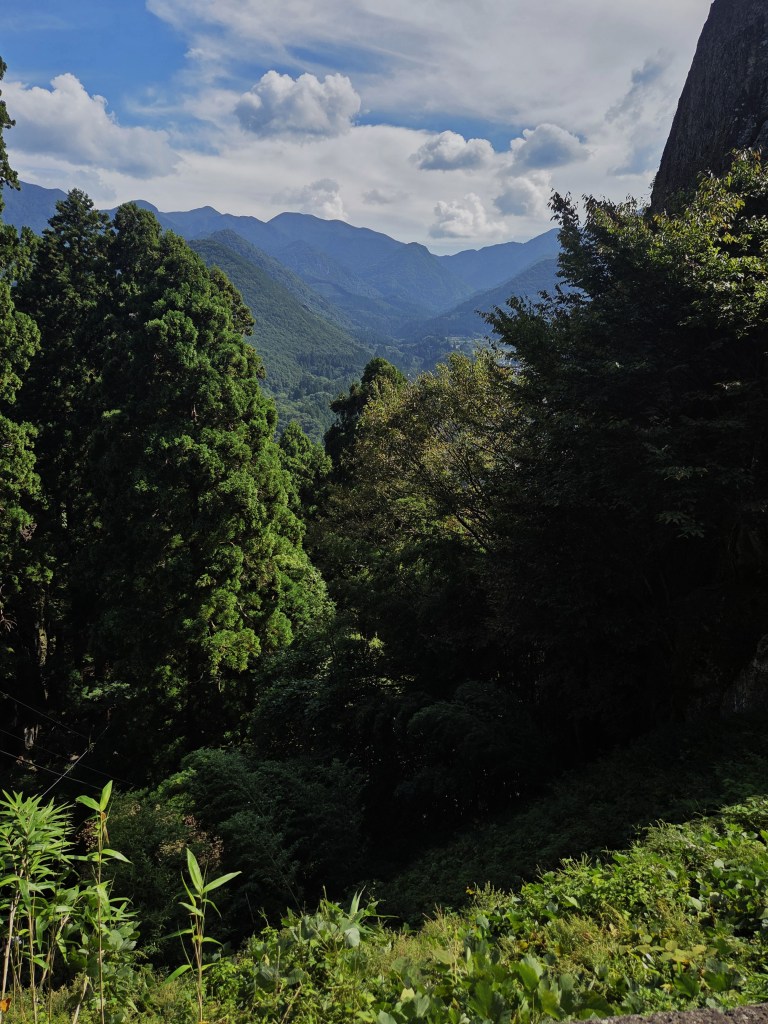
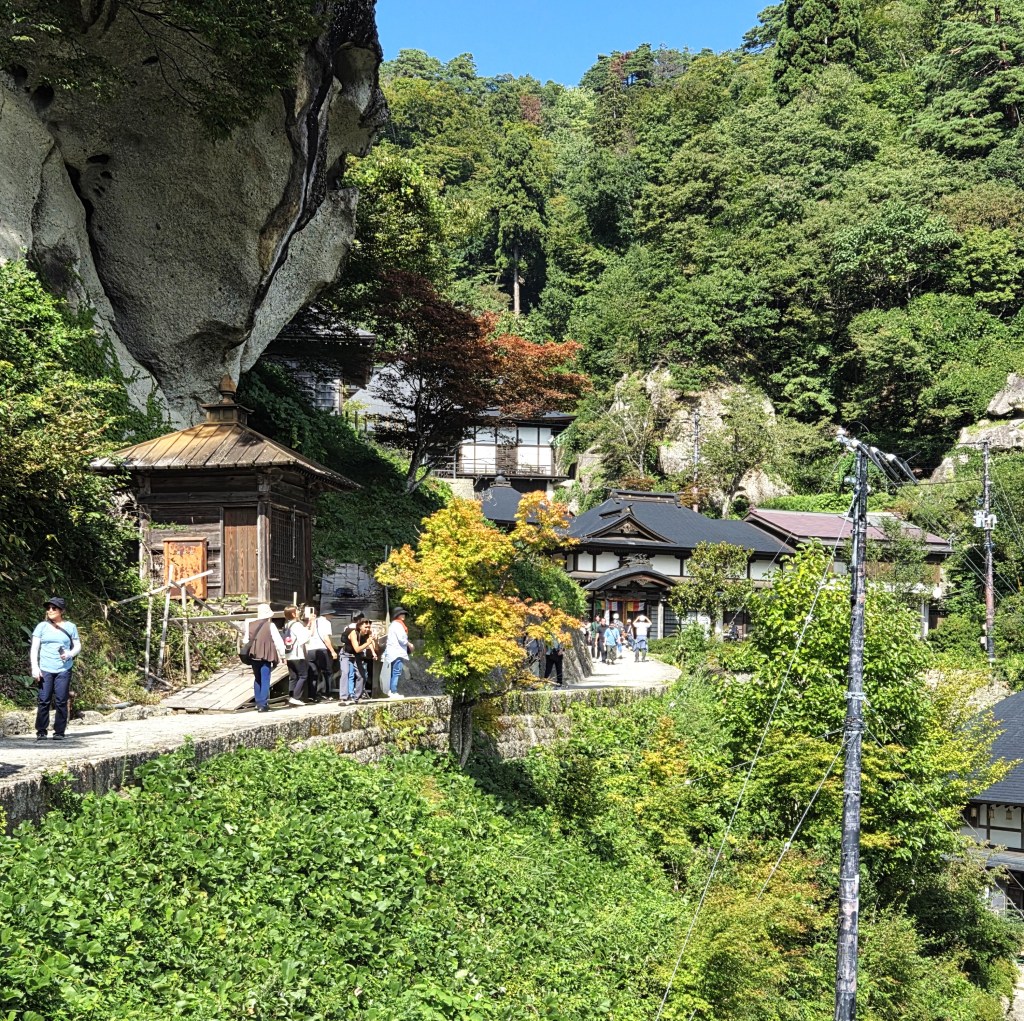
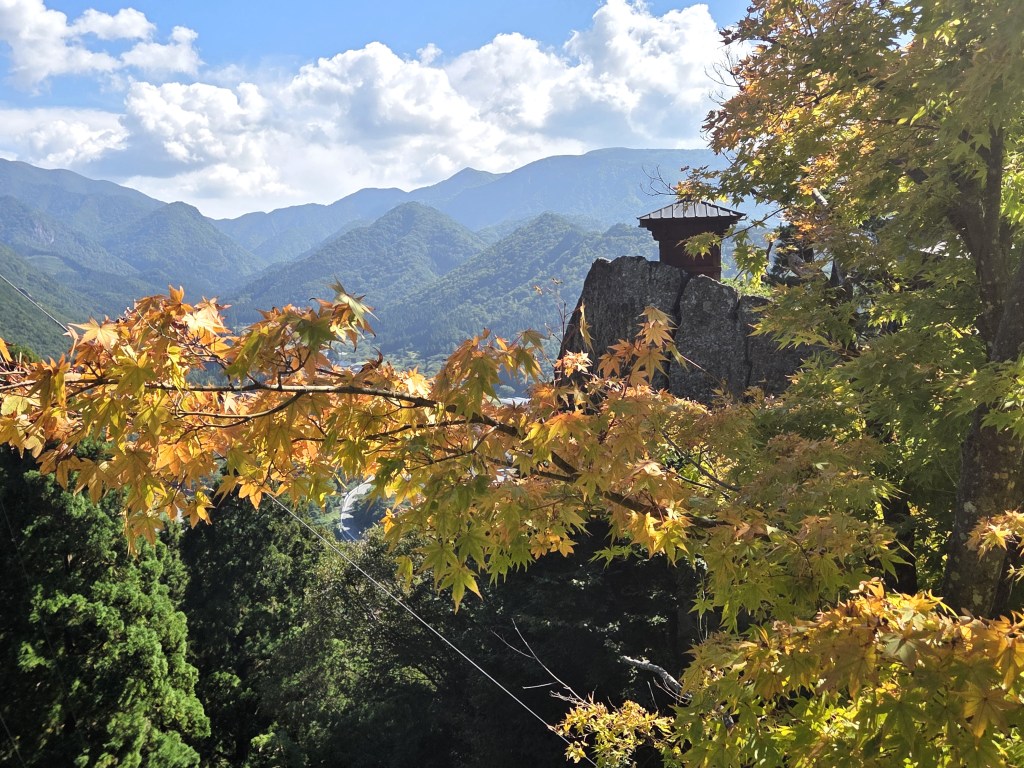
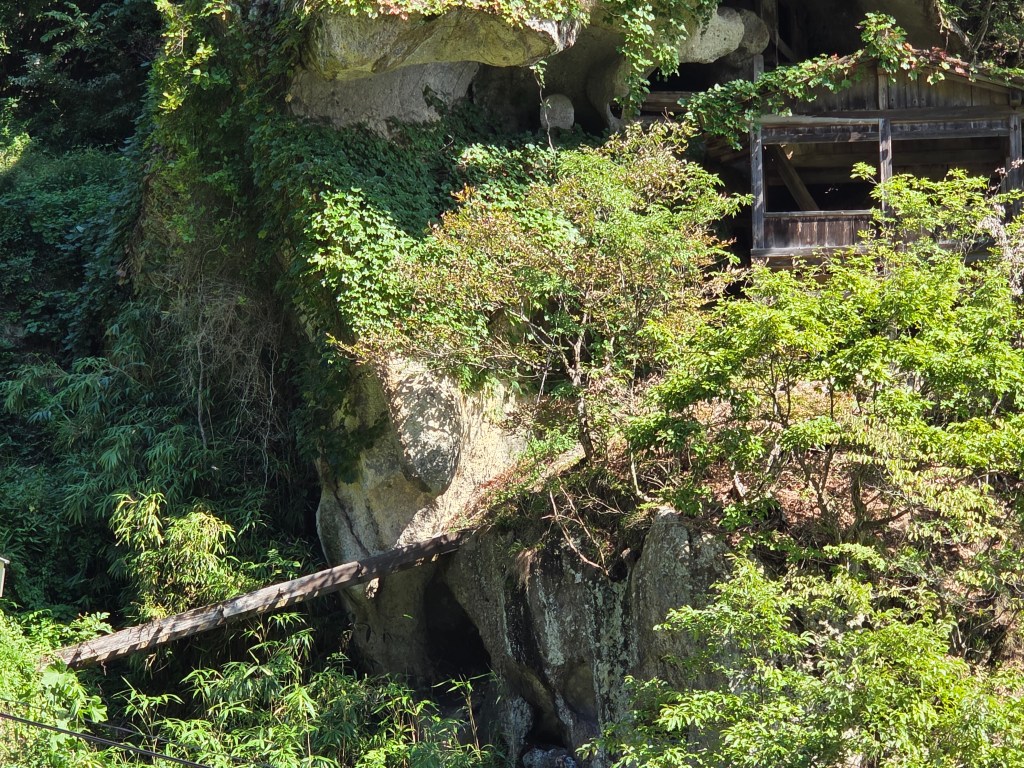
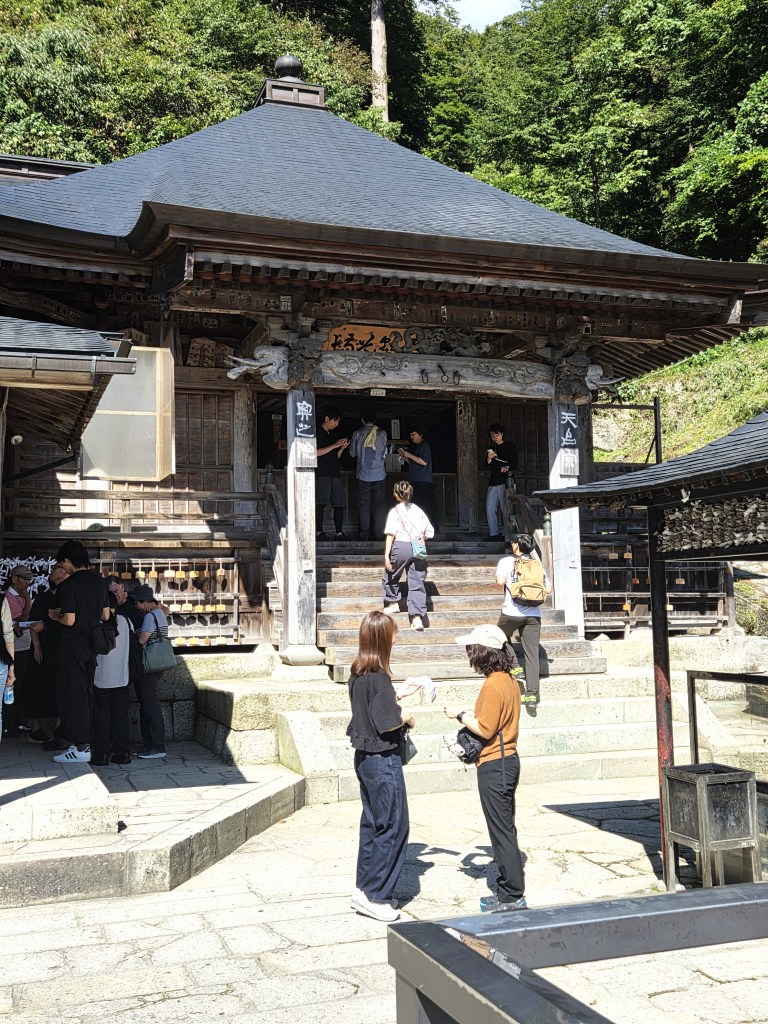
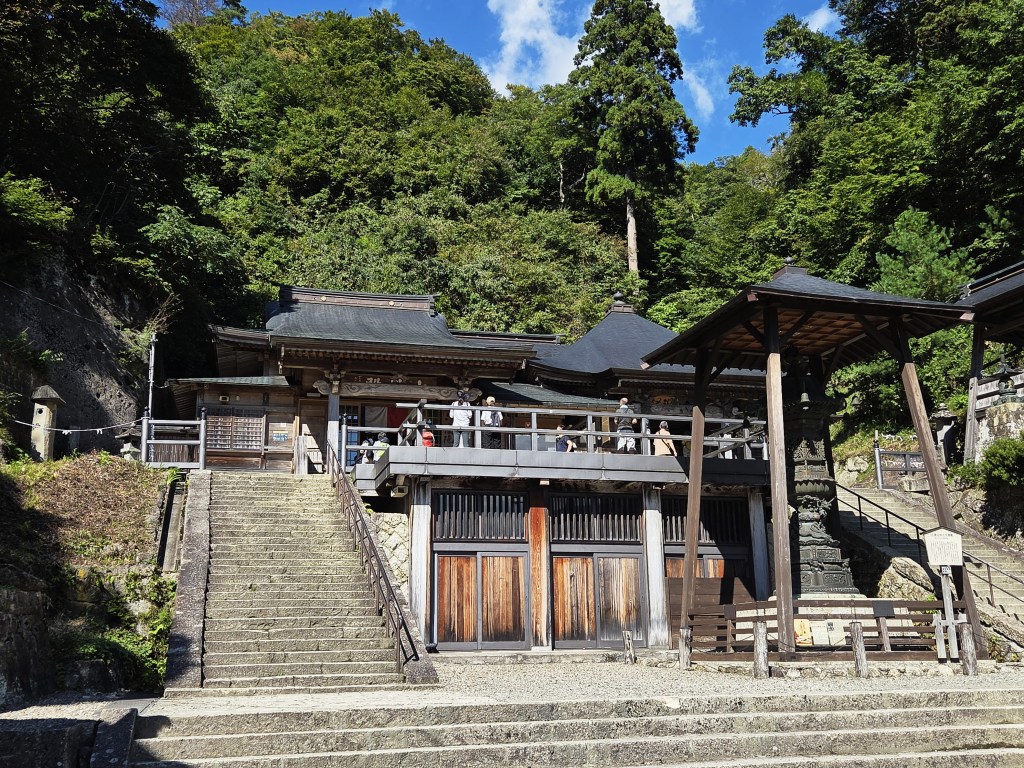
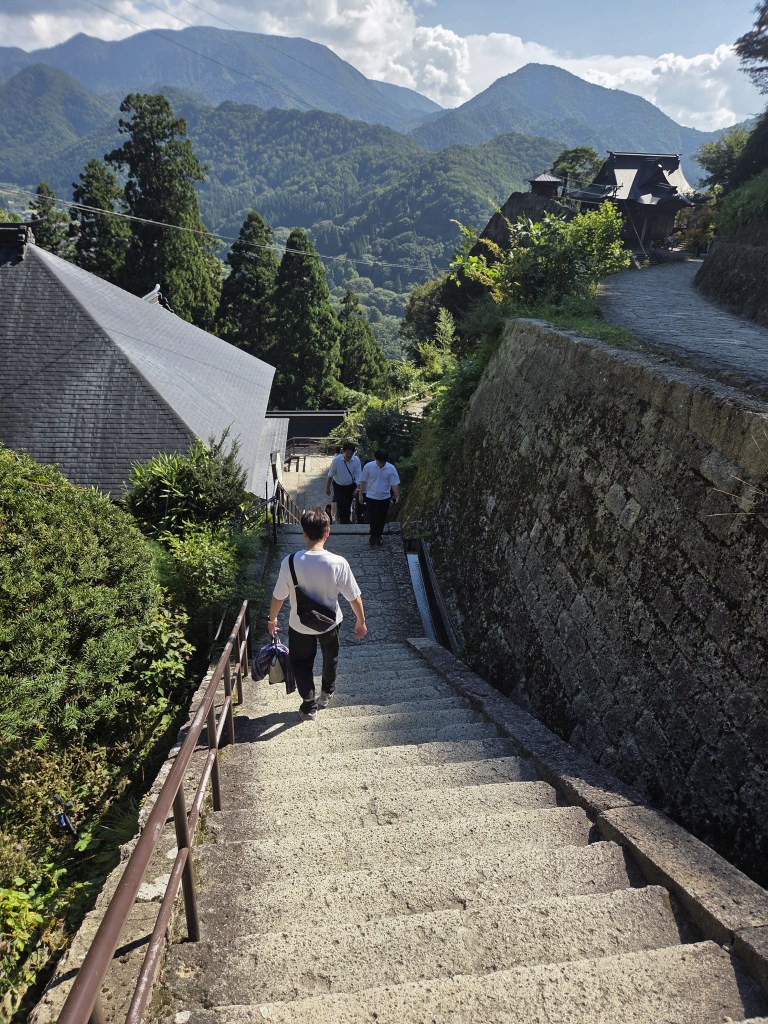
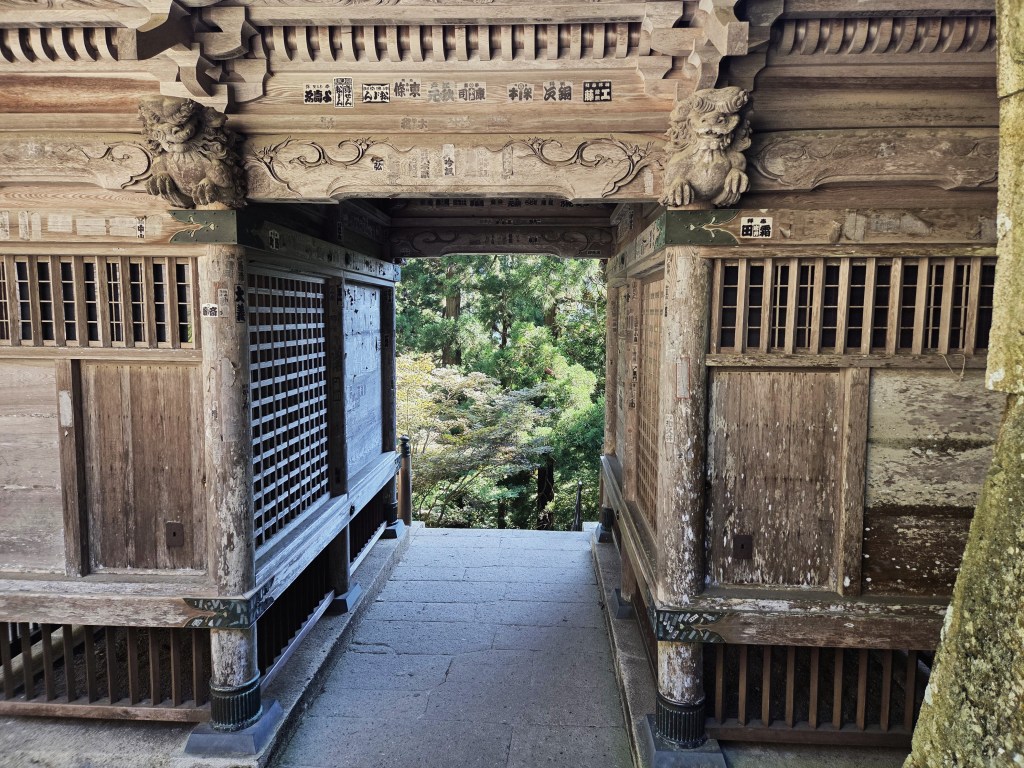
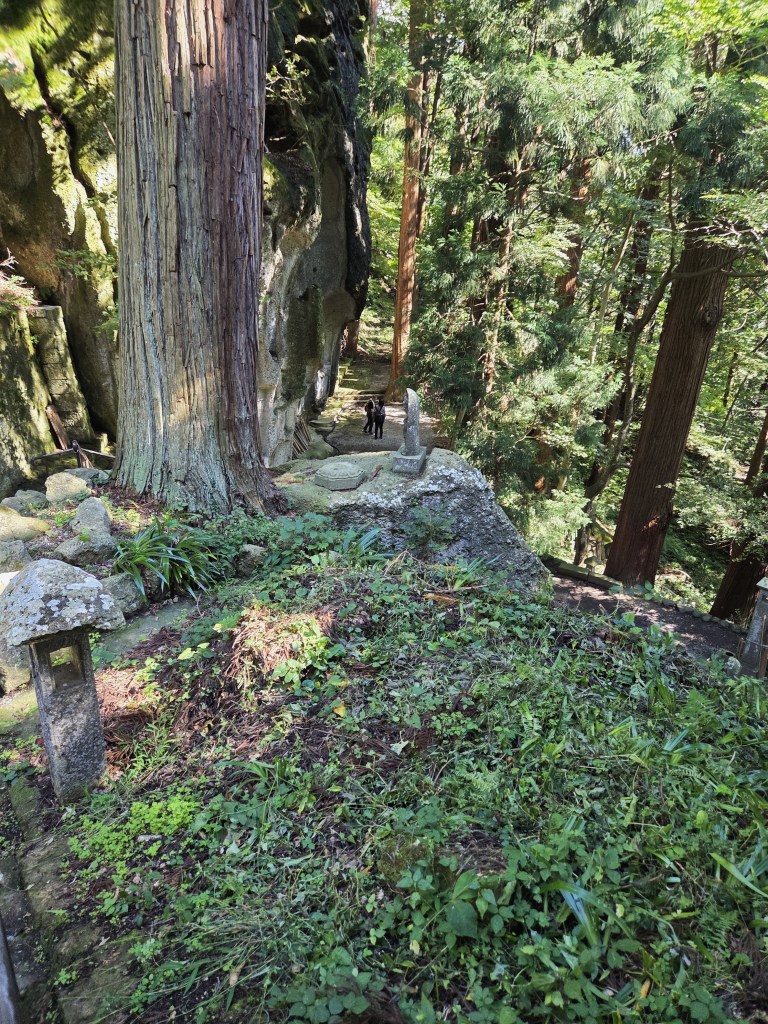
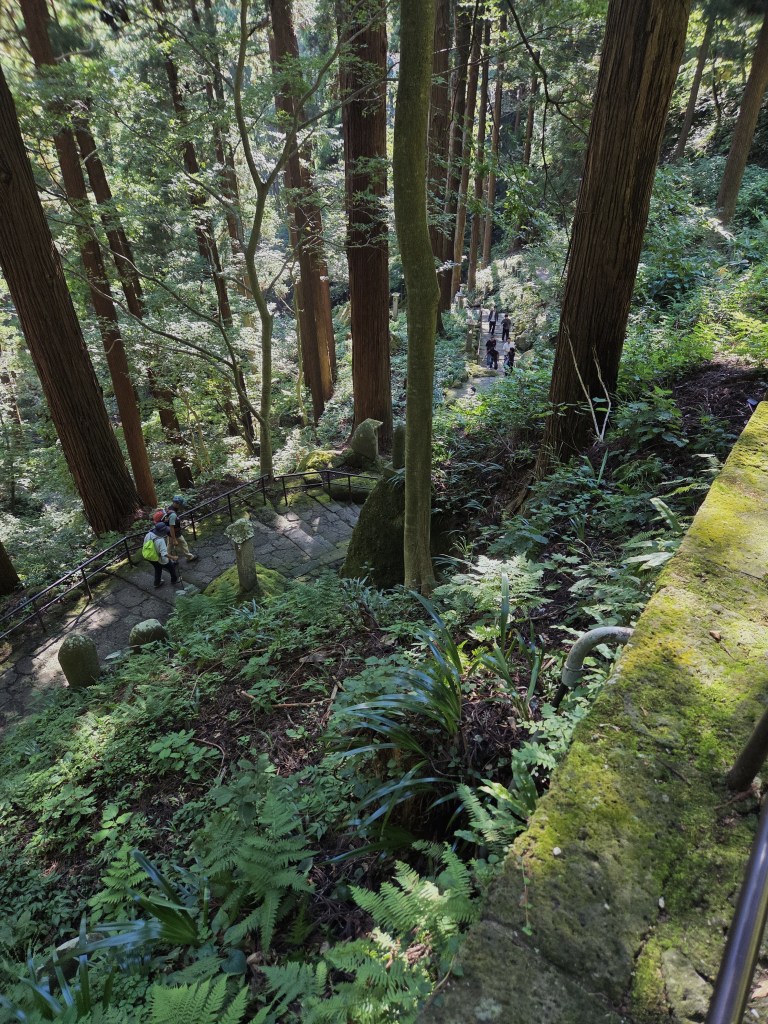
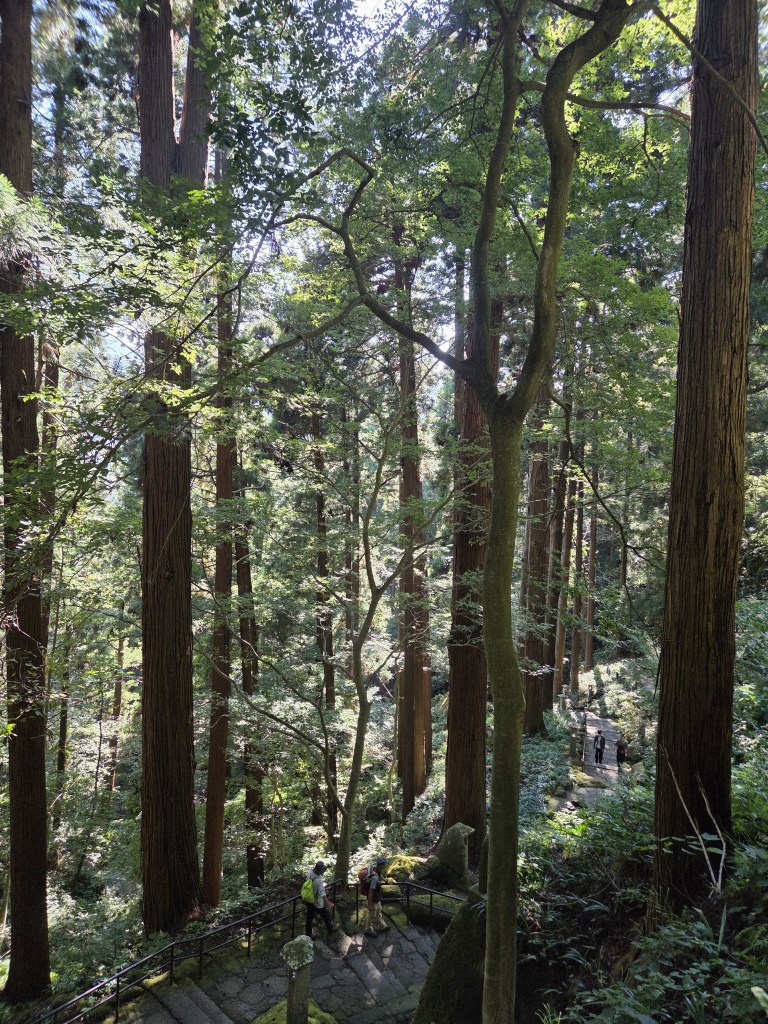
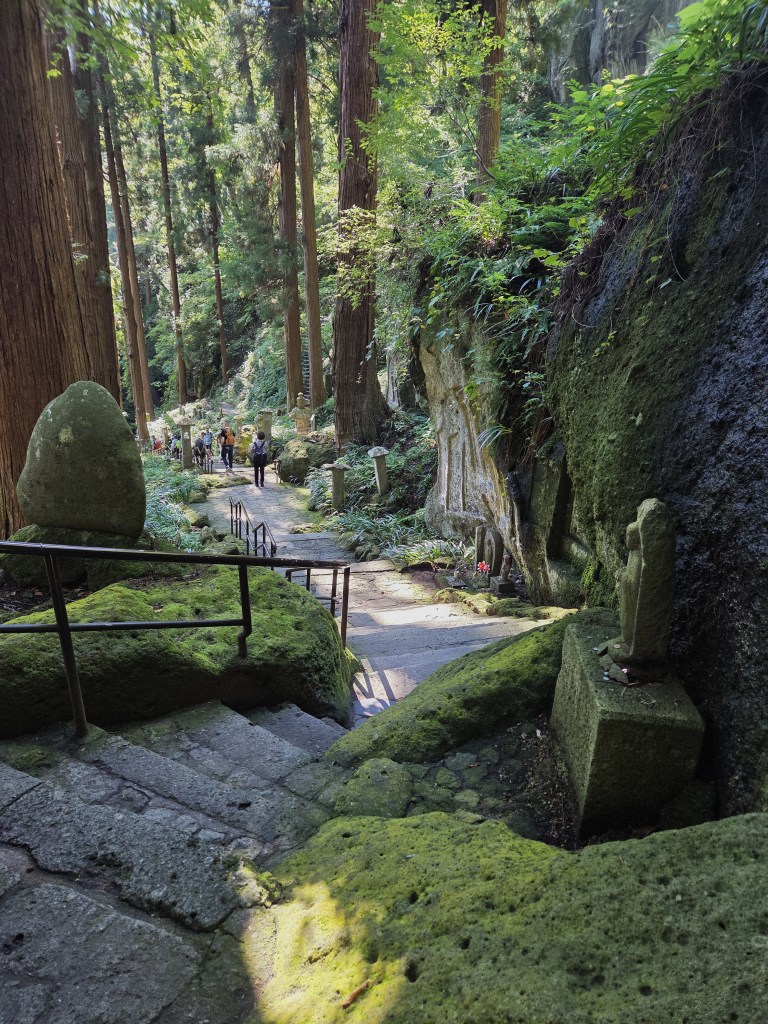
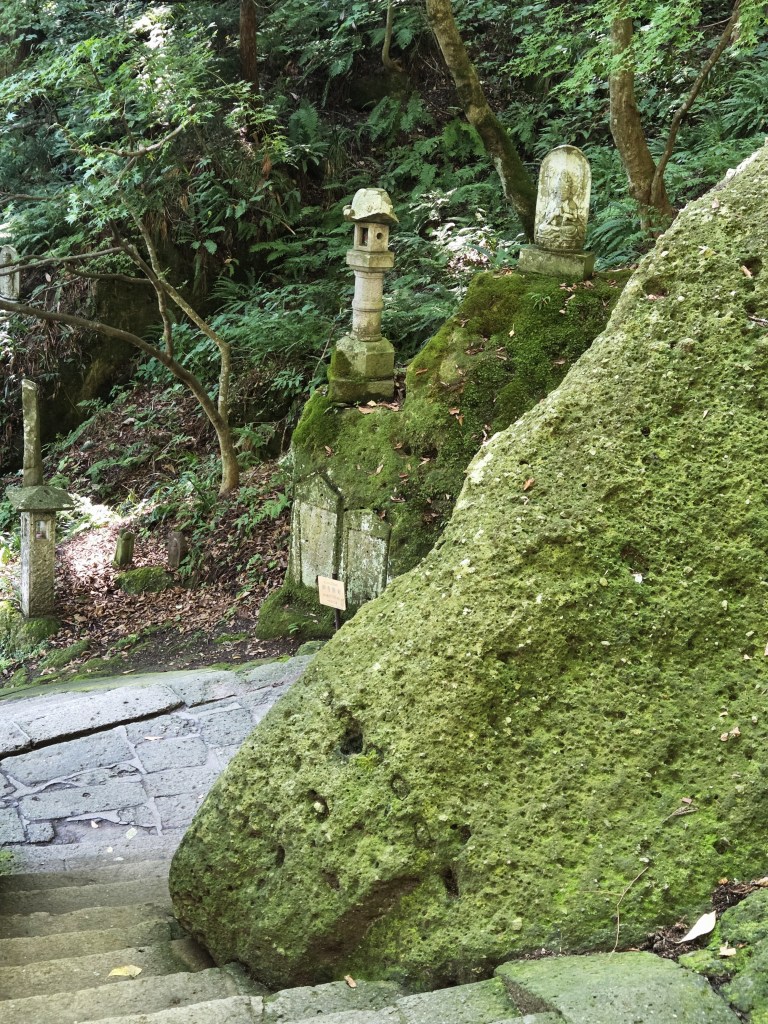
The mountain, Mt. Hoju, is home to Risshakuji Temple, which was founded in 860. Over 1,000 stone steps lead to the top, where Okunoin Temple and Daibutsuden Hall stand. Along the way are numerous stone lanterns, memorials and statues. I’ll let the photos below replace whatever words I could write about the place.
On the way up, I got into a conversation with two women. One, Valaria was from Russia and the other, Eline was from France. A pleasant respite along the long climb up the steps. It is a long haul, but there are so many fascinating features along the way that help to slow down the ascent.
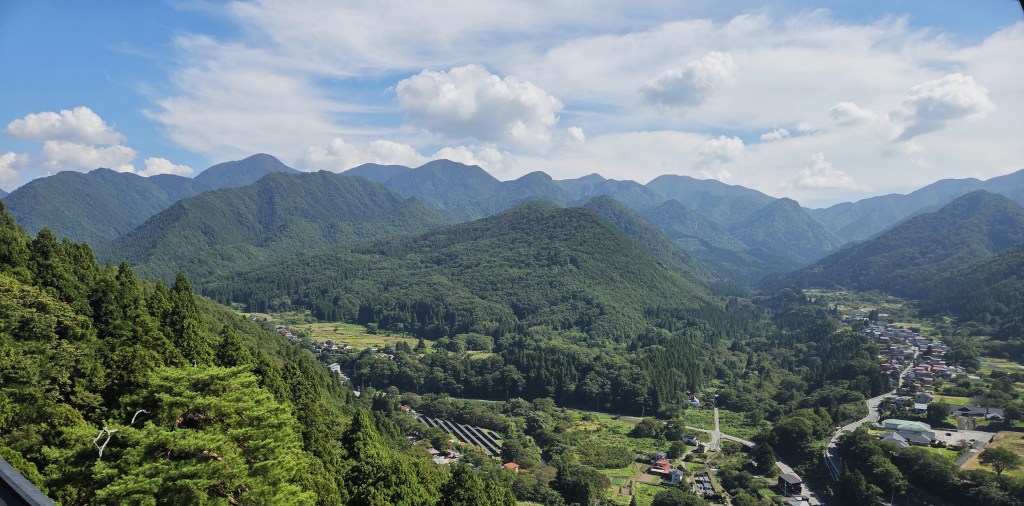
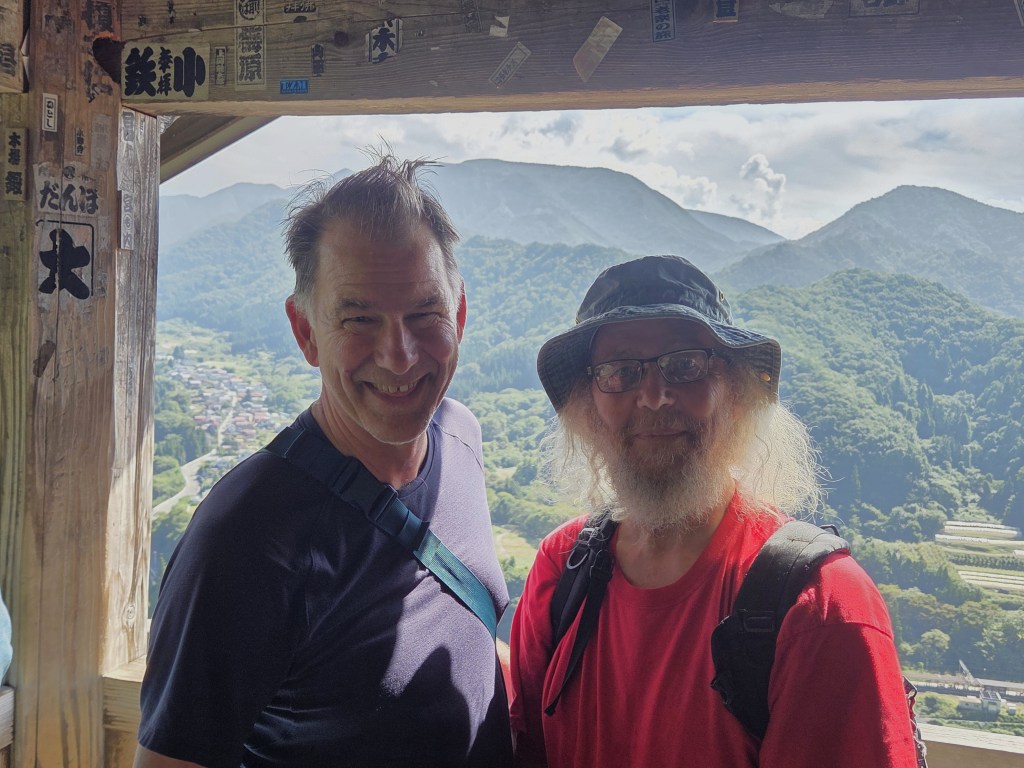
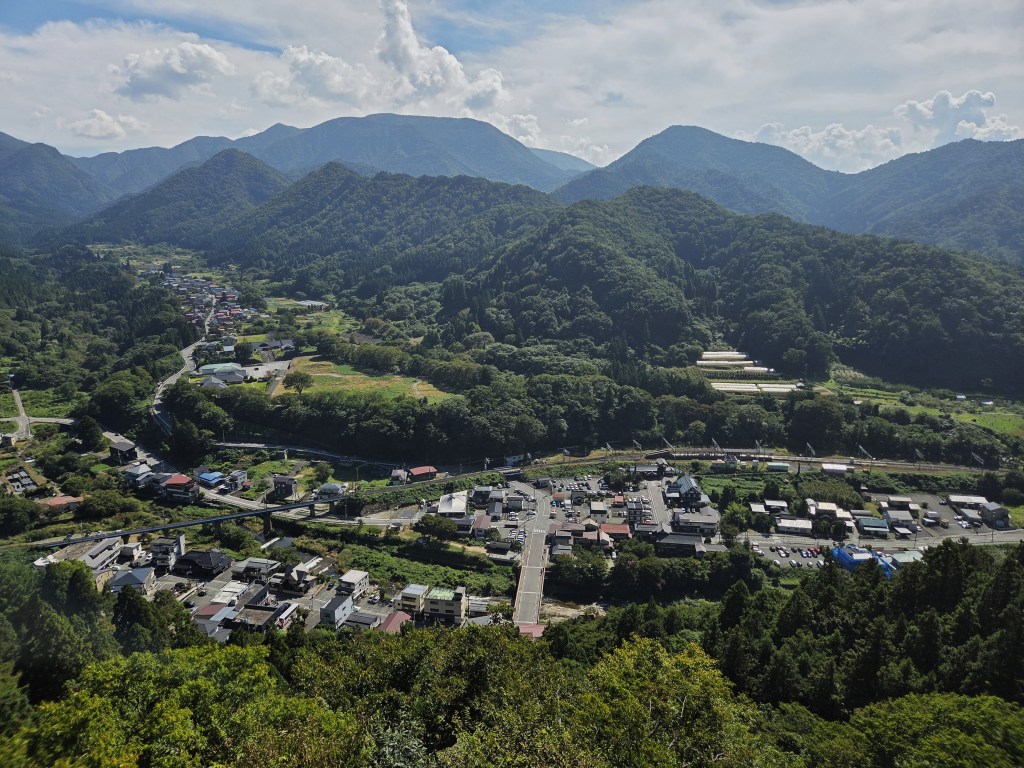
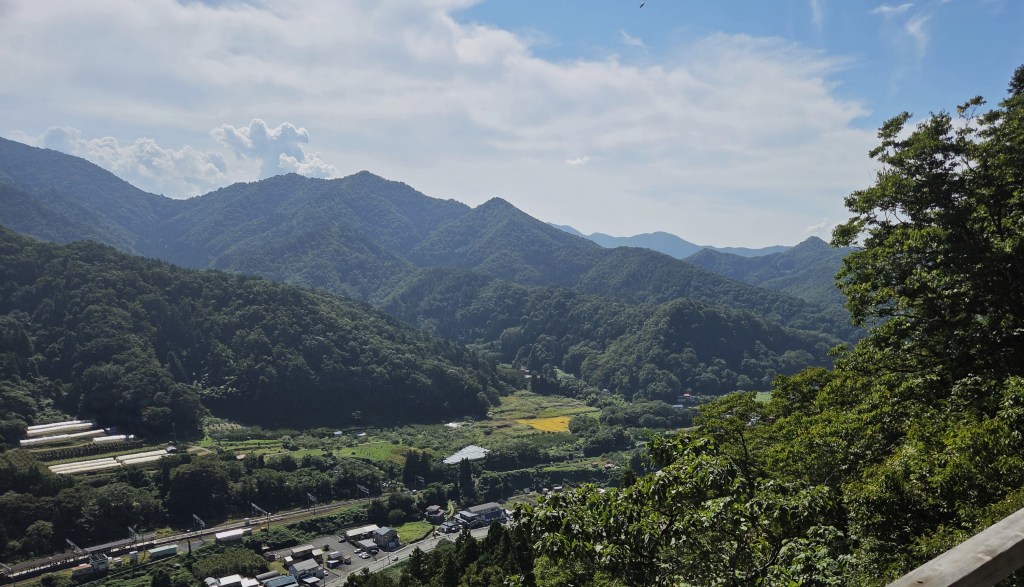
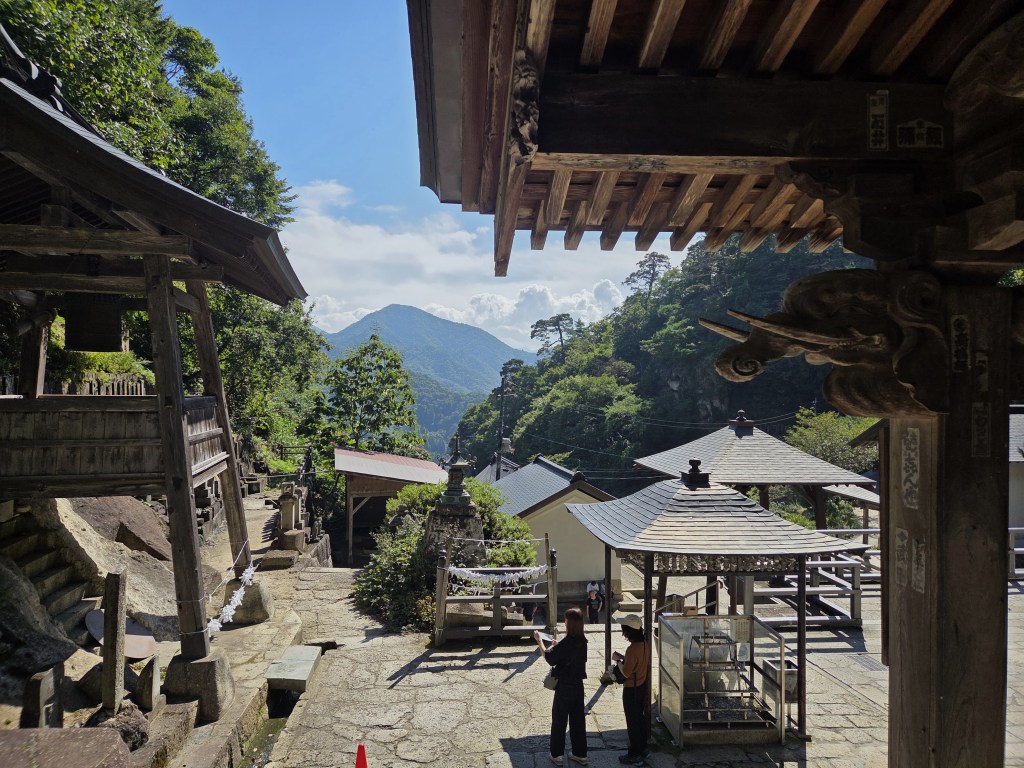
There is a wondrous overlook at the Gadaido Hall. The view takes in the mountains to the east, south and west, along with valley below. The hut has been a viewing point ever since it was built in the early 1700s.
There was a steady stream of people going up, going down the stone steps. I would have loved to be able to just be here by myself to experience the journey.
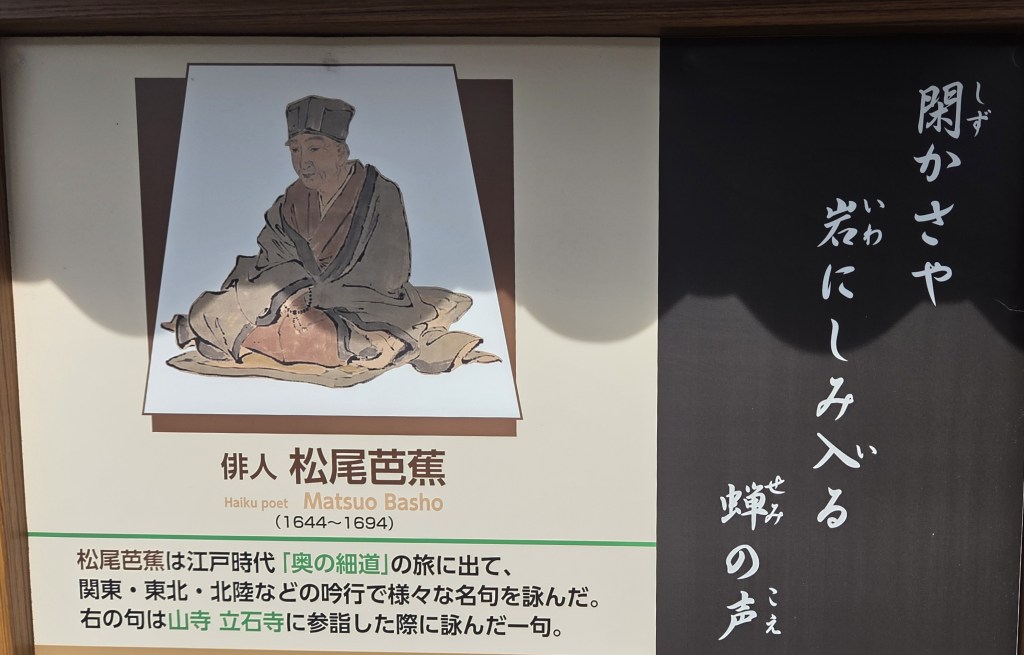
Here is a haiku Basho wrote when he stayed here for a night in 1689:
stillness
steeps into the stones
the cry of cicadas
What was it like here when Basho ascended these steps?
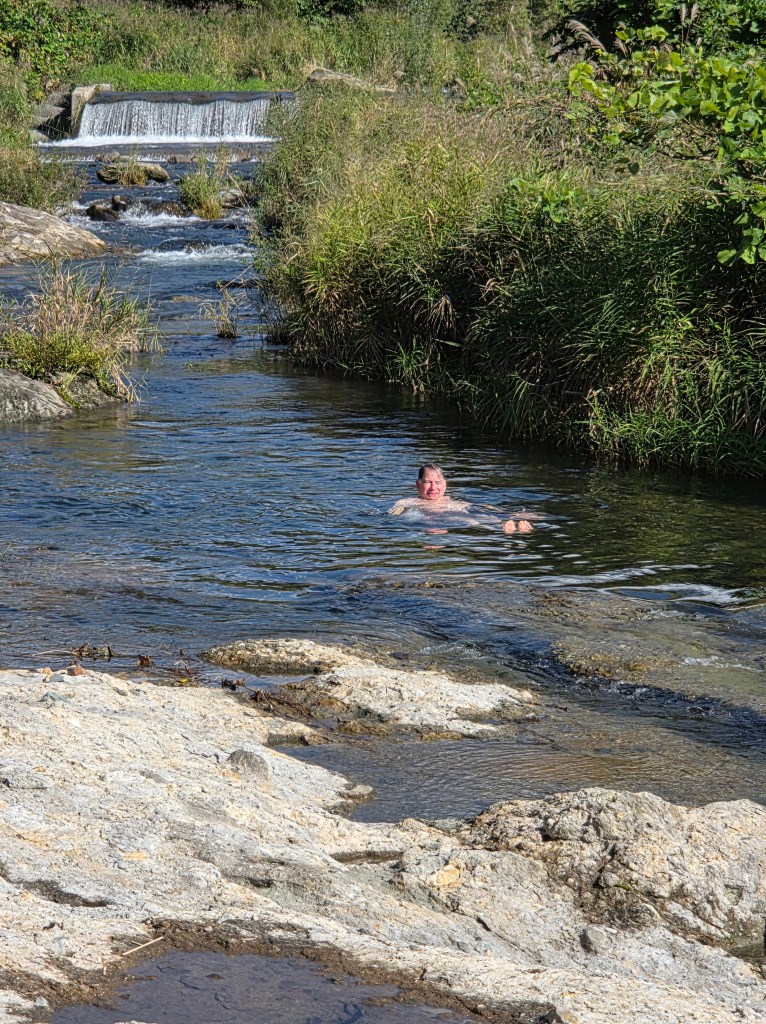
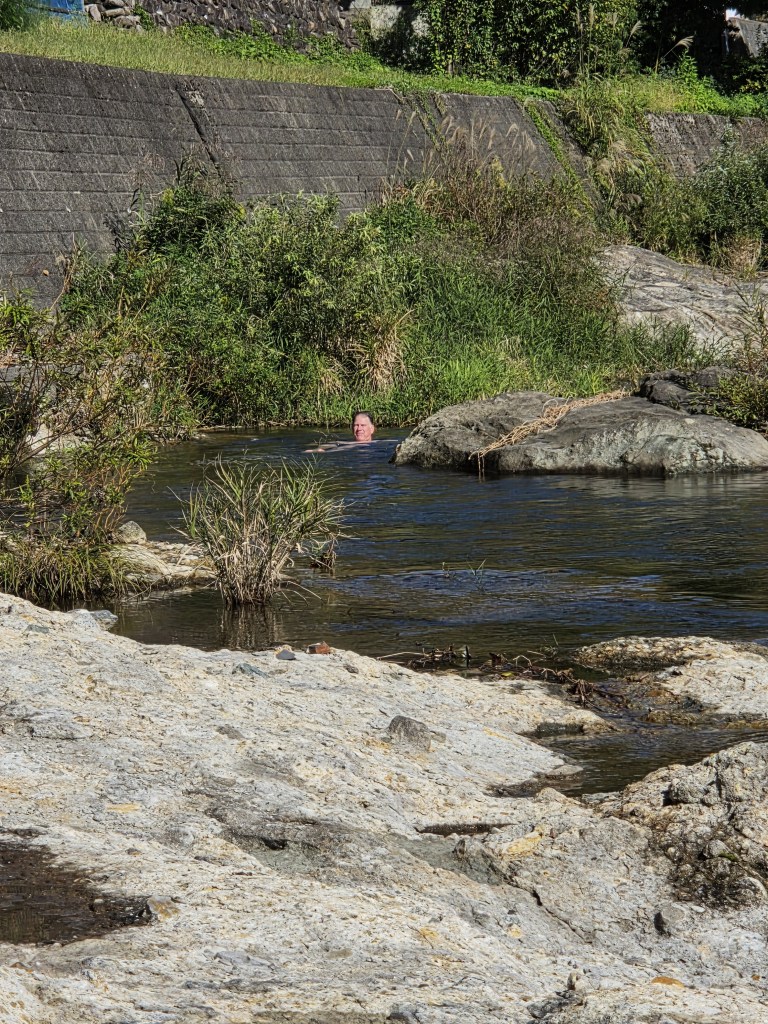
Afterwards, when we left the temple grounds, Bart went for a swim in the Koyo river that runs through town.
We then visited the Basho Memorial Museum that was a short walk from the center of Yamadera. A small museum that was wonderful. On display were some actual writings of Basho! The museum also had numerous art pieces, one which I was excited to see. It was a painting based on a poem of the Red Cliff that the Chinese poet, Su Shi, wrote about. It is one of favorite pieces of his writing.
On the train ride back to Yamagata I got into a conversation with someone sitting in the seat opposite and facing me. Ray, a Japanese woman who works as a flight attendant. I first asked her if what we were seeing out the window were rice plantings. She said they were. Then a couple of minutes later she pulled out two band aids and handed then to Bart, who has scraped up his arm a little on the river swim. What a kind gesture from her. Then, we engaged in pleasant conversation all the way till we reached the Yamagata Station.
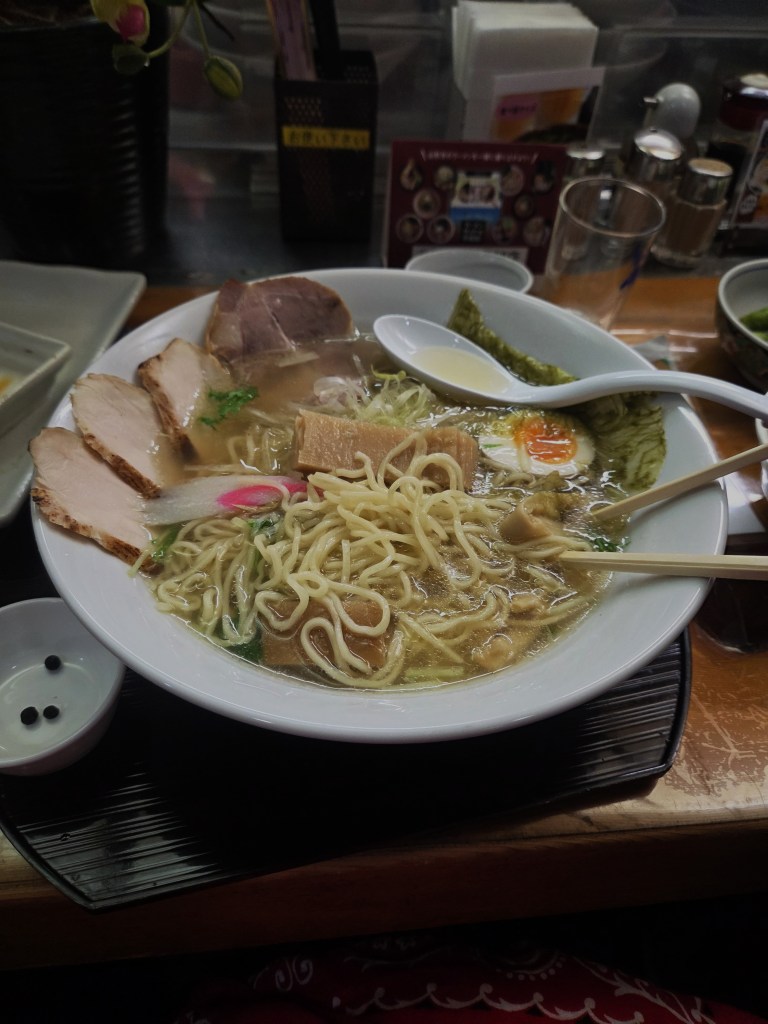
It had been a long day. After a little respite in the hotel room, we went out for a bite to eat at a ramen noodle shop just across the street. A satisfying meal.
There are no plans yet for tomorrow. Tomorrow will see.
(Click on thumbnail for larger picture.)
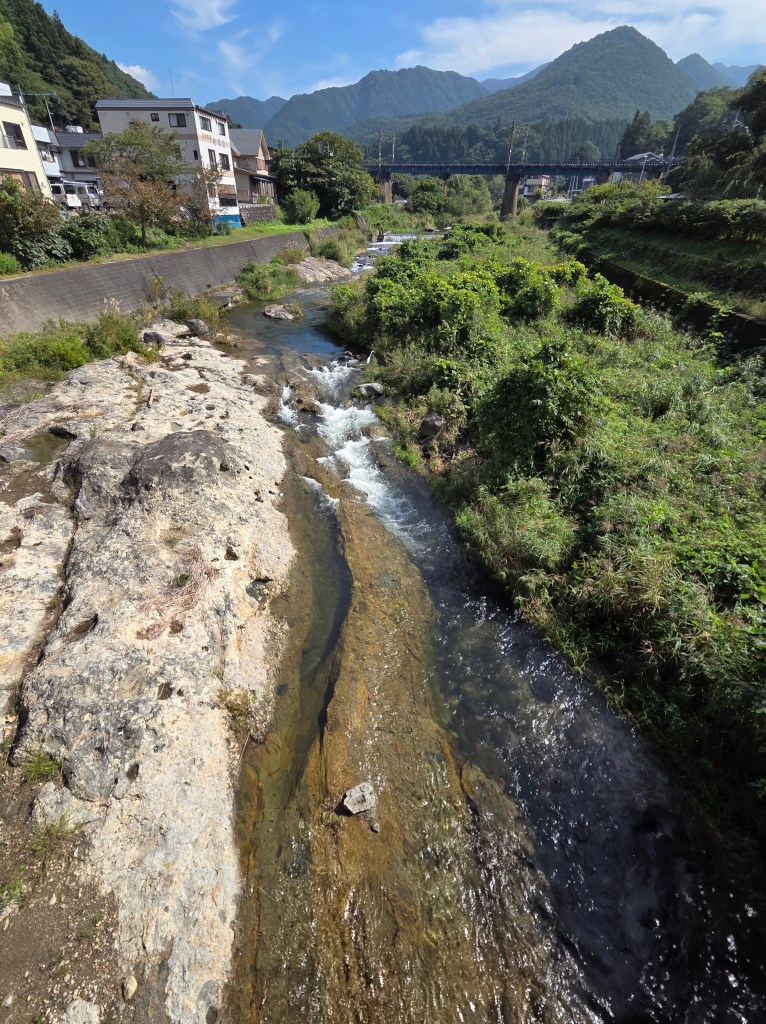
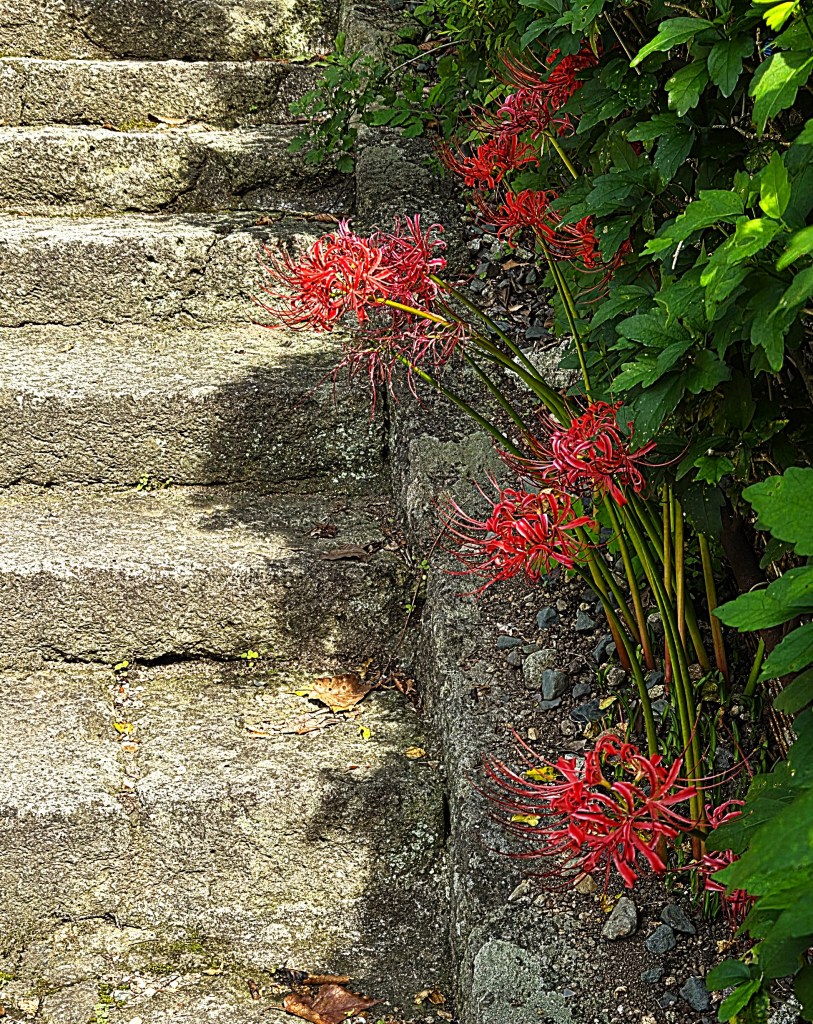
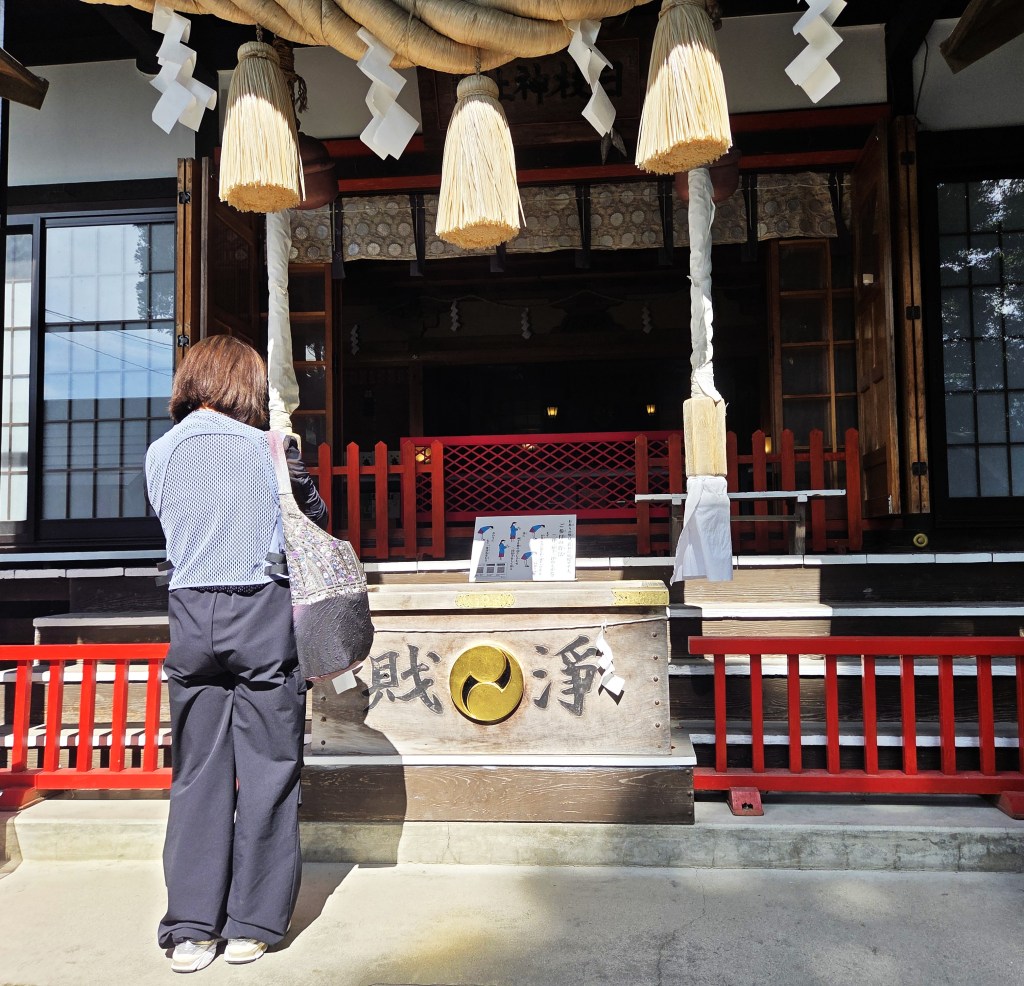
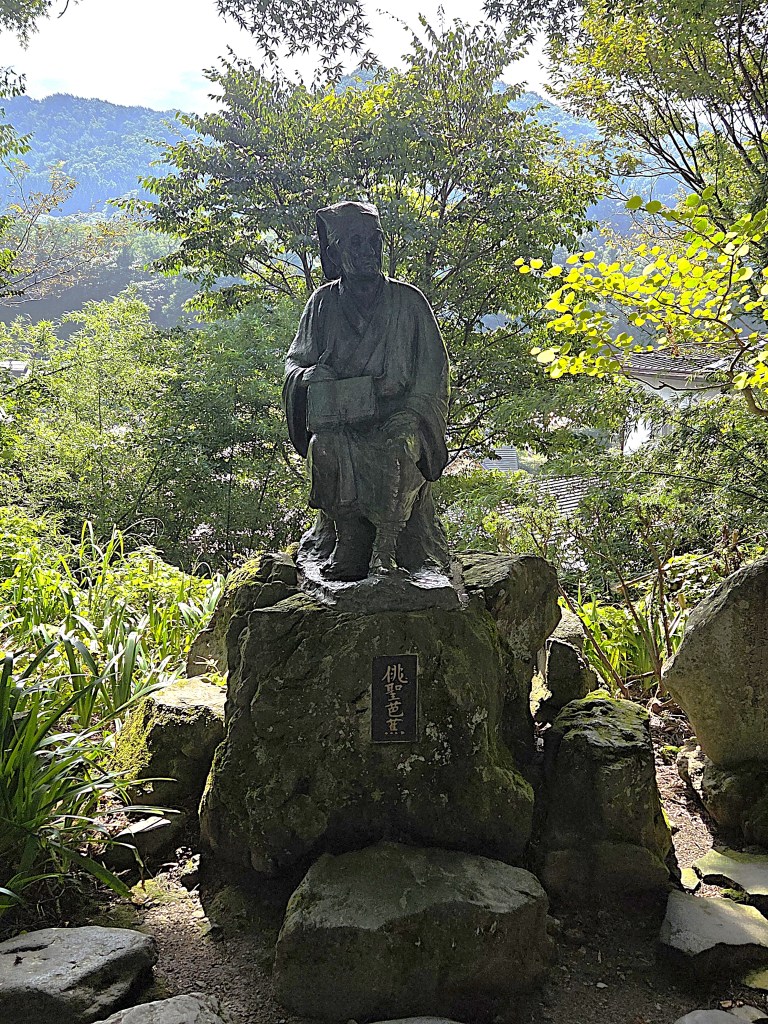

October 2
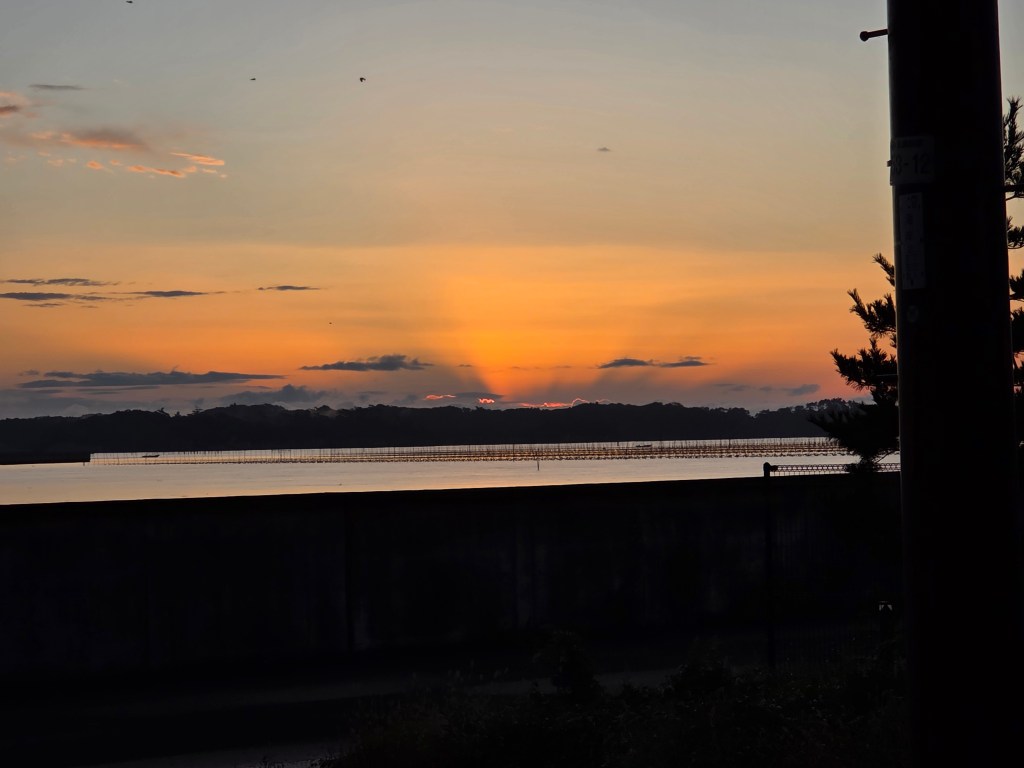
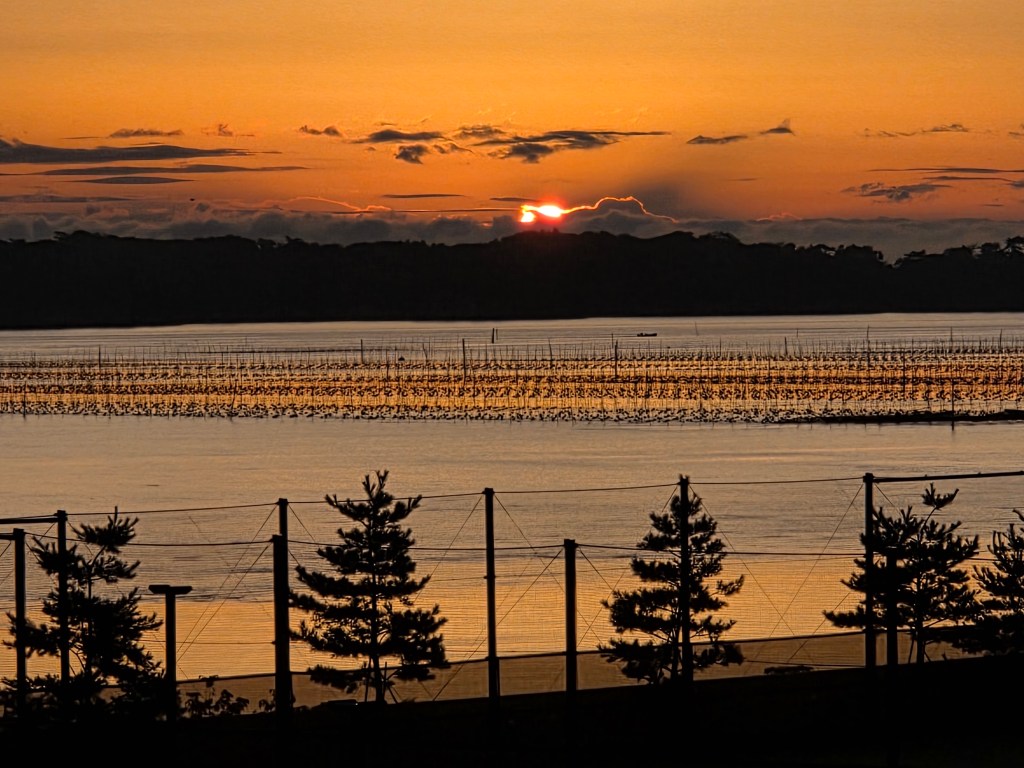
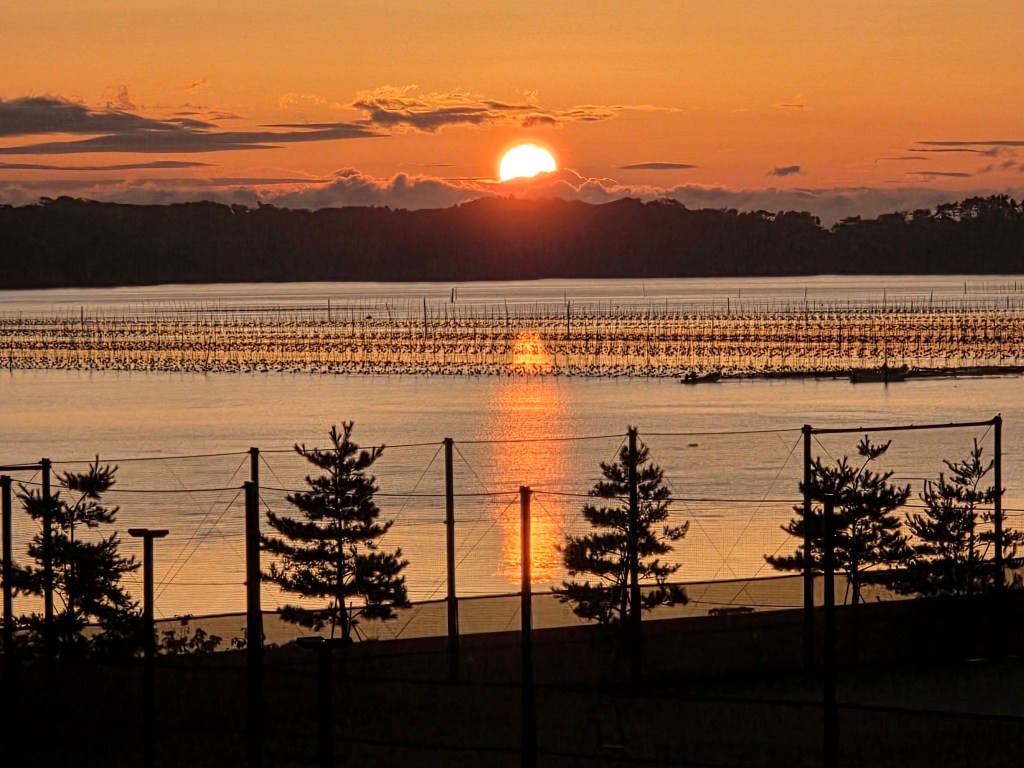
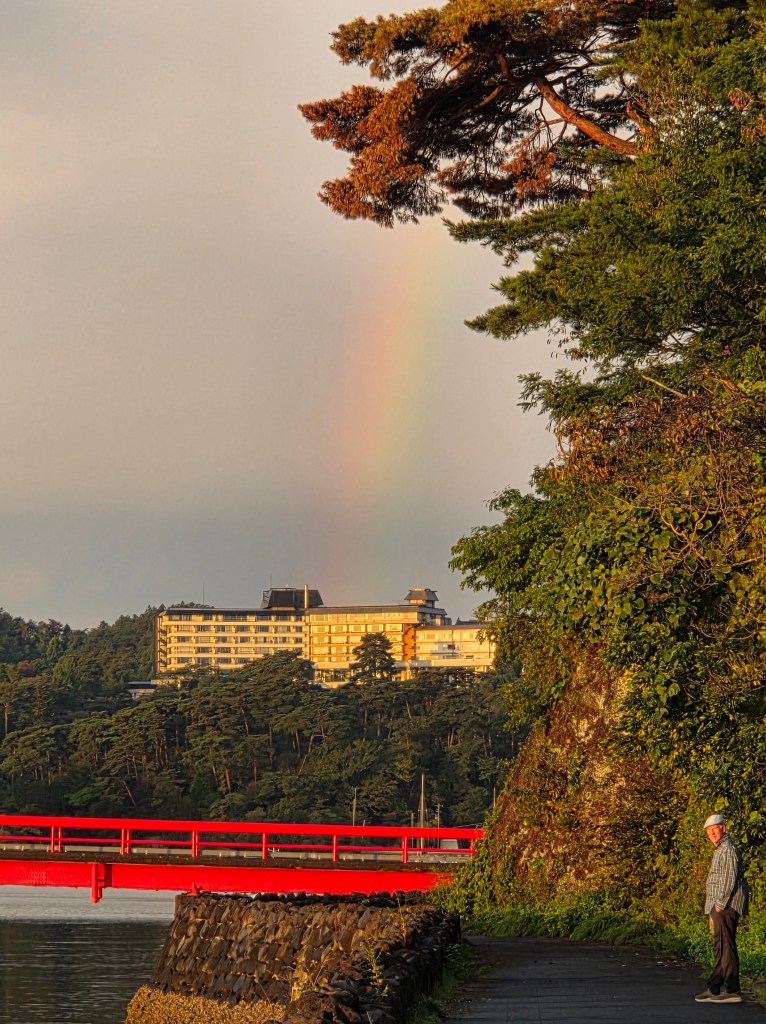
On our last day in Matsushima, we arose early and walked out to view the sunrise. As always, doing so is a wonderful experience. The sun rose over some islands and then reflected on the waters of the bay. As an added bonus, a rainbow segment appeared as we walked along the shore path.
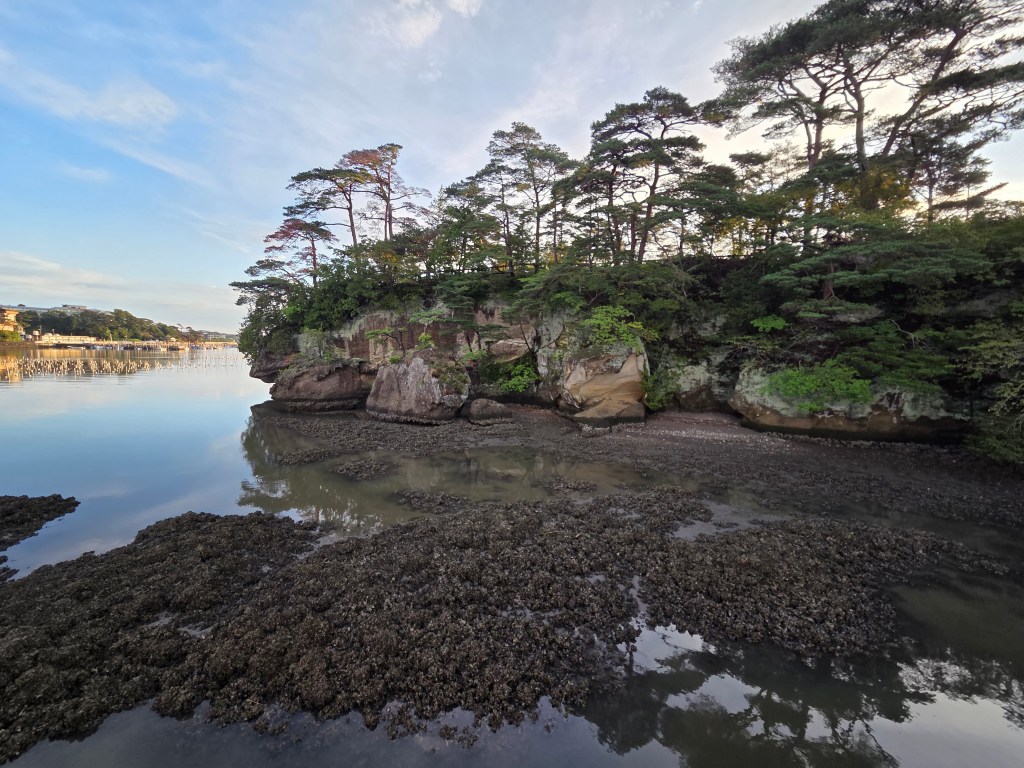
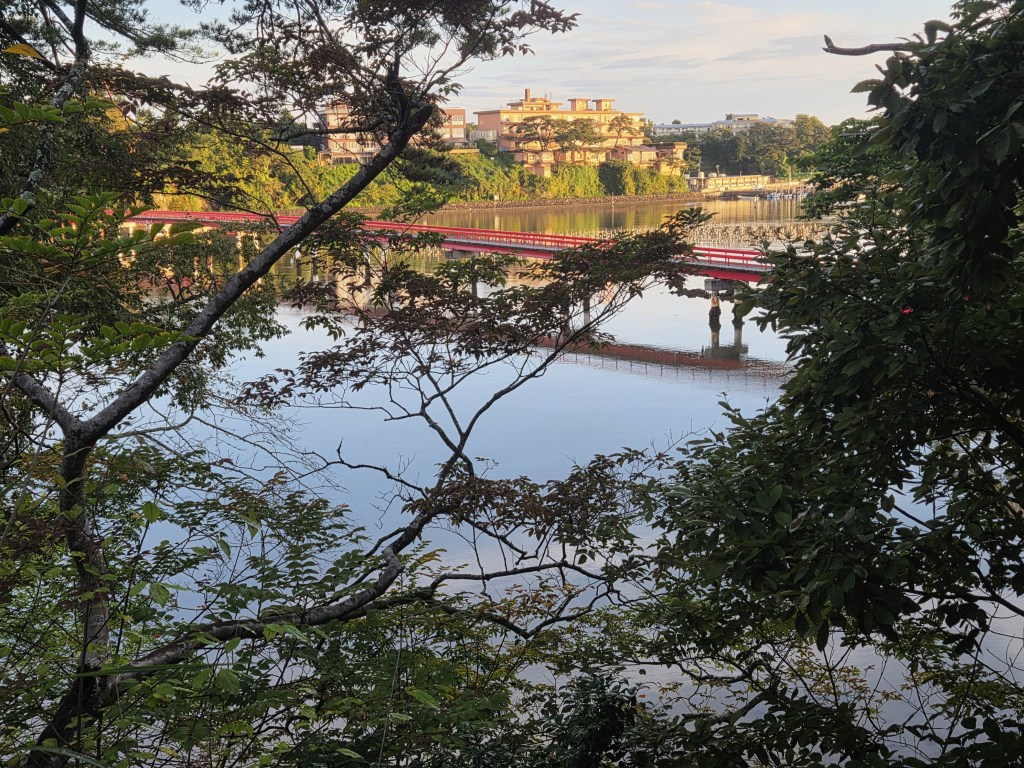
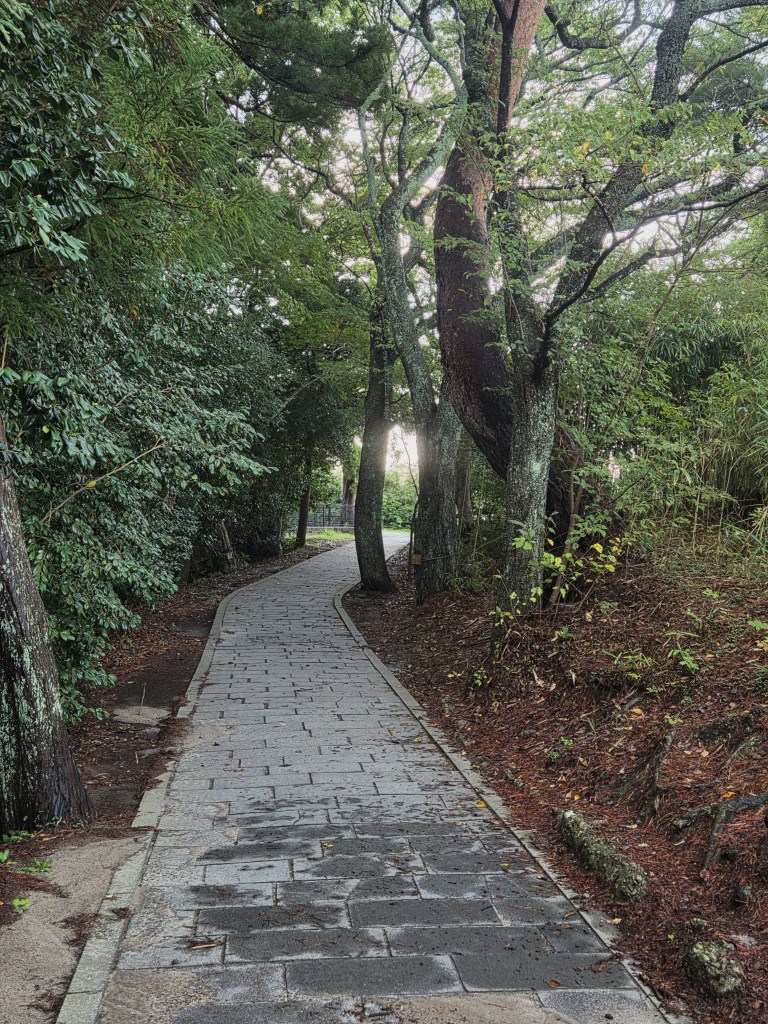
We then walked over the Fukuura-bashi Bridge leading to Fukuurajima Island. It was an inspiring early morning walk with only a few other people encountered.
As we walked, taking in various views of islands in the distance and close at hand views of trees and trails, I thought about how there are so many scenic views here in every step you take. It is an amazing place and I can now understand Basho’s high regard for Matsushima.
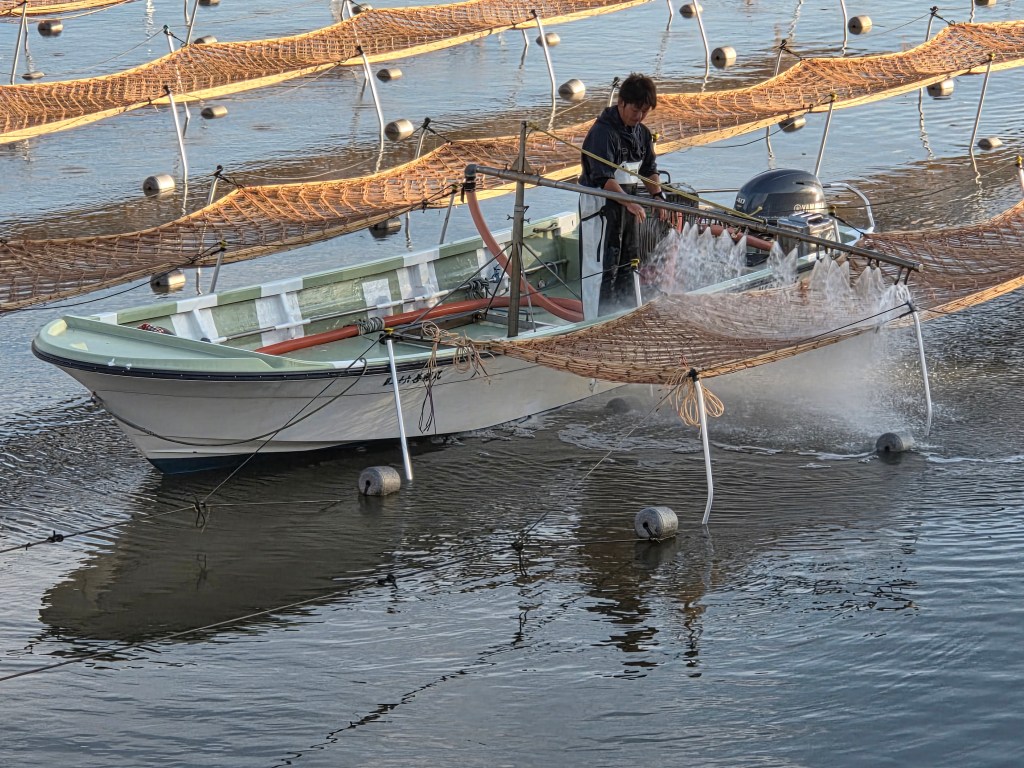
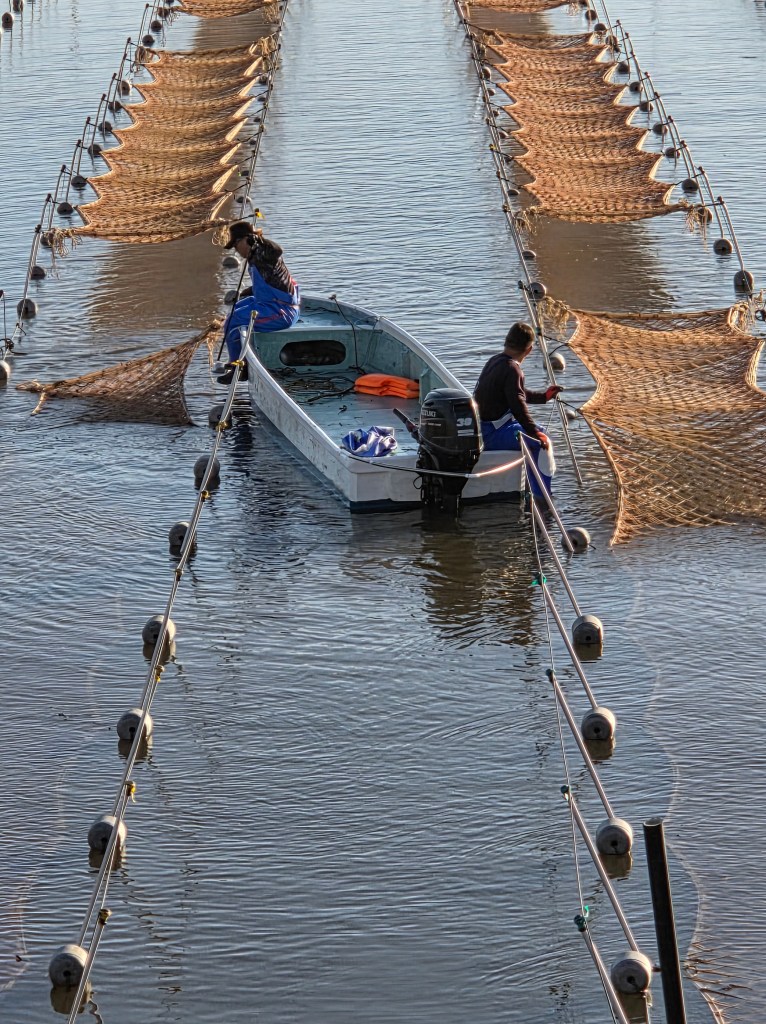
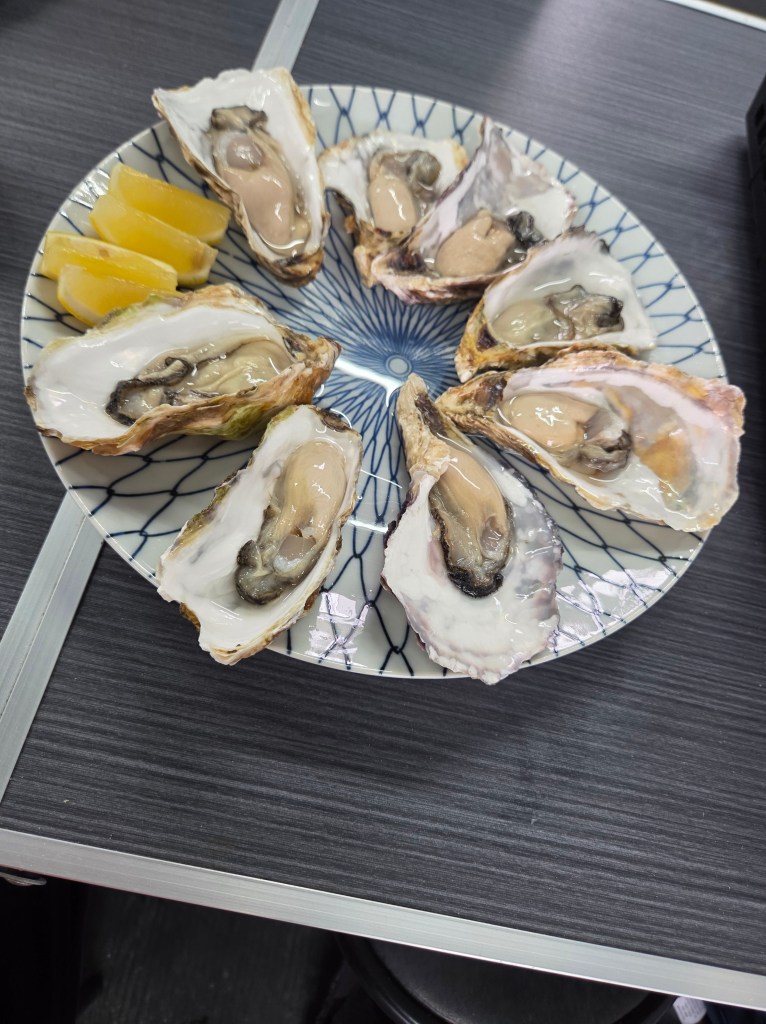
On the walk back we watched a few workers doing something with the oyster beds, which are quite numerous here. Thus, they are quite inexpensive, too. At the Oyster Shack yesterday the oysters, grilled or raw, cost us $1 each!
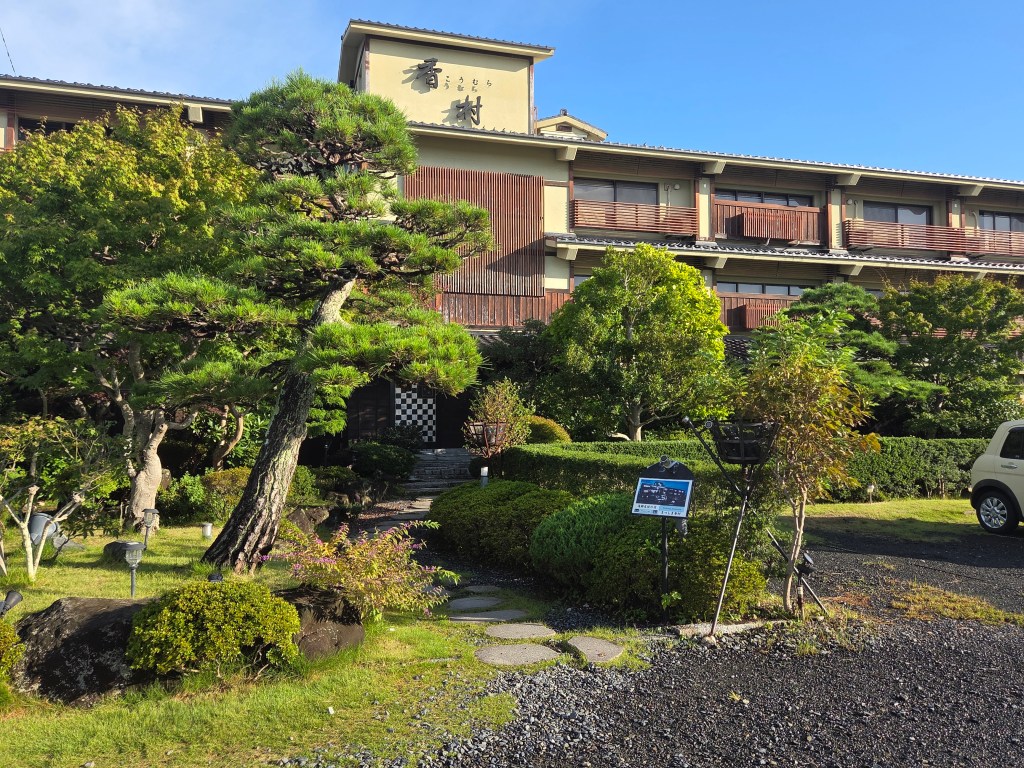
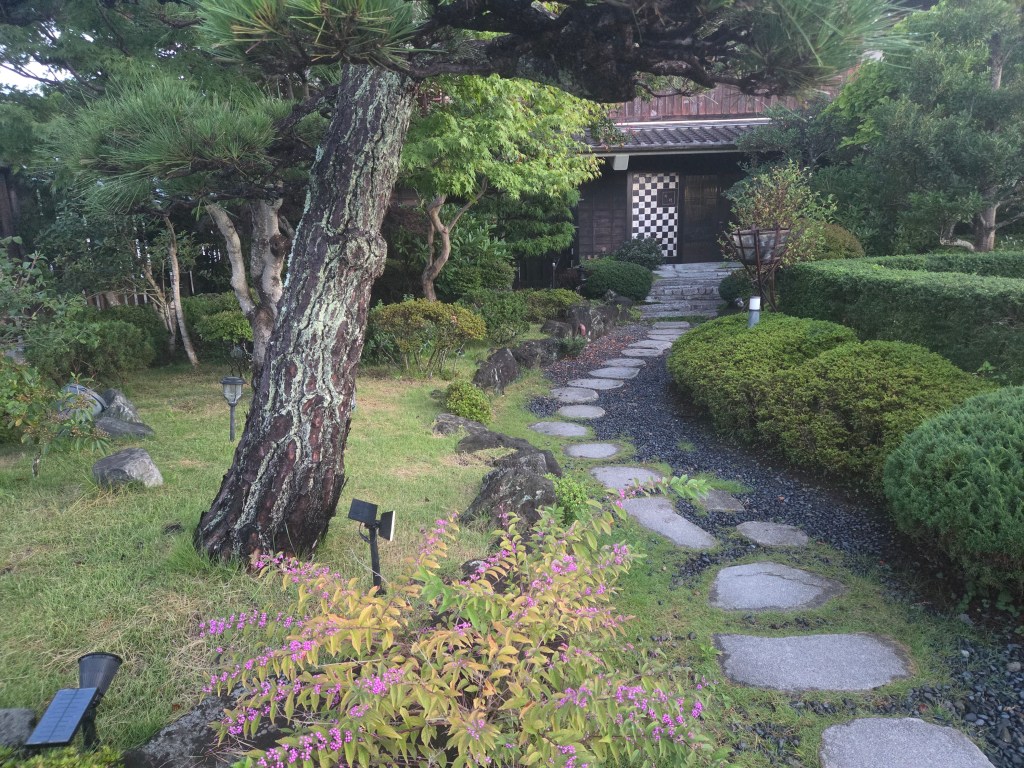
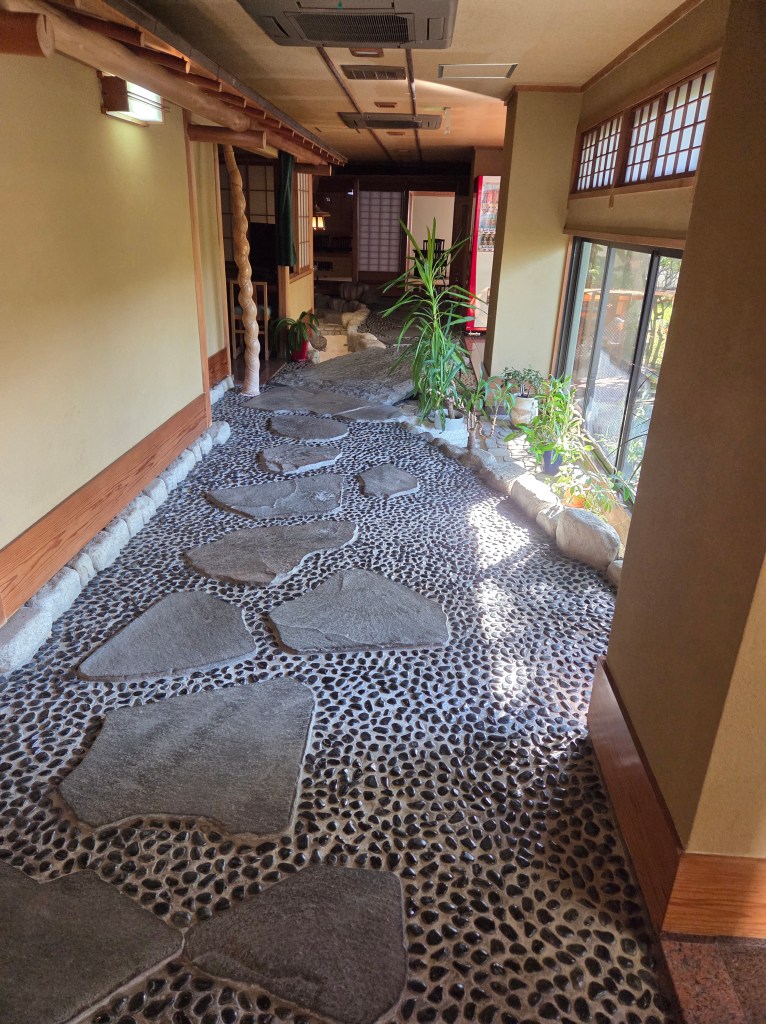
After returning we packed up our belongings and said goodbye to the owners of the ryokan, Matsushima Koumura. We were very pleased with our stay here and I would certainly recommend it to anyone.
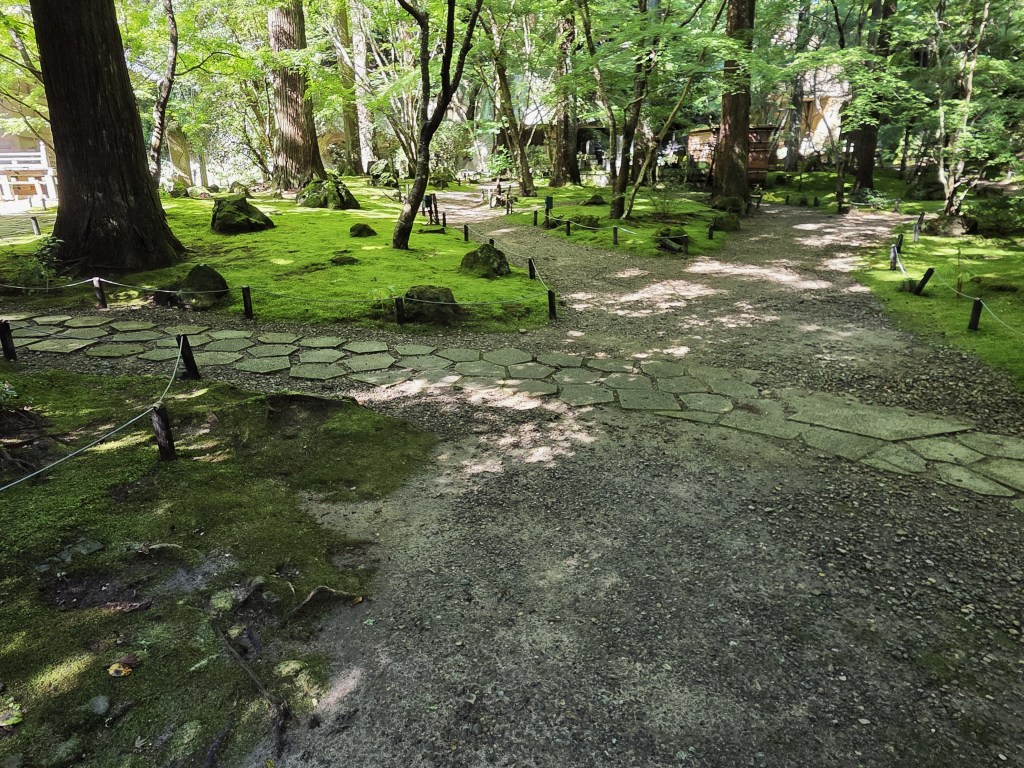
We then stored our luggage in some lockers and spent a few hours at two of the famous temples of Matsushima: Entsuin and Zuiganji.
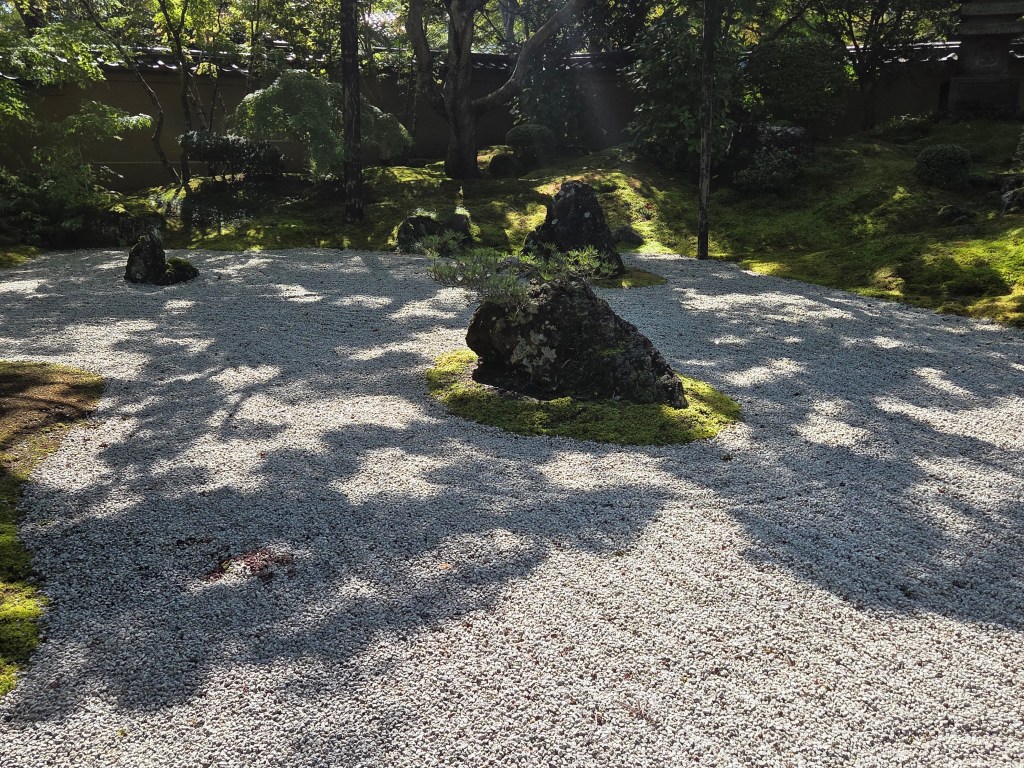
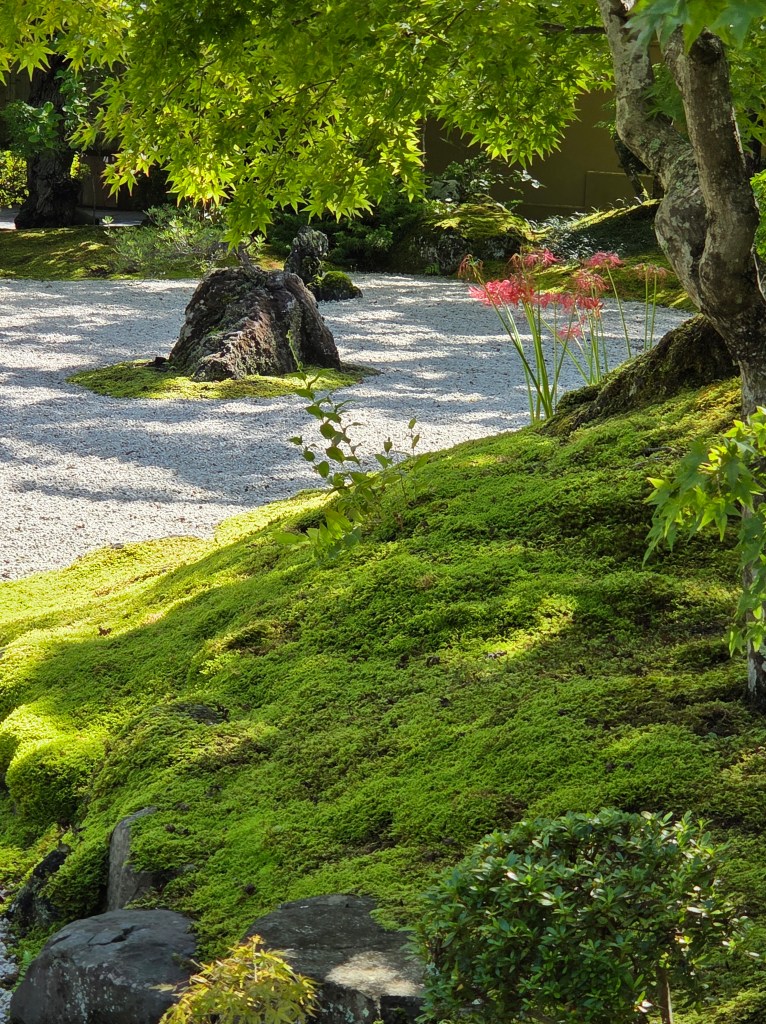
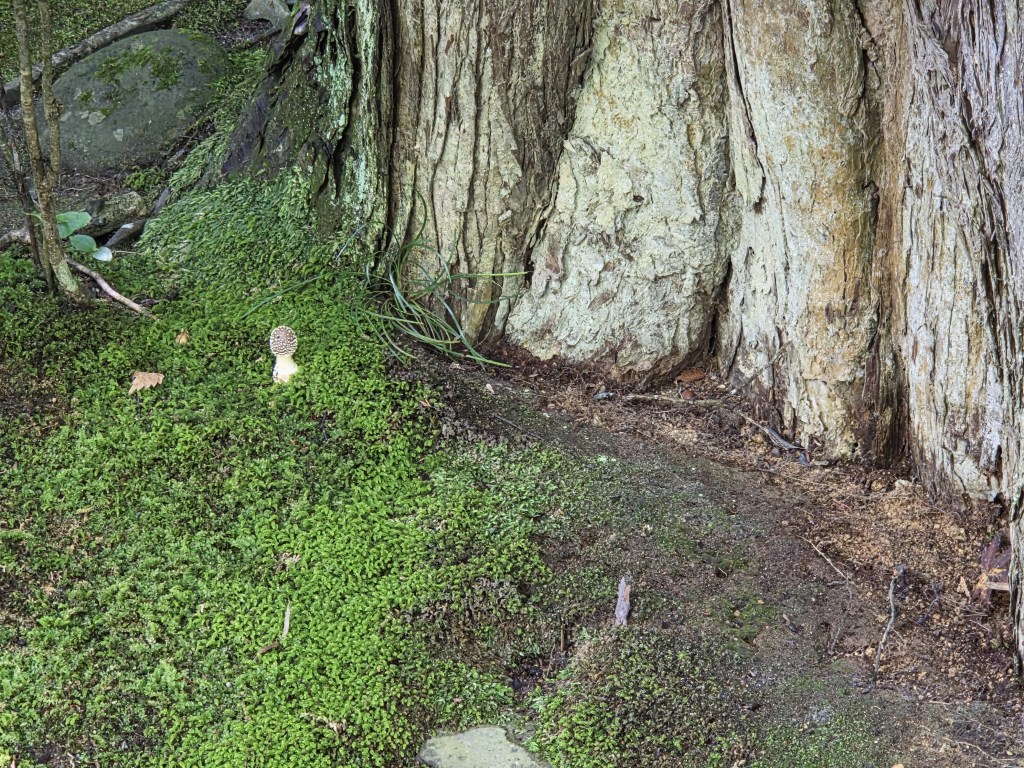
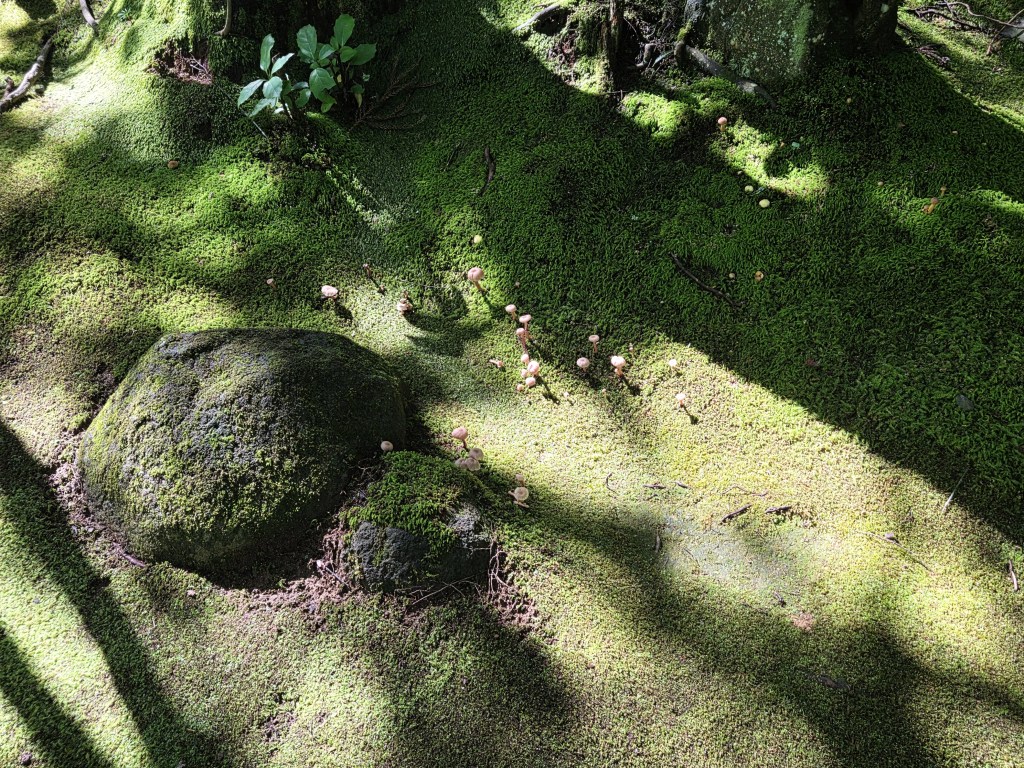
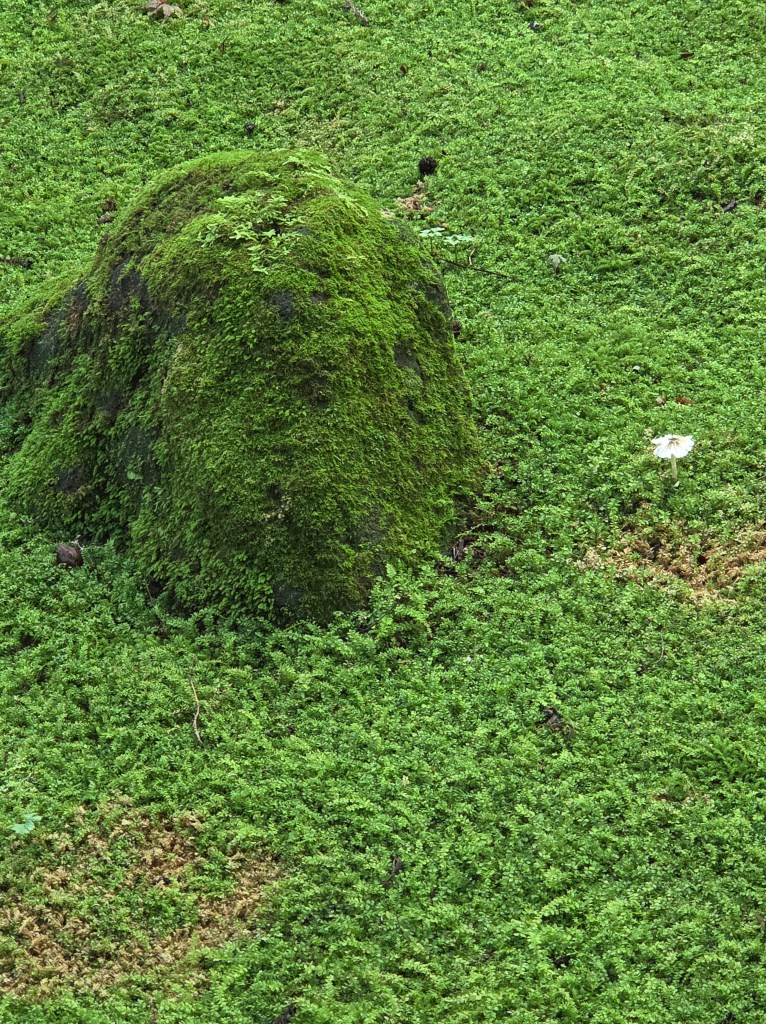
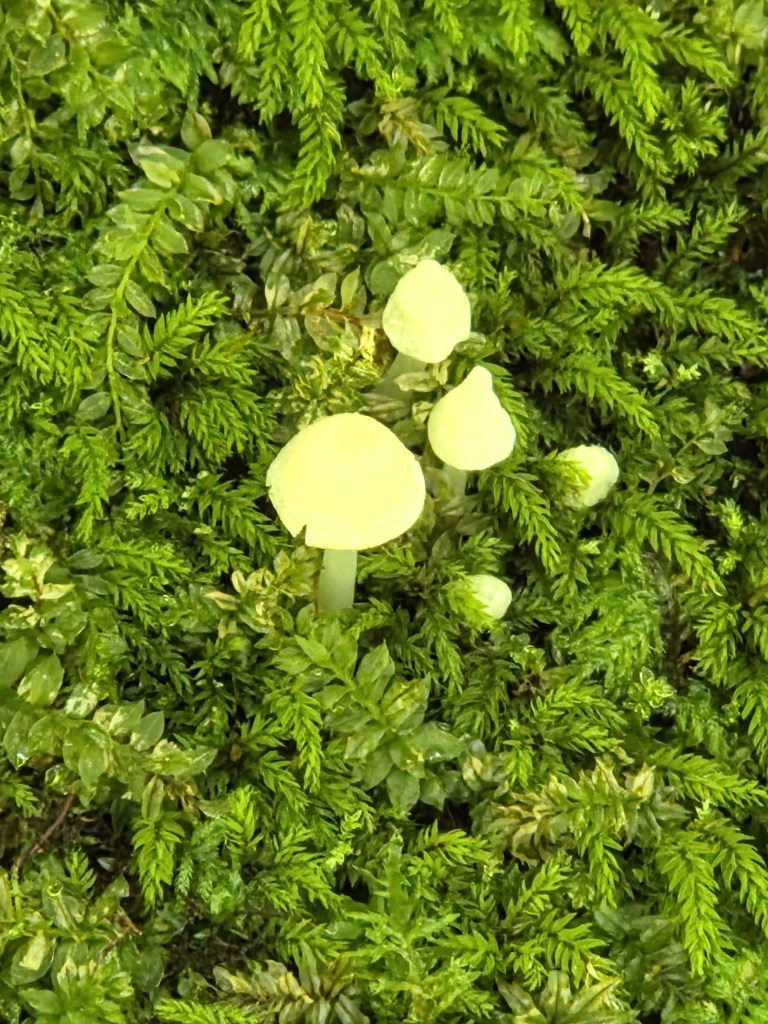
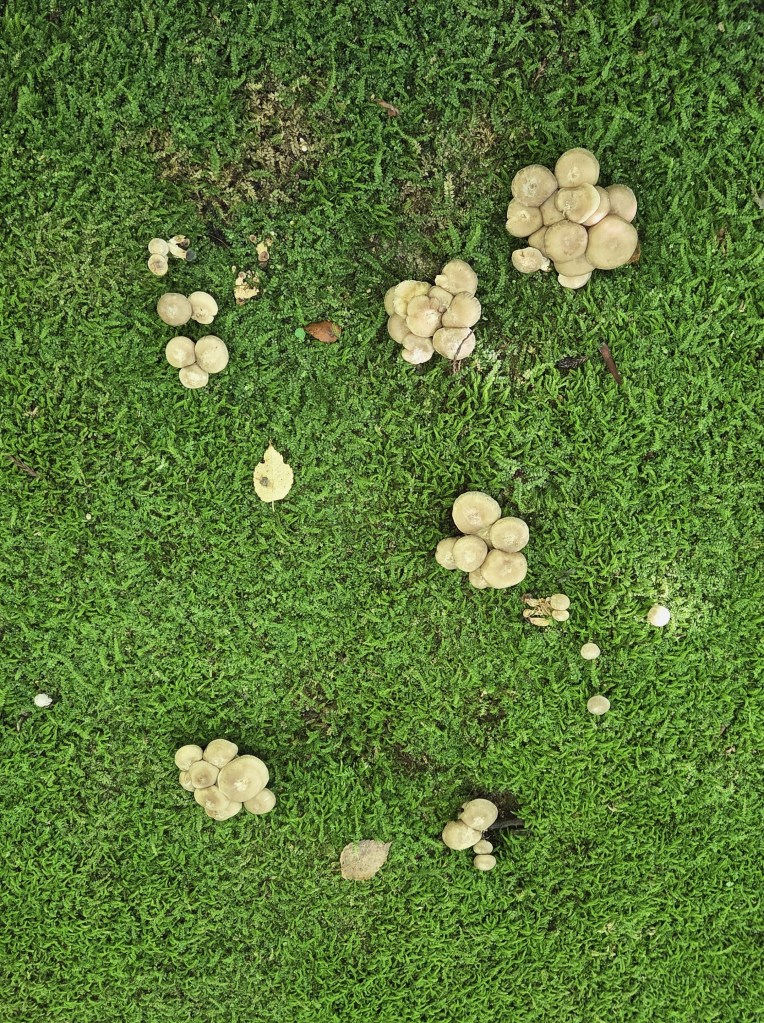
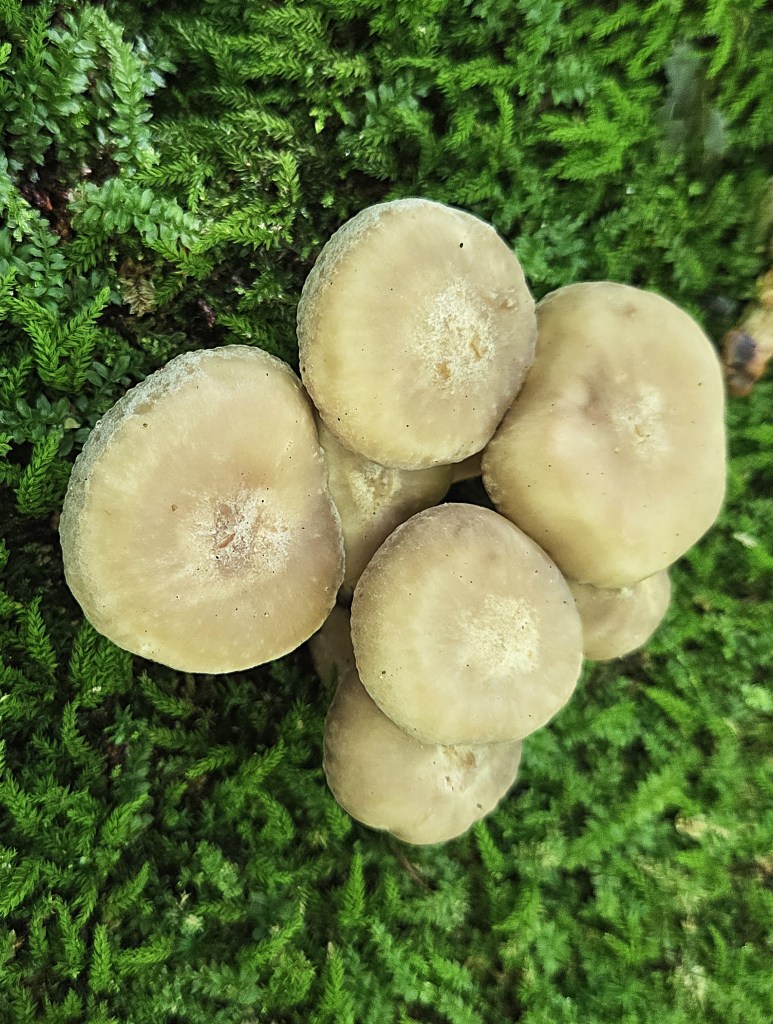
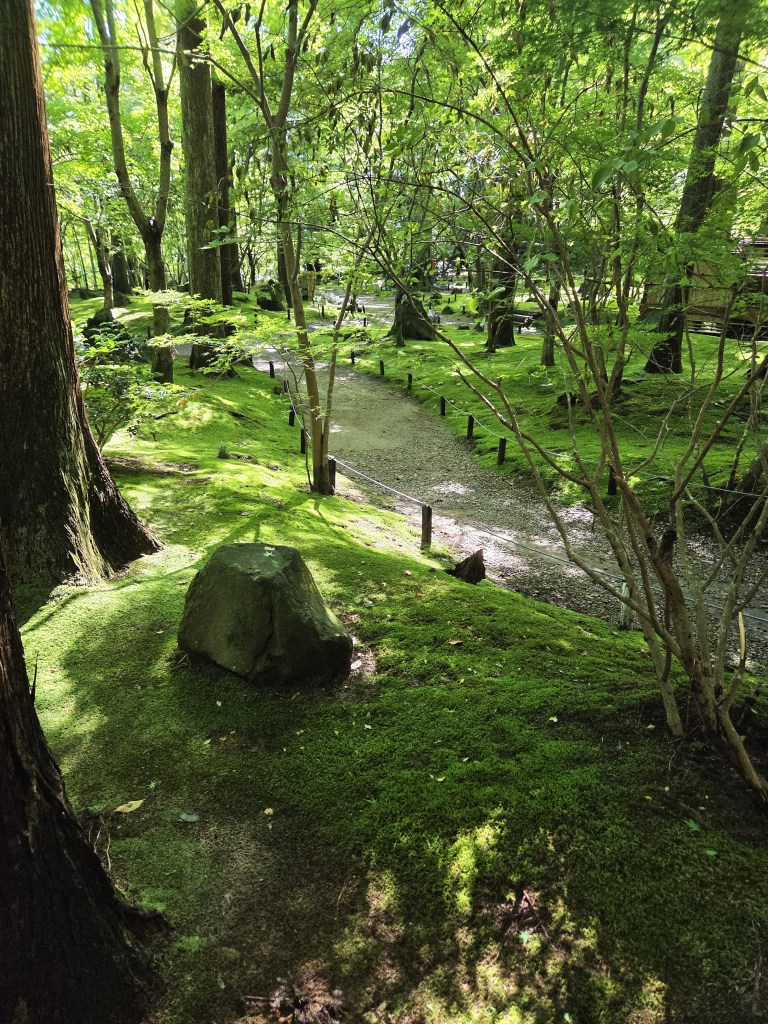
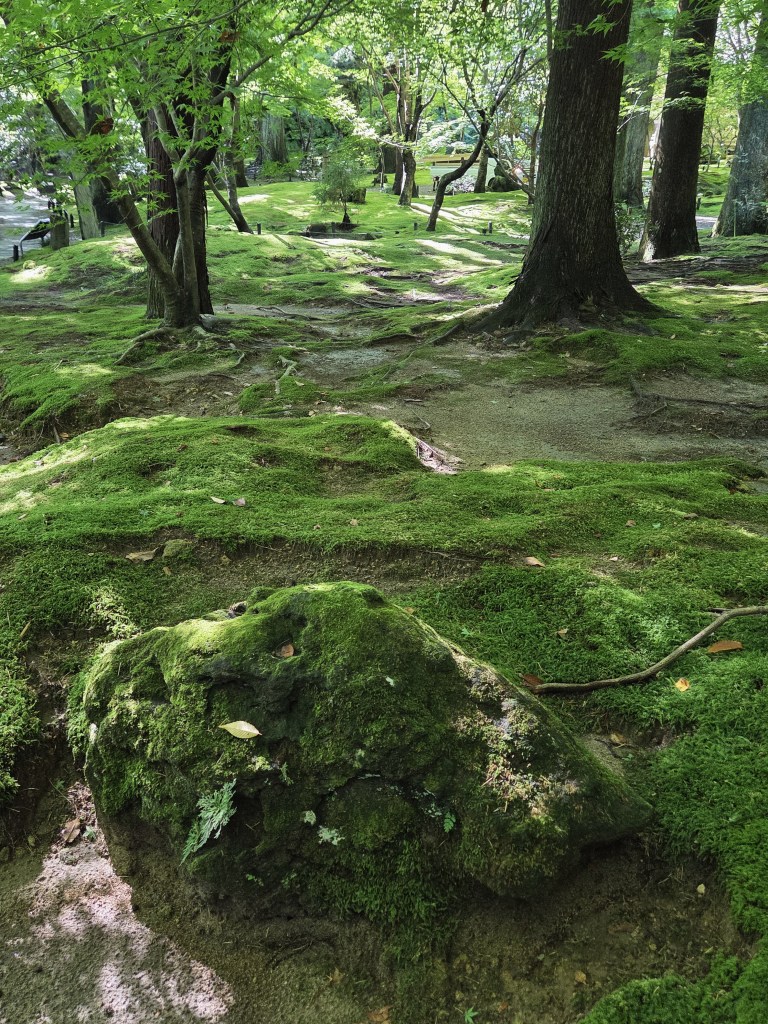
Entsuin dates back to 1647 and for me, the highlights were the karesansui, or rock garden, and the cedar grove, on whose ground was moss covered and sprouted up a number of mushrooms.
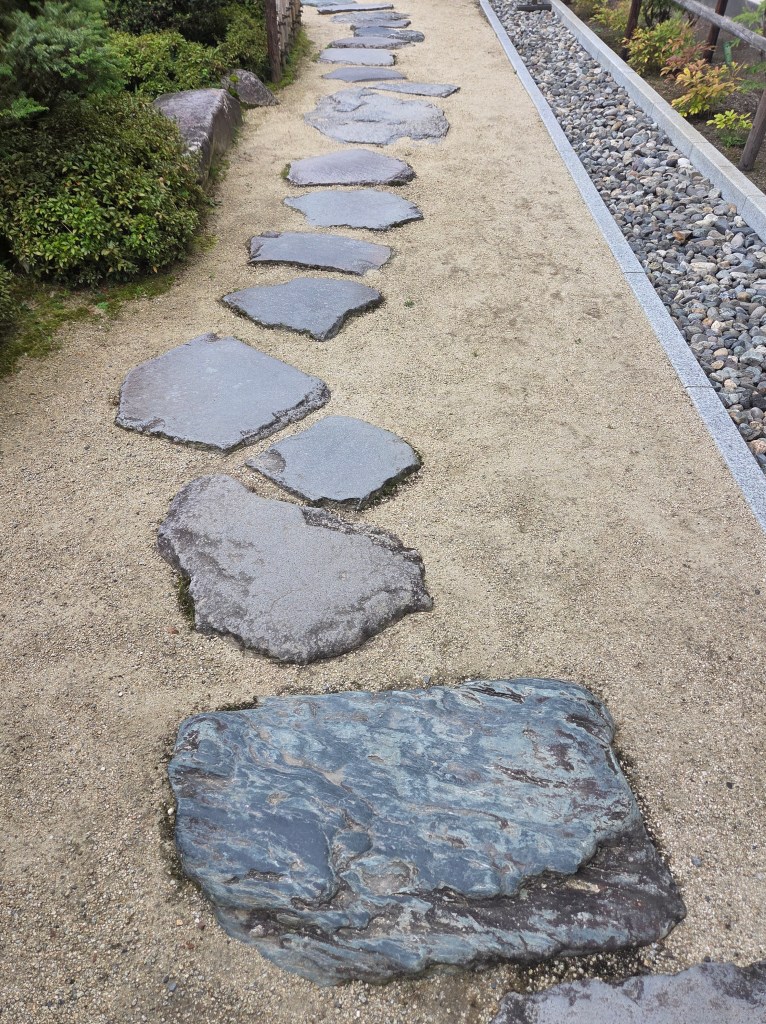
The karesansui gave the feel of Matsushima Bay, with its “islands” of rocks.
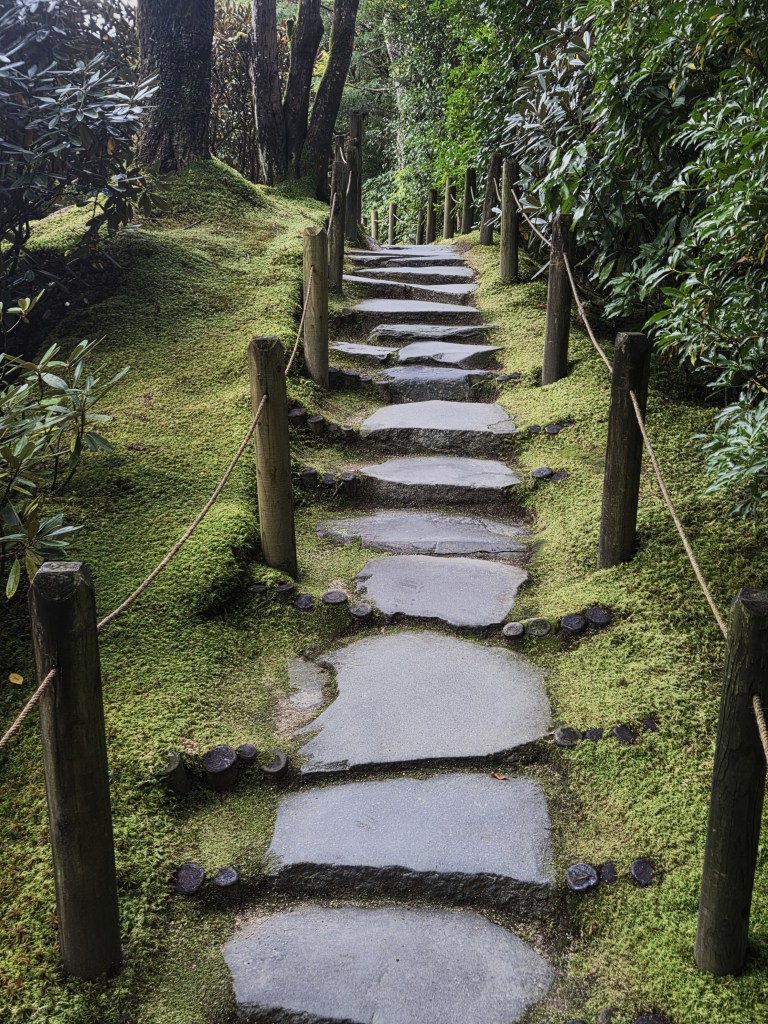
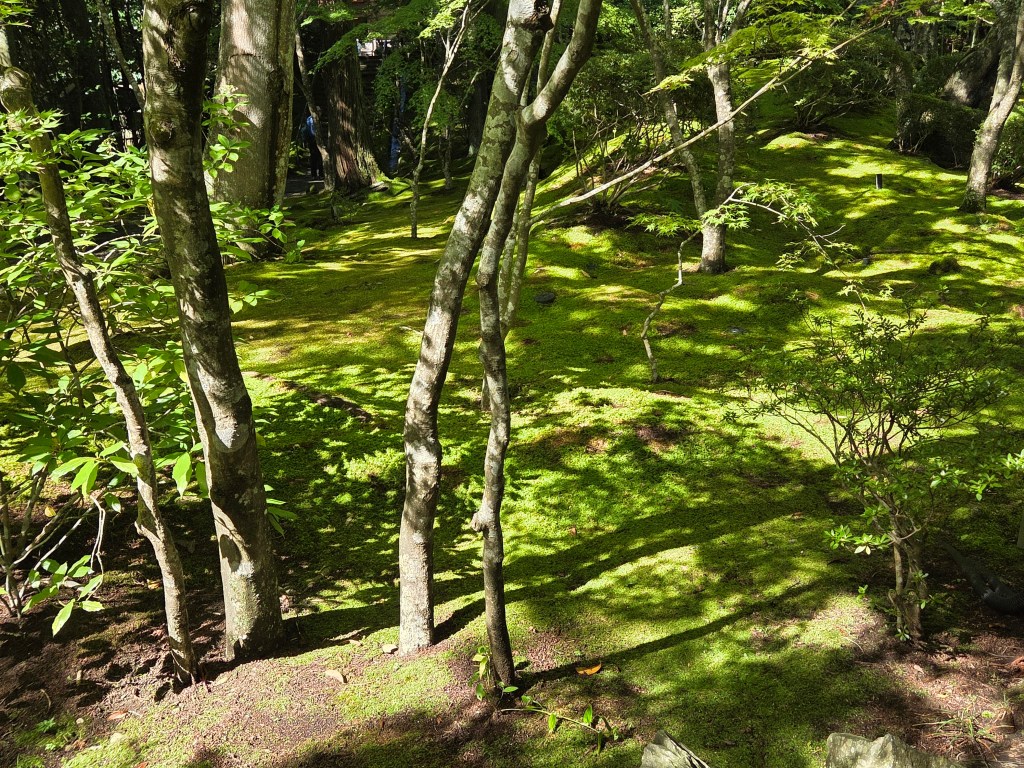
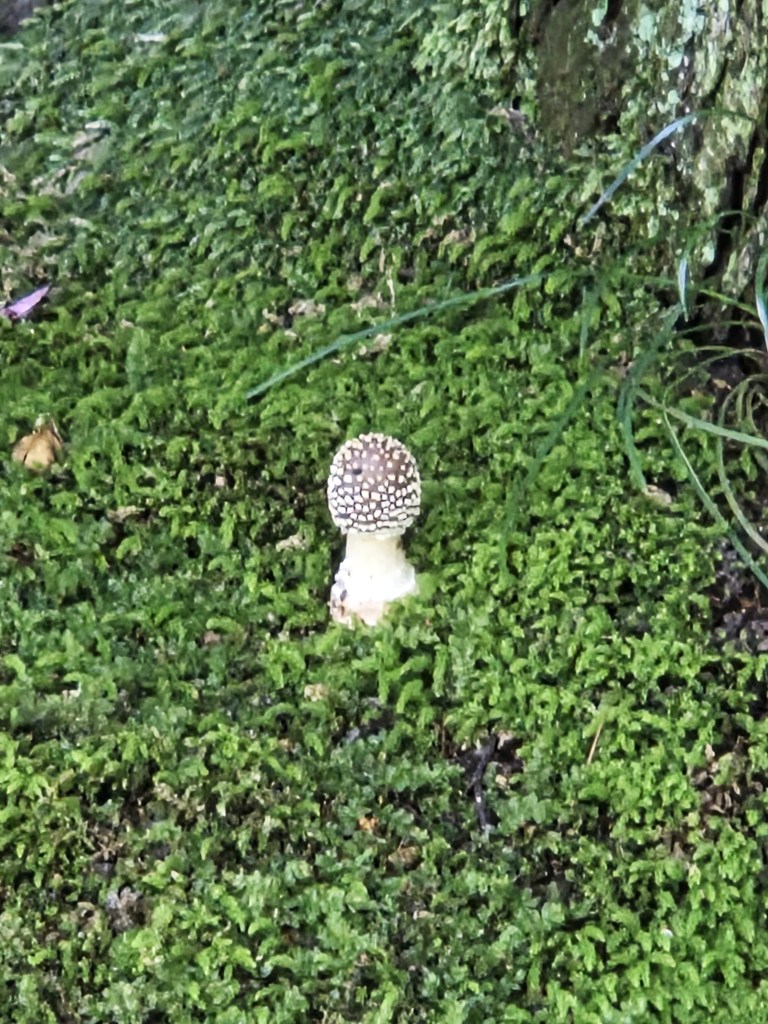
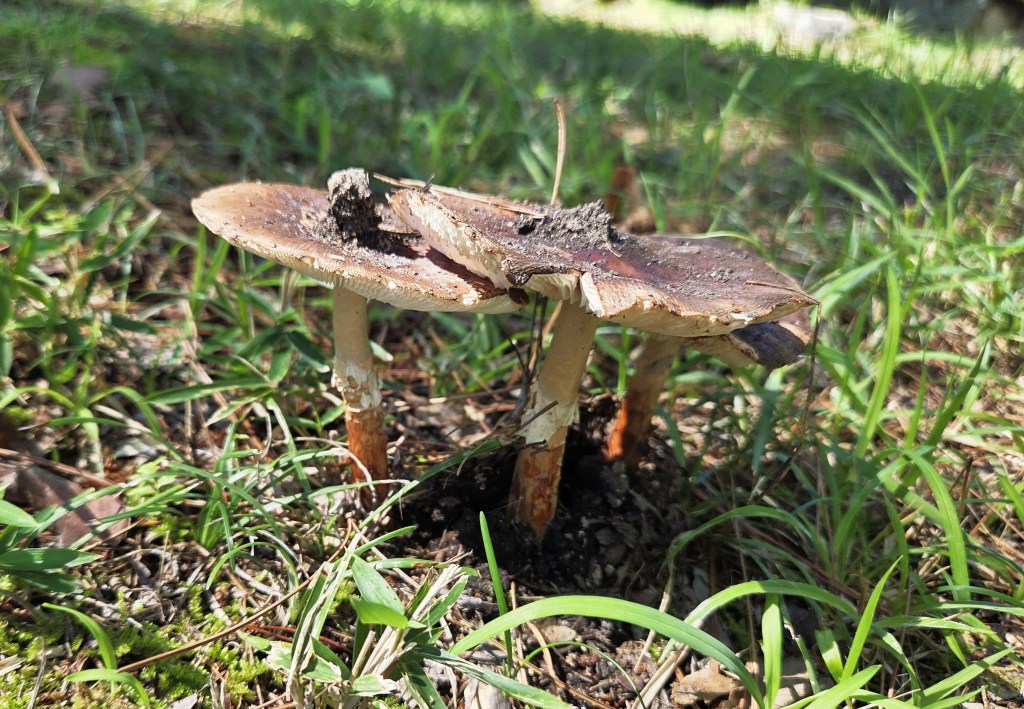
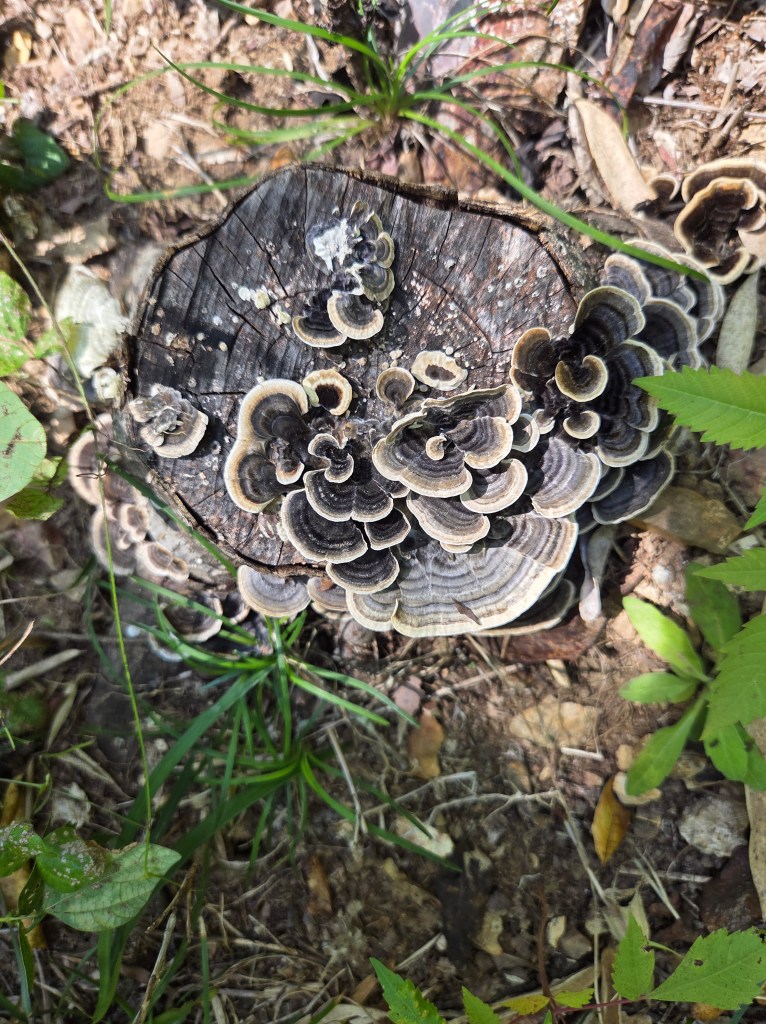
I could have stayed in the cedar grove for hours. A very quiet, peaceful space with tall trees and moss carpeted ground. I was excited to see various mushrooms poking up from the moss. The interplay of sun and shadows was fascinating.
Zuiganji, built in 1609, is an amazing piece of craftsmanship. Inside, where photos weren’t allowed, many of the rooms were decorated with wall paintings that date back to the 17th Century.
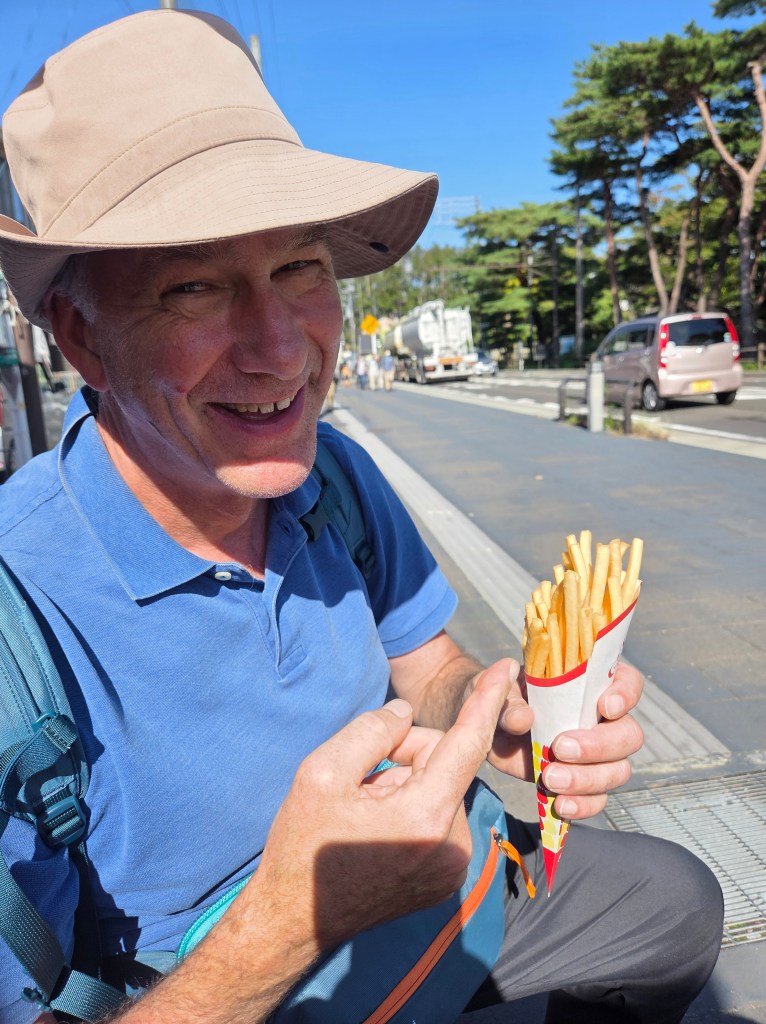
After another fulfilling Matsushima lunch, we boarded the train to Sendai and then on to Yamagata for the next three days. But not before, while walking to the train station, Bart was drawn to get some French fries after walking by someone eating some. A little homesickness!
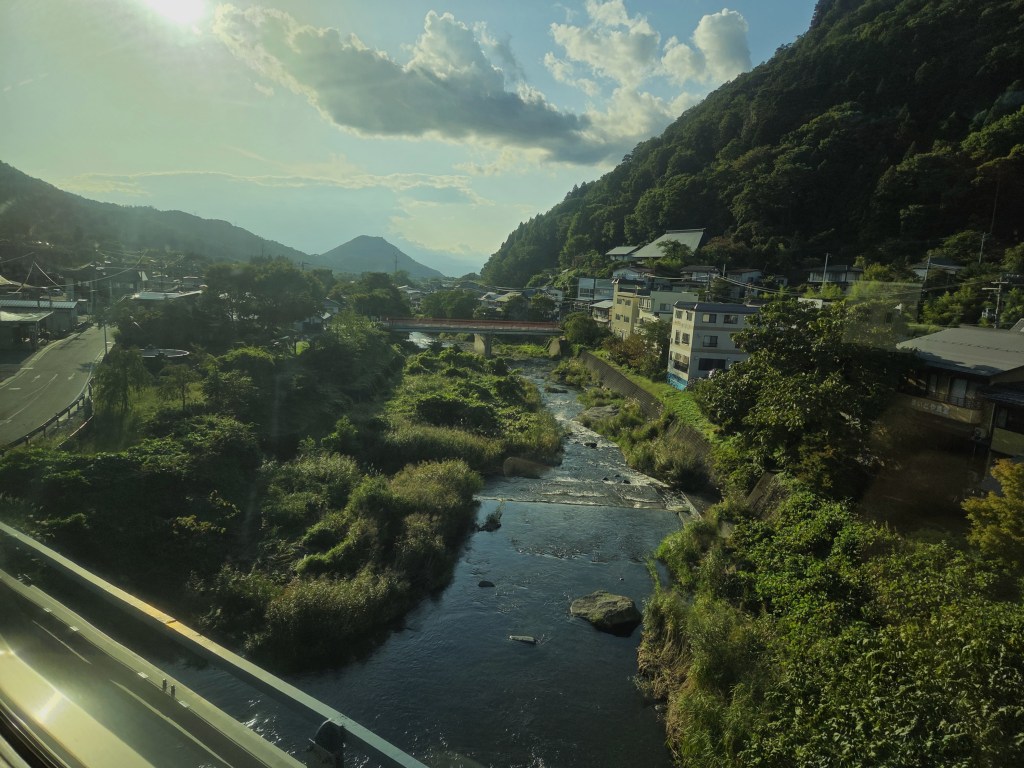
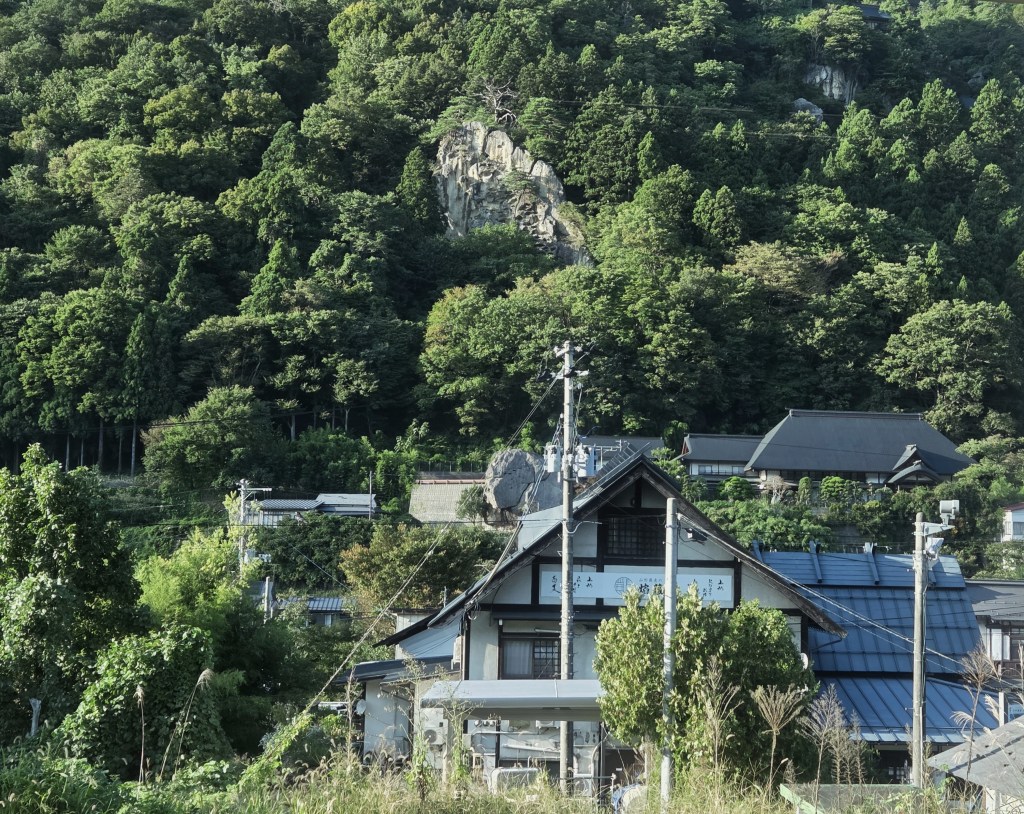
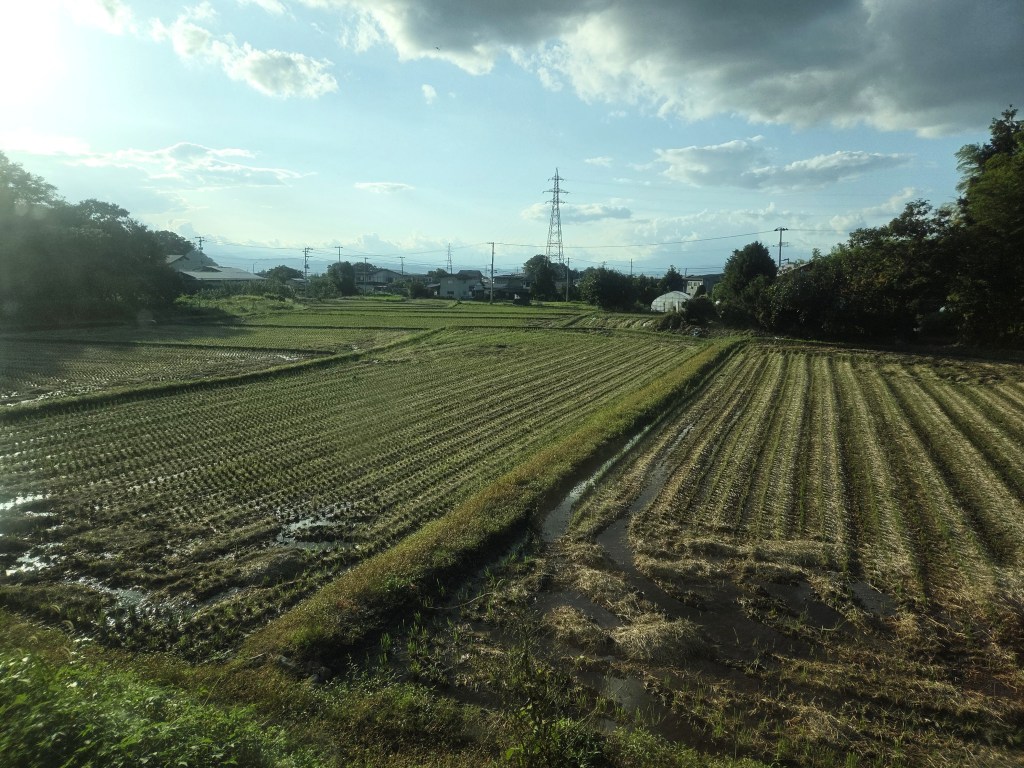
Kiyo mentioned the other day that it was a scenic train ride between Sendai and Yamagata. Once one departed the Sendai area the landscape became agricultural and mountainous.
After checking in at the hotel in Yamagata we went out to dinner at a small restaurant just down the street. It was run by an older couple and sat maybe 20 people. Appetizers, miso, sake for both of us and broiled red fish for me and vegetable tempura for Bart. . The meal, once again, was excellent. The whole meal came to about $22 US! That has been the case throughout this journey. The food has been excellent and the pricing amazingly reasonable.
Tomorrow we make a trek to the mountains to visit Yamadera Temple and the Basho Museum. Onward!
(Click on thumbnail for larger picture.)



October 1
A rainy day.
Actually, a quite heavy rainy day. We held off going out this morning, keeping an eye on the radar.
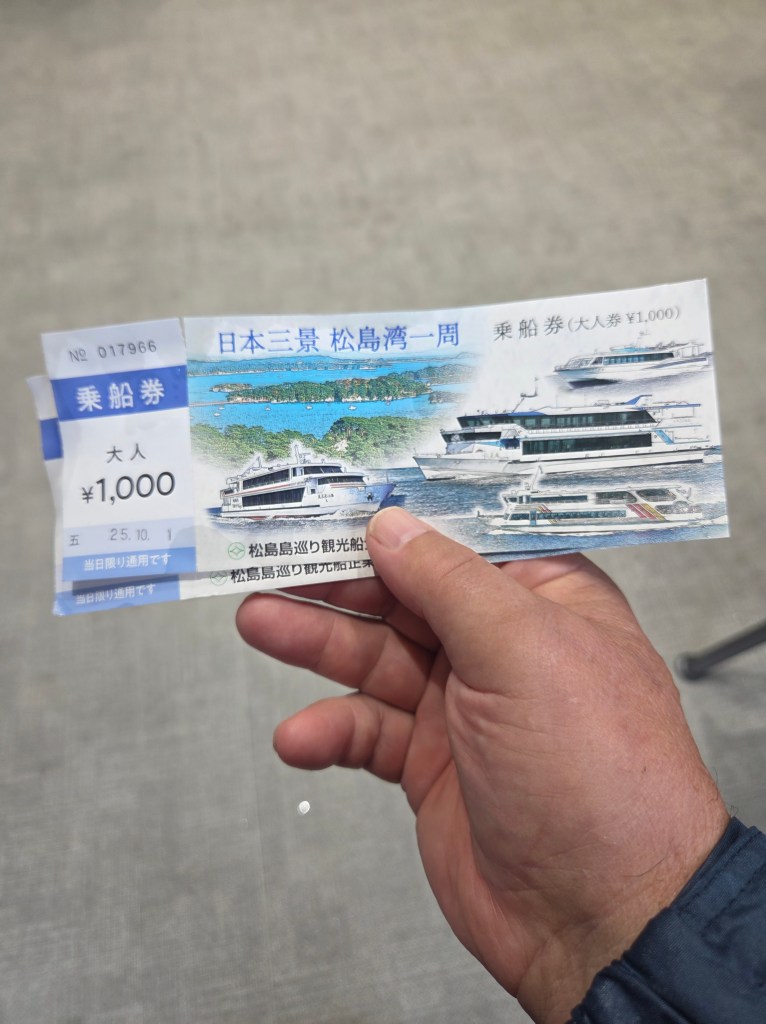
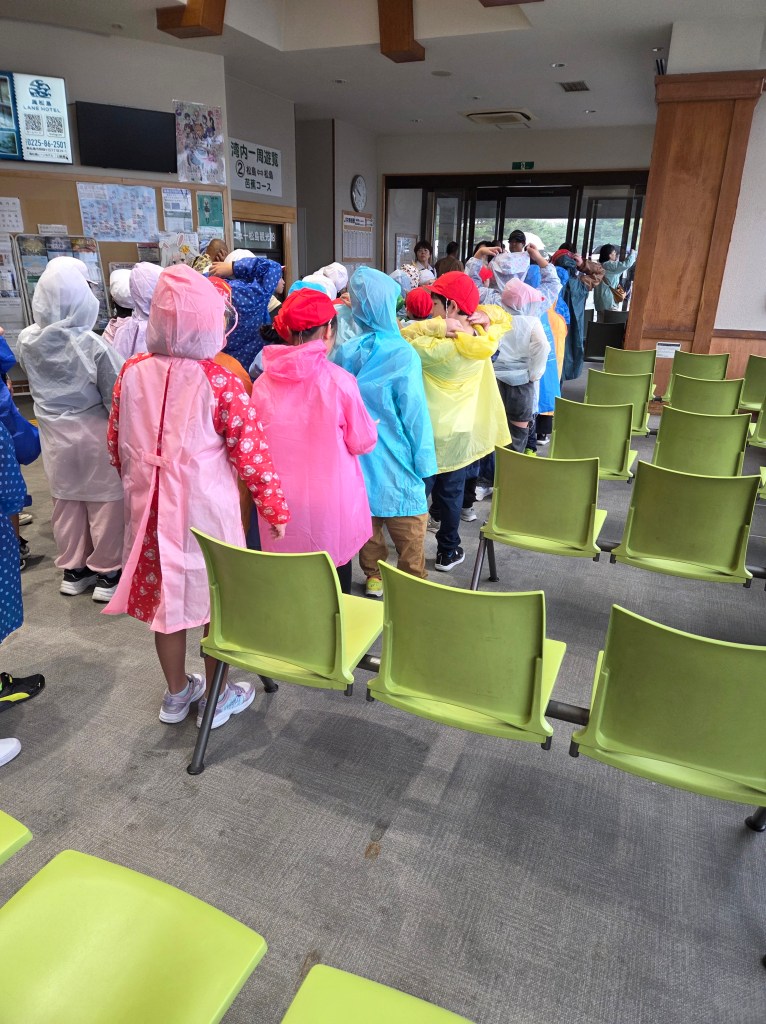
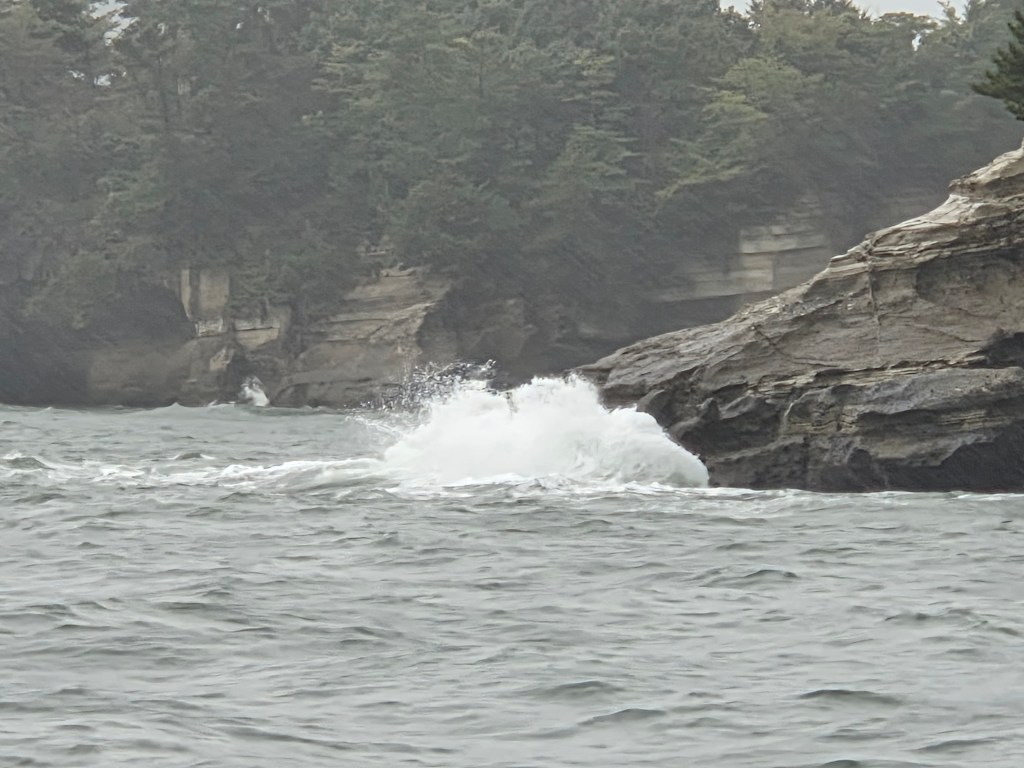
We eventually left as the heavy rain had subsided a bit, though it was still raining. We knew it was supposed to rain today so we planned to do a boat cruise on Matsushima Bay, knowing we could be inside the boat and out of the rain.
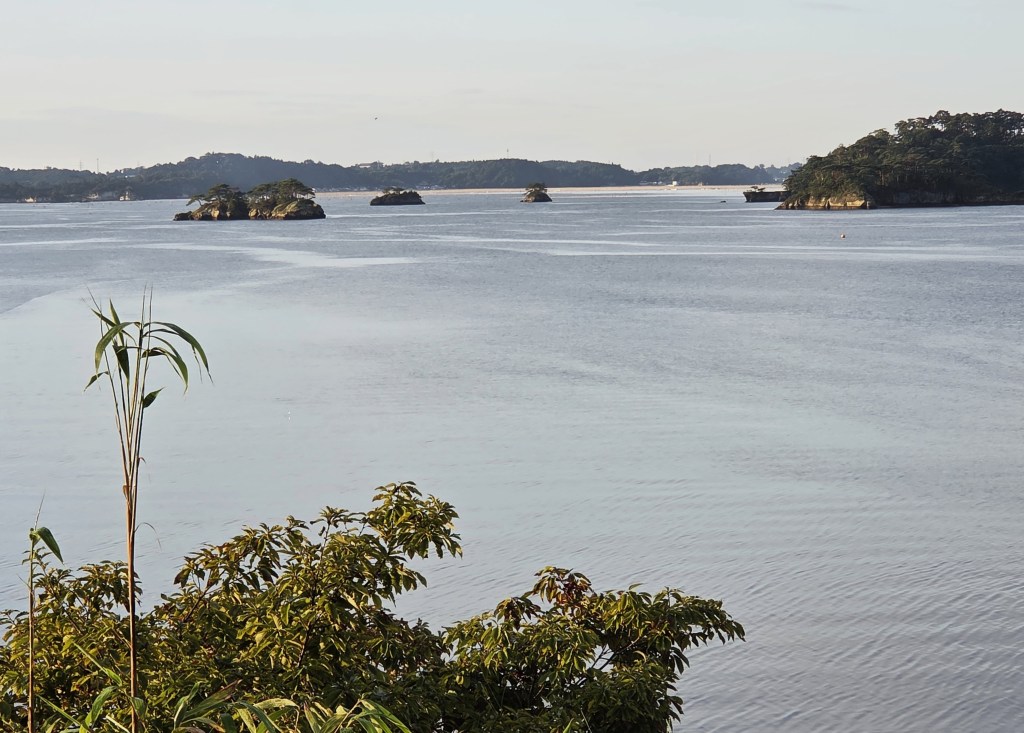
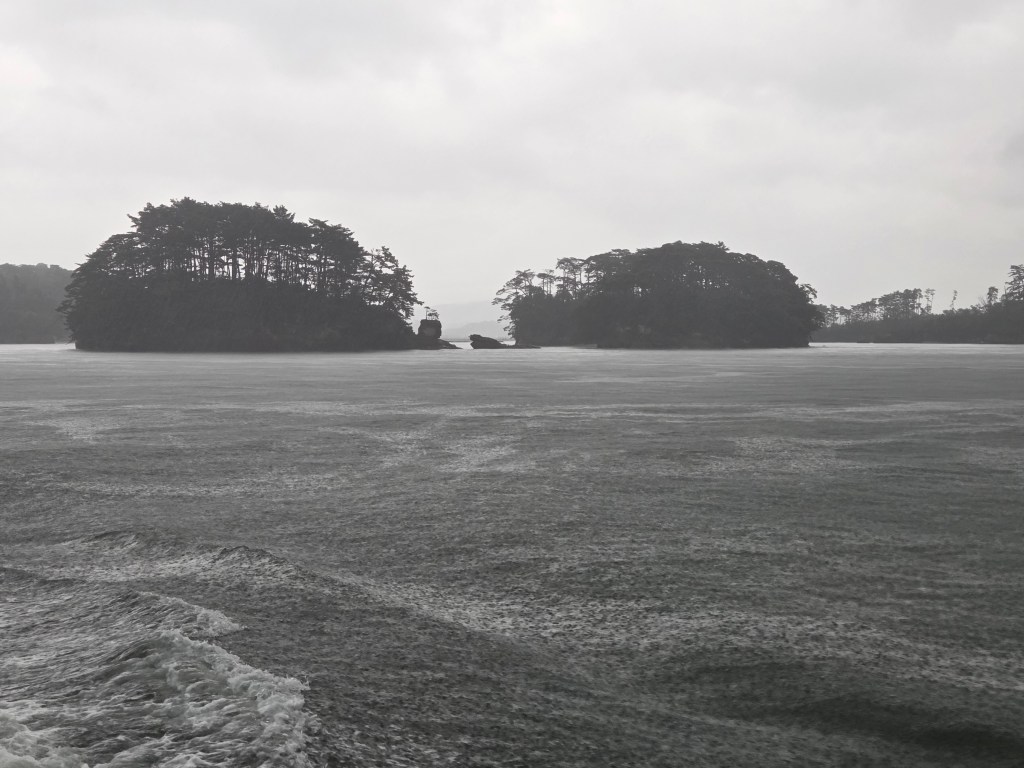
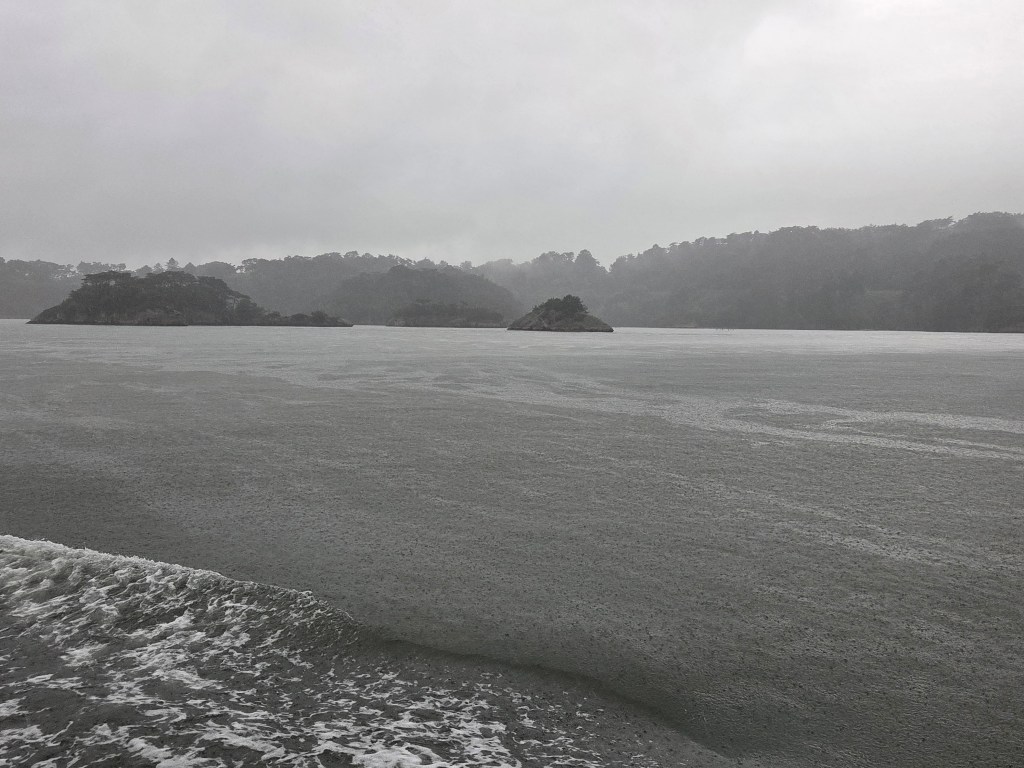
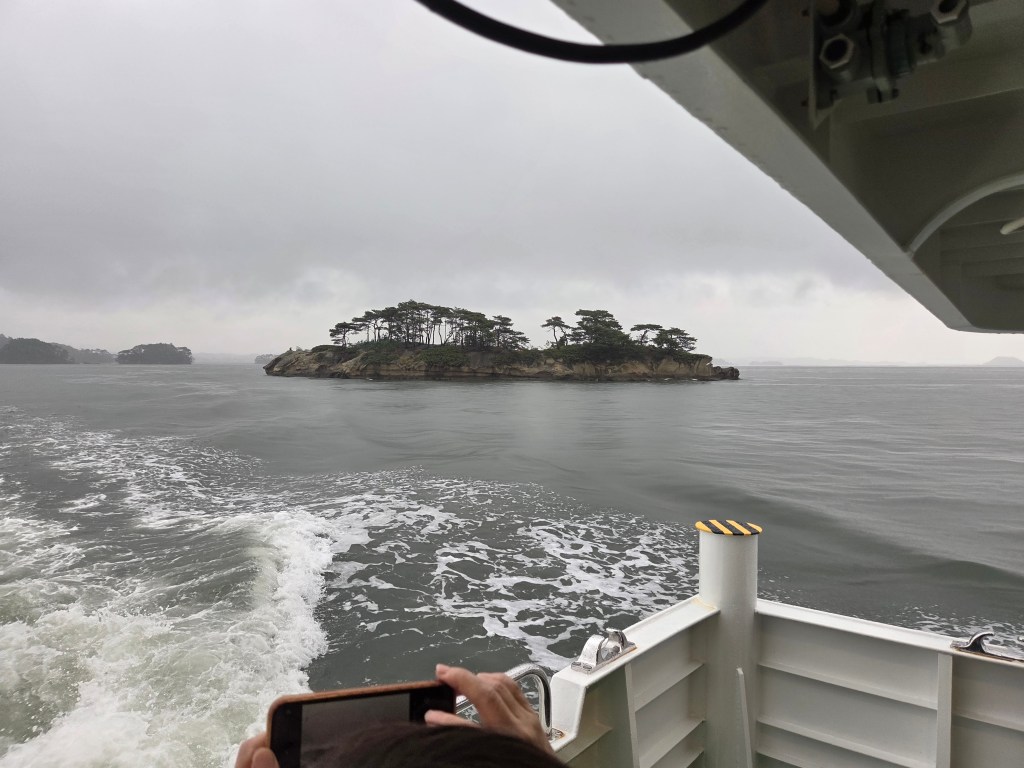
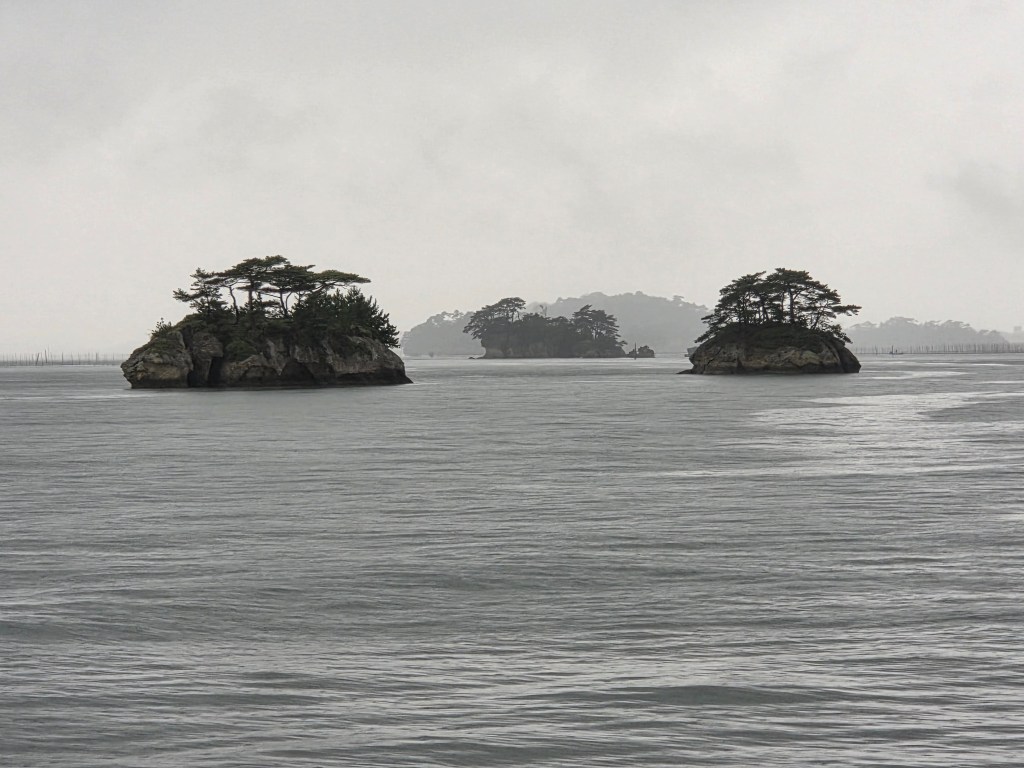
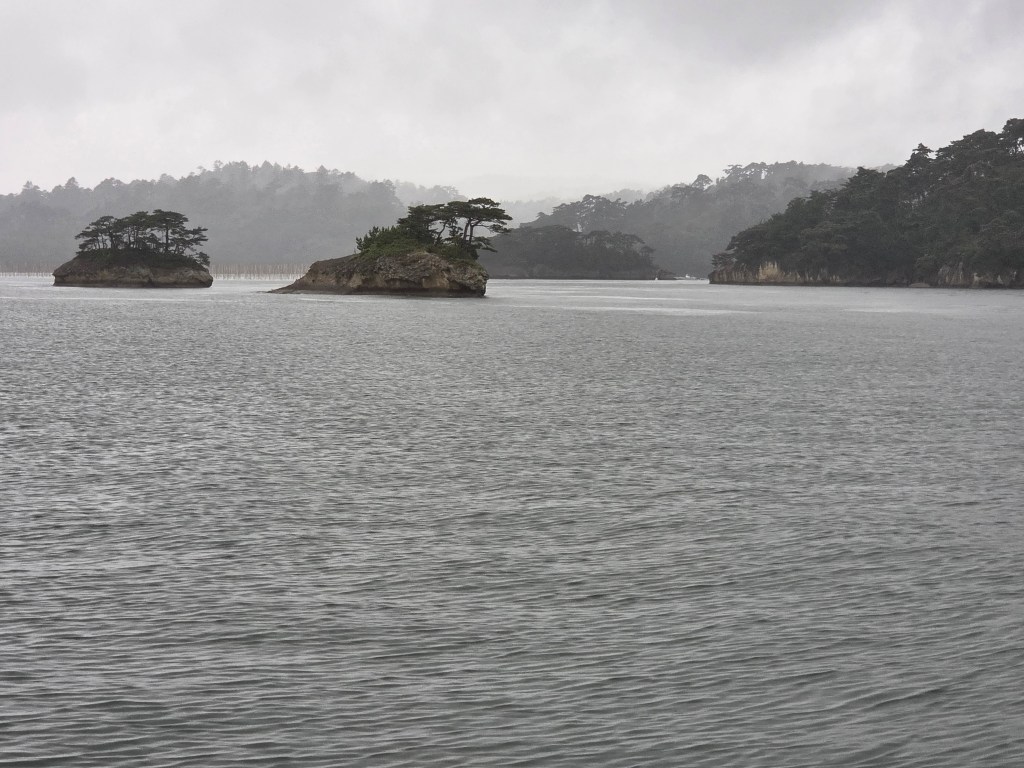
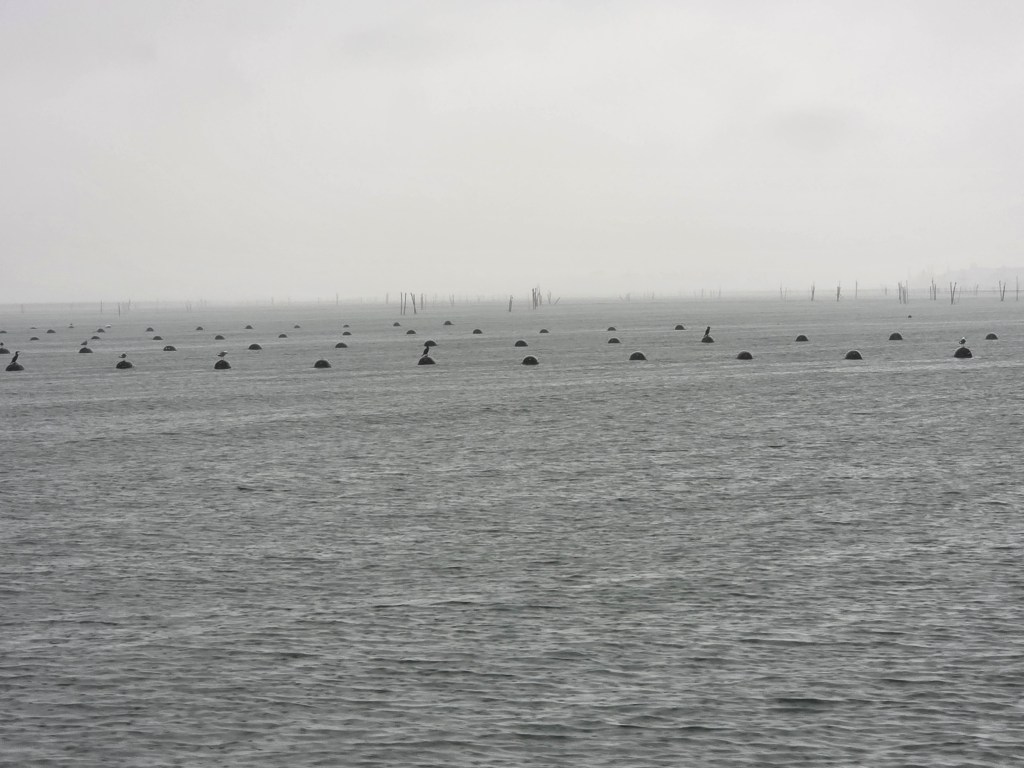
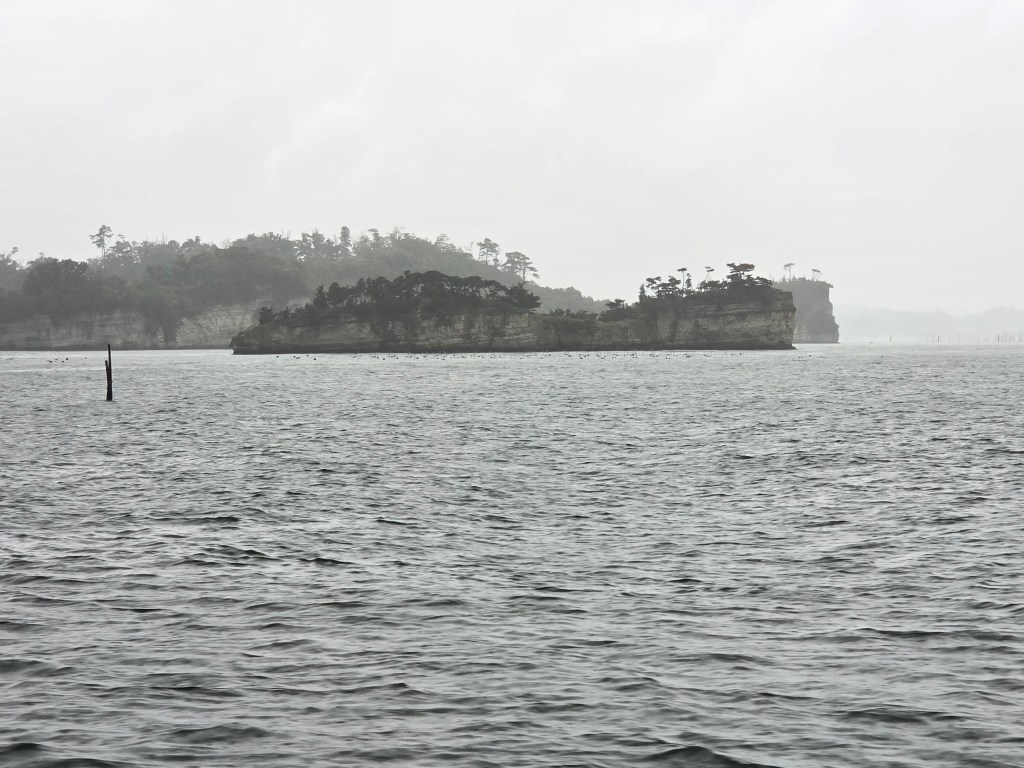
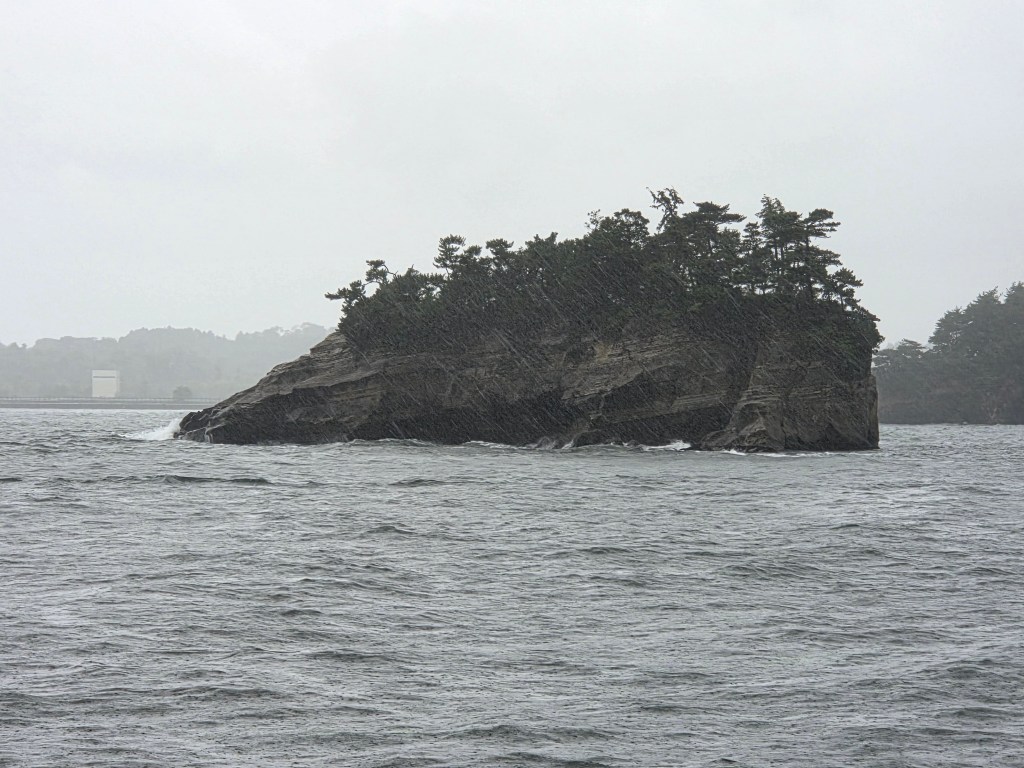
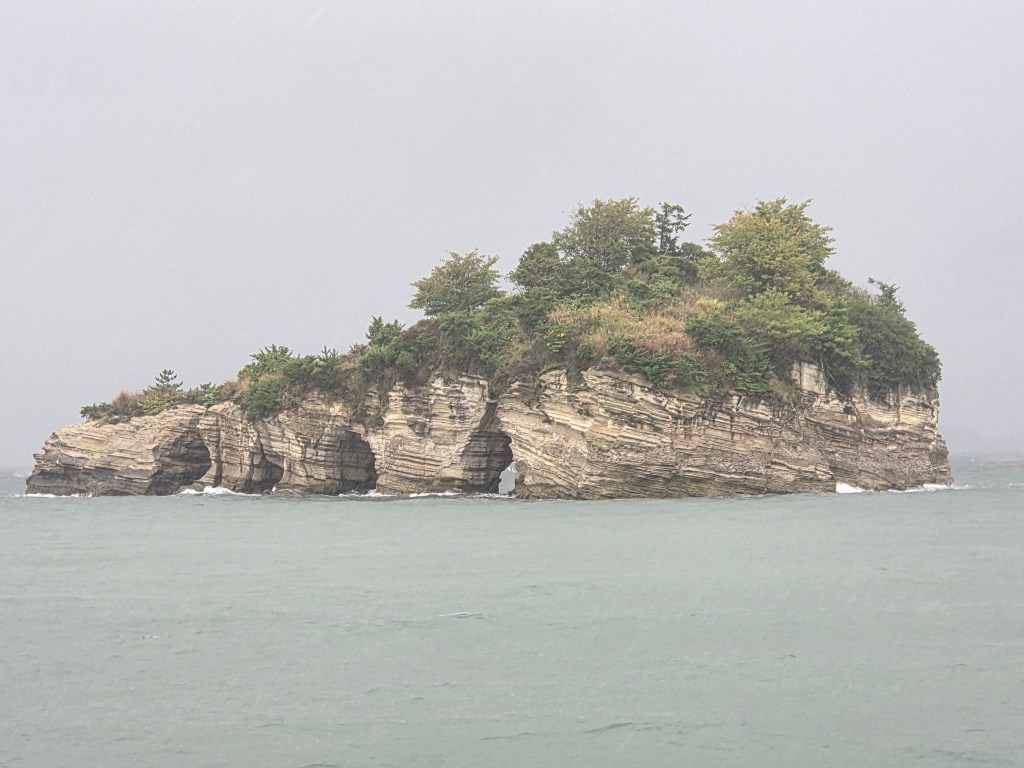
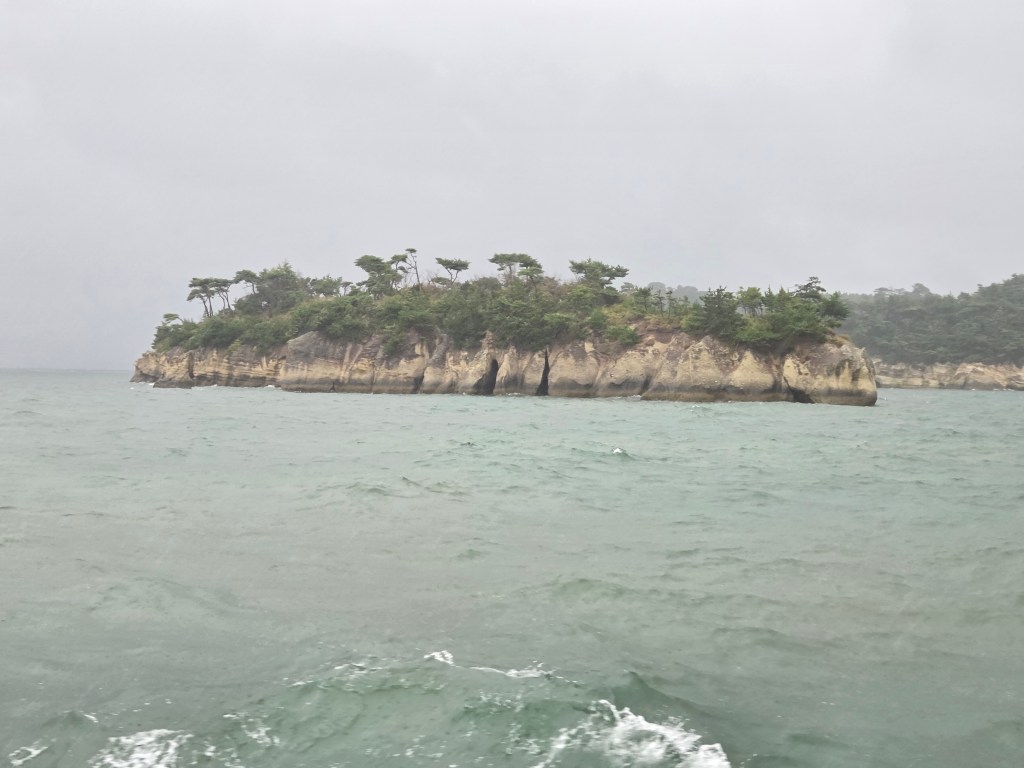
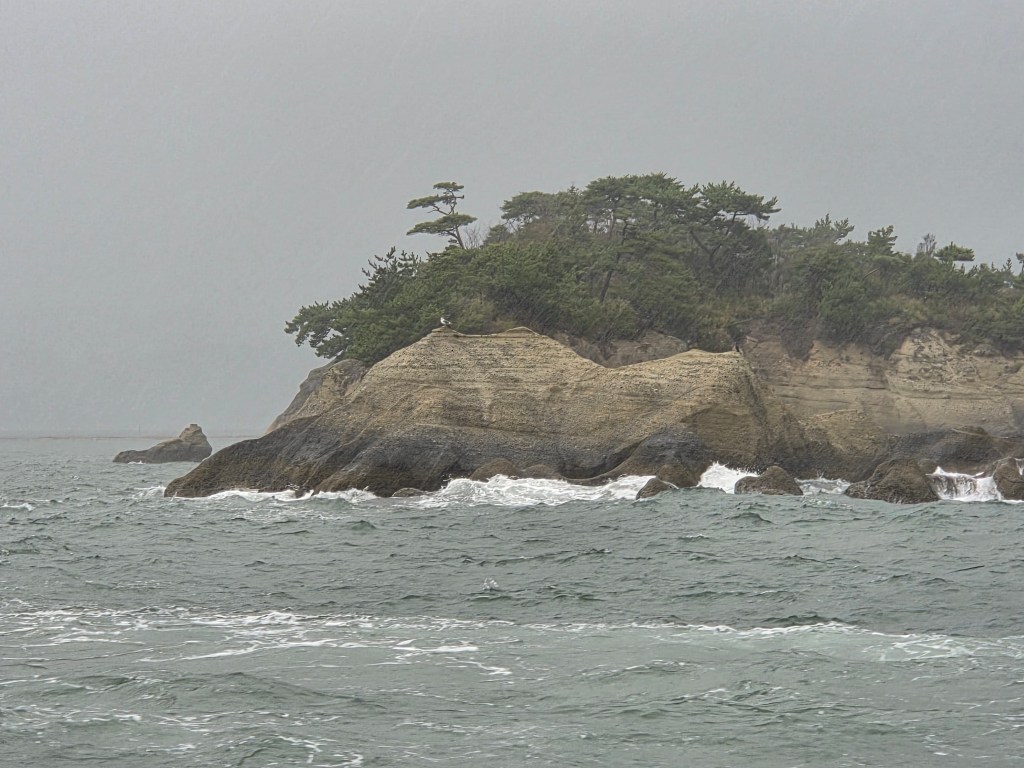
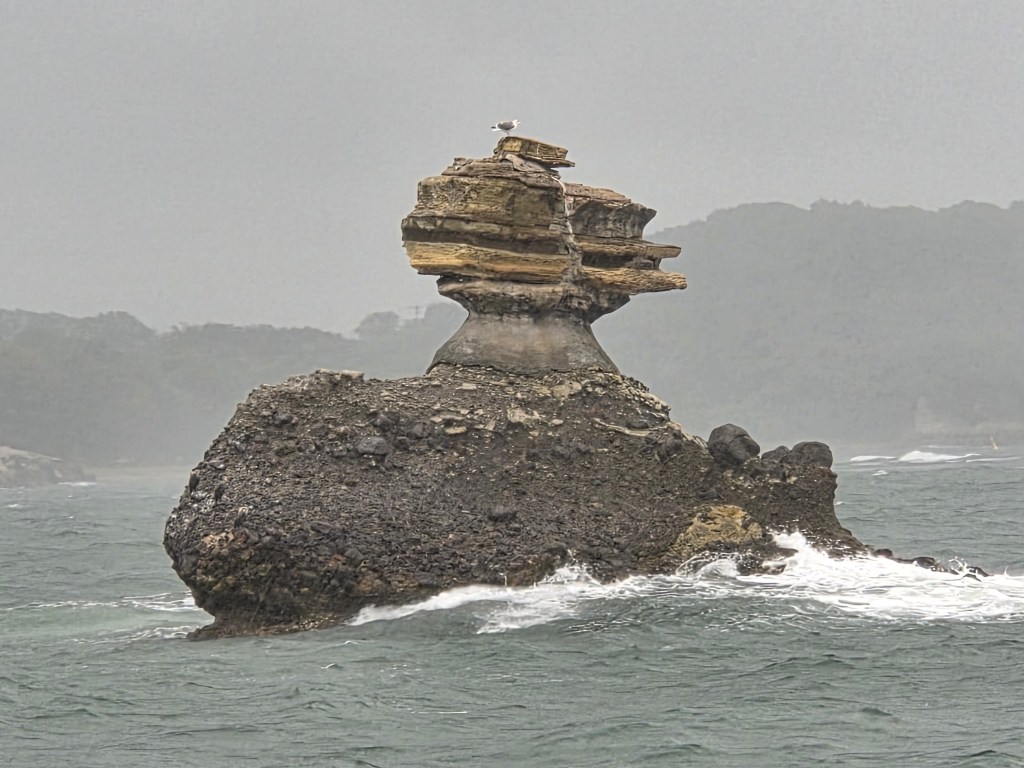
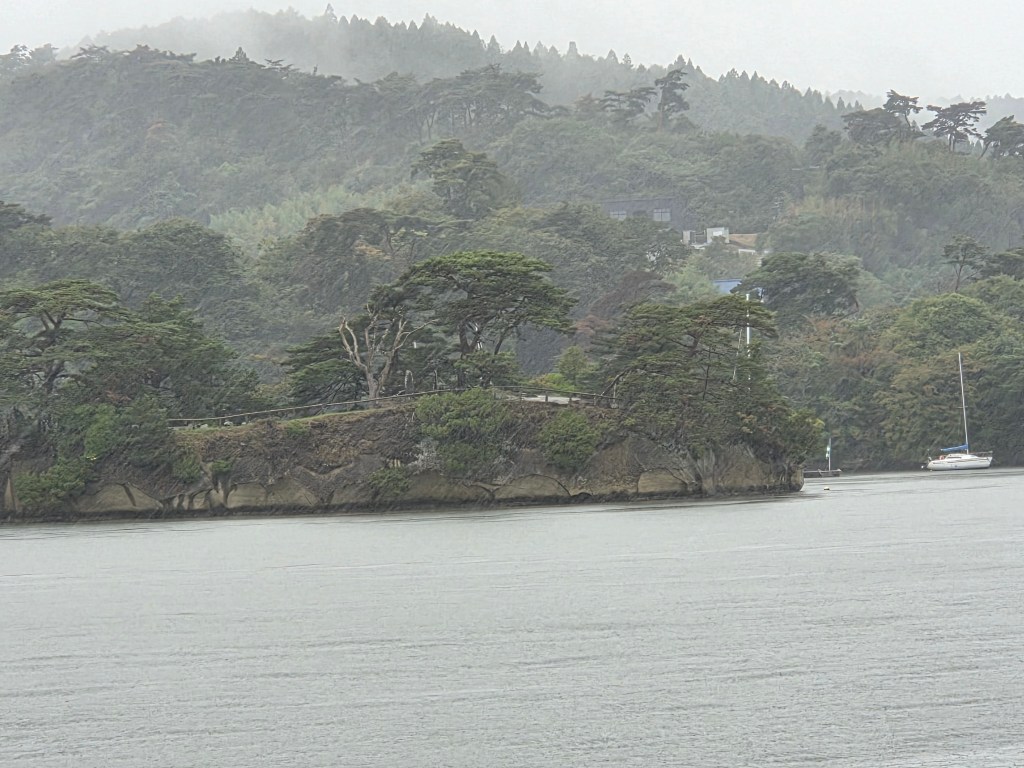
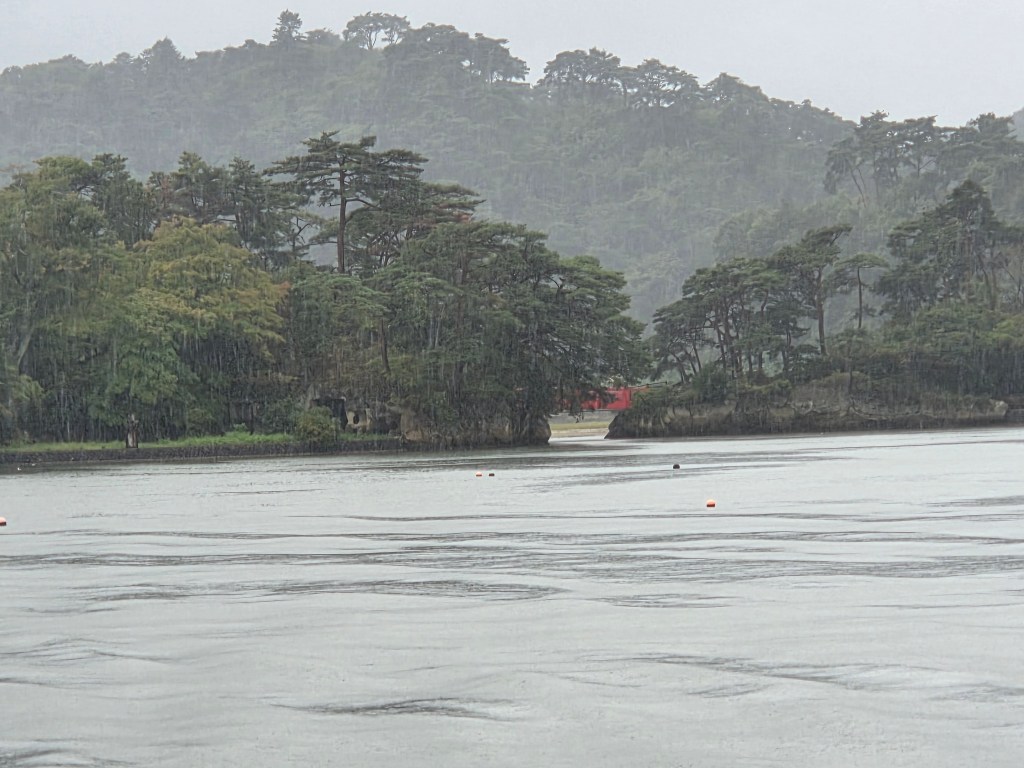
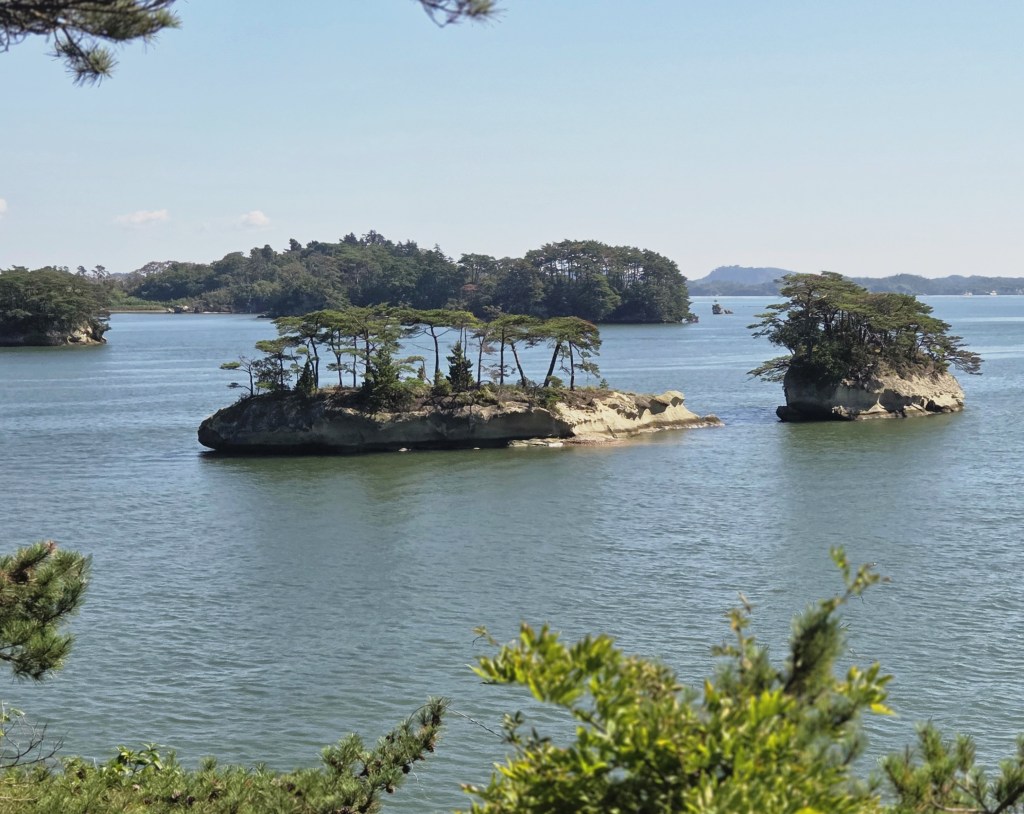
Even with the rain, the cruise was very impressive. Matsushima Bay has over 260 islands scattered throughout. It is one of the three views of Japan that have been celebrated since the 17th century.
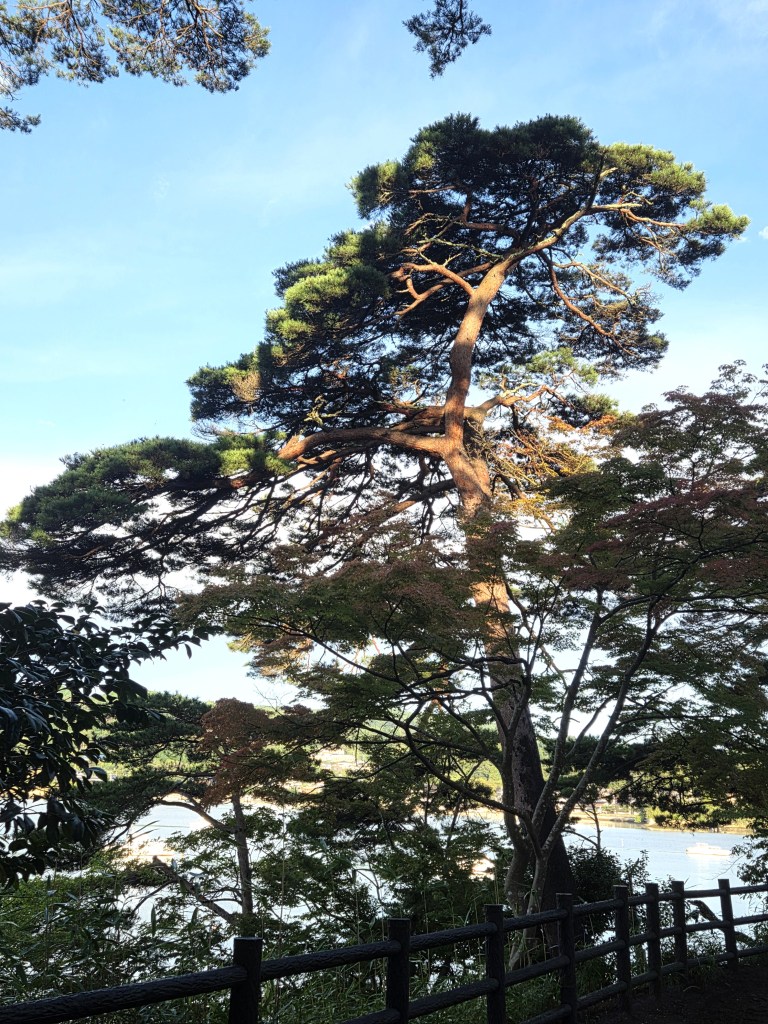
The islands are all, or almost all, covered by pine trees. There are many different landscape shapes and growths of trees on the islands. Basho traveled by boat from Shigoma to Matsushima, so had a waterside view of the islands. As we viewed the various islands from our cruise boat, I wondered what kind of view Basho had and what kind of boat he was carried in.
Our view was very impressive. The rainy day maybe even made it more so. The many islands take on many shapes and the pine trees growing on them create wonderful silhouettes.
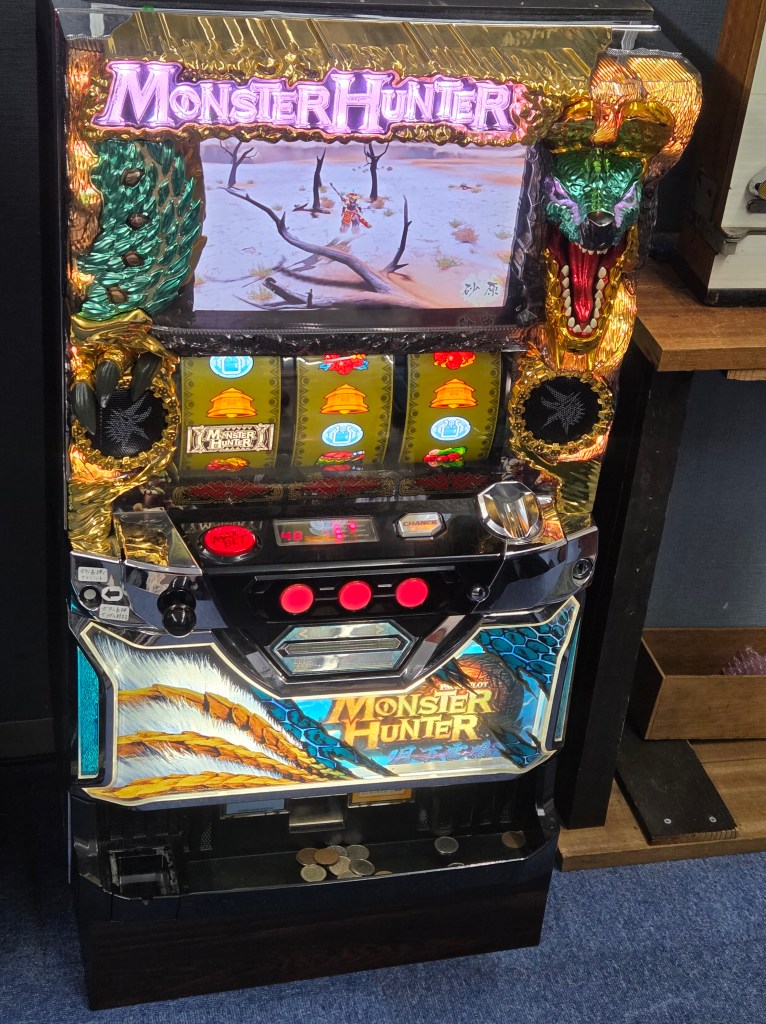
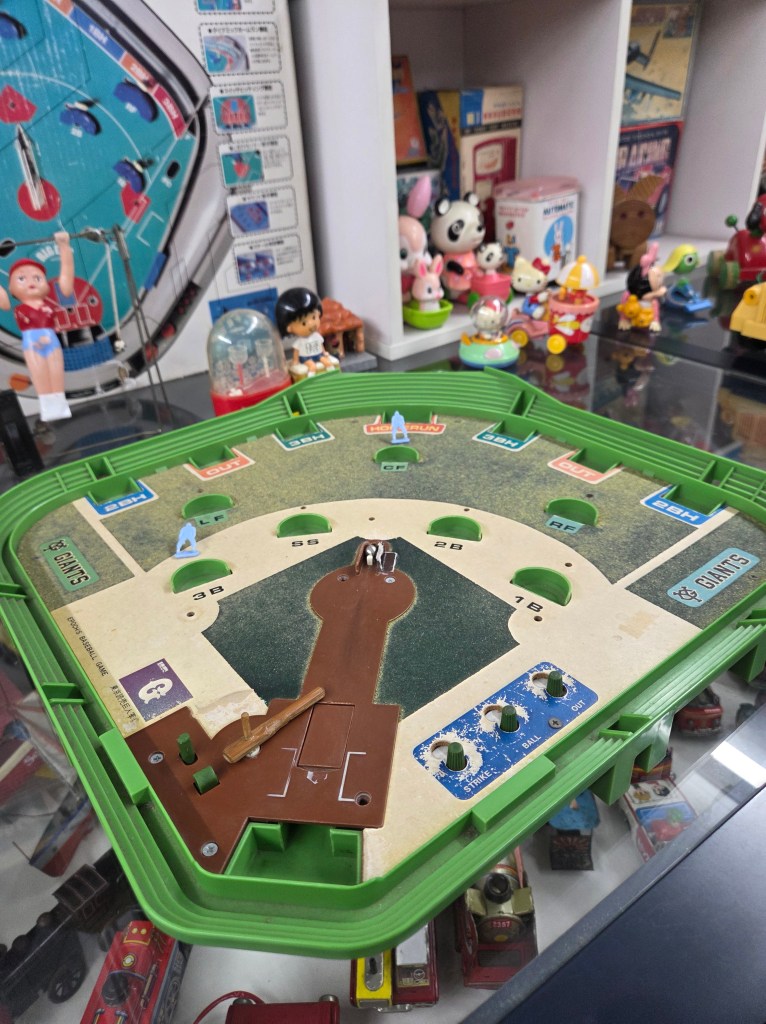
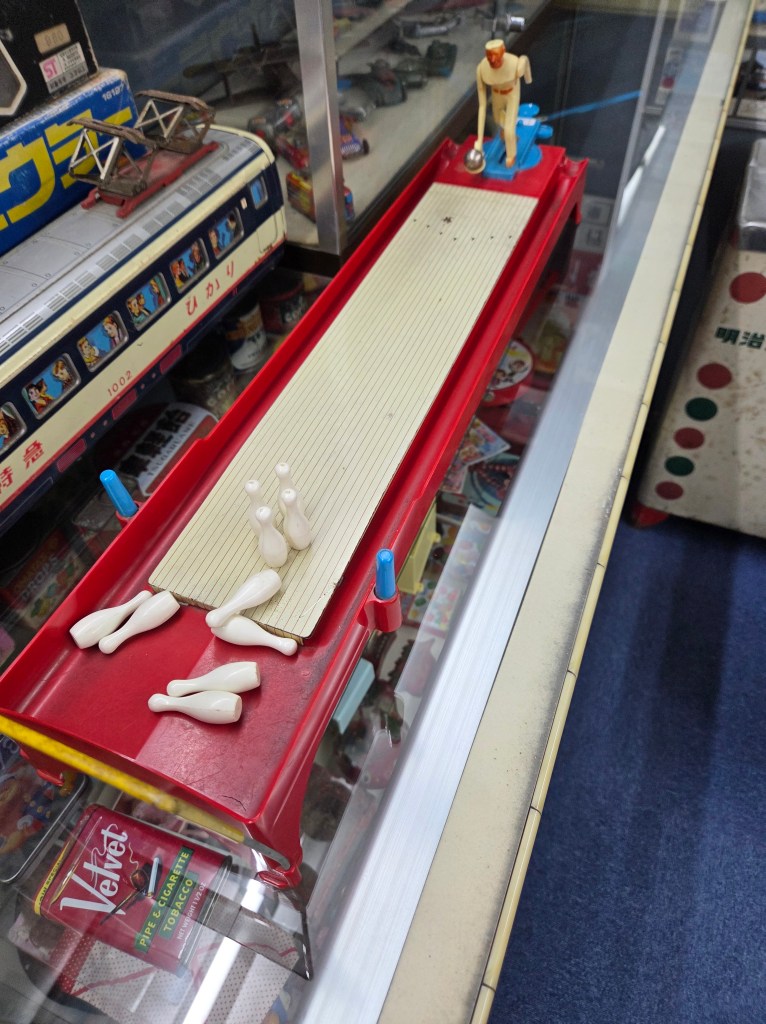
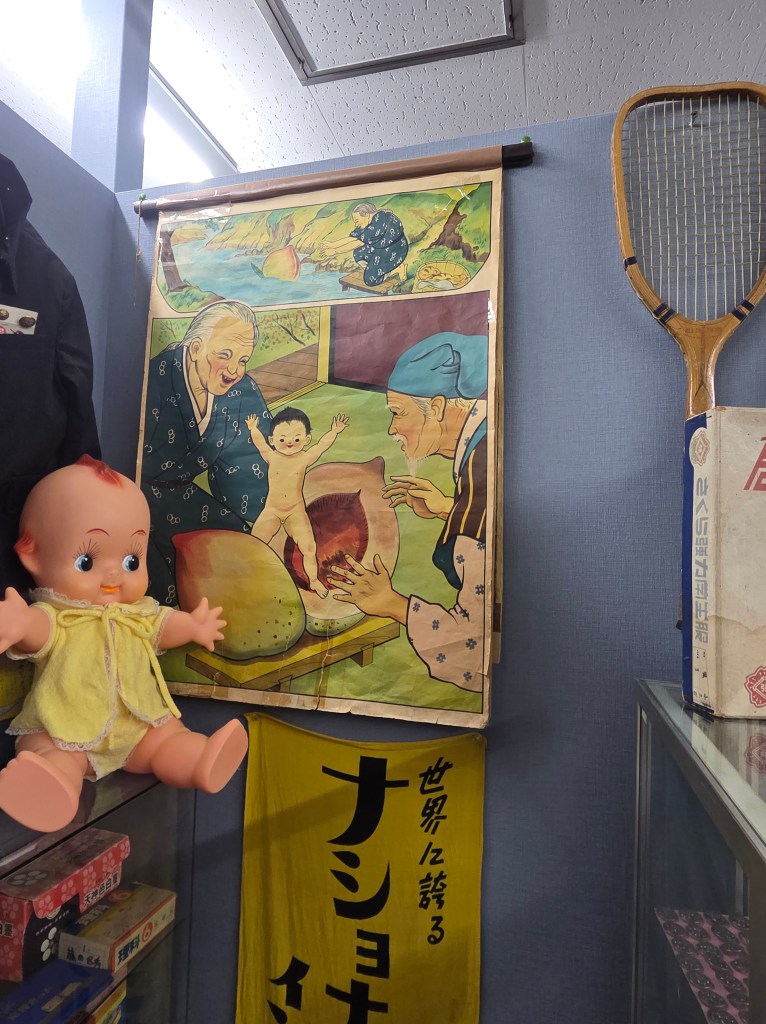
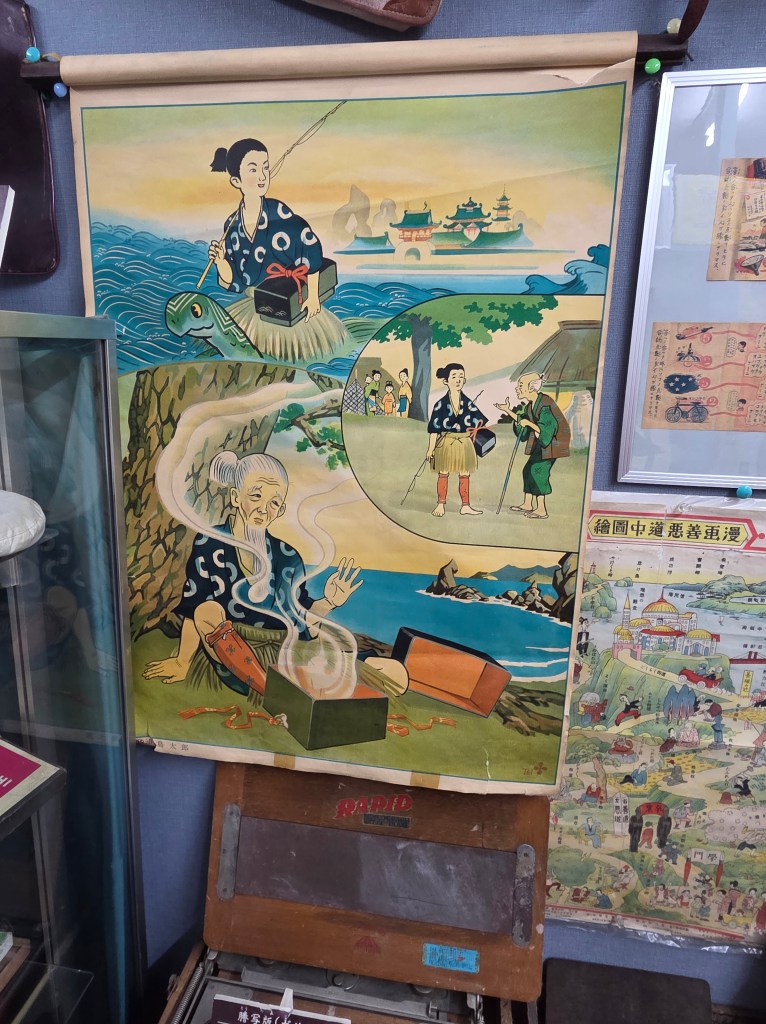
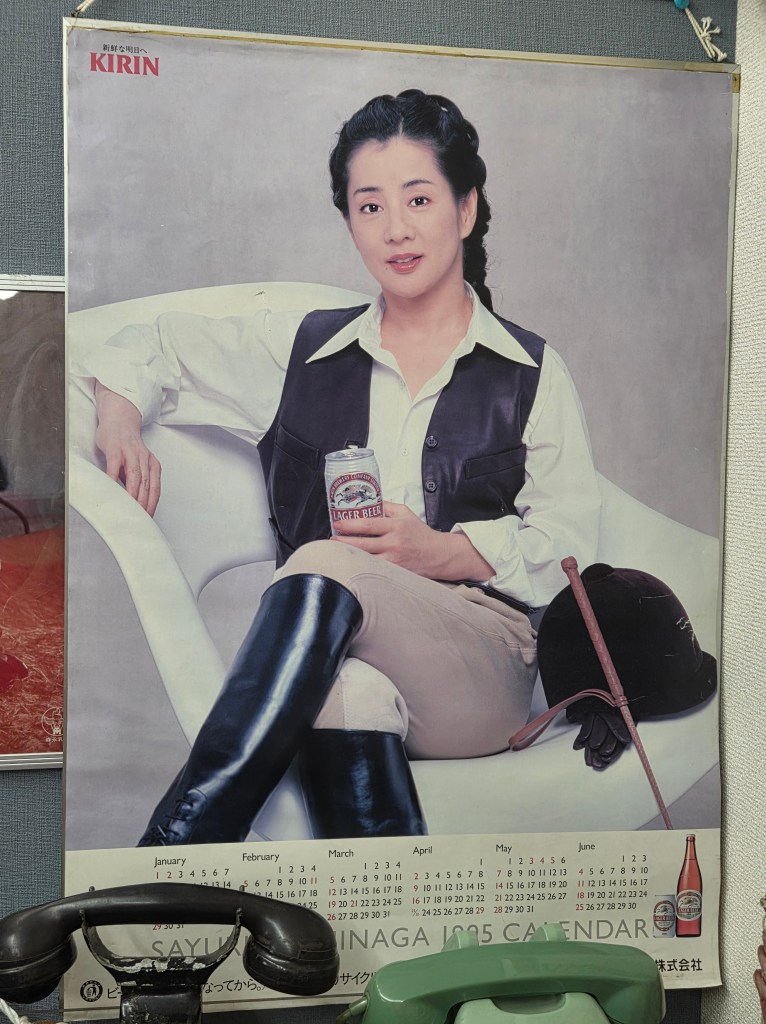
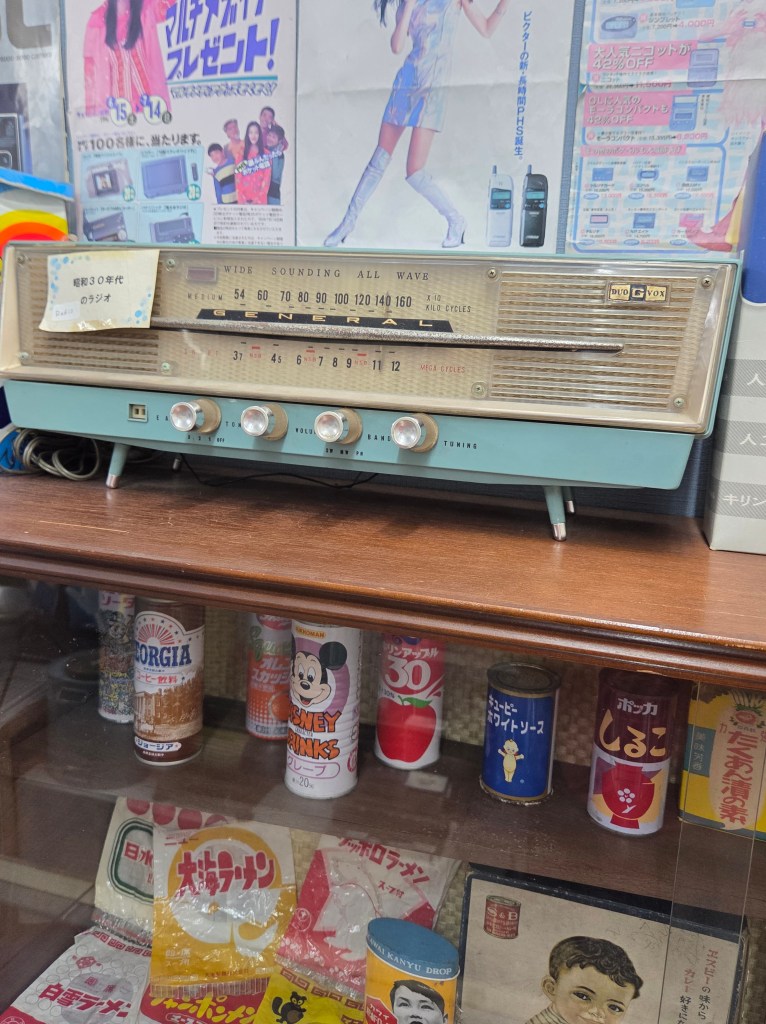
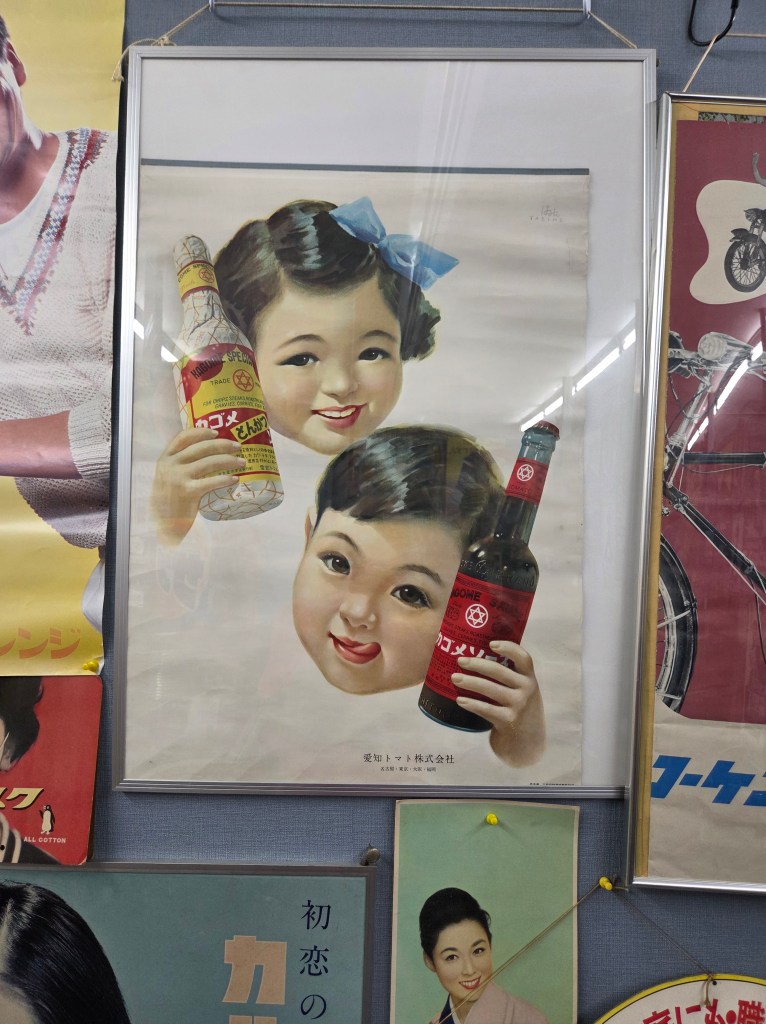
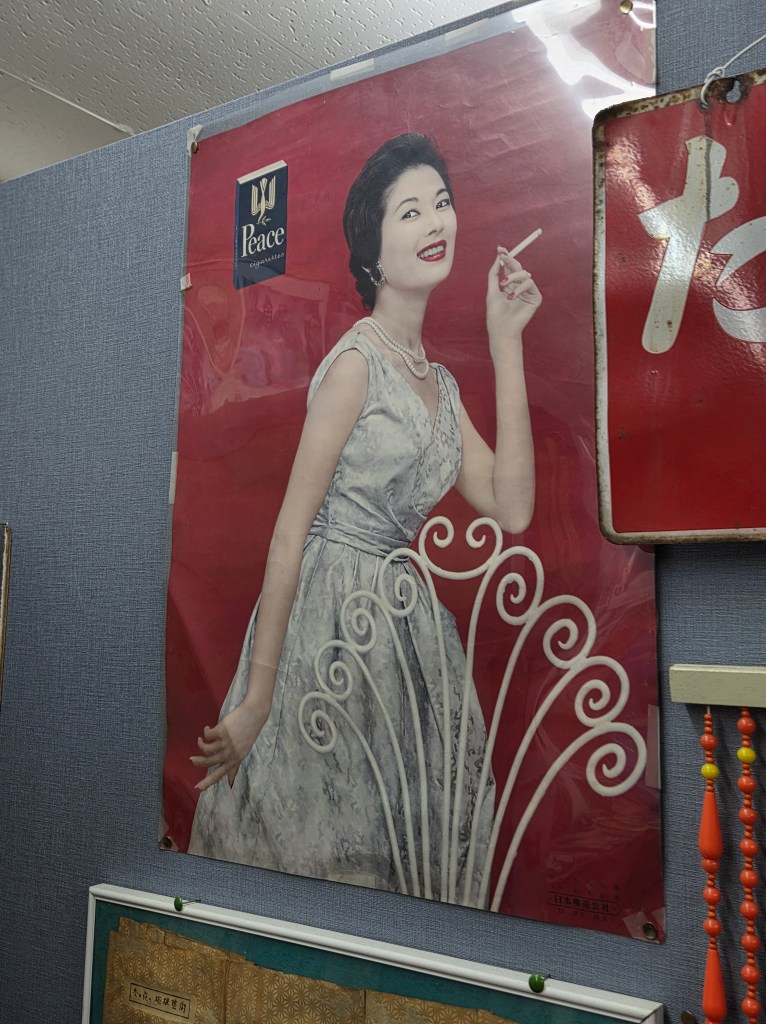
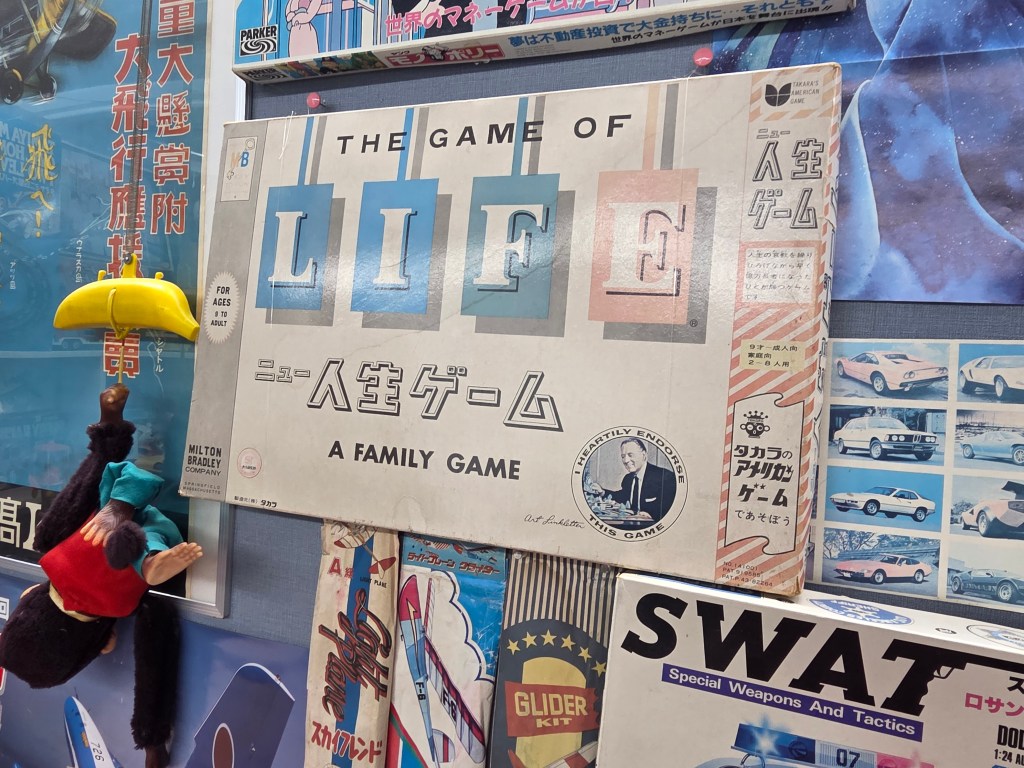
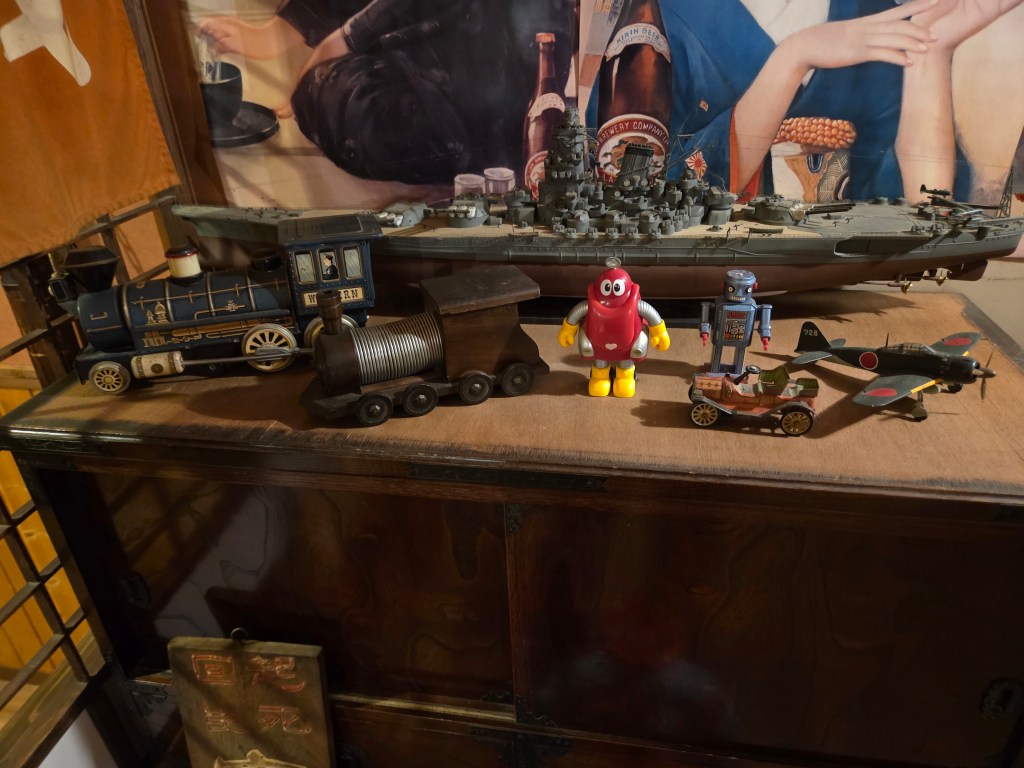
The rain was still falling steadily after the tour, so we decided to visit a Retro Museum that housed old toys, posters, etc. It was a very small place run by an old gentleman. It was basically a memorabilia collection of a person’s lifetime.
This is a haiku I wrote and shared with the owner:
came in out of rain
was suddenly taken back
sixty years ago
He was pleased to see the haiku and asked my age. When I told him I was 74 he told me his 75. I said to him that he’s a little more glorious than me. He just shook his head, smiled and said, no.
As we were leaving, it was still raining. He motioned for us to wait then disappeared out back. He was holding an umbrella that he offered us. We politely declined then walked out into the rainy afternoon.
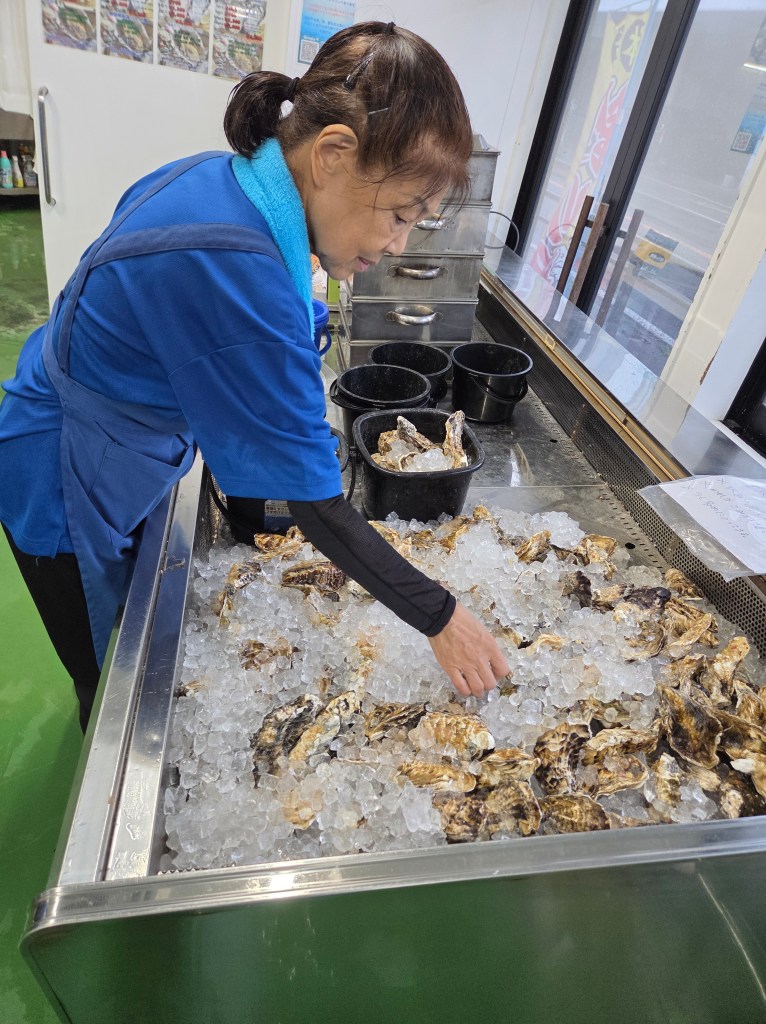
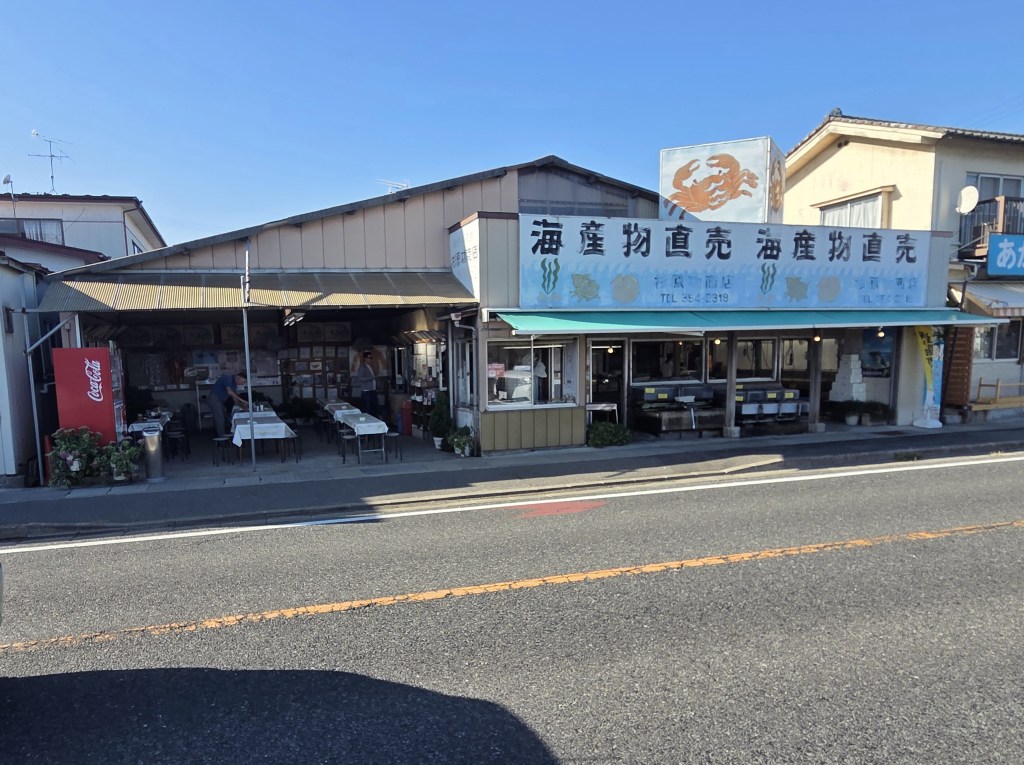
From there we took a five minute walk to the Oyster Shack, a place we had been planning to go to yesterday but it was closed. I had found it on the internet and it had a 4.9 rating.
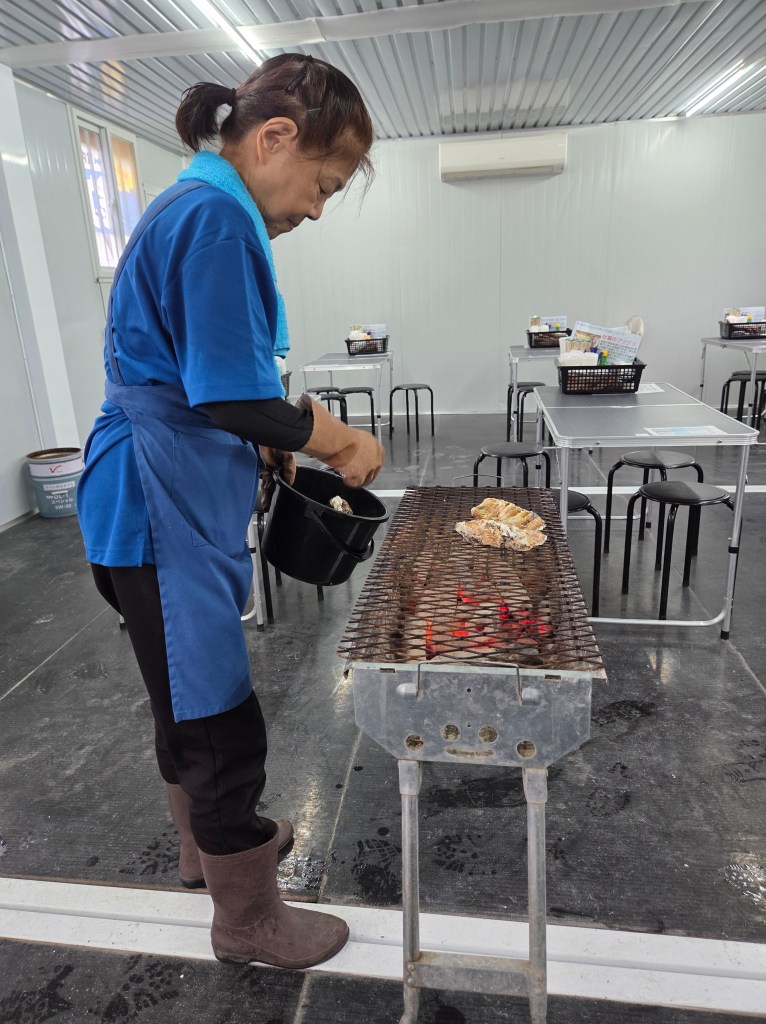
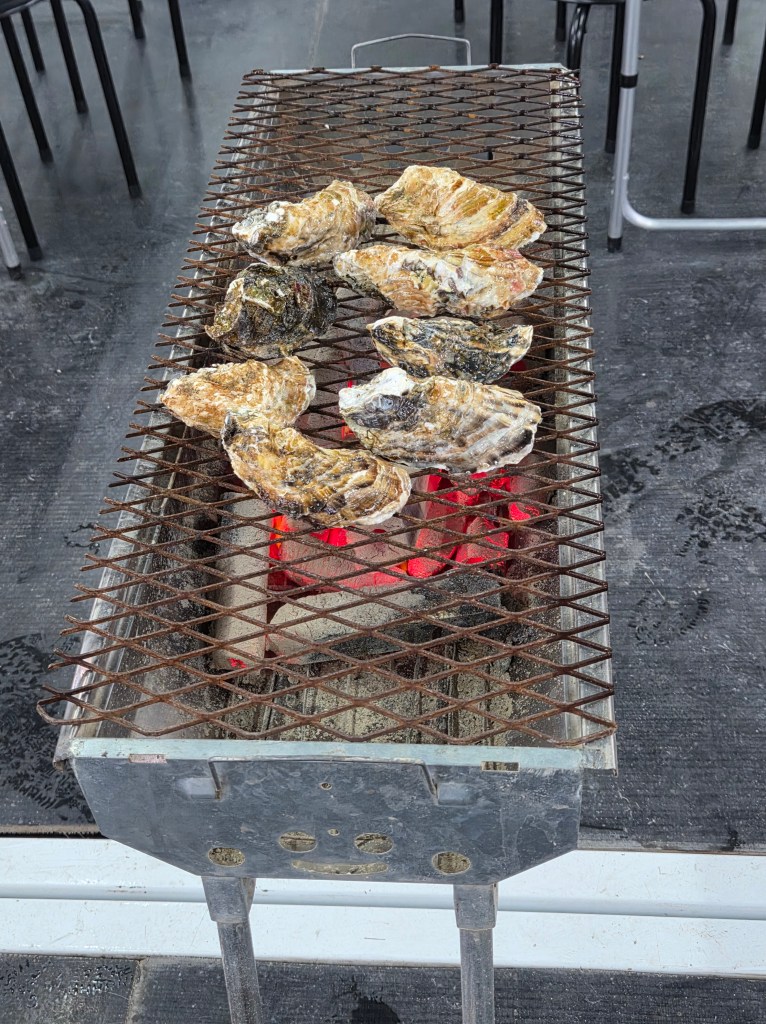
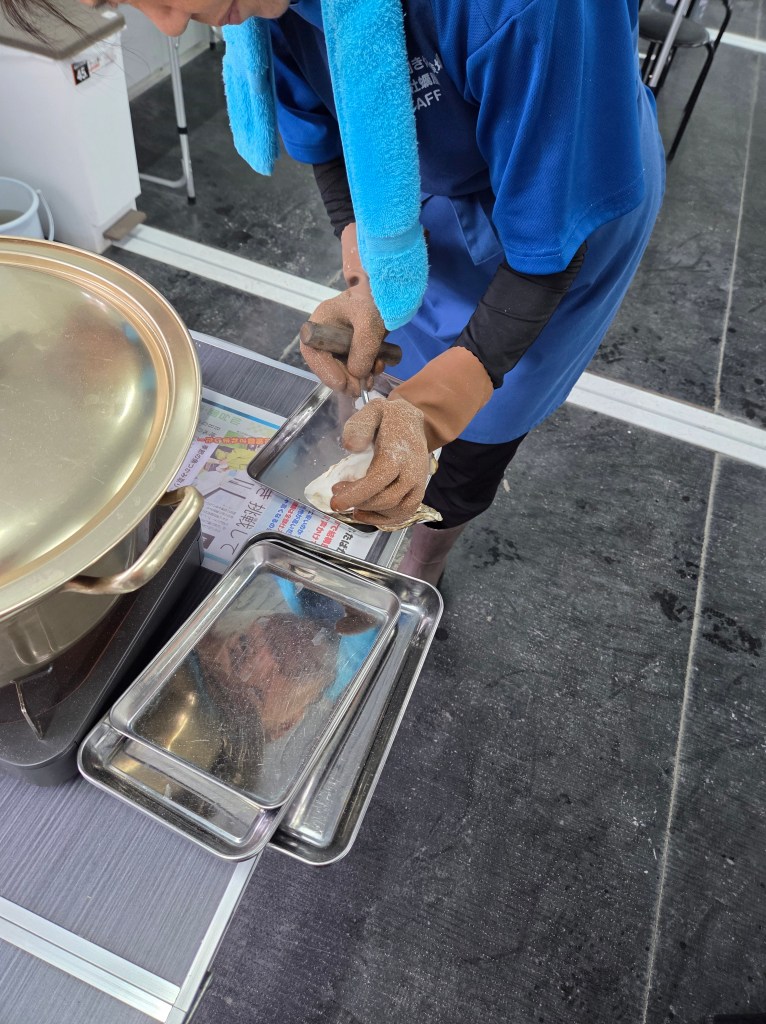
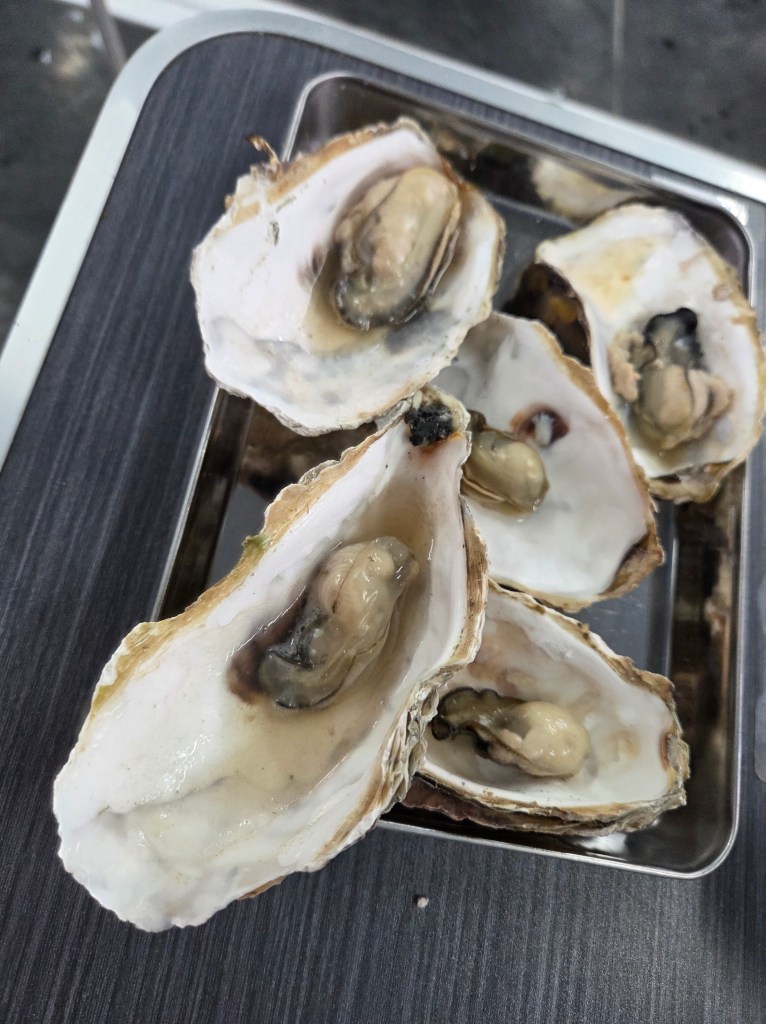
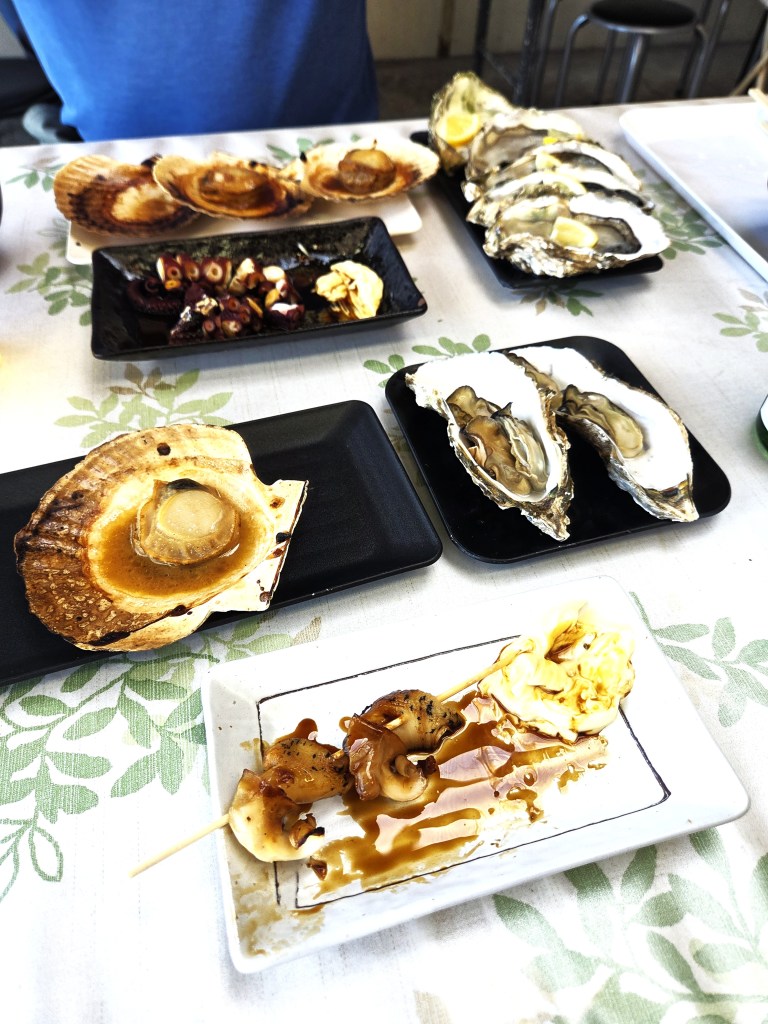
From our experience there, that 4.9 rating was well deserved. They only serve oysters, either fresh or grilled. We ordered some of both. You ordered in the room where they have the fresh oysters then go to a small nearby building to eat. We didn’t know what to expect. After a few minutes inside at the table, one of the women workers carried in a portable charcoal grill that had hot coals in it. Then she put on the oysters we had ordered and grilled them right next to us. While they were grilling, another woman brought in the raw oysters for us. I’ve only has raw oysters once before and they were ok. These were way beyond ok. A little squirt of lemon and then…
The grilled oysters were also amazing. It was good to have both raw and grilled at the same time. The texture and flavor is different for each and I really couldn’t say which I enjoyed more. They were so good, we put in a second order.
A haiku I shared with the two women:
over charcoal heat
Matsushuma Bay oysters
give their life for us
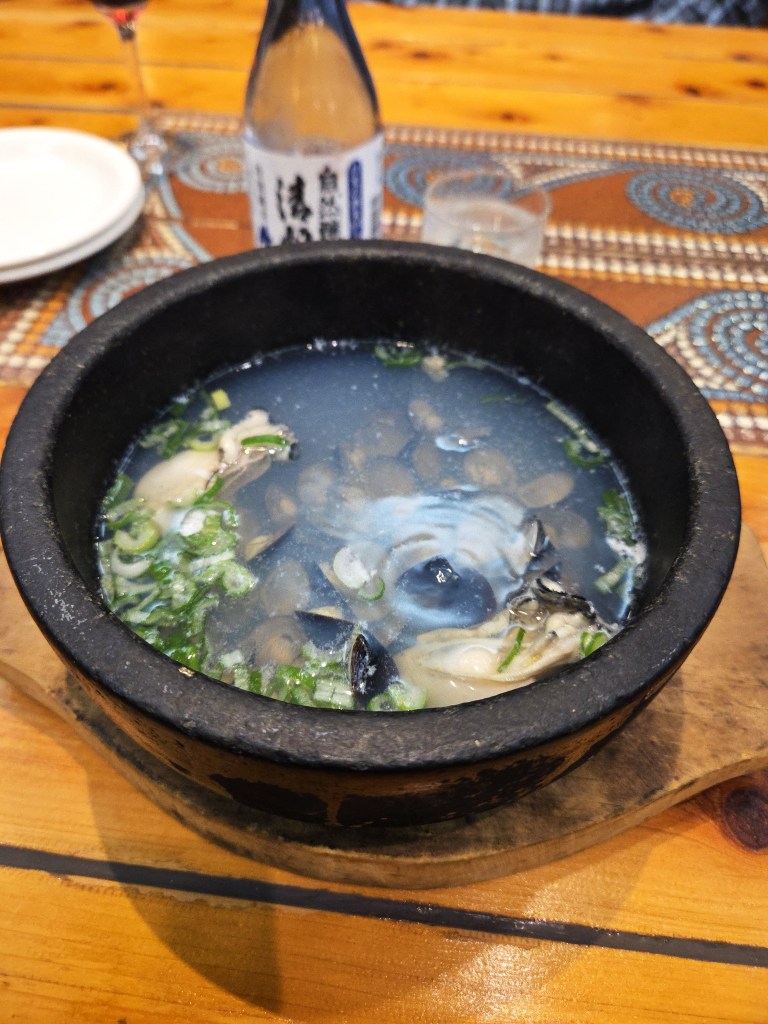
They also served a bowl of mussels in broth that was basic but excellent.
There has not been even one meal that we have had on this journey that has been just average.
(Click on thumbnail for larger picture.)


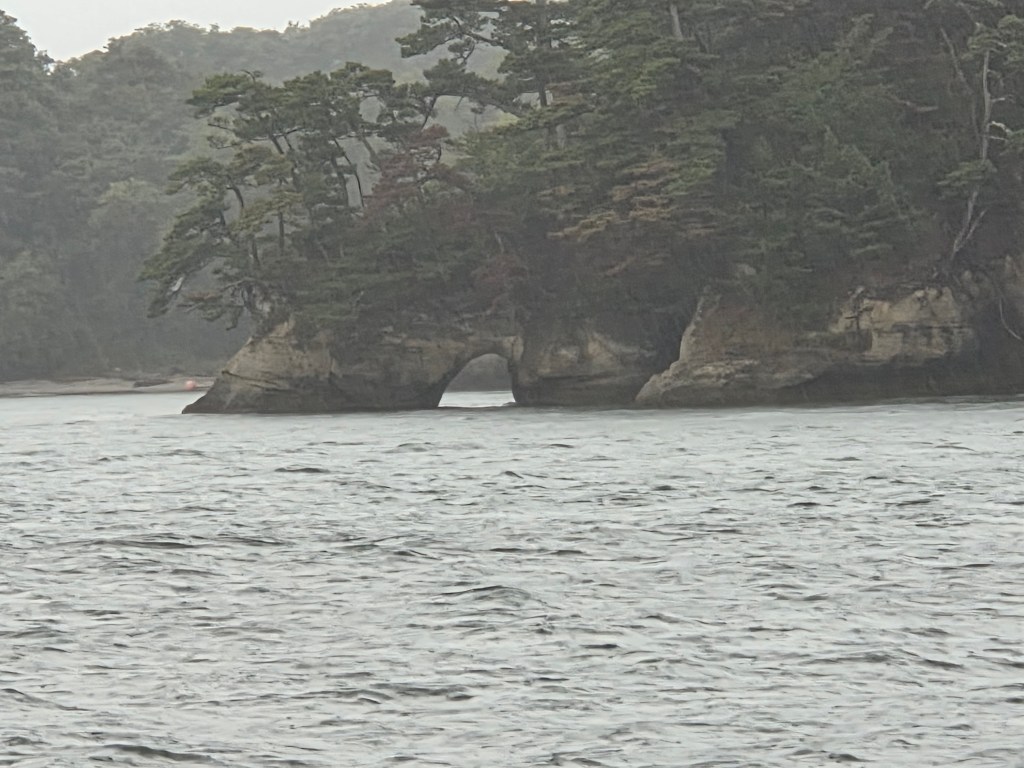
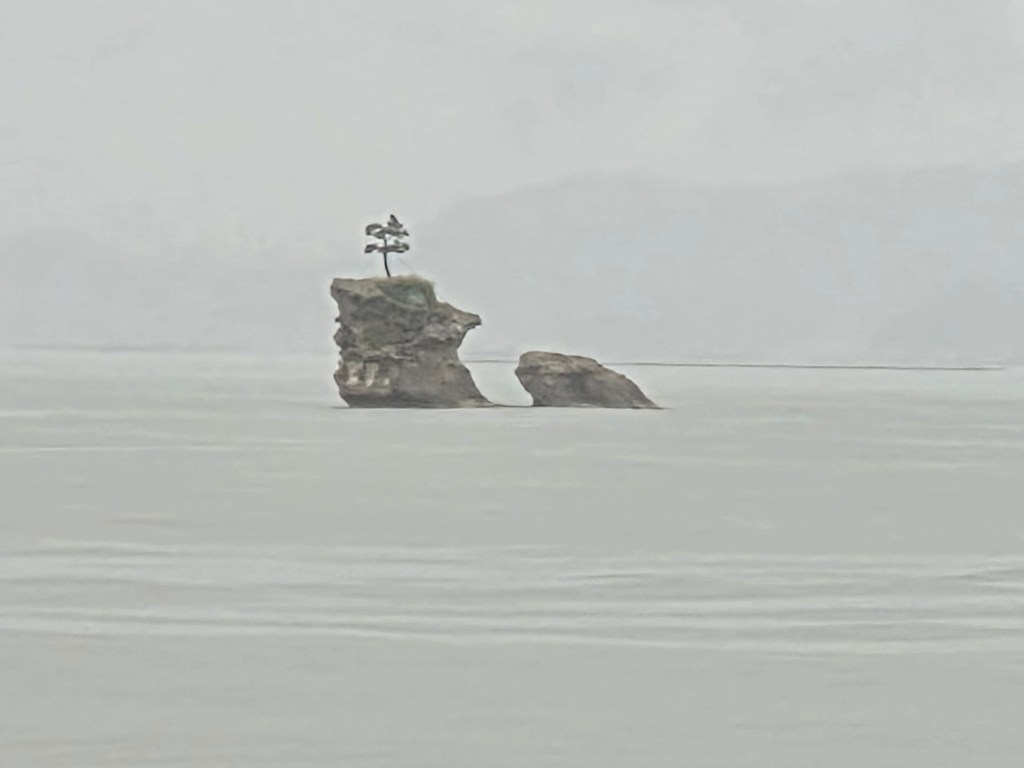
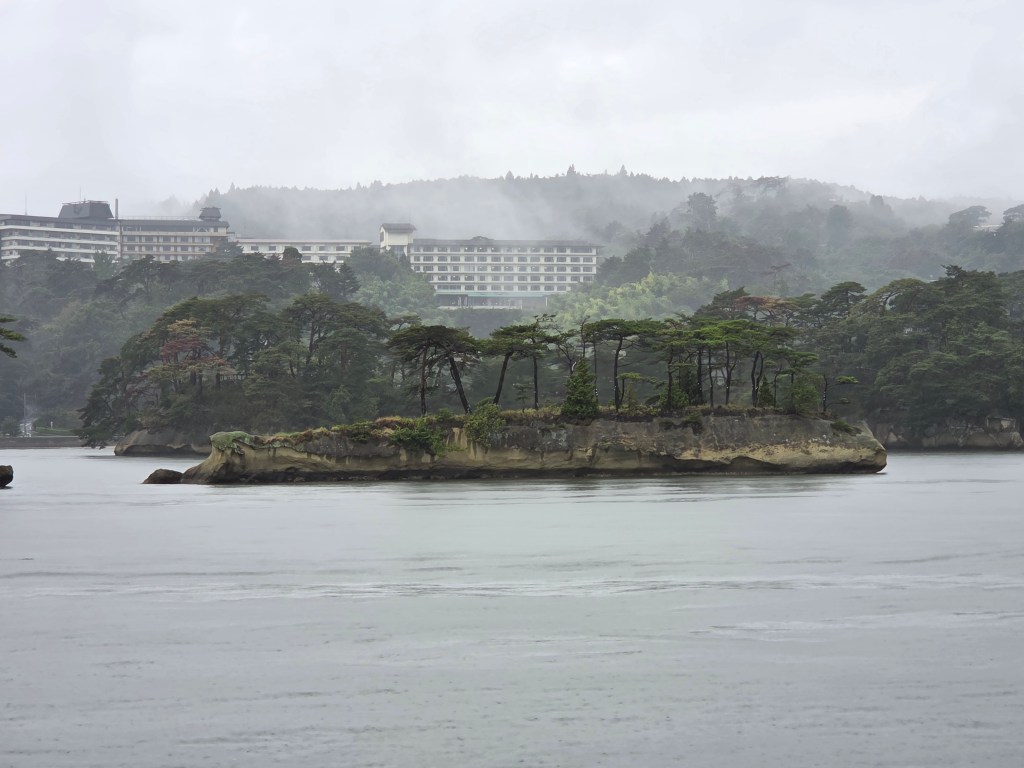
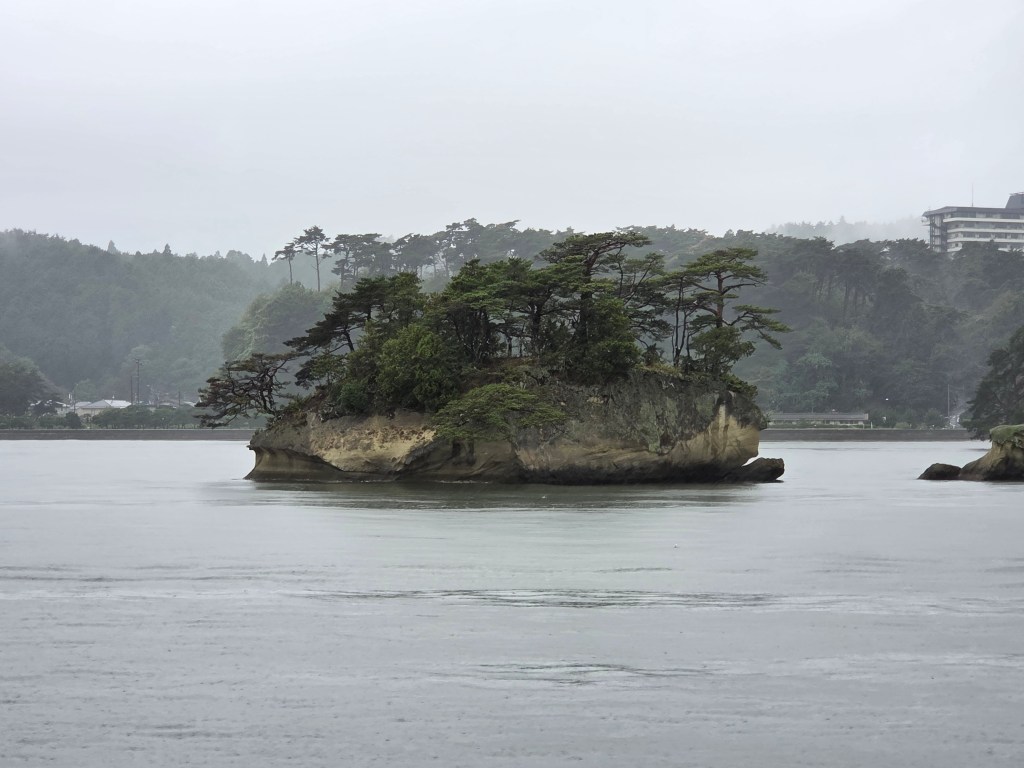
September 30
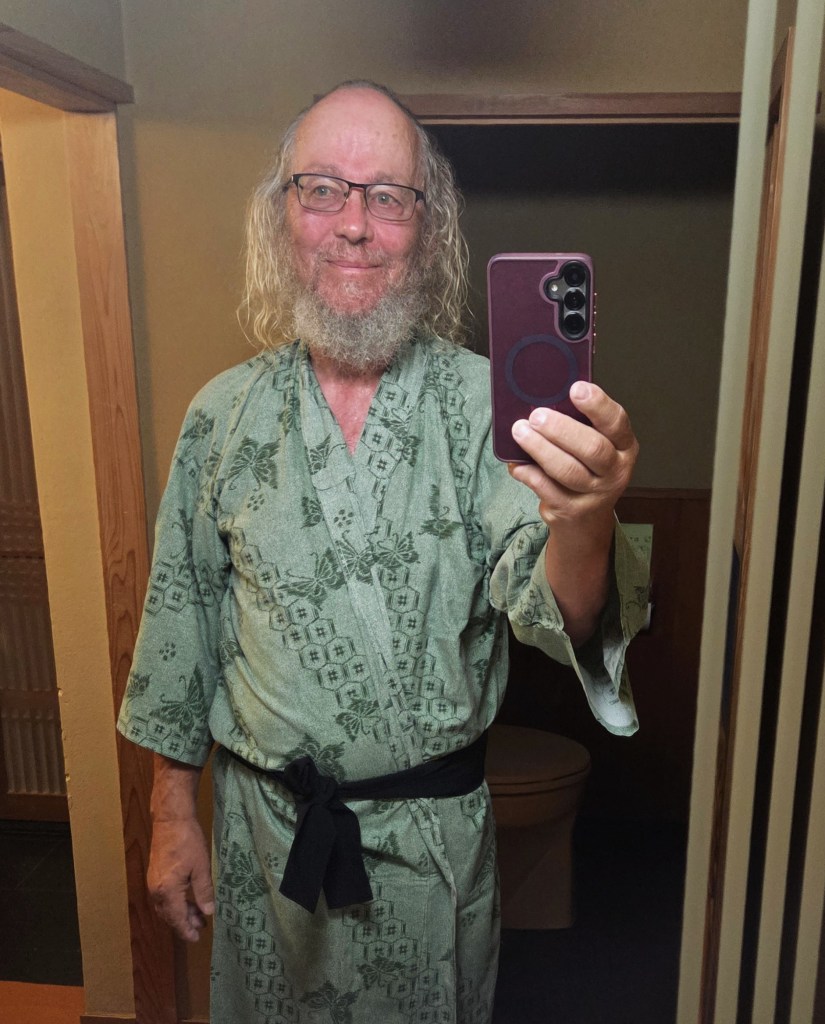
The ryokan supplies kimonos and slippers for its guests. The picture below is one I took after returning from the onsen.
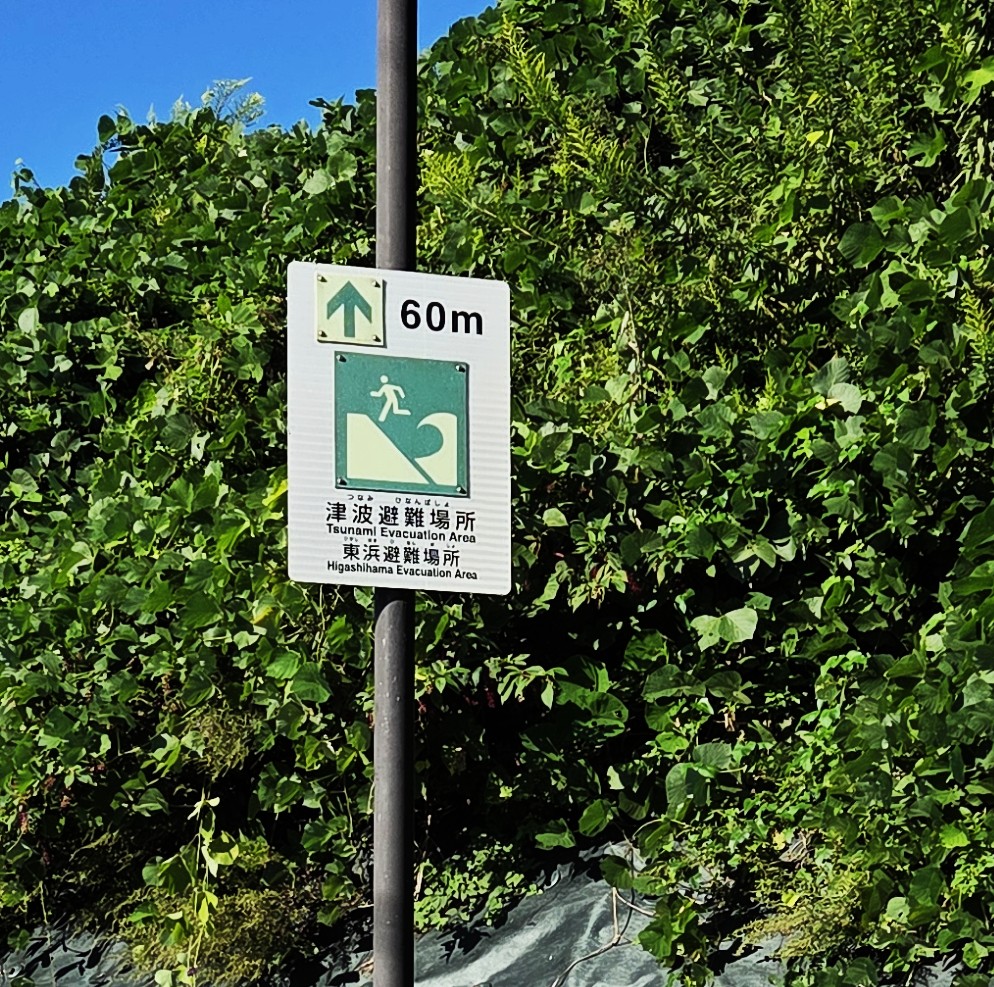
This area of Japan was devastated by the 2011 Tōhoku earthquake and tsunami. It is referred to as the “Great East Japan Earthquake” and it was the most powerful one ever recorded in the country and the 4th most powerful earthquake ever. Around 20,000 people perished in the event.
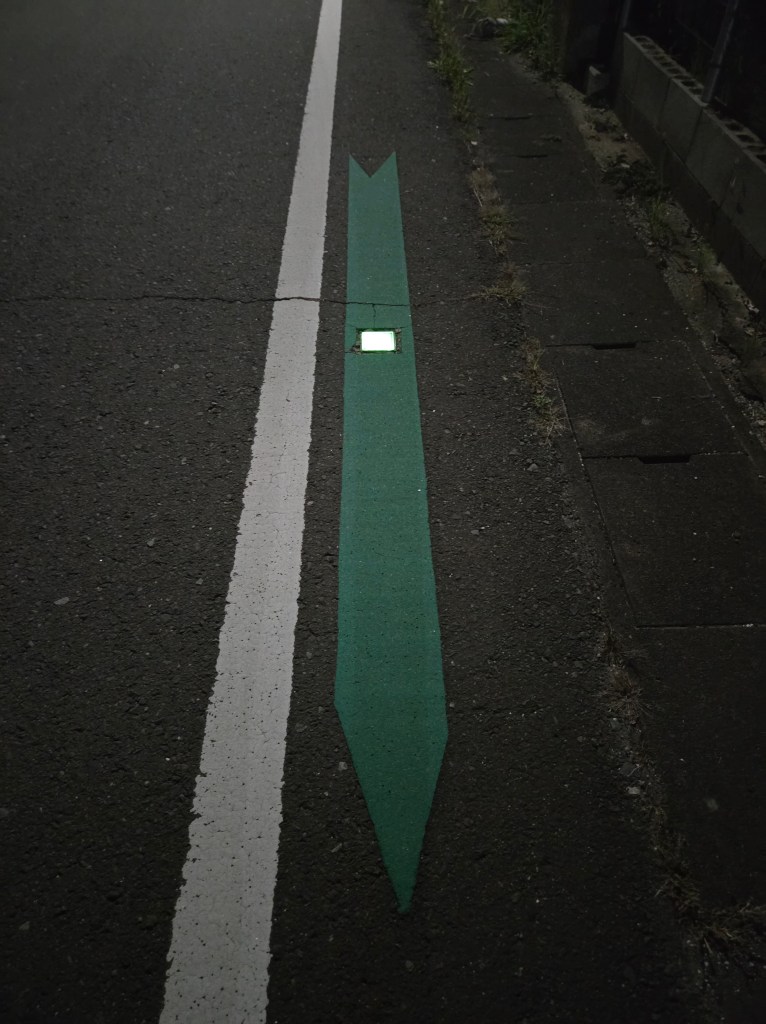
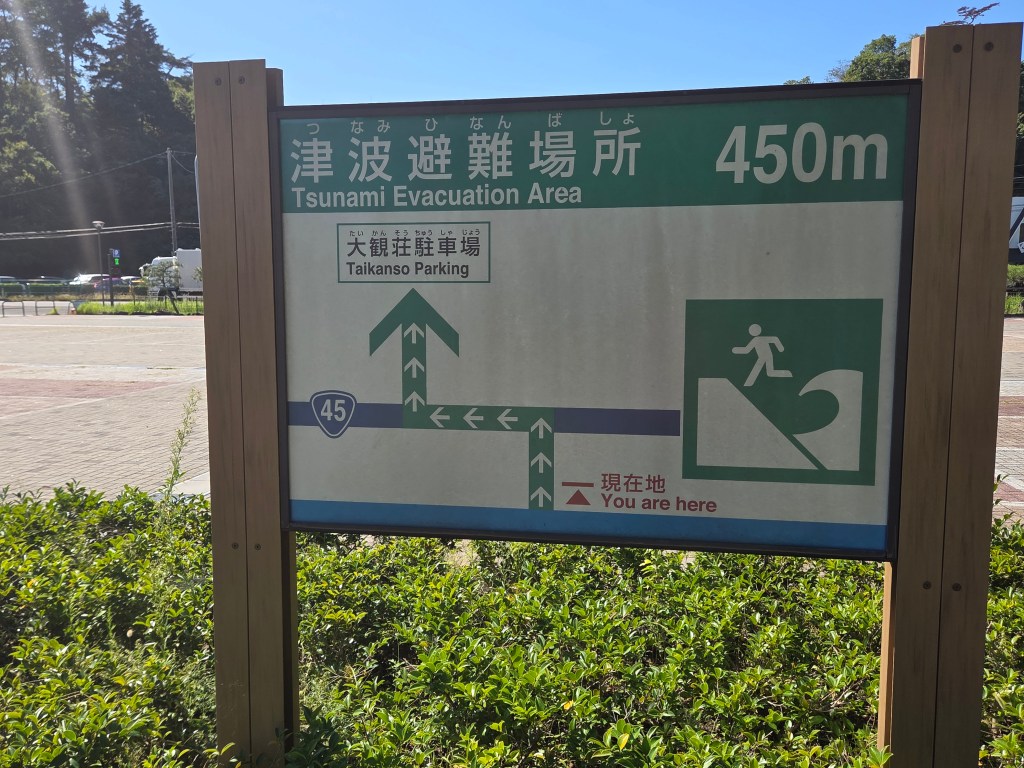
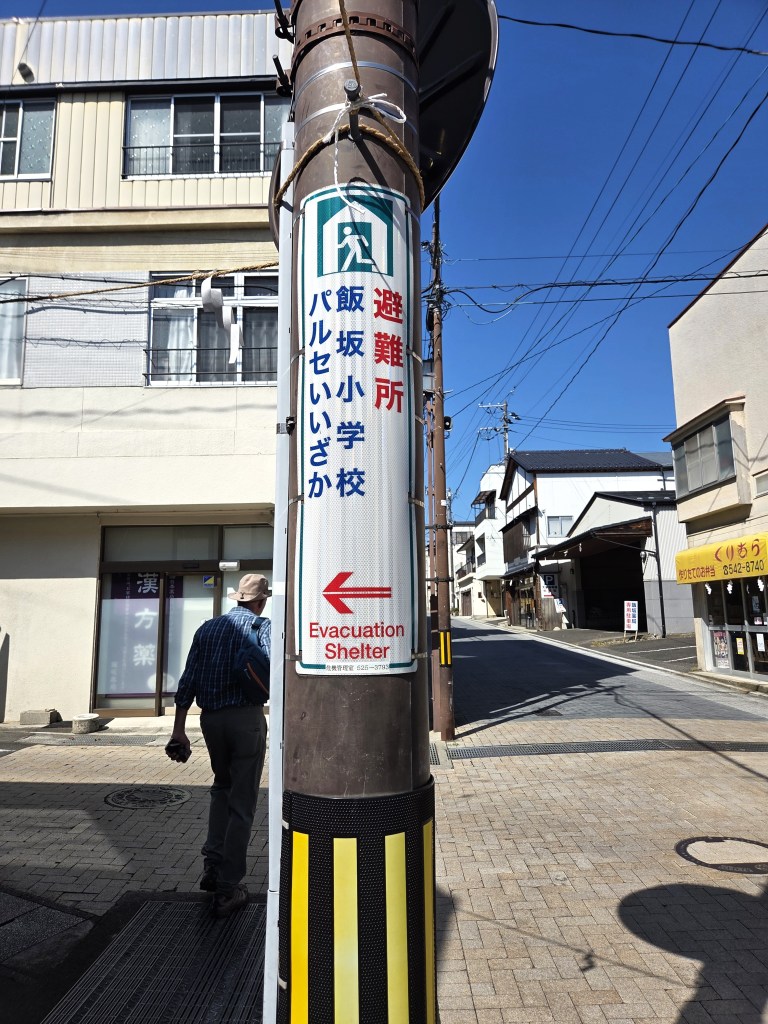
There are numerous evacuation signs along the coast here. Green and white signs direct people to gathering places at higher elevations. Along the sidewalks are green arrows pointing the way and also, laid in the sidewalk every once in awhile, night lit green boxes with a walking symbol and an arrow pointing the way to go.
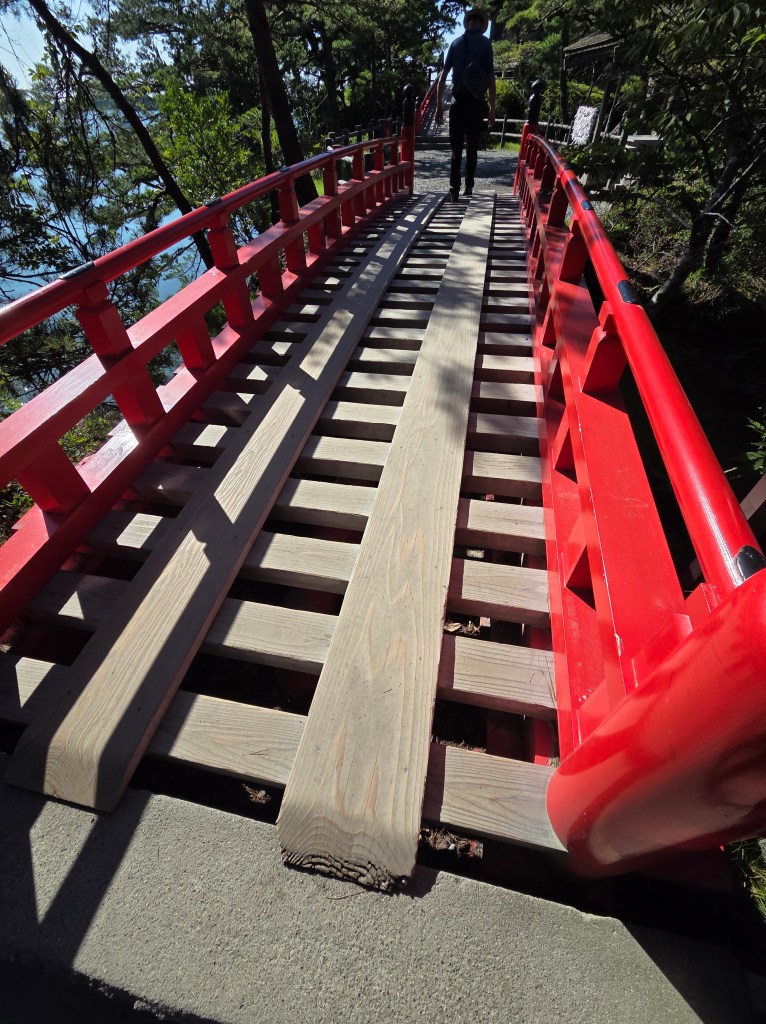
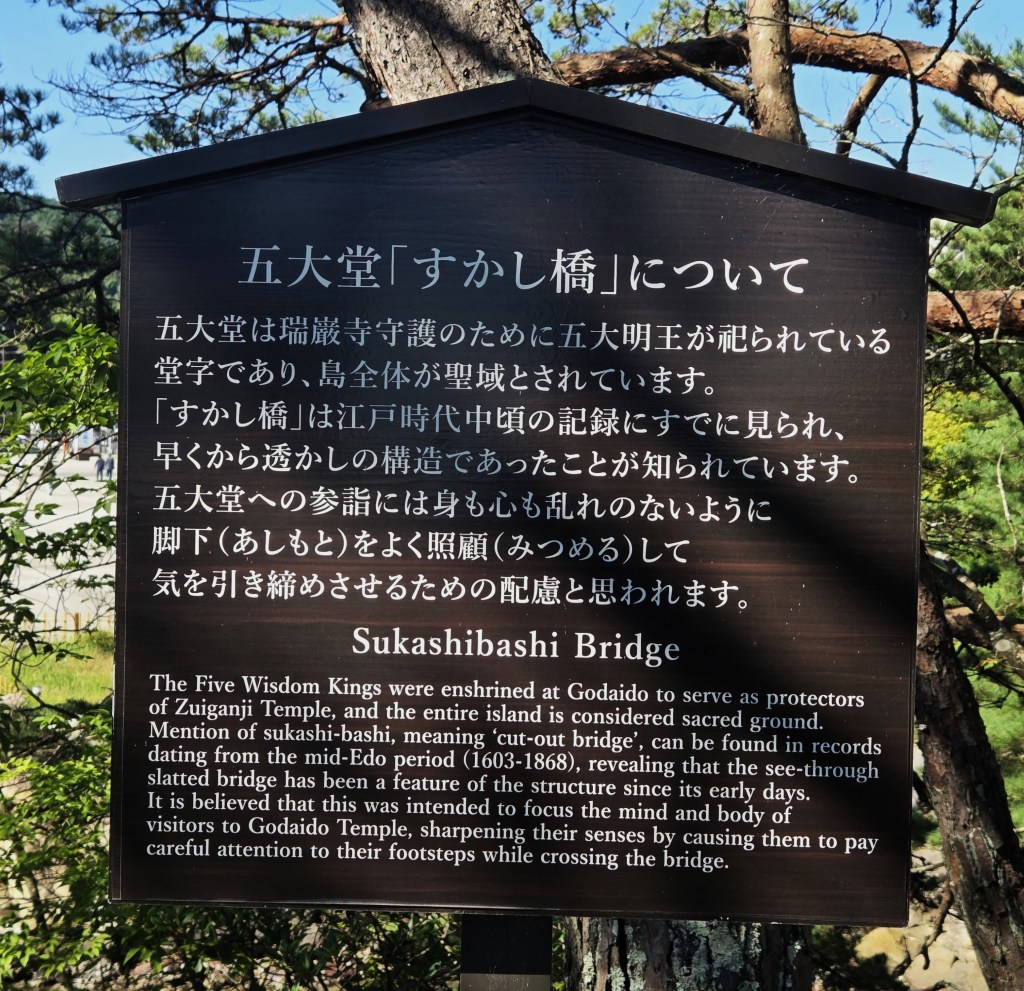
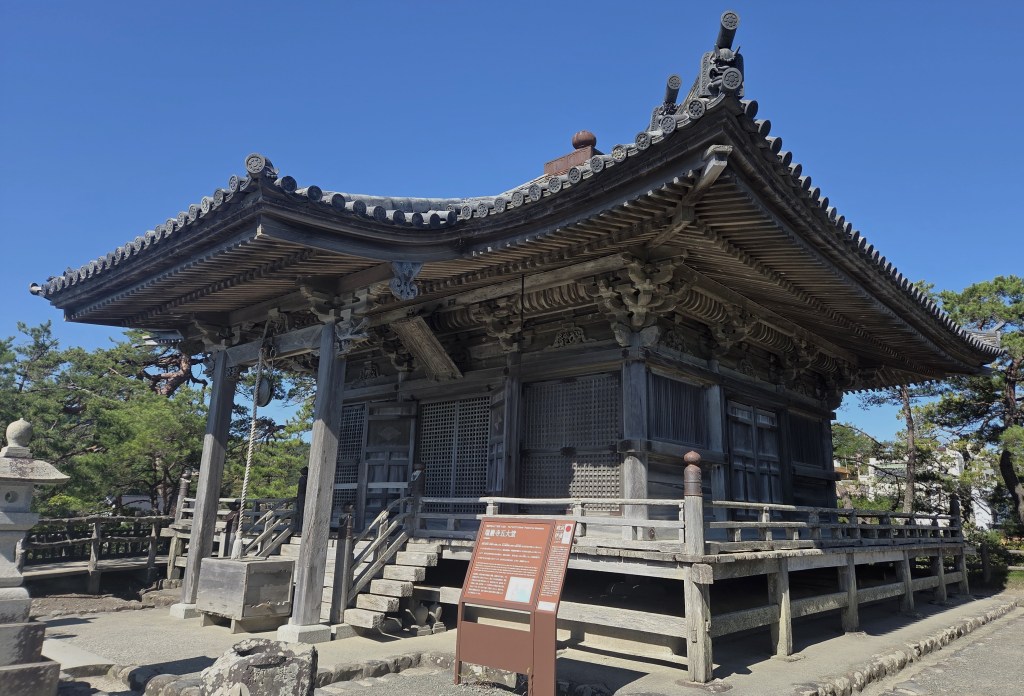
Today we ventured to two of the islands that are accessible over walking bridges. The first was Godaido-jima, where the historic Godaido Temple is located. The bridge to walk over to the island is called sukashi-bashi, or “cut-out bridge”. There are spaces between each of the slats that make up the bridge floor and the water is visible below. Very much like walking across railroad tracks that are on a bridge, where one can see through to what’s below. I used to walk on tracks like that back in Buffalo as a kid. Also had one memorable experience walking across the Susquehanna River on a railroad bridge with Craig Czury.
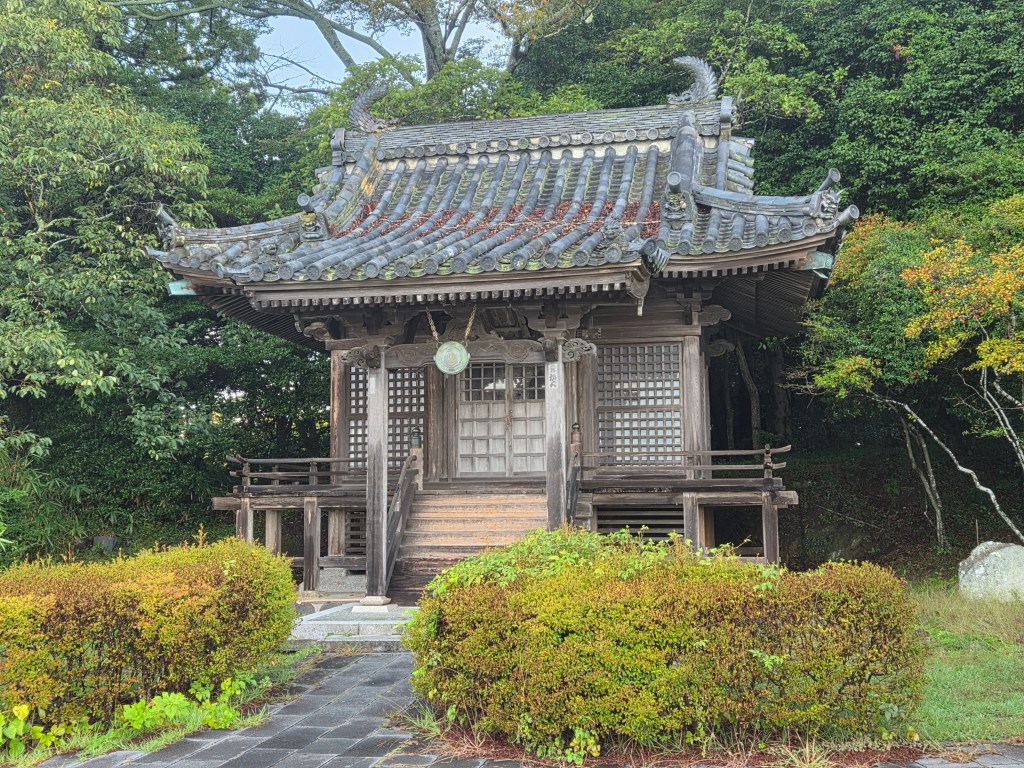
The supposed purpose of sakashi-bashi bridge is to center the mind before entering the temple. The temple itself is one of the oldest buildings in this region of Japan, dating back to 1604. The original temple was built there in 807.
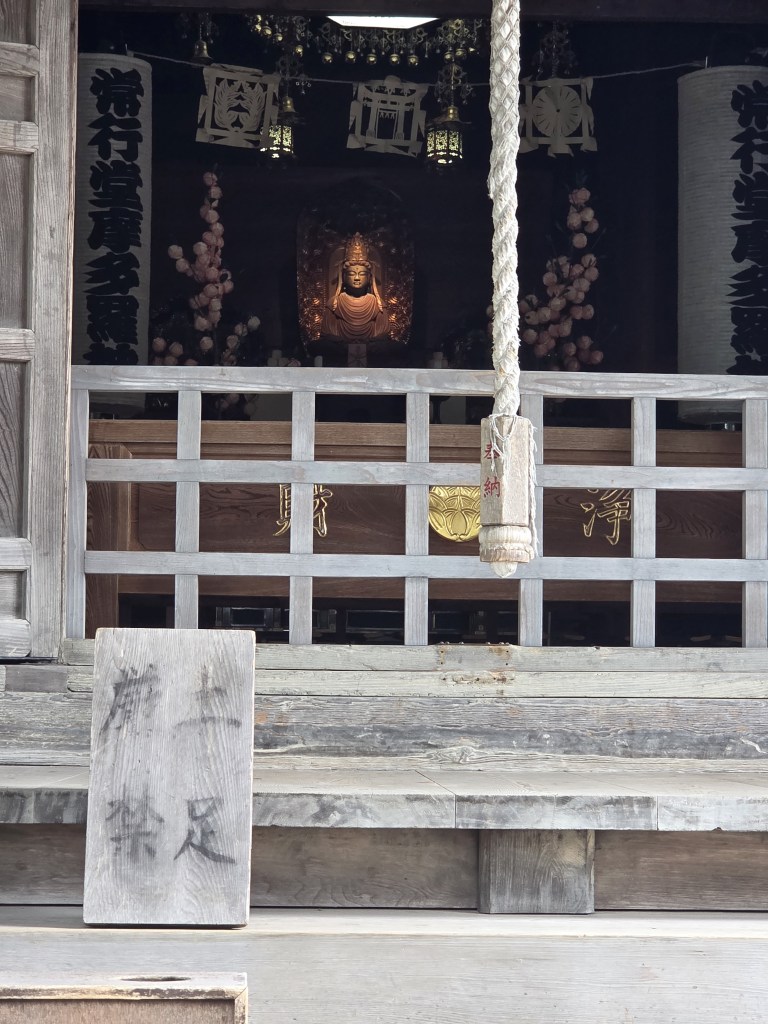
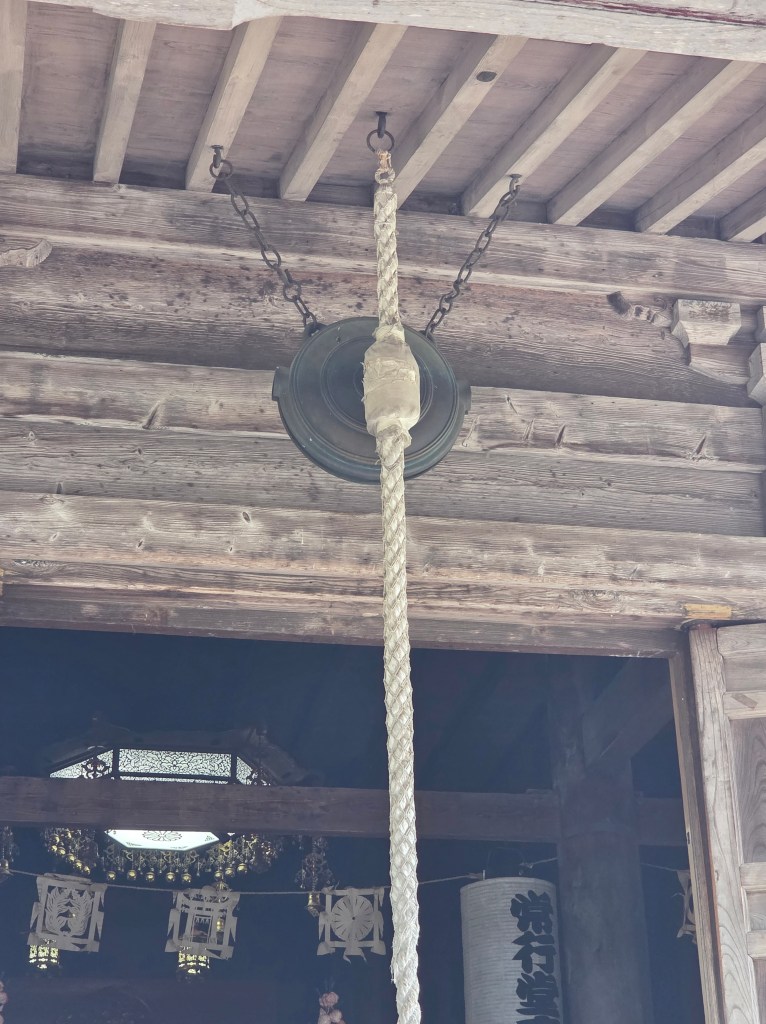
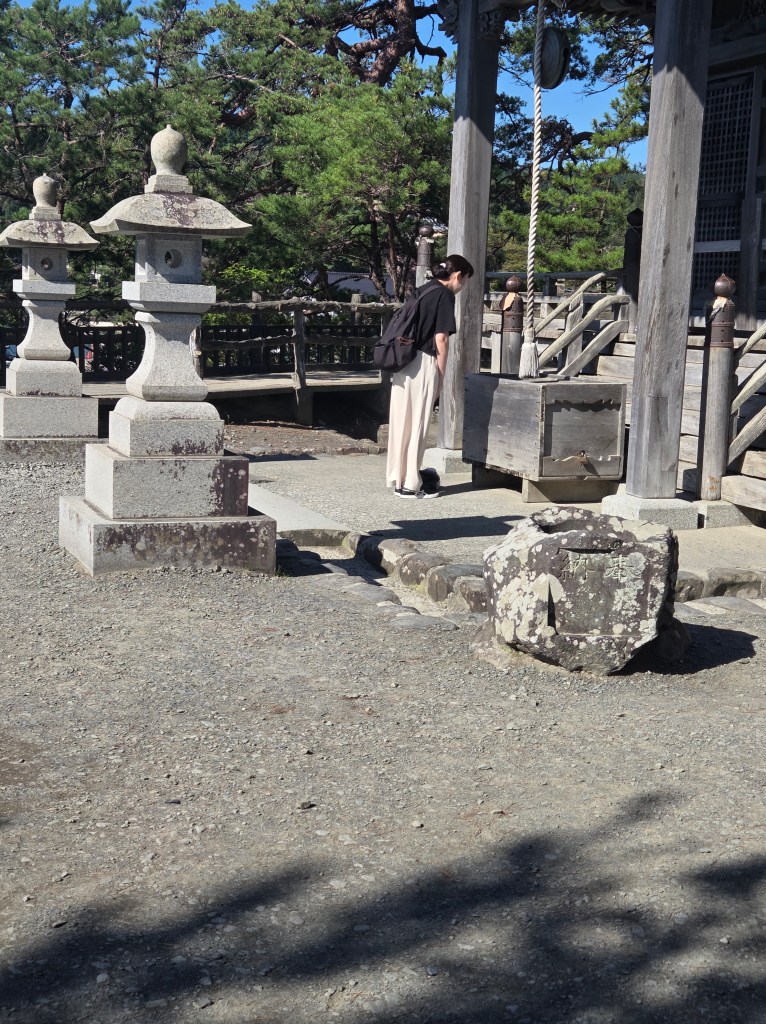
I sat on a bench near the front of the temple for awhile. There was a steady stream of people coming to see it. A number of them made coin offerings and said prayers before ringing the waniguchi, a flat round hollow metal slit gong that hung at the entrance to the temple. The waniguchi is rung by a heavy rope that is swung a little and the rope hits the side of the gong to make it softly sound.
Two tanka I wrote while sitting there:
between each step
open space to void
looms far below
at far end of steps
temple awaits
****************
Godaido Temple
over 400 years
looking out over bay
we, who pay short visit
a breeze passing by
****************
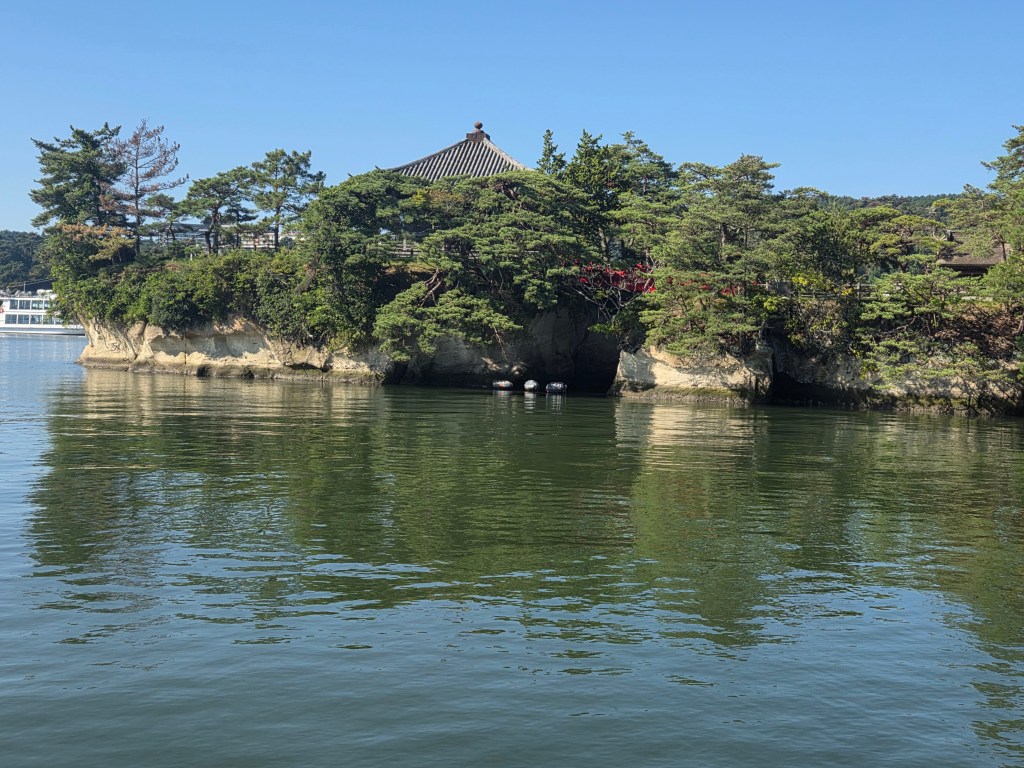
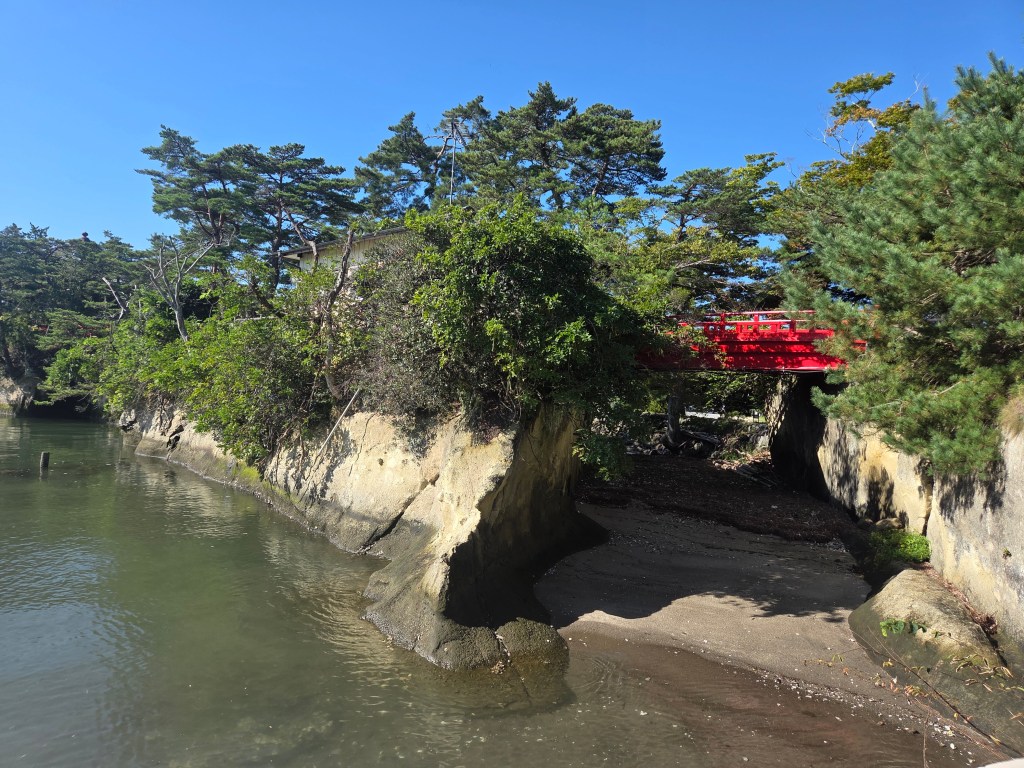
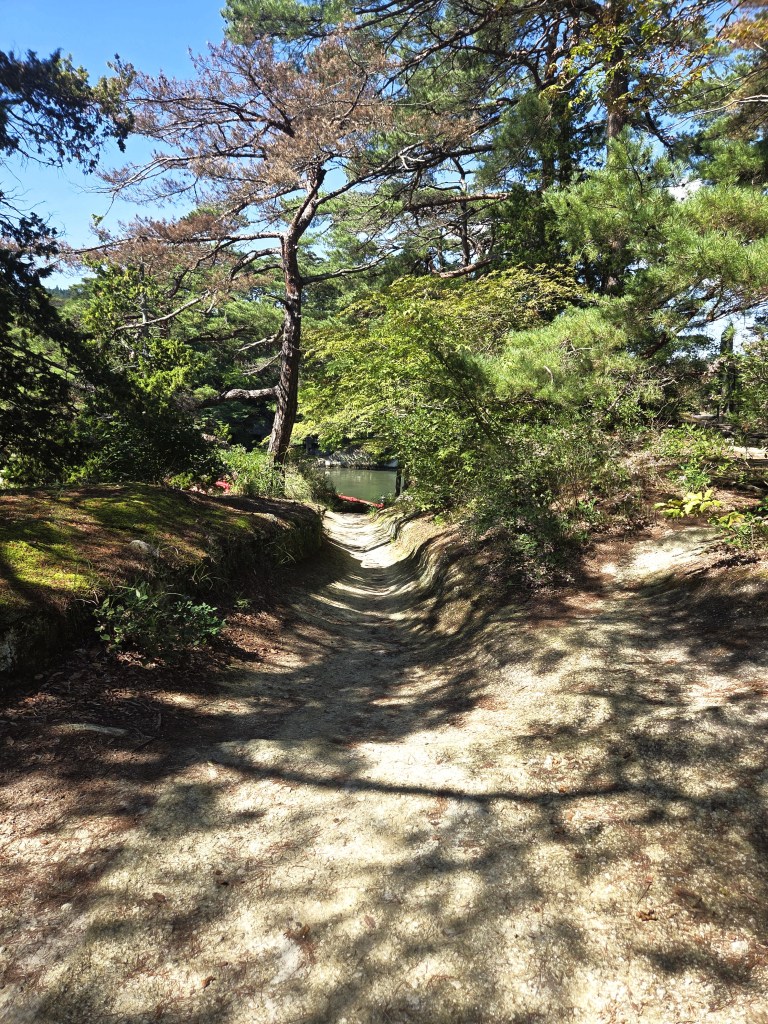
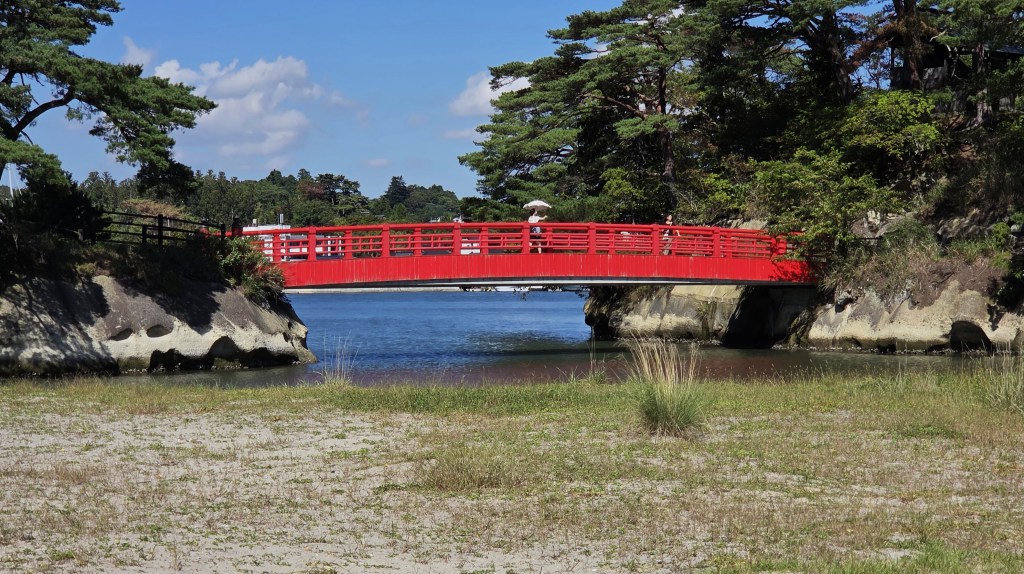
From there we walked over to Oshima Island, across another of the vermillion colored walking bridges. This is a sacred island that is the heart of Matsushima. The bridge to the island was destroyed in the 2011 tsunami, but rebuilt shortly after.
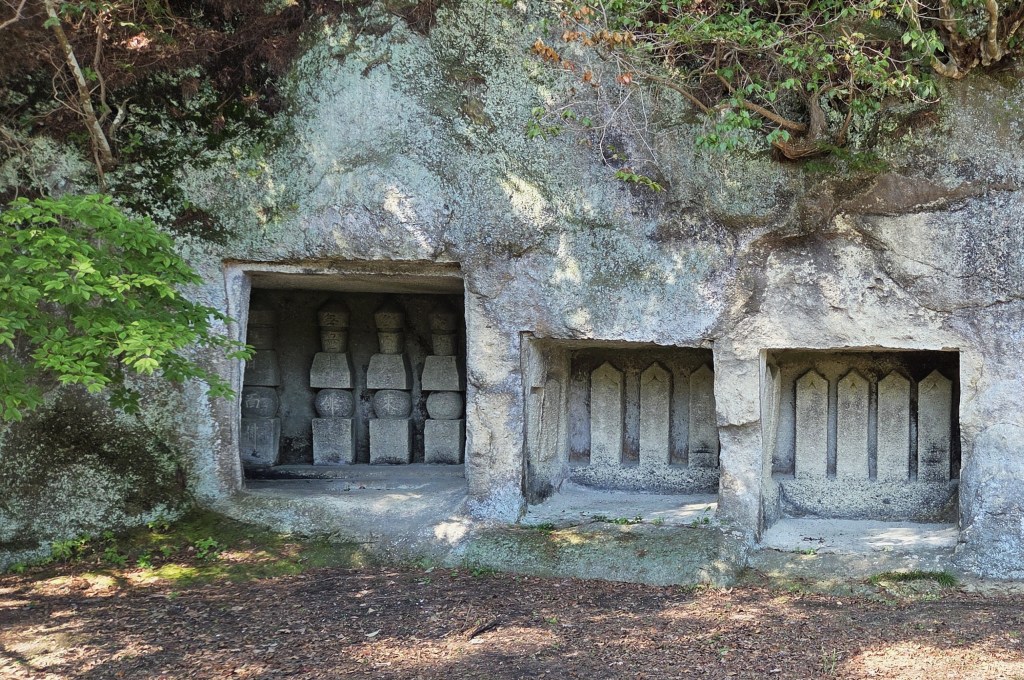
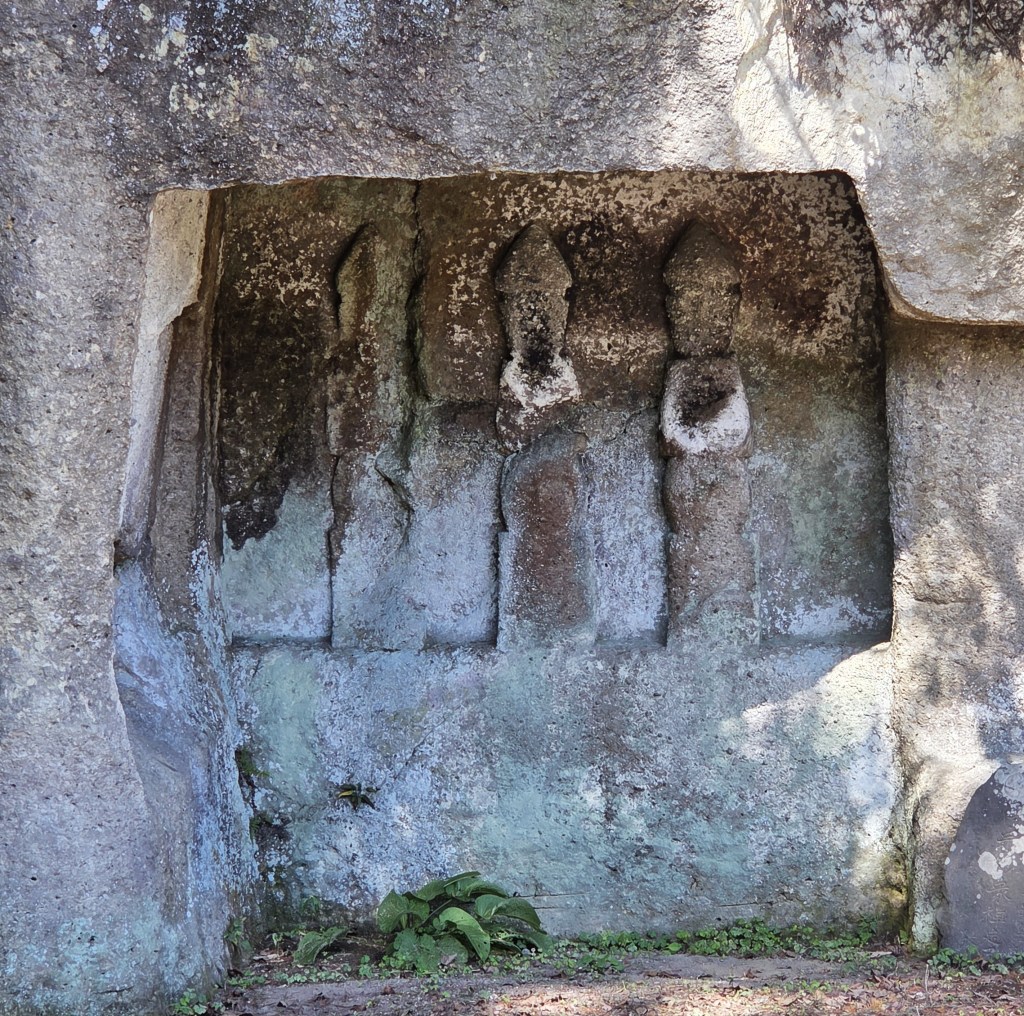
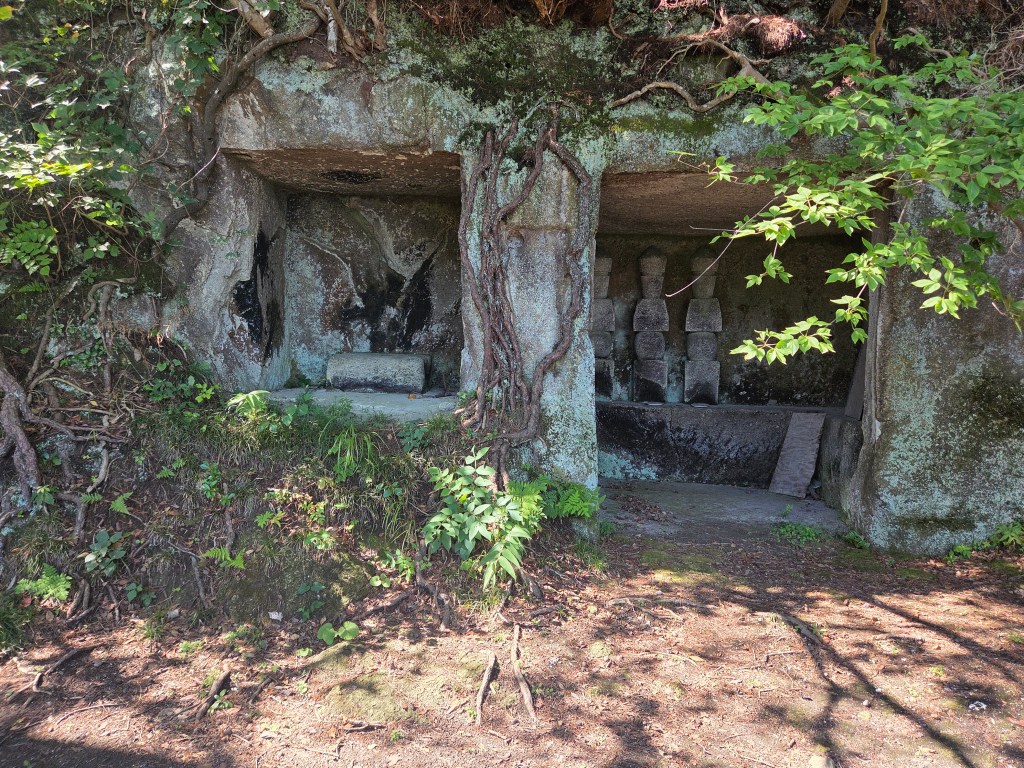
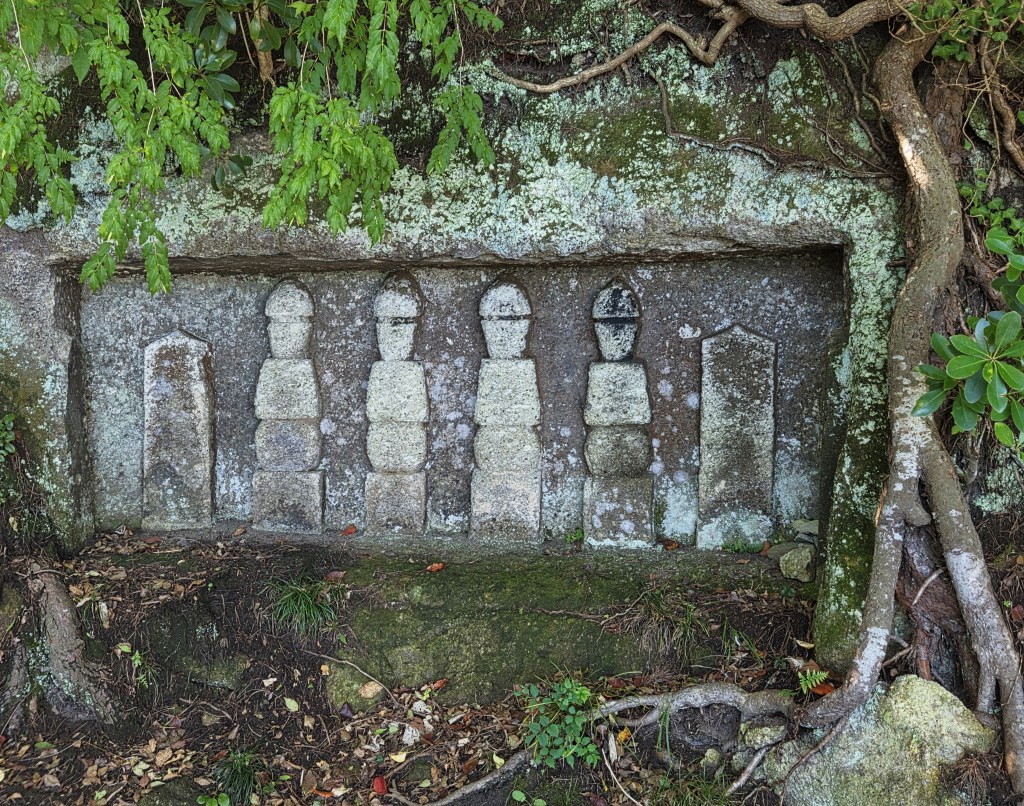
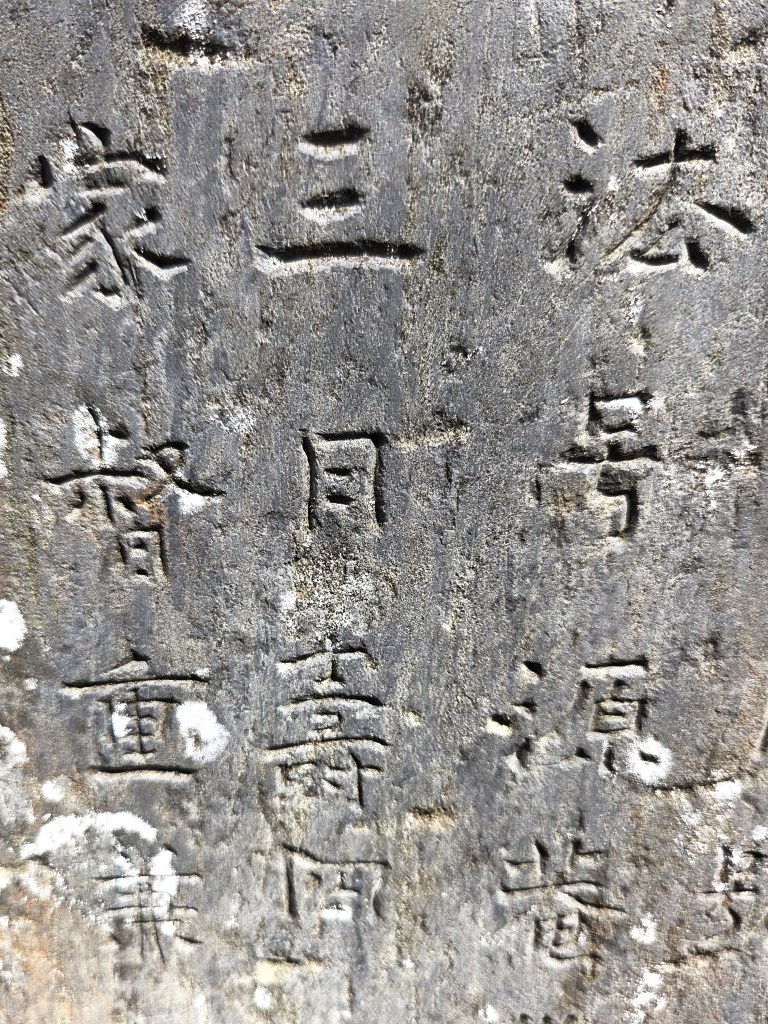
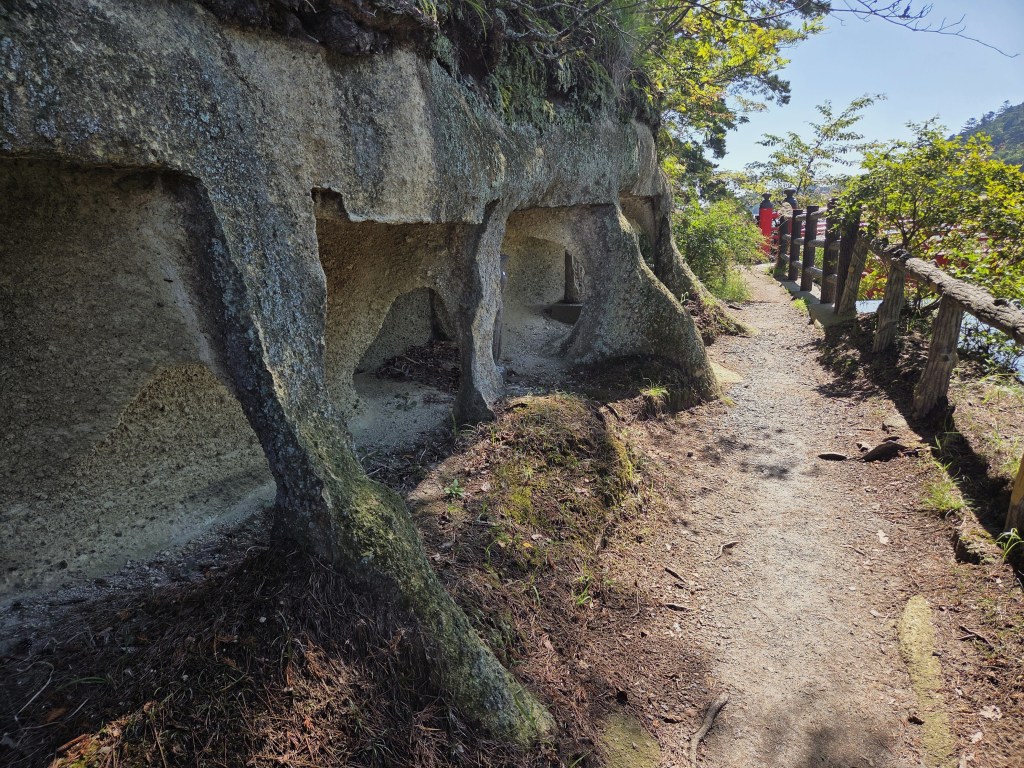
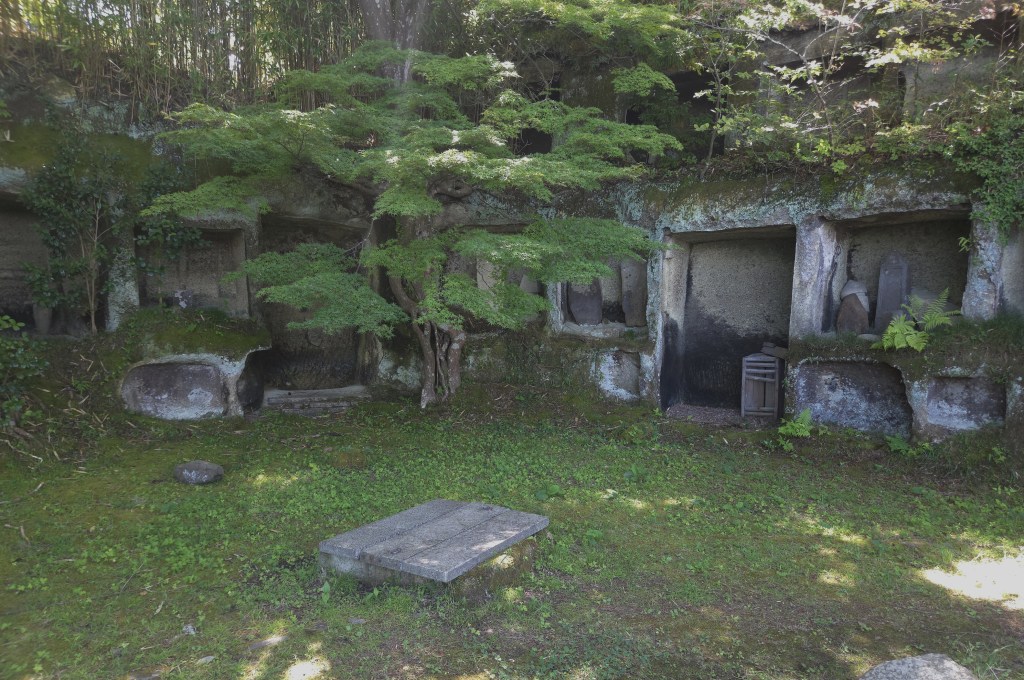
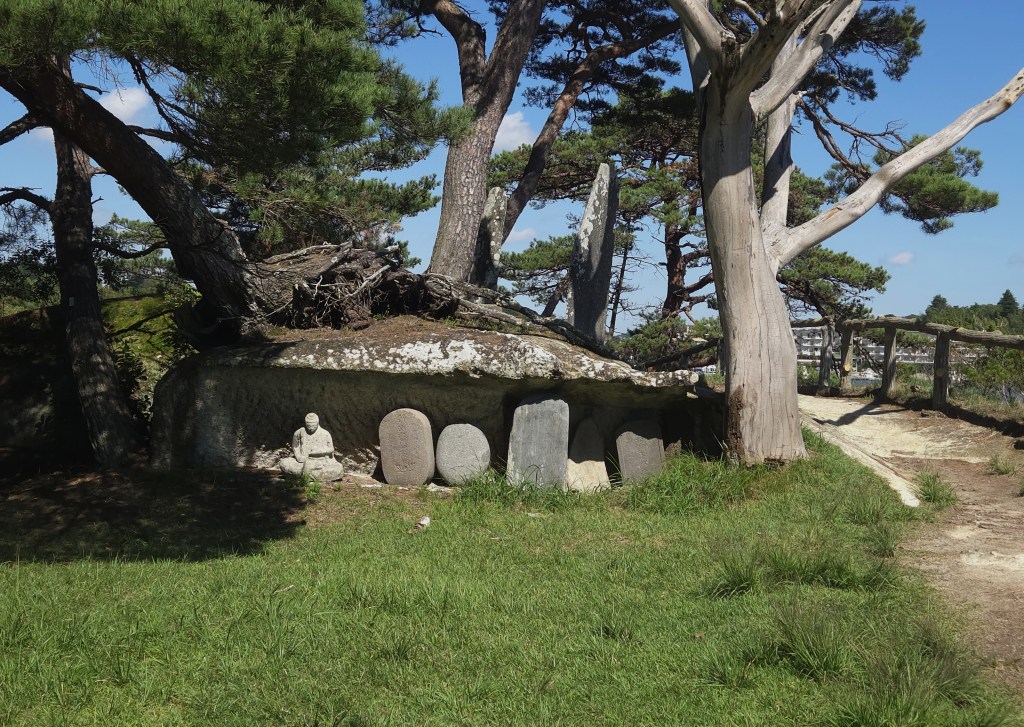
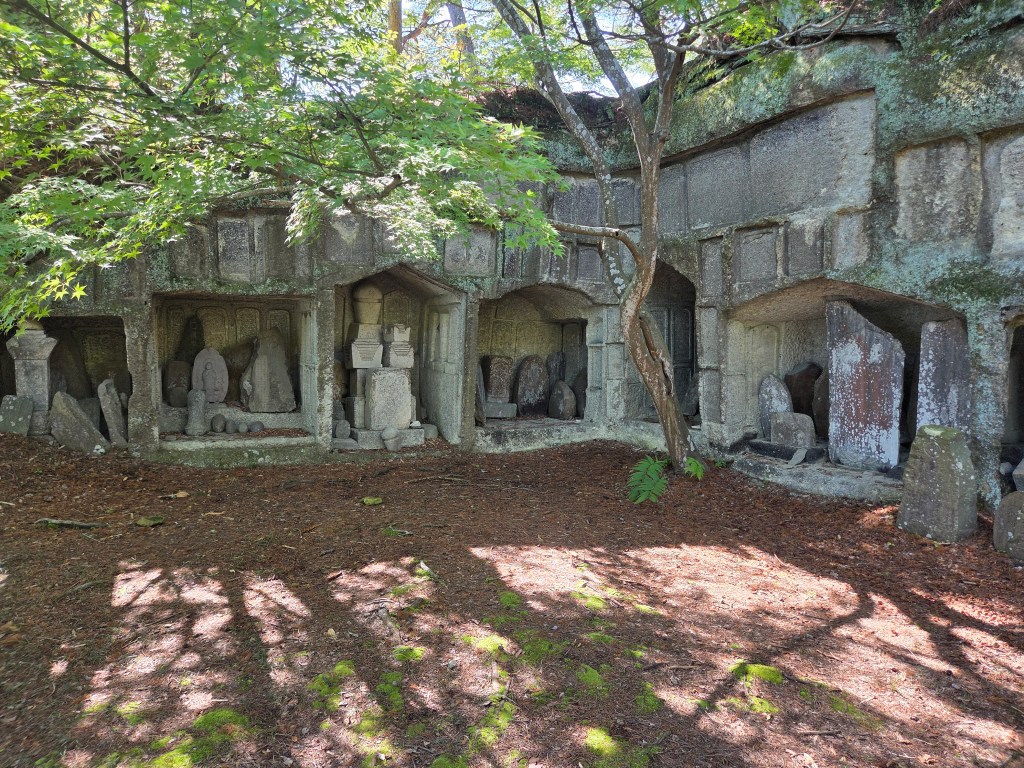
The small island contains many stone memorials and Buddha figures carved into the rock. Basho visited here as part of his travels.
We spent quite a bit of time on the island, taking in its beauty and spiritual history.
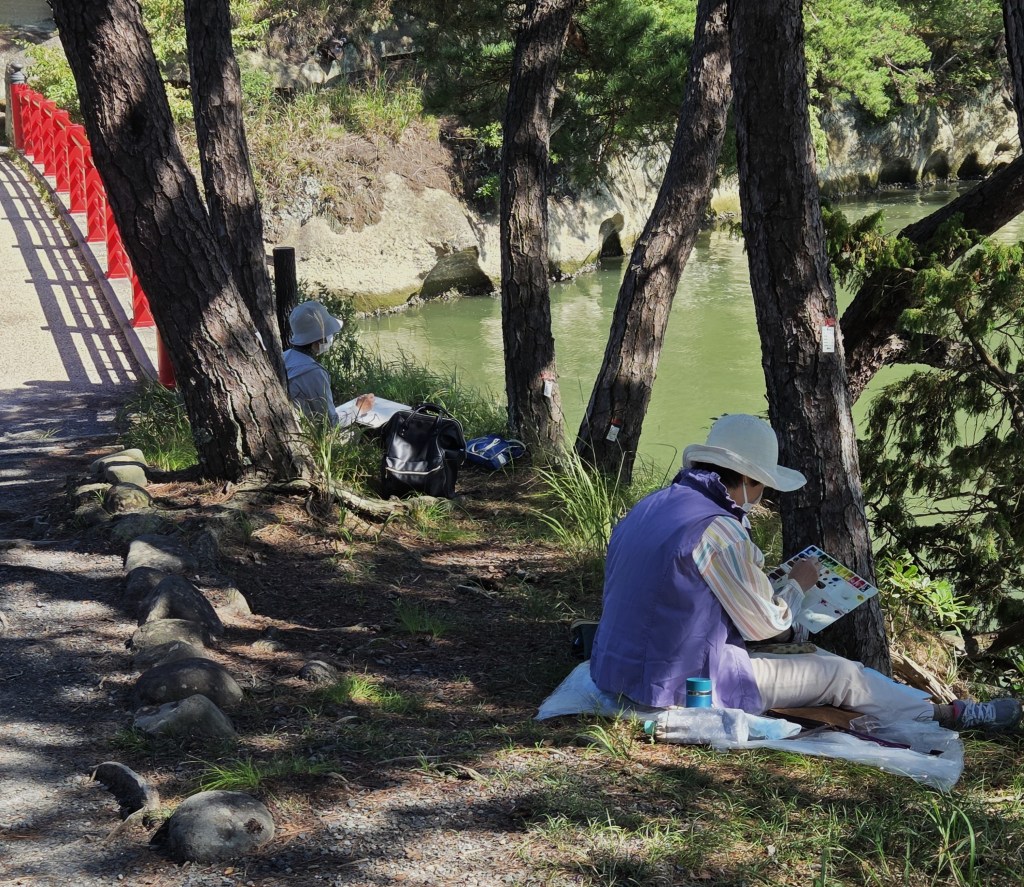
At one point, a young woman stepped up to me as I was writing and asked where I was from. That then led into a pleasant conversation with her. She, Kiyo, lives in Niigata and speaks a bit of English. I read her my tanka that I had written earlier in the day. We were talking about Basho’s journey then Bart came by. She lives near Sado Island so Bart brought up Basho’s haiku about Sado. She knew the haiku and I asked her to read it, as Bart had brought it up on his phone. She did and then I asked her if she could do so again. This time she recited it by memory and I recorded it.
I learned later, after we connected online, that she was traveling with Basho’s “Oku no Hosomichi” and that she was happy to connect with someone else who was doing so.
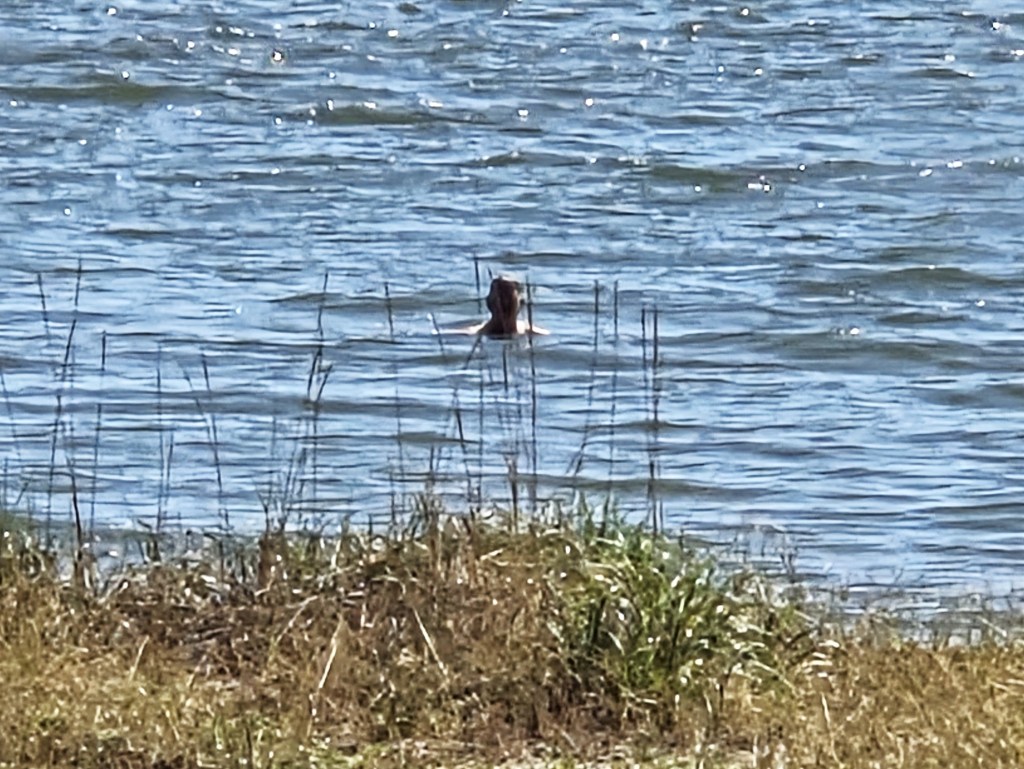
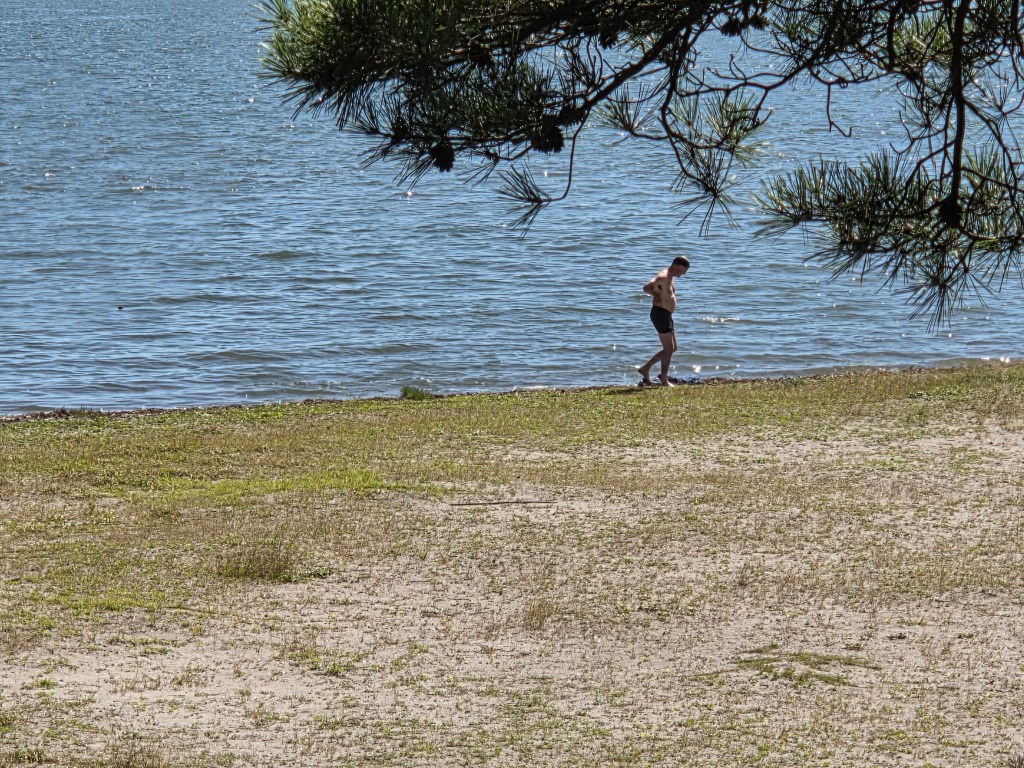
Just before walking across the bridge to the island there is a sand bar that Bart took notice of. Before leaving the area he went for a swim in the waters of Matsushima Bay!
Afterwards we had lunch at a fish store/restaurant on the far side of town. As has been the case at every meal here, it was outstanding. Almost any kind of seafood you would want was available. That may be a slight exaggeration, but not much.
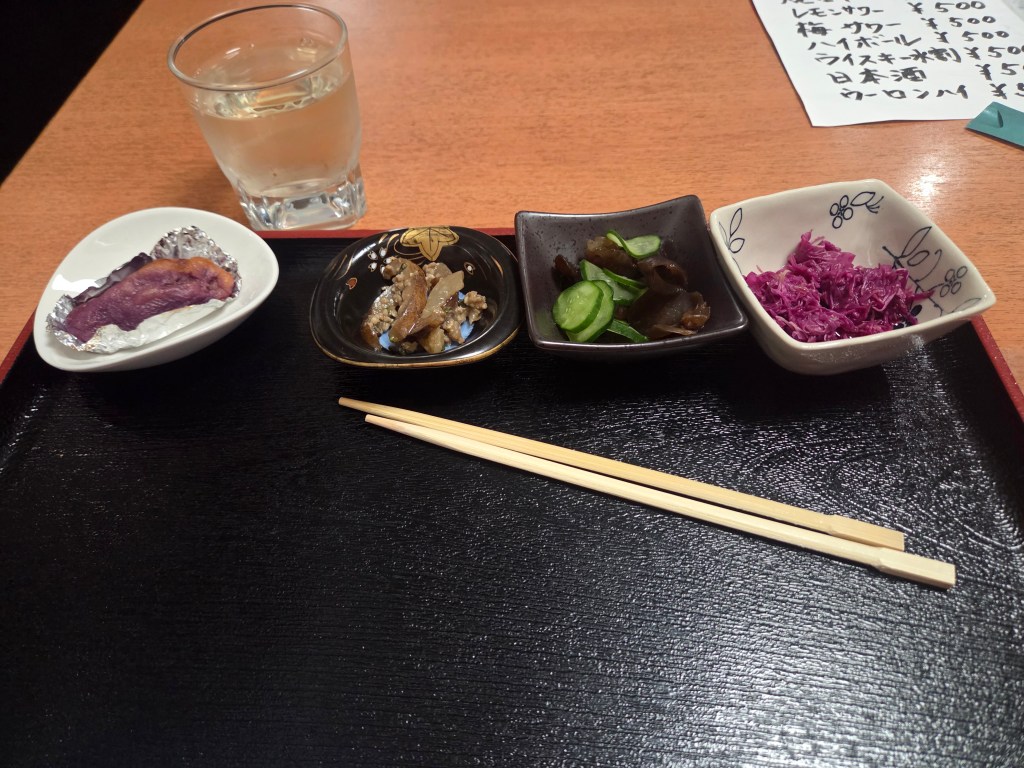
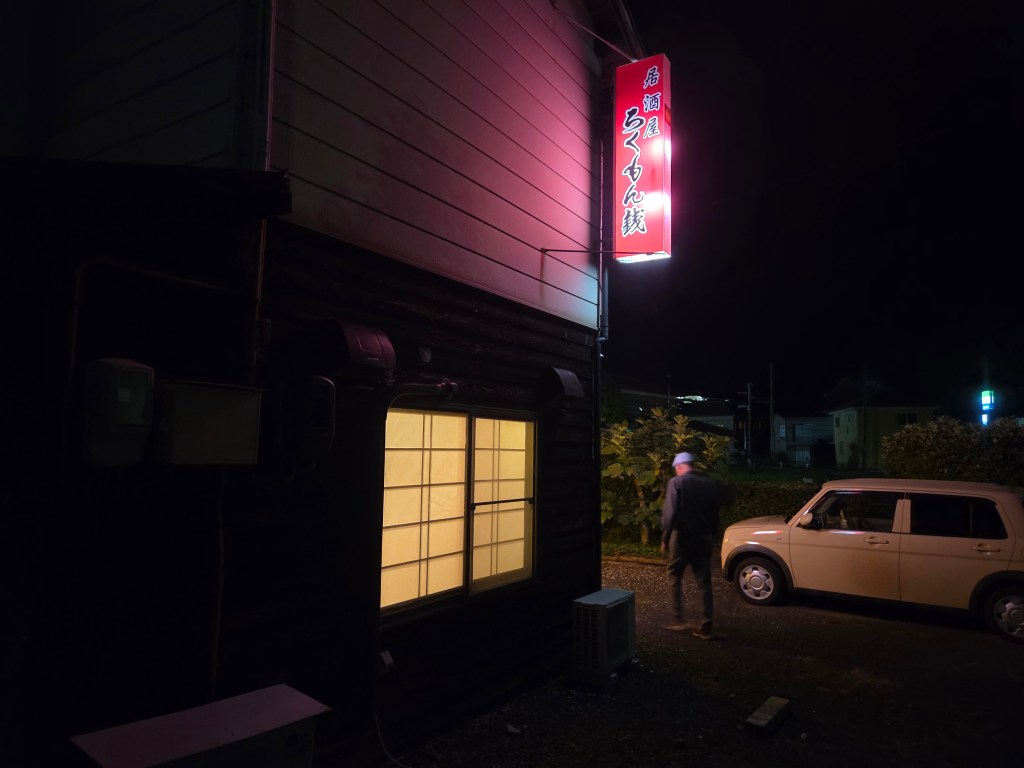
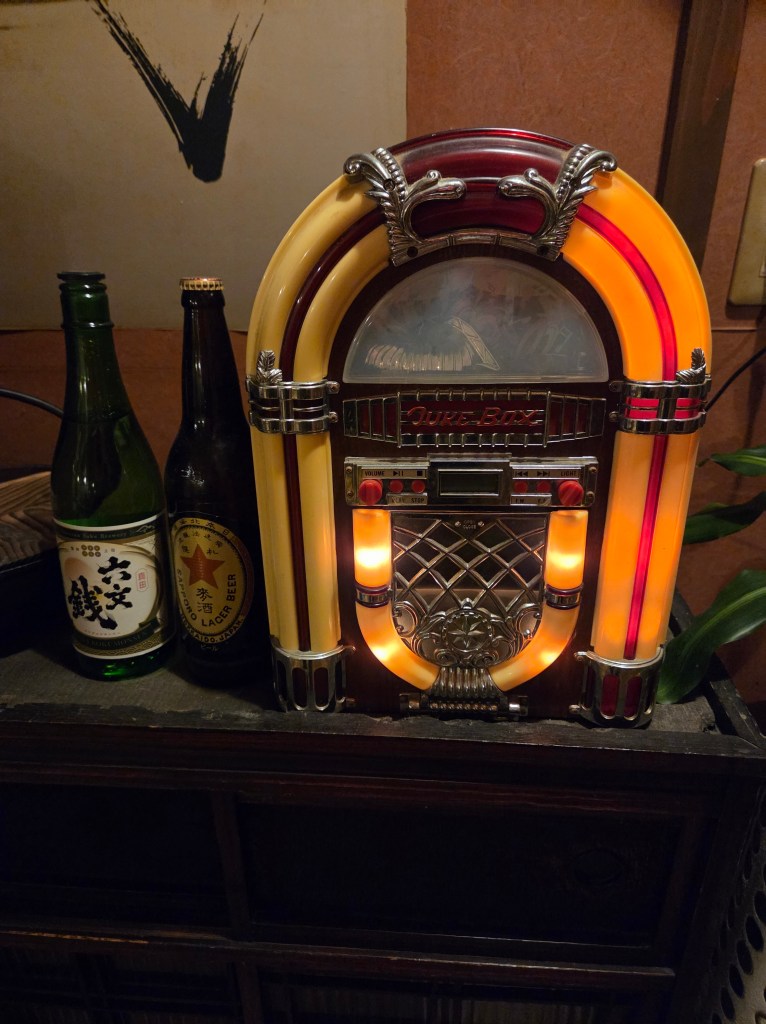
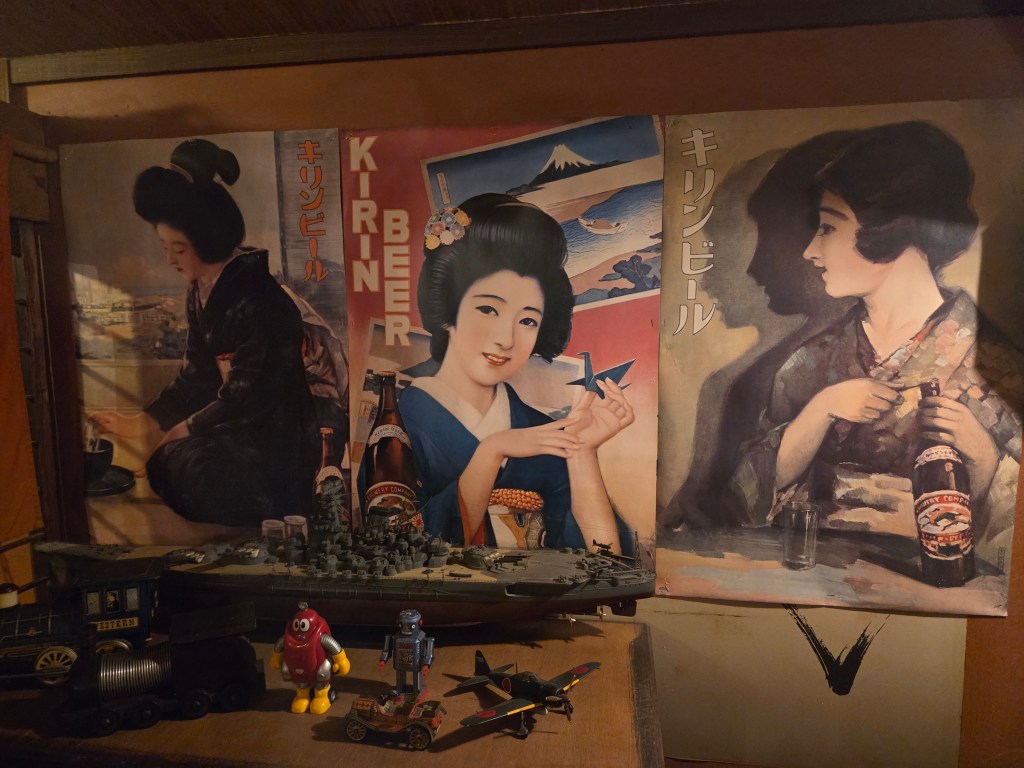
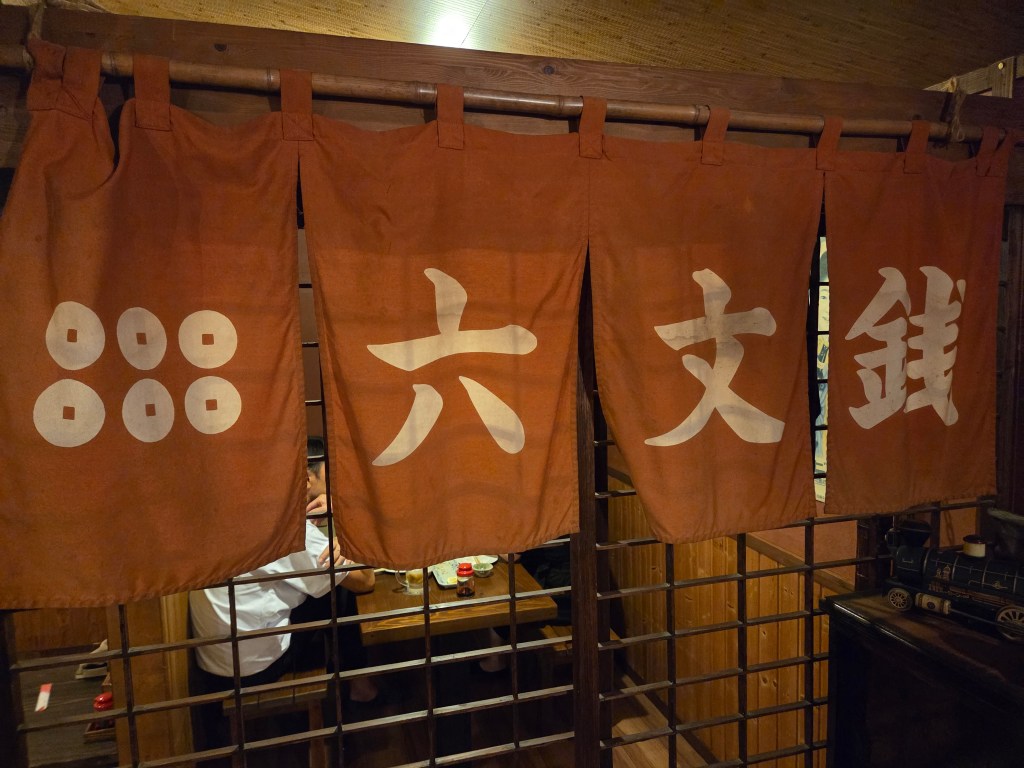
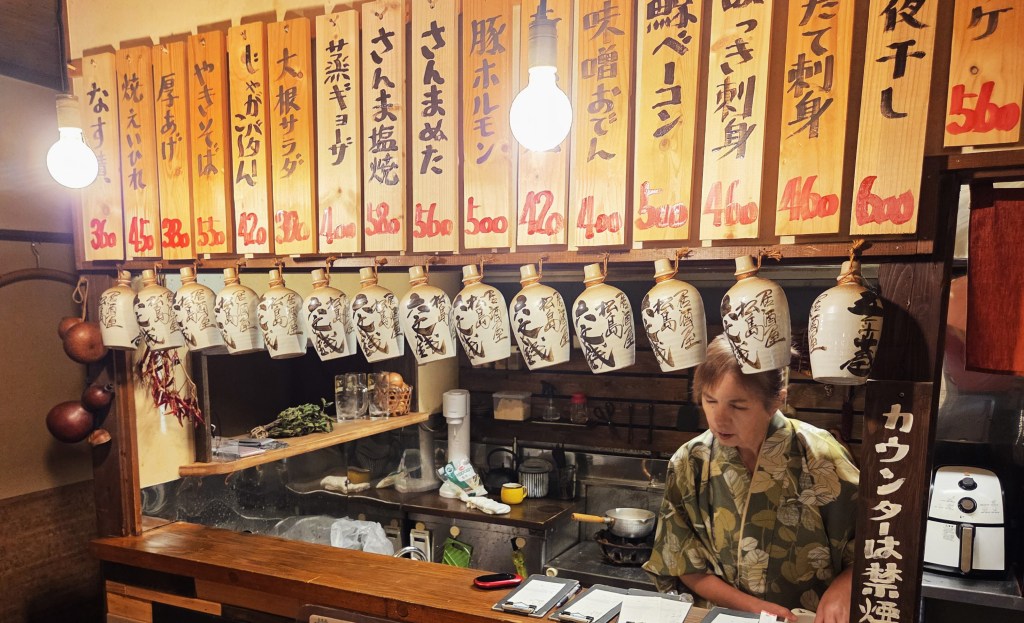
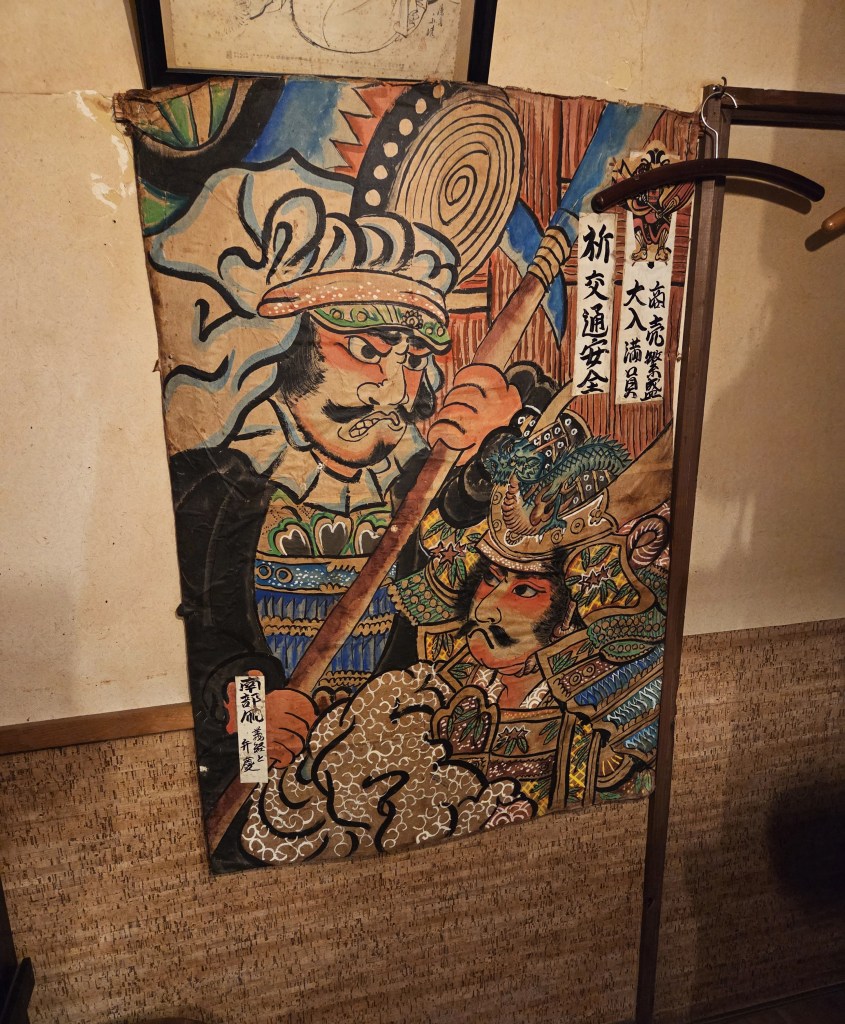
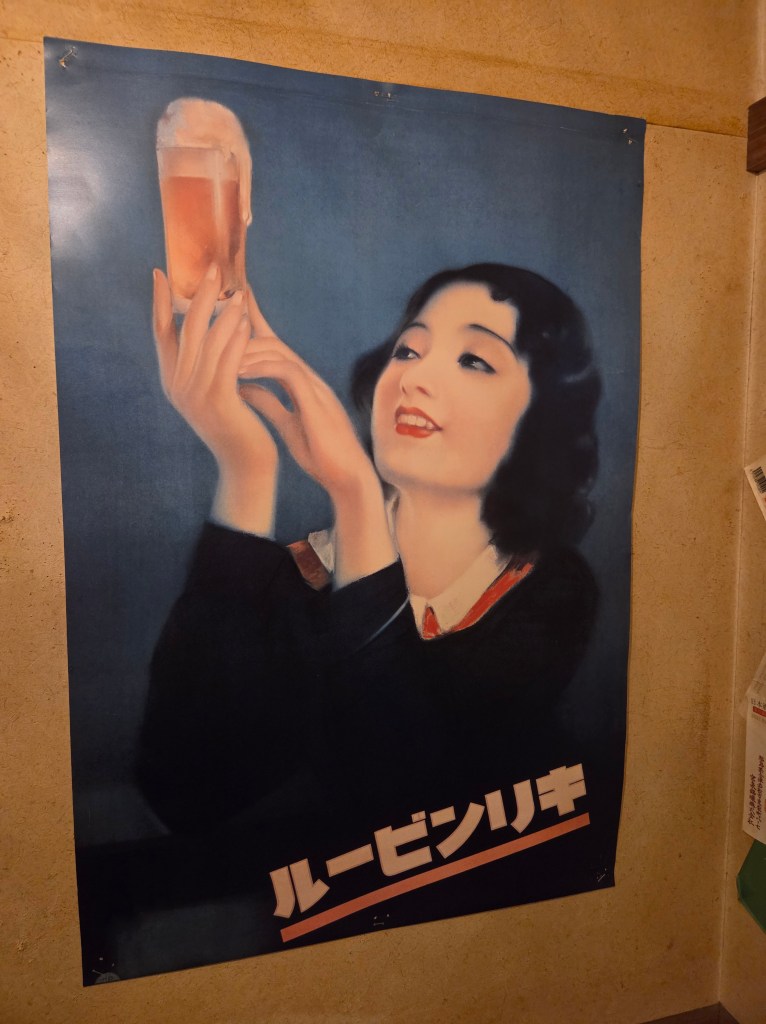
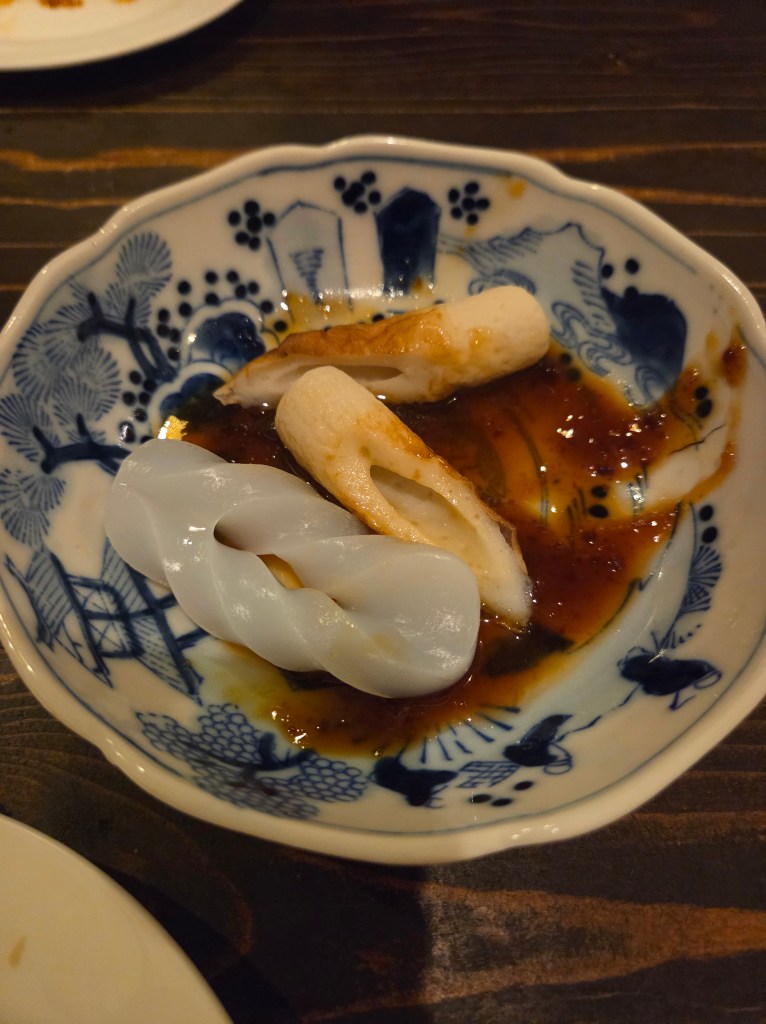
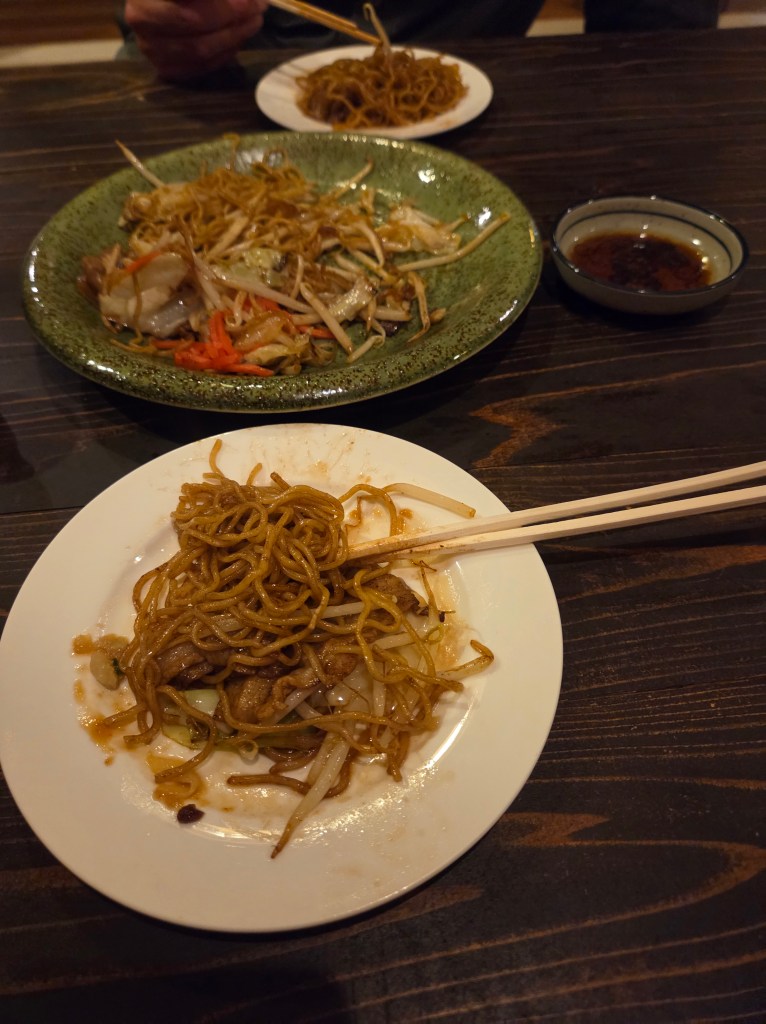
For dinner we went to another small restaurant off on a small dark side street that had good reviews online. The restaurant was run by a single person who cooked and served and ran the place by herself. The tables were traditional Japanese, low tables that one sat on the tatami floor by. The décor was old stuff – posters and various memorabilia. Needless to say at this point, the whole experience was exceptional. Appetizers were chikuwa and konnakyu, a first. (Look them up!) The main courses were delicious.
So, another day on the Japan Journey concluded. Ah!
(Click on thumbnail for larger picture.)

September 29
A day of taking it mostly easy. I worked on the webpage in the morning and then hung out in the room as it was a rainy morning. It was actually good to not be doing too much after three days of constant activity.
While taking it easy I did make use of the onsen here at the ryokan we are staying at. The water wasn’t as hot as Sabako’s, so was able to just stay in it constantly. A quiet pleasure, there by myself.
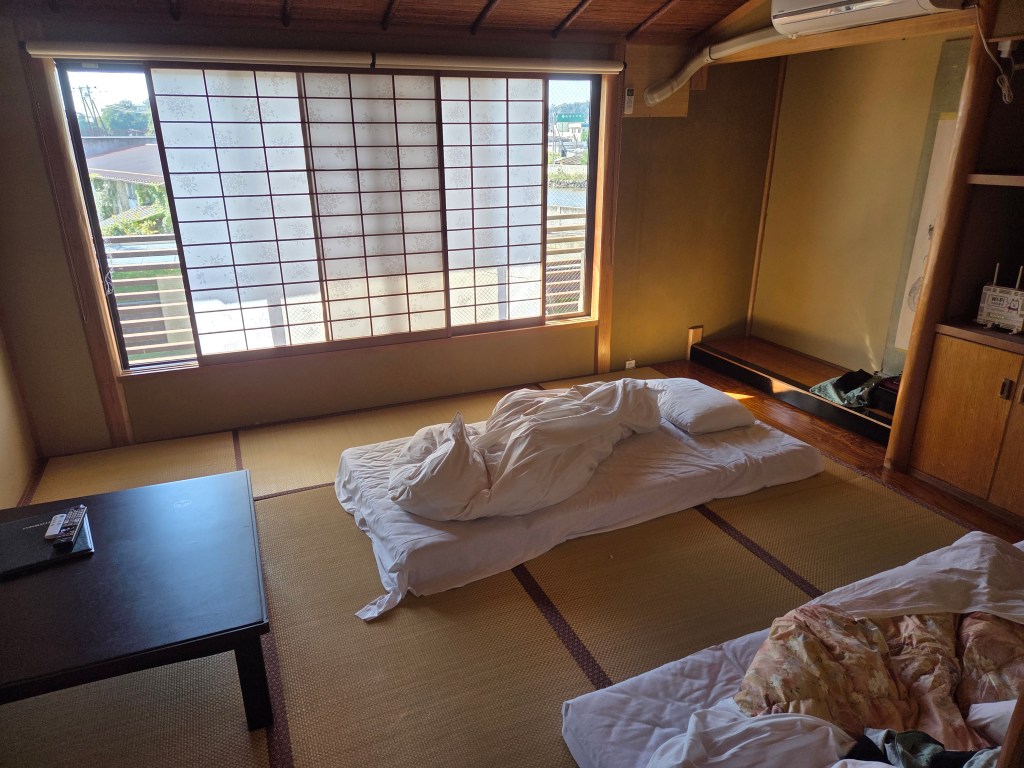
A ryokan is a traditional Japanese inn. The floors are tatami and bedding is futons. This place, Matsushima Koumora, is run by an older couple that is third generation proprietors. A quiet, peaceful place, quite different than the hotel in Fukushima.
Lunch at Ouga, a small restaurant that seated about 20 people. I had their special dish, Mapo Tanmen, a very spicy ramen bowl that was very filling. Two younger people sat next to us and one, Keyo, helped Bart with ordering. She spoke English a bit and was very helpful and friendly. The food was excellent and the two women who ran the place were very congenial. When I was leaving, I said to the server, “subarashi”, (thank you google translate) which in Japanese means wonderful. She smiled and bowed and thanked me. The look on her face showed much appreciation for my comment.
Before coming to Japan, so many people who had been there before exclaimed about the food. How it was one of the highlights of visiting Japan. It’s only been a few days, but I totally understand what they meant. The food has been excellent and, maybe because where we have been isn’t Tokyo, very reasonable in price.
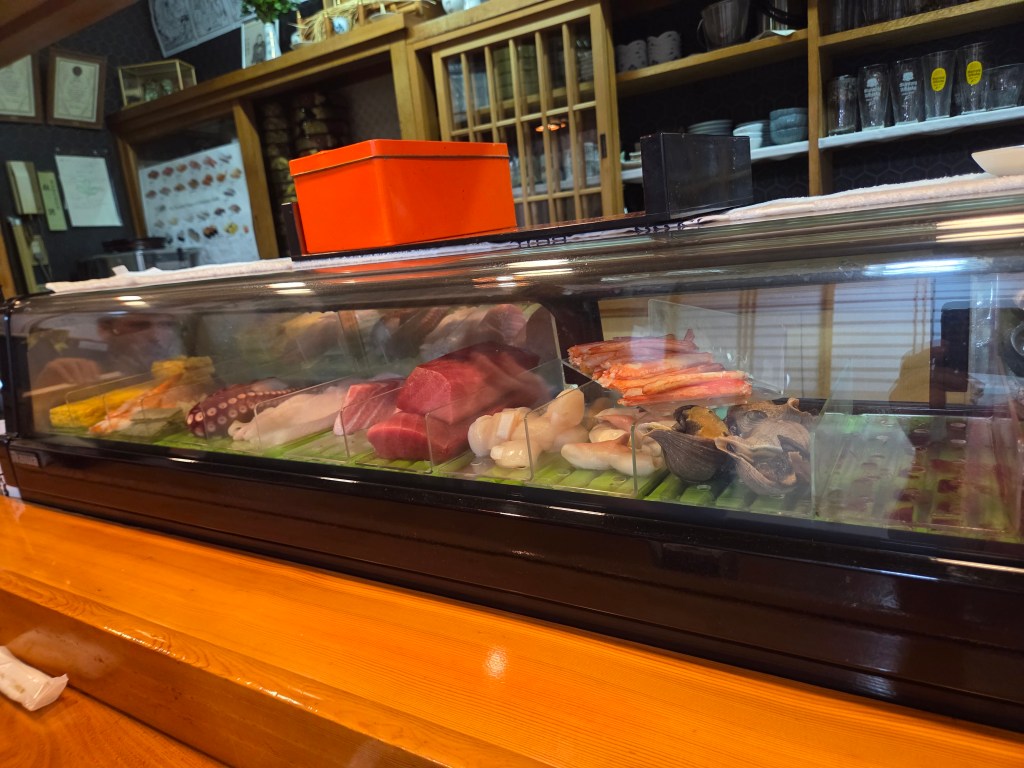
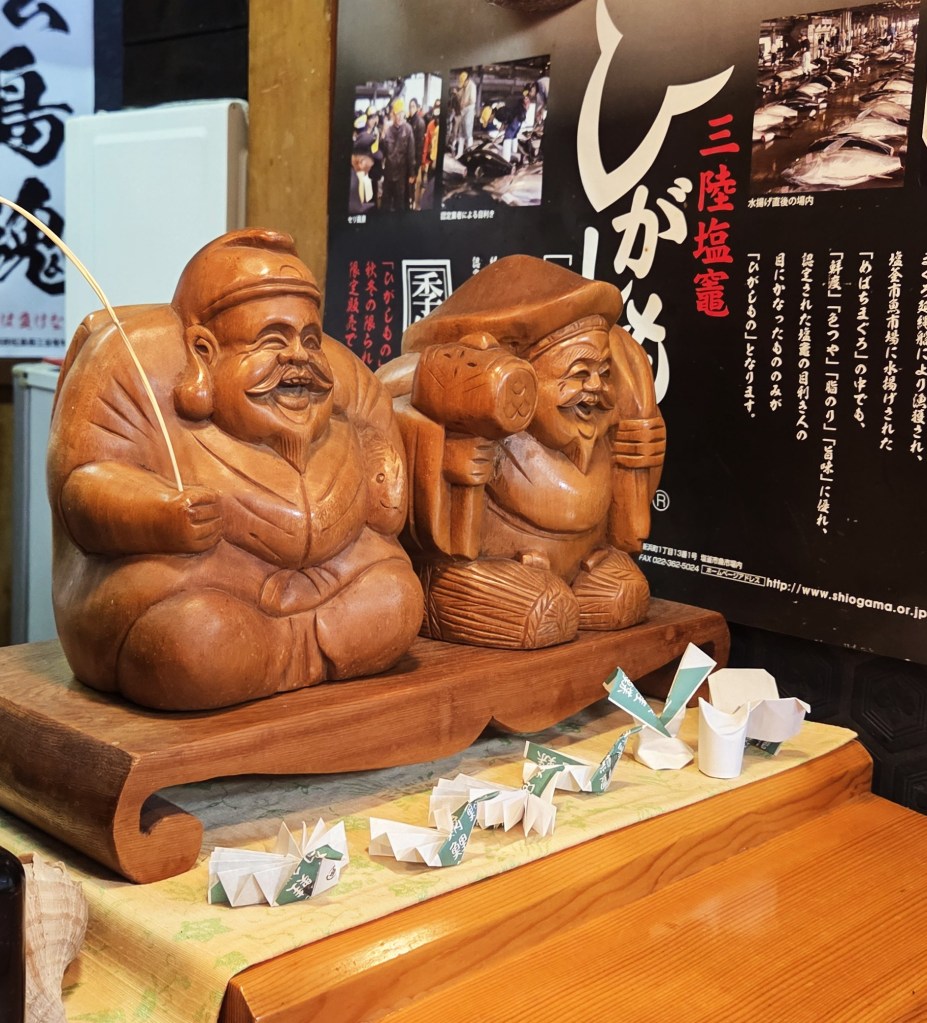
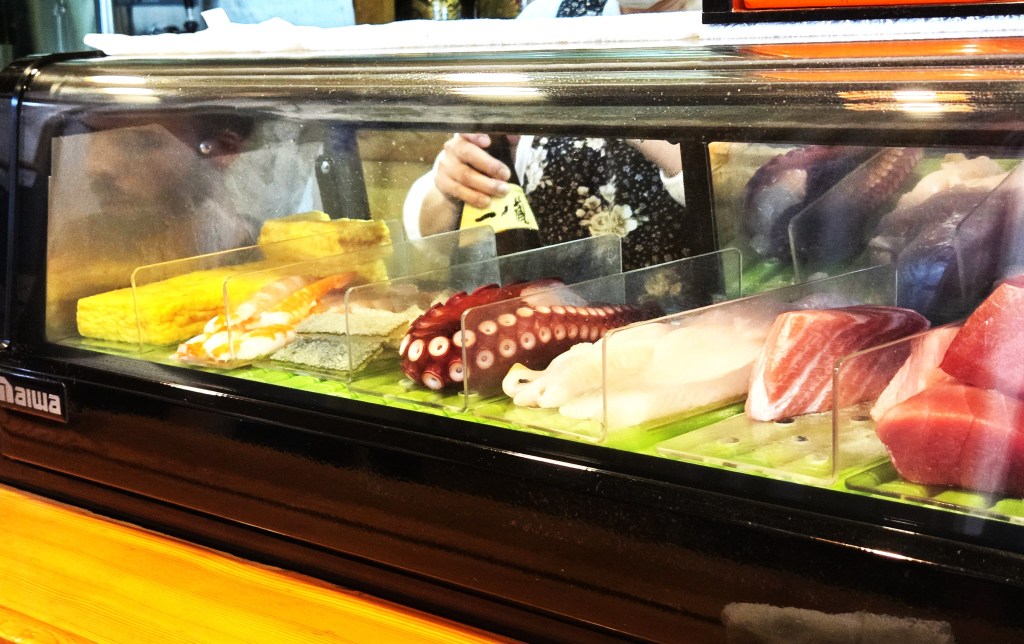
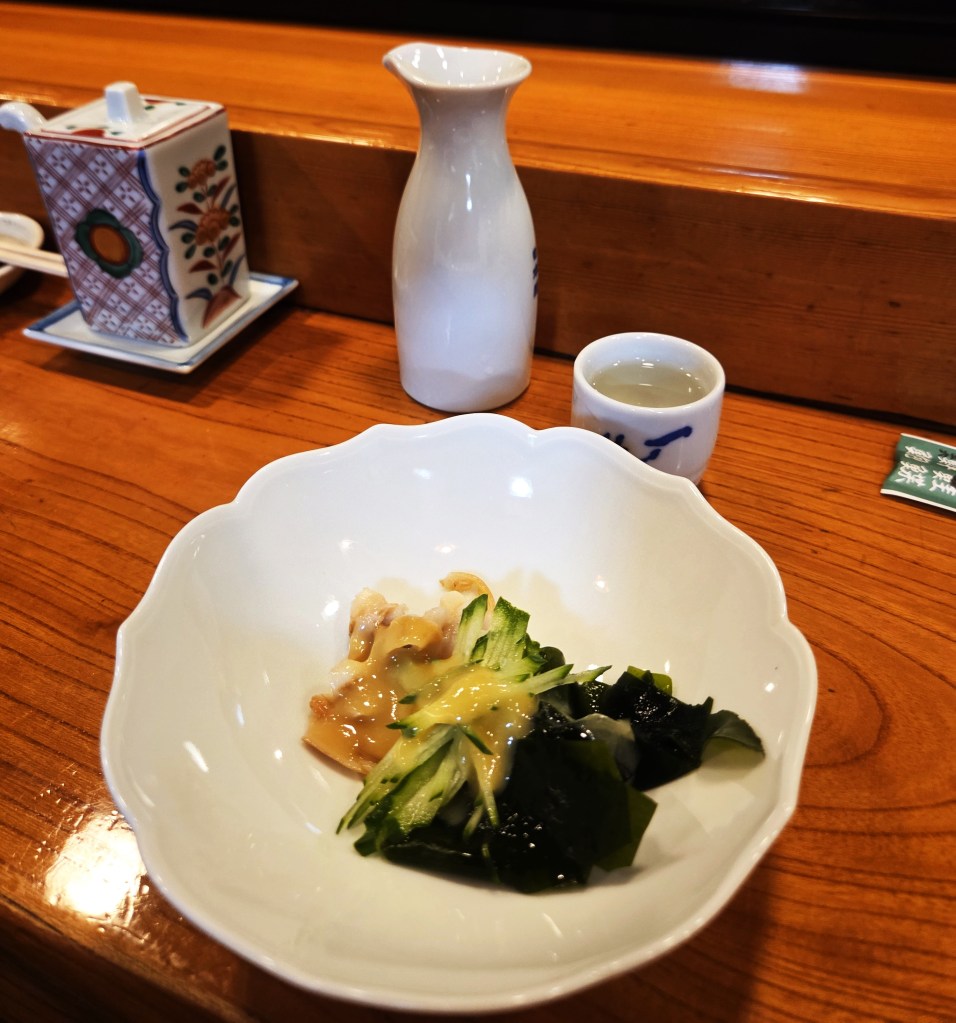
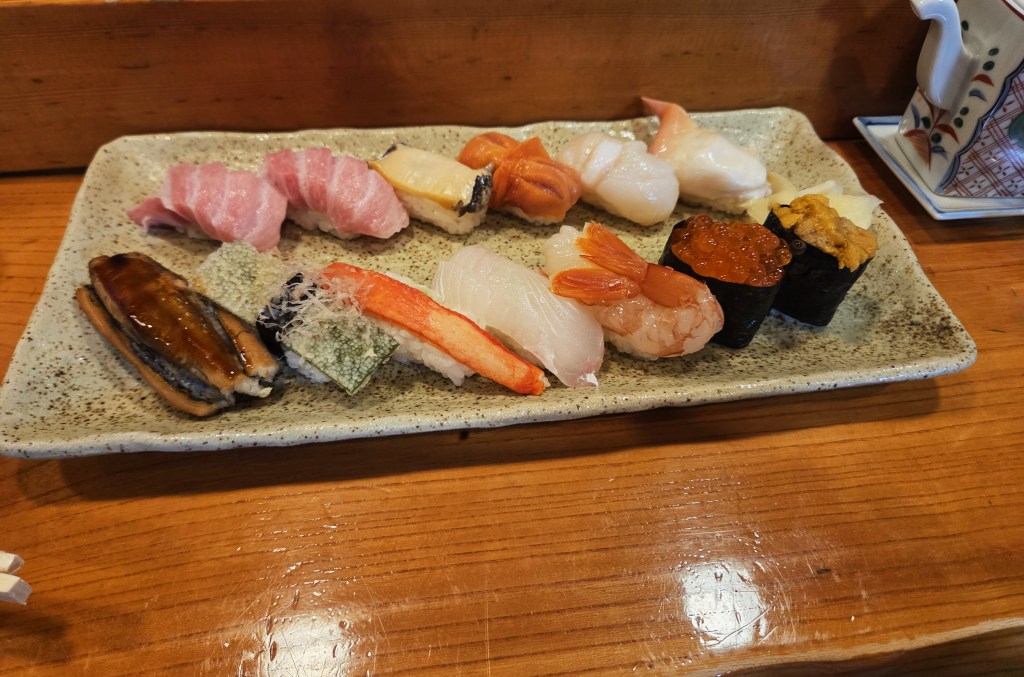
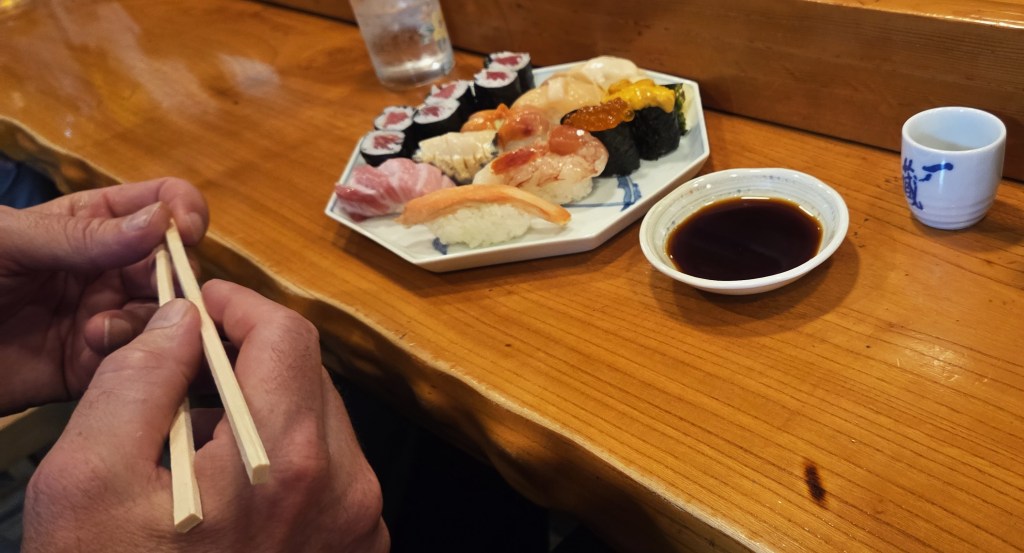
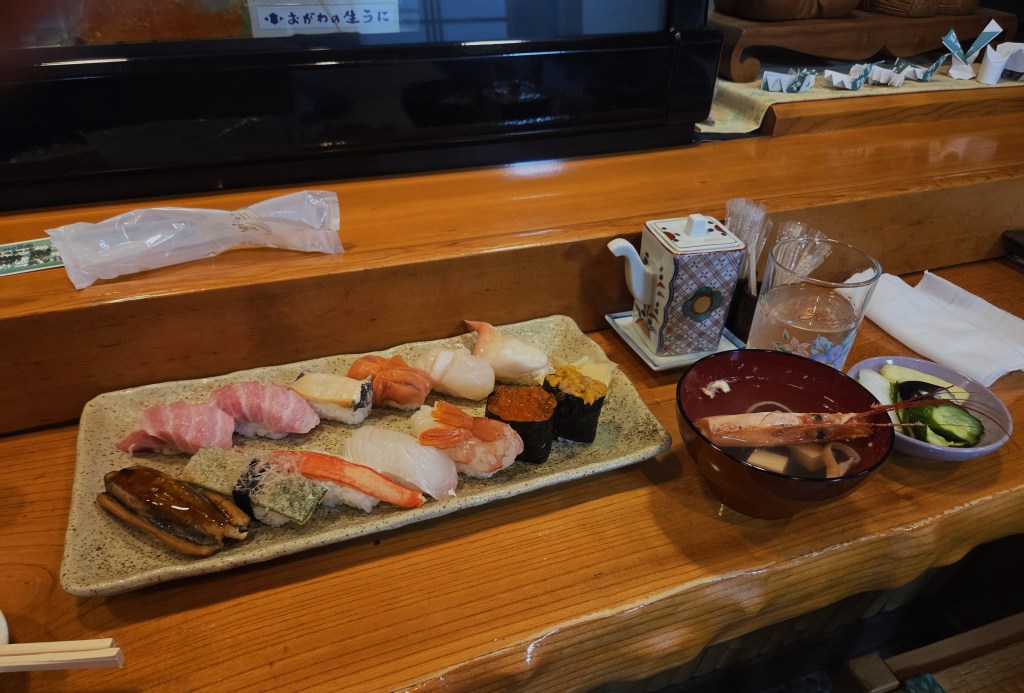
To add to that impression, for dinner we went to Isozushi, a highly rated sushi restaurant that was a little out of the way from the main business area.
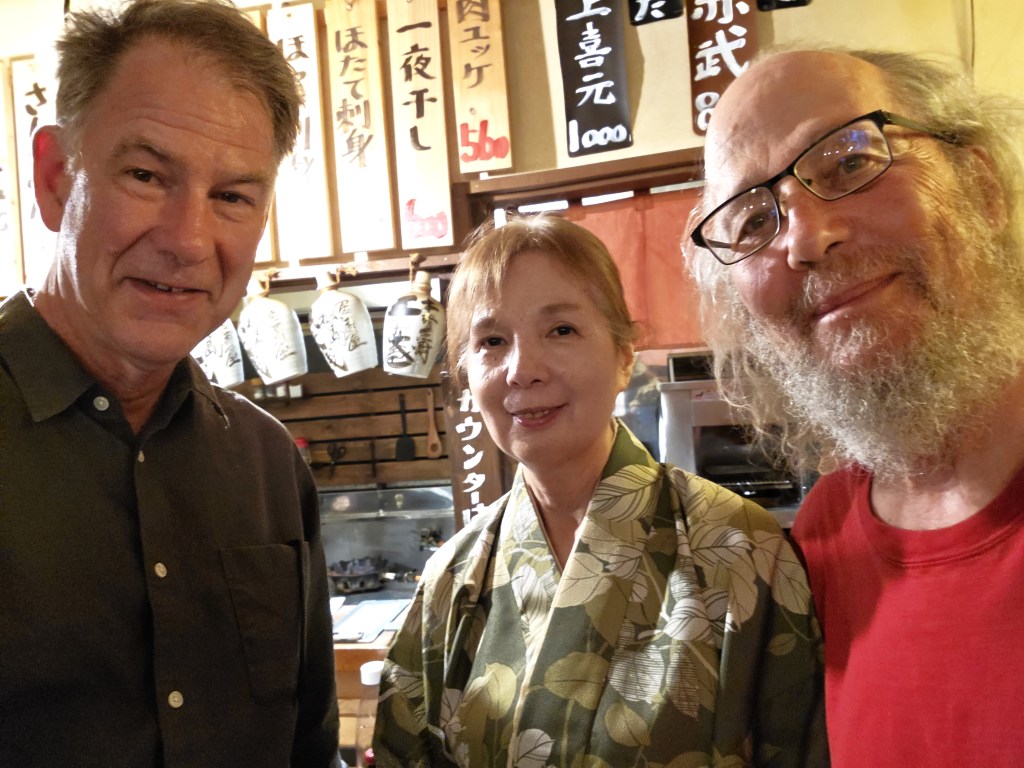
Two people left shortly after we arrived. There was only one other patron there, Gil, from Luxembourg. Bart initiated conversation with him and it flowed nicely through the evening. The restaurant was operated by an older couple and the sushi was beyond wonderful. We had sake with the meal, and when Bart ordered more, he asked for two more cups. When the sake arrived, he poured some in the two extra cups and offered them to the couple. They were surprised and very appreciative of the gesture. We conversed with the two of them (mostly through google translate) and learned that they have been at this for forty years. Twice, as we continued conversation, the chef came around the counter and filled our cups with more sake.
When we left the restaurant, we were fulfilled with food and meaningful connection. I think the others were, too.
(Click on thumbnail for larger picture.)


September 28
Another amazing breakfast at Hotel Sankyo. Here’s a list of what my breakfast consisted of: Green tea, roast duck, crab wontons, wakame rice, truffle potato salad, salted mackerel, pollock roe, boiled scallops, Japanese omelet, raw tuna with wasabi and finished off with a Fukushimi pears. I didn’t overeat, as I took just small portions of all of the above.
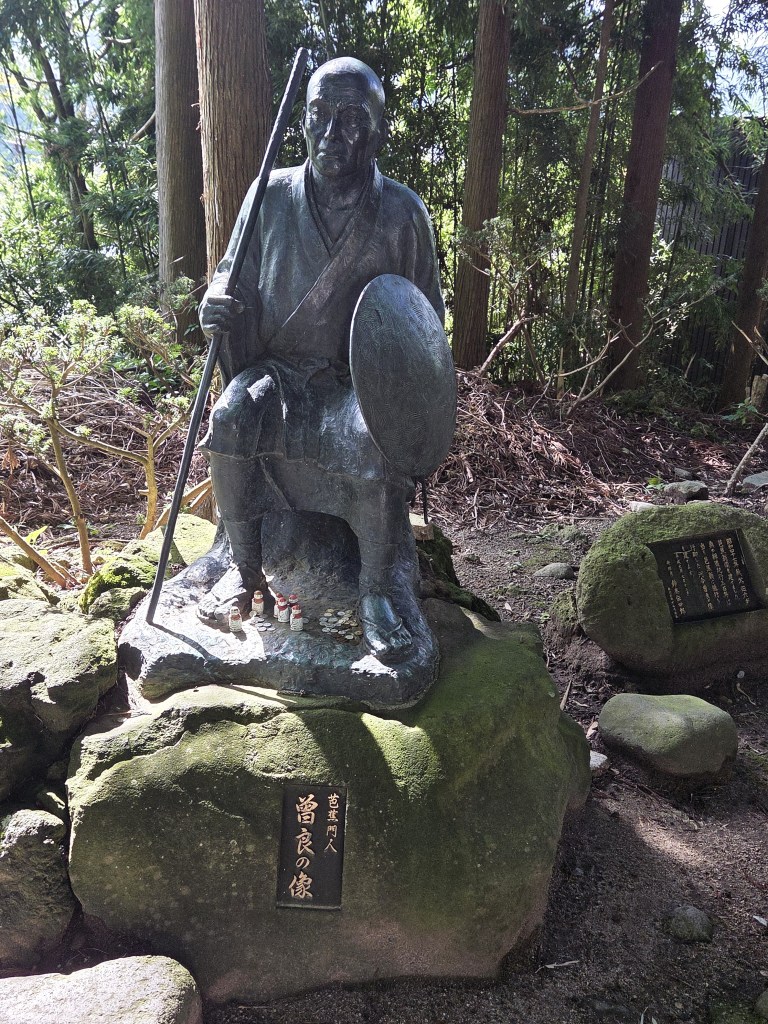
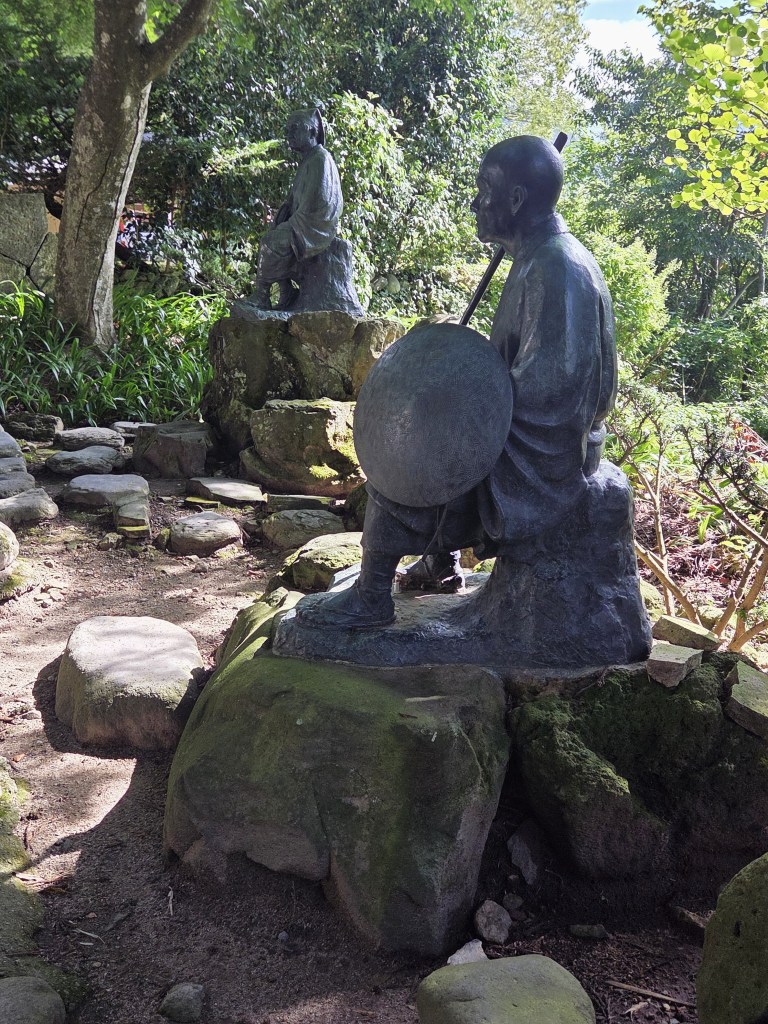
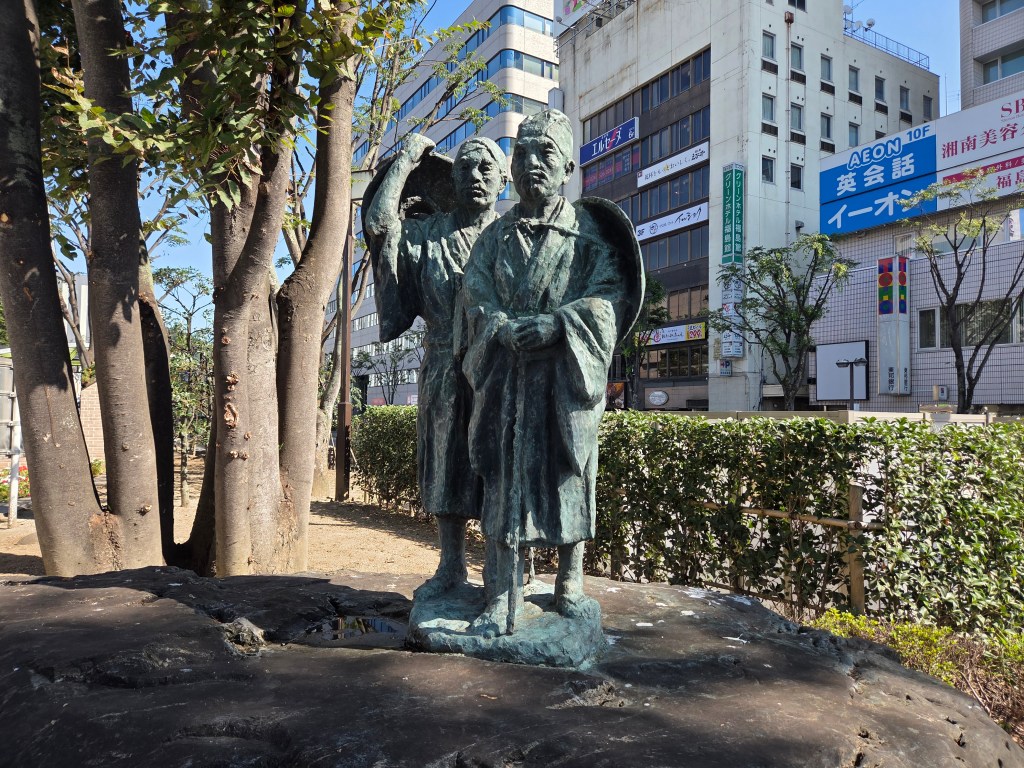
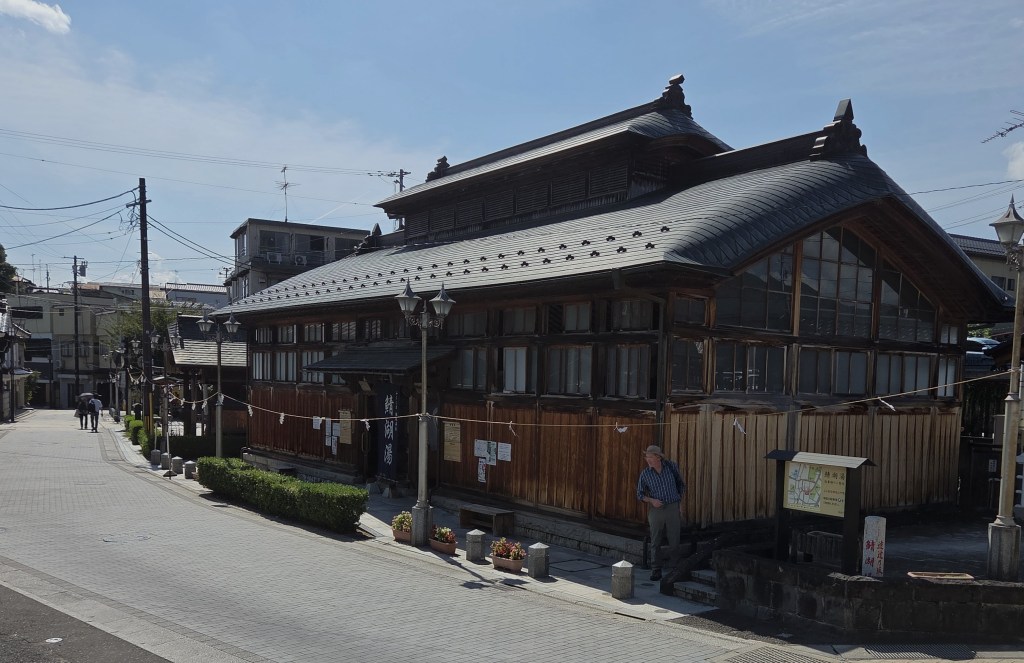
After checking out we left our baggage at the hotel and took a 25-minute train ride to Iizaka Onsen. Before entering the train station we stopped at the statues of Basho and Sora that are on the stations grounds. Sora was Basho’s companion for most of the journey.
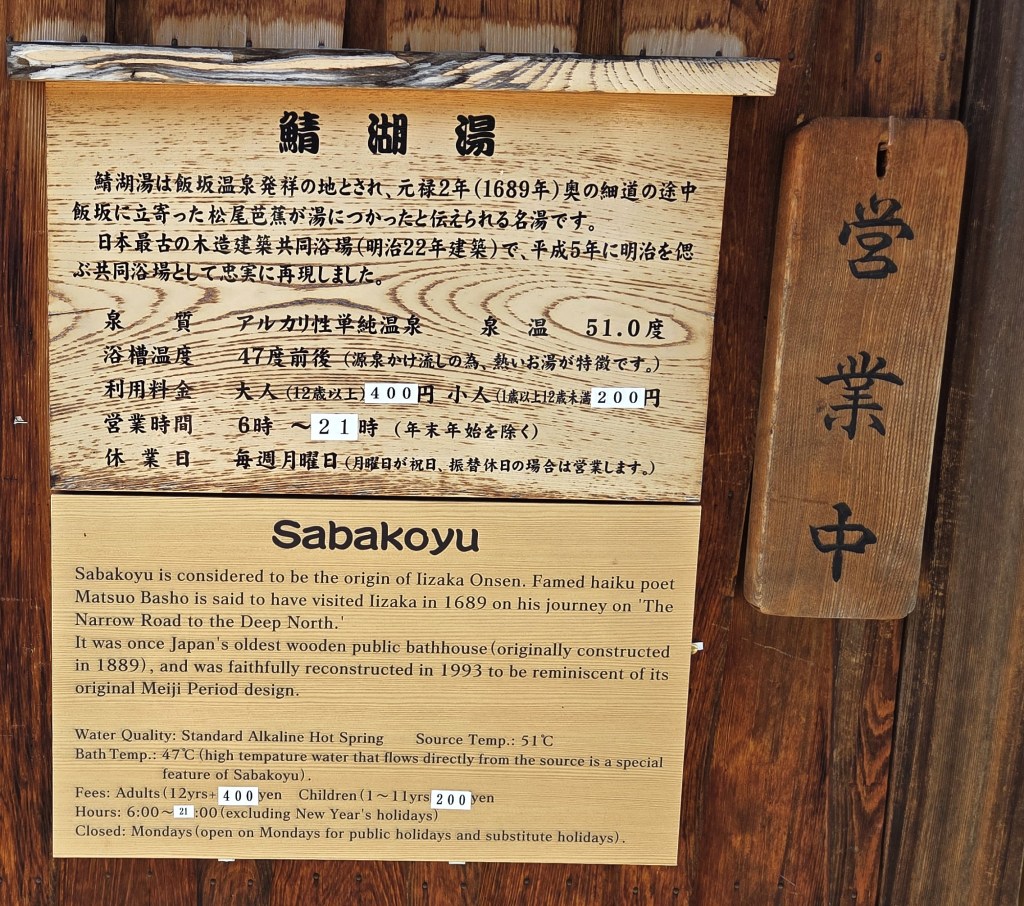
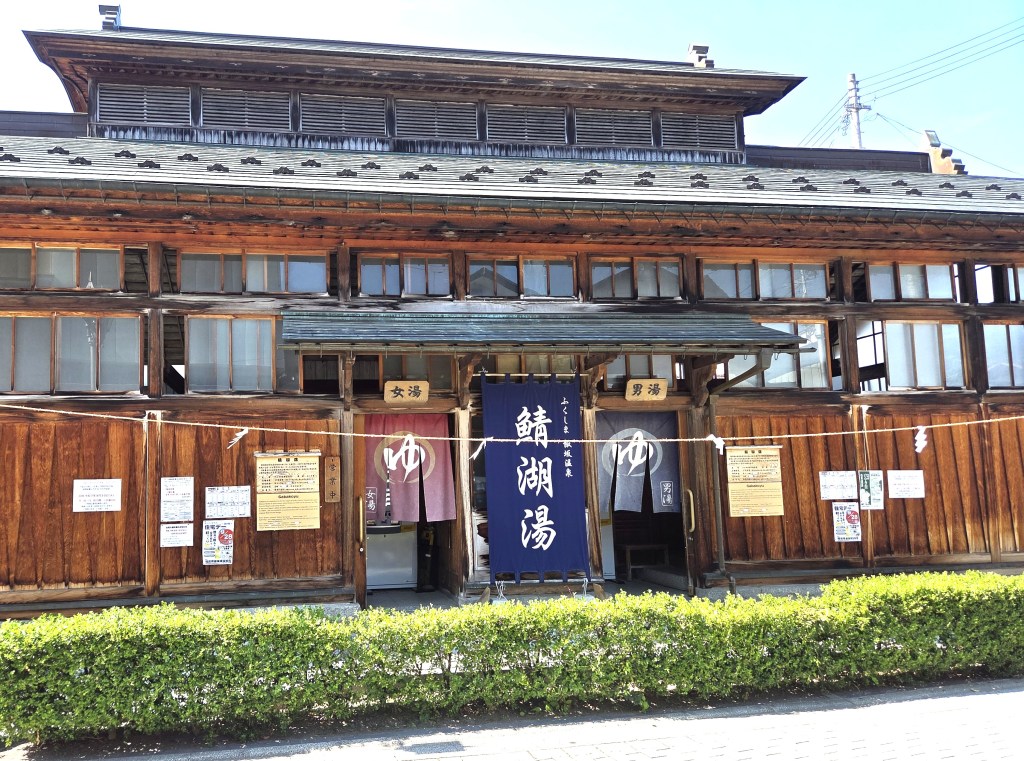
Iizaka Onsen is a small town famous for its hot springs. Sabako-yu is the oldest of the nine onsen in the town. We specifically wanted to go to that one because it is said that Basho had bathed in the very same one.
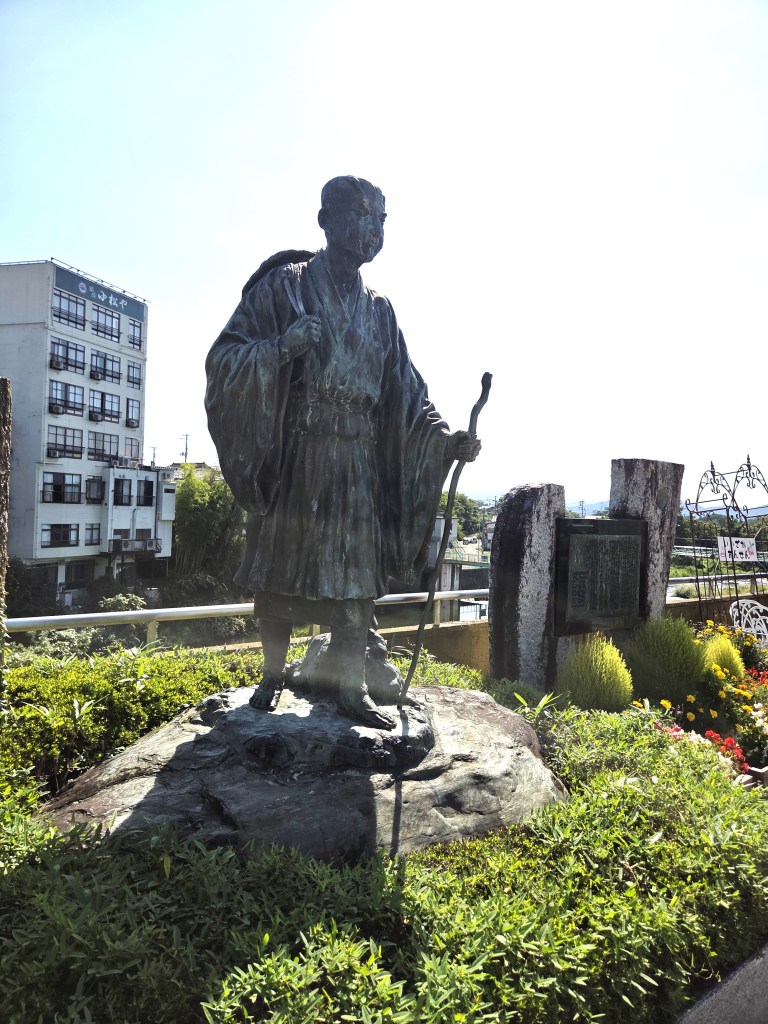
After departing the train we noticed another statue of Basho just outside the train station. I’m sure we will see a few more Basho statues on our journey. He is revered in Japan. If we mention his name or the journey he took here, Oku no Hosomichi, people immediately know what we are talking about.
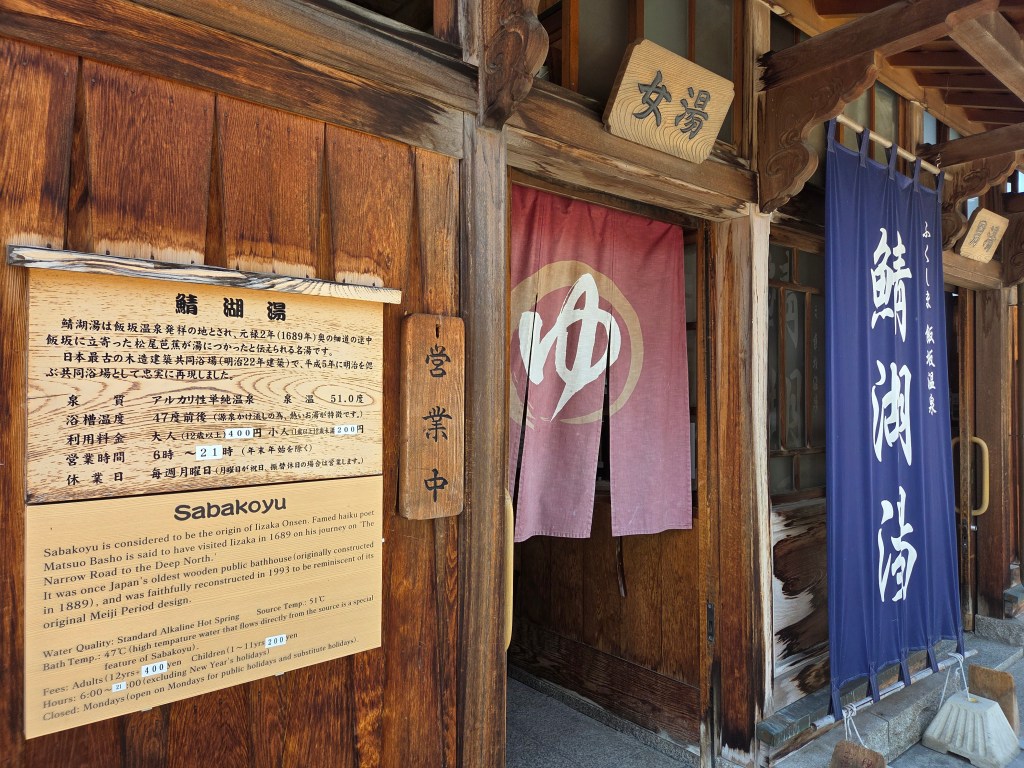
The Sabako-yu onsen is segregated into female and male sides. As we entered one of the entrances the woman receptionist started exclaiming something. We had started entering the women’s side! It was only the entrance to where you first pay, so no big deal. It was a little humorous though. Once inside you take off all your clothes in the changing area and then wash you whole body before going into the pool. The changing area and the pool are just one room. The water at the Iizaka onsens is about 107 degrees, which is quite hot. Before I entered the water, I poured some of it over my whole body with plastic bowls they have for that purpose. This sort of acclimated my body to the hot water. Even still, when I went in I only stayed for a few minutes before stepping back out to sit on alongside the pool. I did this about five times, and was able to stay in a little longer each time.
When in the water, I closed eyes, placed hands together and thought about this blessing of hot spring water, the history of its use, the connection to Basho.
Sabuko onsen
hot spring water I bathe in
Basho bathed in, too
When we first entered the onsen there were only a couple of other men there. When we left, maybe an hour later, nine guys were in attendance.
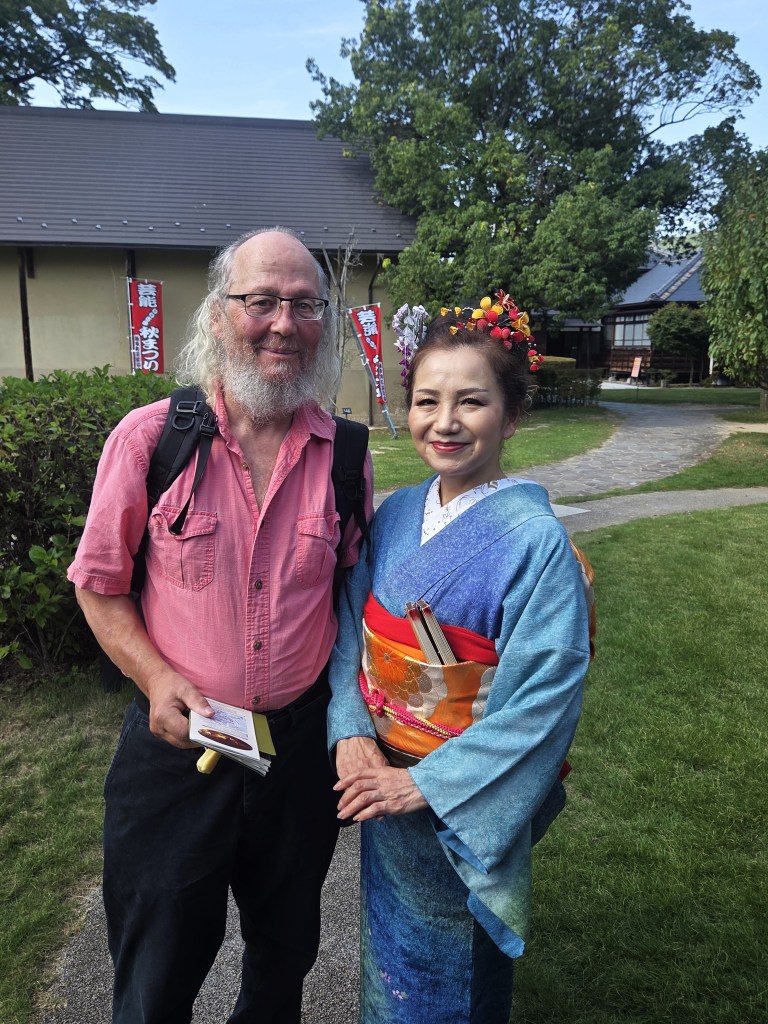
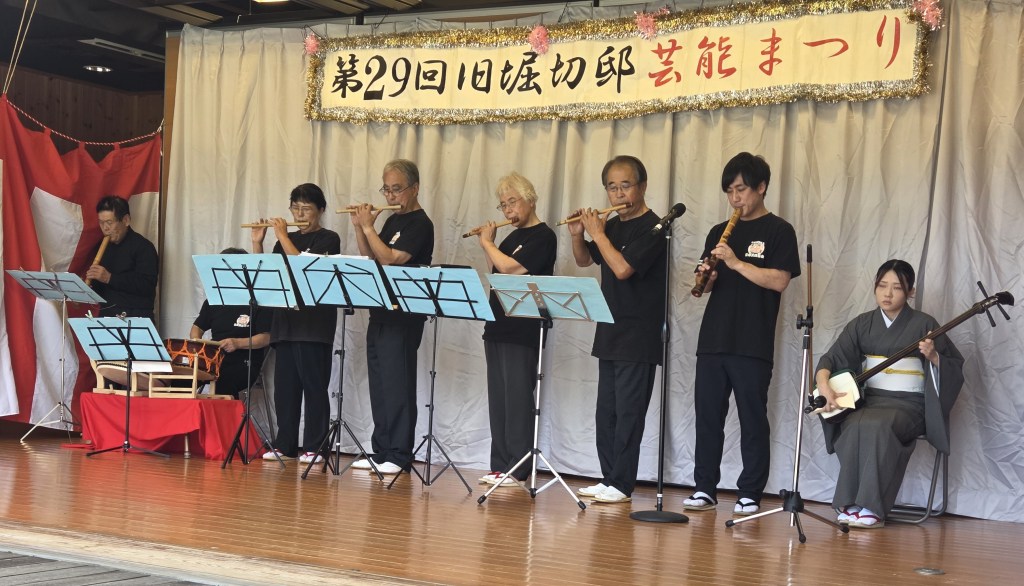
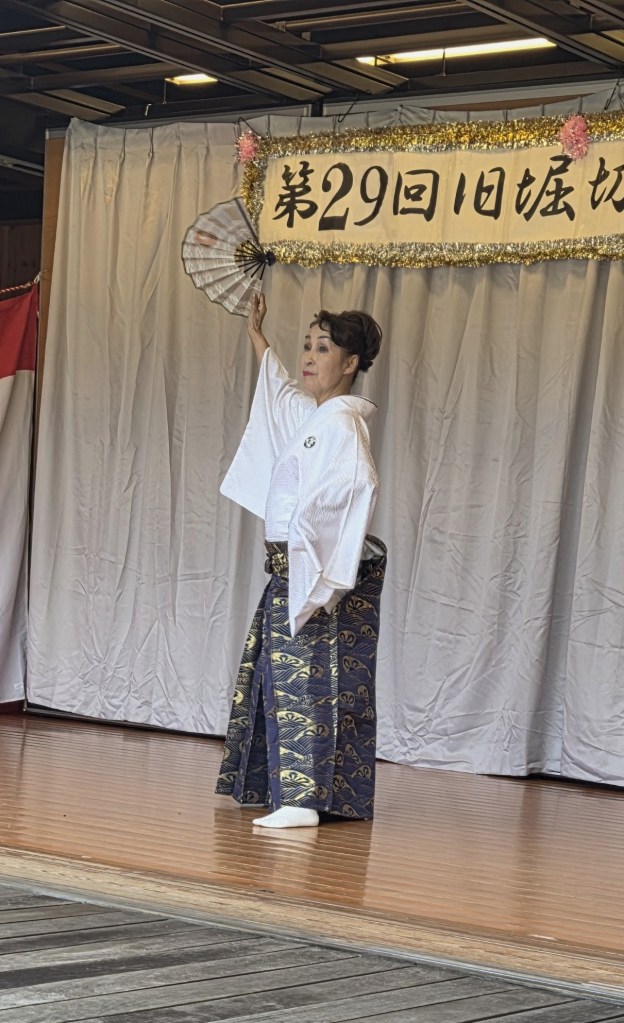
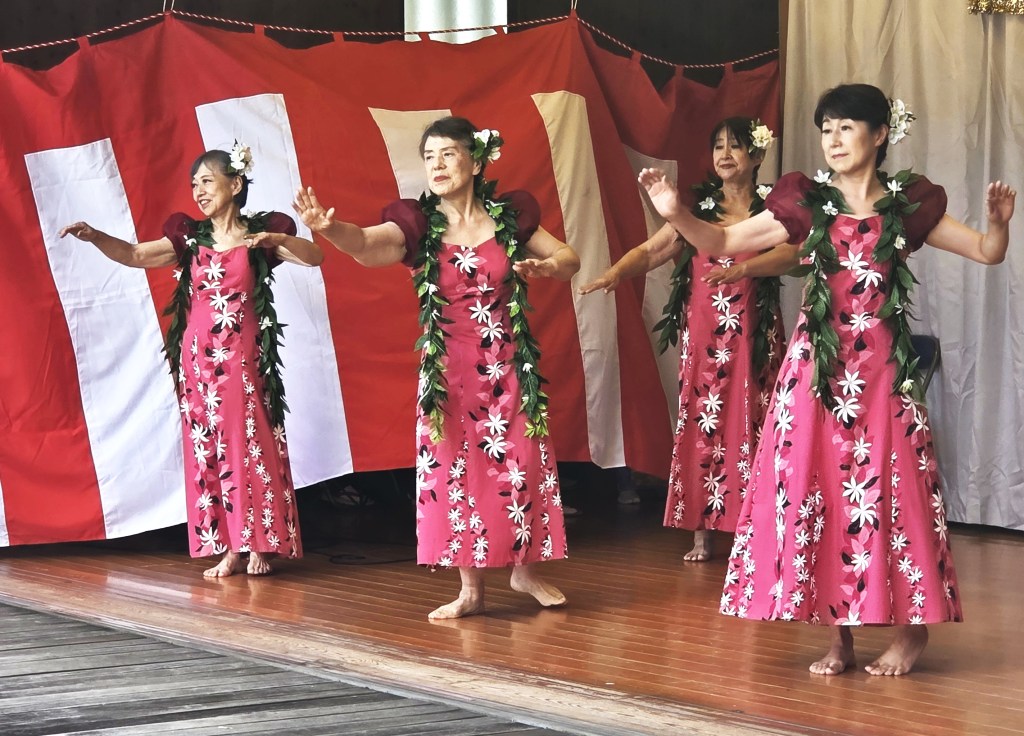
After leaving the onsen we started to walk through the small town. Just a few minutes into that walk Bart was commandeered away (with me following) by an older Japanese woman. She led him (us) into a compound that was the old estate of the Horikiri family. They were celebrating the Autumn Festival with amateur music, song and dance performances. I say commandeered because she was very authoritative in her talk (even though she only spoke Japanese) and she physically led Bart by the hand. There was no backing away politely!
It turned out to be an enjoyable couple of hours, though we left while performances were still going on. We had to take a train back to Fukushima and then two trains to get up to Matsushima that evening.
We did get to meet one of the dancers, who, unfortunately, didn’t perform until after we departed. She didn’t speak English but we were able to converse a little using Google Translate (indispensable app.)
I showed her a haiku I wrote by using the app.
Autumn Festival
sun shines bright, gentle warm wind
music floats through air
After we exchanged names (using the app) she, Hiroku Suzuki, repeated “Michael” and then put both hands up to her temples and tapped them with her fingers, as if to say she will remember my name.
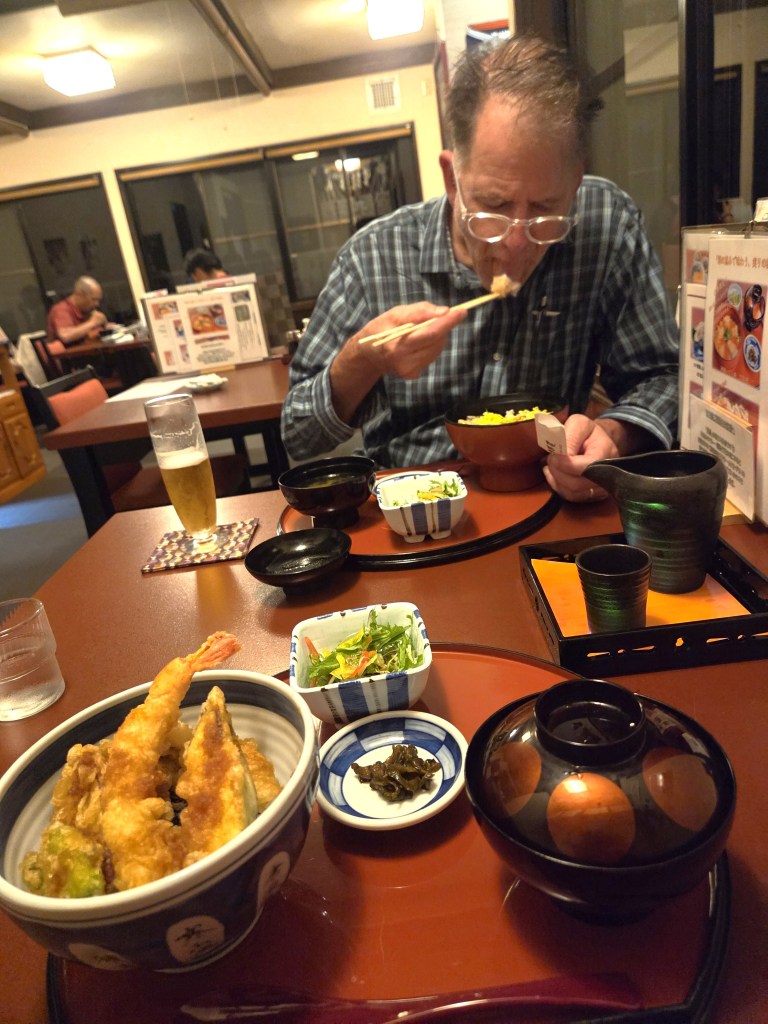
We made it to Matsushima after dark, took a taxi to the ryokan we are staying in and then went out to supper. Another wonderful meal.
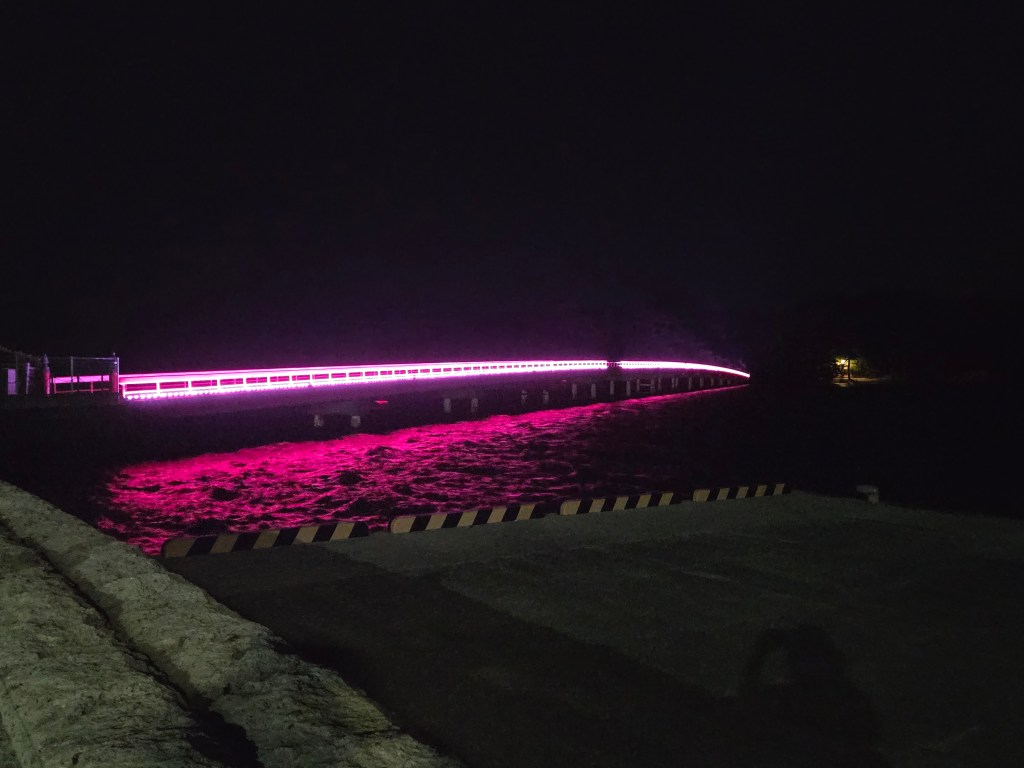
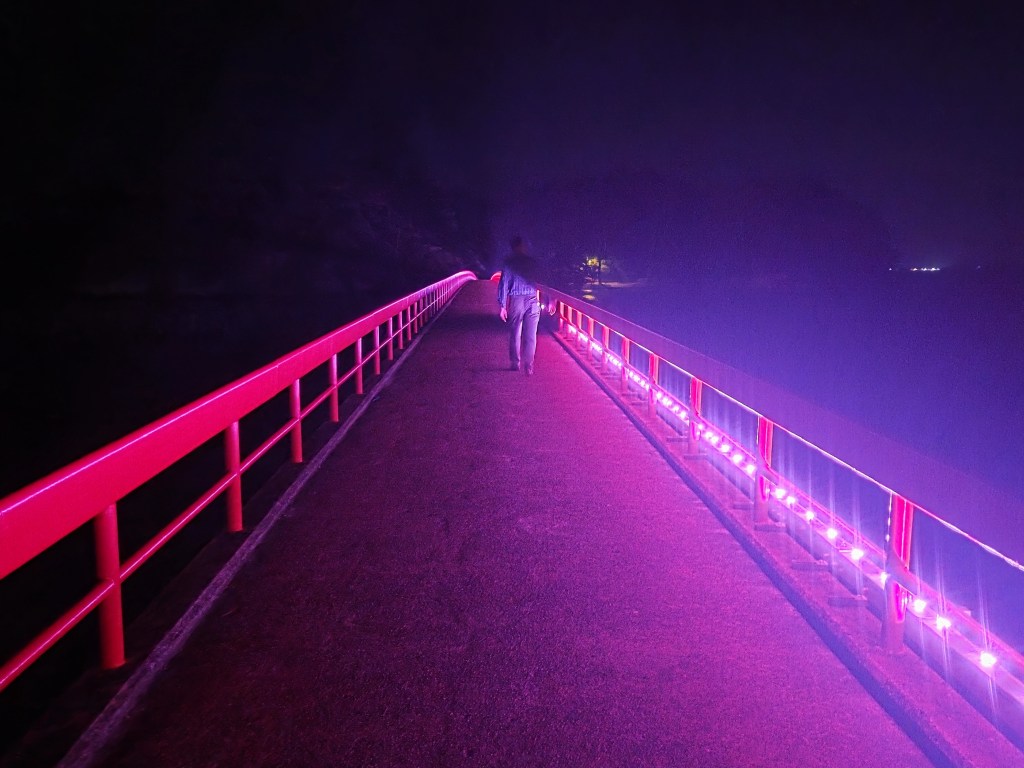
Afterwards we walked across one of the walking bridges to one of the over 200 islands in Matsushima Bay. The bridge is red and was lit up by lights. It was a delightful walk in the dark night and we can’t wait to explore the area in daylight over the next few days!
September 27
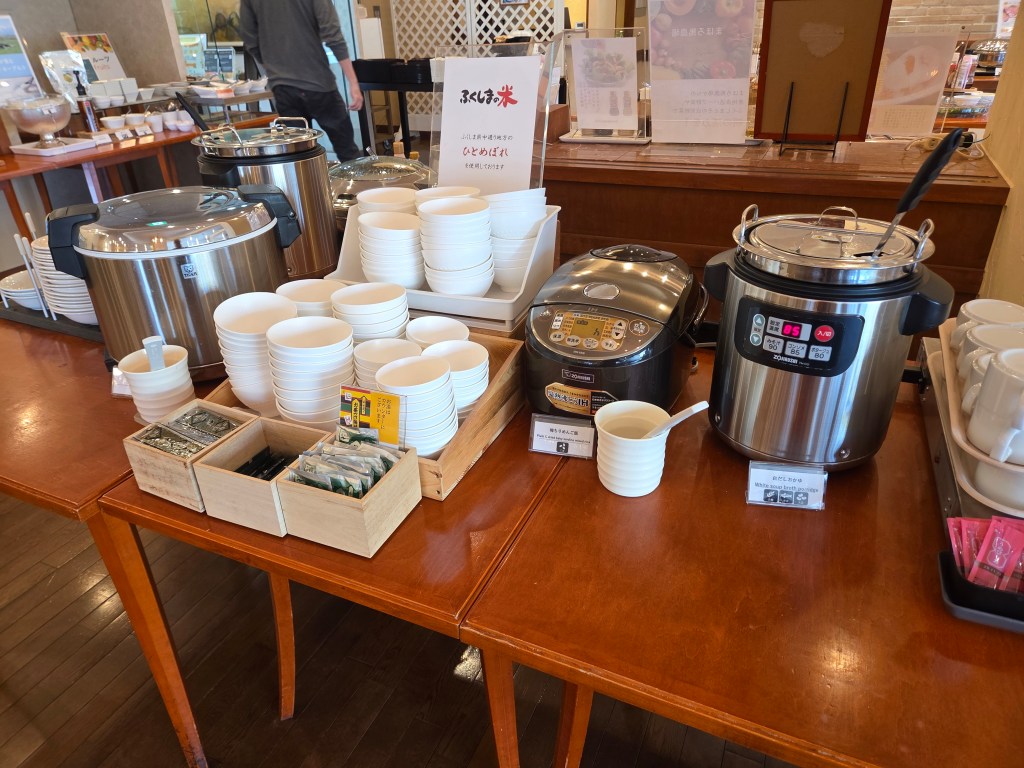
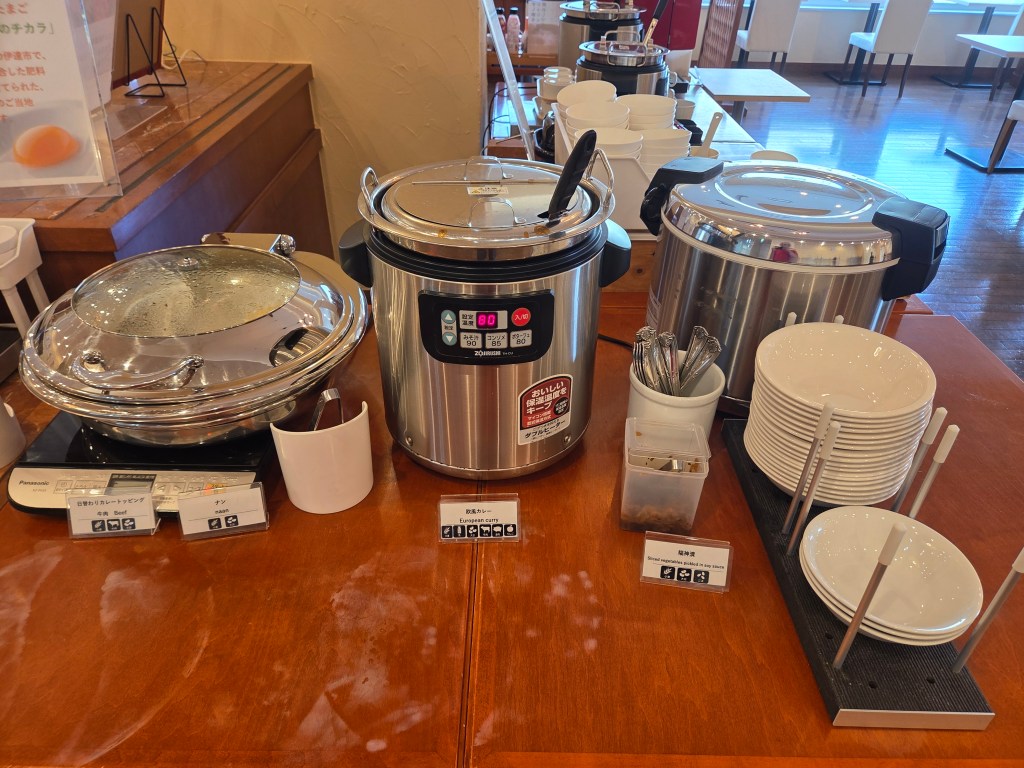
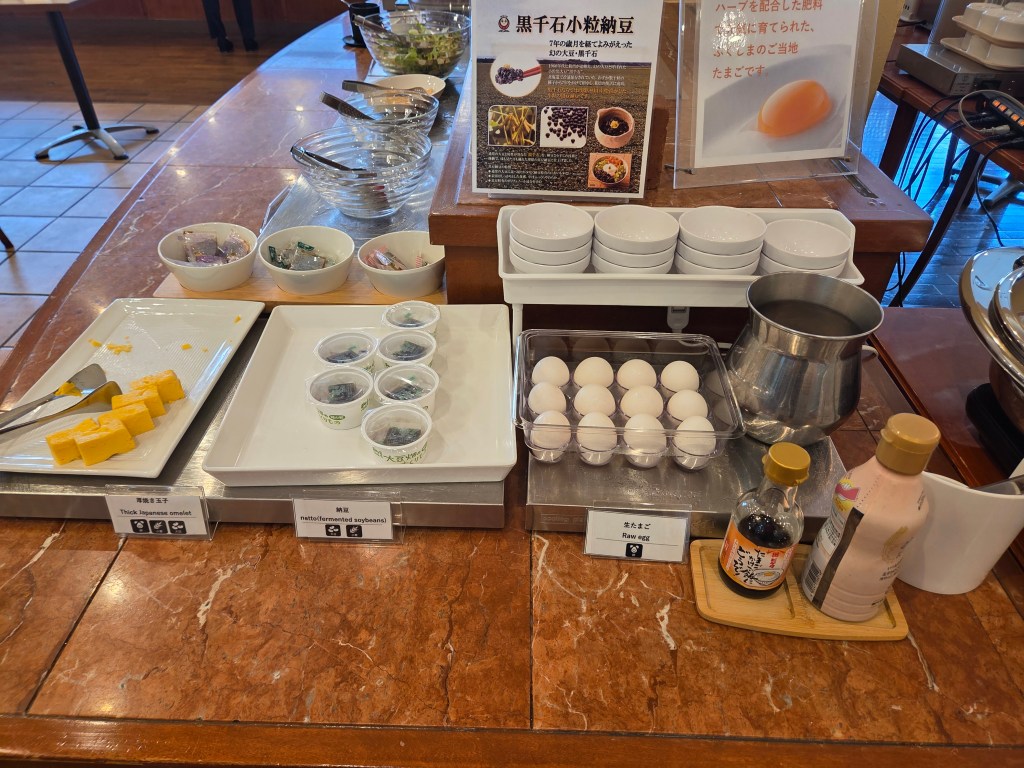
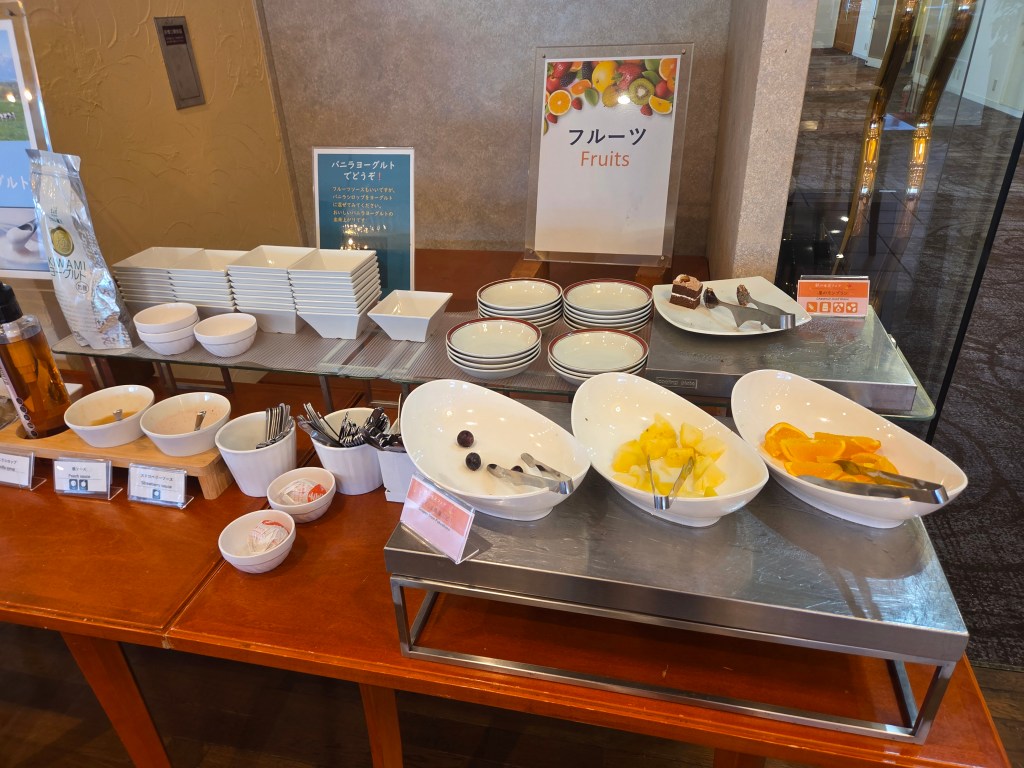
Breakfast in the hotel was superb. Cost was about $10, which was way underpriced as compared to what that would buy back home. There was an amazing variety of food available. One counter had western style breakfast food – I didn’t even look at that. There was sushi, miso, fruit, vegetables, fish items, desserts, and so much more.
It was a wide open room that was bright and comfortable. We sat at a two person table with another couple at the table right next to us. Good conversation ensued and it revolved around Basho and haiku. The wife didn’t speak much English, but her husband did somewhat. But she did recite a haiku or two of Basho’s and helped Bart with pronunciation of some Japanese words. They seemed pleased to have met us and related with us.
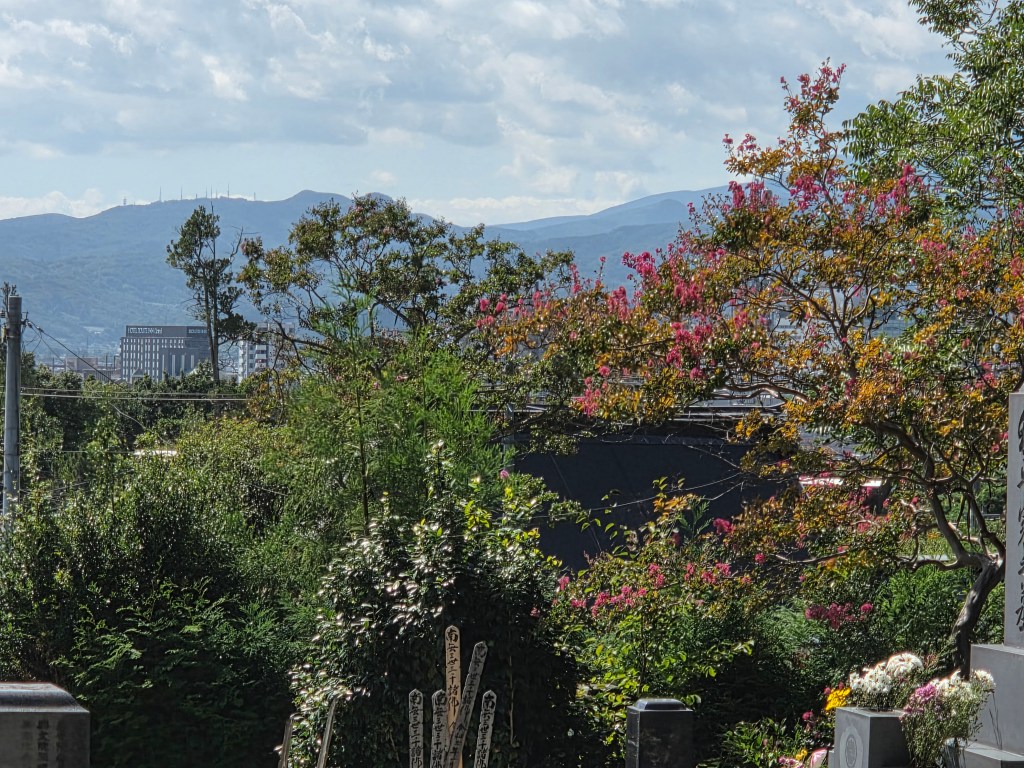
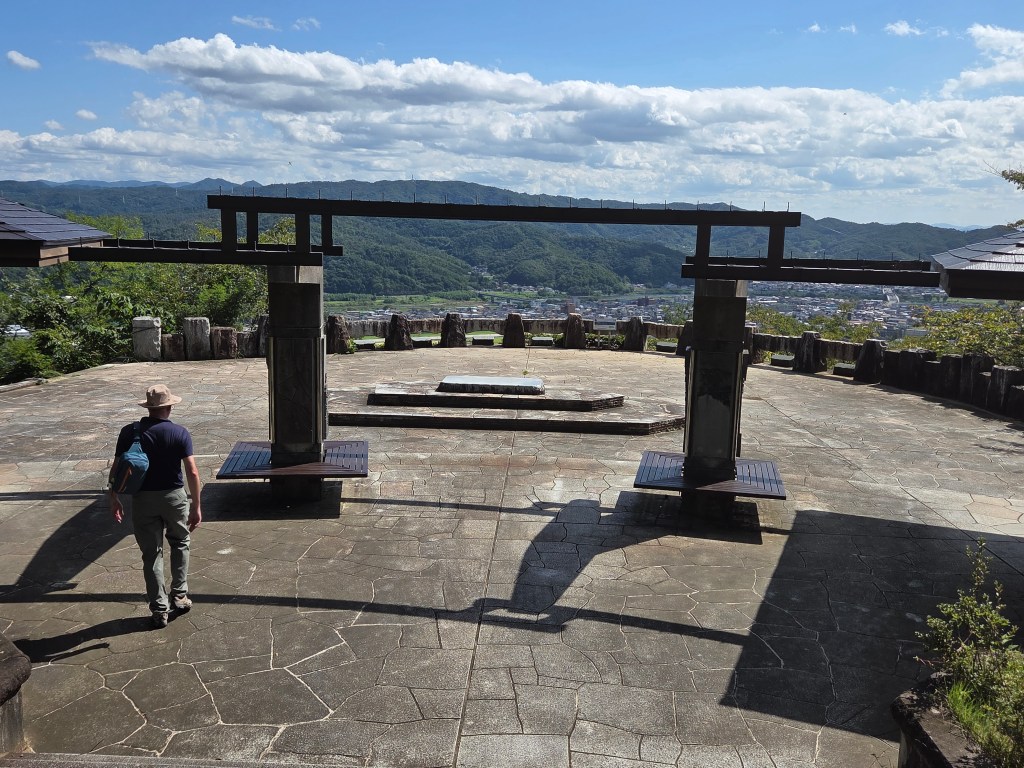
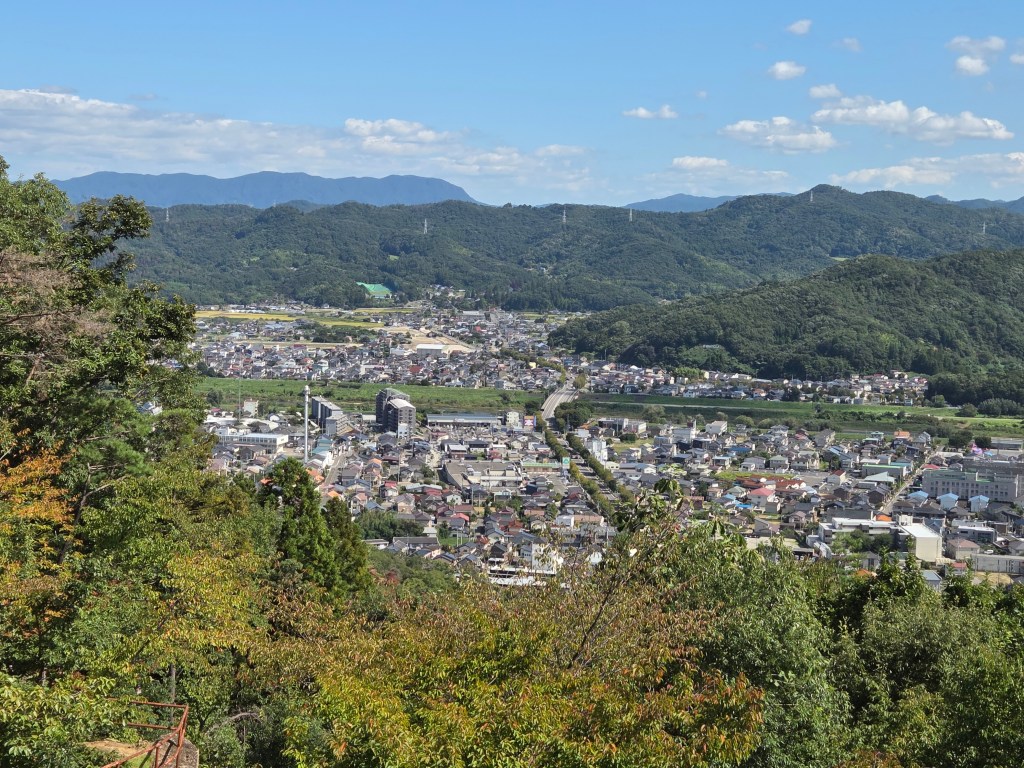
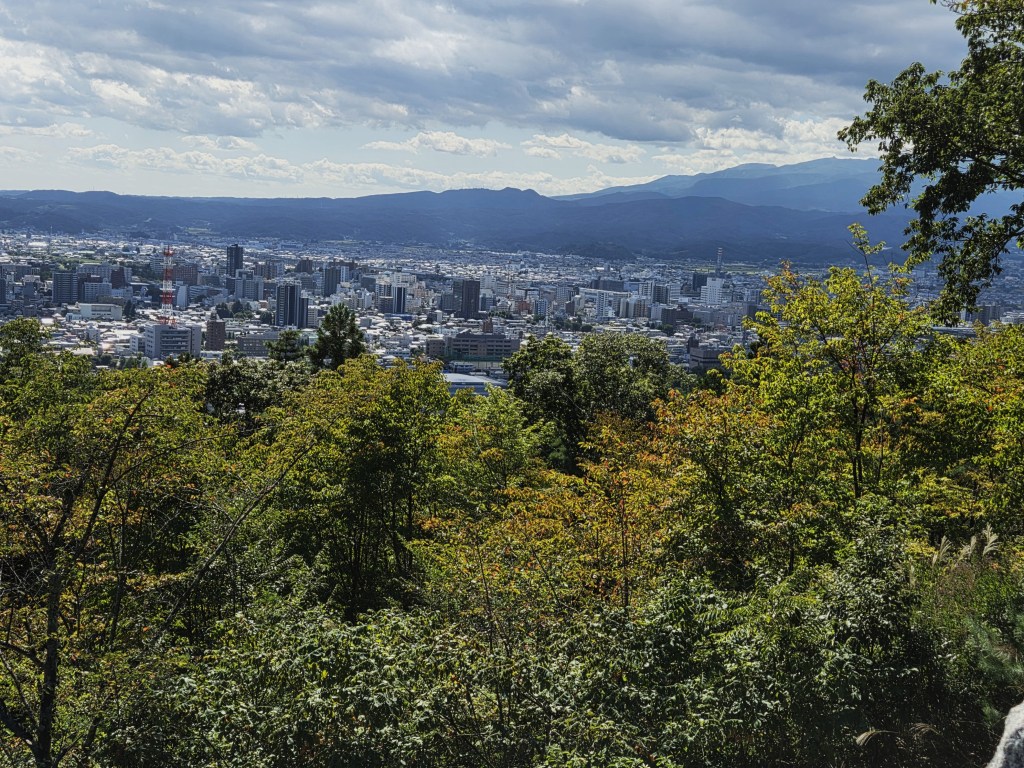
After breakfast we ventured over to Mt. Shinobu. This is a monadnock feature at the edge of the city and just a short walk from where we are staying.
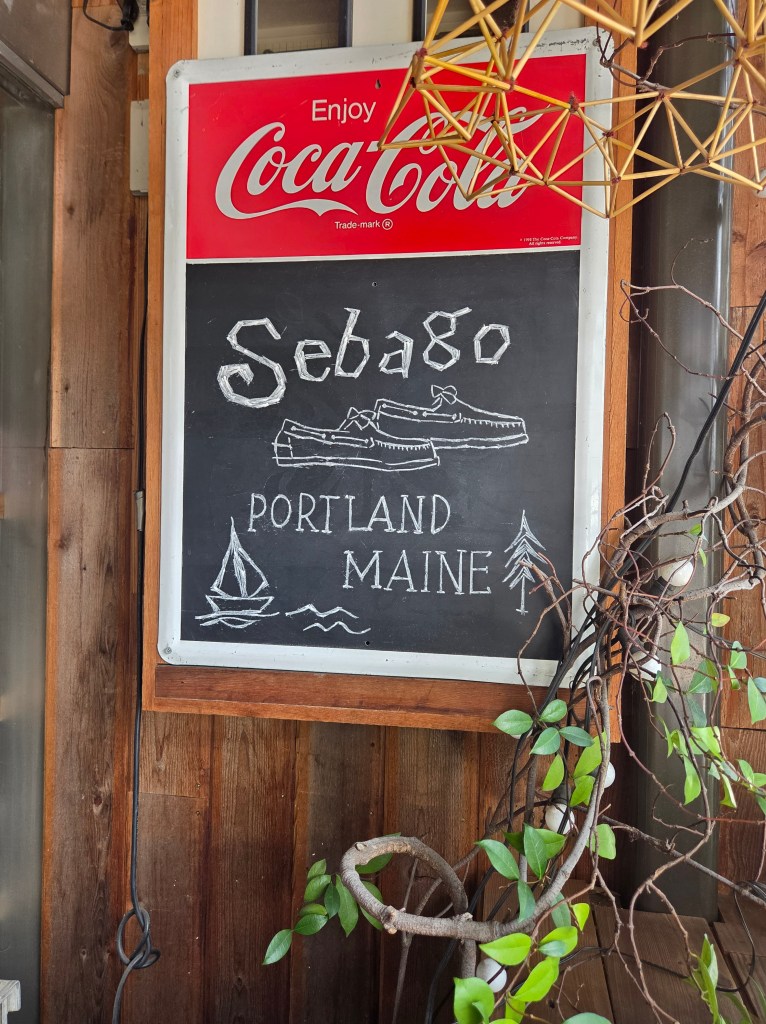
While walking through the city streets I noticed a sign in a store window mentioning Portland, Maine! As I was taking a picture of it a gentleman came by and started talking to us. He was the owner of the store. The sign was advertising Sebago shoes, that are made in Portland. The owner, Sho, told us he had been in Maine back in 1977 and that he also visited Nantuckett. Again, as has been the case with others, he seemed very pleased to have conversed with us.
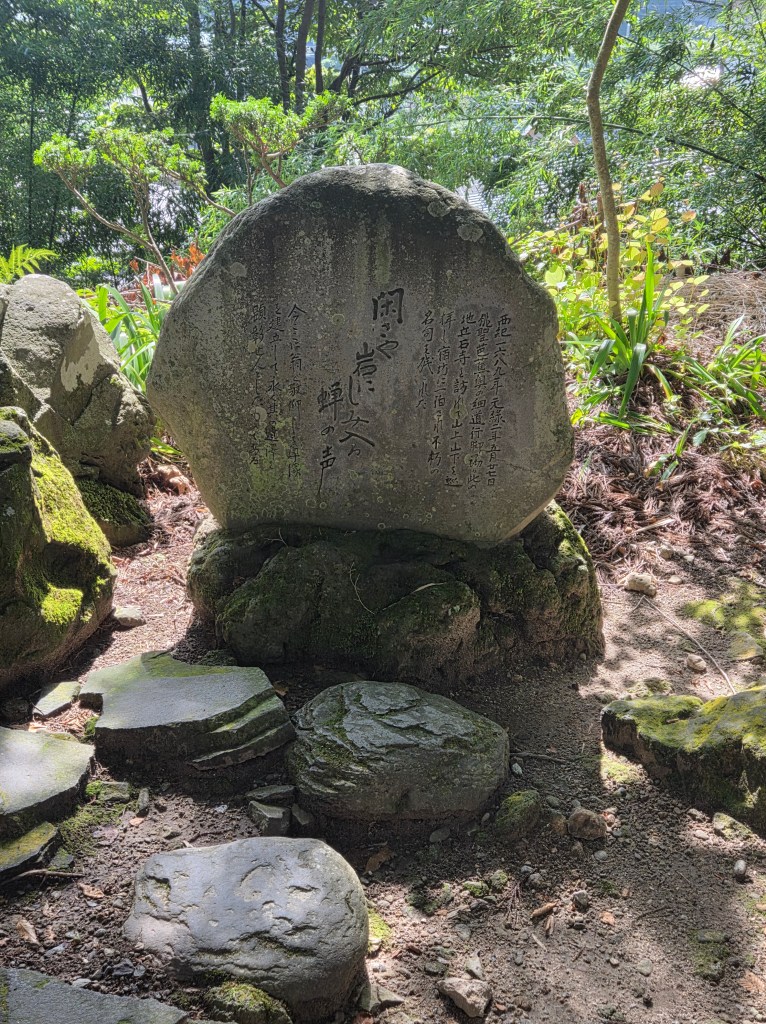
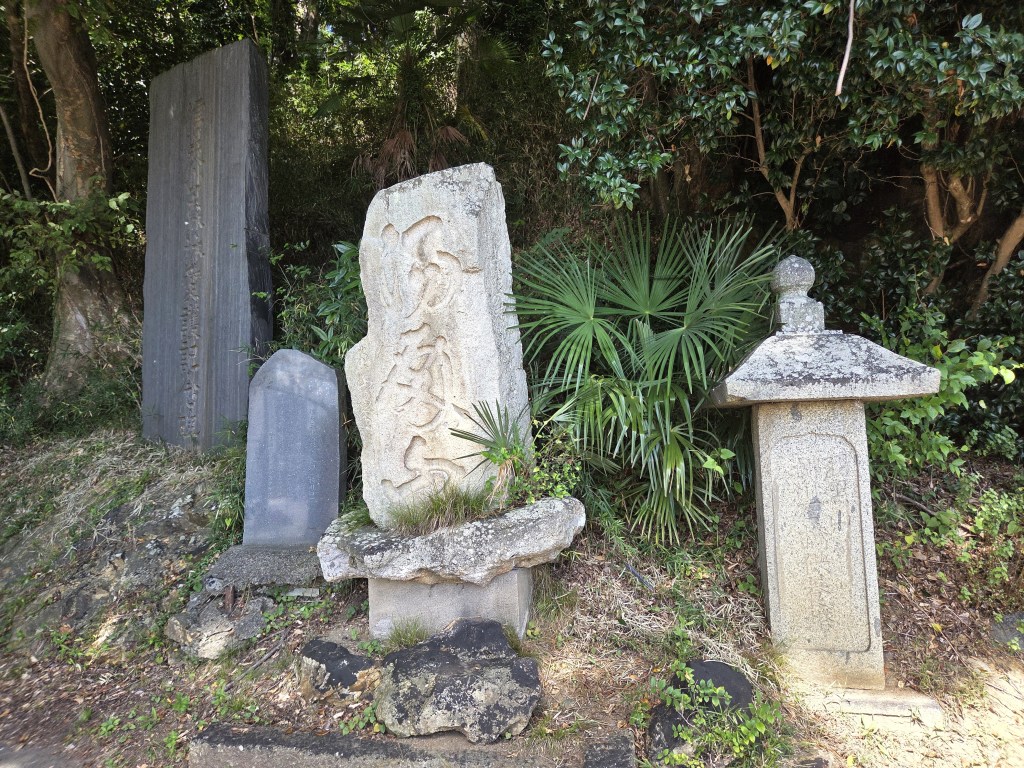
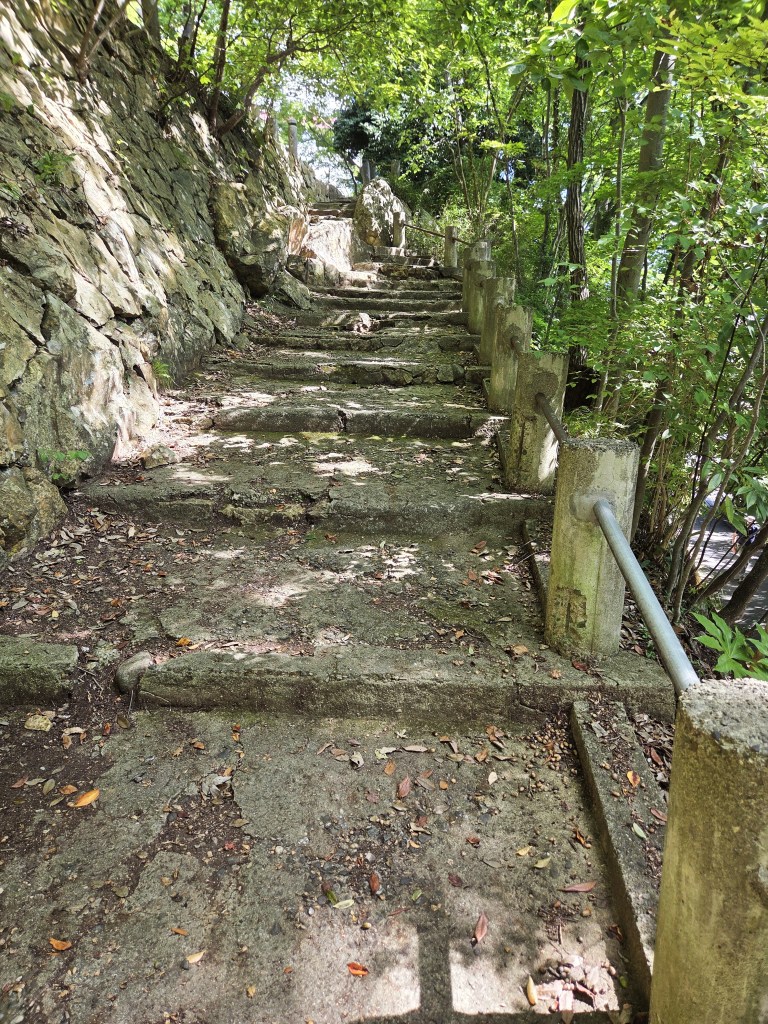
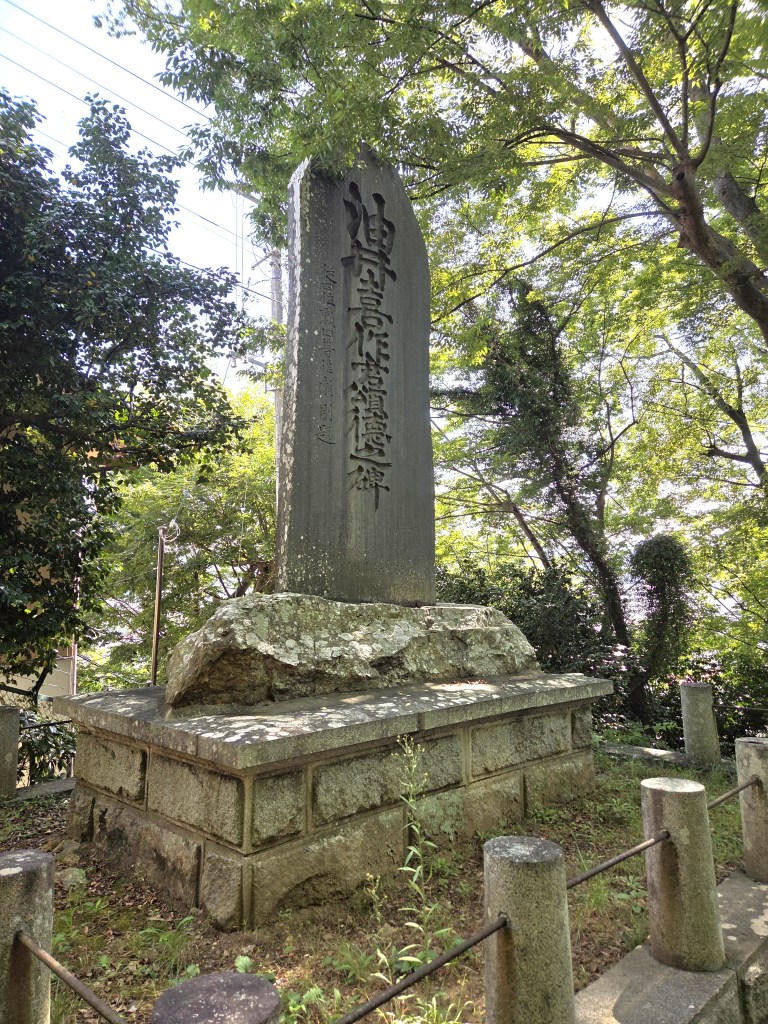
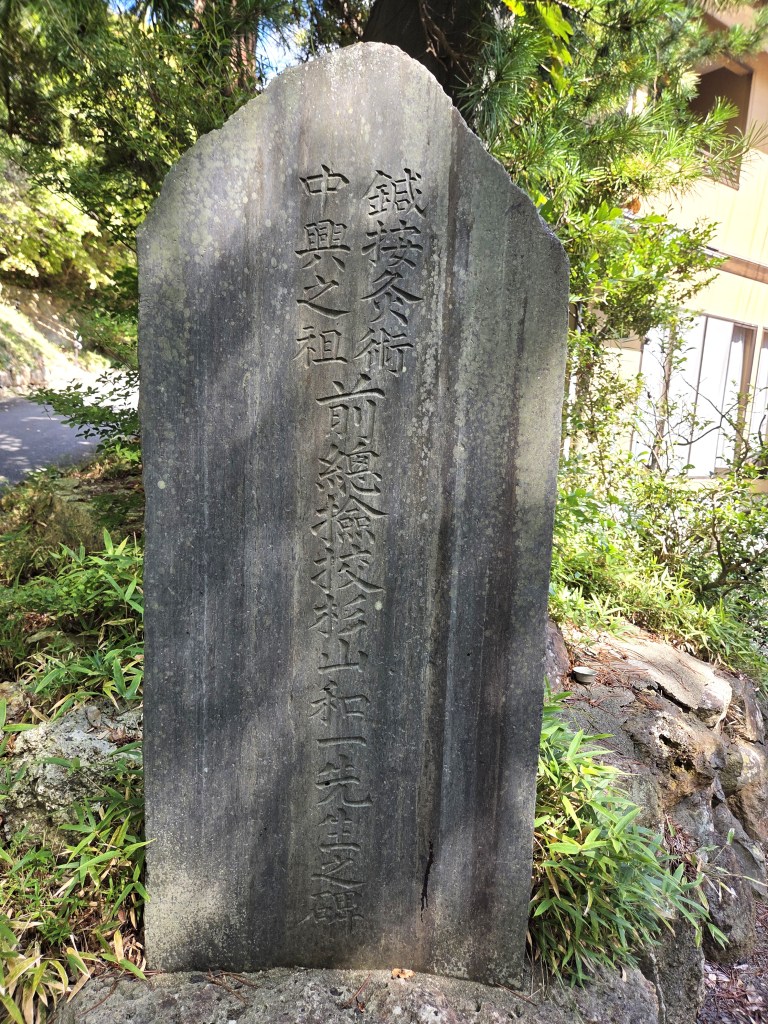
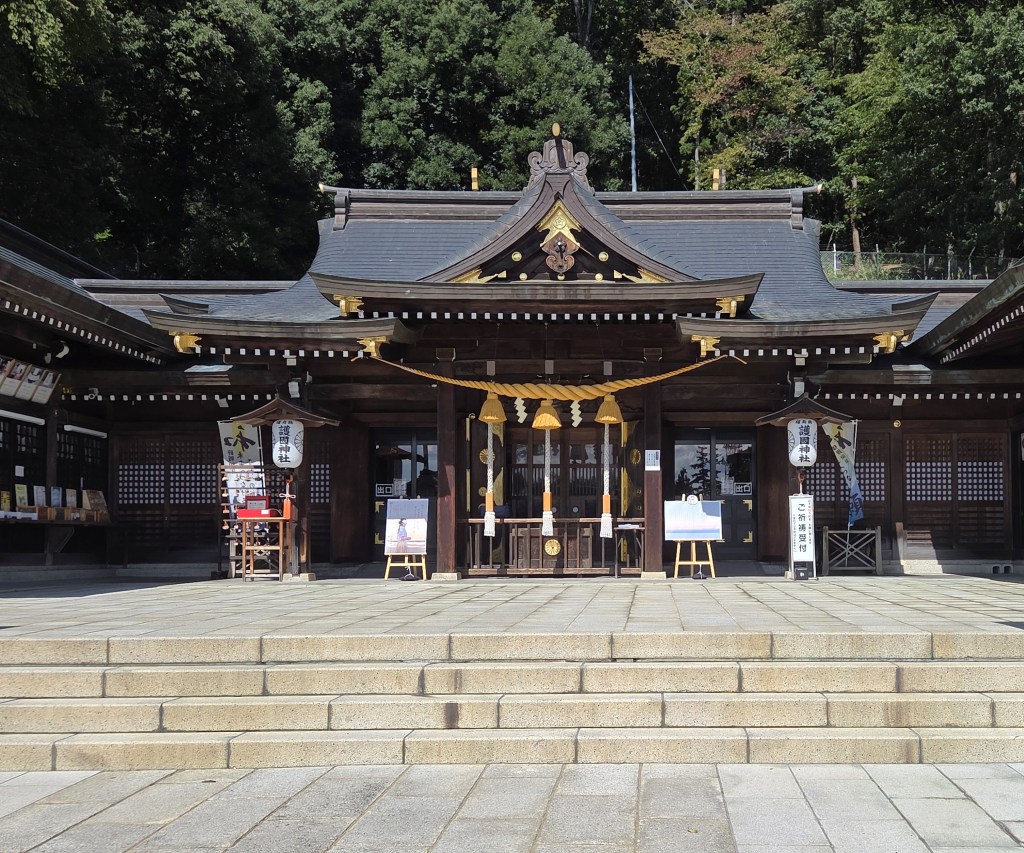
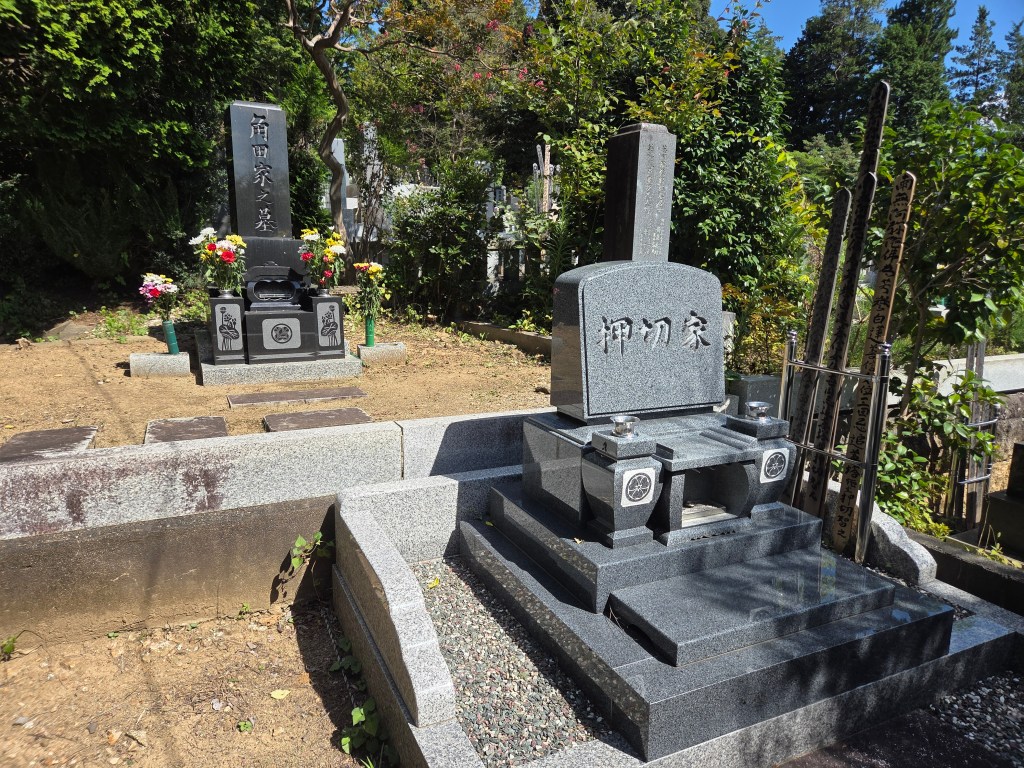
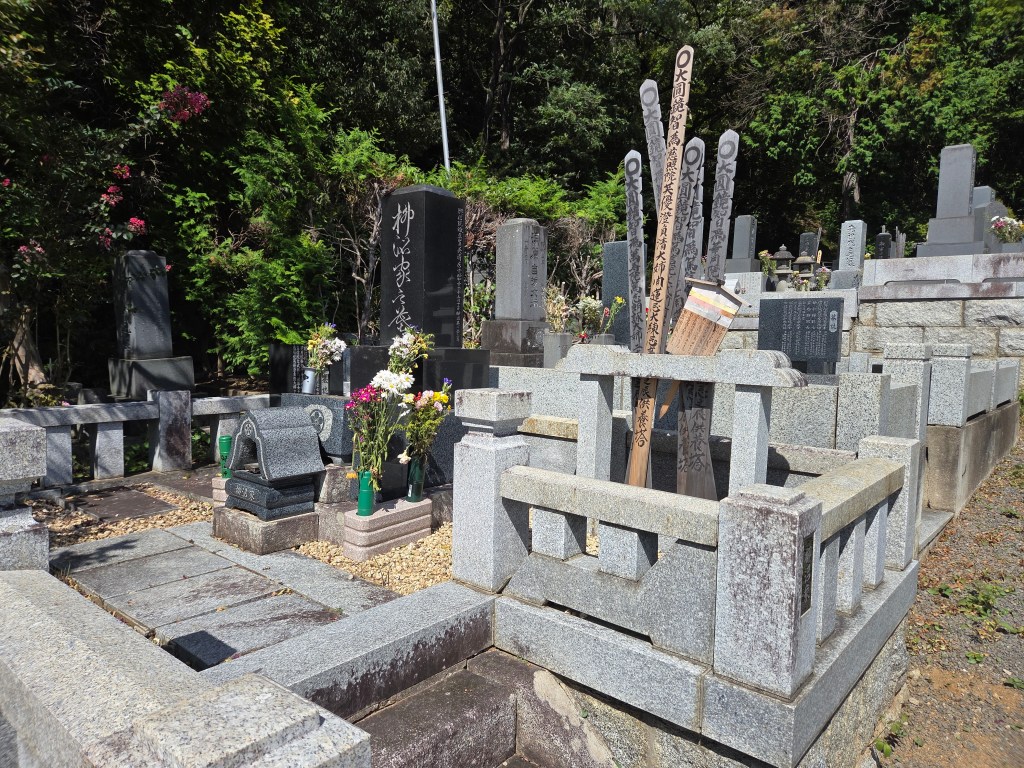
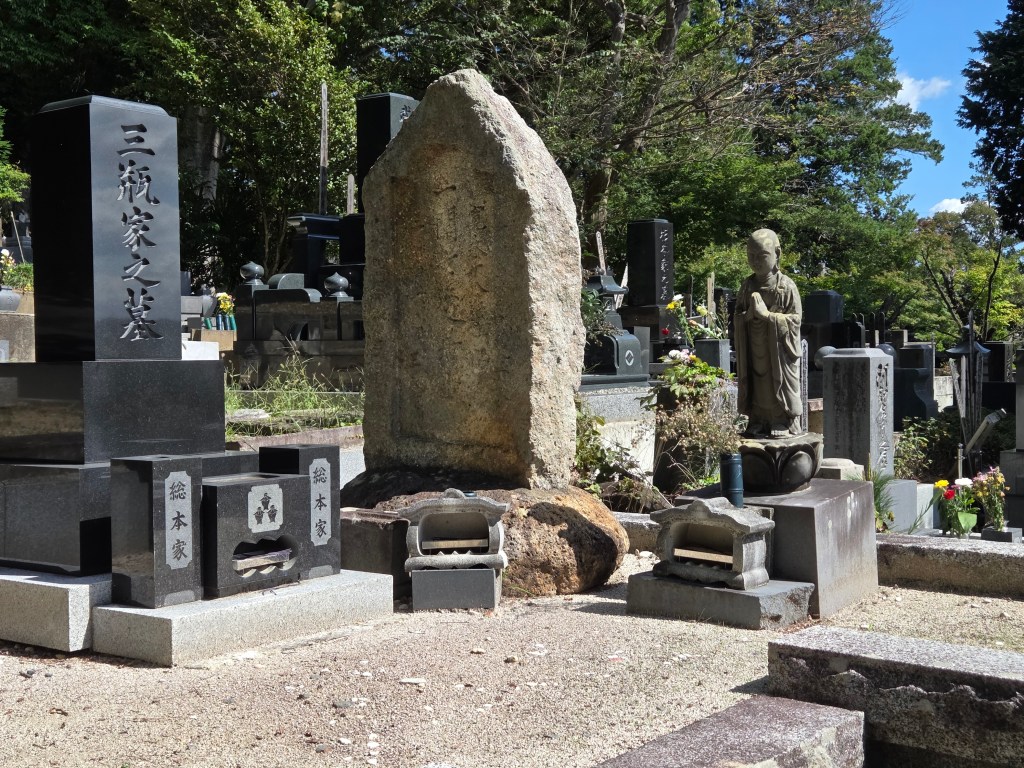
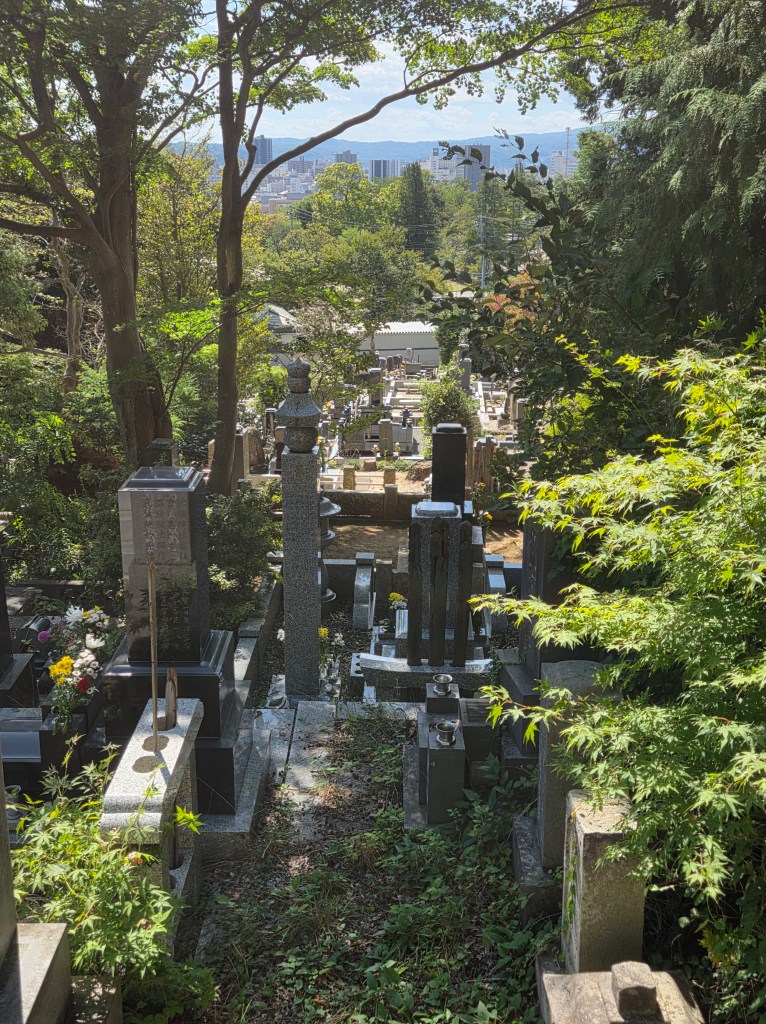
There are a number of Shinto Temples and Shrines located on Mt. Shinobu along with some overlooks. As we walked up, alternating between old stairways and paved road, we passed by, and stopped at, some of the Shinto structures. I thought that these were just historic buildings, which they are, but also, they are still being used. Along the way there were quite a few old stone monuments with words inscribed on them. Prayer stones, honorific stones, some ages old.
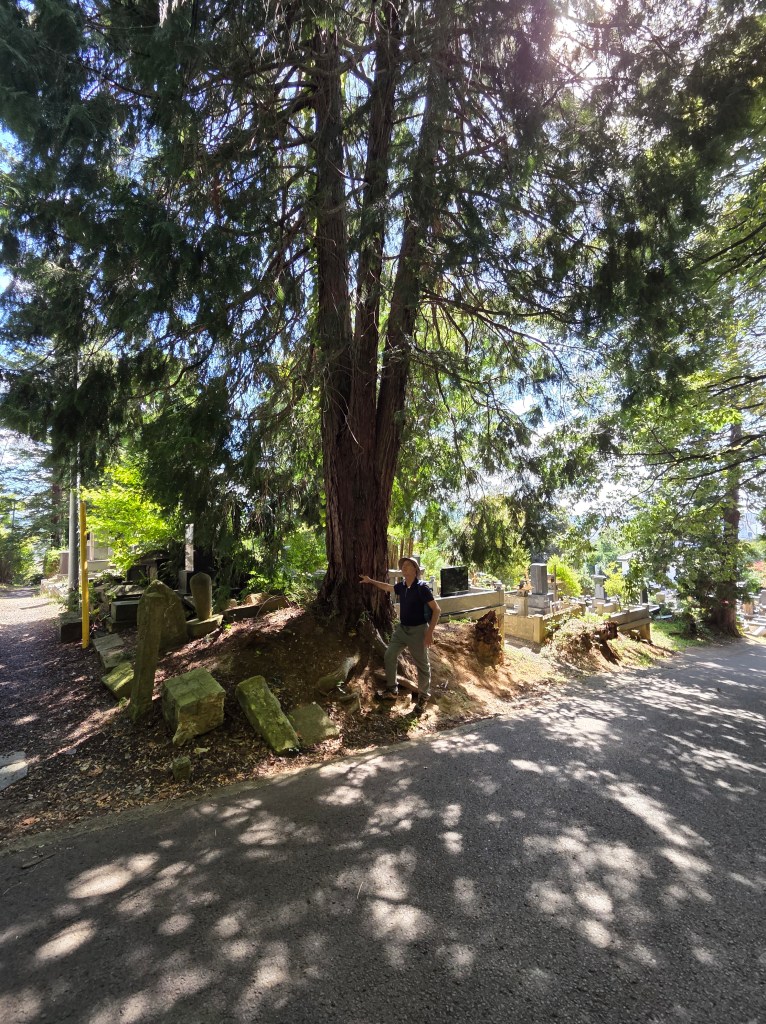
There was also a cemetery that covered an expansive area. The burial sites were quite elaborate, not just a single tombstone. The cemetery was also set in natural surroundings, with plenty of tree cover. One large tree we took note of was a Hinoki Cypress.
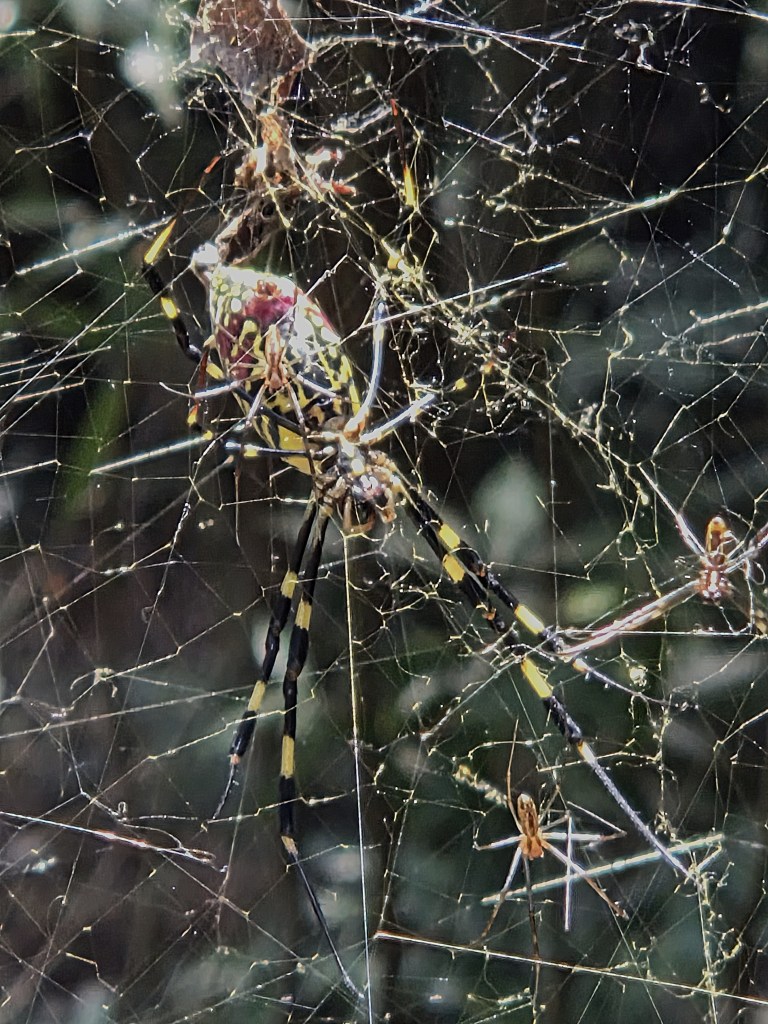
Another impressive natural world sighting was of Joro spiders. This is one of the orb weaver spiders and it constructs massive webs, of which we saw many. They are native here, but I learned that they have appeared in the US in the last couple of decades, mostly in the south but it is extending its range northward. It is a large spider that looks threatening, but is relatively harmless to humans.
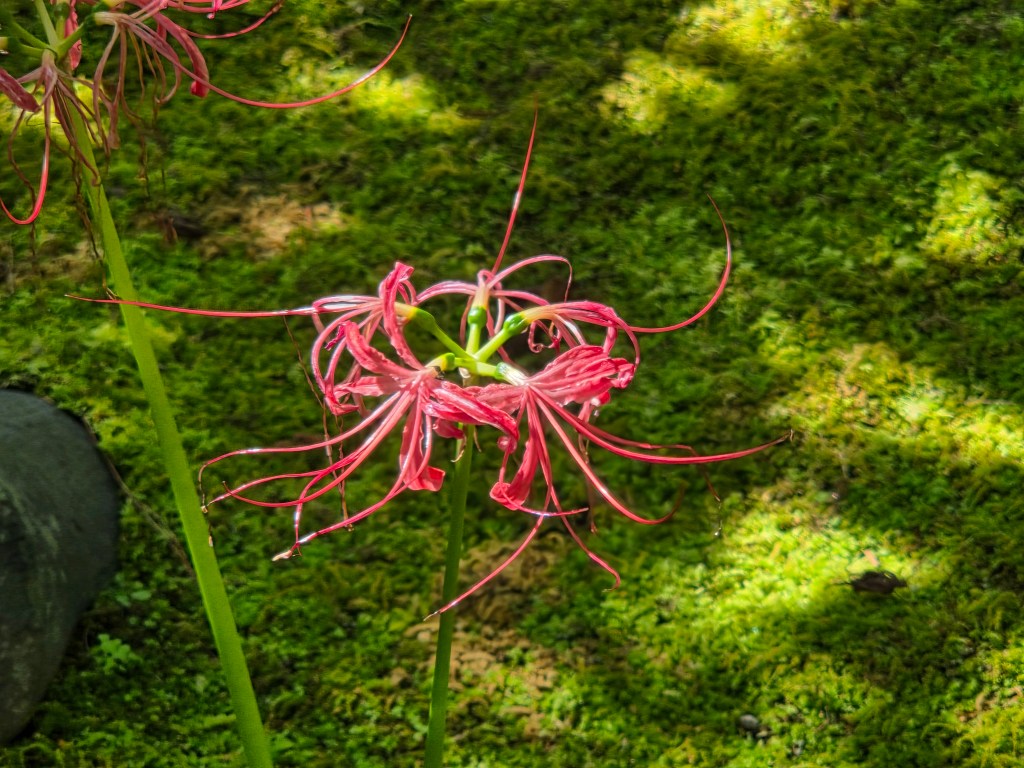
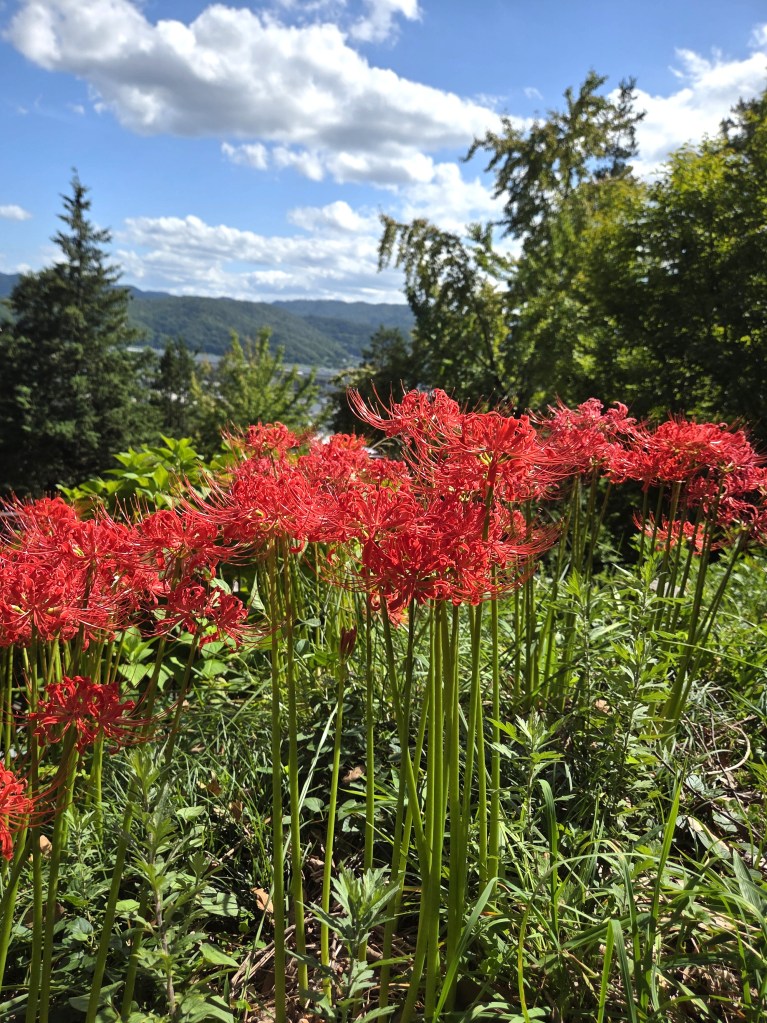
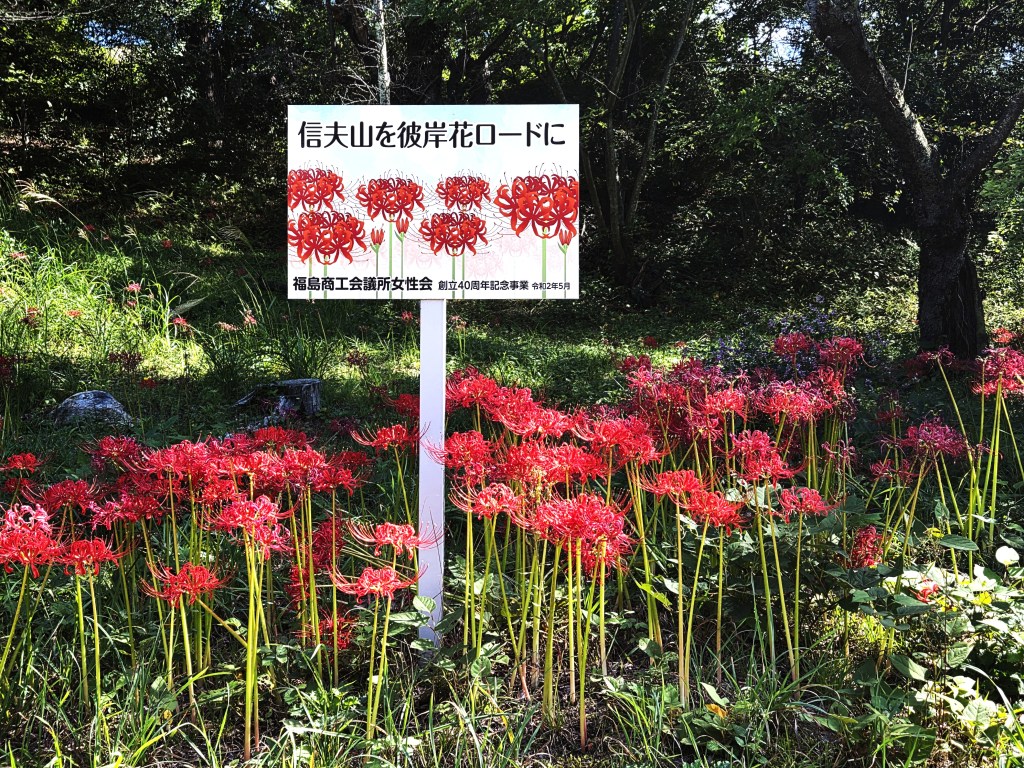
Another “spider” that was also very impressive was the red spider lily. This is a flower in the amaryllis family that blooms in late summer or early fall. Its leaves don’t emerge till later in fall. There were quite a number of these very attractive flowers in bloom throughout our walk on Mt. Shinobu.
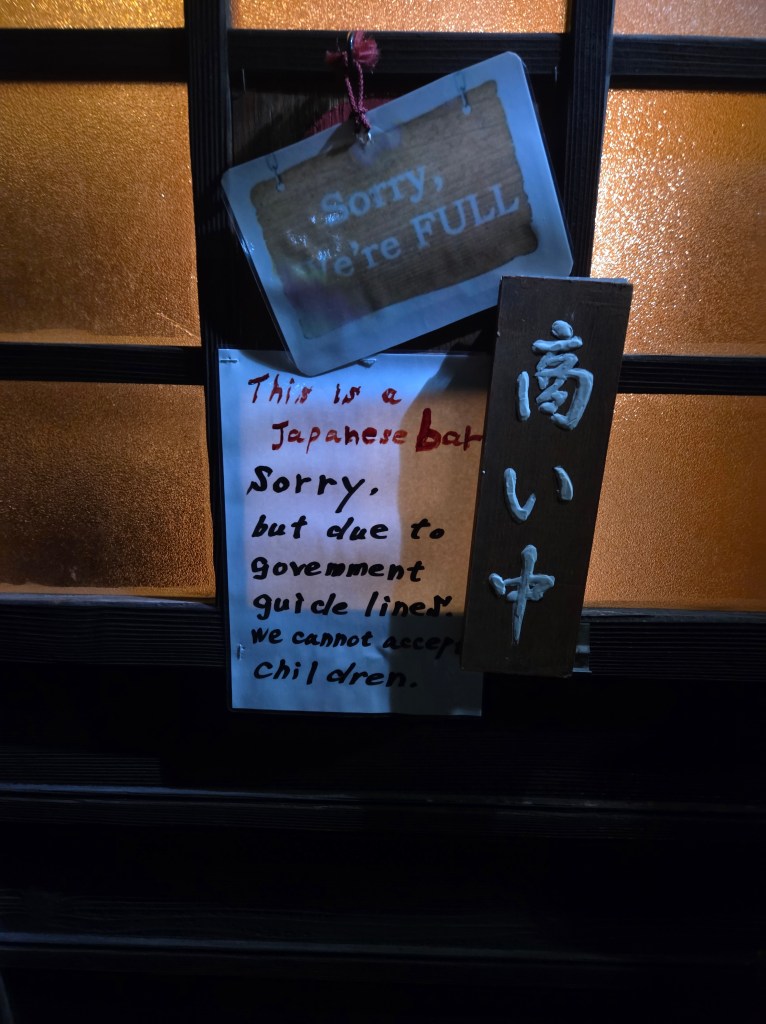
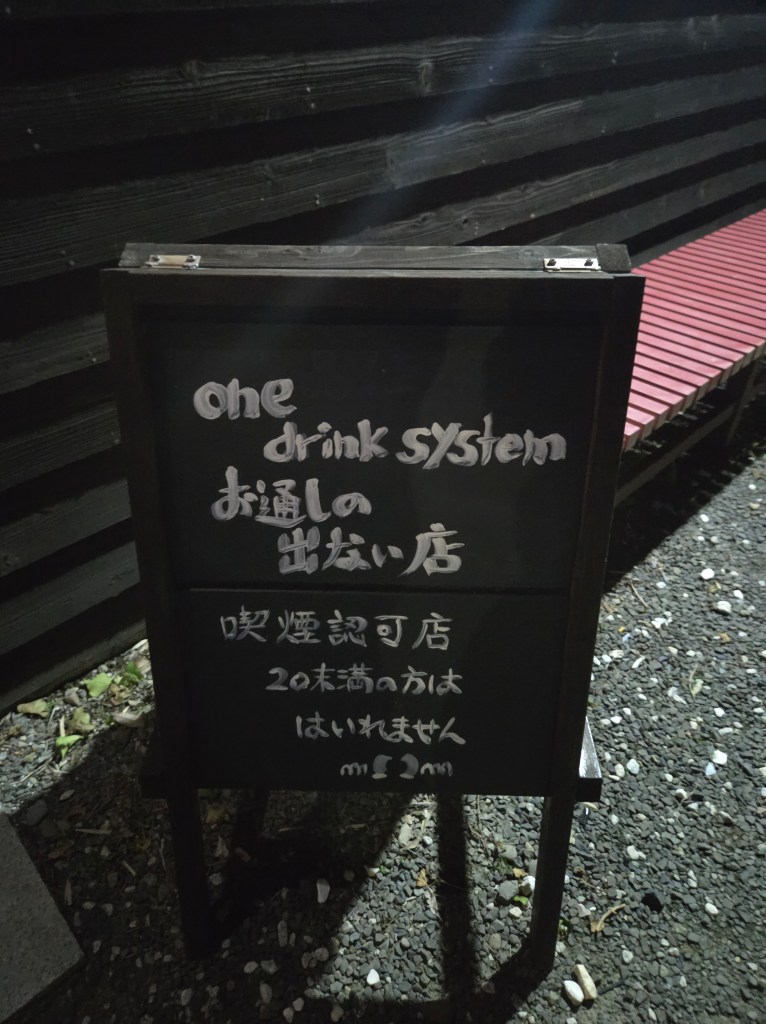
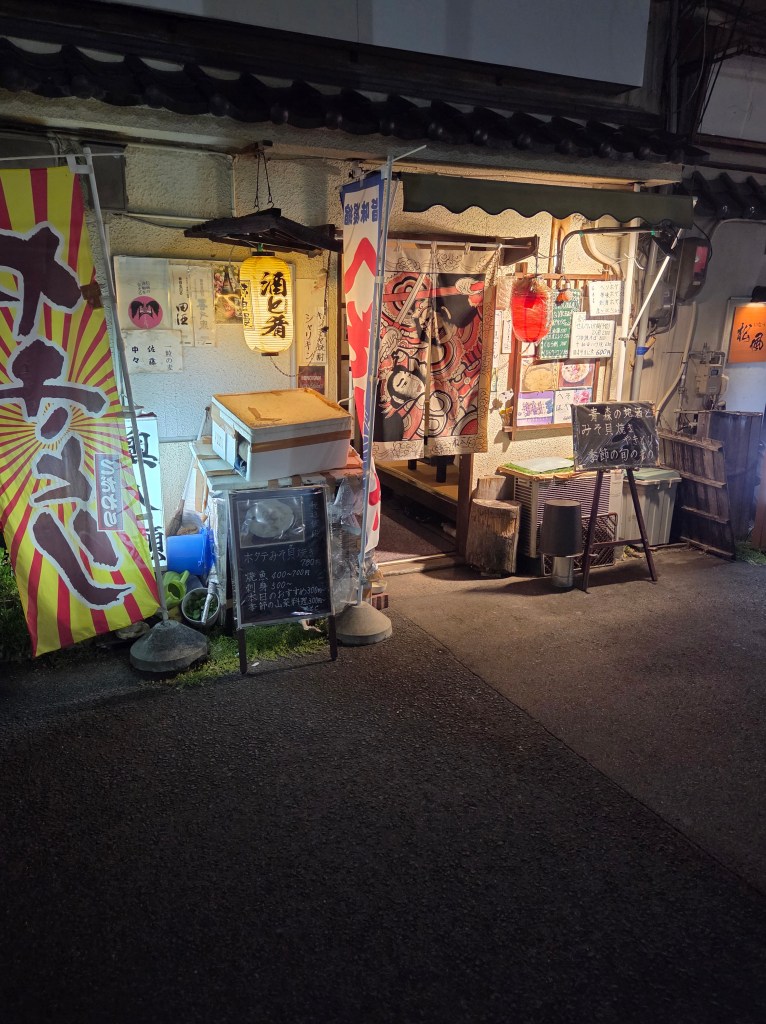
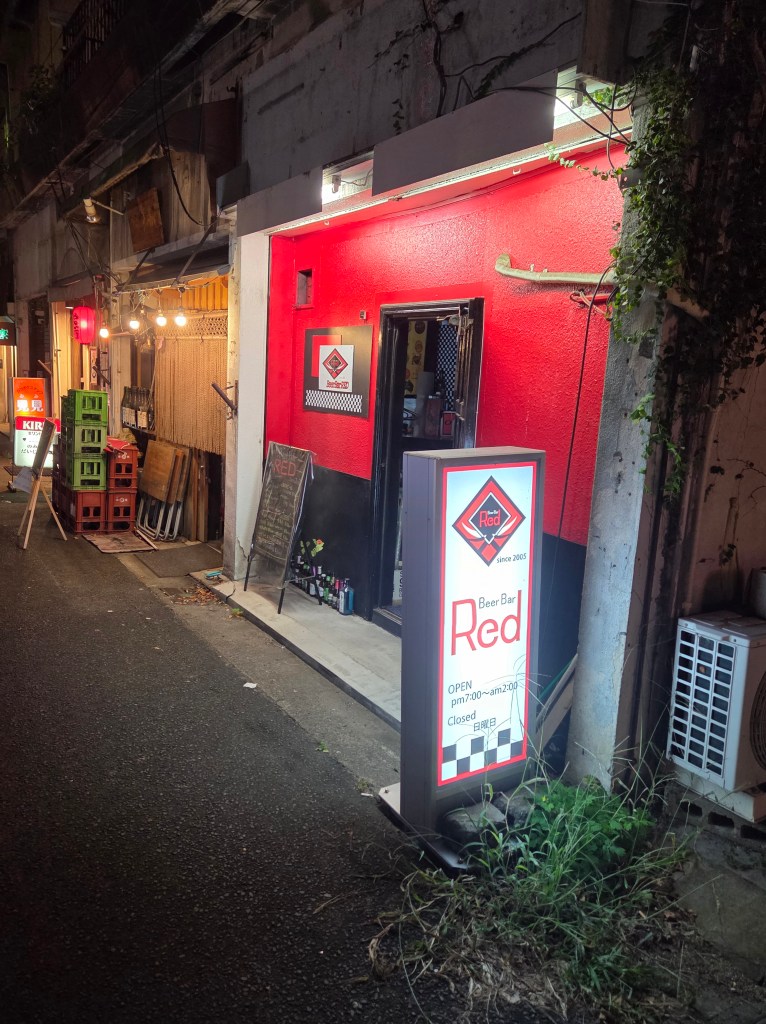
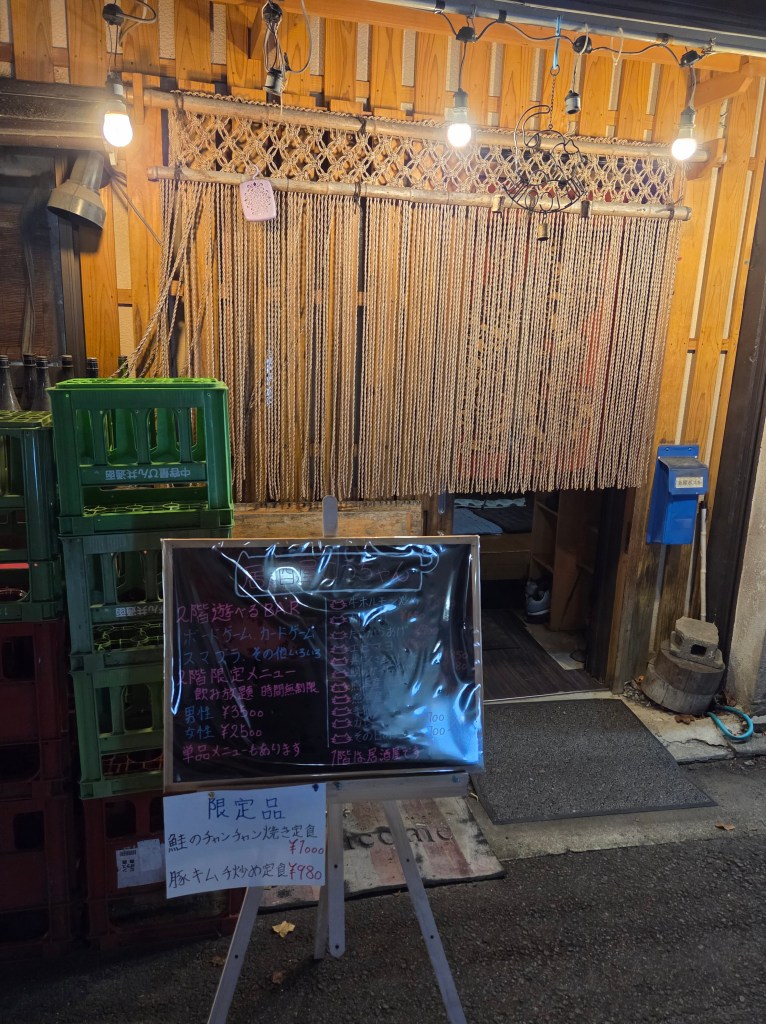
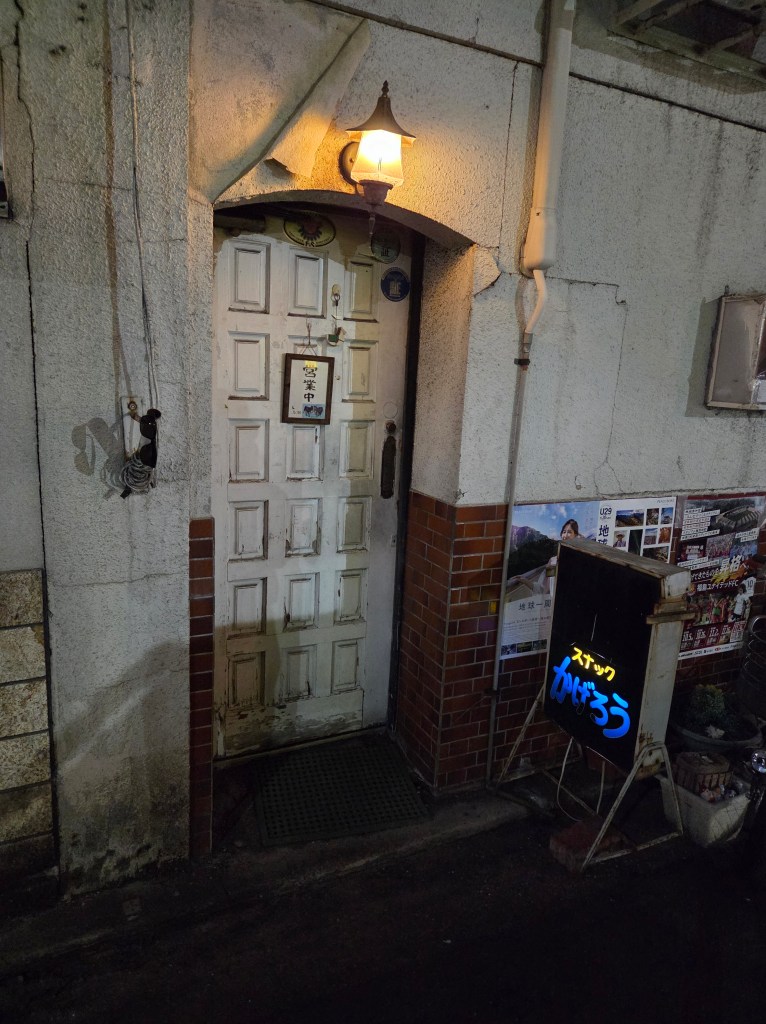
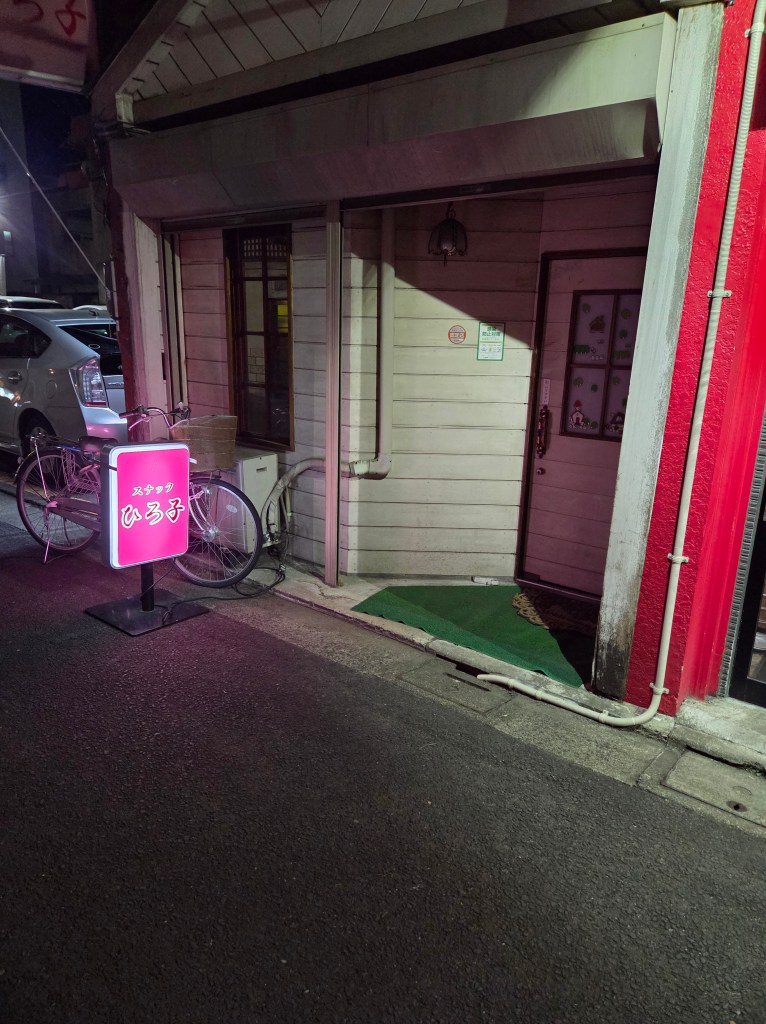
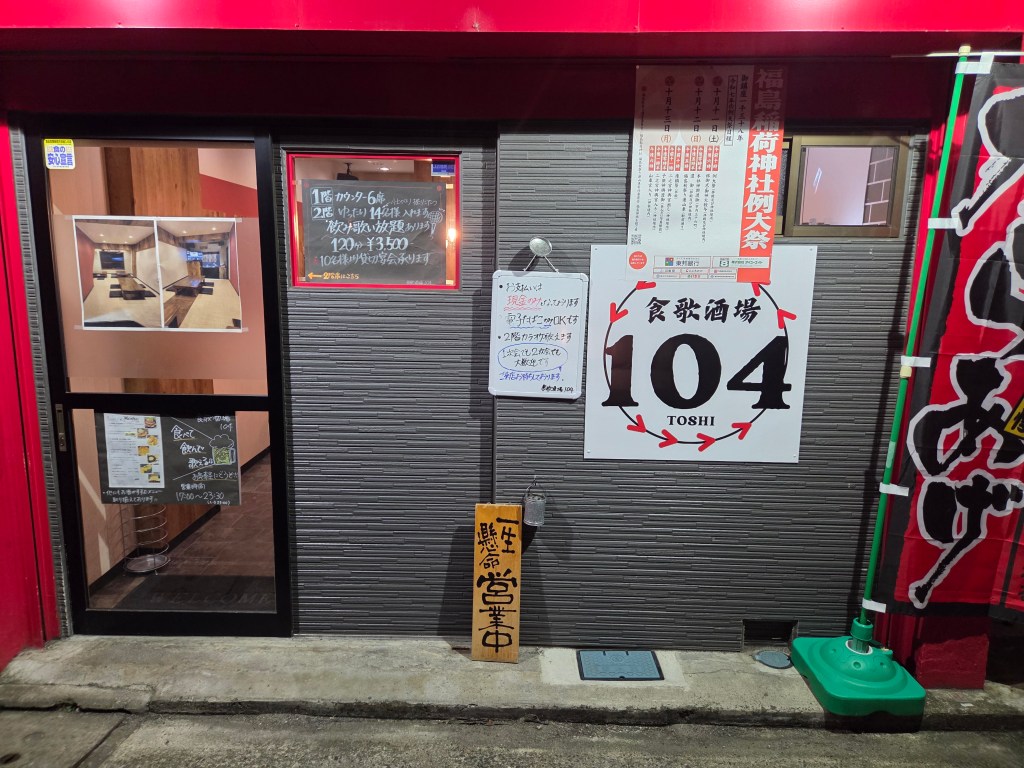
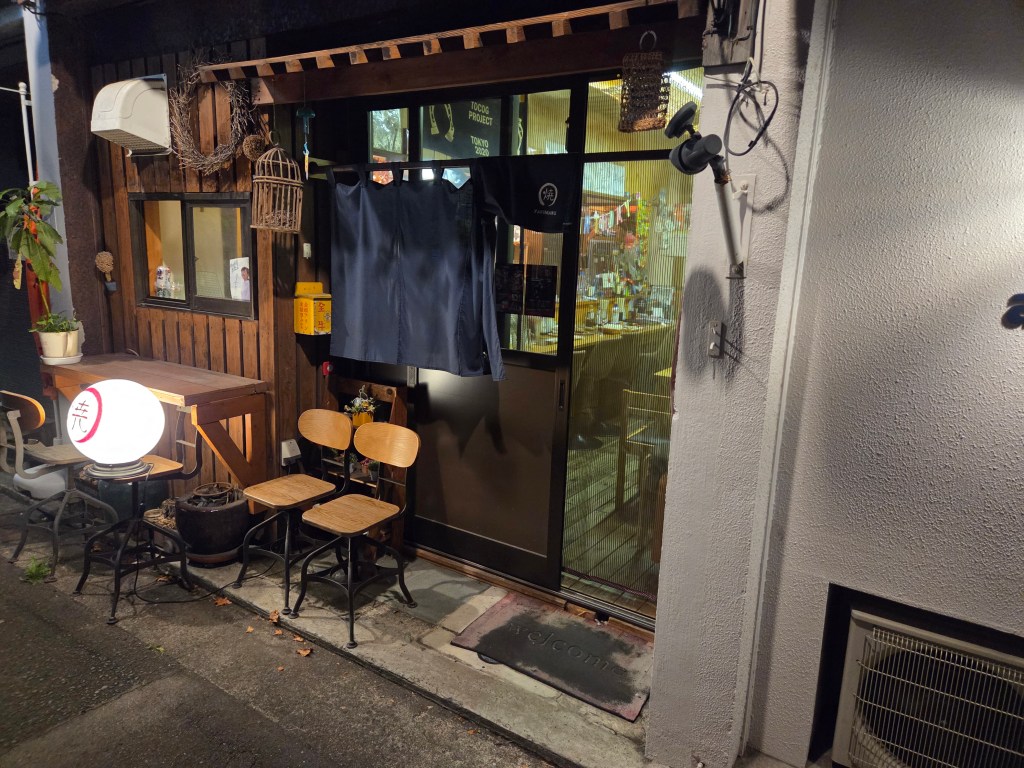
While walking at night to find a place to eat, on one side street there were 14 bar/restaurant places. These were all small, even tiny, places that served only a few people at a time. On a different street, there was a bar serving oysters and there were only six places available, and all were taken. Below are pictures of the 14 places on the one side street.
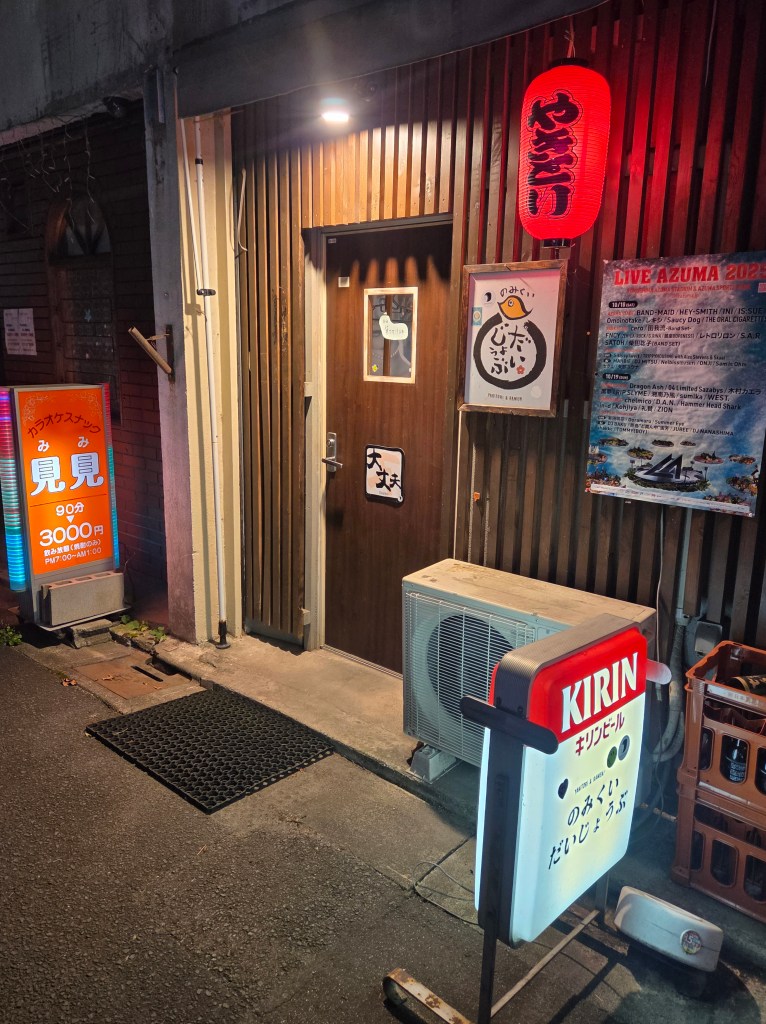
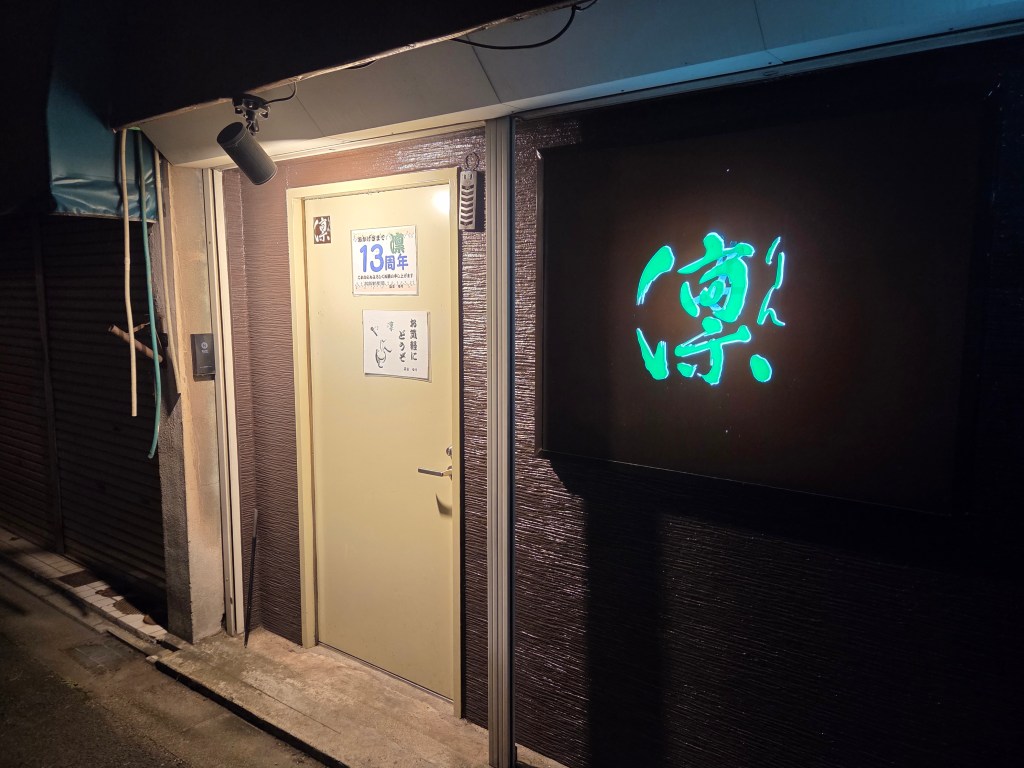
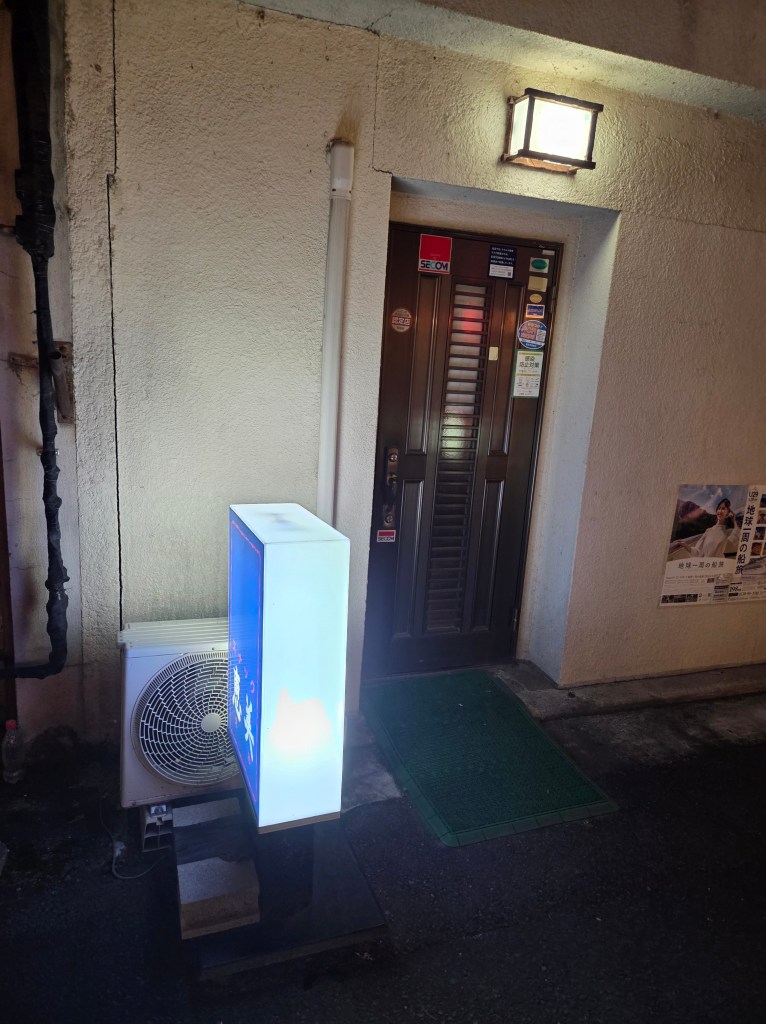
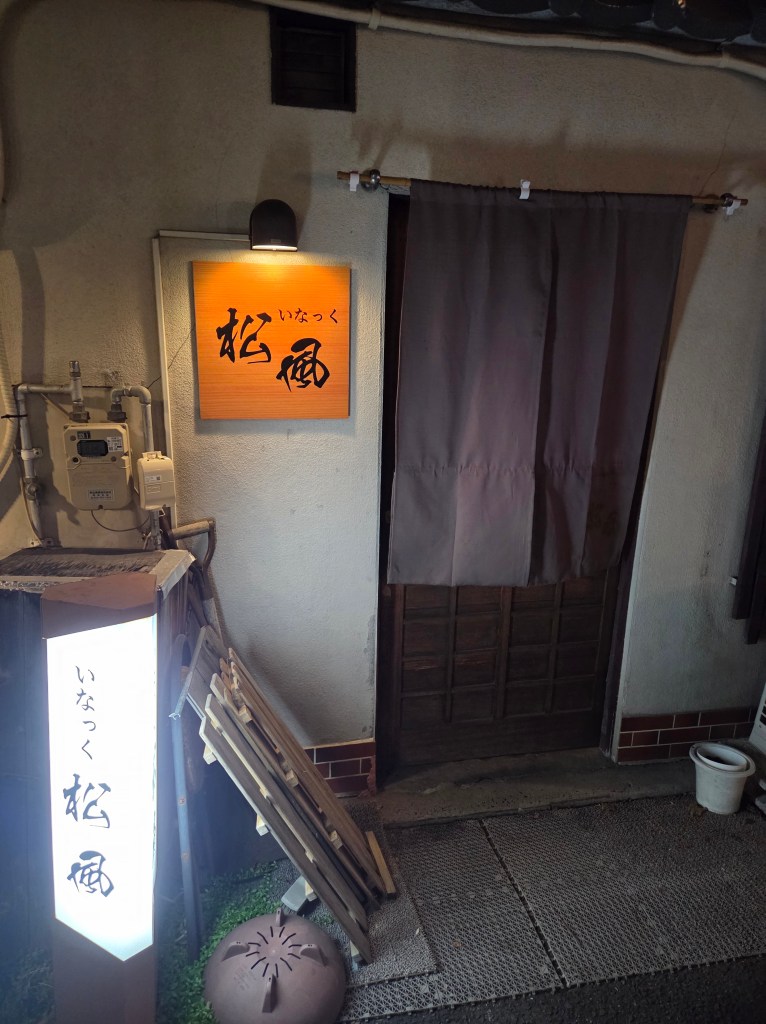
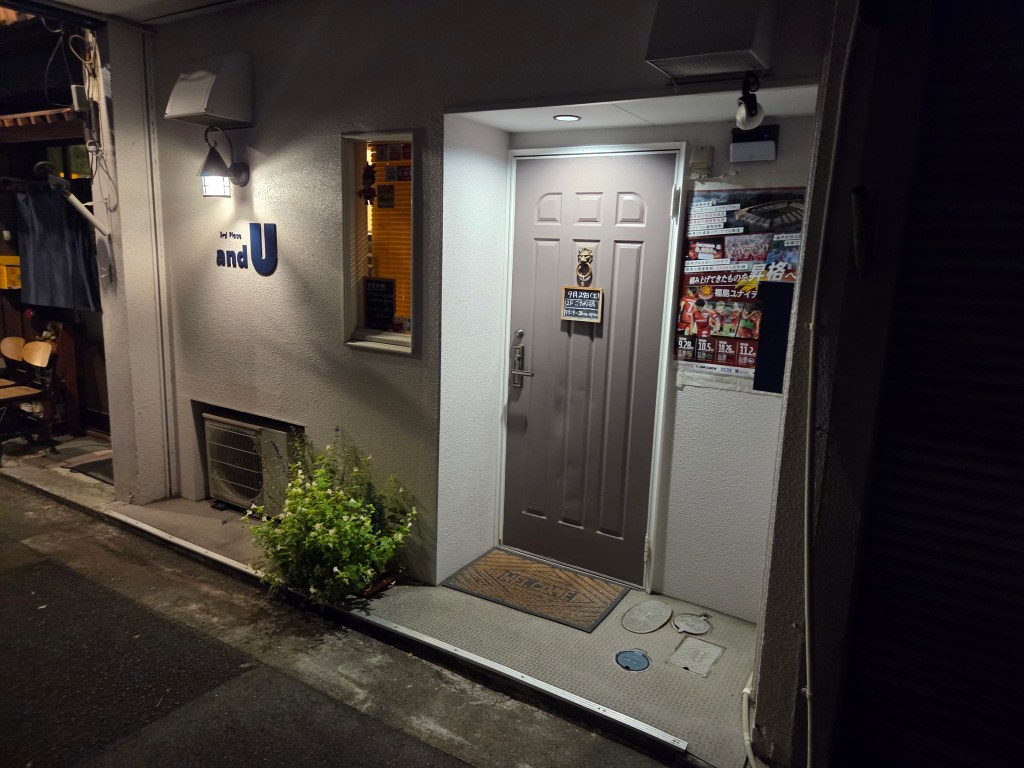
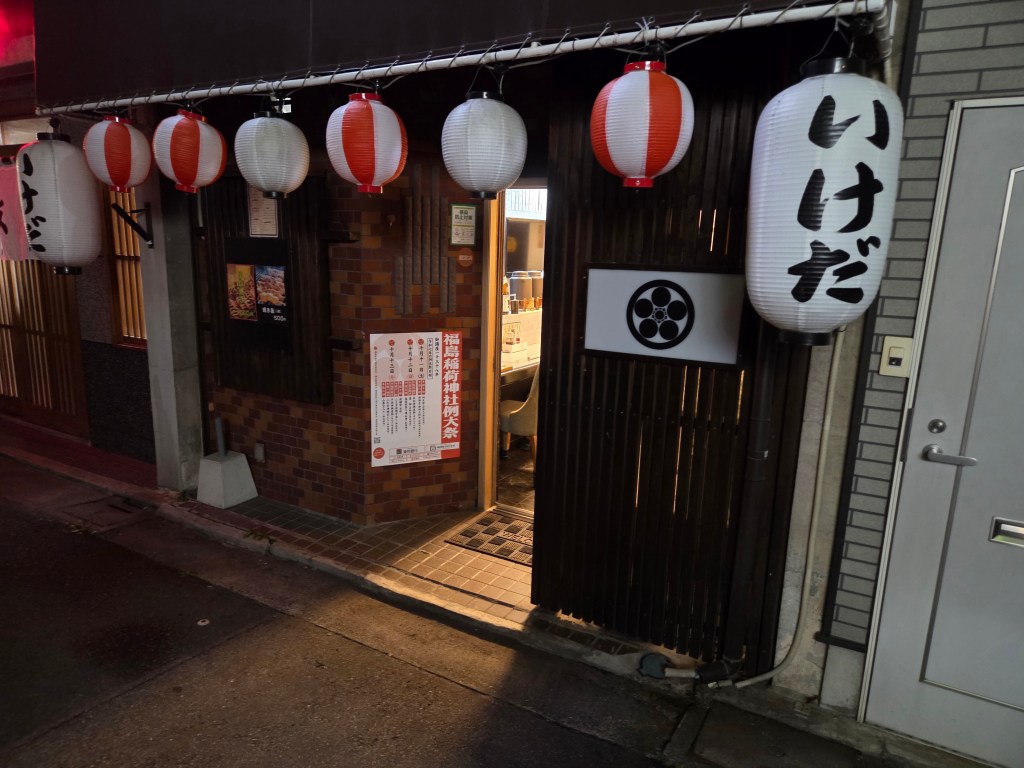
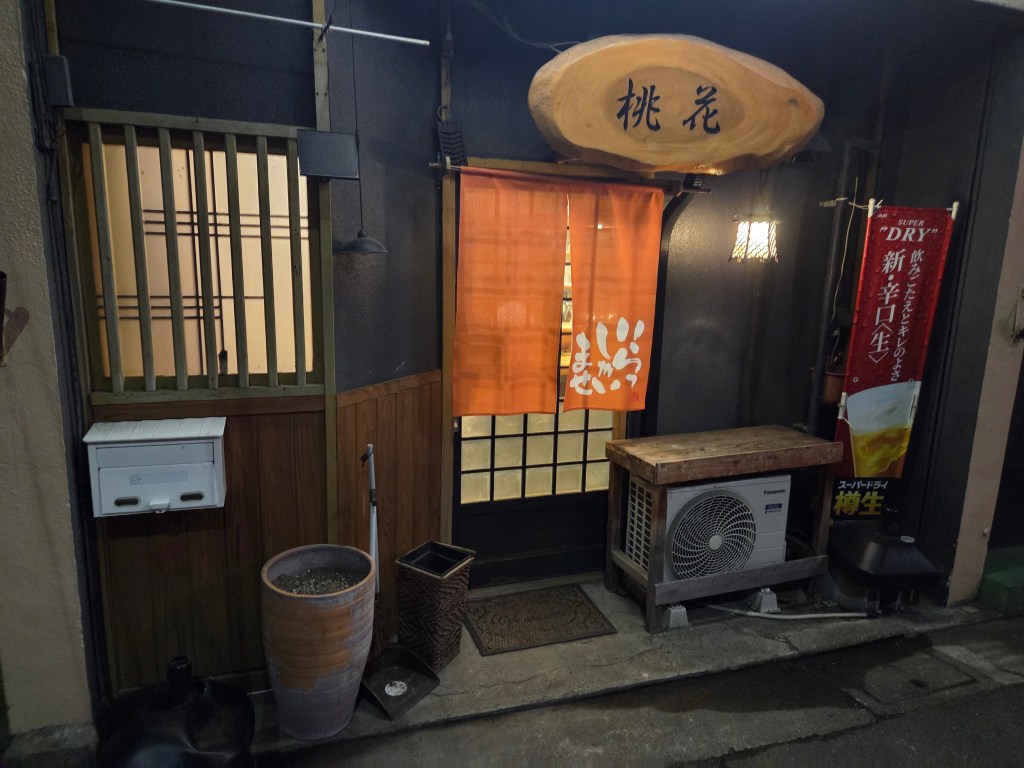
(Click on thumbnail for larger picture.)
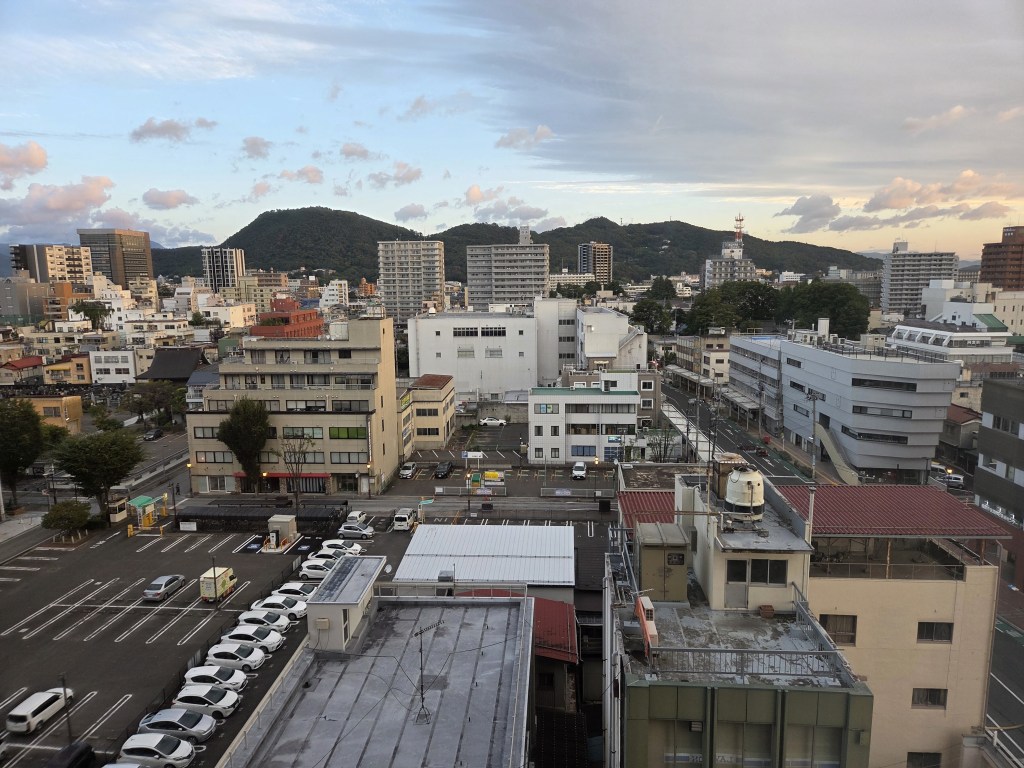
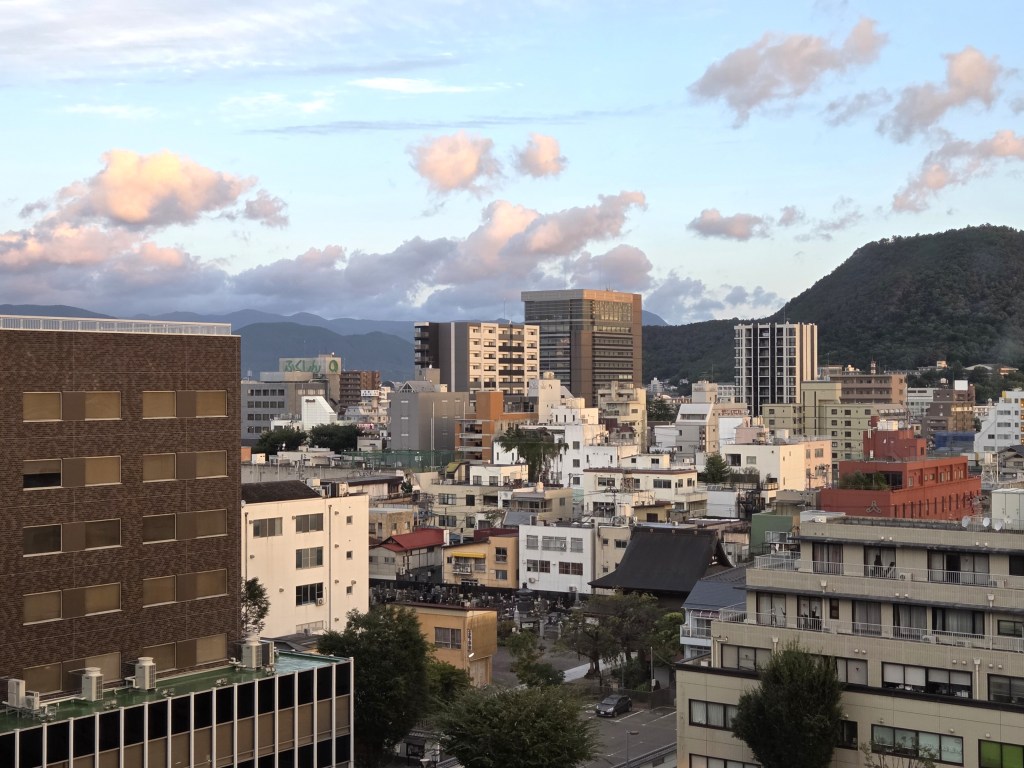
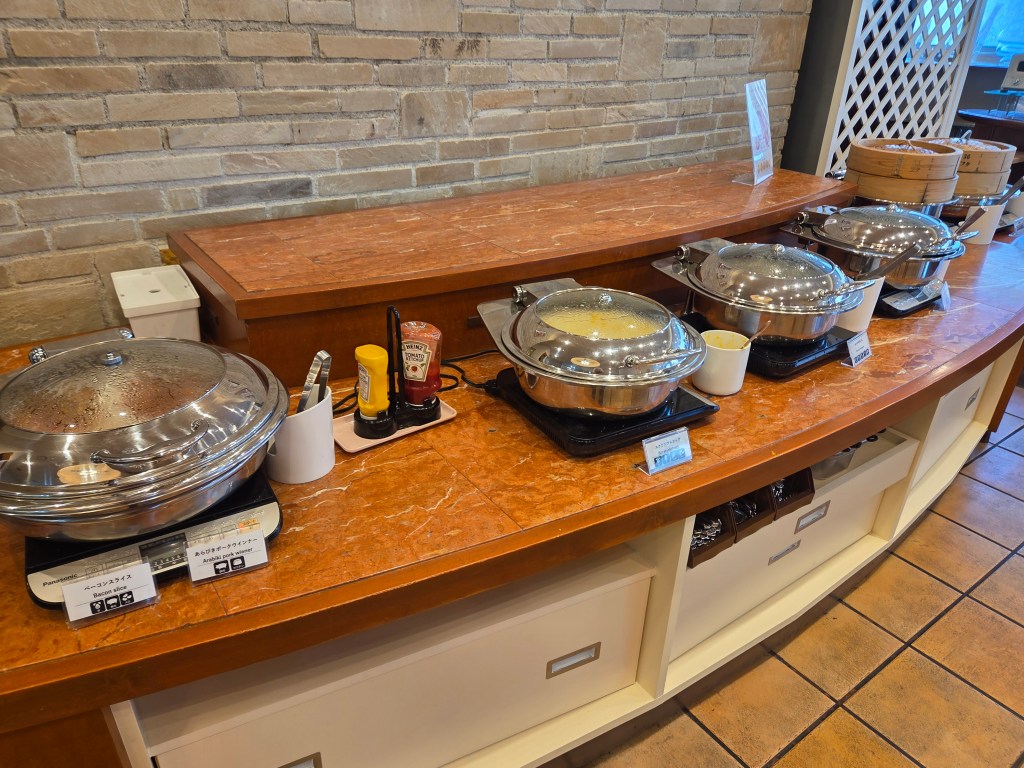
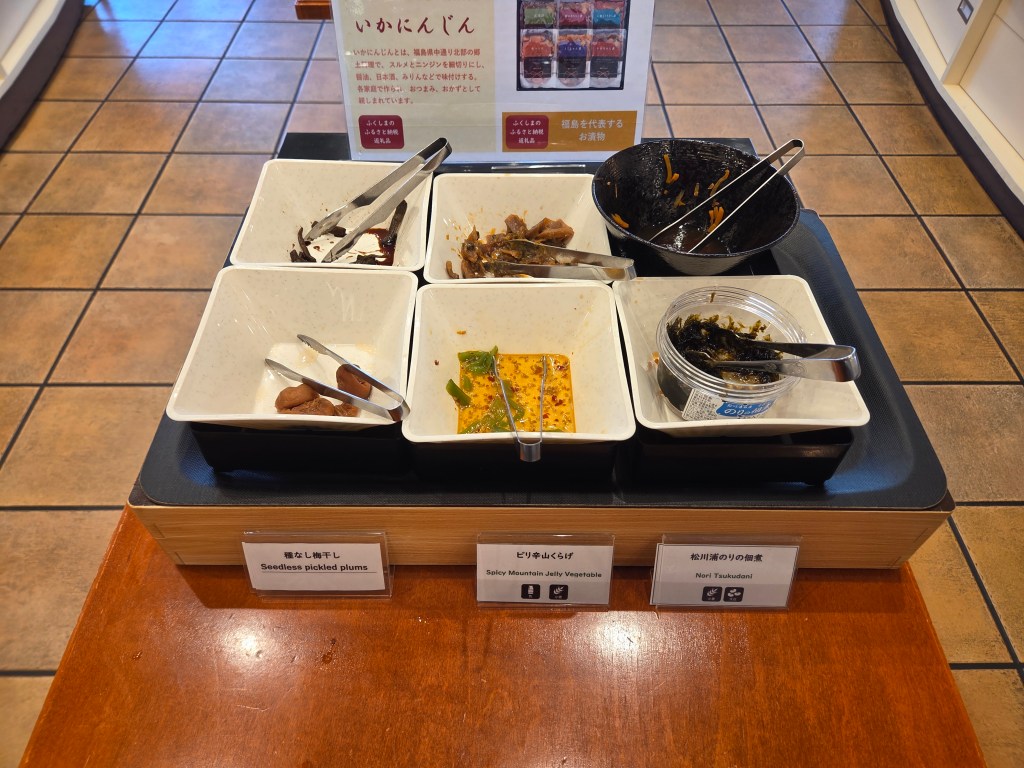
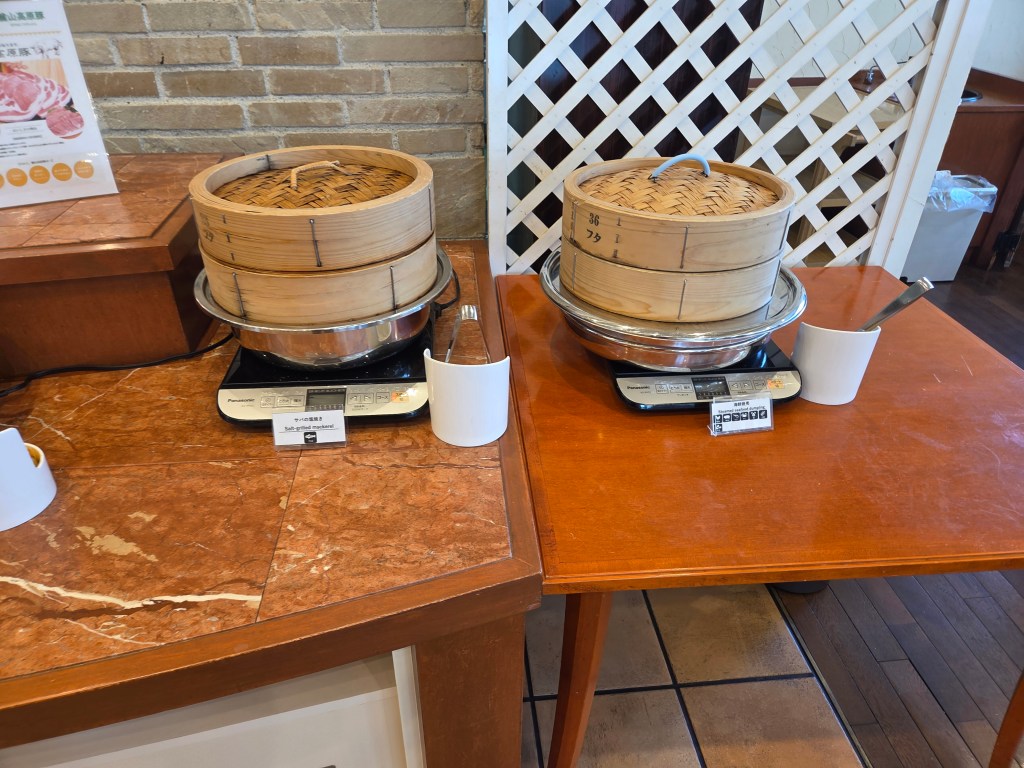

September 26
(After the long day and a half of flights and train rides.)
Awoke around 5:15, my somewhat usual time, even though not into bed until near midnight and having only slept a couple of hours over the previous 32. Slept well, other than Bart getting a phone call around 3:45 or so.
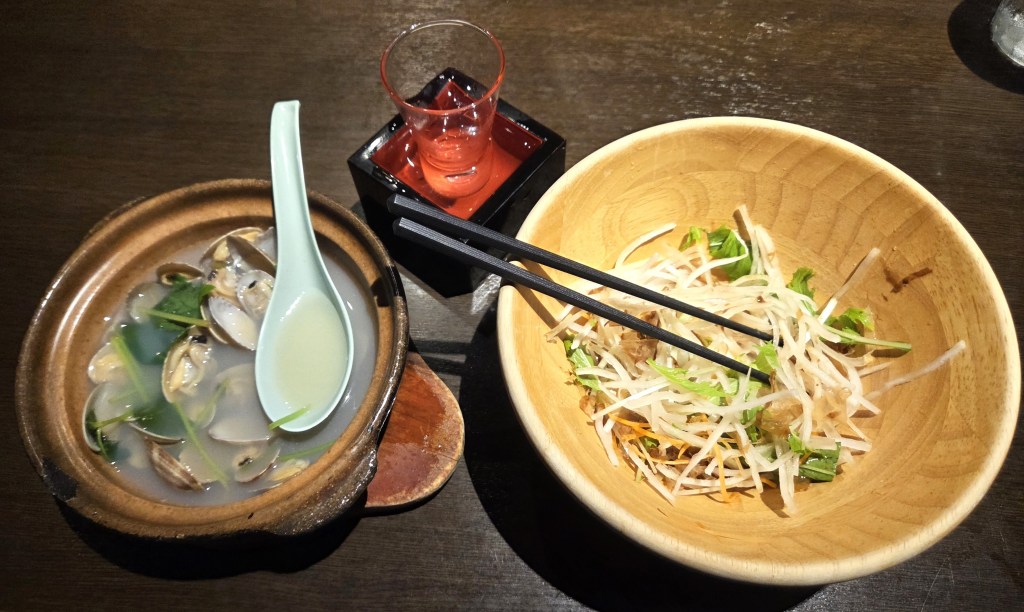
Had a very good introductory evening in Japan last night. Didn’t get to hotel in Fukushima till around 8 PM. Then went out to find some food. A lot of small eateries in the vicinity here. The one we chose, without any knowledge, turned out to be a good choice. They have small separate rooms for diners where they close a sliding door that is open weaved so you have your own semi-private space. I had a white radish, onion, dry bonito flakes salad and a bowl of clams in broth. I just wanted to eat light this first evening. Also, an order of sake.
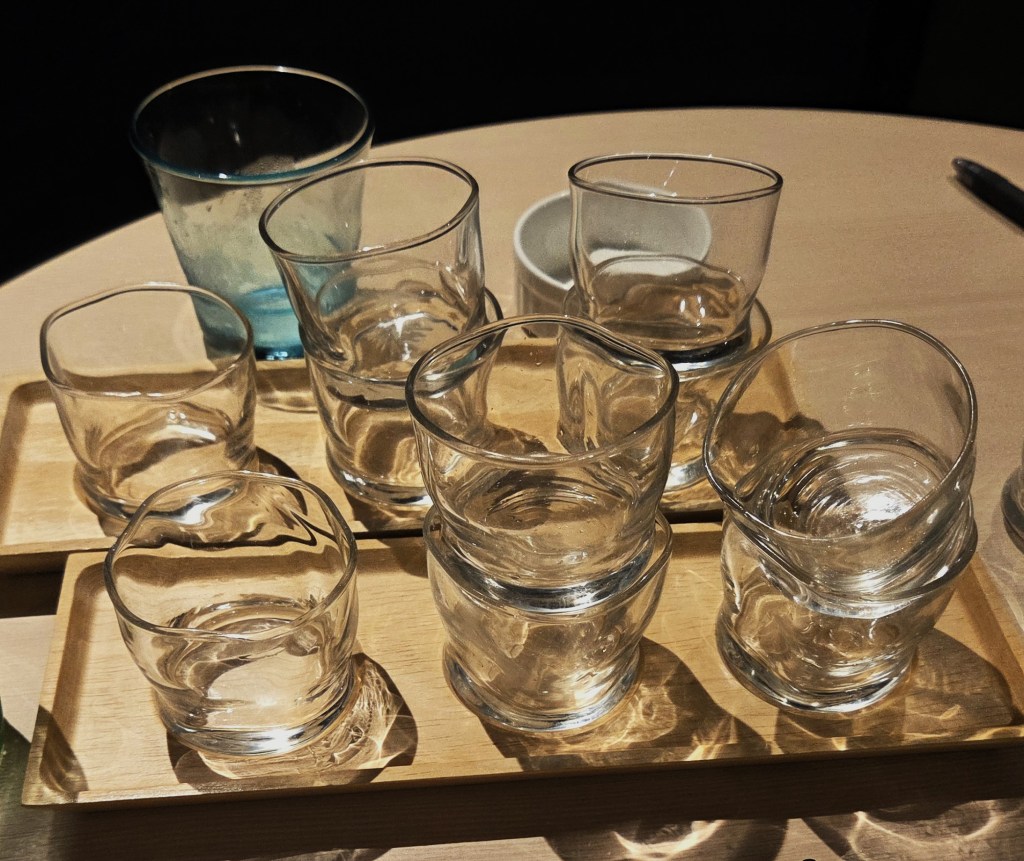
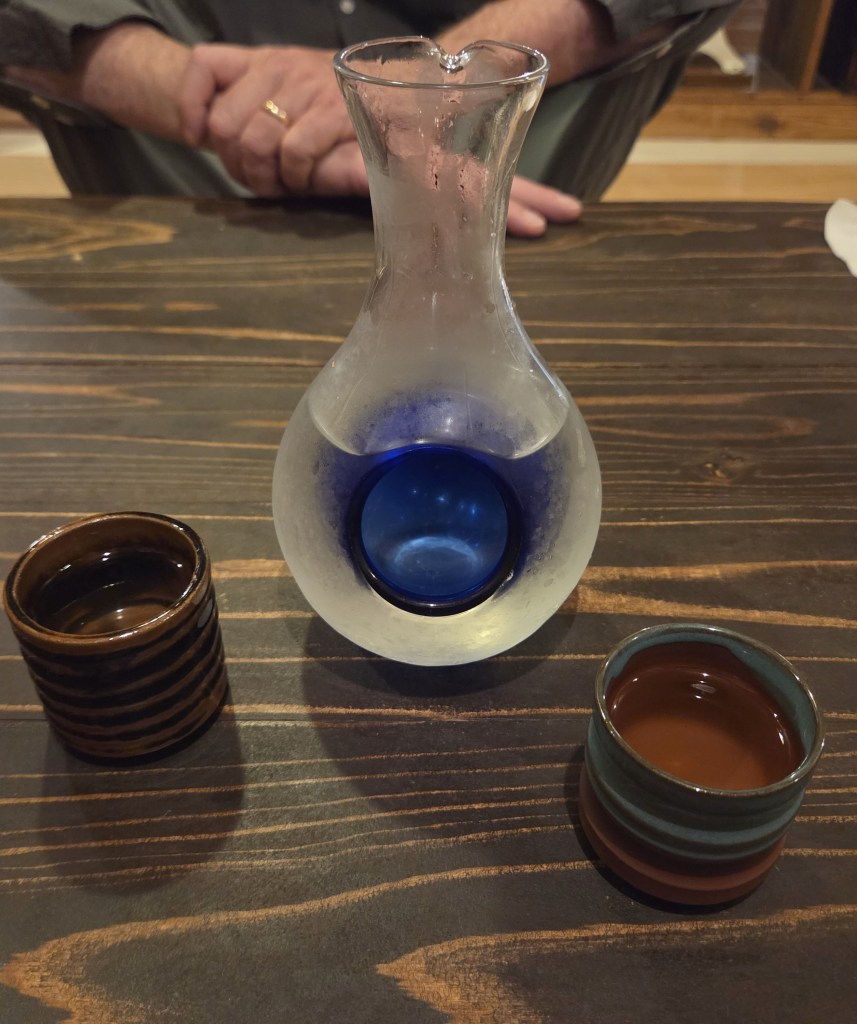
For the sake, they first came in with a small clear glass that was chilled, which sat in maybe a 3” square and deep box that was black on the outside and red on the in. When they came in with the sake, the server filled the glass then overfilled it, filling the box and spilling out onto the table a little bit! A total surprise. I wondered if that is a custom generally or just what this place does.
Bart had two draft beers, fried rice, gyoza and sashimi. He said it was all good, like mine was, too.
Afterwards we walked around a bit. Bart stopped into a small ice cream place that served only soft vanilla ice cream and was run by an elderly woman with white hair and braids. I didn’t get any, but reminded Bart that in Japan one doesn’t eat food and walk around with it. It is customary to eat in or right by the place it is ordered. So, he ordered and sat inside the small place while I sat down a couple of doors away absorbing what was going on around me. Maybe 10 minutes later Bart called me over to come inside. He had struck up a conversation with two couples sitting inside with their ice cream. There were only maybe six seats inside. It was a very small place. So, I joined in, and while sitting there the ice cream woman gave me a small cone of her vanilla ice cream! We talked a little with the other couples about Basho, etc. and then the woman gave us each a small cup of tea. It was a vibrant experience in one of the small local businesses. As we left, Bart said we’d be back tomorrow evening!
We then made our way back to the hotel and the exhaustion started settling in for each of us. I was 35 hours and 6,500 or so miles away from Wheeler Hill. It had been a long journey in miles and a long time in years since first wanting to visit Japan. The first few hours experiencing Japan could not have been better.
Getting Ready
September 24
Daily Spontaneous Poem #3901 (9/24/2025)
early morning
heading west to go east
three and a half weeks
exploring northern Japan
crossing paths with Basho
over three centuries later
journey to the interior
in more ways than one
September 23
My Daily Spontaneous Poem from Last Night:
Daily Spontaneous Poem #3899 (9/22/2025)
autumnal equinox
start of my favorite season
nearby woodlot leaves
already beyond
peak of color
so soon, so soon
thankful though
as I leave in three days
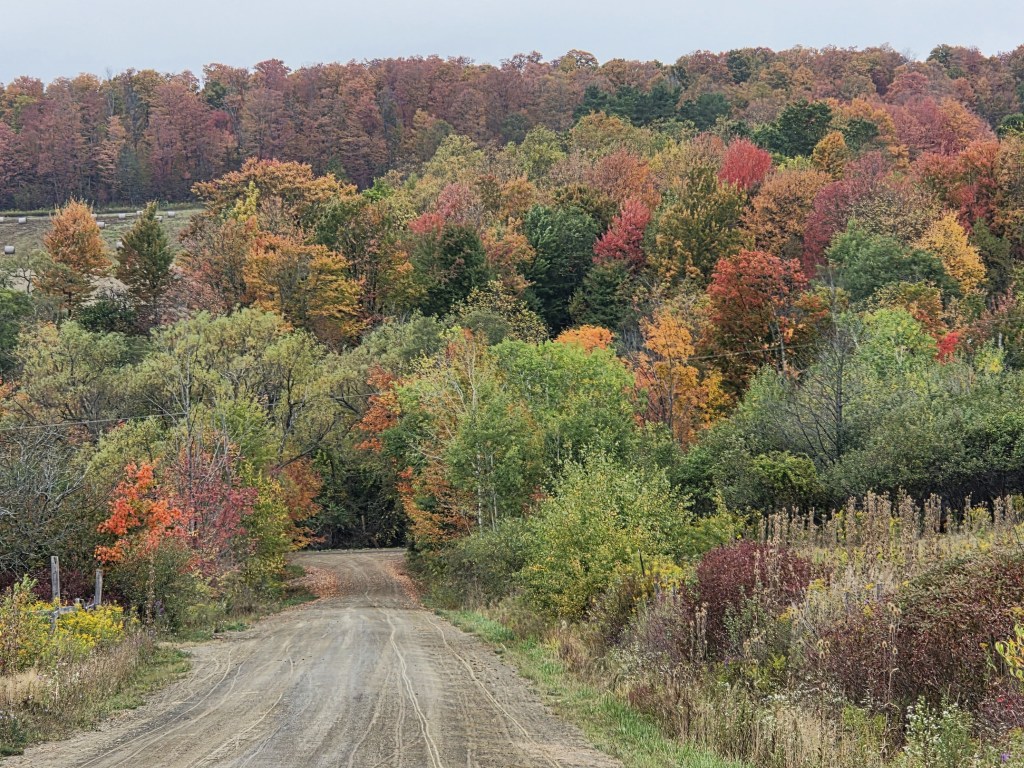
thinking I’d miss this splash
of deciduous vibrancy
I didn’t
now what vibrancy
awaits ahead
as I experience
autumn in Japan
Less than two days till departure. Always so much to get done before leaving on a long journey. I’ve made a list and am checking things off one by one as I get them done. I’m sure some will be left unchecked.


 FootHills Publishing/Michael Czarnecki
Leave a reply to Mary Anne Abdo Cancel reply