Feel free to leave a comment at the bottom of the page.
May 27 – June 26
6/23-24
A steady rain fell throughout the morning while driving from Amherst, NS to Maine. This was really the first time in the whole journey when we had a significant rainfall that fell for an extended time.
The drive was uneventful. Through Canada it was on the Trans Canada Highway, or TCH. The landscape was very reminiscent of back home in our region of New York. Hilly, fields, woods. No dramatic views of mountains, cliffs, ocean.
The border crossing into Maine went smoothly. The border agent was all serious, but no issues and only took three minutes or so to be waved on in. One never knows what the experience will be like.
In Houlton I wanted to revisit three places I remembered from a cross-country US 2 Journey I took in 2002.
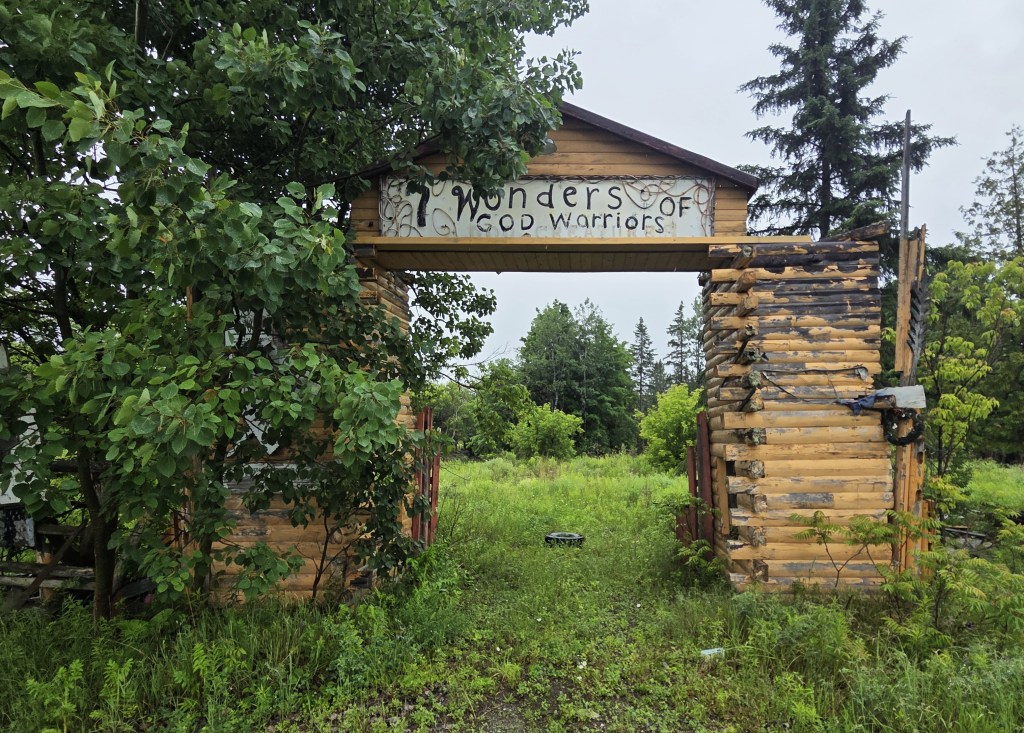
The first place was an amazing collection of outsider art made from recycled and found materials that stretched along the road for a few hundred yards. Dinosaurs, aliens, Santa clauses, etc. made from tires, wood scraps, metal pieces, etc. It was fascinating collection of art. What was found was just the arch entranceway at the edge of the road. (pic) The wording had originally been “Wonders of God Creatures”, but the remnant sign now said “Wonders of God Warriors.” That was about all that was left there. It’s an intriguing story that is told here:
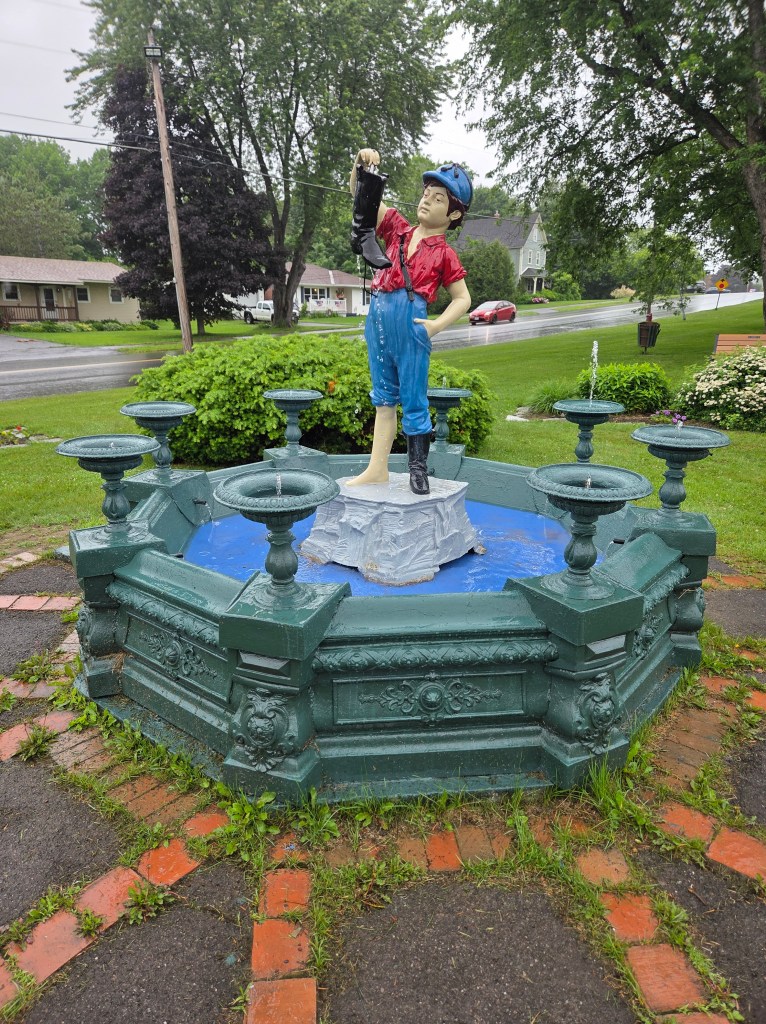
The second place was easily found. It was more artwork. “The Boy With the Leaky Boot” sculpture fountain. There are maybe 29 of these fountains in the world, a number of them in this country. The origin of what this refers to is unknown. More info here:
The third place was an Amish farm I stopped at in 2002. There was a sign for fresh vegetables as Chapin and I were driving by. We drove down the long driveway passed beautiful gardens and at the house bought a few things. While talking with Milo, the Amish farmer, we learned that we were both poets. He told me he edited a book of Amish and Mennonite poetry and invited us into the house where we had a grand visit. He gave me one of the books, a nice hard cover, coffee-table type book and I gave him a couple of mine. Unfortunately, could not find the farm that was right along US 2. I feel like that the farm isn’t there anymore. It has been 24 years since that meeting.
In Maine, the rain had stopped and we had smooth driving all the way to Elise’s house. We sat and talked for much of the rest of the day, as we hadn’t seen each other since last year. She is someone we’ve known since 1981 and only get to see once in awhile.
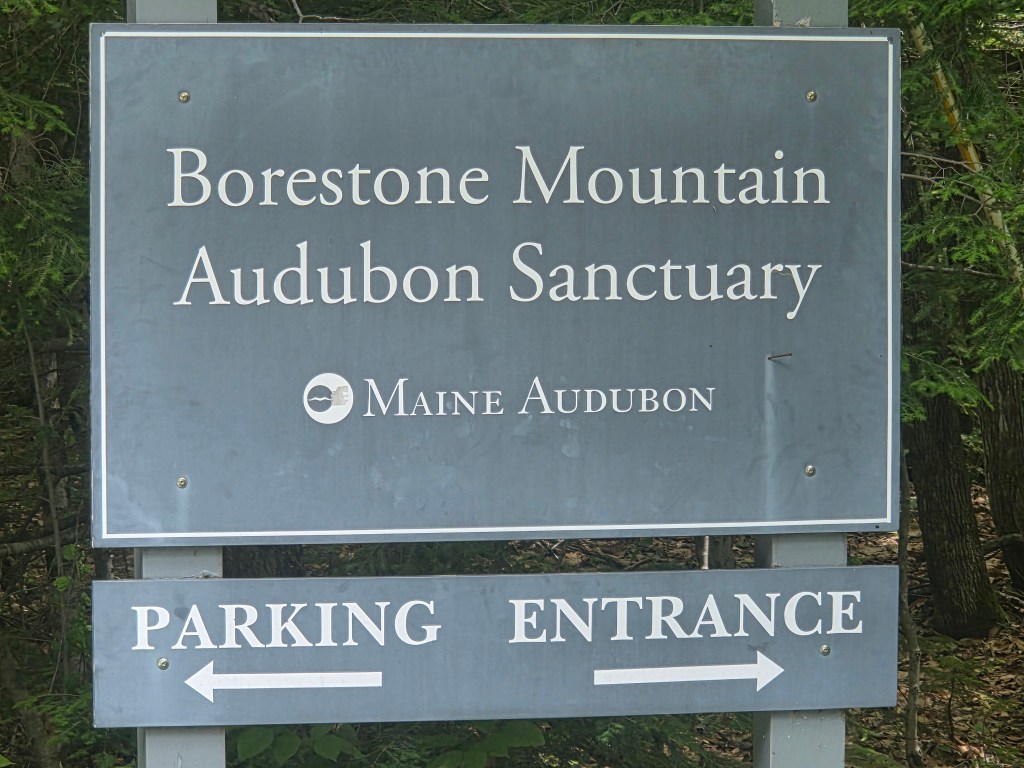
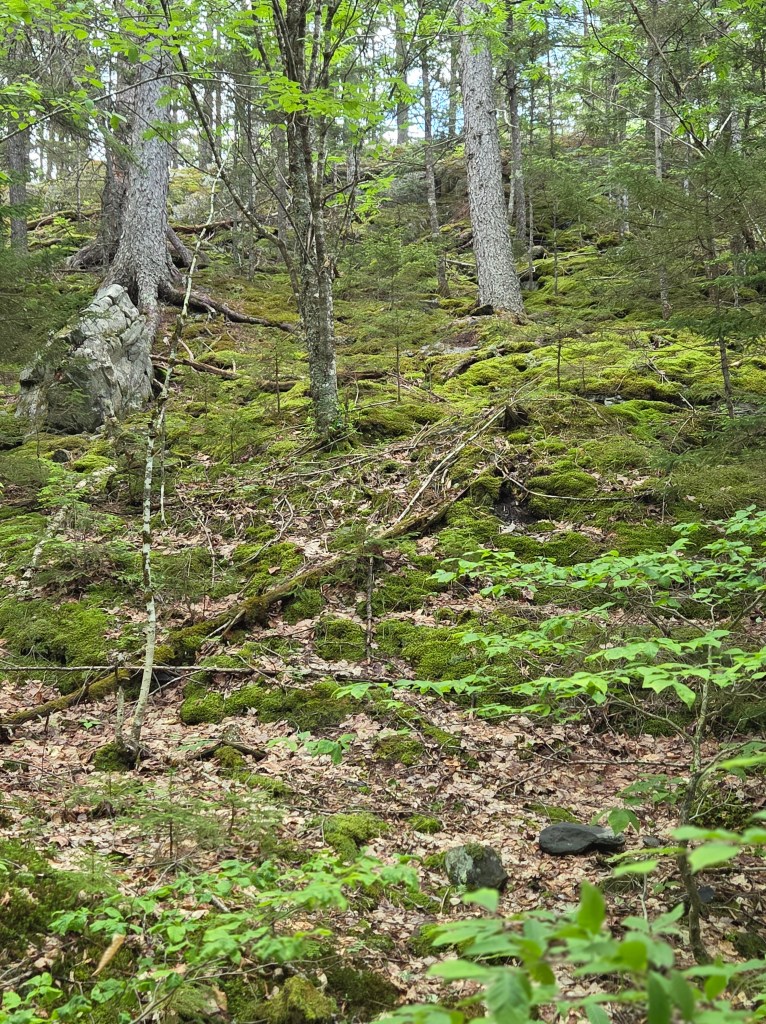
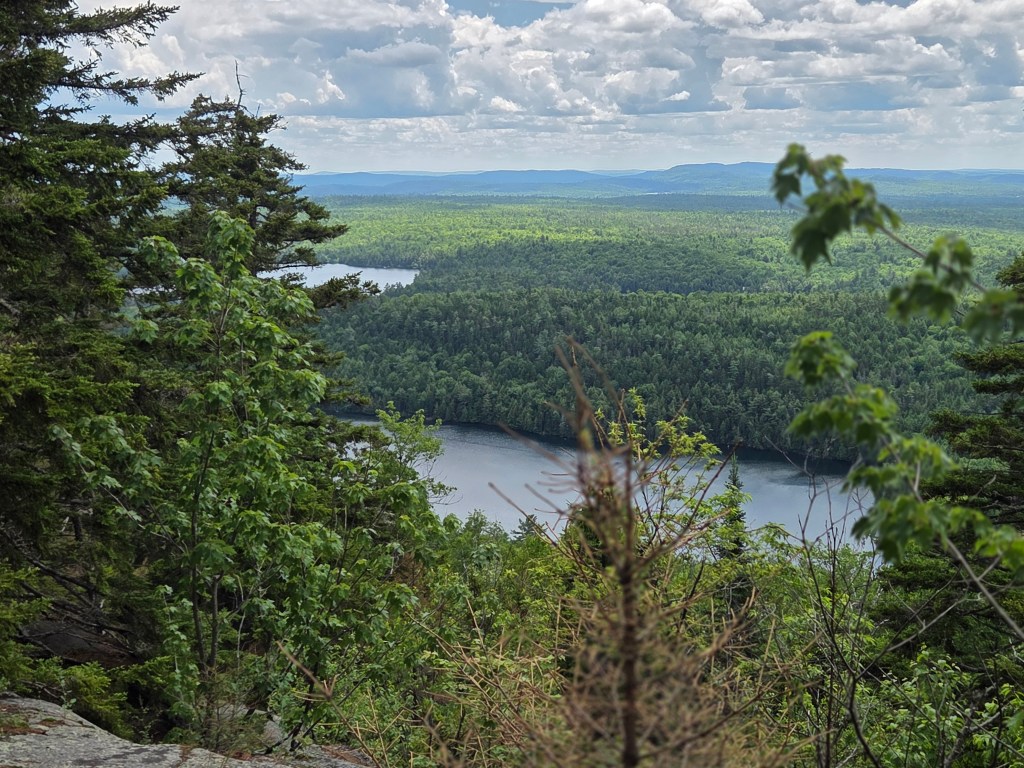
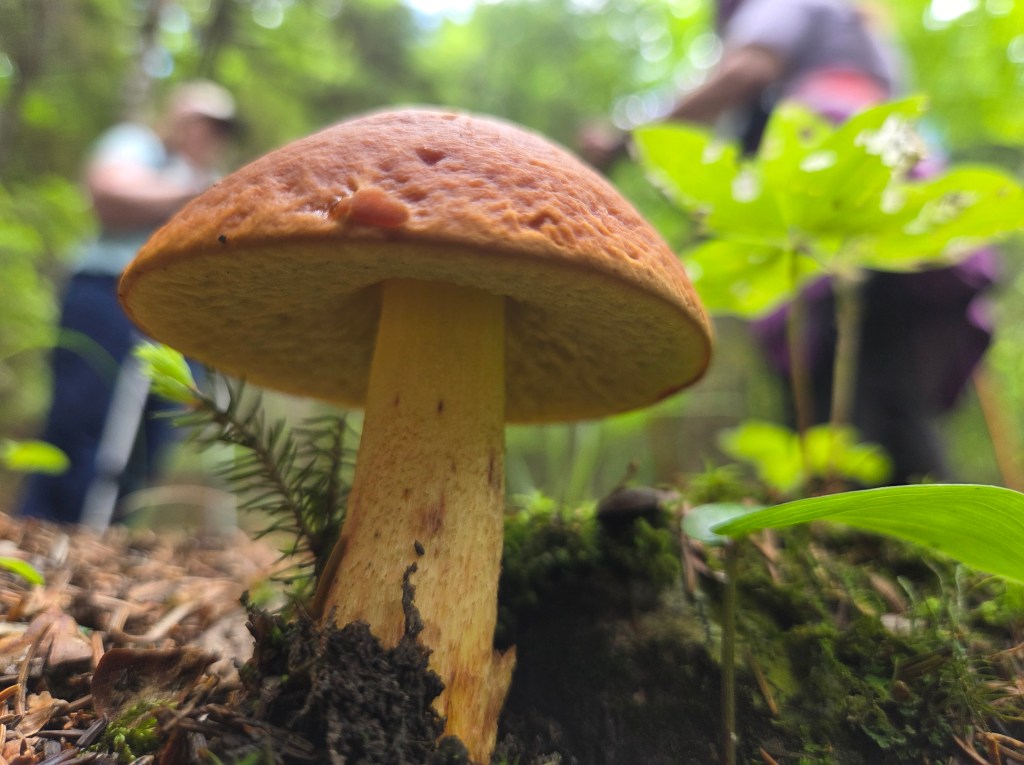
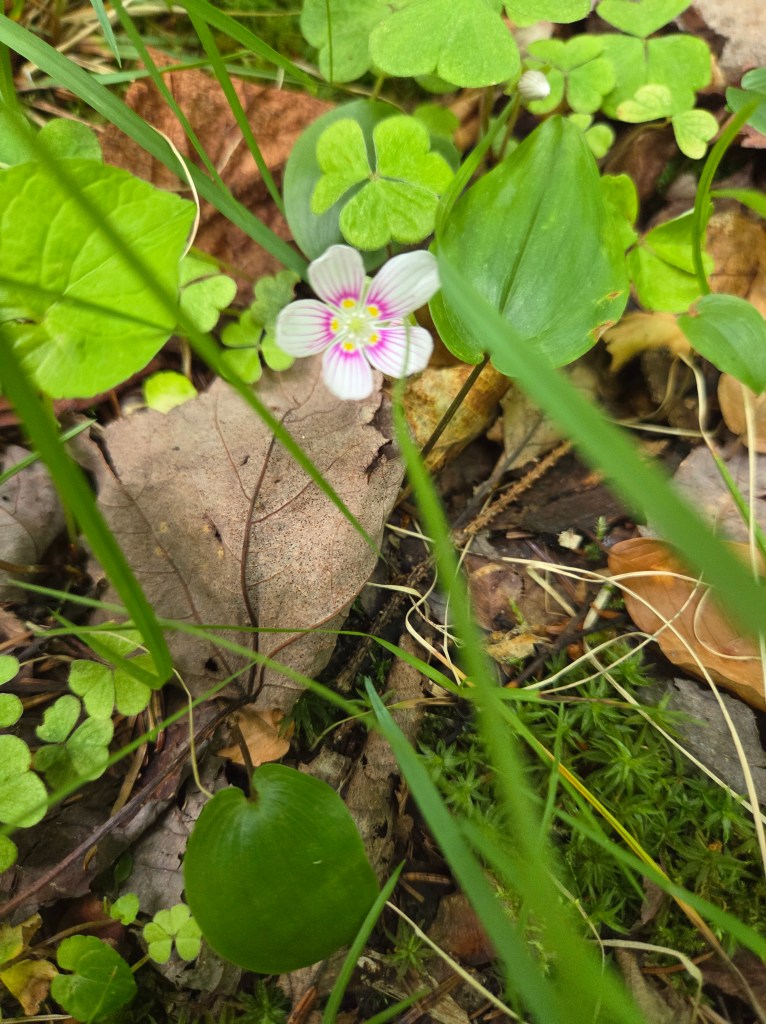
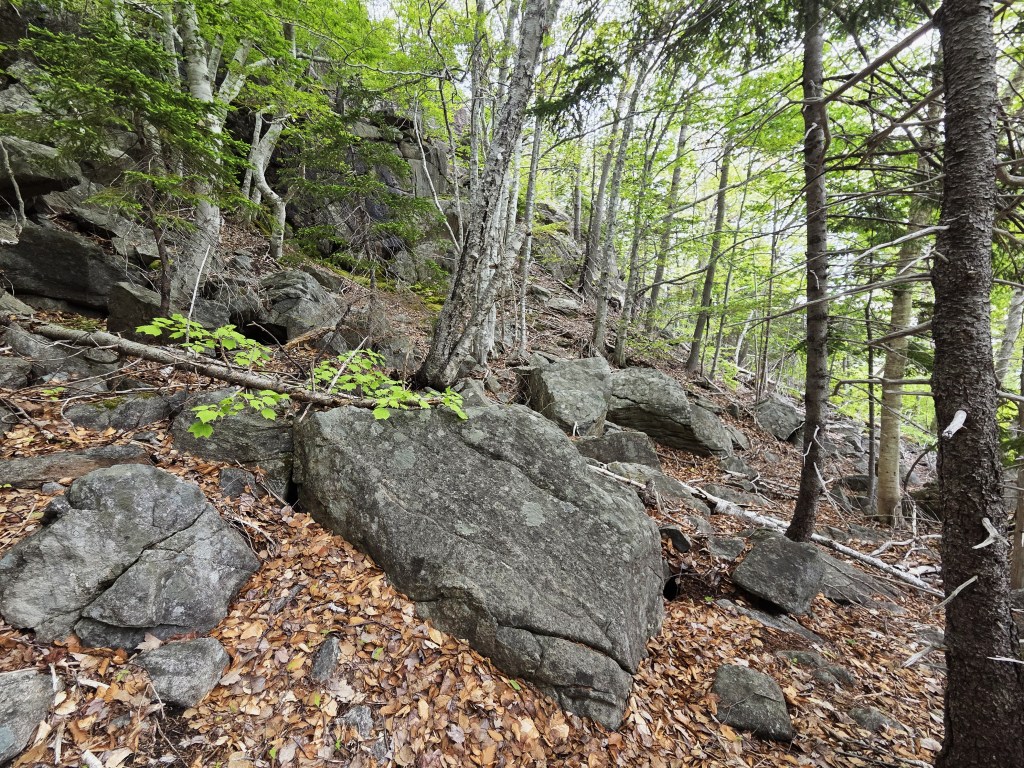
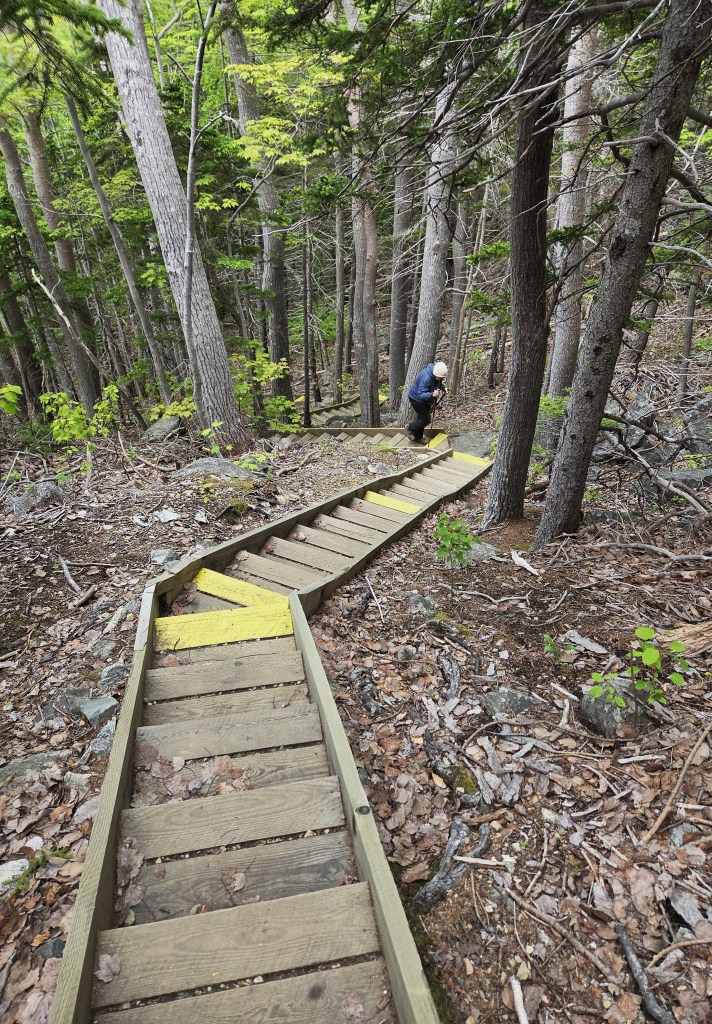
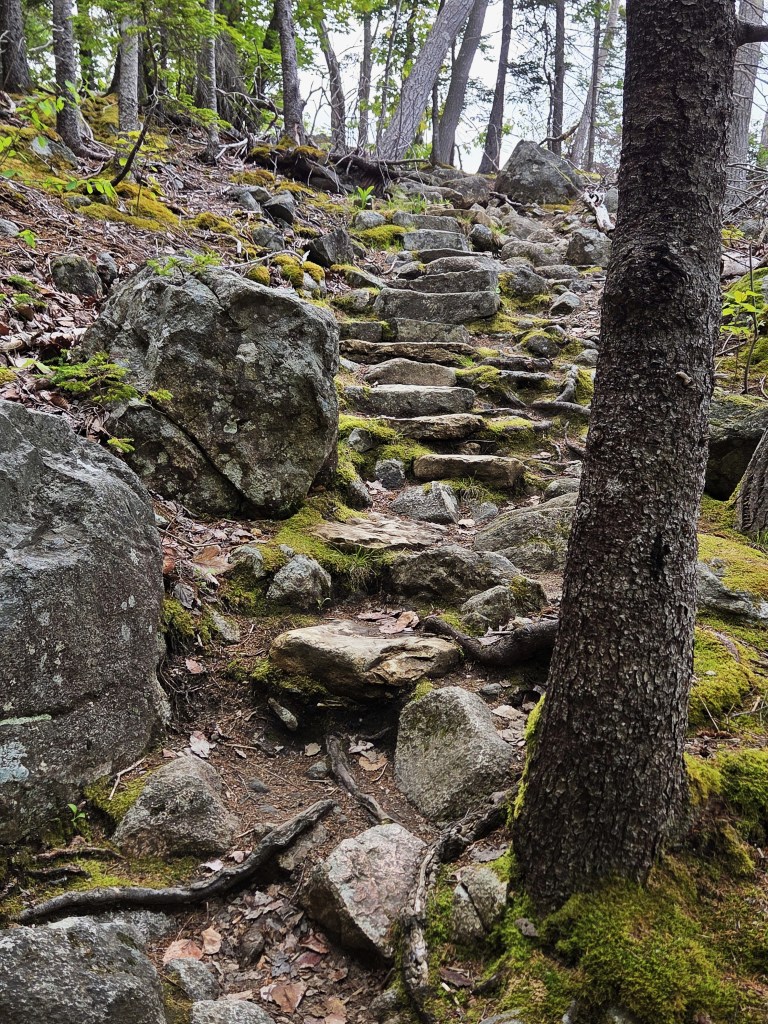
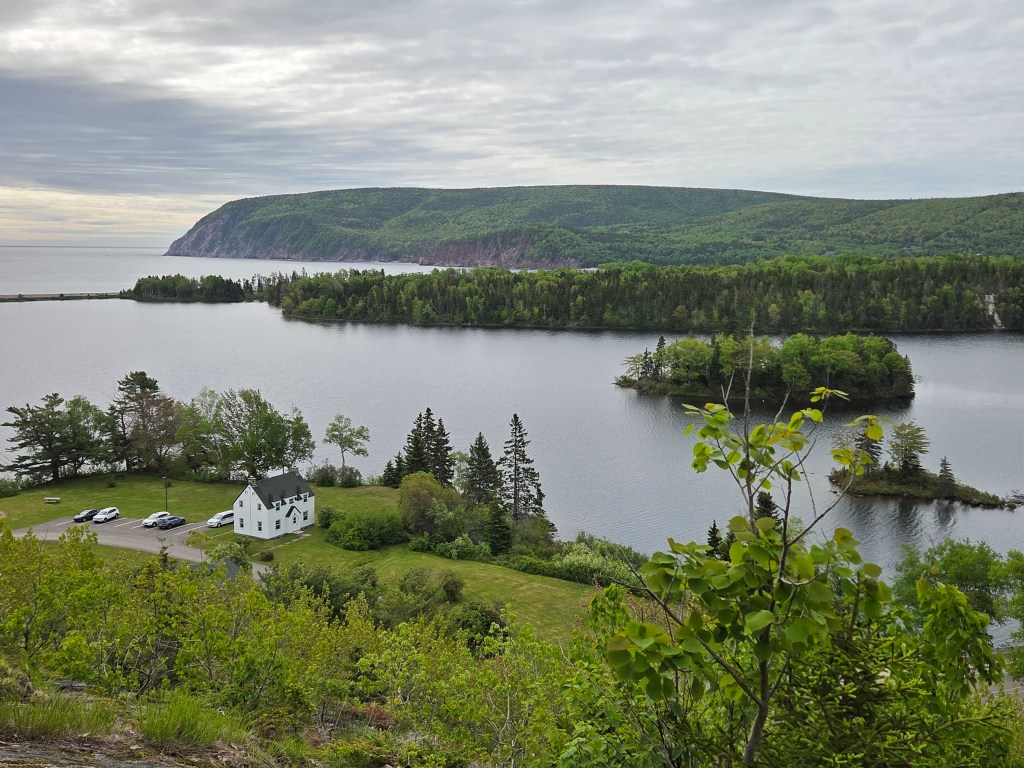
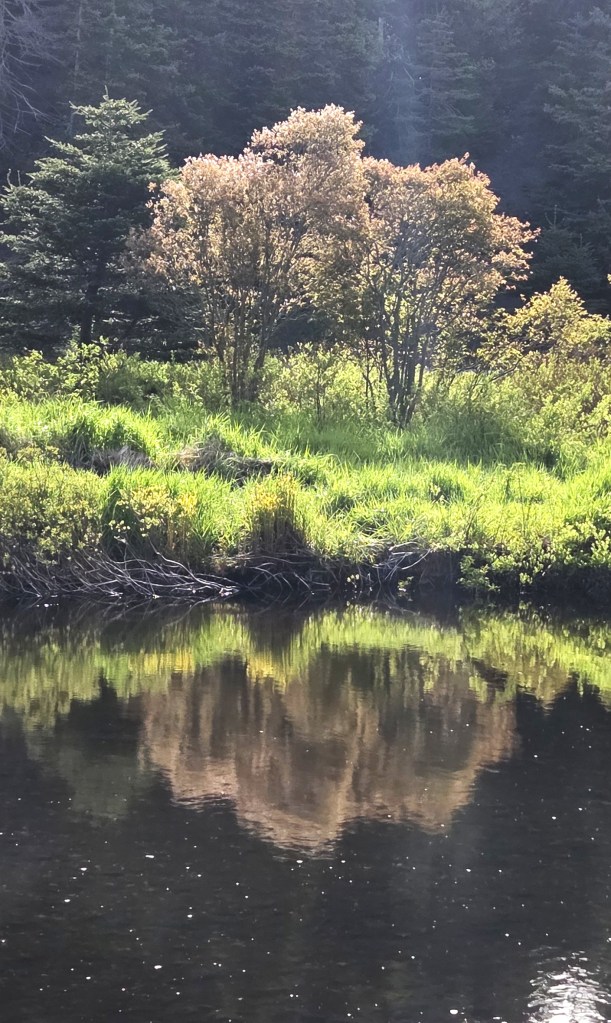
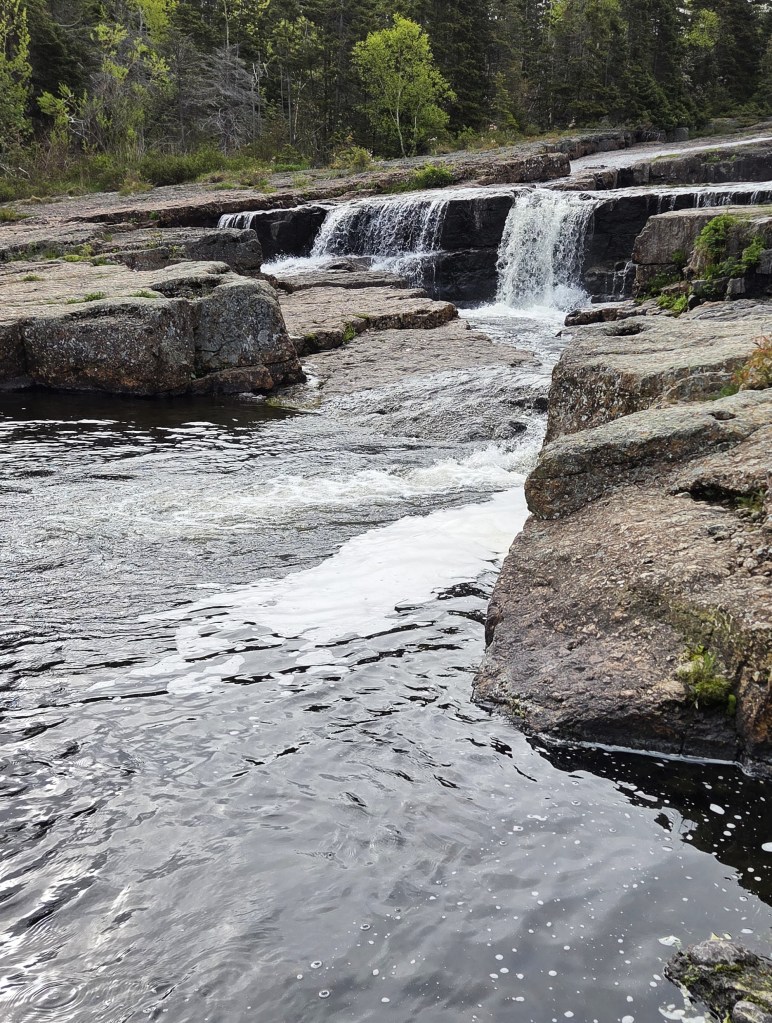
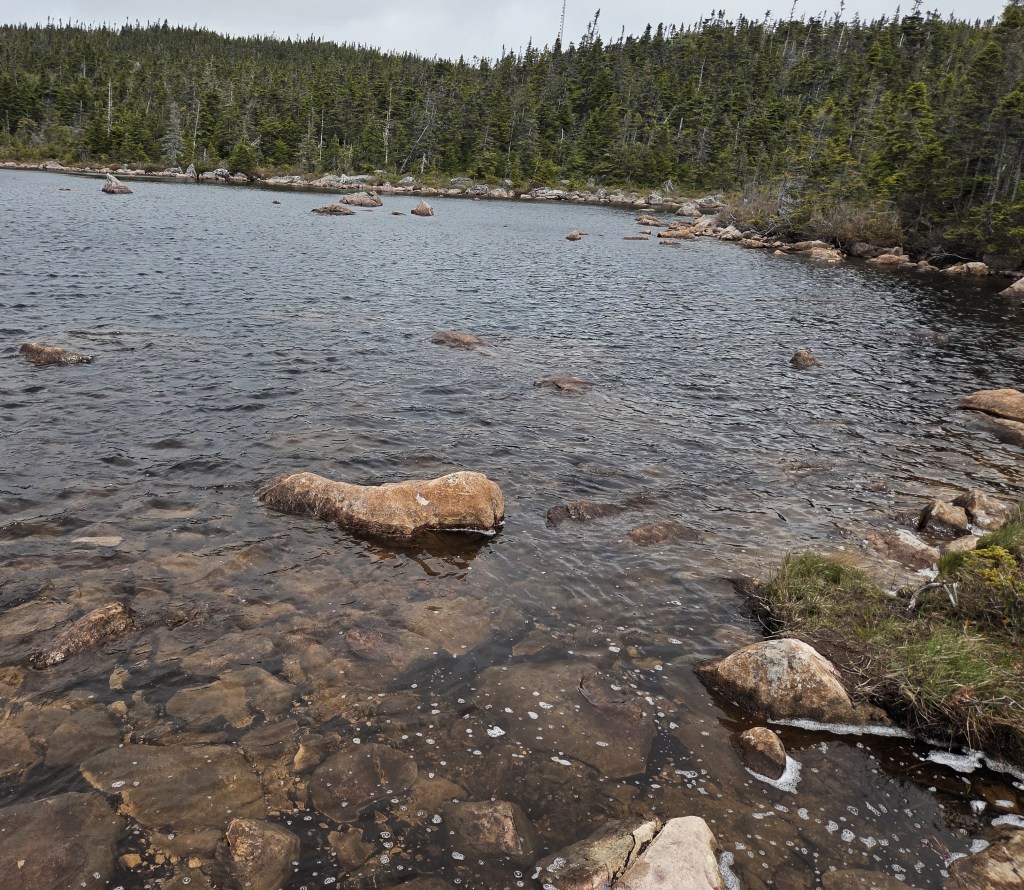
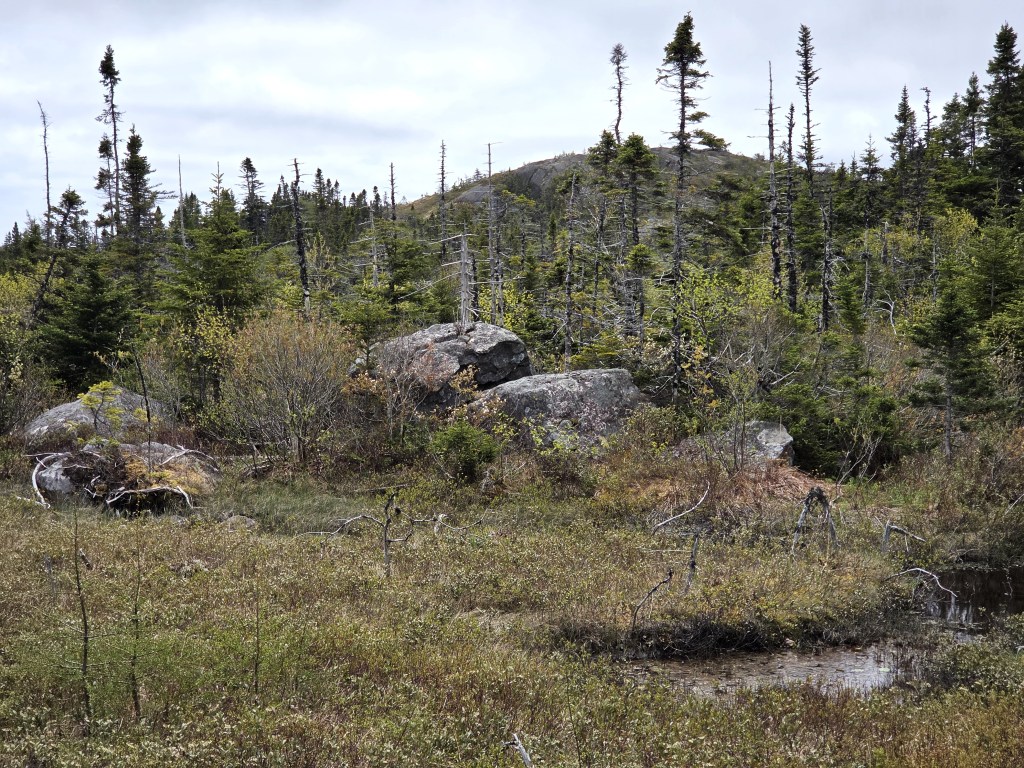
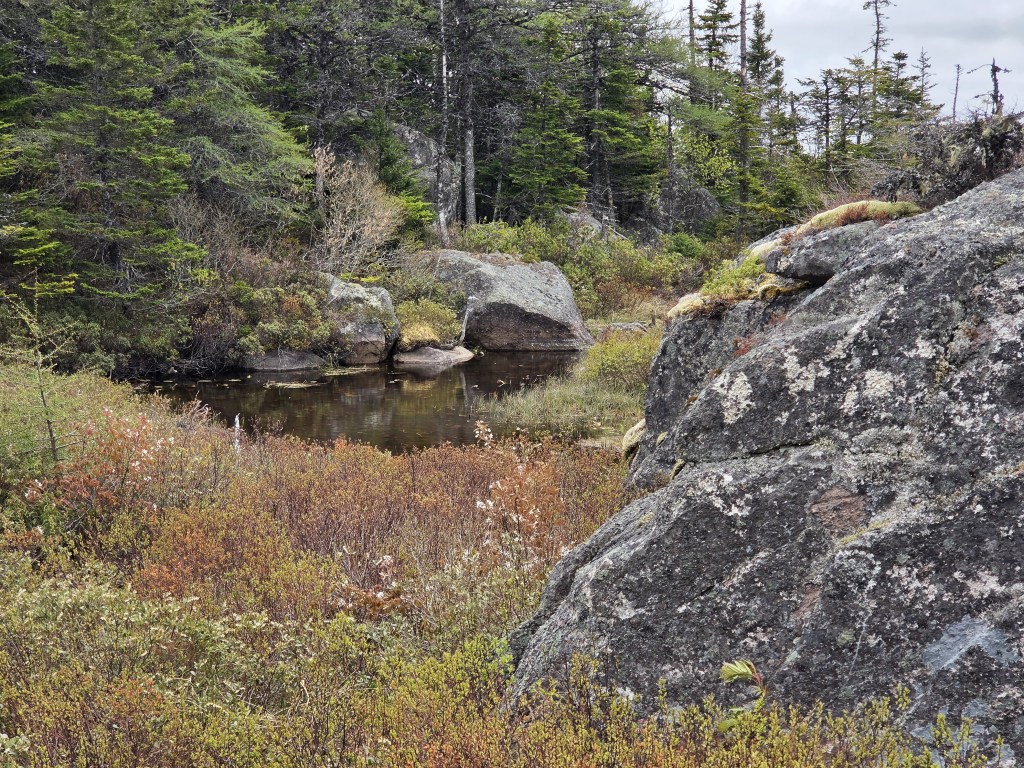
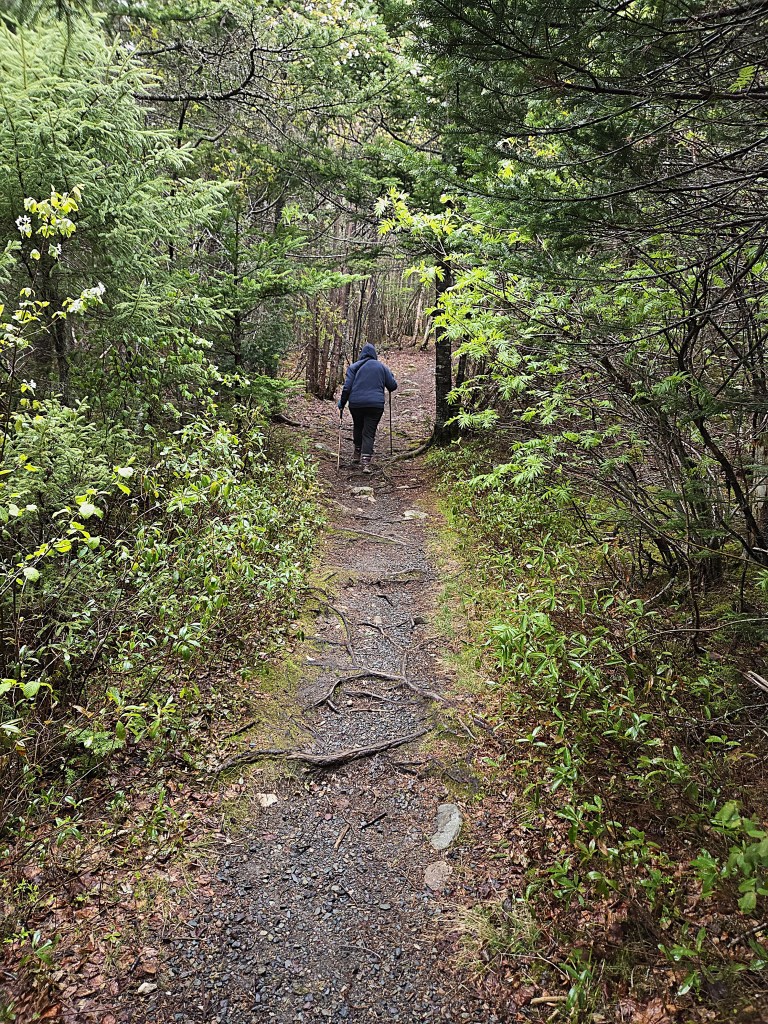
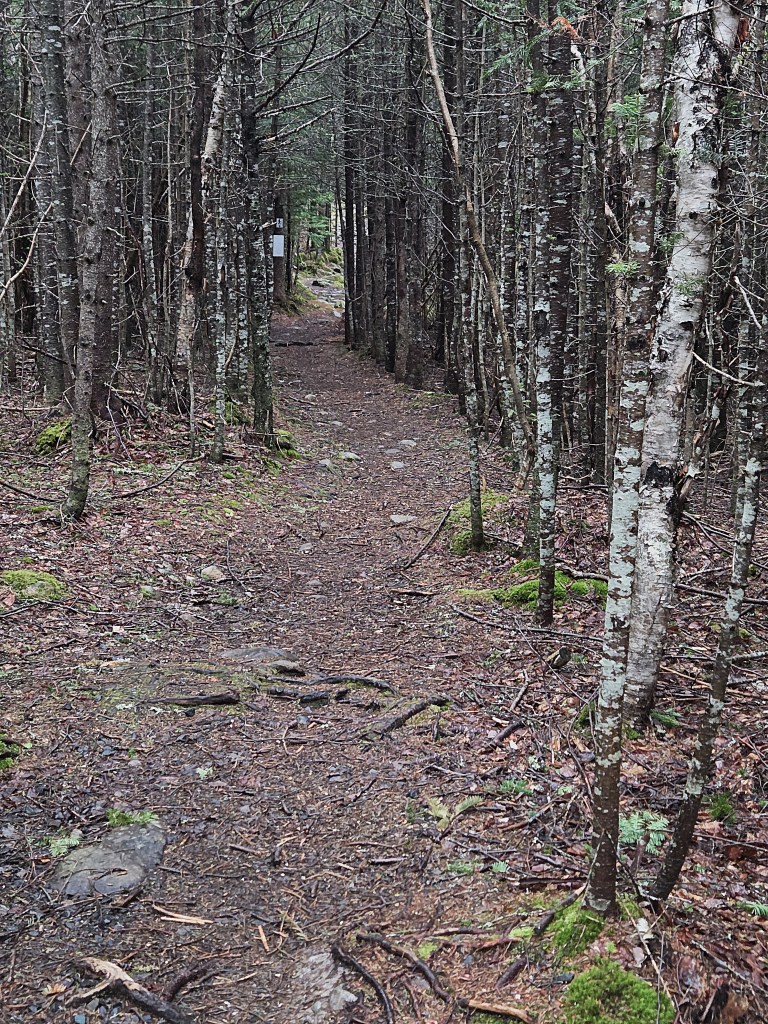
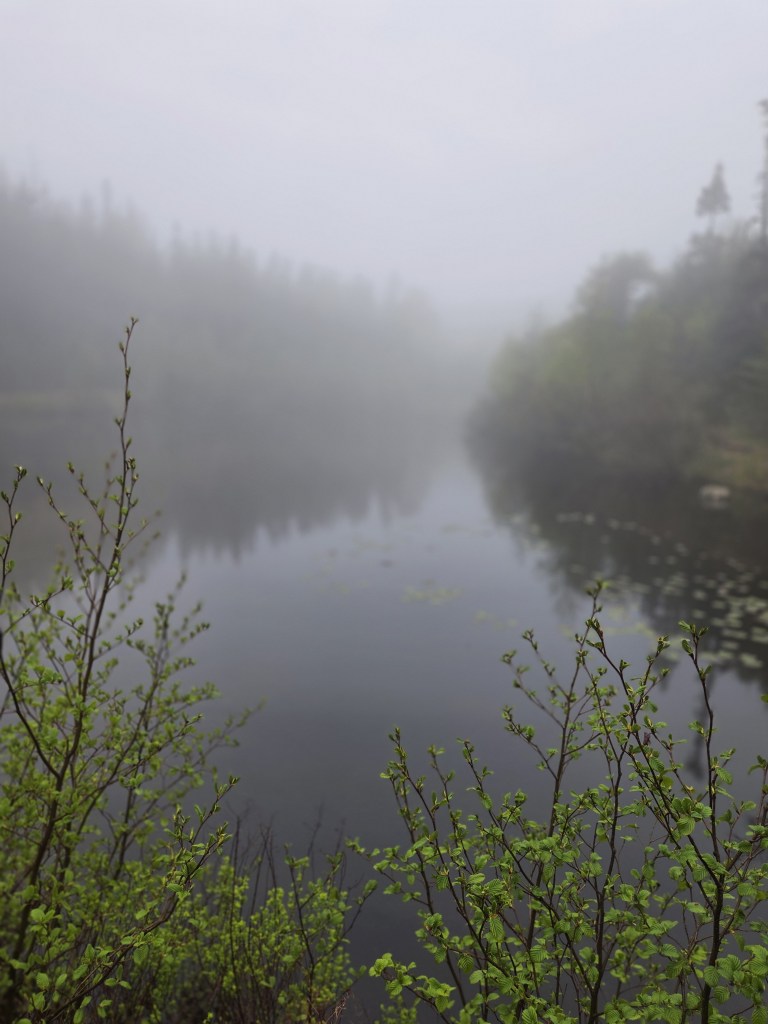
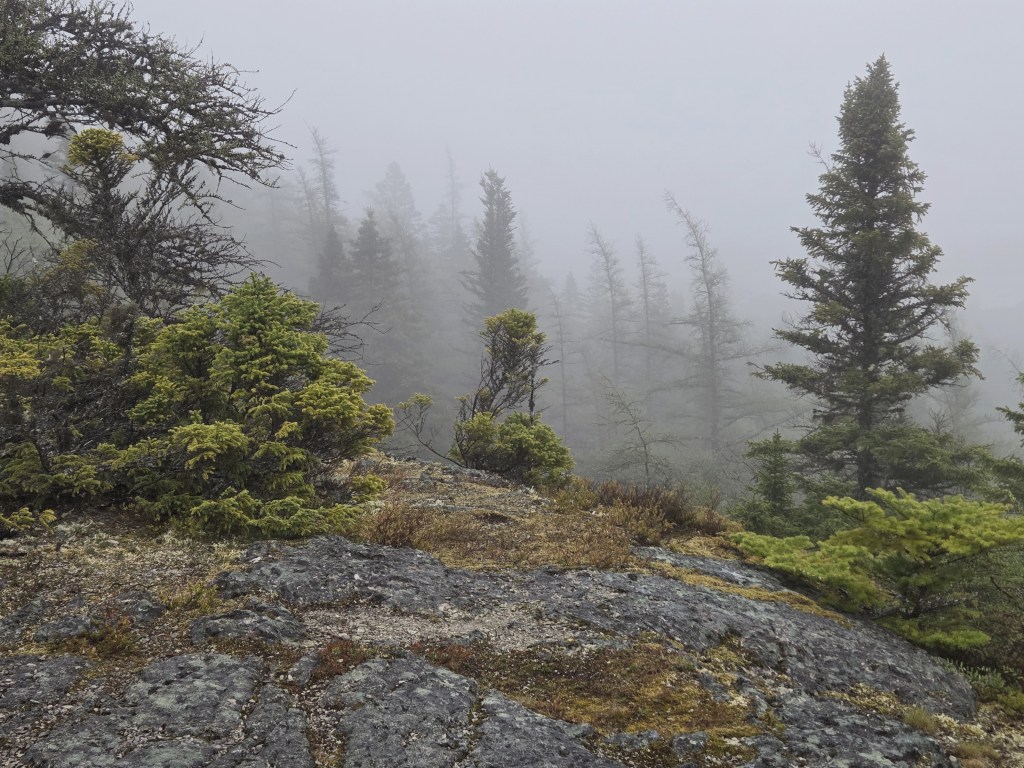
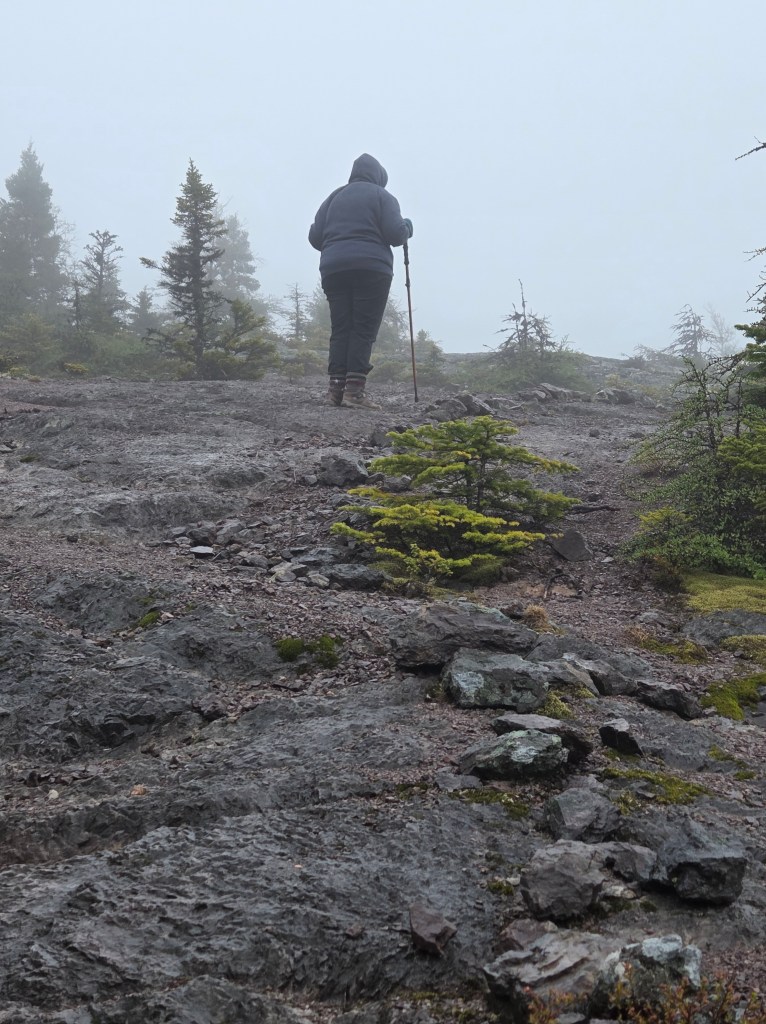
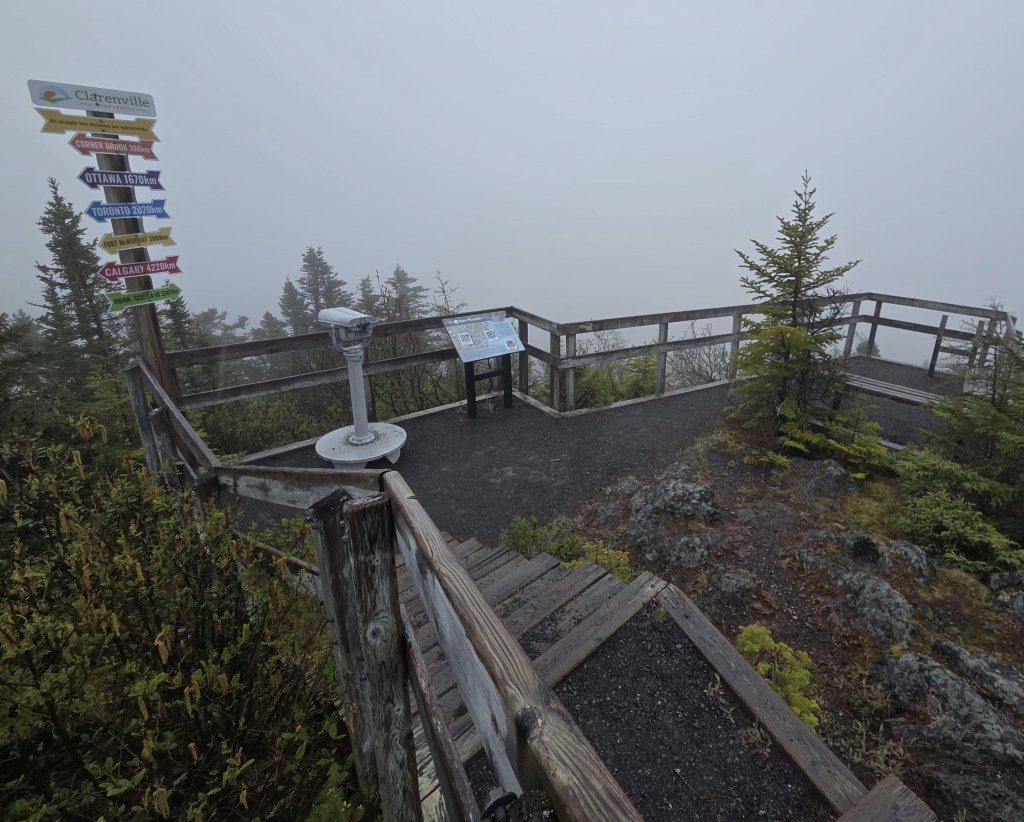
The following day we went for a hike at Borestone Mountain Audubon Sanctuary. It was a pleasant two-mile hike through wooded terrain, following an old road to a pond a little ways below the summit. (pics) At the pond, talked with John, who is also a poet. He paraphrased a few lines by the Polish poet Czesław Miłosz about turning 90 and welcoming the clarity of early morning. He then told me he had worked on a poem that morning about being 80 and welcoming the early morning. I recited a couple of my poems for him before we parted.
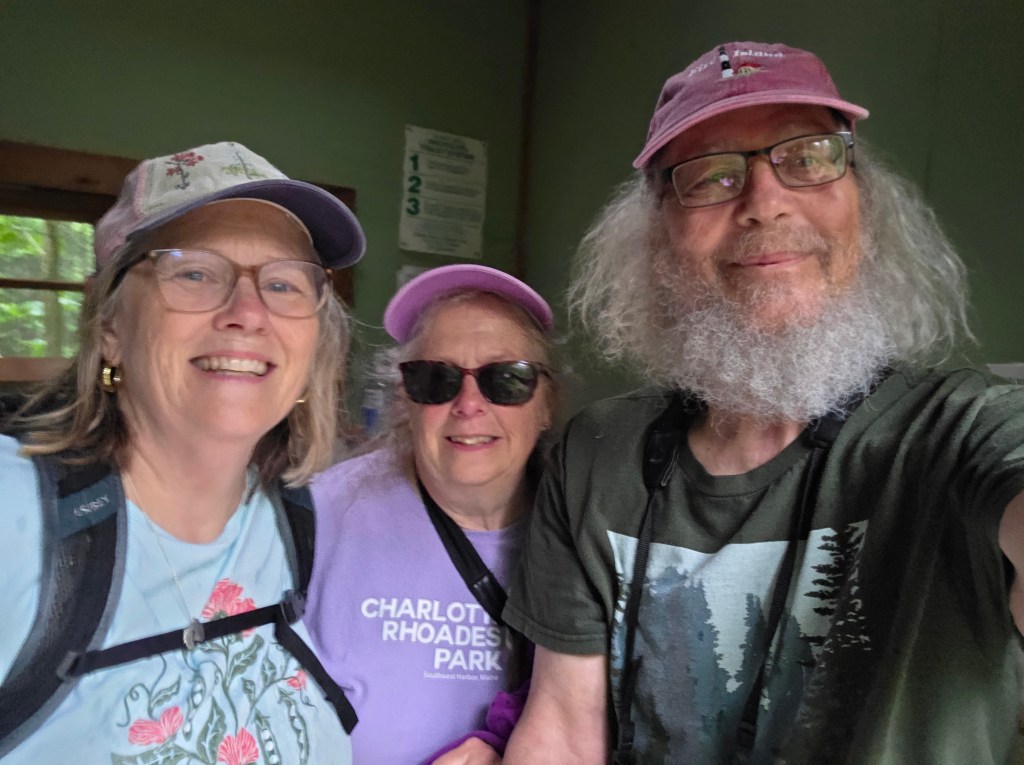
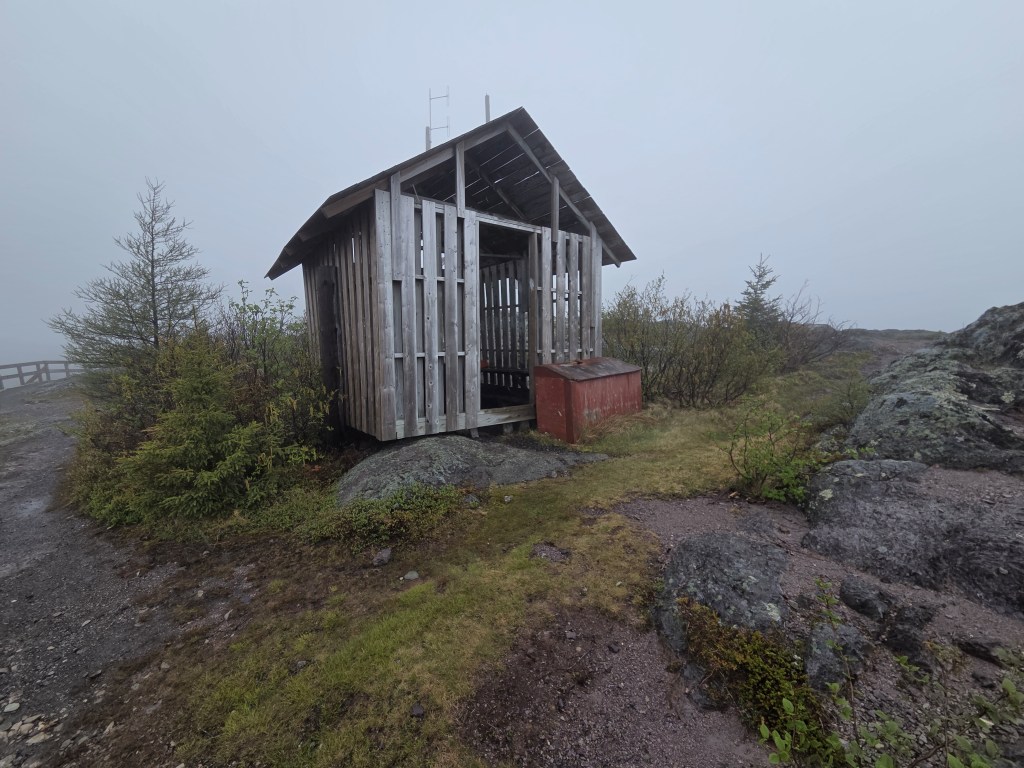
Thunder had been rumbling for awhile and grey clouds moving closer. We started to head down and just before it started pouring reached a outhouse bathroom building along the path that we took shelter in. (pic). While standing there, sheltered from the heavy rain, John went walking hurriedly by, soaked to the skin. Soon the heavy rain moved on and we continued the walk back down getting lightly rained on by the drops falling from the canopy of trees.
Back at Elise’s, food and conversation once again. Leaving here early tomorrow morning for a drive to visit the Haskelll Library in Derby Line, VT, which straddles the US/CD border. Then on the Rutland, VT for a final night on the road before returning home to Wheeler Hill.
6/21-22
5:30 am Tuesday morning, 6/23, sitting in a motel room in Amherst, NS, two days removed from “The Rock.” Newfoundland is behind, but the journey still continues. Won’t be home until Friday afternoon, June 26.
A little sadness leaving the island behind after three wonderful weeks. I’ll reflect on those three weeks later though, after settling in back home.
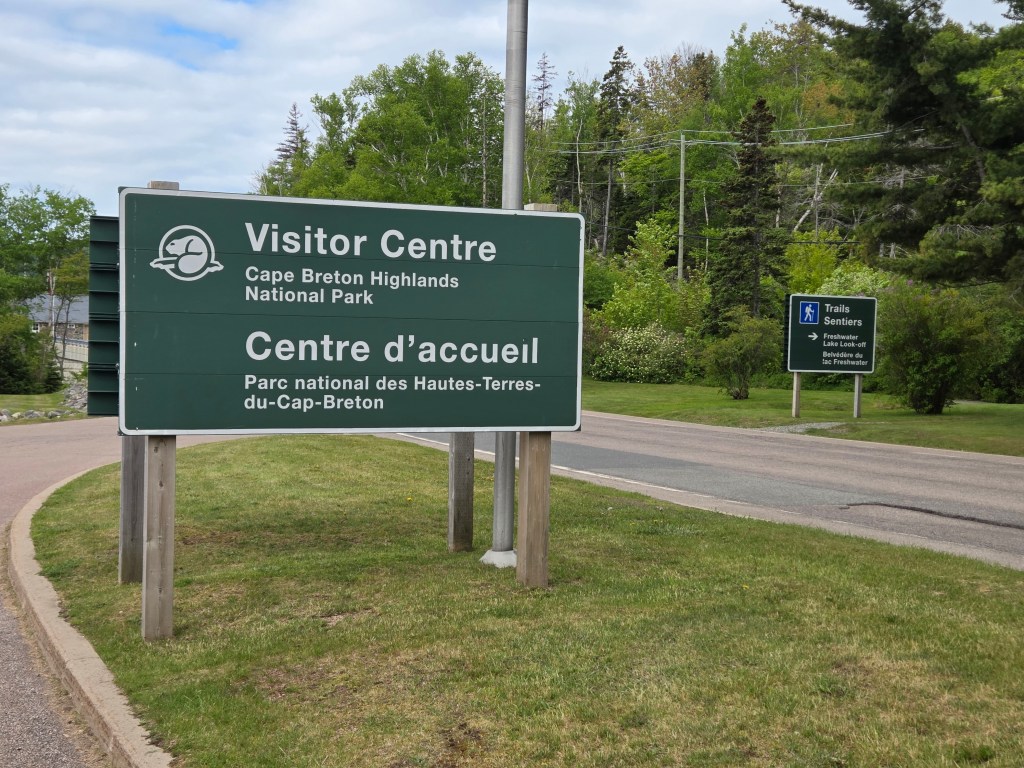
The last two days have been spent in Nova Scotia, mainly on Cape Breton, traveling through the highlands and the National Park.
After disembarking from the ferry, 9:30 am on Sunday morning in North Sydney, where we boarded the ferry 22 days earlier, we drove an hour and a half to Ingonish Beach, at the edge of Cape Breton Highlands National Park, where we would be staying for the night.
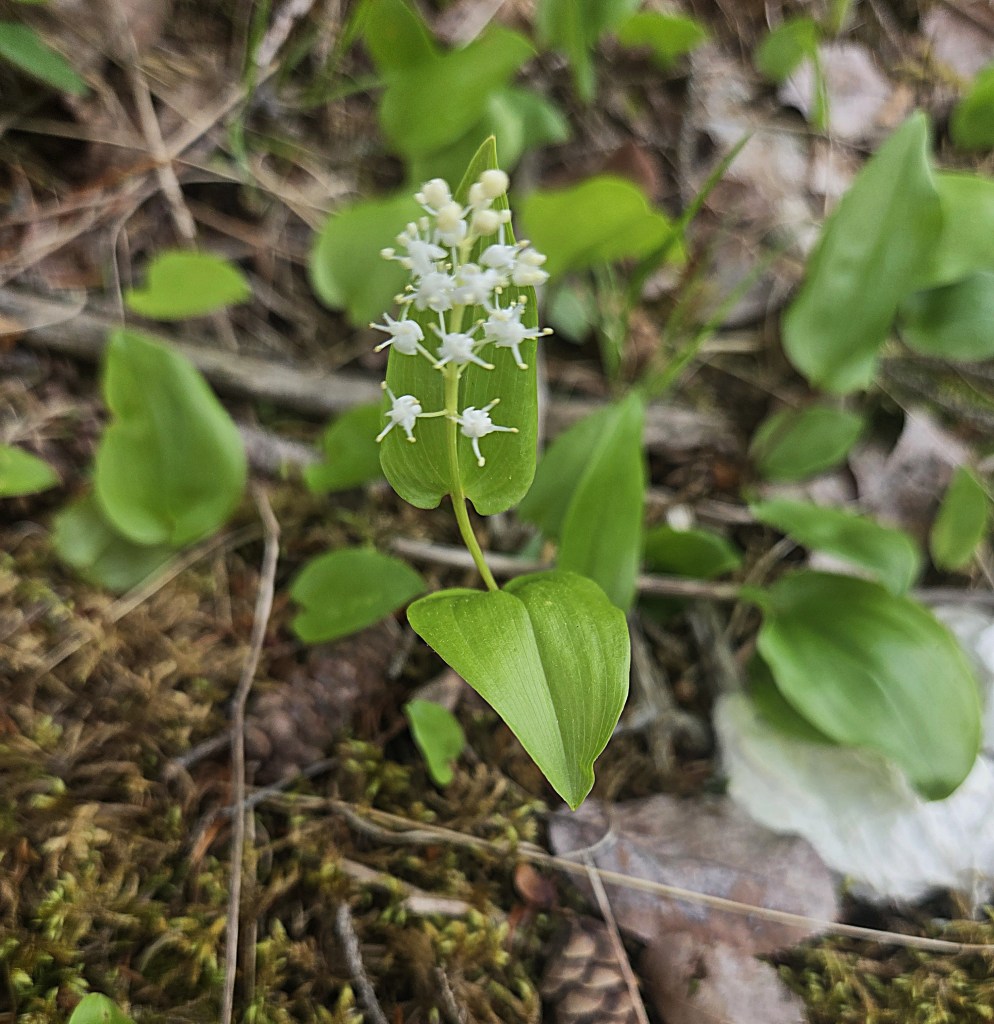
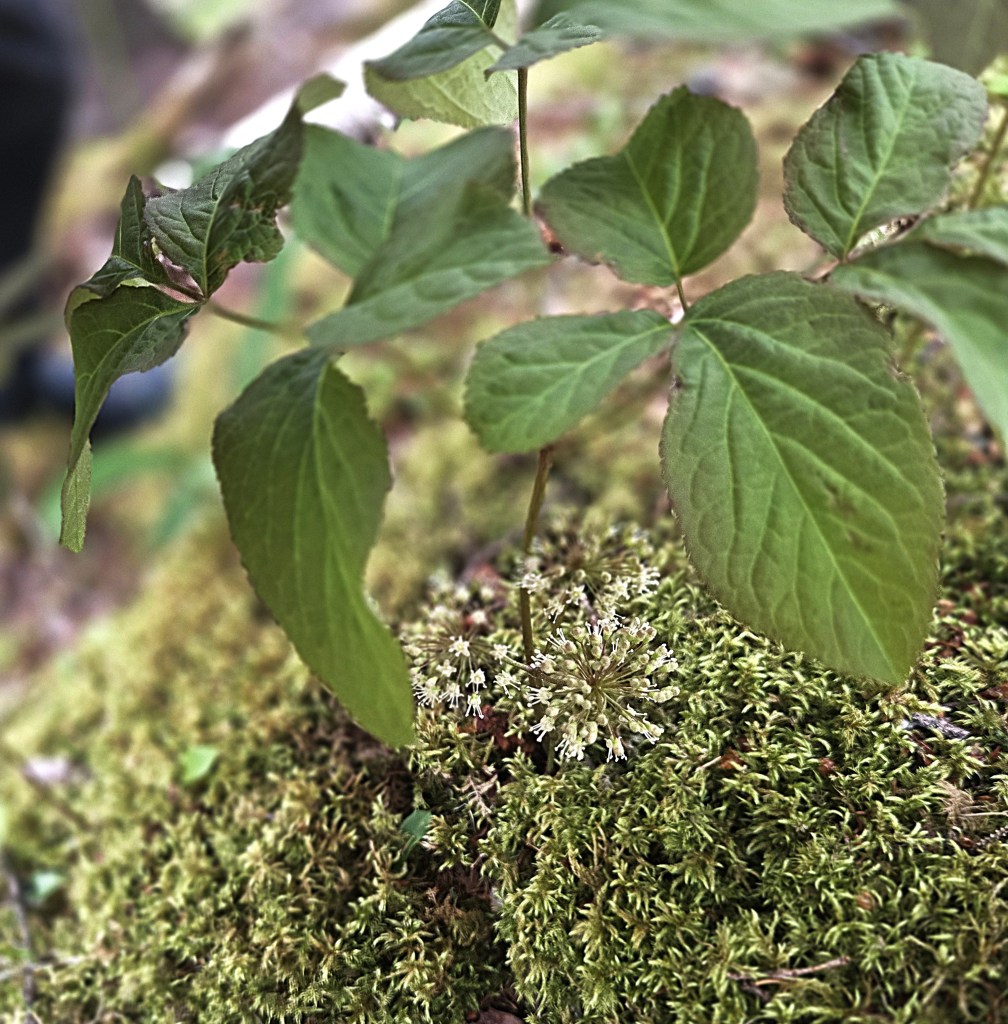
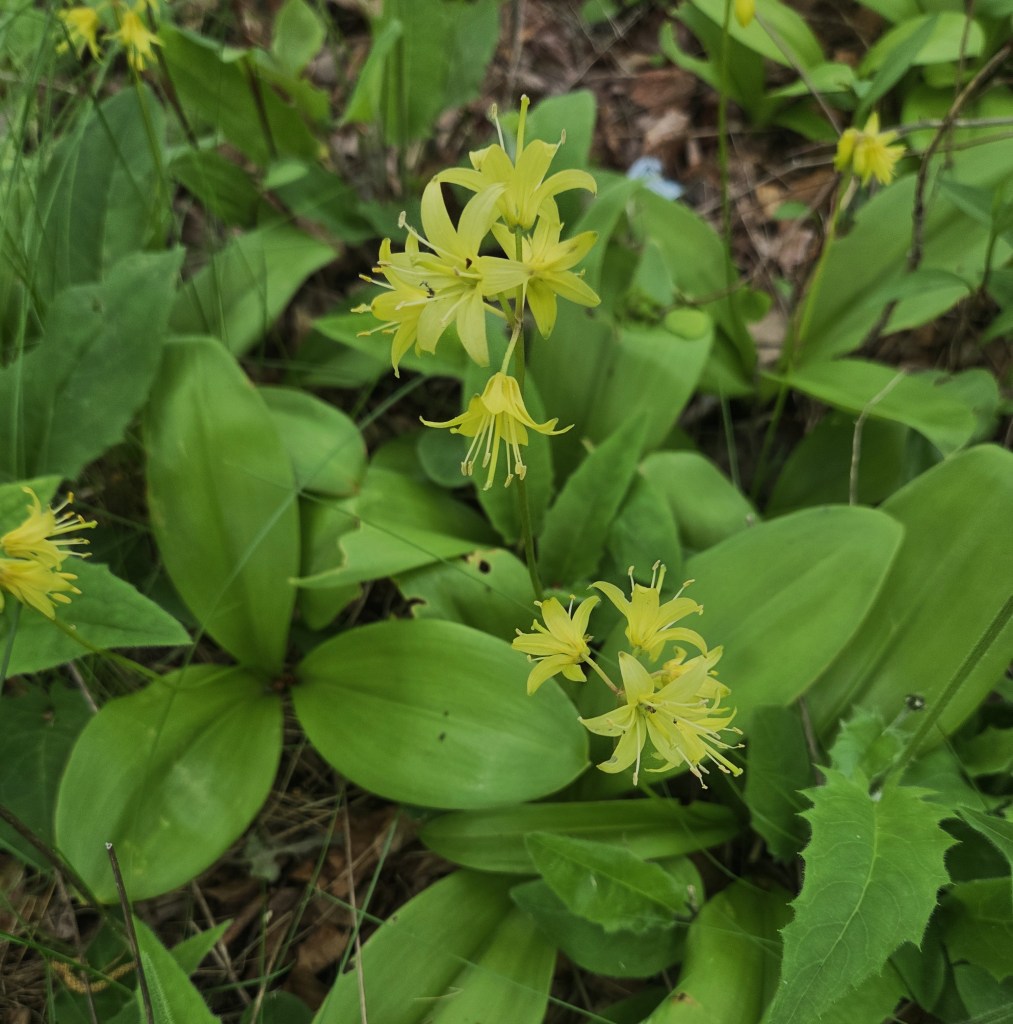
At a rest area along the way I took pics of a few flowers: Canada Mayflower; Clintonia; Sarsaparilla.
The intention for the two days was to drive the Cabot Trail, catch a lot of scenery and take a few little walks in nature along the way. Not ideal, but the best we could do in terms of how much time we had available. This was an add-on to the journey, as the visit with Elise in Maine was put back a day later than we had planned. The National Park wasn’t in the plans before that. A nice unexpected bonus.
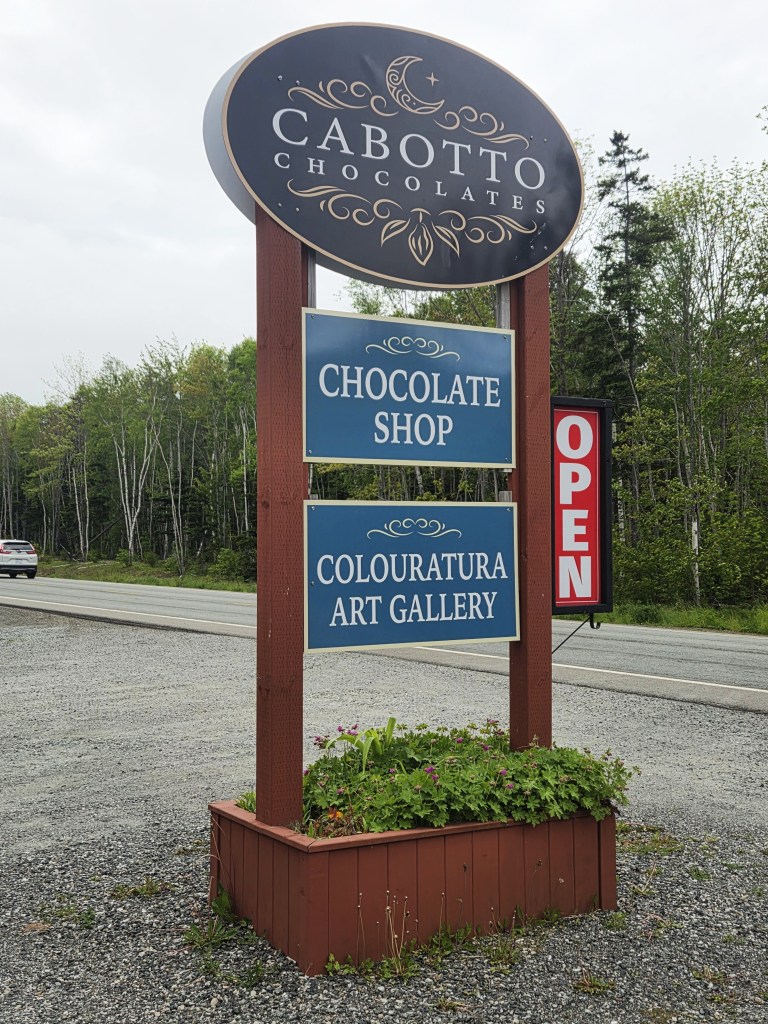
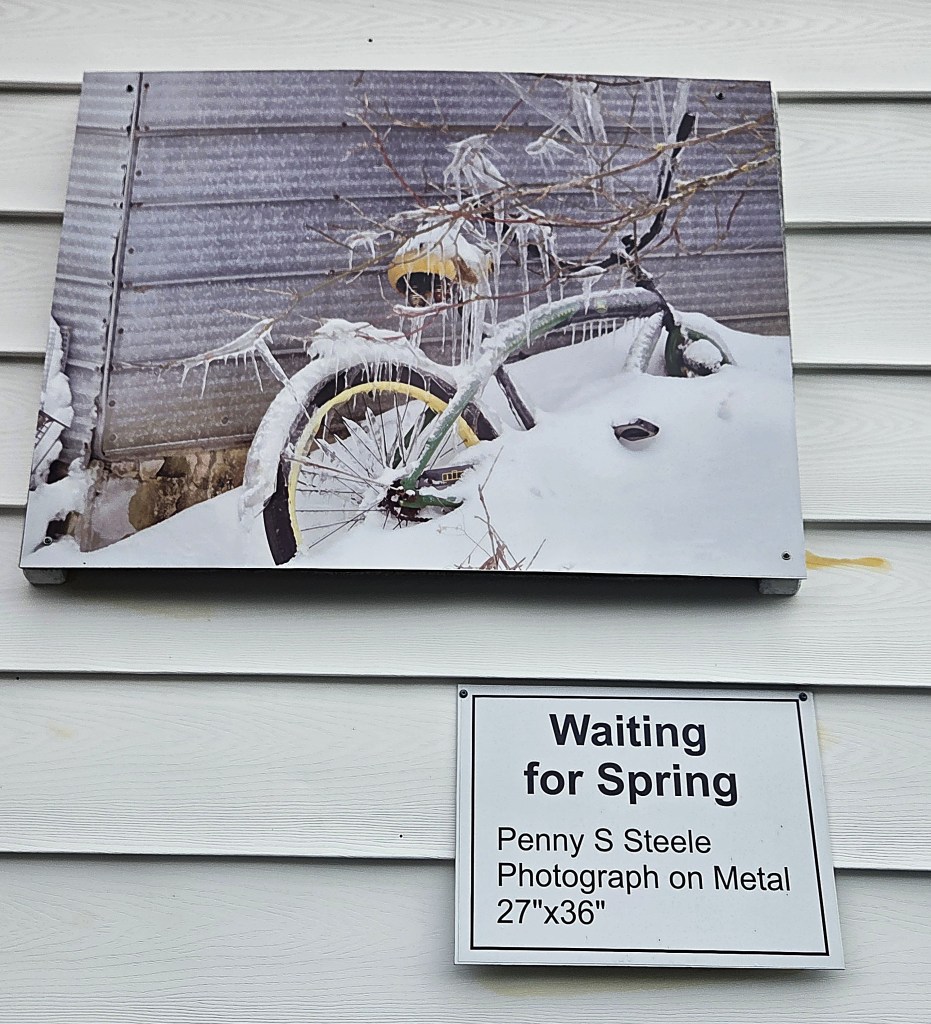
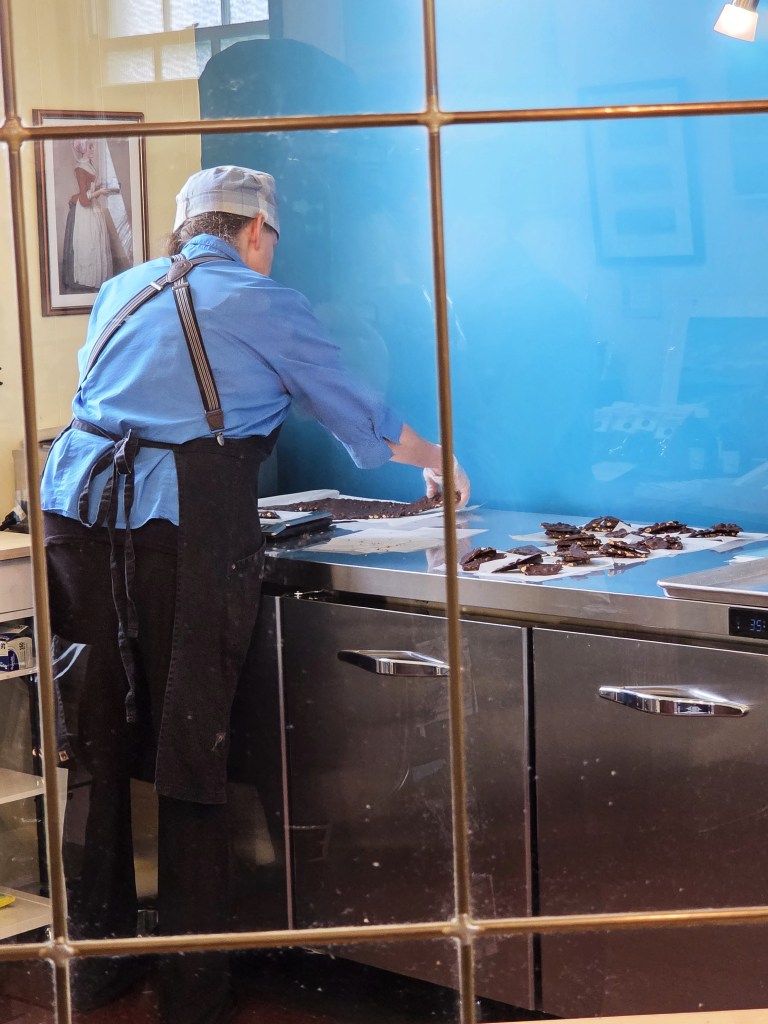
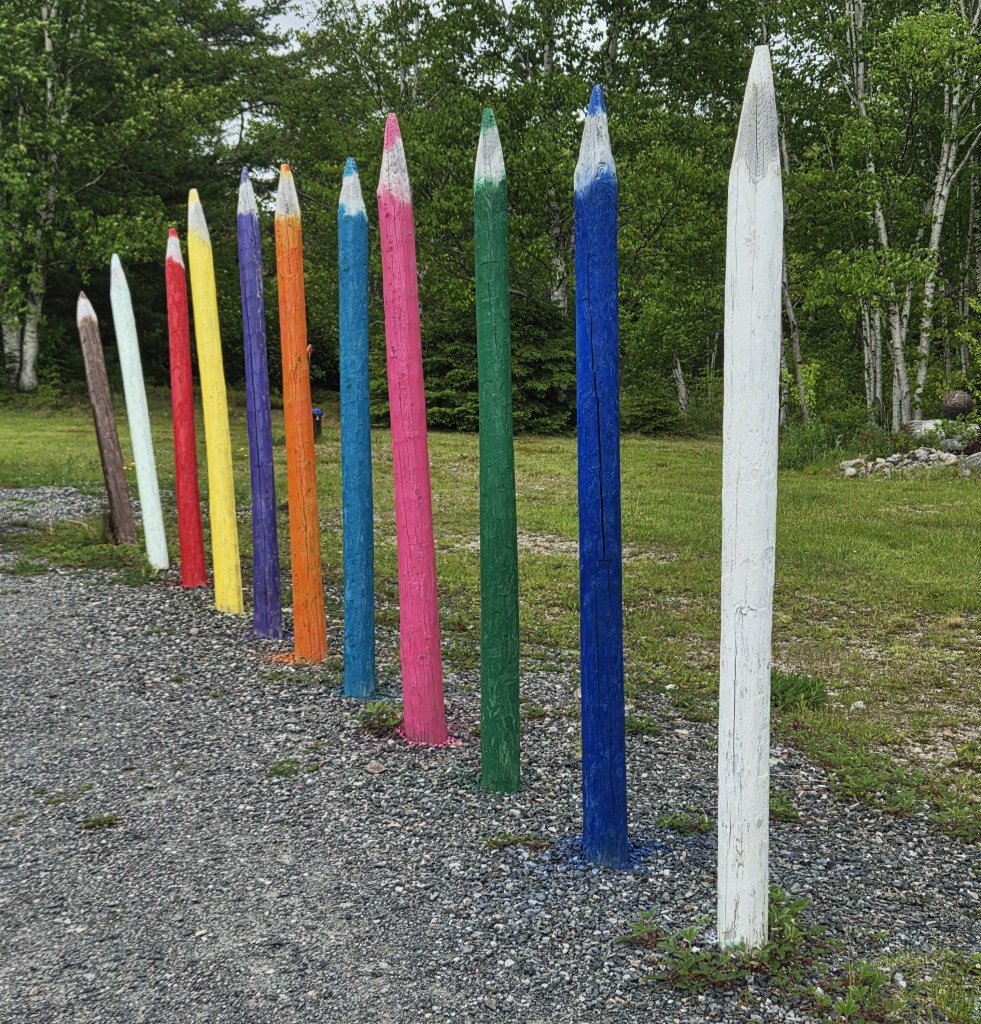
A chocolate shop along the way. Carolyn didn’t notice the sign, but I did. Knowing how much she likes chocolate I thought we should stop there. Not just chocolate, but art, too! A little whimsicality with the colored pencil fence at the parking area and a photo print on the outside wall near the entrance.
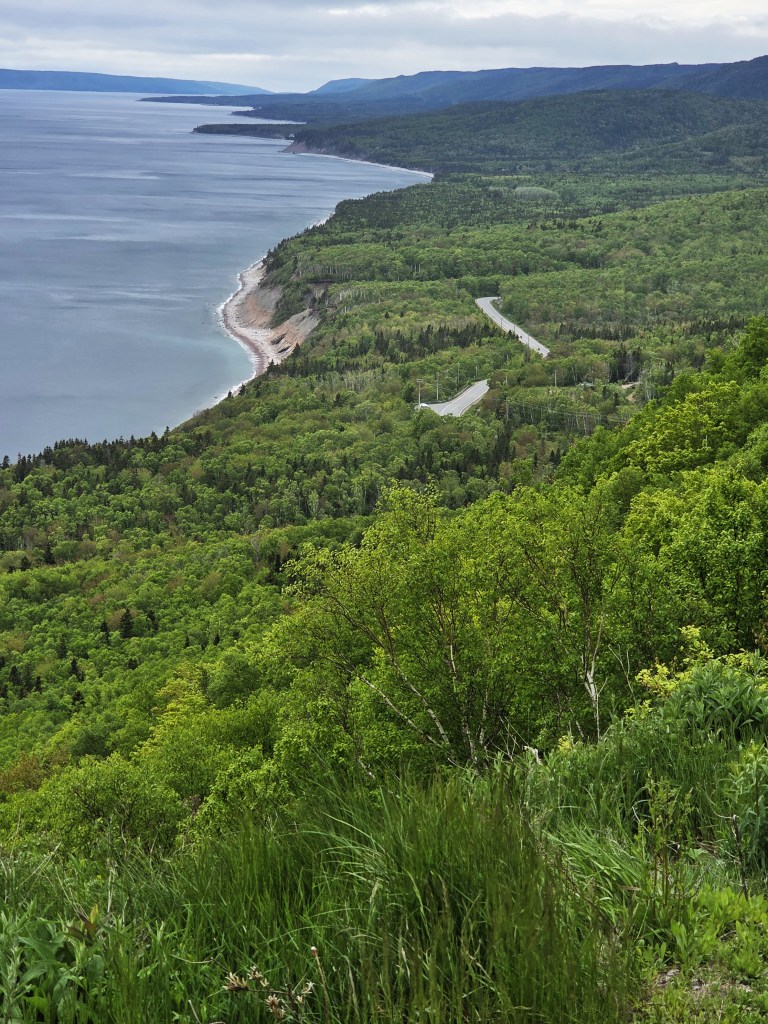
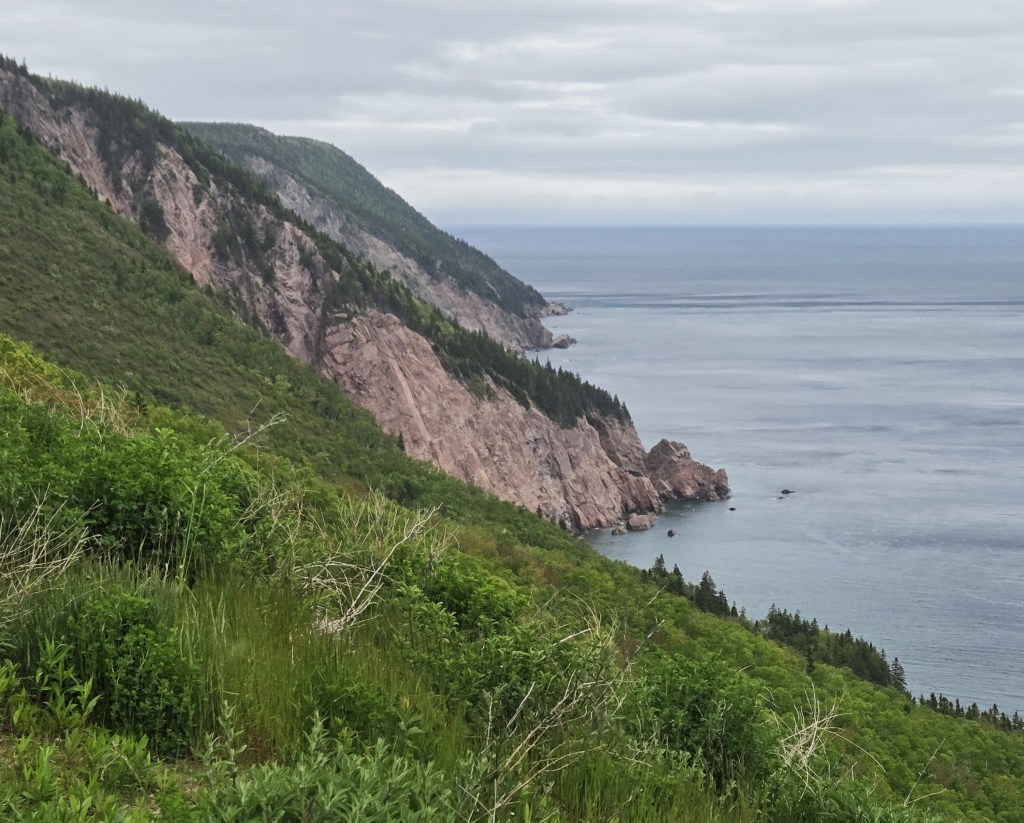
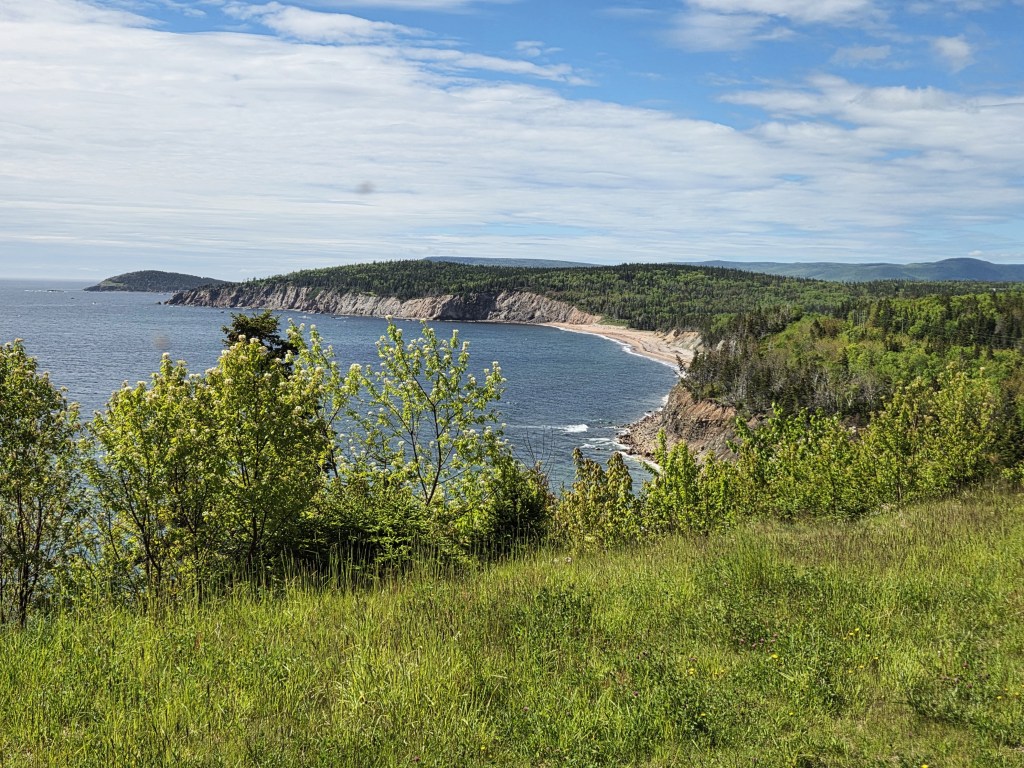
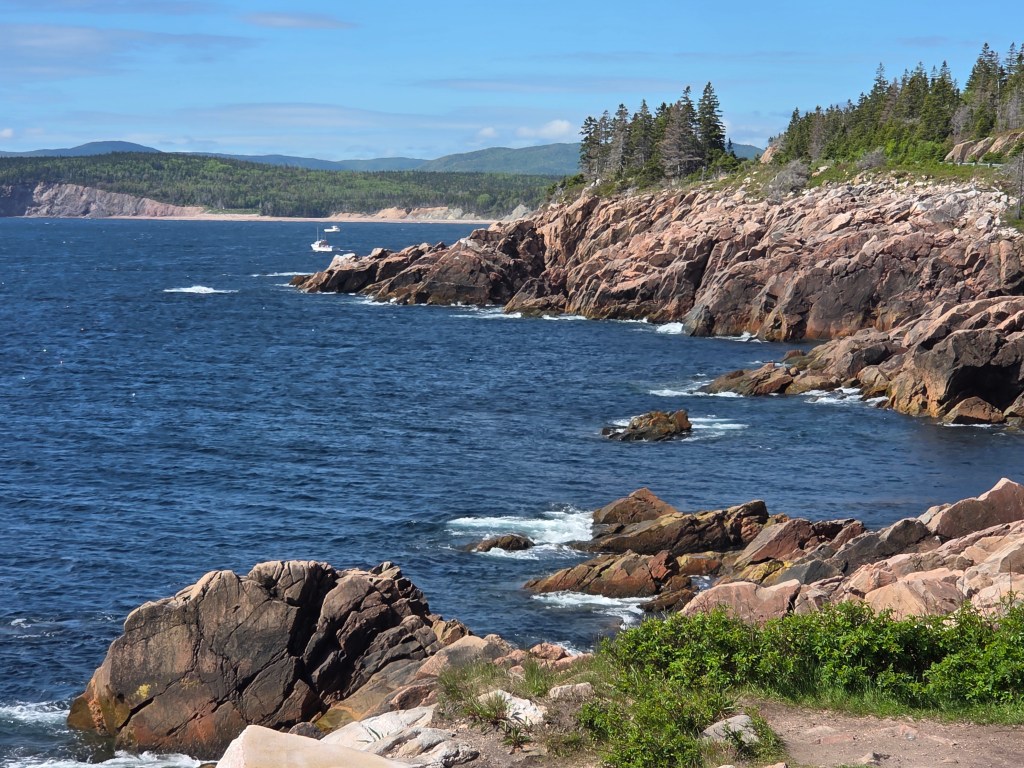
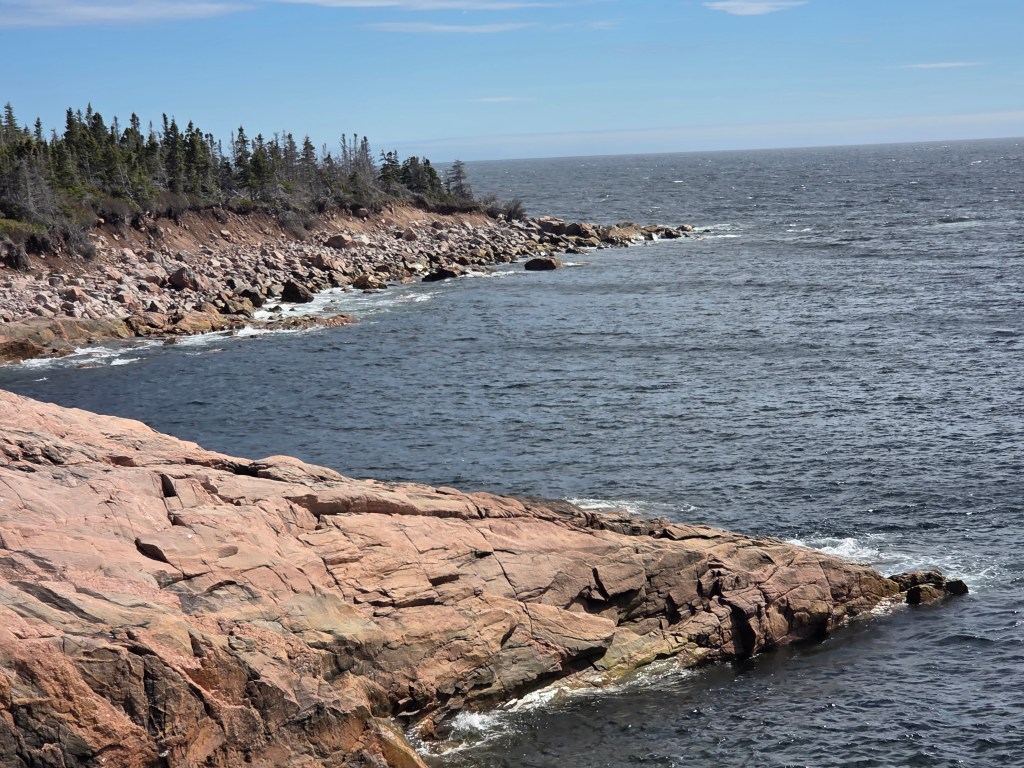
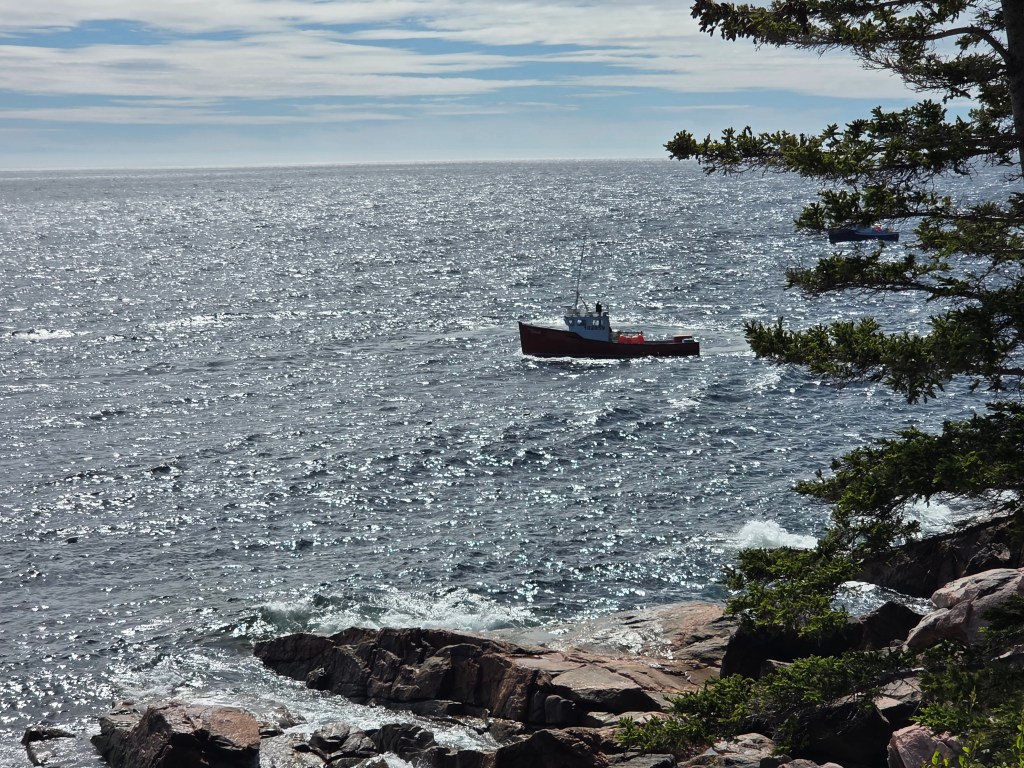
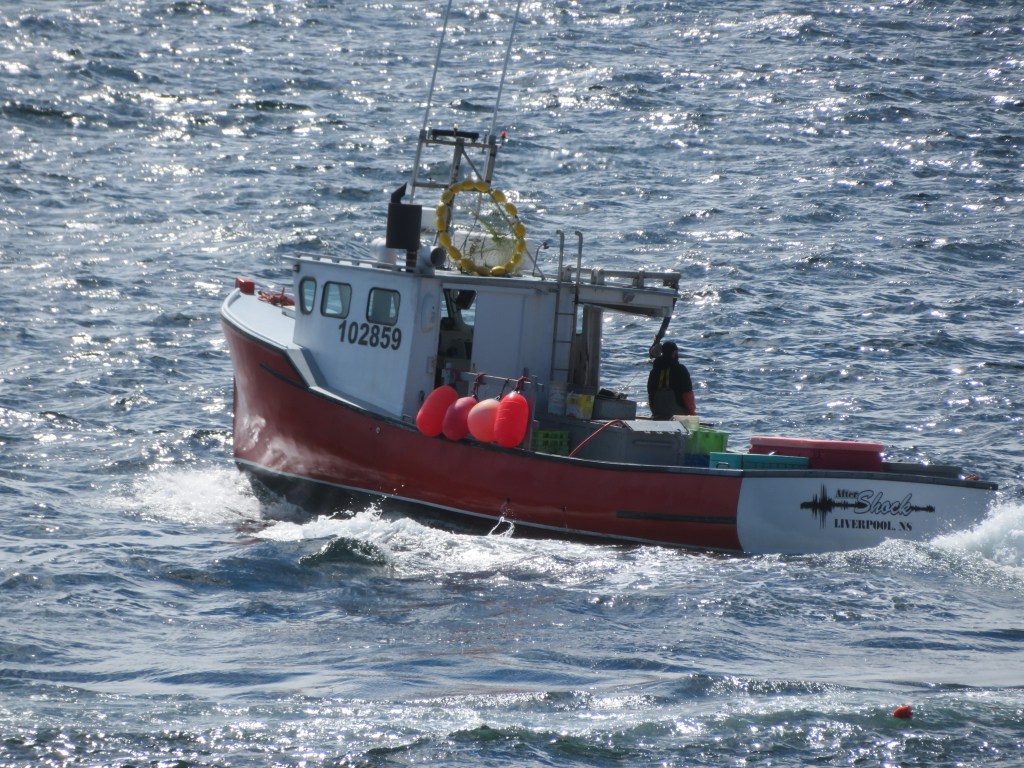
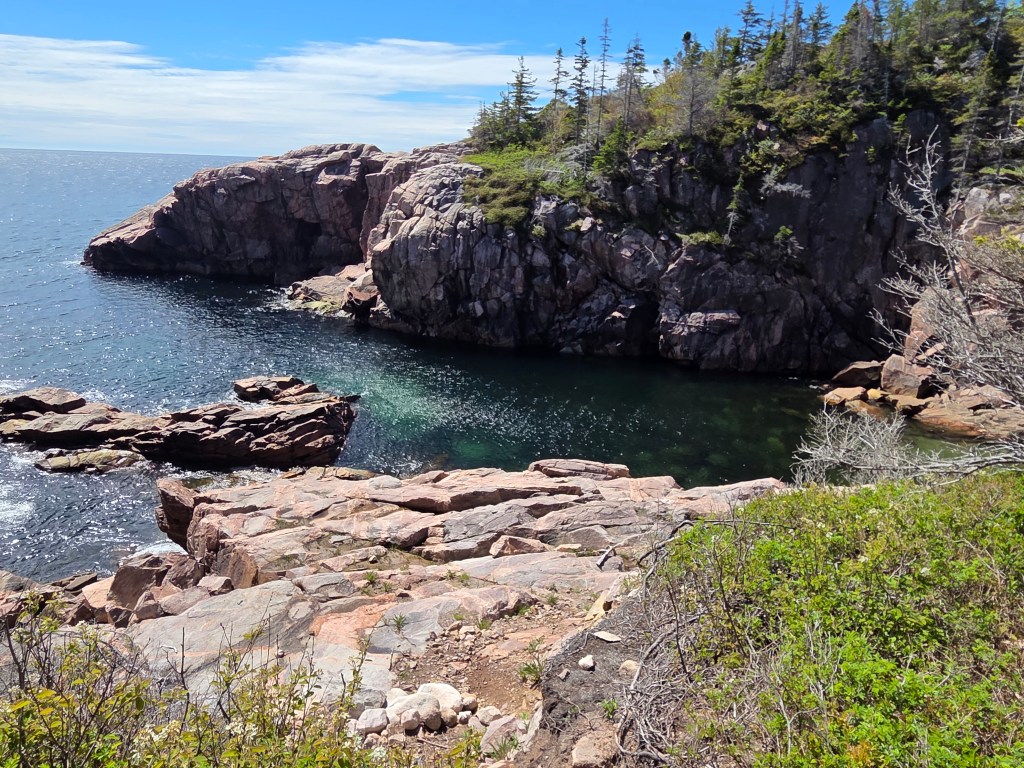
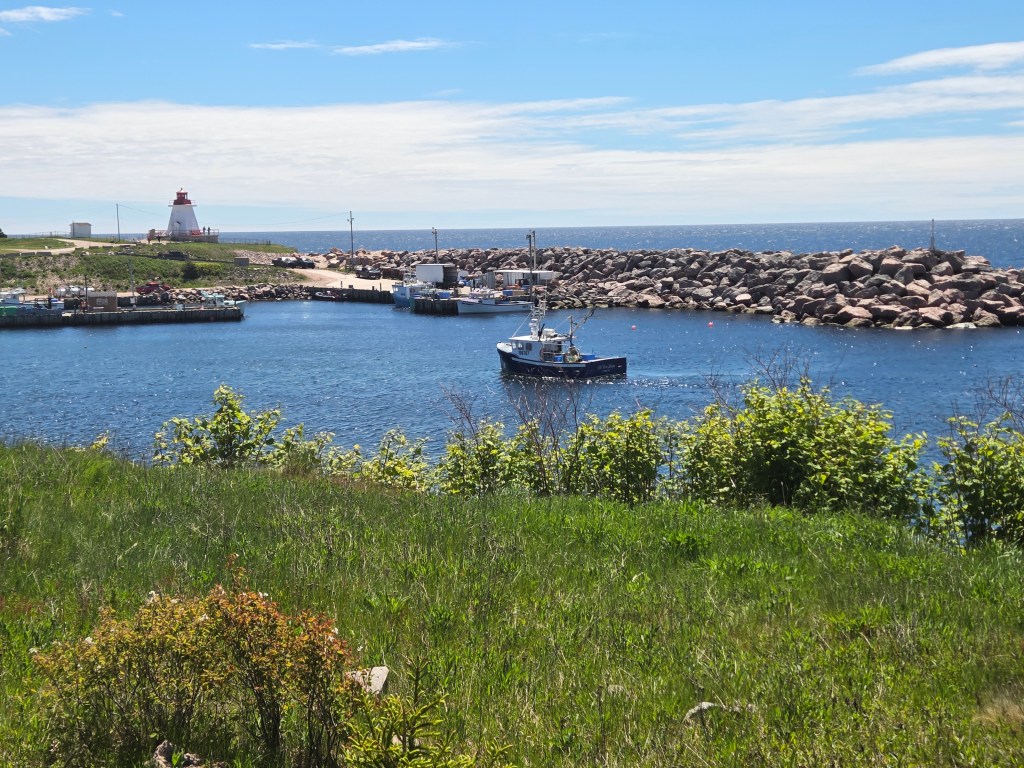
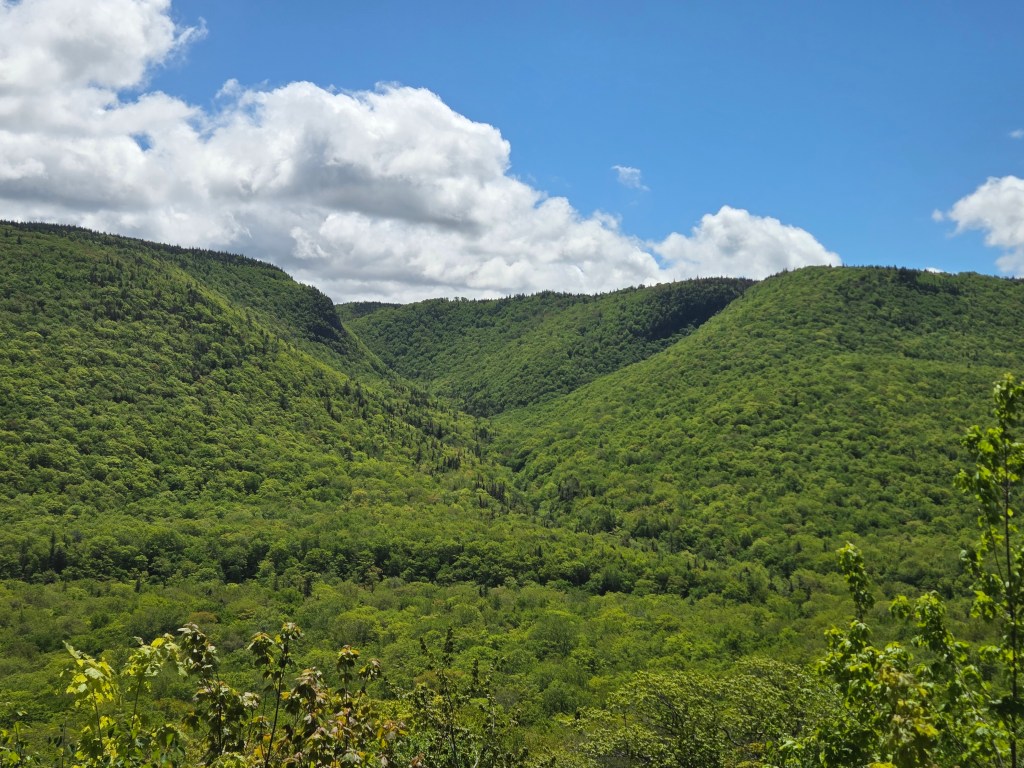
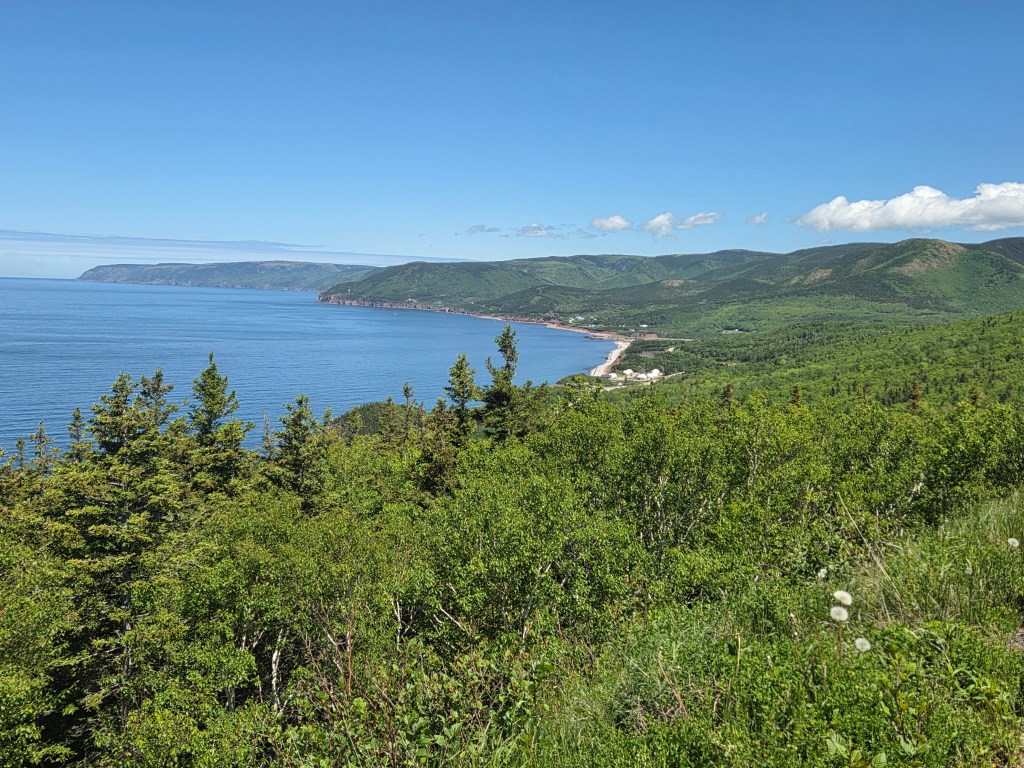
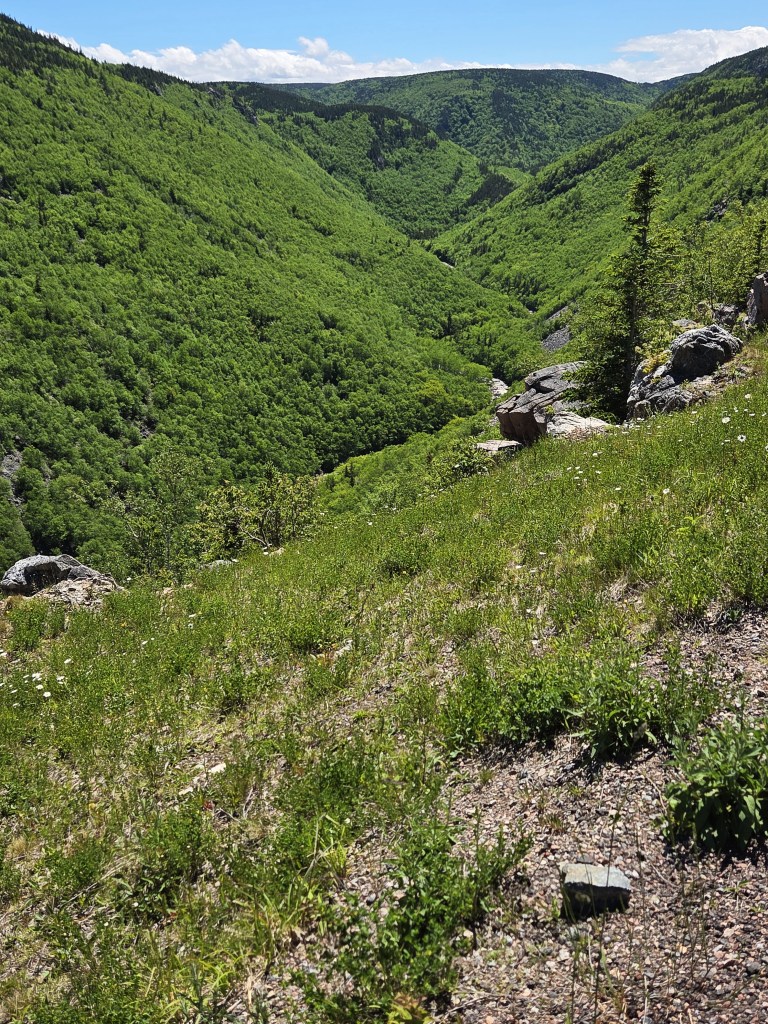
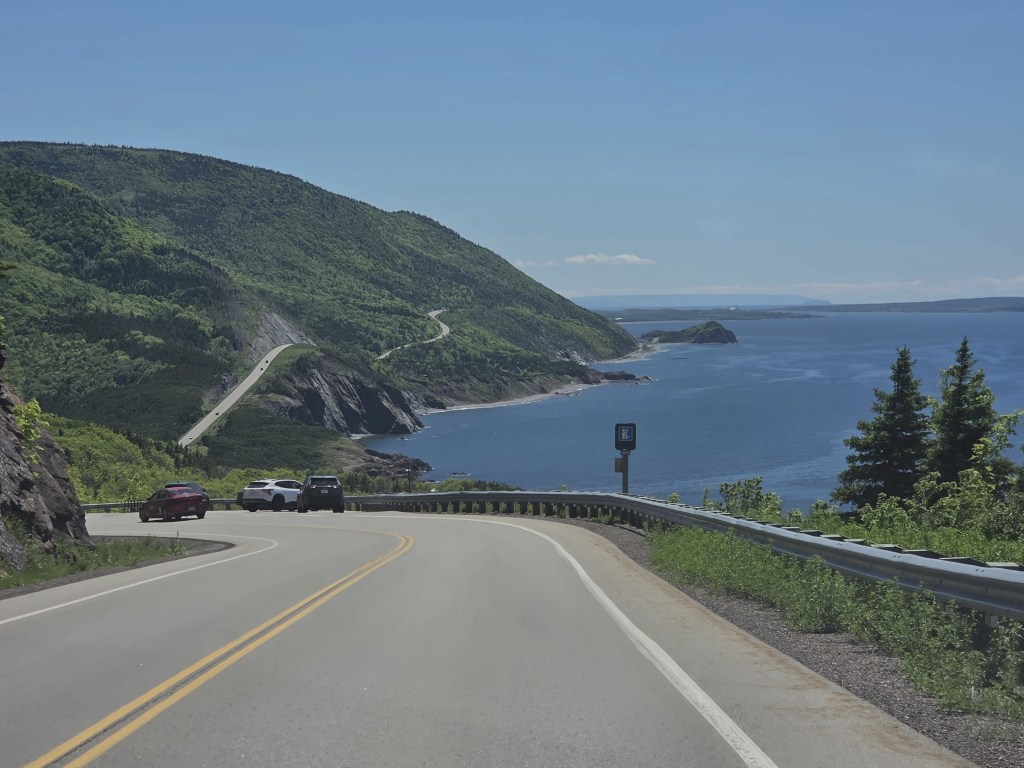
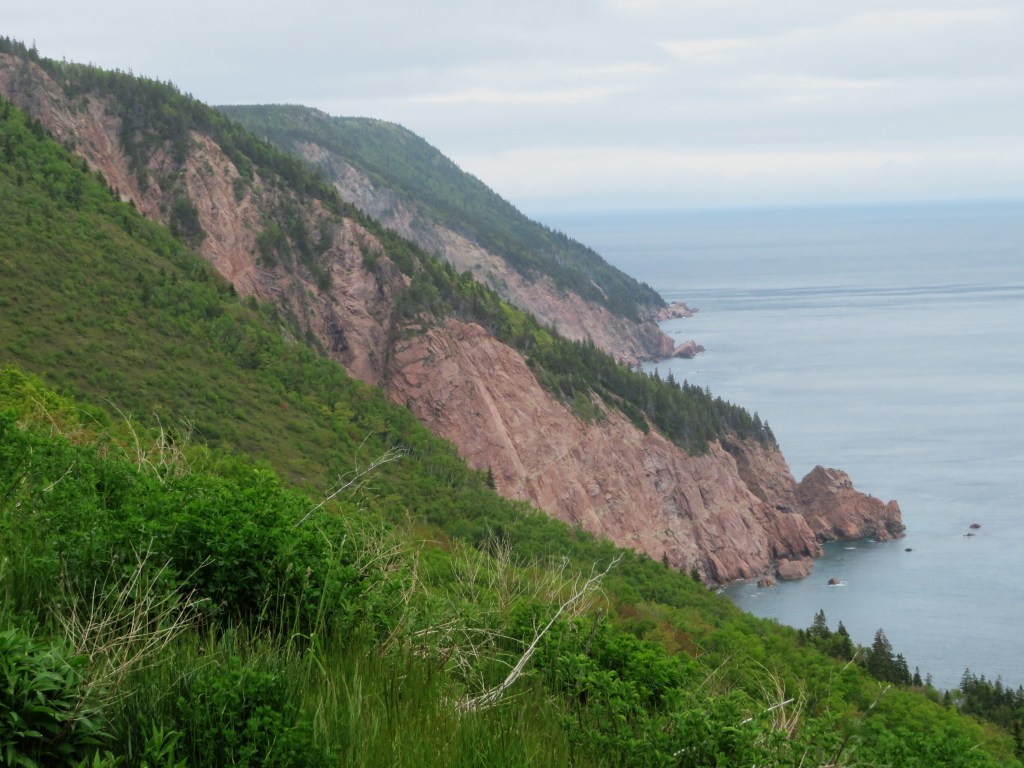
There are a lot of scenery pics below. I won’t describe them, other to say that they were all taken while driving the Cabot Trail through the National Park.
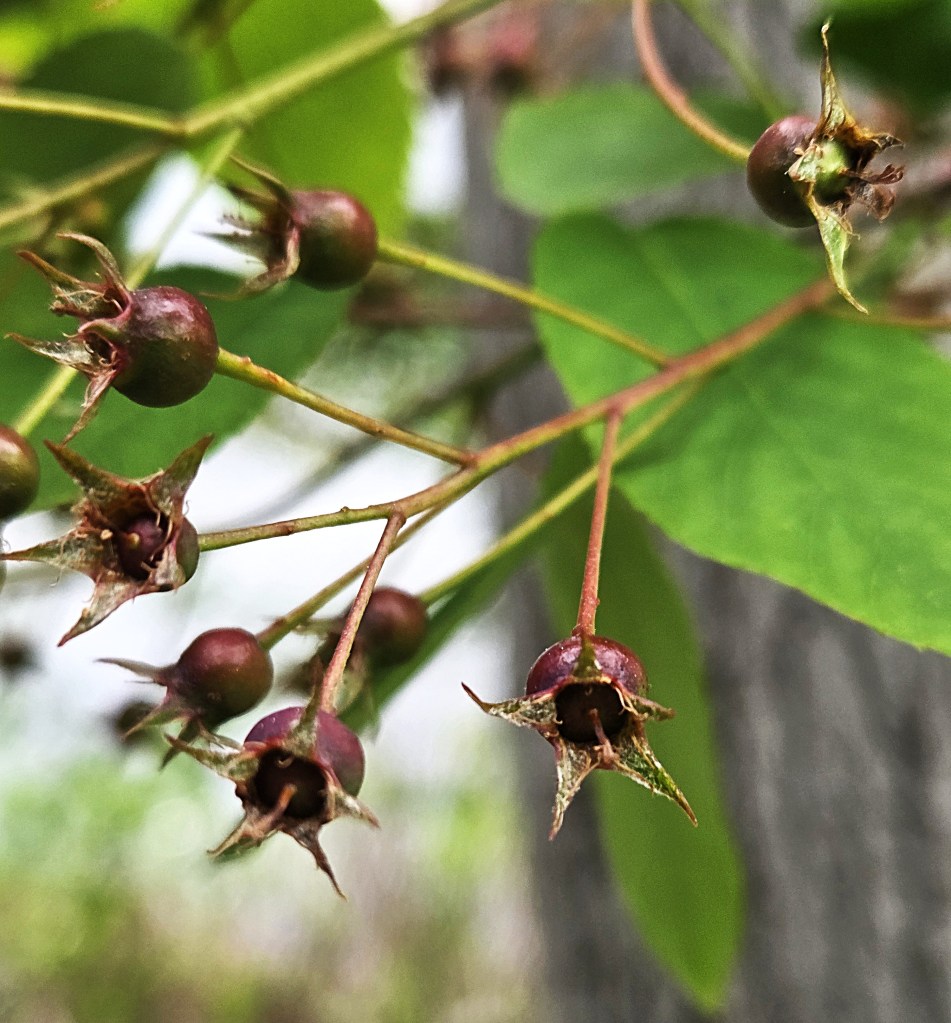
On another little hike near Ingonish Beach I saw some serviceberries. The trees are further along here than in Newfoundland, where they were still in bloom everywhere. Here, in more “southern” northern Cape Breton, the trees had already formed fruit.
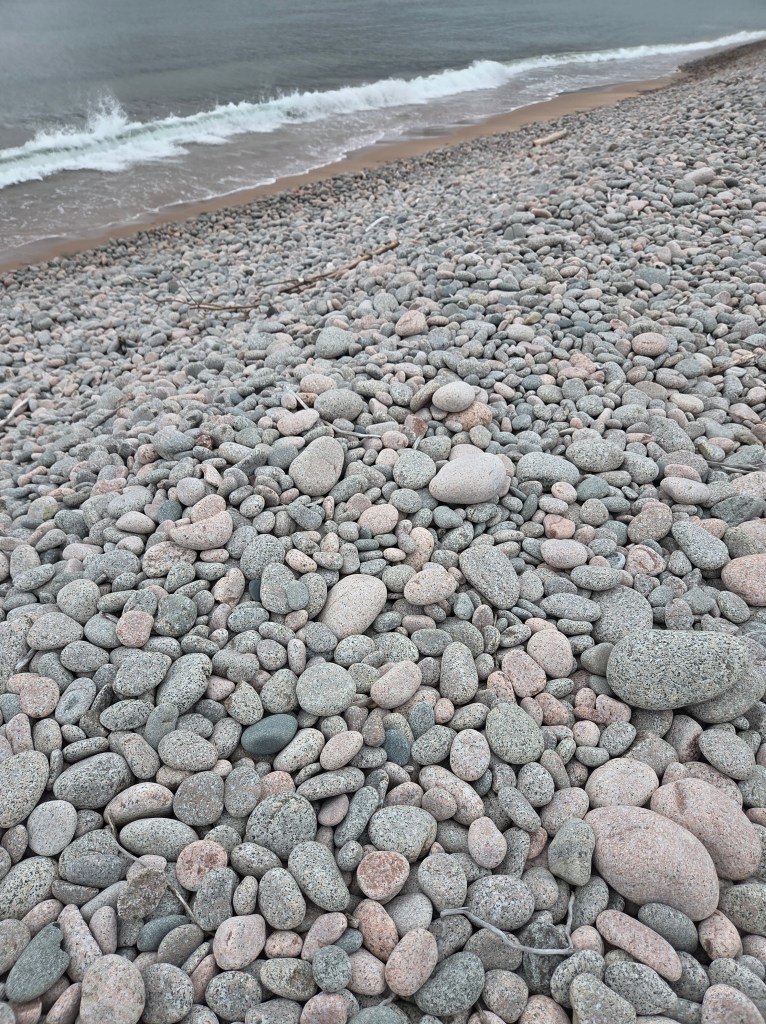
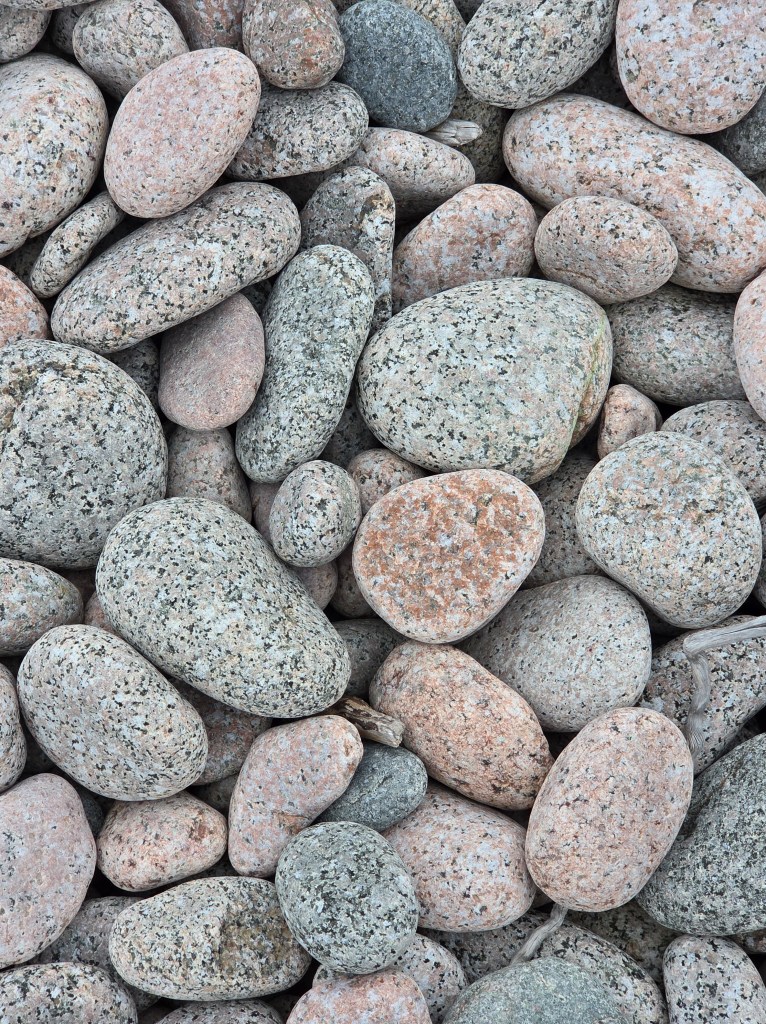
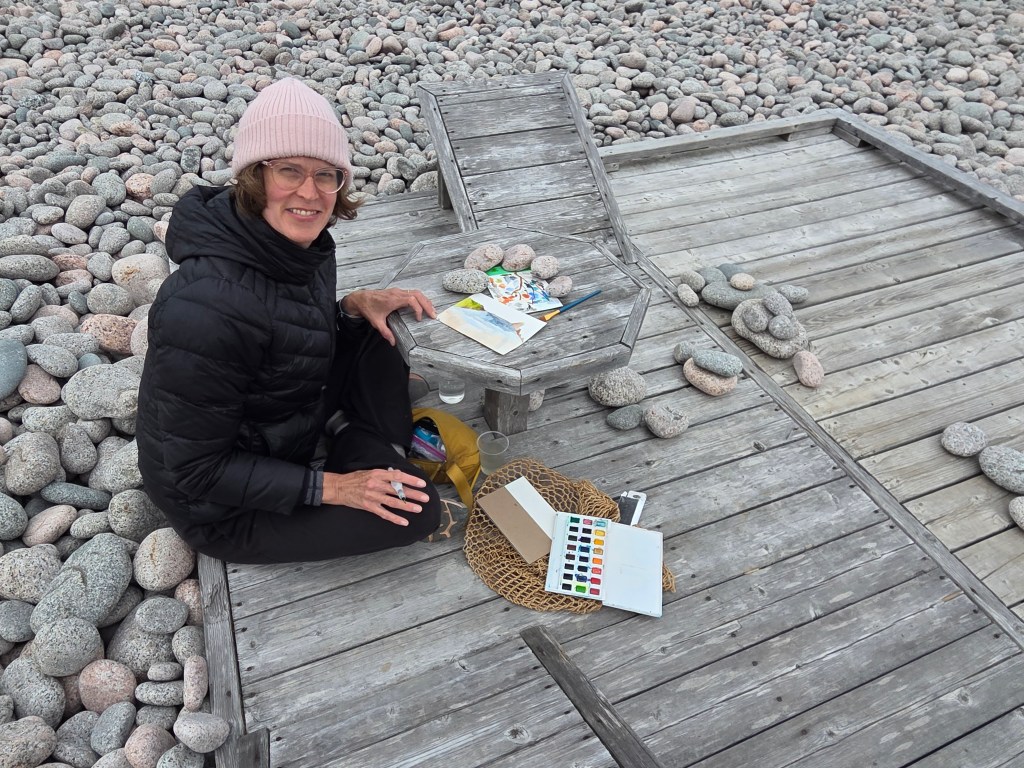
At the end of the hike I saw someone painting while on the rocky seawall. Kathy, from Pennsylvania, dabbling with watercolors. She said she just plays around with the artwork, not real serious. One has to be a little serious about it if you have to wear winter clothing while doing some plein air painting!
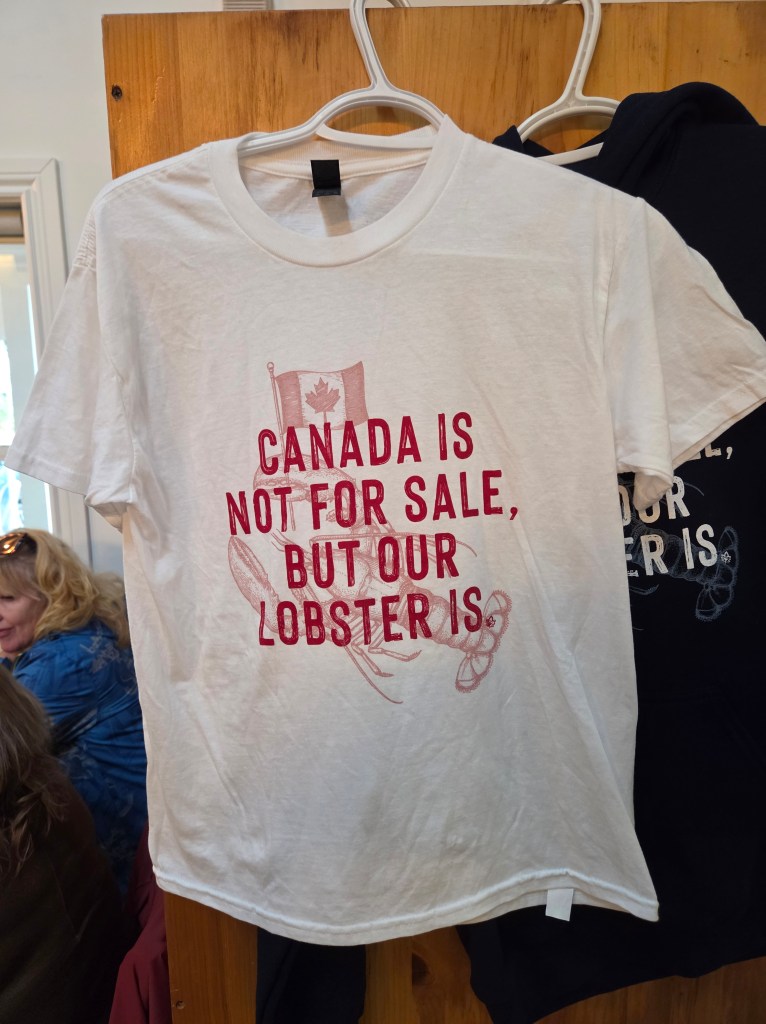
The t-shirt was at the restaurant where we ate dinner. The owner came up with the idea two days after Trump first brought up Canada becoming the 51st state.
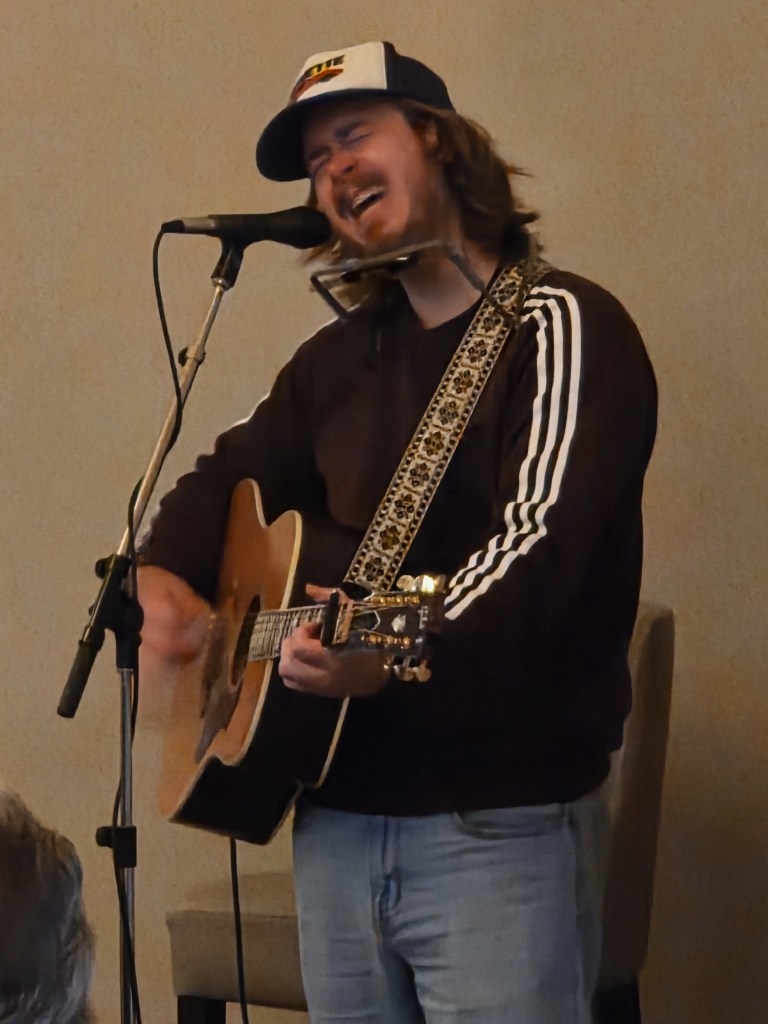
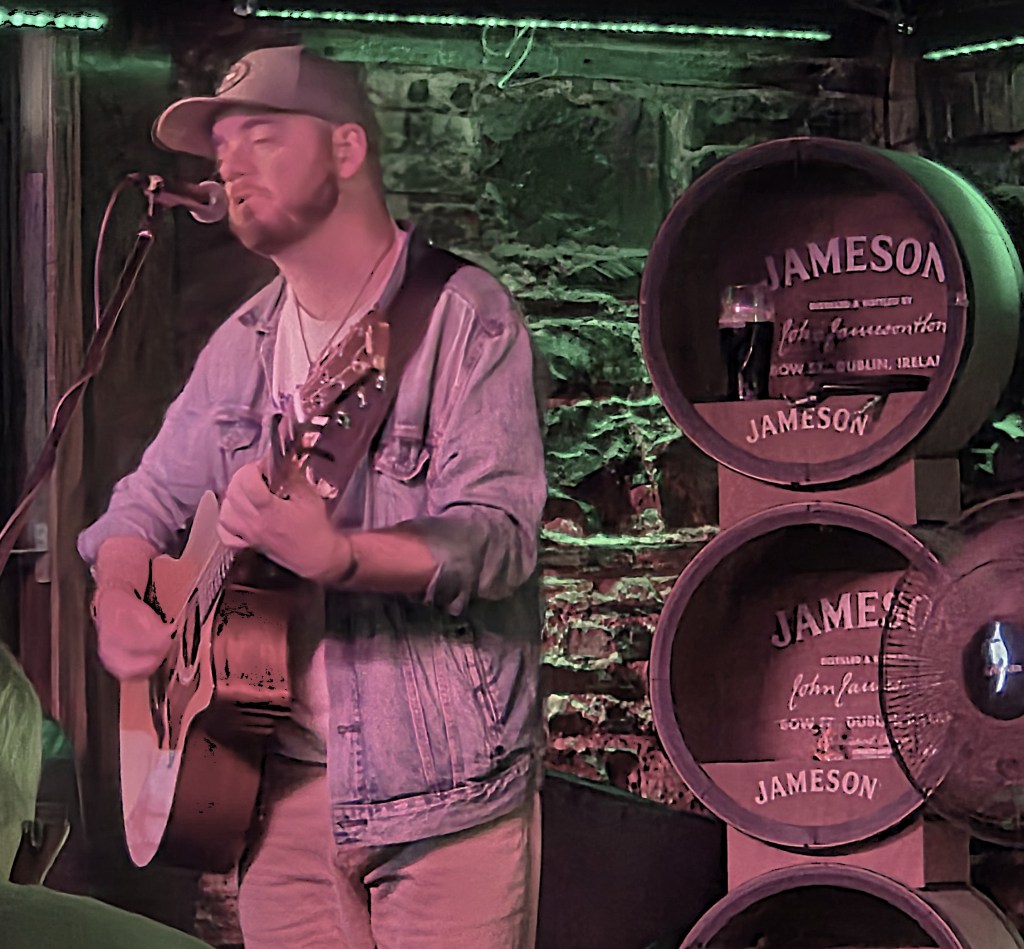
There was live music at another venue that evening. The musician was a local, Jordan Musyscyn. When I first saw his last name I thought it was a stage name. I asked him about it and he said it is Ukrainian and his grandfather’s name! Serendipitous.
He was playing mostly cover songs, like most pub performers do. After just cover songs, and one of his own, I requested two things, a Lightfoot song and tradition Nova Scotia ones. He didn’t cover Lightfoot (a difficult thing to do I would expect) but did play a Nova Scotia one. Later, I requested some more original songs, He had played two earlier but reverted back to covers. He obliged my request. What musician wouldn’t like to be asked to play some of their own songs?
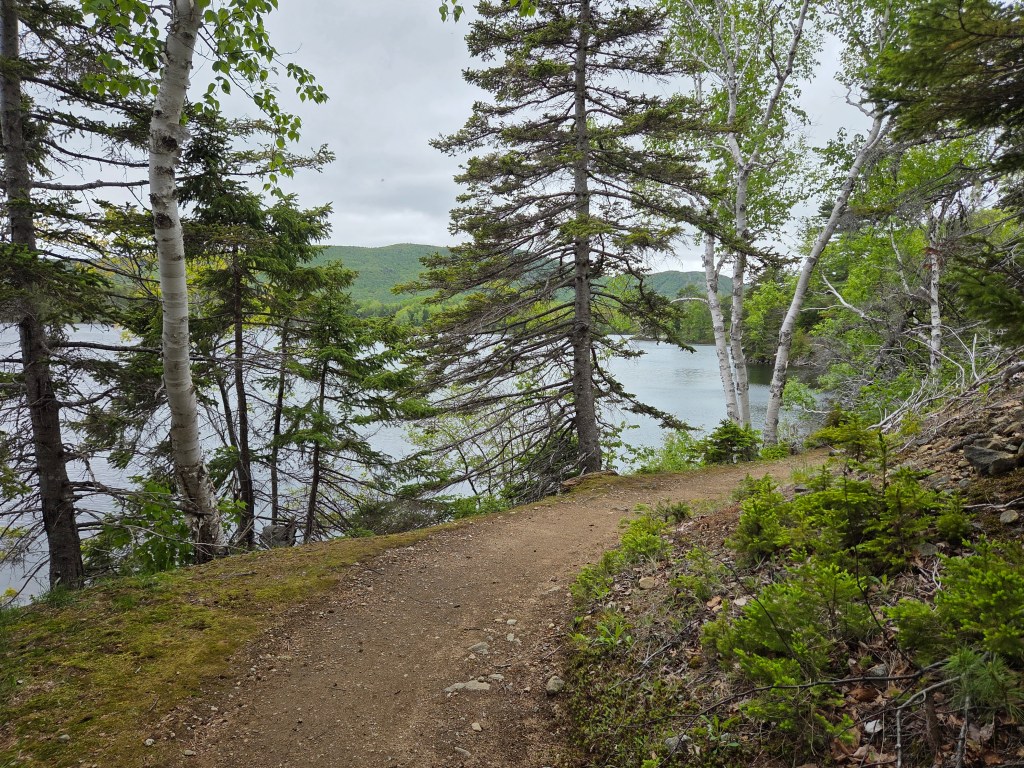
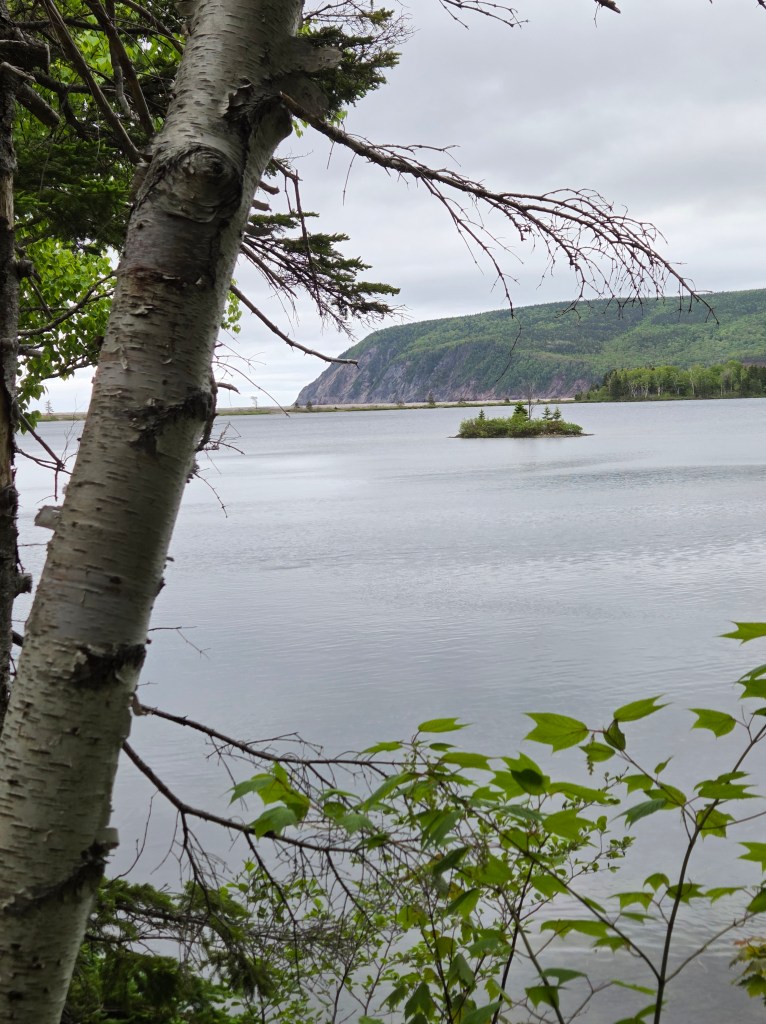
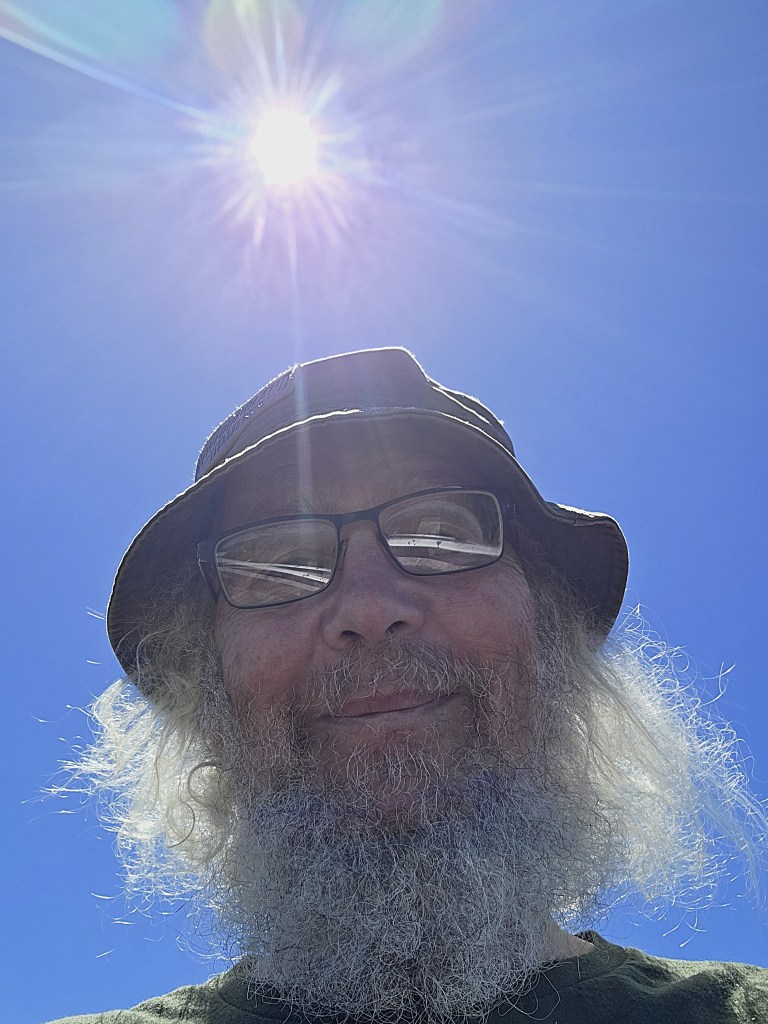
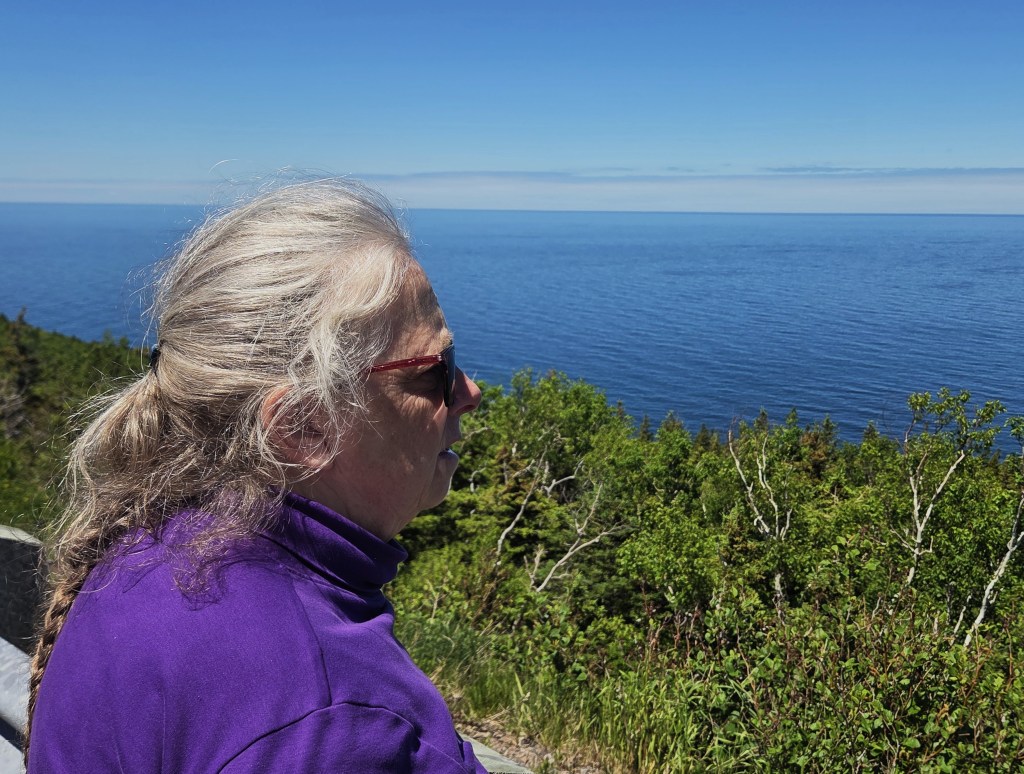
I’m going to let most of the pictures speak for themselves. Scenery and little hikes.
Two I want to write about though.
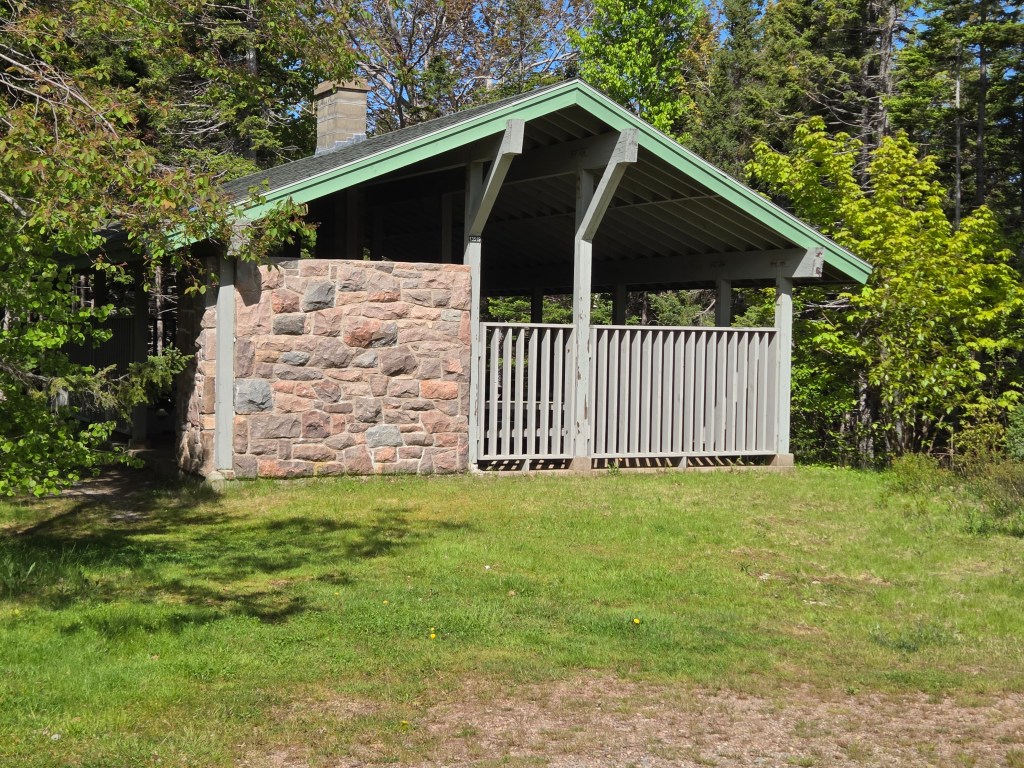
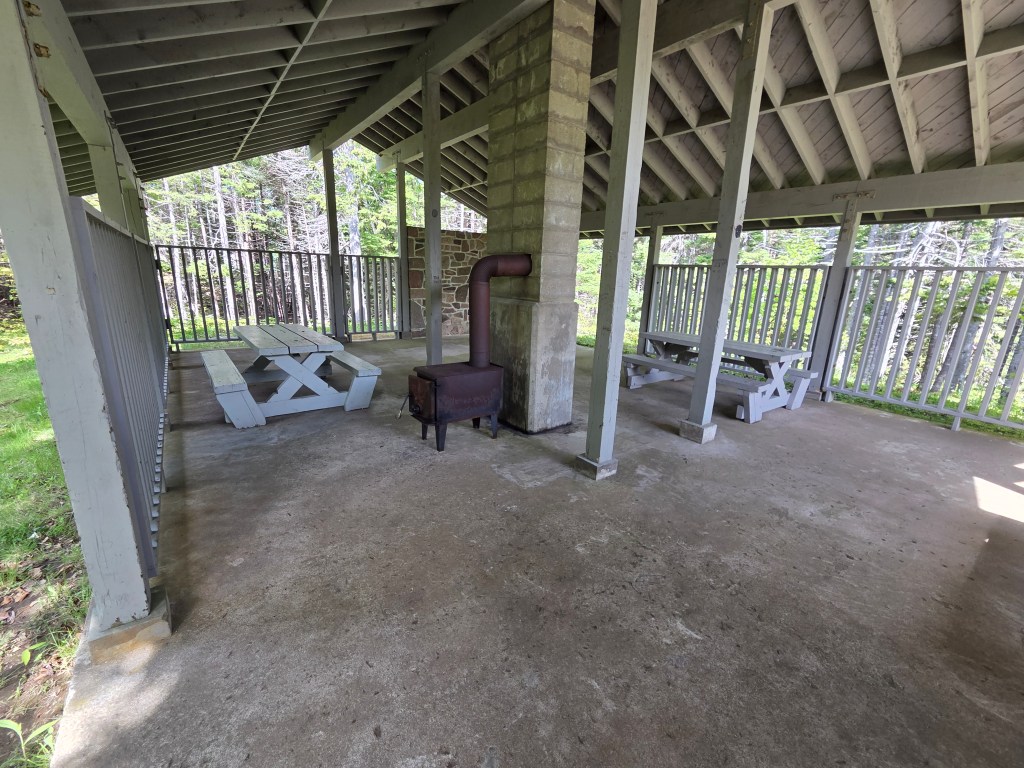
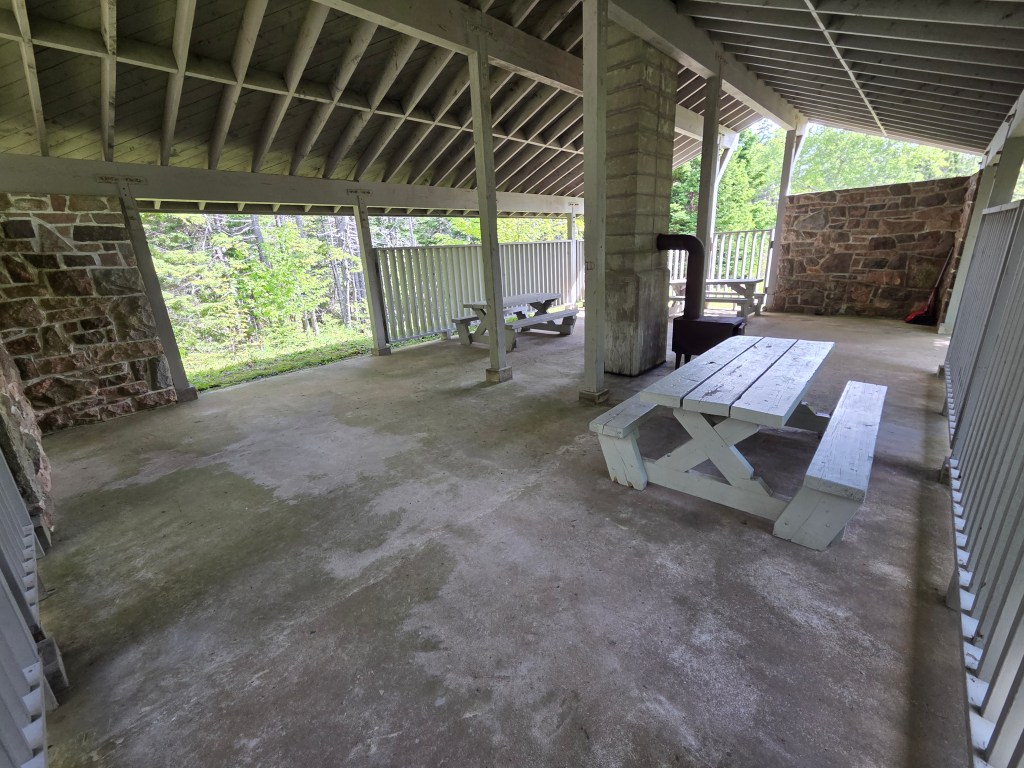
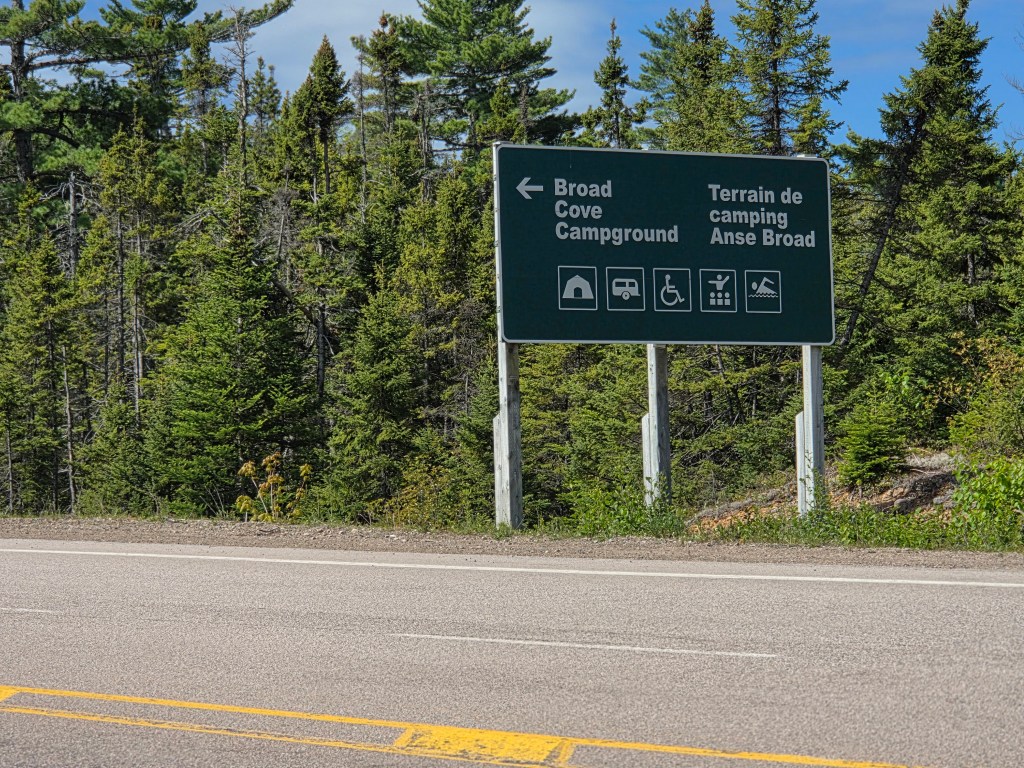
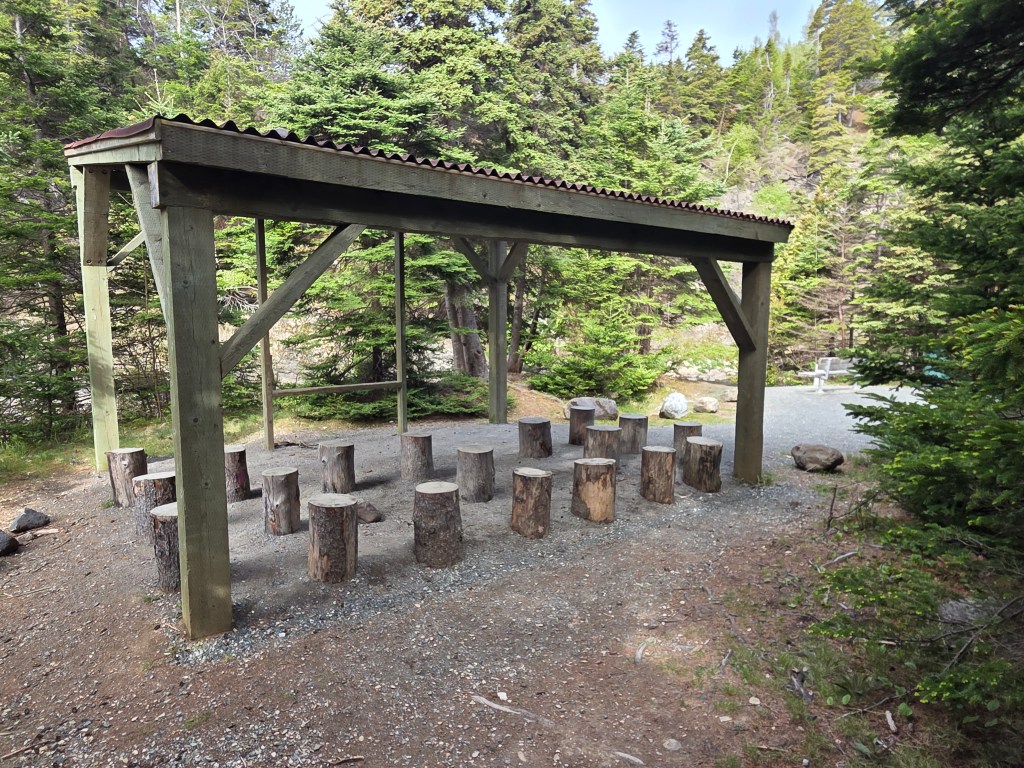
There are three pictures of a kitchen shelter at Broad Cove Campground in the National Park. I had written at the beginning of this journey about traveling some of the same roads I hitchhiked on with Terry in 1972. We spent a few weeks thumbing around Nova Scotia. Here, at the park we backpacked in twelve miles to Lake of the Islands, in the Highlands interior. ( I inquired about that trail and it is no longer a recognized one.) The night before heading into the interior we slept in a kitchen shelter at this spot, not wanting to pay for a campsite. I think the shelter has been updated a bit since our stay there 54 years ago. Still, it was meaningful to walk into this shelter and recall that night and the whole traveling experience with Terry, who was an important part of my life back then.
I visited with Terry in Sweden two years ago, after not having seen her since 1973. I wrote about my three-week experience in Sweden on this webpage:
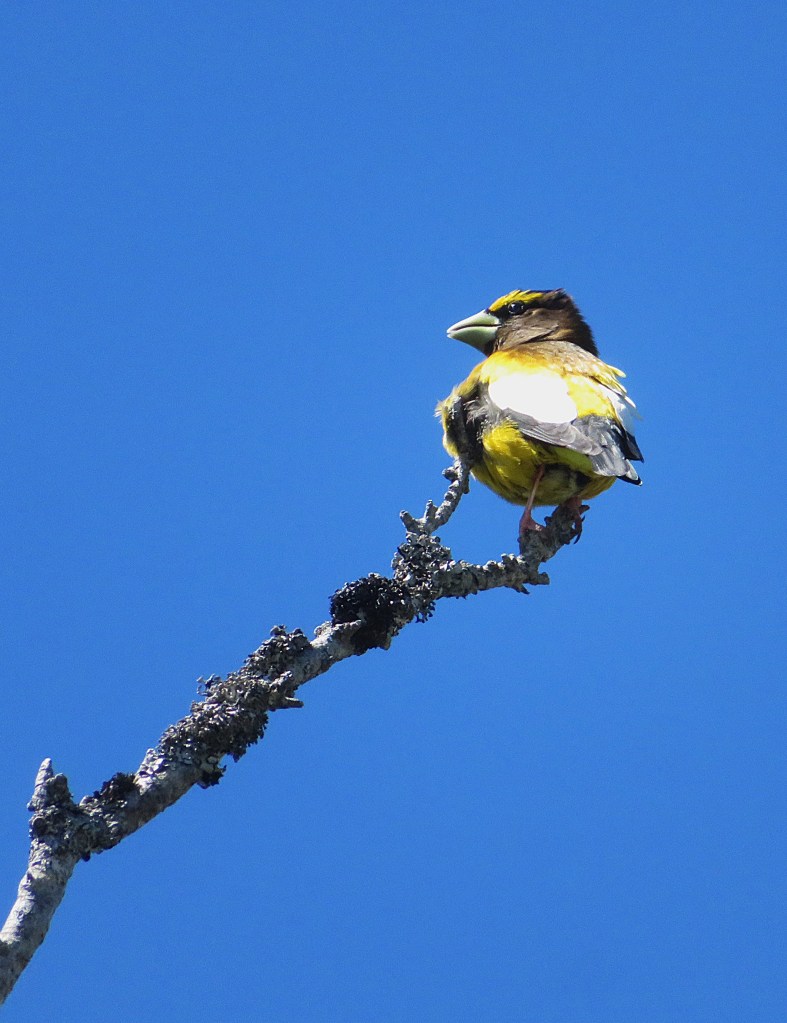
The final picture (not a very good one, but best I could do for the distance and that he had his back to me the whole time) is of an Evening Grosbeak! The last time I saw one was in 1996. Back in the 70s Evening Grosbeaks came almost every winter to the feeders and were a joy to watch. Now they are a rare site and are in serious decline. This from All About Birds website:
“The 2025 State of the Birds report lists Evening Grosbeak as an Orange Alert Tipping Point species, meaning that it has lost more than 50% of its population in the past 50 years and has shown accelerated declines within the past decade. According to the North American Breeding Bird Survey, this species declined by an estimated 3.1% per year between 1966 and 2023, resulting in a cumulative decline of 84% over that period.”
It was a special treat to see one again, here in its breeding territory in the highlands of Cape Breton!(
Click on thumbnail for larger, clearer picture.)
6/20
Final day in Newfoundland. 16-hour ferry ride taking us back to Nova Scotia, leaving at 5 PM and arriving around 9 AM in North Sydney, NS, where we caught the shorter ferry ride to Newfoundland three weeks ago.
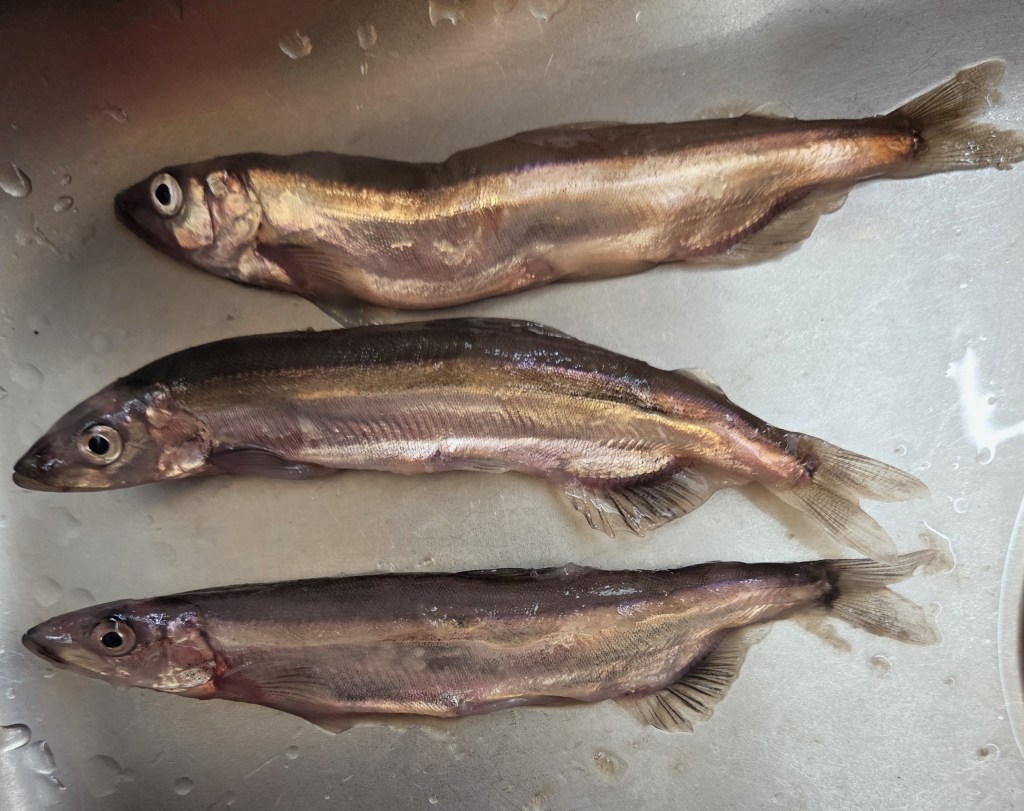
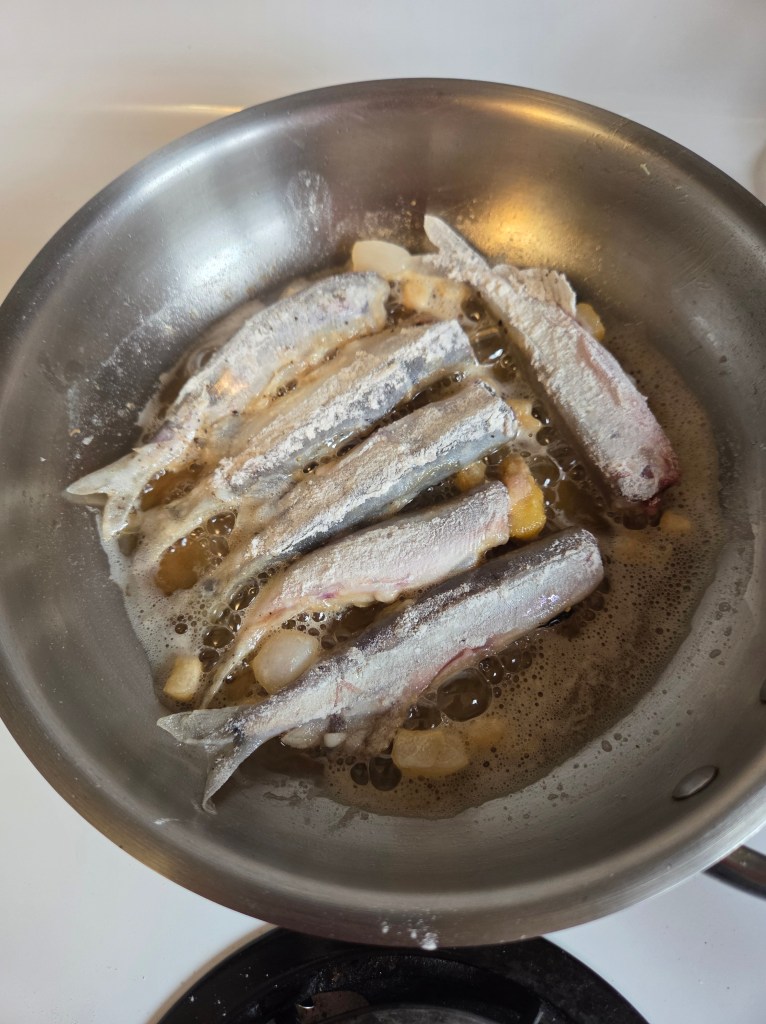
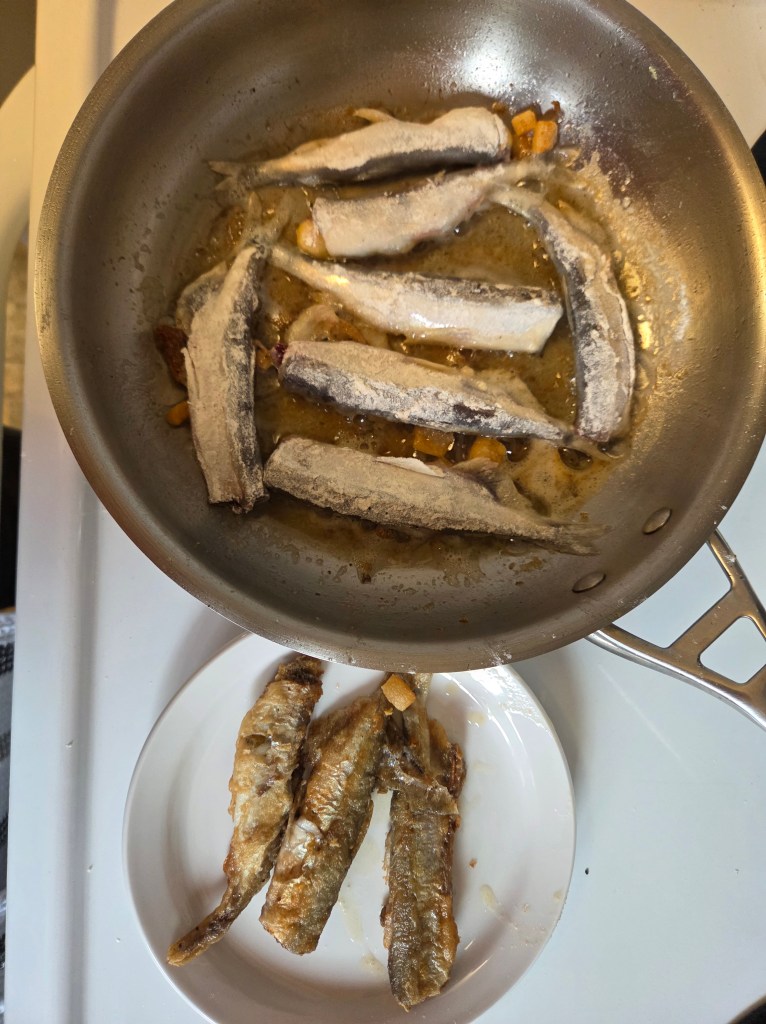
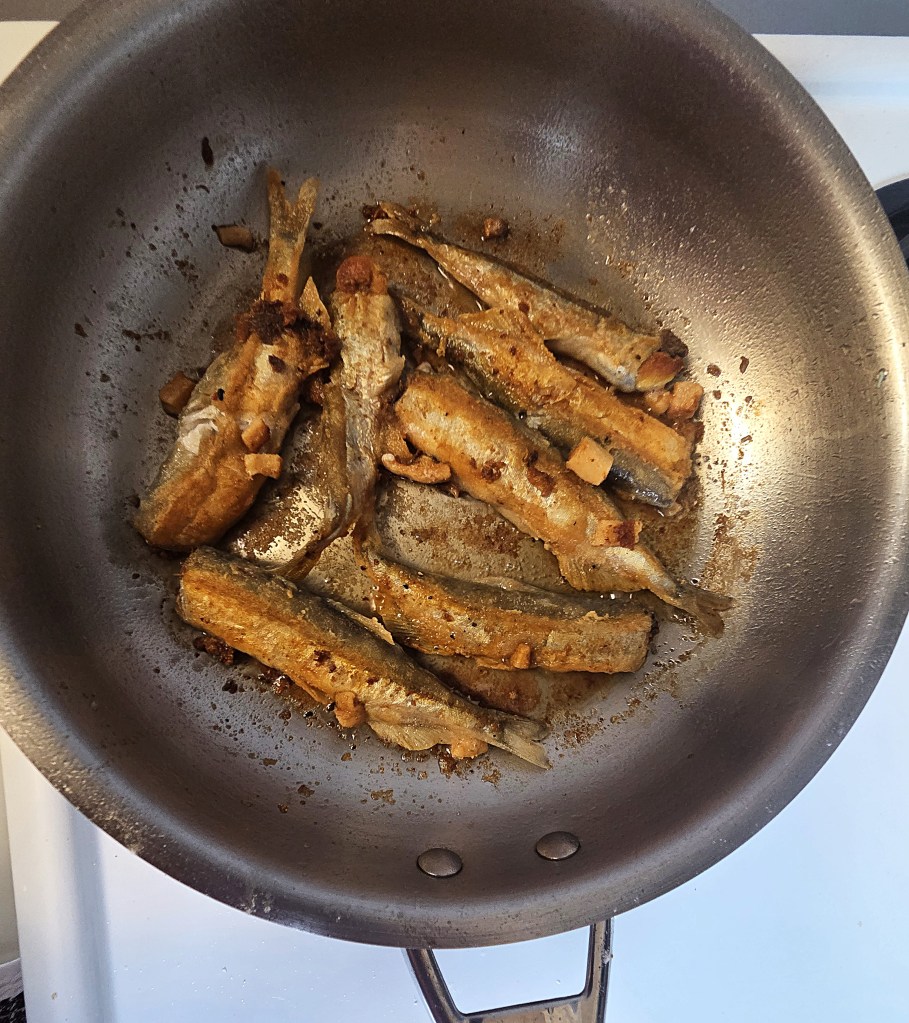
I cooked up the capelin from Sam this morning for breakfast. (pics) I cut the heads off, then prepared them like I did the cod tongues the other day. They were very good. Once again, thank you Sam.
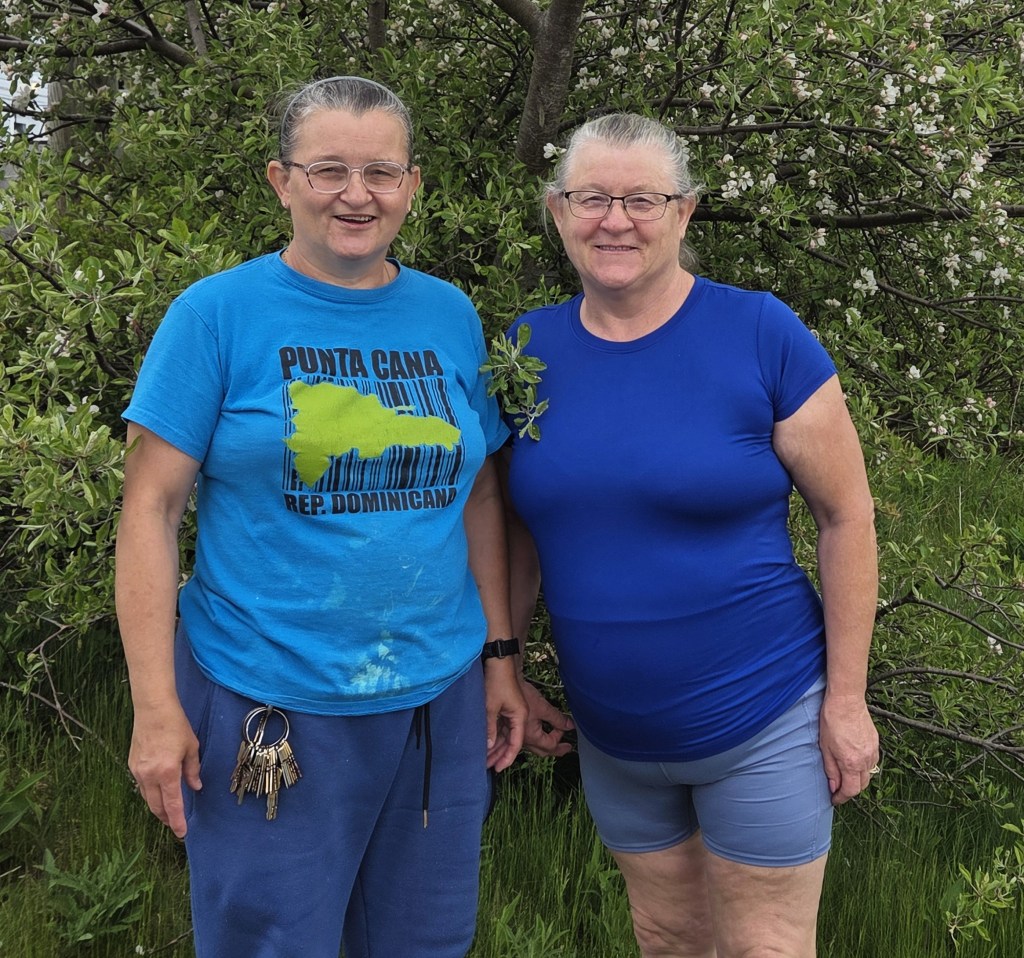
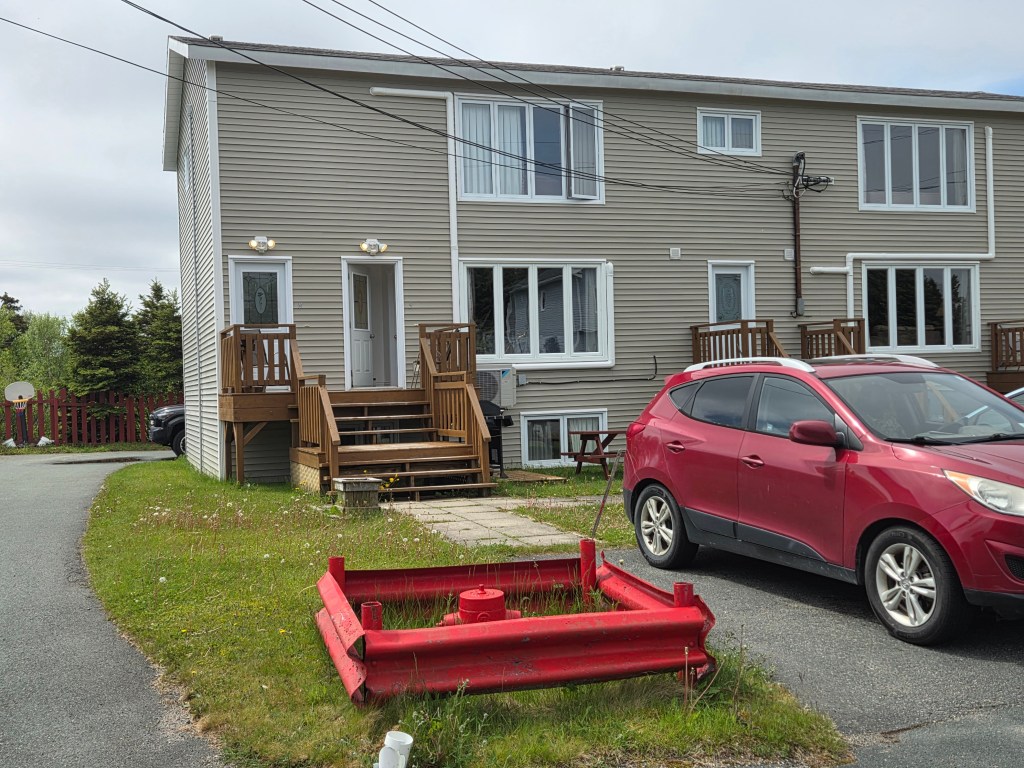
Packing up morning. Have stayed here for nine days. It felt like moving out day, different than just leaving a motel, which I guess it was. Nine days allows for a comfortability and familiarity to develop. And it was comfortable. A full one-bedroom apartment on a quiet street. No negatives. Everything here at Comerford Ocean View Suites in Holyrood was perfect. That includes the two housekeepers, Ann Marie and Rita. Very friendly, helpful and enjoyable to relate with. (pic)
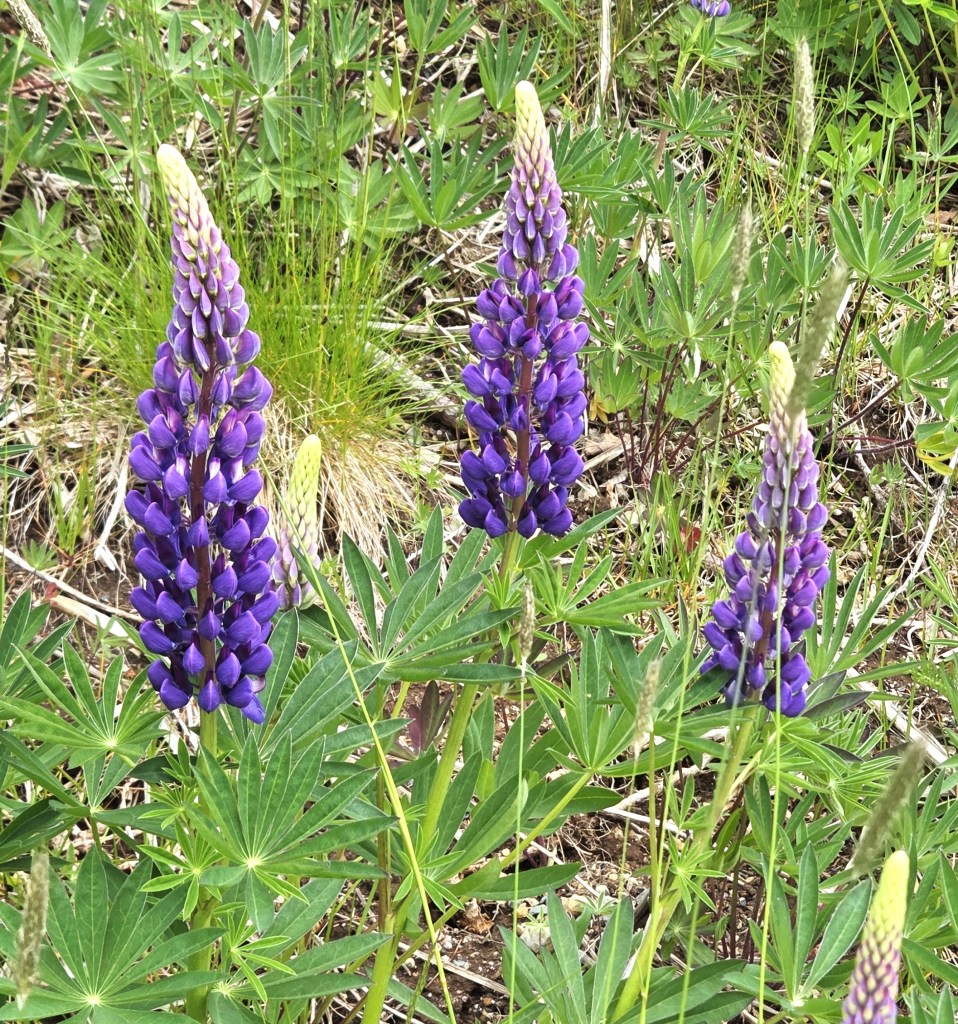
Just down the street from the apartment were some lupine flowers in bloom, the first we’ve seen. (pic)
On the way to the ferry we stopped briefly at an historic site, Castle Hill. The hill is a prominence overlooking the bay and has been a critical military location for centuries. Military history doesn’t interest me very much, though so much of historic sites, everywhere, have to do with that.
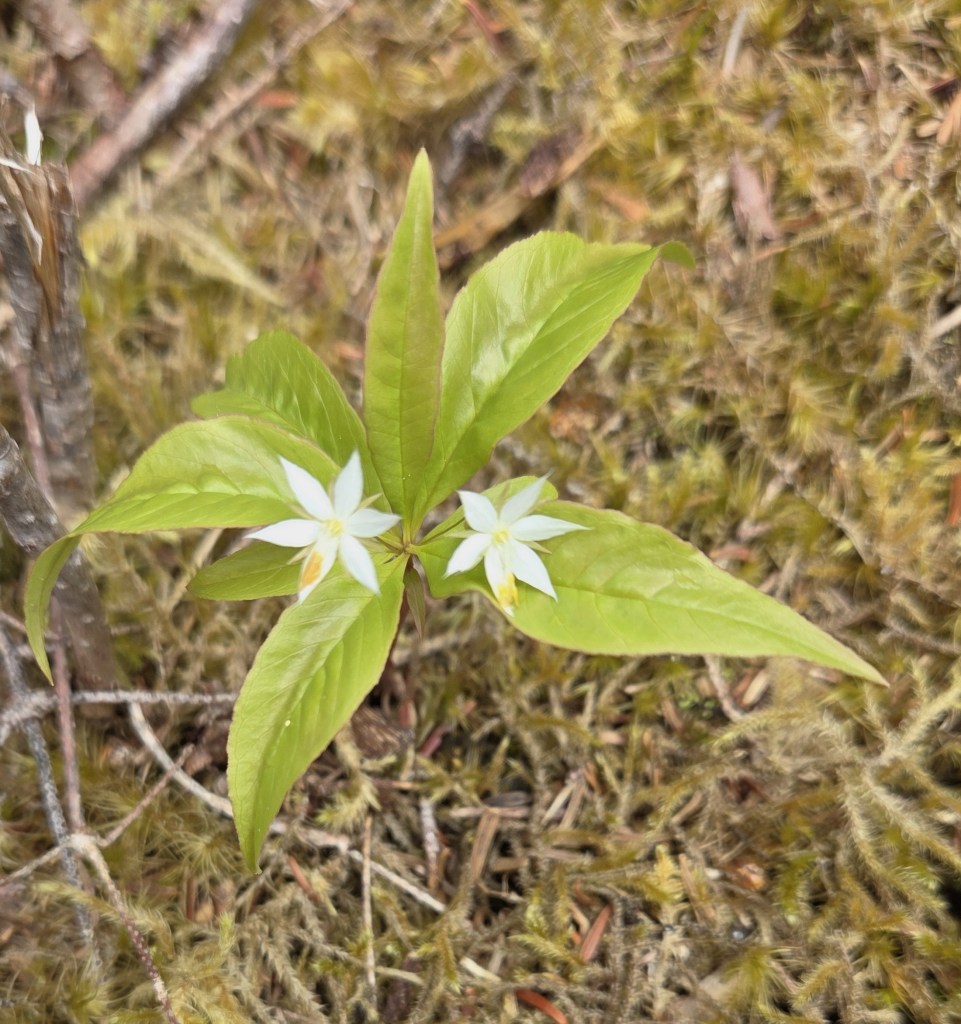
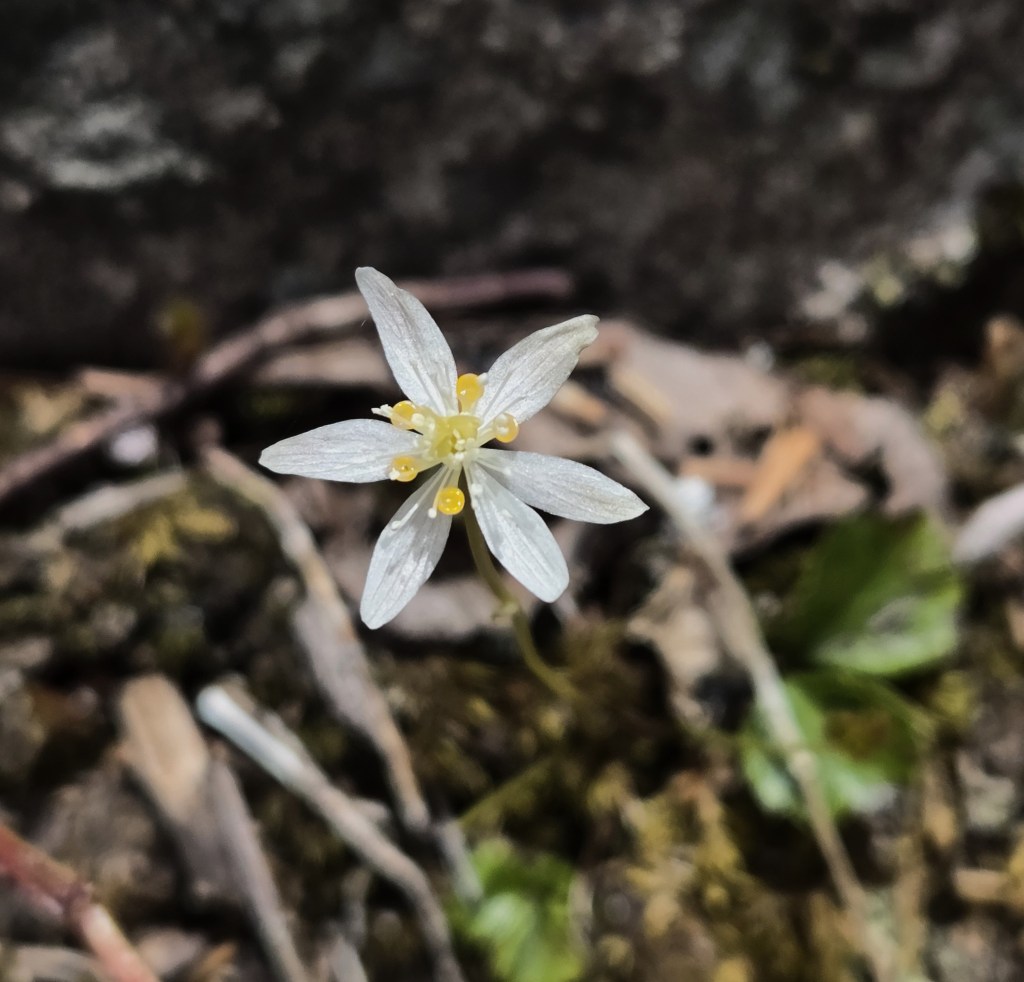
A starflower was in bloom along the short trail walk back to the parking lot. Another first for the journey, and another flower that we see back home.
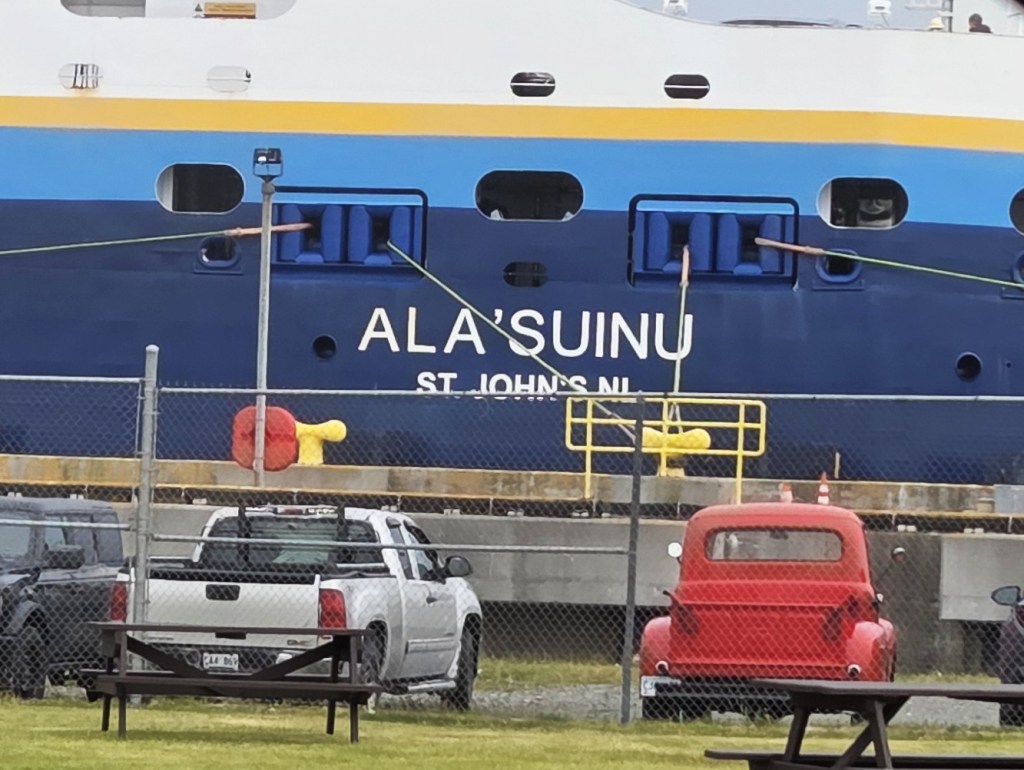
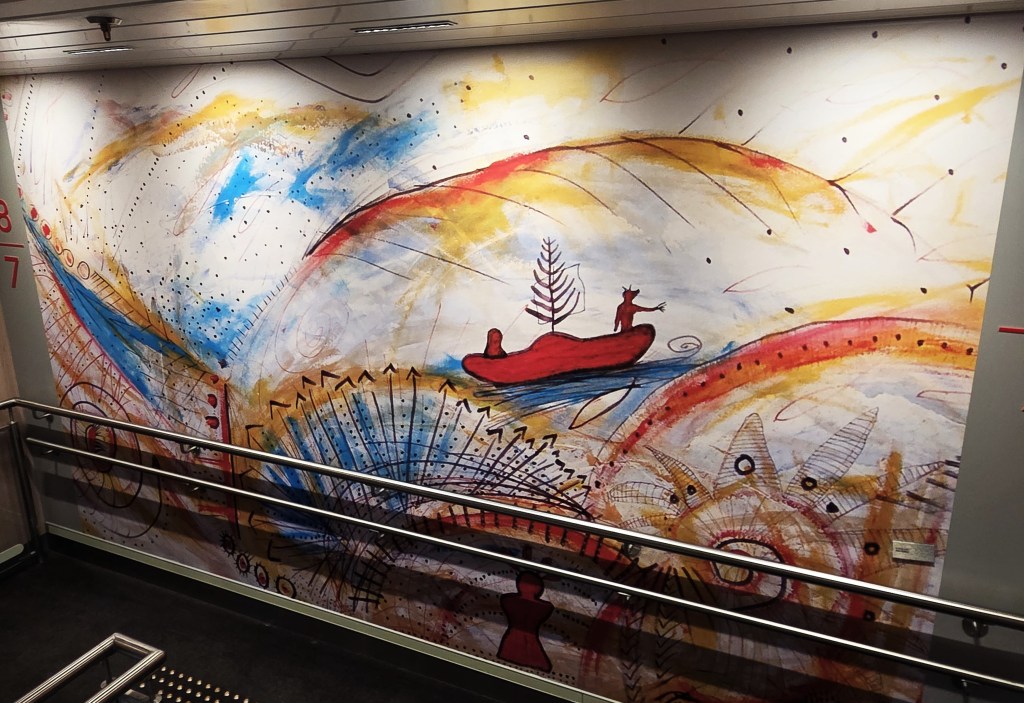
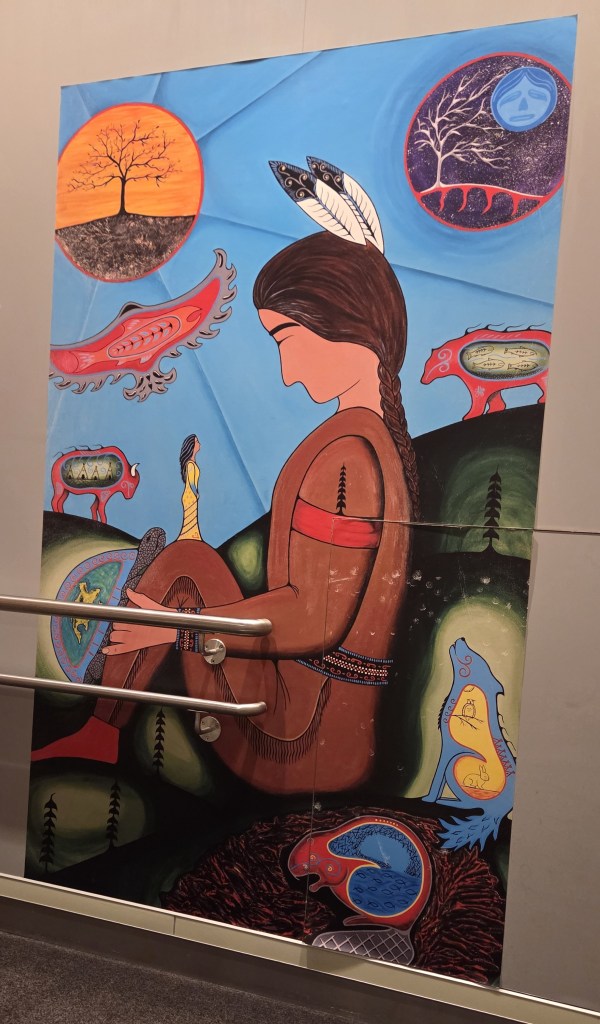
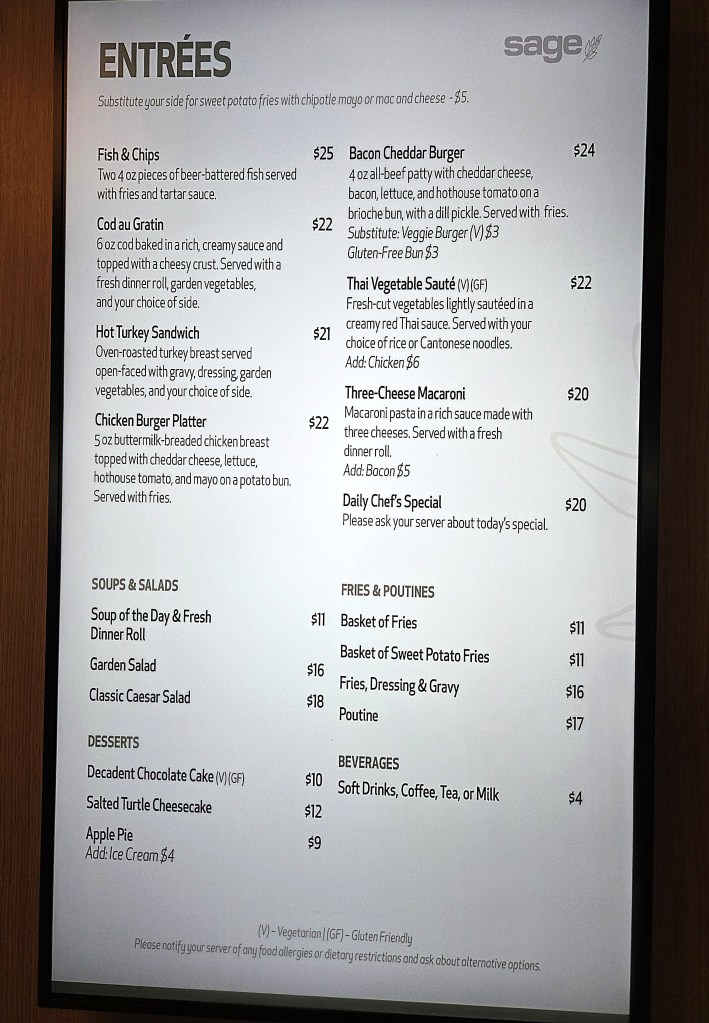
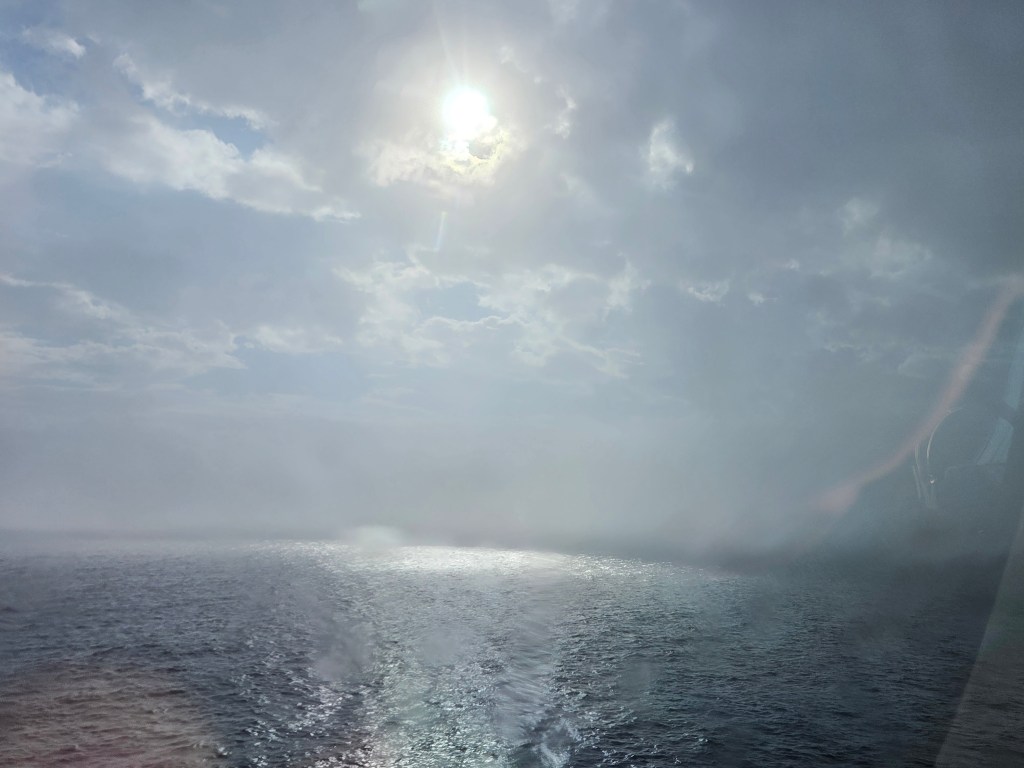
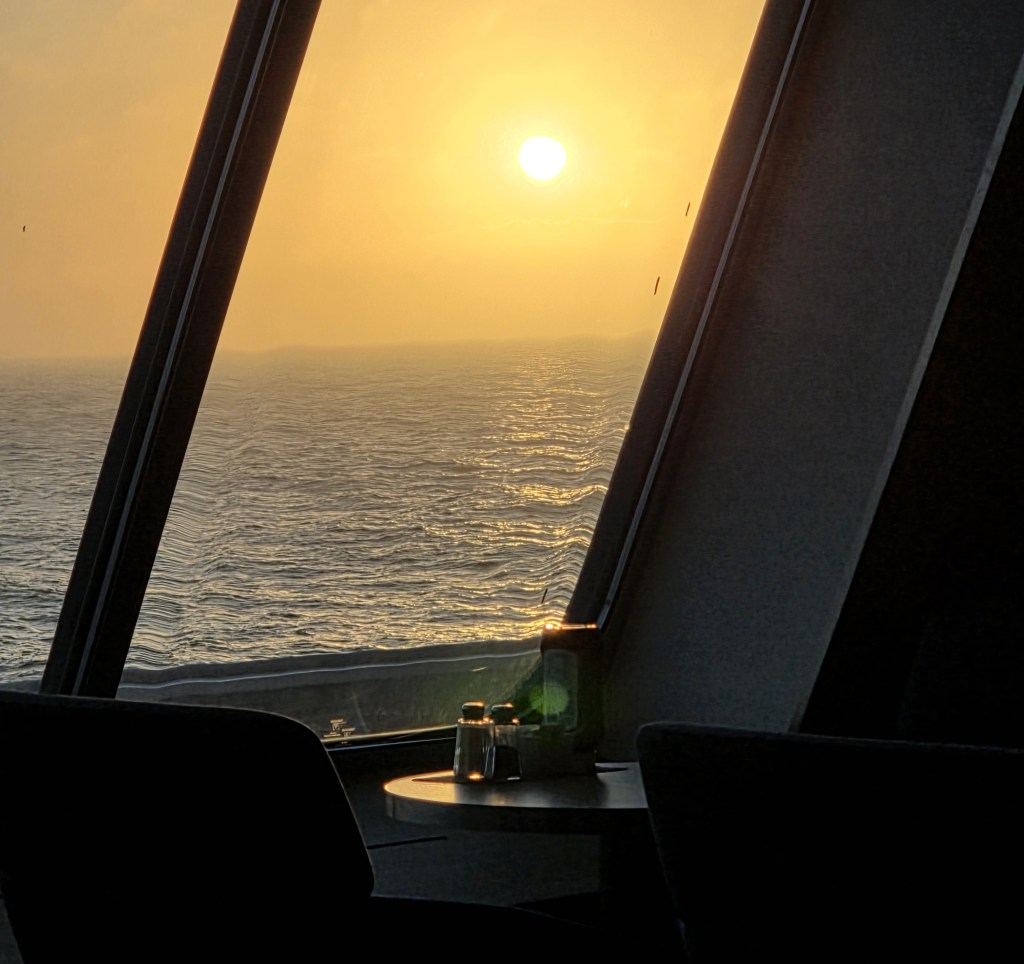
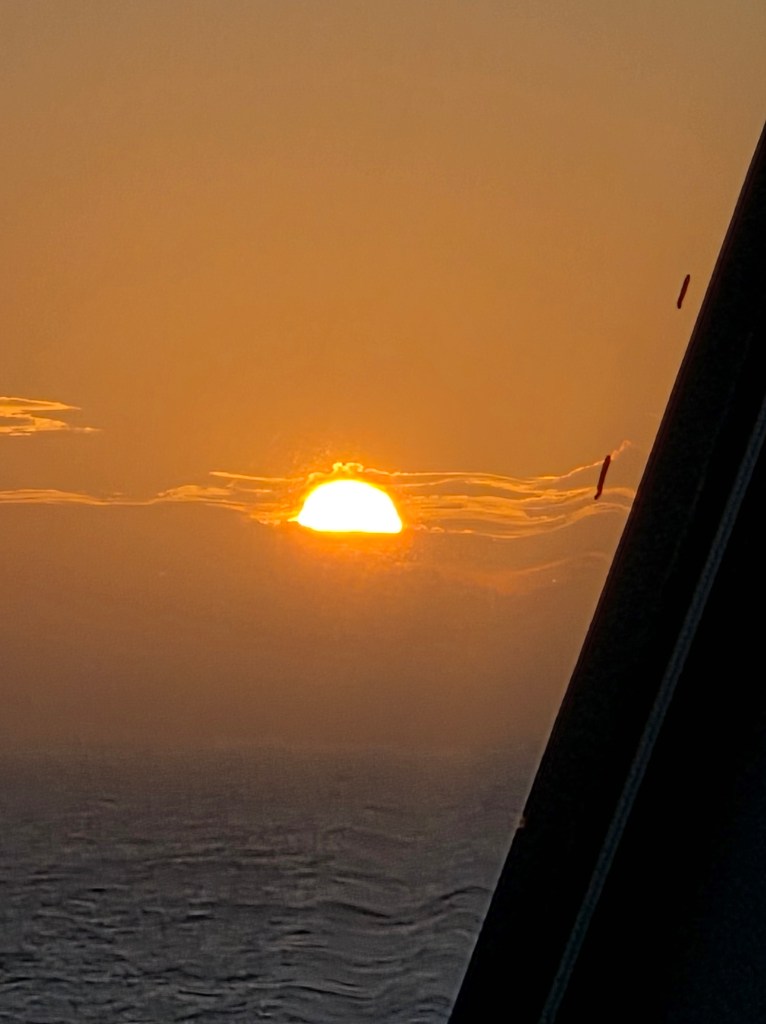
We rode the same ferry we came into Newfoundland on, though this was a much longer ride from the eastern side of The Rock. A few pics from the ferry, including two more pics of the artwork that adorns the stairwells. (see others from 5/30 journal entry)
So, three weeks in Newfoundland now history. Ahead are a day and a half on Cape Breton Highlands, a two-day visit with a dear friend in Maine, an overnight in Vermont followed by arrival back home on Wheeler hill the next afternoon. I’ll continue the journal throughout and then after settling home, do a final wrap-up of the month-long experience.
6/19
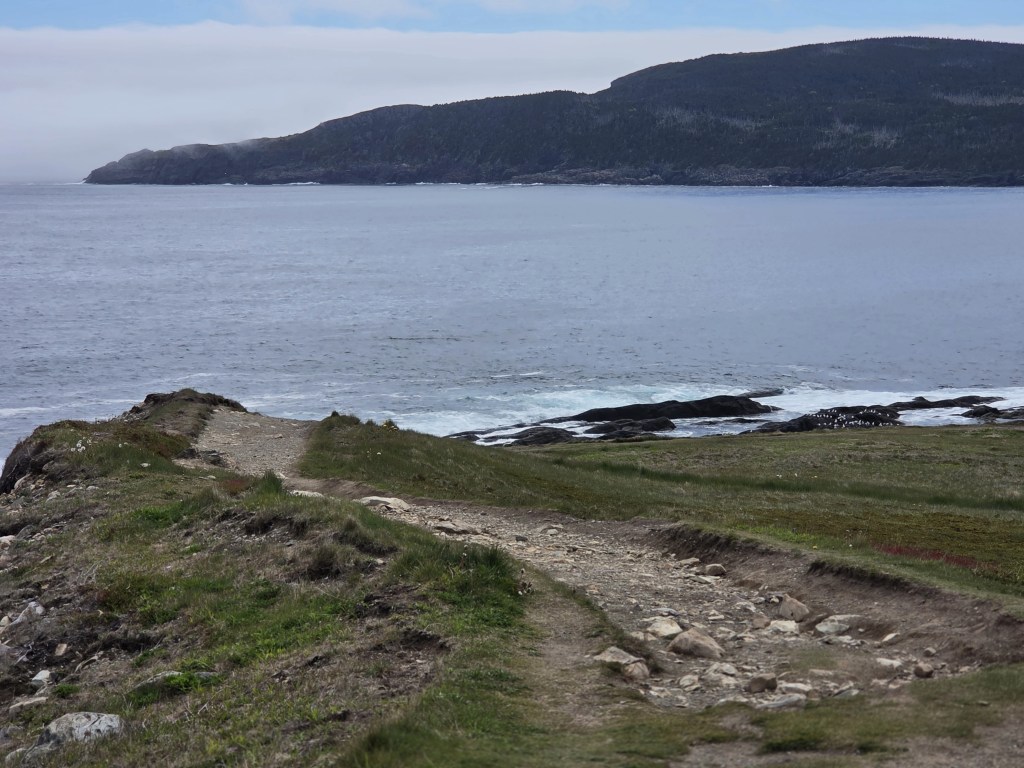
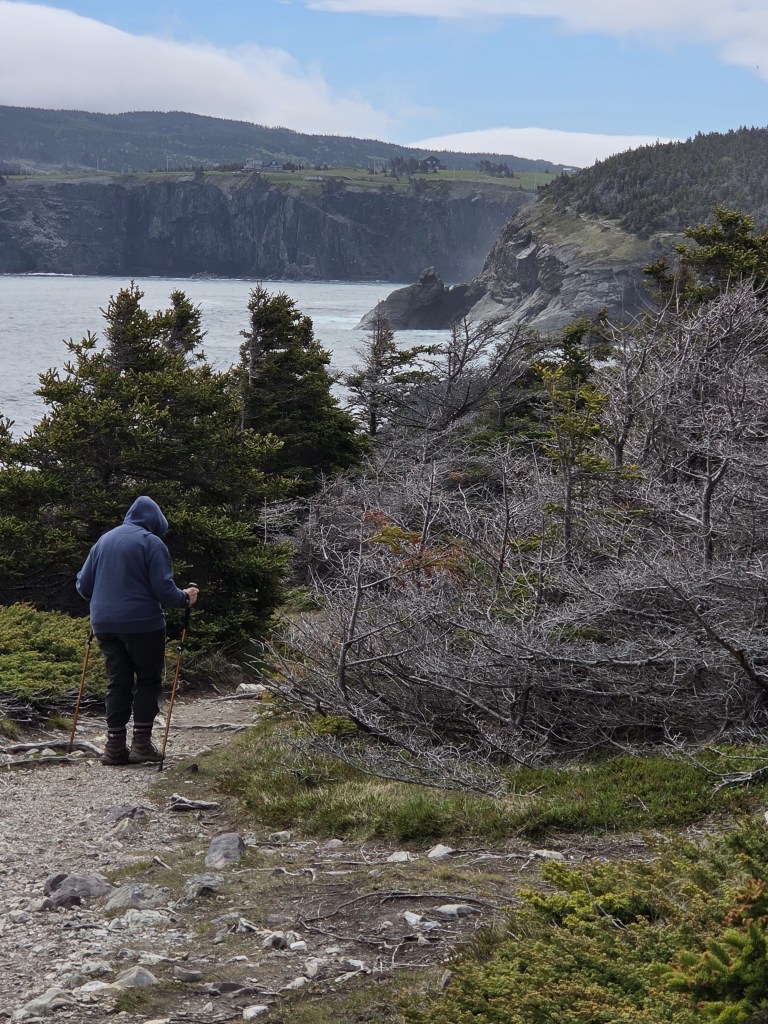
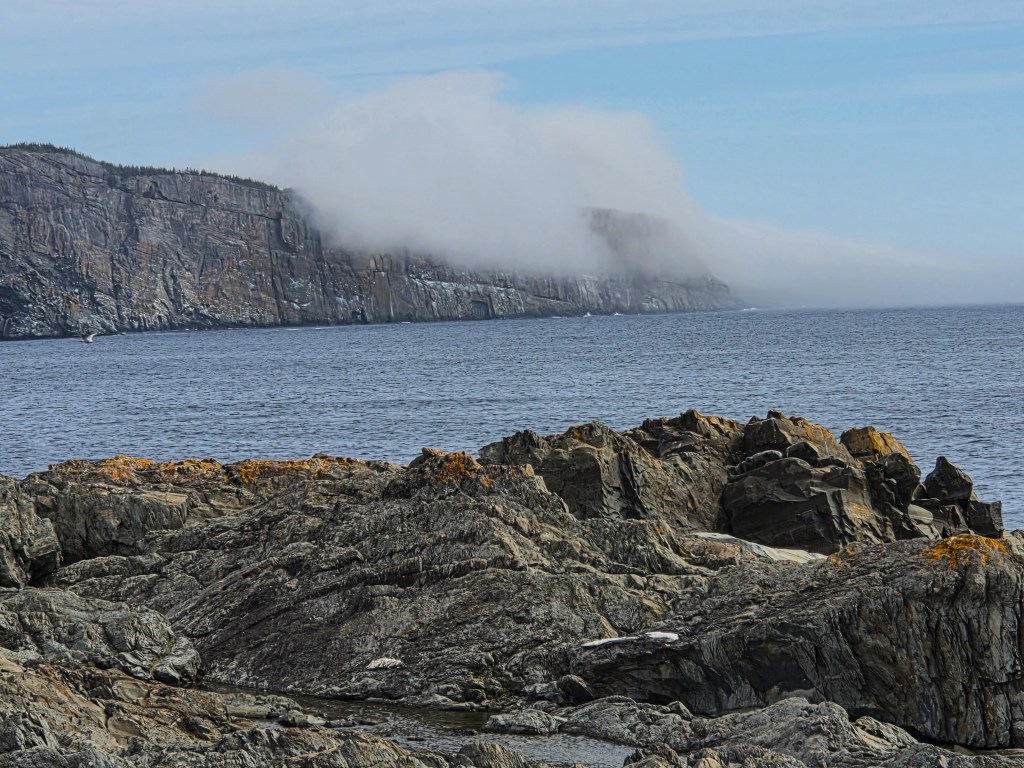
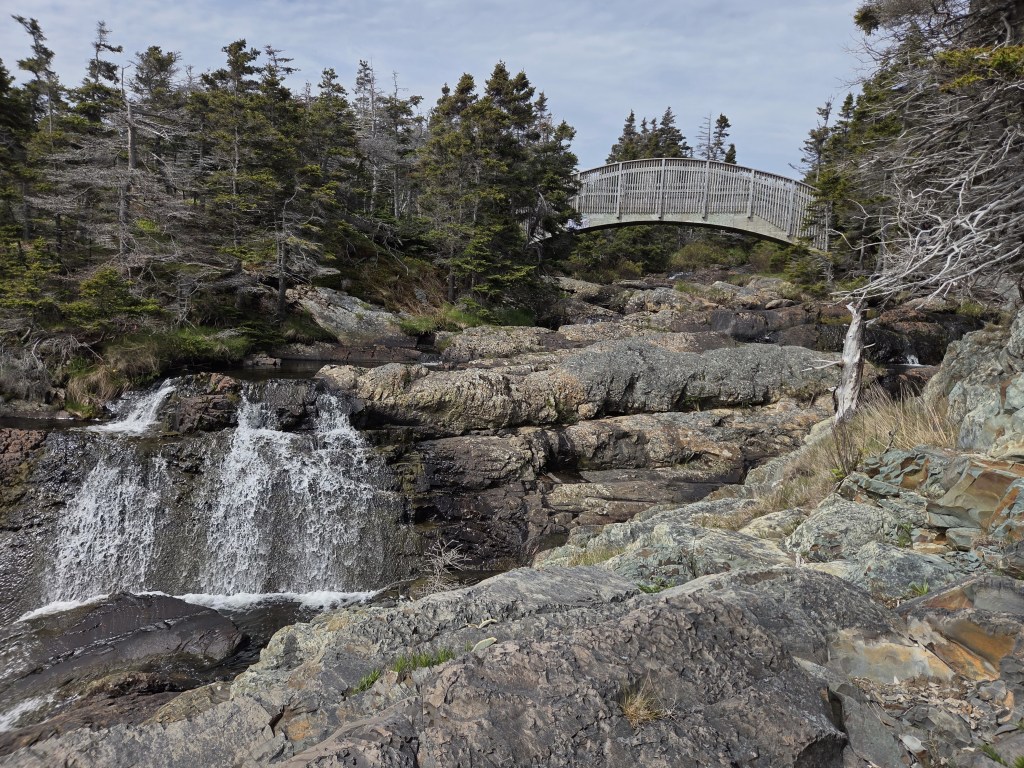
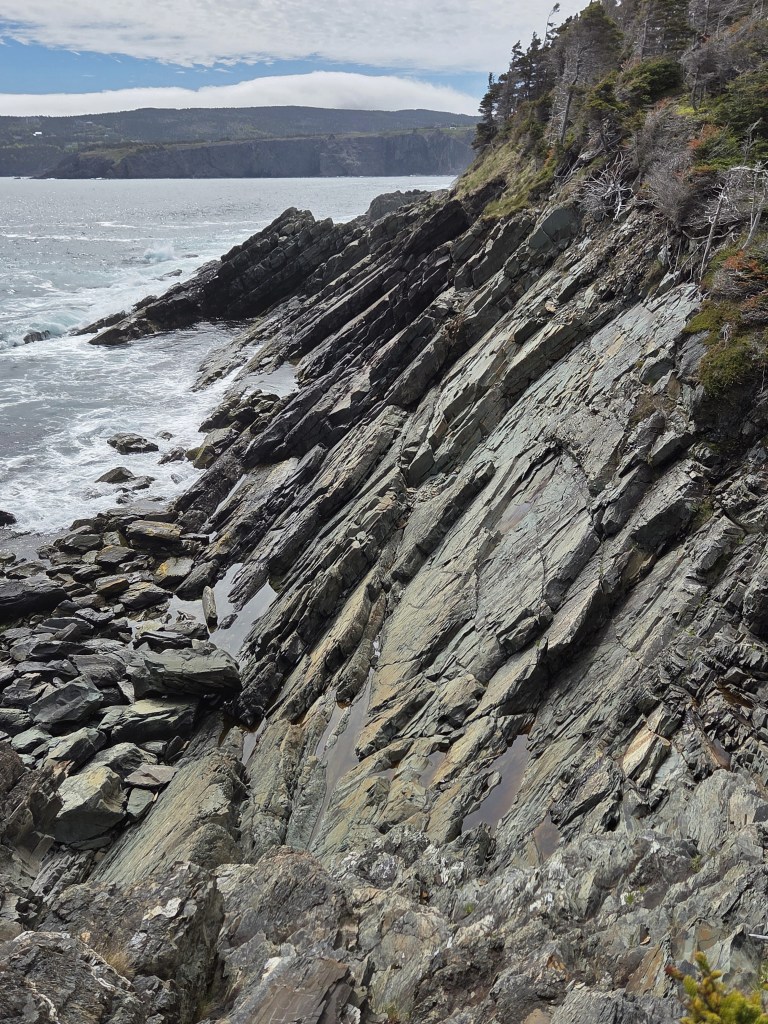
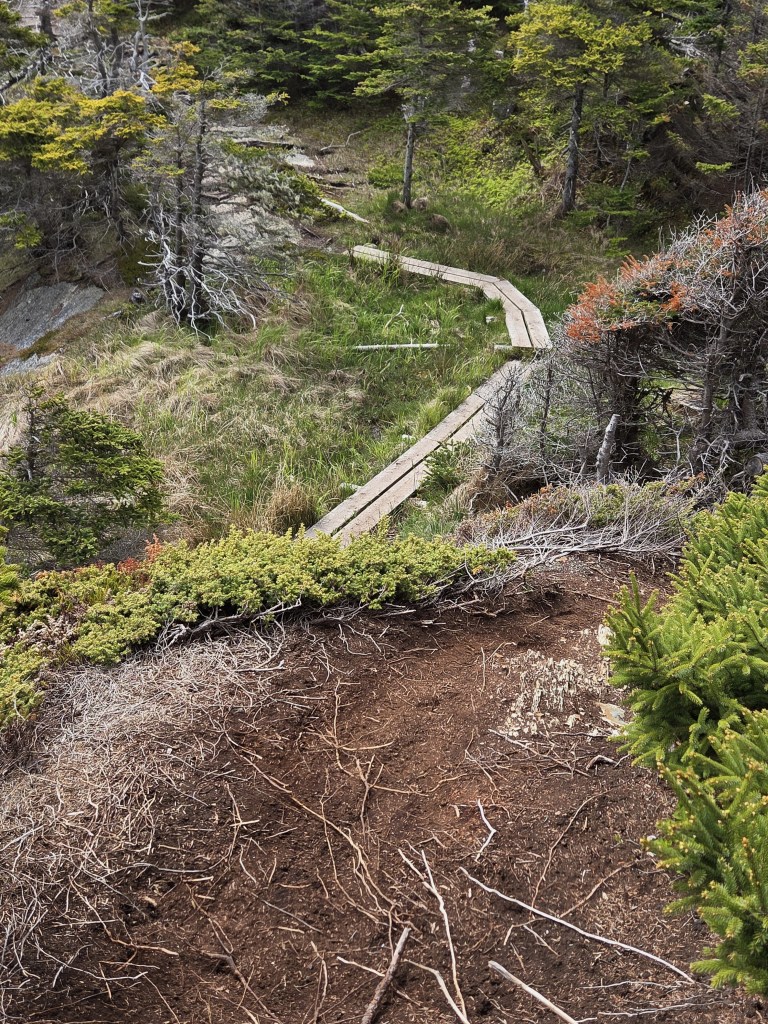
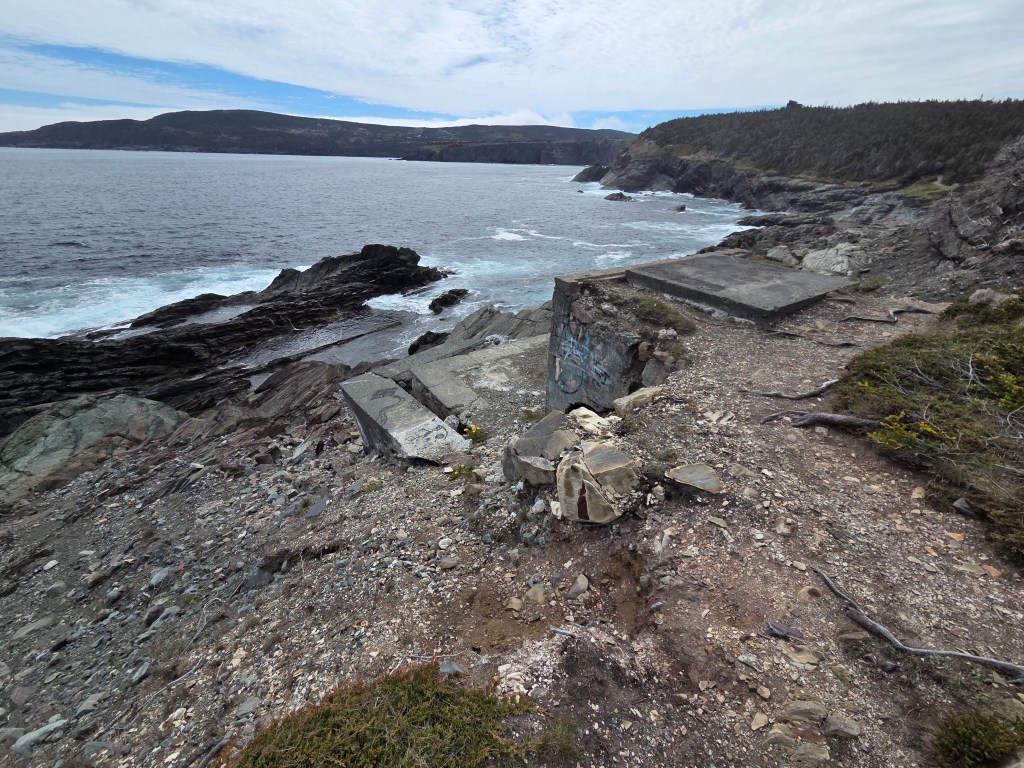
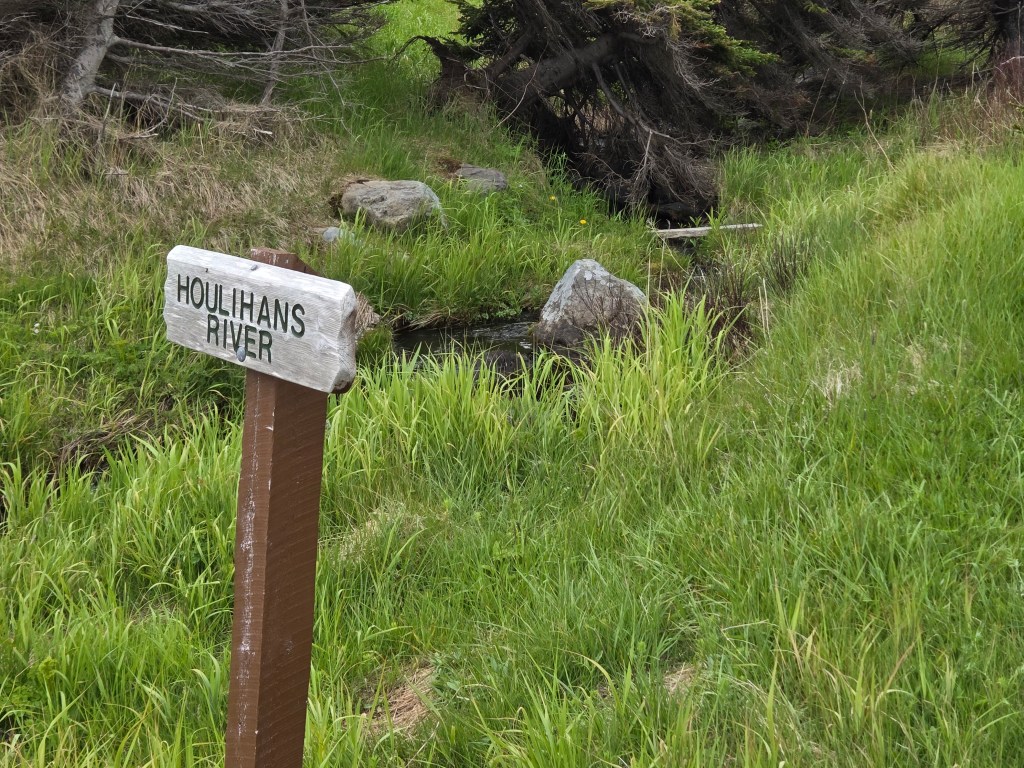
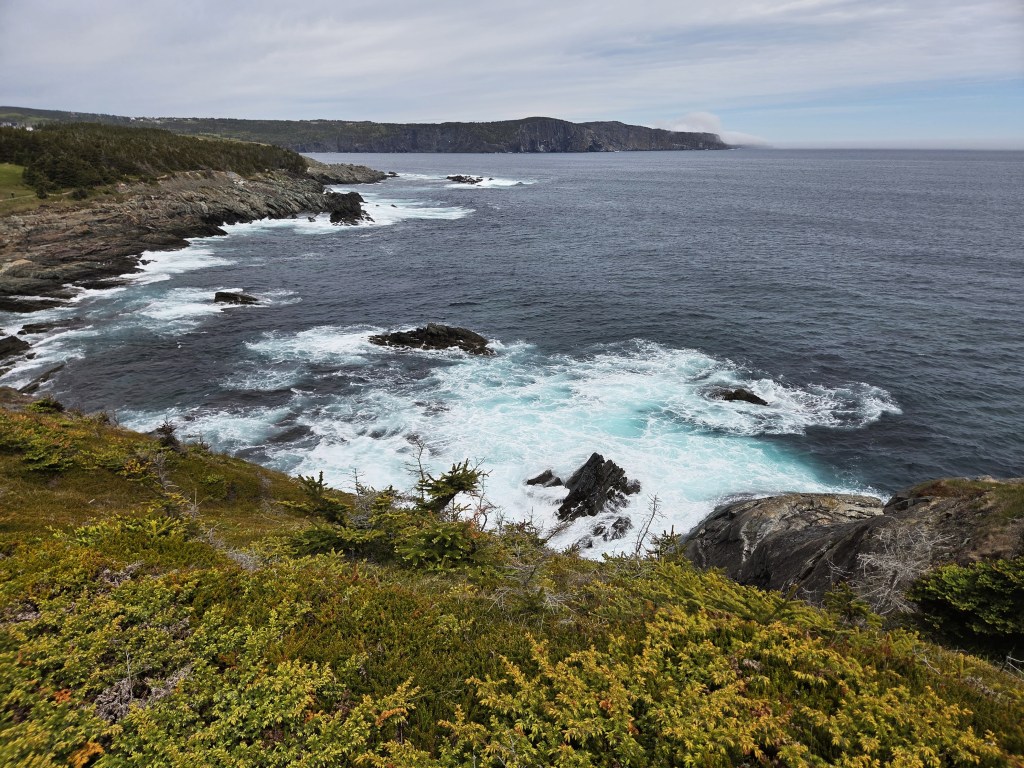
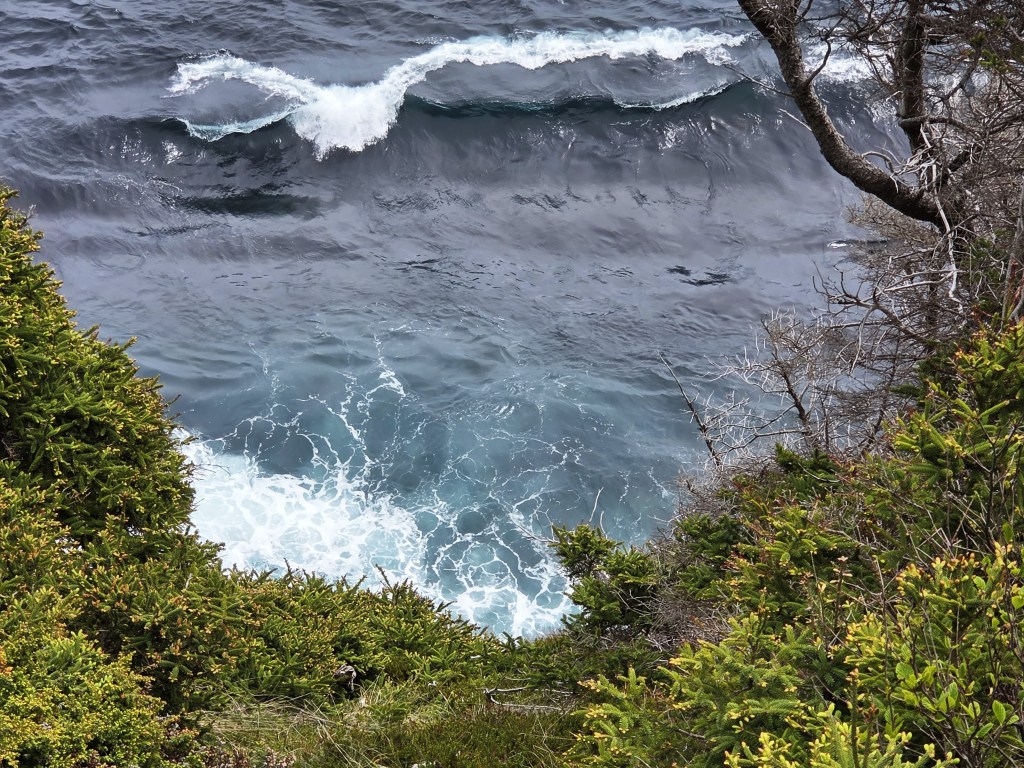
Forecast called for rain starting in mid-afternoon, so we went out for a morning hike on part of the Eastern Shore Trail System, north of St. John’s. And what a wonderful final hike it was! Spectacular coastal scenery on atrial that hugged the rugged coastline. (pics)
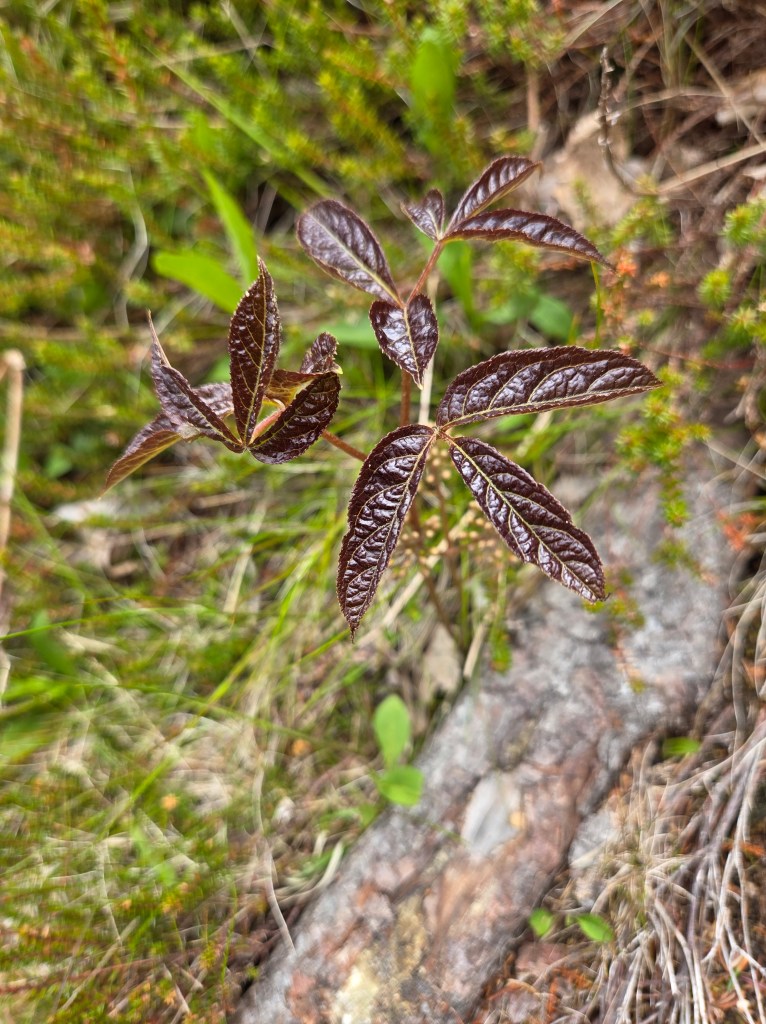
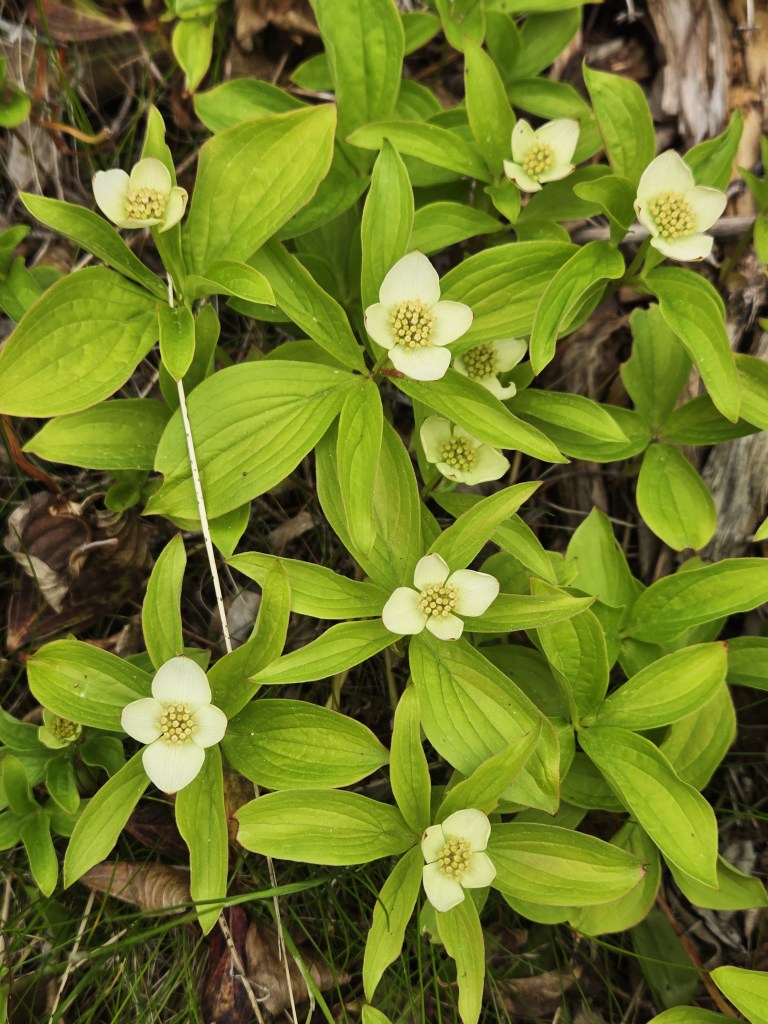
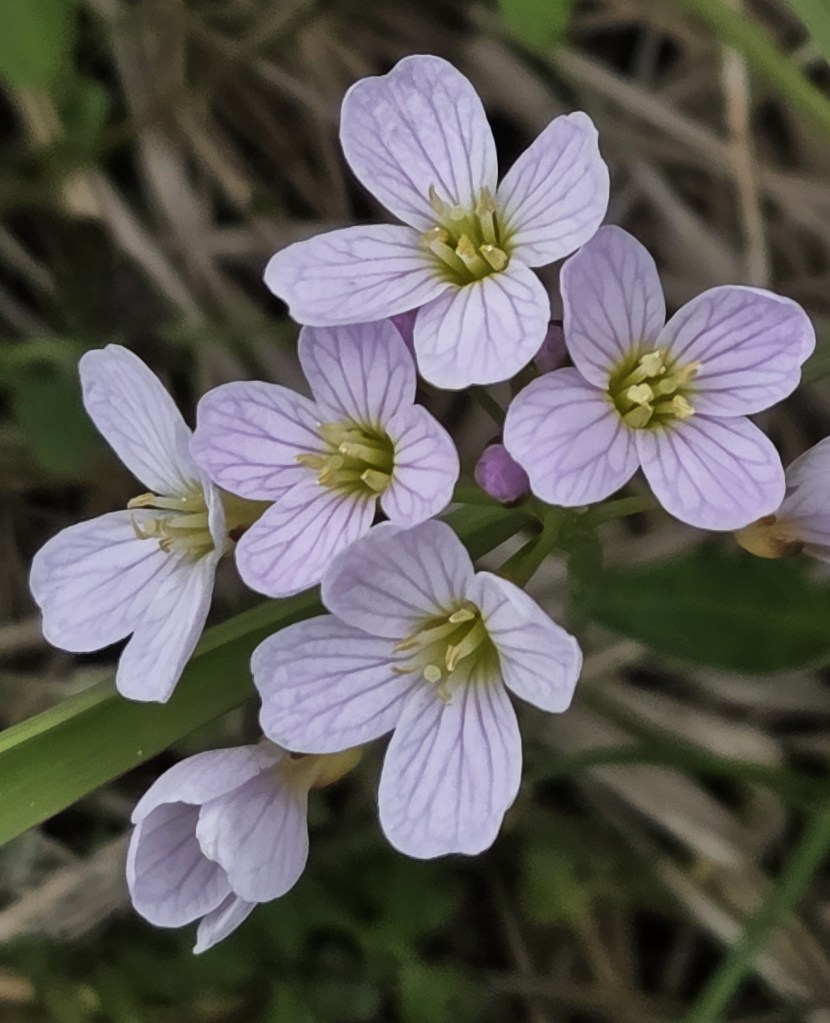
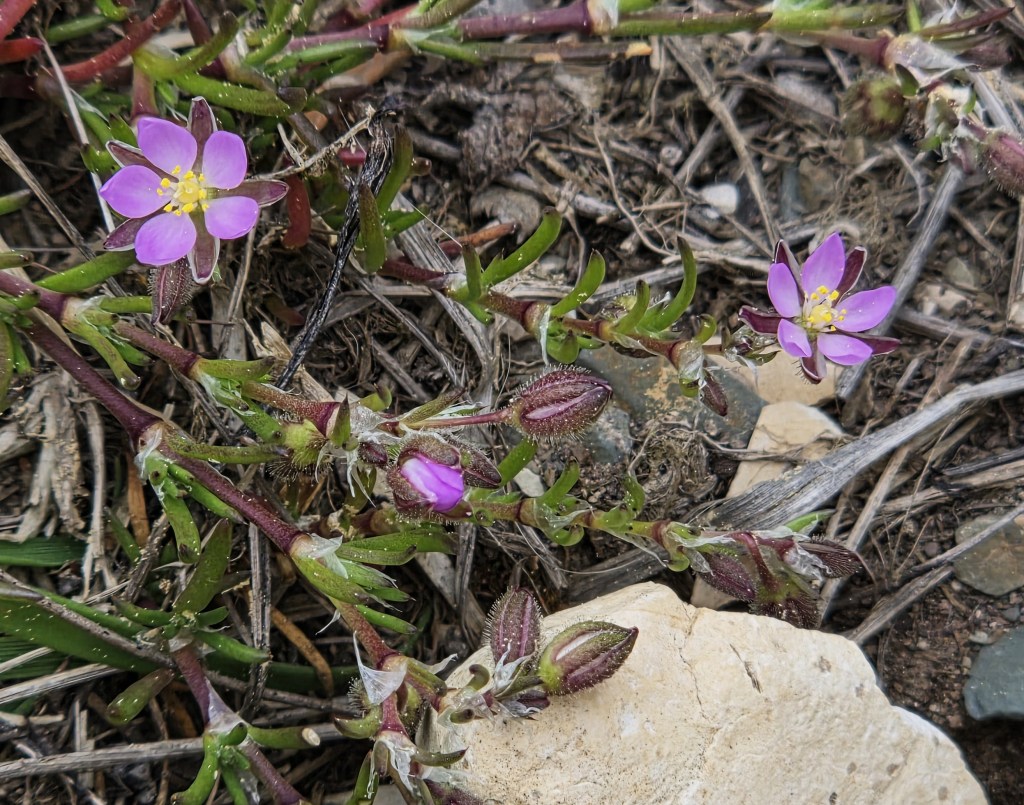
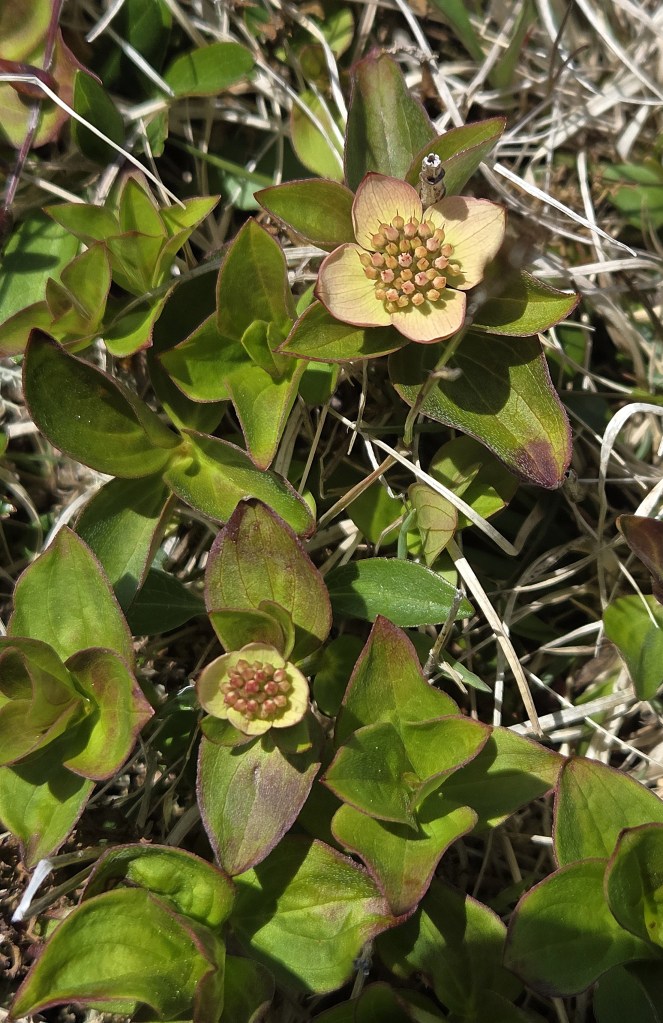
Flower pics are of Canadian Bunchberry, Cuckoo Flower and Purple Sandwort.
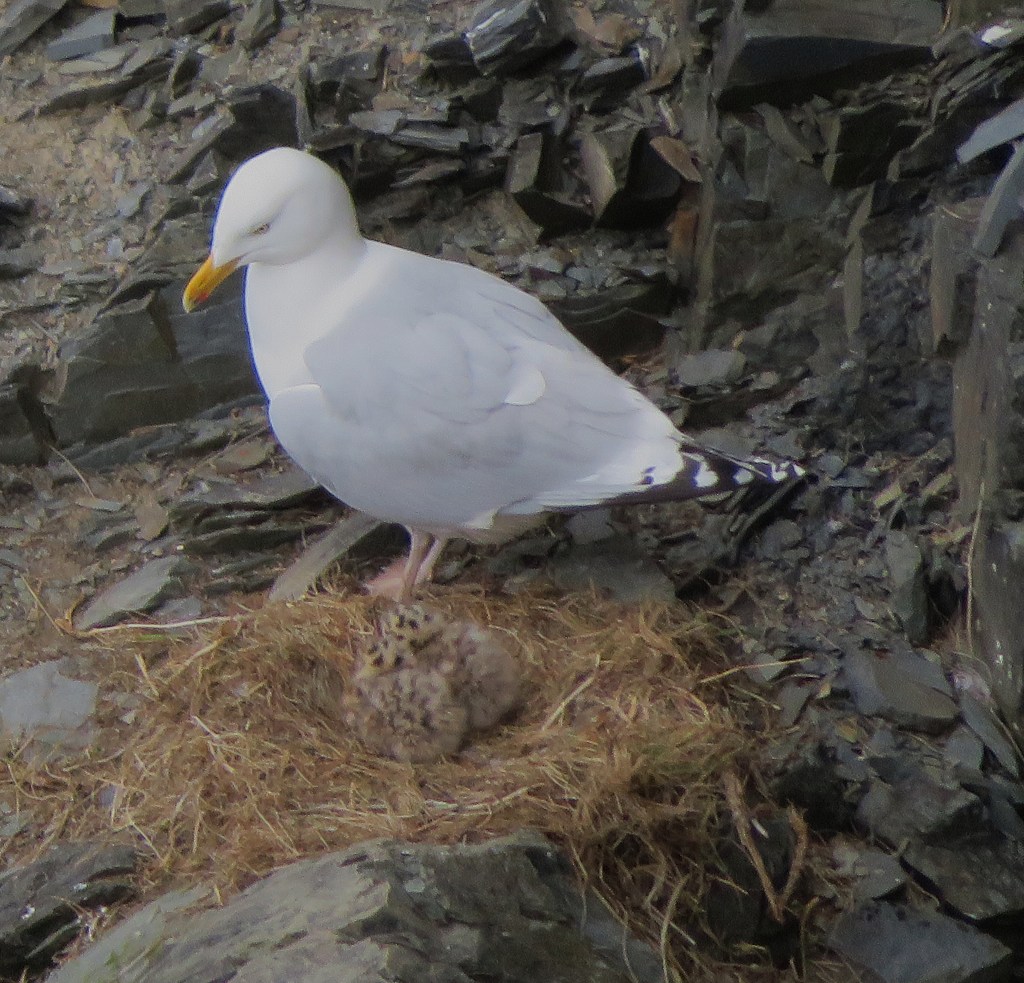
The Herring Gull picture isn’t very sharp, but I wanted to include it because of the chicks on the nest.
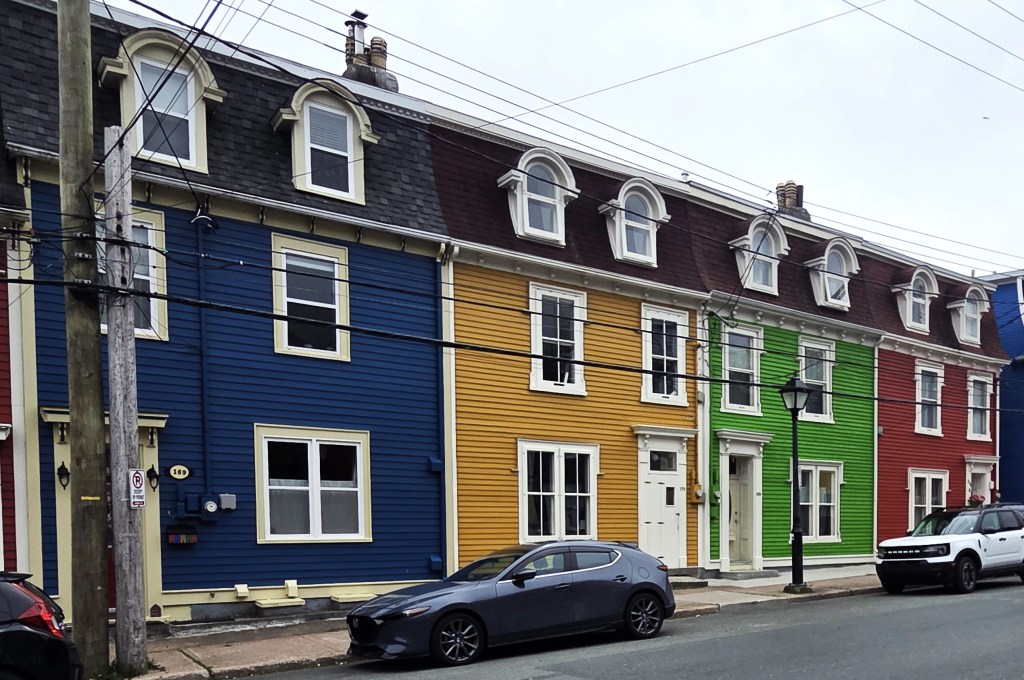
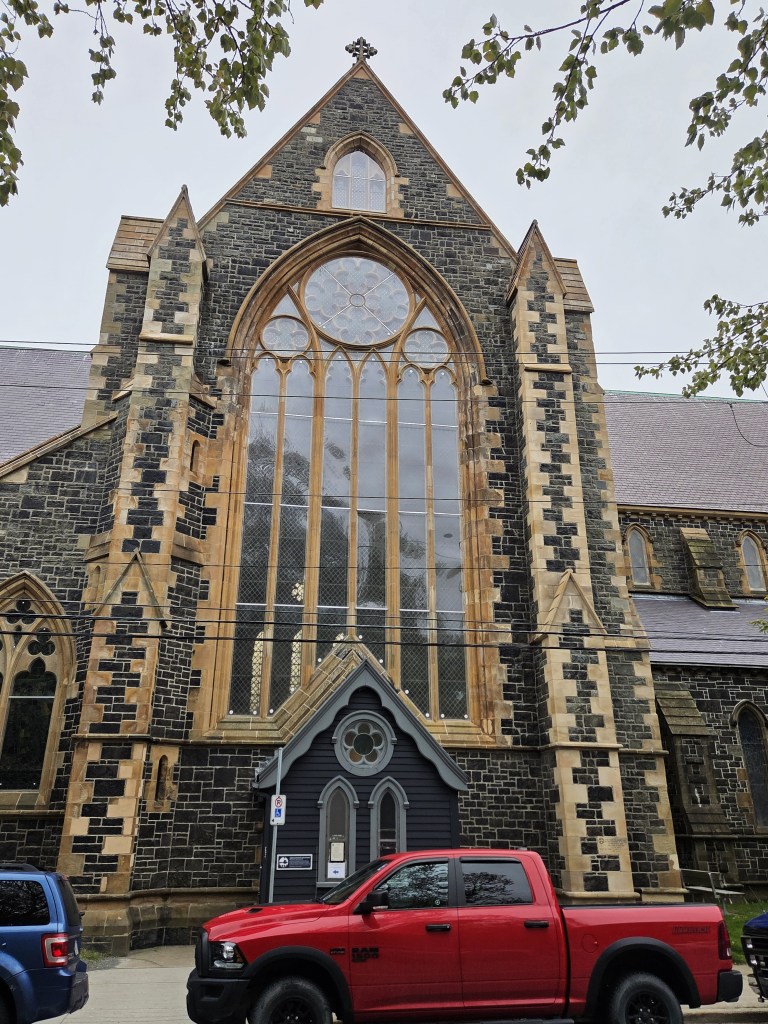
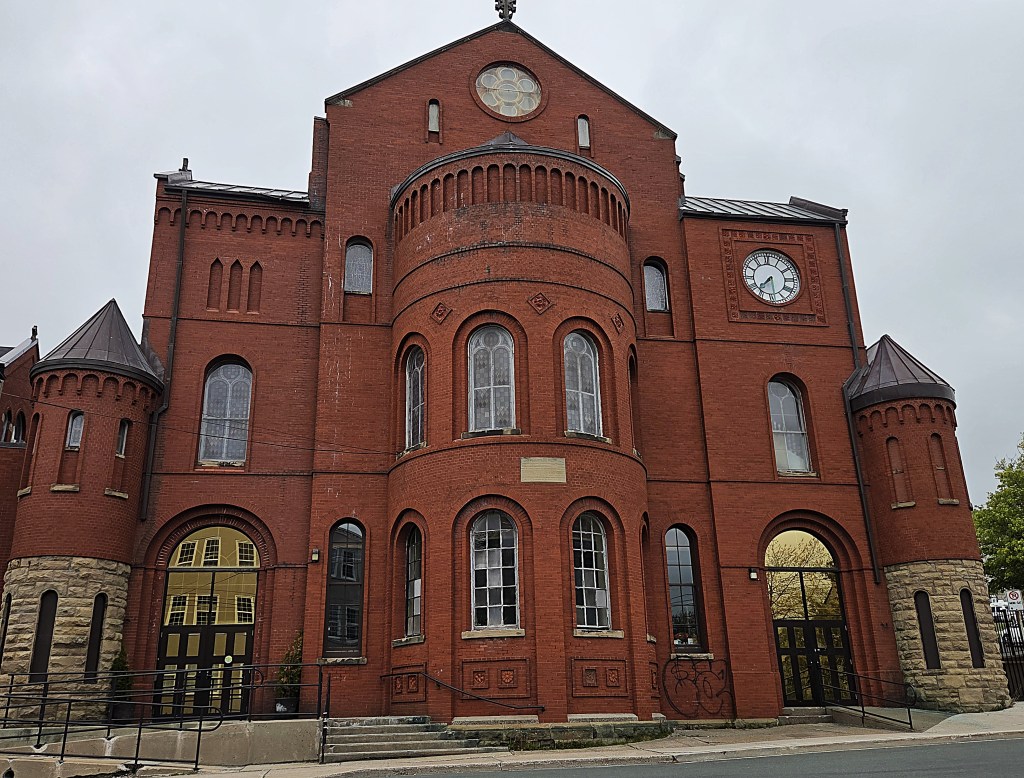
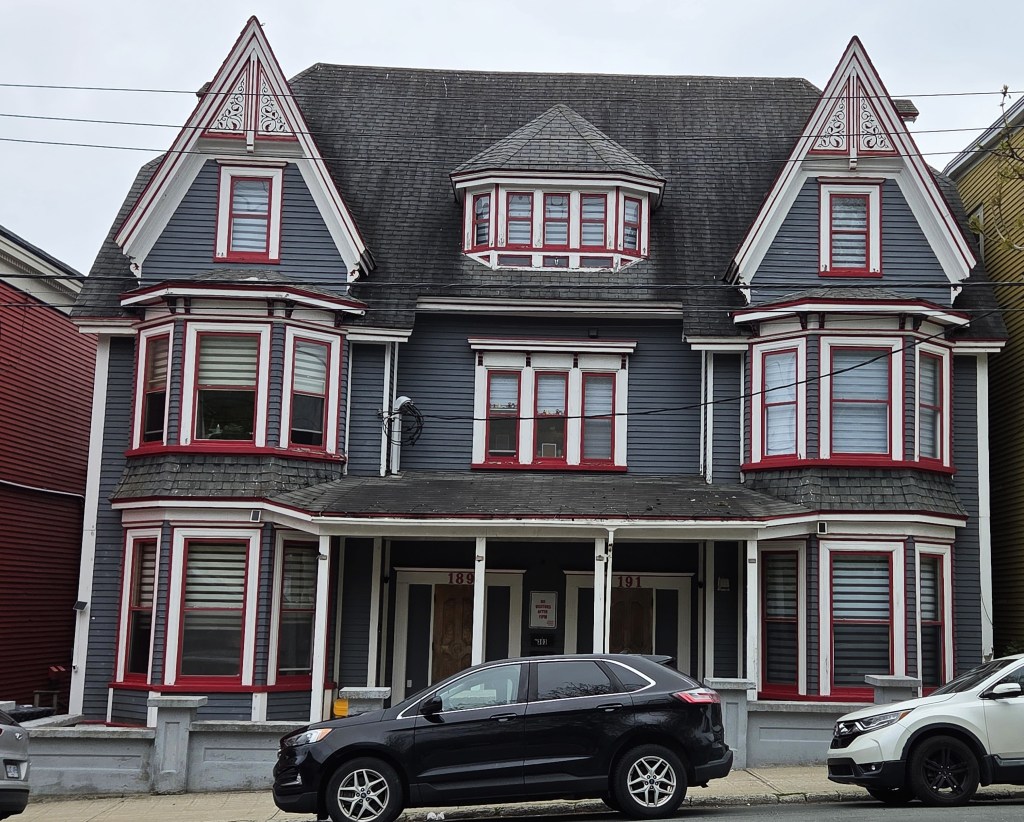
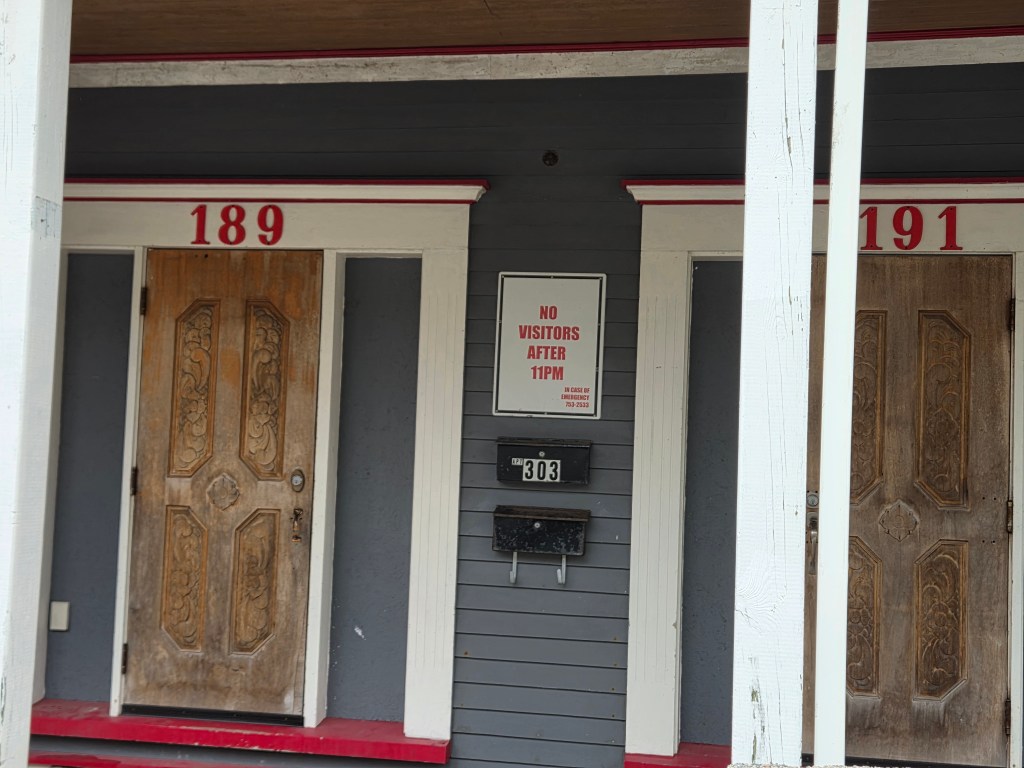
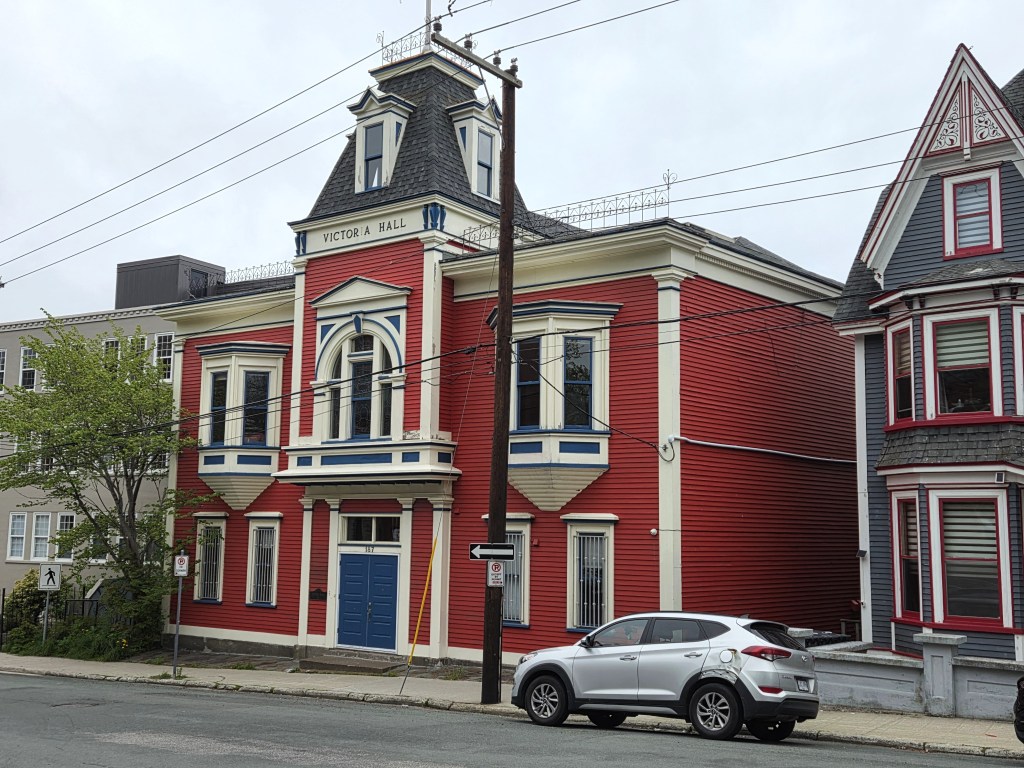
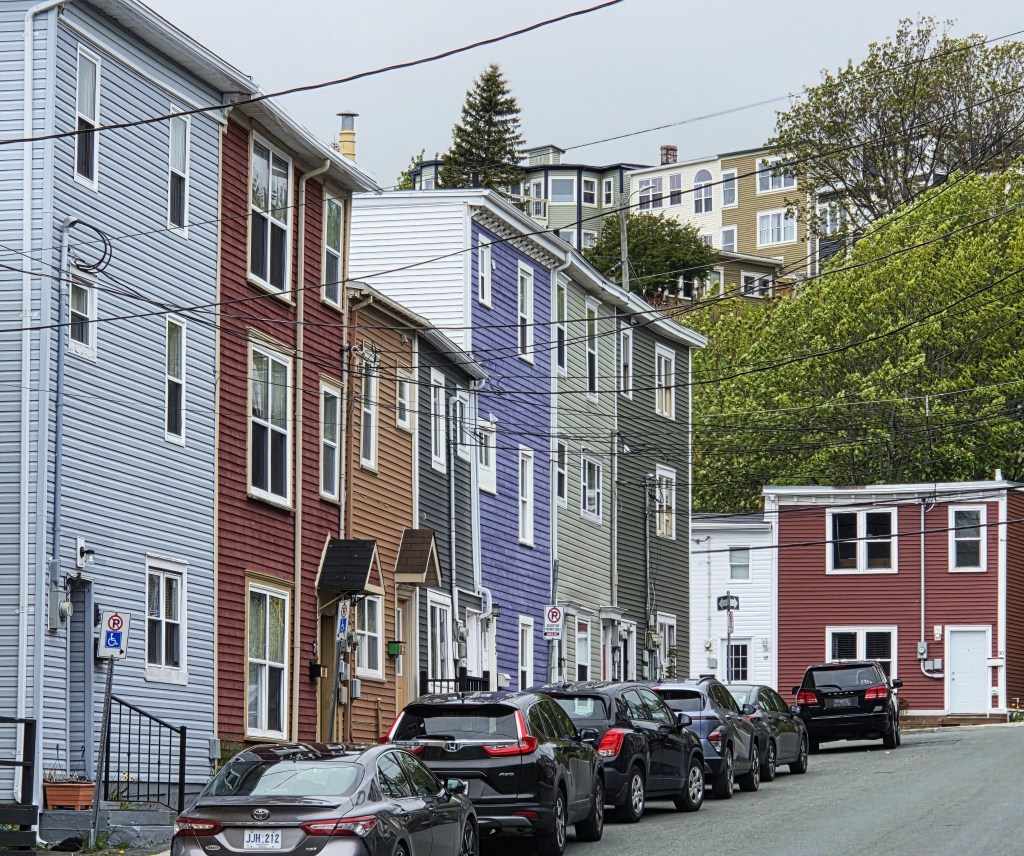
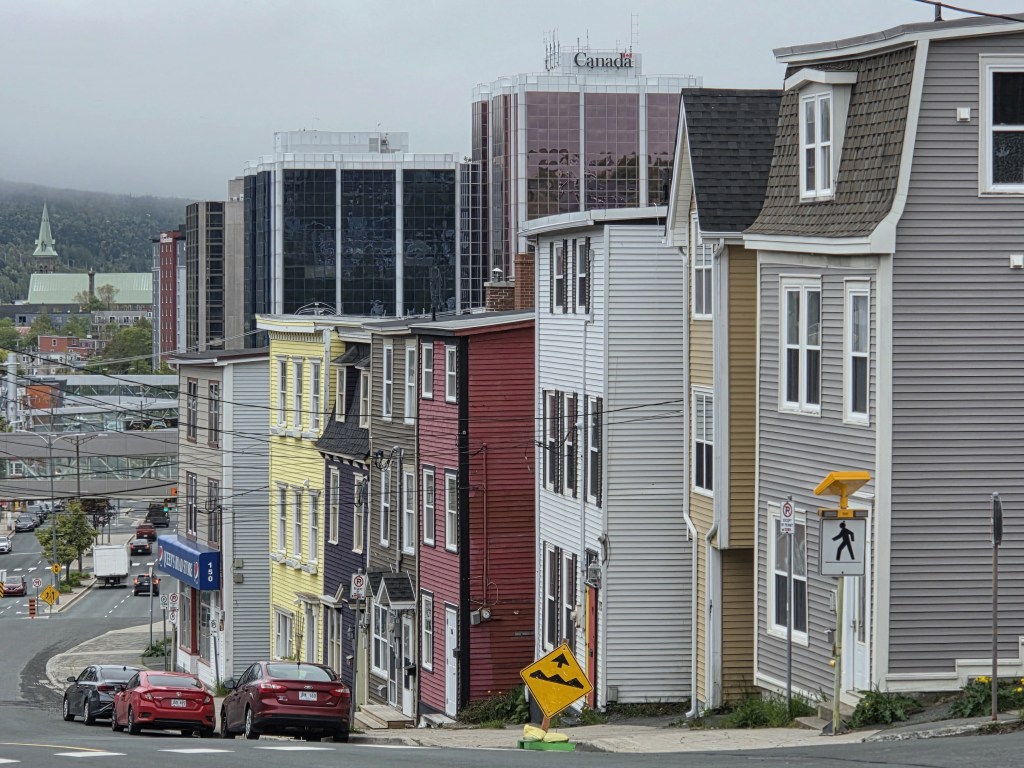
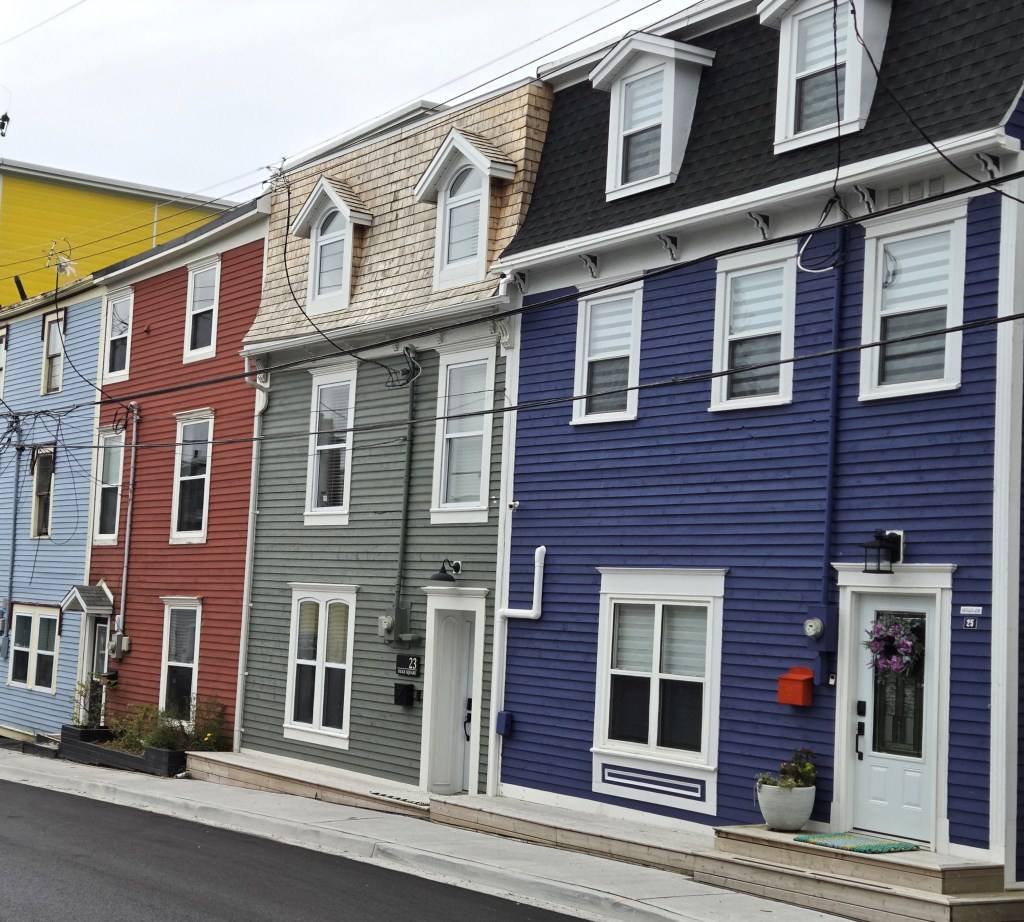
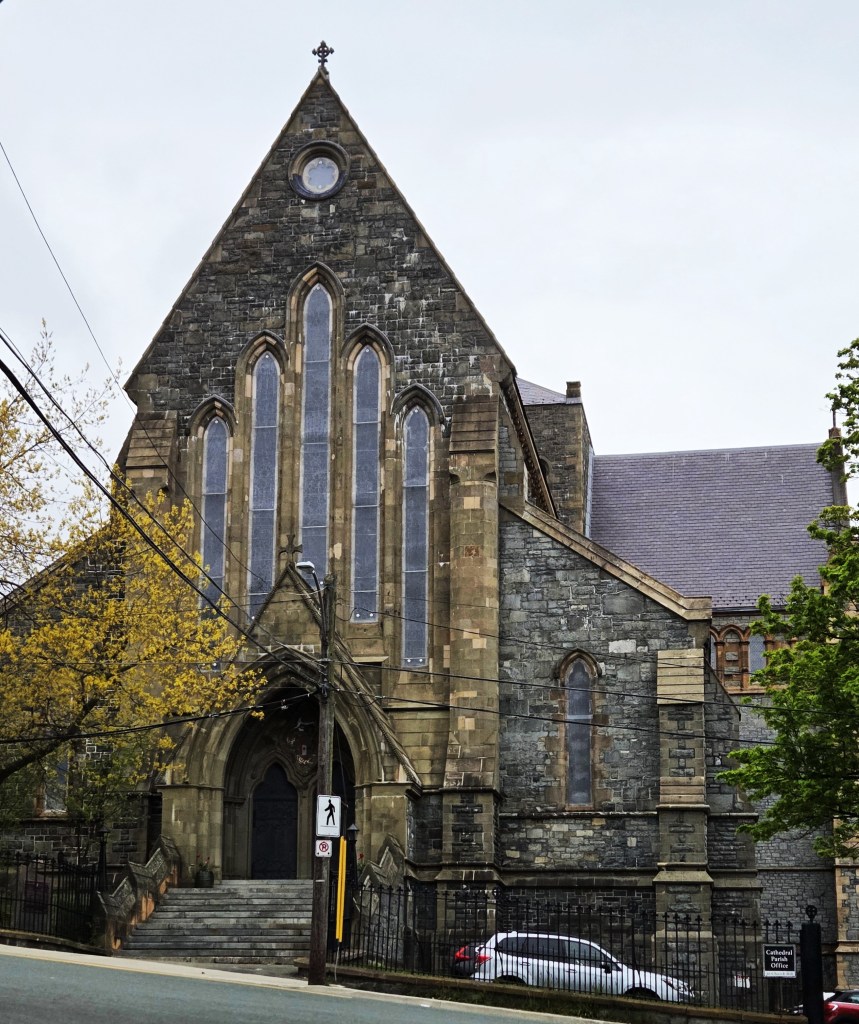
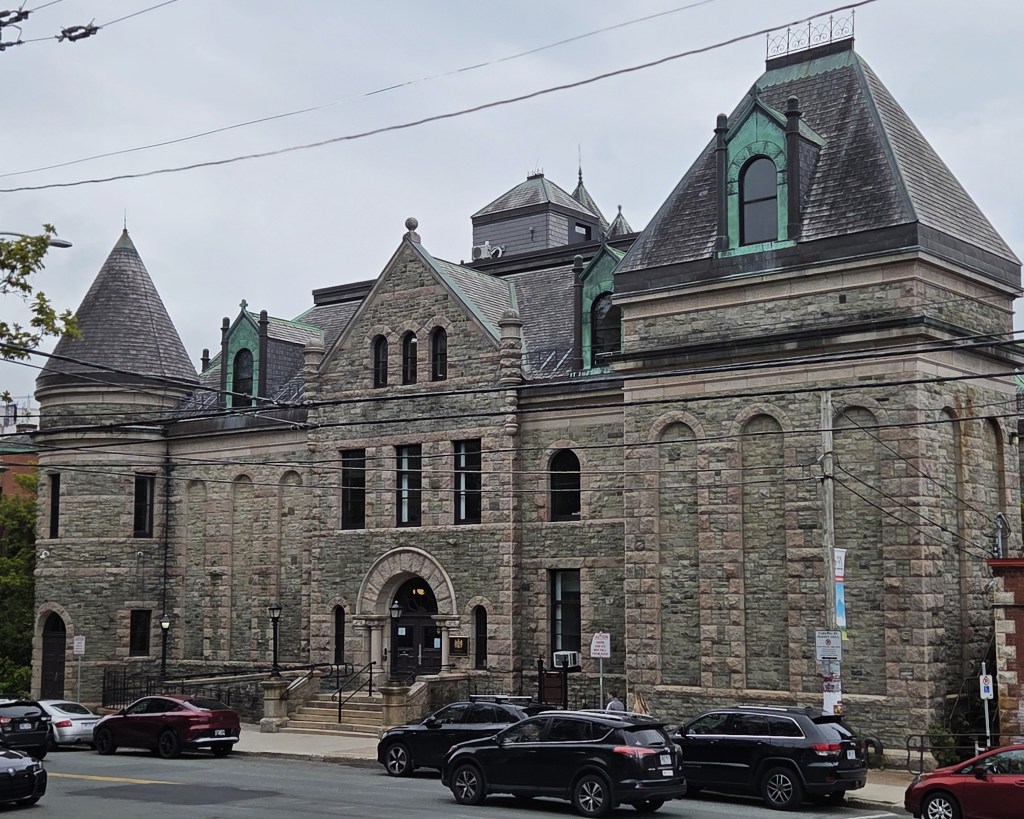
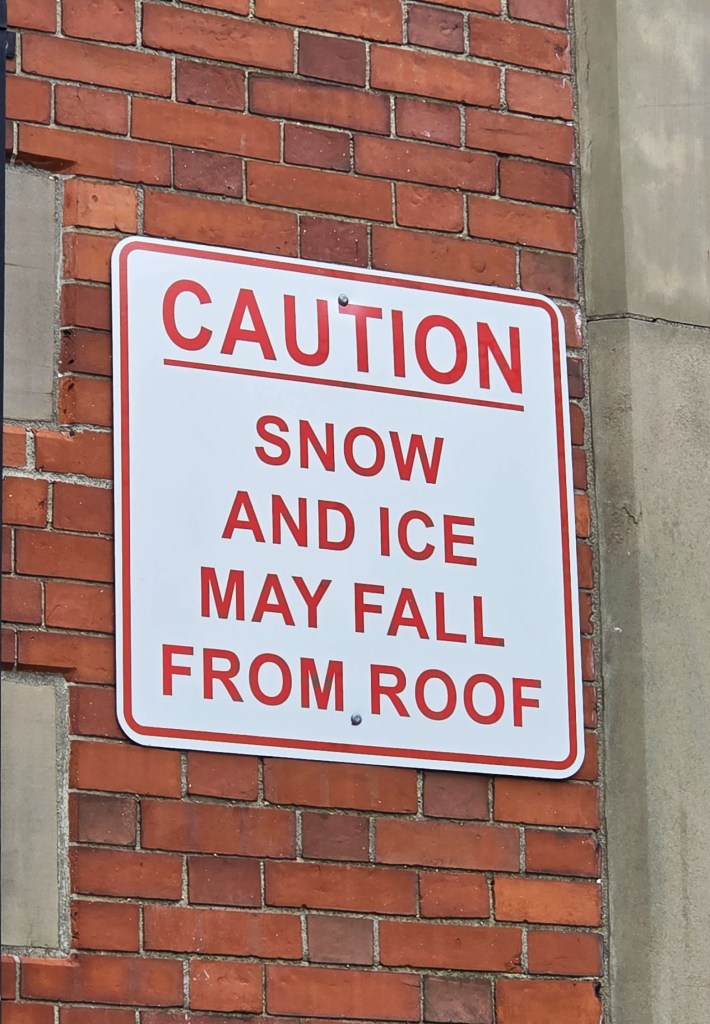
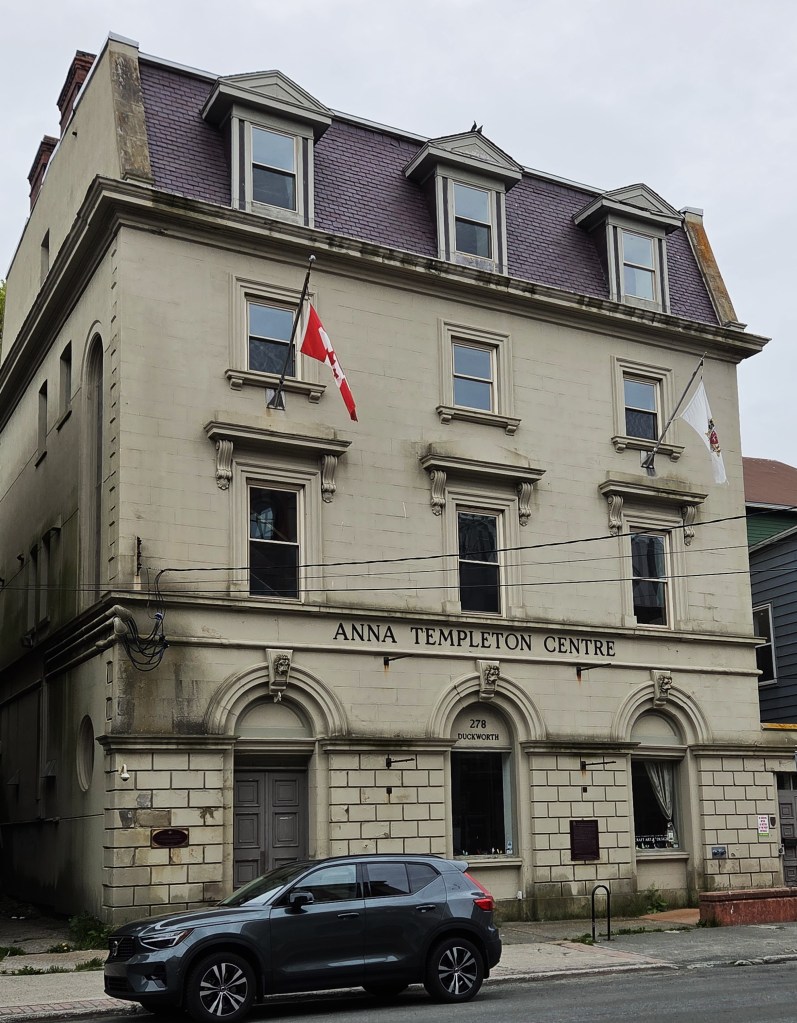
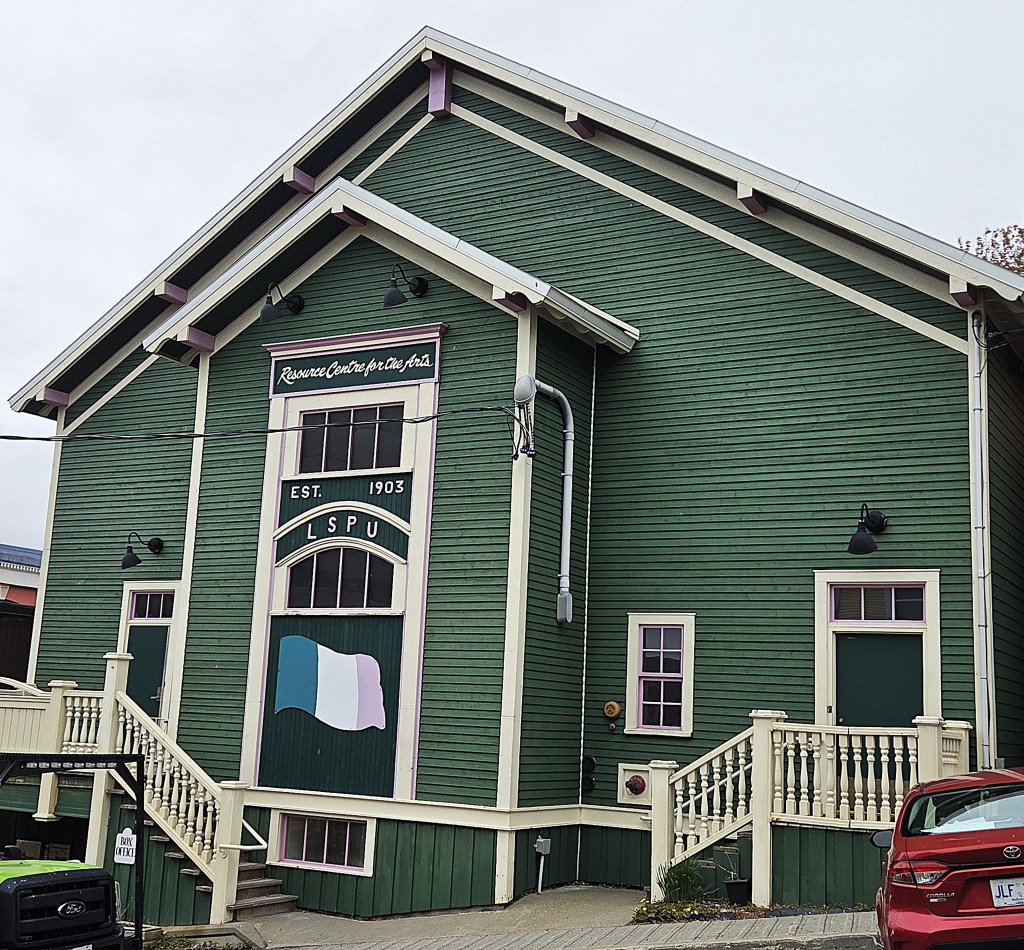
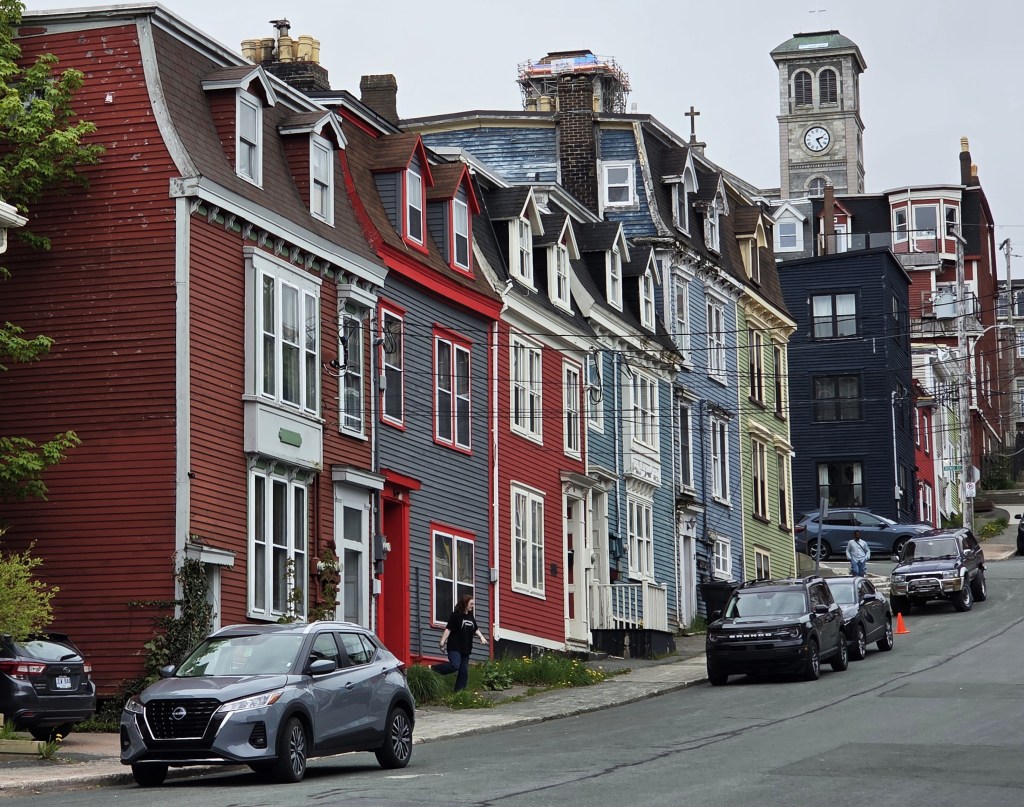
After the couple of hour hike along the shore I wandered around some of the streets in St. John’s. The old part of the city is known for its colorful houses and architecturally interesting buildings. (pics)
A note about one of them. I put a link to the Anna Templeton Building because of her interesting story. The building itself had been a series of banks up until the mid-1980s. Since then it’s been an Arts and Crafts focused centre in honor of Anna.
As I finished walking around a few drops started to fall, which a little later became the first sustained rain that we encountered on these three weeks on “The Rock”.
On the way home we stopped one last time at Taylor’s. Sam had written to me that she put aside some fresh capelins for me that were brought in by somebody. She had a small bag of them waiting for me, no charge. I’ll be fixing them for breakfast tomorrow morning.
It was nice to see Sam one last time. A couple of hugs good-bye and we’ll continue to stay in touch online. She said she really liked my poems that she’s read. Maybe she’ll even start to write some herself!
Settled back in at the house for the rest of the day as rain fell and the wind gusted at times. Late in the day the sun peaked out a little between clouds and raindrops. I stepped outside to see if there was a rainbow off to the east. There wasn’t.
(Click on thumbnail for larger, clearer picture.)
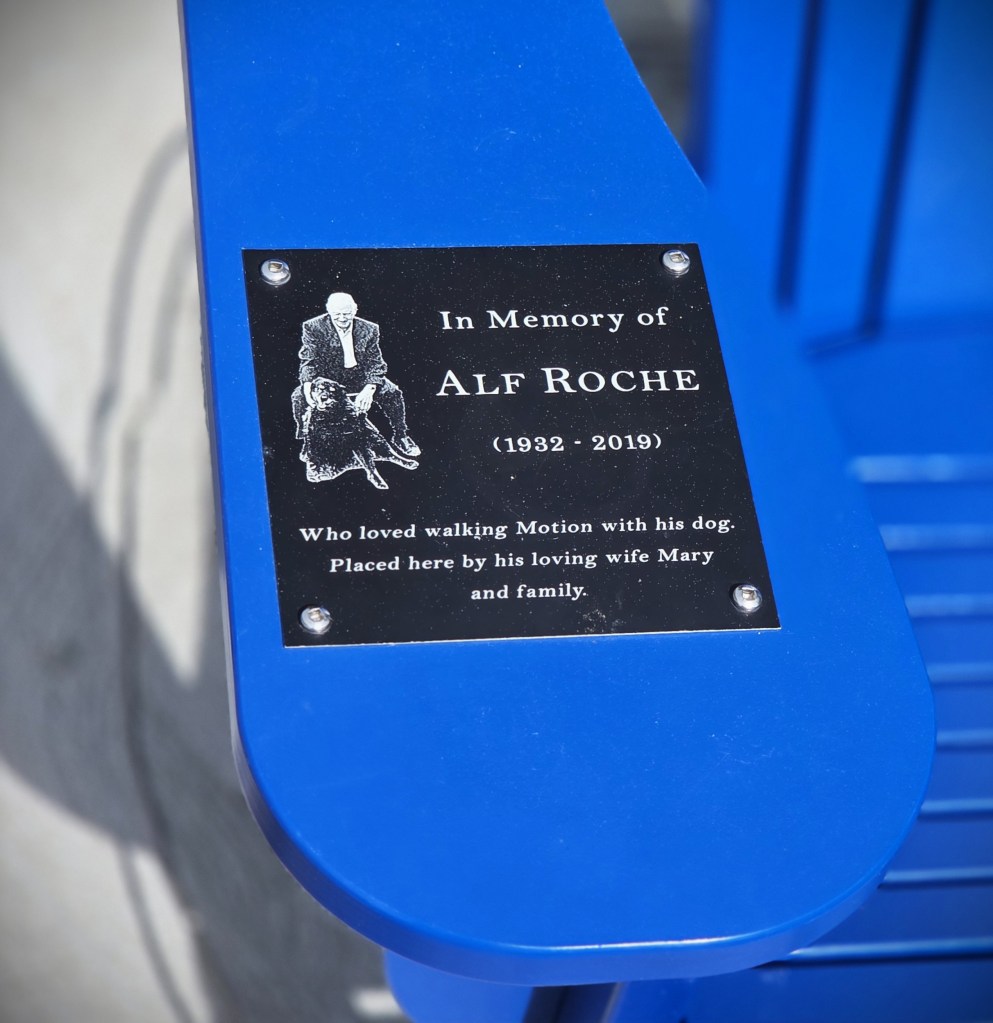
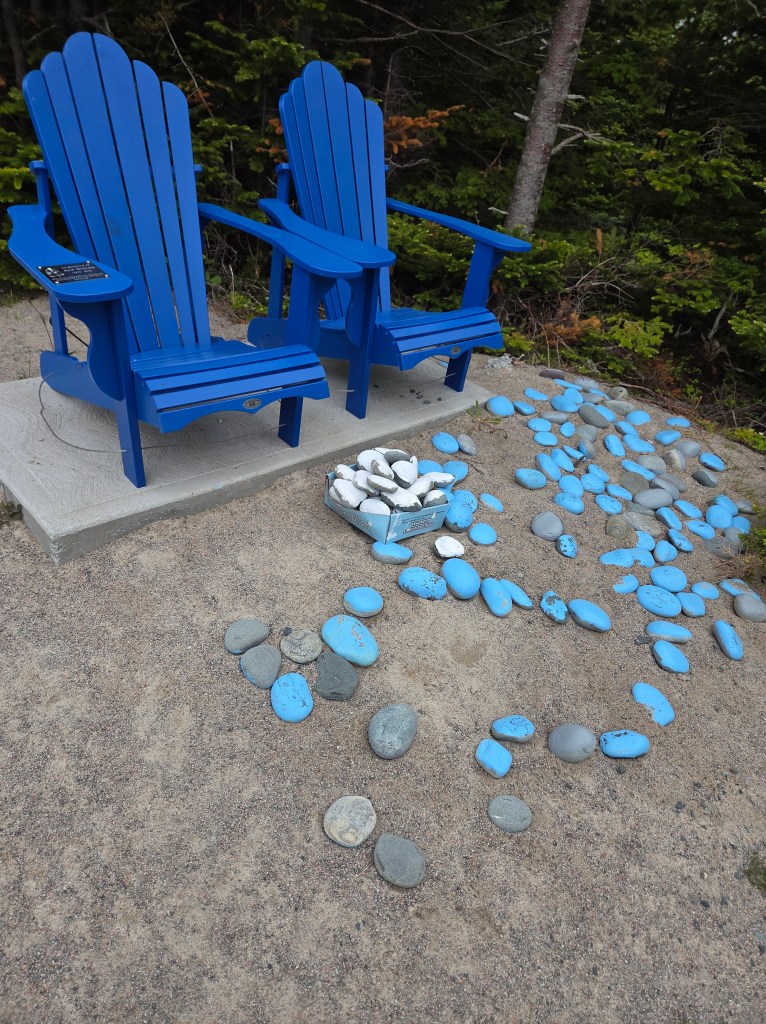
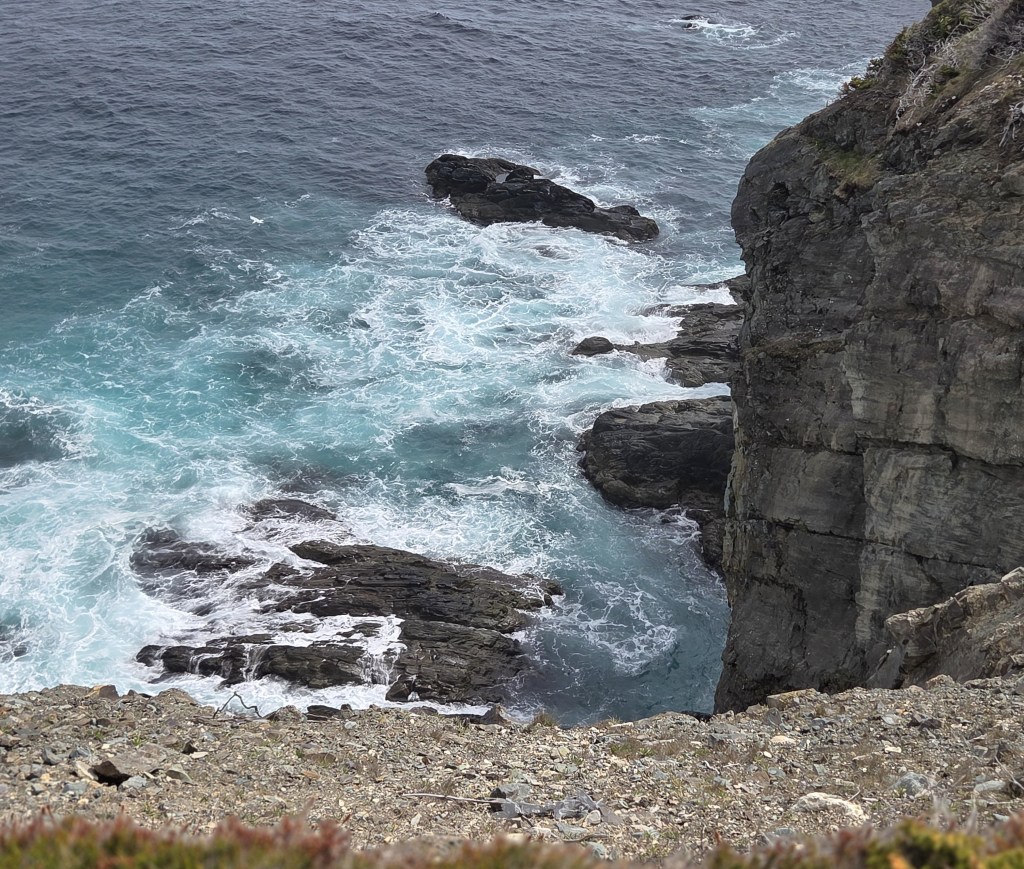
6/18
A day out and about exploring the southeastern portion of the Avalon peninsula. We had explored the western portion a couple of days ago and were anxious to see what the eastern side would be like. One place we especially wanted to stop at was St. Vincent’s to possibly observe whales. The water is deep there and whales often come into view from shore.
The day started out cloudy but was forecast to clear during the later morning hours. True to the forecast, swatches of blue sky increased throughout the morning hours as we drove along the east side of the peninsula.
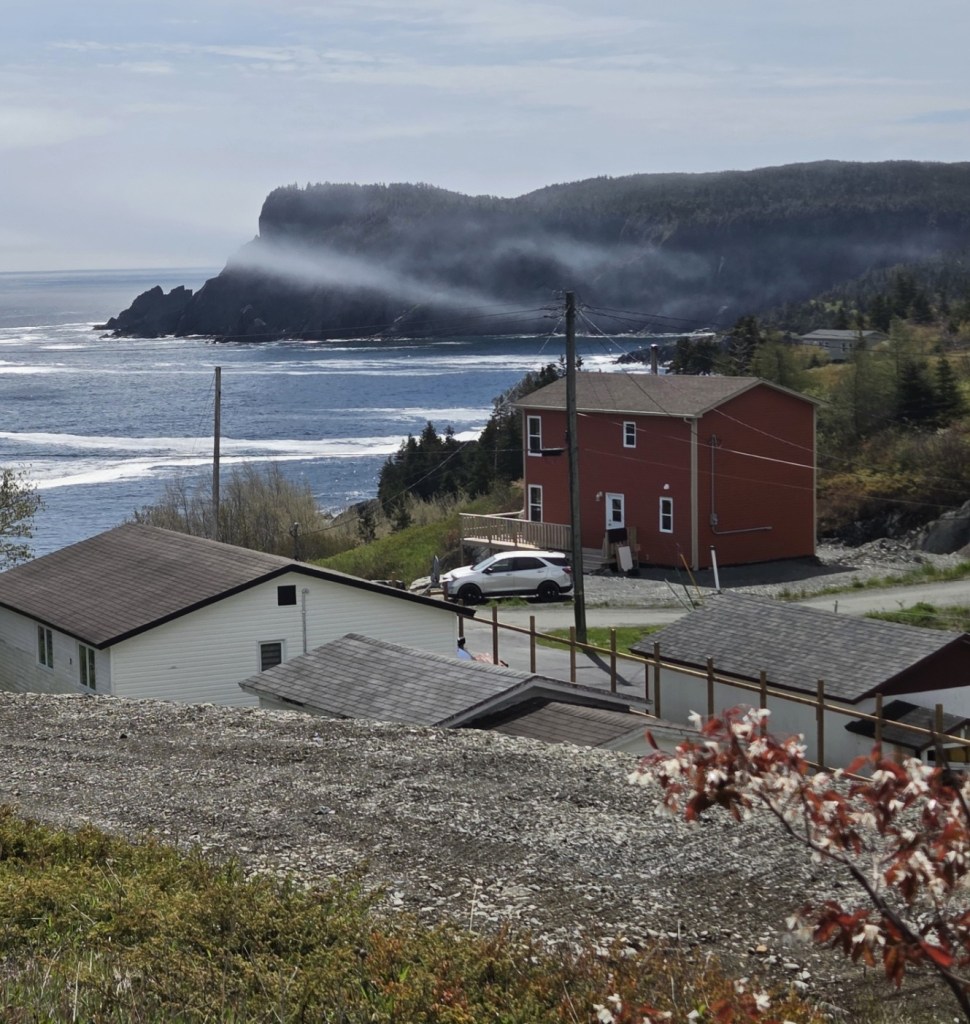
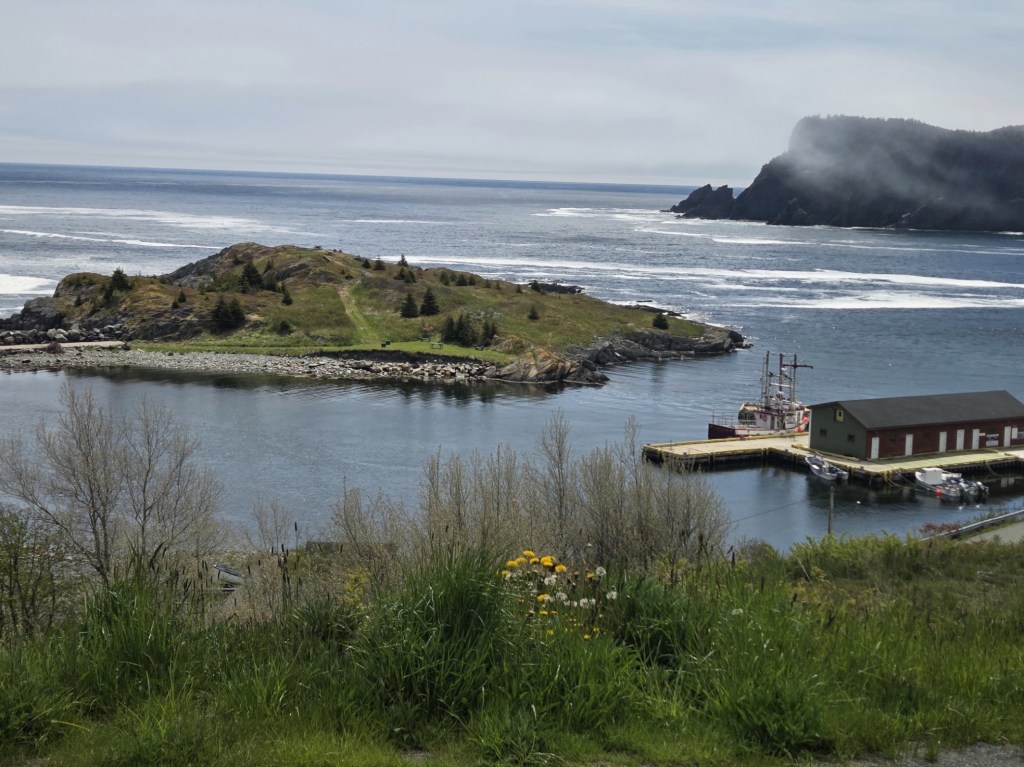
We detoured off the main road to a small seaside settlement, Brigus South. Very picturesque. Population as of 2016 – 83. The settlement was named on maps in the mid-17th Century. The first two pics are from there.
While on the small road that wound down to the shore, a cement truck stopped just ahead of us on the hilly road, where we were stopped to take a few pictures. The driver came out and asked if he was in our way. I told him we wondered if we were in his way. We got to talking a bit. Keegan was trying to find the address he was supposed to be going to but didn’t have any luck. There didn’t seem to be such an address in this tiny community. We certainly couldn’t help him.
As we stood there in the road, above the scenic shore below, we talked about work and life. Keegan was 22 years old and he impressed me as a polite and thoughtful young man. Before departing I asked him if he had ever heard of Henry David Thoreau. He hadn’t, which I had expected. I briefly told him about Thoreau and then quoted him the two quotes in Walden about following your dreams. I asked if he had a dream to pursue. He said yes and then told me he wants to be there for his family, to be able to spend time with them and not just work away all of his time. As we said goodbye I shook his hand and told him to make that dream a reality.
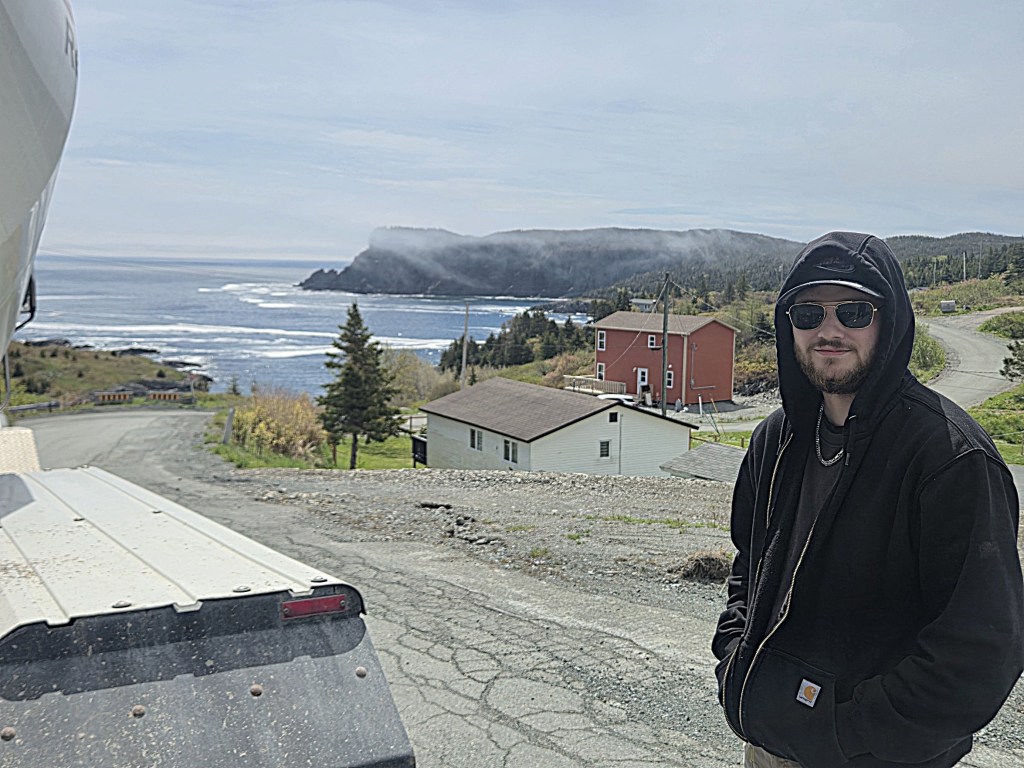
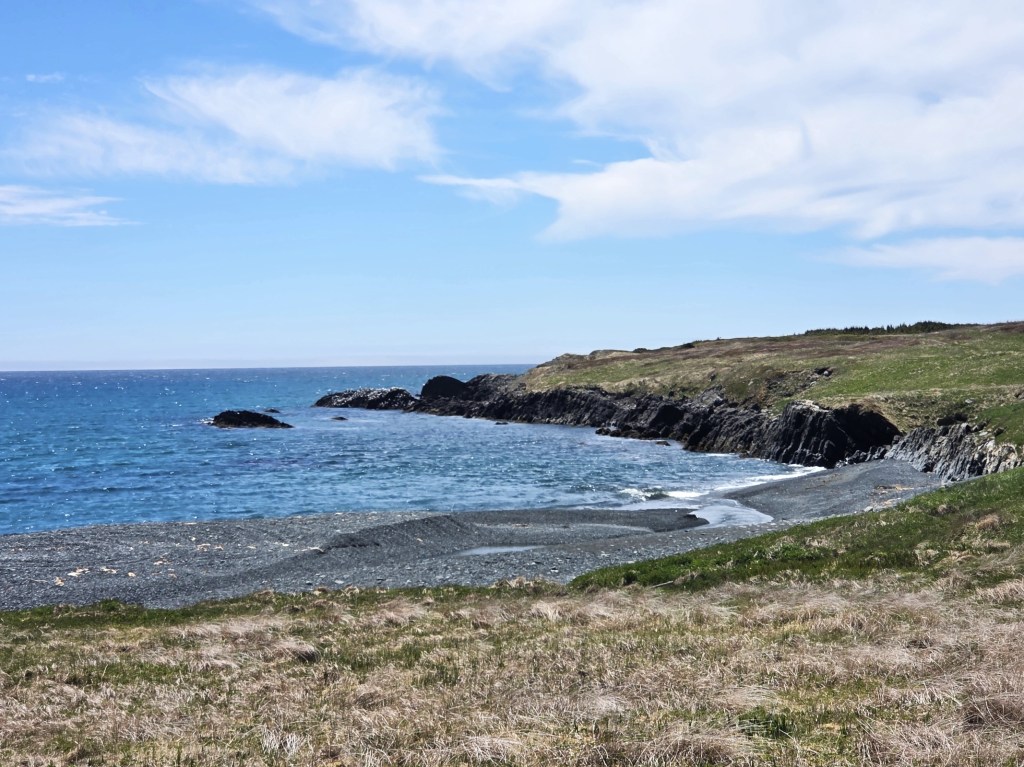
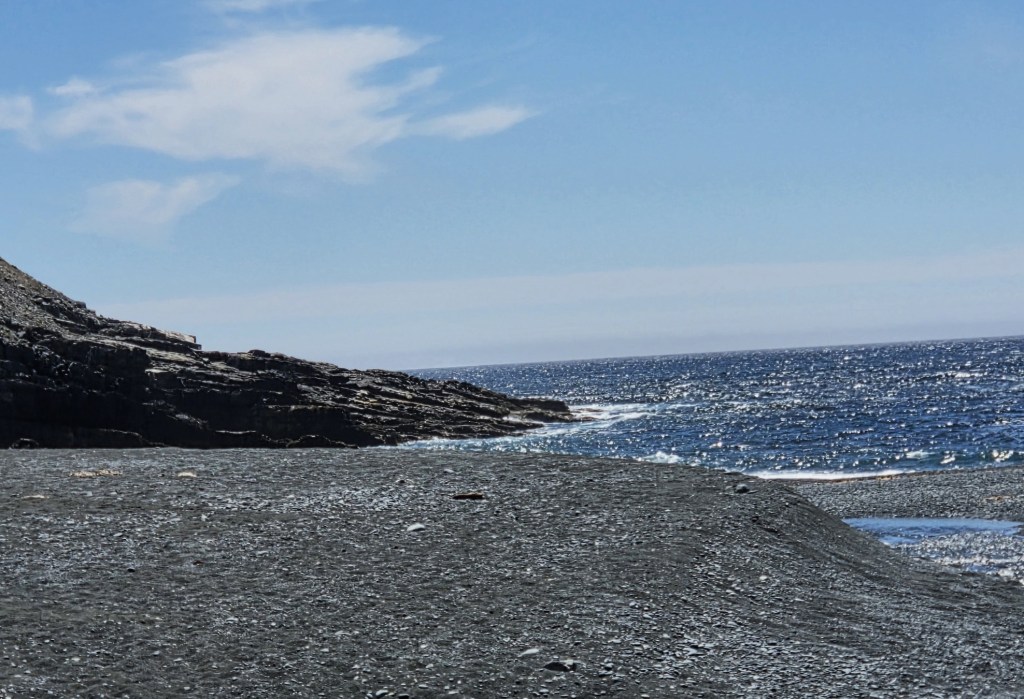
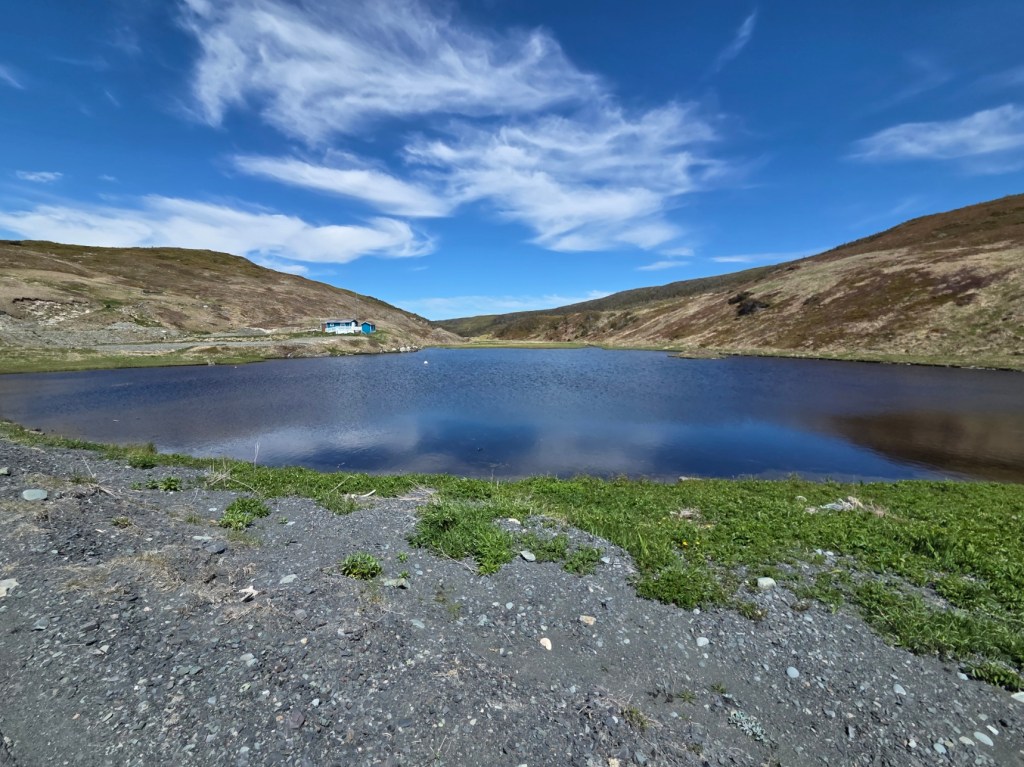
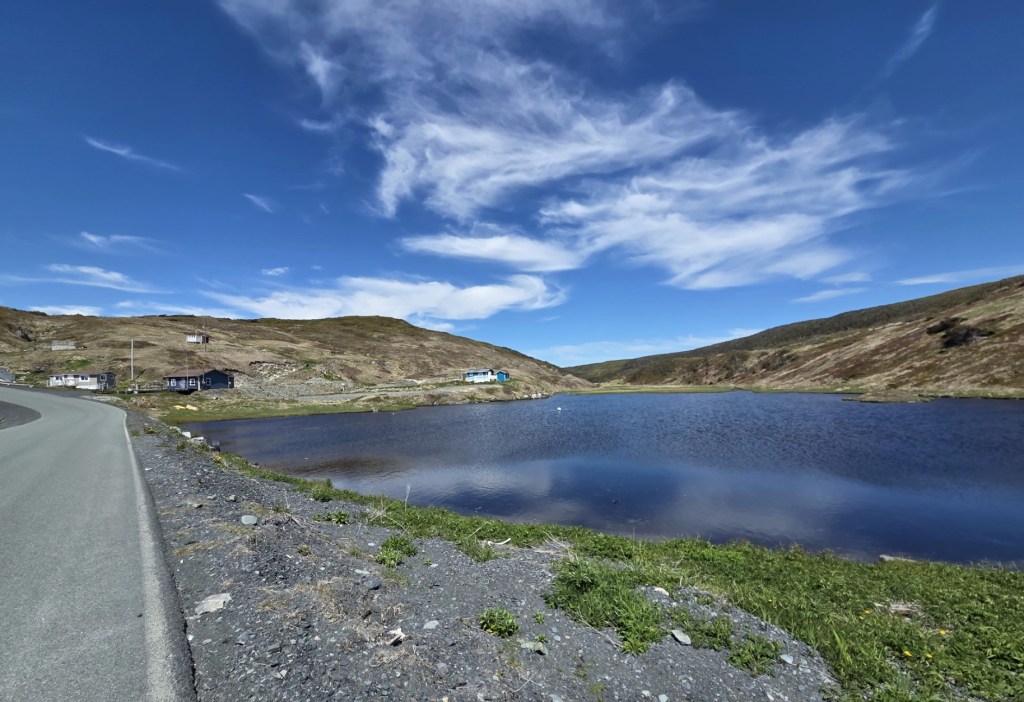
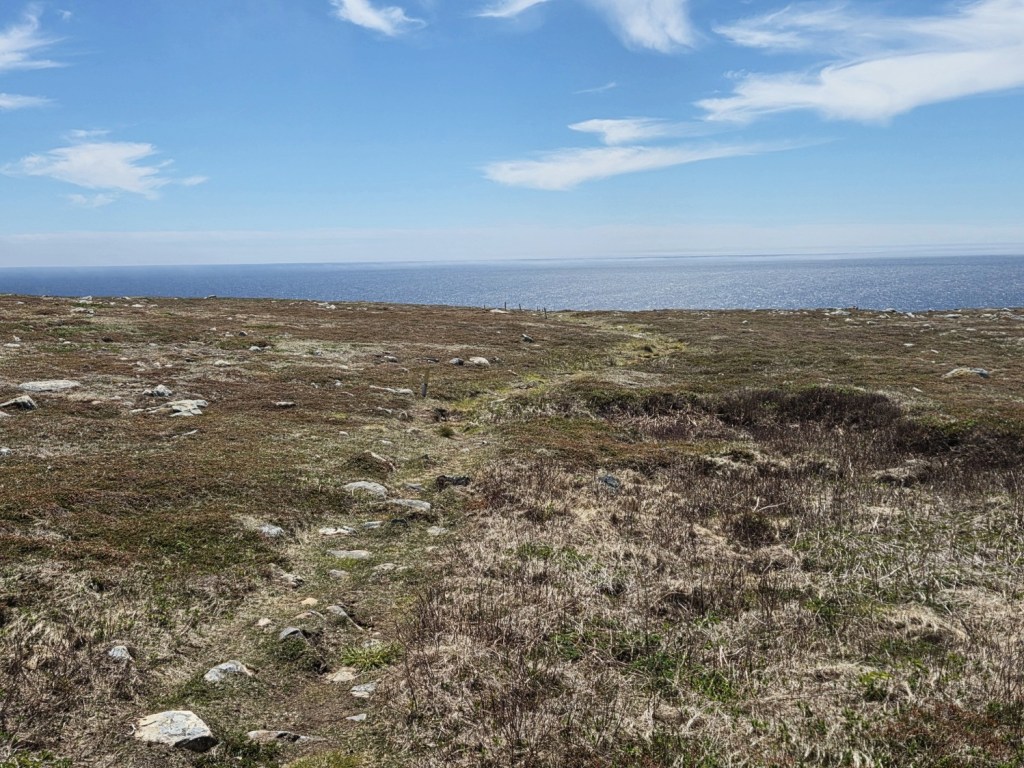
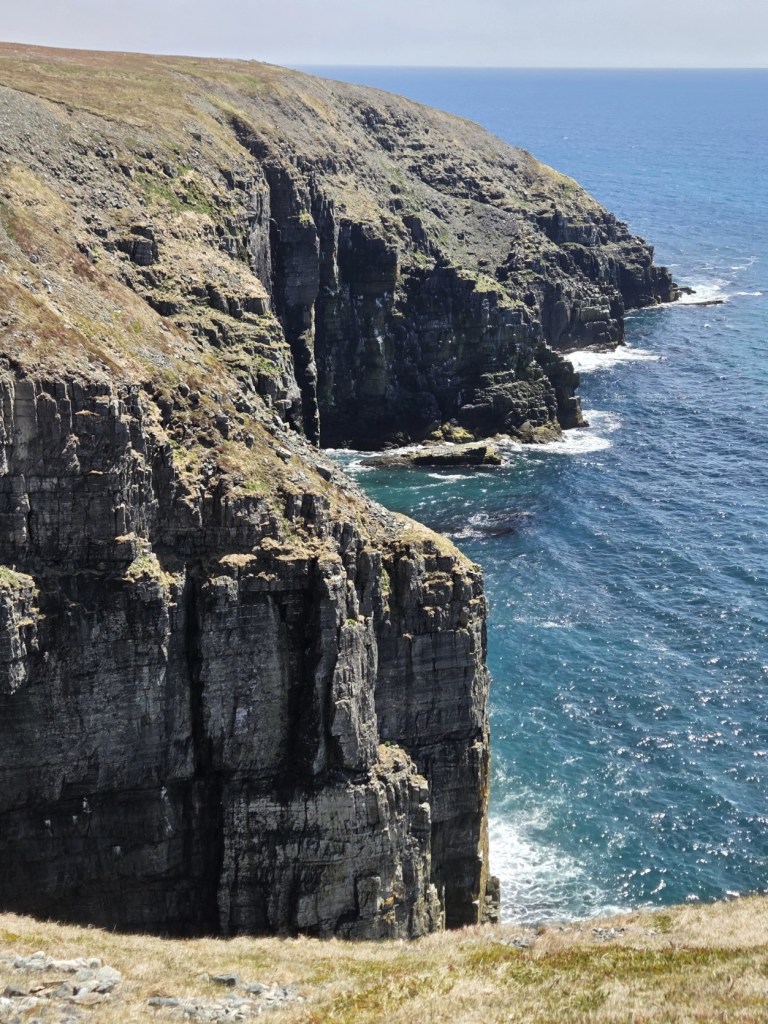
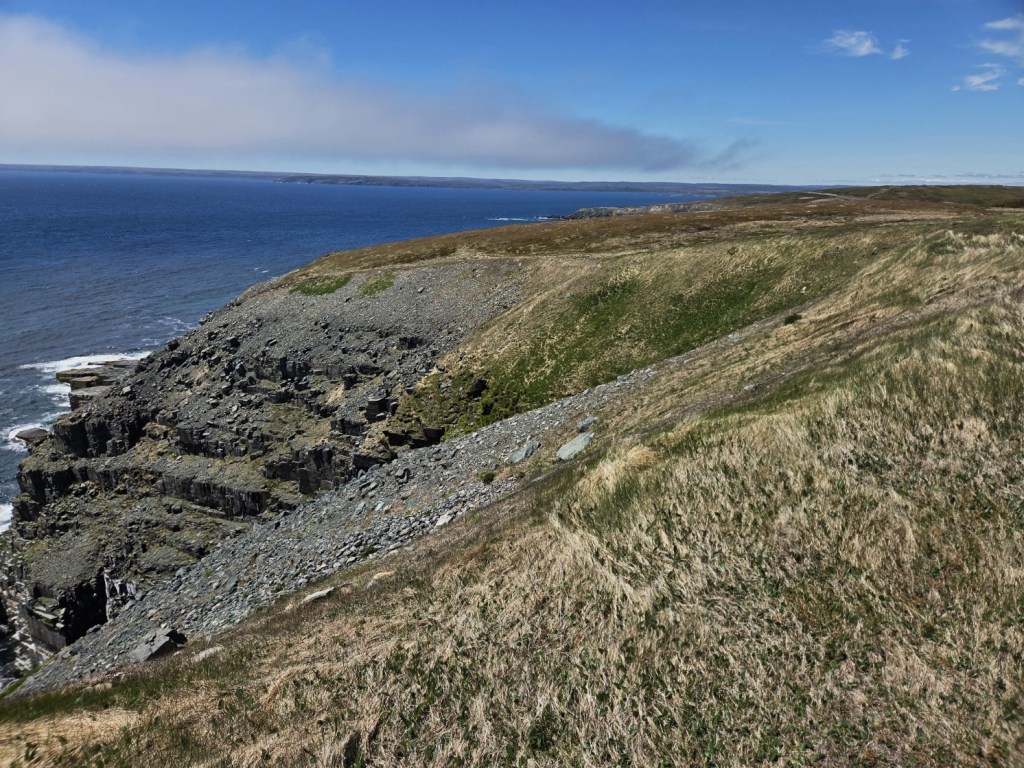
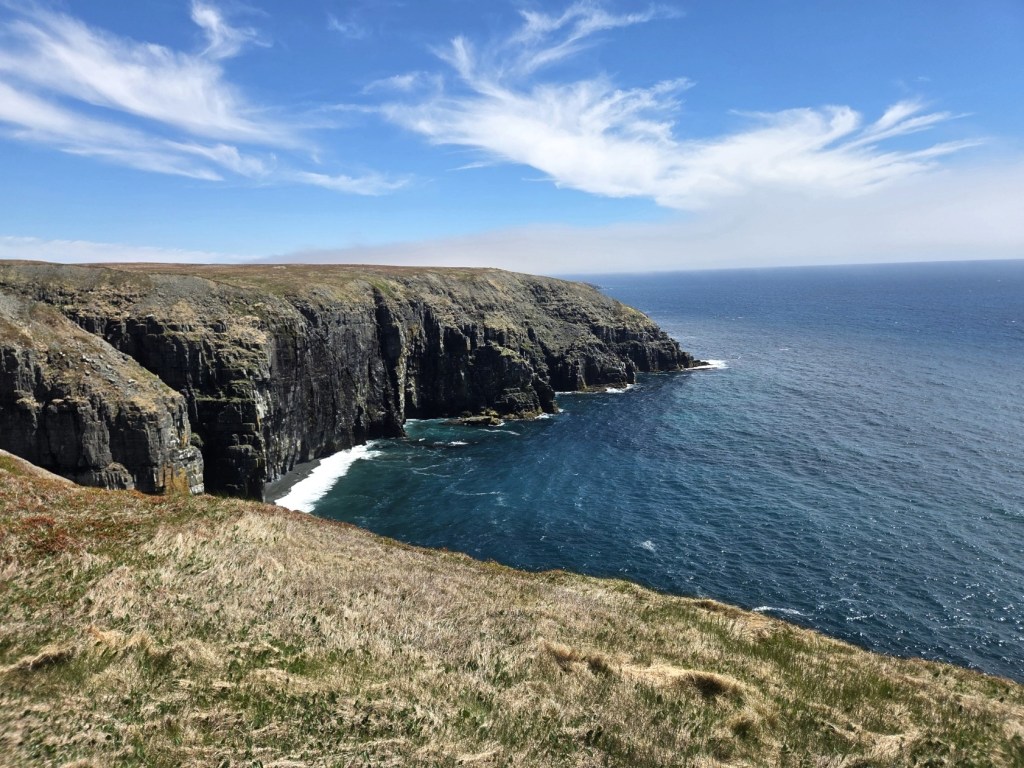
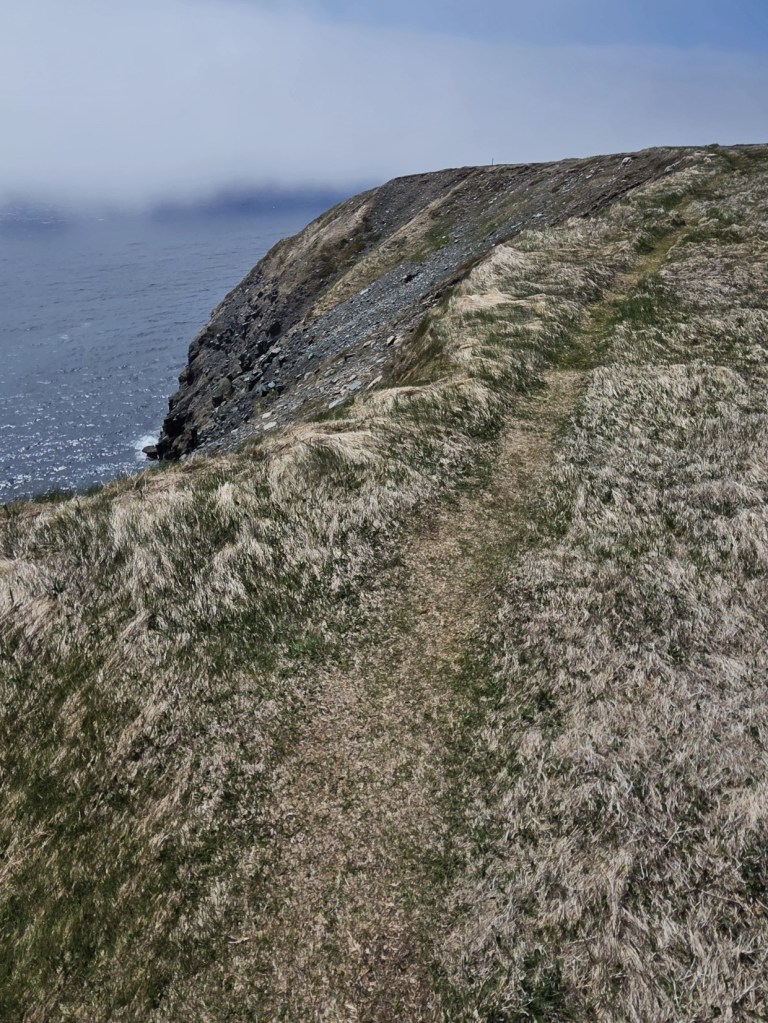
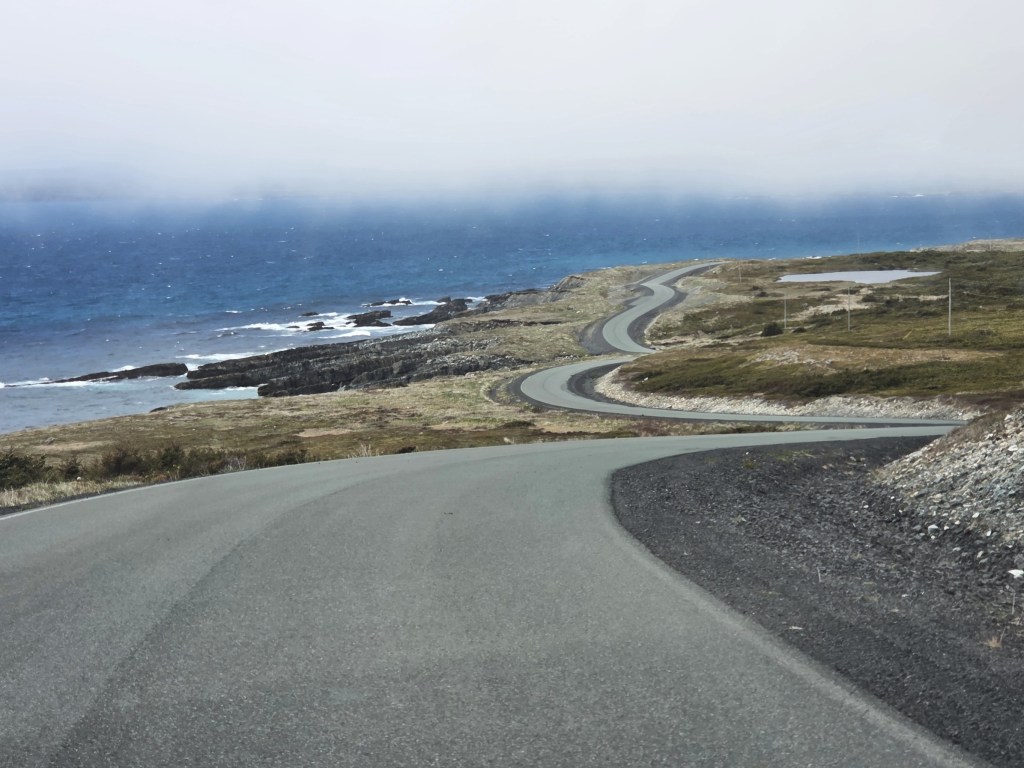
The next 12 pics are from Mistaken Point Ecological Preserve. We stopped there and ate lunch on a bench with an open view of the vast Atlantic. This reserve is a UNESCO World Heritage sight and contains some of the oldest fossils in the world. The site of the fossils is only approachable on a tour and we didn’t have time to do that. But we were able to drive in a ways and took a short hike to the edge of cliffs that was the site of a Black-legged Kittiwake rookery. (no pics) A very dramatic coastline that very much reminded me of when I was hiking in Wales with Bart White a few years ago. Treeless fields leading to precipitous cliff edges.
Fog started encroaching from the sea as we left the Reserve and headed west. By the time we arrived at St. Vincent’s there was no ocean to see, let alone any chance to see whales. A disappointment, but we knew that is what it can be like along the ocean shore from all of the time spent in and living by Acadia National Park.
While driving back home fog and clear sky alternated till, when we were more inland, the fog disappeared entirely.
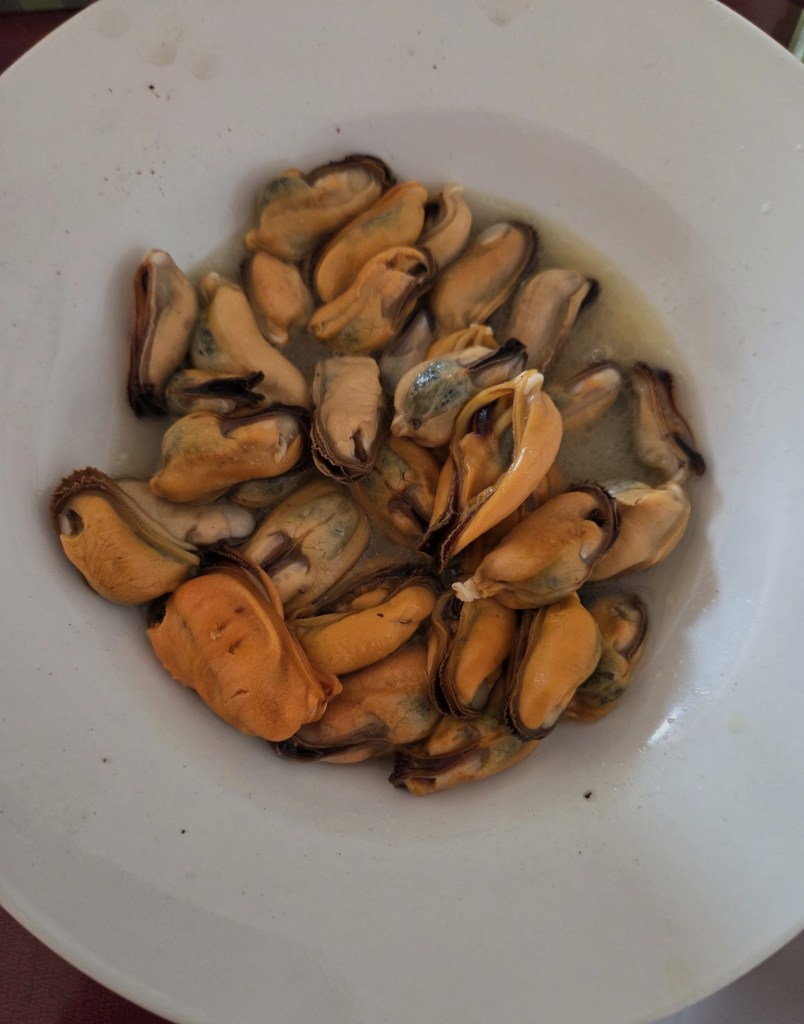
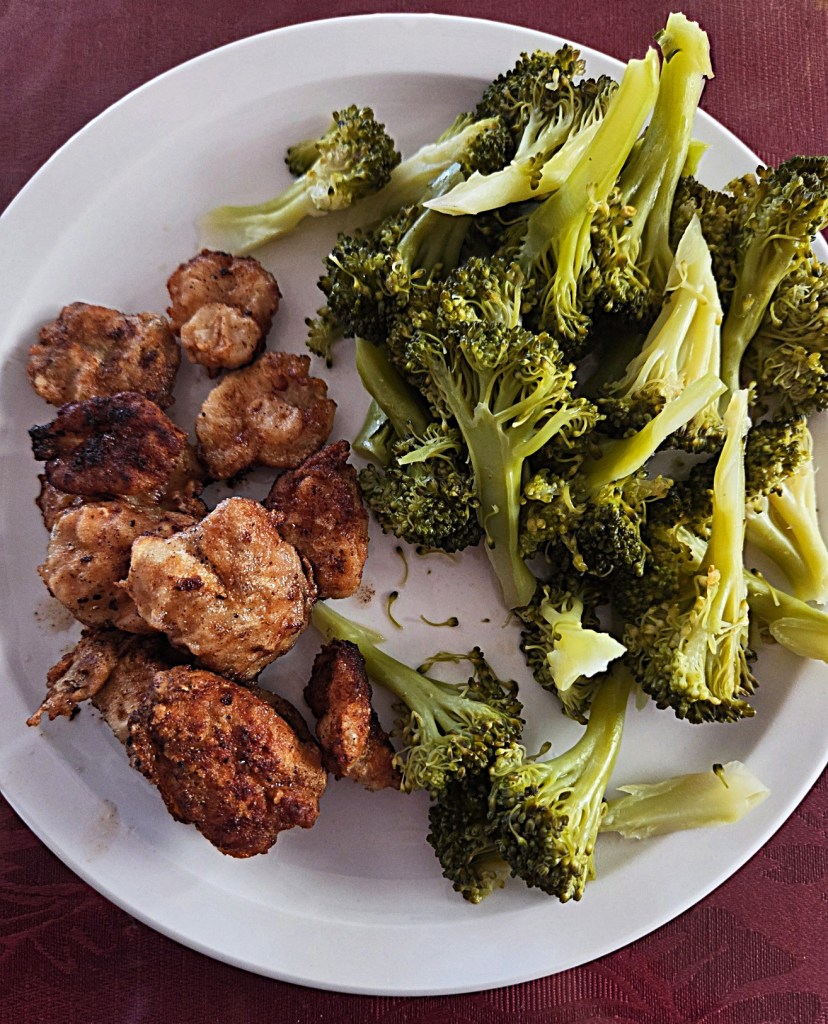
Back home I fixed a meal of mussels and cod tongues (pics) that I bought at Taylor’s the other day. The mussels were excellent. It may be difficult for me to buy and cook mussels back home again after having these fresh Newfoundland mussels.
The cod tongues were good. I patted them dry, dredged them in flour, added a little salt and pepper then cooked them in butter and olive oil. They were crispy on the outside, soft and moist on the inside, and chewier than regular cod fish. Here’s a link explaining what cod tongues are:
I expect, unless I make a return journey to Newfoundland, this will be the one and only time I’ll have the pleasure of dining on them.
(Click on thumbnail for larger, clearer picture.)
6/17
One of the few rainy days we’ve had on the journey. Wet morning and afternoon, then dry.
Home getting caught up on some work I needed to do. A nice surprise a few days ago when I was informed that a grant Casey Winston and I applied for was accepted. It’s a writing project centered on Clean Energy that needs to be completed by the end of September, so did some preliminary work on scheduling workshops at libraries back home.
Meanwhile, Carolyn went out to visit a few quilting stores in the area.
Drove off to Signal Hill where Carolyn toured the Cabot Tower. I wasn’t interested in that but wanted to hike a coastal trail there.
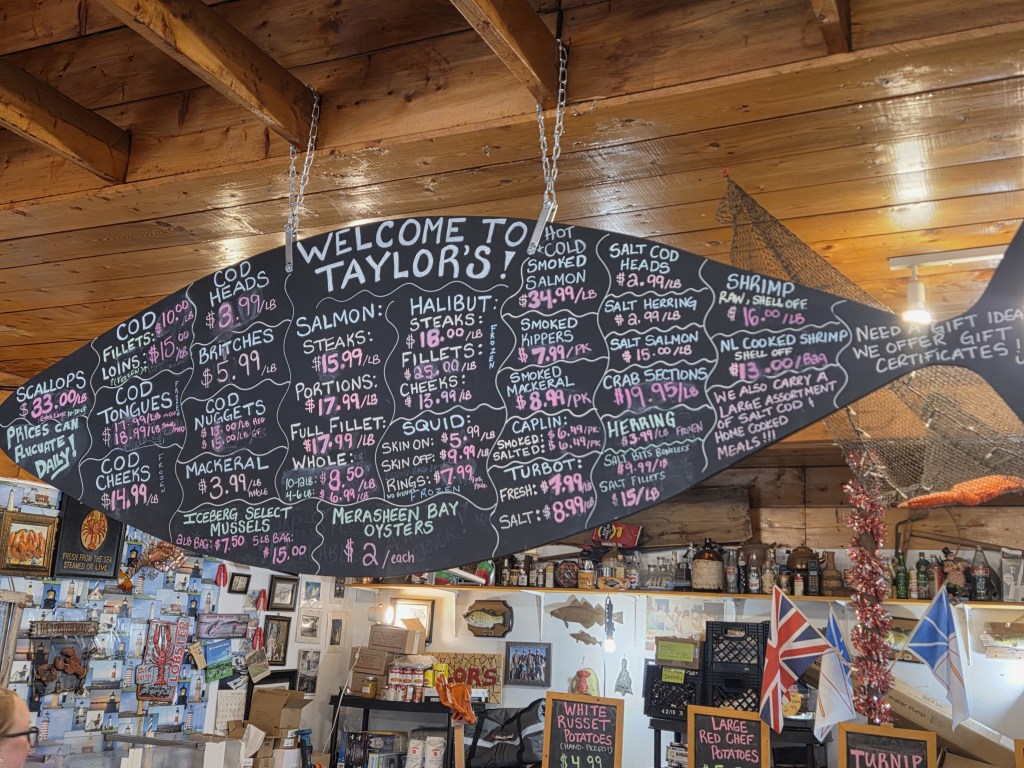
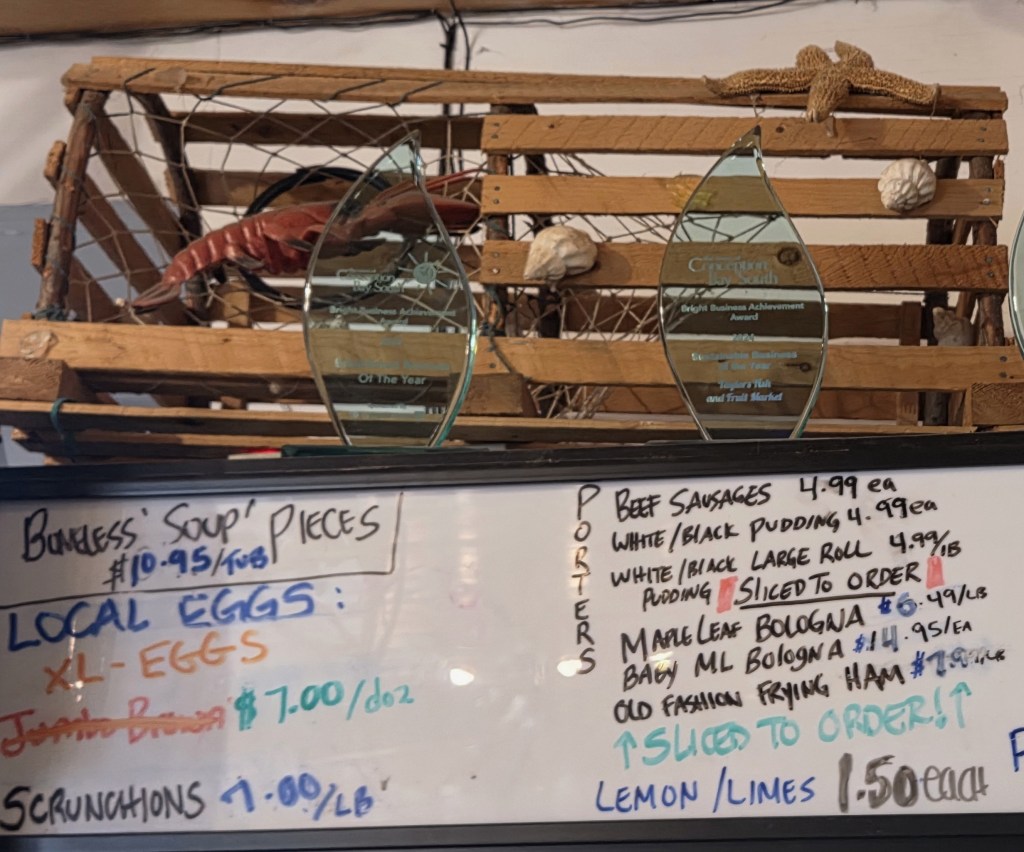
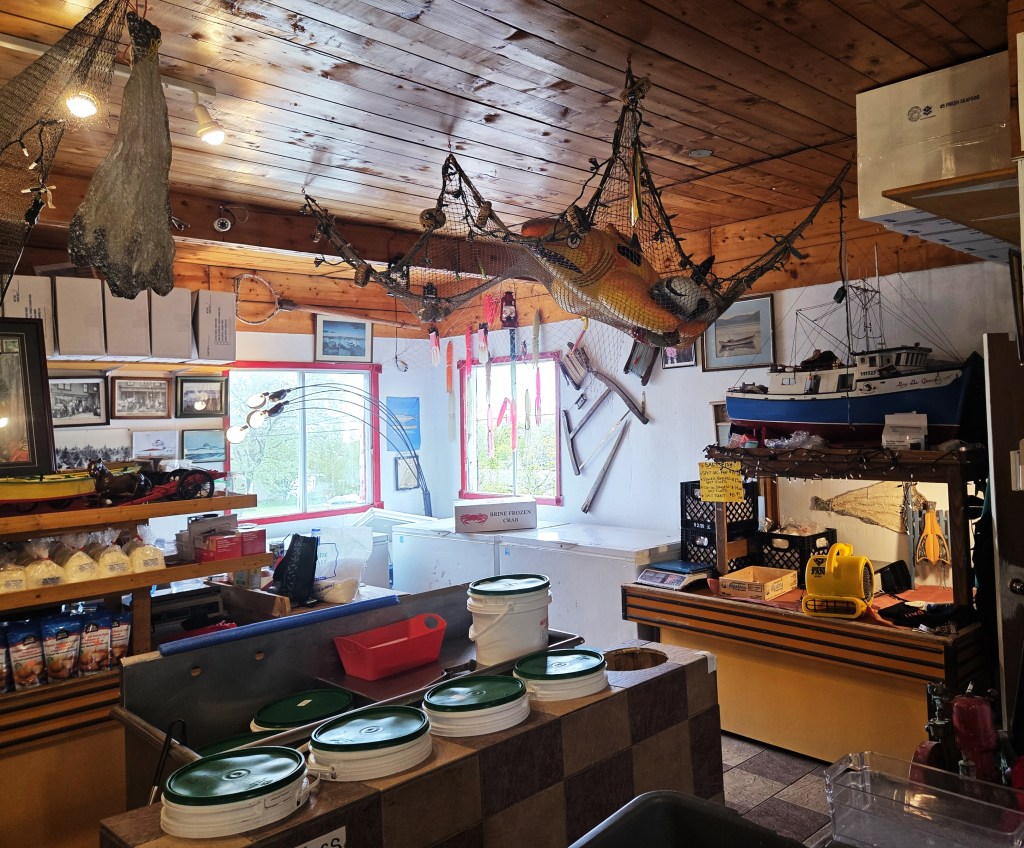
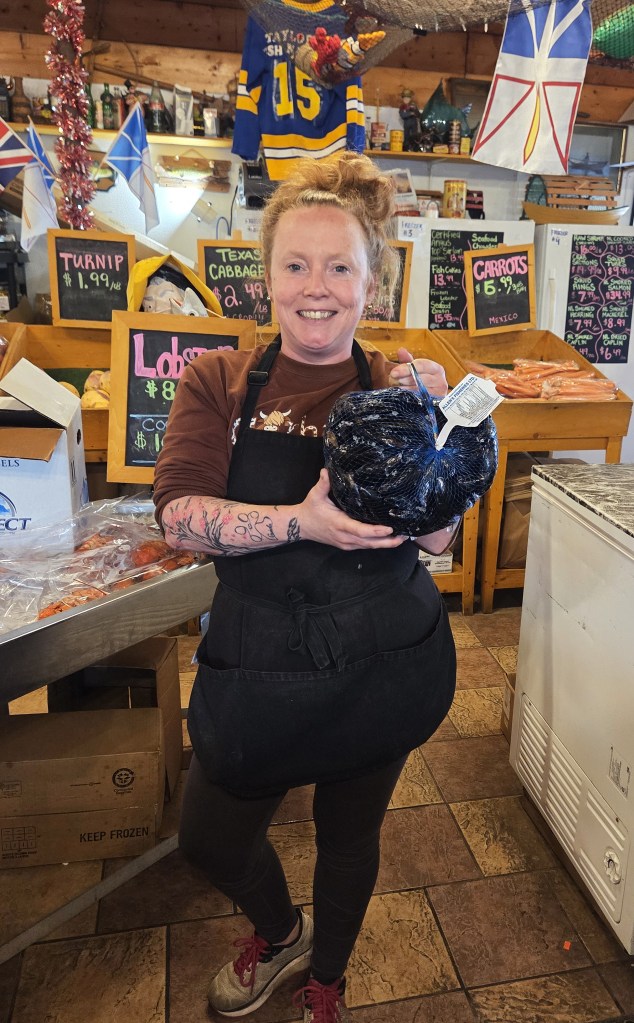
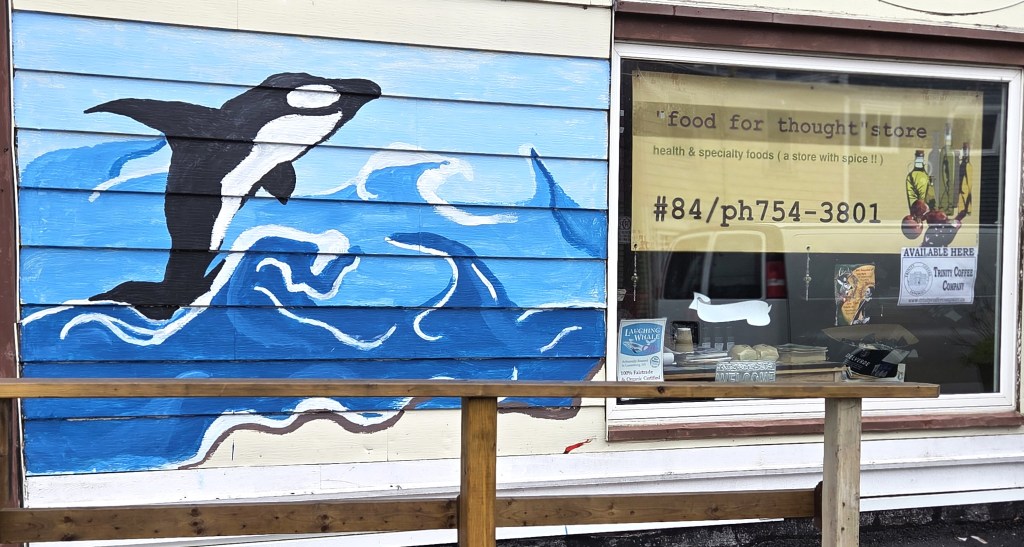
On the way stopped at Taylor’s seafood store again. (pics) Bought some cod tongues which I’ll cook up tomorrow, along with a bag of mussels. Took a few pics of the inside and had enjoyable “craic” with Sam, one of the staff who I had talked with each of the last two stops here. She’s only been there a year, but really enjoys the job. A very “people” person. Sam said that the store is owned by the third generation of Taylors. I’ll stop in there Friday sometime to let her know what I thought of the Cod tongues. More on them after I try them tomorrow.
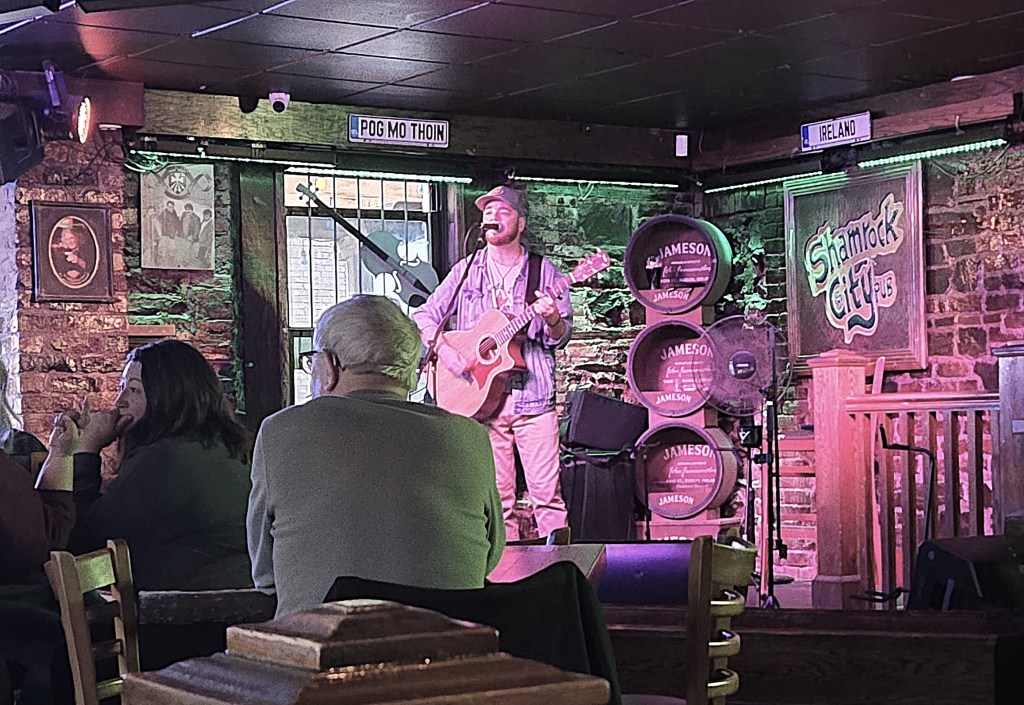
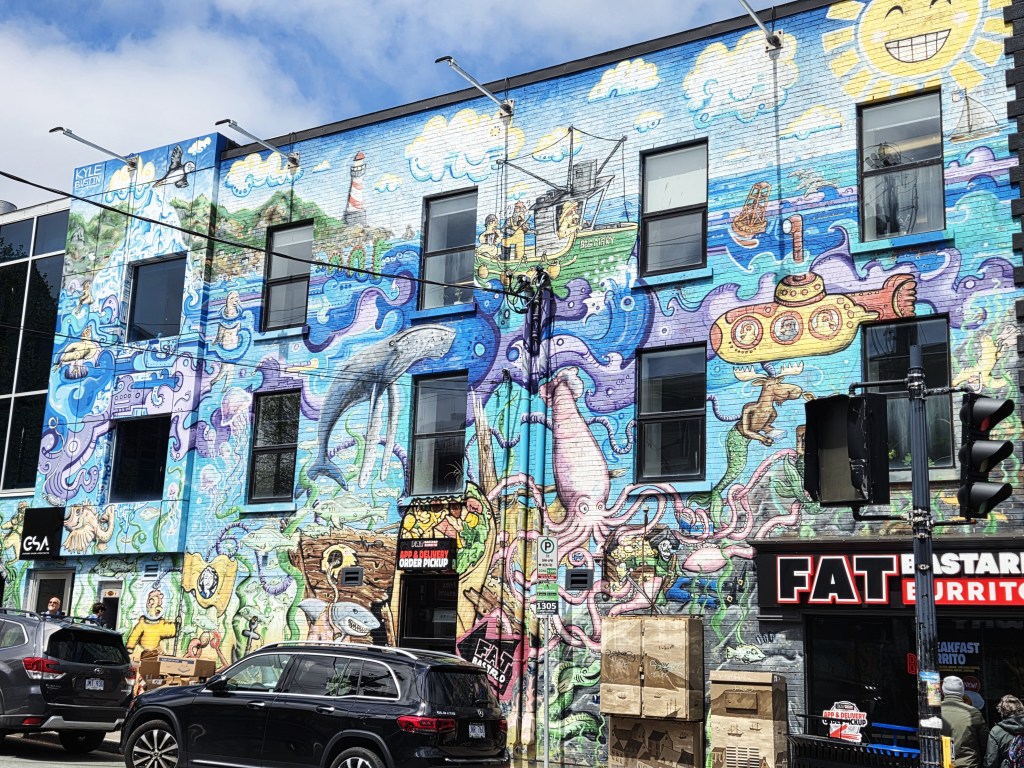
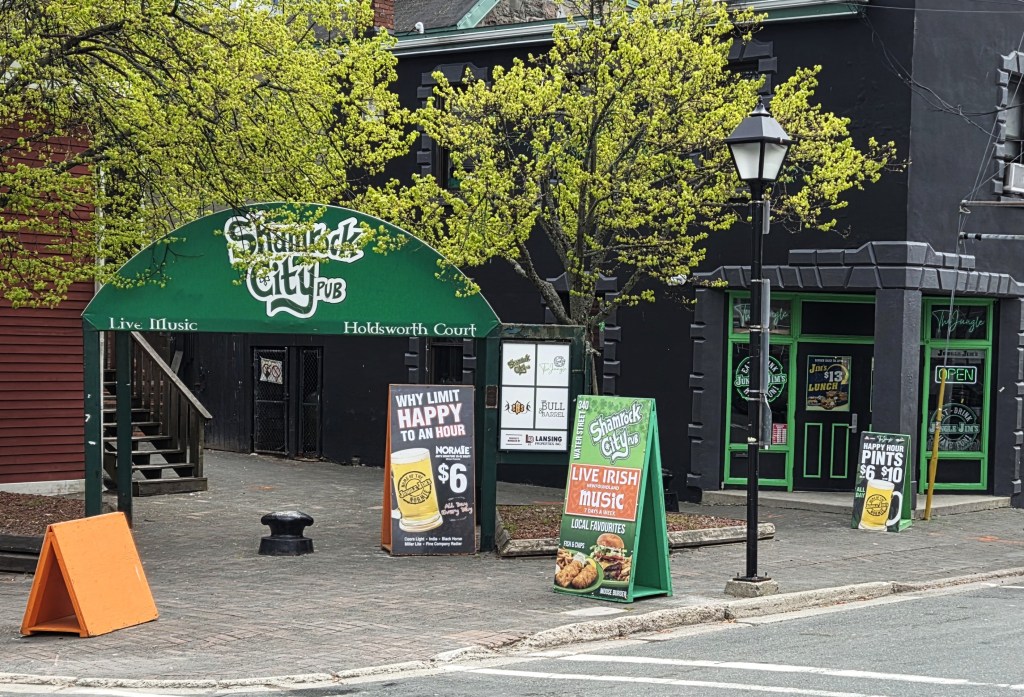
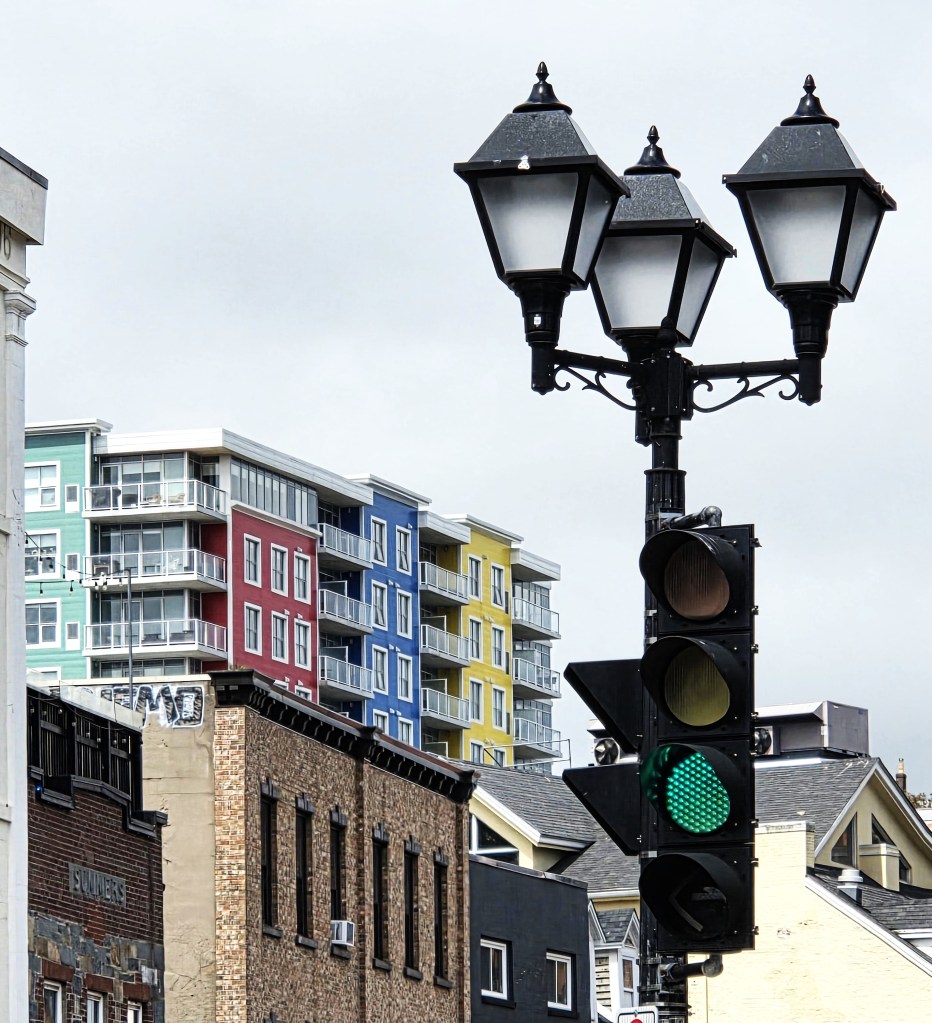
We wanted to catch some live acoustic music before leaving so went into St. John’s and had dinner and music at Shamrock City Pub on Water Street. A few pics of little things noticed as we drove through St. John’s,
The musician was David Whitty, (pics) a local who launched his solo career back in 2012. Before we left I went up to him and asked if had original material and if so, could he play one. Up until then he was playing mostly tradition songs. Introducing the next song, he mentioned I had requested an original so he played, “Where I Belong.” He has a Spotify page and has released four albums of his original material. He remarked that if you listen to his songs on Spotify, each play will get him .00016 cents!
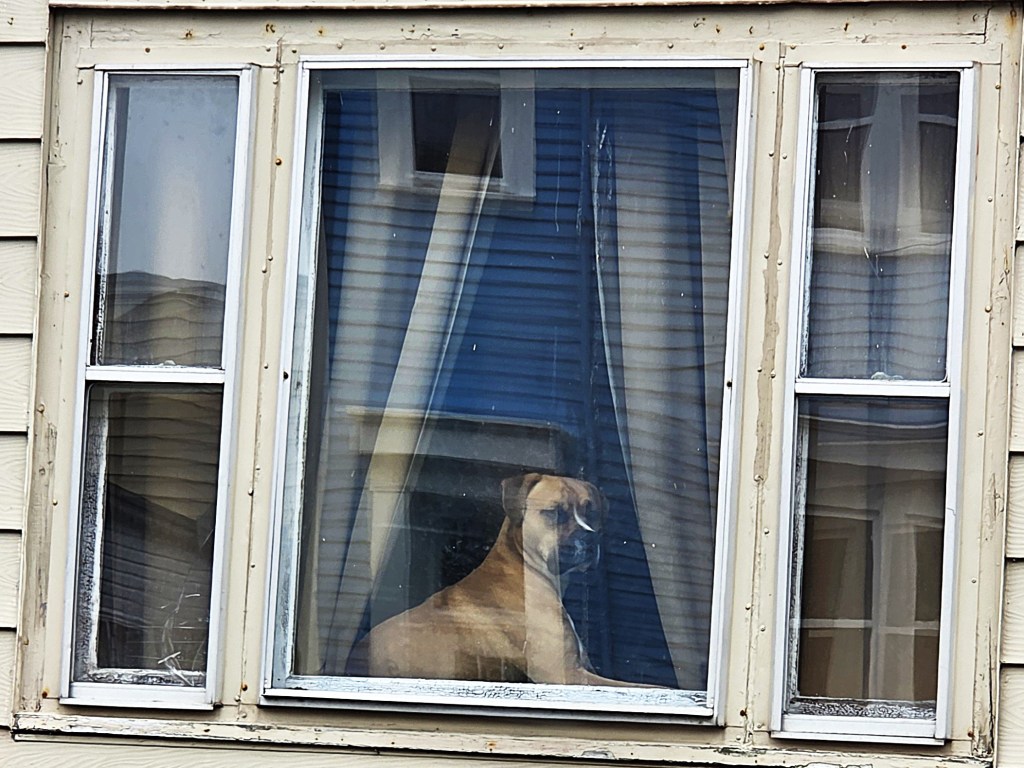
After returning home we had been told the capelin were rolling, so we drove down to the Holyrood Beach to see if we could experience the roll. Cars lined the parking lot and the side of the road and some people were out on the beach with nets and buckets. Most others were sitting in their cars, waiting for the roll to begin. (pics)
At this point, after sunset, there was a cold mistiness in the air. We waited outside for a bit, then, like most of the others, retreated to the car to get warm. We went back and forth every once in awhile, from the boardwalk to the car. While outside, Brenda, a tiny, elderly, very talkative woman befriended us. She had some buckets with her and was hoping to gather some of the fish for her husband, who couldn’t come because of back problems. She kept us informed of the non-progress of the capelin showing up, coming over to the car to let us know and joining on the boardwalk when we were outside.
More info about Capelin:
We stayed for an hour and a half and finally decided to abandon the vigil. Some of the people with lights were seeing the capelin a few yards offshore and at one point a number of the small fish broke the surface of the water, but they weren’t coming onto the beach. I wonder if they finally did so after we left? (Click on thumbnail for larger, clearer picture.)
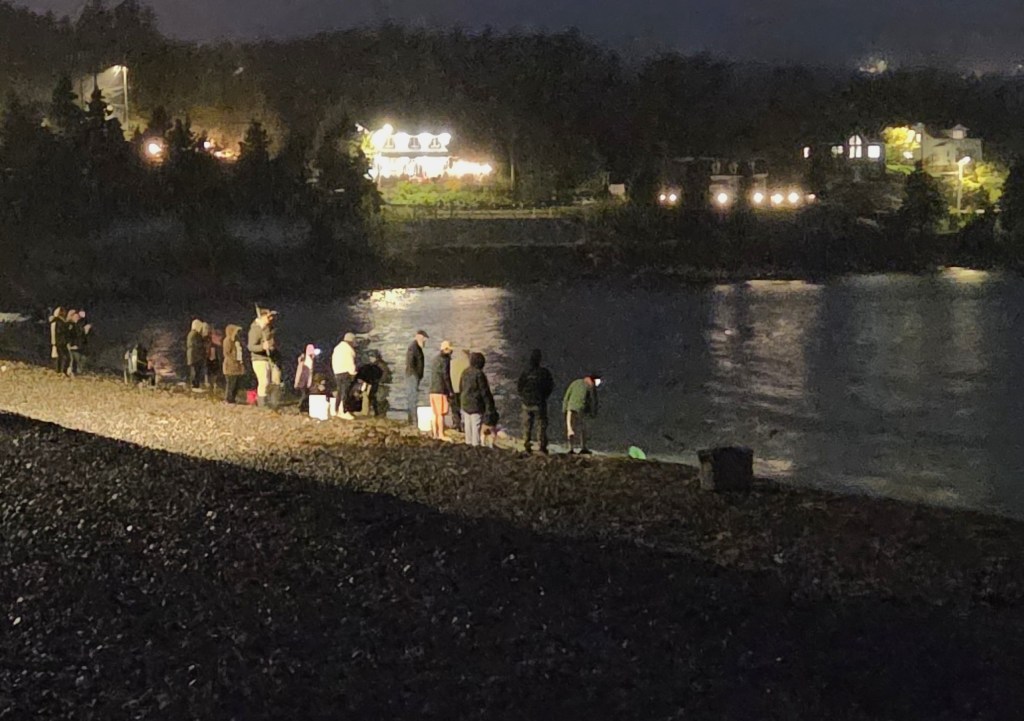
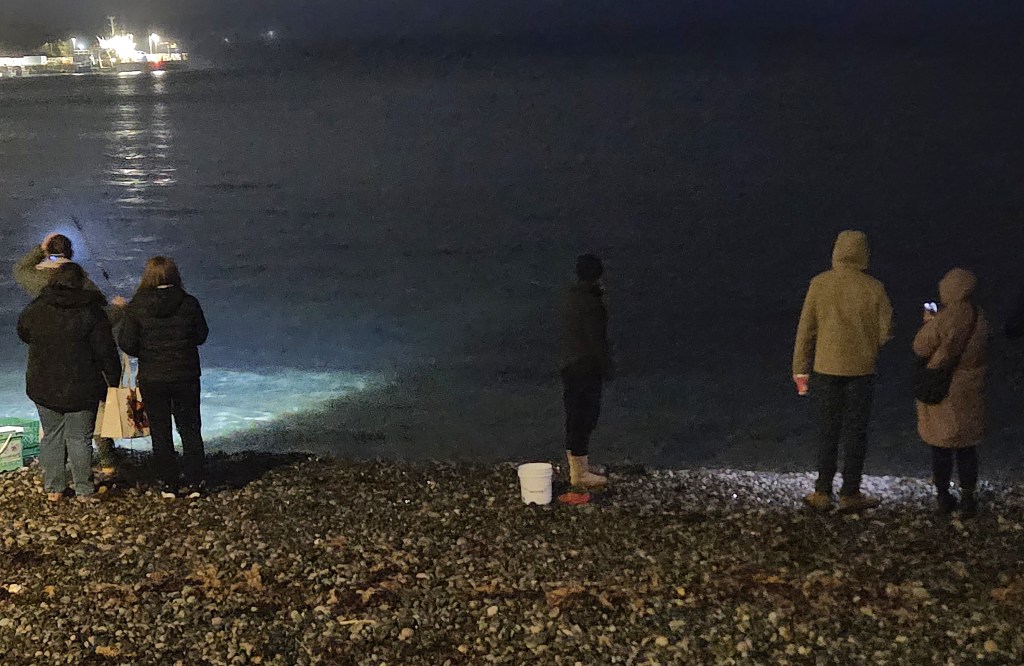
6/16
Foggy morning.
Drove out to Cape Spear, where we had stopped a few days ago but didn’t explore because of the very strong winds and cold temperature.
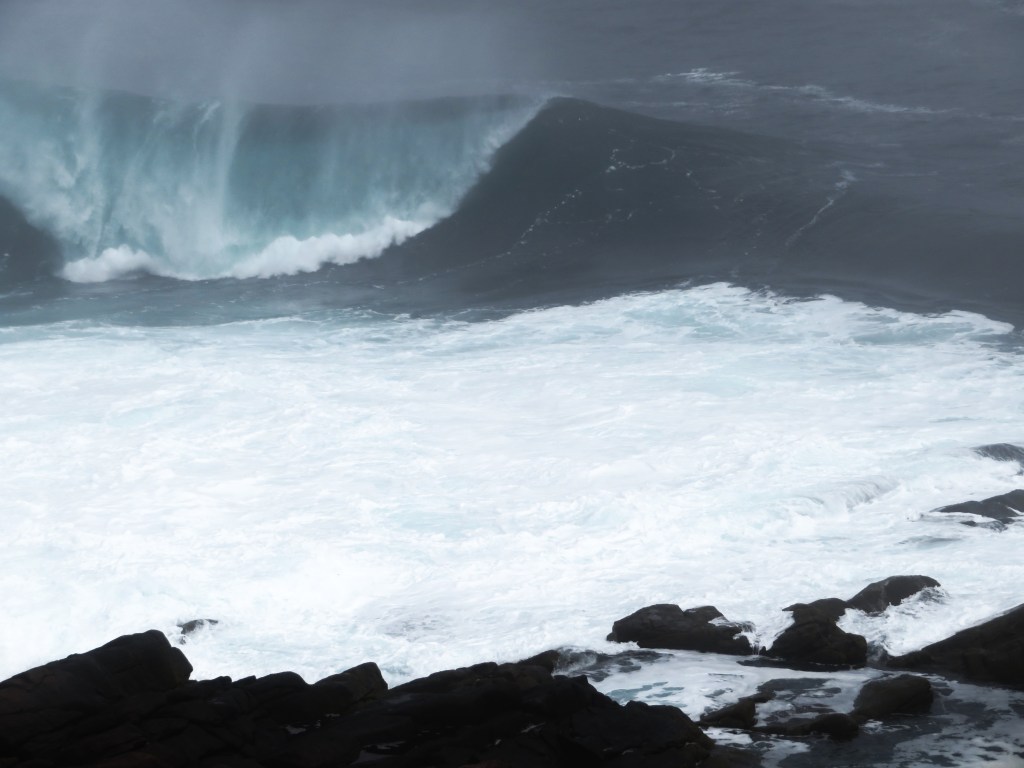
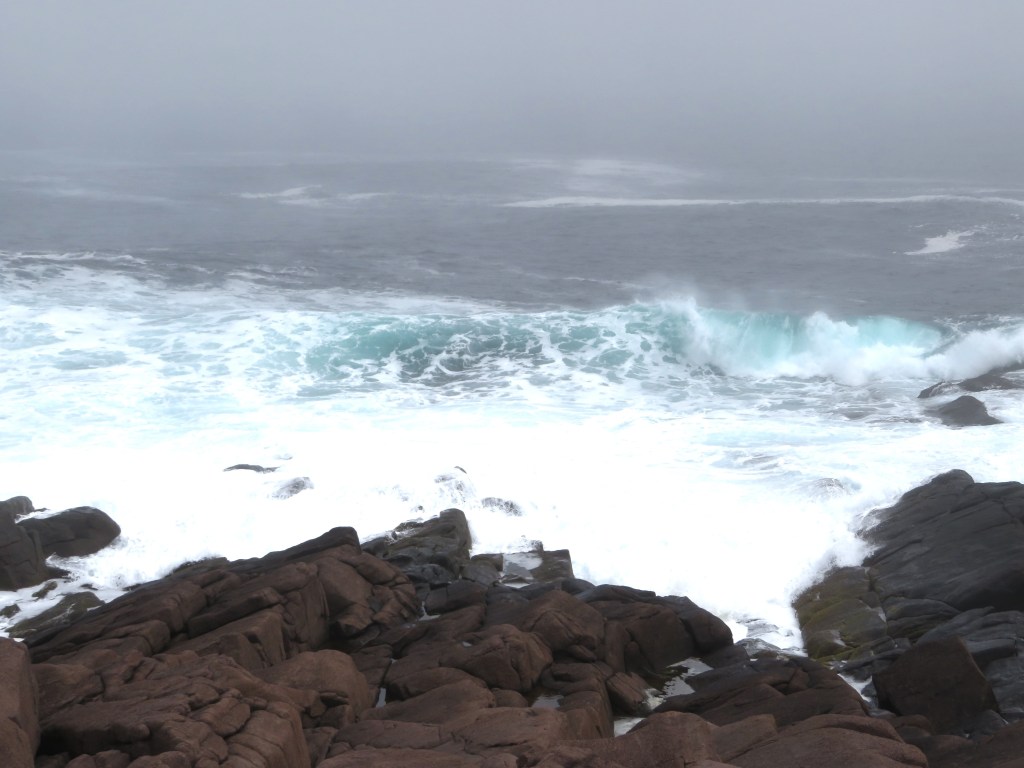
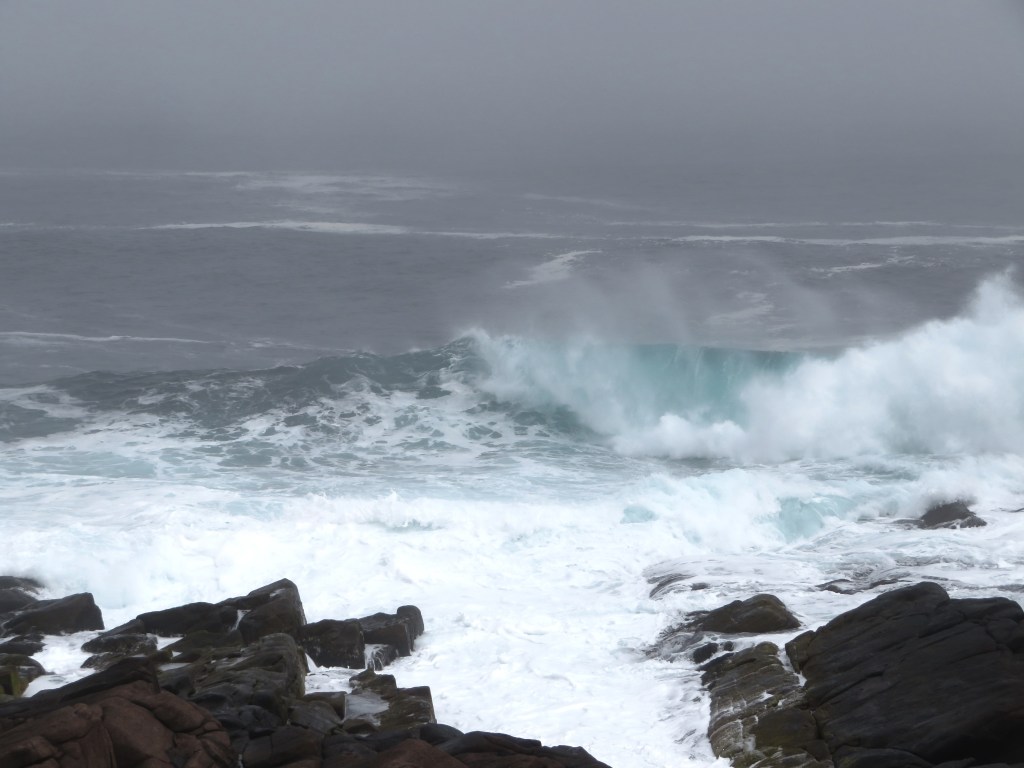
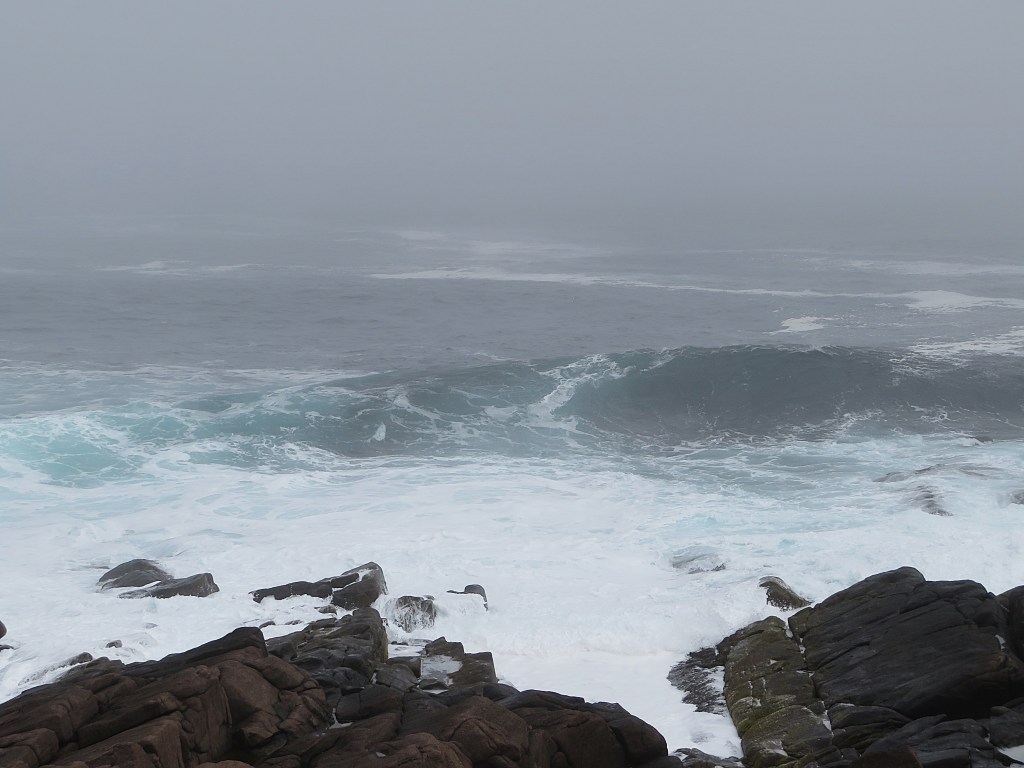
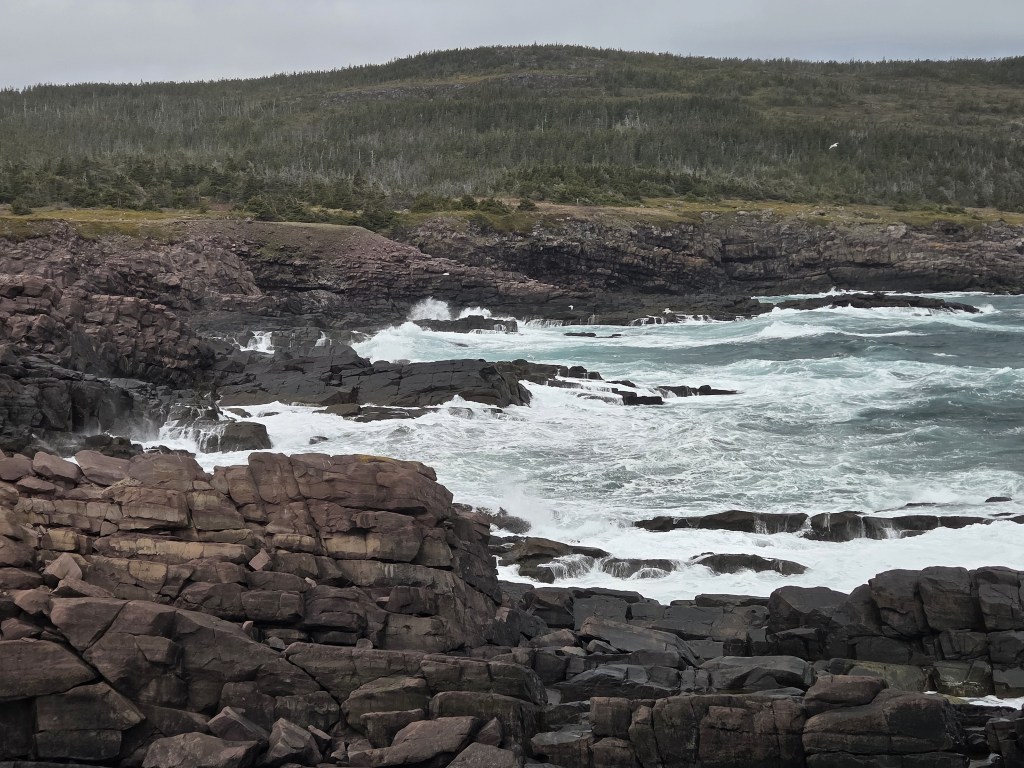
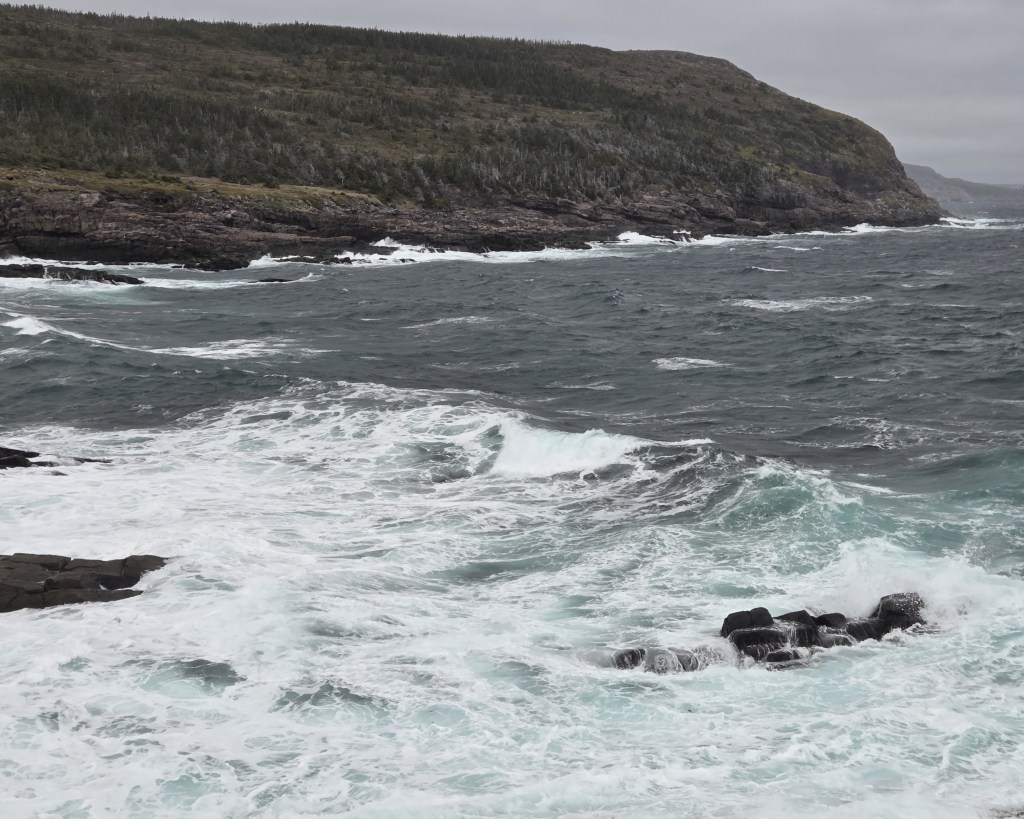
Today was relatively calm, air-wise, with heavy fog obscuring any distant views out on the water. But the ocean was in an uproar! Huge waves came crashing spectacularly into shore. (pics and short video clip)
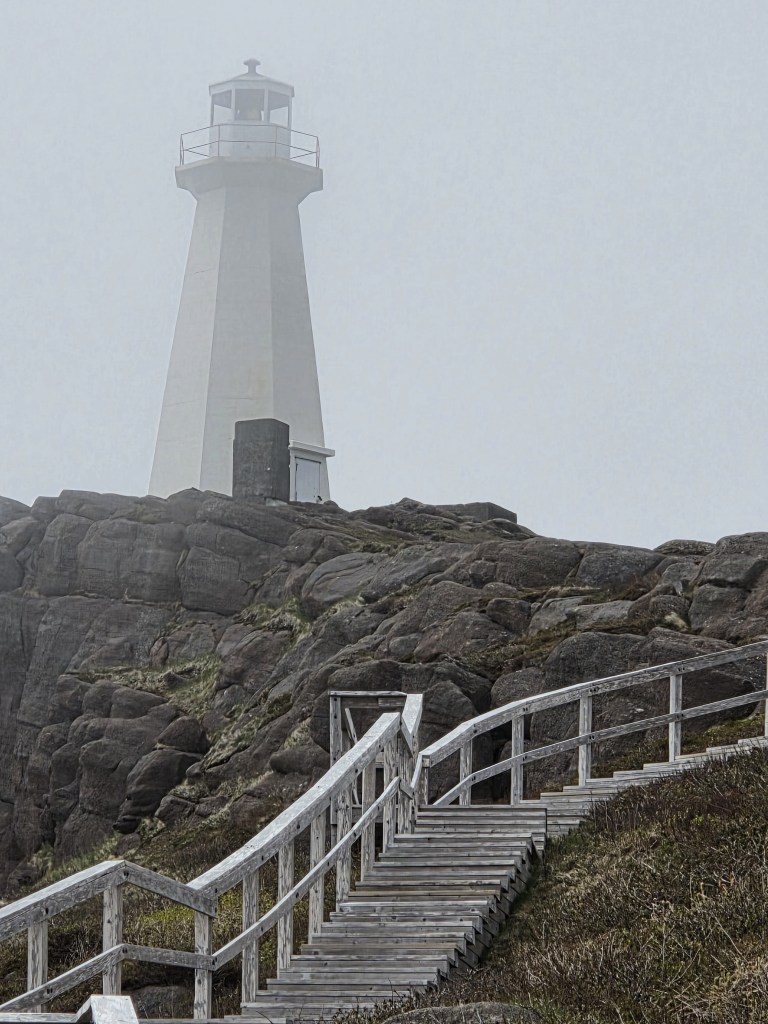
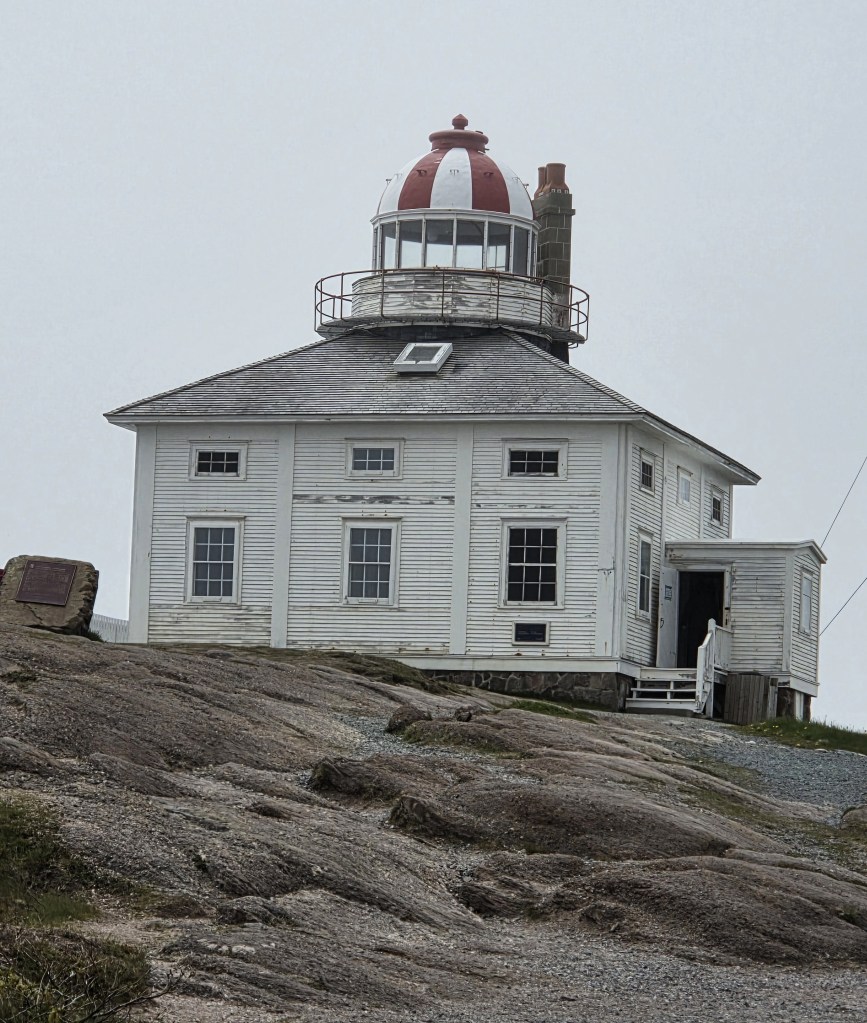
Cape Spear Lighthouse is the first and oldest lighthouse in the province. It was built in 1836 and was operated until 1955, when a taller, concrete lighthouse was constructed. The first pics are of that lighthouse. The original one is the shorter one.
Here’s a link to an article about the Cape Spear Lights:
https://www.lighthousefriends.com/light.asp?ID=1313
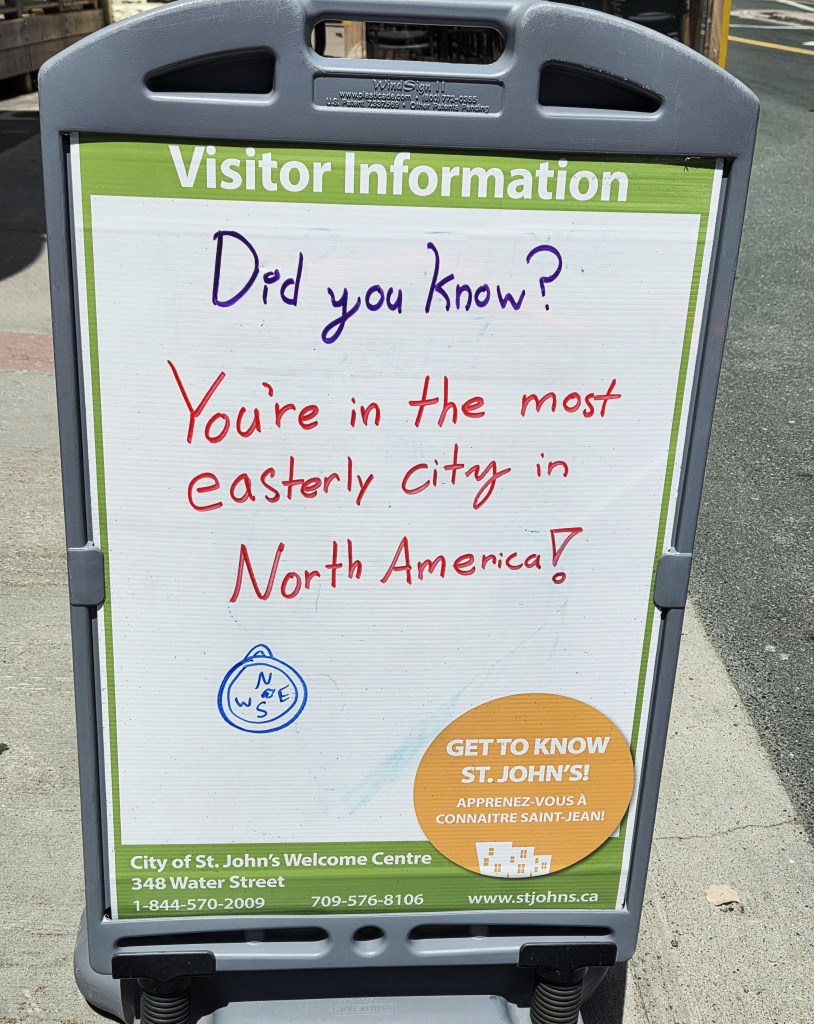
Cape Spear is also the most easterly point of North America!
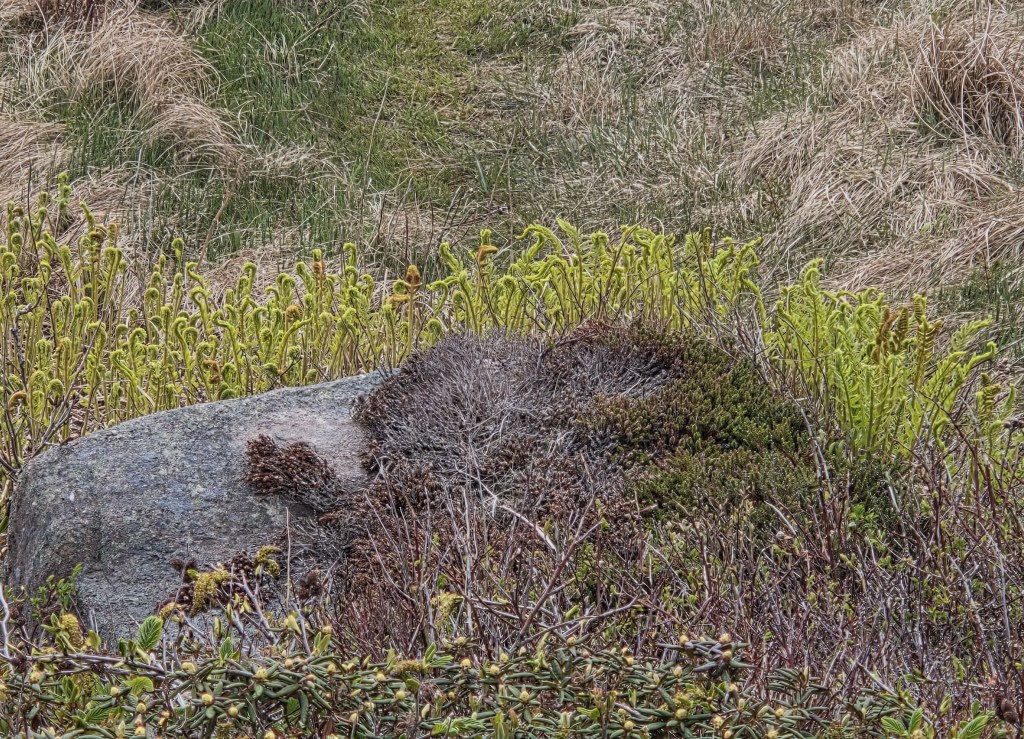
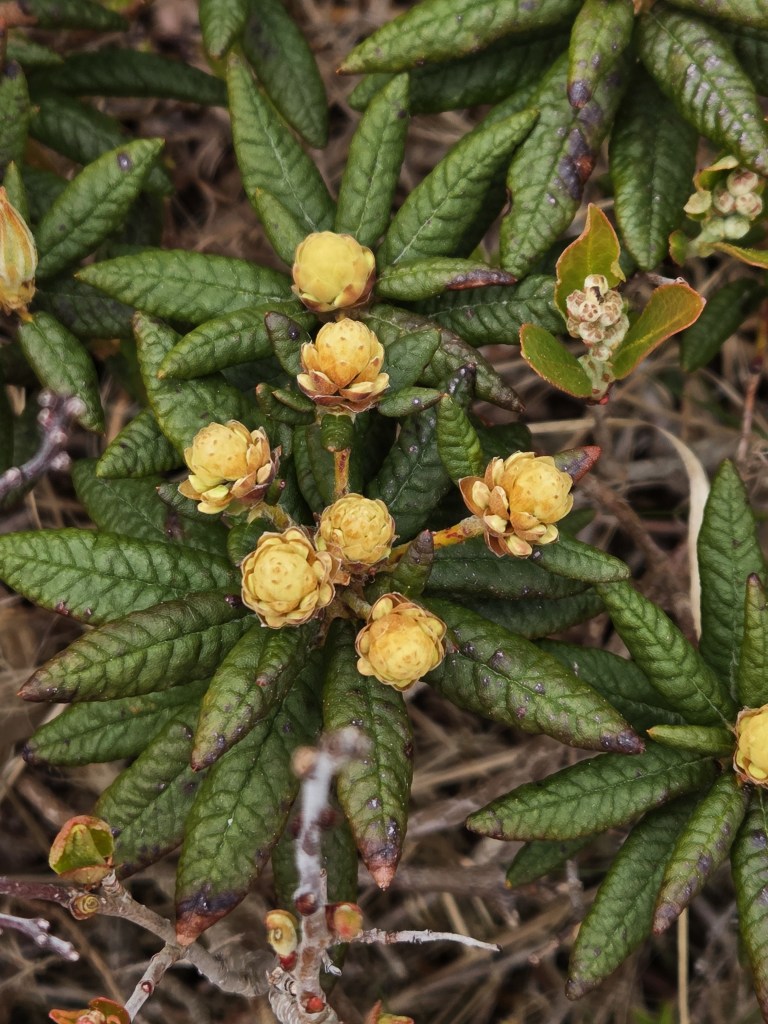
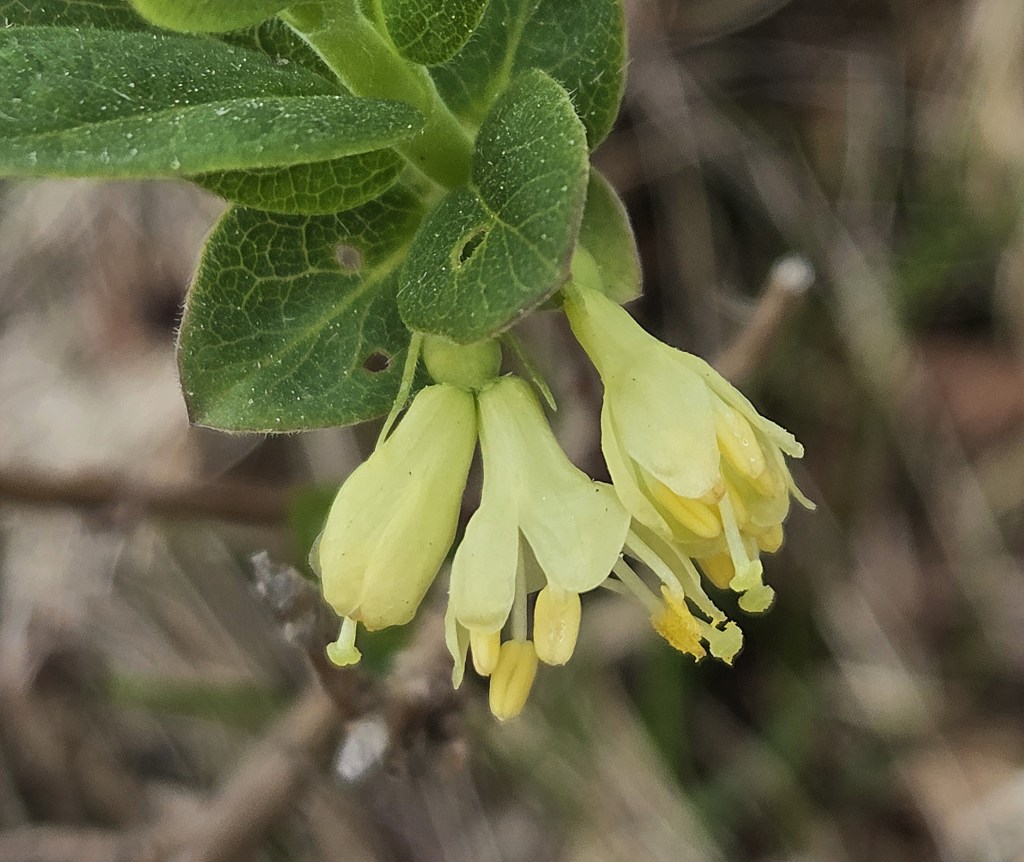
While walking up to the newer lighthouse on the wooden walkway I discovered in order of pics: a nice patch of fiddleheads; not quite blooming labrador tea; northern fly honeysuckle (Lonicera villosa).
I need to work on compiling a list of flowers seen in Newfoundland like I have the bird list.
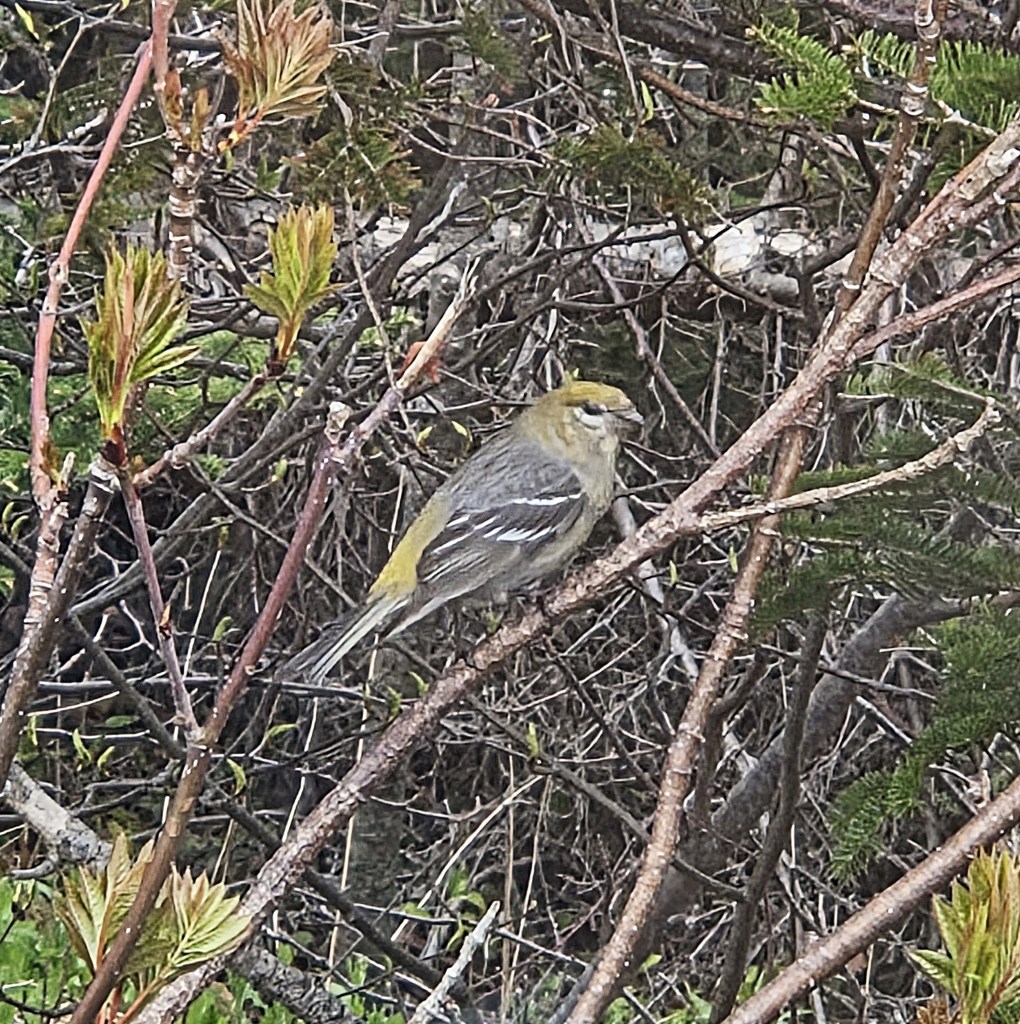
While driving on the way out stopped at a couple of places in the woods to hike a little bit. The bird pic is of a female pine grosbeak. (pic)They are only occasionally seen back in our home region of New York.
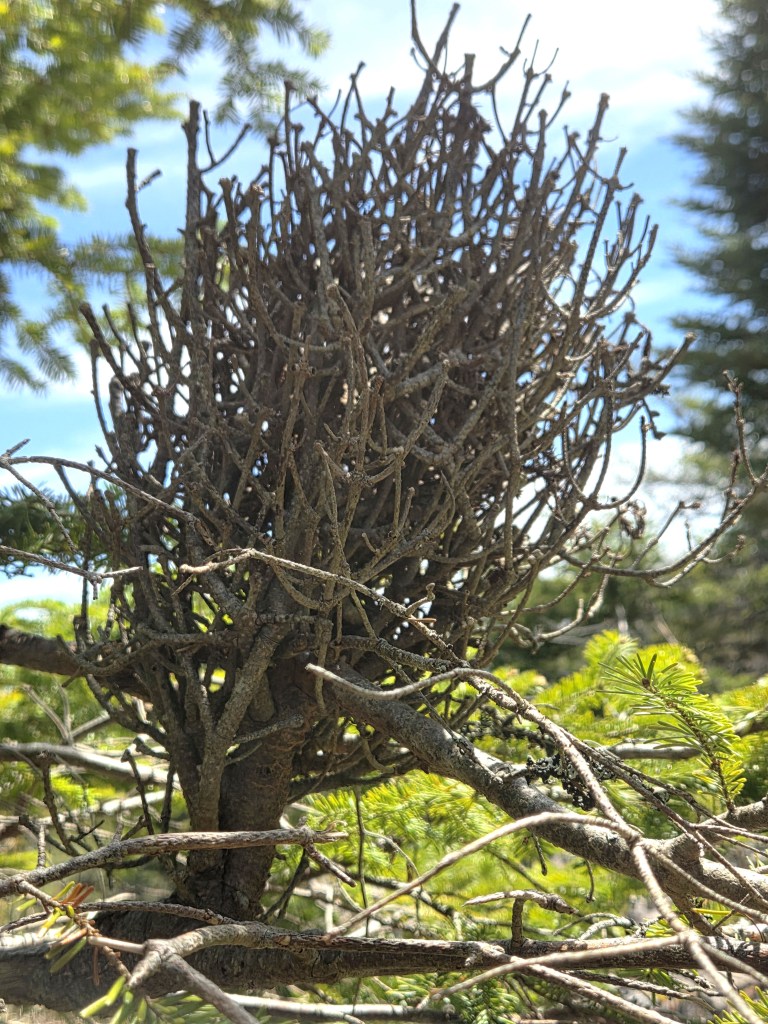
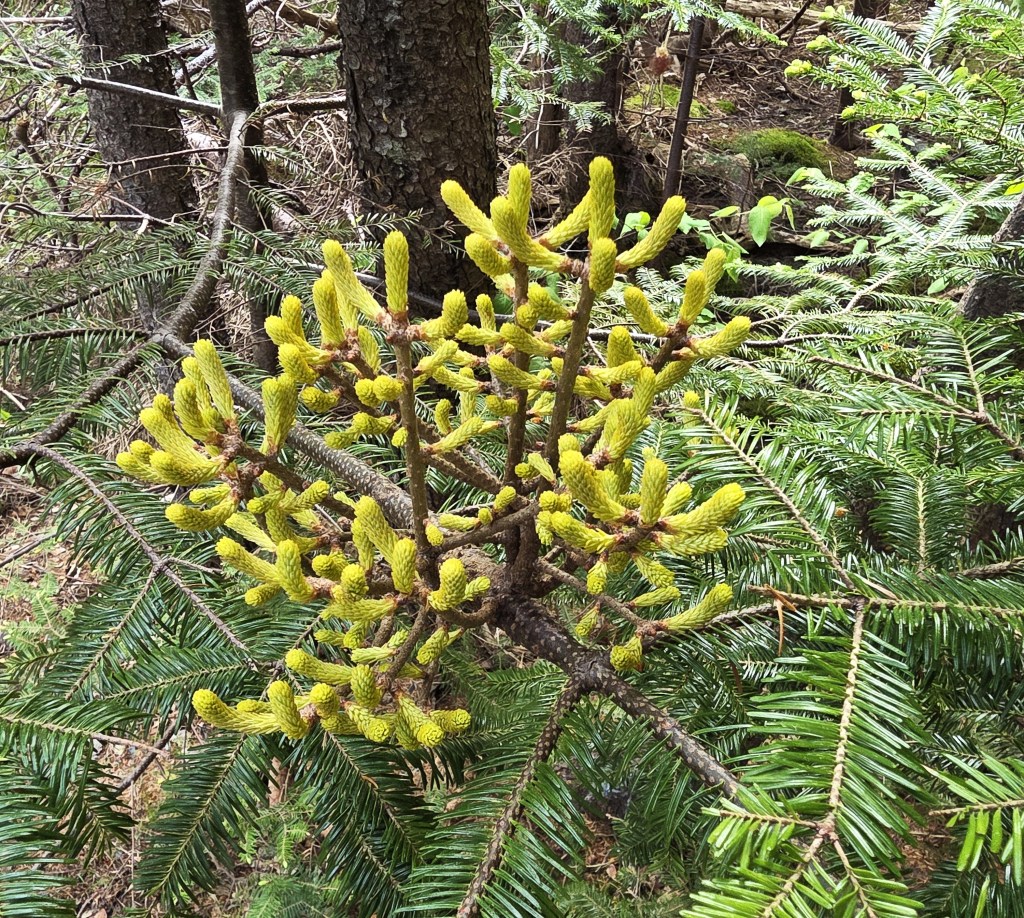
Came across another witches’ broom growth on a balsam tree. This one was older than the one we found the other day on the Manuels River hike. I’m guessing it is somewhat common here where balsam fir is one of the prolific trees.
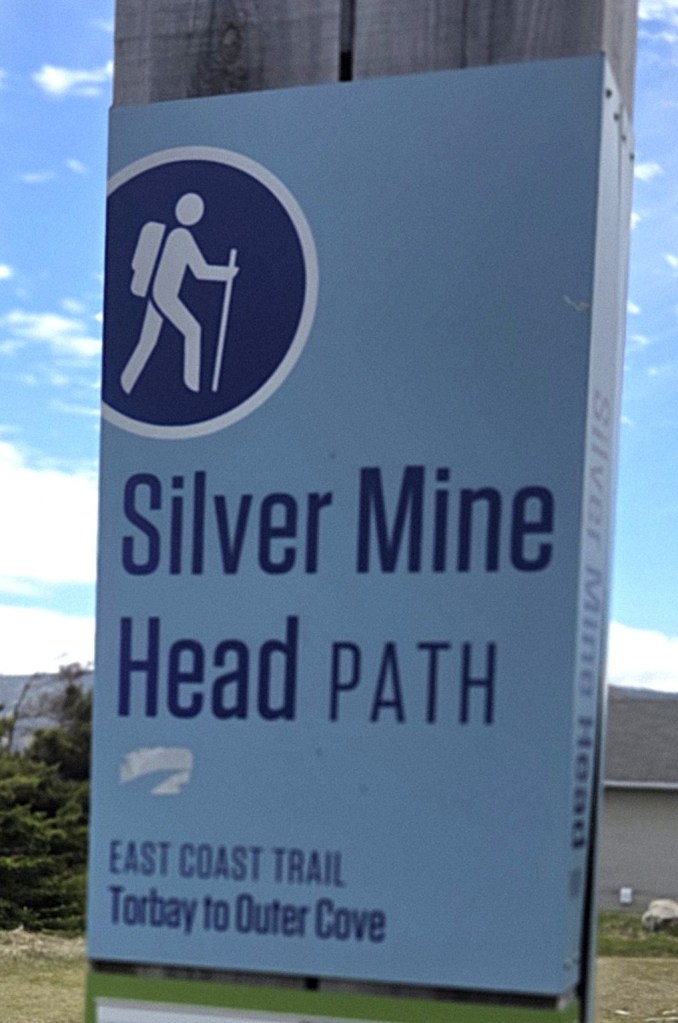
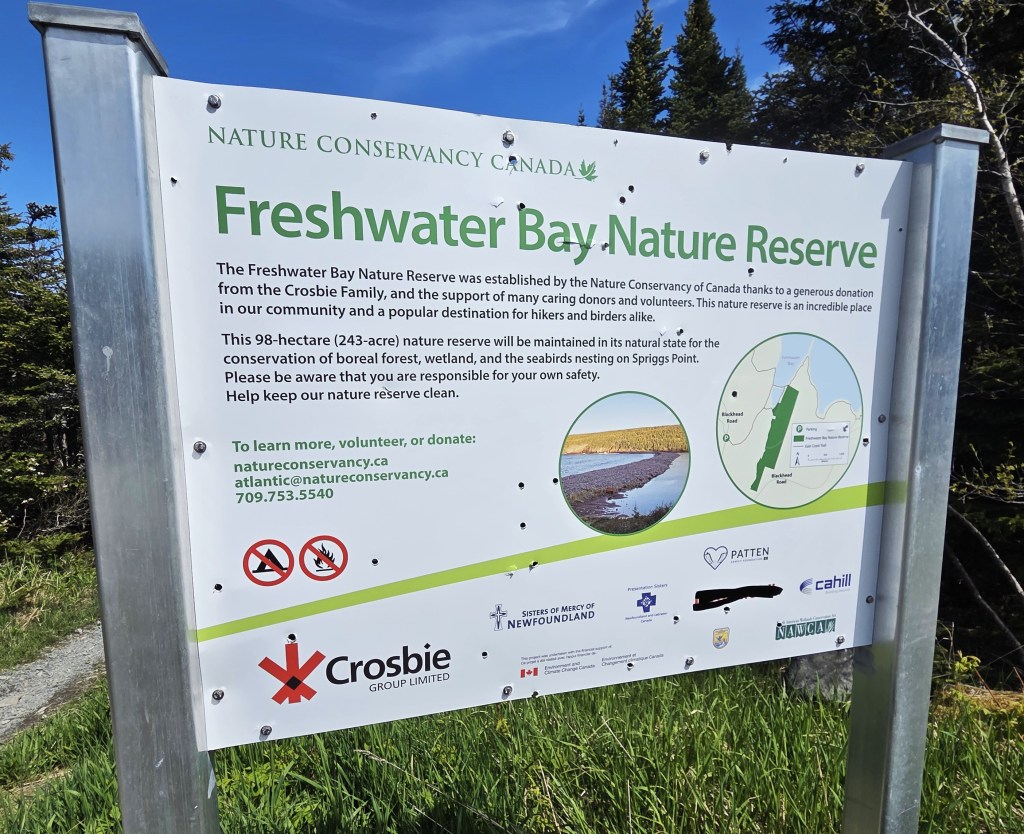
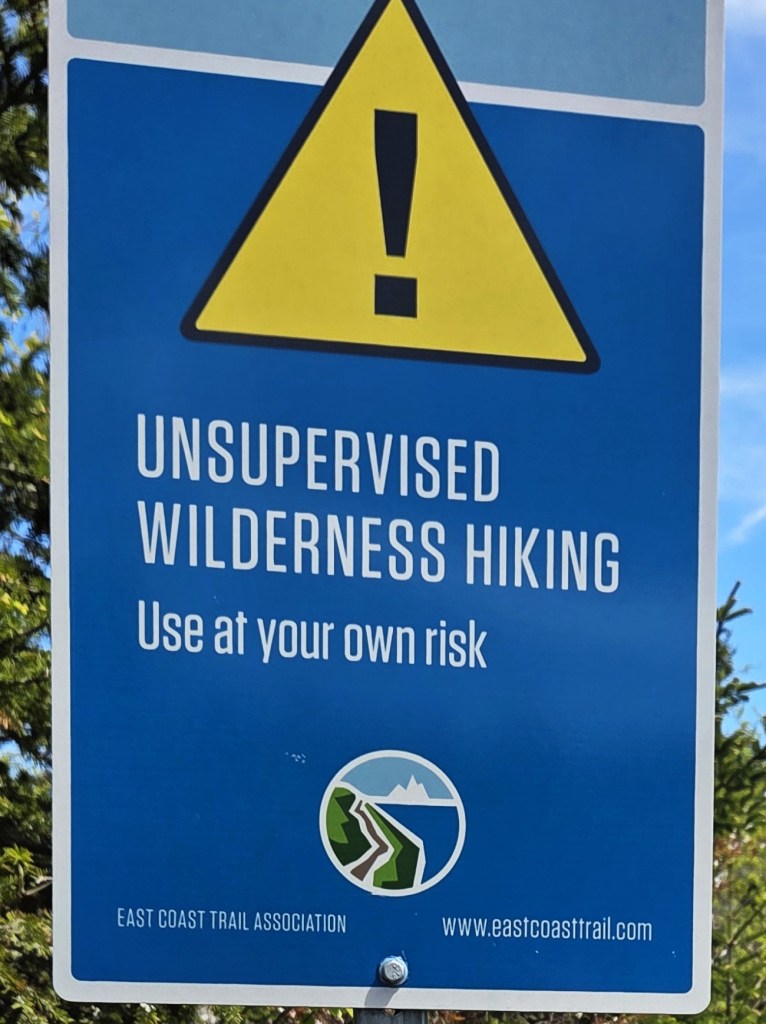
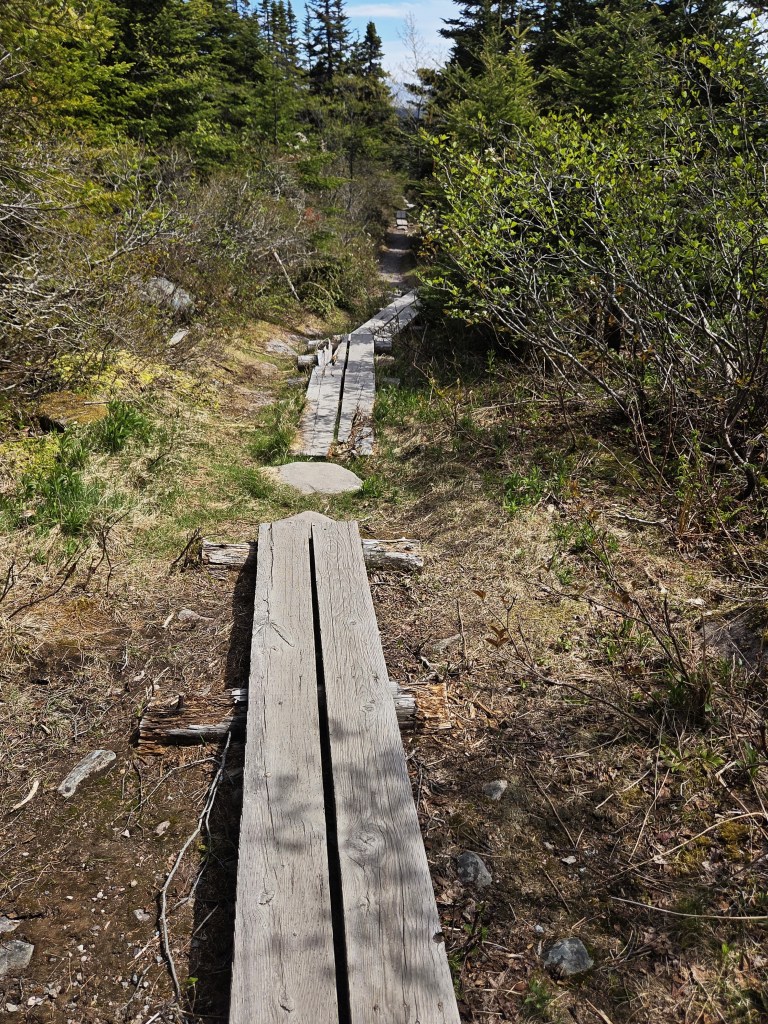
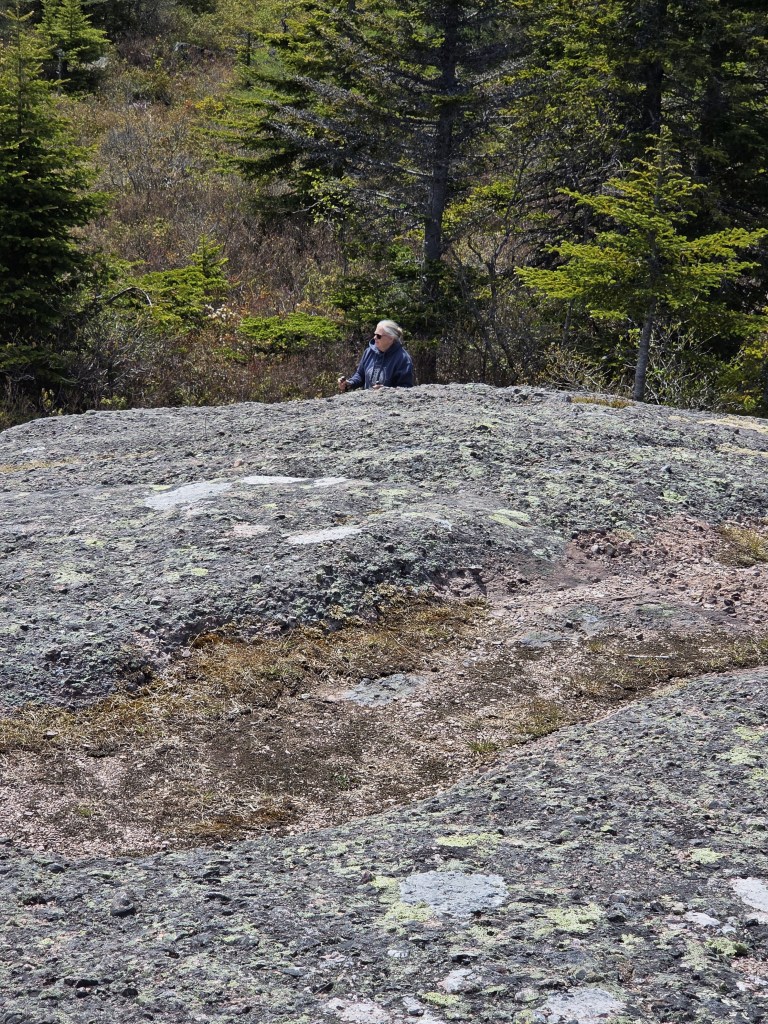
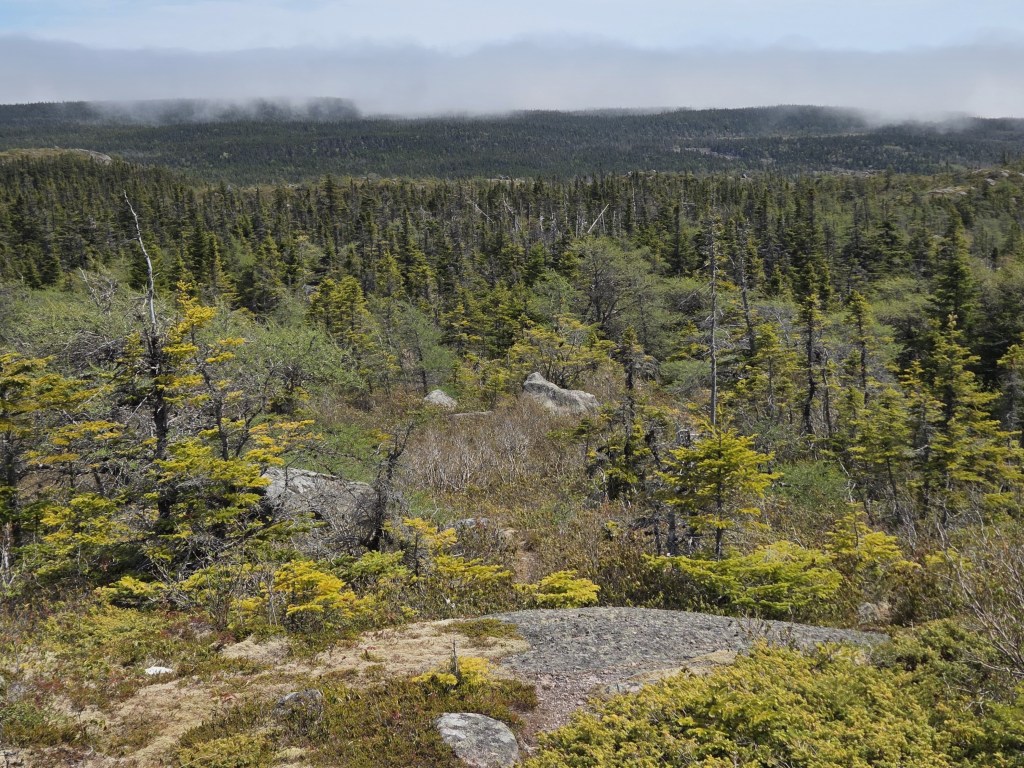
One of the little walks we took was on a Nature Conservancy of Canada parcel. (pics) It is part of the East Coast Trail, a 336 km network of paths connecting wilderness, historic sites and wonderful scenery. They have a terrific website that has detailed information about the many possibilities for hiking. I’d love to come back here again someday just to explore all of the many paths this network contains.
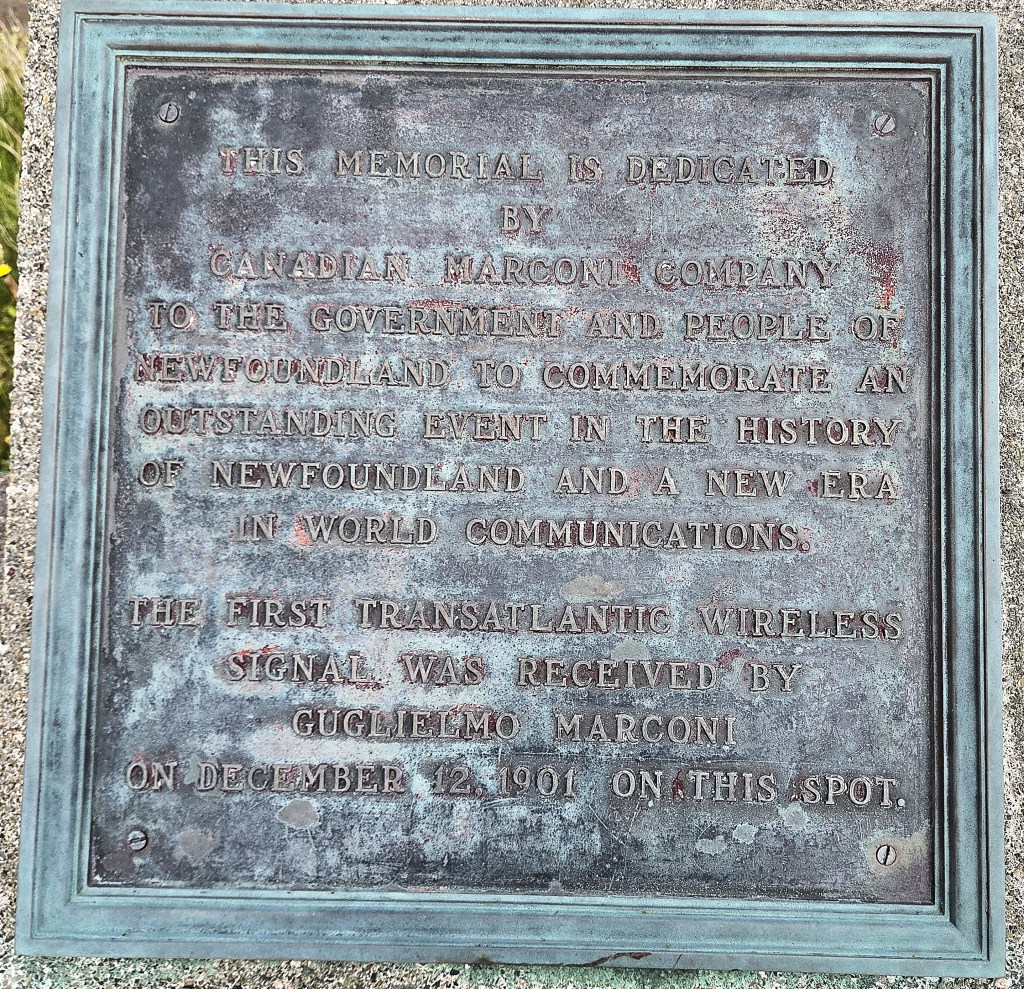
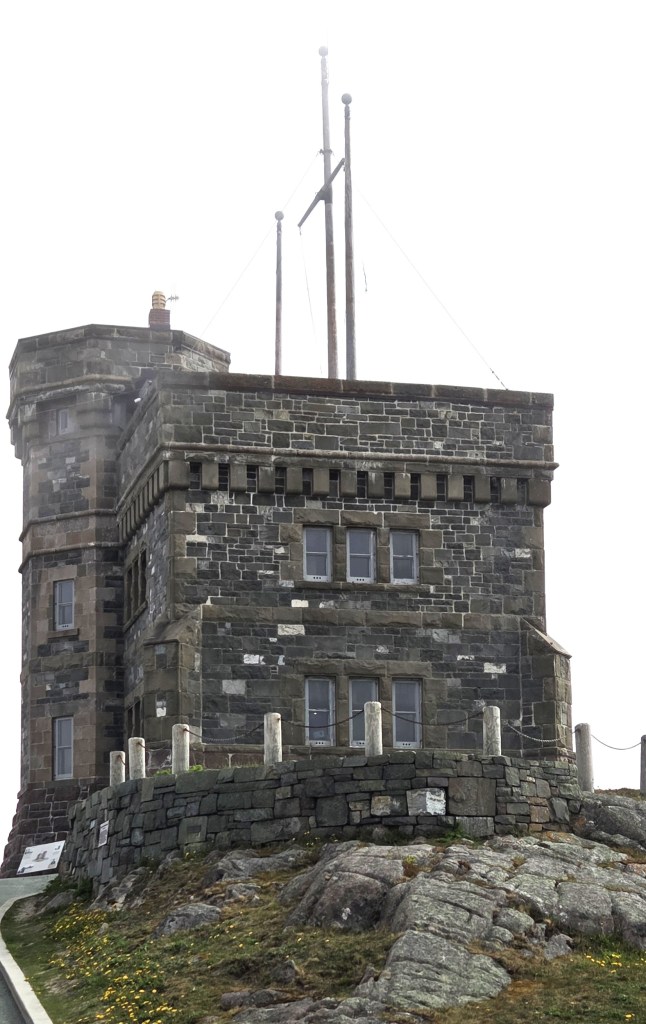
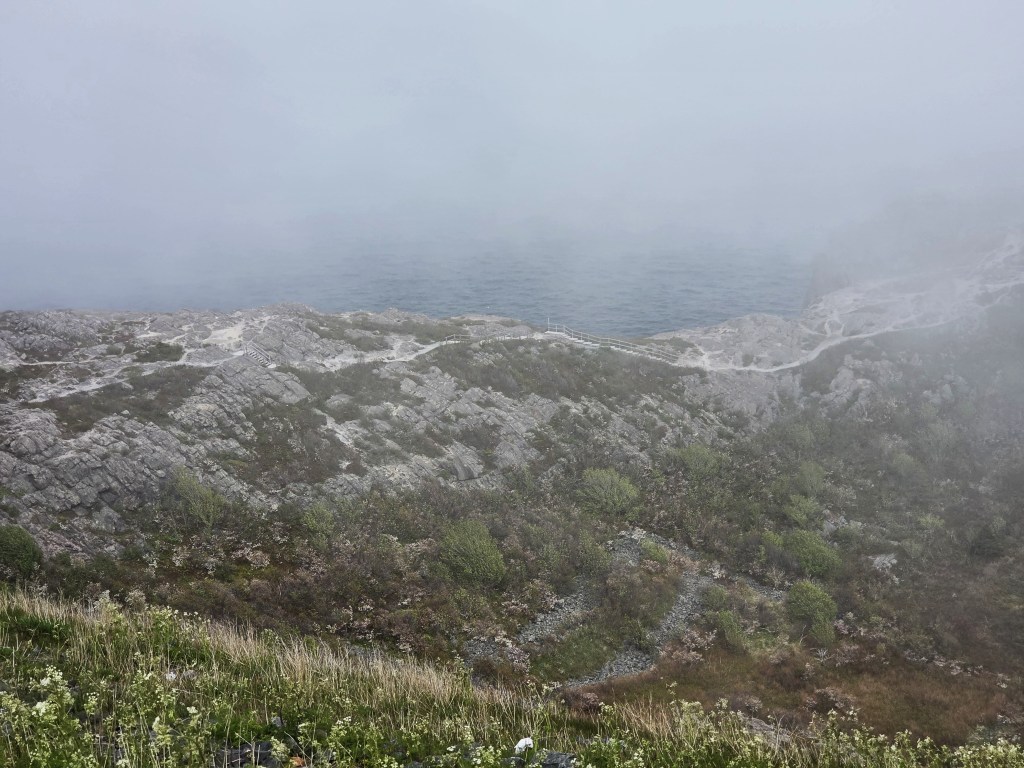
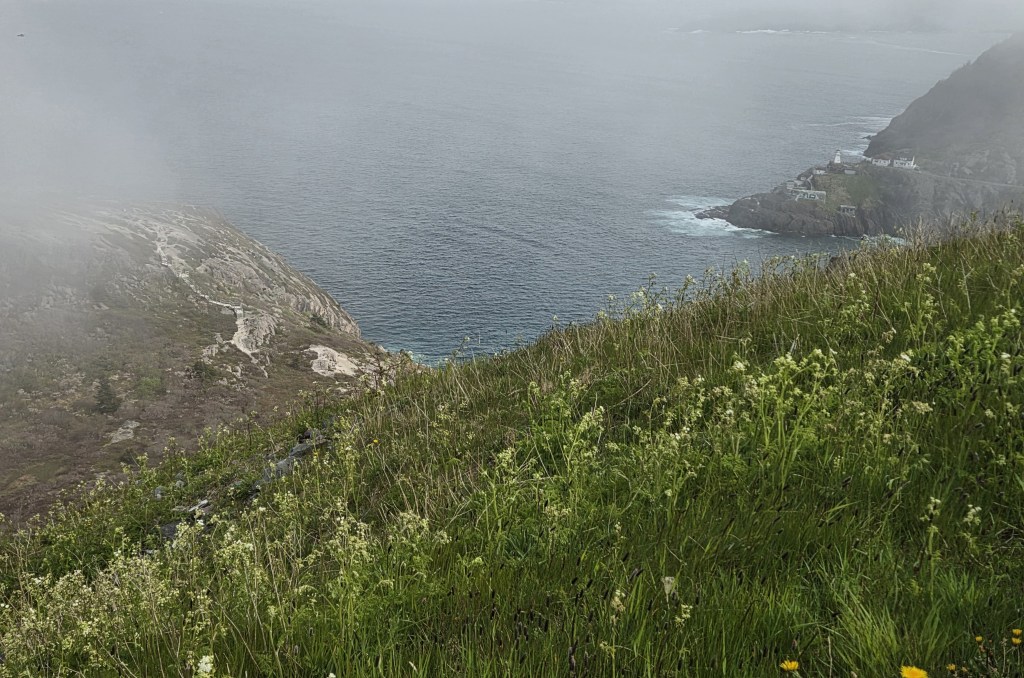
Afterwards we stopped briefly at Signal Hill National Historic Site in St. Johns. (pics) The site is a high hill with a wonderful view of the ocean. The site has been used to watch for incoming ships, both in peacetime and in war, for centuries. Construction of a tower began in 1897 to commemorate the 400th anniversary of John Cabot landing here. This is also the place where Marconi received the first wireless transatlantic transmission, in Morse code, 1901.
It was late in the day so we didn’t explore the site, but hope to return in one of the three days we have left here.
Three days left and so much yet to explore. Ah.
(Click on thumbnail for larger, clearer picture.)
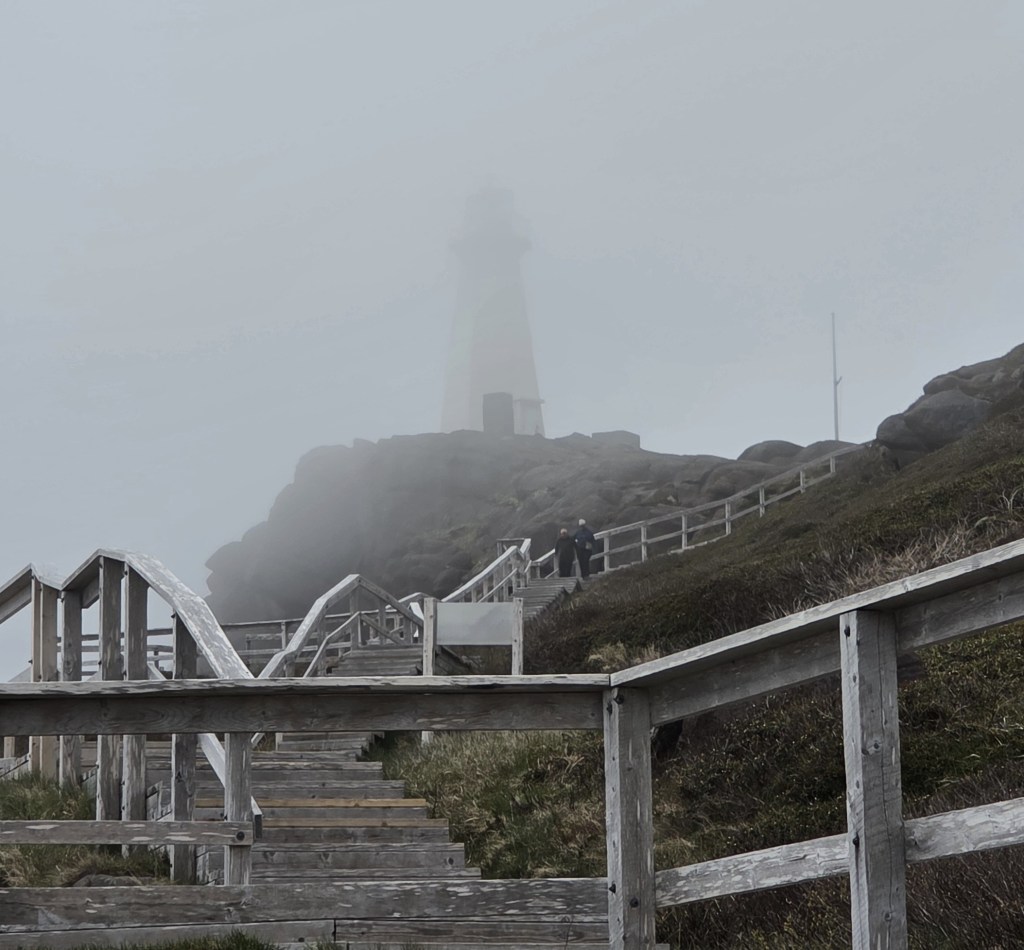
6/15
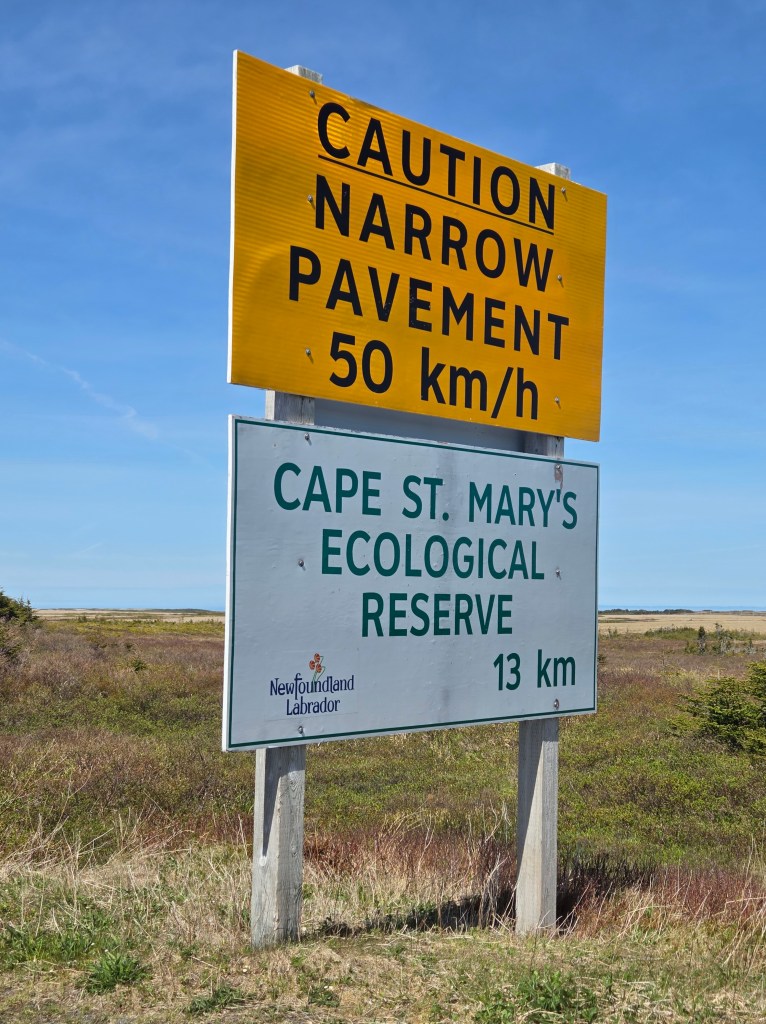
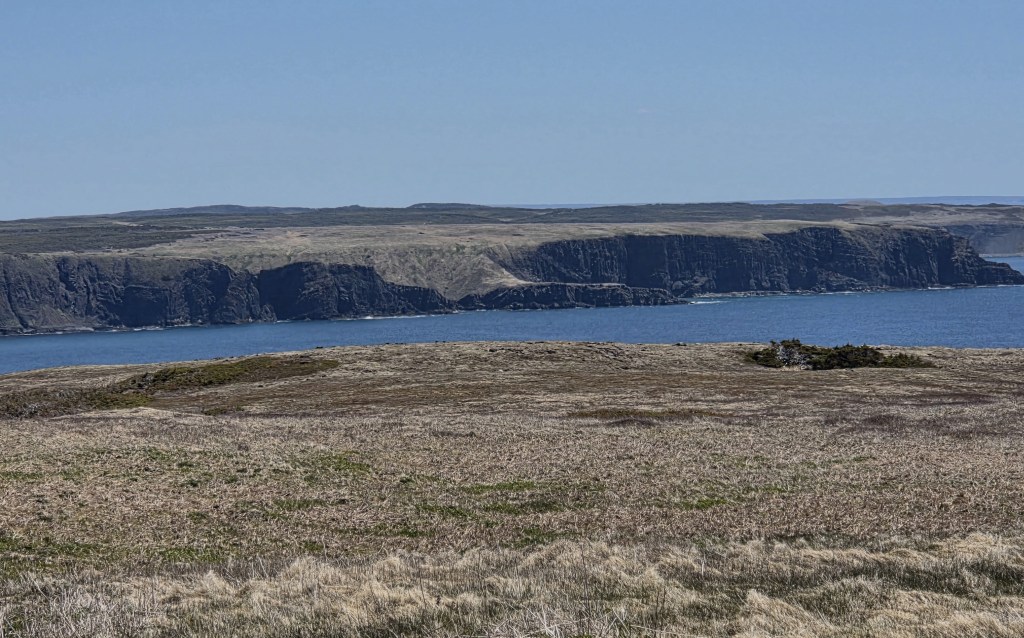
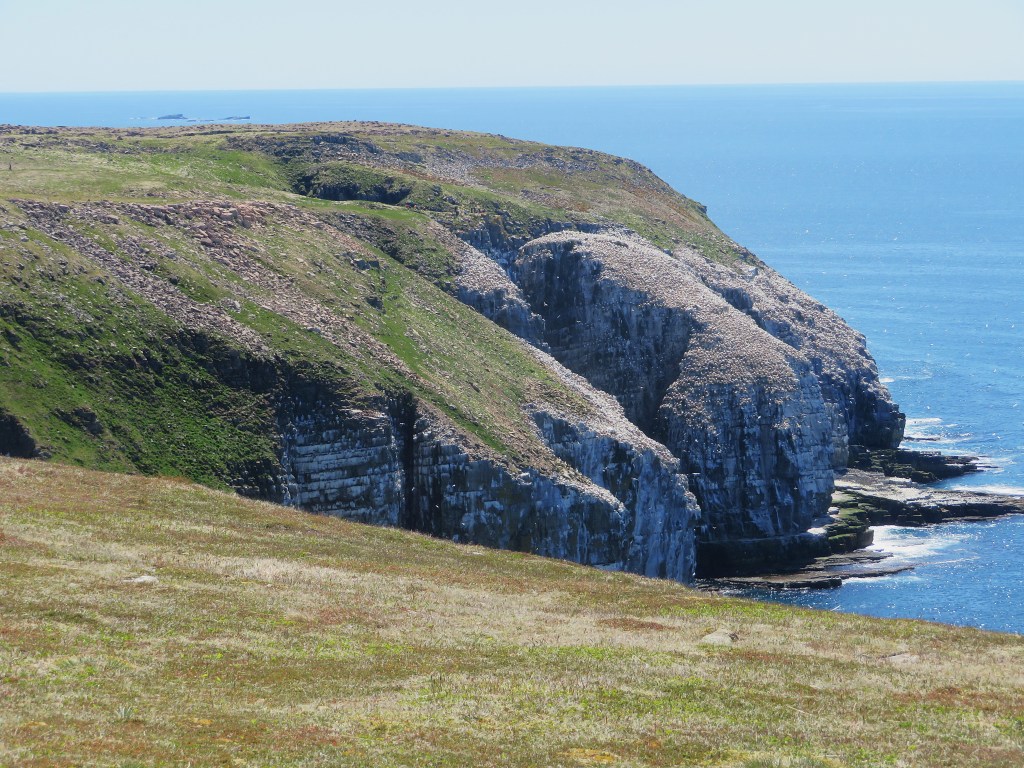
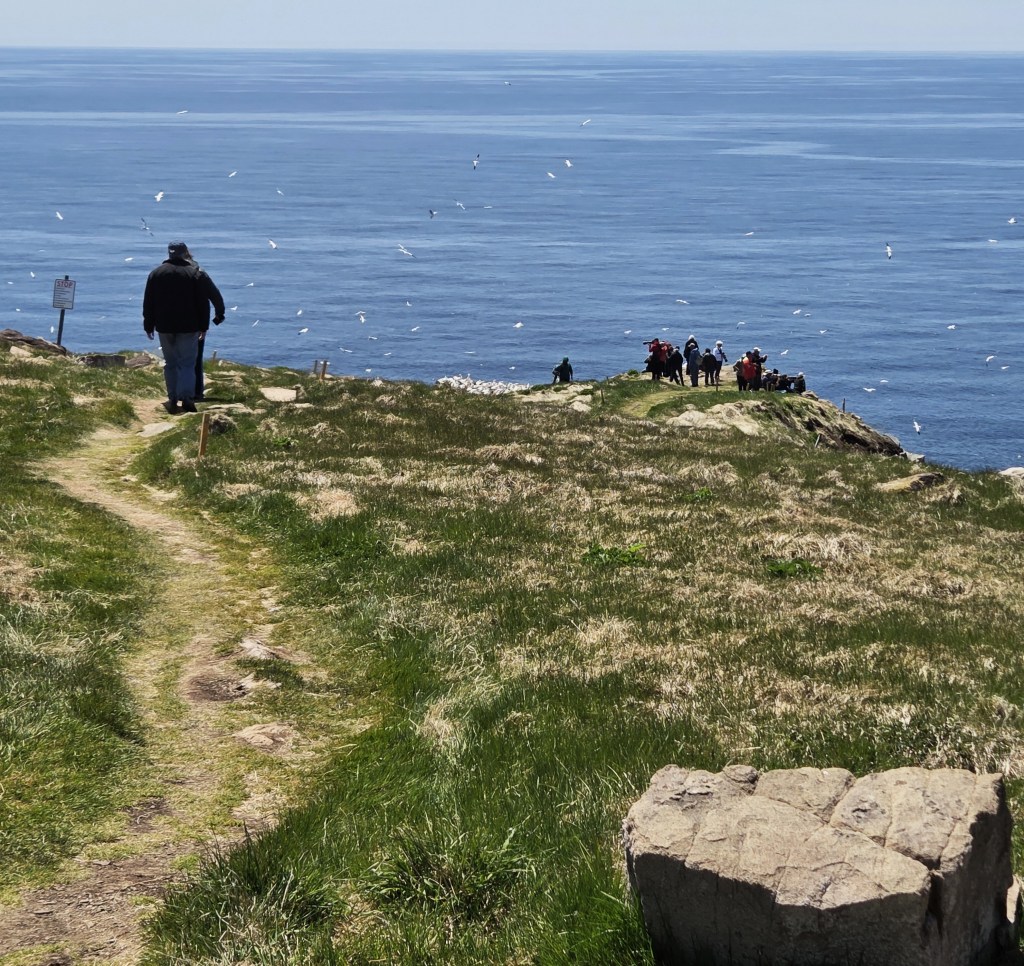
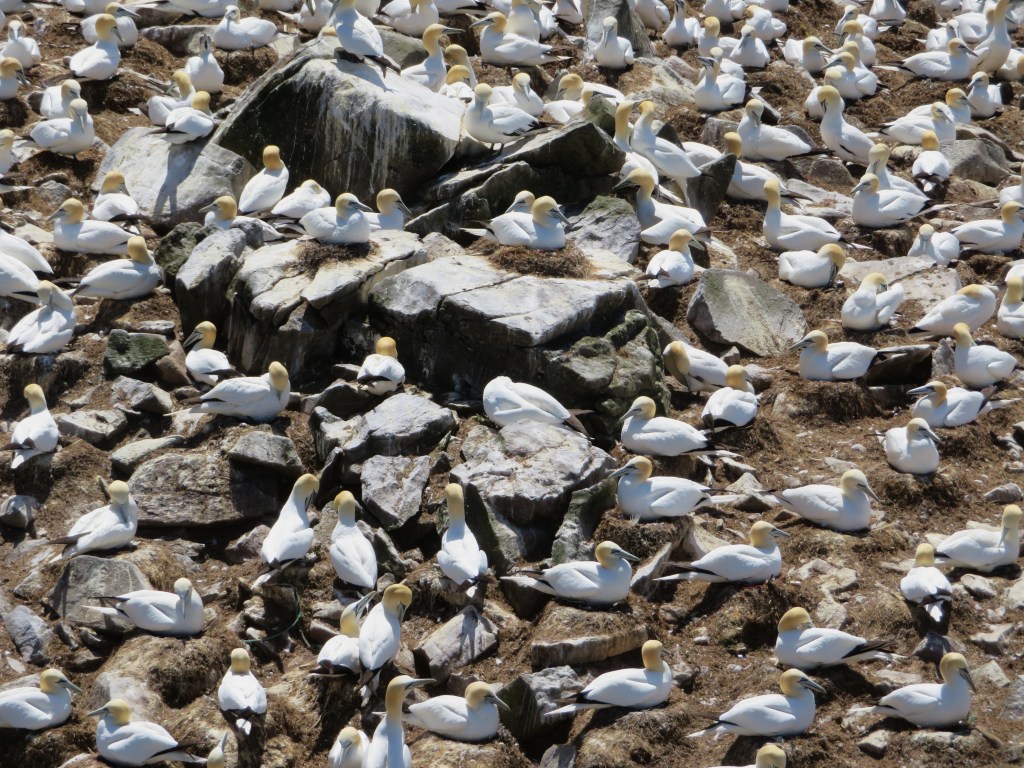
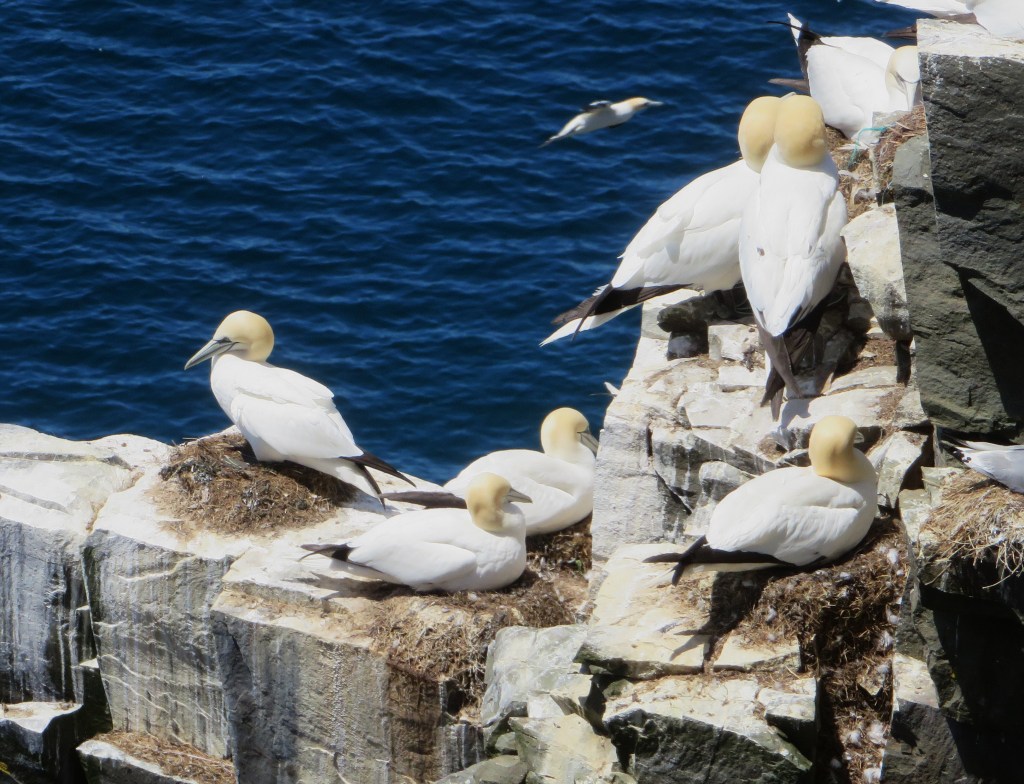
Cape St. Mary’s Ecological Reserve, the most accessible seabird colony in North America!
That’s one way the reserve has been described. The weather was perfect today for a big trip to visit the place. Mostly clear sky, moderate temperature and not a lot of wind. So, we took the 1 hour 45 minute drive to the reserve after breakfast at home.
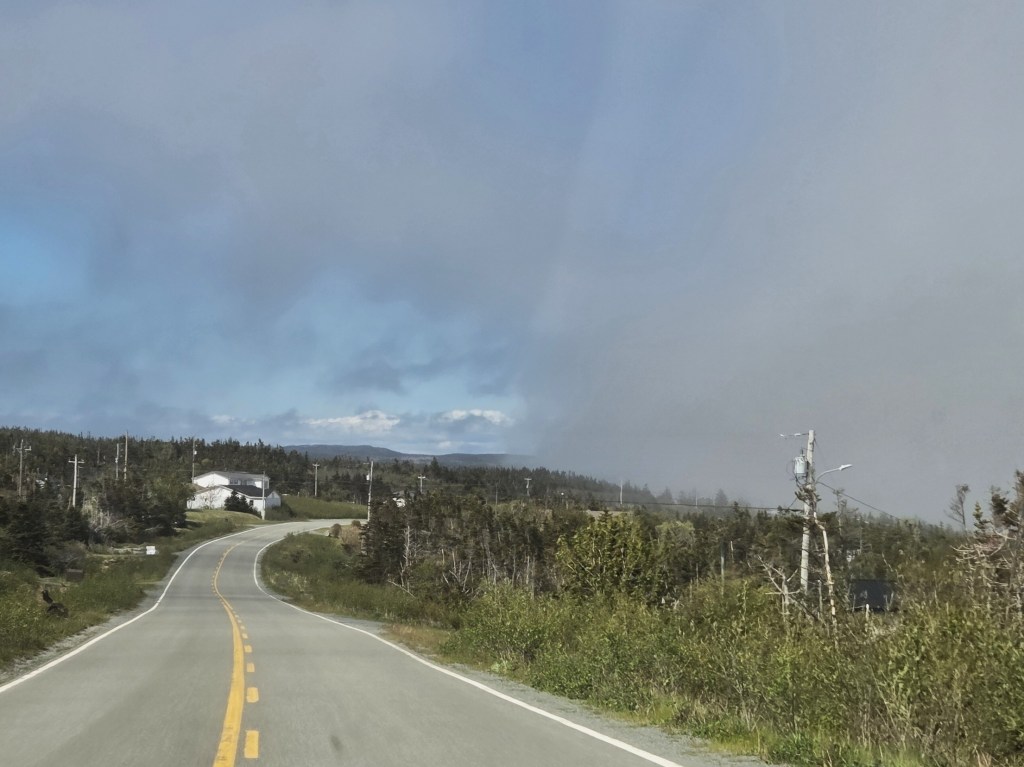
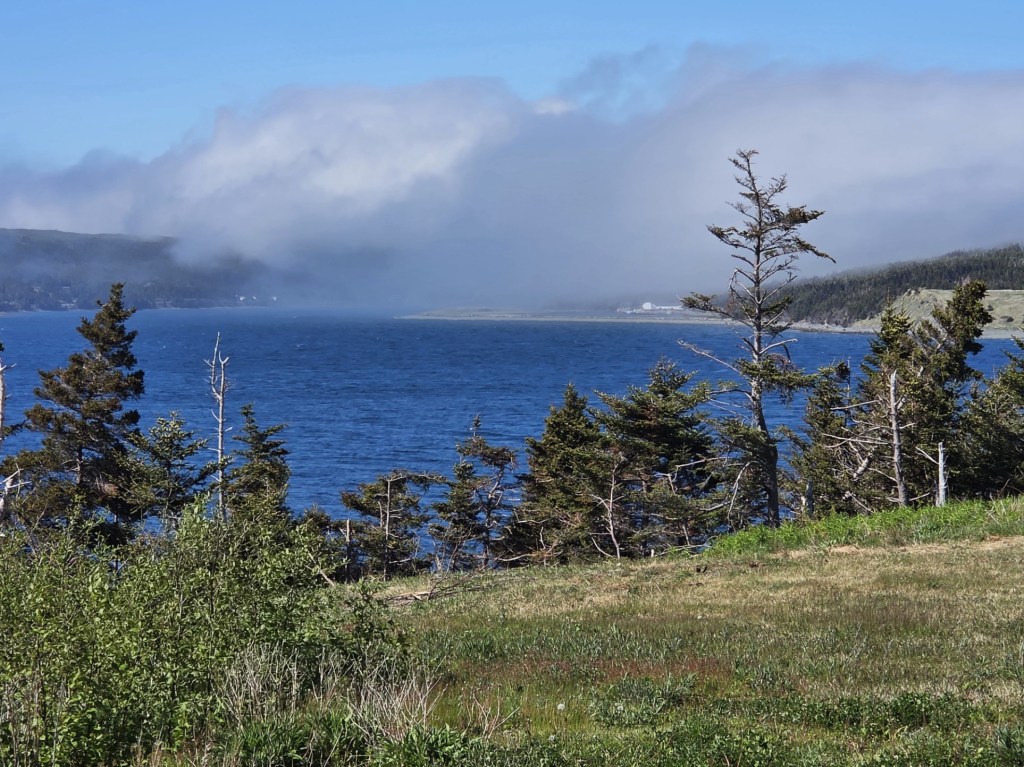
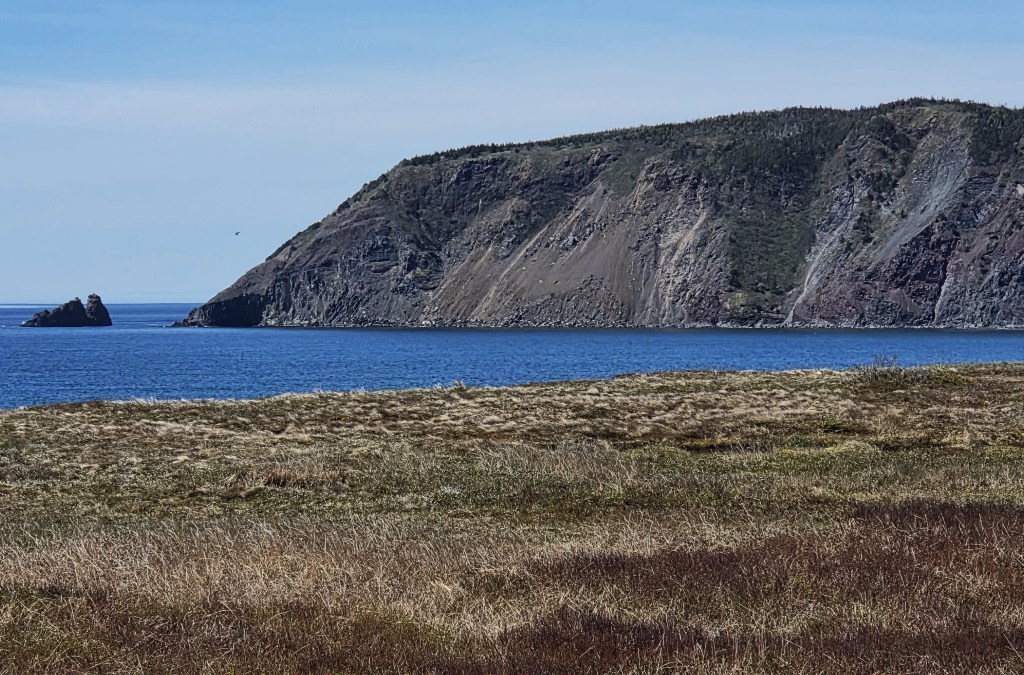
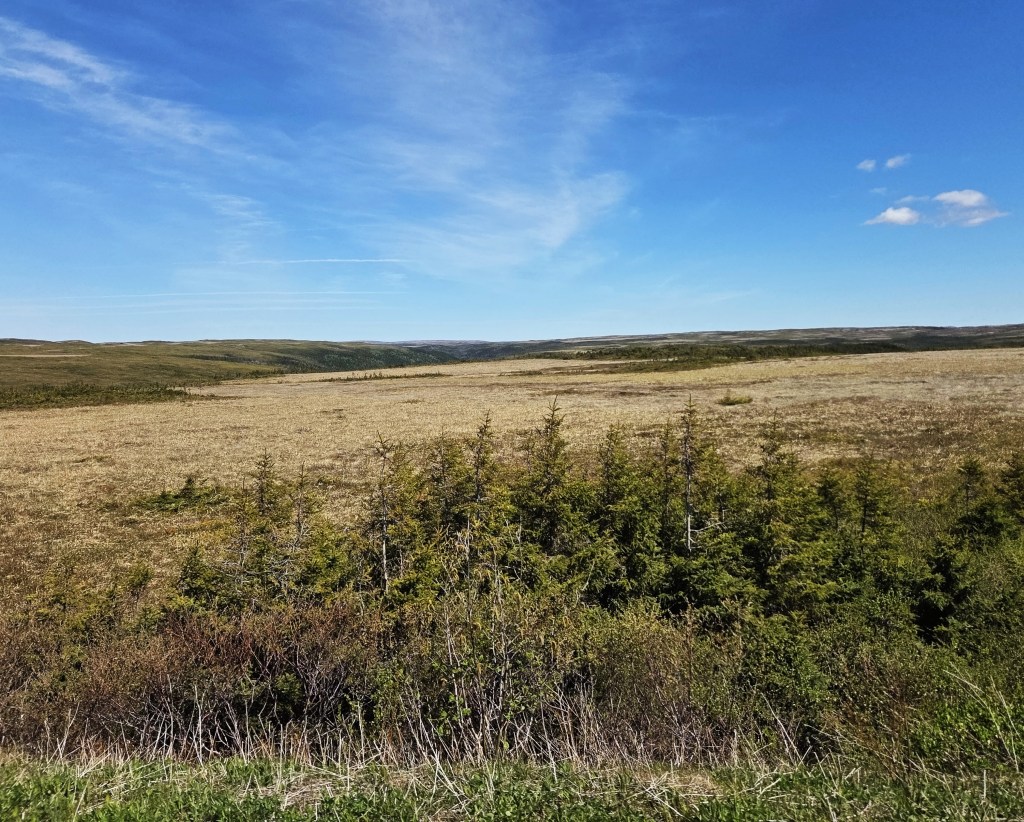
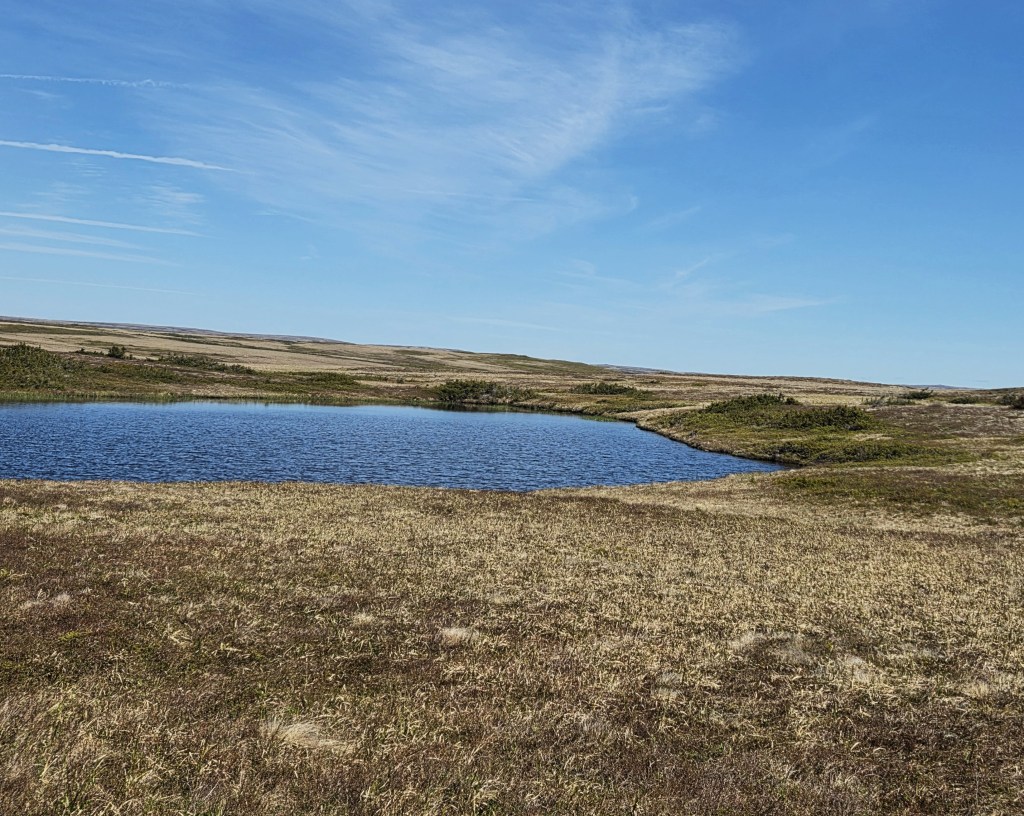
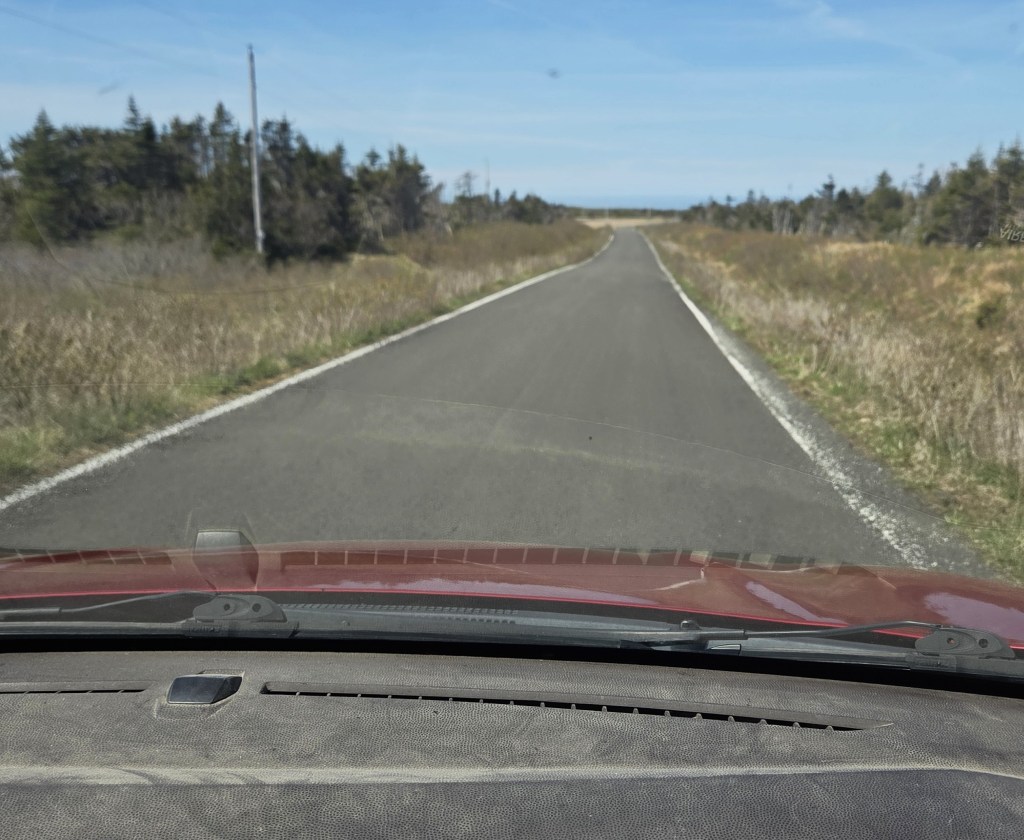
The drive took us to the southern tip of the western portion of the Avalon peninsula. The scenery along the way was, as so often the case here in Newfoundland, superb. The first three pics are from along the way down there. I was a little surprised to see such open, treeless terrain.
The entrance to the Reserve is a narrow, well-paved road, unlike many of the roads in the province. At the Reserve we were told people had seen caribou along the way in. Unfortunately, we weren’t one of those people.
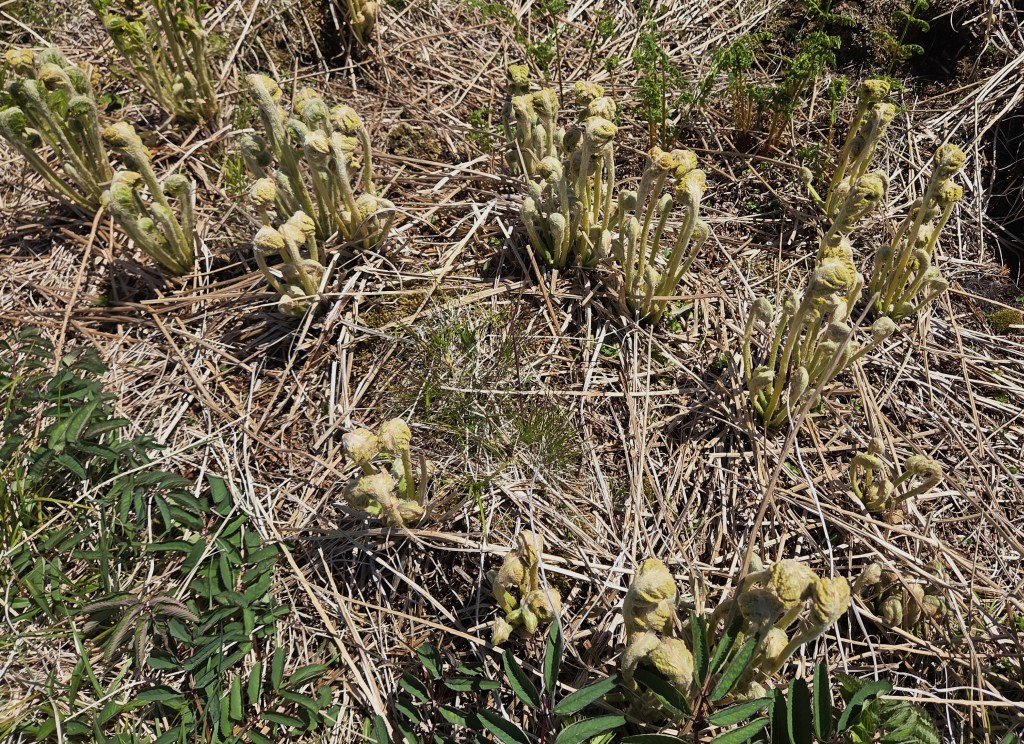
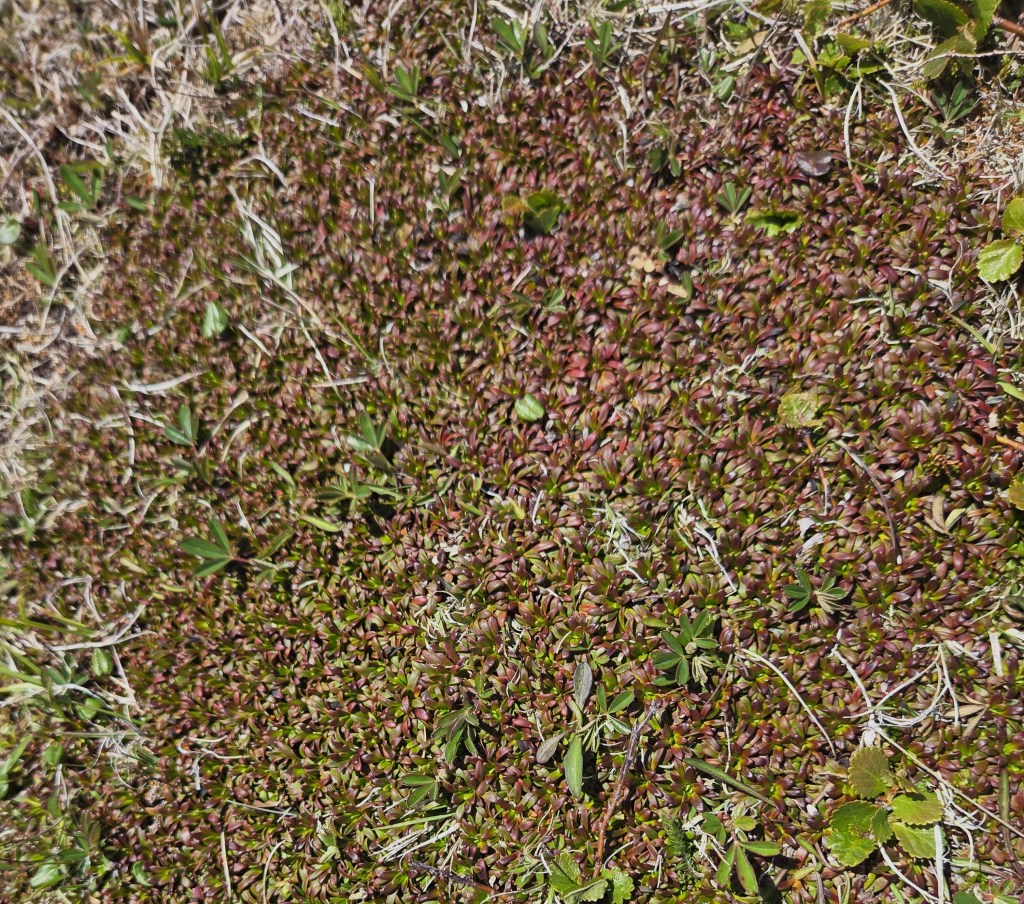
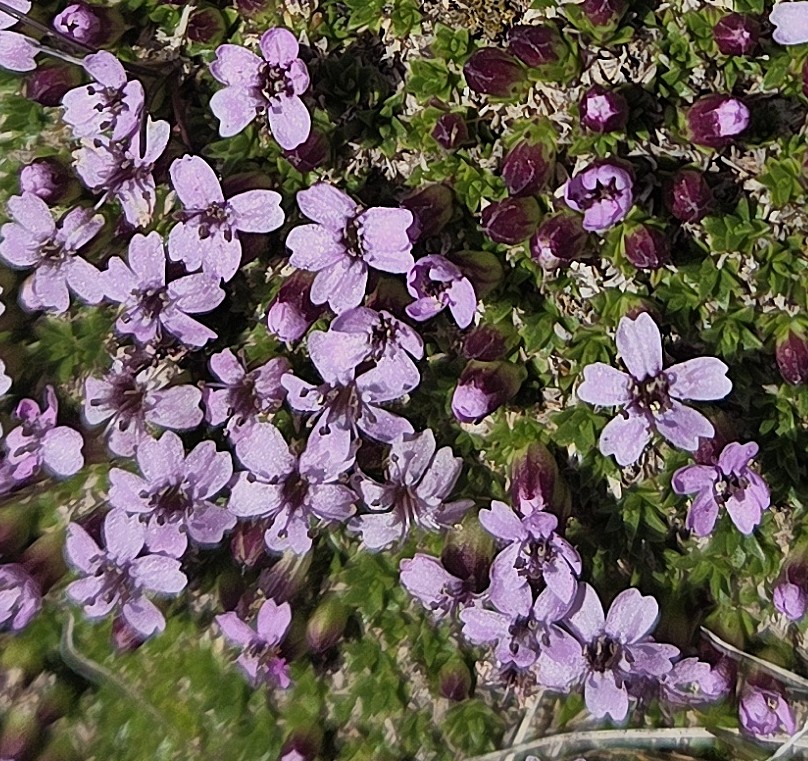
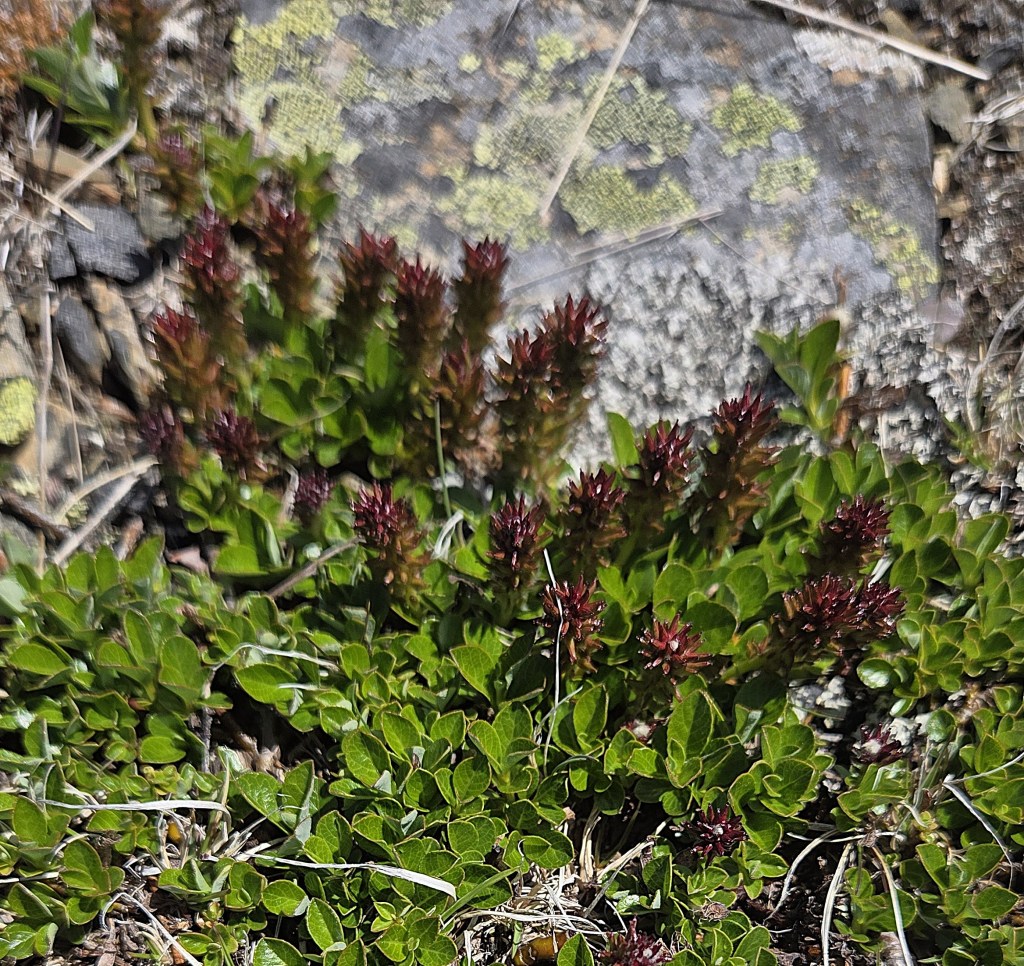
The first few pics are of some of the plant life that was growing there, always an interest of mine. Fiddleheads; Canada bunchberry; Arctic diapensia, or pincushion plant, which will have white flowers; moss campion; Alpine willow.
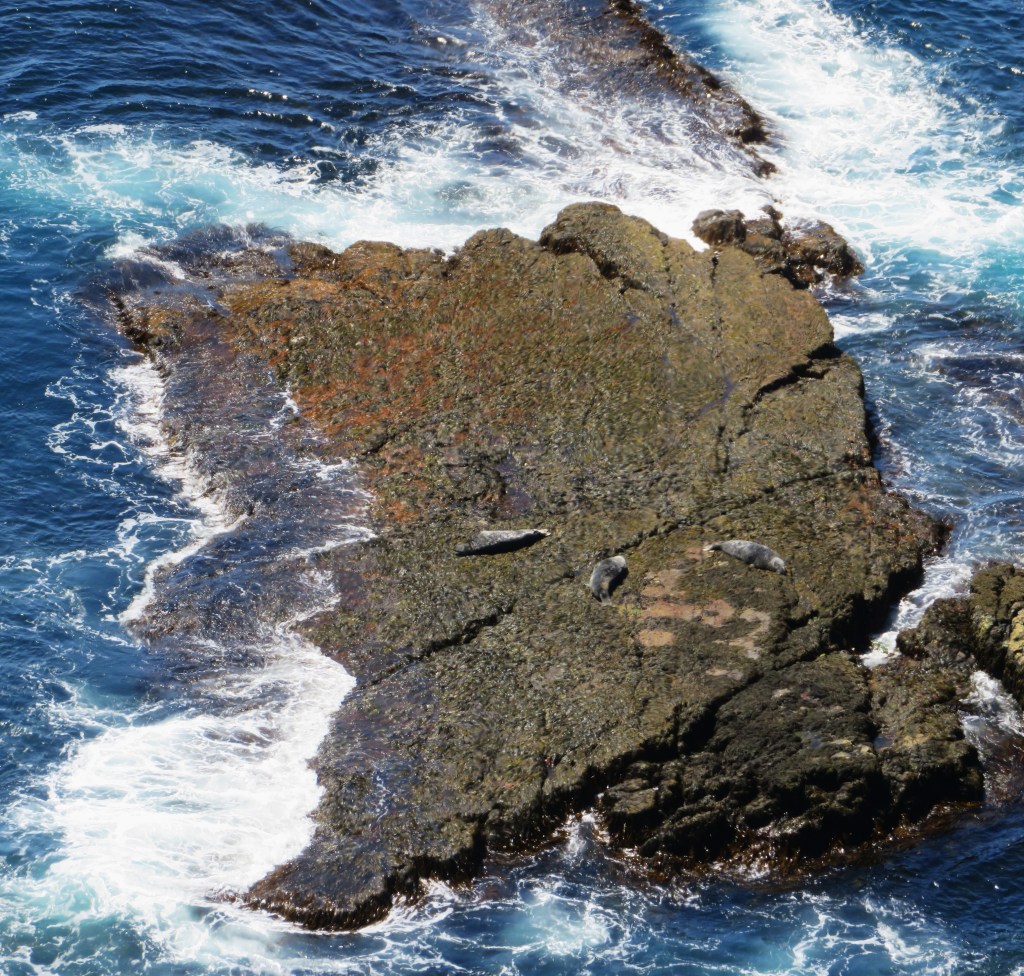
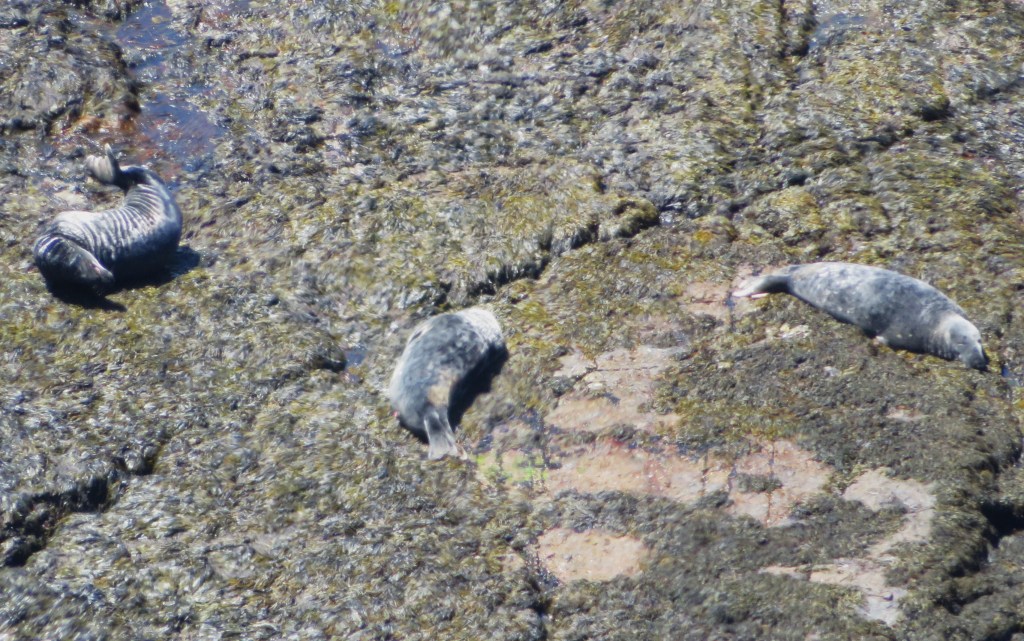
Along the way I spotted three harbor seals lying about on a flat rock, far below the cliffs.
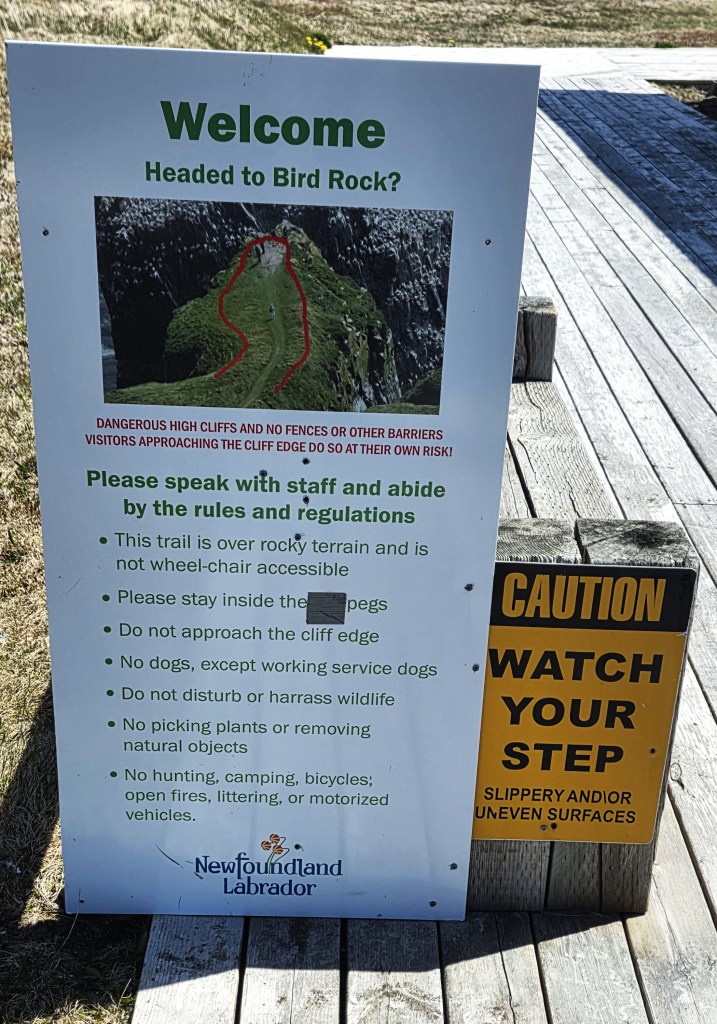
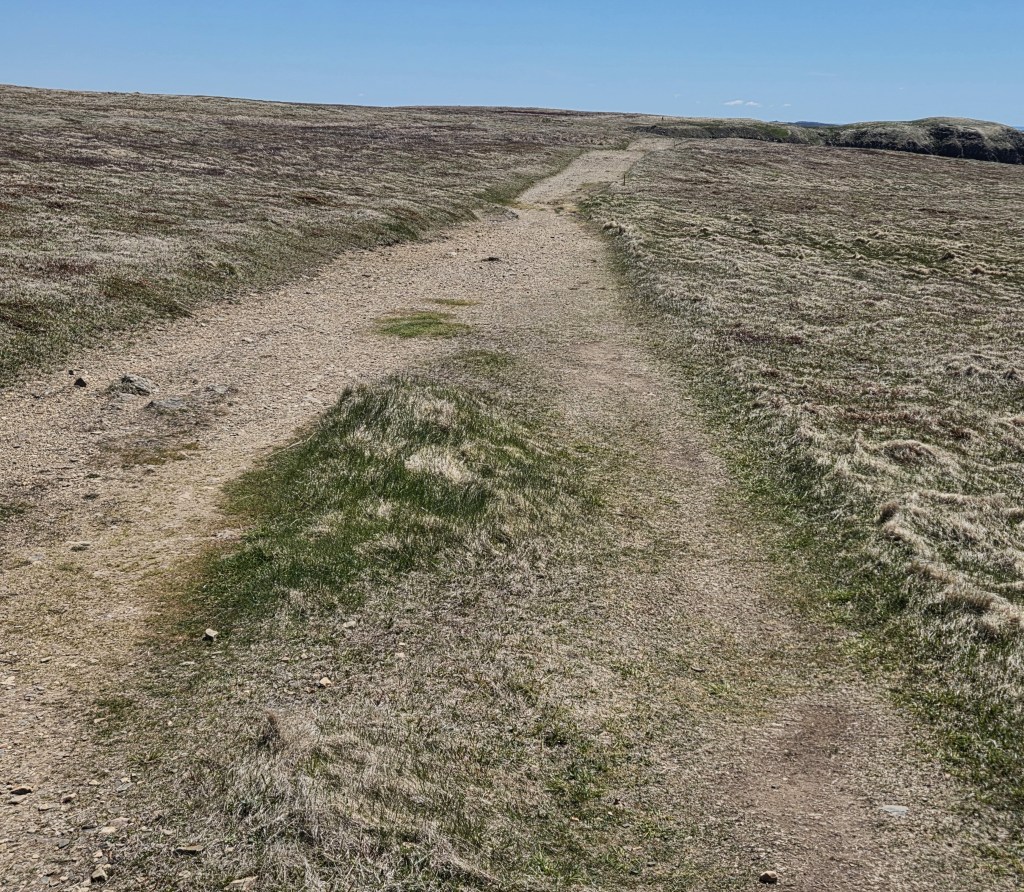
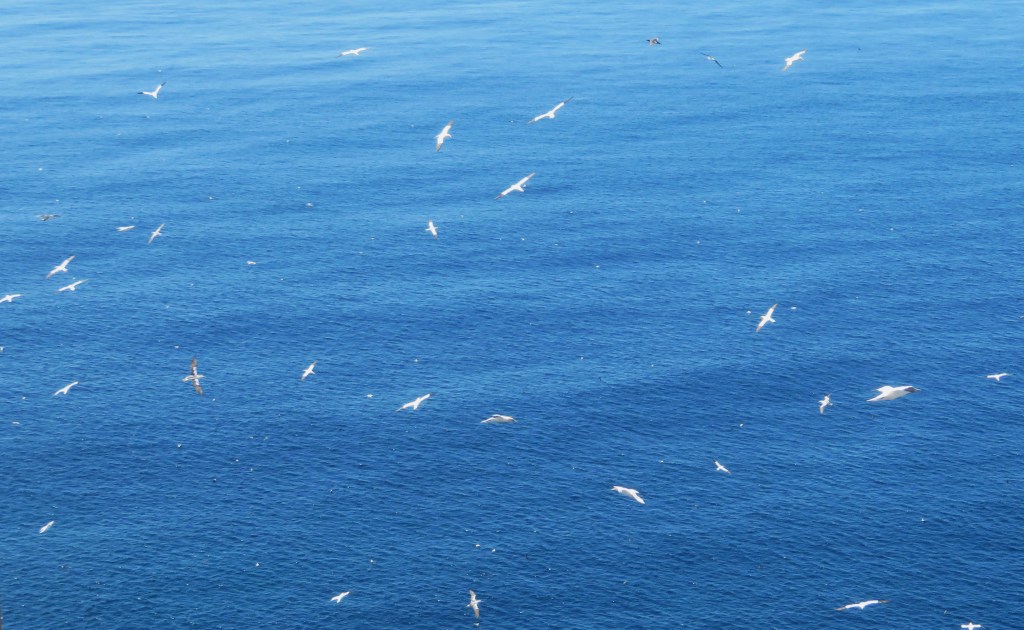
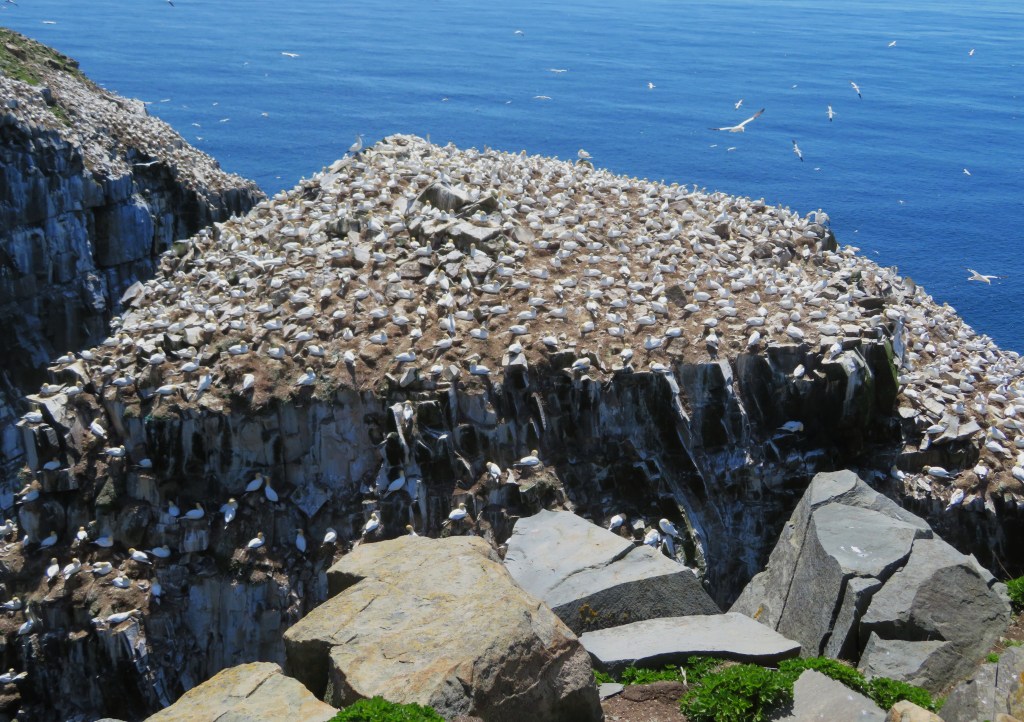
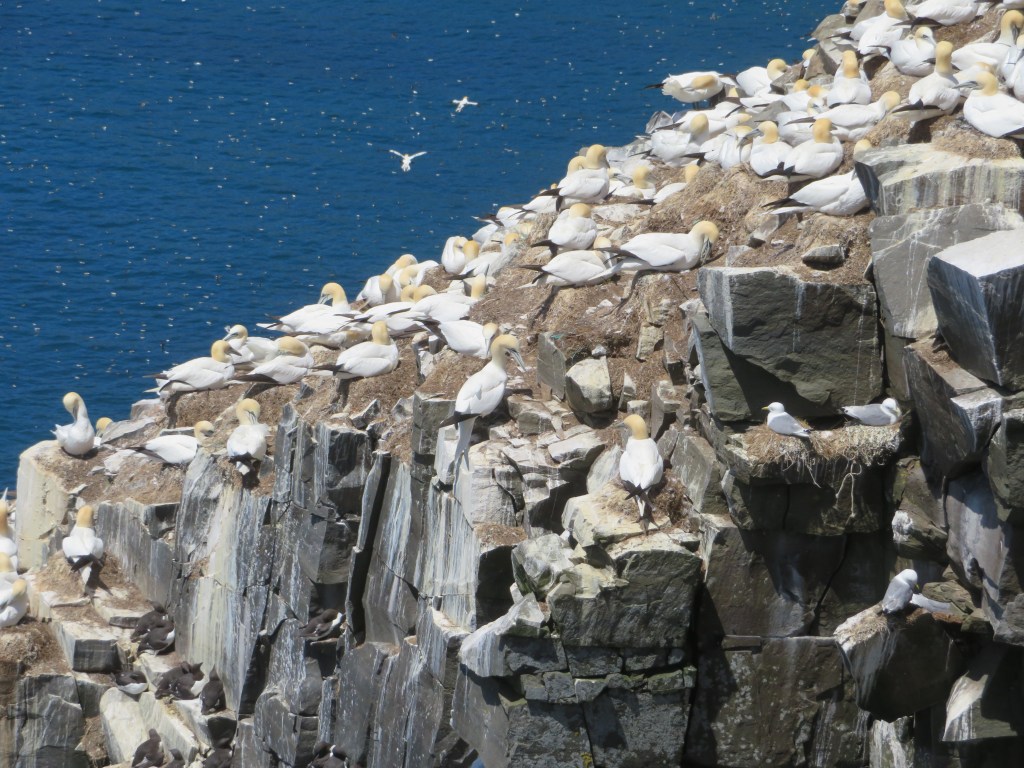
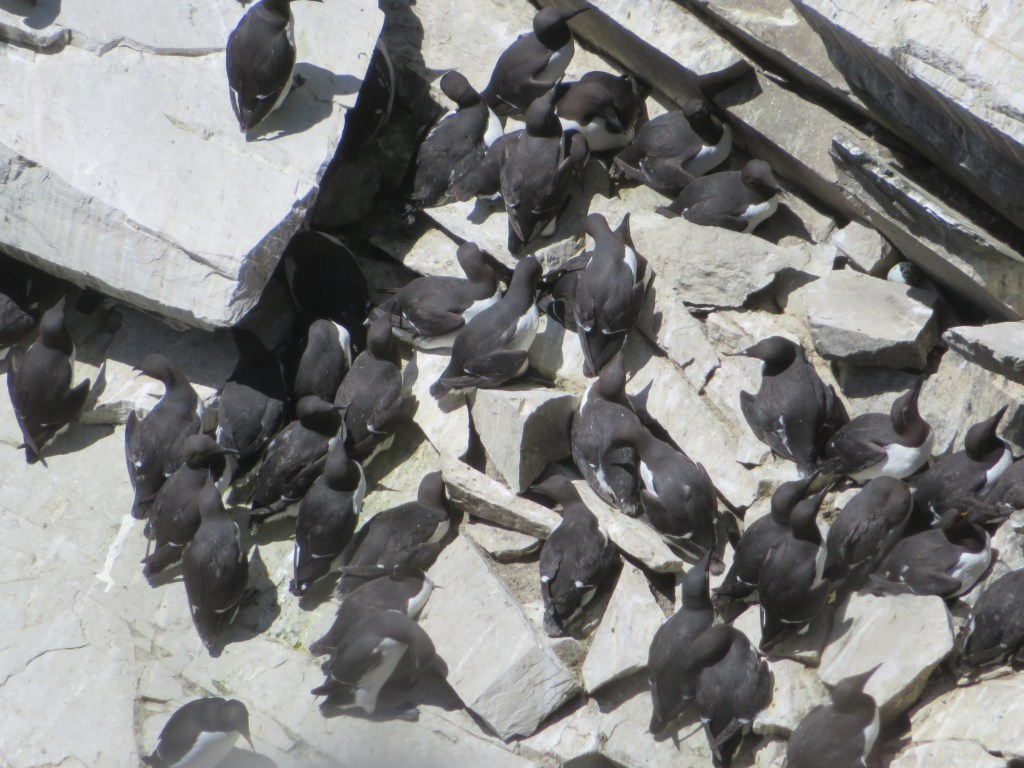
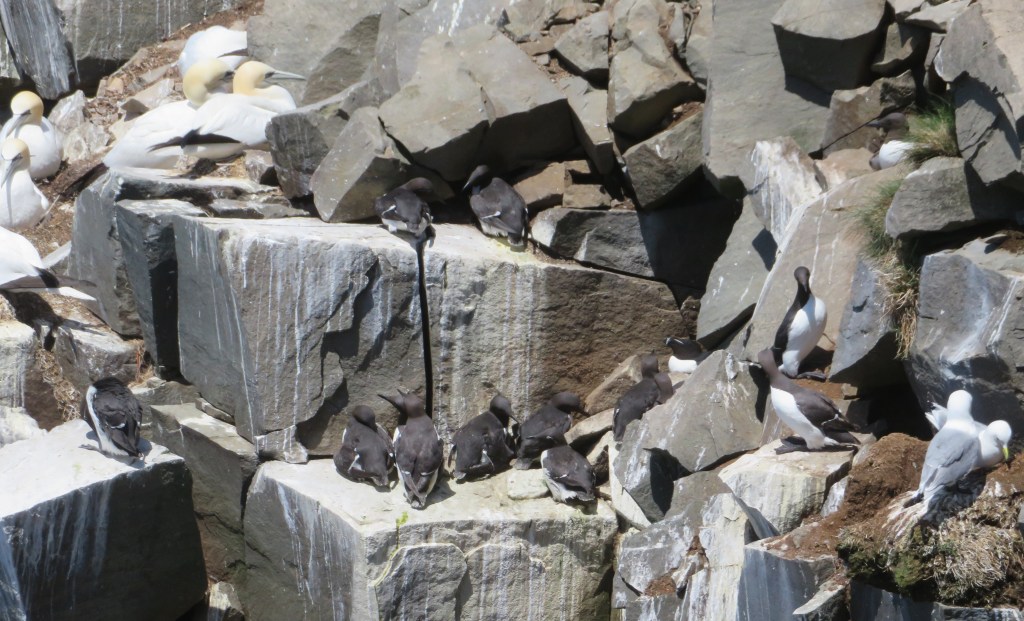
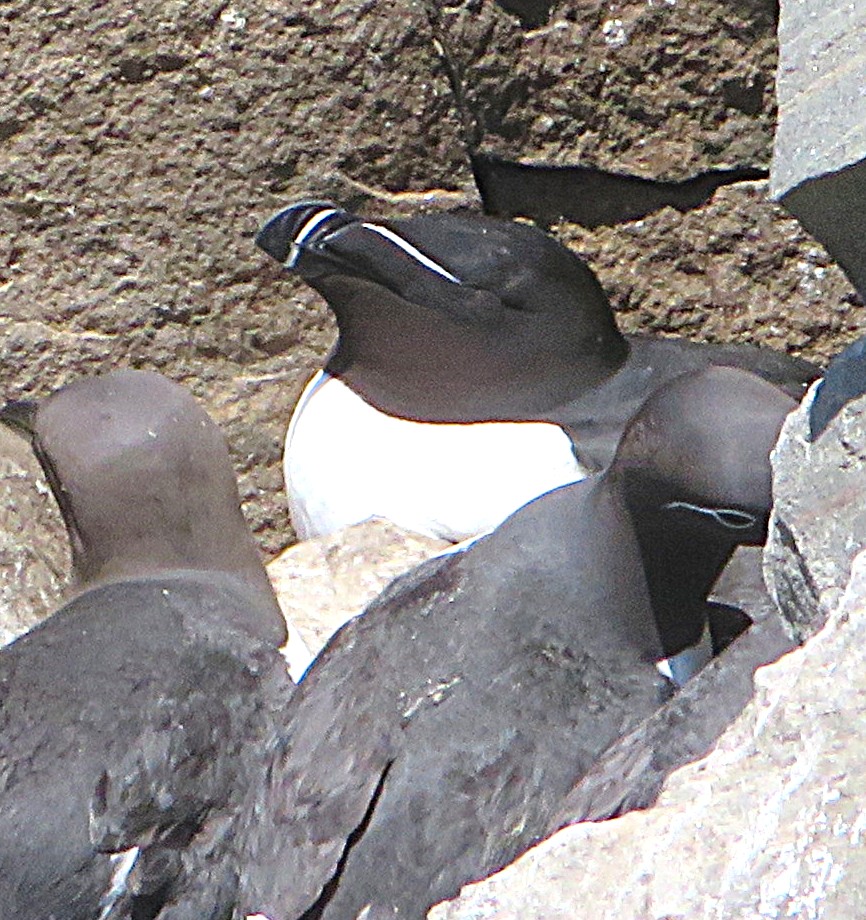
The 1.4 km trail ends at “Bird Rock”, (pic) the nesting place for thousands of Gannets. It is estimated that 30,000 of them nest on the rock and adjacent cliff tops. The first pic after the gannets is of Common Murres, the black and white birds. The following one has four different species of birds: gannets, common murre, black-legged kittiwake and a razorbill. The razorbill was a real treat, as it is the only one visible there. I was able to see it thanks to Edna.
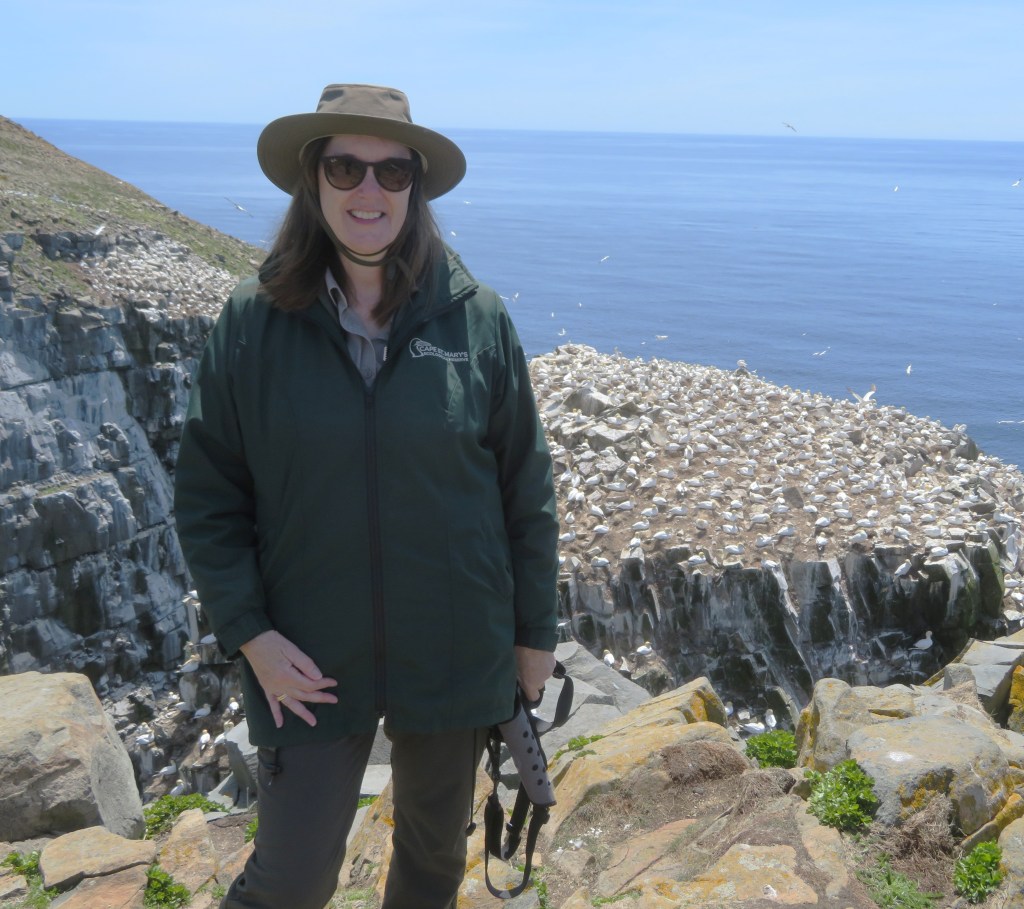
Edna is a Heritage Interpreter who works at the Reserve. She talks with visitors and keeps an eye out for safety at the site, as there are no fences or guard rails in place.
As she and I talked about the birds I asked about tick-billed murres. She said there are some there but not in a visible location. Then I asked about razorbills and she showed me where the one visible one was located. In the picture I referred to with the four different species, the razorbill is in the lower mid-center of the picture partially hidden by some rocks. Its head is visible as it looks out toward the left. The following picture is a close-up of the bird. I never would have noticed it if Edna hadn’t pointed it out to me.
Edna (pic) and I continued to talk while standing there on the cliff with thousands of birds nearby. A little bit about the birds, some talk about life, and flowers. When I mentioned that the serviceberry trees were in bloom everywhere throughout our journey in the province she didn’t know what they were. I mentioned how they are called shadbush and juneberry, too. None of that was familiar to her, though she is very much into and knowledgeable about wildflowers. It finally came about that she realized what I was calling serviceberry is called chuckley pear in Newfoundland! Ah, the confusion of common name nomenclature!
When heading back the trail to the car, Edna walked along to have her lunch at the visitor’s center and then to work there for the rest of the day. She pointed out some plant-life along the way and our conversation flowed the whole 1.4 km back to the center.
Wonderful scenery, amazing concentration of birds and stimulating conversation. A trifecta of delight!
My Daily Spontaneous Poem that evening:
though we had just met
in north Atlantic air
on cliffs high above
breeding seabirds
we conversed continuously
as if we had known each other
before just today
And the DSP from the night before that also relates:
that flower
never seen before
might never see again
(Click on thumbnail for larger, clearer picture.)
6/14
Two outdoor outings today, with a “Jiggs” meal afterwards.
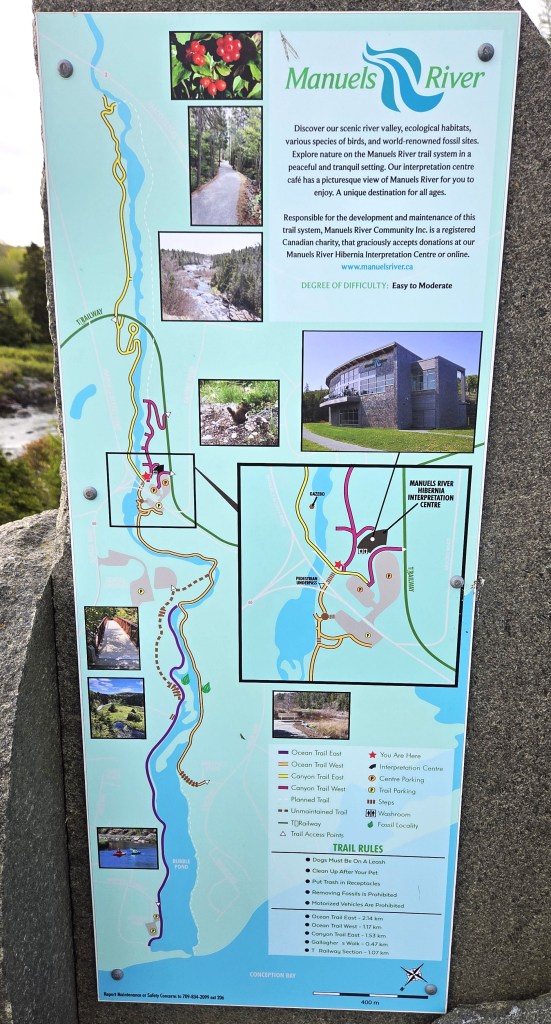
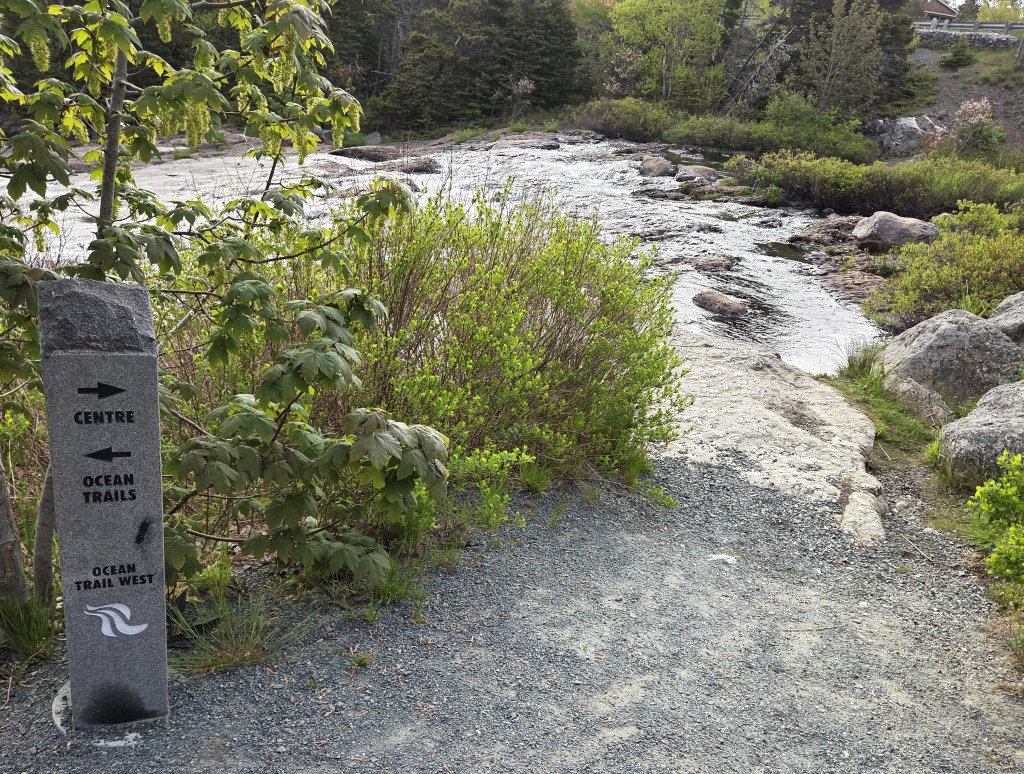
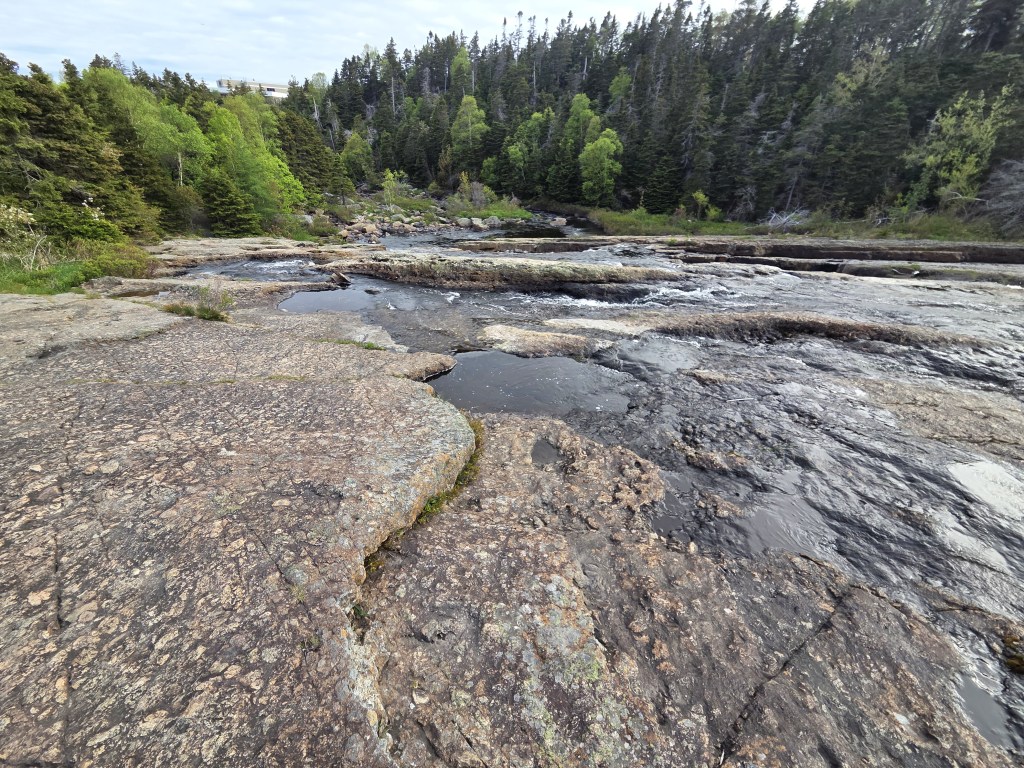
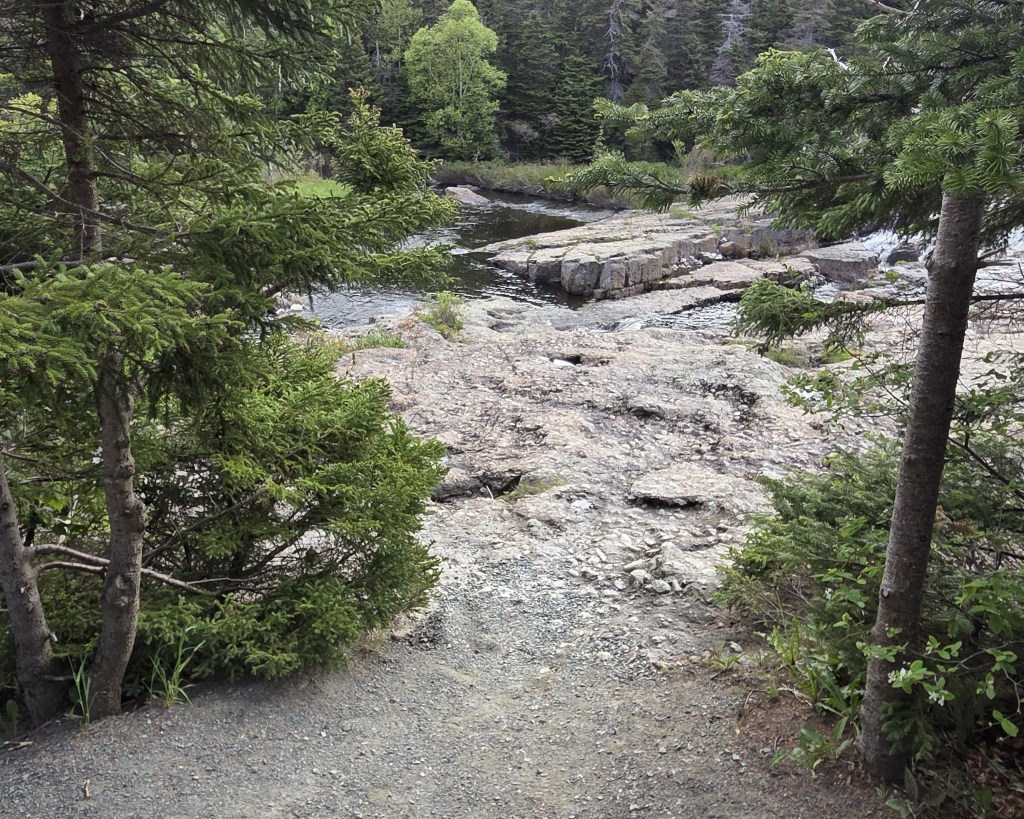
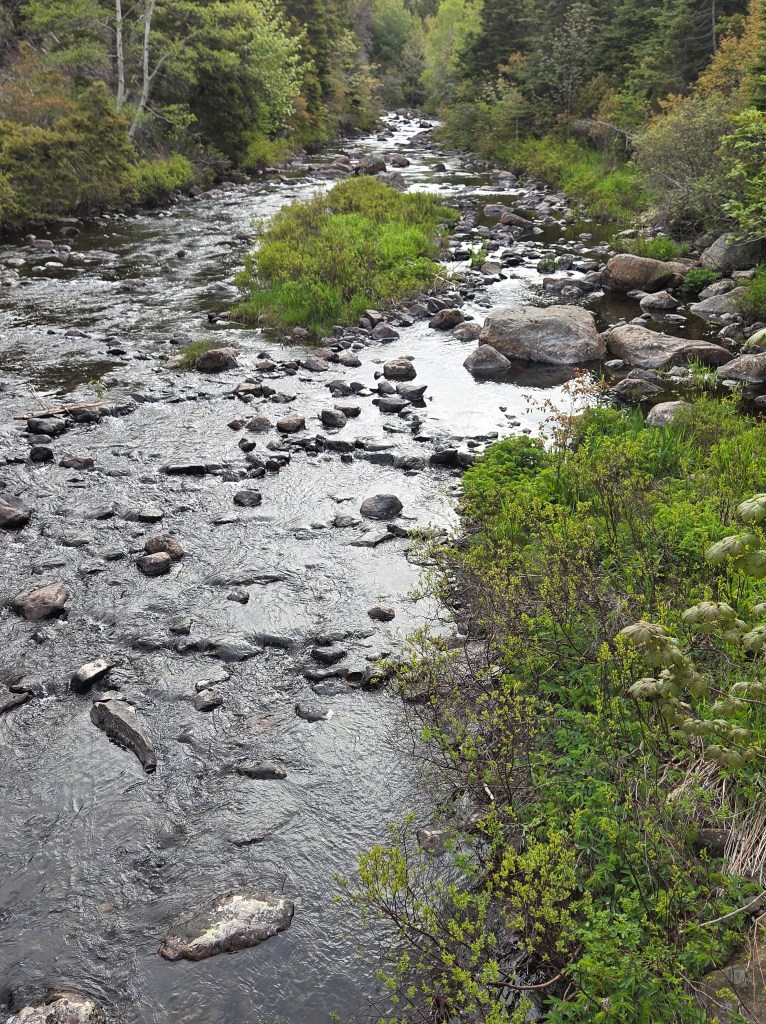
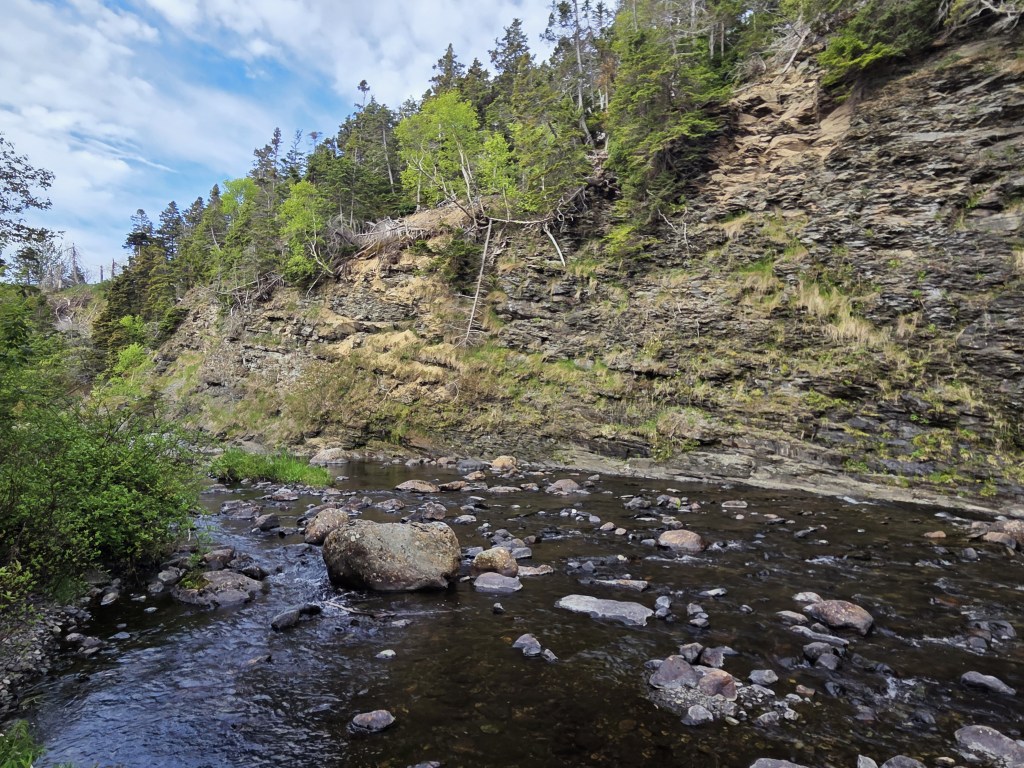
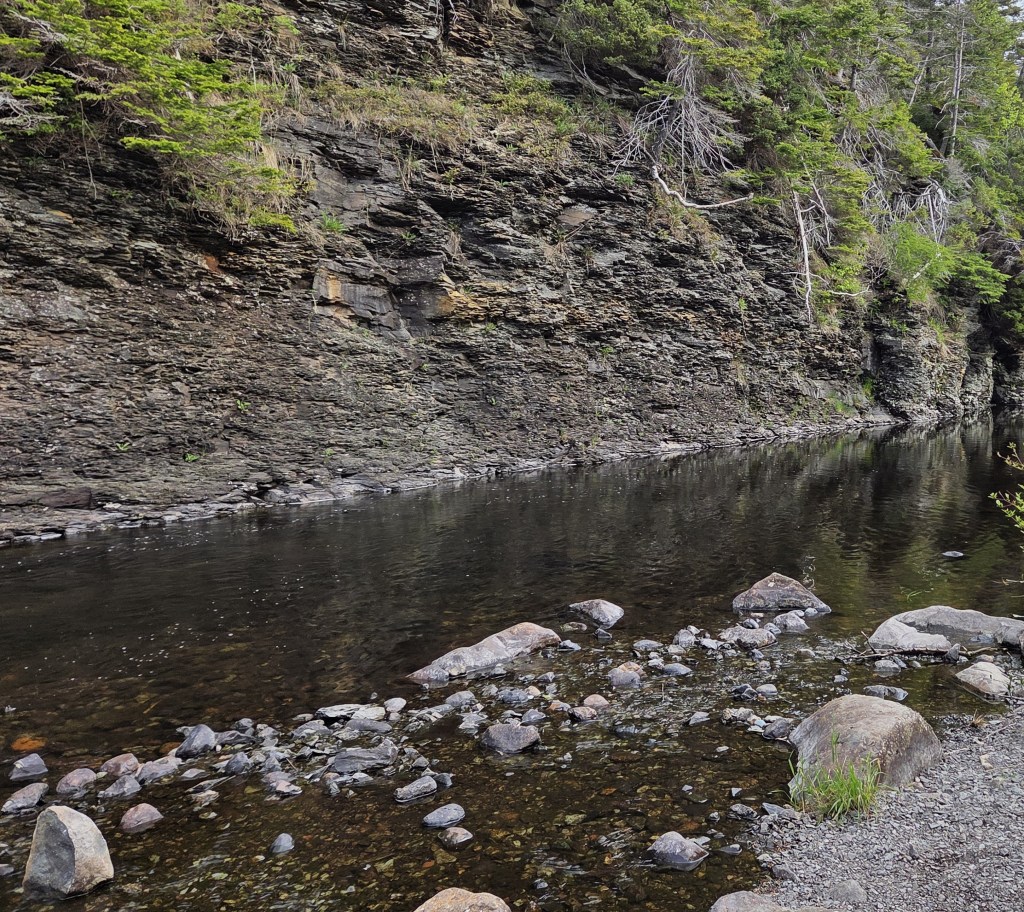
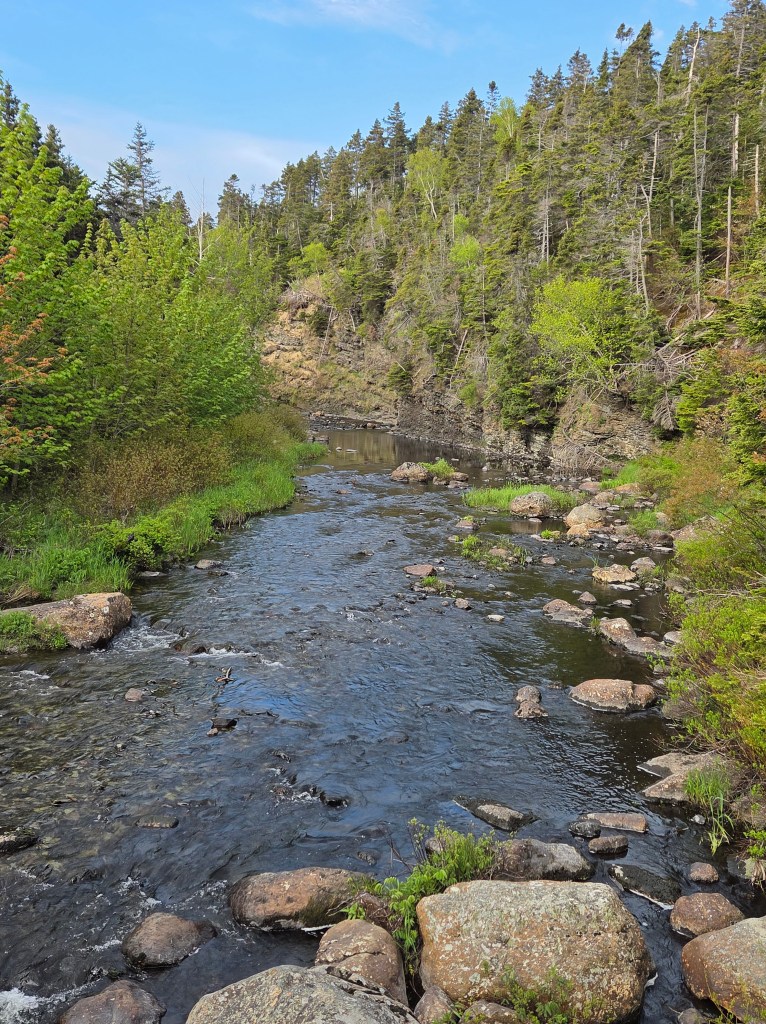
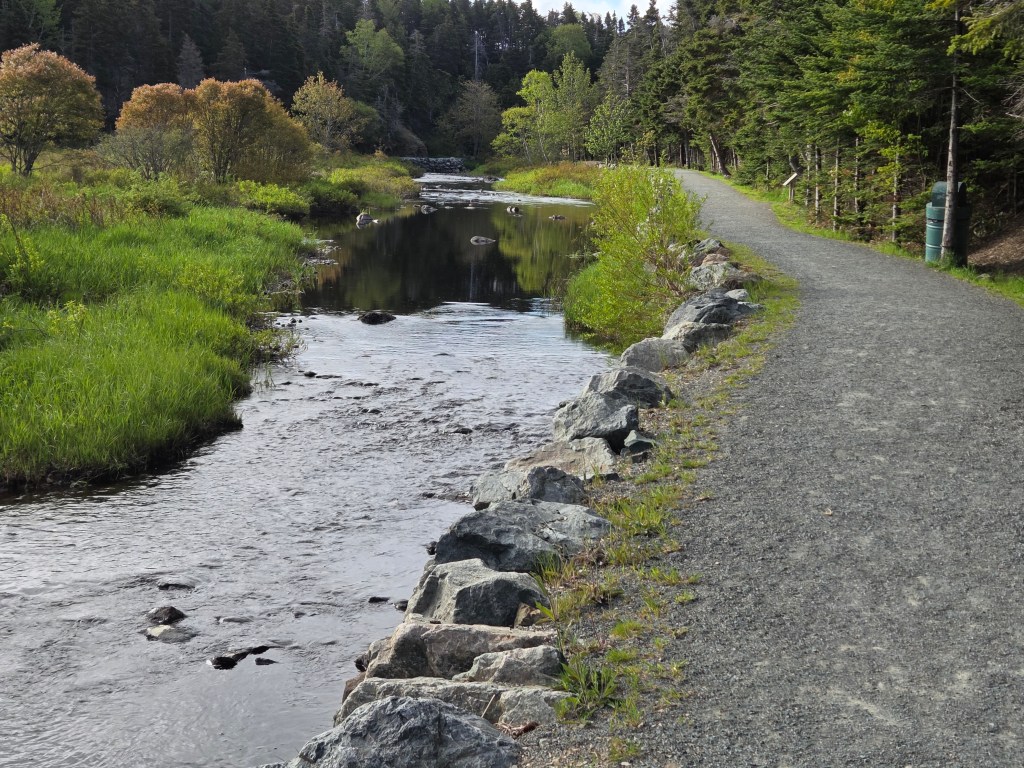
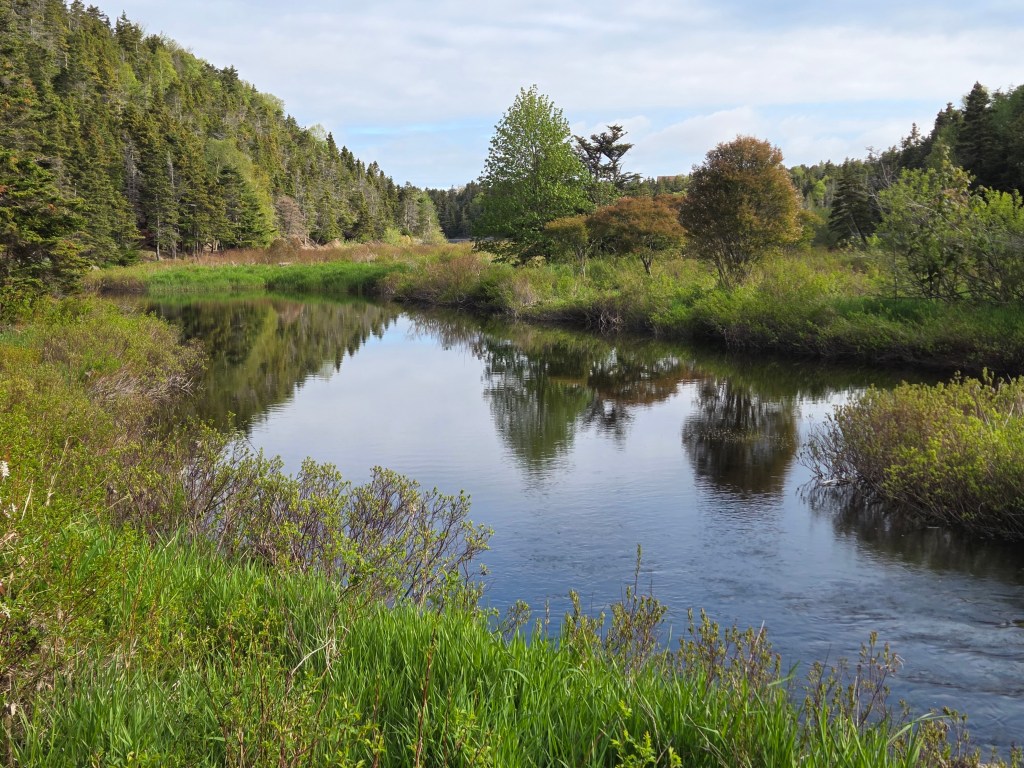
Left home early morning to take a walk along the Manuels River, about a 20 minute drive away. There are about 5 kilometers of trails that follow along the river that are well groomed and easily accessible. We walked the canyon trail, where this site is well known as a place for finding very old fossils, and is claimed to be a “world-class geological treasure”. Pics are from the walk.
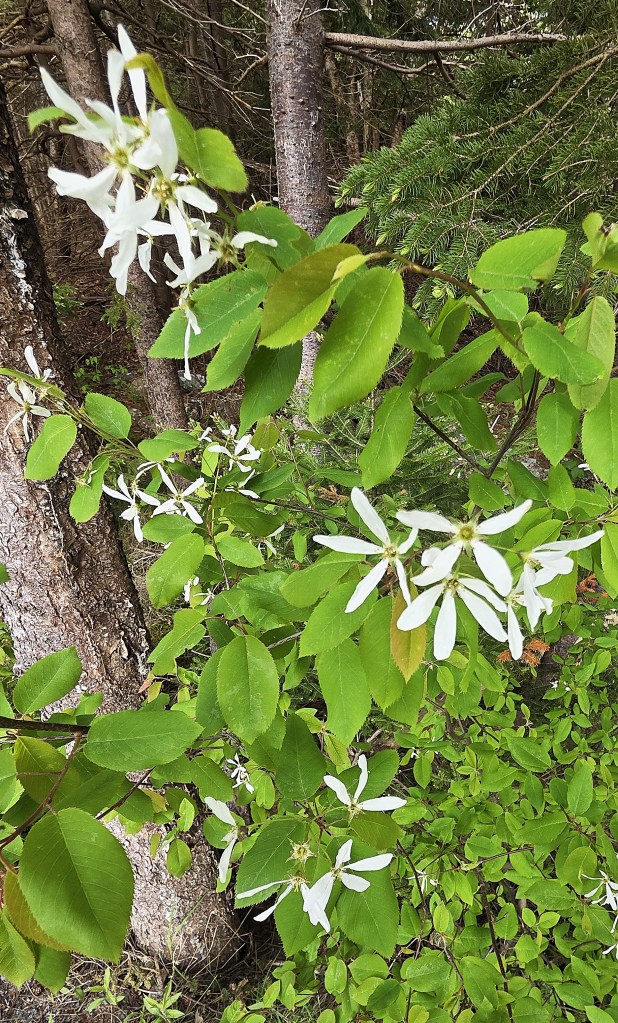
The first white flower pic is of a serviceberry tree in bloom. The ones we saw here were of a different variety than what we had been seeing in previous places here. This is common serviceberry whereas the early ones were mountain serviceberry. The difference is very noticeable, as the common has thinner petals than the mountain ones. The tree is also known as shadbush and juneberry and has been in bloom and very common throughout the journey here.
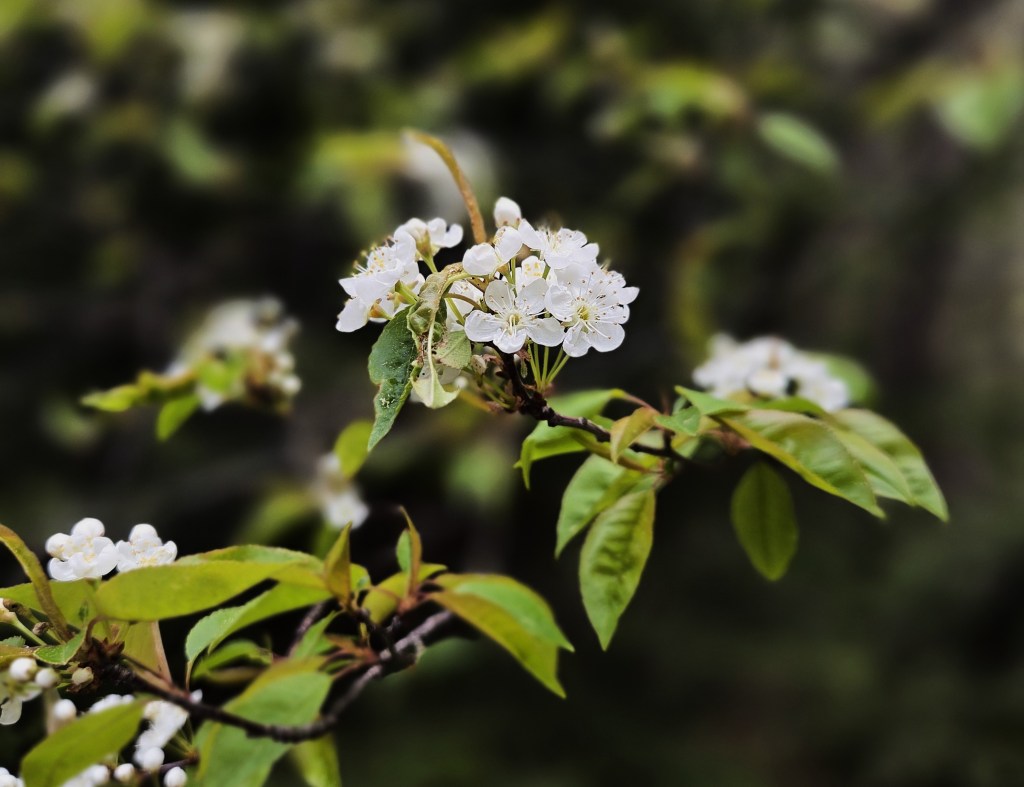
The second white flower is of fire cherry blossoms. We’ve been seeing a number of those recently.
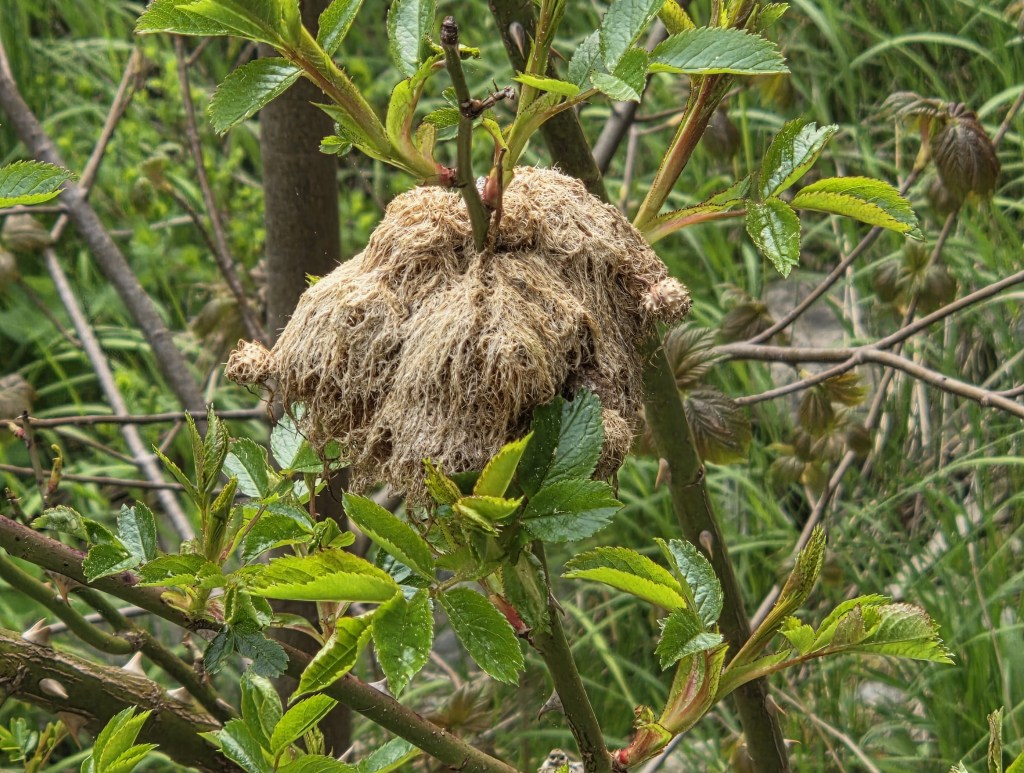
An unusual growth on some rose bushes called out for attention. I had never seen this before. Looking it up, I think it is rose bedeguar gall, caused by a gall wasp. As concerning as it looks, it doesn’t harm the plant itself.
The next unusual pic is of witches’ broom on a balsam fir tree. The unusual growth is caused by a fungus that often affects fir trees.
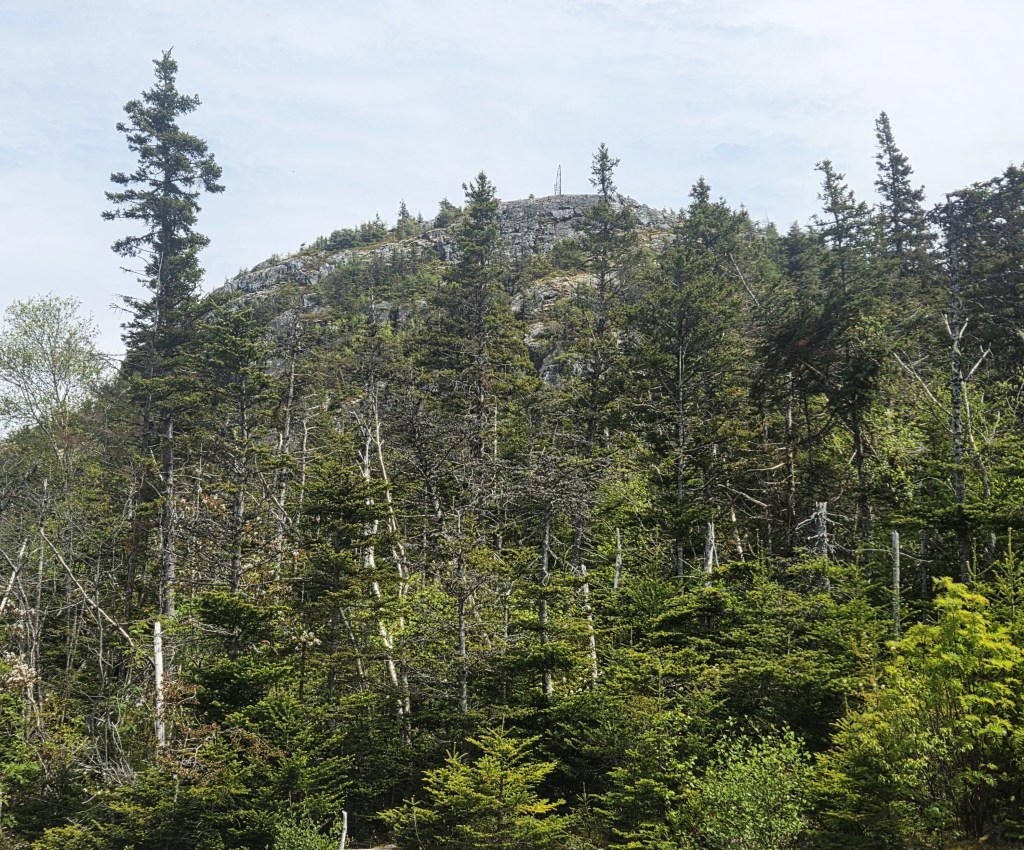
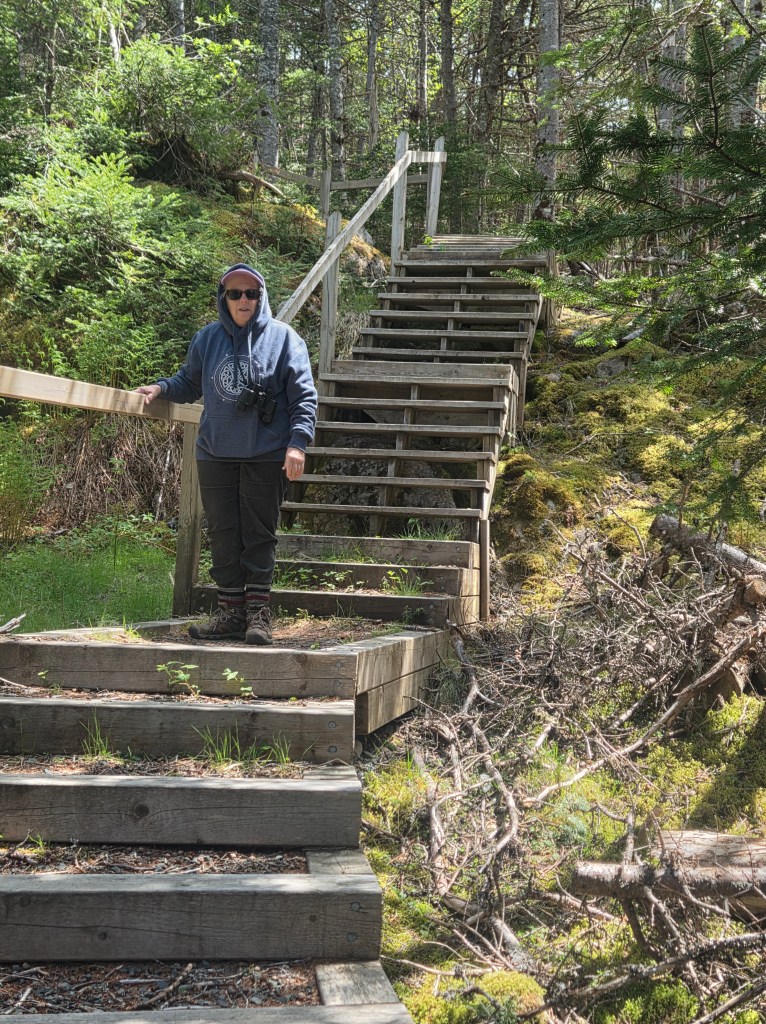
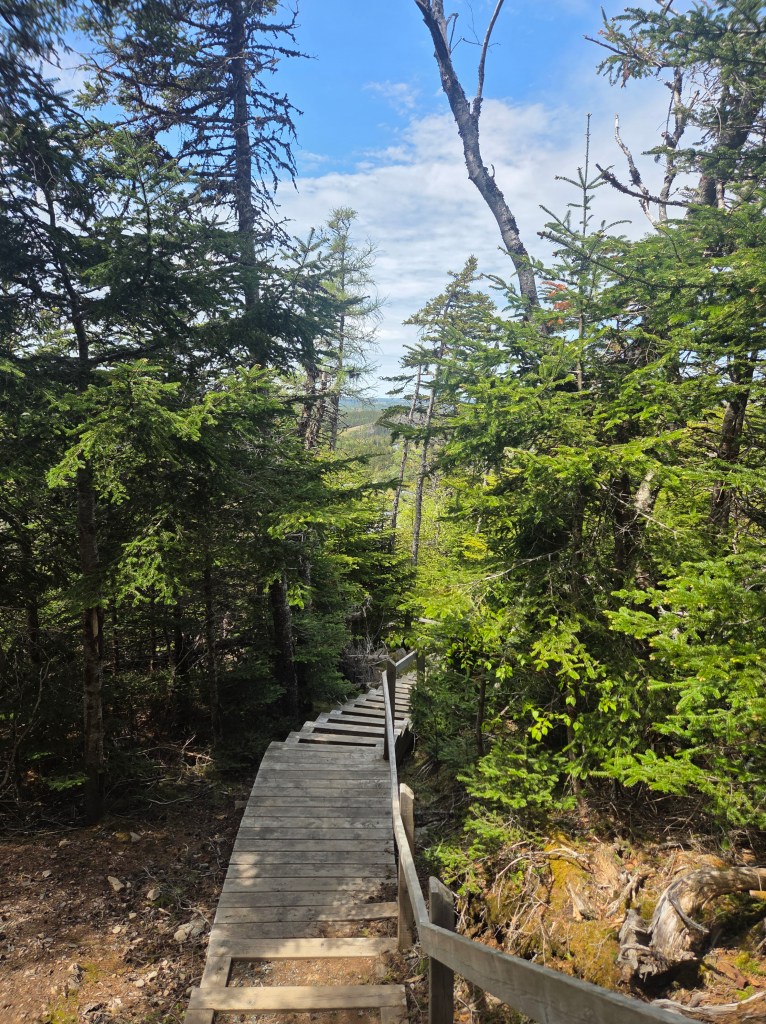
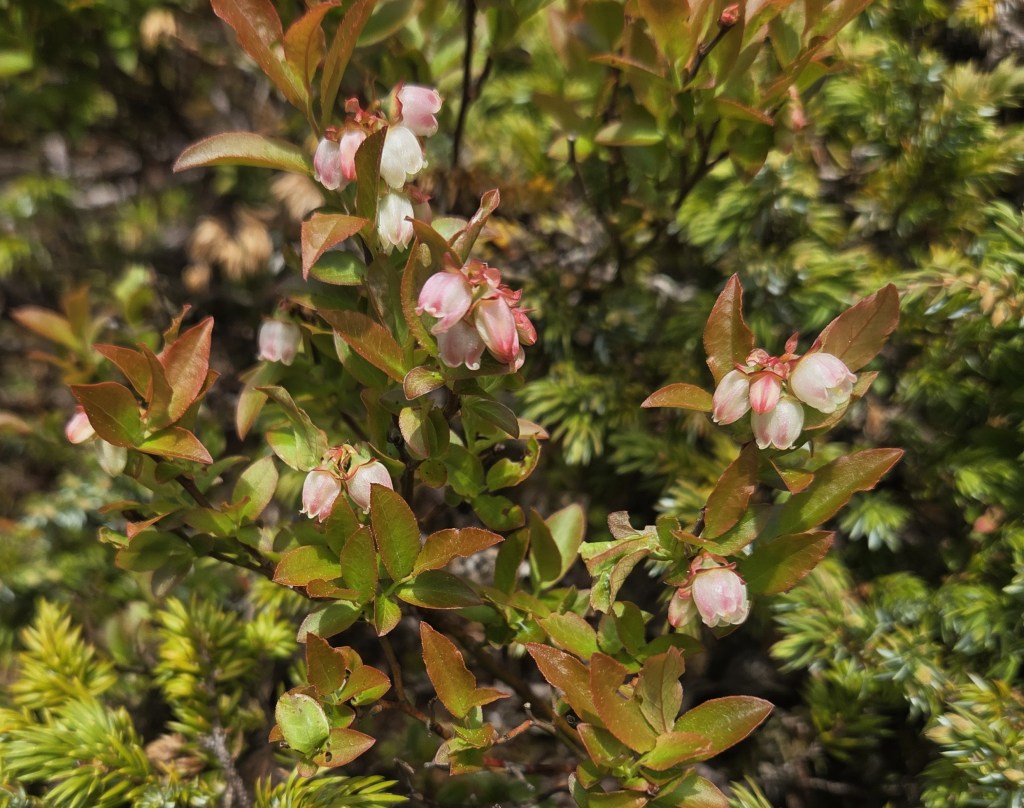
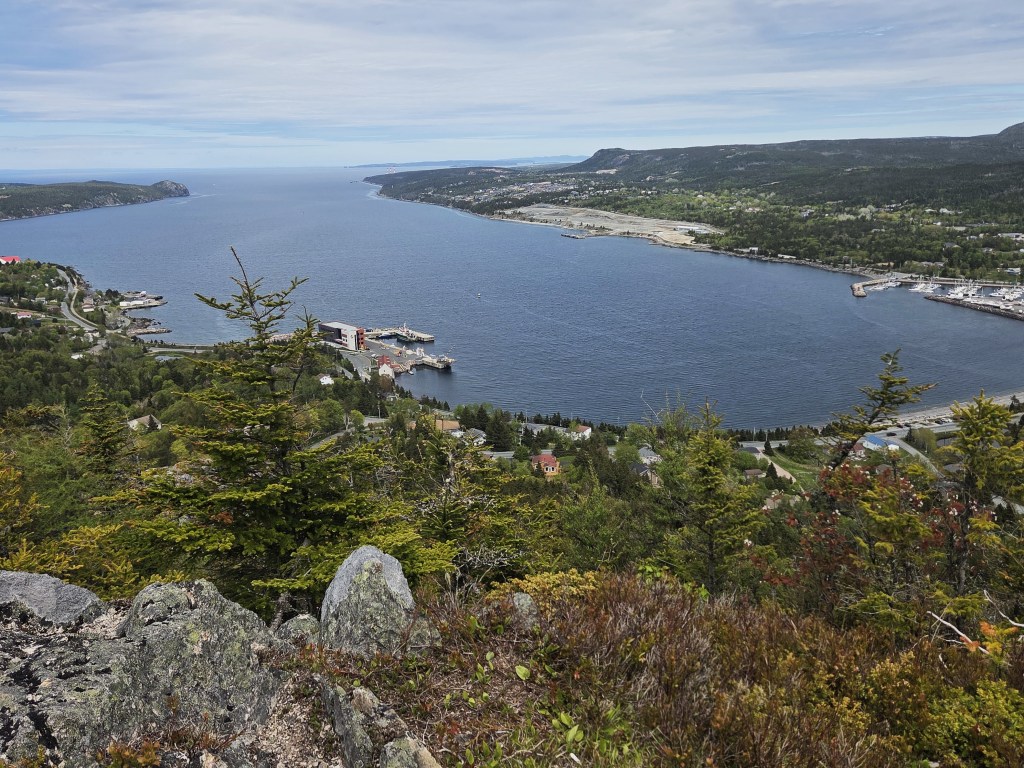
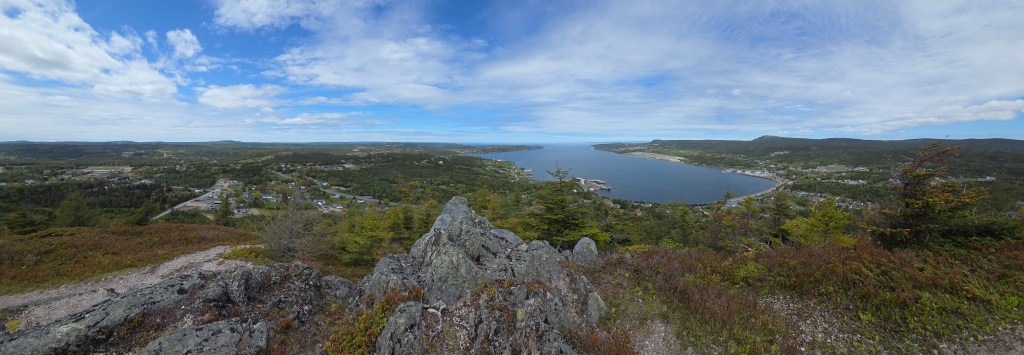
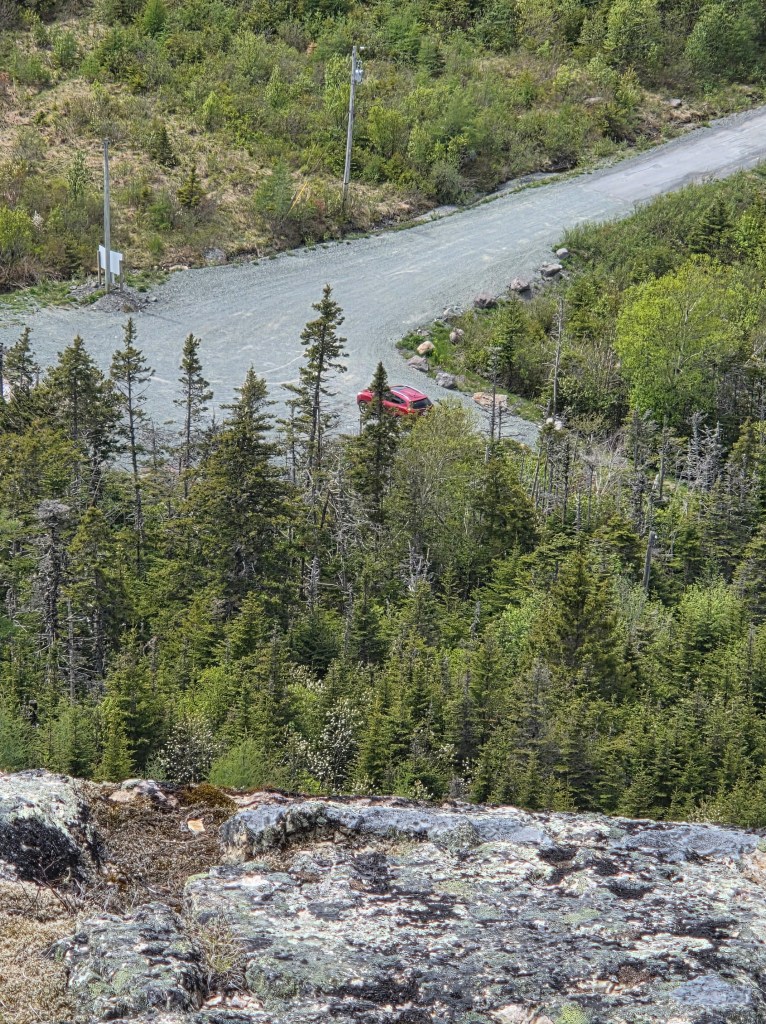
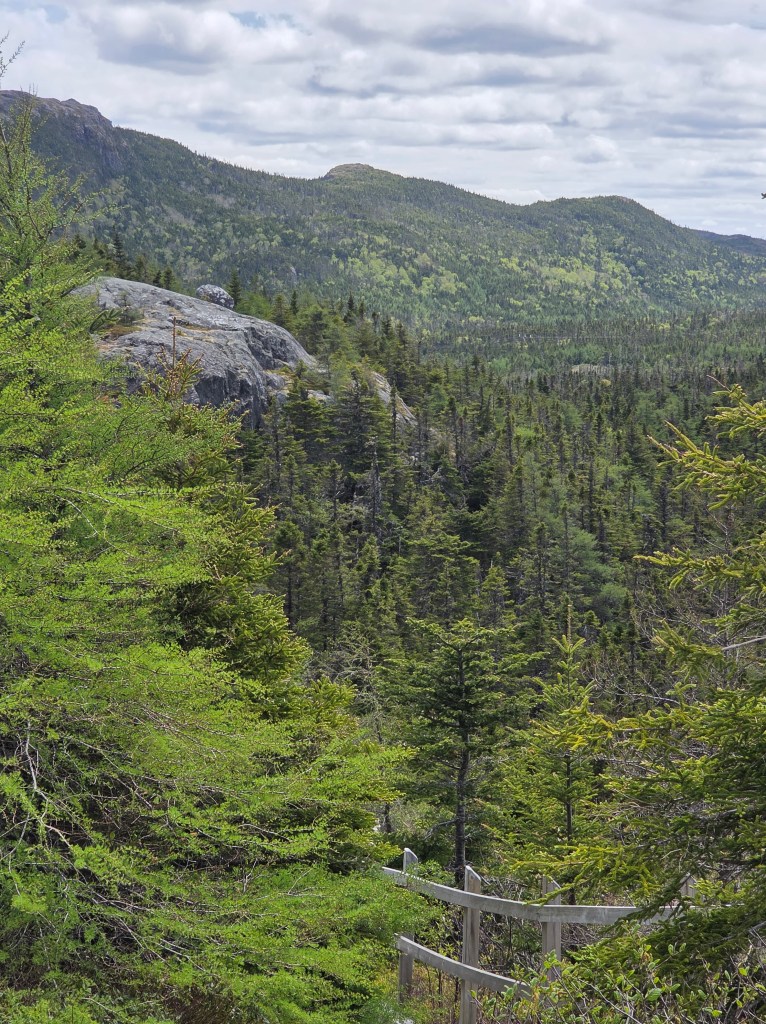
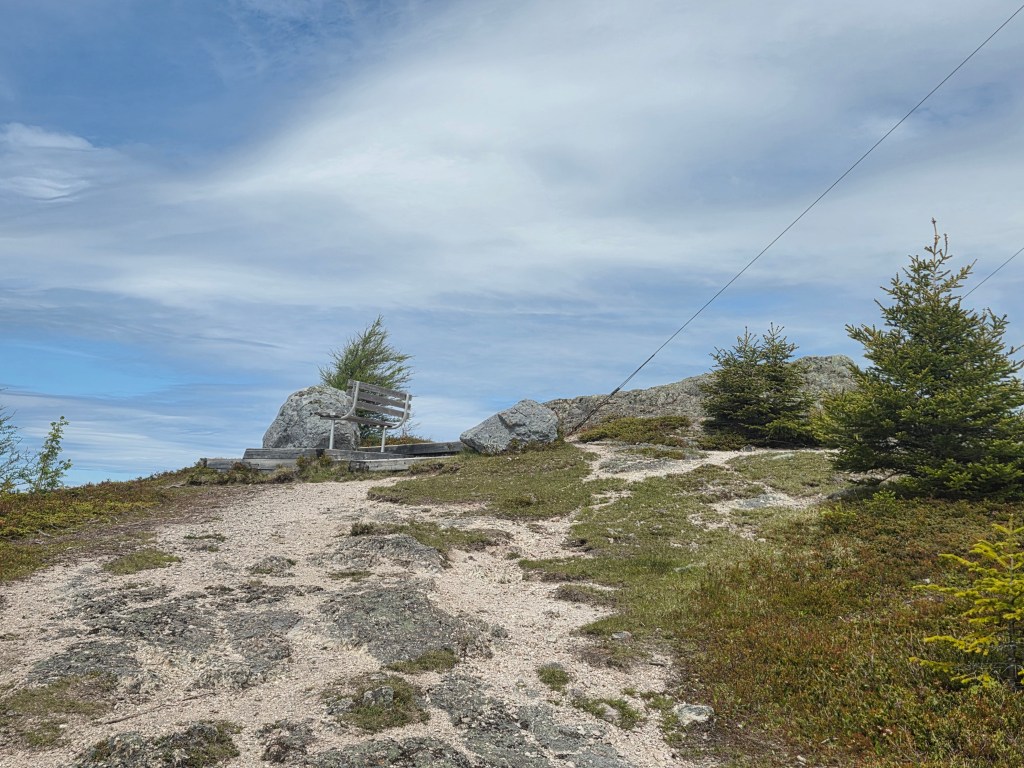
Early afternoon we hiked the George Cove Mountain Trail which is just a short distance away from the house. It’s really more of a walk up steps. The town of Holyrood installed the steps up the mountain in 1999. There are 439 steps with a few benches situated along the way. The height of land is just over 150 meters above sea level and affords wonderful views of the surrounding landscape, including Conception Bay and the town of Holyrood. (pics) The one flower pic is of wild blueberries, which grow quite thick along the upper portion of the mountain.
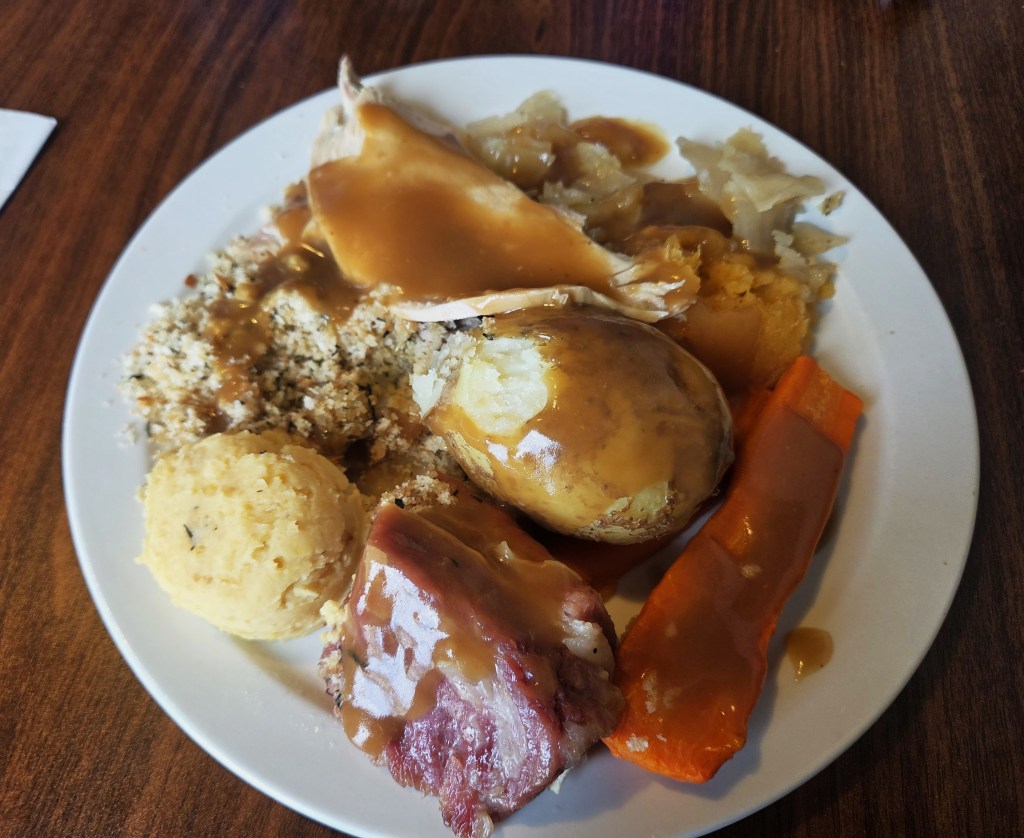
Afterwards went to the Station Diner for a Jiggs supper, a Sunday tradition in Newfoundland. It’s a version of the Irish boiled dinner. The version we were served included, salt beef, turkey, dressing, potatoes, turnip, pease pudding, carrots, cabbage and gravy. A very tasty and filling supper. One of the wait people said she only has one about twice a year because it is so salty, which it was. She said her family would have it every Sunday when she was growing up.
There are various thoughts about where the name Jiggs comes from, including the old comic strip, “Bringing Up Father”, to jigging for fish or dancing an Irish jig while it cooks, a slow process. Here’s a link to an article that delves into that, along with a recipe:
https://canadianfoodfocus.org/food/whats-in-a-name-the-history-of-jiggs-dinner/
(Click on thumbnail for larger, clearer picture.)
6/13
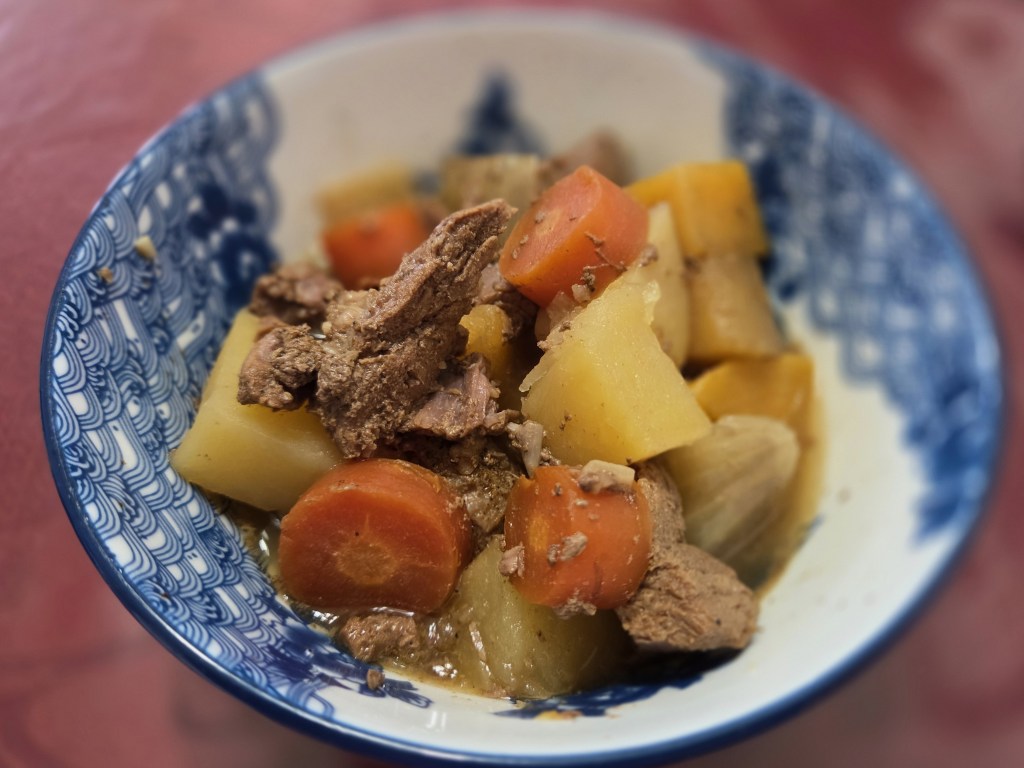
A little road trip out to Brigus today. Before leaving though I put together a moose stew in a slow cooker that Rita, one of the sister housekeepers, dropped off for us to use. More on the stew later.
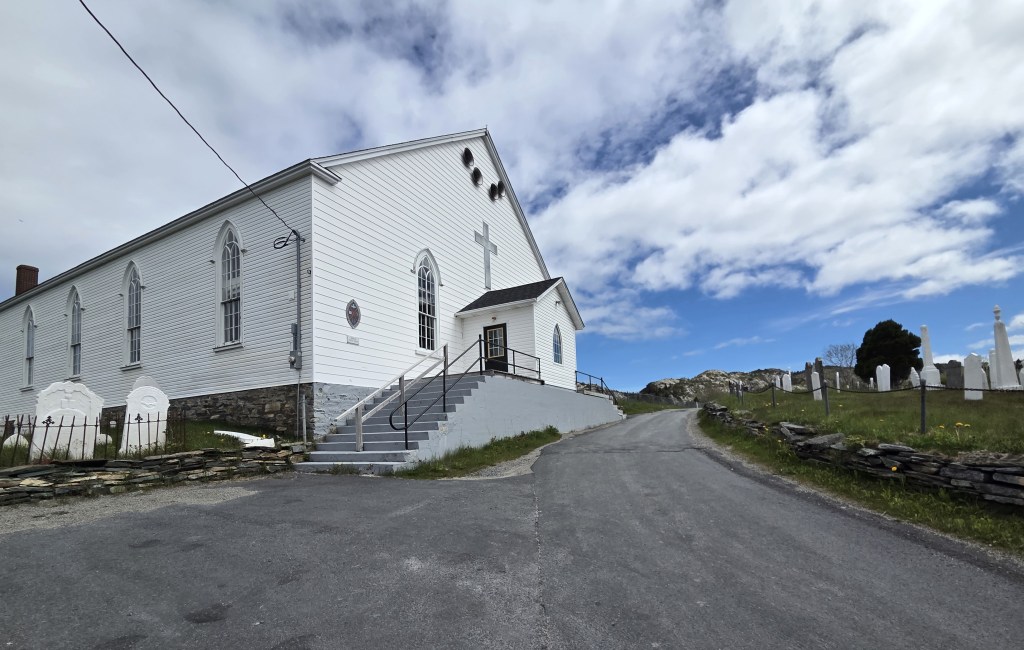
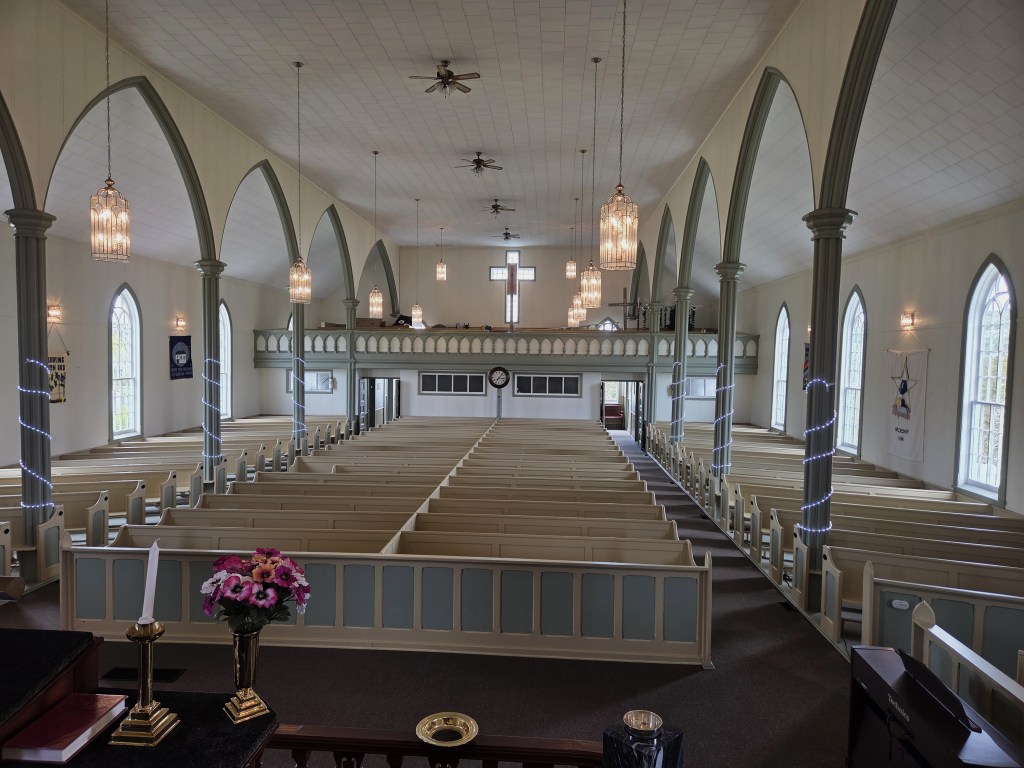
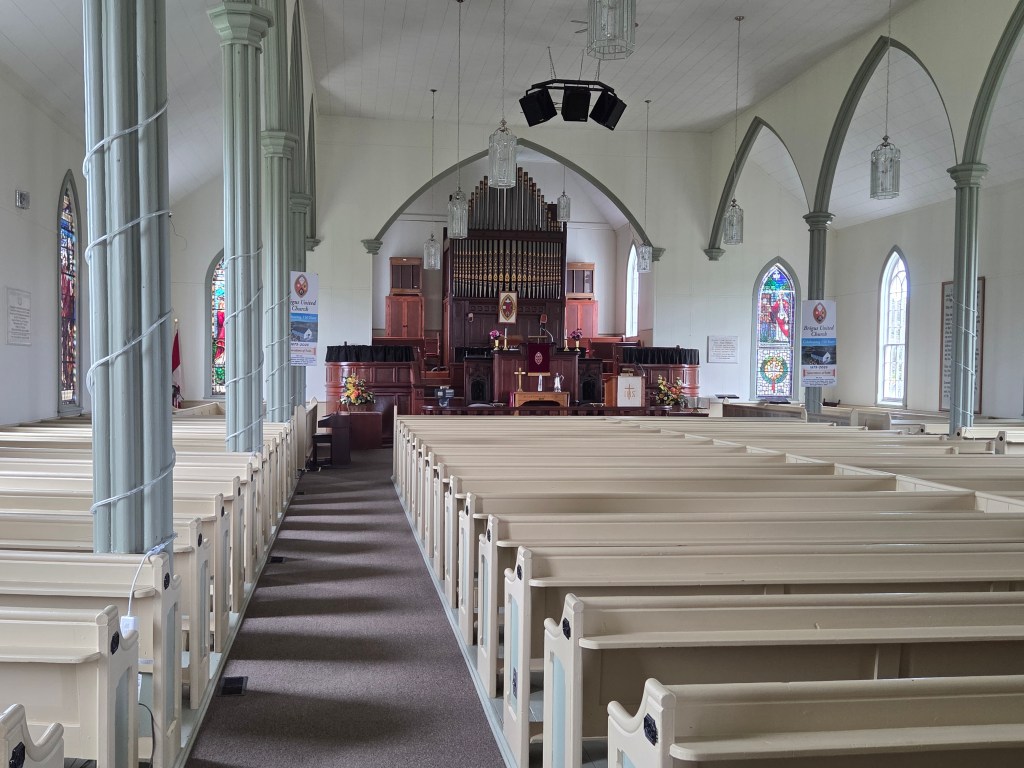
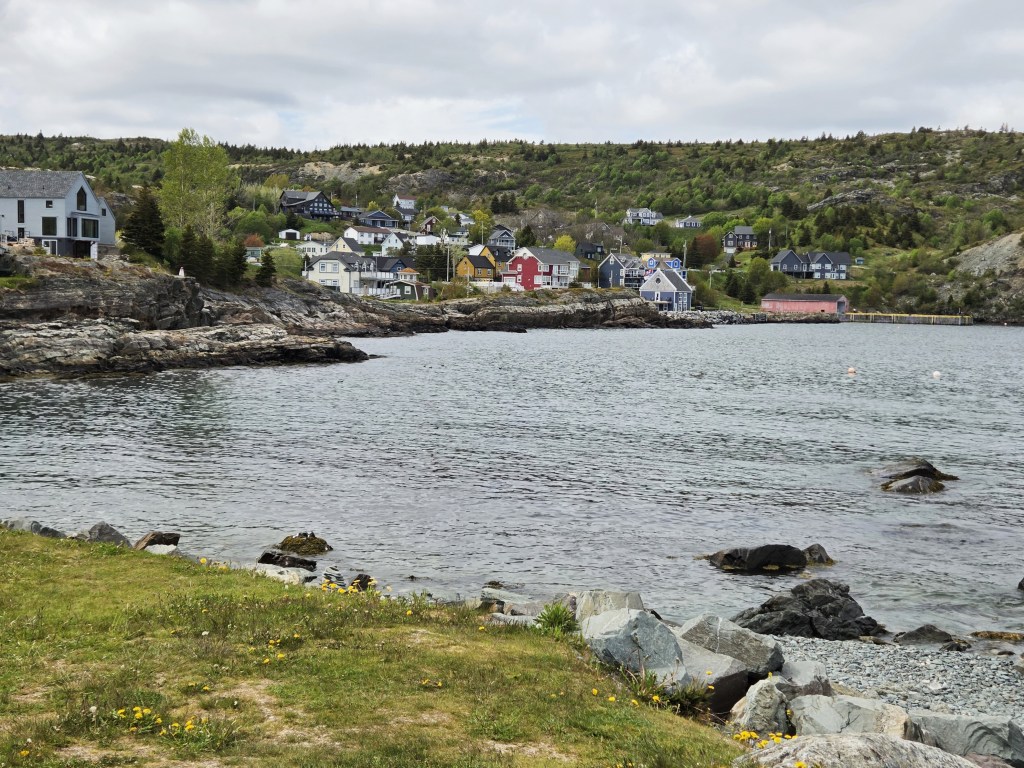
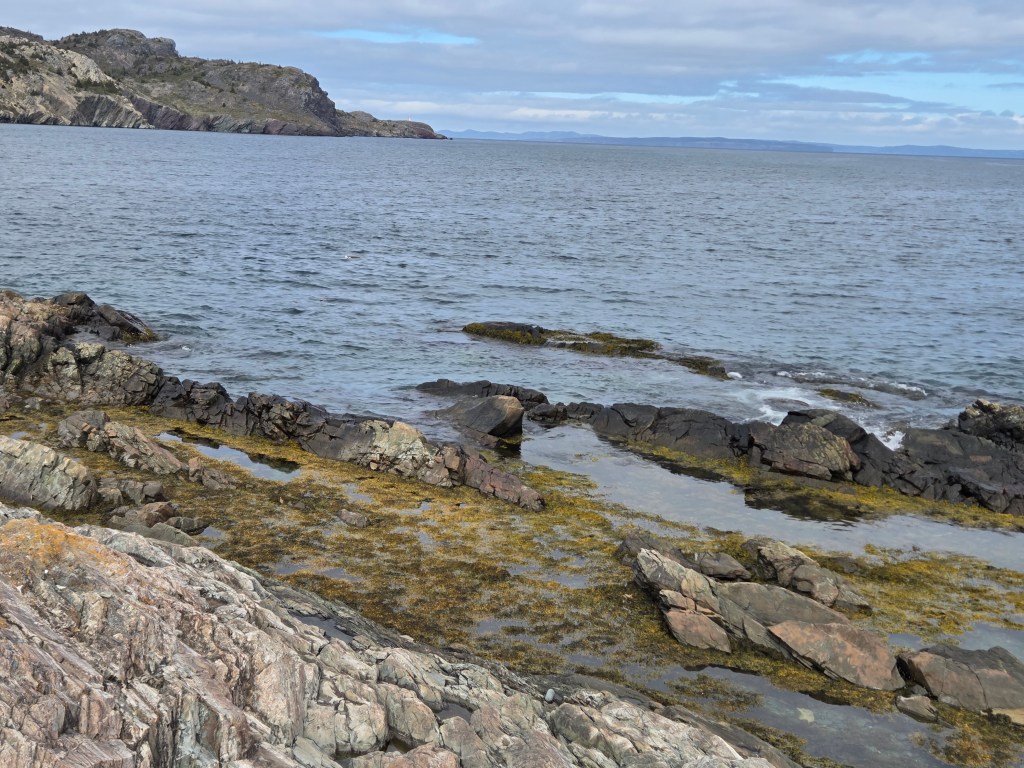
Brigus is a very old seacoast town along the shore in a sheltered nook of Conception Bay. It was first settled by the English around 1612. As we drove into town we ended up on a road that led to two churches and graveyards. (pics) As we finished looking at one adjacent to a church a gentleman walked out of the church. As we chatted, he asked if we wanted to see the inside. This was the Brigus United Church, built in 1875, on the site where a previous church stood.
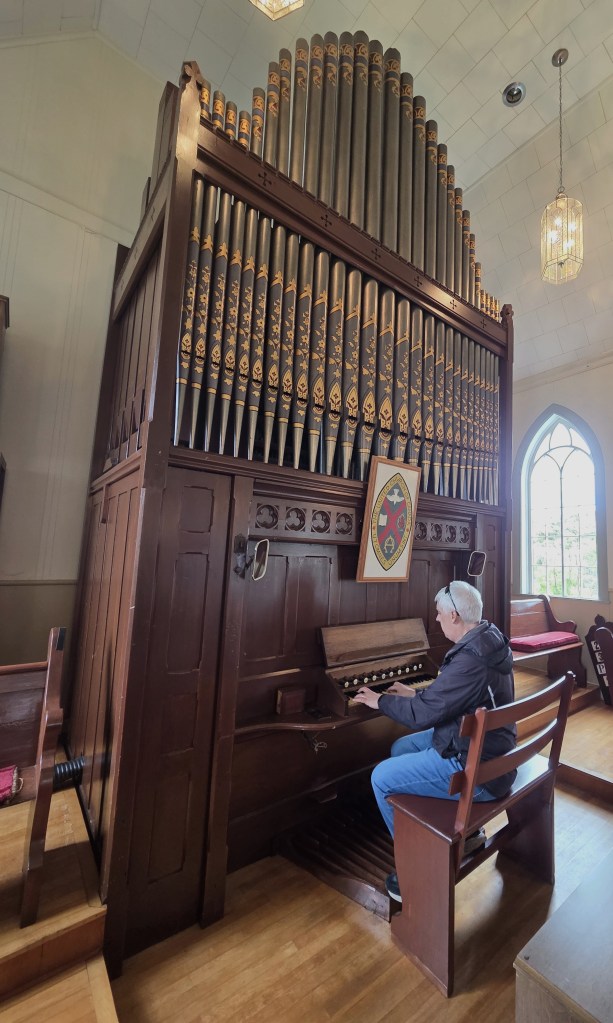
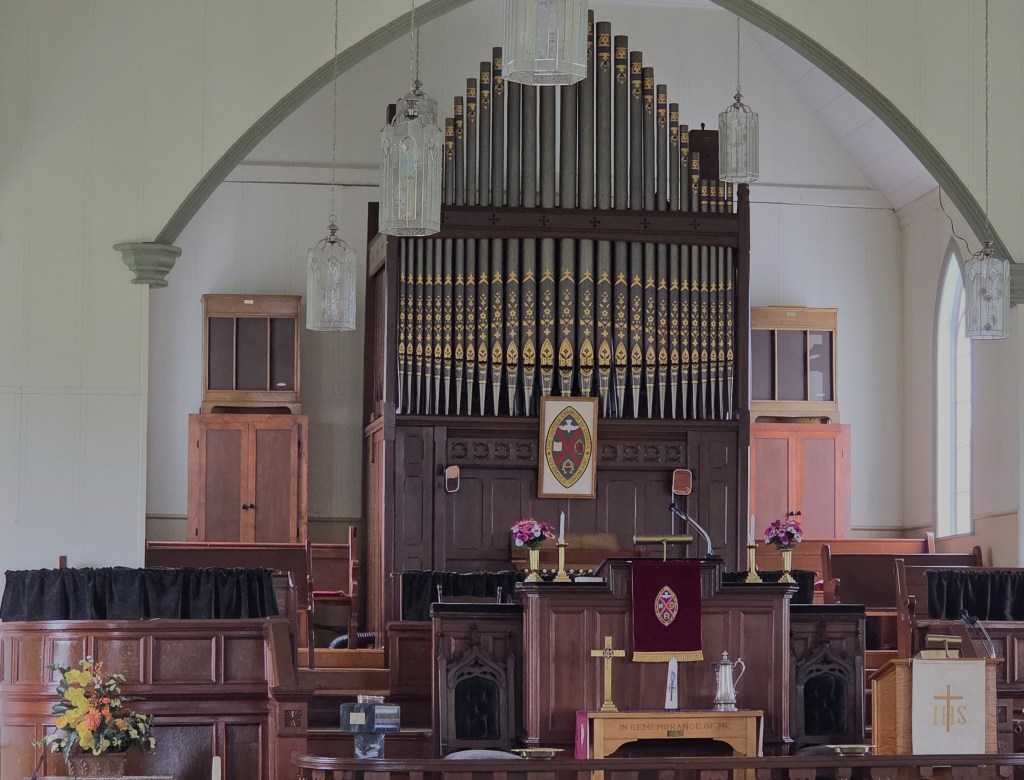
Mark unlocked the door and we followed him in. What he really wanted us to see was the pipe organ in the church. He was the organist for the church and today the organ was played for the first time in 50 or 60 years! The air system feeding the organ had broken down back then and just recently was repaired and just finished being tuned. Mark’s excitement radiated throughout the story he told.
Since the organ had not been used in decades, a few years ago they considered selling it. I asked him how much they would have been able to get for it and he said in the six-figure range! The organ is a Bevington one built in London and installed in the church just after it was erected in 1875.
In the midst of deciding whether to sell it or not, a pipe organ aficionado came over from Halifax to see it. He showed them the manual bellows system which they weren’t aware of and tried it out. It was the first time Mark and church officials actually heard what the organ sounded like. Once heard, they knew they couldn’t sell it. They decided to have the air system restored and the organ tuned. Which led to today and the first time it was played after being tuned.
Mark then played a little for us. I have a short 10 second clip below. Interesting that he always referred to the Bevington as “she”. Carolyn asked if “she” had a name. She didn’t.
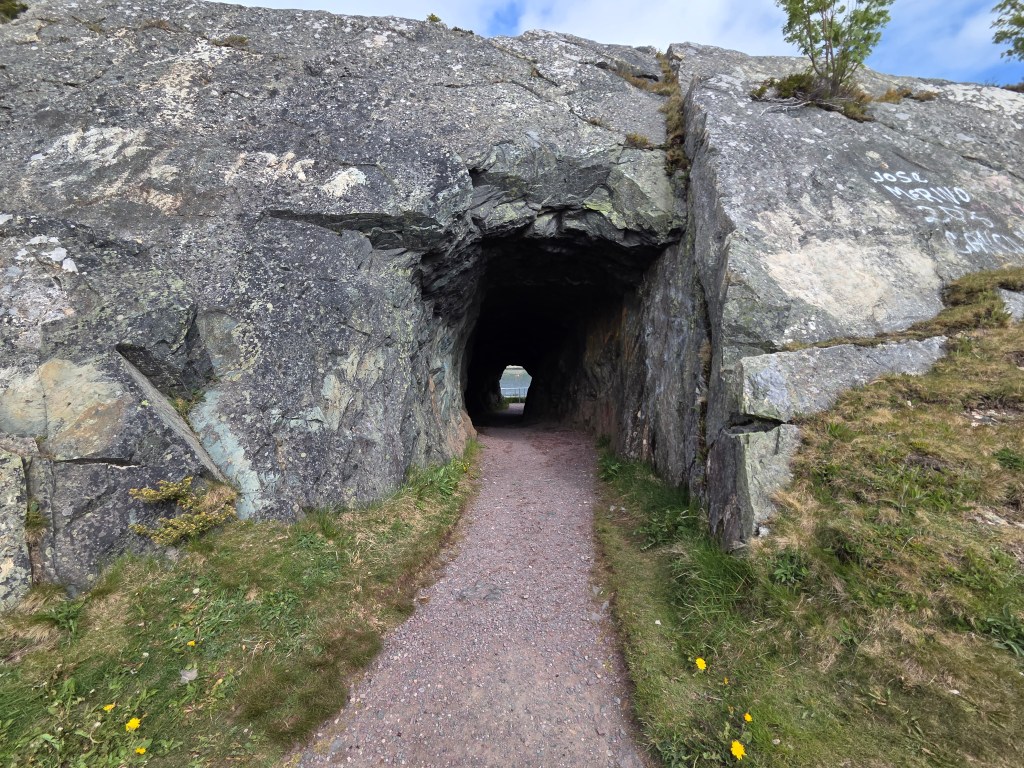
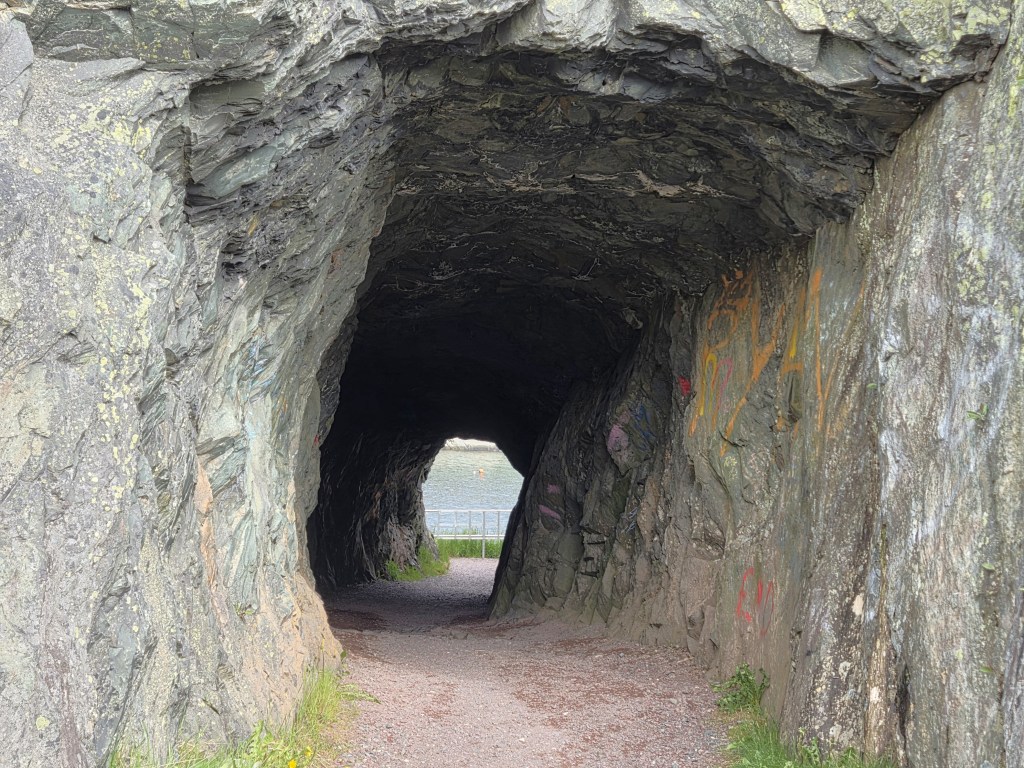
We thanked Mark for the “private tour” and then wandered around the cemeteries and then into town to see the “Tunnel”.
The Tunnel is 80 foot long through bedrock that was cut out in 1860. (pic) Captain Abraham Bartlett needed deep water to dock and unload his large fishing ships and this tunnel allowed for that to happen. It took four months for workers to cut through. It’s about 8.5’ high and 8’ wide. This allowed horses and carts and wagons to access the wharf from the land.
We wandered around the region a bit before making our way back home.
As soon as I walked in the door I was inundated with the aroma of the moose stew! The moose was the gift from Dennis Blake in Raleigh our first week in the province. We had kept it frozen until now. The stew consists of moose, potato, turnip, parsnip, onion, garlic, scrunchions and a few tablespoons of moose meat seasoning purchased at Taylor’s seafood store the other day. There is a pic of the stew. Sorry I couldn’t get a picture of the aroma that permeated the house. It tasted as wonderful as it smelled. One more traditional Newfoundland food experienced. There’s enough left over for at least one more dinner. Not tomorrow though, as we intend to experience another food tradition, the Sunday “Jiggs” meal.
(Click on thumbnail for larger picture.)
6/12
Decided to do some coastal excursions. First stop, Cape Spear Lighthouse National Historic Site, the most easterly point of North America.
Plans changed.
When we arrived at Cape Spear the wind was close to howling and it was a very cold wind. We bundled up, but before paying the admission fee we decided to come back another day. With the wind and cold as it was, we would probably not spend much time walking and exploring the area. Did get a few pictures of the wave action along the shore though.
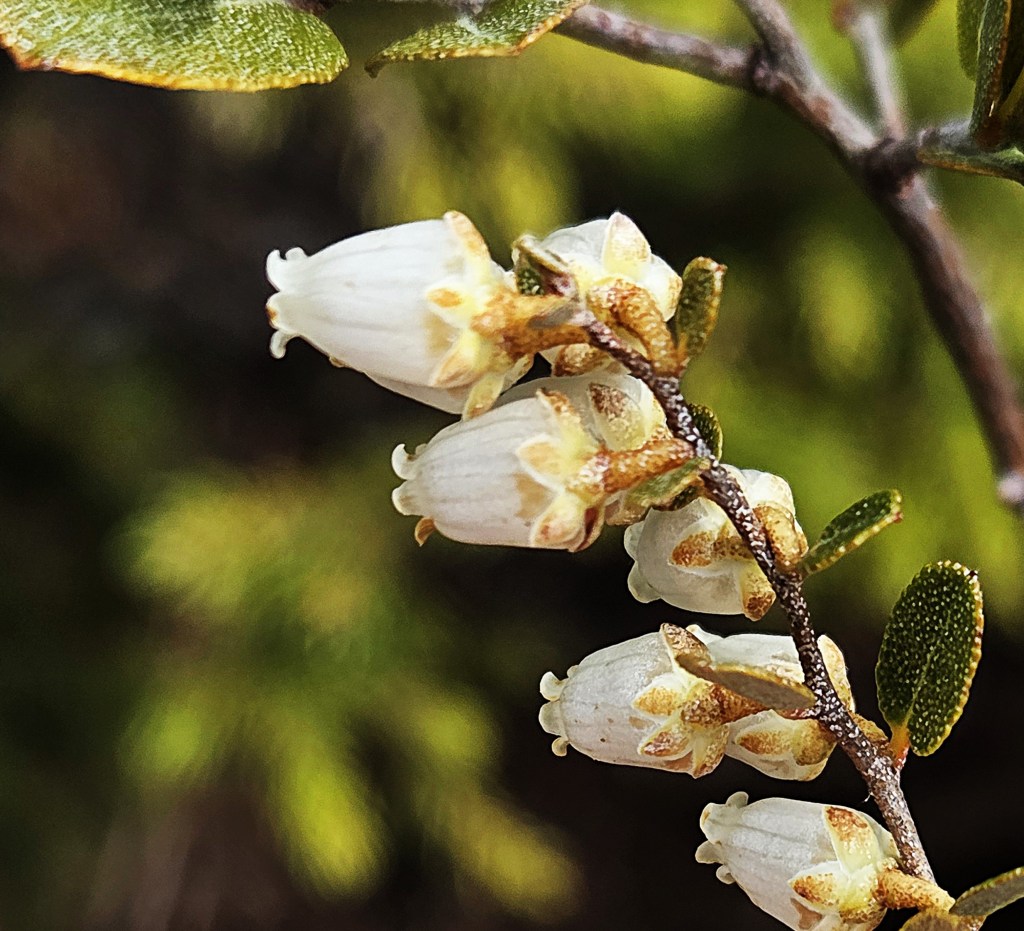
On the way back we did stop to take a little walk on an access road that led to a water supply source for St. John’s. (pics) The flowers are Bog Laurel (not yet opened), Leatherleaf and Three-leaf Goldthread.
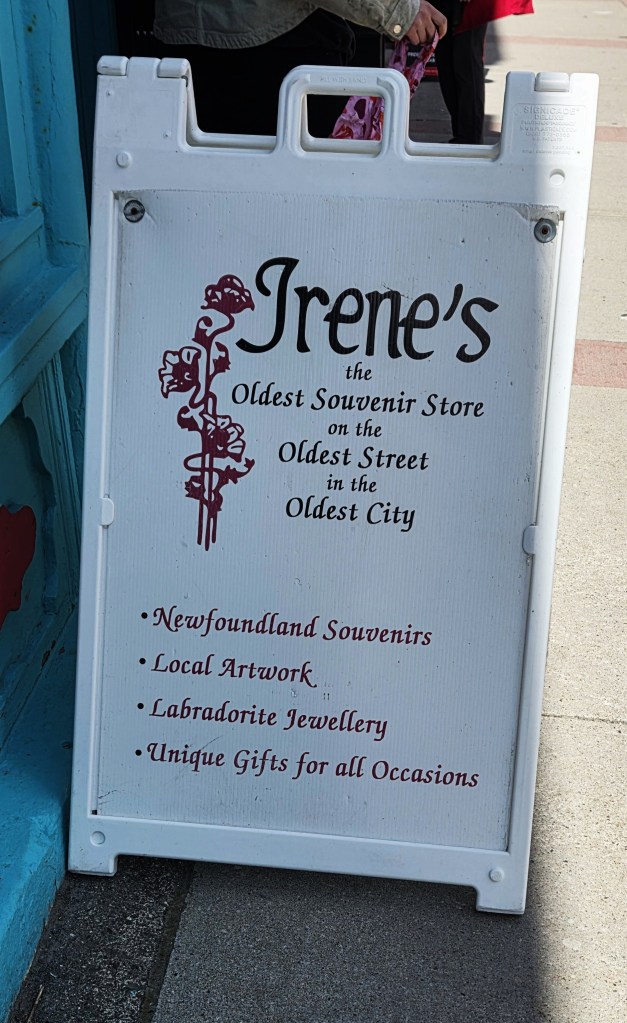
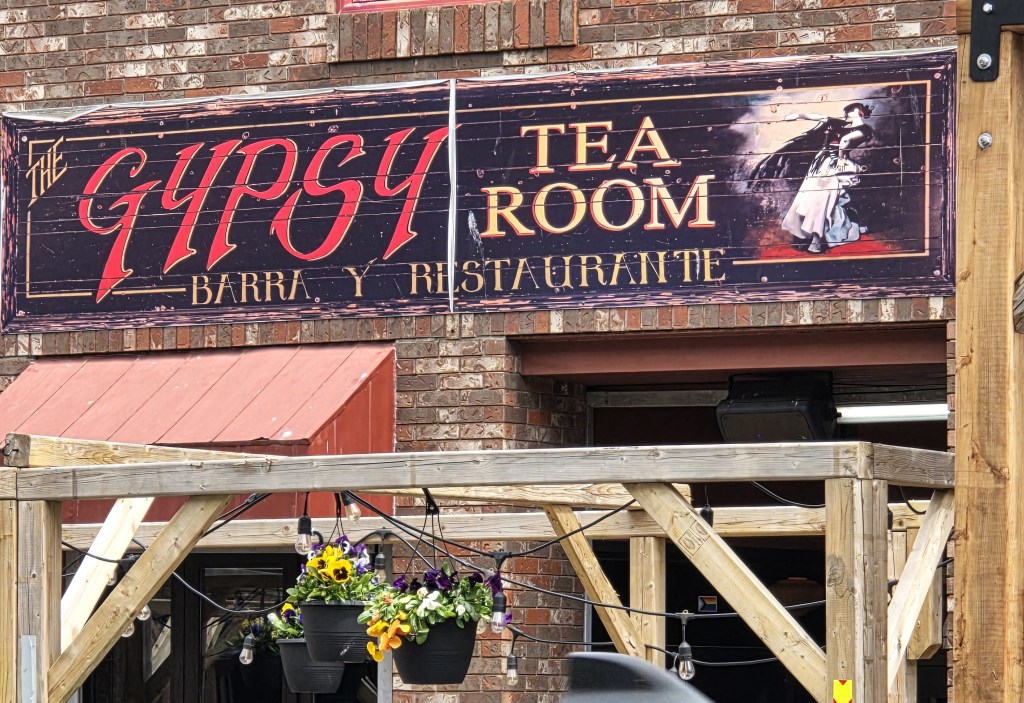
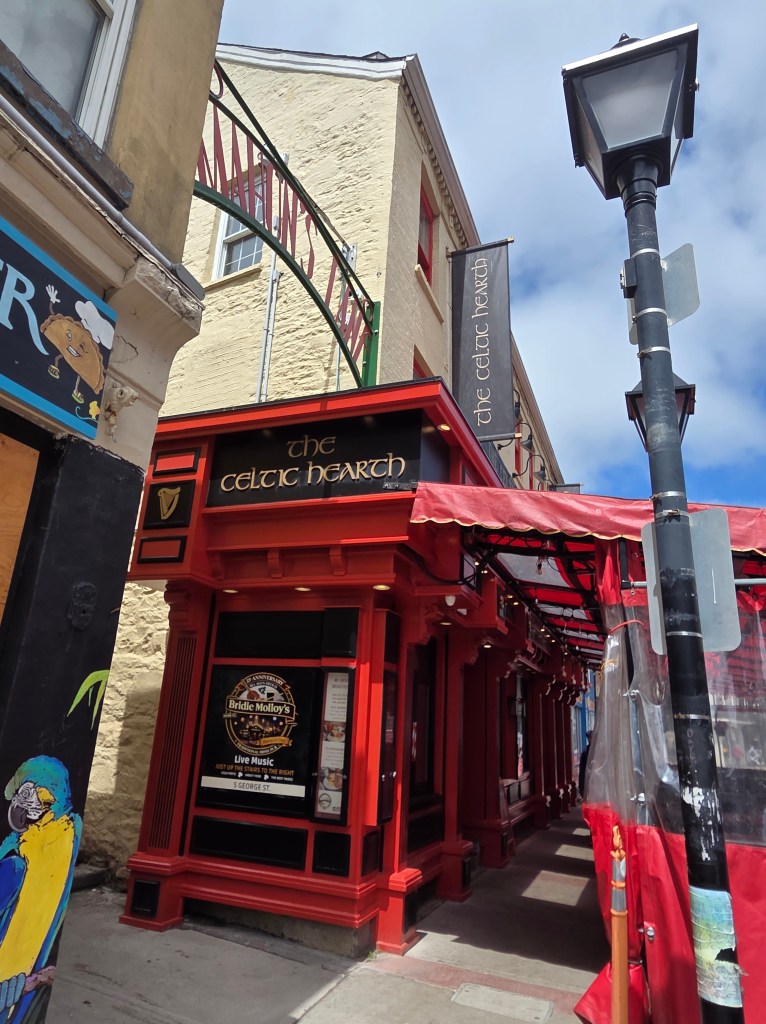
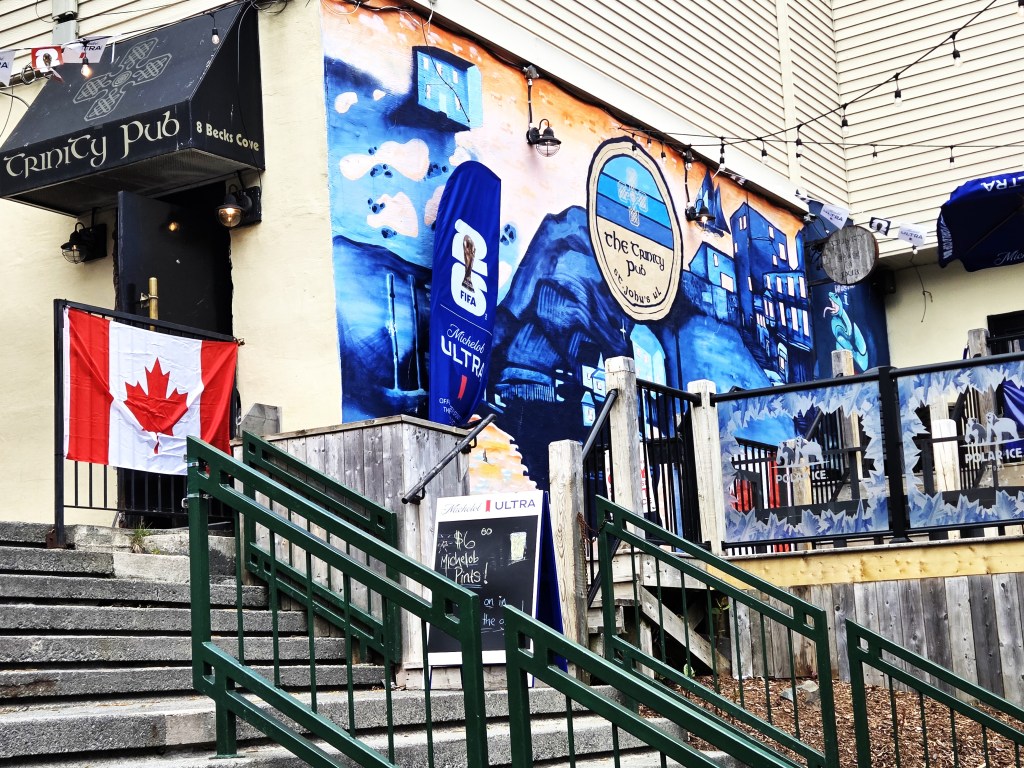
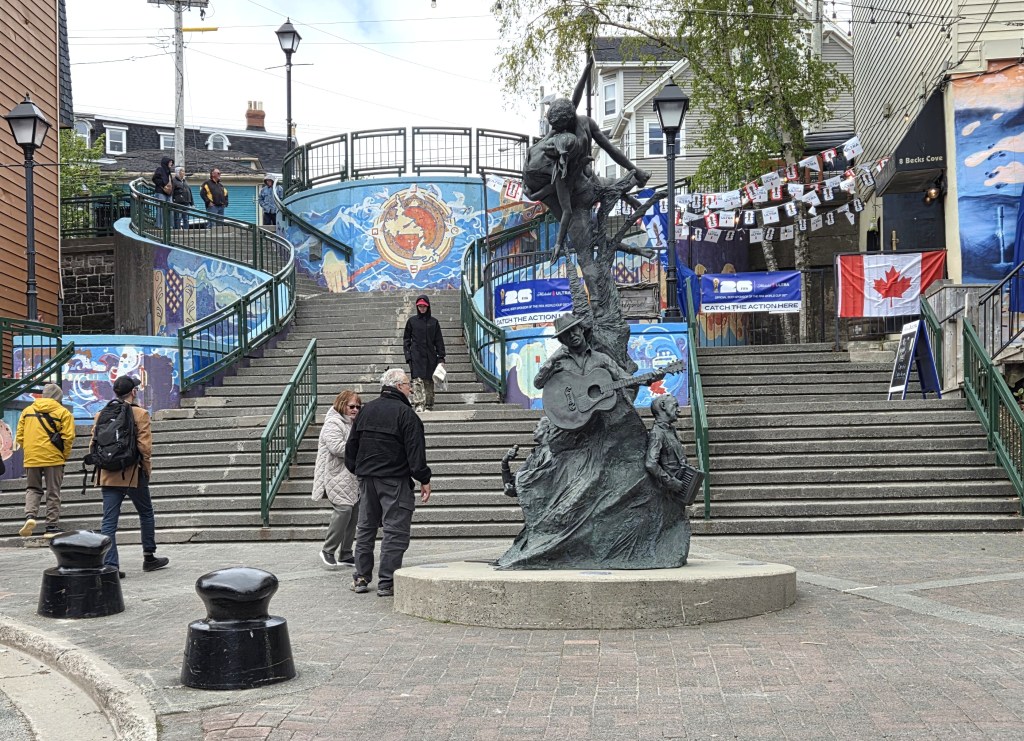
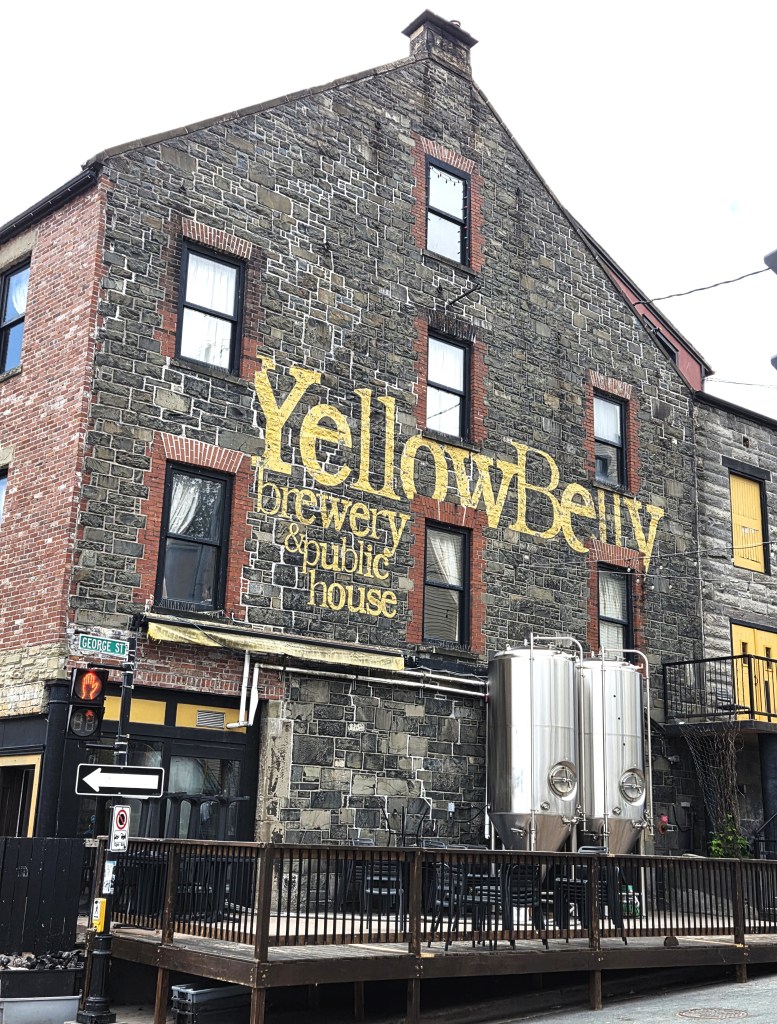
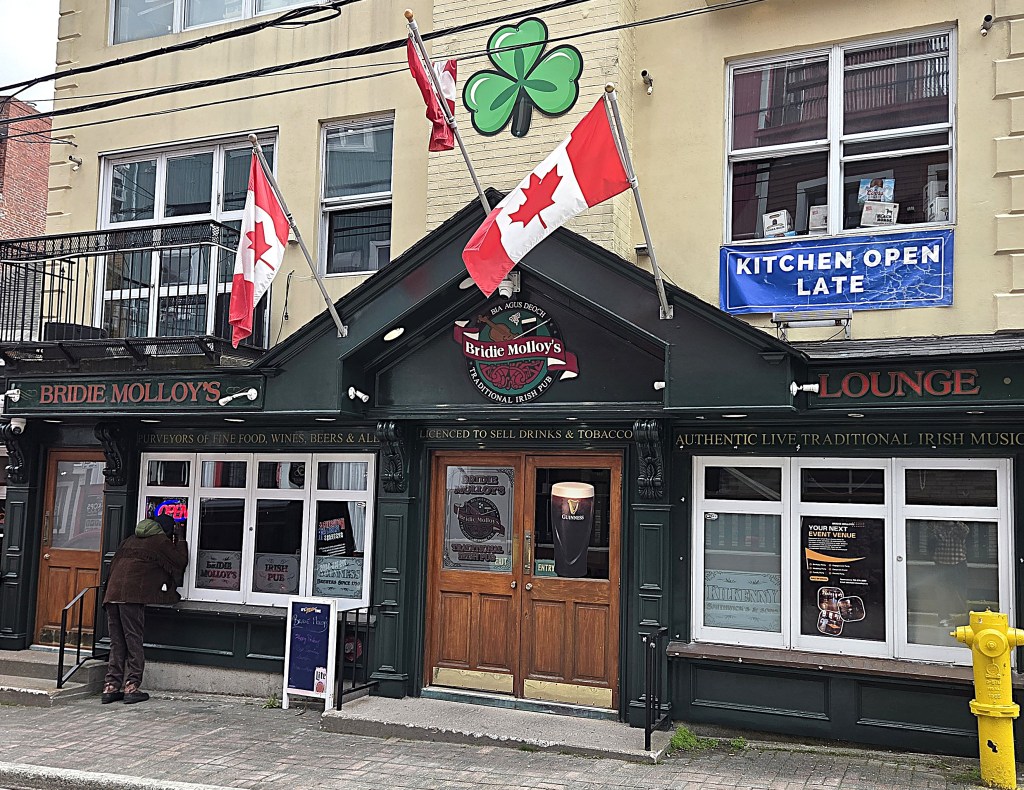
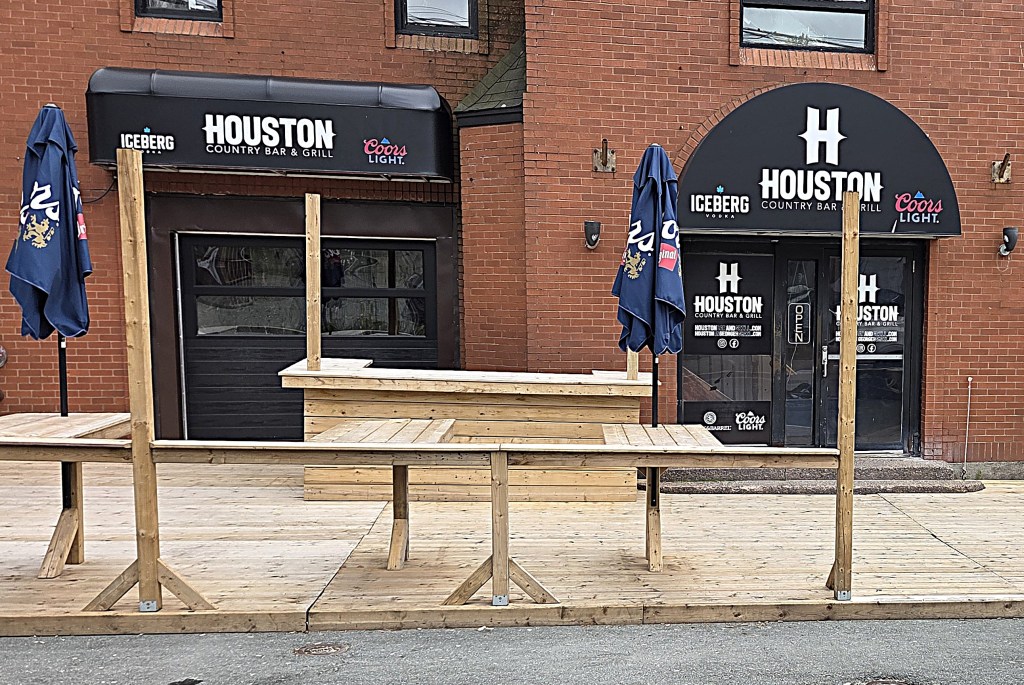
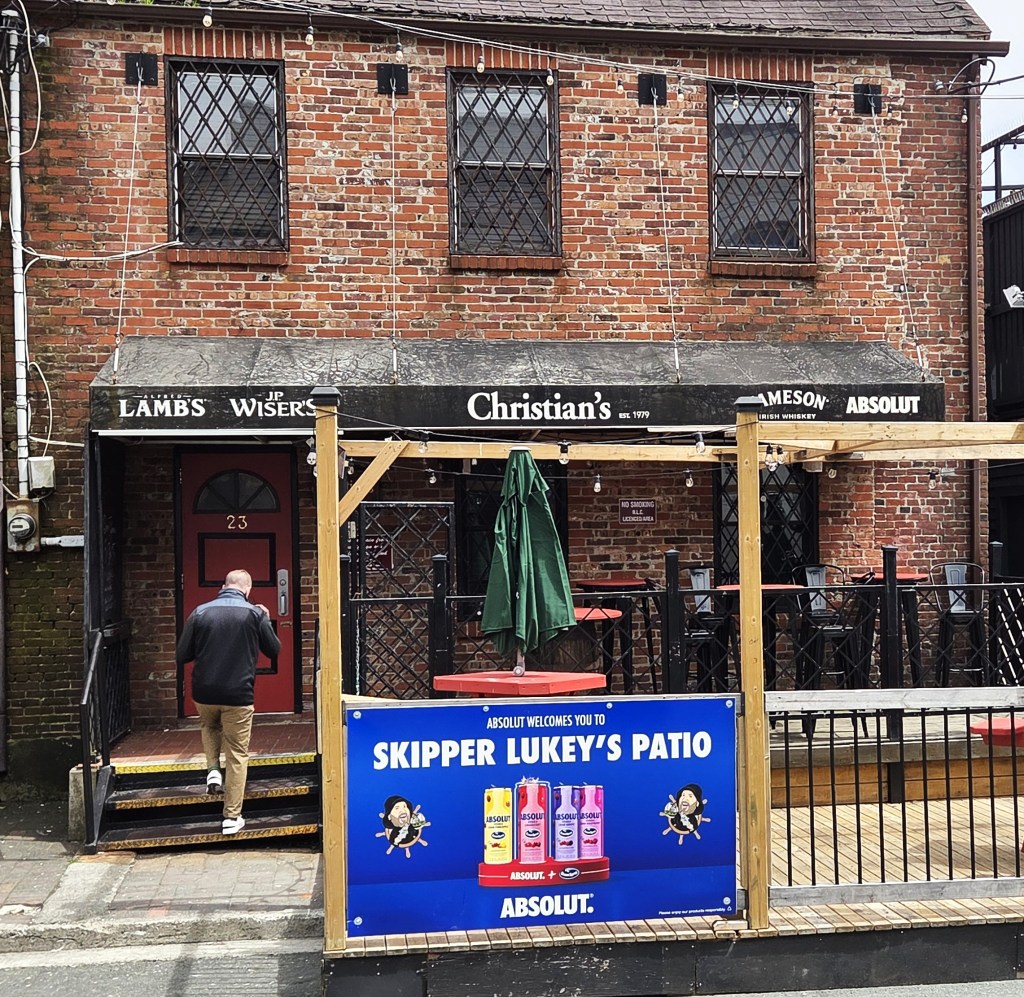
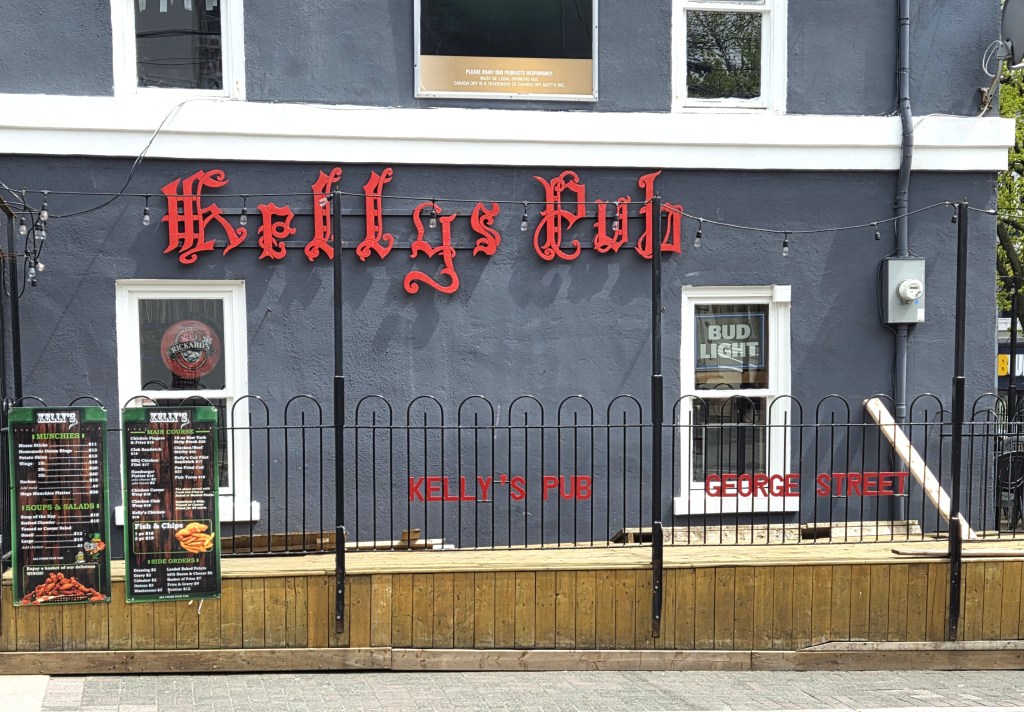
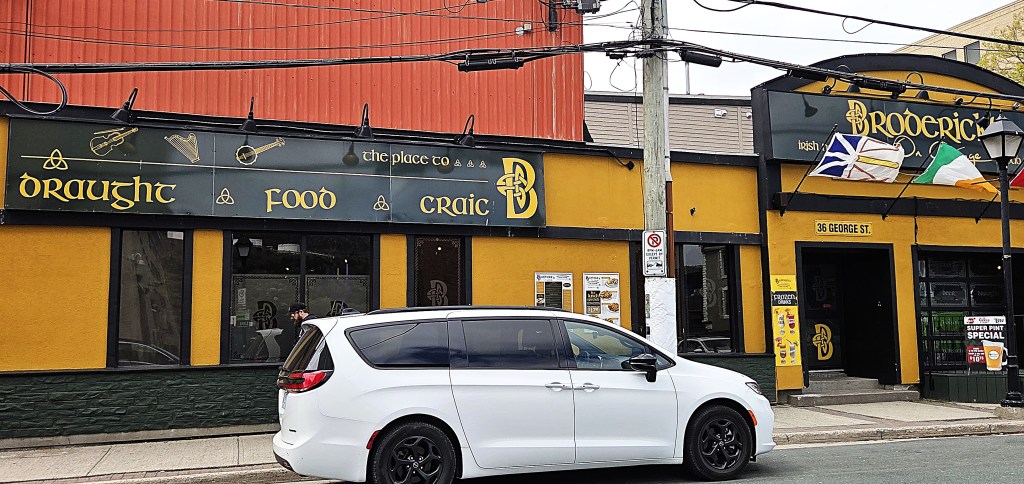
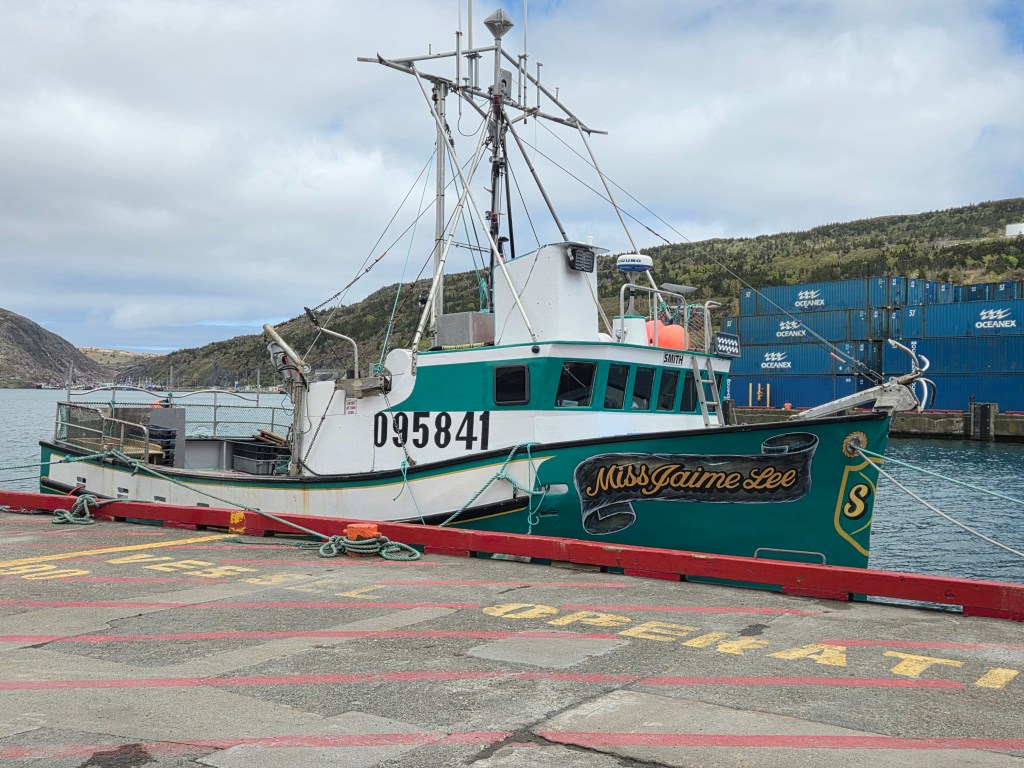
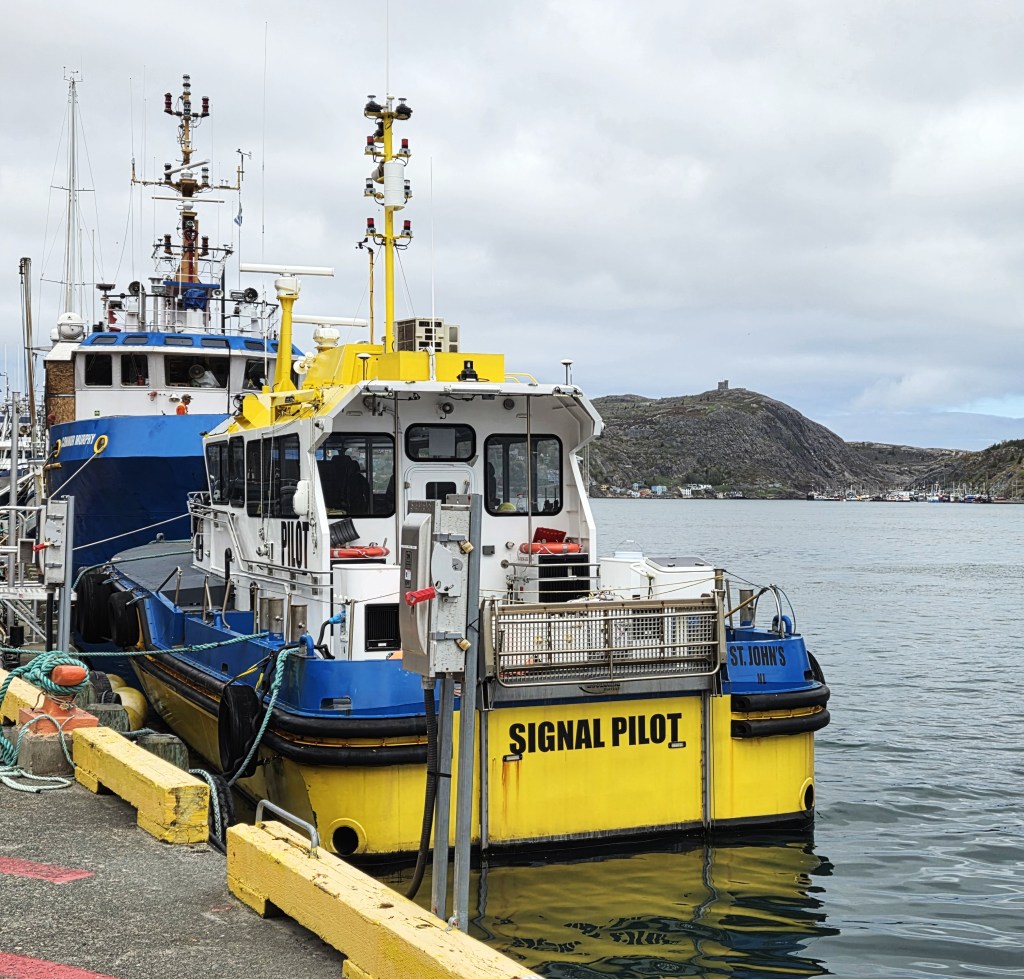
We decided it would be a good day to check out St. John’s, the capital city of Newfoundland. We were told that Water Street and George Street were the two entertainment and shopping streets in the city. The pictures are from those streets and a couple of the waterside. We were told there were a lot of pubs on those streets. The pictures are of most of them, but not all, in just a three block area. Most of them feature live music. We’re planning to catch some traditional Newfoundland music and were told that Shamrock City was the place to go. So, one of the upcoming days we will.
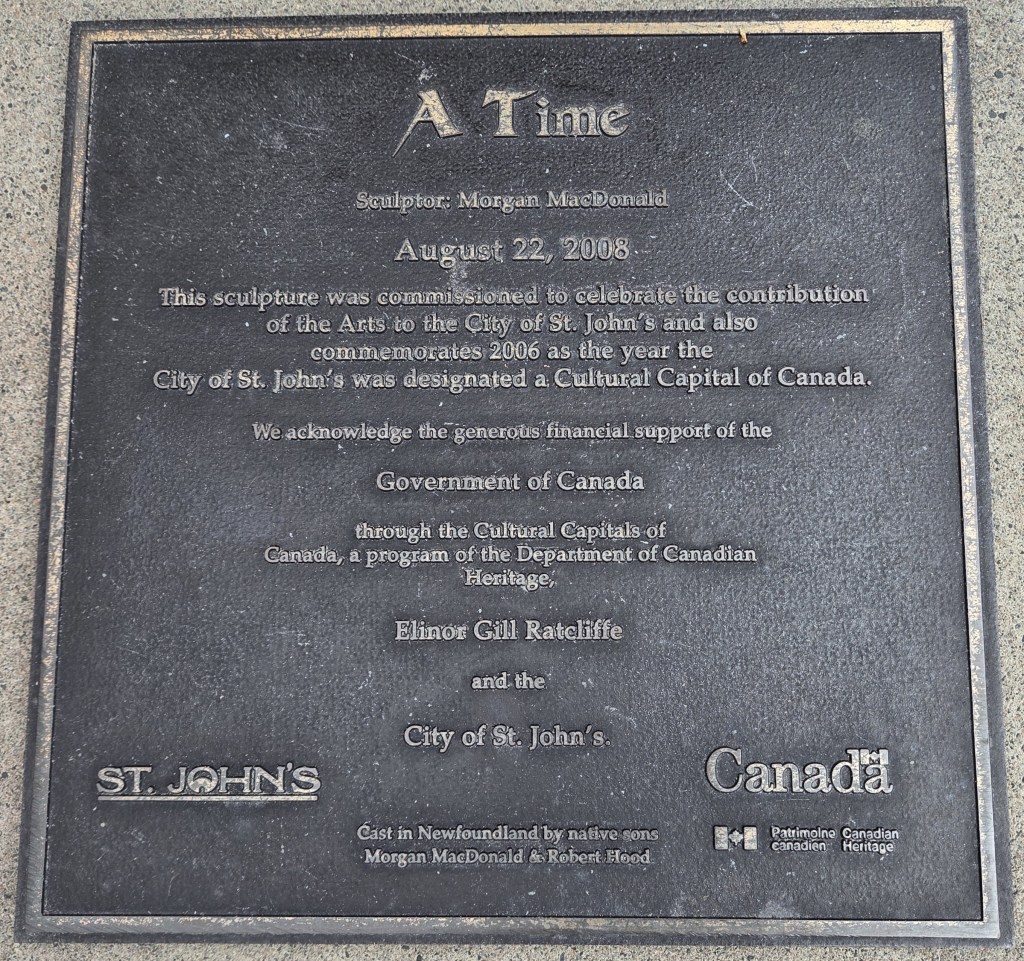
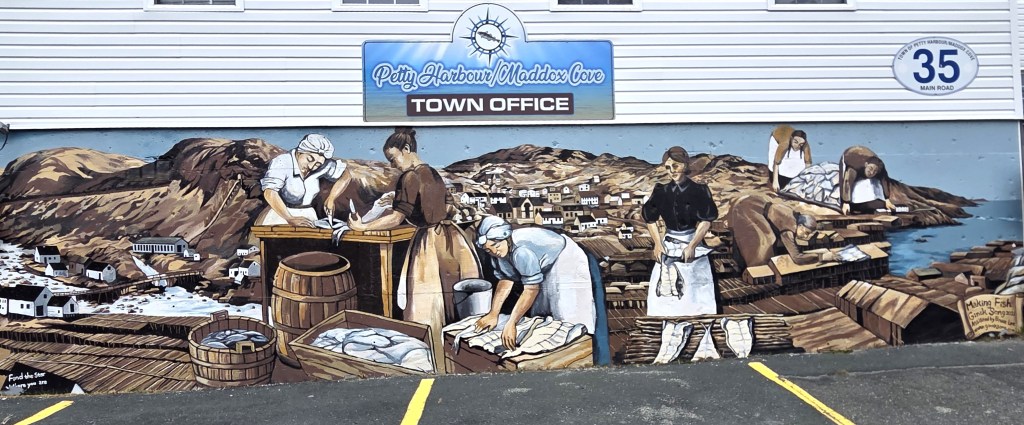
The “A Time” sculpture (pics), celebrating the arts in Newfoundland was fascinating and nice to see the arts celebrated. Another sculpture that was intriguing was of the two women carrying a slab loaded with fish.
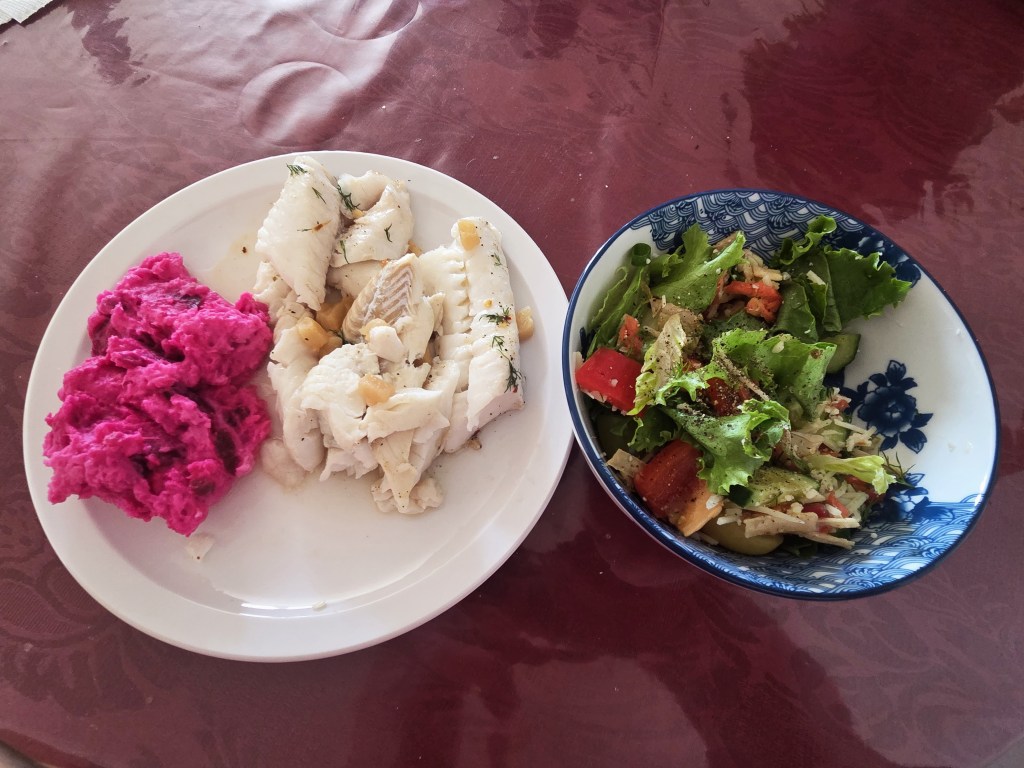
Back home for a home-cooked dinner. Bought some fresh cod at Taylor’s along with beet potato salad, which was made with mashed potatoes. Fixed a nice salad to go along with those. I baked the cod along with scrunchions.
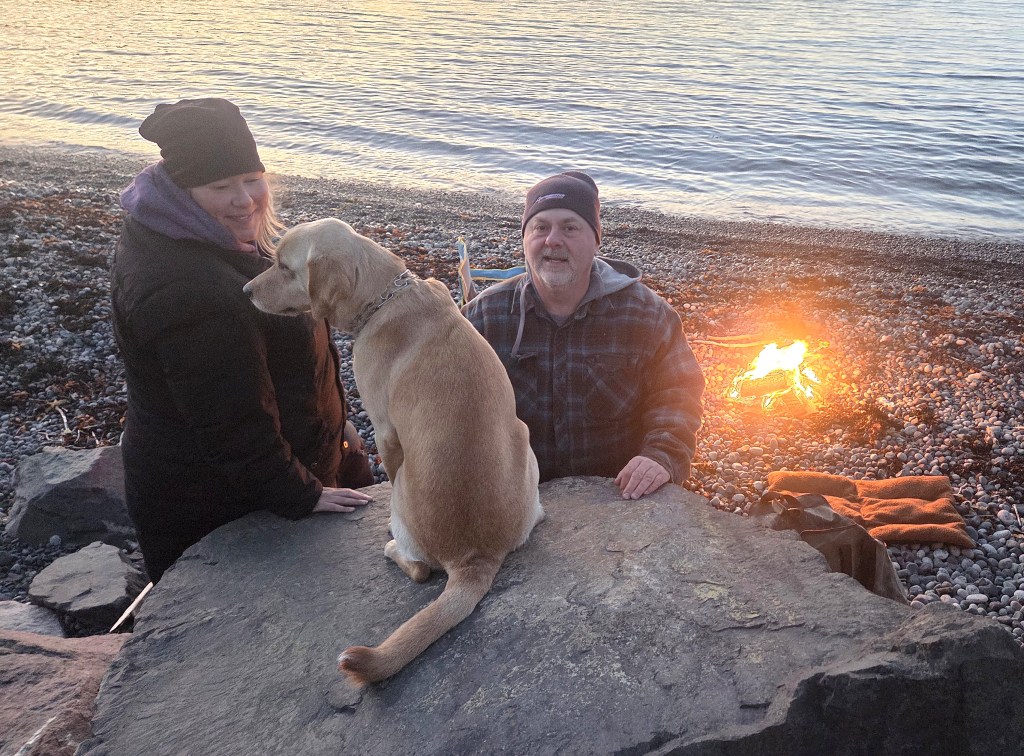
Before dark we decided to walk on the boardwalk along Conception Bay in Holyrood, just a mile or so away. Well, we didn’t get very far before getting into a long conversation with Keith and Angie (pic), who had a small fire burning on the shore. They told us that in summer there’s often a number of fires burning there. Keith told us his grandfather had been a lighthouse keeper and his dad, too. Keith was three when they stopped living at the lighthouse. We talked and talked and when done we decided to head back home, leaving the boardwalk stroll for some other day.
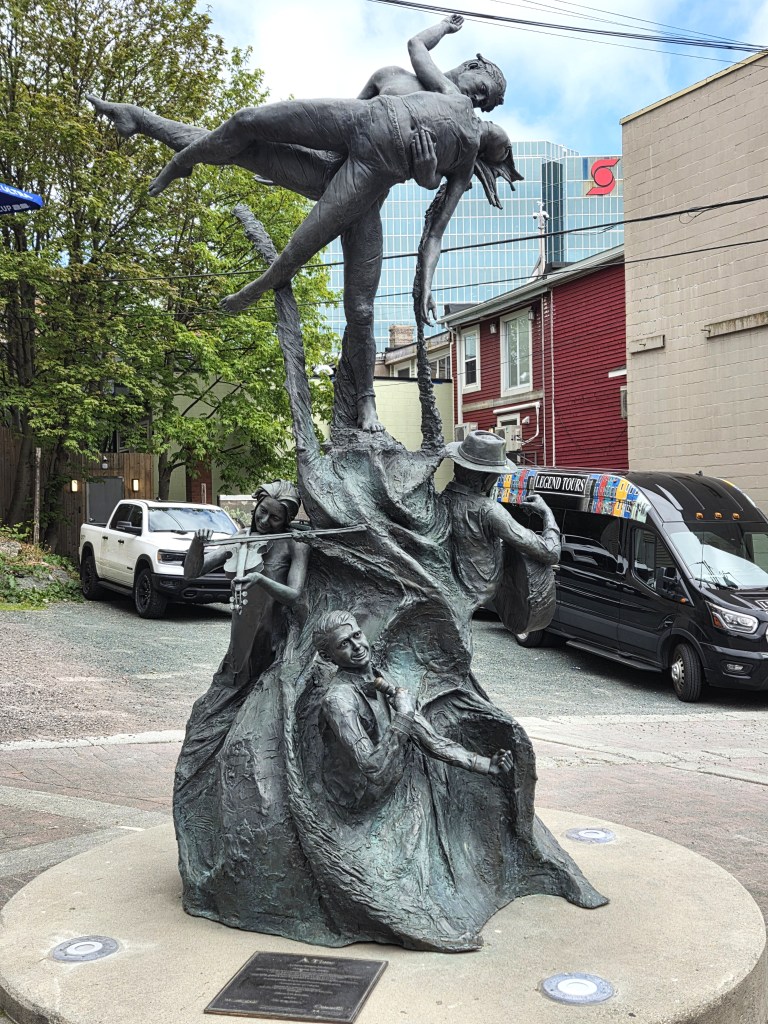
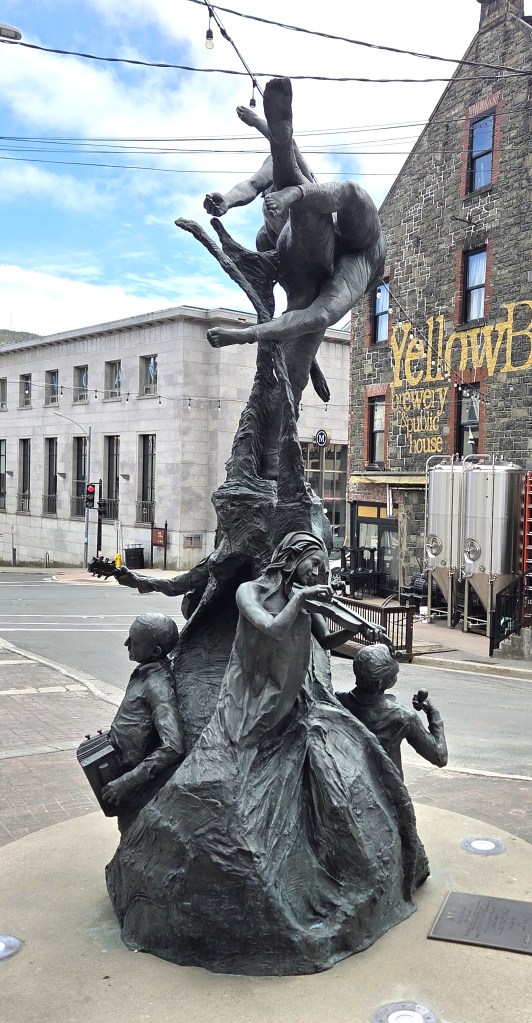
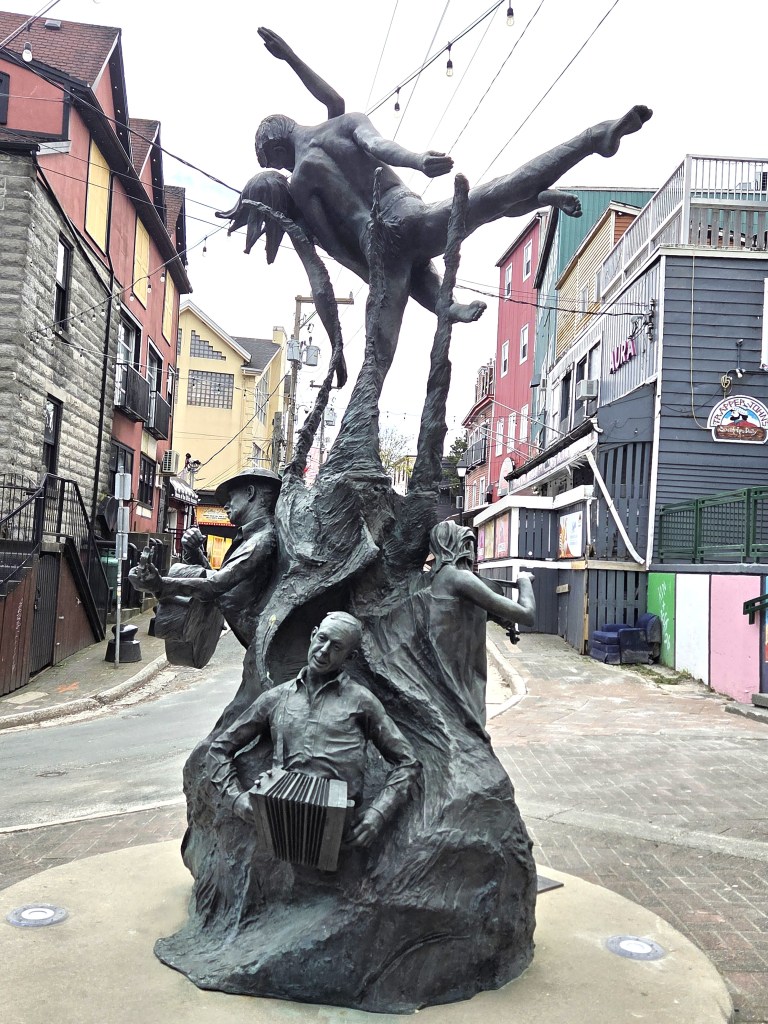
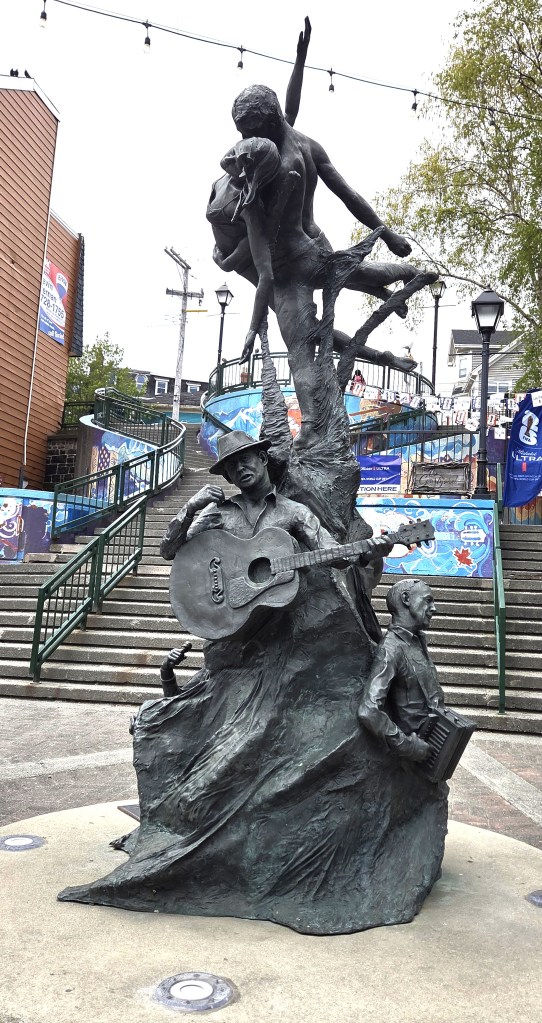
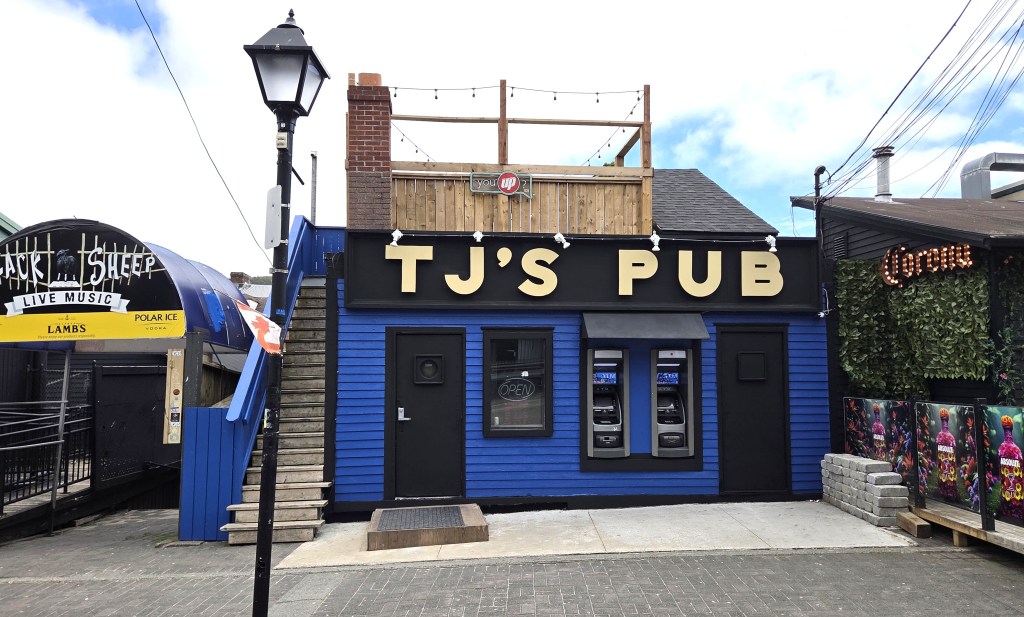
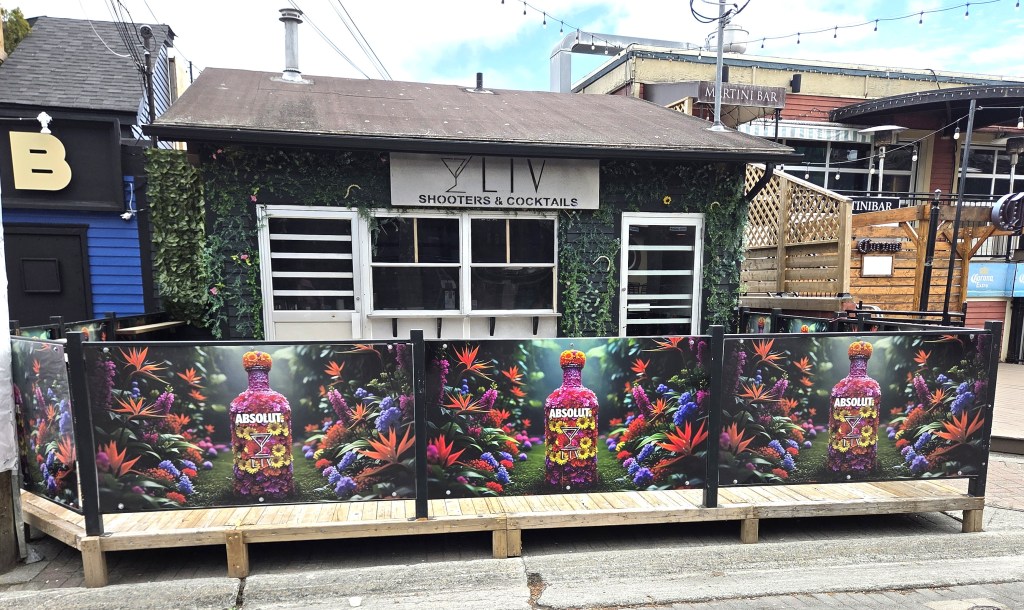
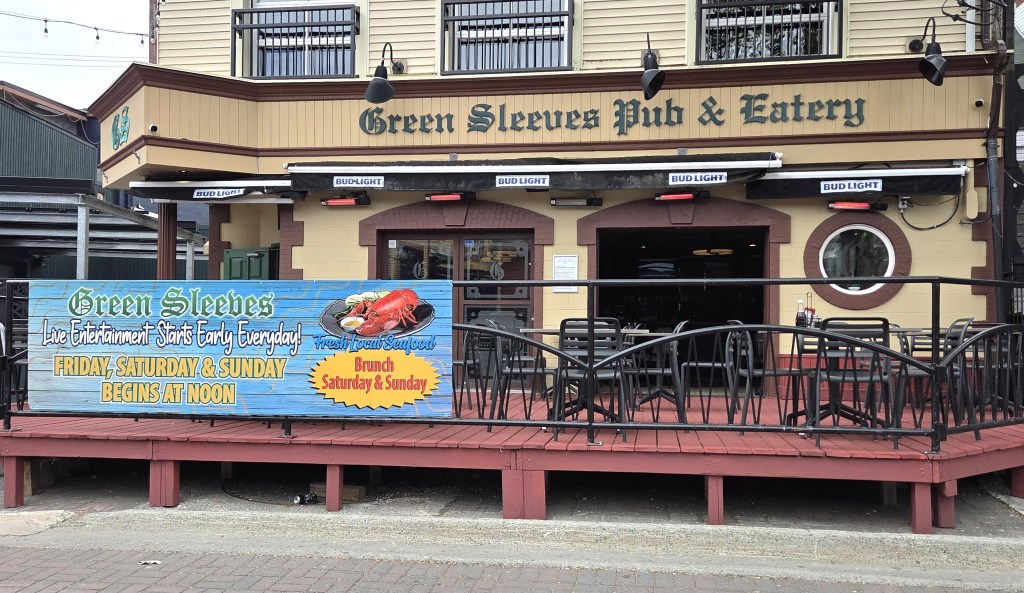
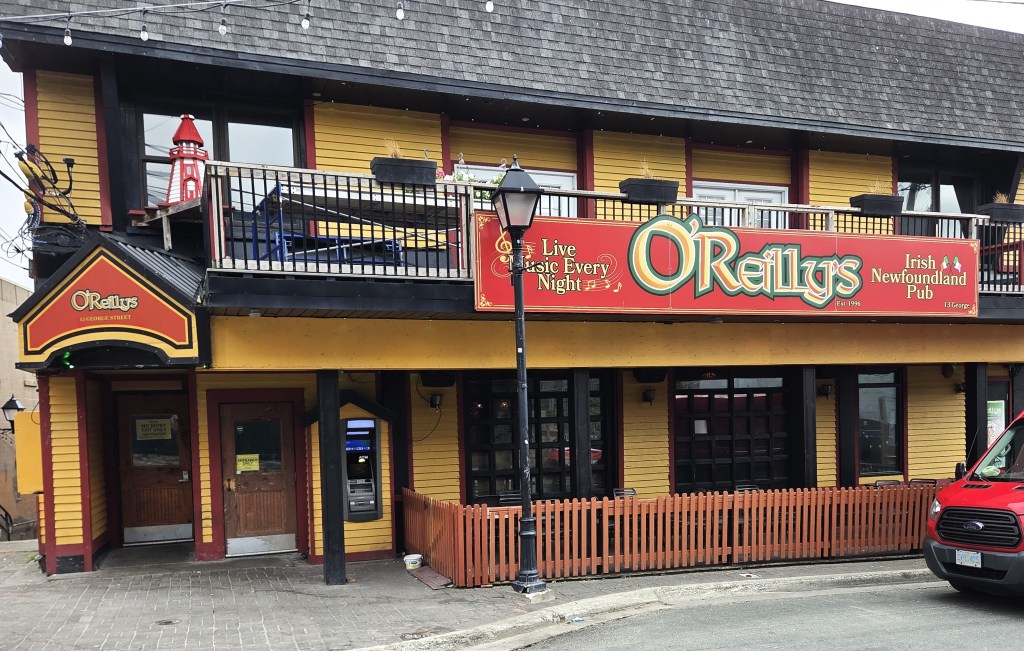
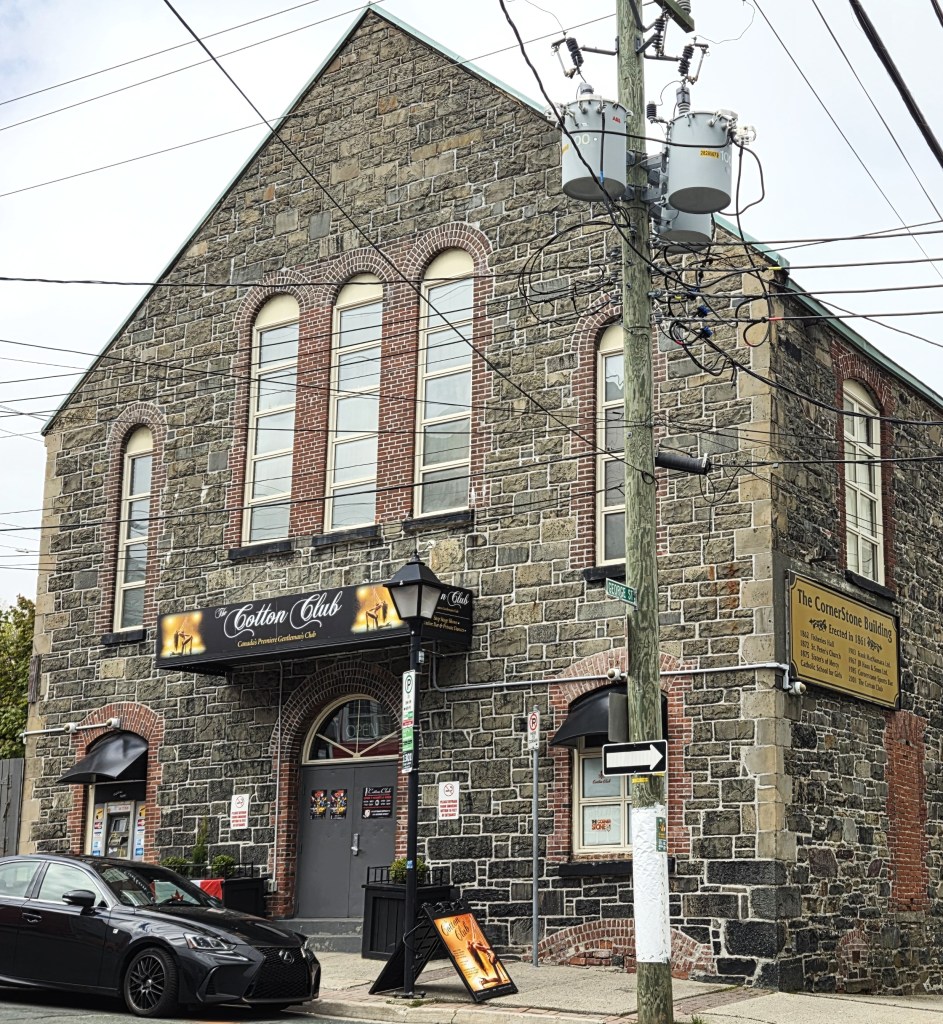
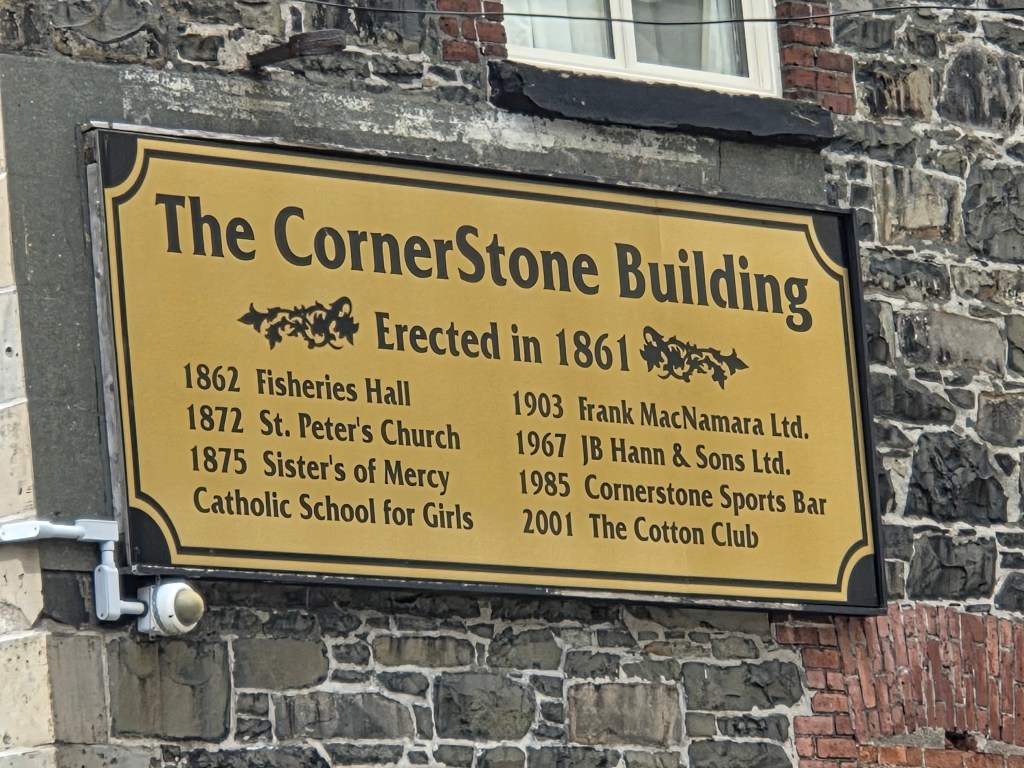
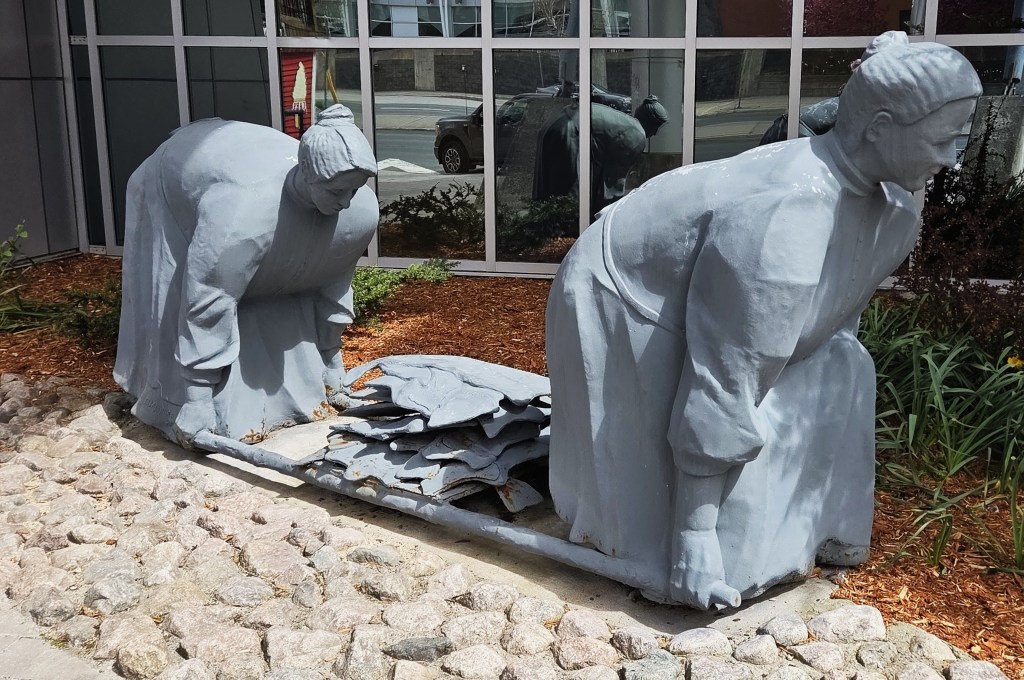
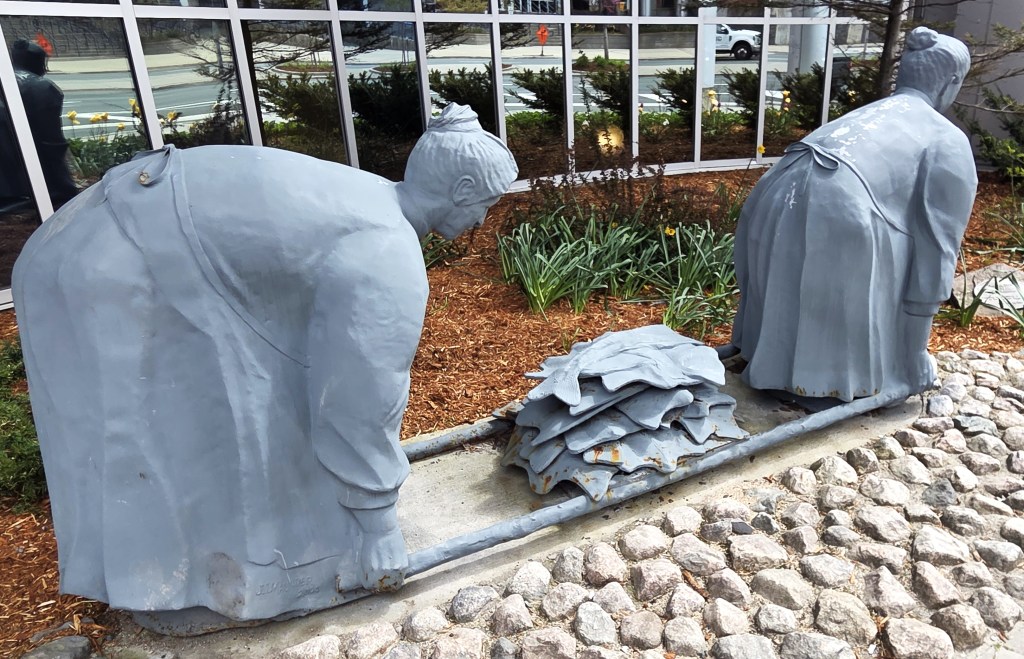
6/11
Not in a hurry to leave this morning, as Holyrood, our next and final stay, was only an hour and a half away. It was a good, comfortable and enjoyable five-day stay in Clarenville.
Before leaving said goodbye to Shirley and Brittany, the two housekeepers here. Brittany spoke about how her dad liked to eat Turrs, a wild bird. She didn’t know what a Turr was and neither did I. Looking it up, I found that it is a Murre, a seabird that is one of the most abundant ones on the North Atlantic coast. There are two species, Common and Thick-billed. There is a legal hunting season for them, late Autumn through late Winter. Turr hunting has sustained many Newfoundlanders for ages, including the Beothuk’s.
We arrived at our new home early, just a little after 2 in the afternoon. Even before getting to the office to register, we met the two housekeepers, Ann Marie and Rita, who are sisters. There’s 14 rooms that are rented out in 4 or 5 buildings. They were a treat to talk with, a great sense of humor and an obvious enjoyment of relating with people. I’m sure we’ll have some interesting relating with them during our stay.
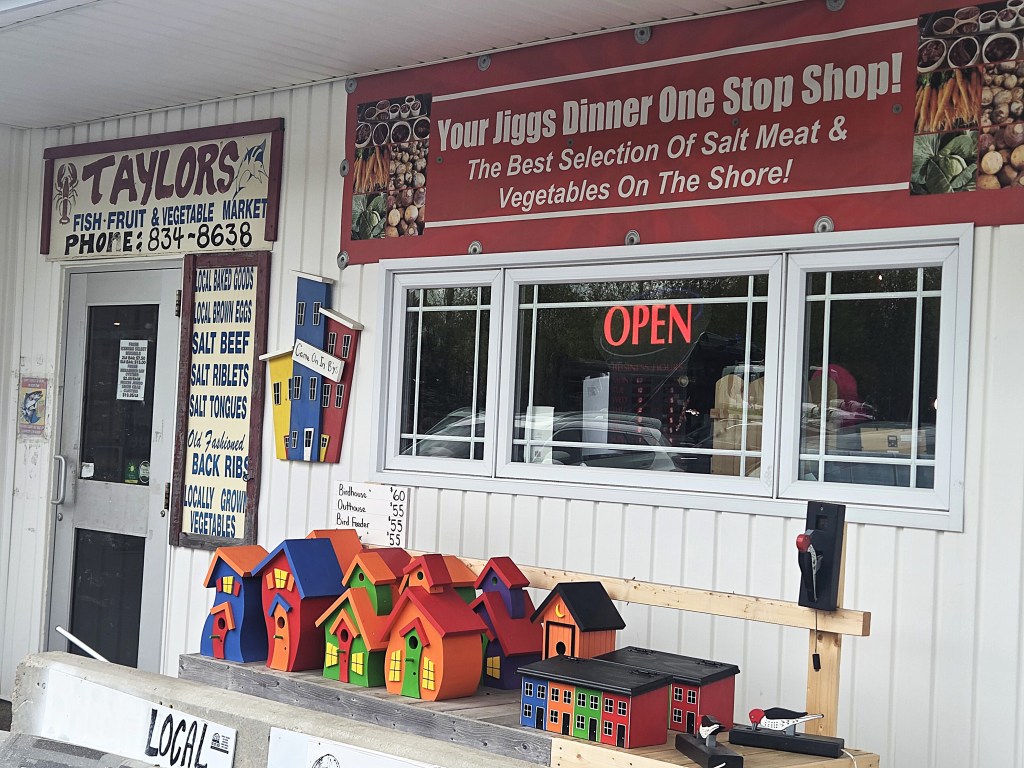
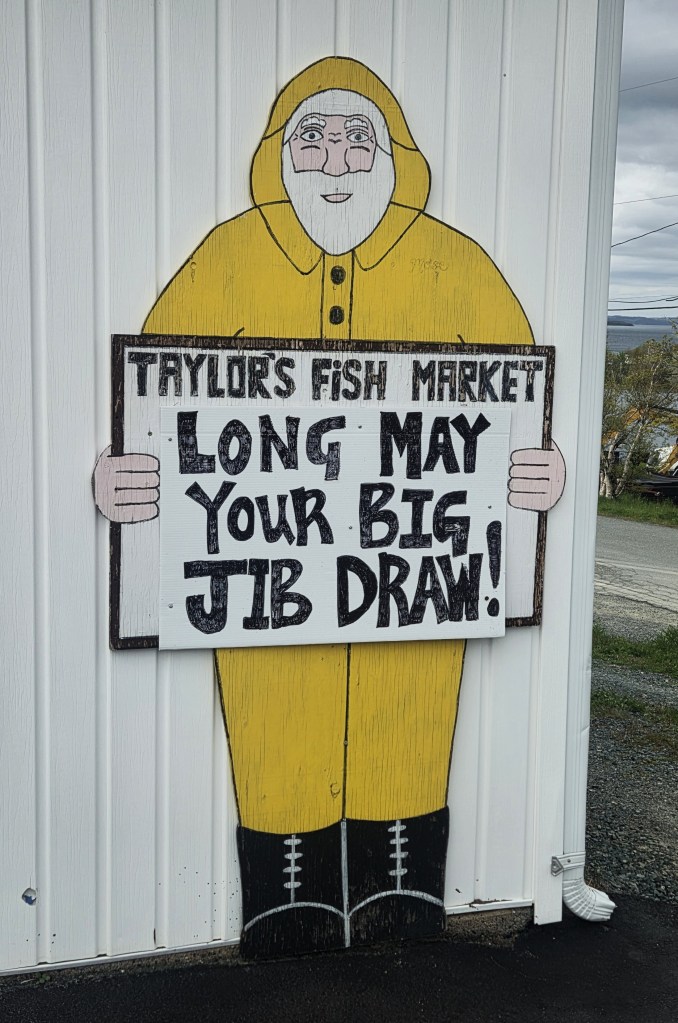
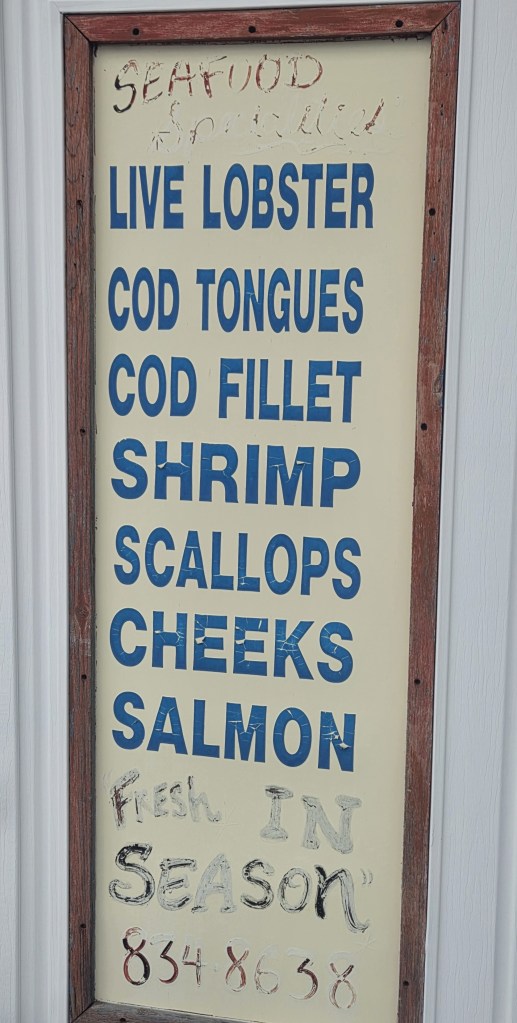
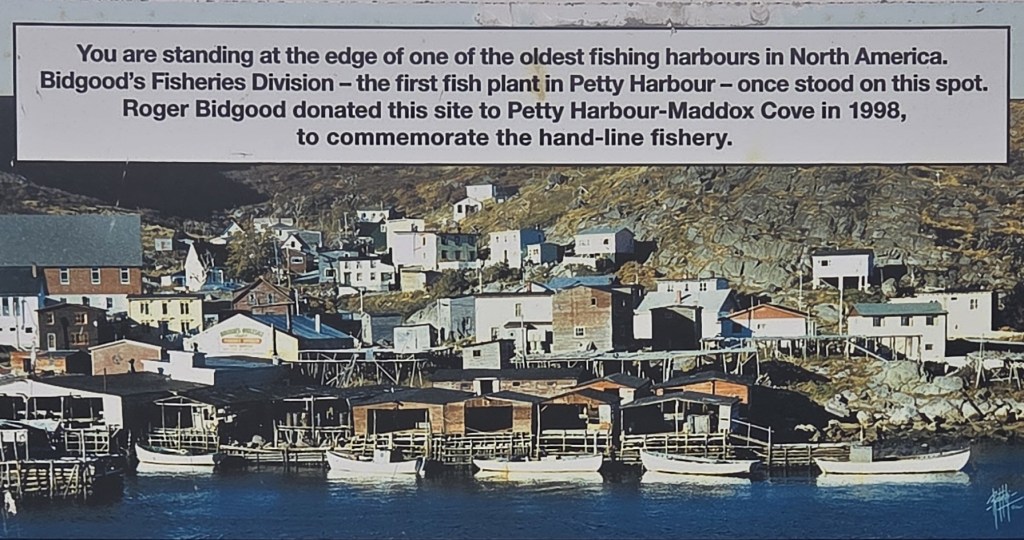
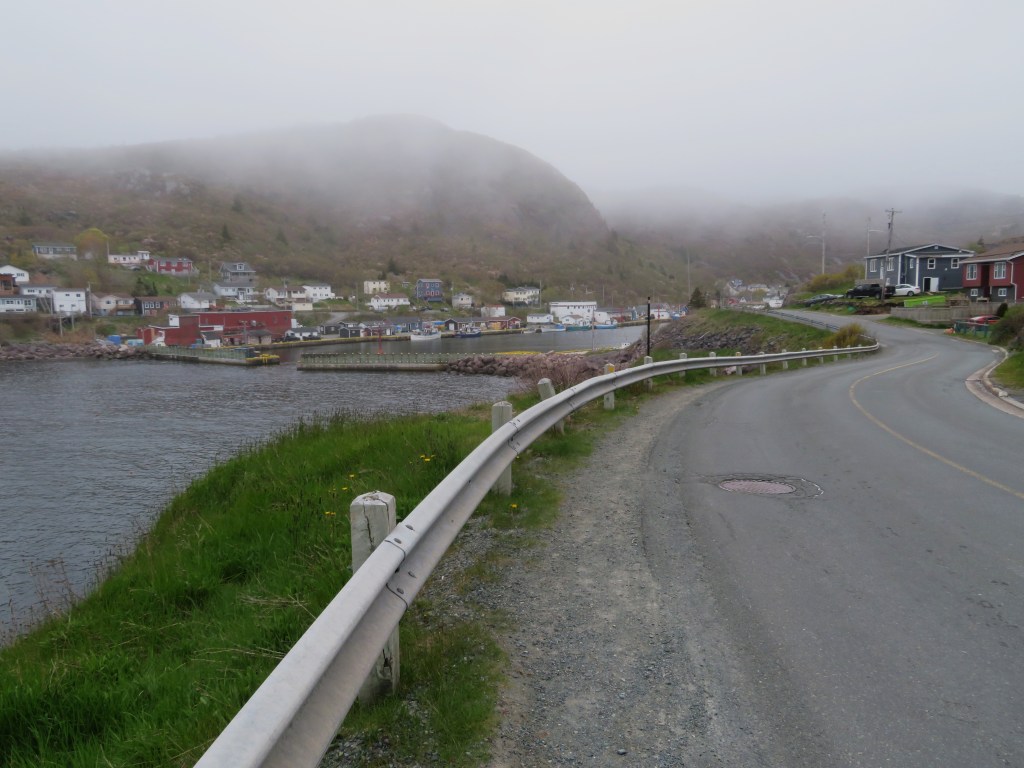
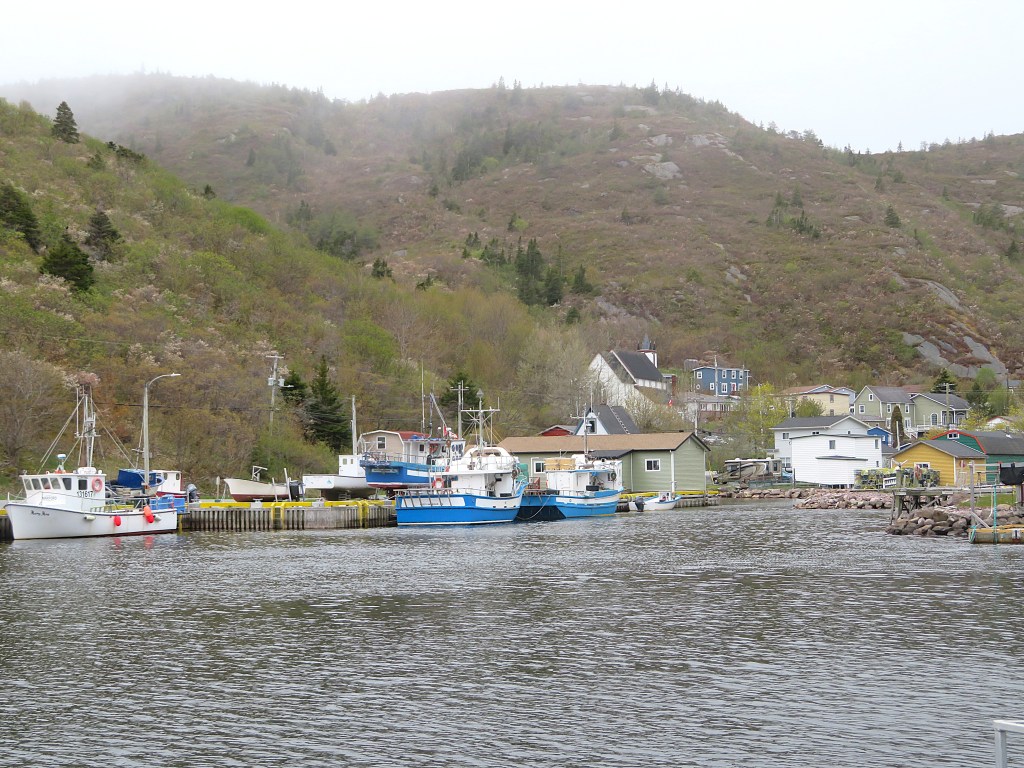
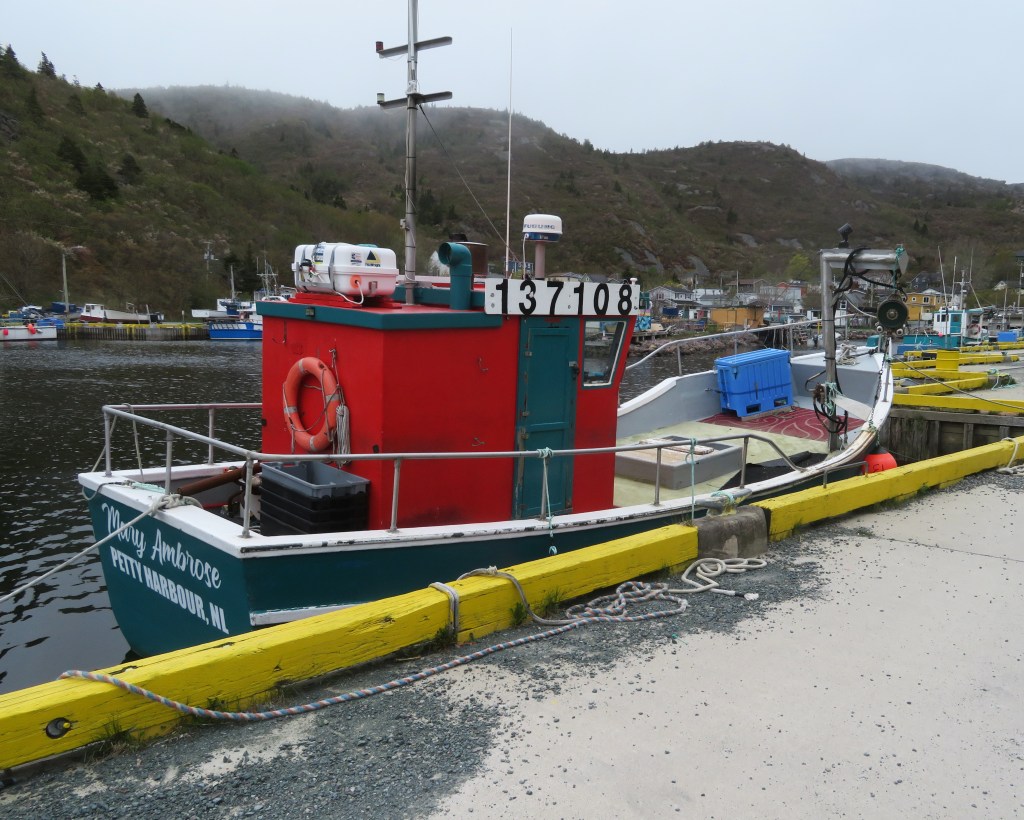
After settling in to our home, a full three room apartment, we headed out to gather some groceries and visit Petty Harbor, an old fishing village on the east coast of the Avalon Peninsula, about a 40-minute drive away. The sisters mentioned Taylor Seafood, an old store that we should definitely stop at. We did (pics) and will definitely be shopping there a bit over the next days, as it has wonderfully fresh seafood and other traditional Newfoundland foods. We didn’t buy any fresh seafood this time, but will tomorrow. I did purchase a jar of pickled mussels though. Haven’t tried them yet, but will report on them when I do.
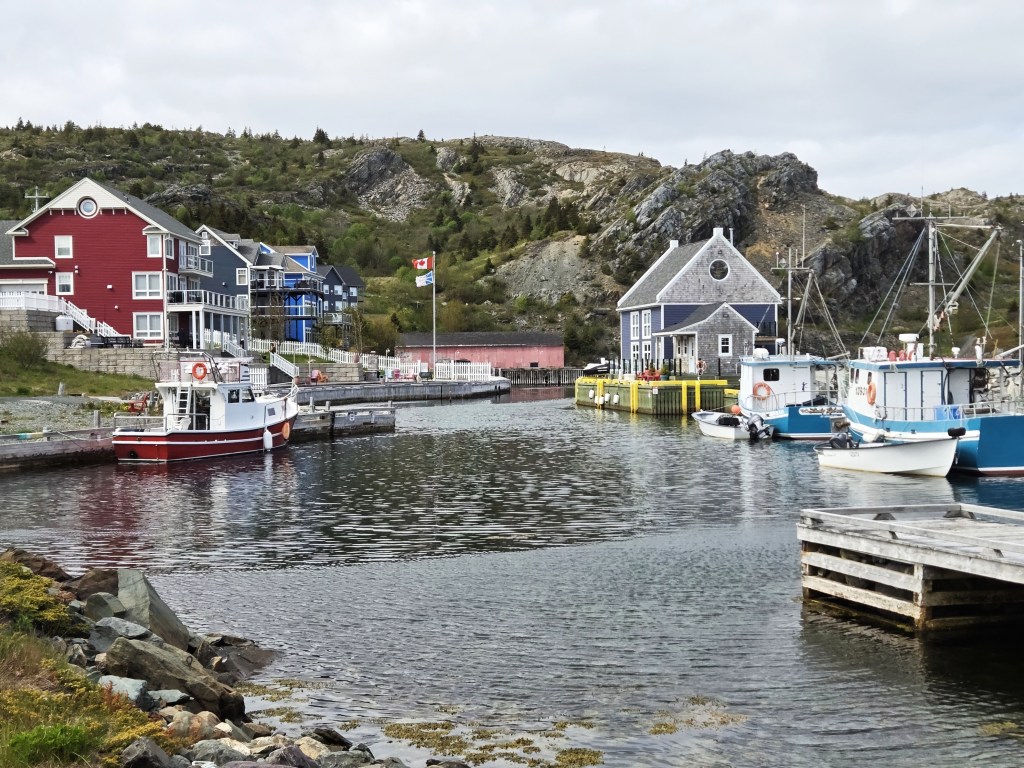
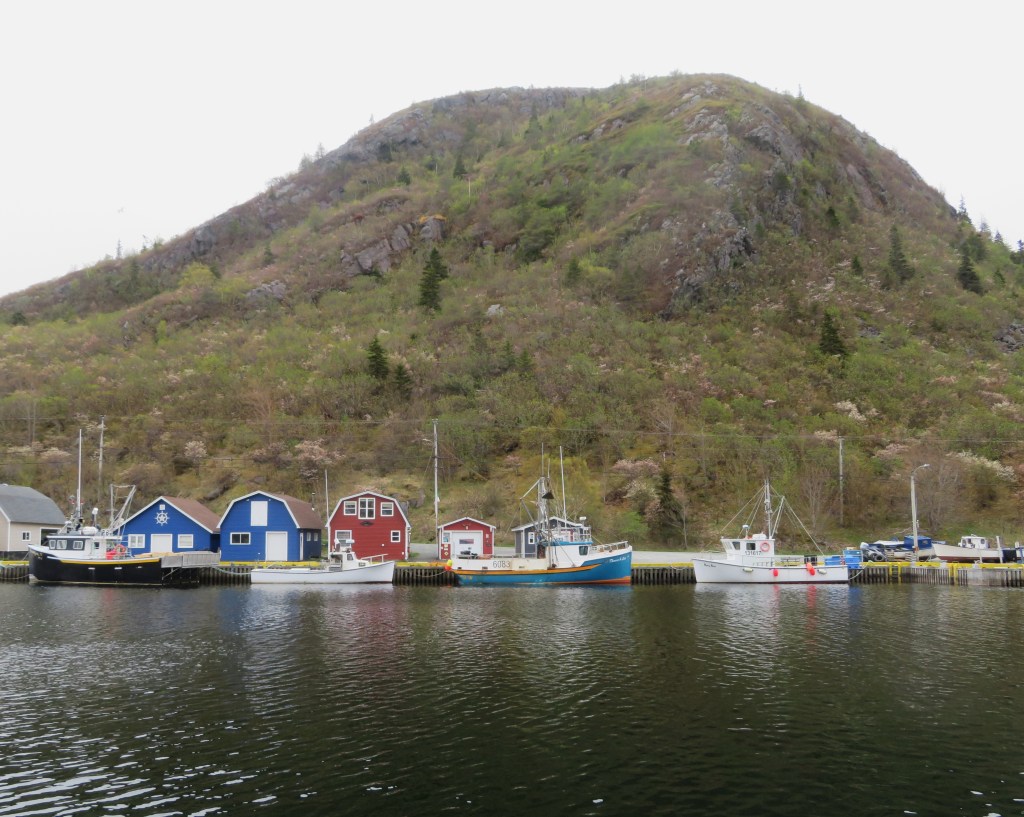
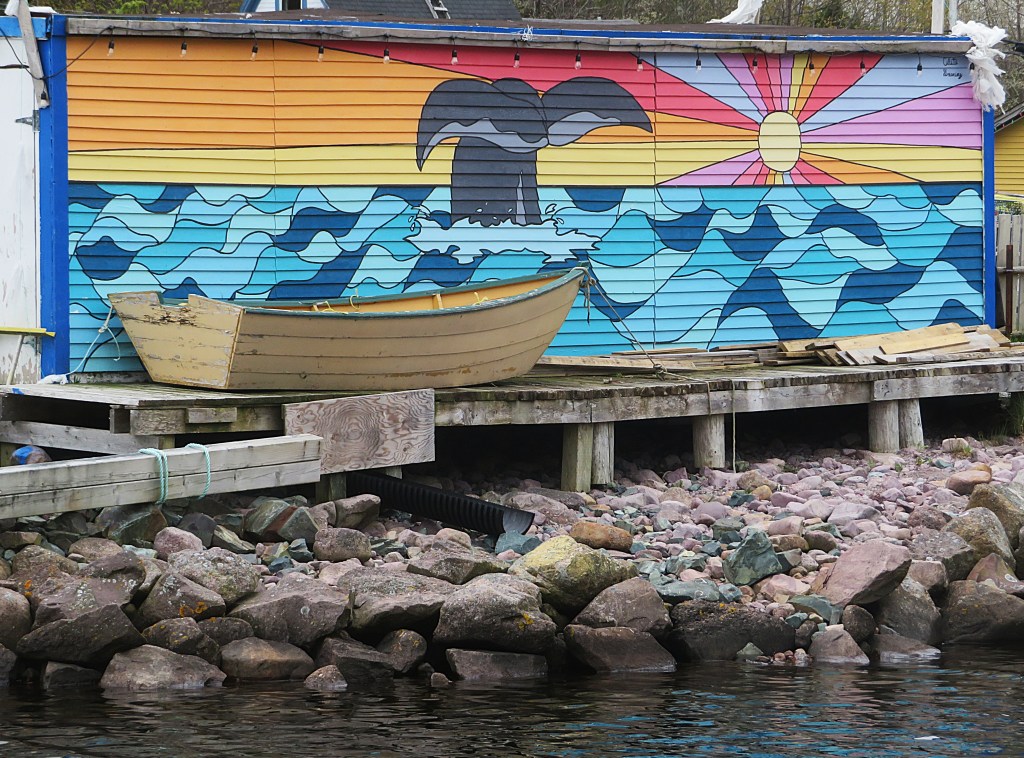
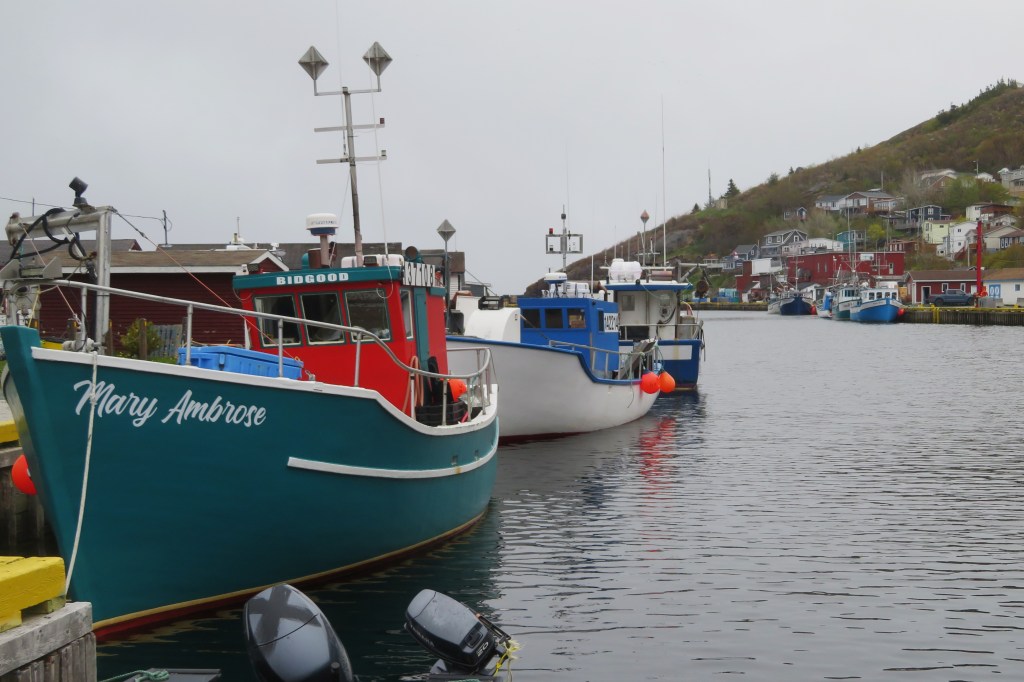
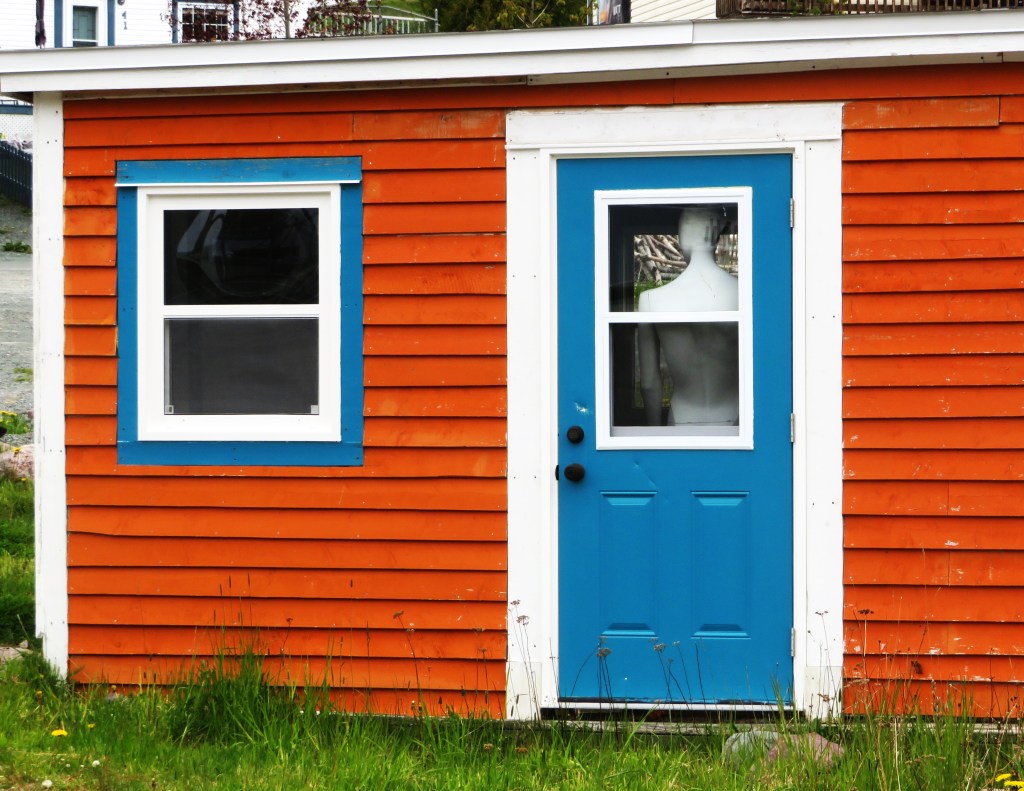
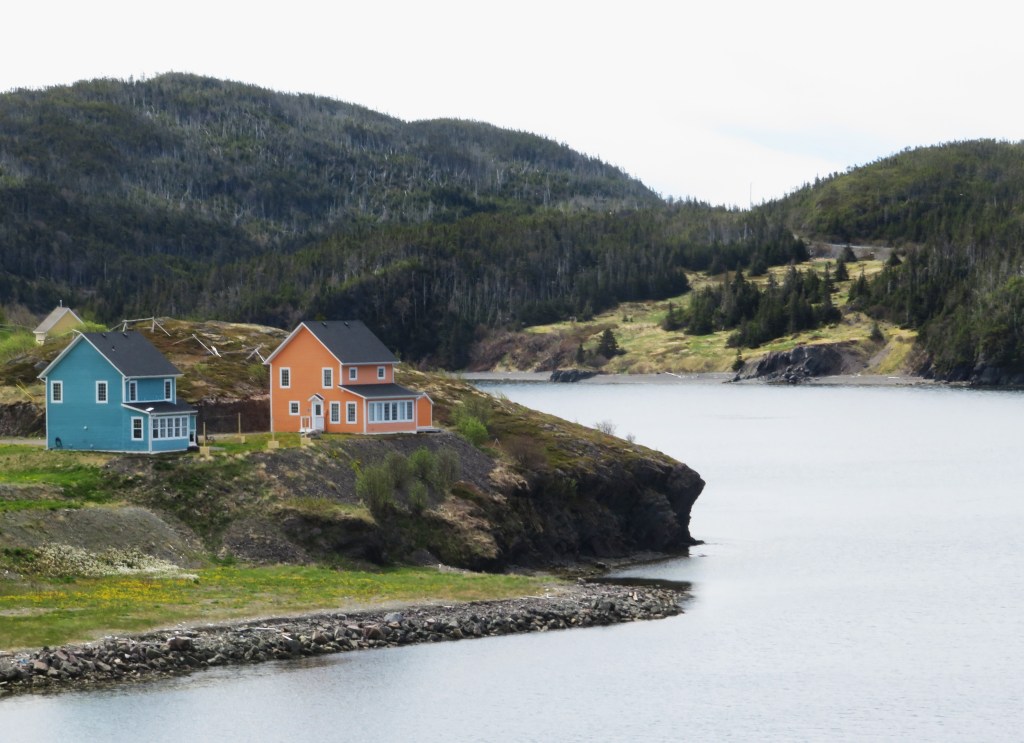
From there we drove over to Petty Harbor. There’s a few pics from there. It’s a picturesque small community with an active fishing fleet. The tiny village, a little less than 1,000 people, is hemmed into a small area between the cove and the rocky hills and ledges adjacent to it.
Back home, we had dinner at a Chinese restaurant, Wongs House, just down the road. Again, as we’ve found almost everywhere we go, people were very friendly. Jessica and Michaela, the wait staff, were a joy to talk with. We’re planning to do a bit of cooking at the house while we’re here, but I could see maybe at least another meal, maybe a lunch, at the place again.
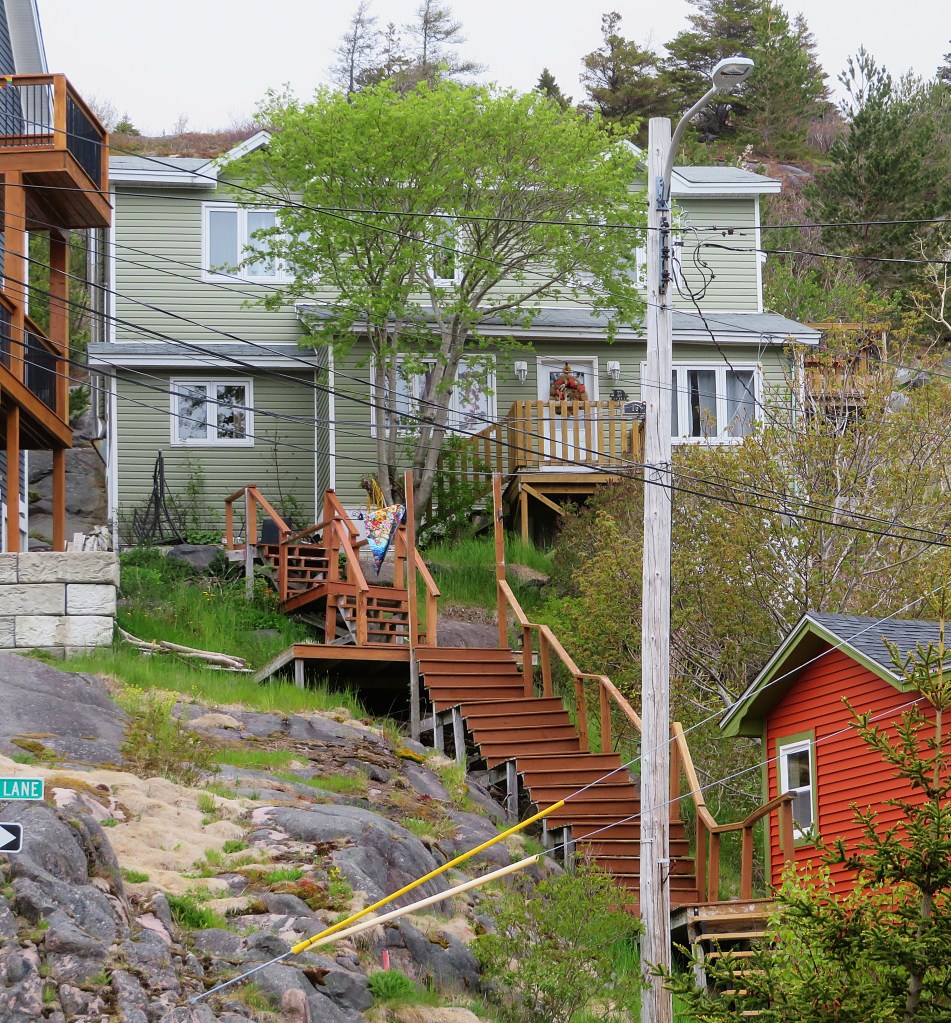
6/10
Took a second day to travel out to the Bonavista Peninsula. This time we wanted to include the town of Trinity, which we didn’t visit the other day.
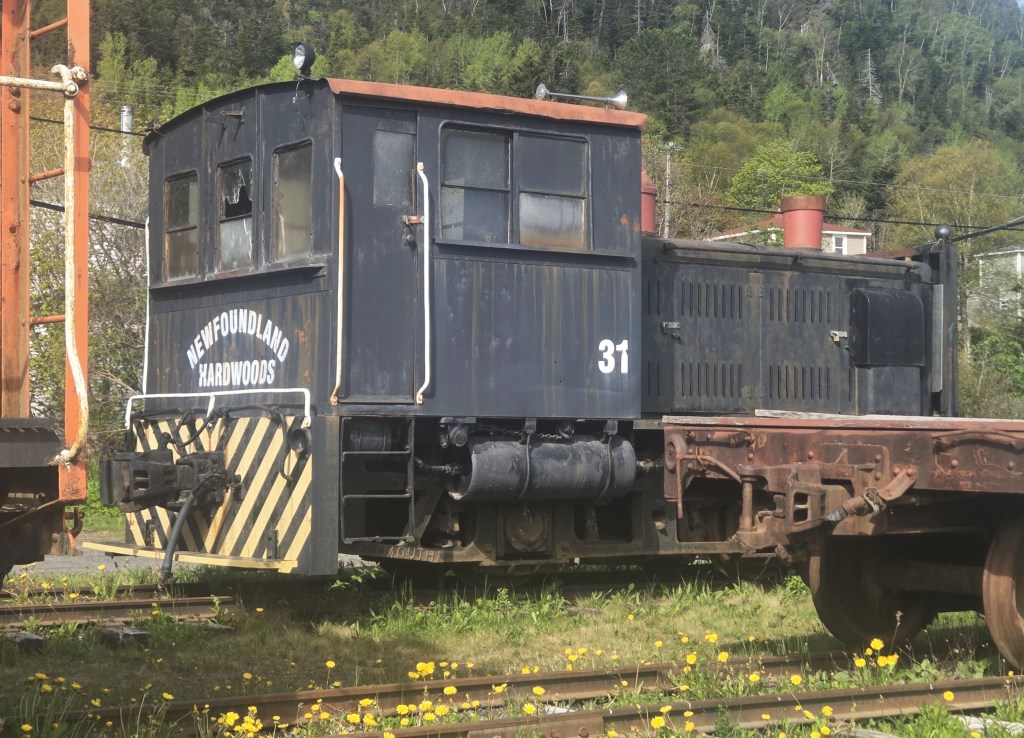
On the way we saw an old locomotive (pic) that was used by a Crown Company, Northern Hardwoods. The engine was actually one of at least two that were originally built for the US Military during WWII.
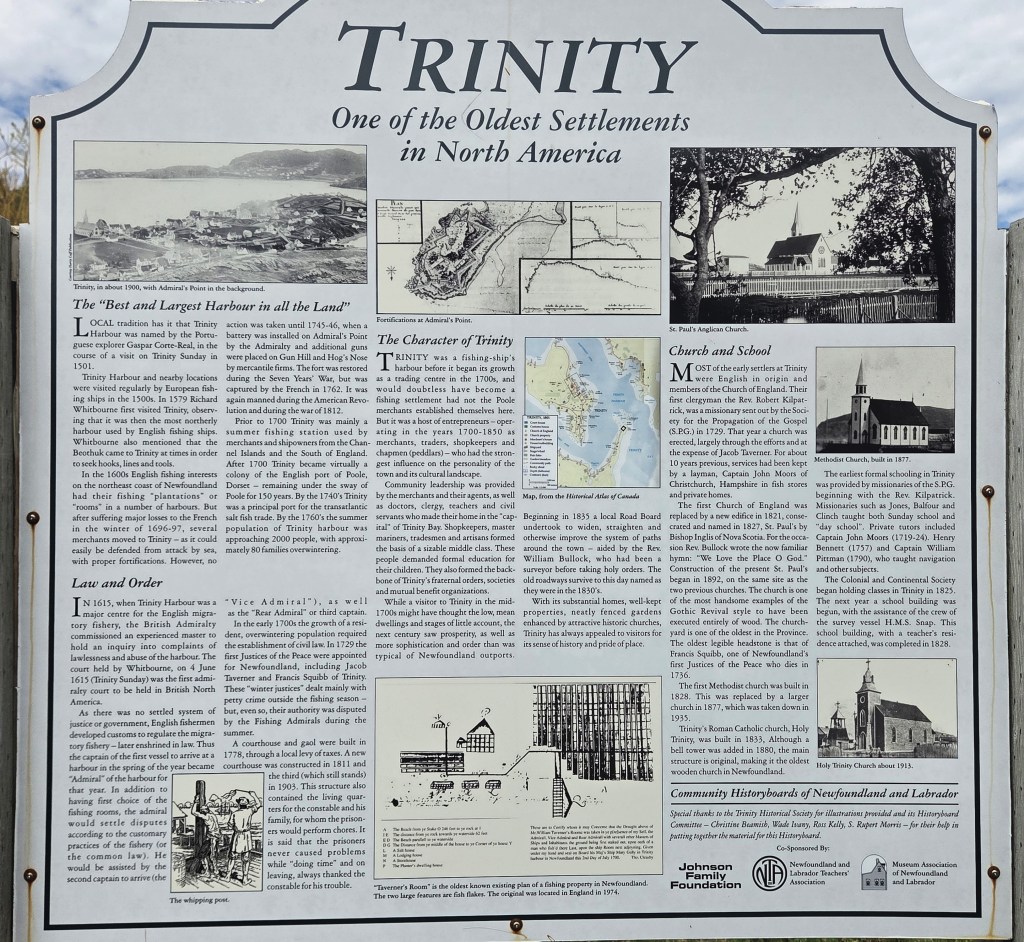
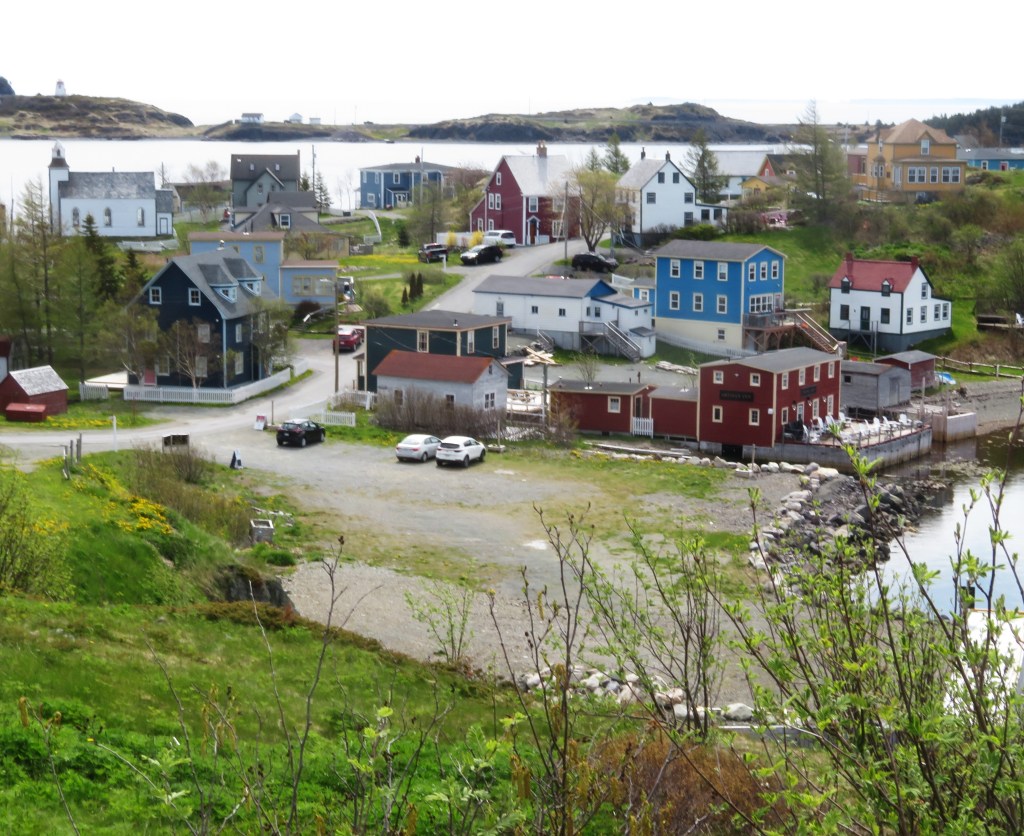
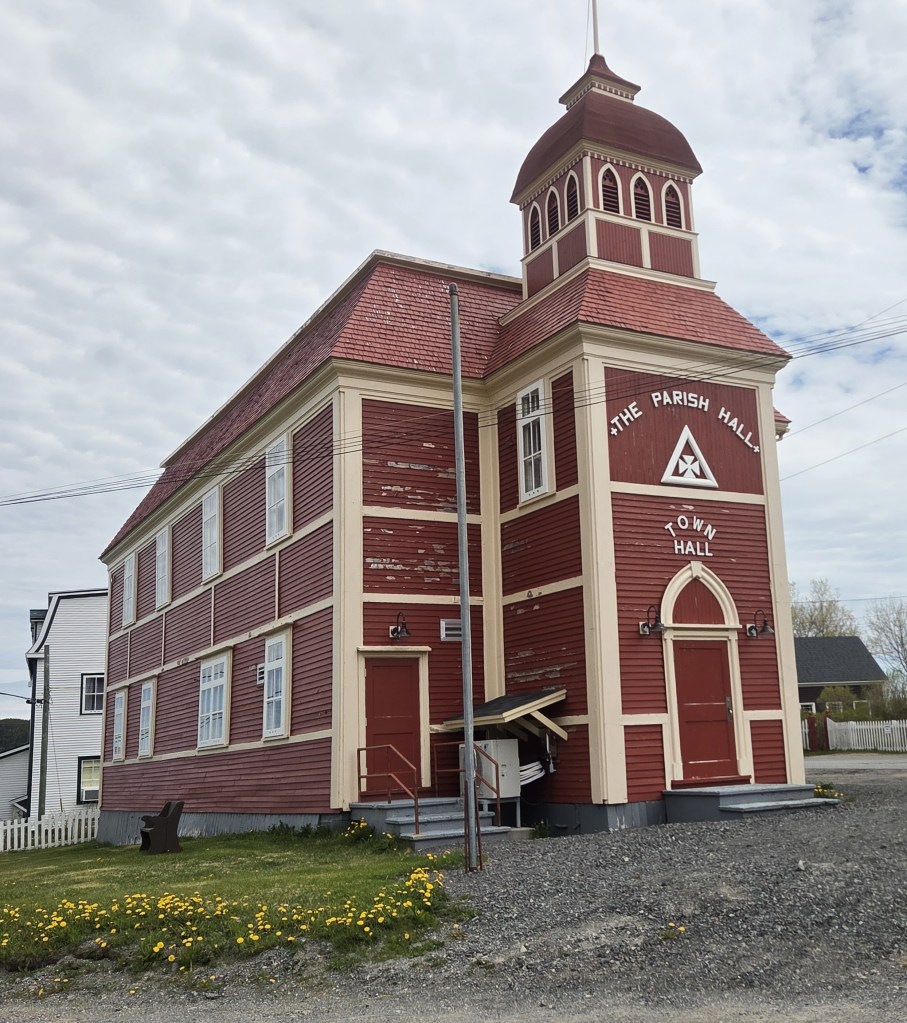
Trinity is an historic seaport town on the east side of the peninsula. It is also a tourist destination. It really wasn’t very busy while we were there.
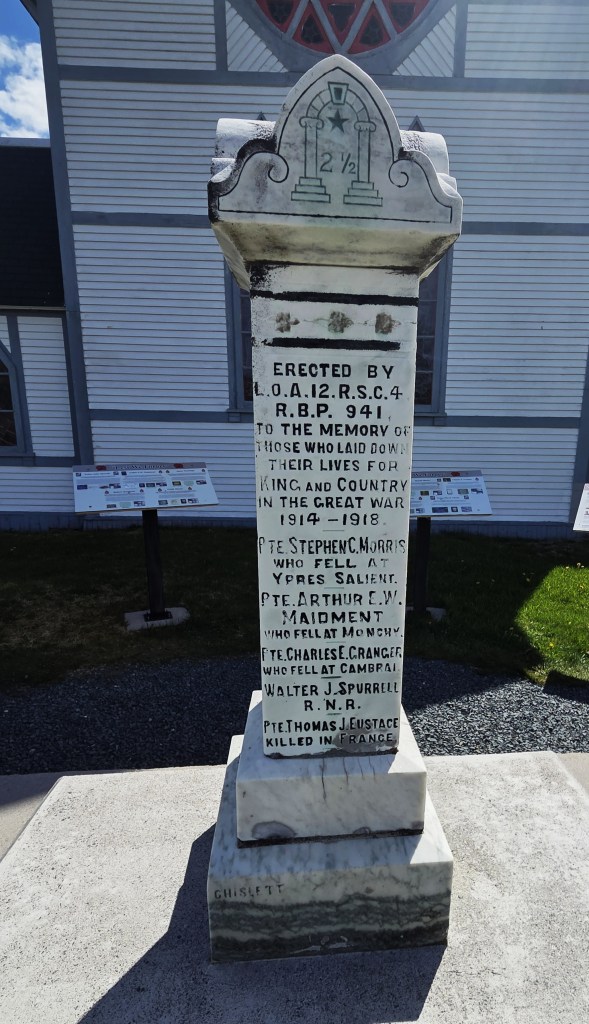
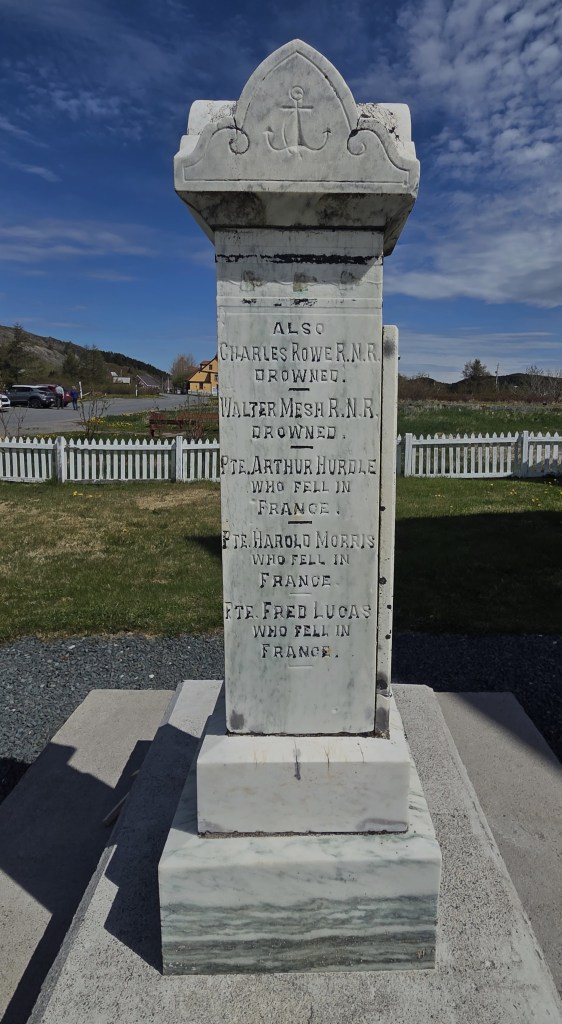
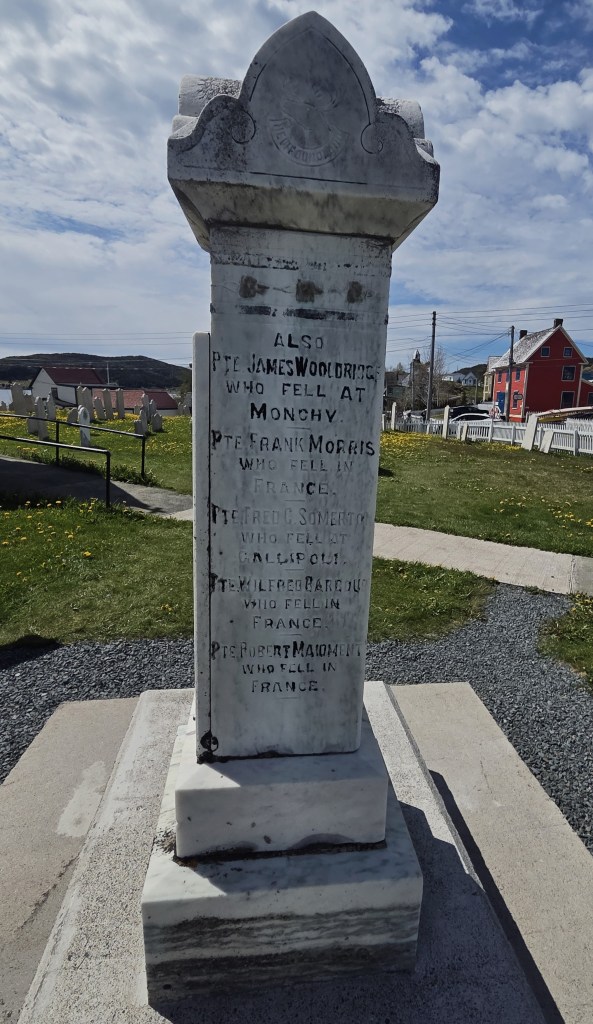
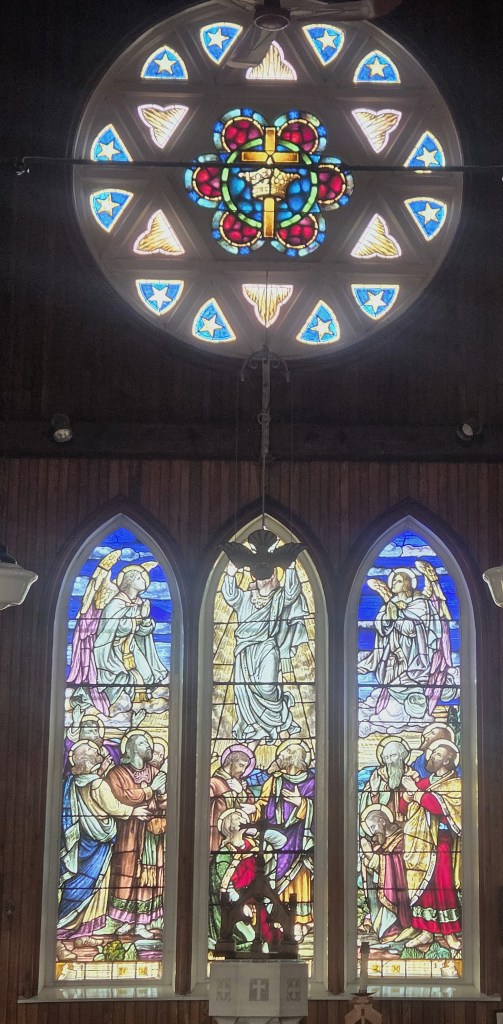
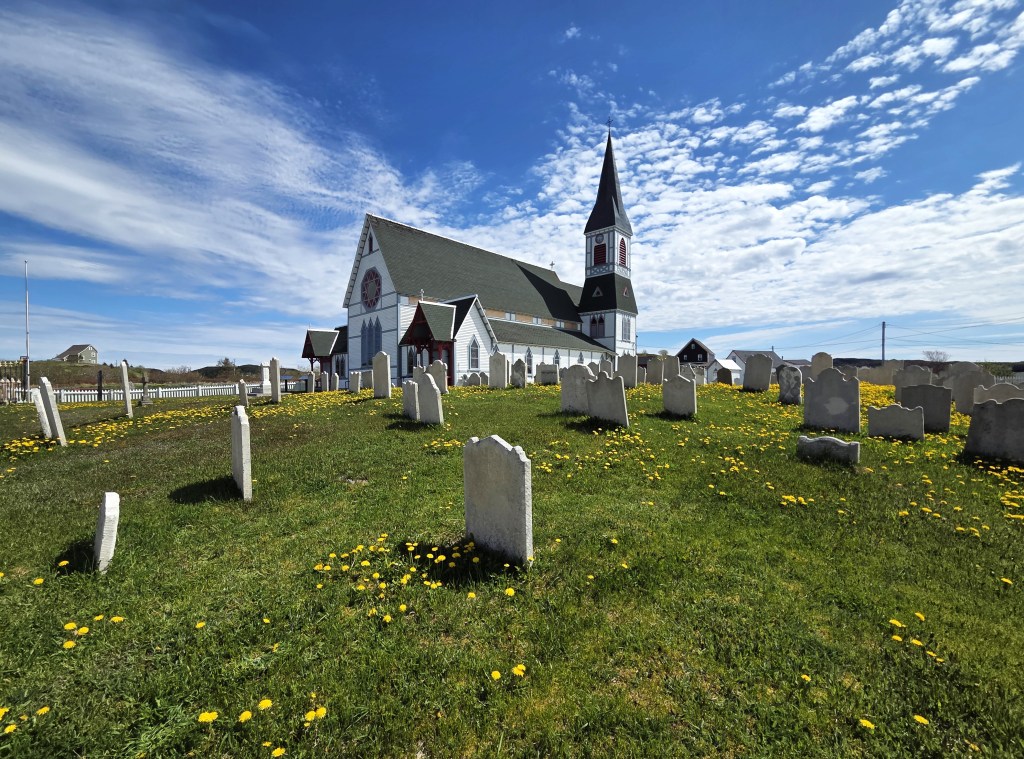
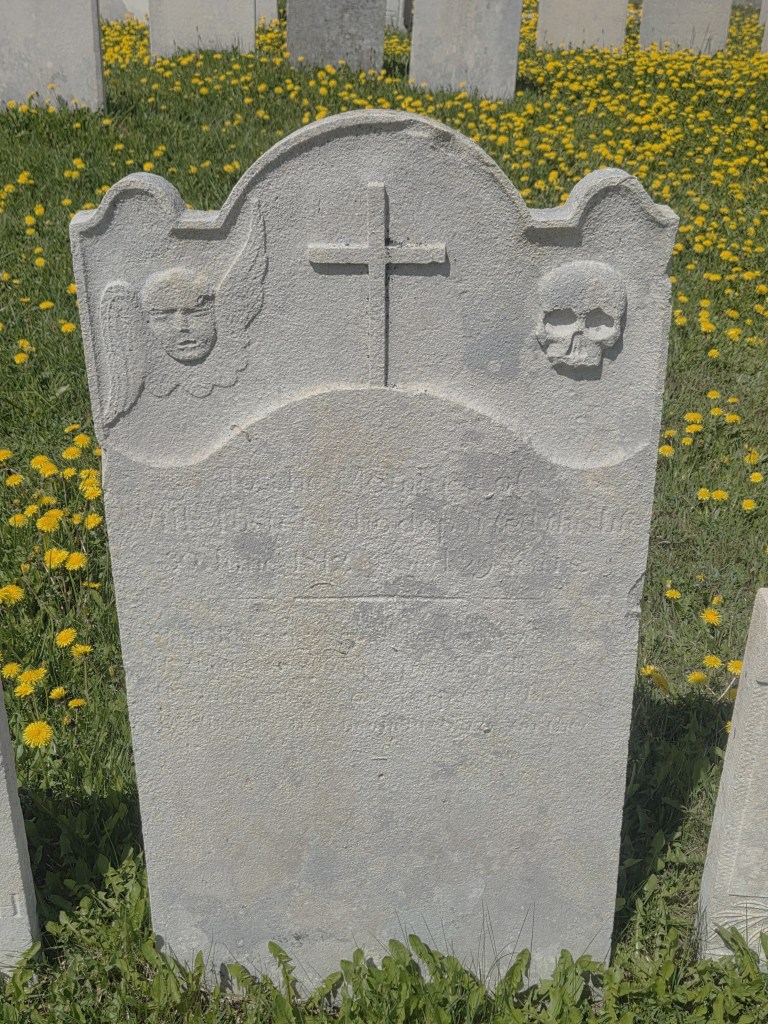
The Anglican Church had a monument dedicated to the victims of the “Great War” that looks to have been erected shortly after the war. It intrigued me that of the 14 names, 11 “fell”, 2 “drowned” and one “died.” The church also contained some nice stained glass (pic) as well as an adjacent graveyard. There is a picture of one of the tombstones that intrigued me because of the images at top.
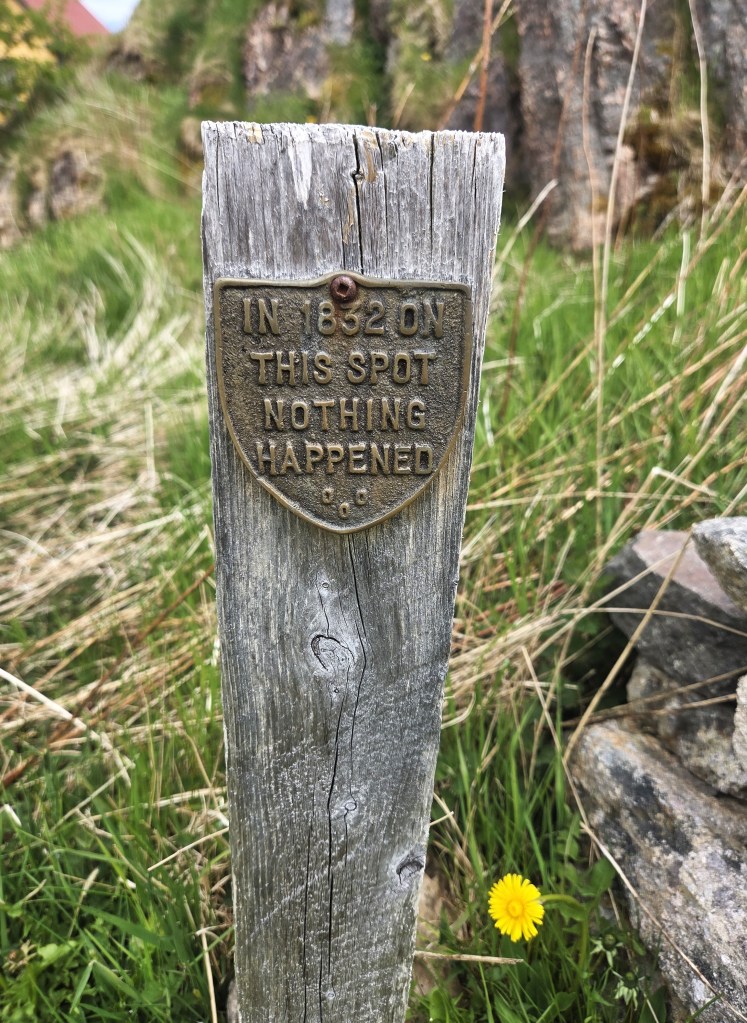
The pic of the small plaque had me chuckle a little.
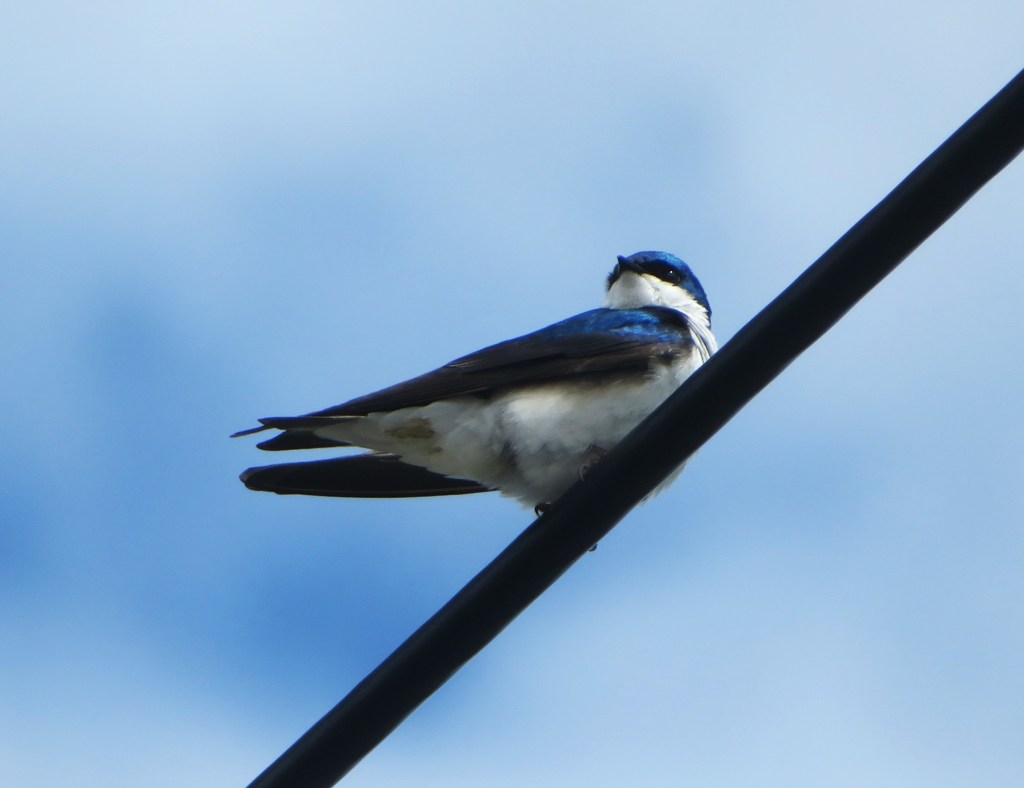
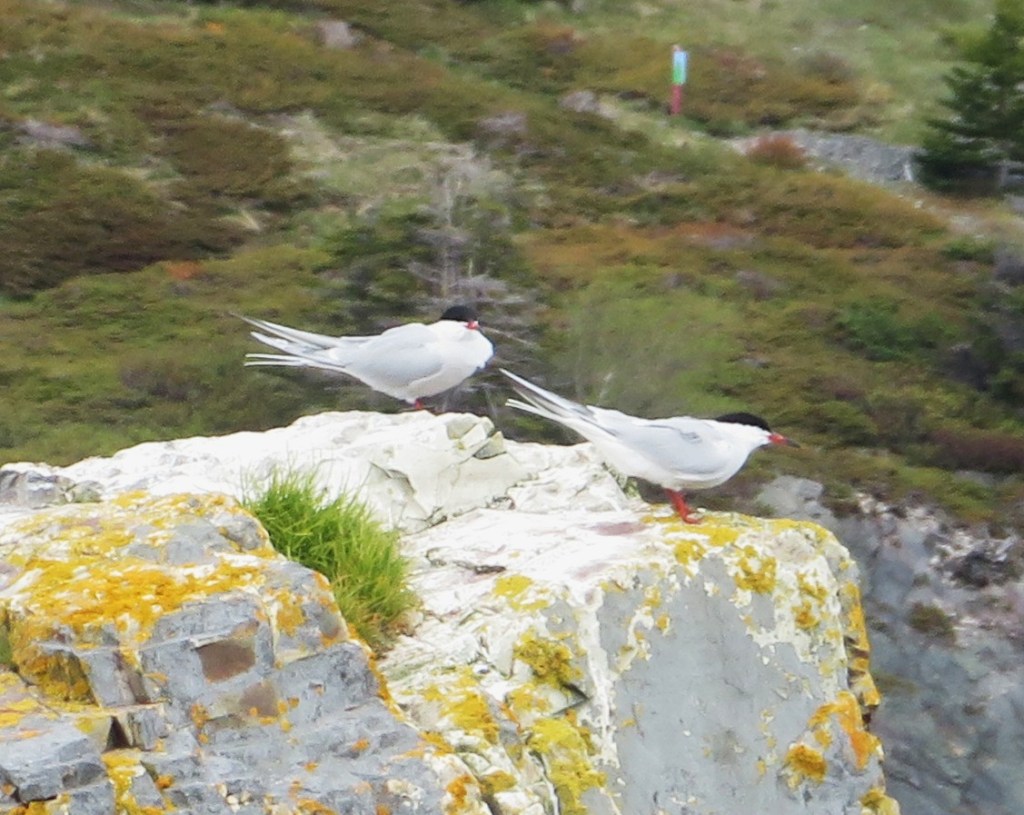
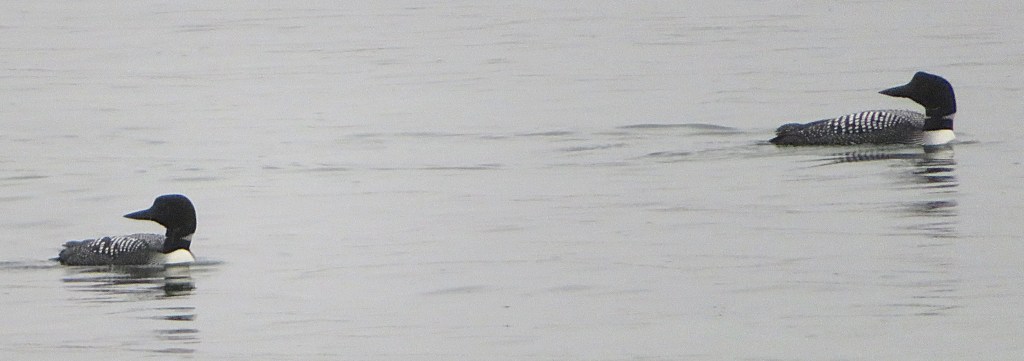
Two more birds to add to the Newfoundland list I’m keeping: Tree Swallow and Common Tern. Here’s a list of what I’ve identified so far in just casual birding: Great Black-backed Gull, Herring Gull, Rock Dove, Crow, Robin, Black-throated Green Warbler, White-throated Sparrow, Belted Kingfisher, Black Duck, Song Sparrow, Blue-headed Vireo, Boreal Chickadee, Starling, Yellow Warbler, Yellow-rumped Warbler, Ring-billed Gull, Mallard, Mute Swan, Bluejay, American Redstart, Canada Goose, Swainson’s Thrush, Osprey, White-crowned Sparrow, Ruby-crowned Kinglet, Red-breasted Merganser, Double-crested Cormorant, Common Loon, Willow Ptarmagin, Atlantic Puffin, Rough Grouse, Waterthrush, Greater Yellowlegs, Arctic Tern, Bonapartes Gull, Tree Swallow, Common Tern, Black-capped Chickadee.
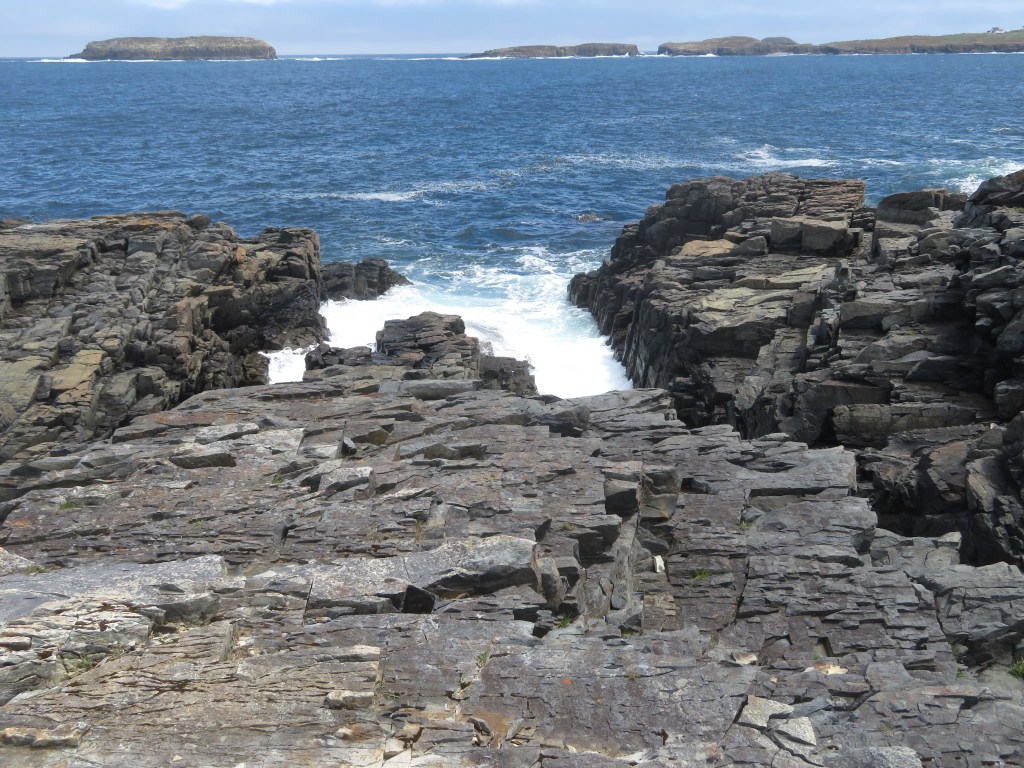
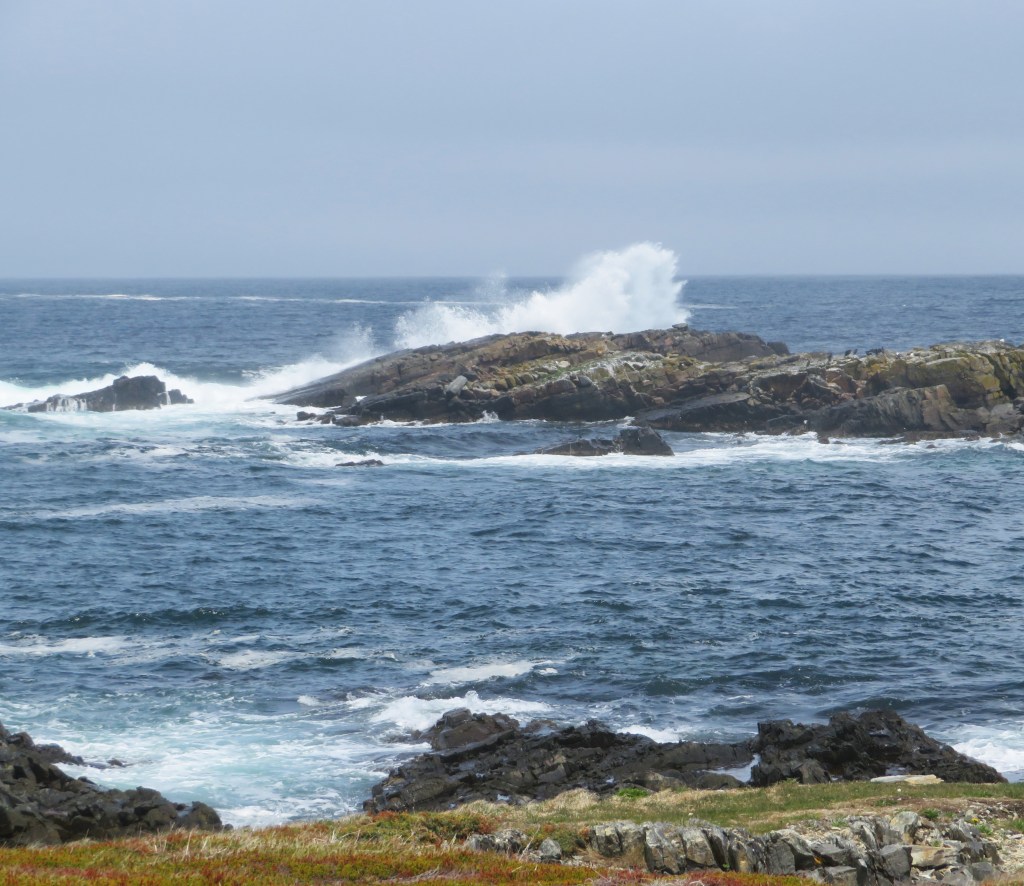
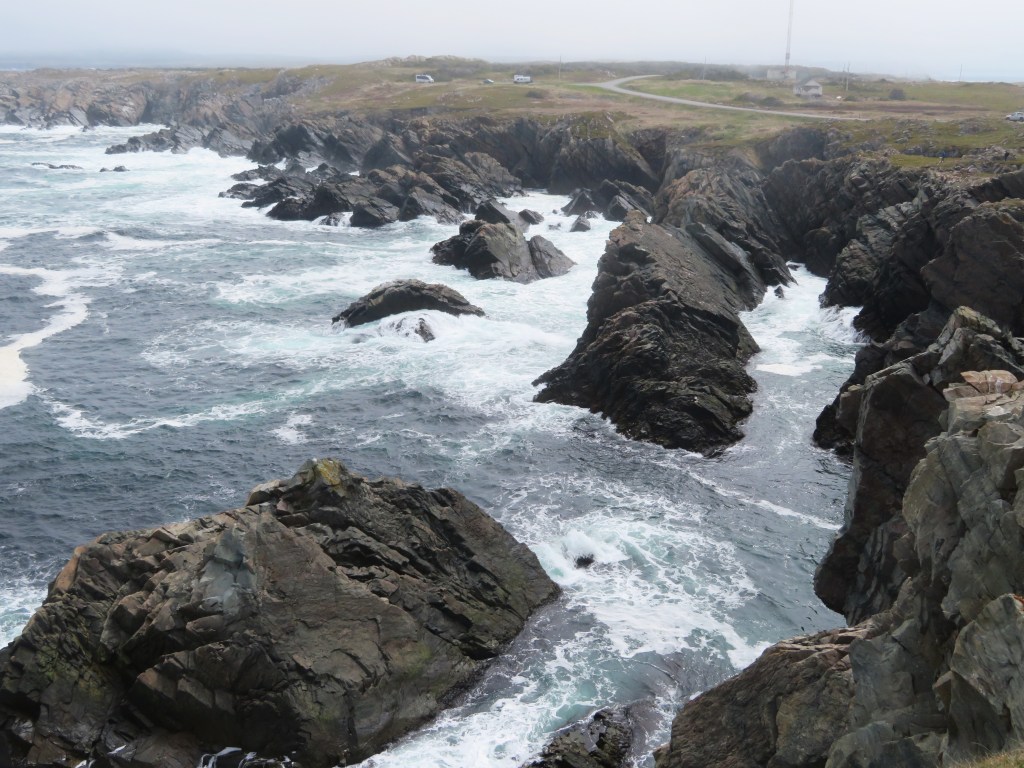
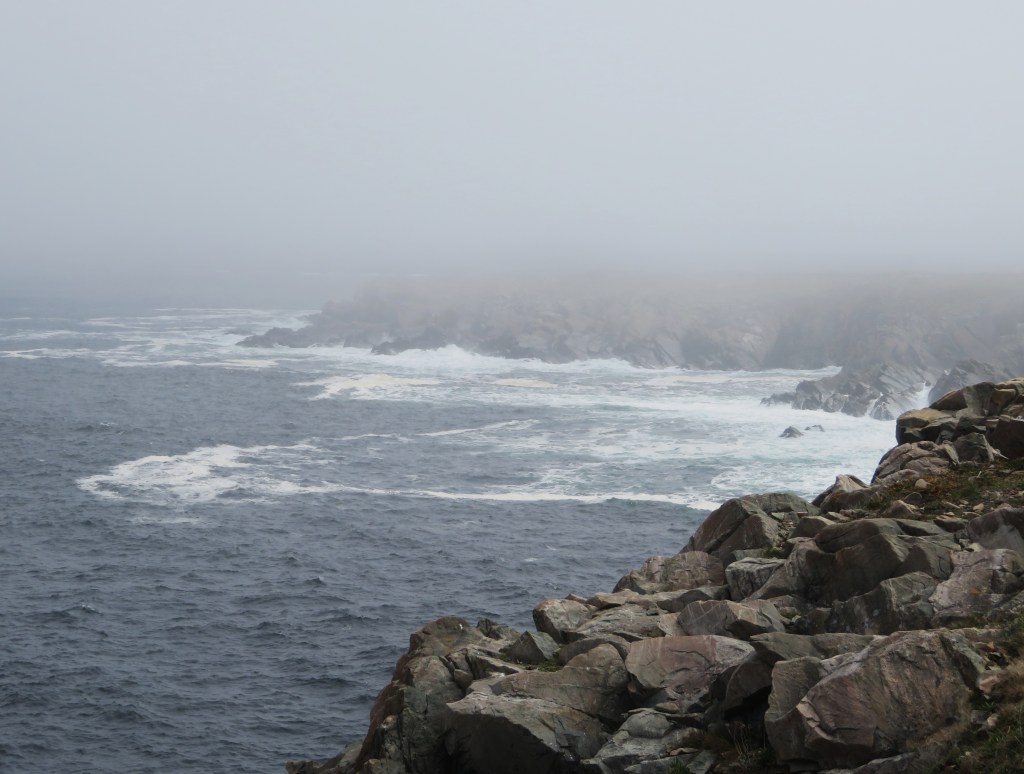
The Atlantic was quite active, as the pics testify to.
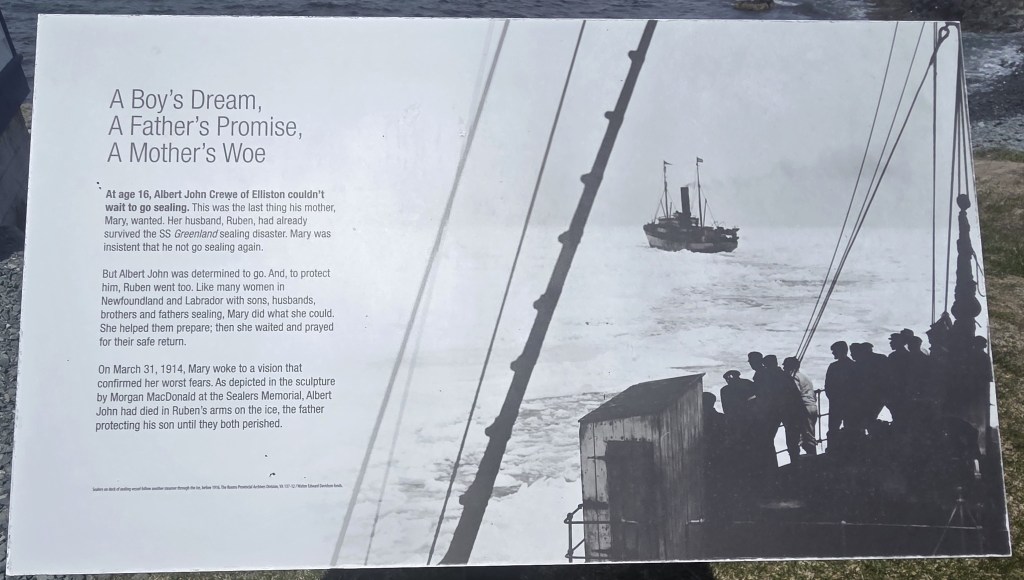
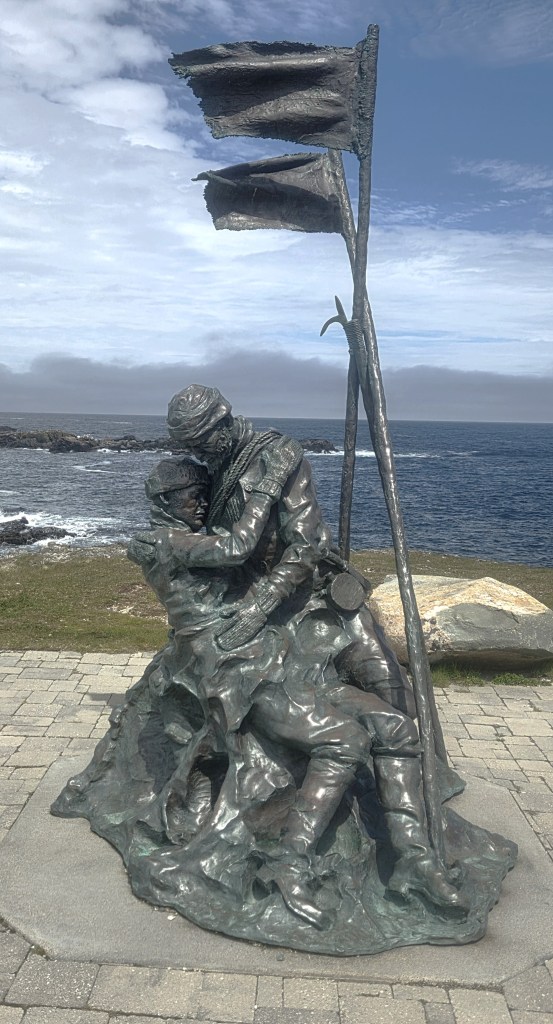
In Elliston there was a memorial to a tragedy that occurred in 1914 involving two sealing ships. (pics) Here’s a link to an article about the tragedy:
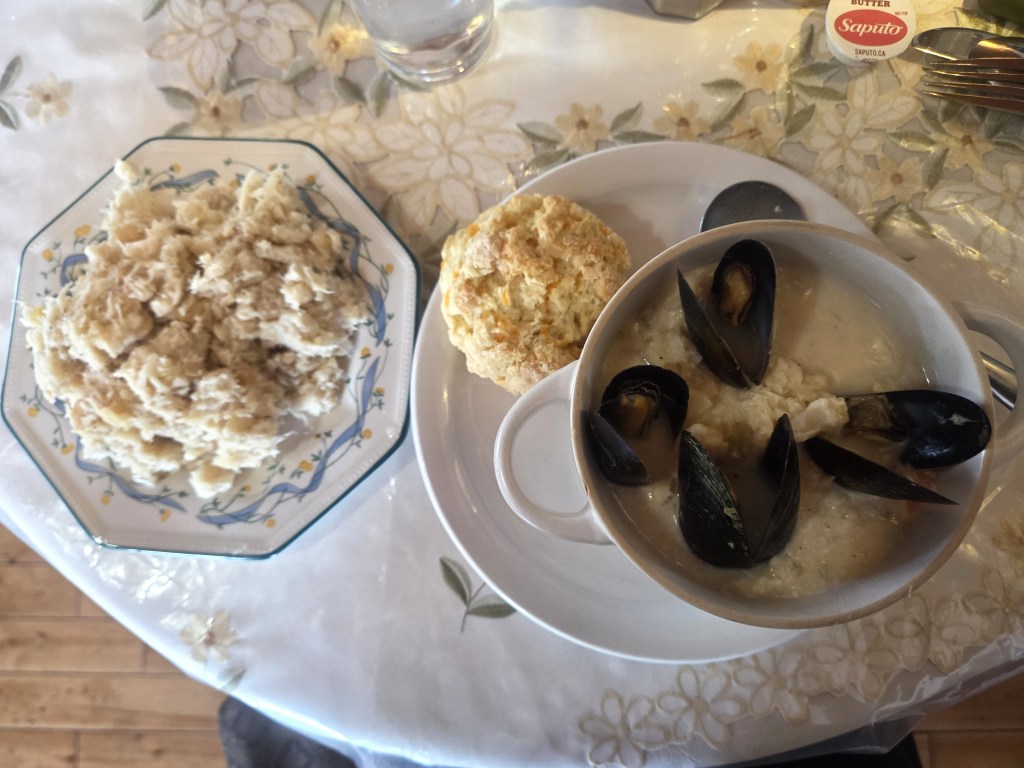
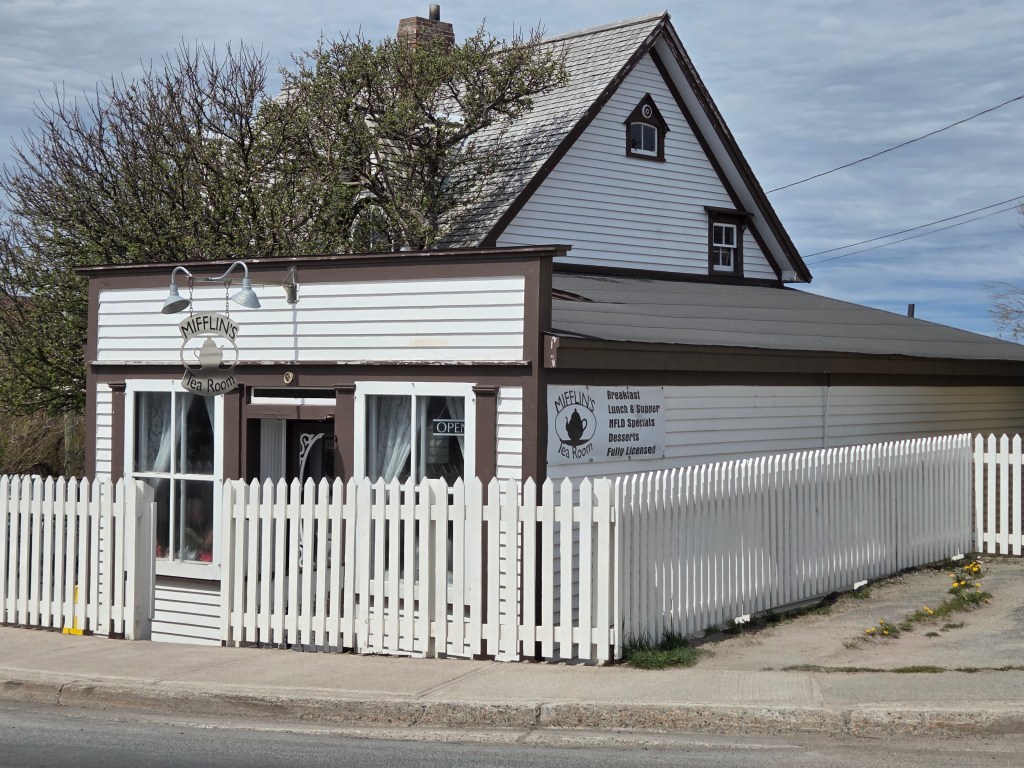
We stopped for alate lunch/early dinner at Miflin’s Tea Room, where had been a few days ago. A had a wonderful seafood chowder and Fisherman’s Brewis, a traditional Newfoundland dish of cooked hard bread and codfish mixed with fried onions & pork scrunchions. It was excellent.
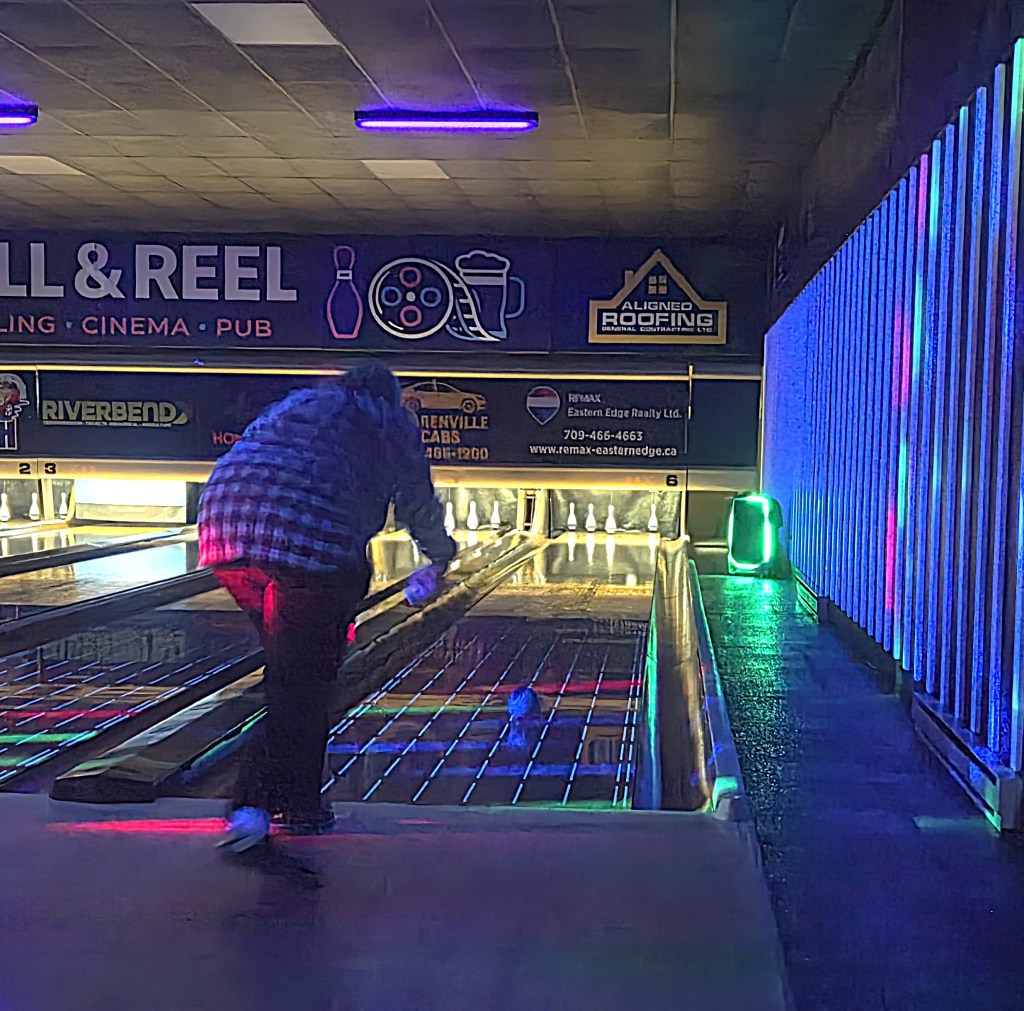
Back in Clarenville we experienced another Newfoundland tradition, five pin bowling. This was so much easier physically because the balls are small and much lighter than those of traditional bowling. We had a lot of fun and then good conversation with Tina, who was attendant at the lanes. She even took a picture of us and posted it on their Facebook page!
So now, on to our final stay on “The Rock” in Holyrood for the next nine days.
6/9
My daily routine for writing these journal entries. I wake up in the vicinity of 5:30 AM, brew my pot of tea and do my morning tea ritual. While sipping the tea look into news and emails. Then, when finished with the tea, wipe out my teapot and cup then get to work on the journal entry. I first go over the photos from the day before, select which ones to post on the webpage and then do the writing for the page. This is a routine that works well for me.
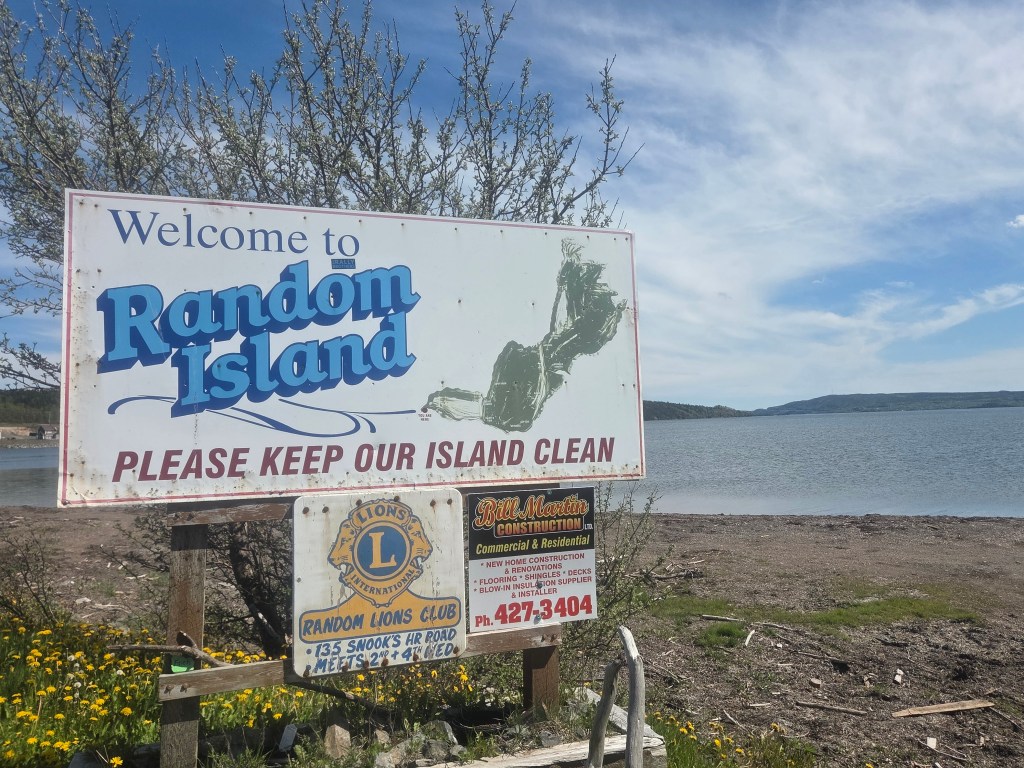
We explored Random Island yesterday. It is adjacent to Clarenville in Trinity Bay. A causeway was built to the island in 1952. Prior, there was only access to its villages from the water.
Before leaving, had a nice talk with Brittany, one of the two housekeepers here. She’s 29 years old, has traveled a bit in the States and loves going to Florida and being where palm trees grow! When I asked her what she does creatively (which I often do in conversations) she said she used to write stories. I recited a short poem of mine for her and then she said she should maybe start writing again!
It was a pleasant day on the island, though I was expecting more access to the water at the various little settlements that dot the island: Hickman’s Harbour, Britannia, Lower Lance Cove, Lady Cove, Snook’s Harbour, Elliott’s Cove, Petley, Aspen Cove, Weybridge, Robinson Bight, Random Heights, Aspen Brook.
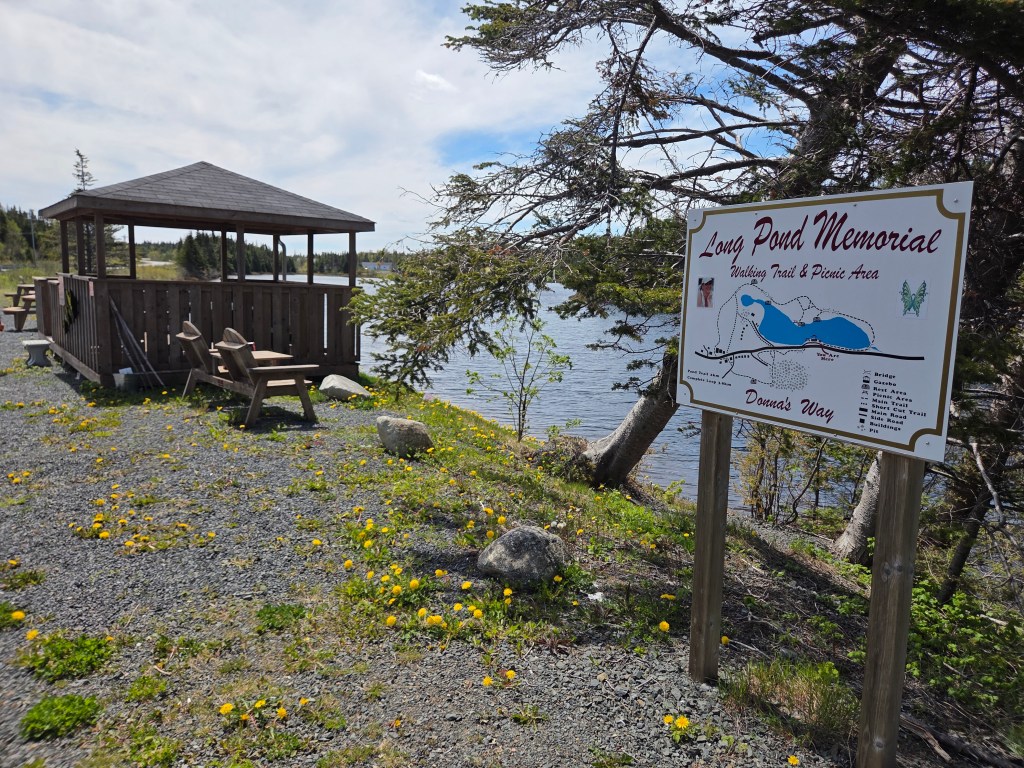
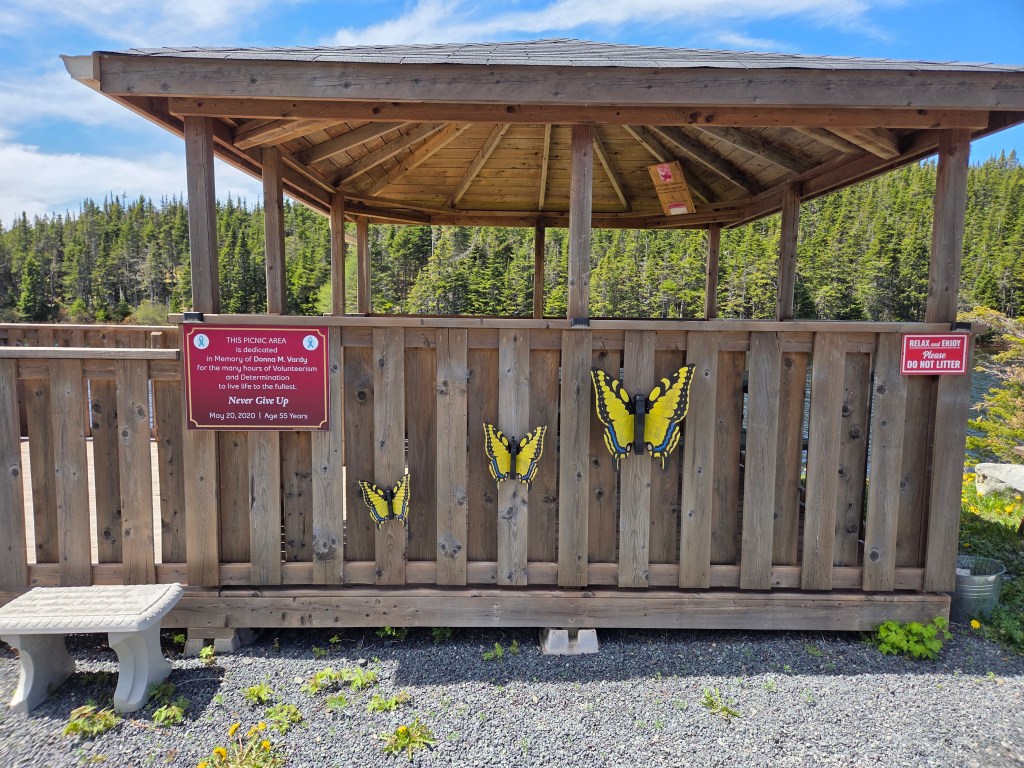
Had a nice picnic lunch stop along the road at Long Pond. There were chairs, a shelter, nice view and a trail around the pond. All of this a memorial for Donna Vardy, a victim of cancer at age 55. Here’s a link to an article about the memorial:
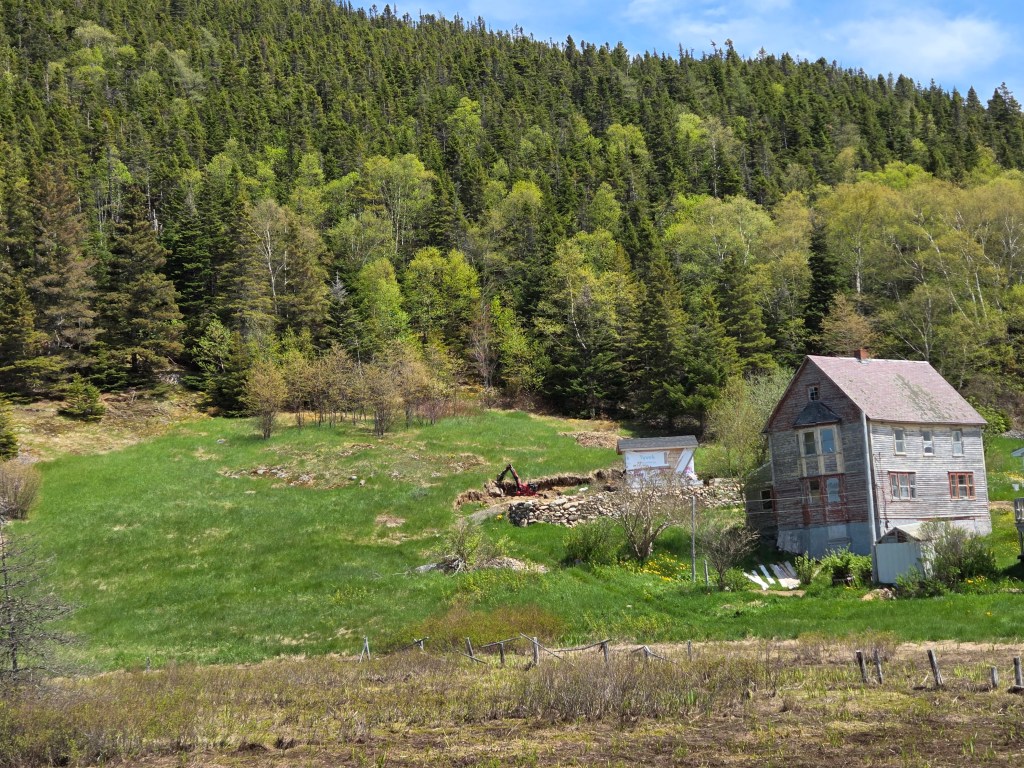
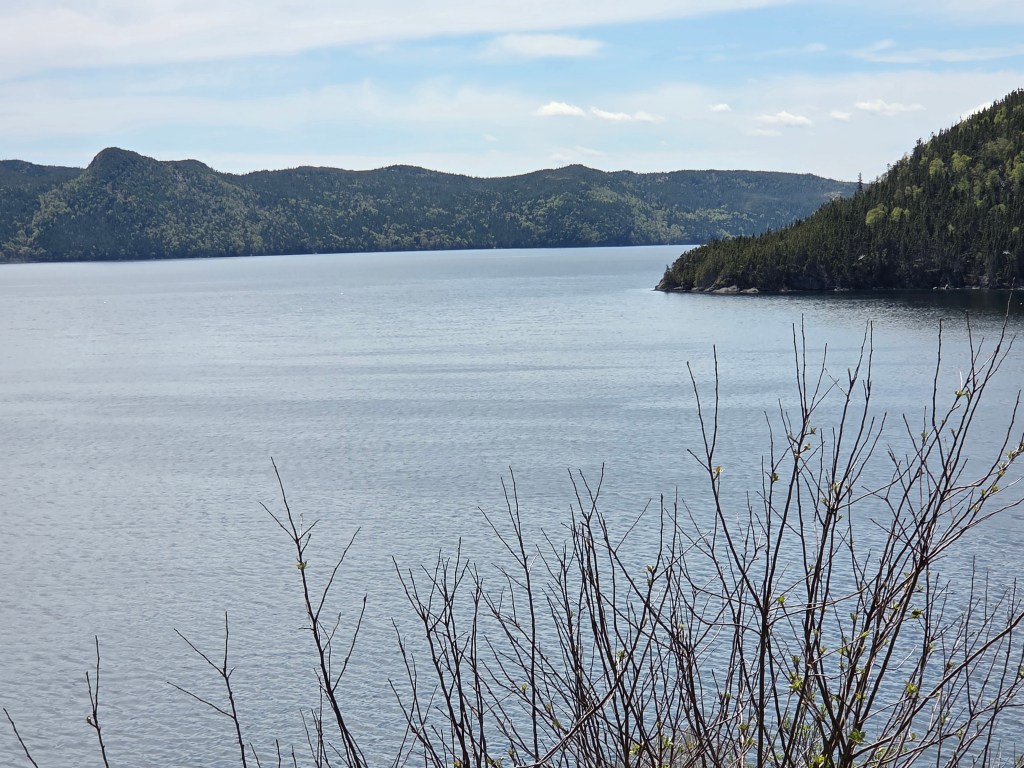
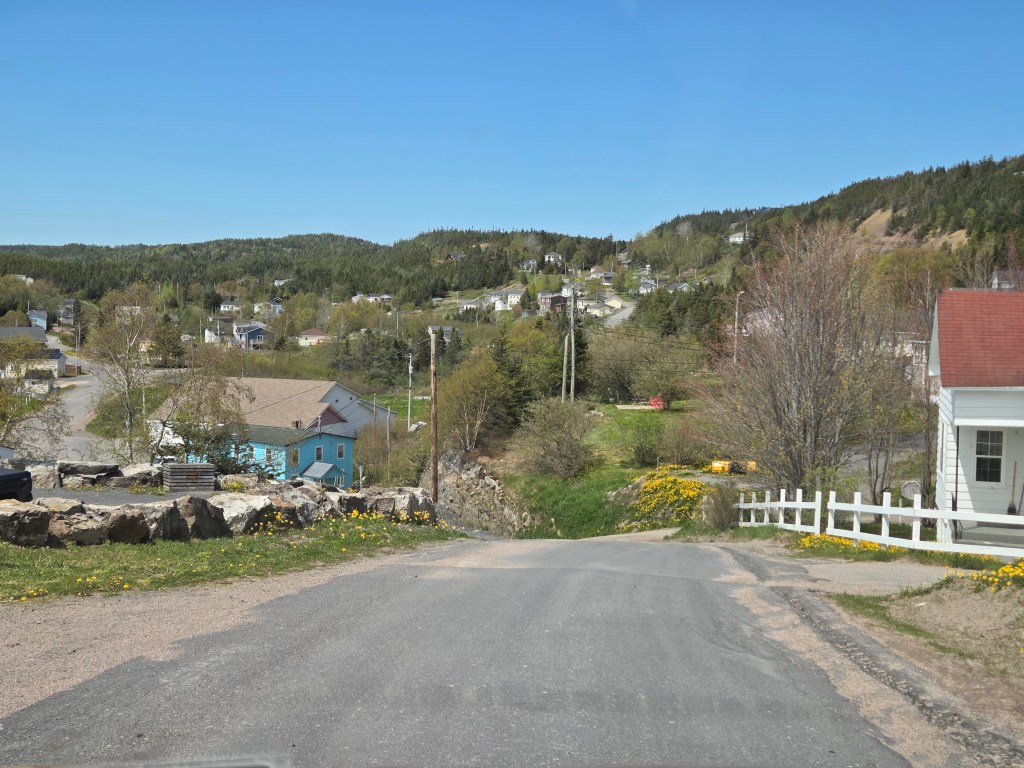
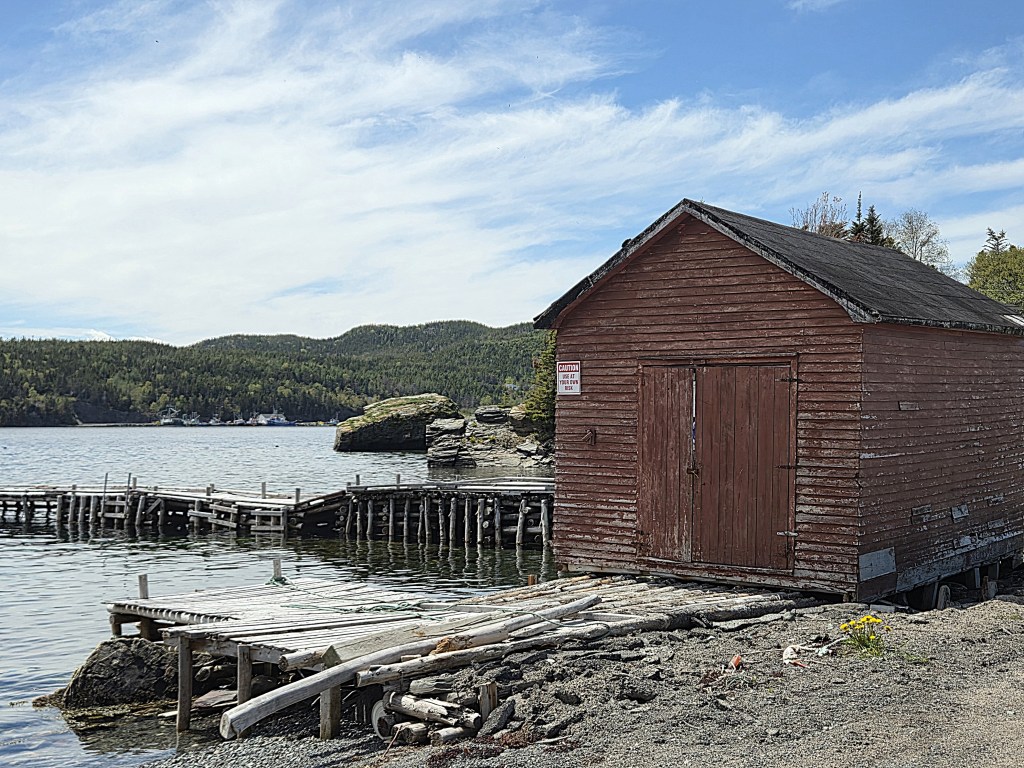
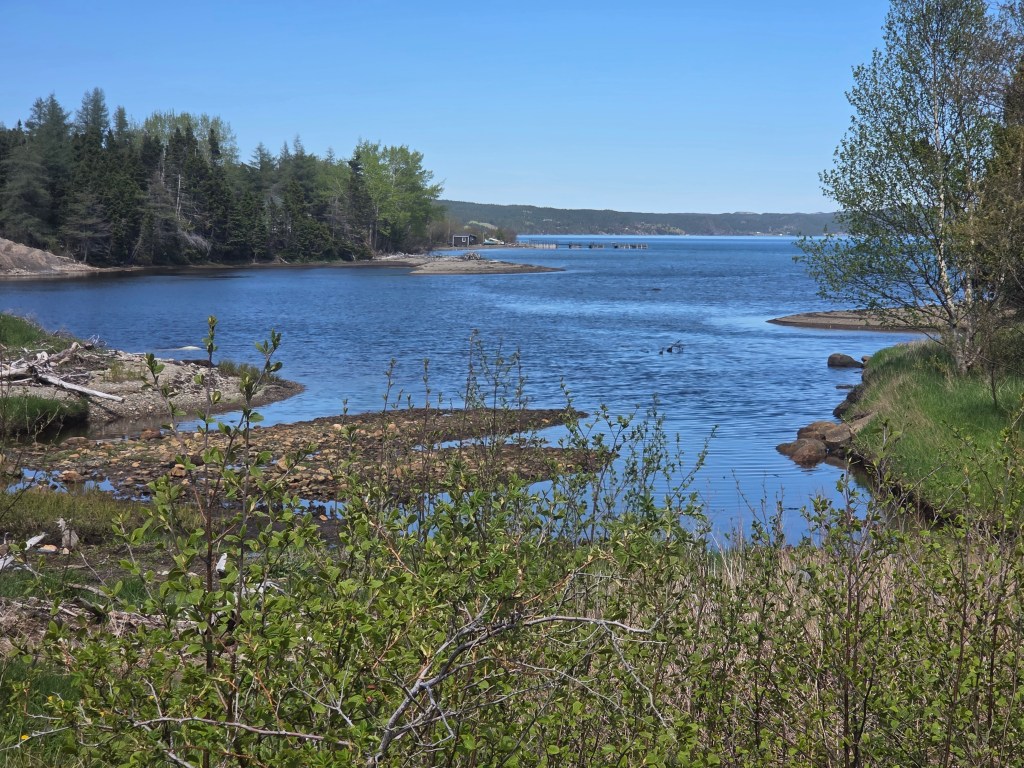
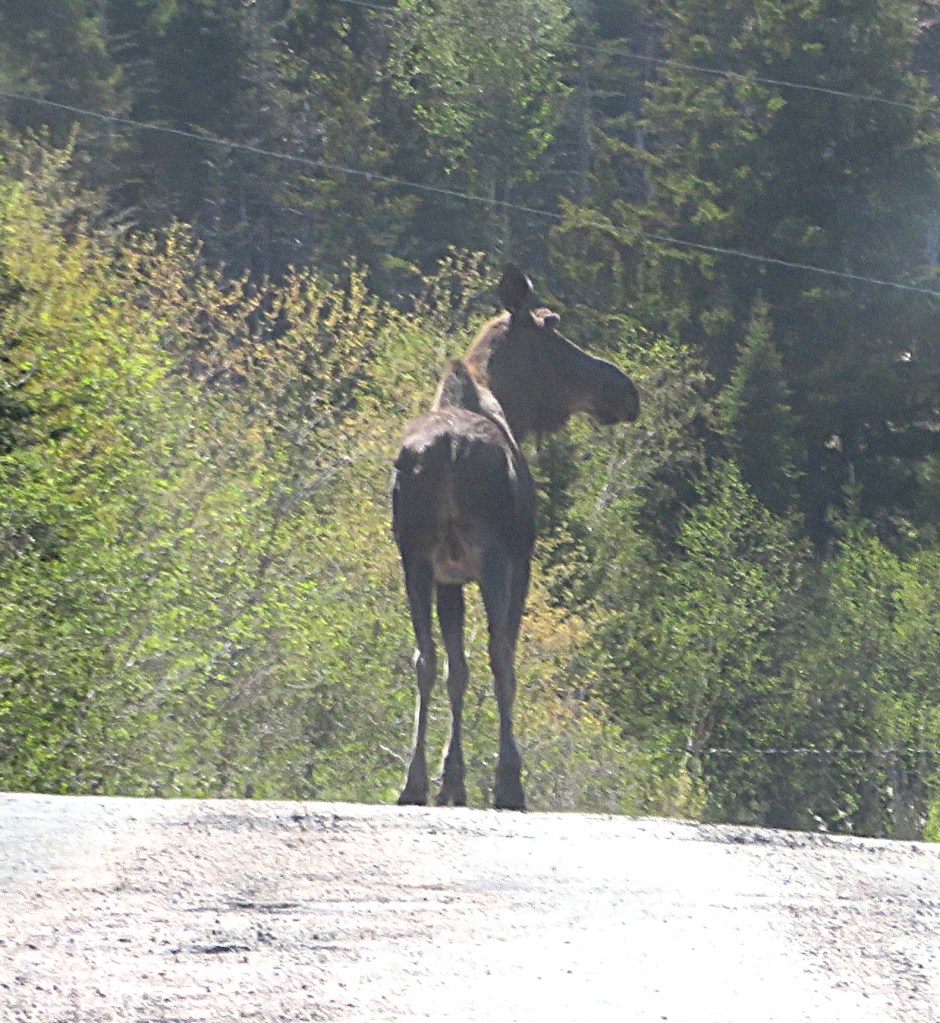
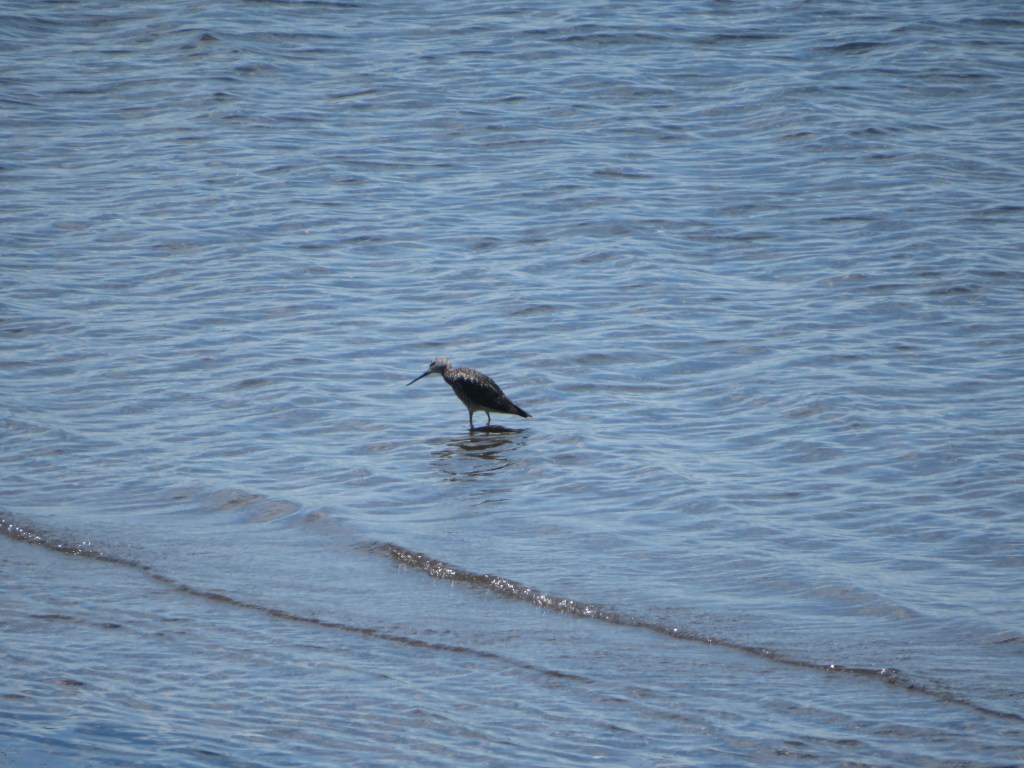
There are a few pics of some of the scenes along the way. Also, a not very good pic of a moose that walked ahead of us on the road. This is the third moose seen and the first one able to get a picture of. The bird pic, from the head of the island, is of a Greater Yellowlegs.
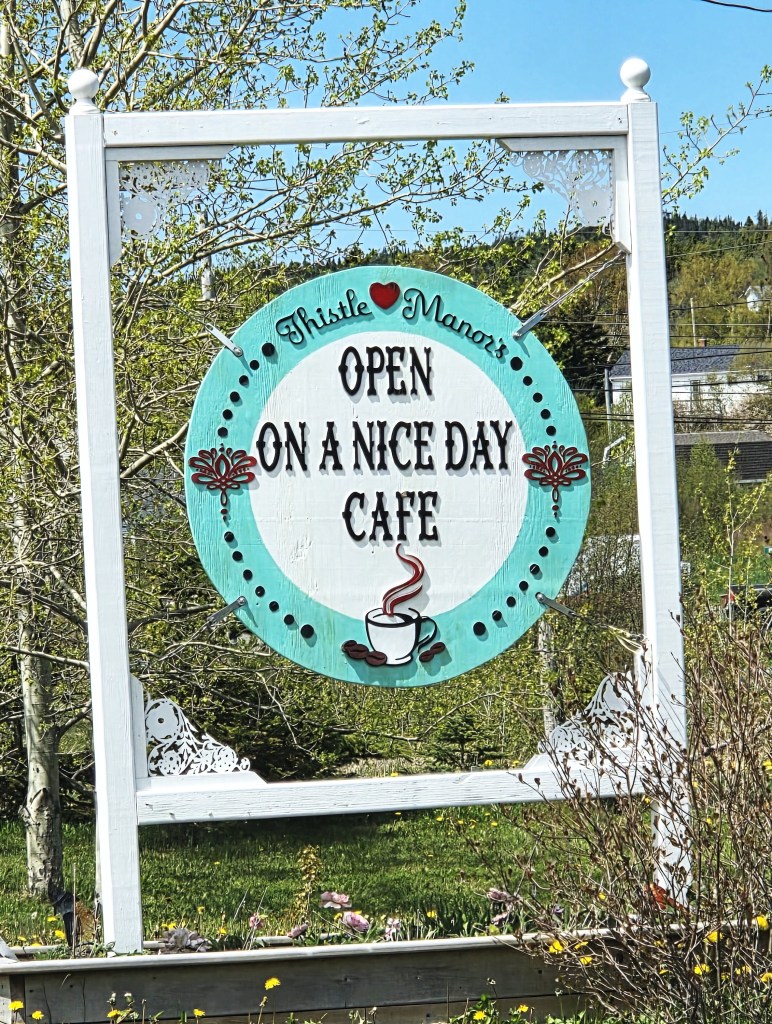
The “Open on a Nice Day Café” place was not open, even though it was a nice day! Unfortunately, Tuesday is the only day they are closed during the week.
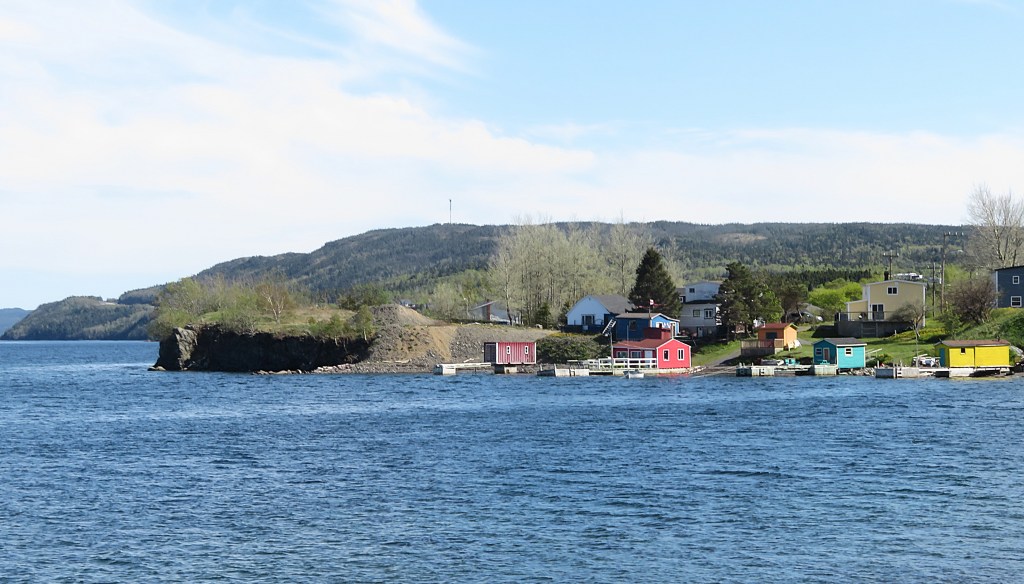
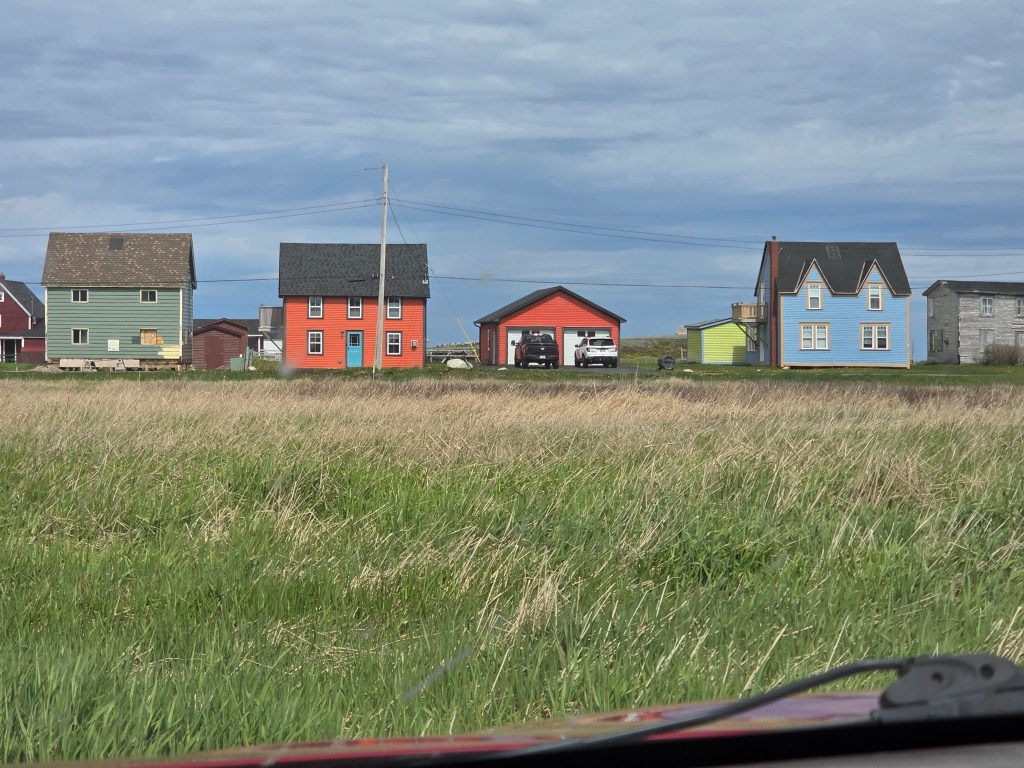
The colorful buildings along the shore were back on the mainland after exiting the island. I think we’ll see more of them as we head over to the Avalon Peninsula at our next, and last, stay in Newfoundland. We’ll be in Holyrood for nine days and will include visits to the capital city, St. John’s, while there.
(Click on thumbnail for larger picture.)
6-8
Grey, misty morning with rain forecast for the day. We’ve actually had pretty good weather for this journey. Cold, but that was expected. Much preferred rather than the 80 degree plus days that are happening back home.
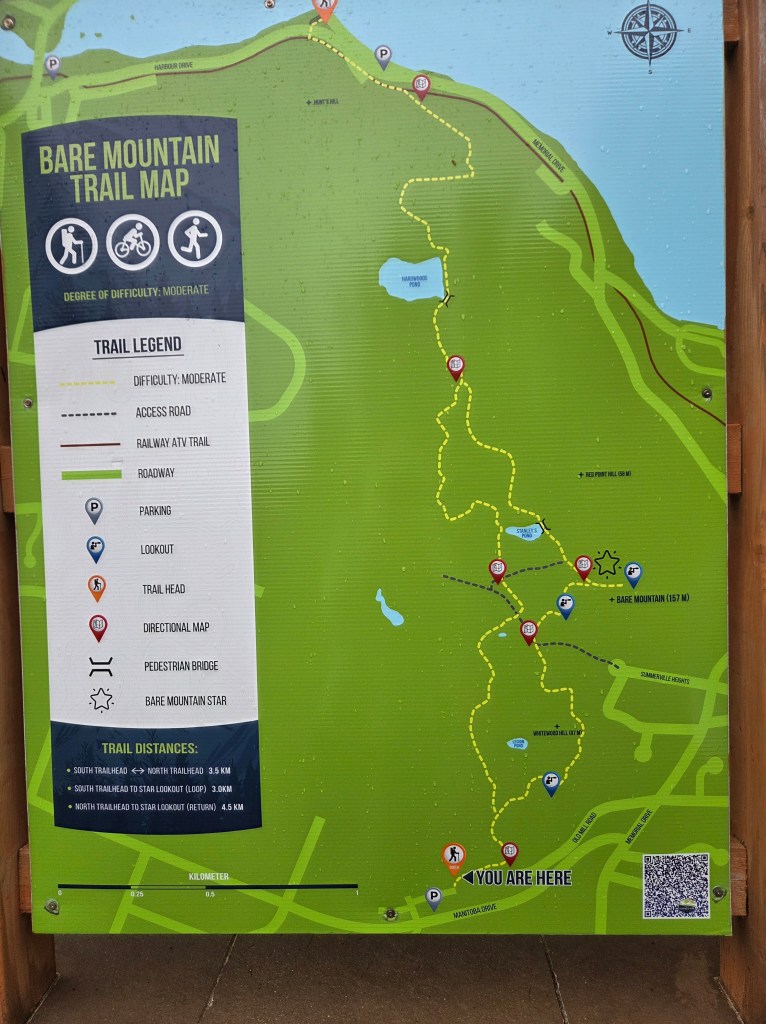
Went out for an early morning hike on Bare Mountain, just about a mile from home. There are wonderful views of the surrounding area from the trail, but not this morning, as fog hung low over the region. It was still a pleasant hike, nonetheless.
The first eleven pics below are views of the trail. The shelter is at the height of the hill and has firewood and a metal firepit inside. These are followed by some of the things we saw along the way.
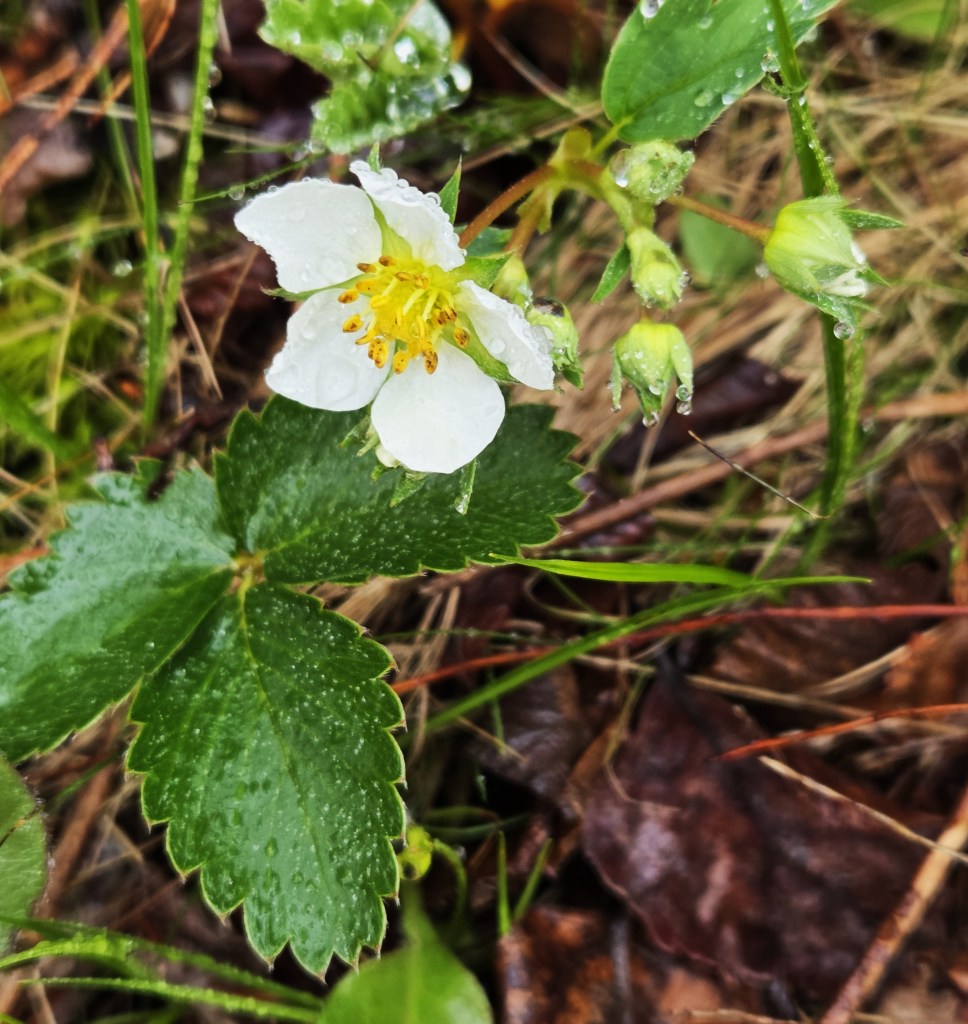
The first is a wild strawberry blossom. I saw the first one back home on May 1, five weeks ago!
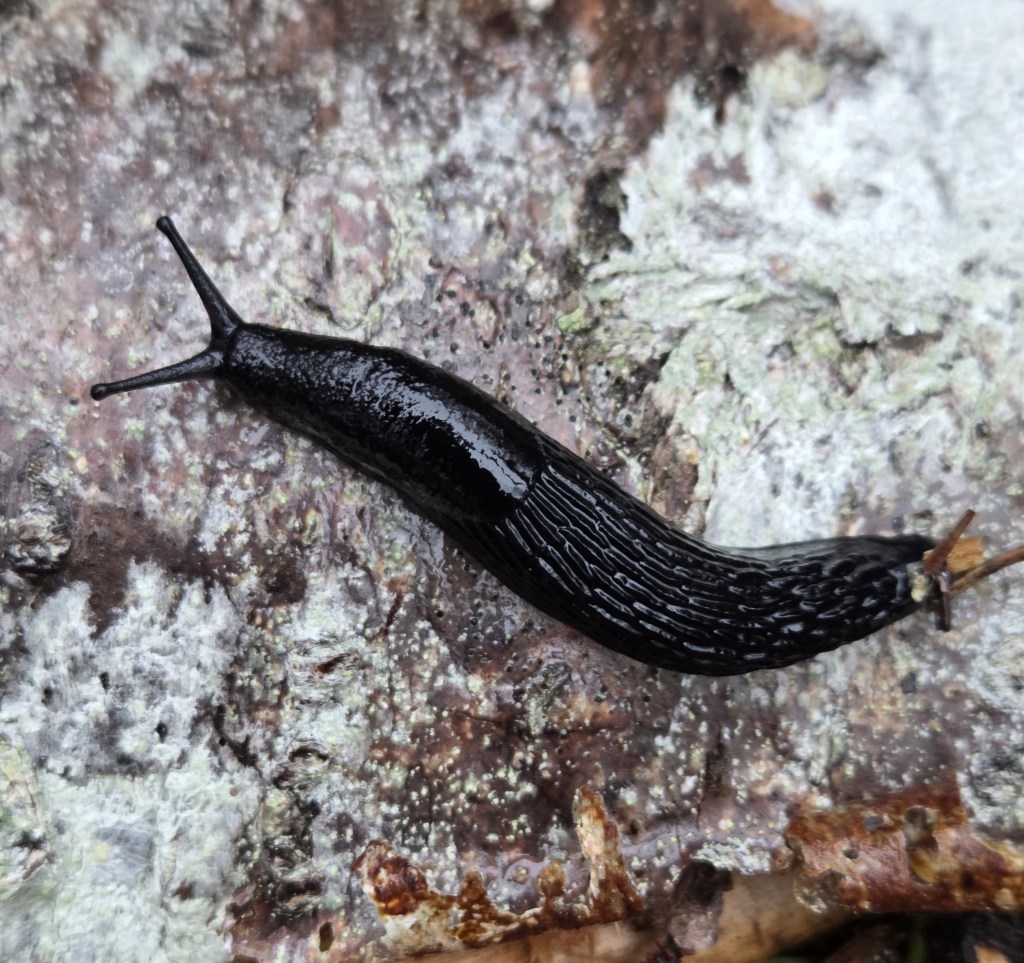
Next is a black slug. I had never seen these before and there were a lot of them on the trail. It is an invasive slug native to northern Europe.
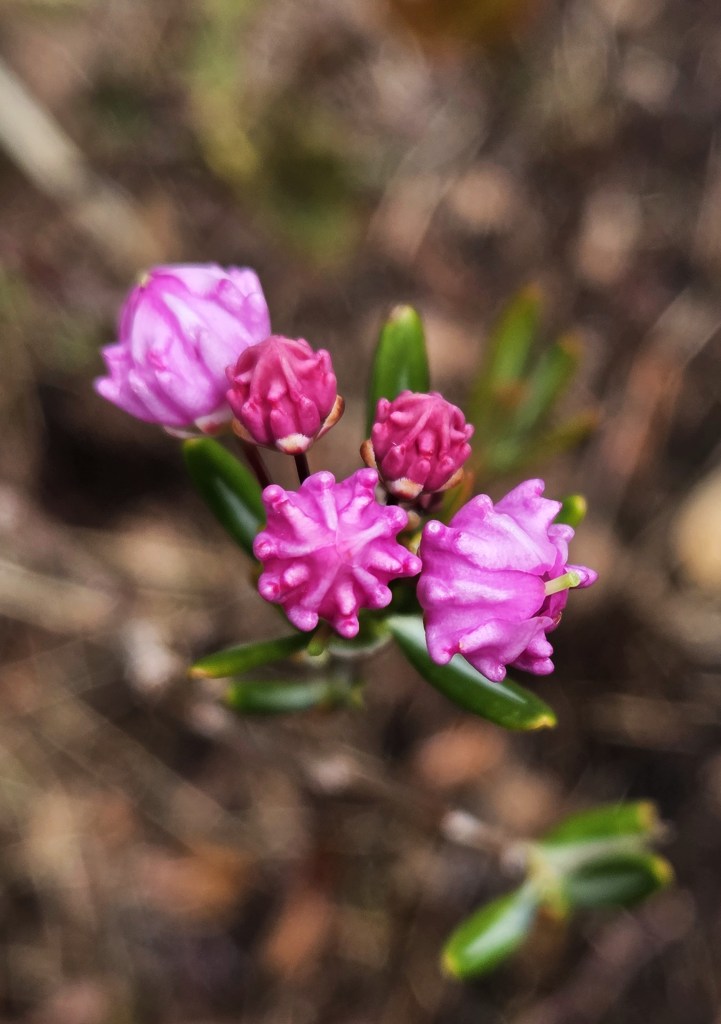
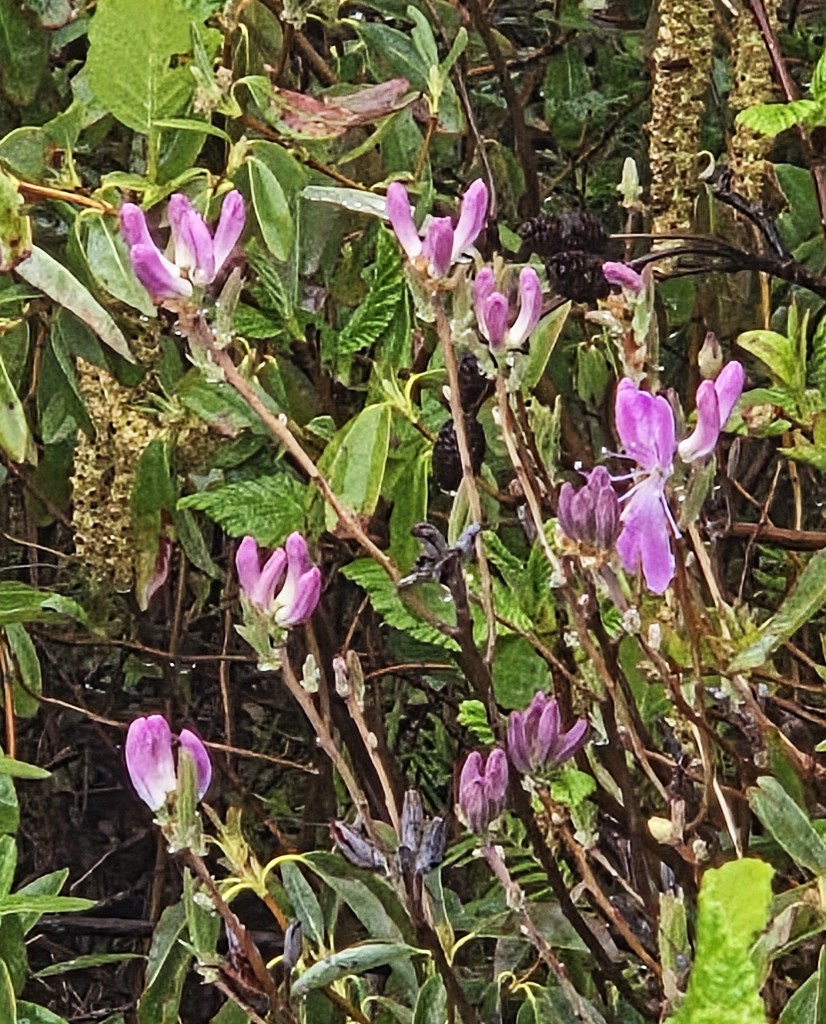
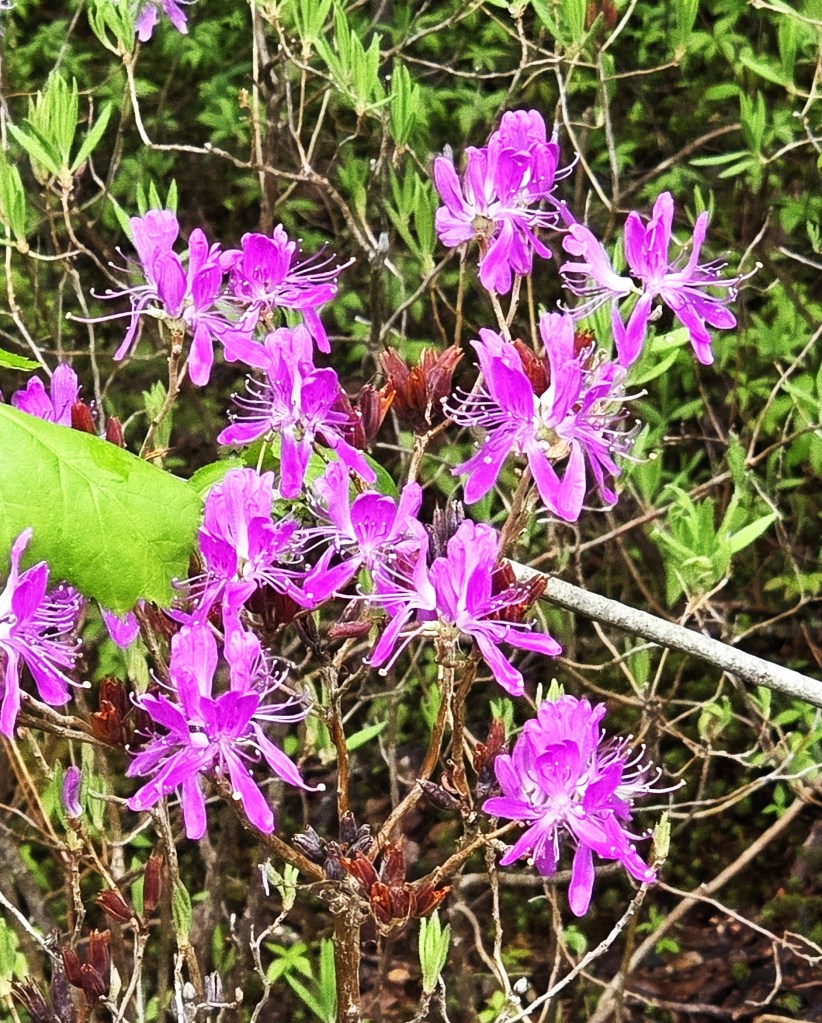
The pink flowers are Rhodora, which we had also seen earlier on the journey in western Newfoundland.
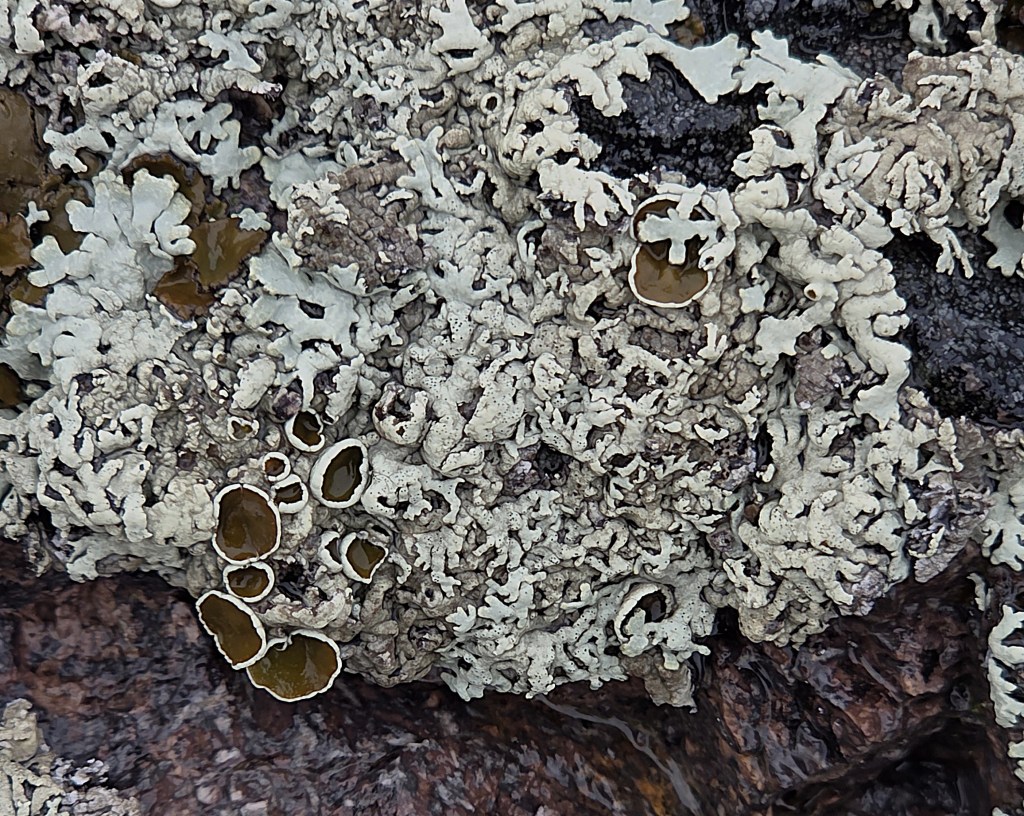
Lecanora xylophila is a crustose lichen that is more generally found on driftwood. The brown cups are the fruiting part of the lichen.
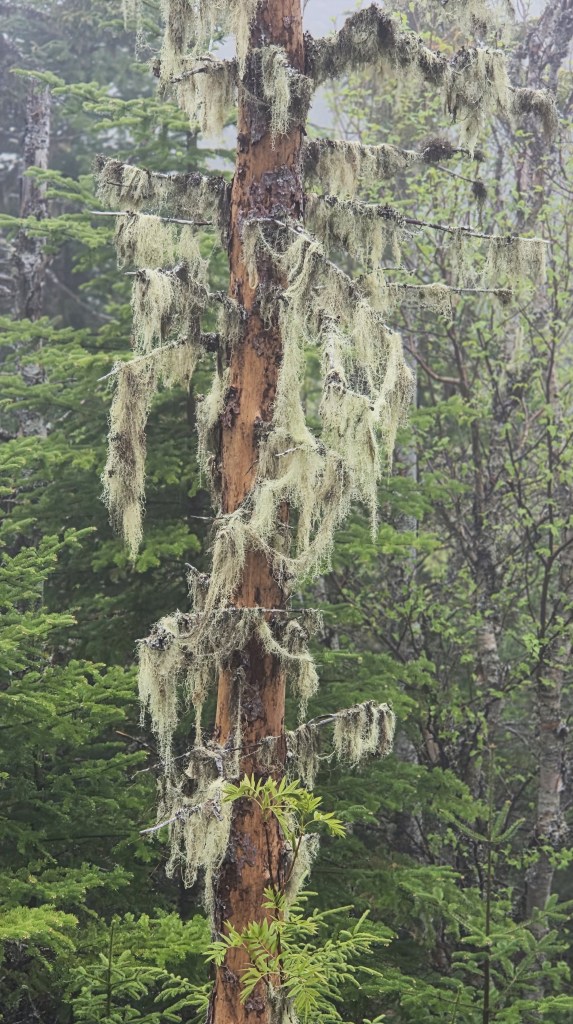
The final pic from the hike is a tree covered in “Old Man’s Beard” lichen. Whenever I see this I think of an old haiku of mine:
in damp seaside woods
old man’s beard lichen on tree
image of myself
Back at home, in the shared kitchen, we met Maggie and Beau, two Chinese Americans from Michigan. I, of course, brought up my connection to Chinese poets, mentioning Su Shi and T’ao Ch’ien. And they, of course, knew of them and Maggie even spoke about a particular poem of T’ao Ch’ien’s. I believe it was this one:
I built my hut within where others live,
But there is no noise of carriages and horses.
You ask how this is possible:
When the heart is distant, solitude comes.
I pluck chrysanthemums by the eastern fence
And see the distant southern mountains.
The mountain air is fresh at dusk.
Flying birds return in flocks.
In these things there lies a great truth,
But when I try to express it, I cannot find the words.
Also learned that they left China after the Tiananmen Square protests in 1989. They felt the repression in China has gotten even worse since then.
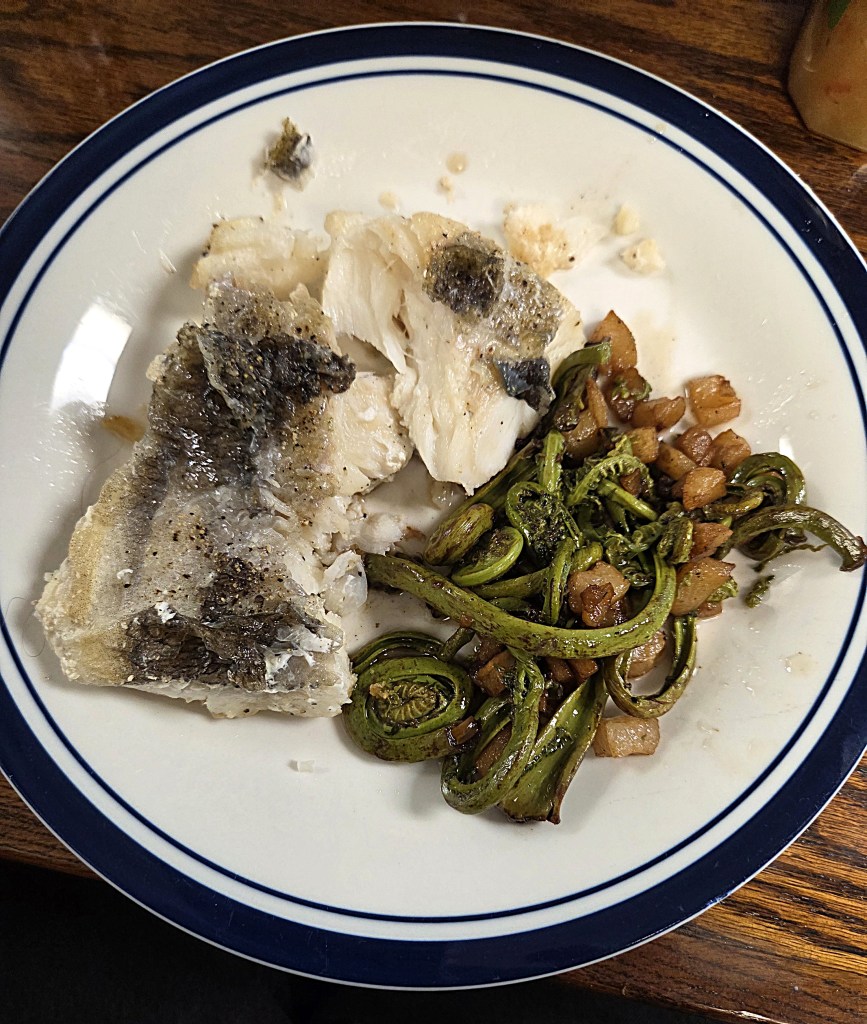
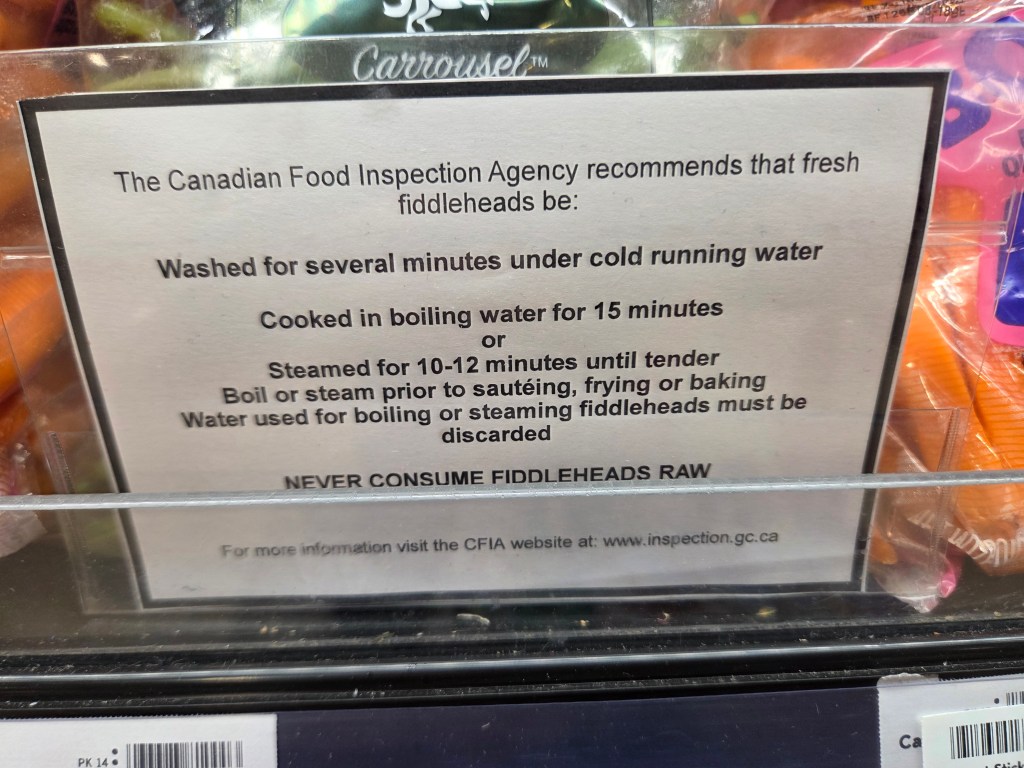
Cooked dinner at the house. Pan fried cod, that Dennis gave us in Raleigh, along with scrunchions and fiddleheads. Scrunchions are a traditional Newfoundland dish, consisting of crispy, fried, bite-sized pieces of pork fat and salt pork rinds. The fiddleheads were purchased fresh in a grocery store here. The last pic is the sign that was next to them in the store.
(Click on thumbnail for larger picture.)
6/7
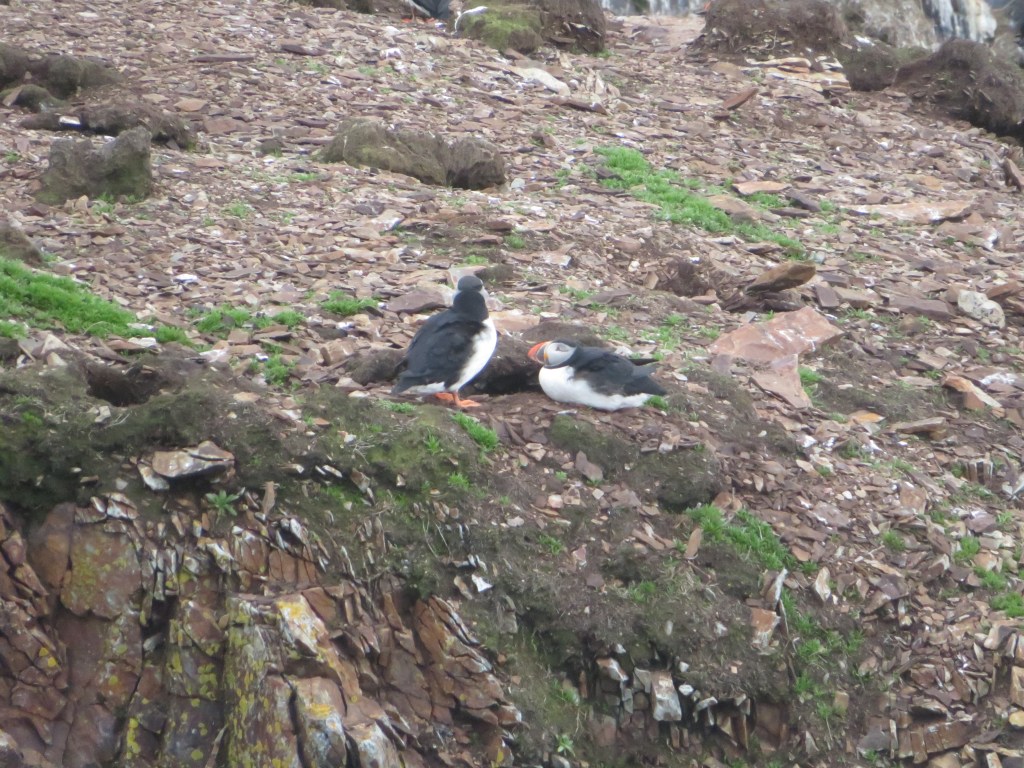
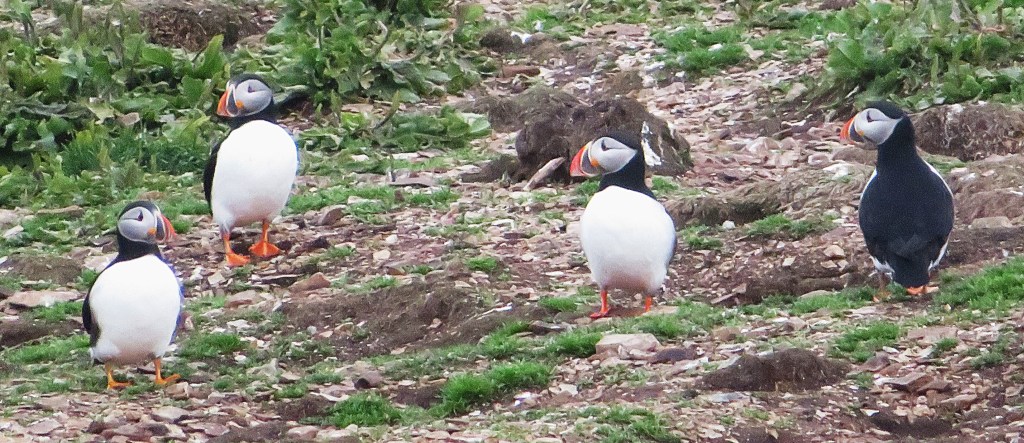
Drove out from home at about 5:15 to spend the day on the Bonavista Peninsula. The main reason for going there was to see Atlantic Puffins for the first time ever. The peninsula is known for much more than just the Puffins though. Striking coastline, picturesque seacoast villages. It has often been mentioned by people we’ve talked with as a place to explore.
It is about an hour and a half drive to the Puffin site, where you can see them from the land. A fair portion of the road there was under construction, though there were no work crews out at that time of the morning. Still, had to weave the car around numerous potholes and bumps along the way.
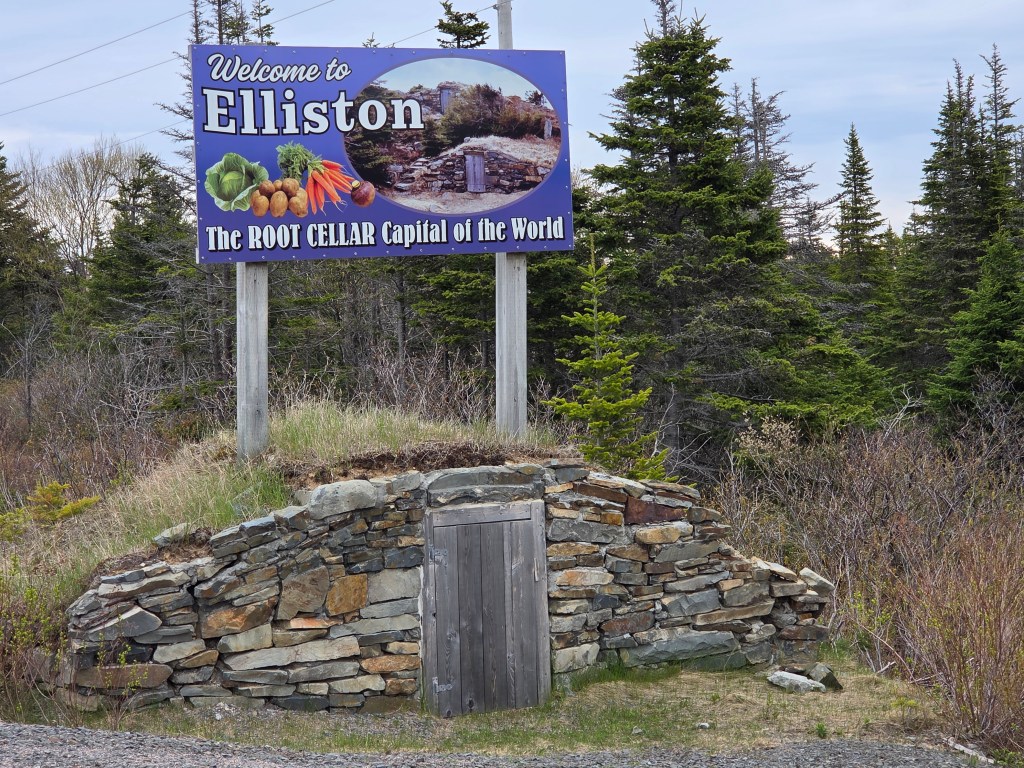
The Puffin site is by the town of Elliston, which is also known as the Root Celler capital of the world. That was an extra bonus for traveling up this way.
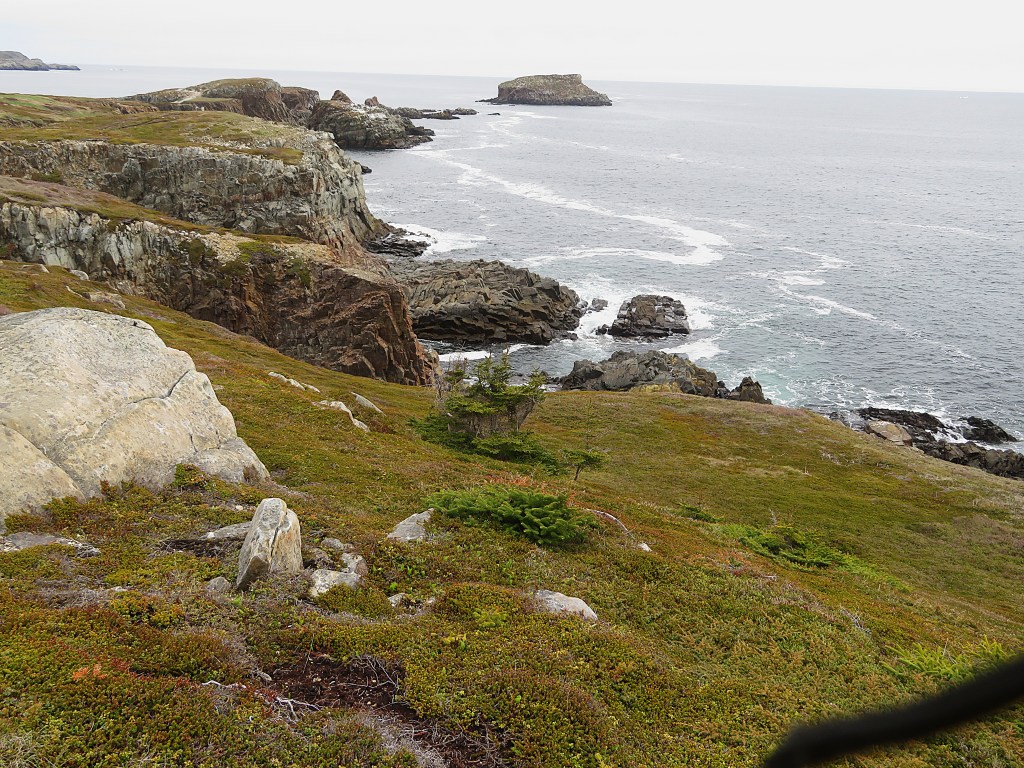
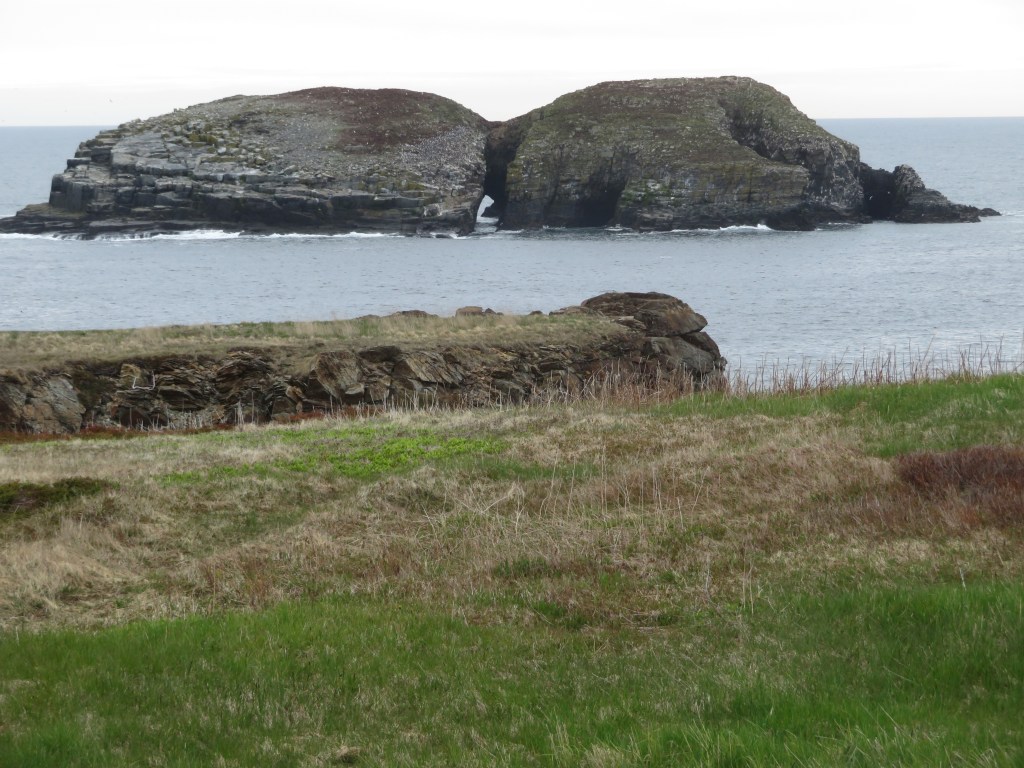
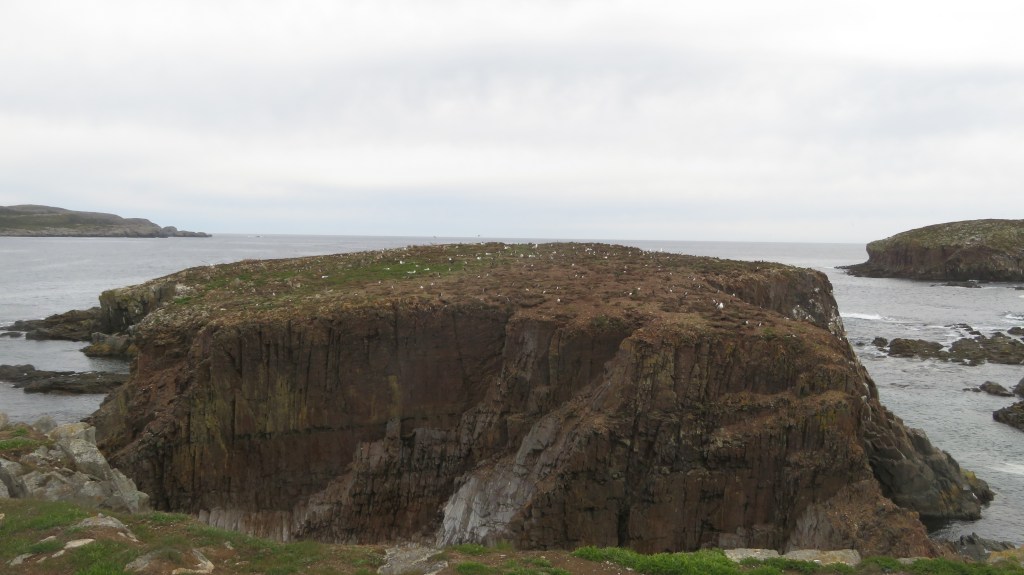
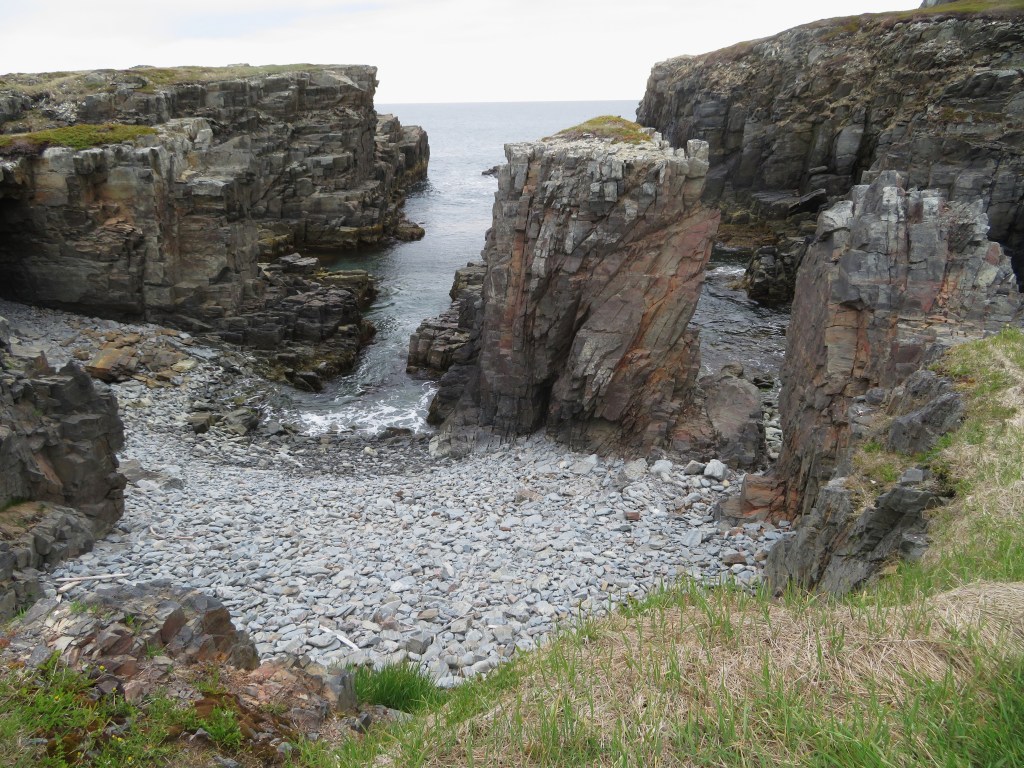
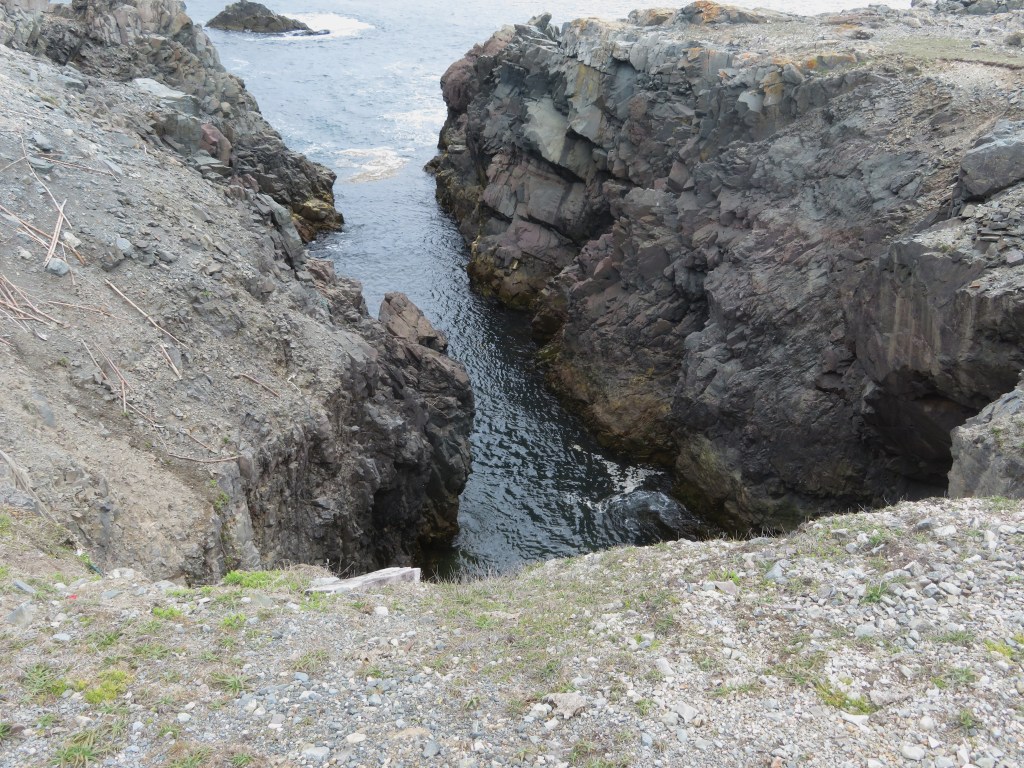
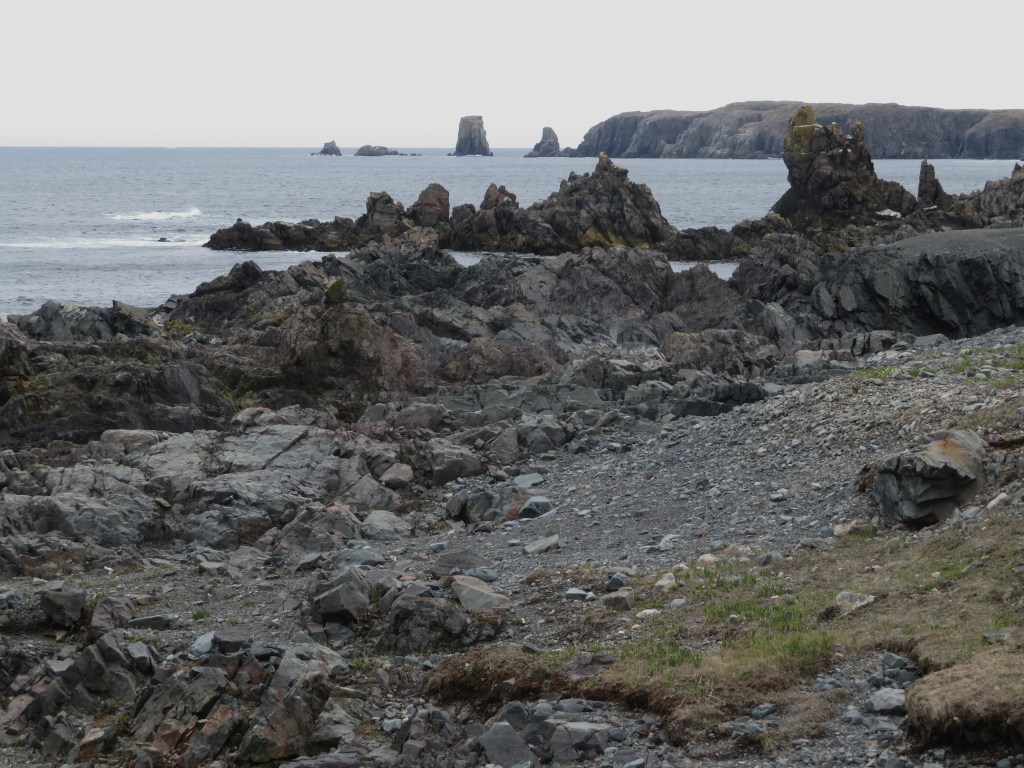
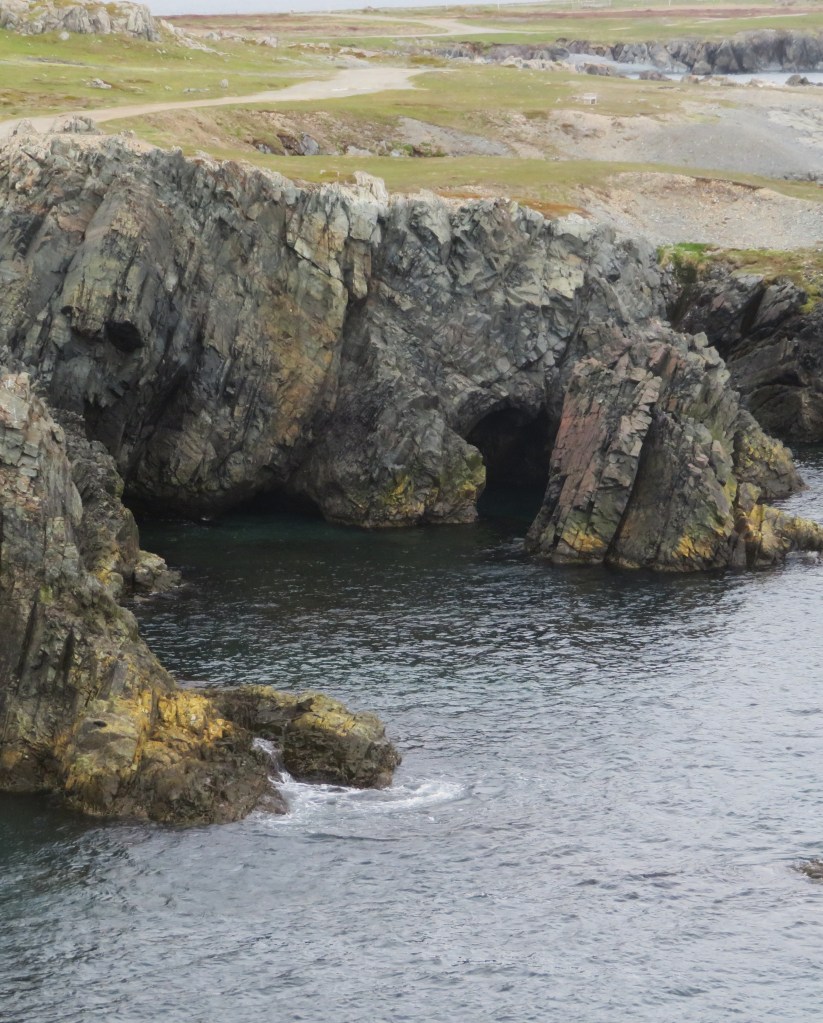
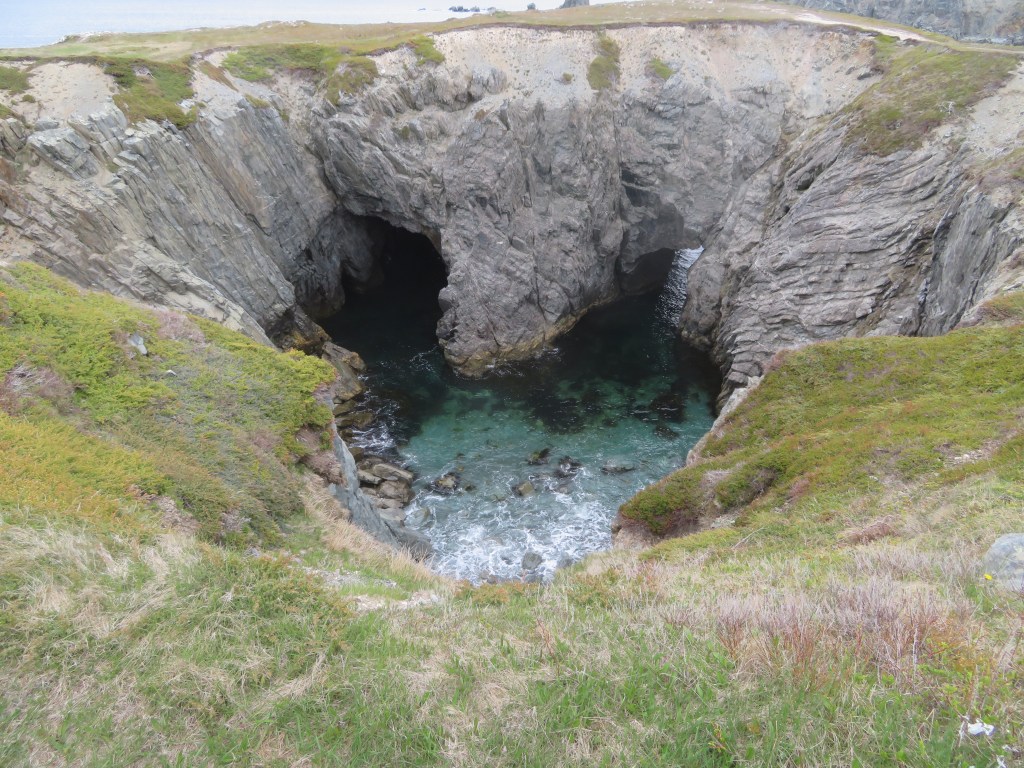
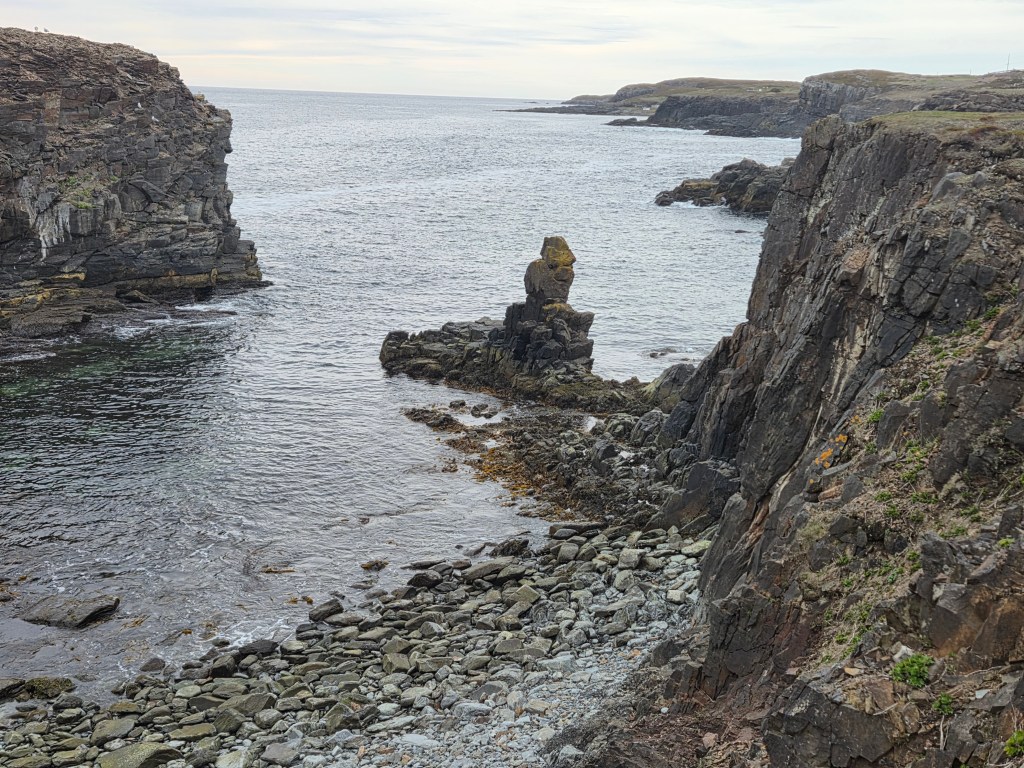
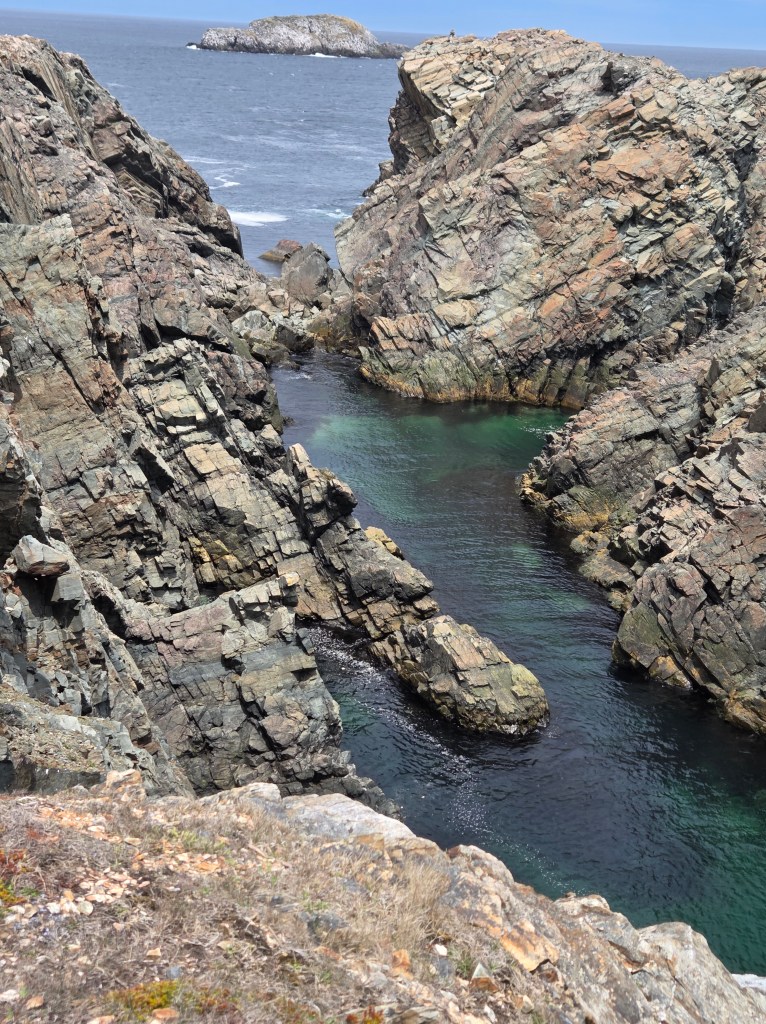
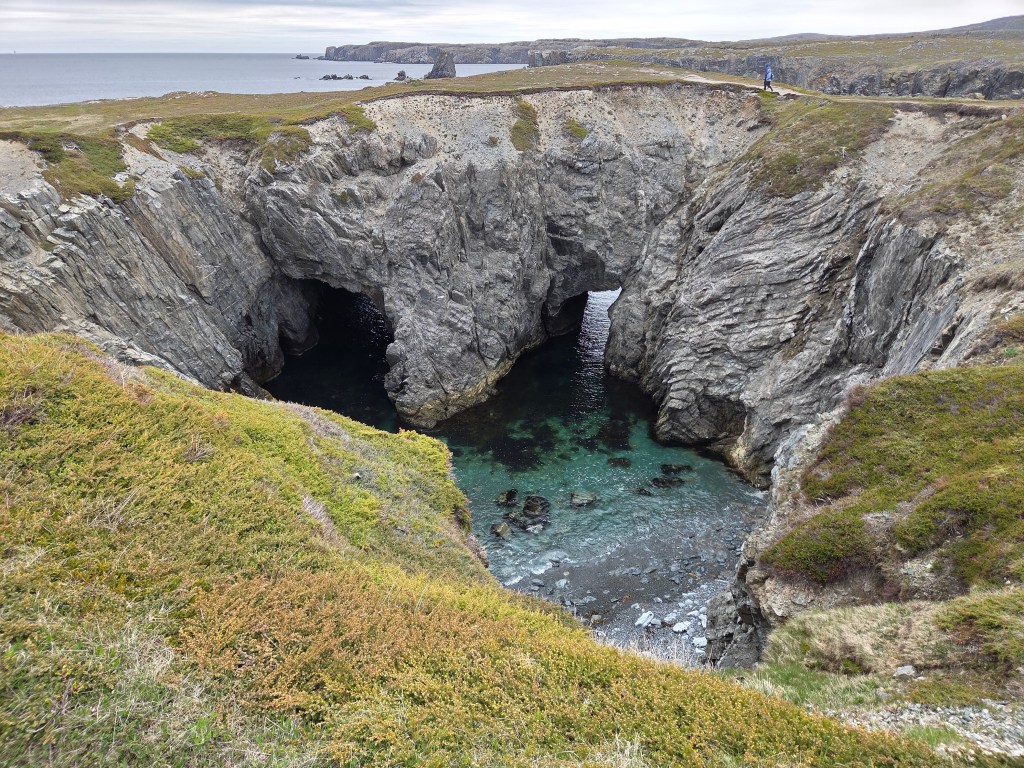
The coastline here is spectacular. There are a number of pics below that don’t need words.
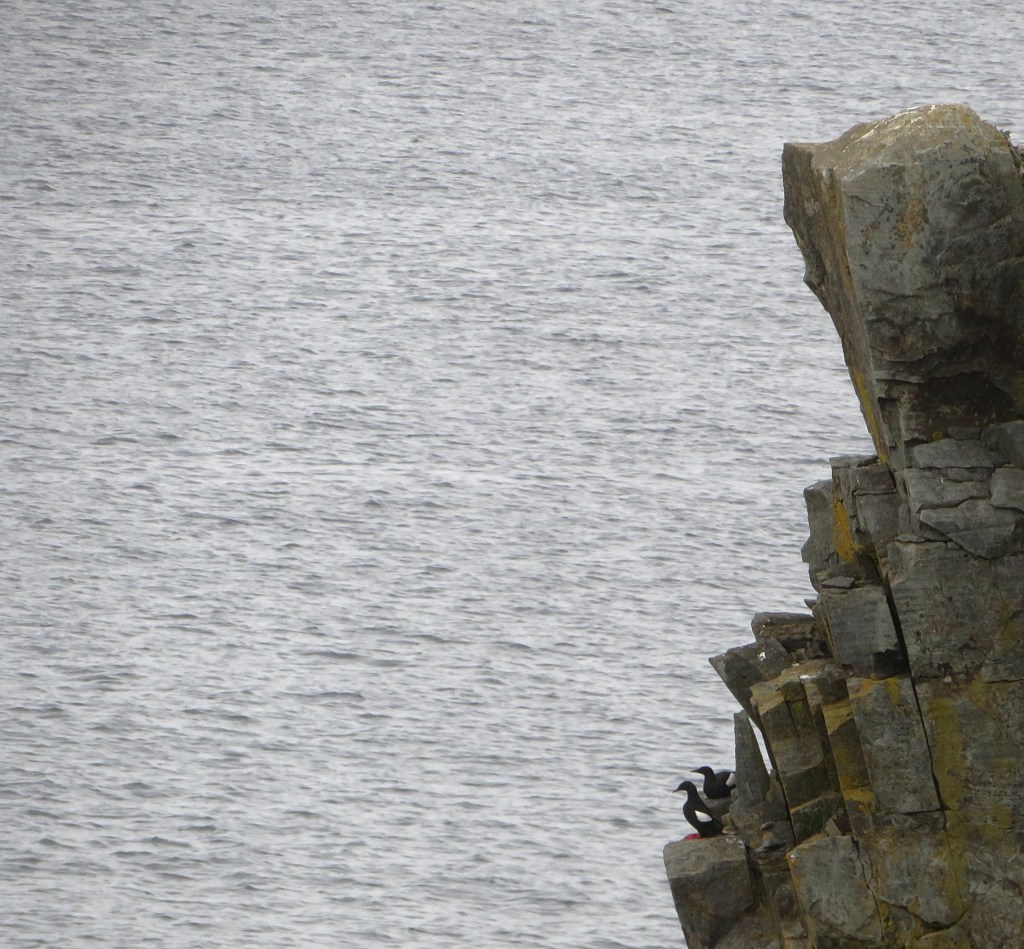
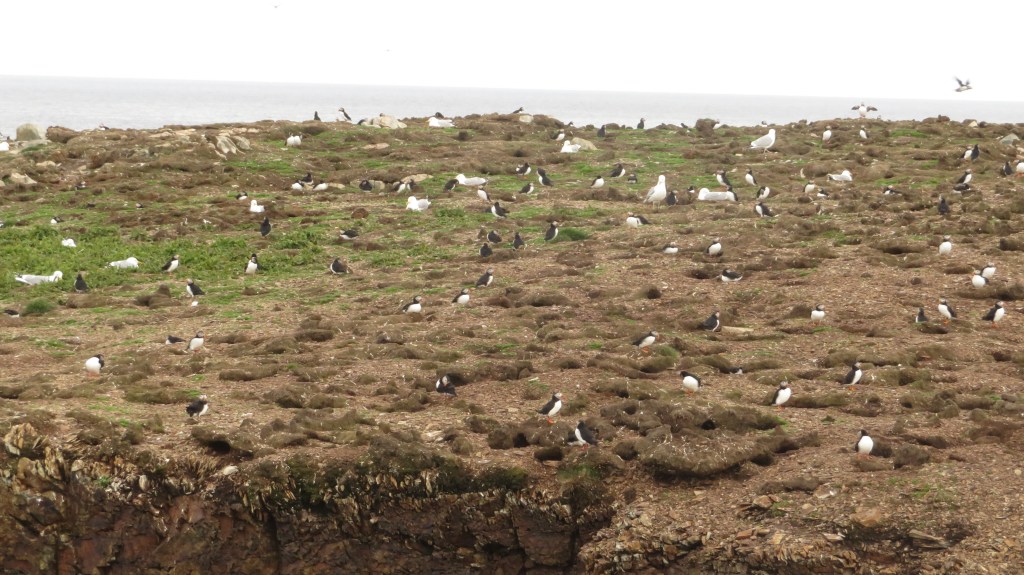
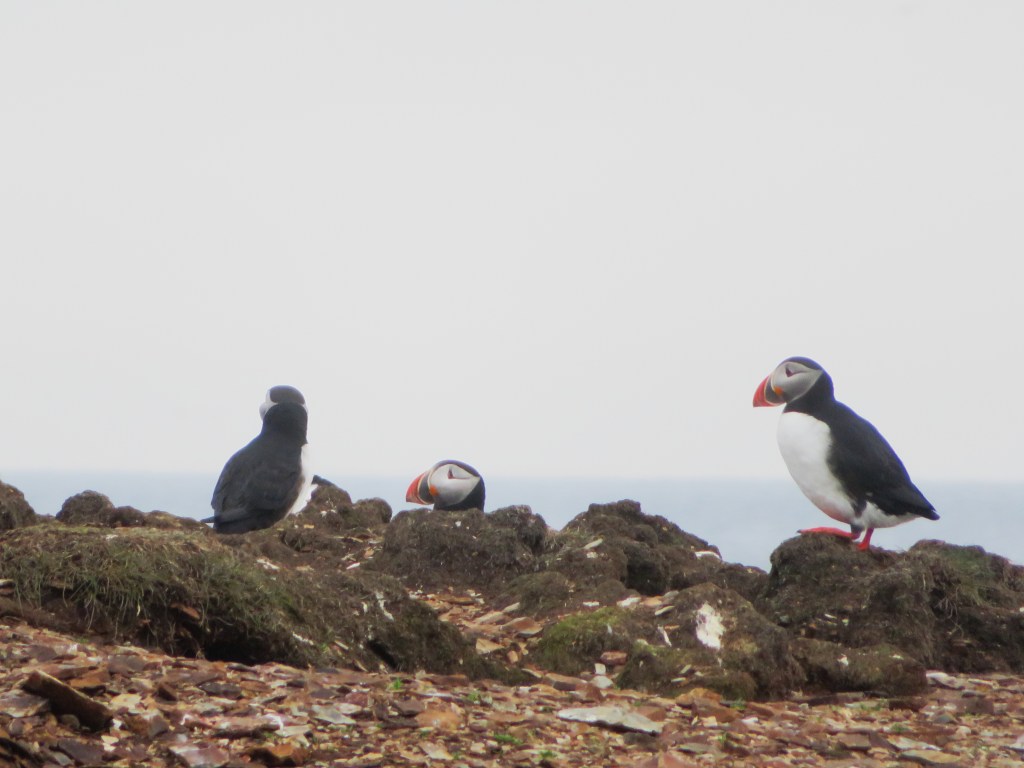
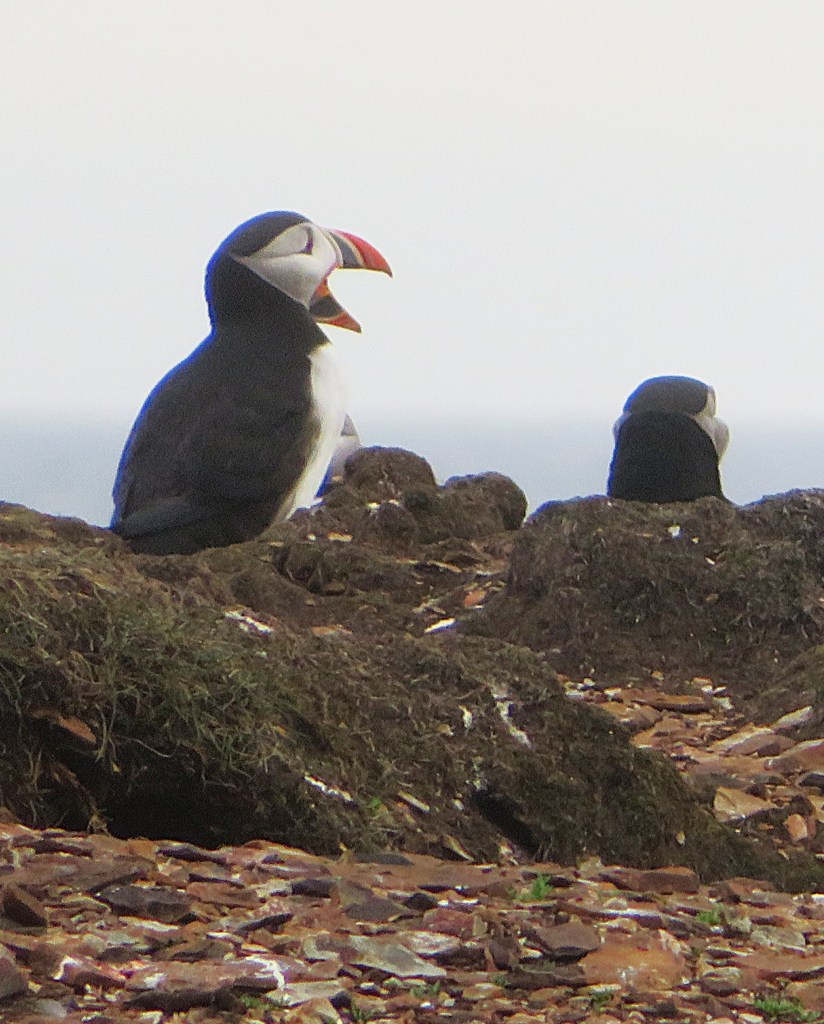
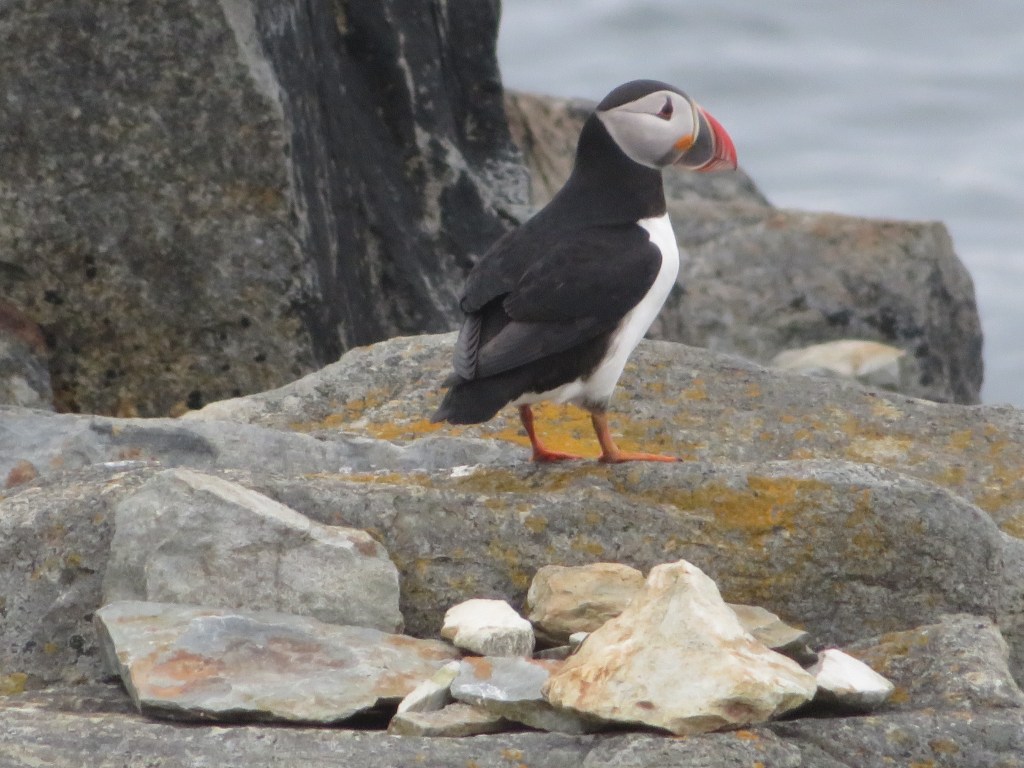
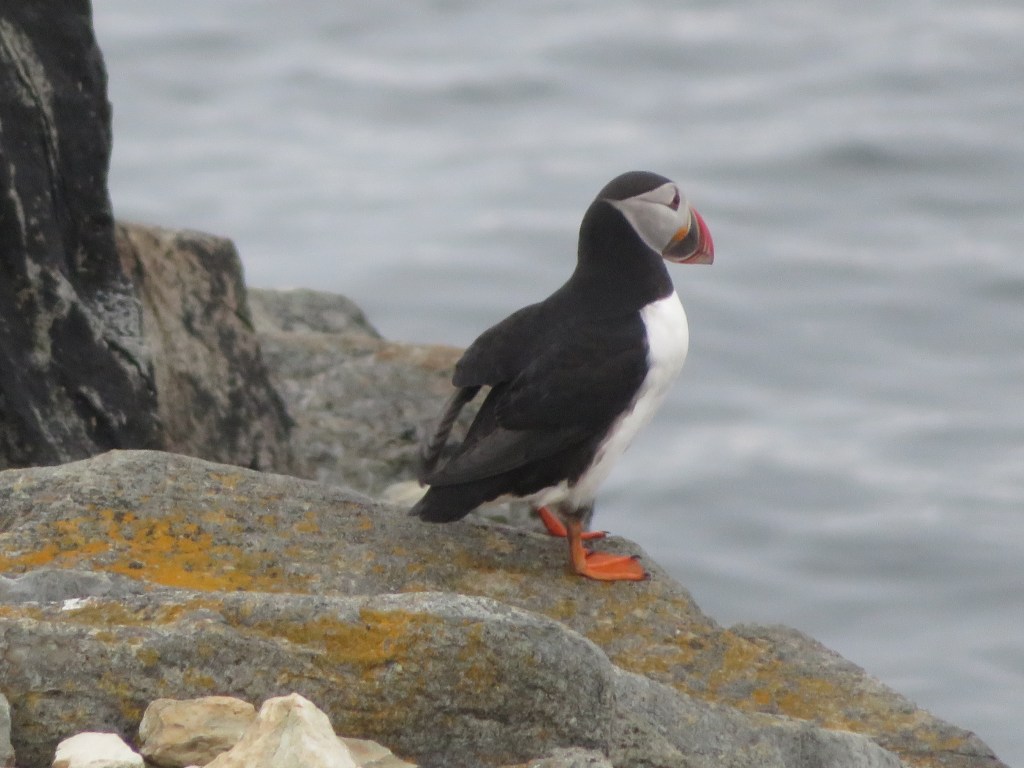
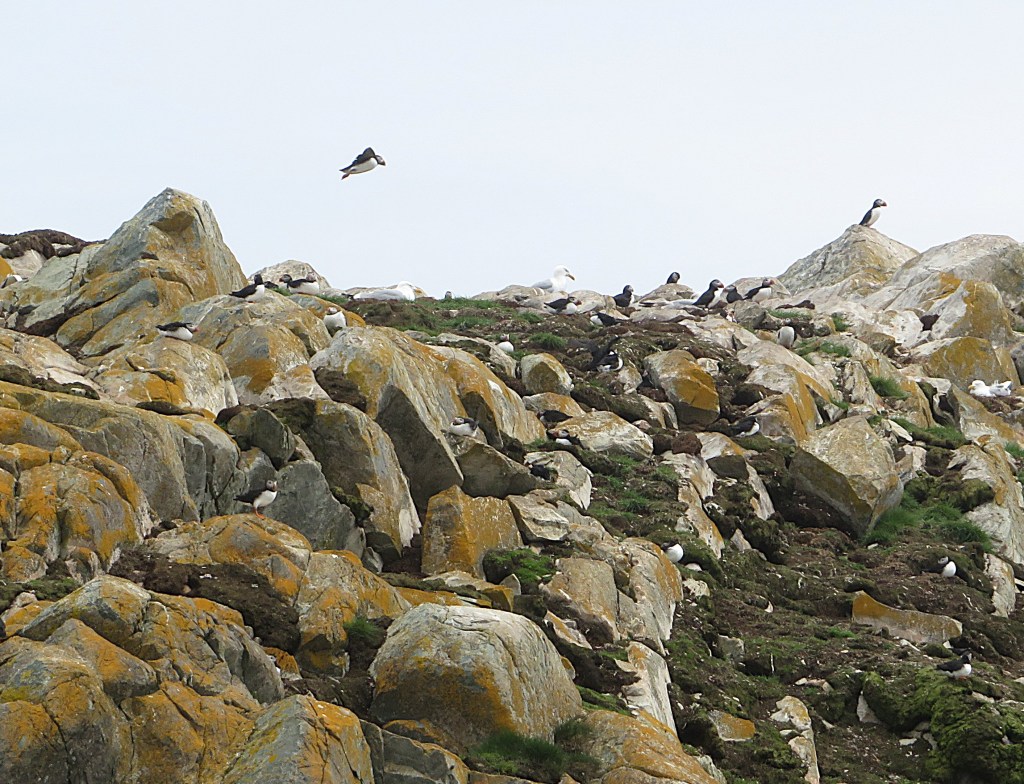
Same with the Puffin pics. What words to describe? For decades I’ve hoped to see Puffins, hoping maybe to get a surprise look at one along the Acadia National Park coast, which would be rare. I never wanted to take a chartered boat ride out to see them in Maine at Machias Seal Island.
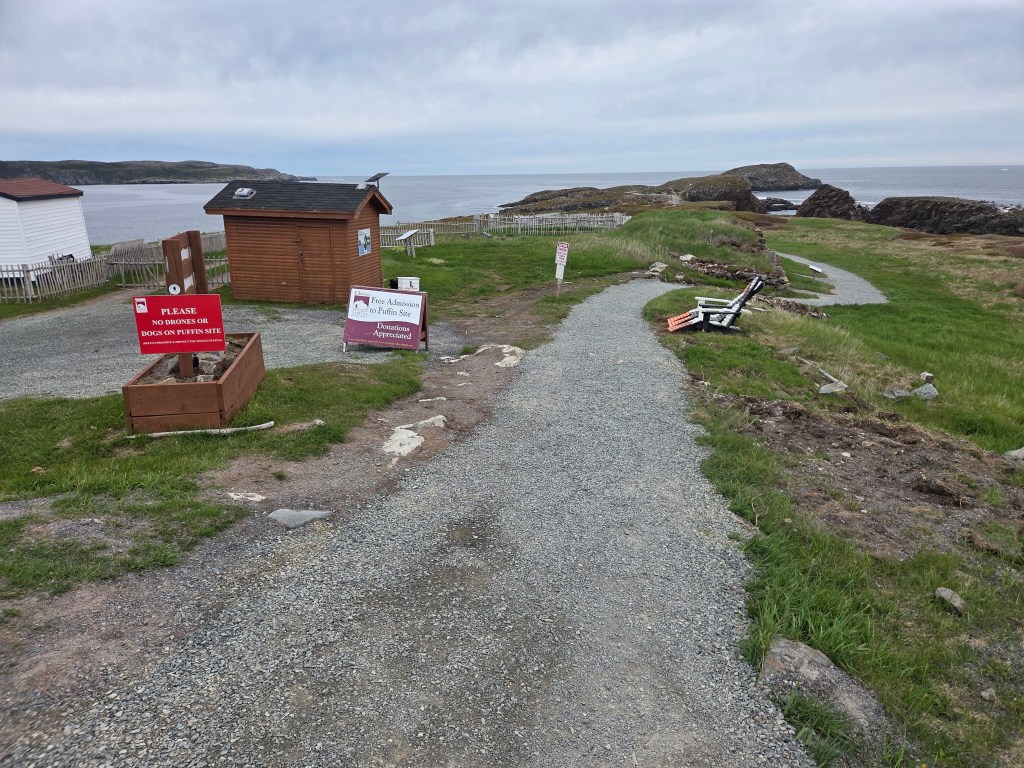
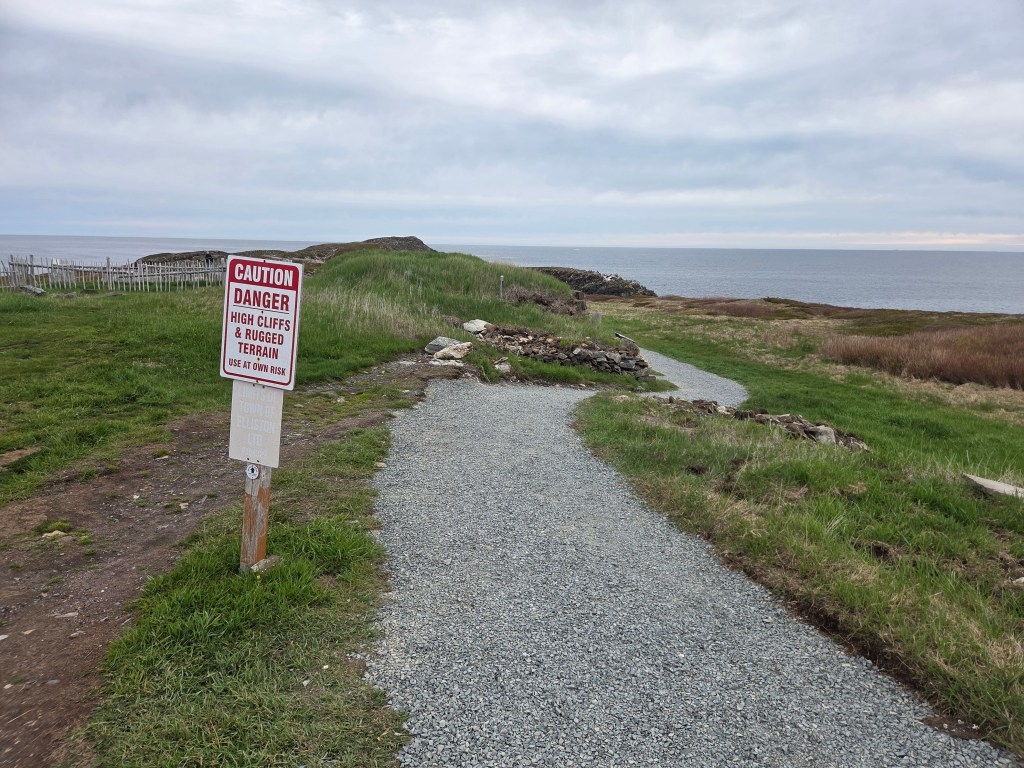
This moment was special for me. There was a tingle of excitement coursing through as I walked the path that led to the viewing site. Then there they were, countless numbers of them on a flat-topped rocky island prominence just a good strong-armed stone throw away! There are quite a few pics below that don’t need words to explain.
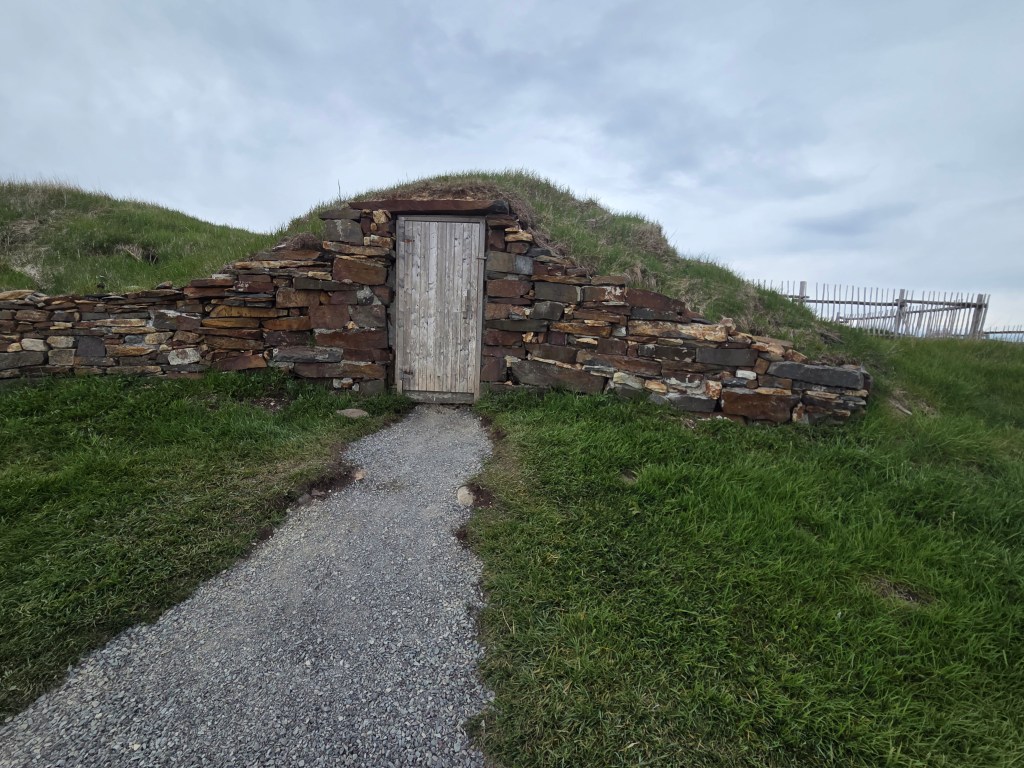
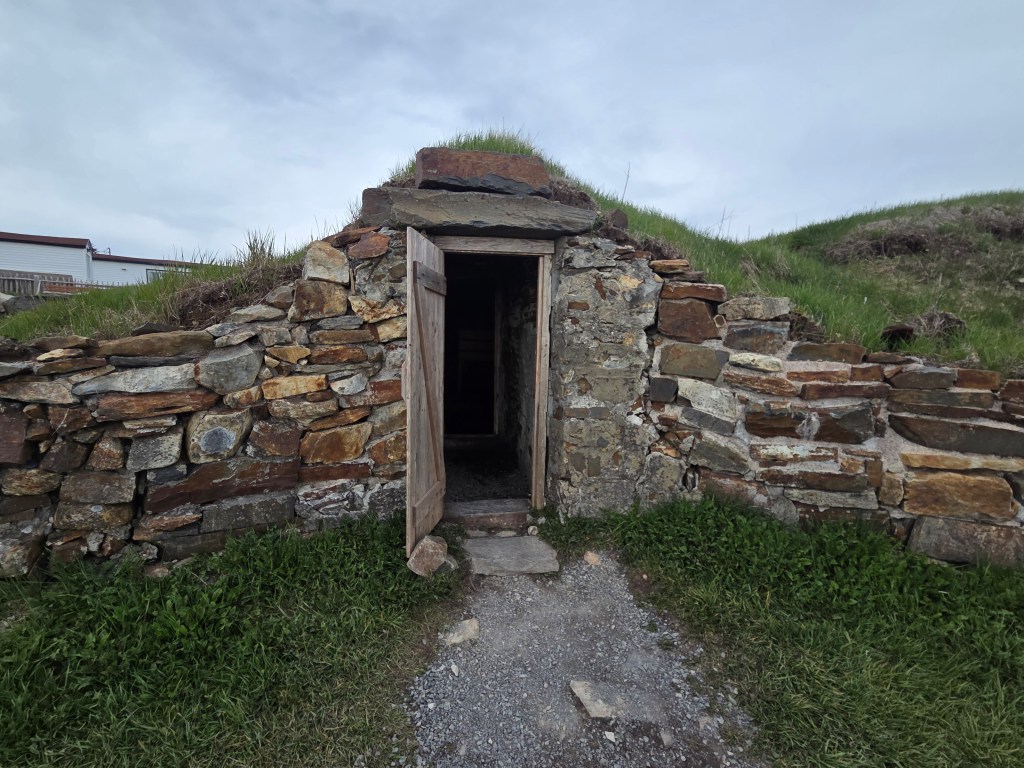
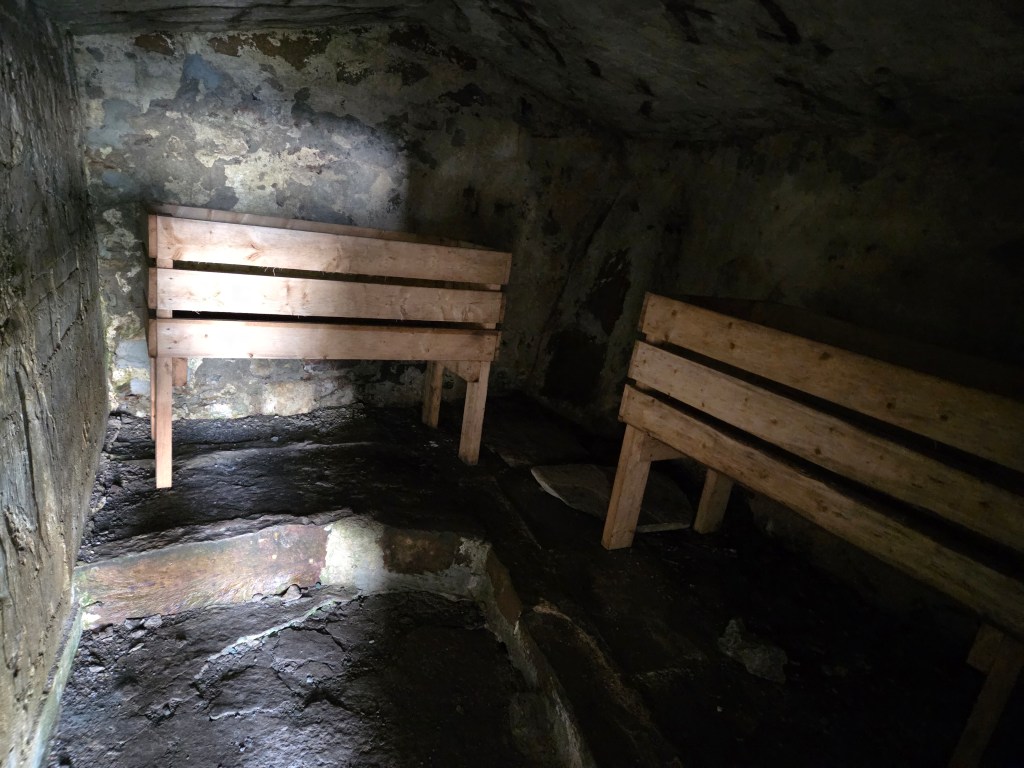
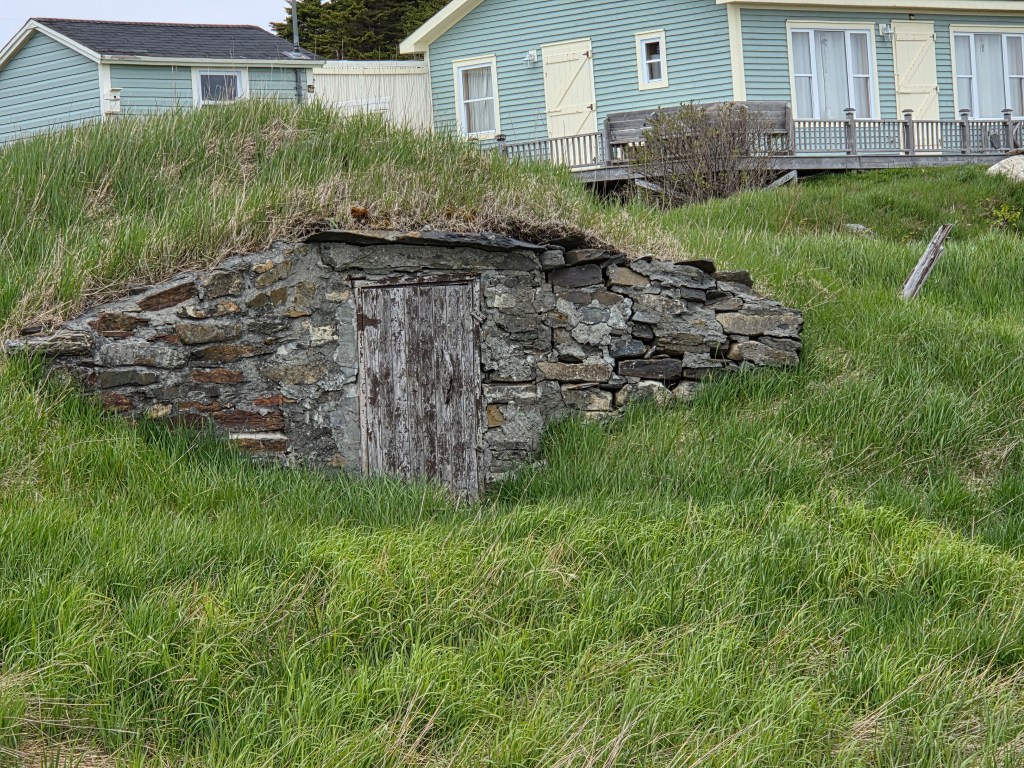
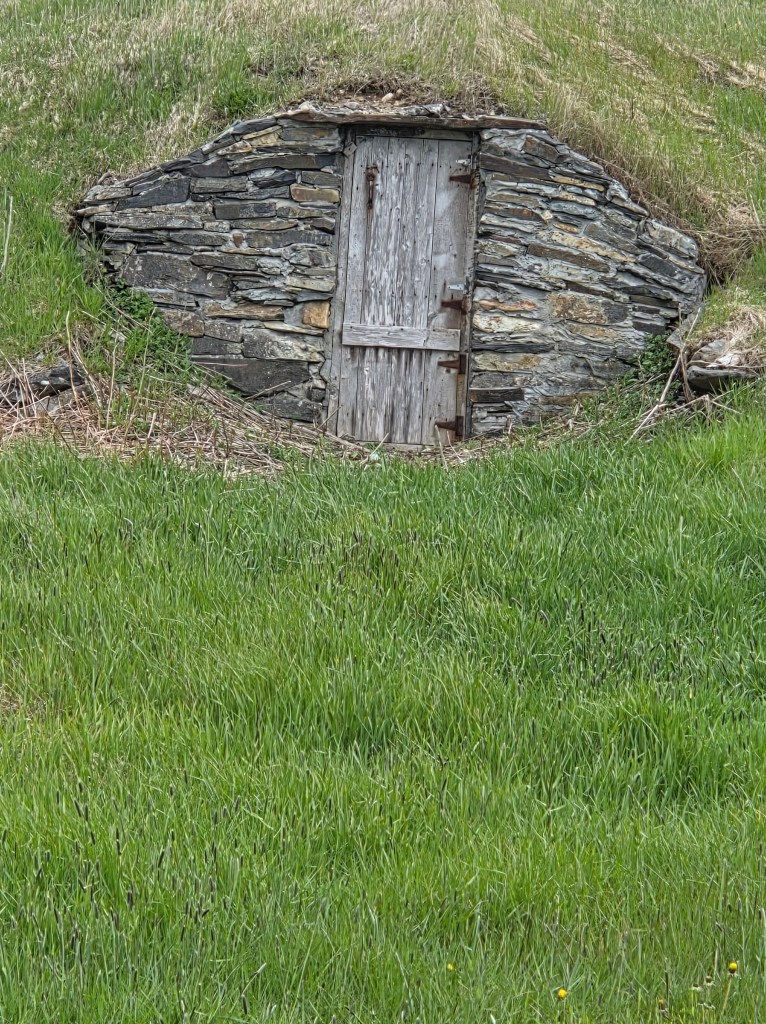
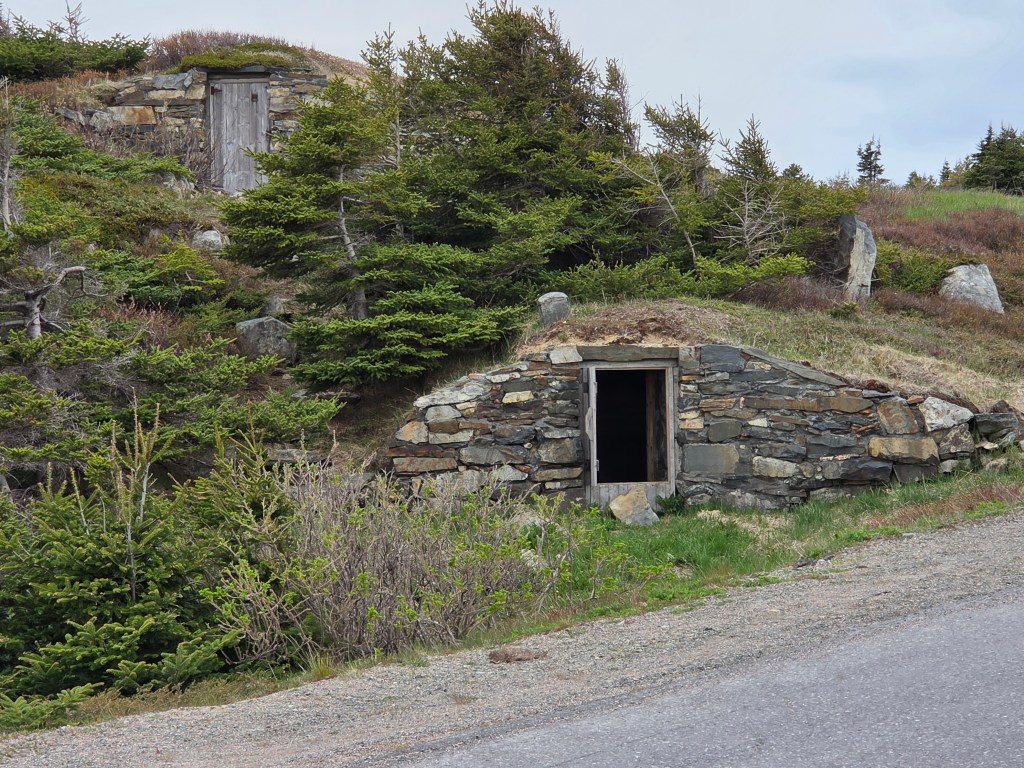
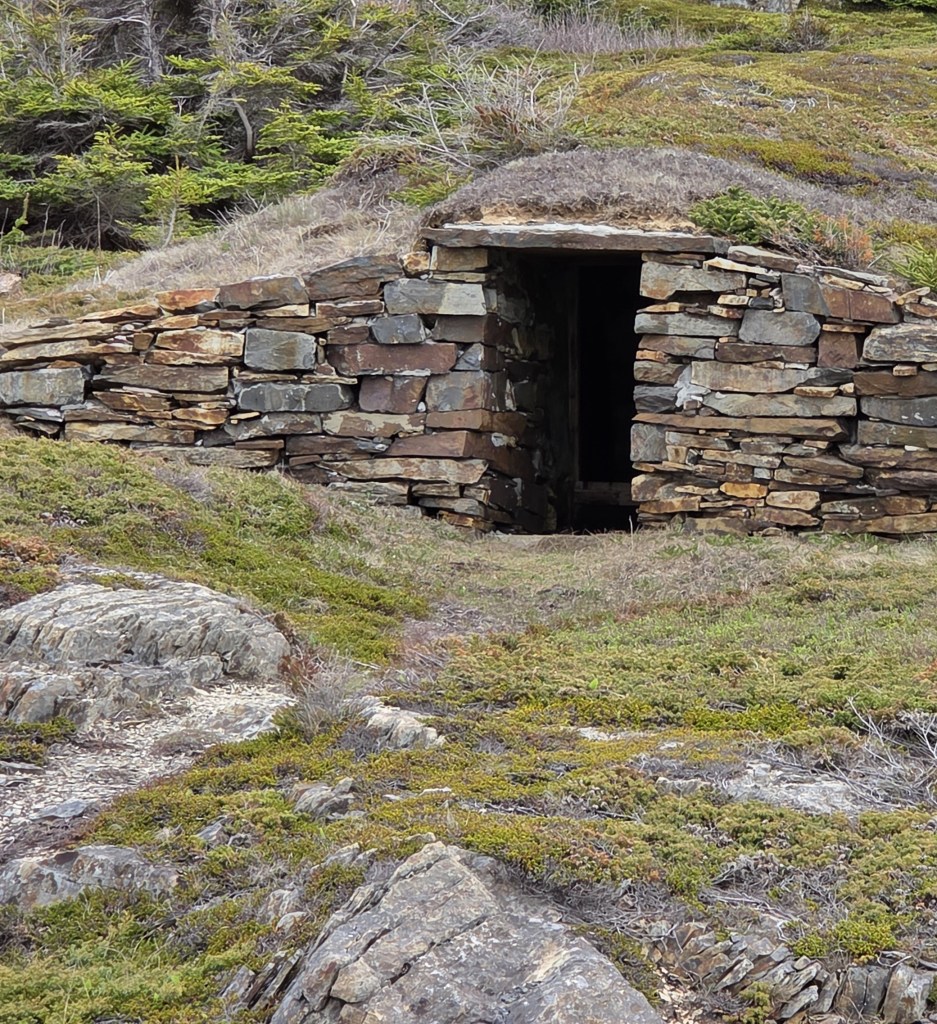
Root cellars. There are over 130 root cellars in Elliston that have been documented. It’s fascinating to see them here and there along the few roads in the area. (pics) This was the way people stored food over the long, harsh winters here in the days before electricity.
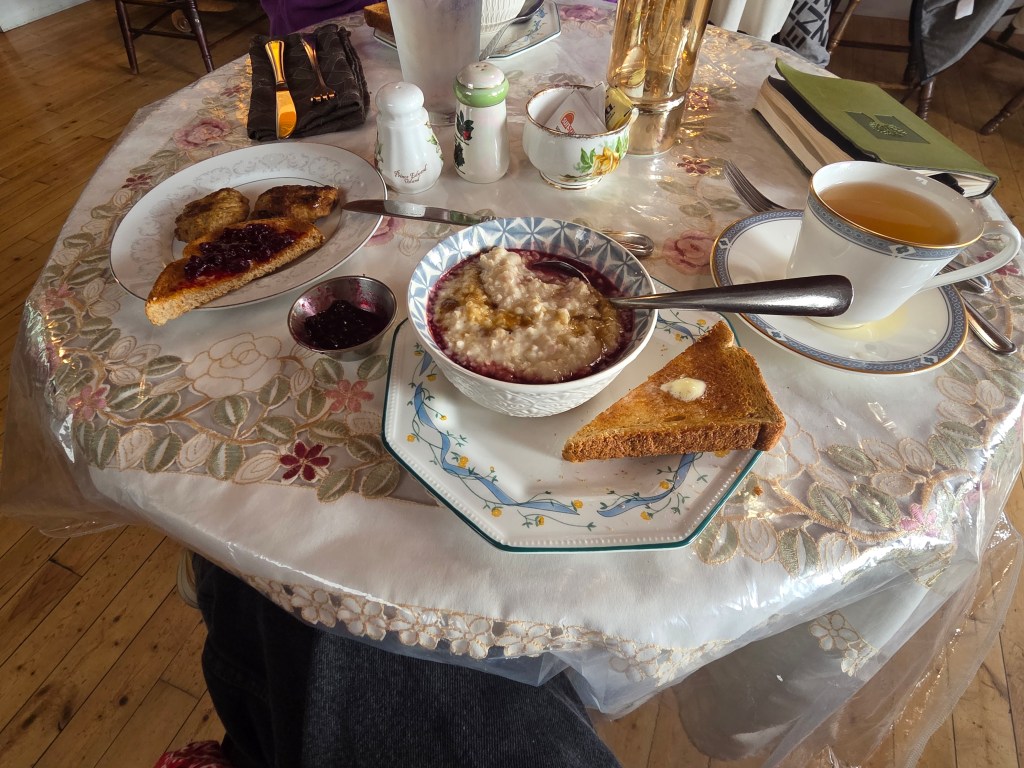
Drove into the village of Bonavista and had a late breakfast at the Mifflin Teahouse. (pic) A lively conversation with Nancy, who was the wait person. Very personable and, beyond transactional relating, we delved into life talk, which I am always wanting to do. Even in transactional relating one can delve a little deeper.
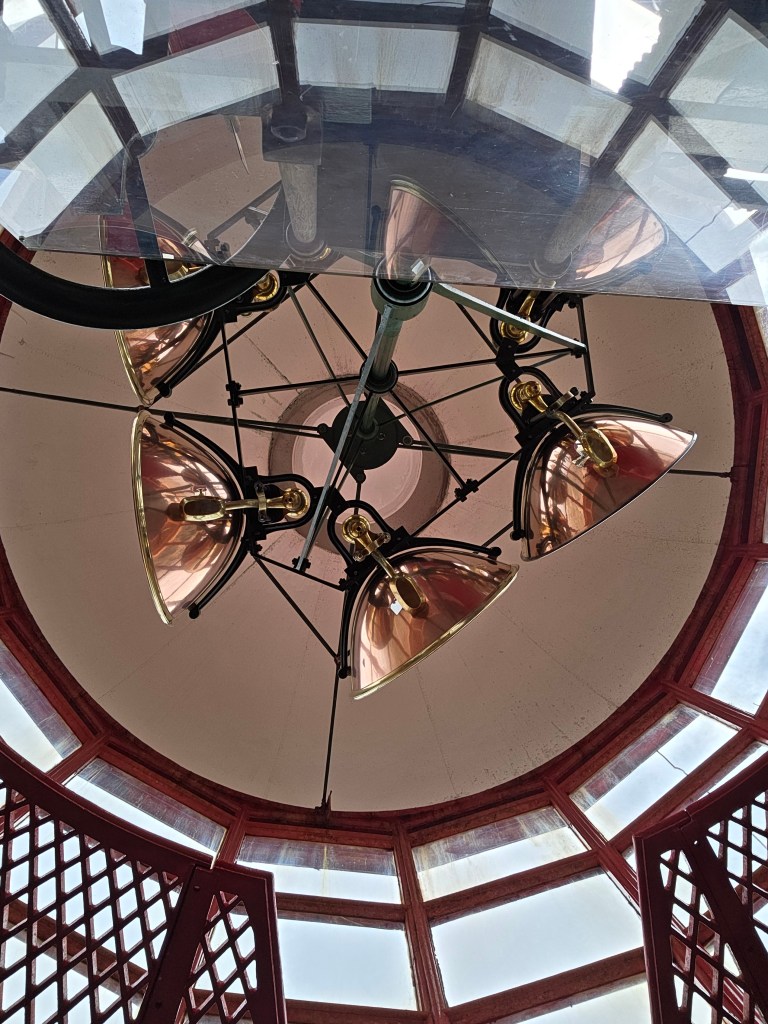
Then out to the Bonavista Lighthouse. (pics)There was another Puffin colony there on another prominence adjacent to the lighthouse.
The lighthouse was open for visitors. It is a Newfoundland Provincial Park which has free admission on Sundays.
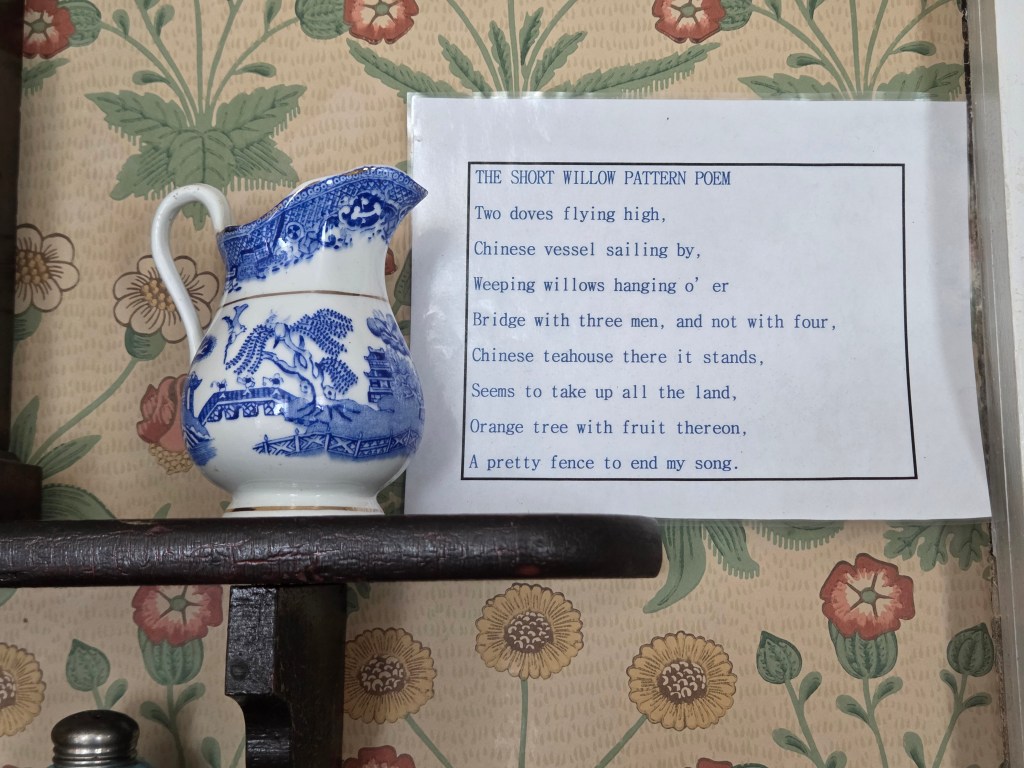
Inside the Keeper’s house, which is set in late 19th century furnishings, was a poem next to some Blue Willow pottery. (pic) I was intrigued by the poem so asked the attendant there about it. She didn’t know anything and said nobody has ever asked about it. She then said I should go to the interpretive building and talk to Marlene, who might know.
When I asked Marlene she didn’t remember the origin of the poem, even though she was the installer, but she would look into it. She went to her office and then to a file cabinet but couldn’t find anything related to it. She then went online and found information. She told me a visitor to the lighthouse mentioned the poem to her, so she thought it would be nice to add it to the display. I have seen the willow pattern pottery but never thought about it very much. The poem seems to have been originated in England and has no connection to any Chinese poetry at all.
After that headed home, over the sometimes potholed roads, feeling a sense of a wonderful day of fulfillment.
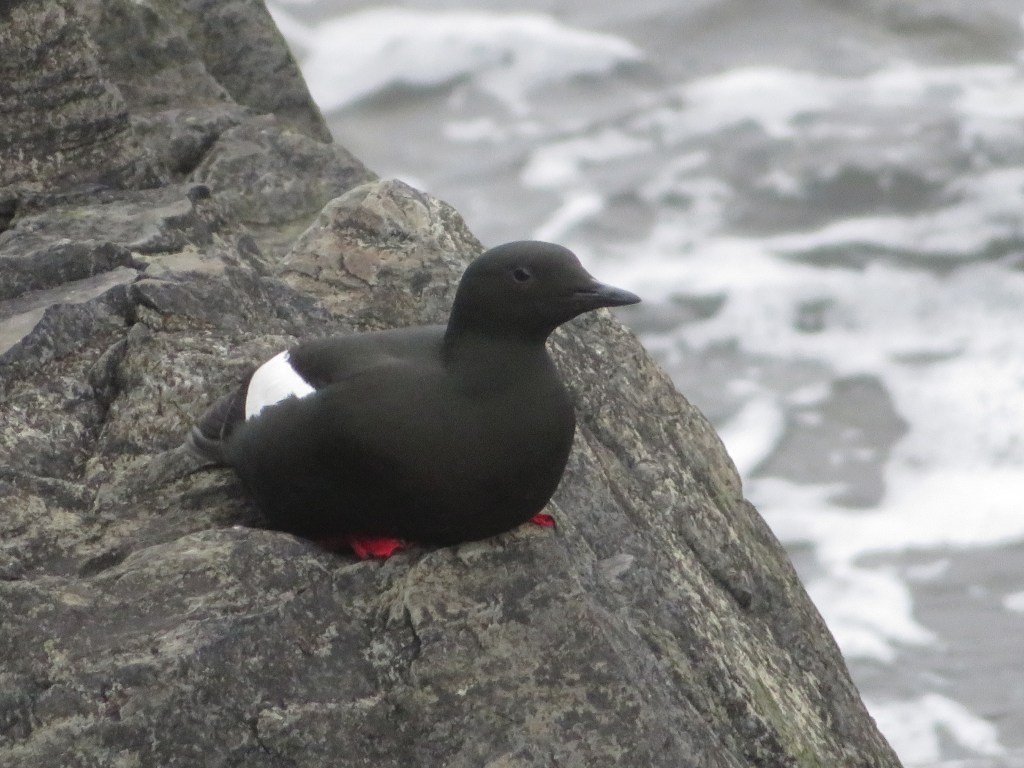
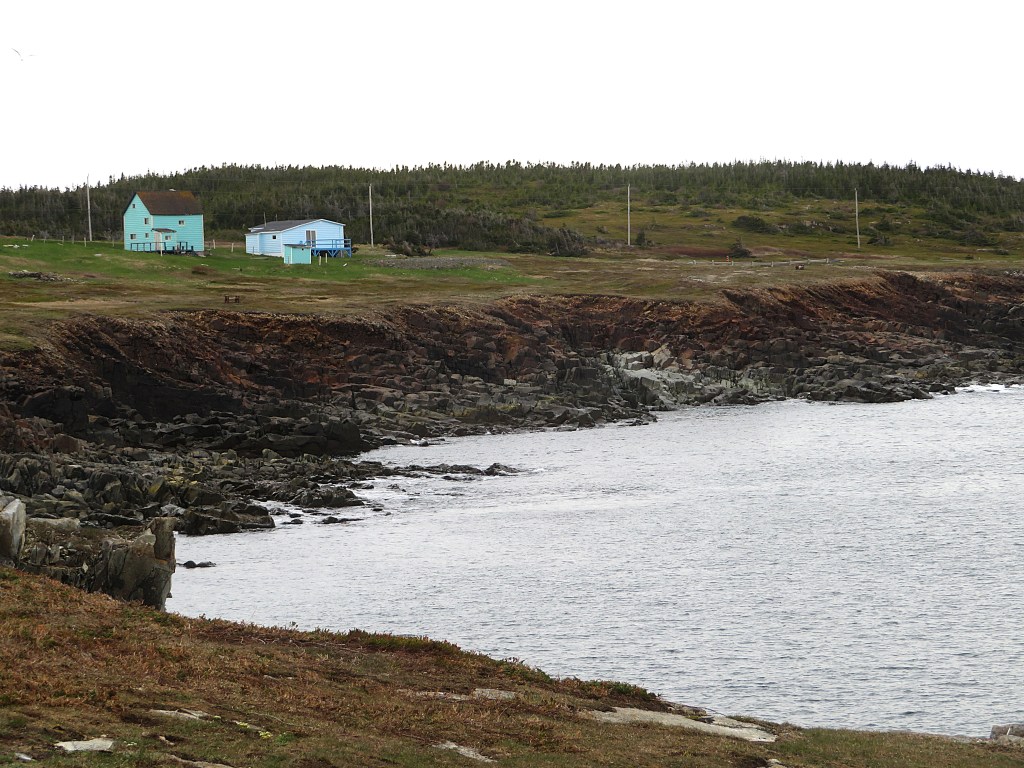
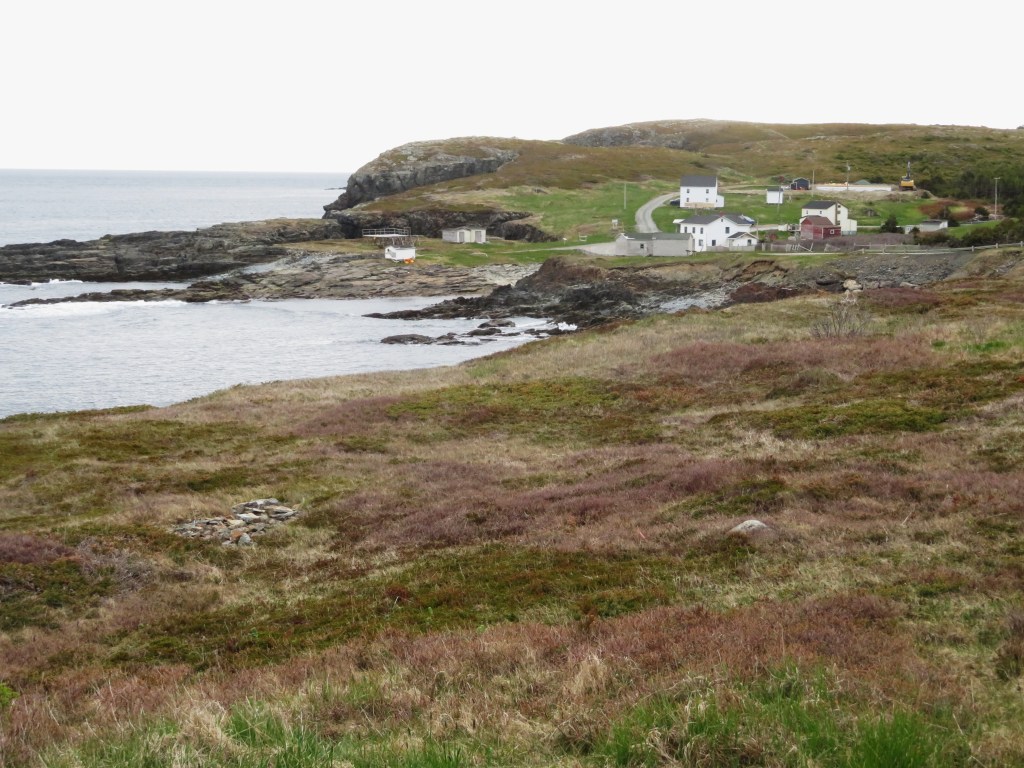
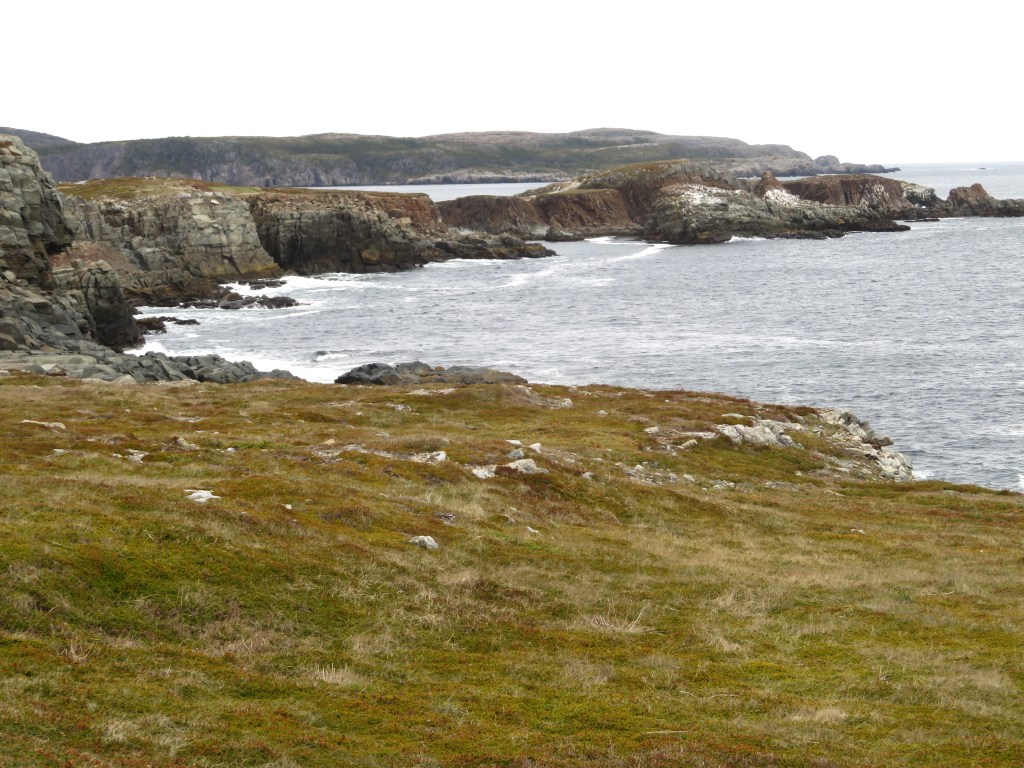
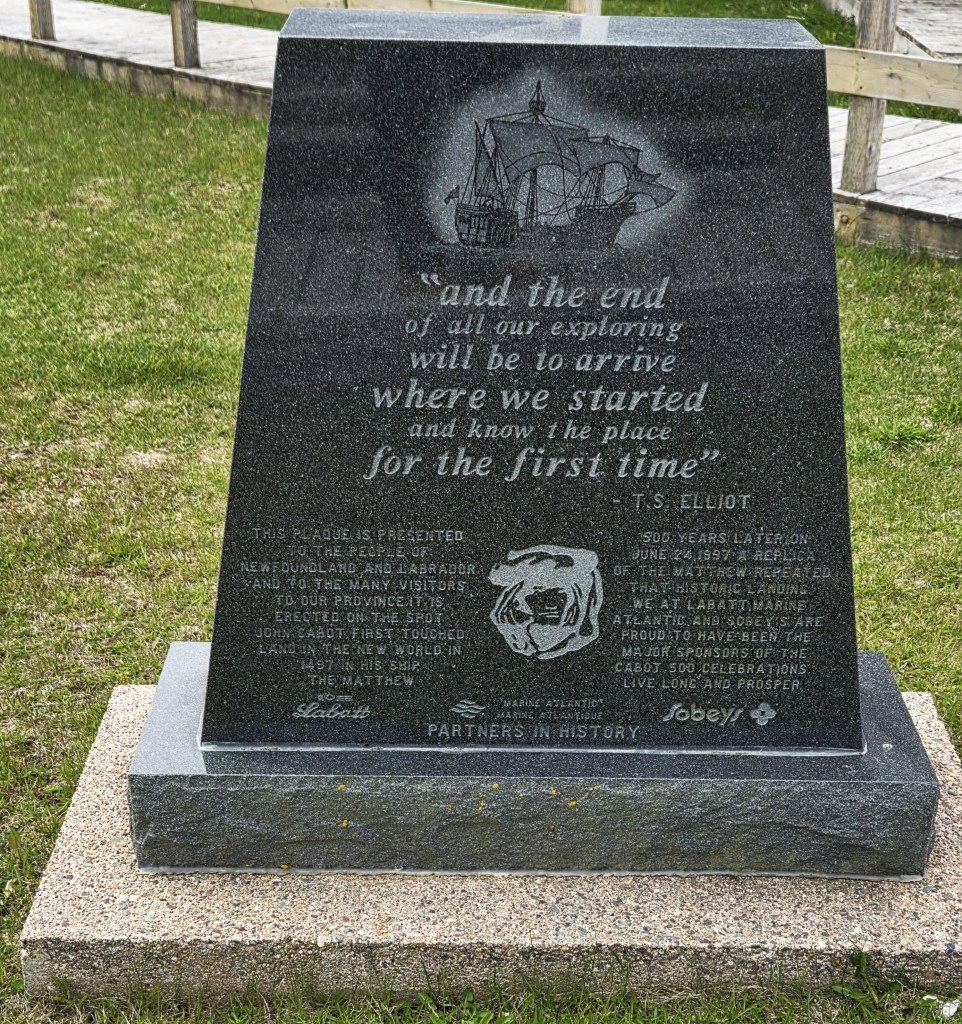
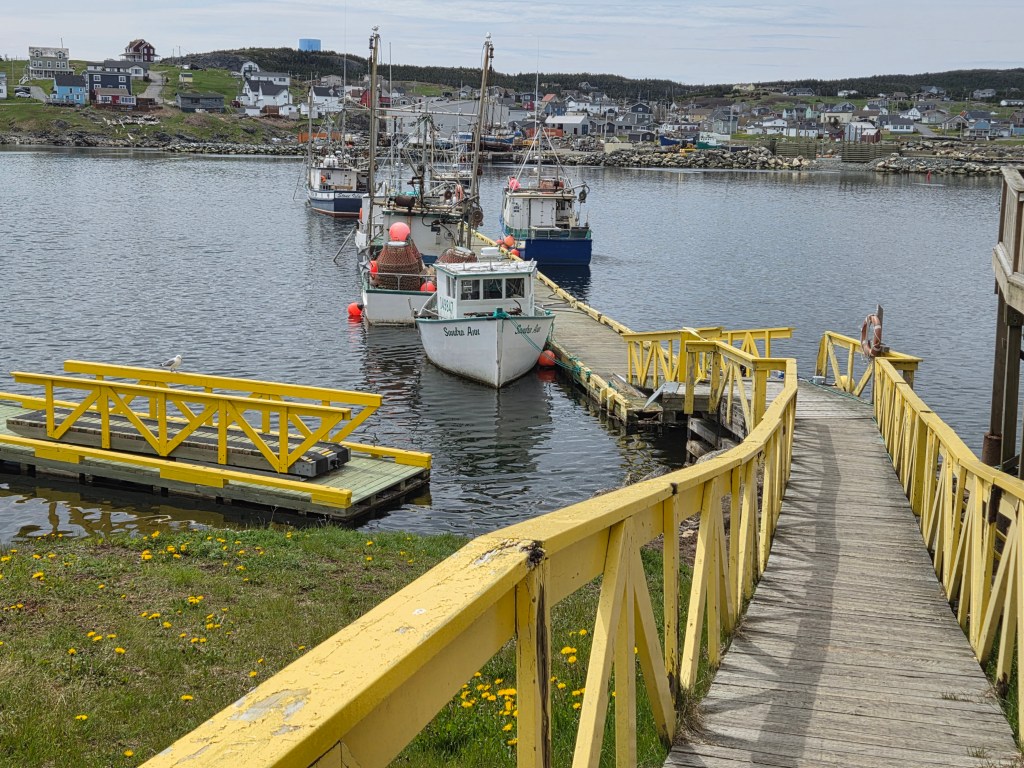
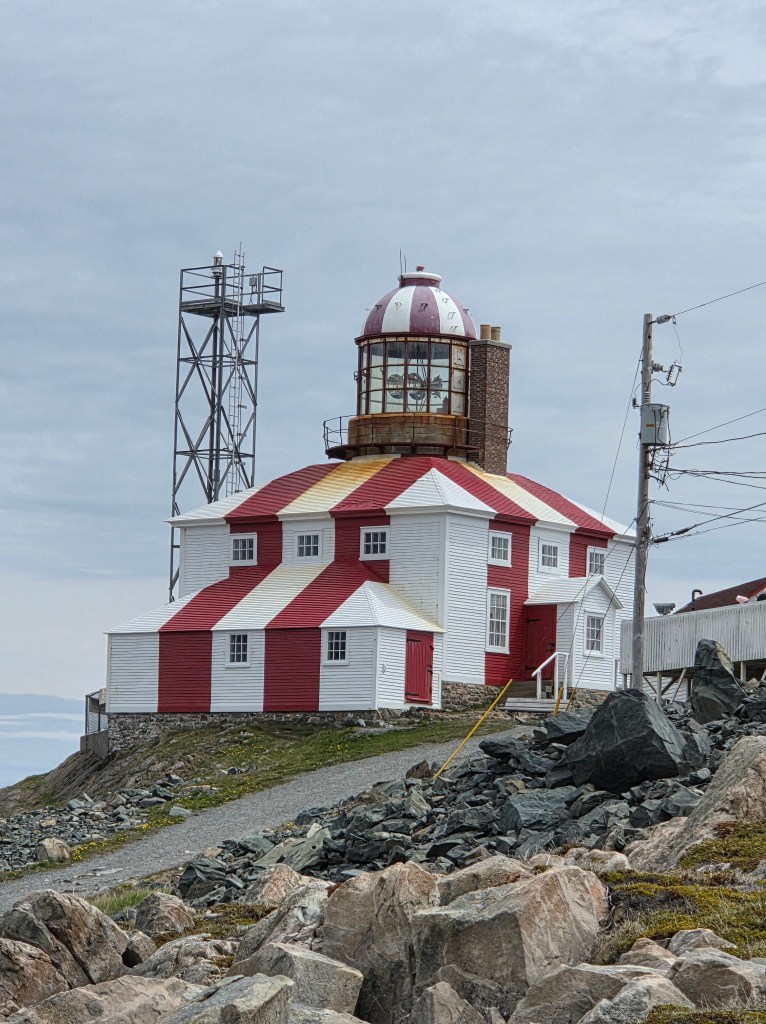
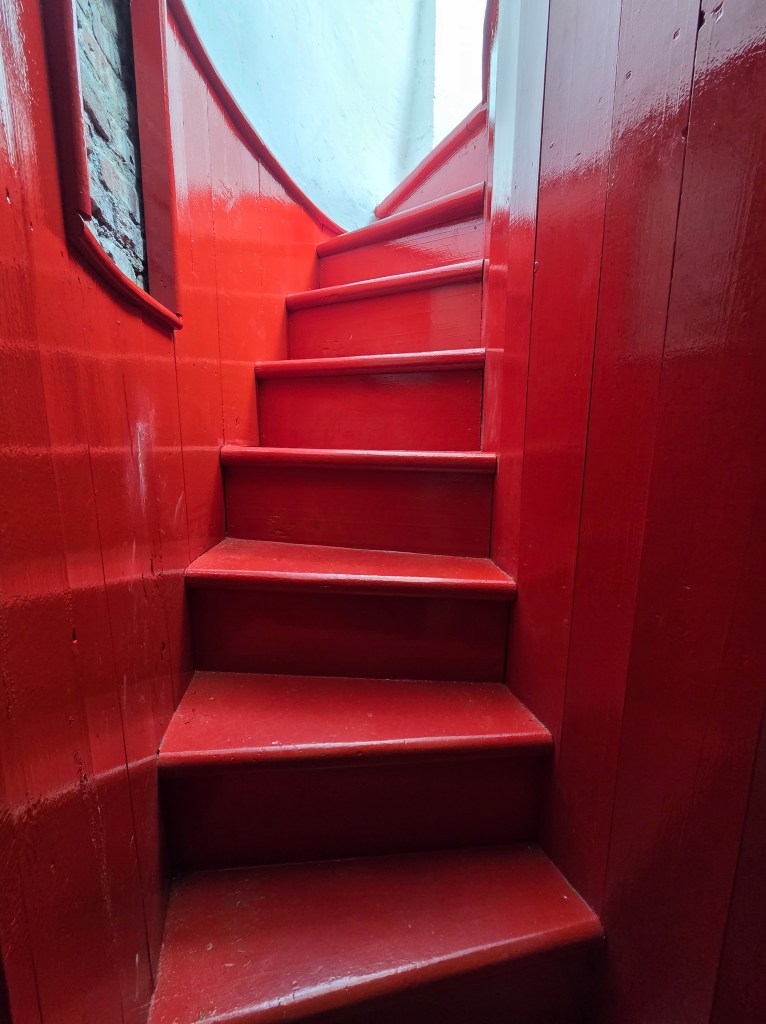
6/6
Breakfast at the Harborview restaurant in Botwood. This is a gas station/diner that seems to be the local hang out spot for morning coffee, at least this Saturday morning. As we walked in, one of the group of six guys sitting at a table commented in a light, joking around way, about us being Newfoundlanders. I immediately replied, “you know that’s not true!” From there we bantered back and forth with the guys, though mostly Carl, with who I first responded to.
While there, I counted 17 guys who came in and stayed at least a little bit while only 2 women did so. Saturday morning guys coffee klatch!
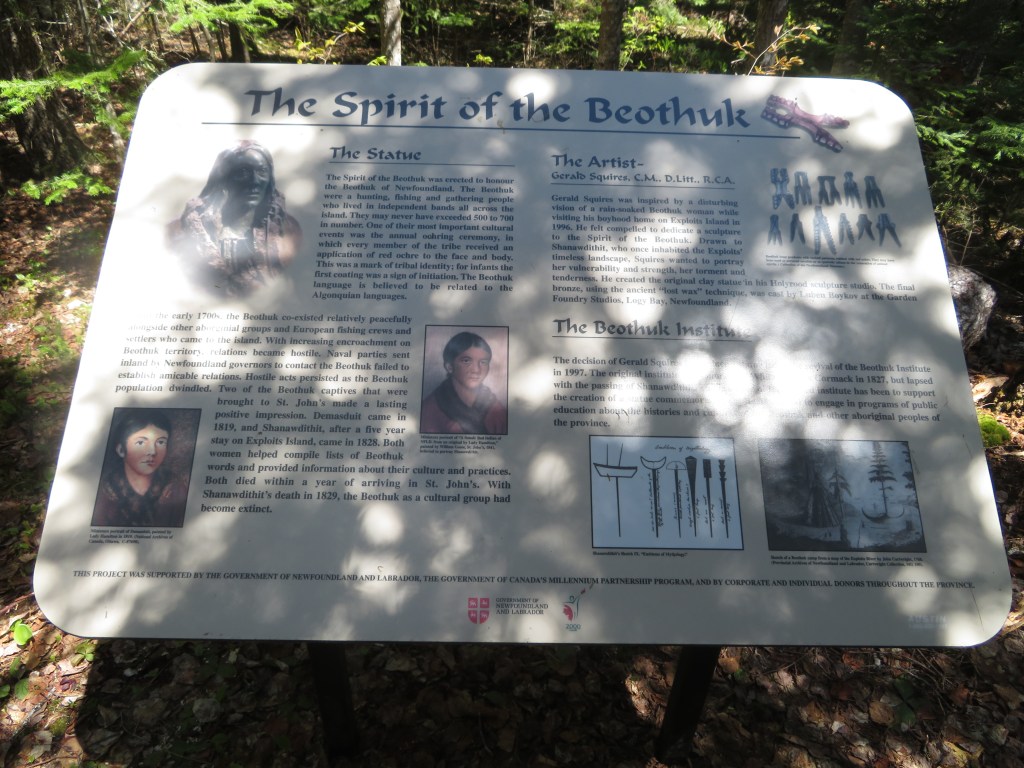
From Botwood we drove on up to the Beothuck Interpretation Center in Boyd’s Cove. The Beothuck were an indigenous group that had a village at this place about 300 years ago. The last remaining member of the Beothuck died in 1829. It is a sad story, as is almost always the case of indigenous peoples, in what happened to them.
More information here:
From there we headed on to our next “home” in Clarenville, where we’ll stay for five nights. On the way we stopped at the visitor’s center of Terra Nova National Park. After getting some information about the park, I asked about spring flowers. The two young people at the reception counter said they’d get someone else to answer, the “expert” they said, jokingly. The expert was Jean-Luc, a young man who is the Heritage Interpreter for the park. We had a good conversation about flowers, history and even poetry. He writes poetry but hasn’t shared orally. I recited my chickadee poem for him and we have connected on Facebook. I’ll encourage him to share a poem or two of his with me.
This was the last somewhat long day of driving for the rest of the stay in Newfoundland. We’ll be in Clarenville till June 11 and then in Holyrood, only an hour and a half away from here, for the following nine days prior to riding the ferry back to Nova Scotia.
Looking forward to being “settled” in these two place for a stretch of time and exploring the eastern side of “The Rock.”
6-5
Moving day, after three days spent in the northern reaches of the Great Northern Peninsula of Newfoundland!
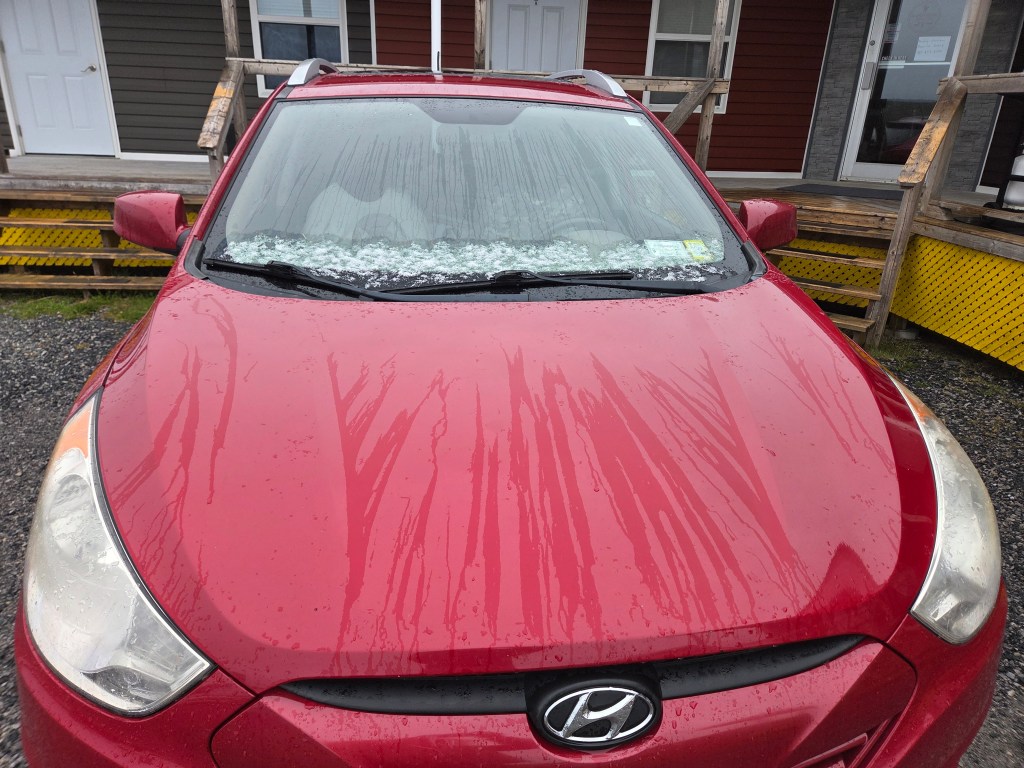
So, this morning there was a little bit of slushy precipitation on the windshield of the car! (pic) Not unusual for here, it seems.
While driving out from here, retracing the route we drove three days ago to get here, snow was falling in the air at times.
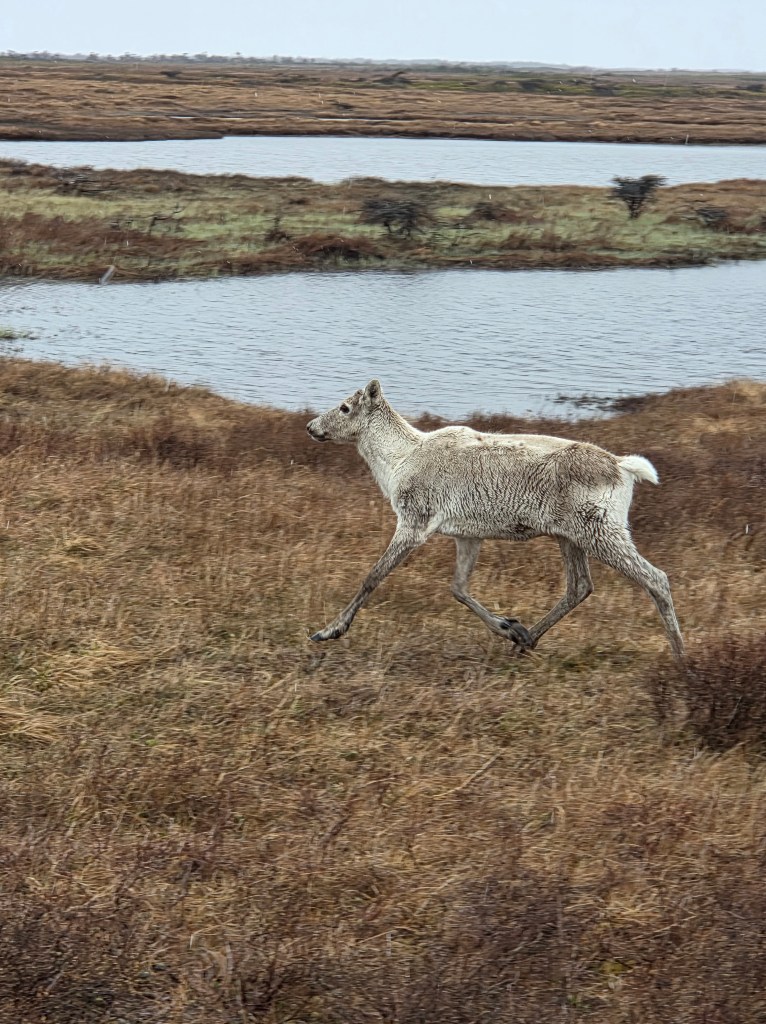
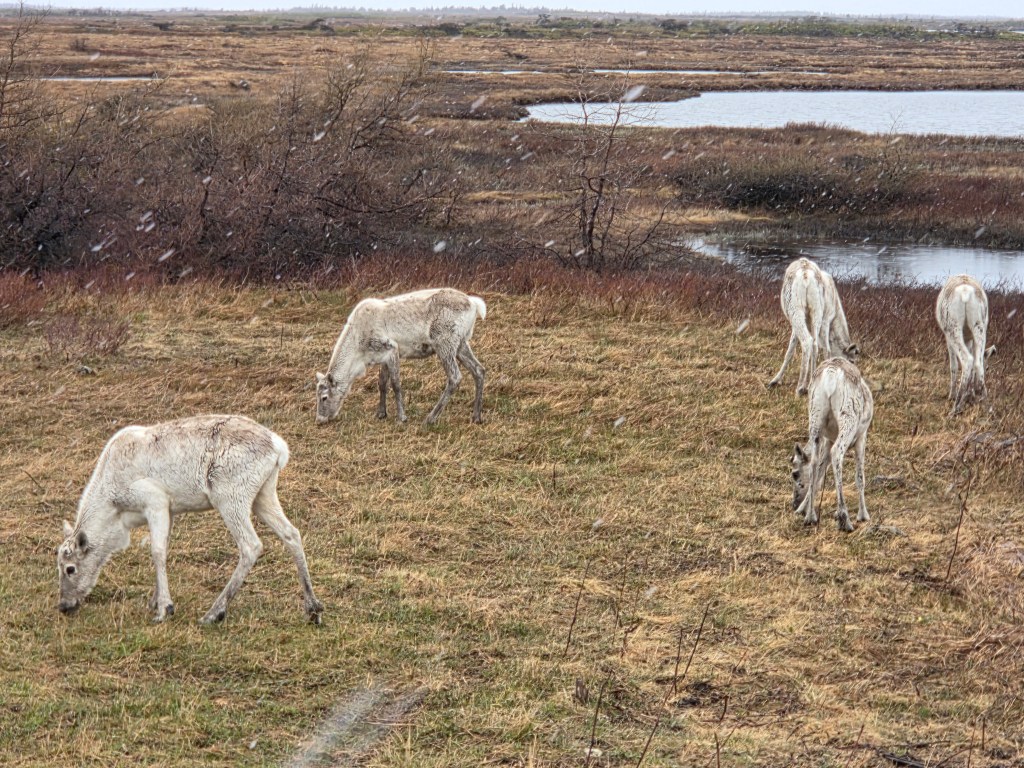
Exciting to see a small gathering of young caribou along the side of the road. They paid us no mind as we sat in the car observing them. They are transitioning from winter to summer coats, so look a little disheveled. (pics)
There are no white-tailed deer on the island. Moose and caribou are the two hooved mammals here. Caribou is indigenous, moose are not. After an unsuccessful attempt to introduce moose in 1878 (a pair was brought in but didn’t survive), in 1904 the four moose who the government introduced survived and the number here now is in the 100,000+ range!
In contrast, the caribou population is estimated to be about 27,000, which is a 65% decline since the 1990s. Predators and habitat degradation are two major causes of their decline, though in the 1950s the caribou population was estimated to be only about 10,000 individuals.
We did see one more young caribou as we drove on, and a second moose, briefly as it ran along the side of the road then disappeared into the woods.
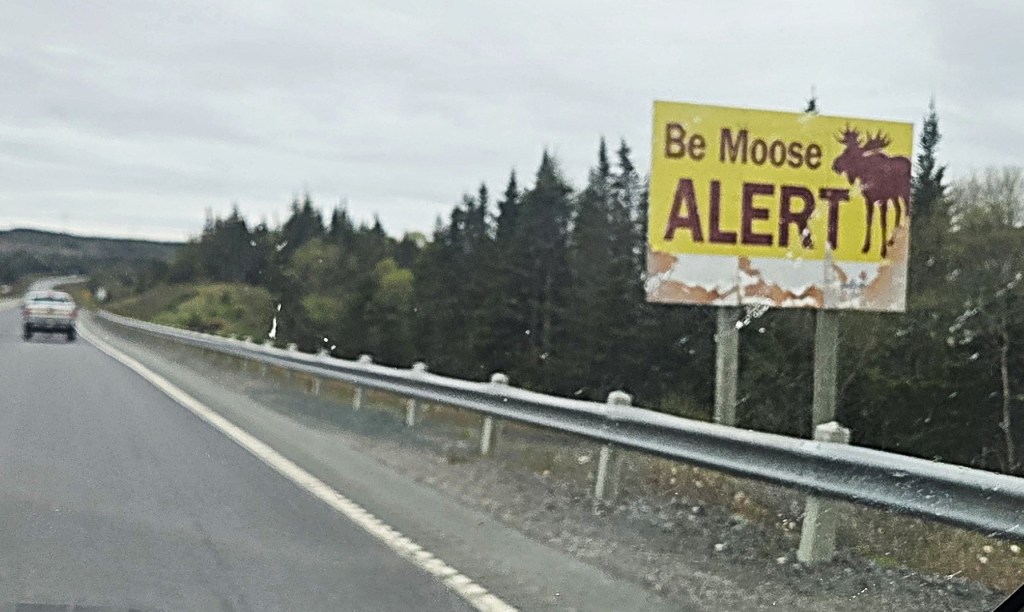
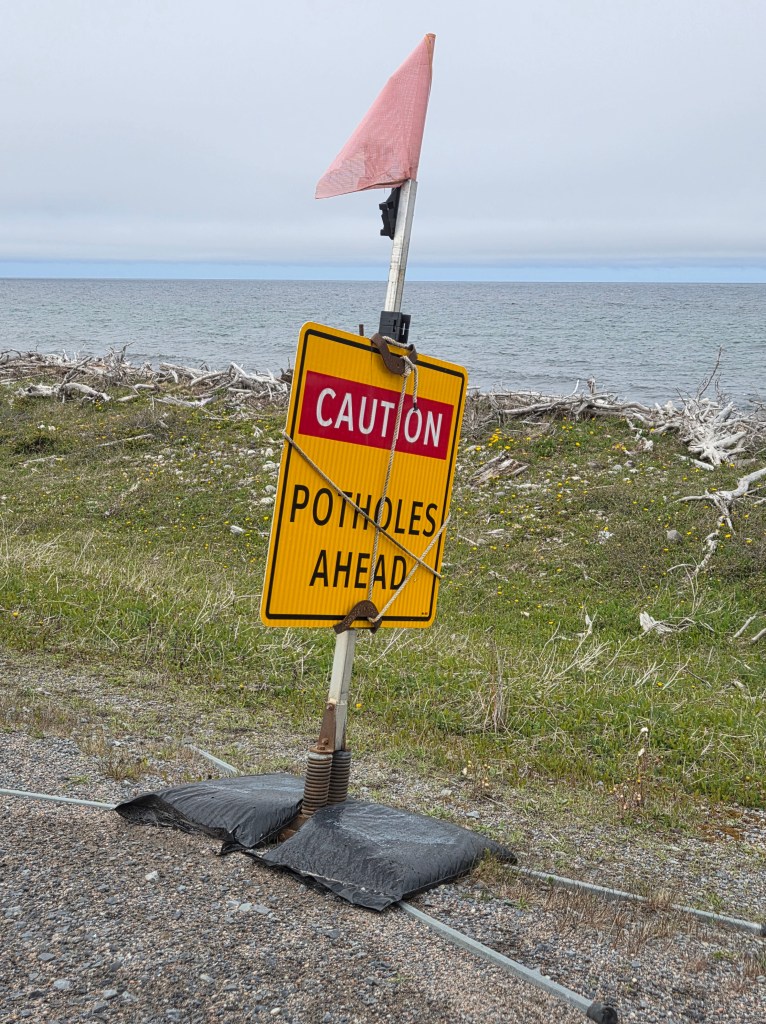
There are plenty of signs reminding people to be wary of moose. More so it seems, are signs warning of potholes! (pic) We have passed many of them, mostly on secondary roads, not the Trans-Canada Highway (TCH).
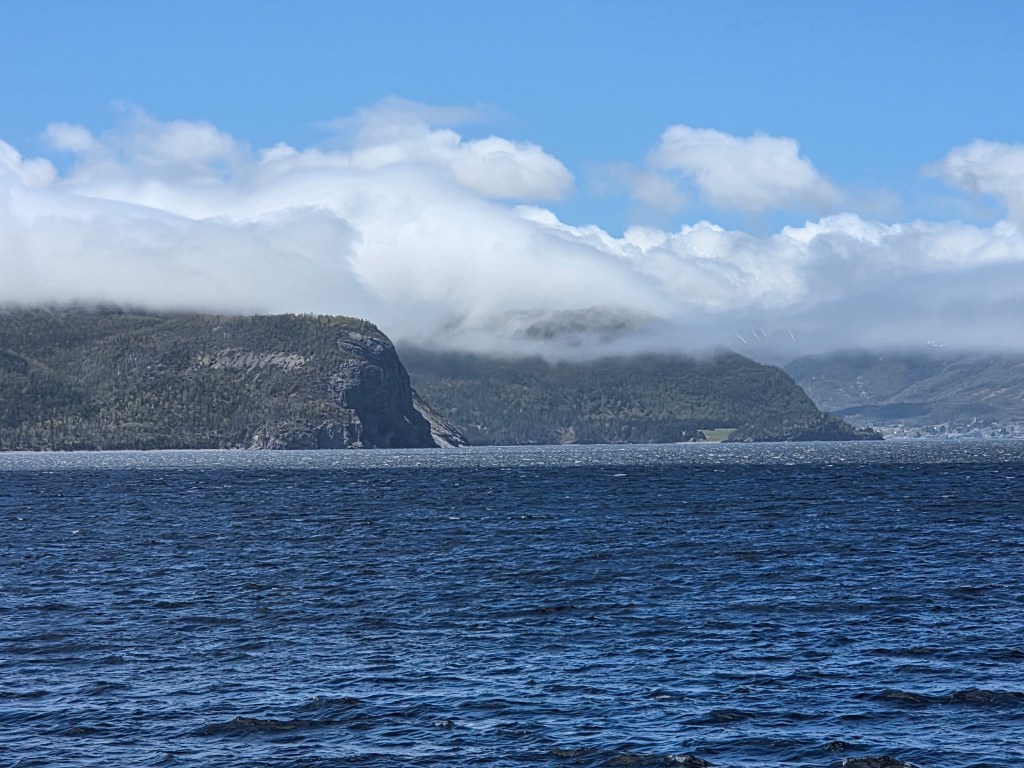
The weather was rainy and grey for much of the morning. By the time we got to Gros Morne National Park the sky started to clear but low clouds still hung on the mountains. (pic)
We pretty much motored on through the day and arrived at our overnight destination, Botwood, in the early evening.
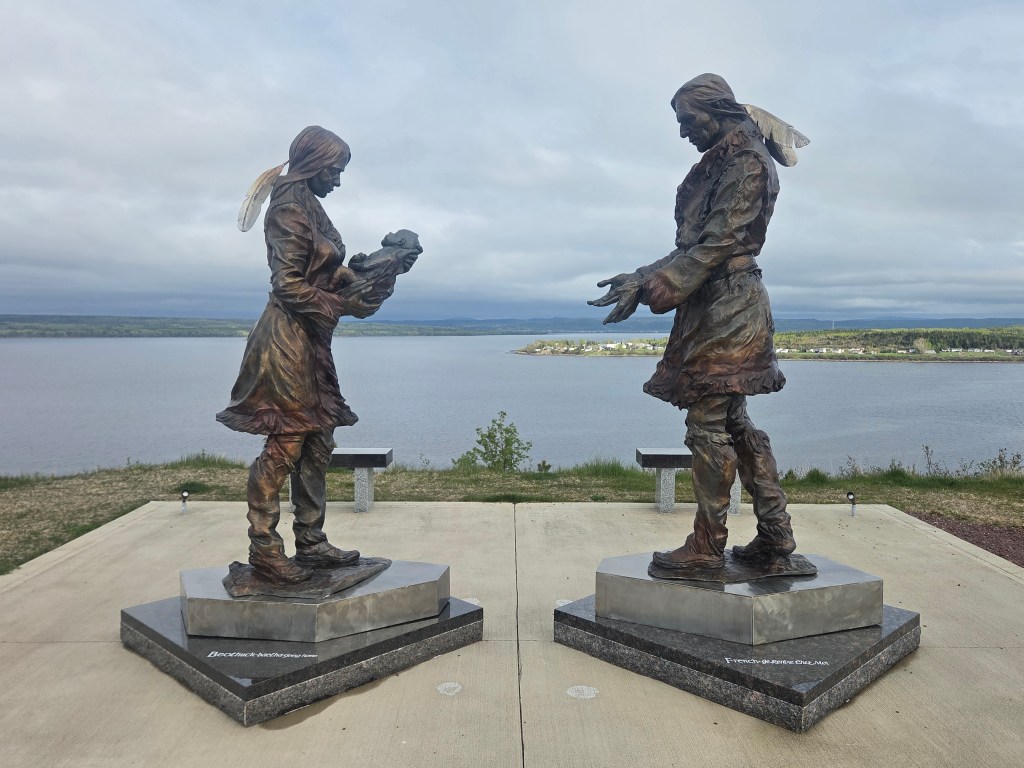
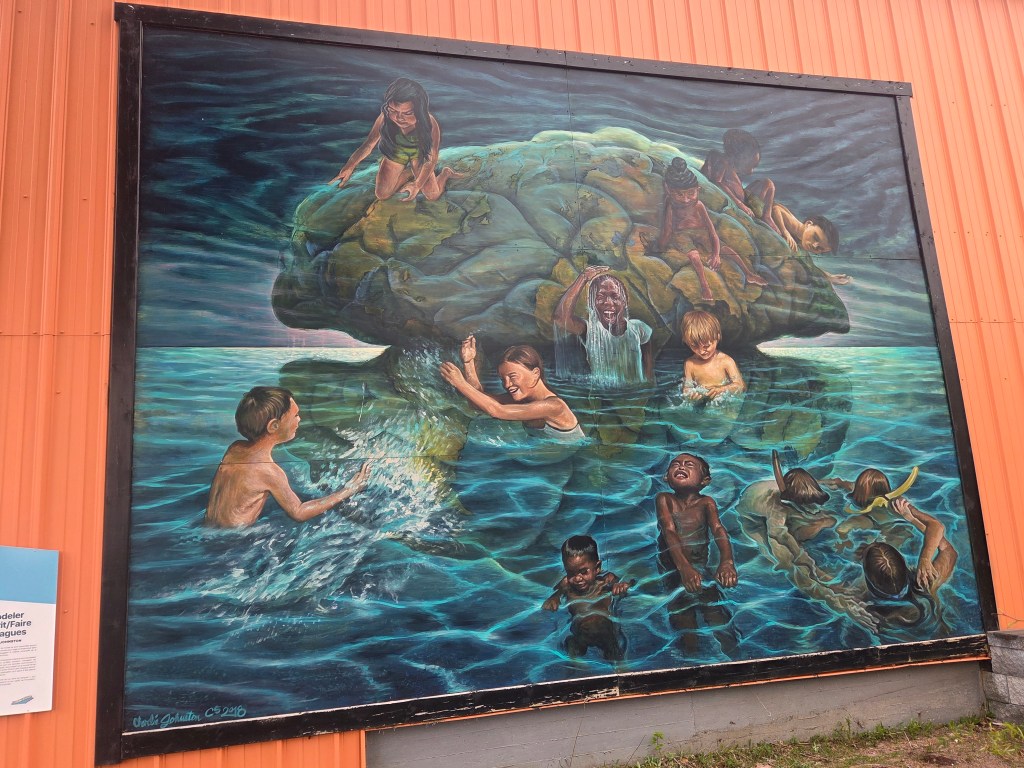
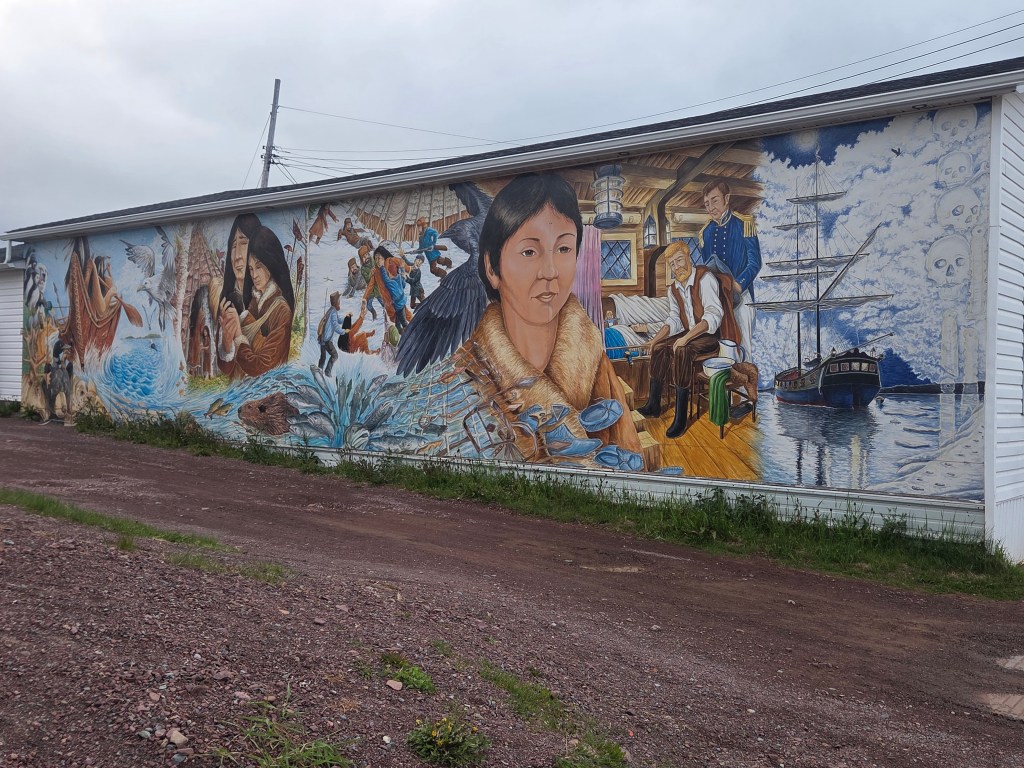
A small town of only about 3,000 people but is known in a wider way for three things: an important military site during WWII; The Baetha Statues and Healing Garden (pic); a wonderful series of murals (pics)throughout town that have garnered international attention.
I don’t have time to write about all of those now as the morning road calls, but here are informative links to each of the above:
WWII
Baetha
https://www.cbc.ca/news/canada/newfoundland-labrador/botwood-demasduit-sculpture-1.7338047
Muralshttps://storymaps.arcgis.com/stories/936aa2610d1a4983b79987a66e17bf91
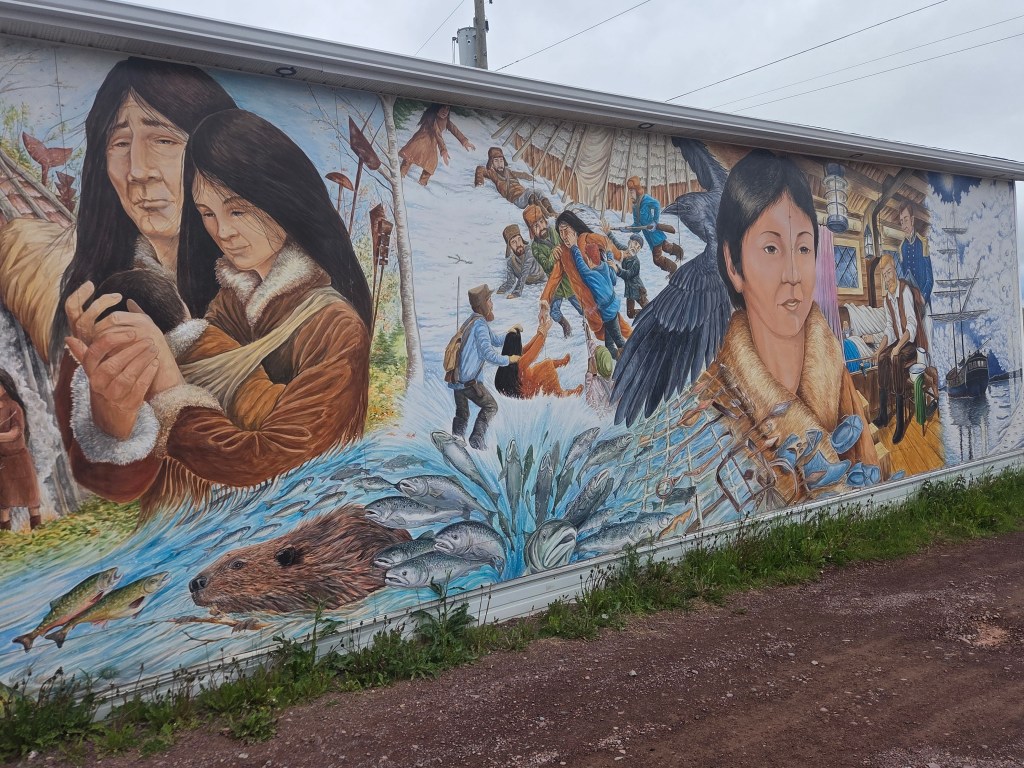
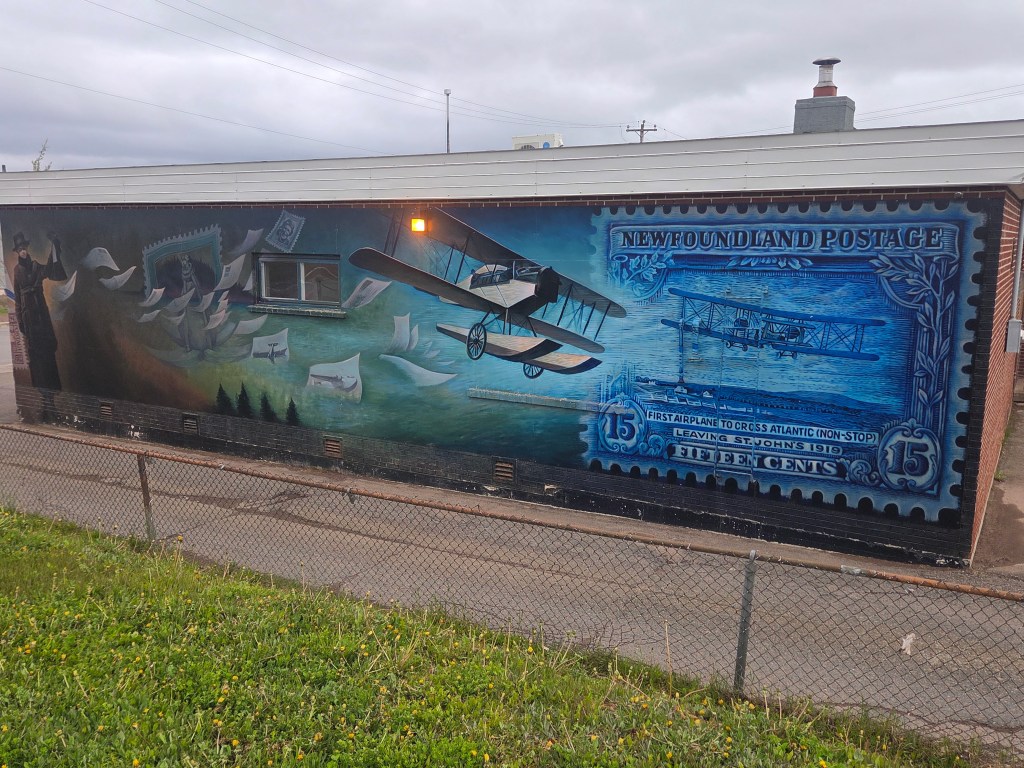
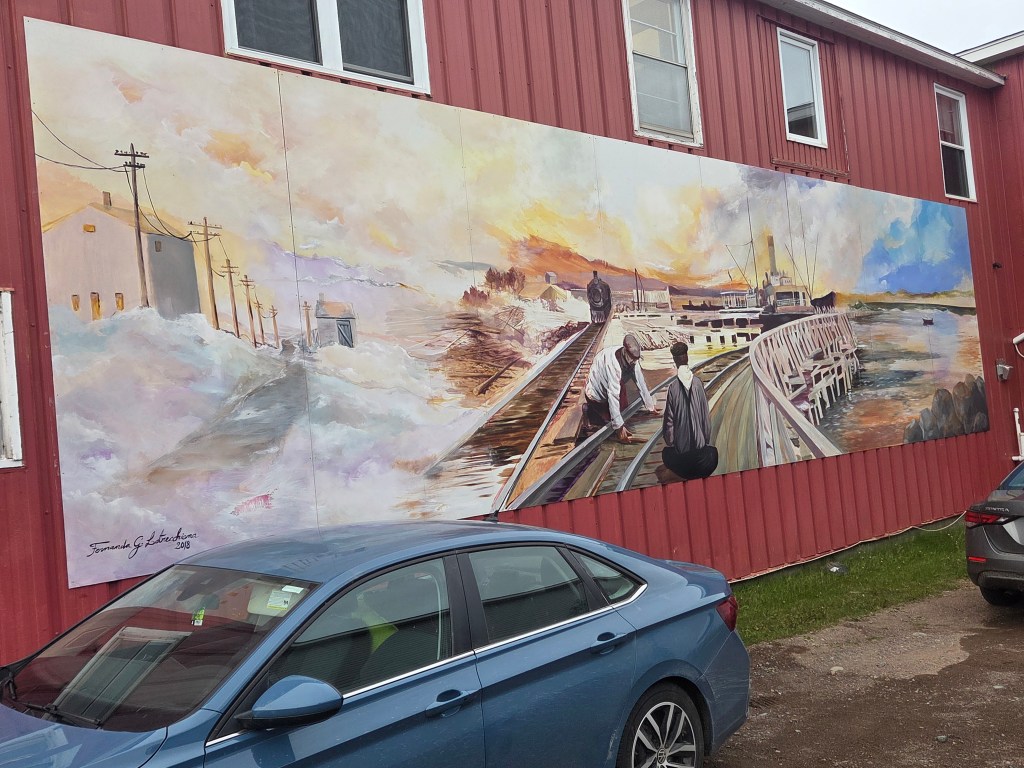
6/4
Forecast to be a rainy day, so we planned on spending it doing laundry and hanging out in the town of Saint Anthony, a 25 minute drive away.
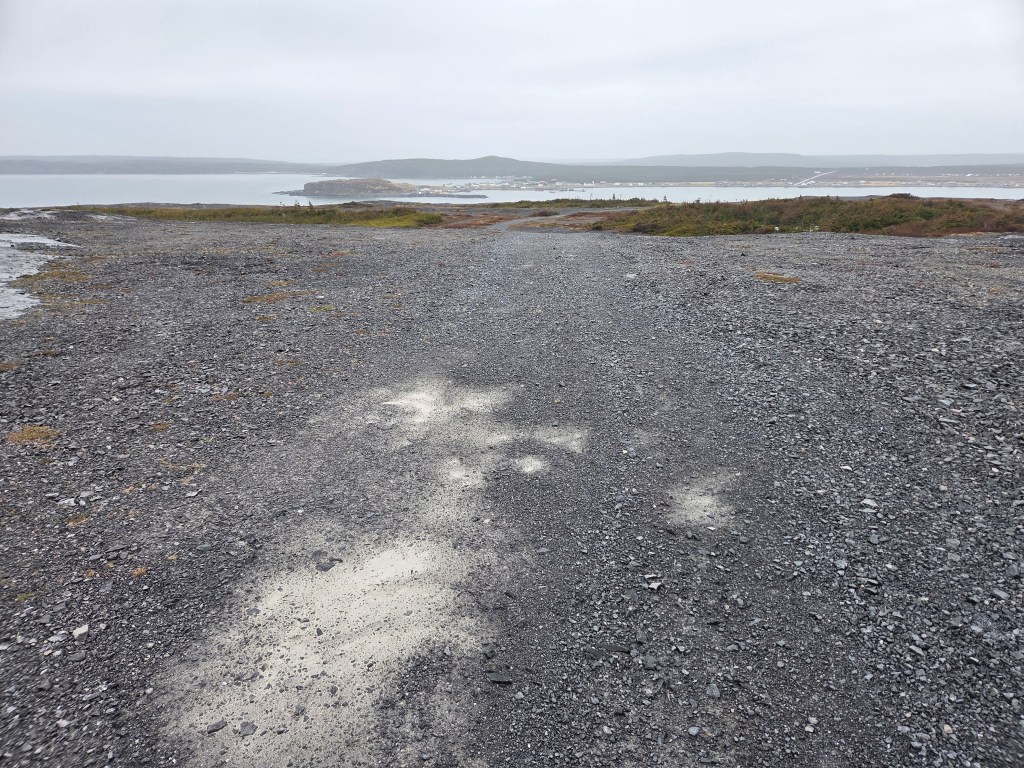
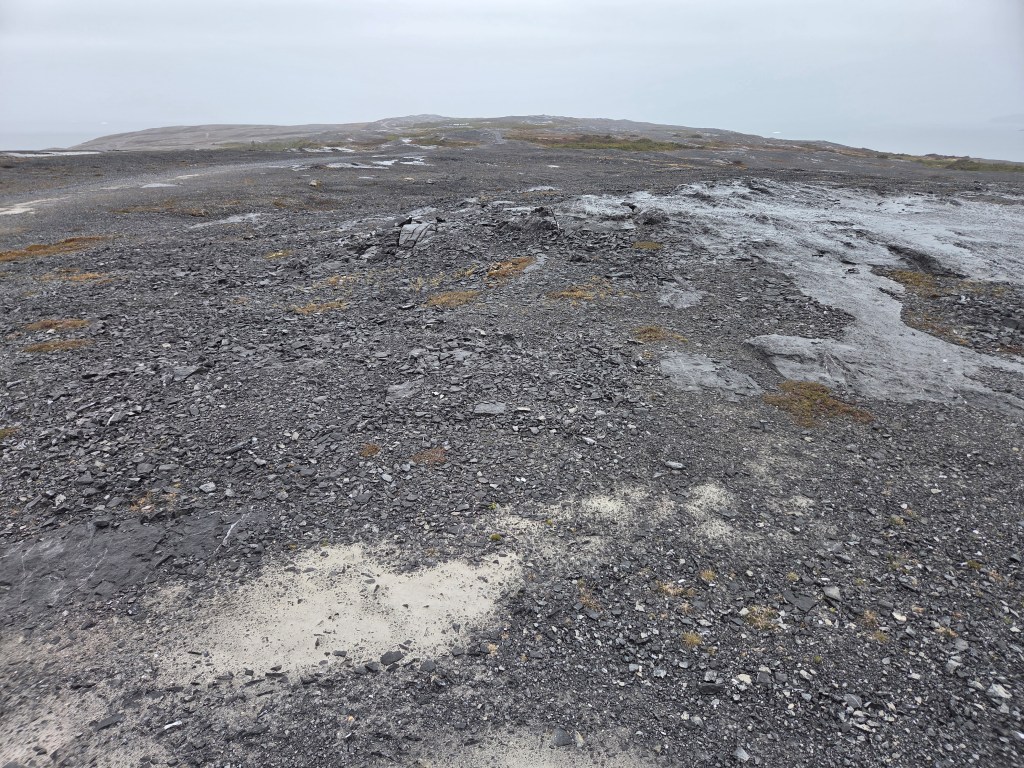
But, in the early morn it wasn’t raining, just misty grey, so we decided to go for a short hike on the Burnt Cove Ecological Reserve right across the bay we were on. The short hike turned into a 2 hour outing that has been one of the highlights of the journey so far.
From Wikipedia: “It has a large area of exposed limestone and a naturally harsh climate that permits the growth of rare dwarf flora often found in arctic and alpine areas.”
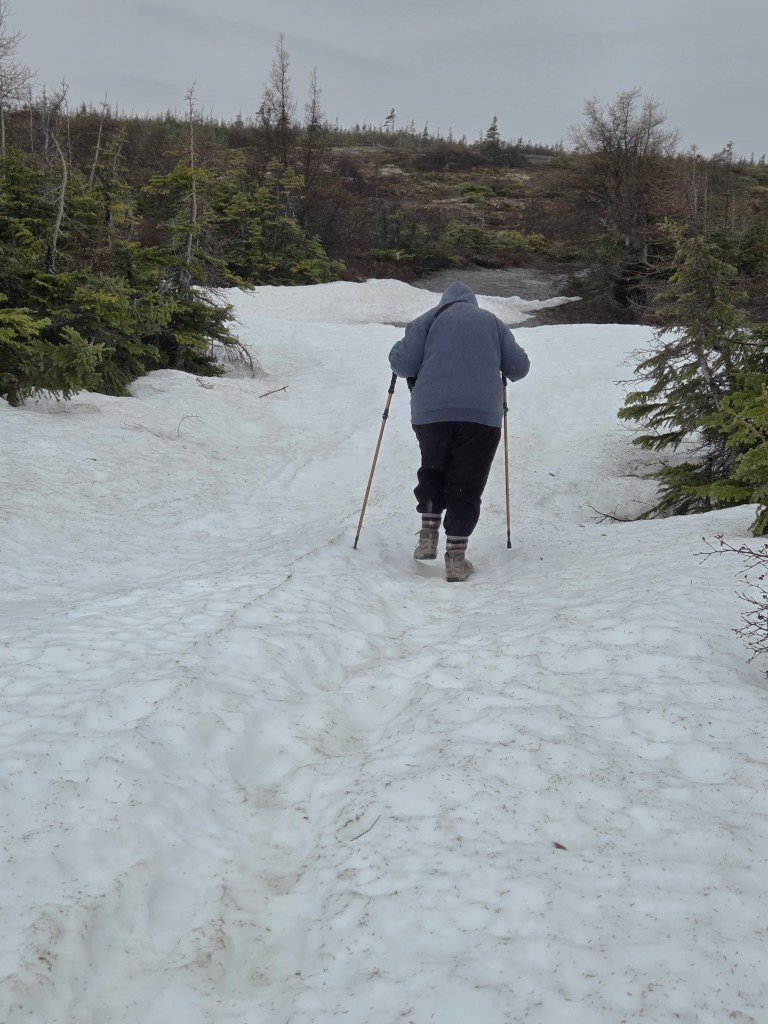
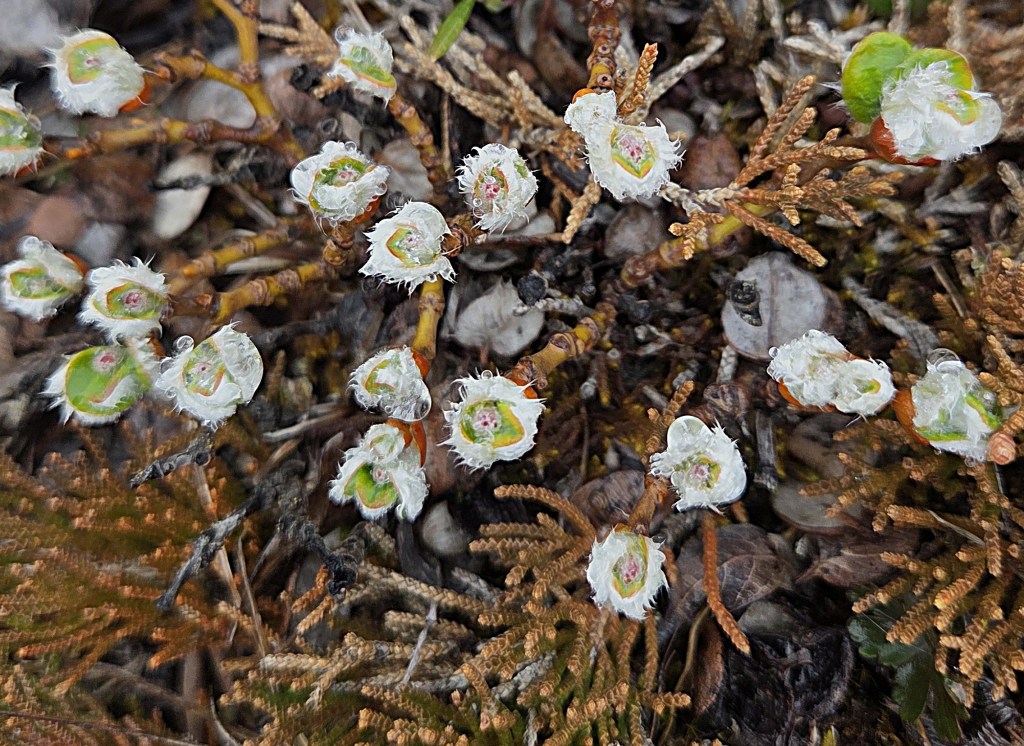
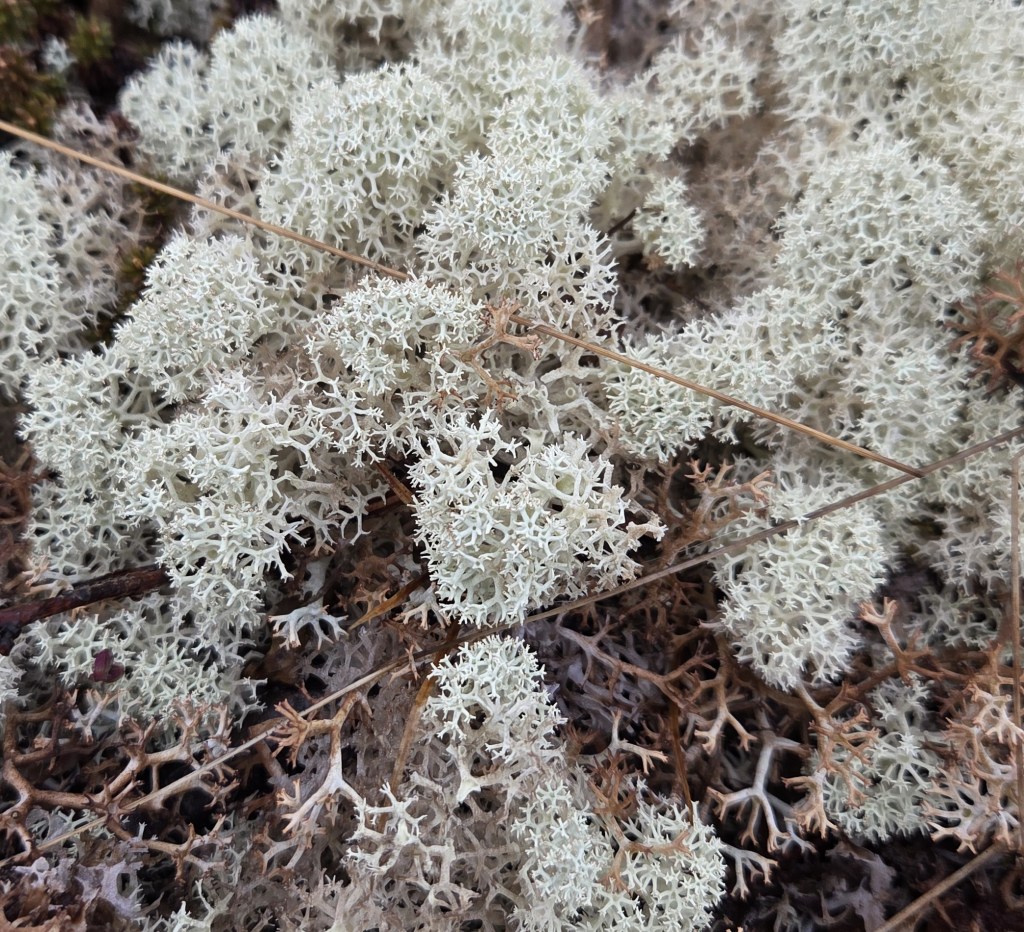
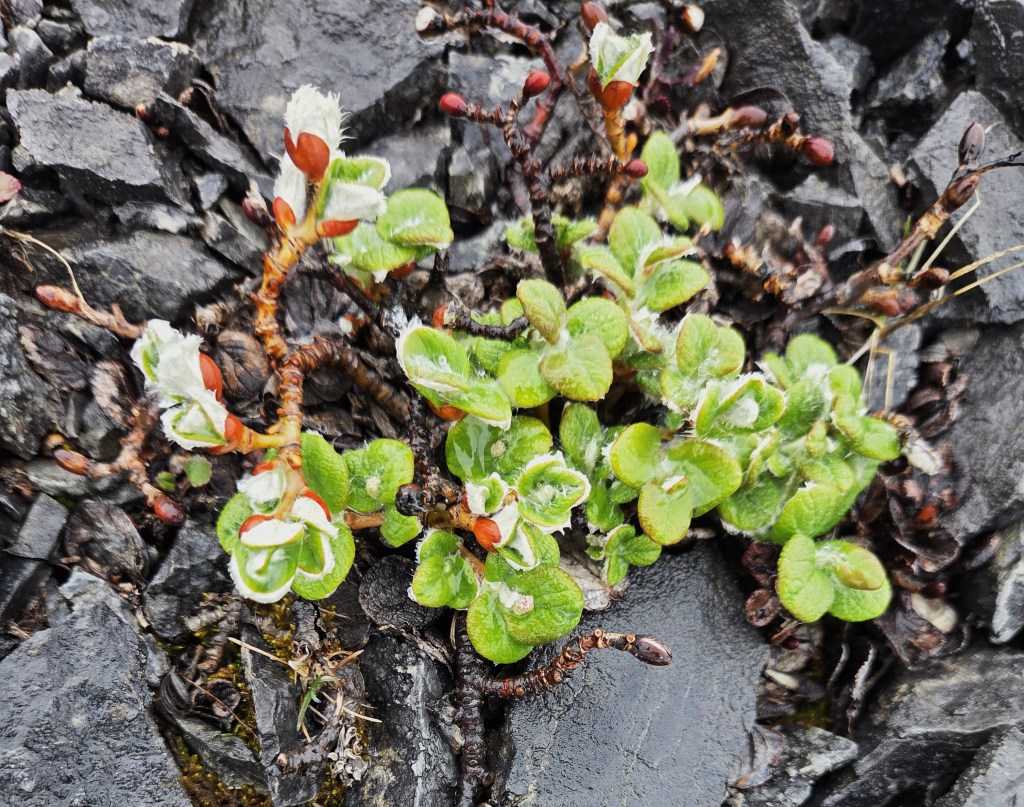
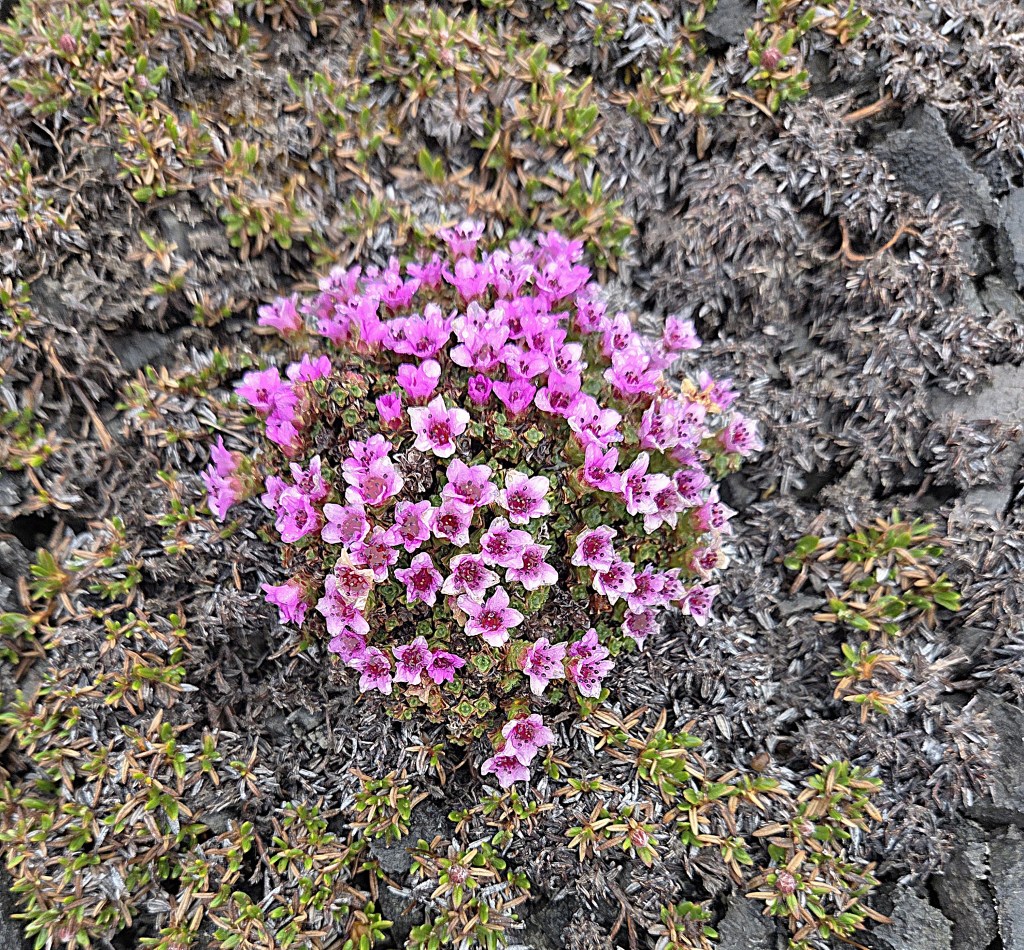
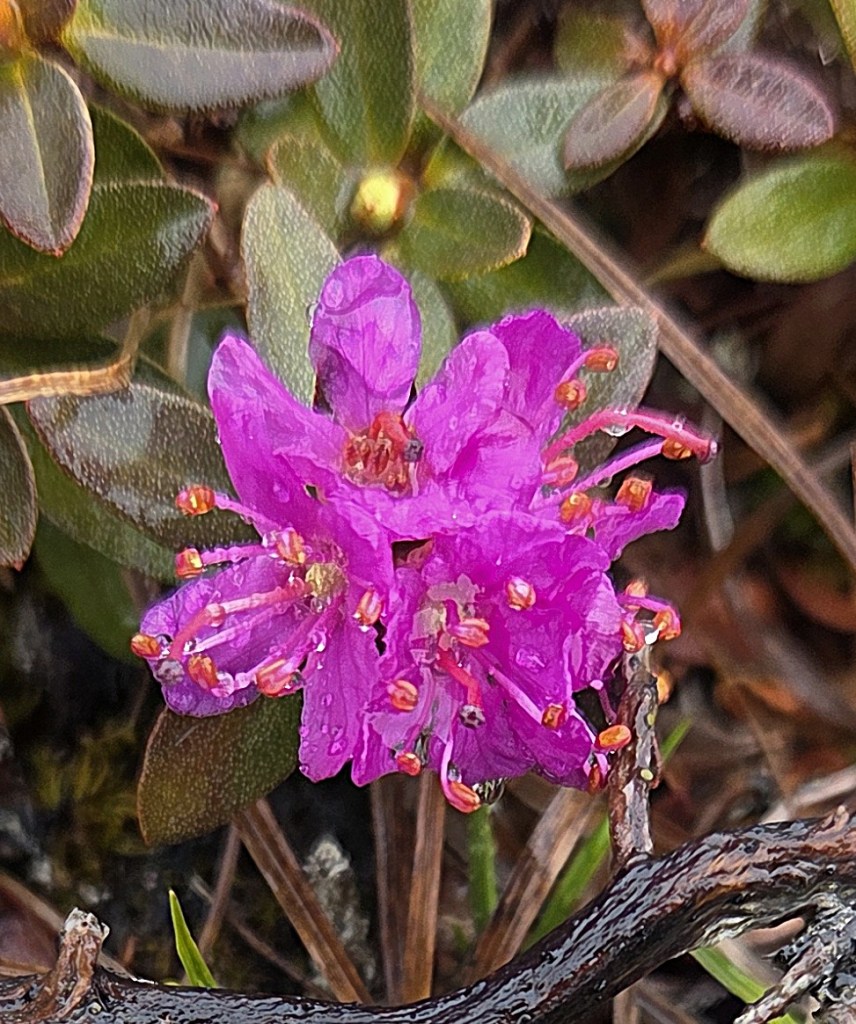
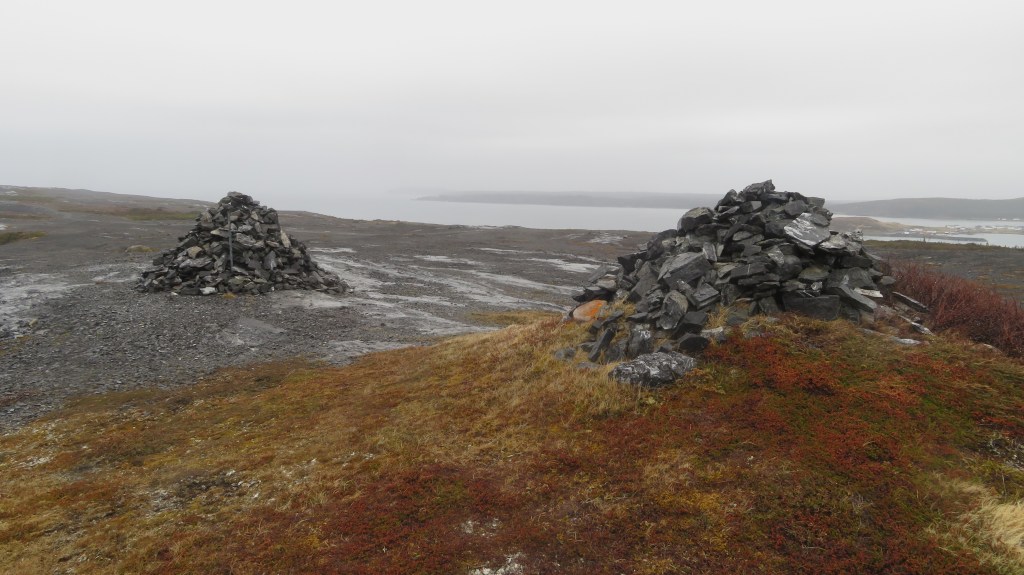
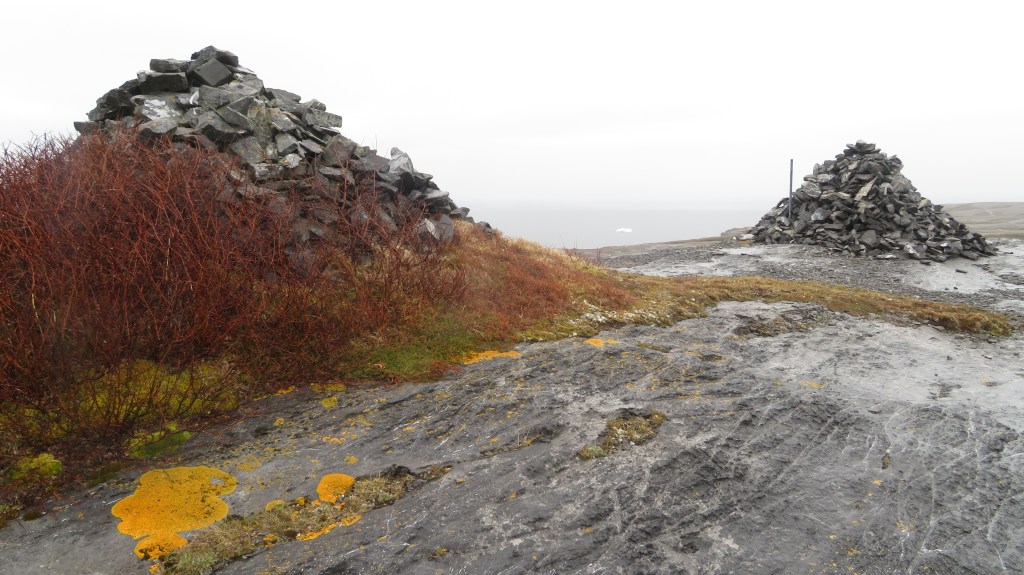
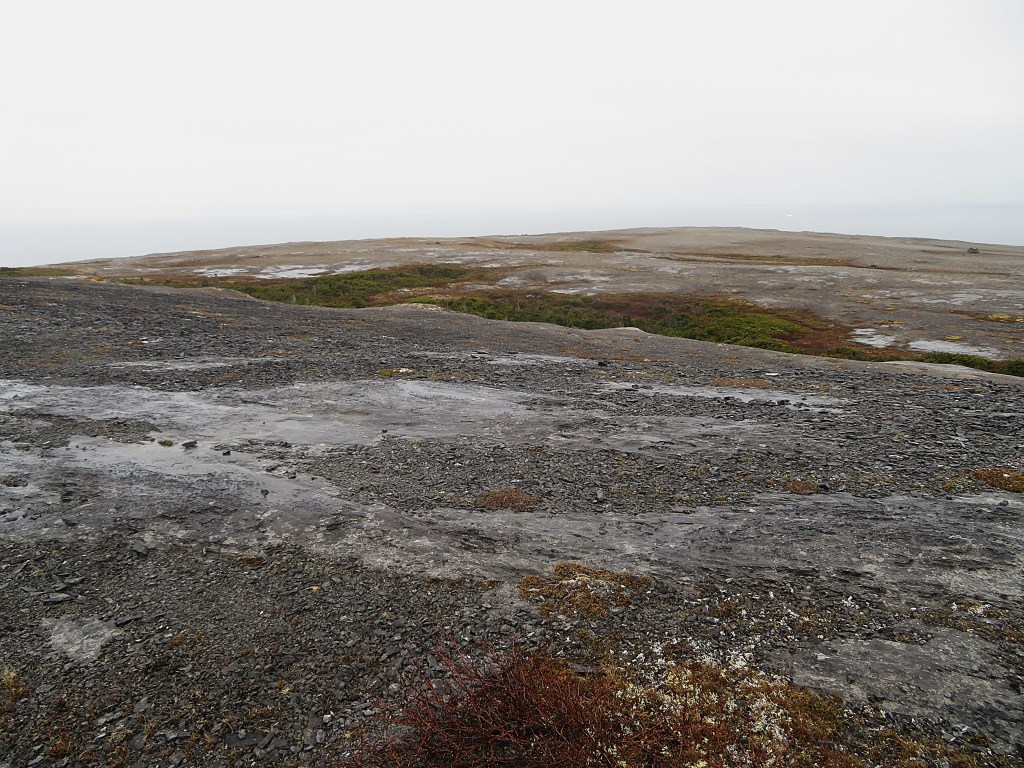
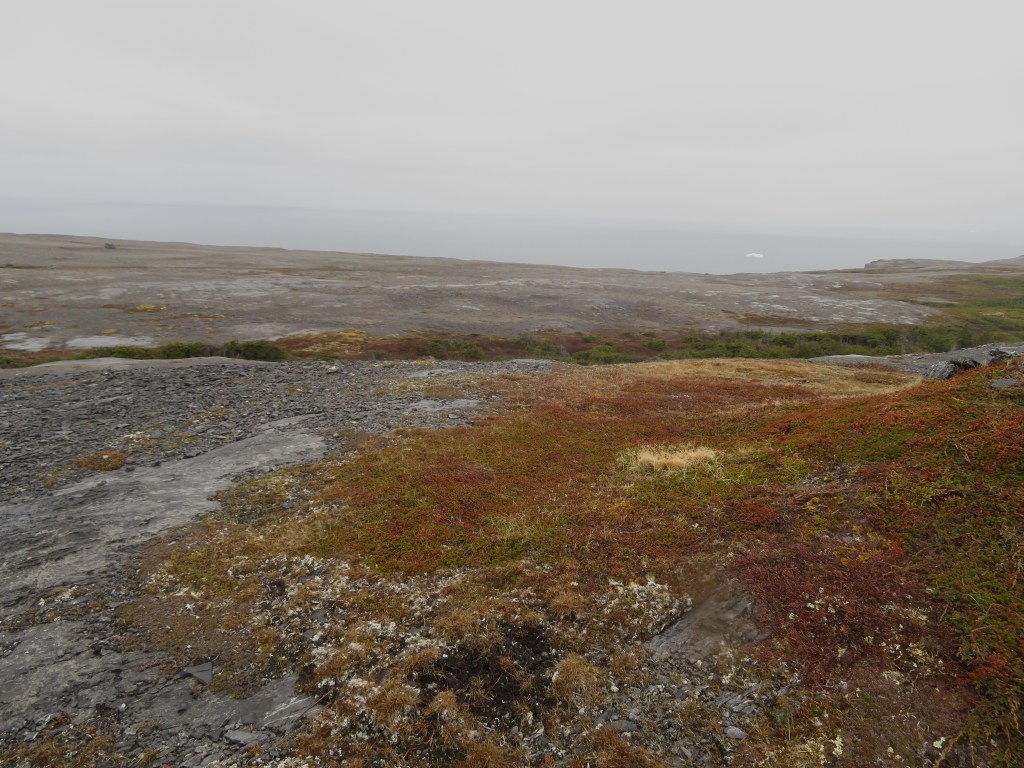
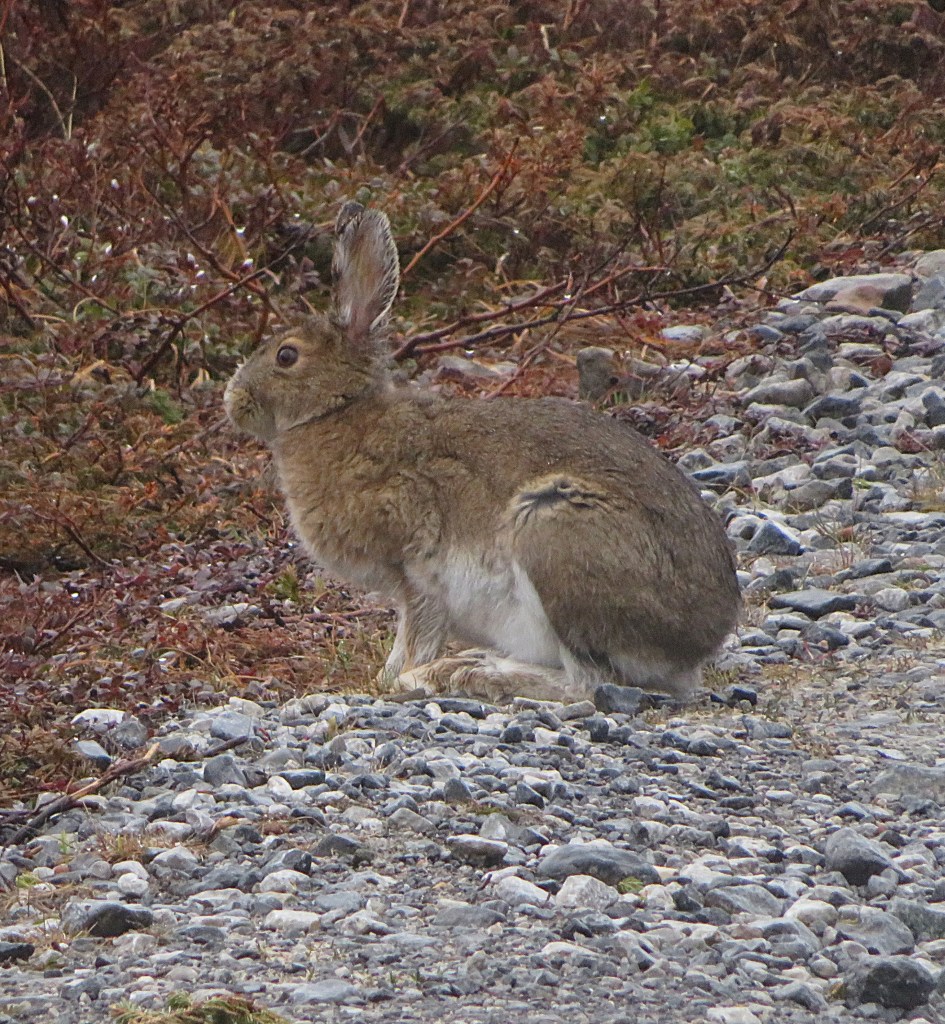
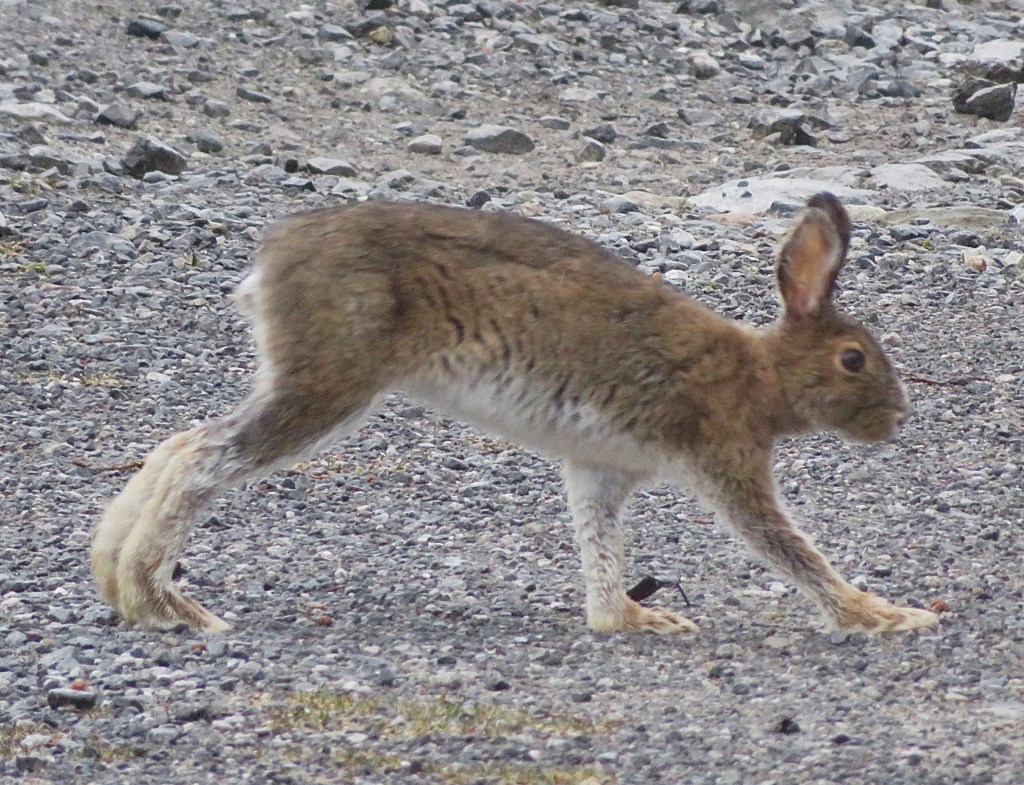
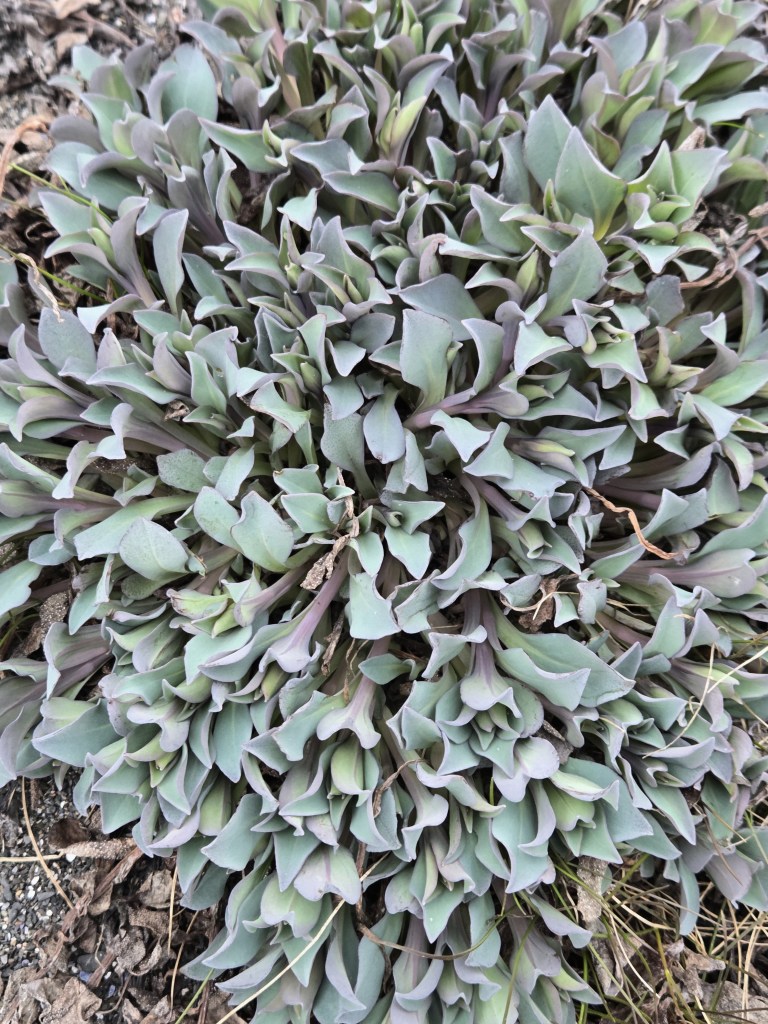
This was terrain and an environment I had never hiked on before. I’ll mostly let the photos tell the story. We had to walk over a bit of snow at the start, but then the ground was open and easy to walk. Some of the flowers in the pics (in order): White Arctic Mountain Heather; Reindeer Lichen; Dwarf Willow; Purple Saxifrage; Alpine Azalea. There were so many other plants not blooming yet. It is still very cold here and I’d say more than six weeks behind Wheeler Hill weather. But that’s not even an apple to apple comparison, as this is an entirely different environment.
The other pictures are of the terrain of the Cape. The two rock piles were the height of land. The final two pics from there are of a Snowshoe Hare that appeared just for the pics!
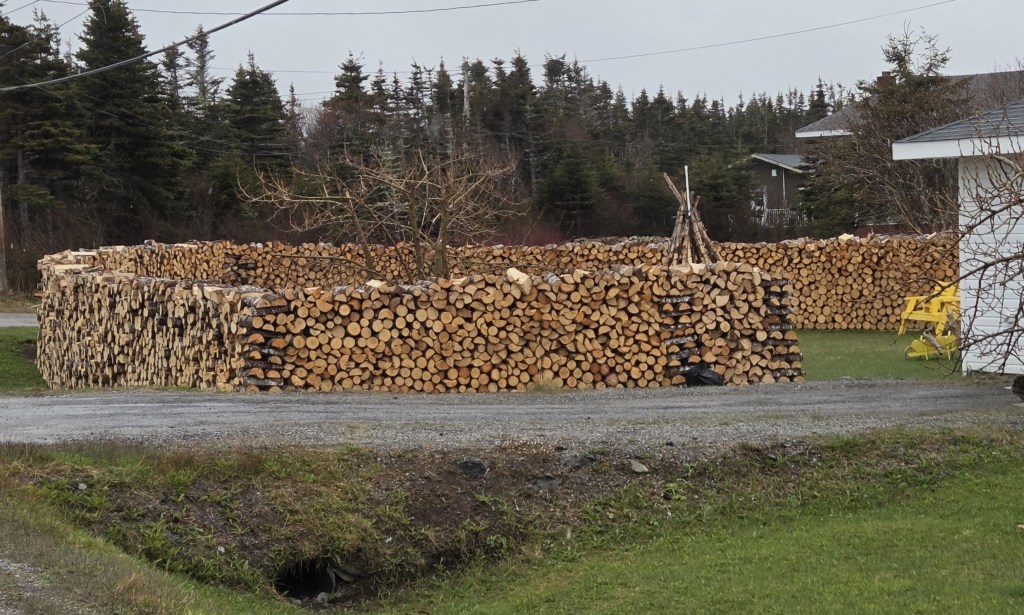
We then motored into St. Anthony for the day. On the way, at the edge of town, was the woodpile that Dennis’s sister, Cindy told us about. Circular, and she told us she did all of the stacking by herself.
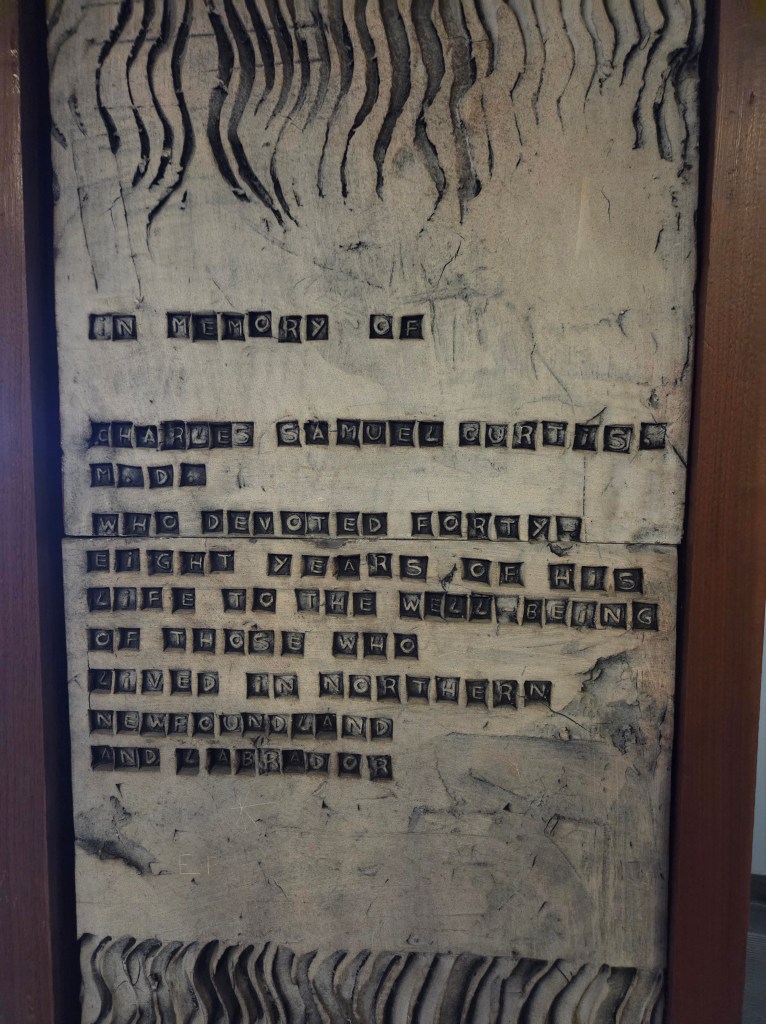
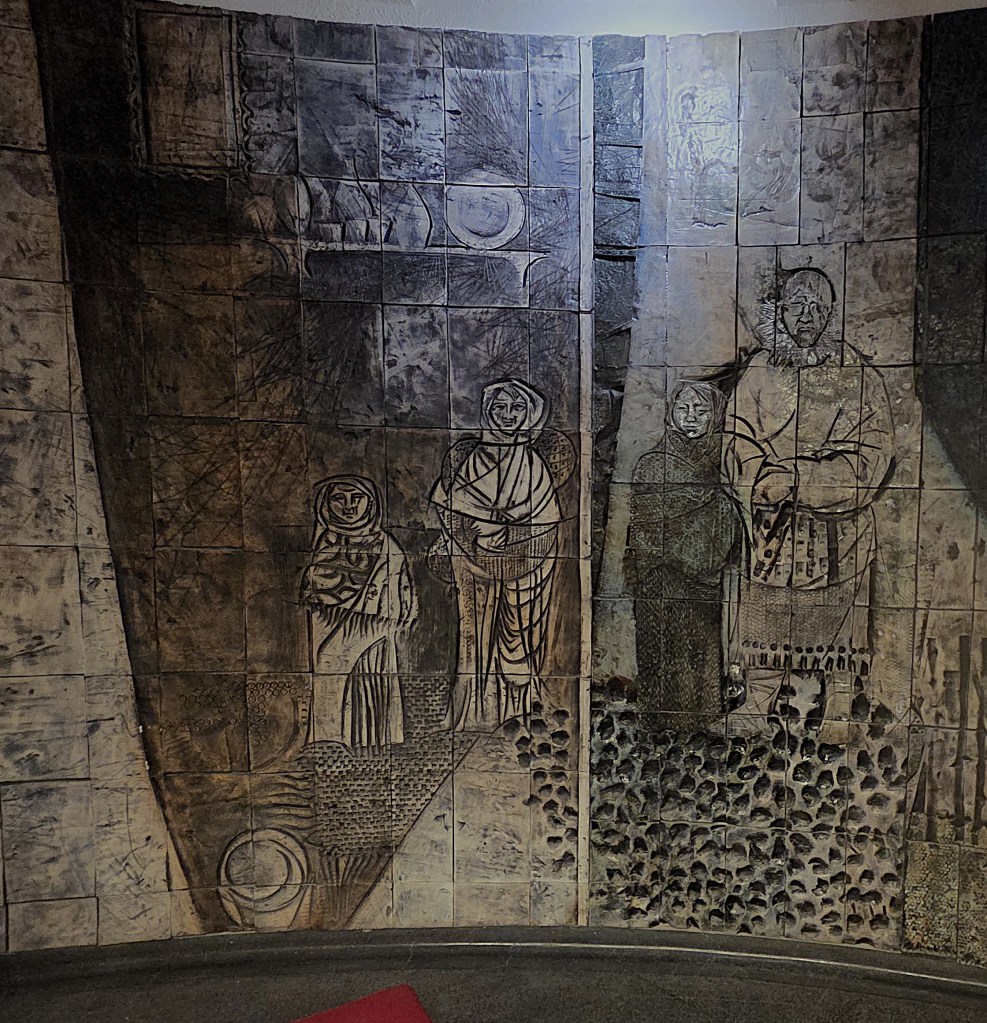
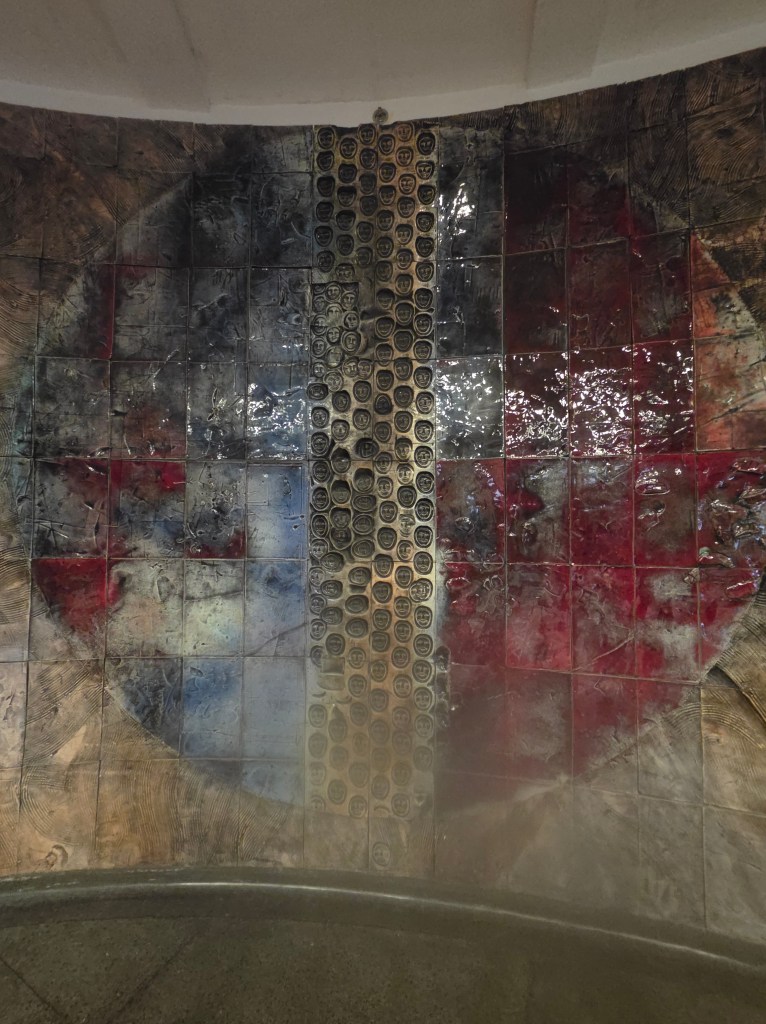
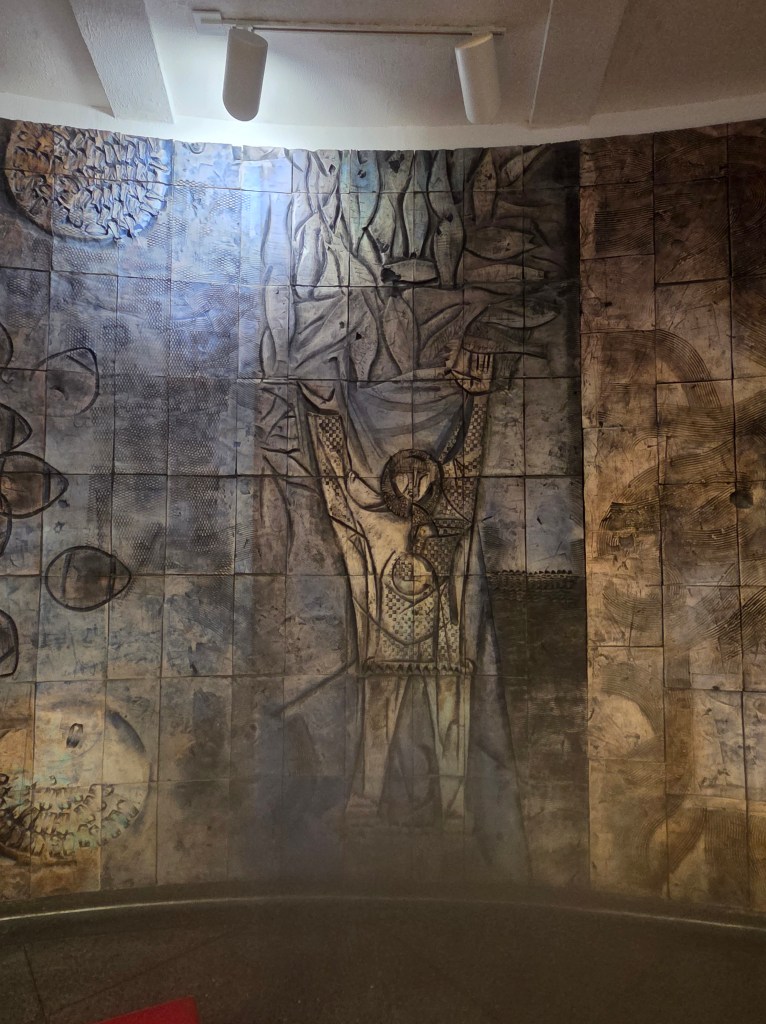
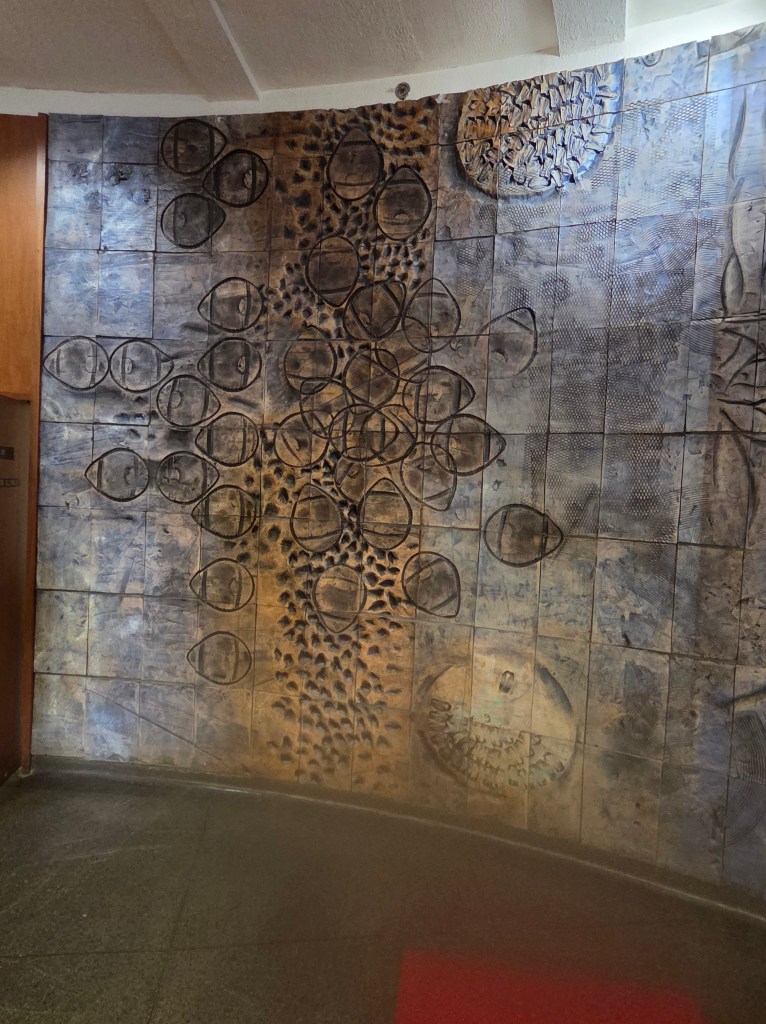
The next photos are of some of the ceramic murals in the rotunda of the St. Anthony hospital. Here’s an article that describes the installation.
The iceberg pic is of a large dirty iceberg in the bay by St. Anthony.
The penultimate pic is of oysterplant, which we found nearby. After I identified it I learned that it is edible and tastes like raw oysters. Of course, I tried it and was actually surprised that it does!
Tomorrow morning we head out, retracing our route here for 200 plus miles then swing east toward the eastern side of the province for the next two weeks. It’s been a great stay here on the Great Northern Peninsula of Newfoundland. I’d love to come back here again a little later in the season just to explore more of the Burnt Cove Ecological Reserve, but that’s probably not in the cards.
(Click on thumbnail for larger picture.)
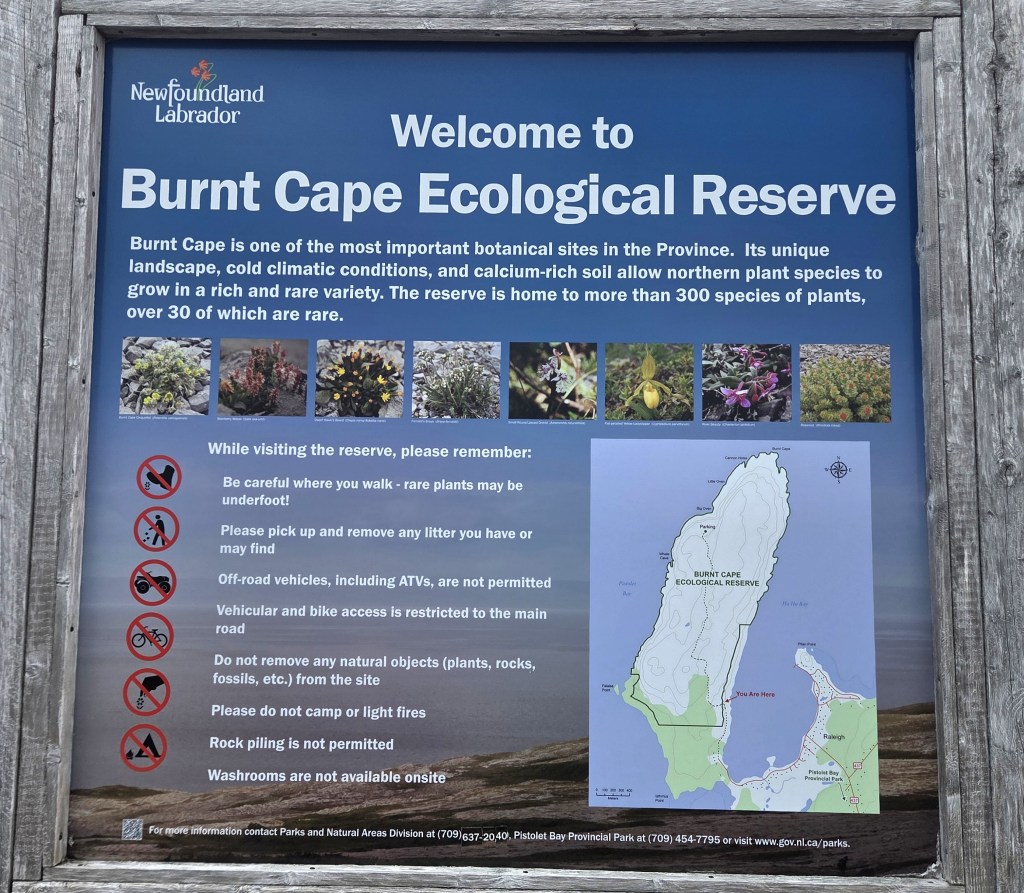
6/3
Leisurely morning writing and going over photographs before heading out for the day, making a trip to L’Anse aux Meadows, the only documented Viking settlement in North America, a UNESCO World Heritage site.
Before leaving, Ena, who helps out here at the place we are staying in, had something for me to try. She brought out a small container from the refrigerator and handed me a small mass of something, still slightly frozen. I popped it into my mouth and it was quite tasty and chewy. It was a raw whelk, or as they are called here, coo-coo. She said a lot of people eat them here. They can be grilled and sauteed, too. I told her I liked it. She said that if she remembered she’d bring in some cooked ones tomorrow.
After leaving, we drove down the nearby road to see if there was anything left of the small iceberg that was here. At one house there was a guy chainsawing up some firewood logs. I went out to talk with him and had a wonderful exchange. I told Dennis that we heat and cook with wood. We talked about working up wood and I asked him questions about some of the things we’ve seen on the trip. He showed me his sled for hauling wood and we talked about getting older and not doing as much woodwork as we used to. He’s two years younger than me but has back issues. He wanted to go say hi “To the wife,” so we walked over to the car and I introduced him to Carolyn. When I told him we were heading over to the Viking site he said, referring to my hairy looks, “You’ll fir tight in there!”
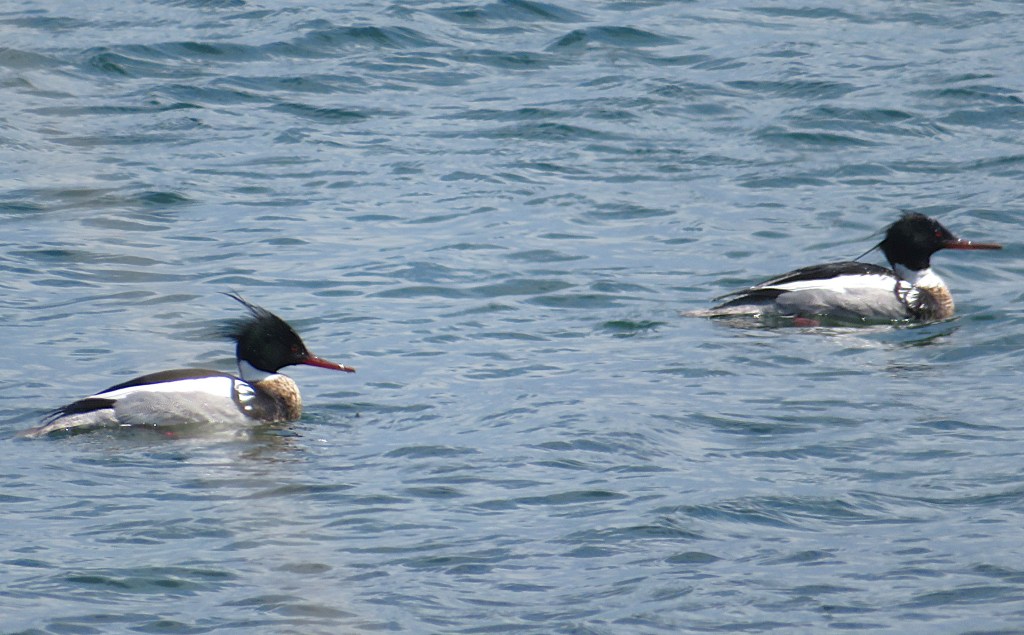
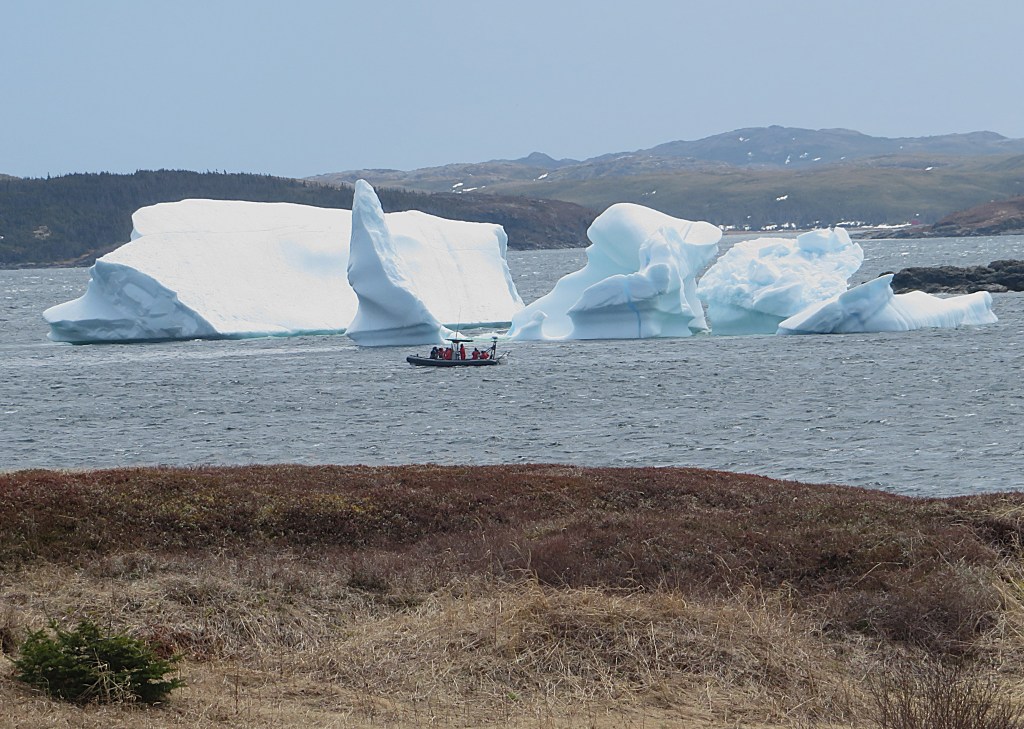
On the way out, identified some Red-breasted Mergansers in the bay here. (pic) Then, on the Atlantic side of the peninsula more icebergs by St. Lunaire Grisquet! (pics).
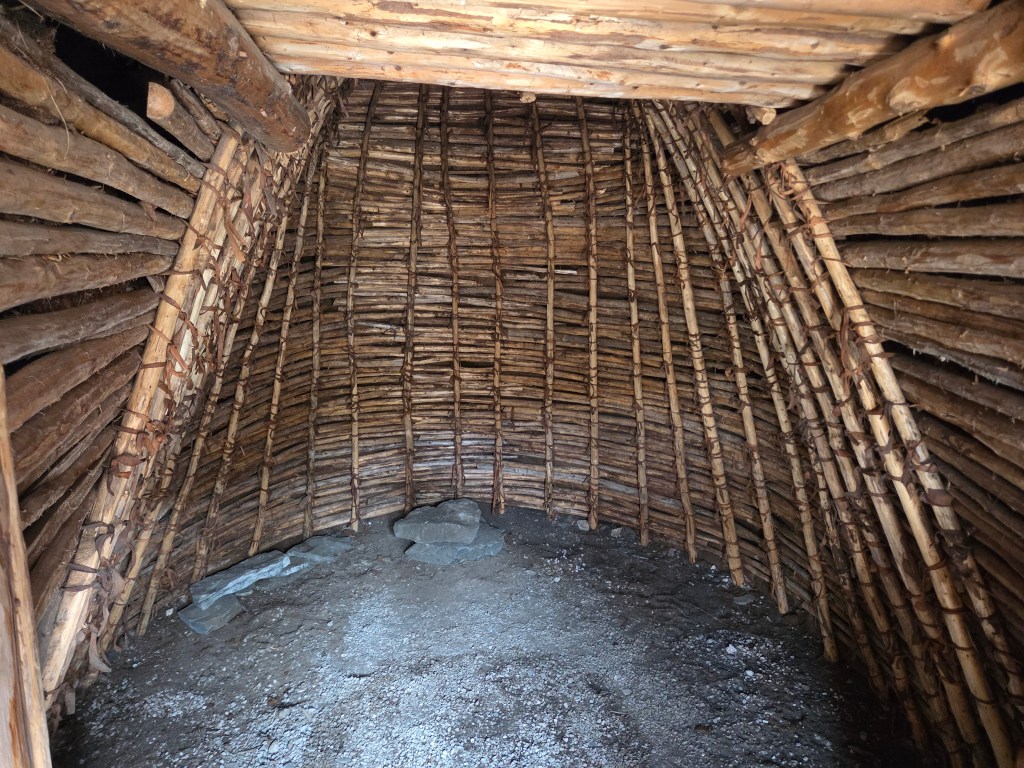
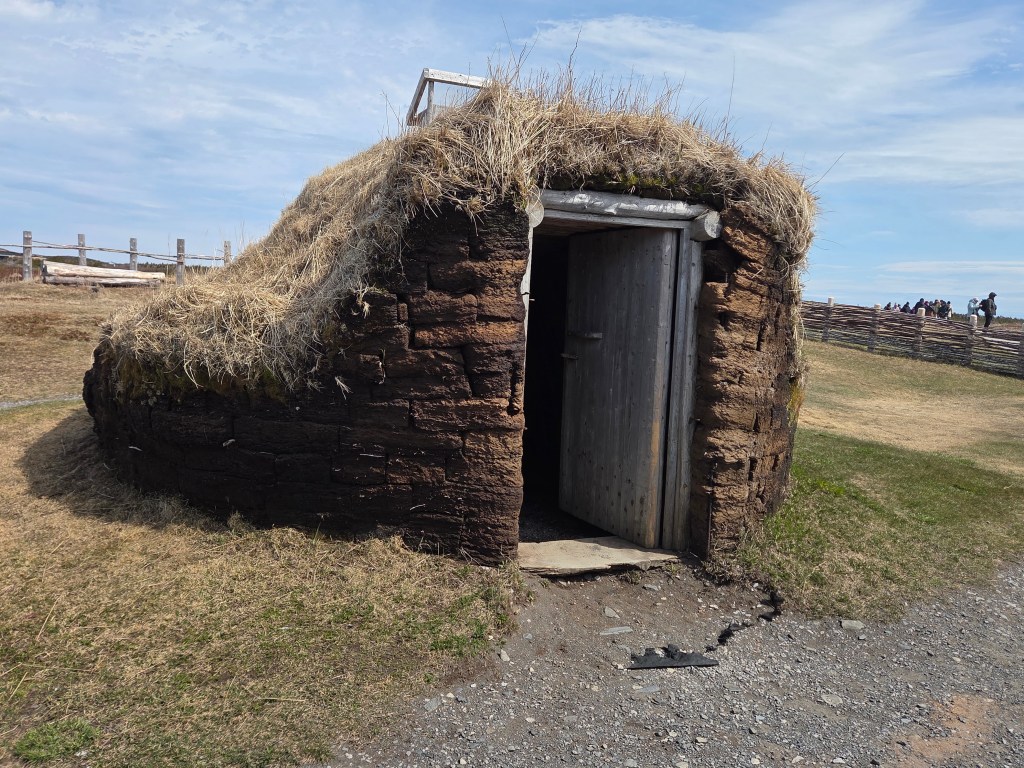
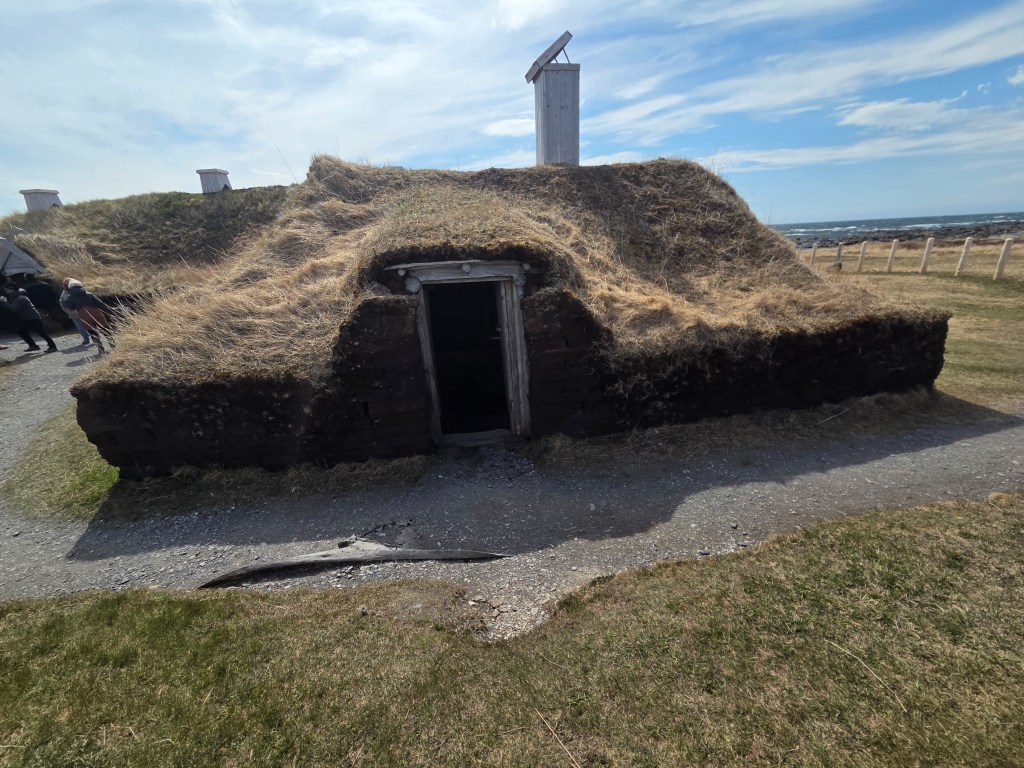
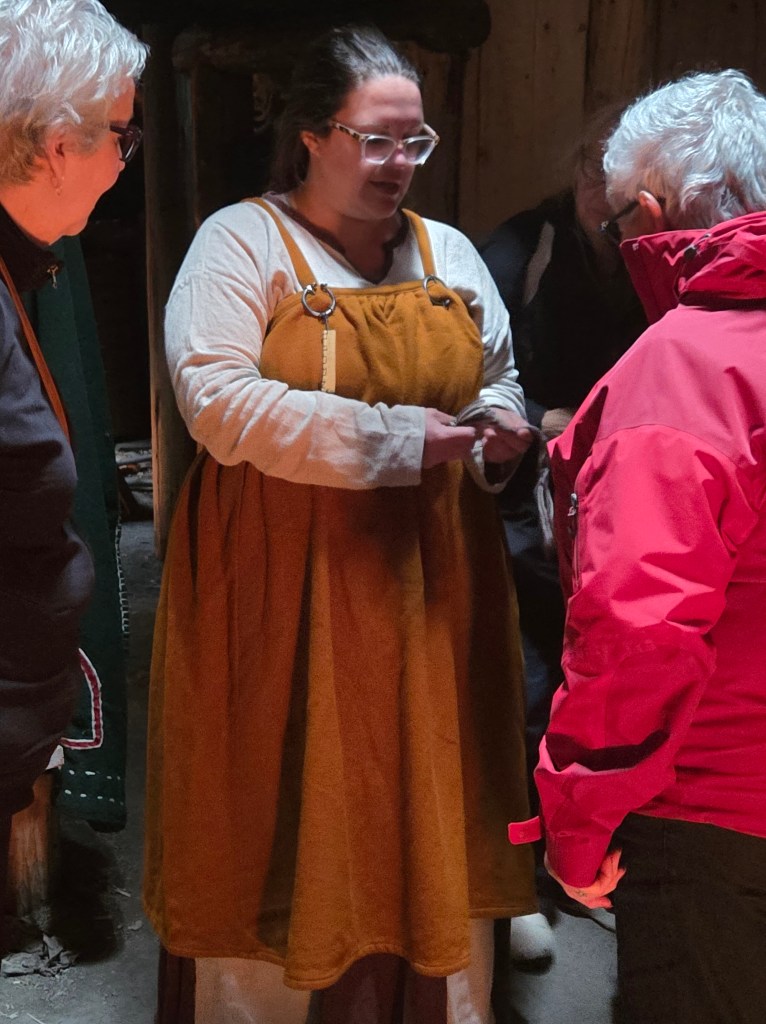
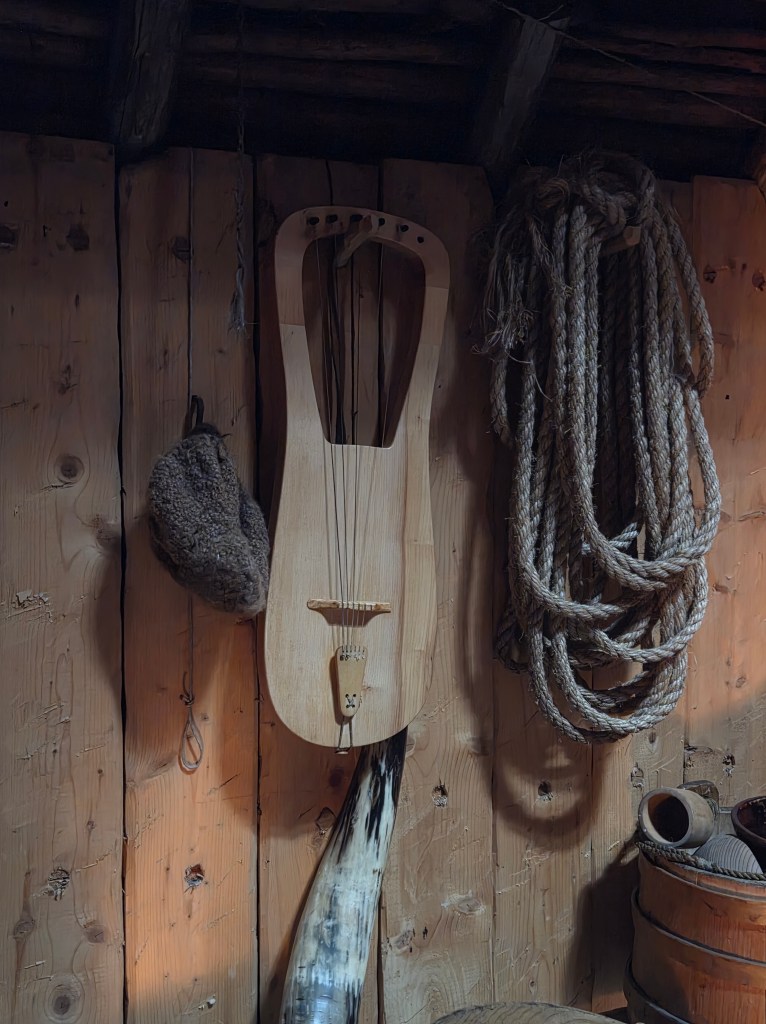
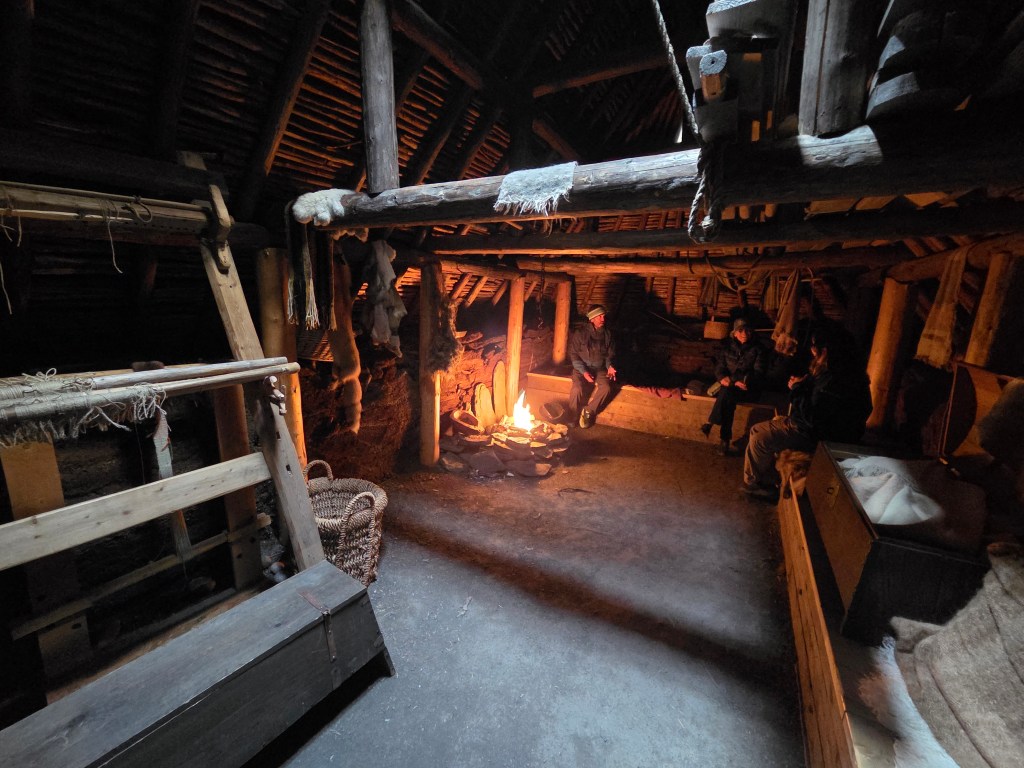
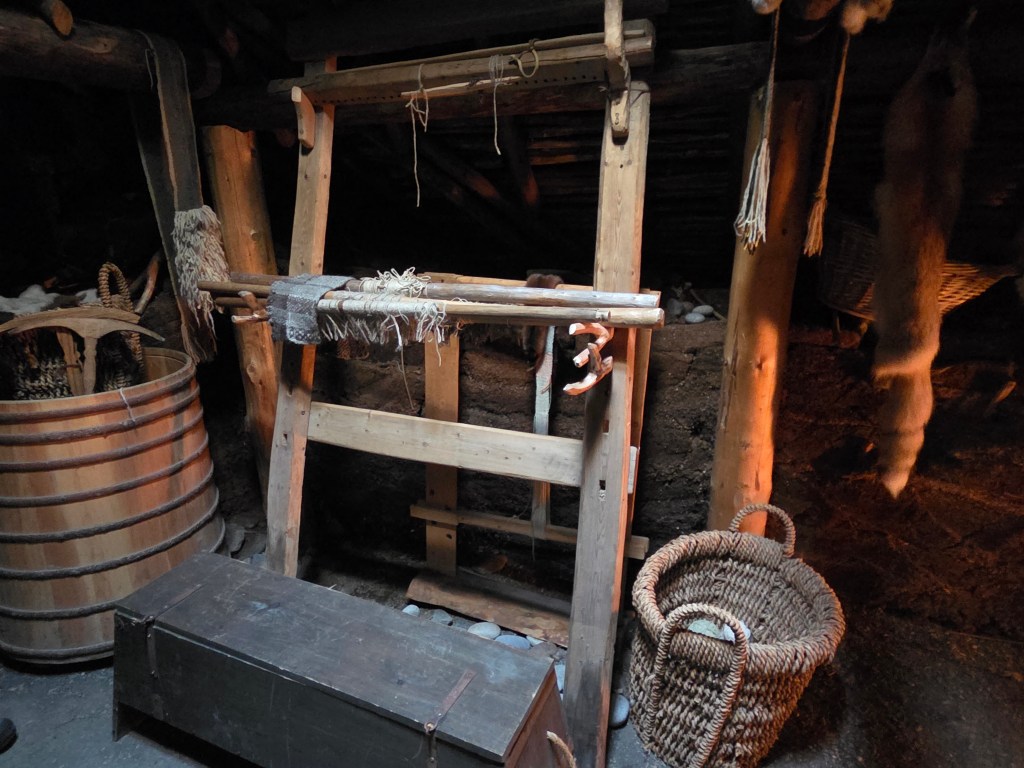
L’Anse aux Meadows was fascinating. A lot of information in the visitors’ center and a nice walk out to the recreated buildings from the Viking settlement that was here for maybe 10 years around 1,000 AD. (pics) While inside one of the huts a gentleman walked up to me and asked if I was “one of the people there?” I couldn’t help but think of what Dennis said to me earlier.
Just before leaving, as I sat on a bench in the visitors’ center, someone walked in and as they passed by exclaimed, “Michael”! It was Tracy, who we met on the ferry ride four days ago. We caught up on out adventures since then and will probably connect again in eastern Newfoundland, where we will both be for a number of days next week.
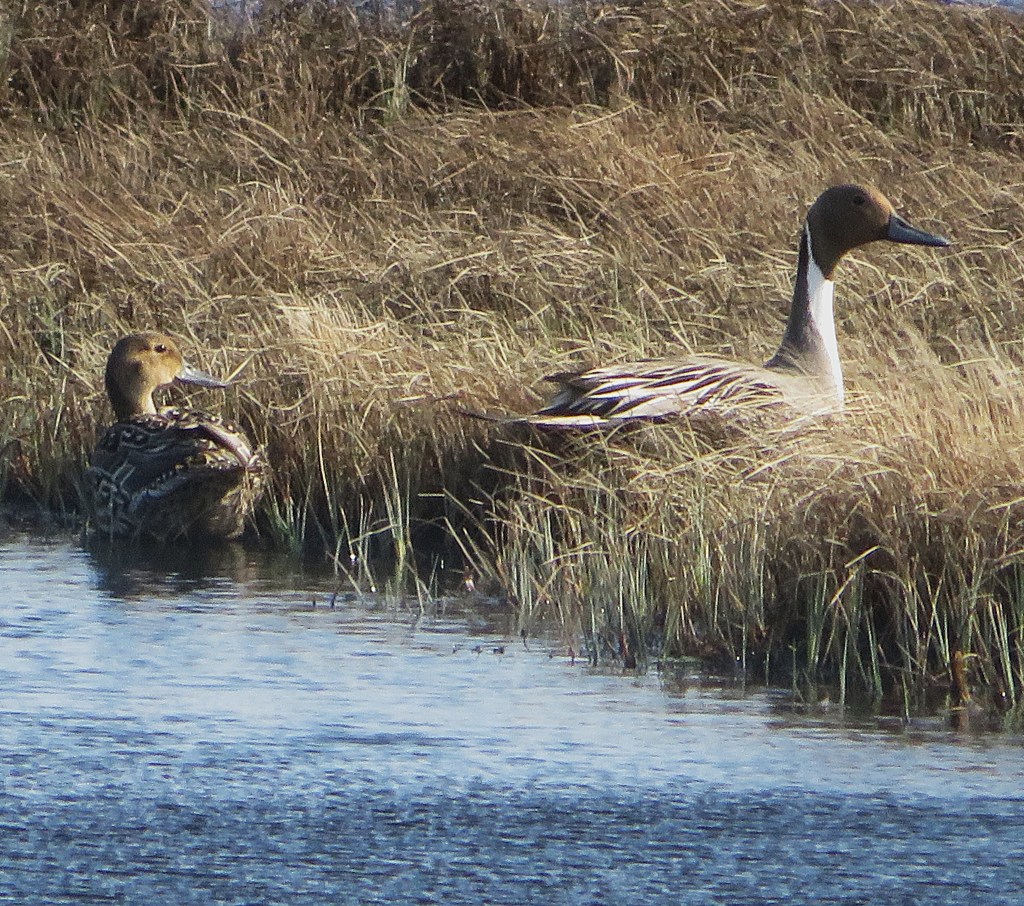
On the way back home, about a 40-minute drive, we spotted our first moose, who walked off into the woods before I could get a picture. A little later we spotted some ducks I later identified as Northern Pintail. (pic)
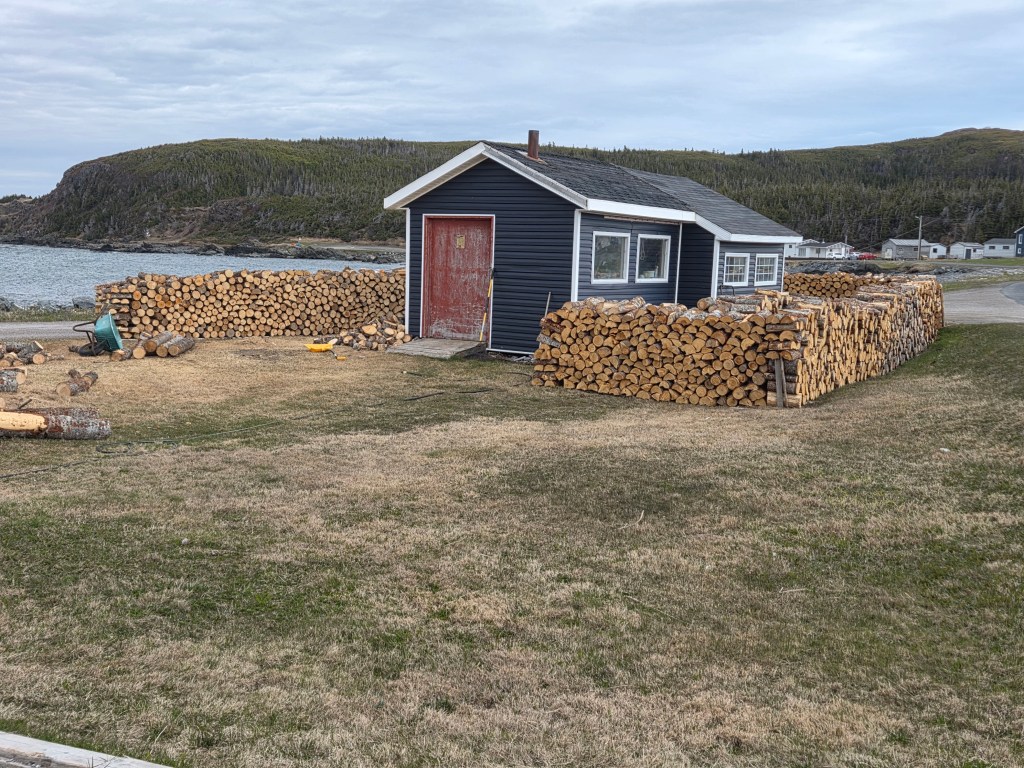
Back at the house we decided to take a little walk by a nearby hill that skirted the shore that we noticed in the morning. Dennis was outside his house so we stopped because I wanted to get a picture of all the impressive amount of firewood he has put up. (pic) We started talking about other things and I learned that he retired from the Canadian Coast Guard and had been a lighthouse attendant in Labrador. (pic) Before leaving he asked if I ever have tried moose and I told him no. “Wait here” he said. After a few minutes he came back out with two bags of frozen moose meat and one of cod! I thanked him immensely.
So, another fine Newfoundland day filled with people, nature and history.
6/2
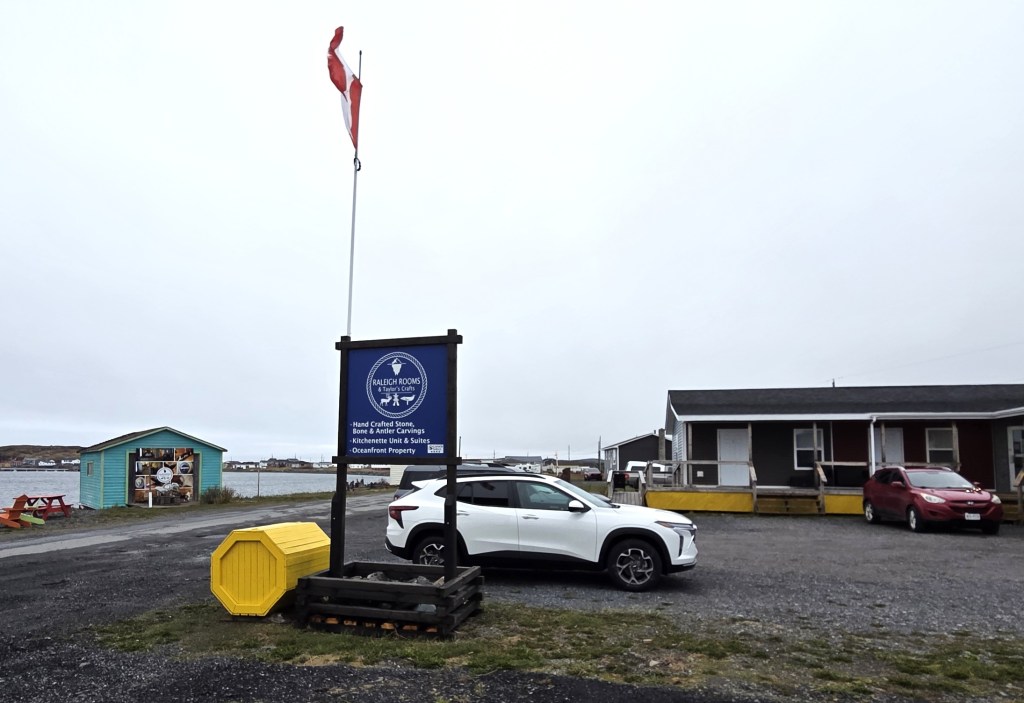
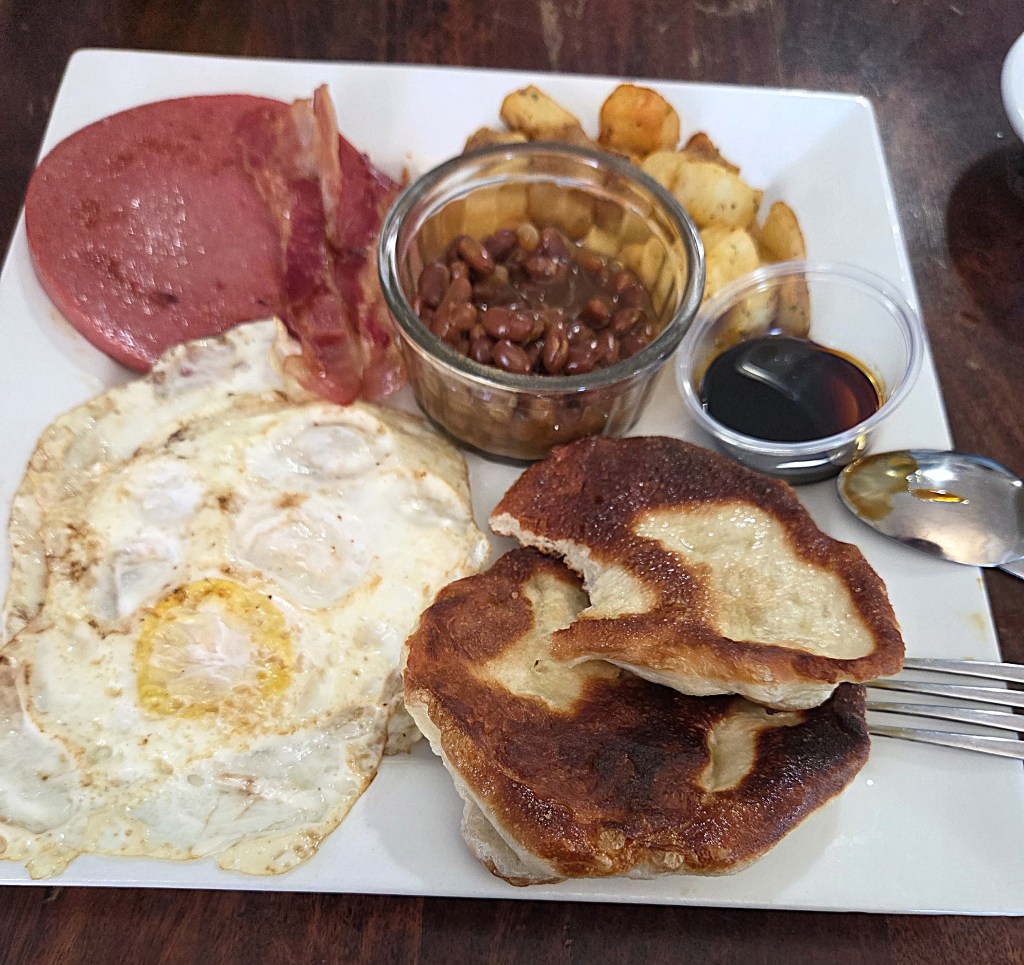
Left our home in Corner Brook early morn (pics) for the five or so hour drive up north to Raleigh. Stopped for breakfast along the way at a small café and tourist store. I had a traditional Newfoundland breakfast, which included baked beans, baloney (which I haven’t had for decades, out of choice) and toutons, which is fried bread dough, along with molasses. (pic) It was good, though not as healthy as my usual breakfast. I’ll maybe have it once more while on this journey.
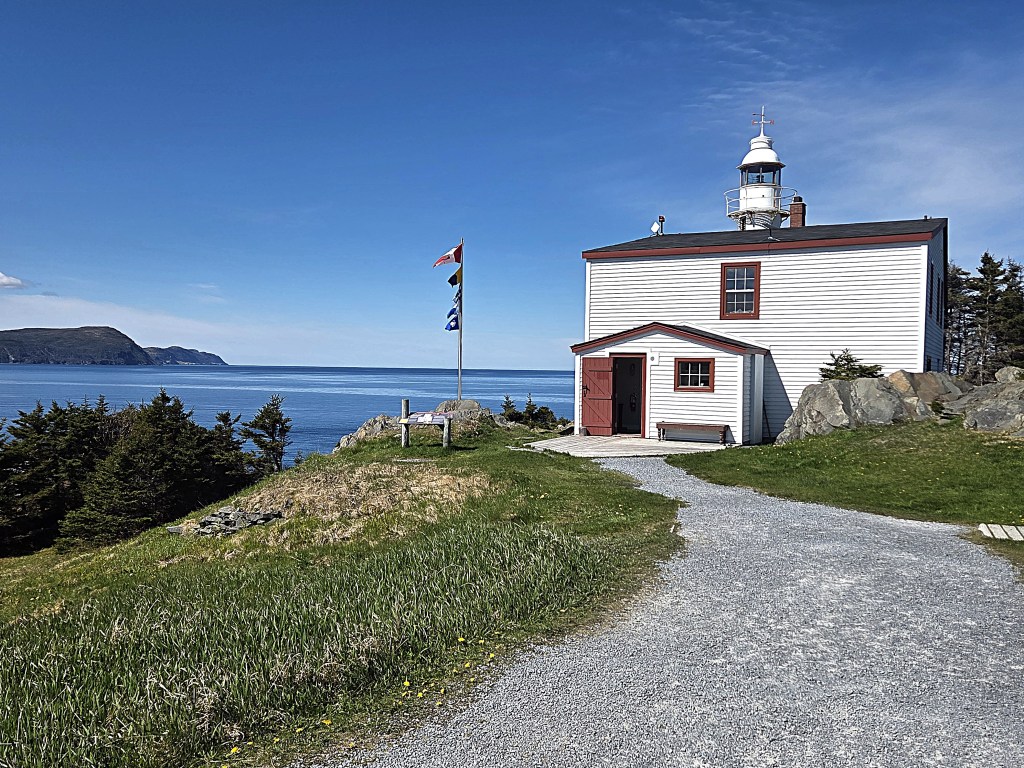
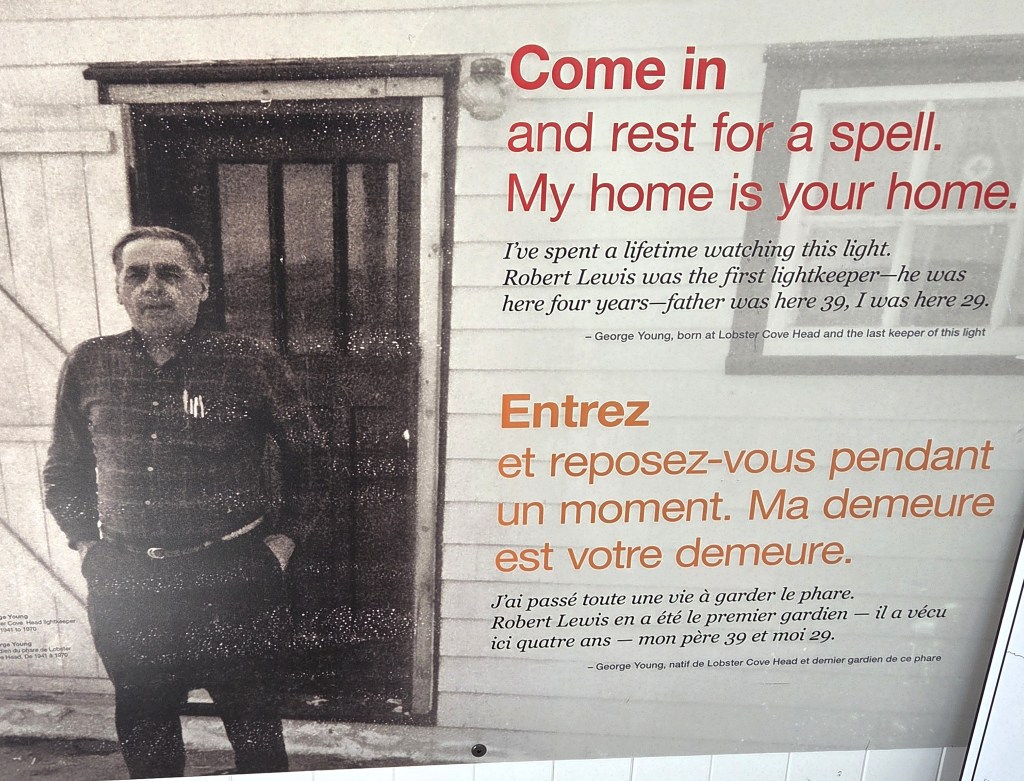
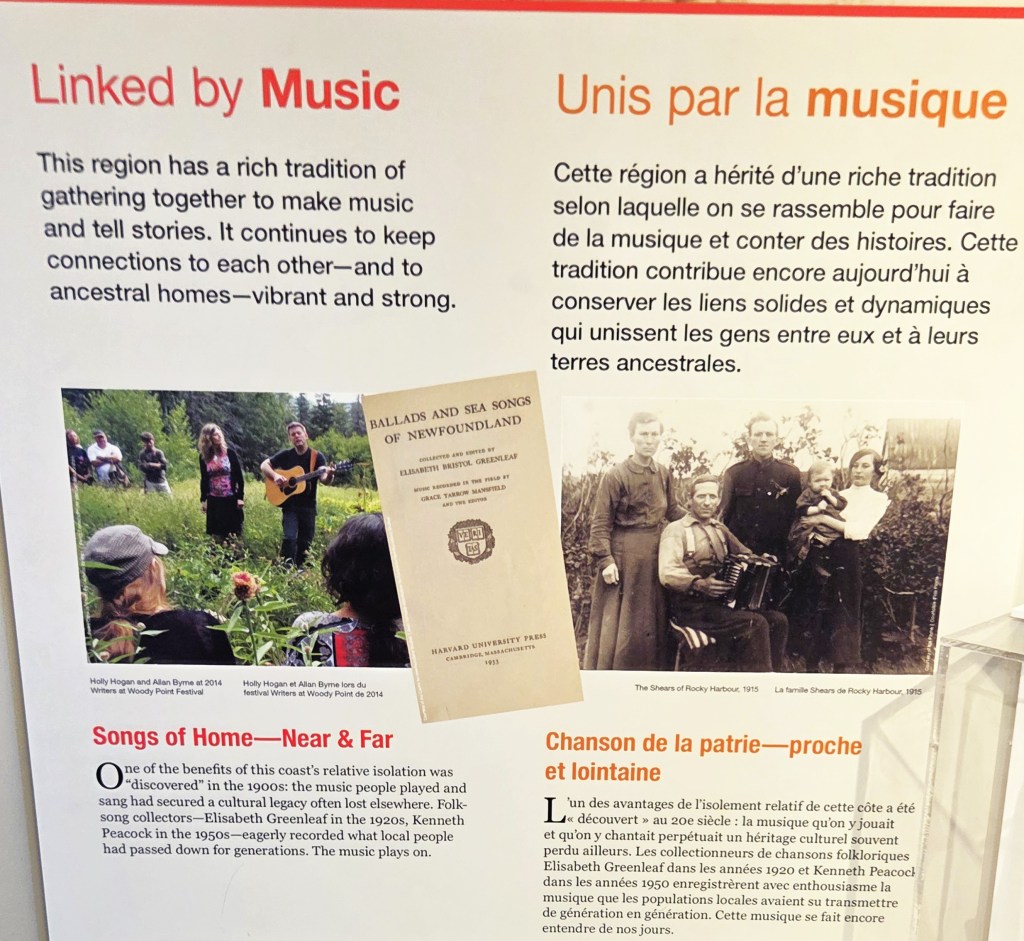
Just beyond breakfast we stopped at Lobster Cove Head Lighthouse, which is part of Gros Morne National Park. The lighthouse, built in 1897 and made of cast iron, is a Recognized Federal Heritage Building. (pics) A lot of informational material inside the old light keeper’s house.
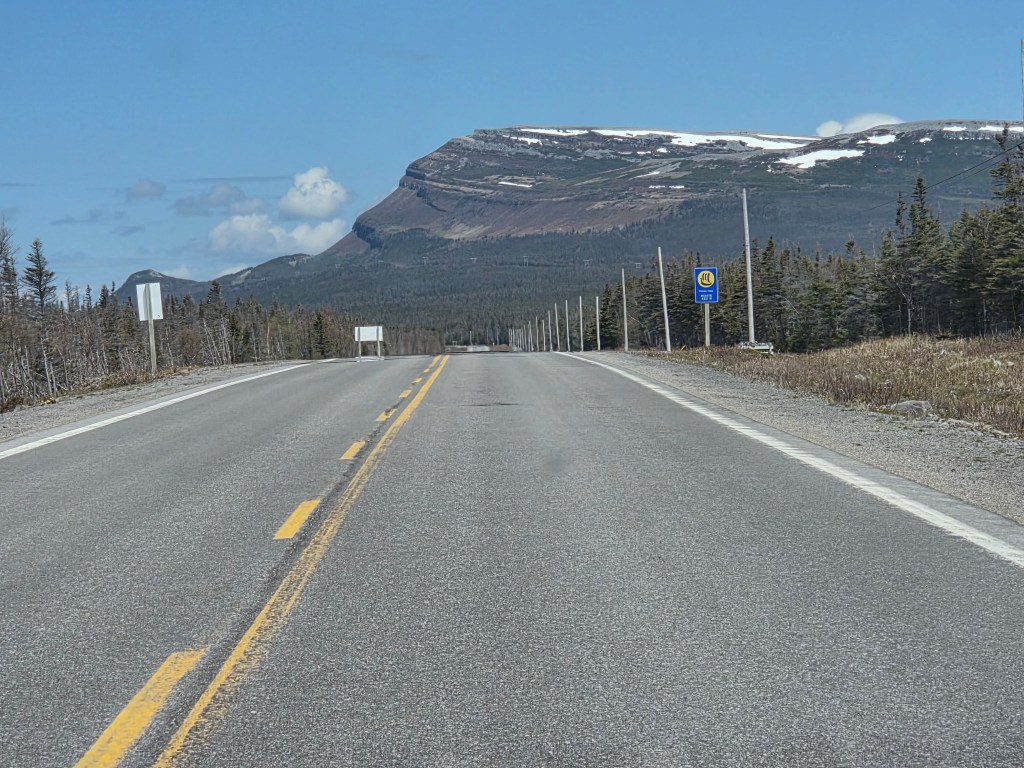
The scenery pictures are from various places along the route up to the far northern portion of the Western Peninsula.
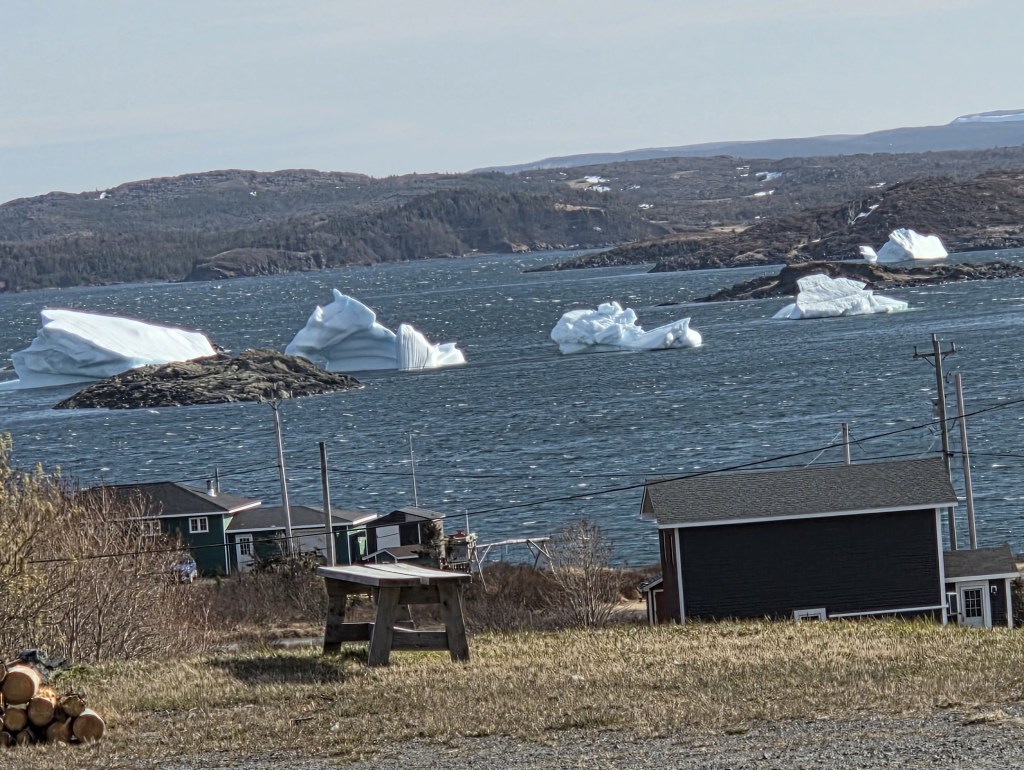
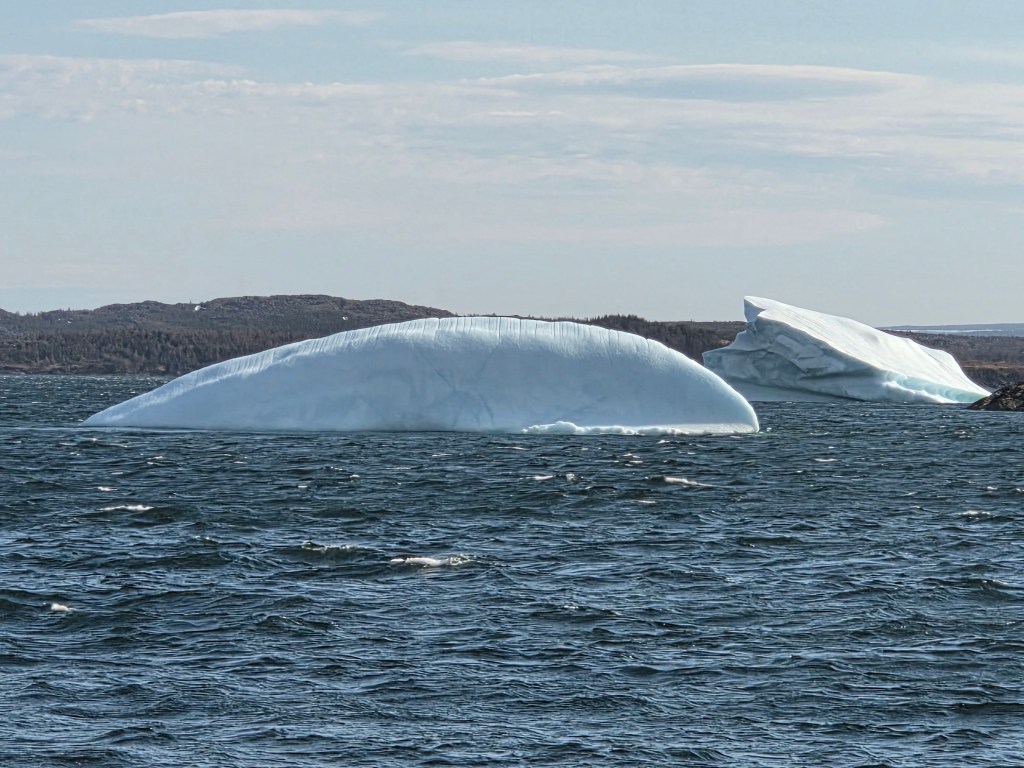
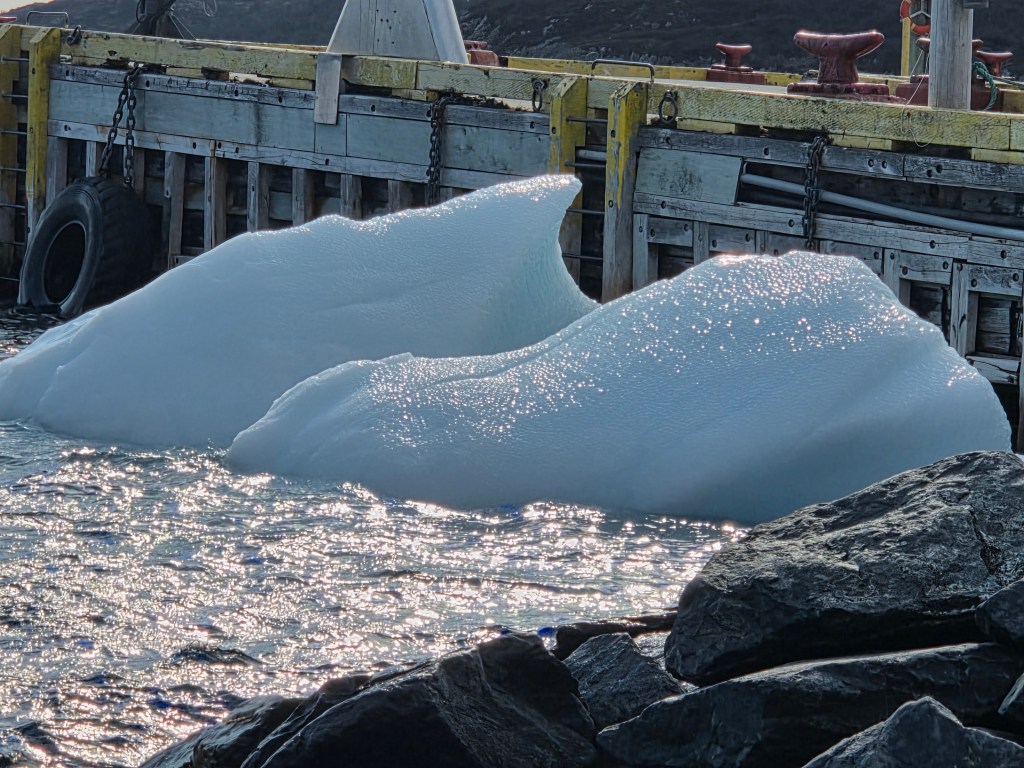
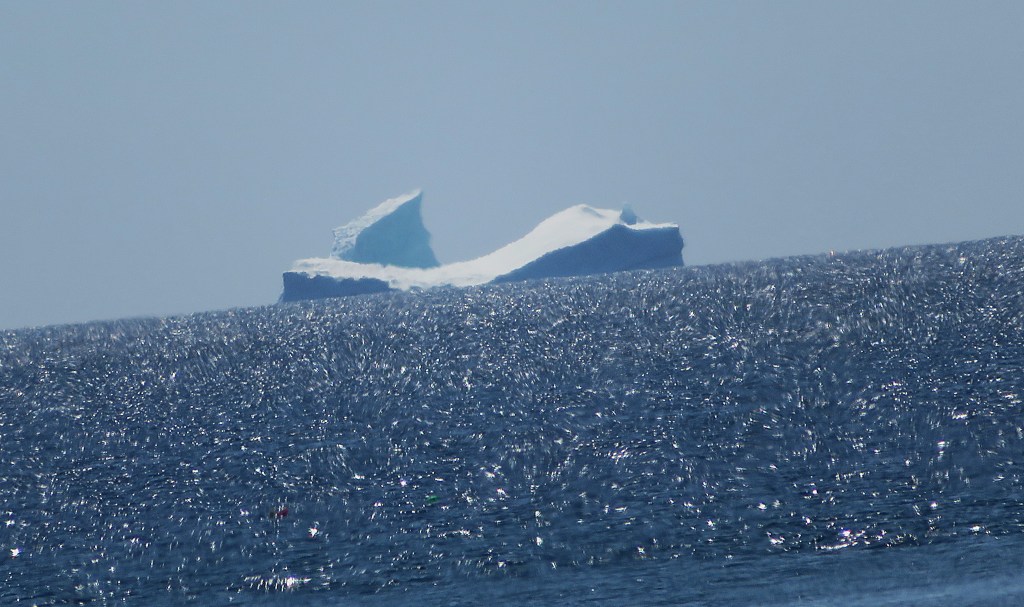
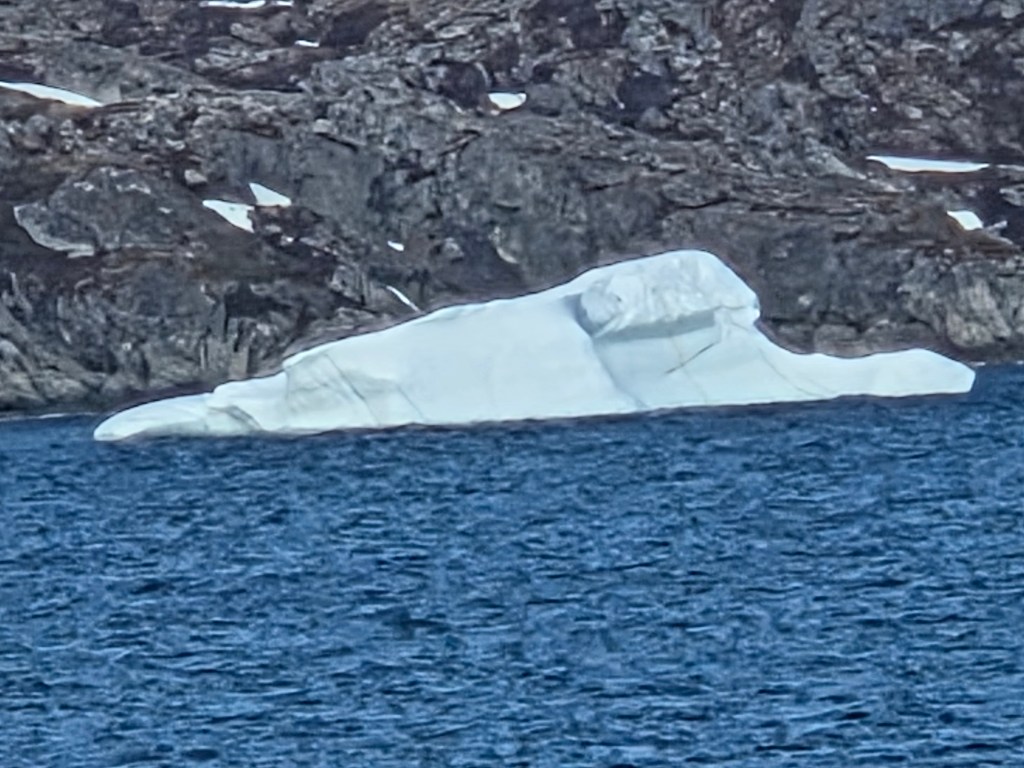
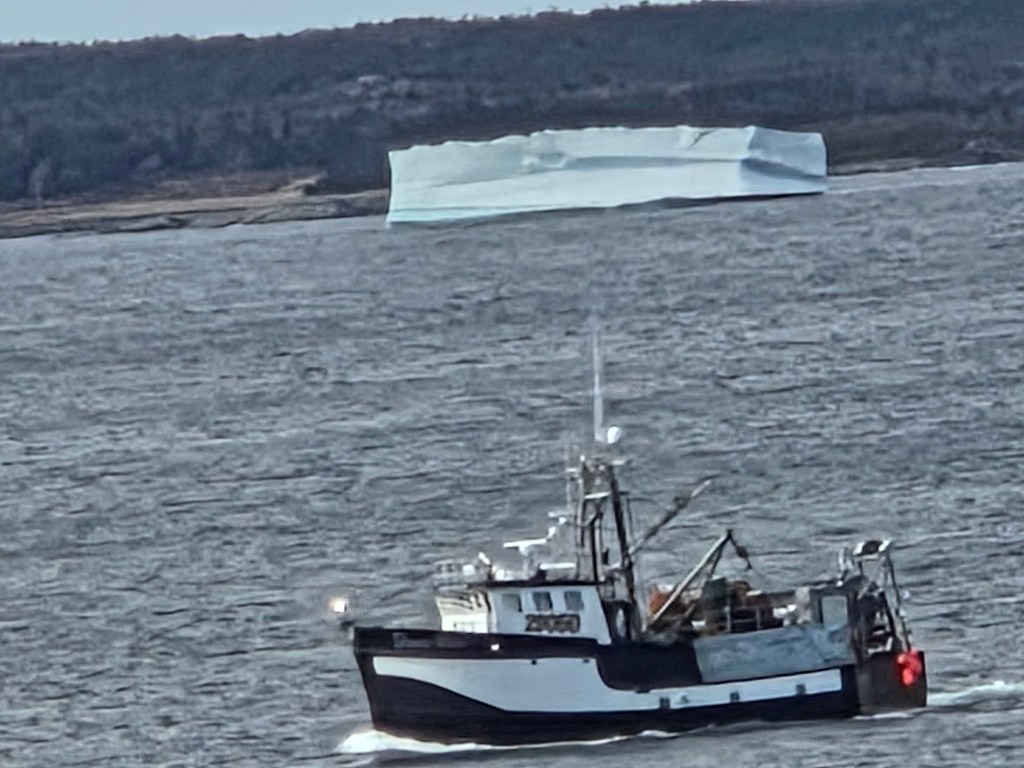
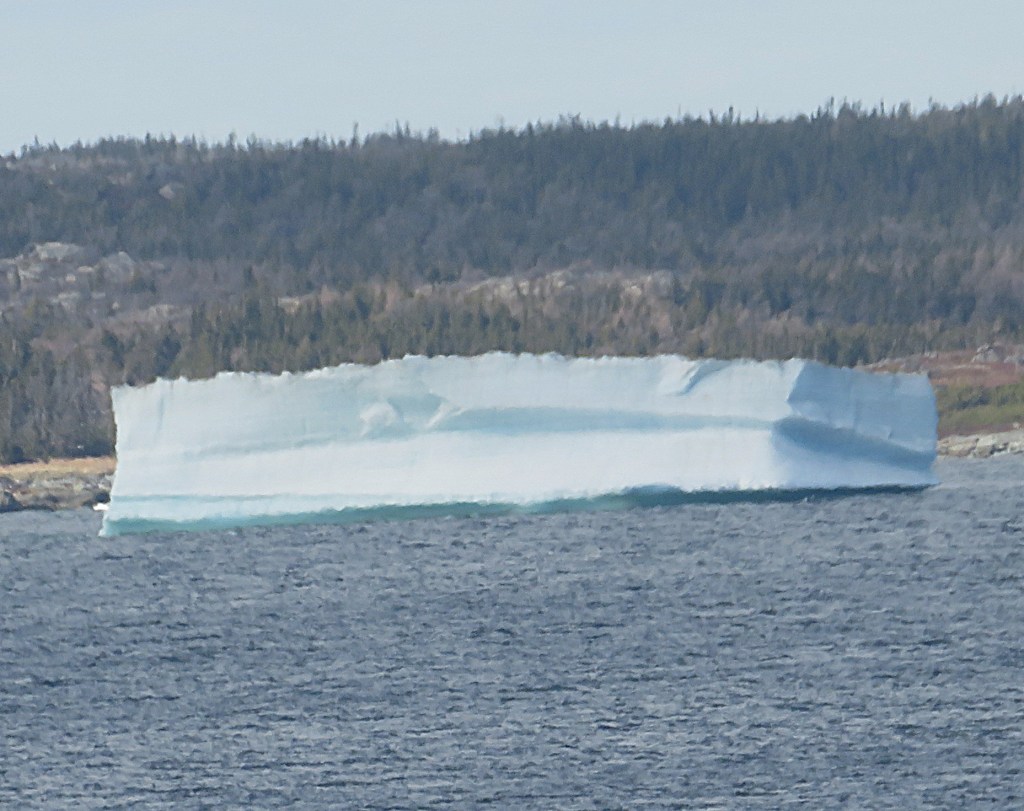
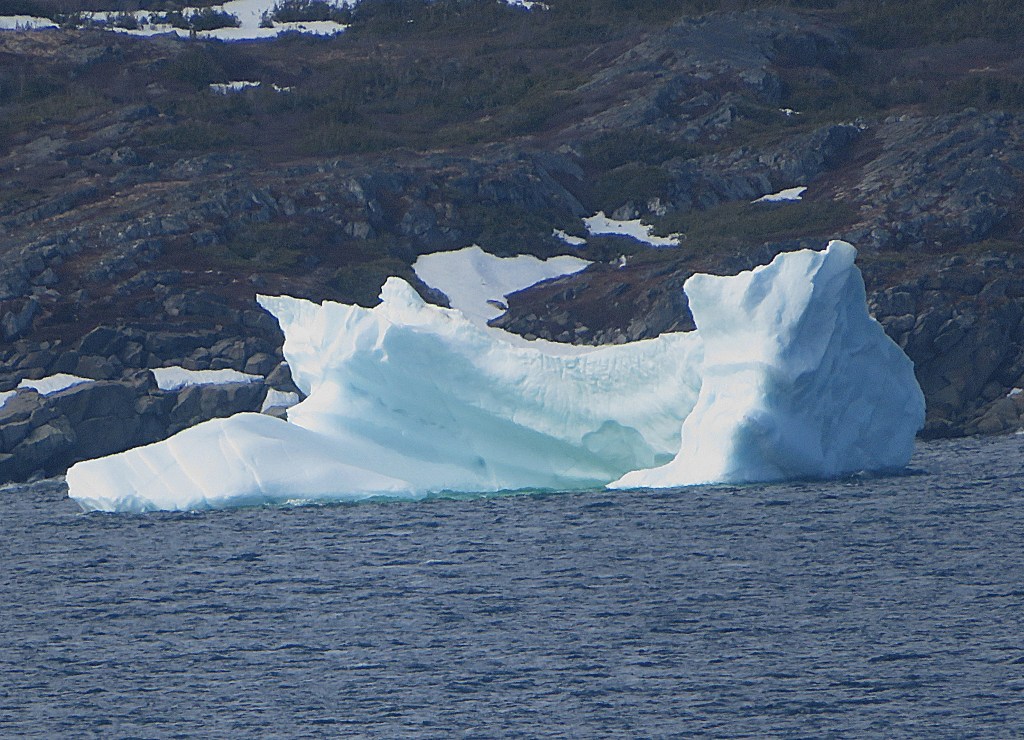
One of the hoped-fors on this journey was to see some icebergs. We were pretty sure we would see some when we explored the Atlantic coast northeast side of the peninsula, as I was occasionally checking in online to iceberg sightings. We were very surprised to spot our first one in the gulf of the St. Lawrence on the western side from Anchor Cove! There were a couple of others we saw in the Gulf after that, quite distant. But, when we arrived in St. Anthony on the Atlantis side we spotted many others, some quite close. (pics)
The icebergs originated in Greenland and take two years to arrive here, guided by the Labrador Current. I’m sure we’ll see many more over the next two days here and when we swing over to eastern Newfoundland on Saturday, where we will spend the final two weeks of the journey.
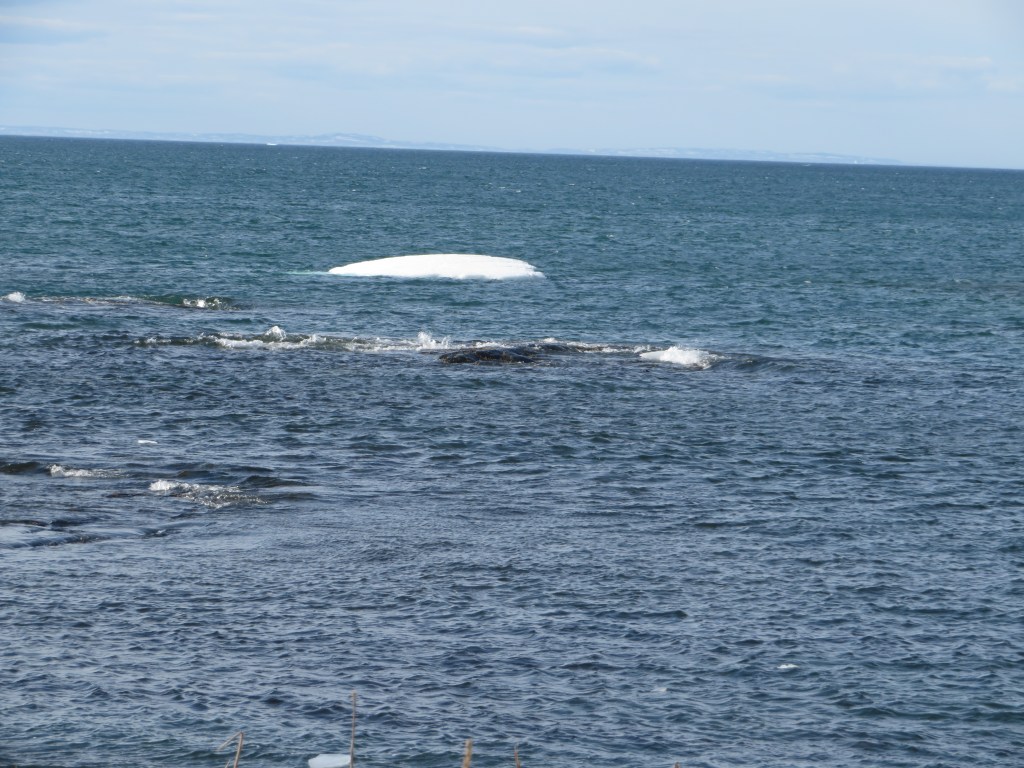
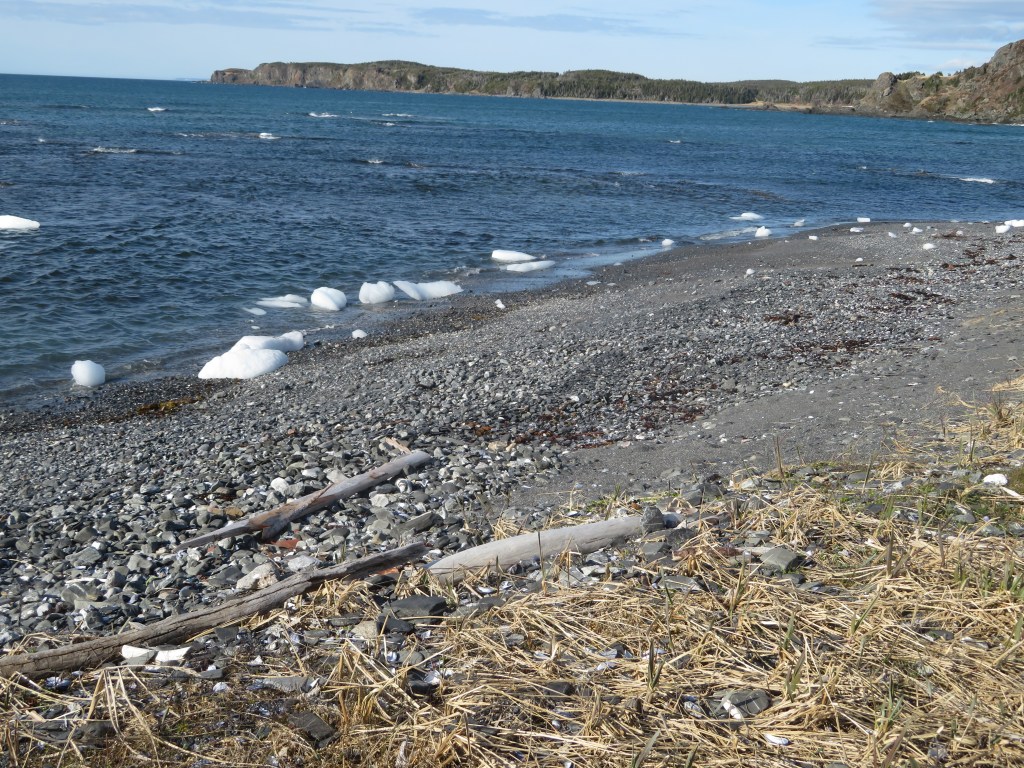
After checking in to our home here in Raleigh, we drove a short distance to see another iceberg our host told us about, just around the corner. It was a small piece floating near shore. Then I noticed the shore dotted with small chunks of ice that probably came from the small disintegrating one. I’ll be curious to see what’s left of all of that tomorrow morn.
(Click on thumbnail for larger picture.)
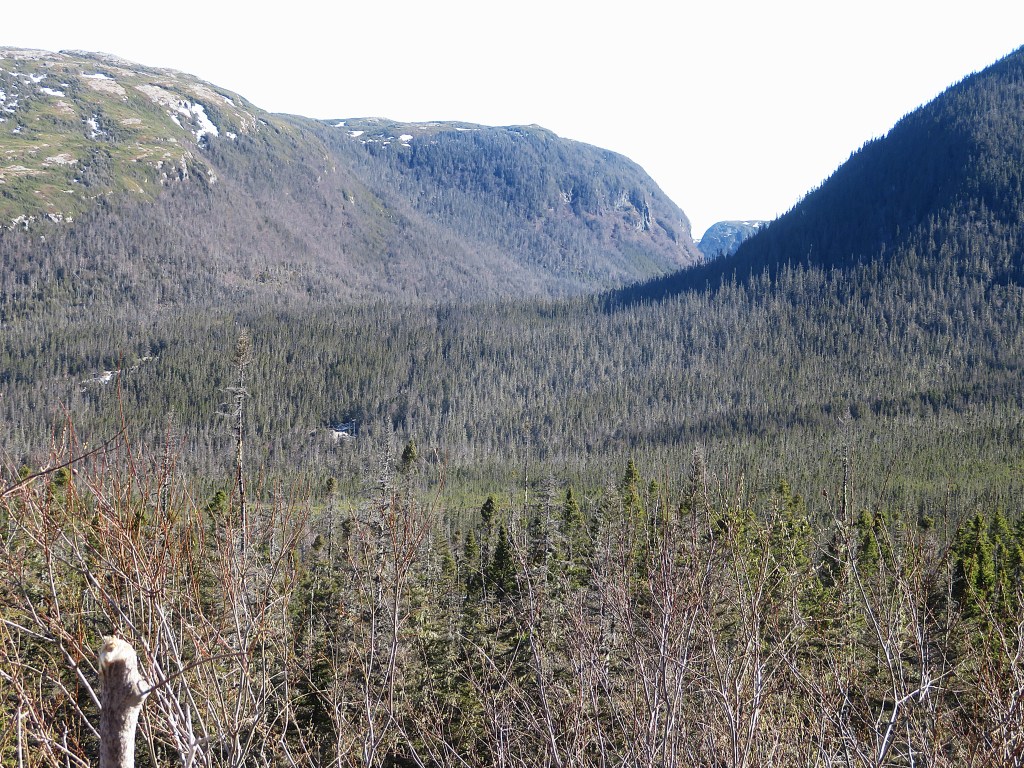
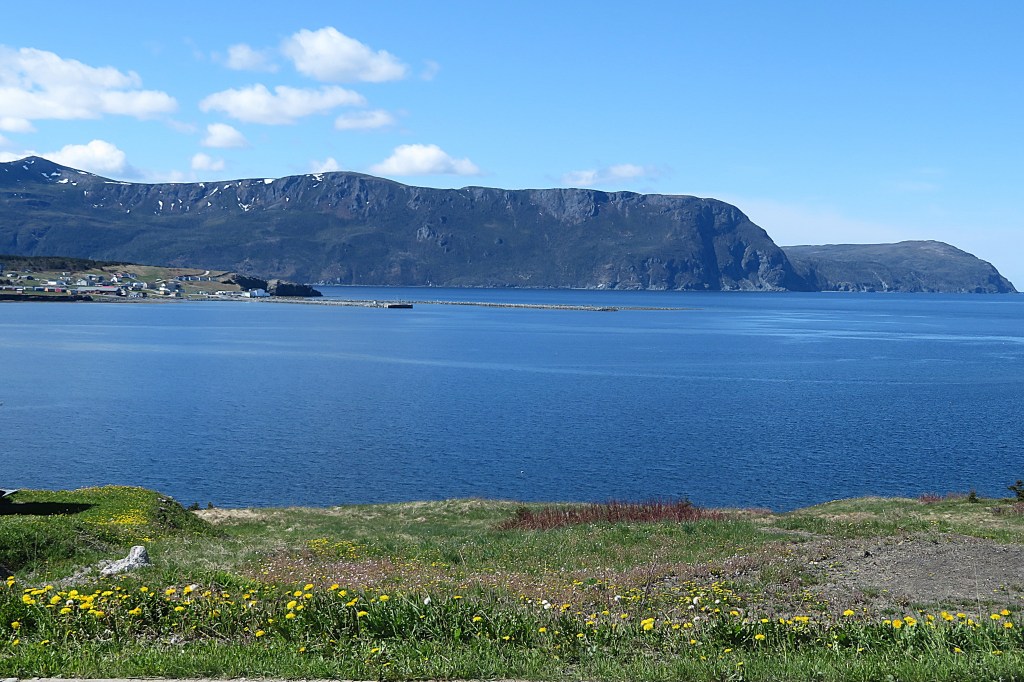
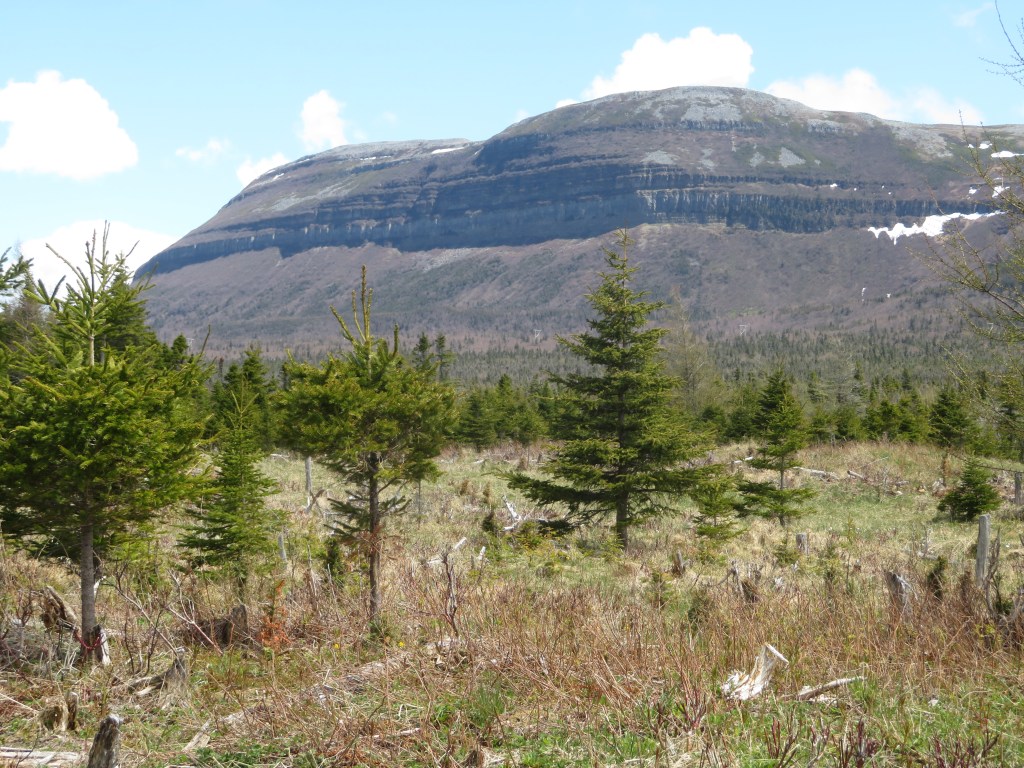
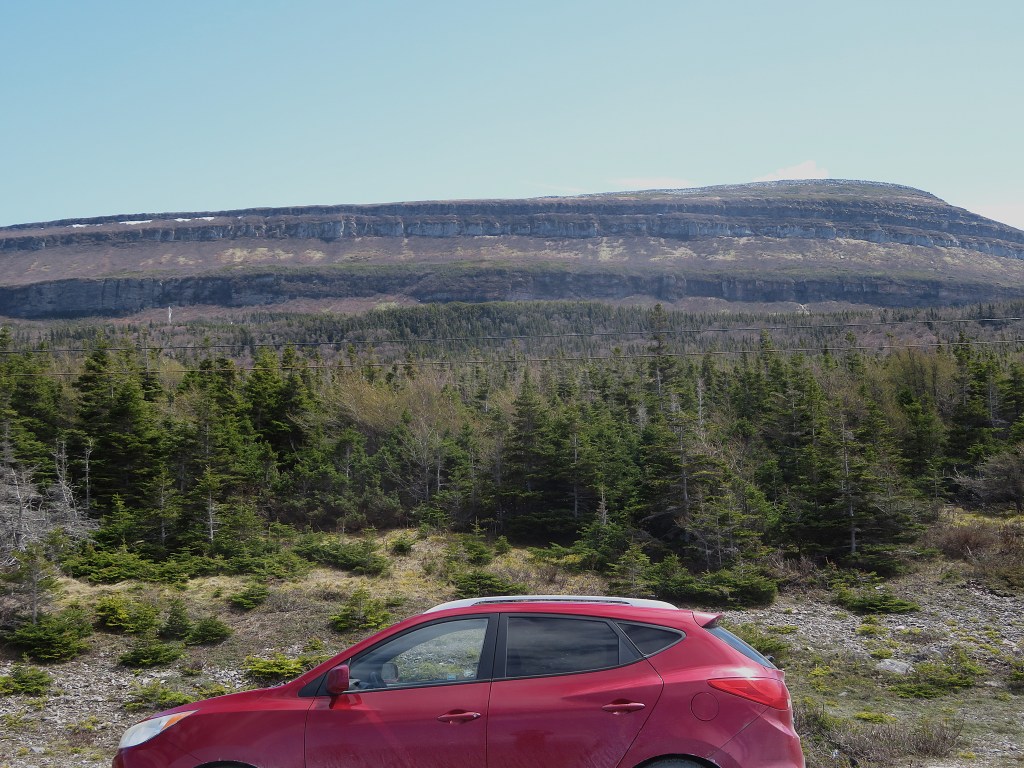
6/1
Took an easy morning today. Breakfast at home and getting some work done that needed to get done. Away from home doesn’t mean completely away from all the publishing and personal work that remains. Mostly away, but there’s always little things that still need to be addressed. We keep that to a minimum as much as possible.
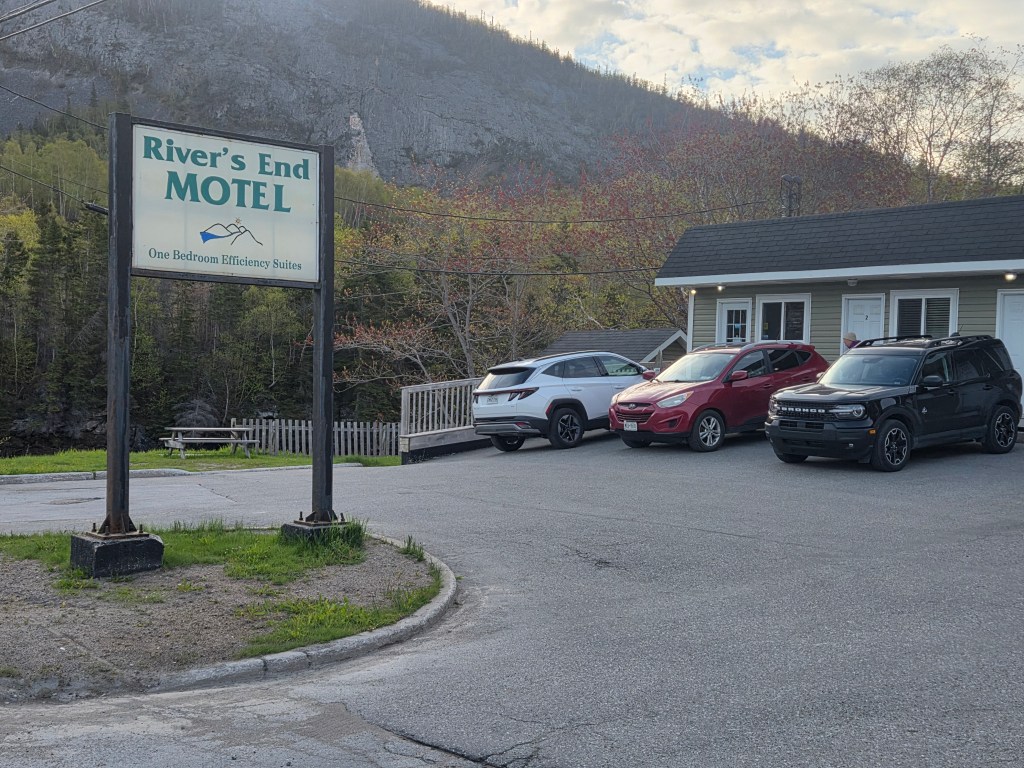
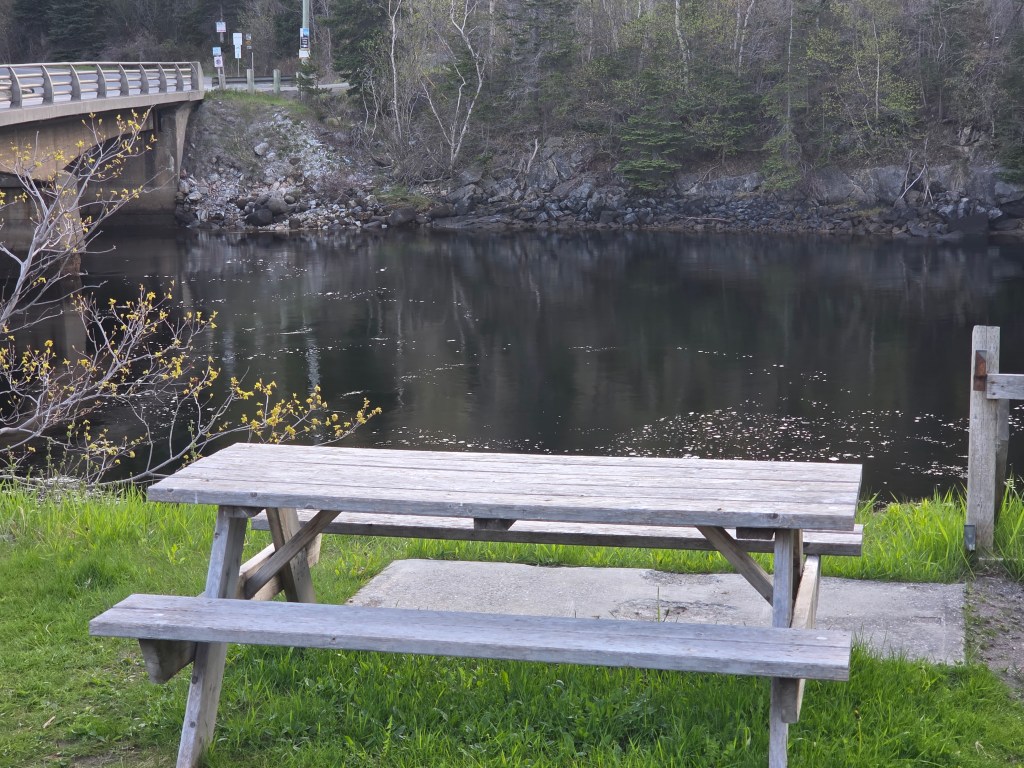
We met Lisa, the person we’re renting this place from, River’s End Motel. There’s nine units here, each with a complete kitchen. Had a nice chat with her outside. She’s a “CFA”, Comes From Away. Only has lived here 23 years, but still a “CFA” She told us her husband is a native though. Shortly after she said that he showed up, bringing her cell phone, which she left at home. Noel told us about how Corner Brook is a mill town that wasn’t built until the 1920s. He spoke about the logging operation and how the Humber River, which we were adjacent to, was used for transporting logs to the mill here. We were having a pleasant chat when he suddenly remembered he had an appointment to get to, so he had to run off.
Shortly after, as we were getting ready to go, I realized I had left my two prescriptions at home! When I went to fill the container with the next five days worth of pills I realized the two main pills bottles weren’t there. In all the traveling I’ve done over all these years since having prescriptions to take (starting in 2009, after the minor heart attack) I have never left them behind! So, this led to phone calls (being on hold first, of course) and waiting to hear back, etc.
We weren’t going to sit around waiting, so we went out to explore the local area. Phone service has been fine, so we wouldn’t miss any calls because of being out of service.
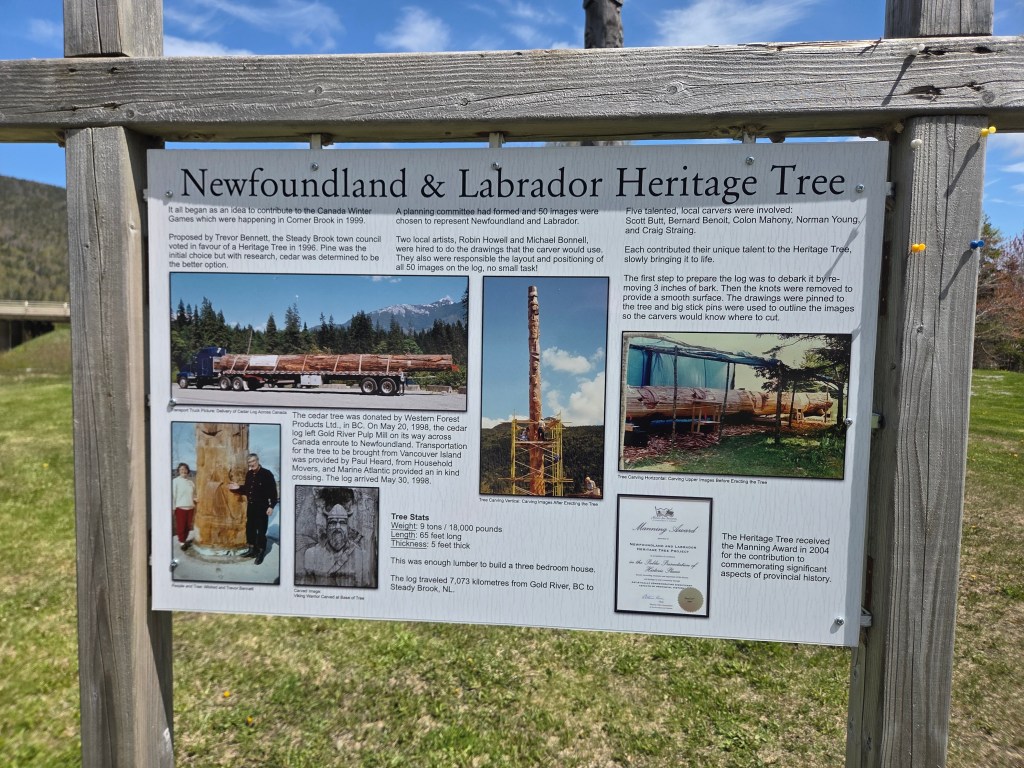
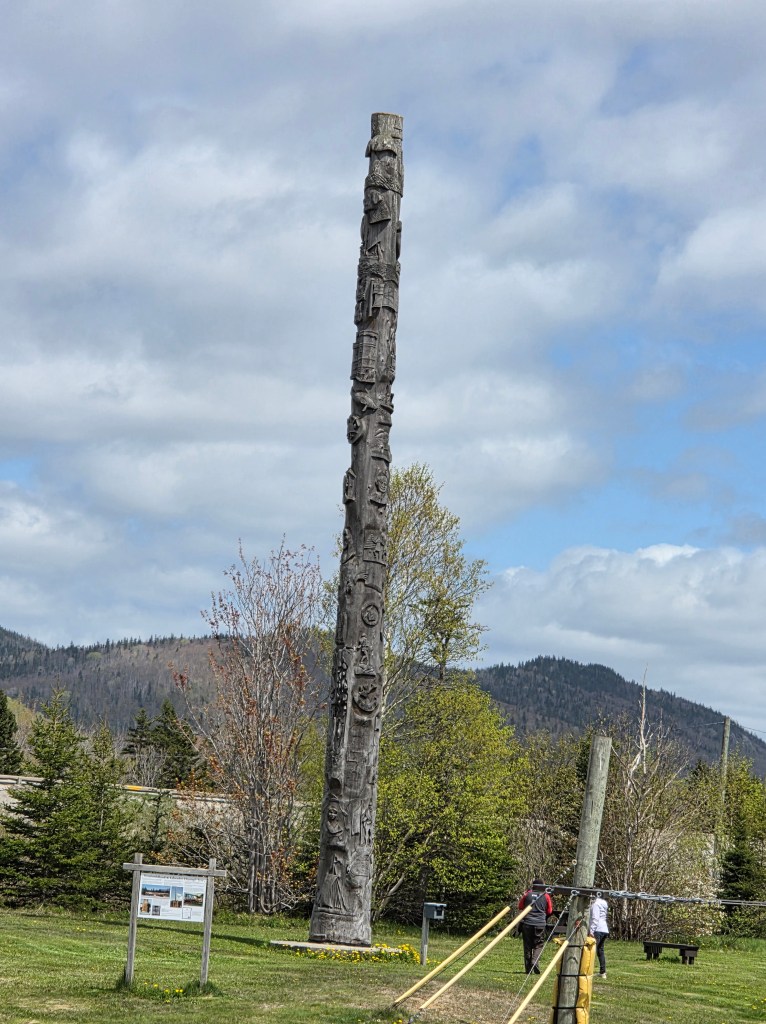
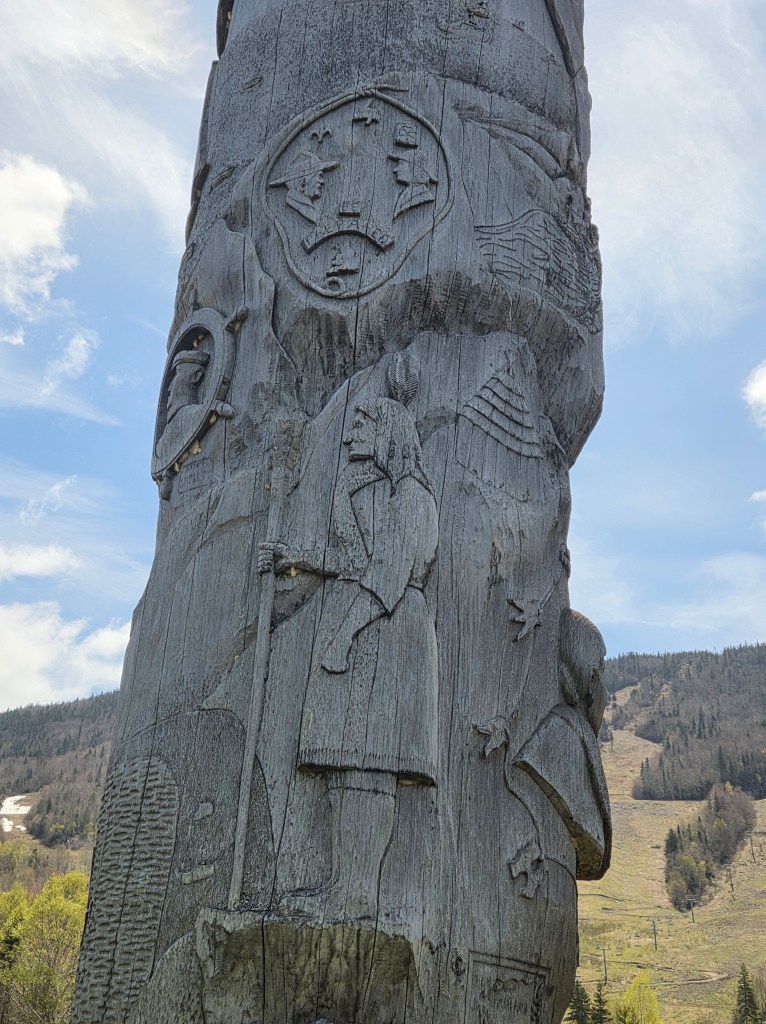
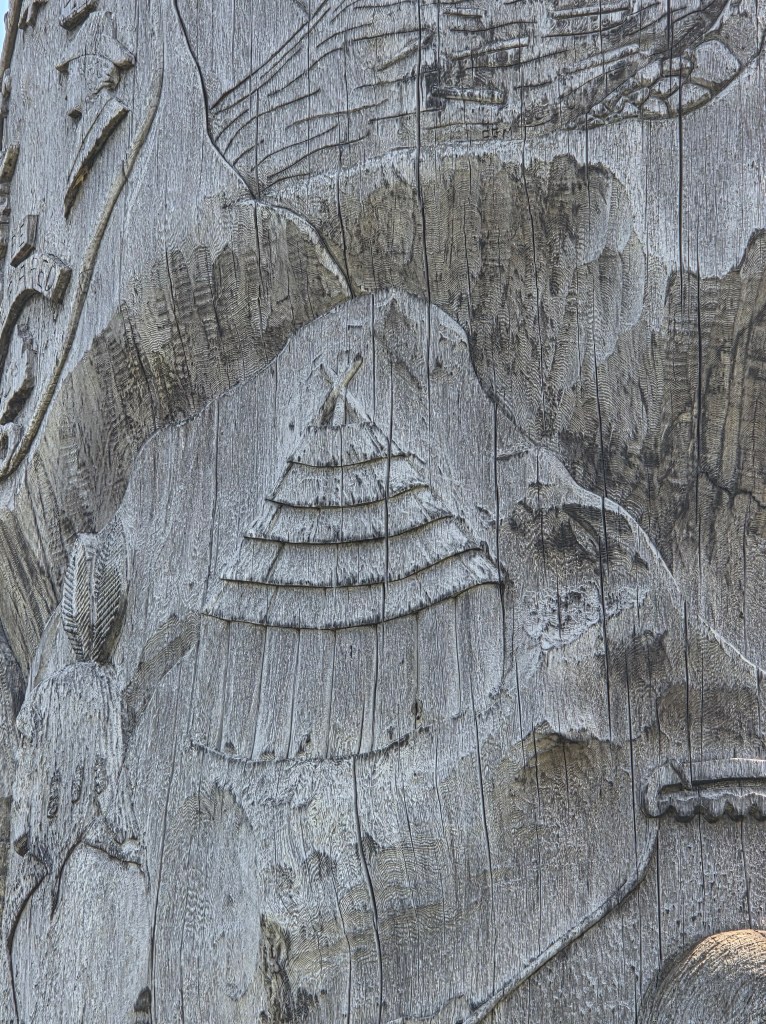
First stop was the Heritage Tree, that Noel and Lisa told us about and we drove right by yesterday without noticing. This was a project undertaken for the Canada Winter Games, which were held in Corner Brook in 1999. It’s a 65 foot cedar tree that has fifty images that represent Newfoundland and Labrador carved into it. (pics)
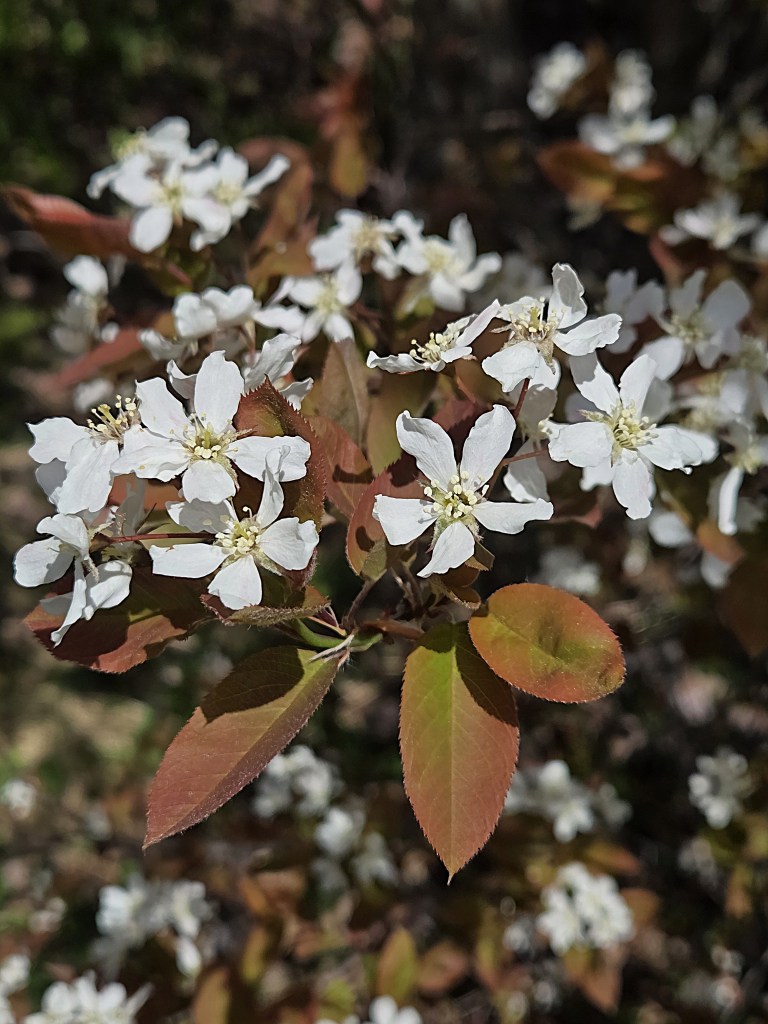
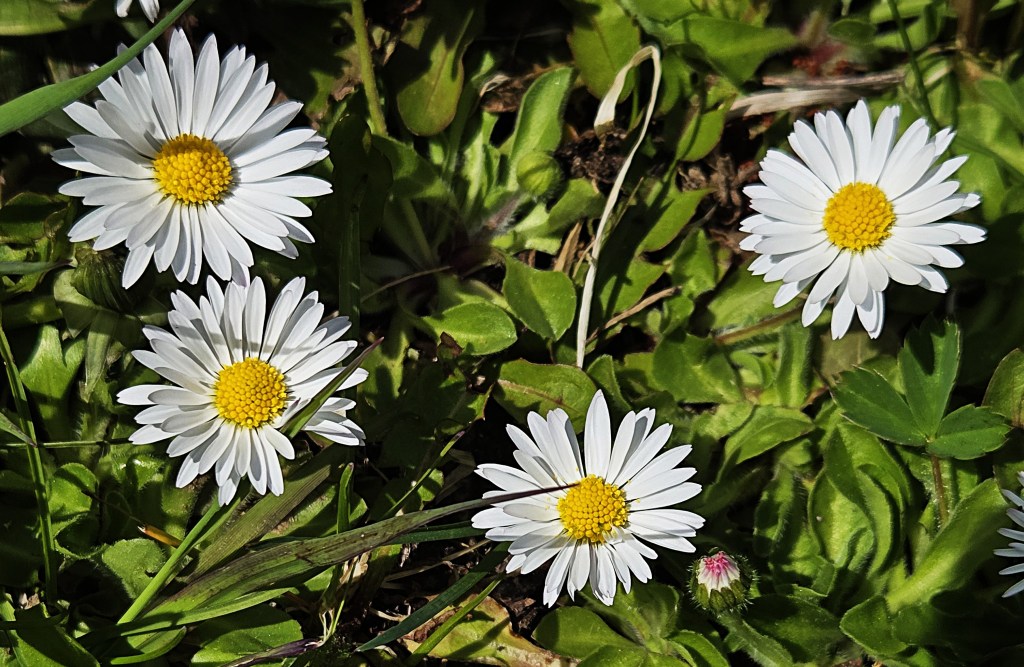
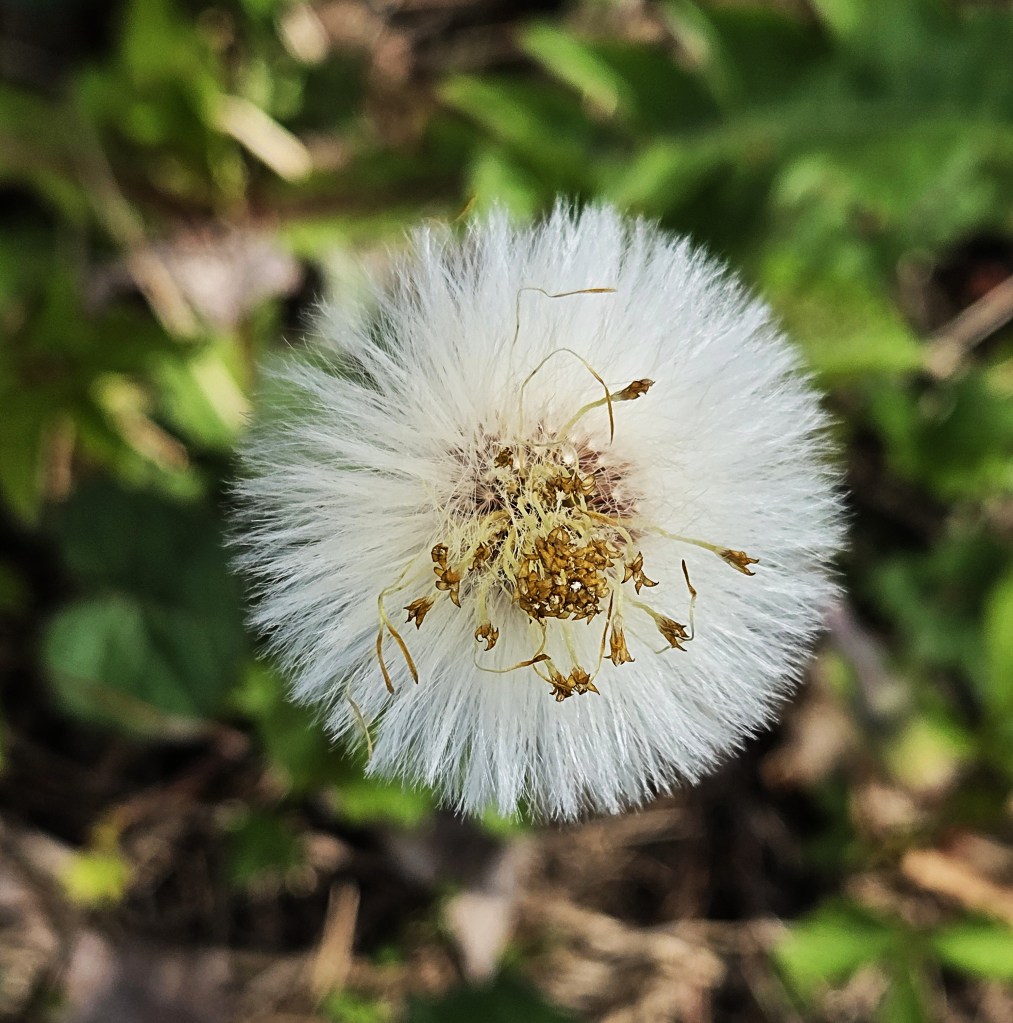
We then took a little walk around the area there. Pics of flowers: Serviceberry, English Daisy, Coltsfoot seed head. FINF birds we saw (no pics, they are harder to get than flowers) Starling, Yellow Warbler and Yellow-rumped Warbler, or as Carolyn always likes to say when we see one, a “butter butt”. The acronym, FINF, is First In Newfoundland, is what I’ll use from now on when I list birds. I’m keeping track of the different species of birds and flowers we see here.
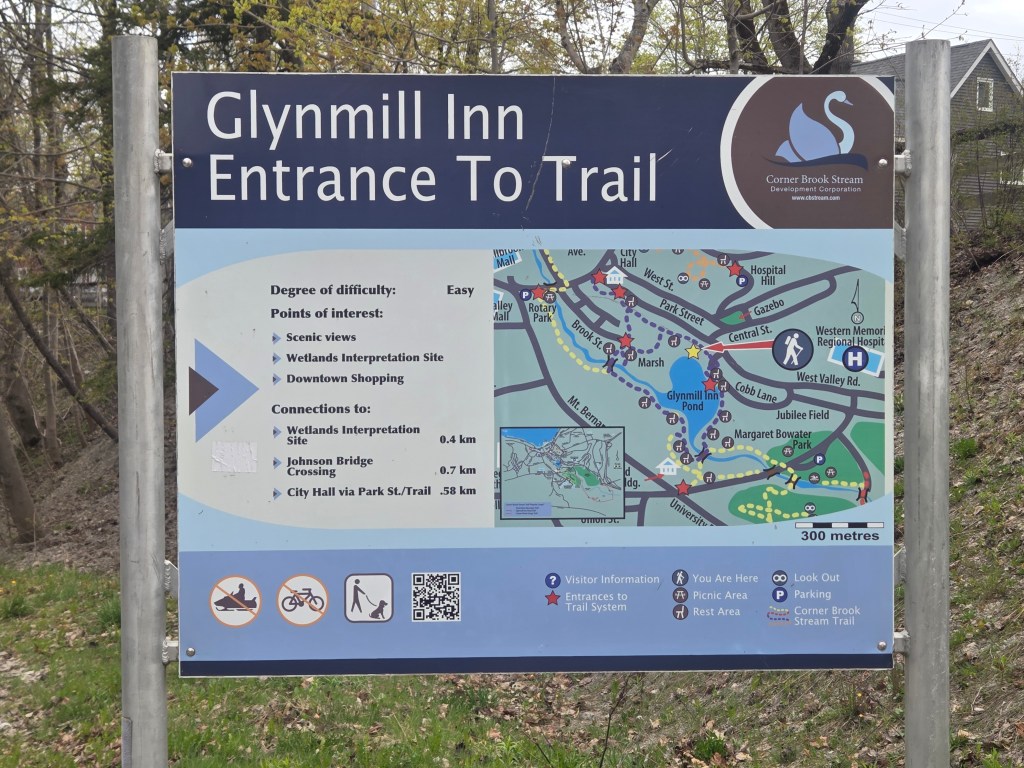
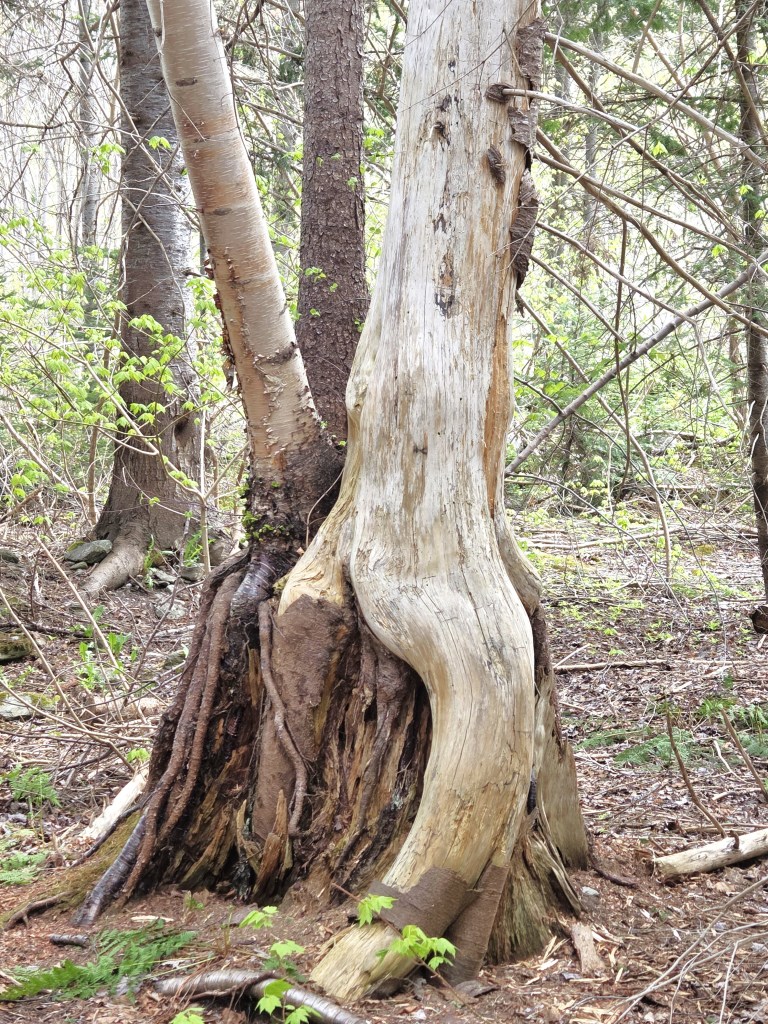
In Corner Brook, we took a long, slow walk along Glynmill Pond. This is part of a walking trail system right in Corner Brook that encompasses quite a few miles. The trail around the pond is gravel and easy to walk. It runs along the shore of the pond, over and along Corner Brook and also through a nice stand of woods. Quite varied. Pics are of Corner Brook, interesting tree growths and Leah.
We passed Leah on the trail and then came across her a little later, sitting on a bench. She asked us about birds we had seen, since we were both carrying binoculars. This led to a wonderful conversation. She is a retired wildlife biologist and is a native here. She told us about some of the work she has done and we told her about how our son, Chapin, is working on his PHD in that field. Since she was an outdoors person and interested in birds, I recited my Chickadee poem for her. A picture then goodbyes as we continued down the trail to where we started and she went off on her way down another path.
My DSP last night:
Daily Spontaneous Poem #4149 (6/1/2026)
fleeting
this meeting
in passing
how it flowed
how much more
might it have flowed
if not just in passing
We finally, after a number of phone calls, worked out getting replacement prescriptions here in Corner Brook. This, no thanks to my cardiology department back home. They were the first place called (long wait on hold before talking to someone) and they never got back to me. Thanks to super helpful and friendly pharmacy people here in Corner Brook and back home, I was able to have the issue resolved.
Now, tomorrow, on to Raleigh, on the far northwestern part of Newfoundland, where, I believe some icebergs may be waiting for us.
(Click on thumbnail for larger picture.)
5/31
First full day in Newfoundland!
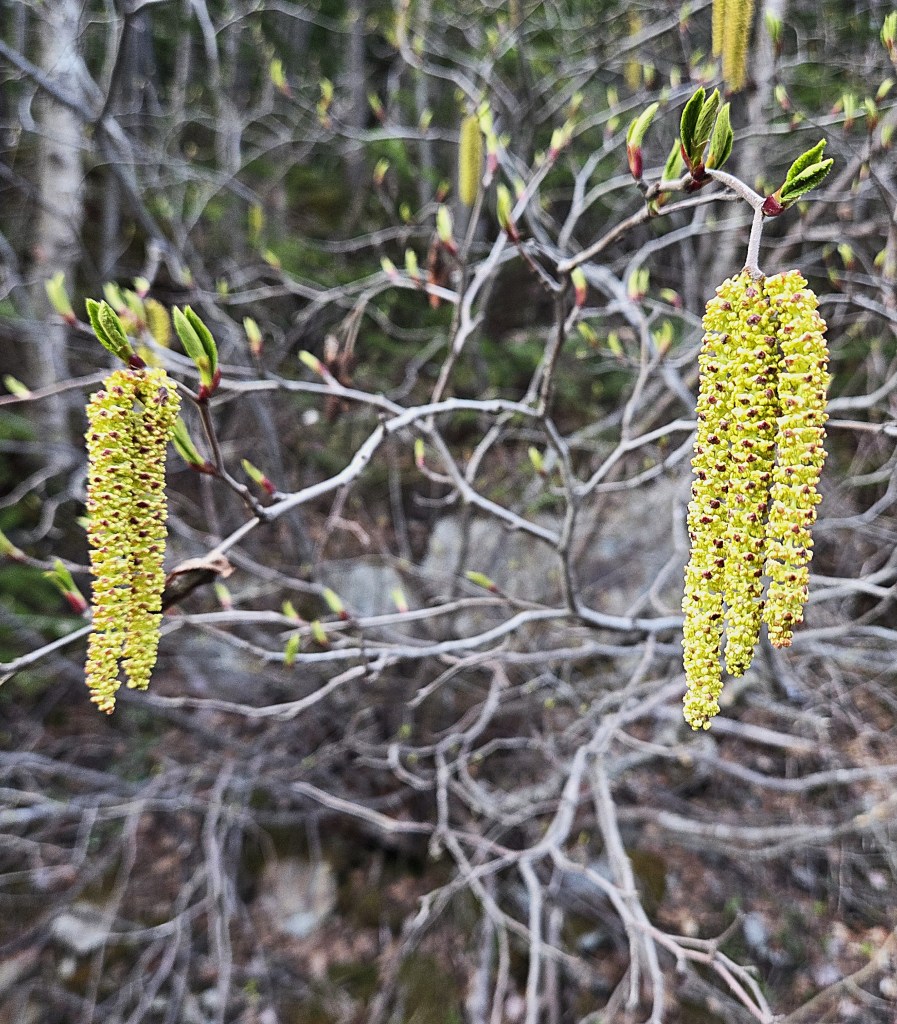
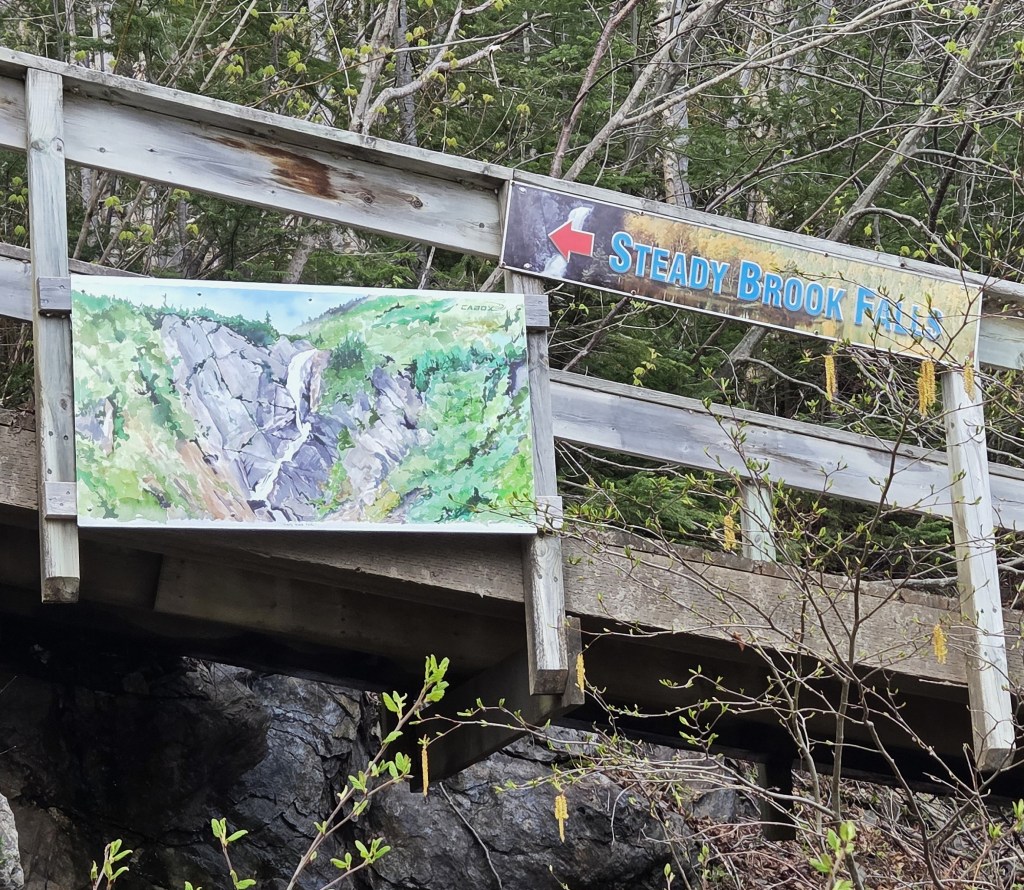
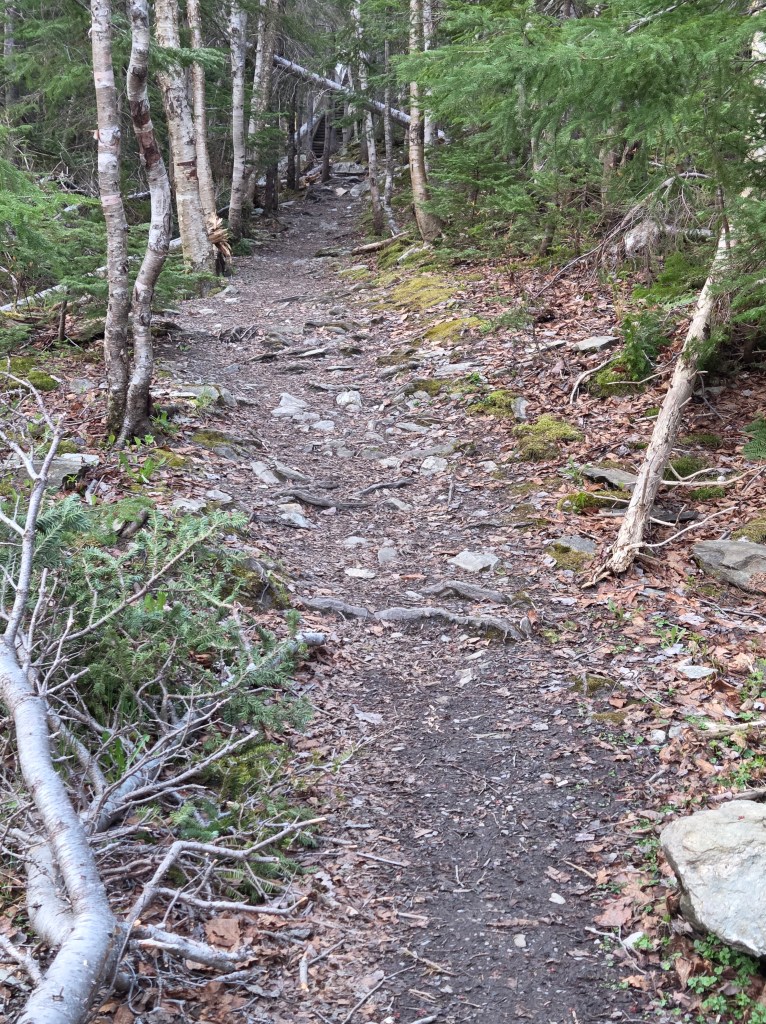
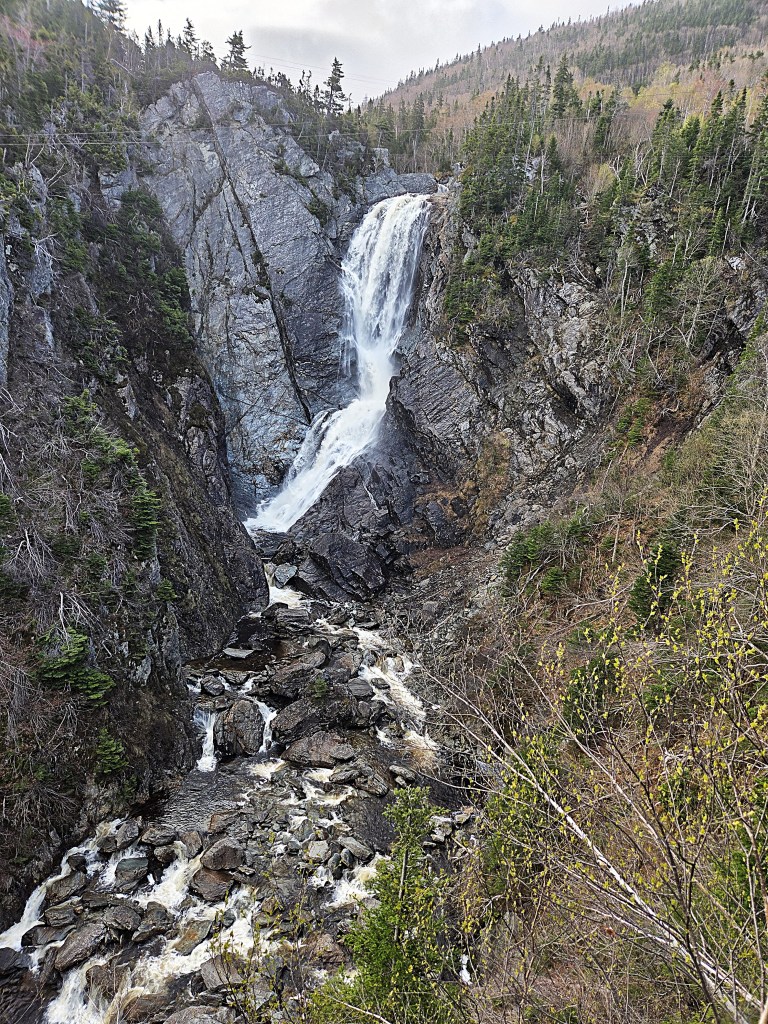
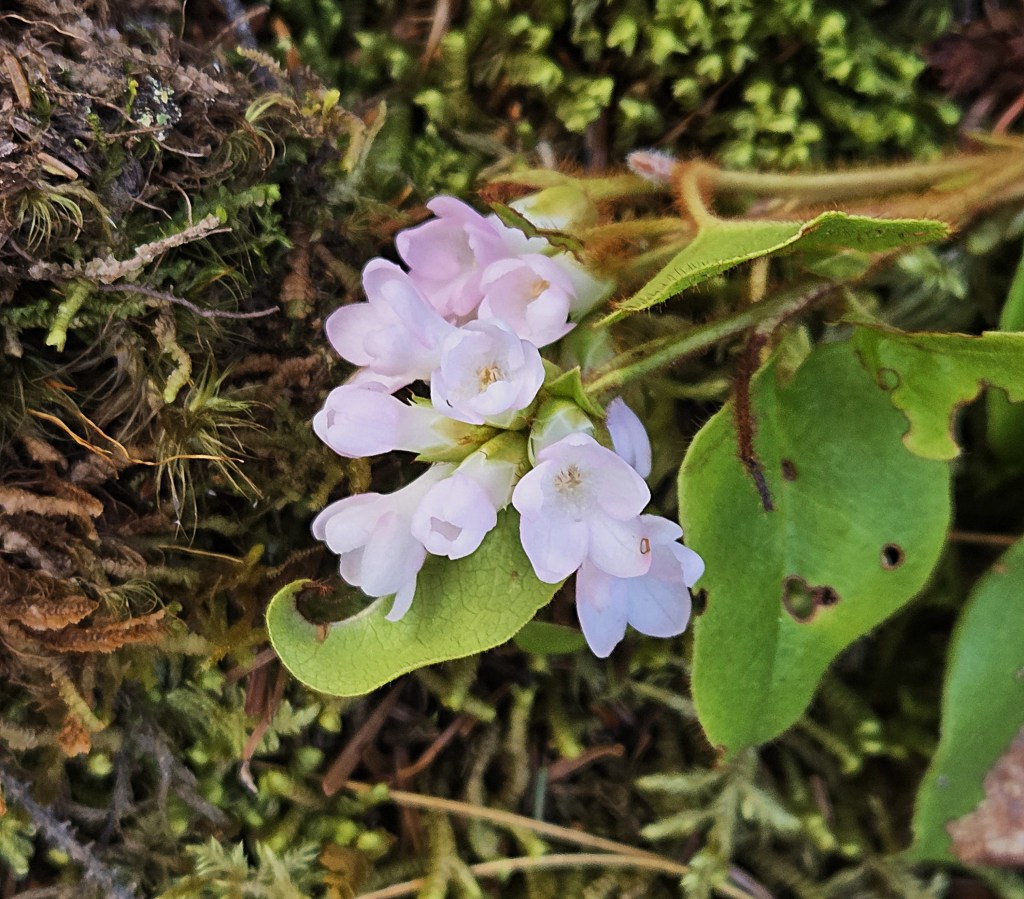
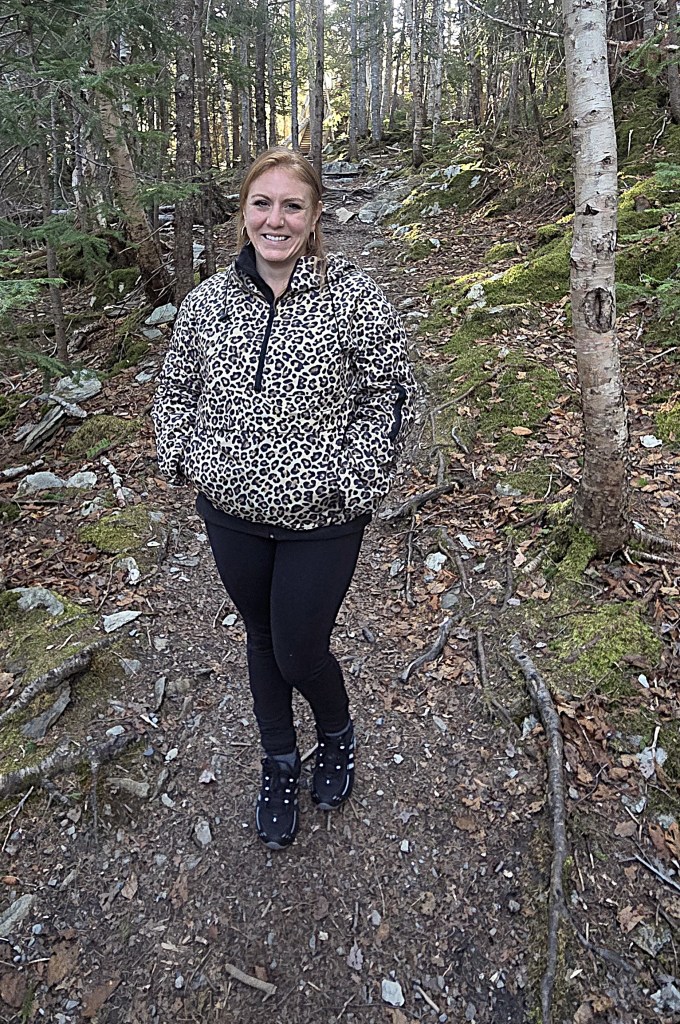
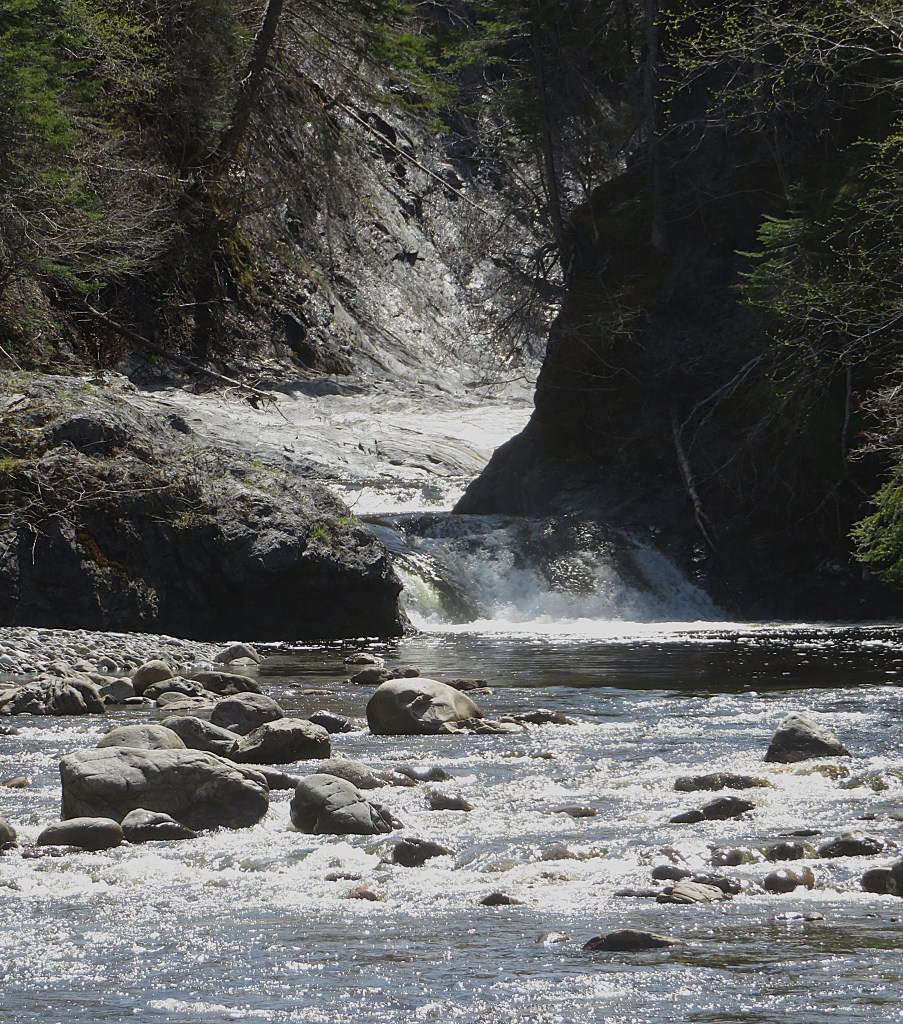
Wanted to get out for an early morning walk so drove a few kilometers for a short hike to Steady Brook Falls. Good to get out on foot after all the car miles over the last four days. Pics from the hike: Grey Alder catkins; the trail; the falls; Trailing Arbutus flowers; Amanda.
I will be keeping a list of the flowers and birds identified in Newfoundland. I do this casually, not intensely. The arbutus flowers were a treat to see, as they don’t grow on our Wheeler Hill land. They are an early spring flower and I only get to see them once-in-a-while. Another common name for it is mayflower.
On the way back to the car we met Amanda, who was walking up to the falls. This was her first time coming to Newfoundland, too. From Toronto, so not far away from where we live. She’s camping and will be in the same area we will be for the next few days. We had a pleasant conversation and shared contact info. Maybe another person to bump into again.
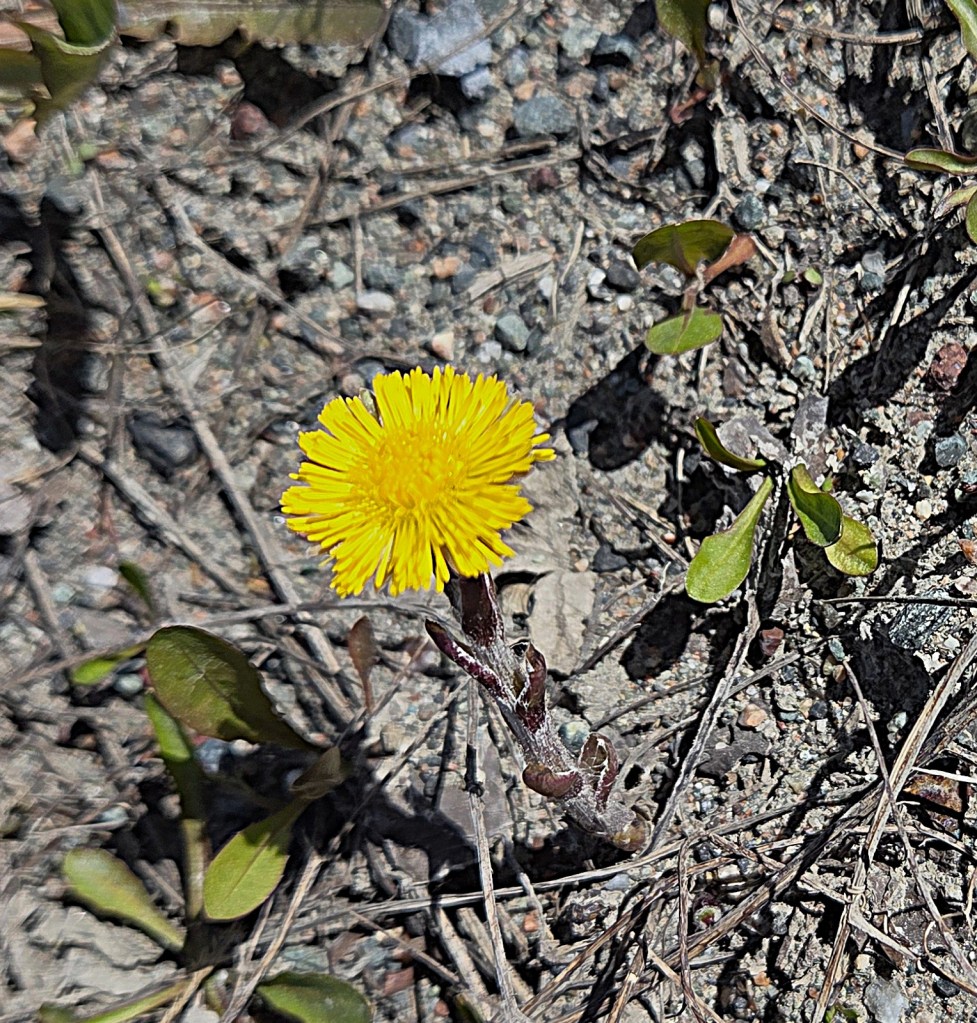
Coltsfoot is in bloom here along many of the roads. As a comparison with back home, coltsfoot first bloomed on March 29 on Wheeler Hill. It was probably in full bloom by mid-April. So, using that comparison, this southwestern area of Newfoundland is about six weeks behind Wheeler Hill as far as the season goes.
After breakfast back at the house we spent most of the day exploring along the Humber Arm to the Bay of Islands, which is connected to the Gulf of the St. Lawrence.
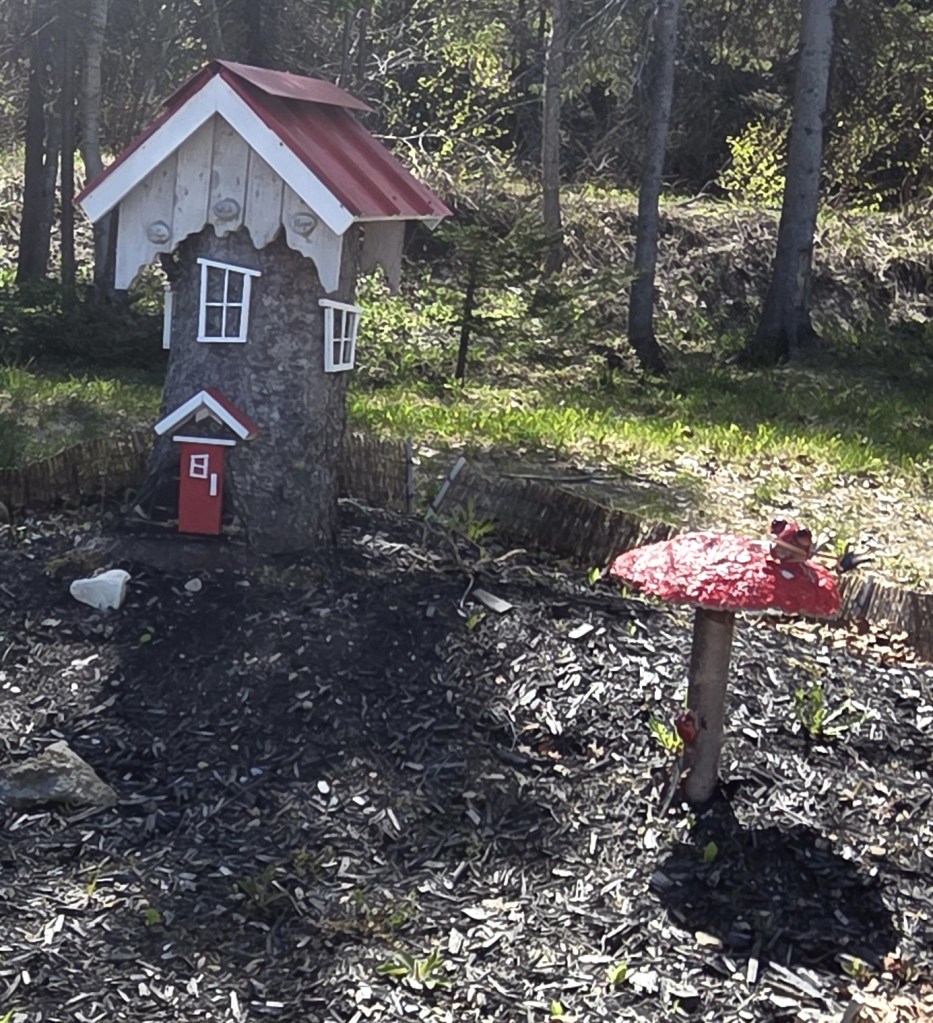
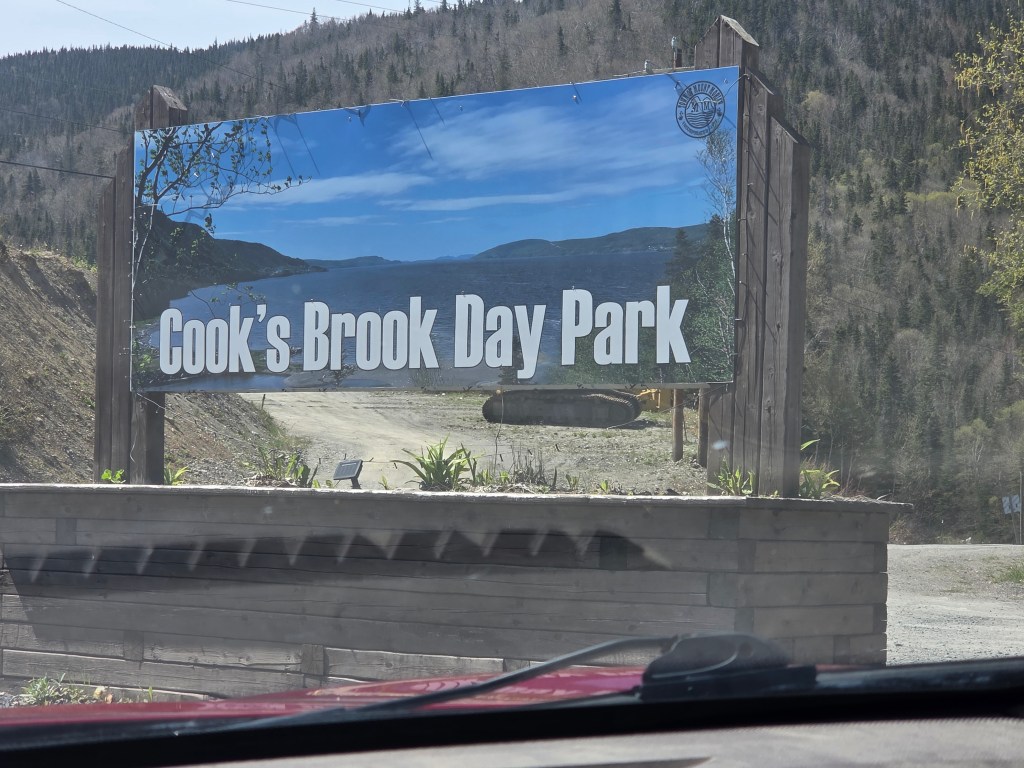
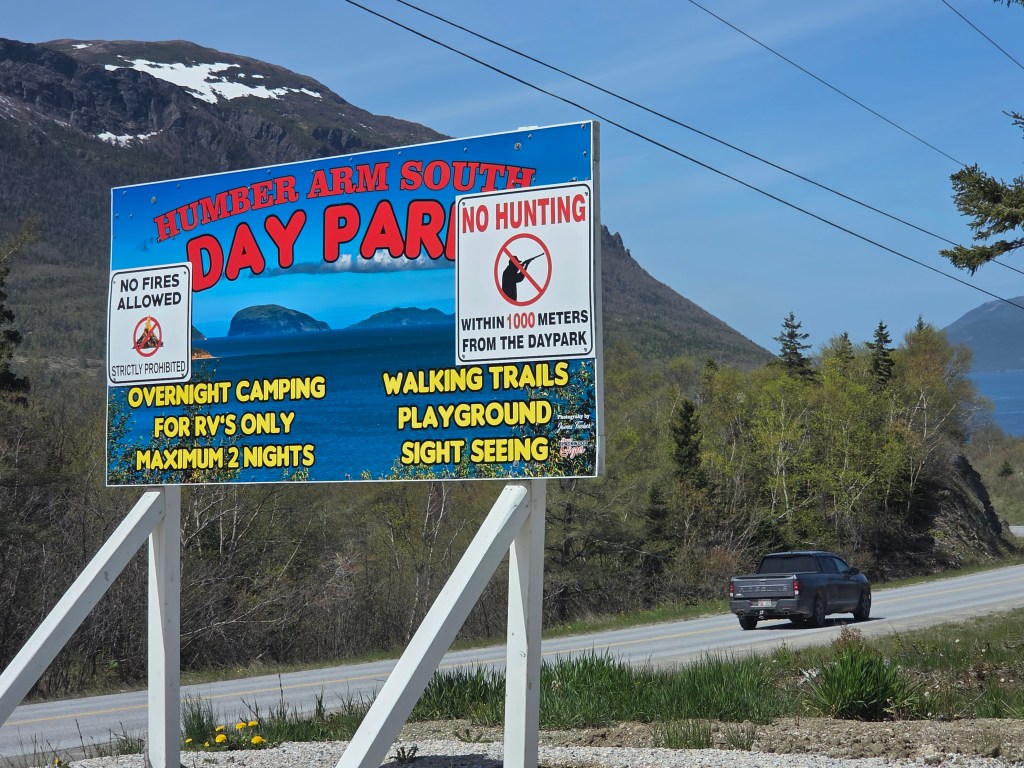
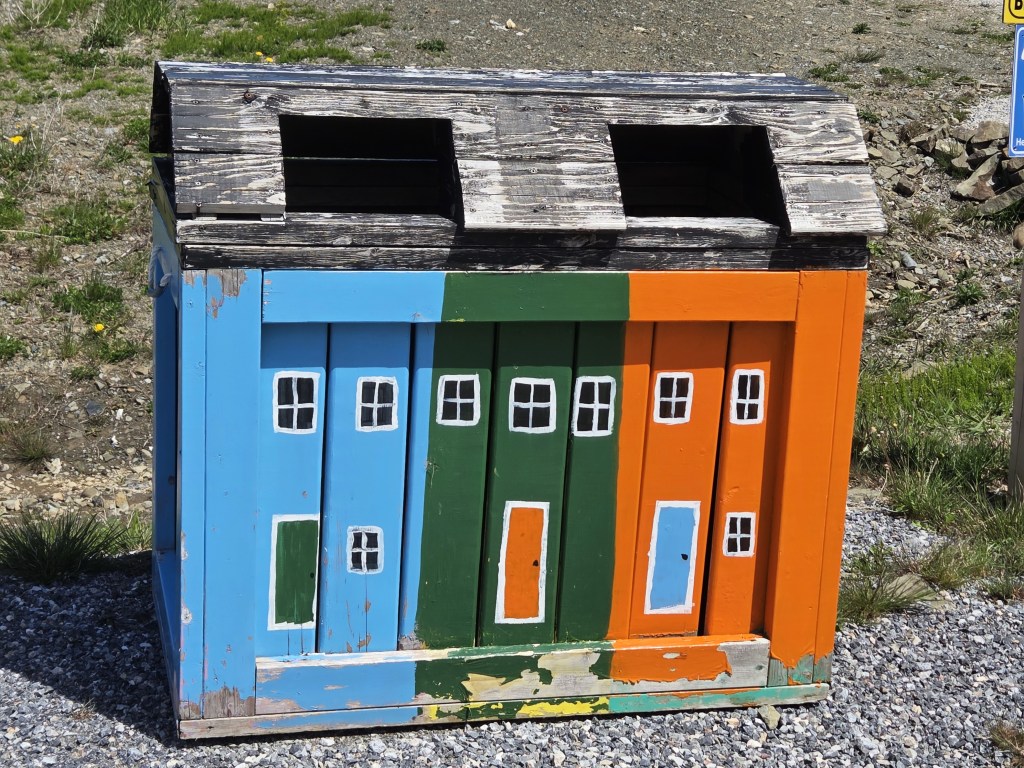
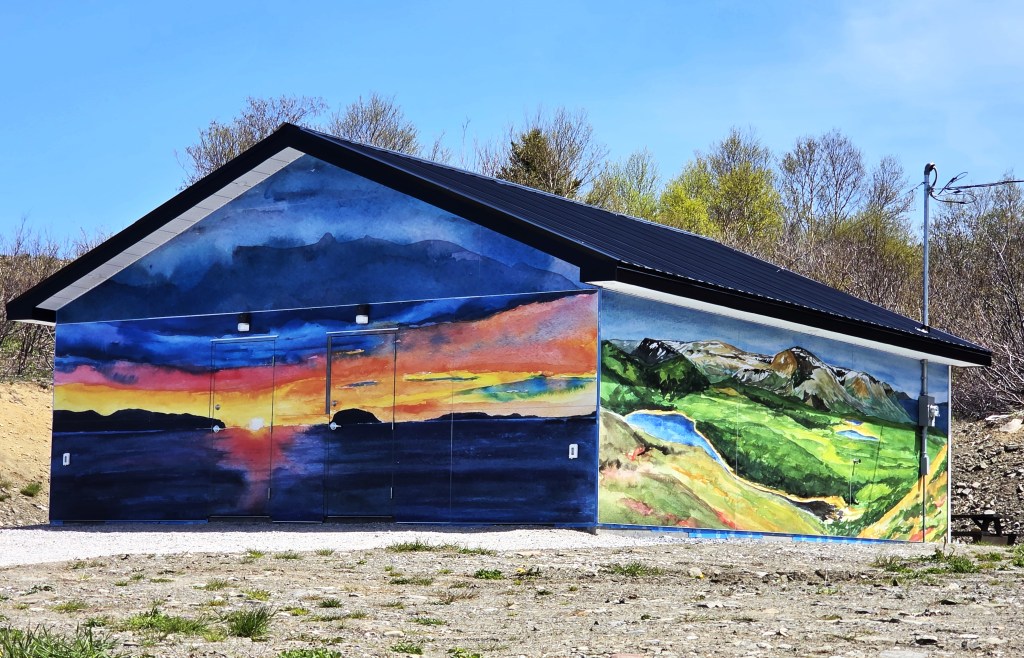
Along the way, most of the small communities have Day Parks. The next seven pictures are from various day park stops. There are picnic areas, playgrounds and some colorful and whimsical creations at a number of them. None of the ones we stopped at had anybody else around. I would expect they are quite busy when summer arrives.
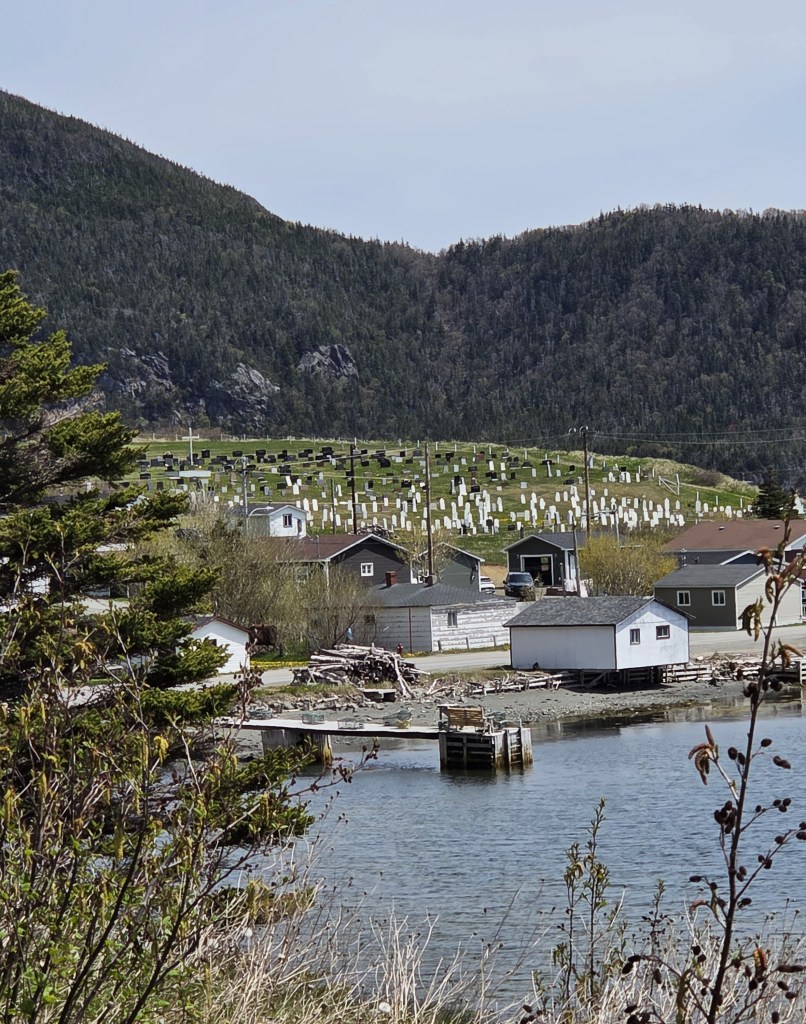
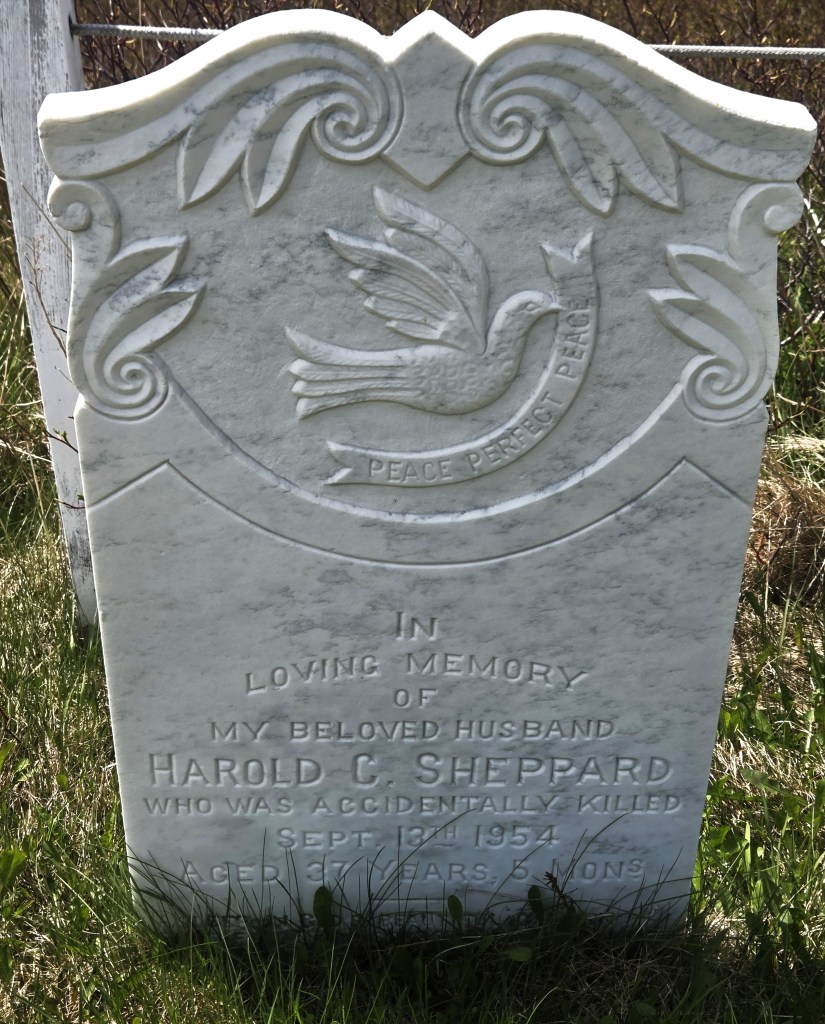
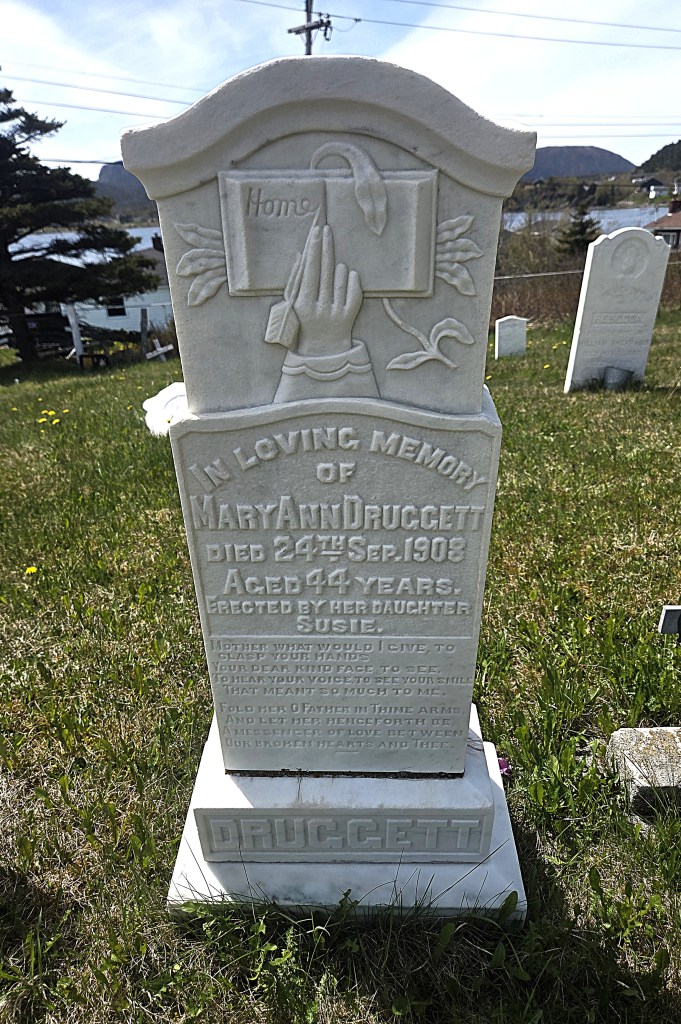
Cemeteries are always fascinating. We stopped at the St. James Cemetery in Frenchman’s Cove. (3 pics) The cemetery wasn’t very old, the oldest date we noticed was 1880. A few family surnames were quite prevalent throughout. The two tombstones below interested me as the first mentioned the person being accidentally killed when he was 37 years old, and the second because of the image at top of someone in the process of writing in a book.
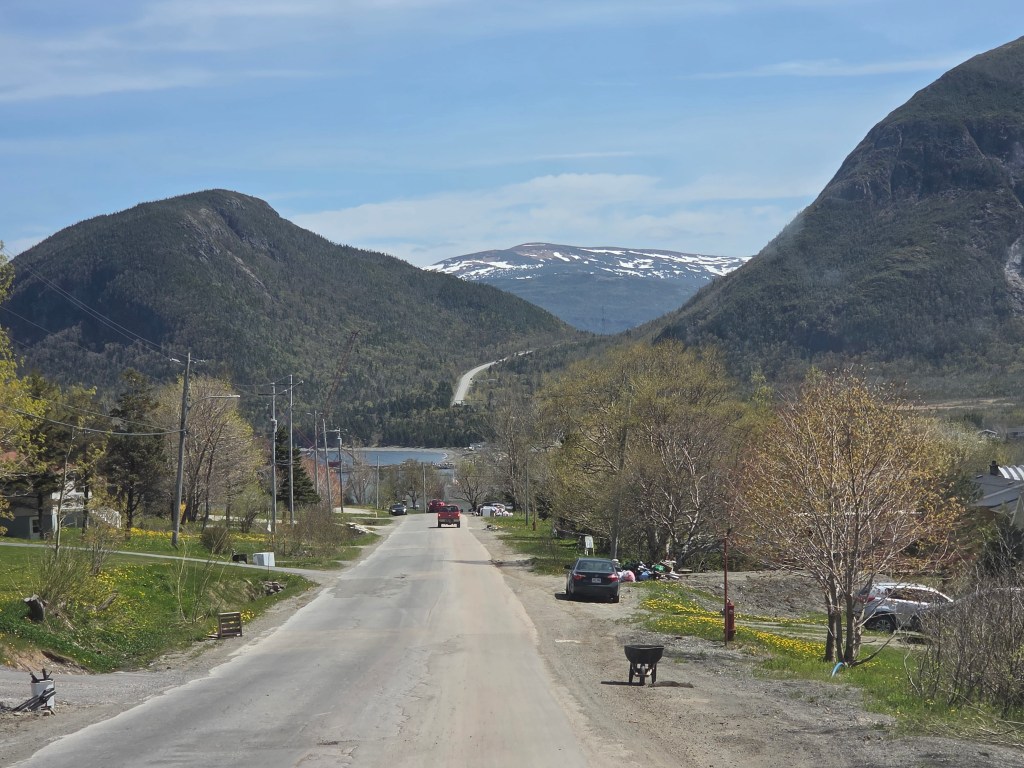
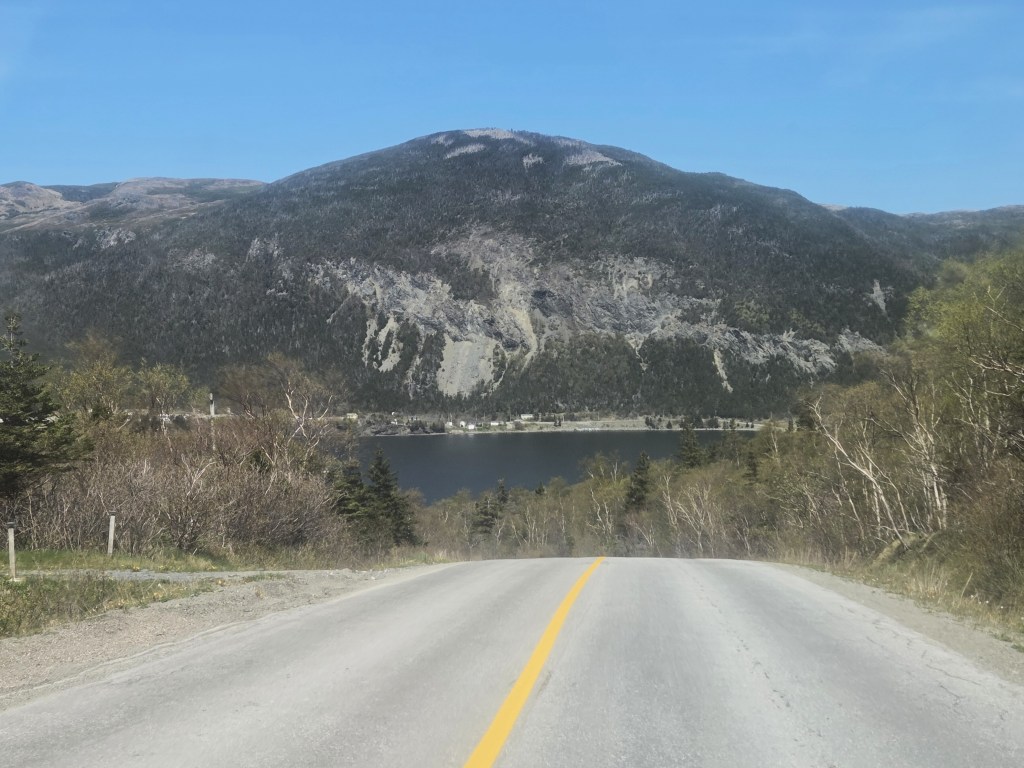
Along this whole route there were so many wonderful scenic views of the water and mountains, some with snow on them. (pics) From Corner Brook to Lark Harbor is about 30 miles. With all of our stops along the way, it took us about three hours before reaching the end of the road, a little way beyond Lark Harbor, to a cove with fishing boats and a fisheries operation.
I mentioned earlier about keeping track of the flowers and birds. I don’t have any pictures of birds but one of the birds I definitely wanted to see on this journey was a Boreal Chickadee. They have a brown head as differentiated from the black-capped chickadees back home. As their name implies, they are a northern species that is not found anywhere close to Wheeler Hill. Even where their range touches into the states, a little bit of the Adirondacks, northern VT, NH and Me, they are not common enough to count on seeing them. While trying to spot some small birds flitting around in nearby trees, a Boreal Chickadee came close by and I was able to get a briefm good look at it with the binoculars! Now, Puffins are the next bird to check off, which we will be able to do when we get over to the eastern side of Newfoundland next week.
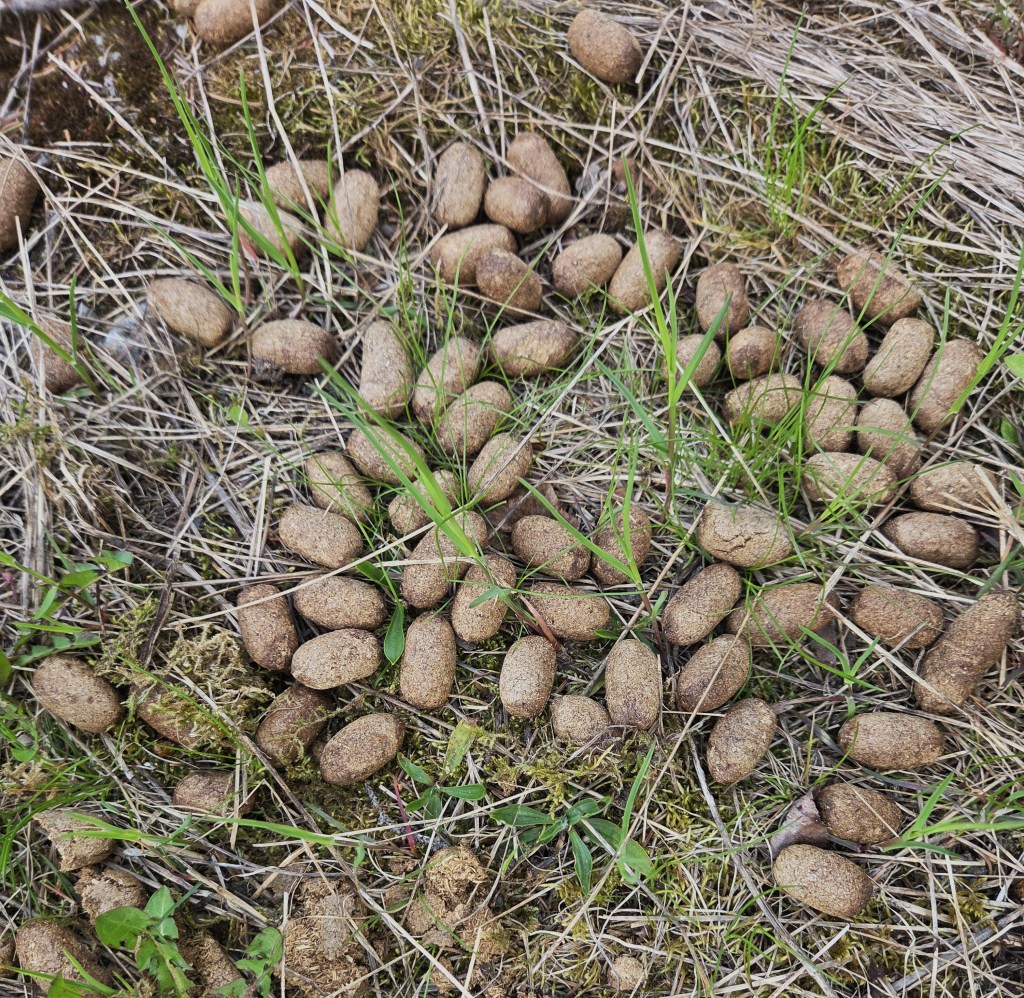
After dinner at a restaurant we drove up to Captain James Cook’s Historic Site, on a high hill above the city. We were checking it out for a possible full moon viewing site later in the evening. While walking around there I spotted a few piles of moose turds! (pic) I’m pretty sure we’ll see some actual moose while on this journey.
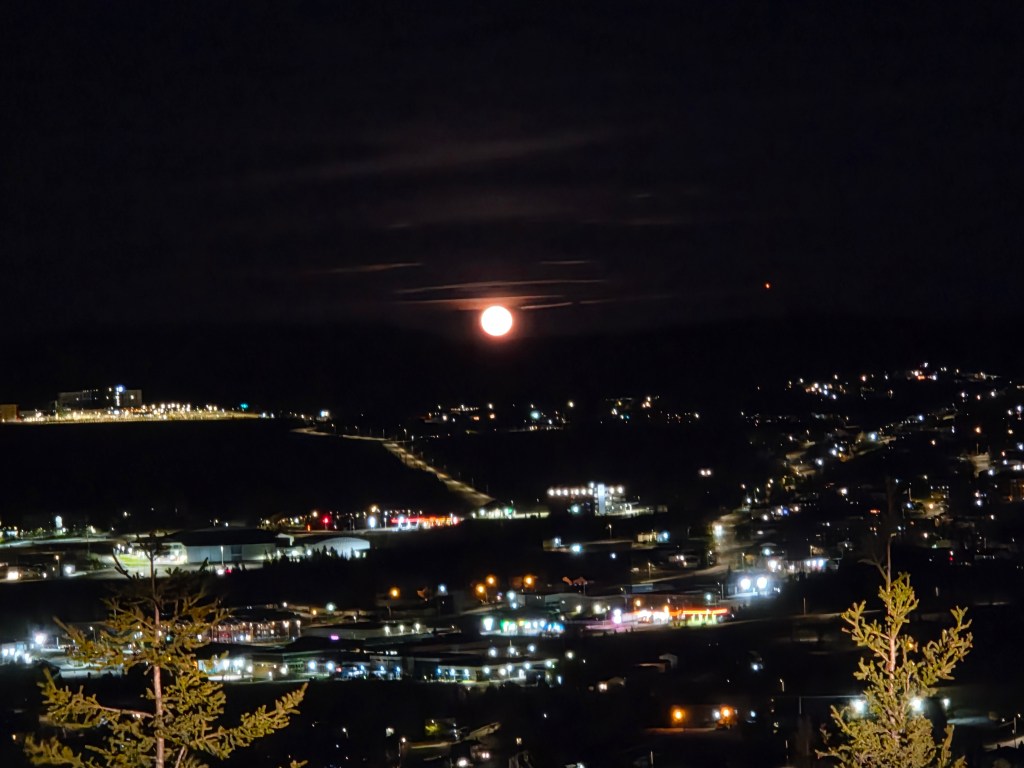
After sunset we went back up to the historic site and waited for the moon to appear. It took longer than we anticipated for it to rise up over the mountains. Eventually it showed up, beaming above the lights of nighttime Corner Brook. (pic) A wonderful ending to the first full day in Newfoundland!
(Click on thumbnail for larger picture.)
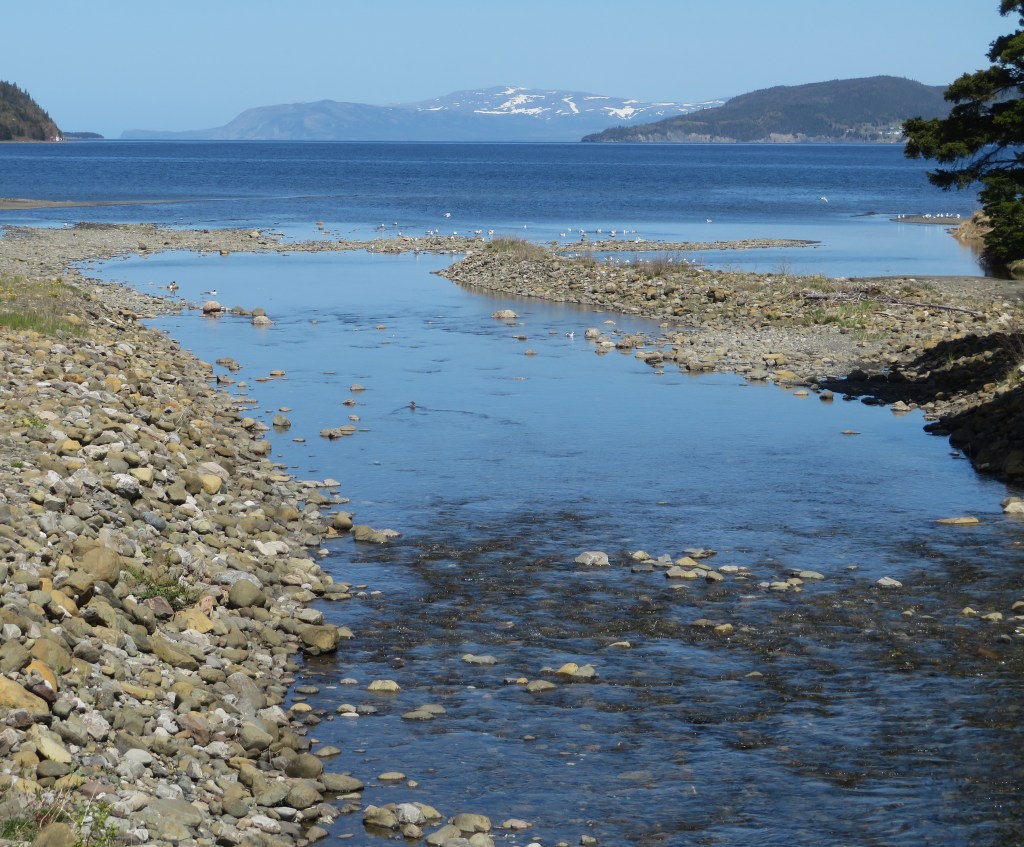
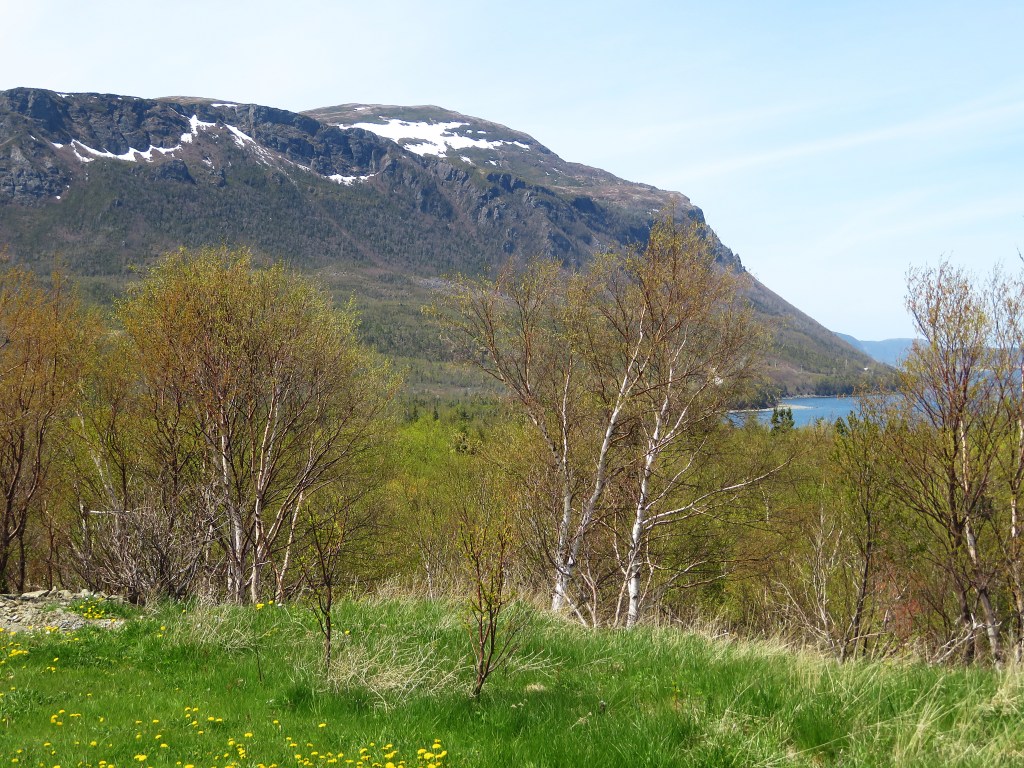
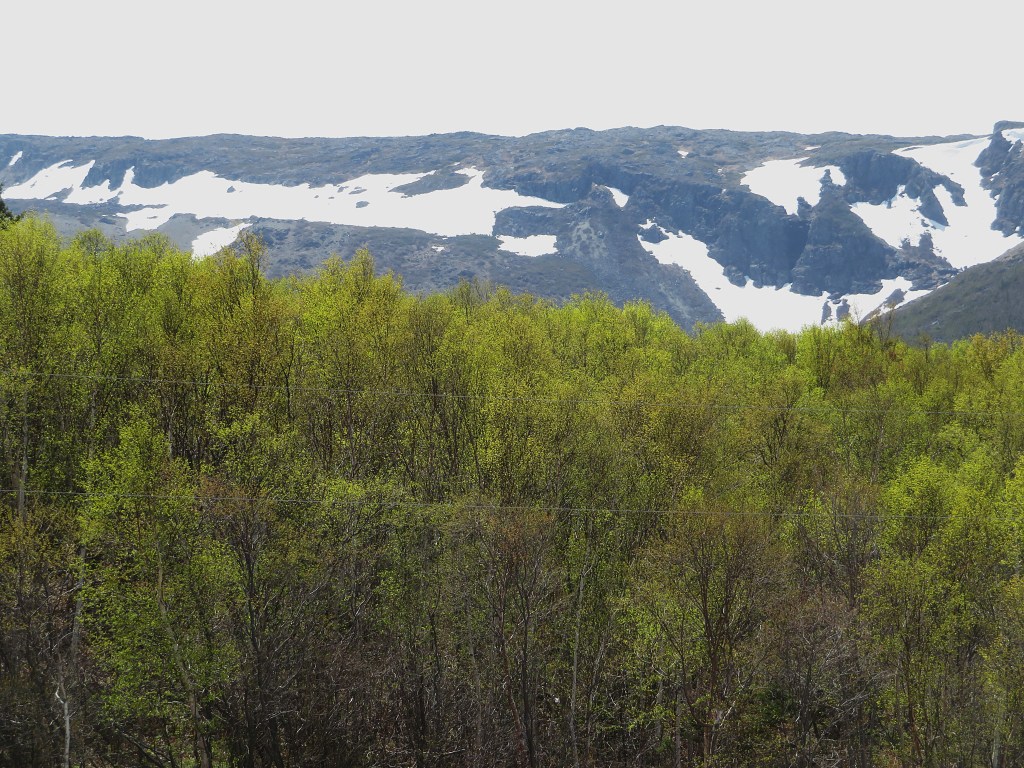
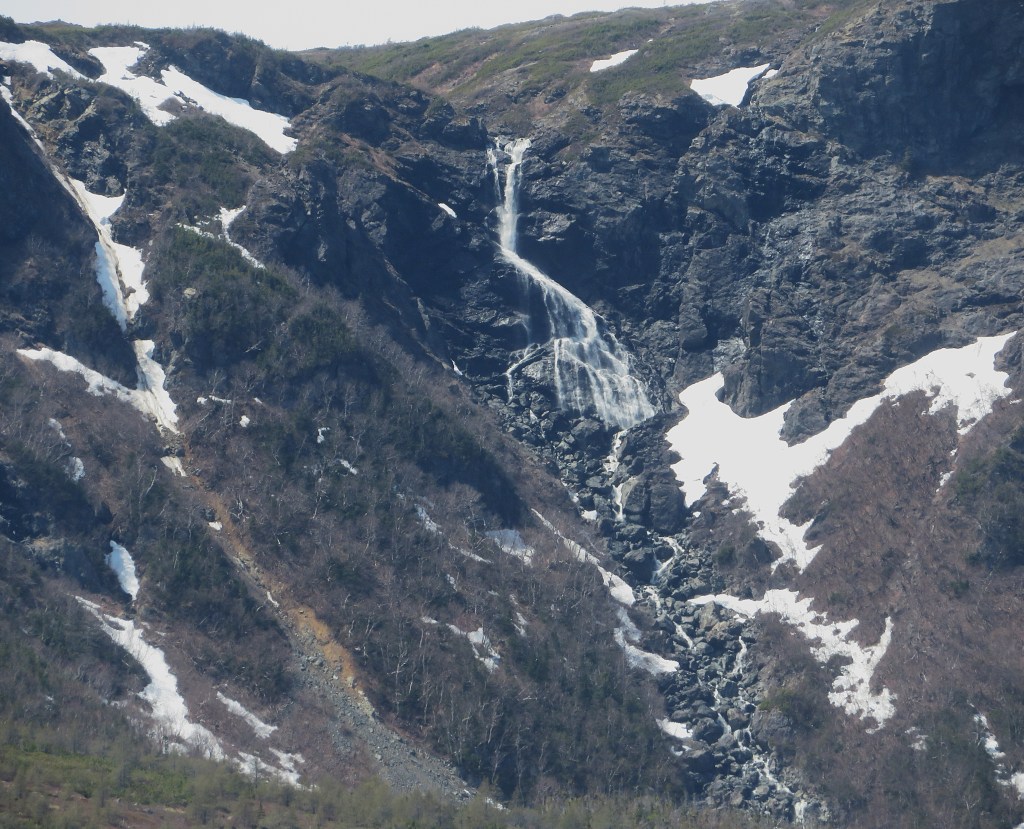
5/30
Sailing day! Wet, windy and cold. Maybe 40 degrees or so. High winds predicted so a little concerned about what the seven-hour ferry ride through the Cabot Straits will be like. Carolyn had a not pleasant experience on a two-hour ferry ride to Grand Manan back in the mid-1980s that gives her a little trepidation about this journey.
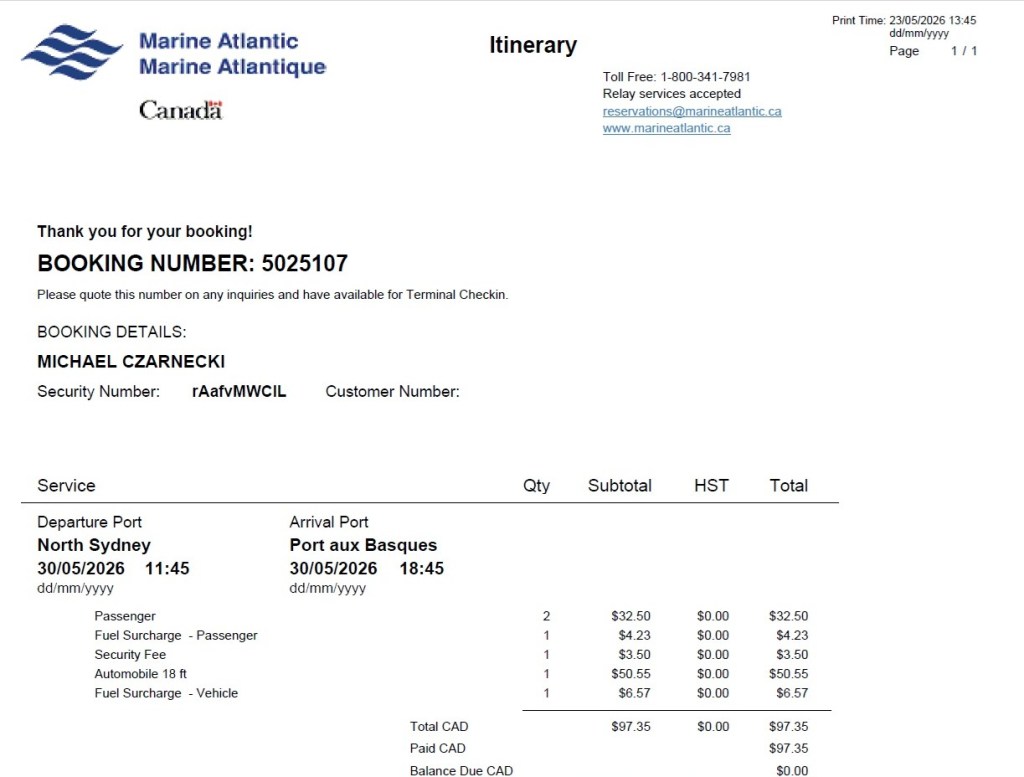
I had purchased tickets a couple of weeks ago and loaded boarding passes onto my phone. (pic) The fare for the car and two passengers was $97.35 Canadian, or, with the good exchange rate (for us) $67.92 US.
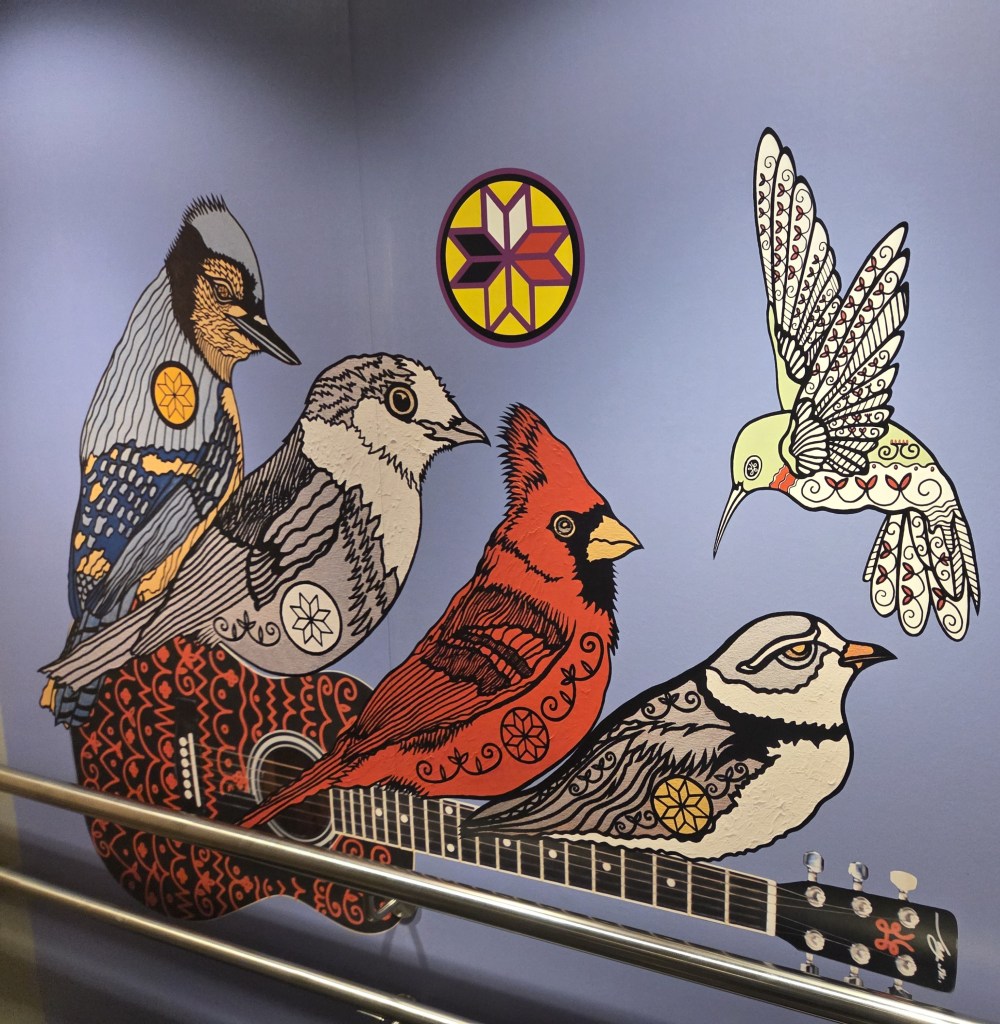
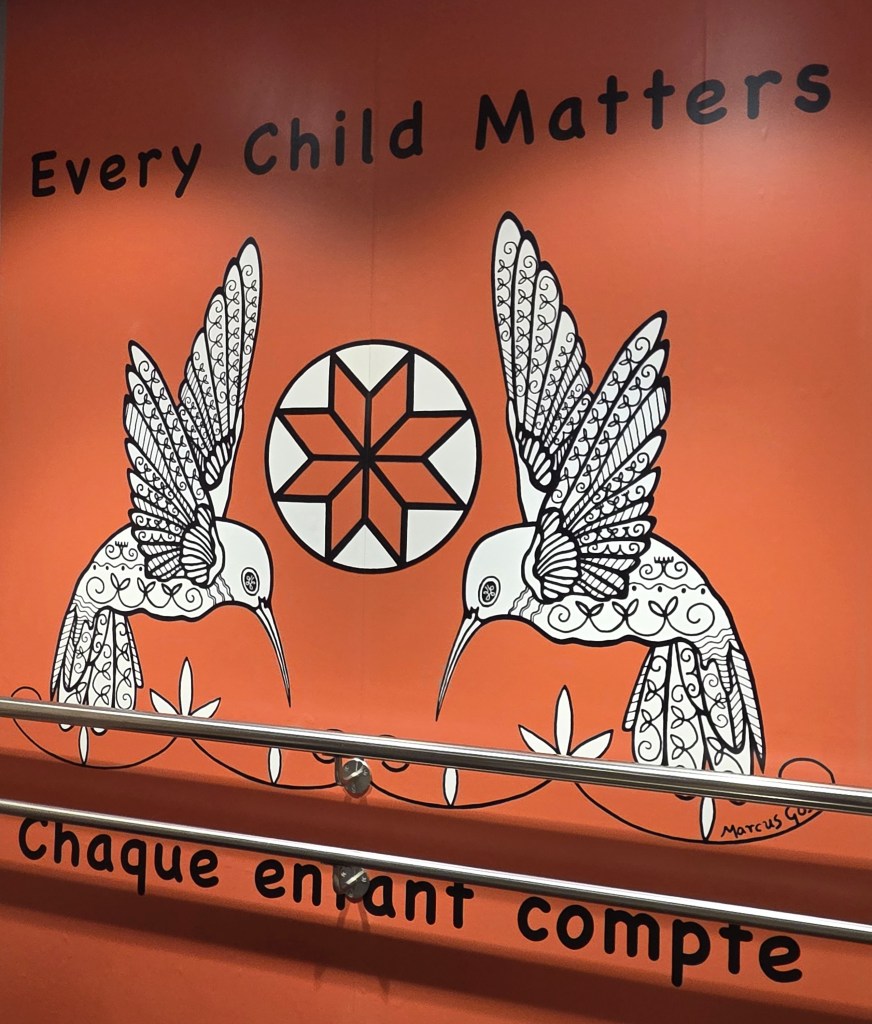
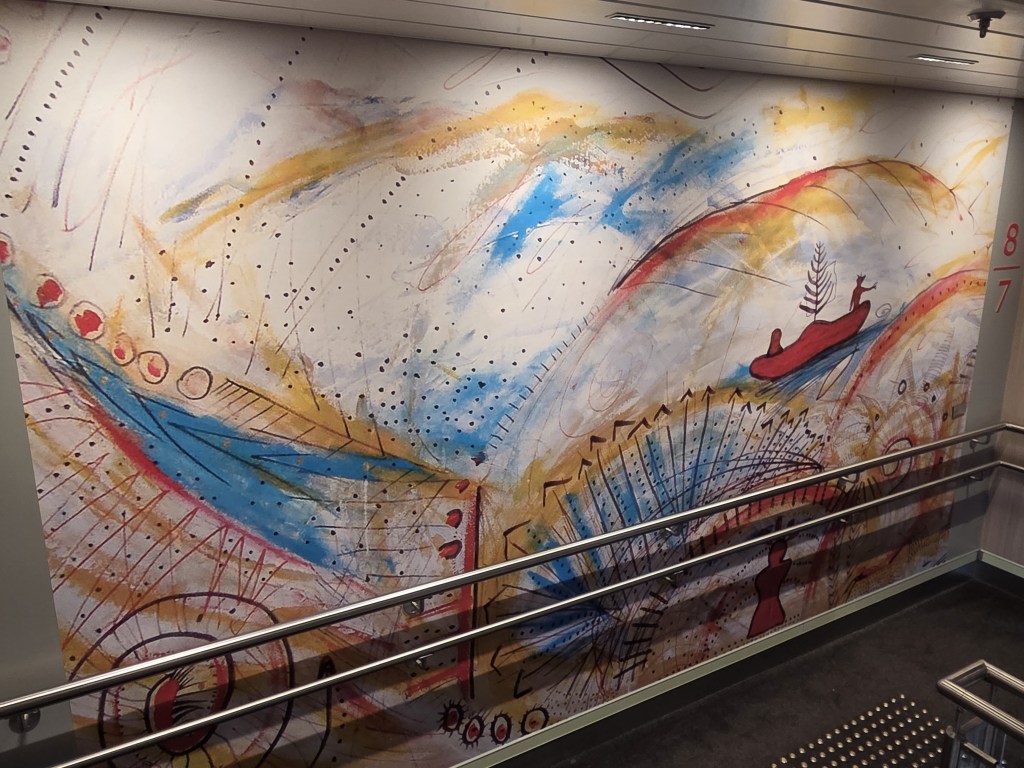
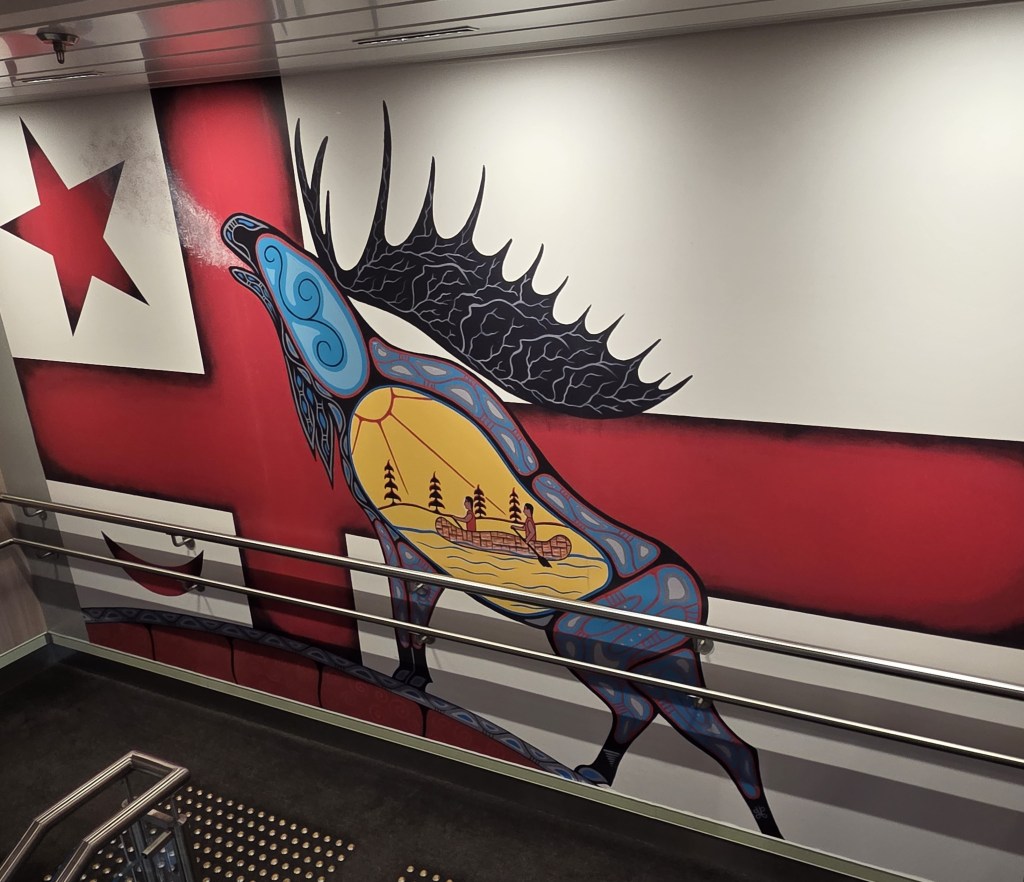
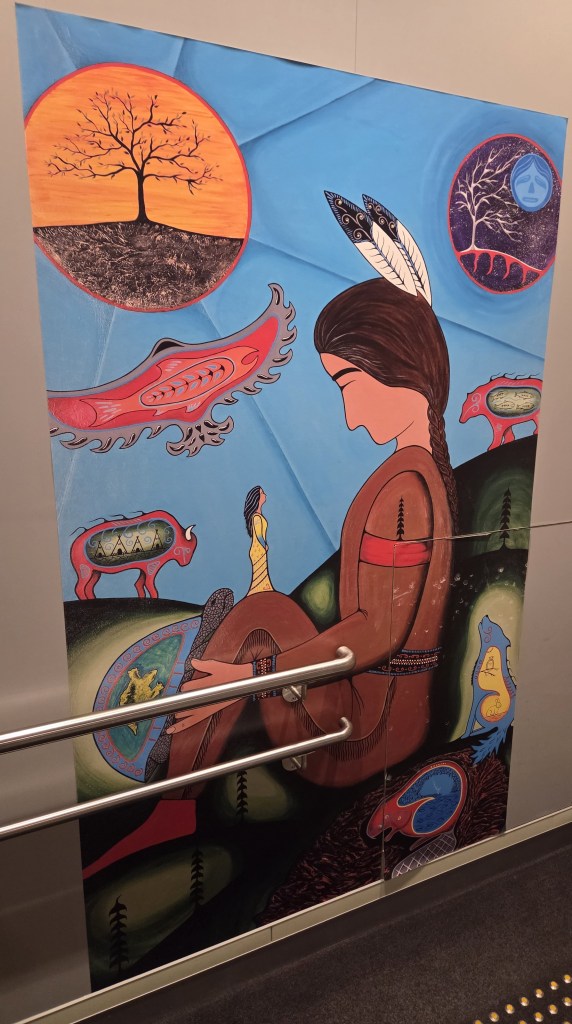
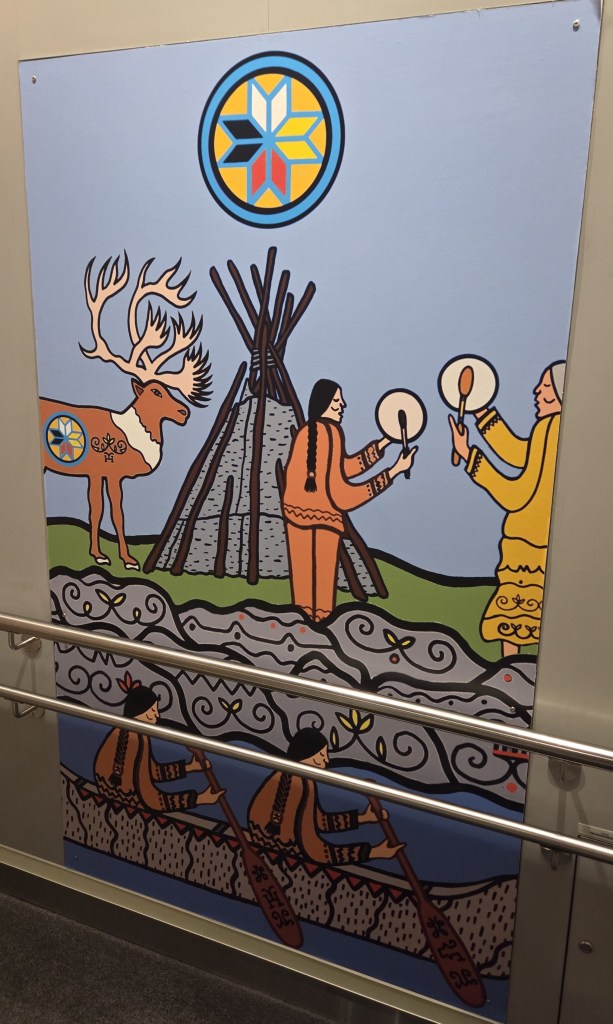
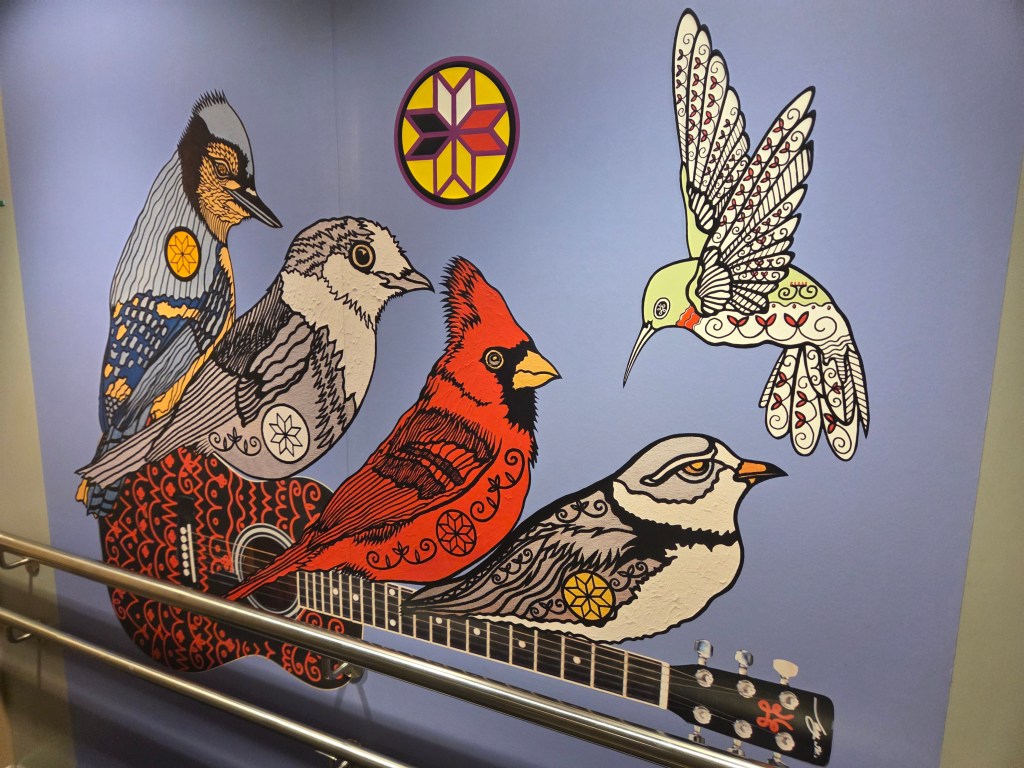
The ferry boat we rode is called Ala’suinu, a Mi’kmaq word meaning “traveler”. There are 8 decks on the ferry, the 7th and 8th are the public ones with restaurant, café, cabins, etc. In the stairwells are photographs and native artwork (pics) adorning some of the walls.
The crossing was no problem at all. There was some swaying of the boat in the waves but no bouncing up and down. Near the end of the trip the wave action pretty much subsided, even.
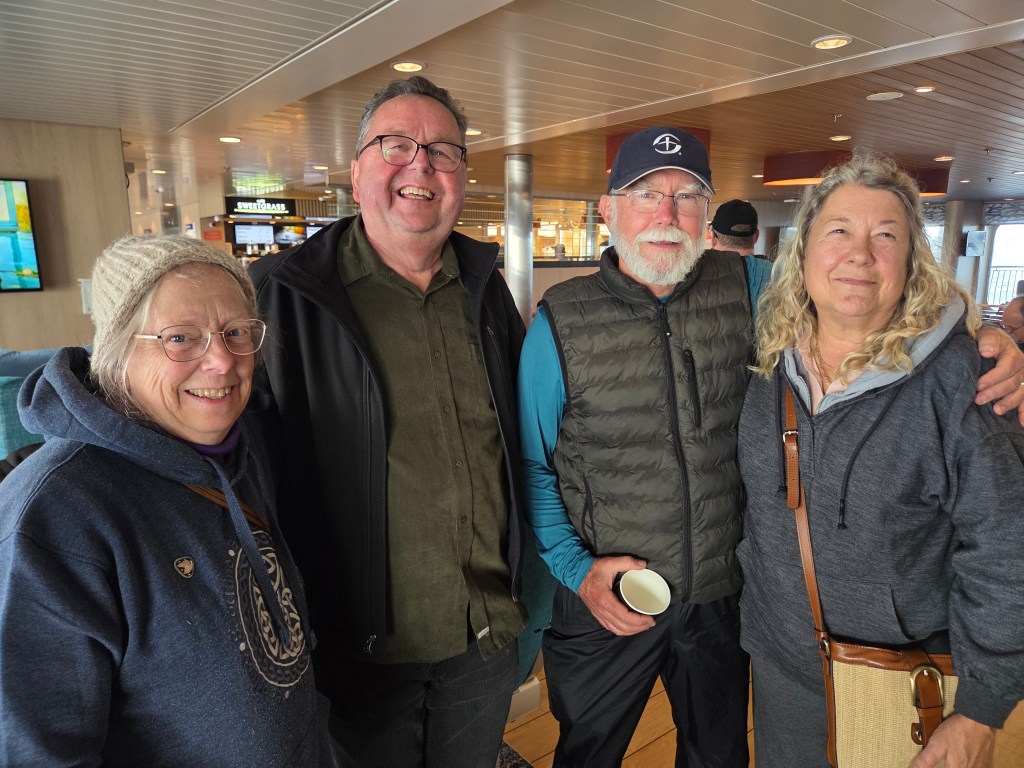
Met and had good conversations with some people on the journey. Scott and Michelle Campbell, (pic) from Florida, were also going to Newfoundland for the first time. They had traveled around our area of New York State seeking out waterfalls. It was interesting to talk with them about some of the local places back home I’m quite familiar with. Also in the conversation was Ed Coleman, a Nova Scotia artist.
Had a long conversation with Tracy, from Toronto. A retired teacher, she is also an inveterate traveler. She has traveled to many countries around the world and has traveled widely through the states. She loves visiting the Finger Lakes area and we, too, talked about places I’m familiar with. Tracy is traveling a bit of the same area of Newfoundland that we are, so may cross paths again sometime down the road.
We had a two-and-a-half hour drive to Corner Brook, where we will stay for the next three nights. The scenery was fabulous along the way, with views of the ocean at times and rocky mountains almost continuously. Had me comparing the views to western US mountain scenery. This surprised me. We didn’t stop though, as we wanted to get to our lodgings before dark.
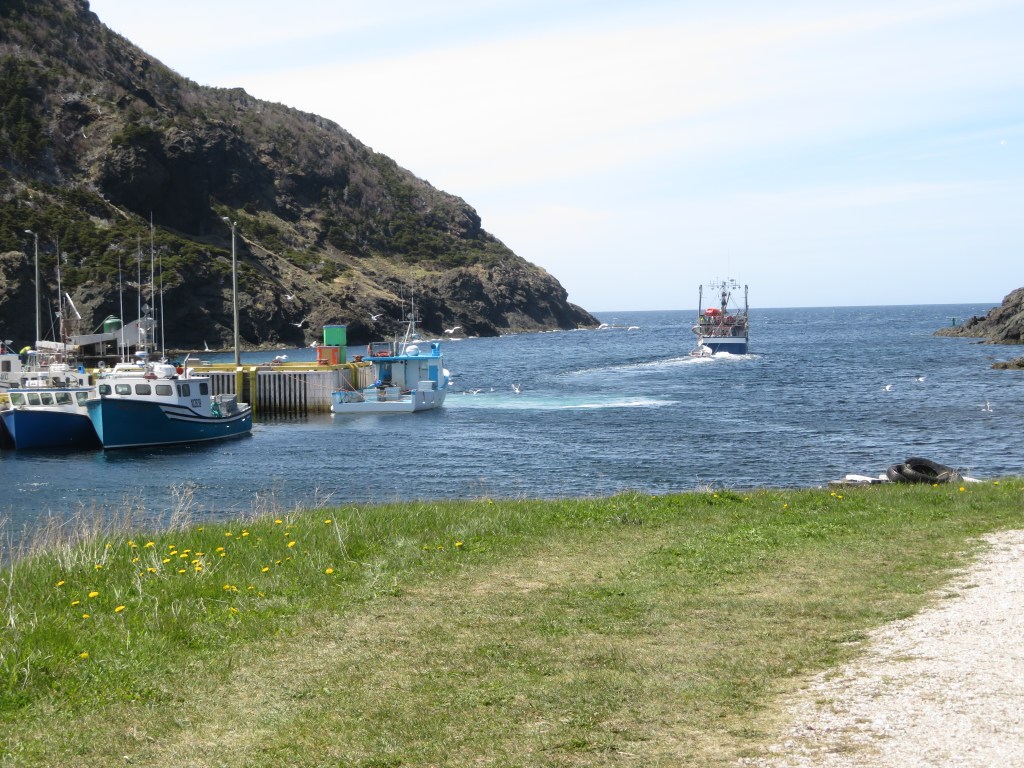
Our “home” for the next three days is right along the Humber River. (pics). These first few hours here on the “The Rock”, an affectionate nickname for Newfoundland, has me excited for what lies ahead!
5/29
Last big day of road traveling before getting to Newfoundland.
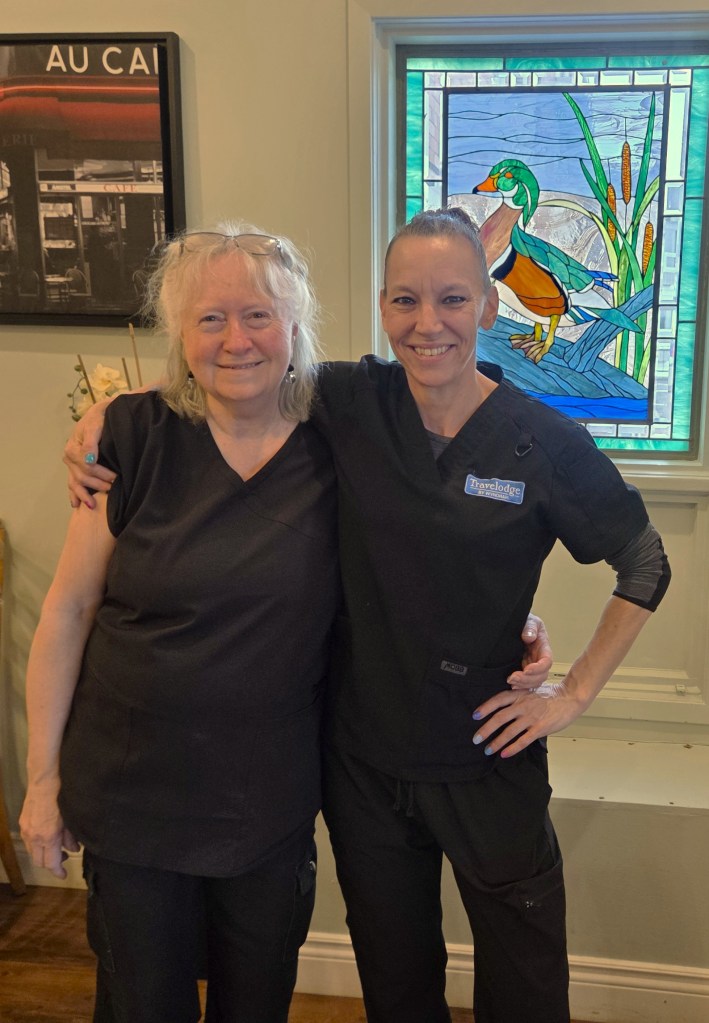
Good talk with Marjorie and Tammy at breakfast in the motel in Amherst. (pic) They gave us a few tips on what to see in our limited time in town. They were both very friendly, with Tammy being more outspoken and Marjorie a bit quieter. Tammy suggested we stop at a nearby Bird Sanctuary, which we did. She mentioned about chickadees, squirrels and chipmunks would eat food from your hand. That made me think of my “Seeing Eye to Eye with a Chickadee” poem, which I recited for them. Marjorie suggested checking out downtown buildings and houses, which we did. When leaving we each hugged and Marjorie made the comment, “It’s not often you get to meet a poet.”
We took a short hike at the bird sanctuary in cool, misty conditions. No close encounters with wildlife, but a pleasant walk and a few flowers, including some very heavily blossom-laden apple trees. Also, rhodora in bloom. (pic), a flower I know from Acadia.
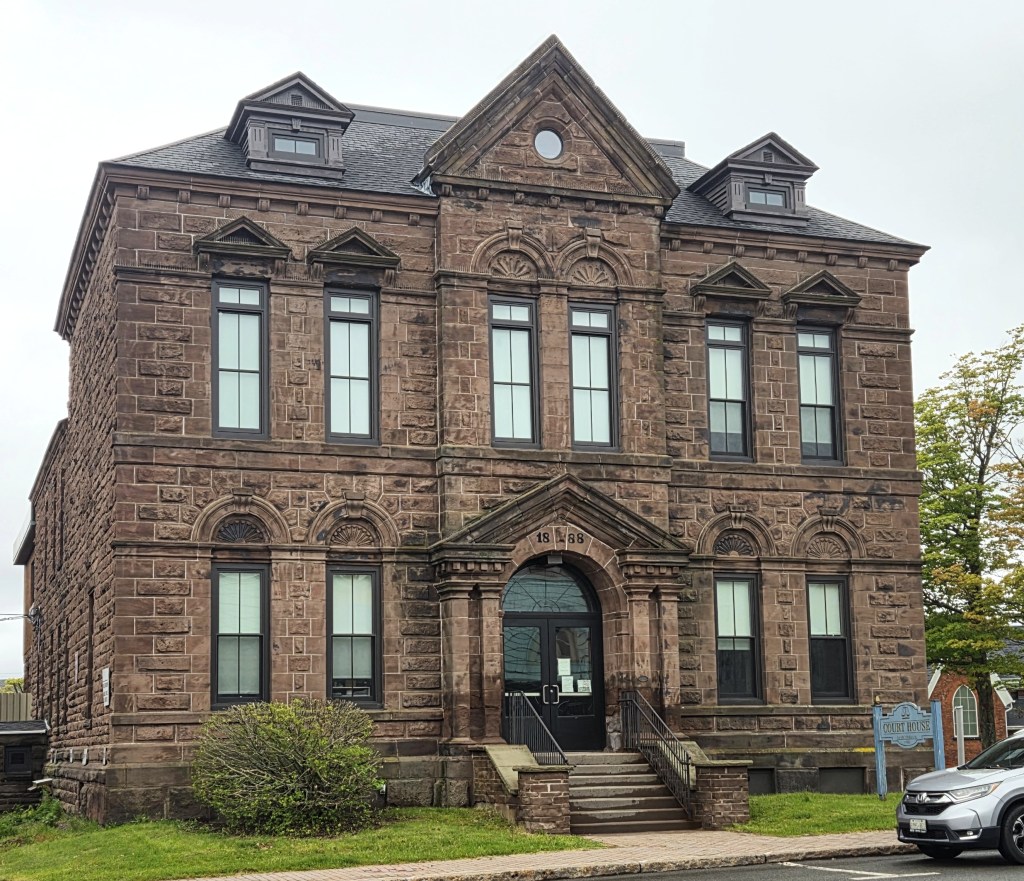
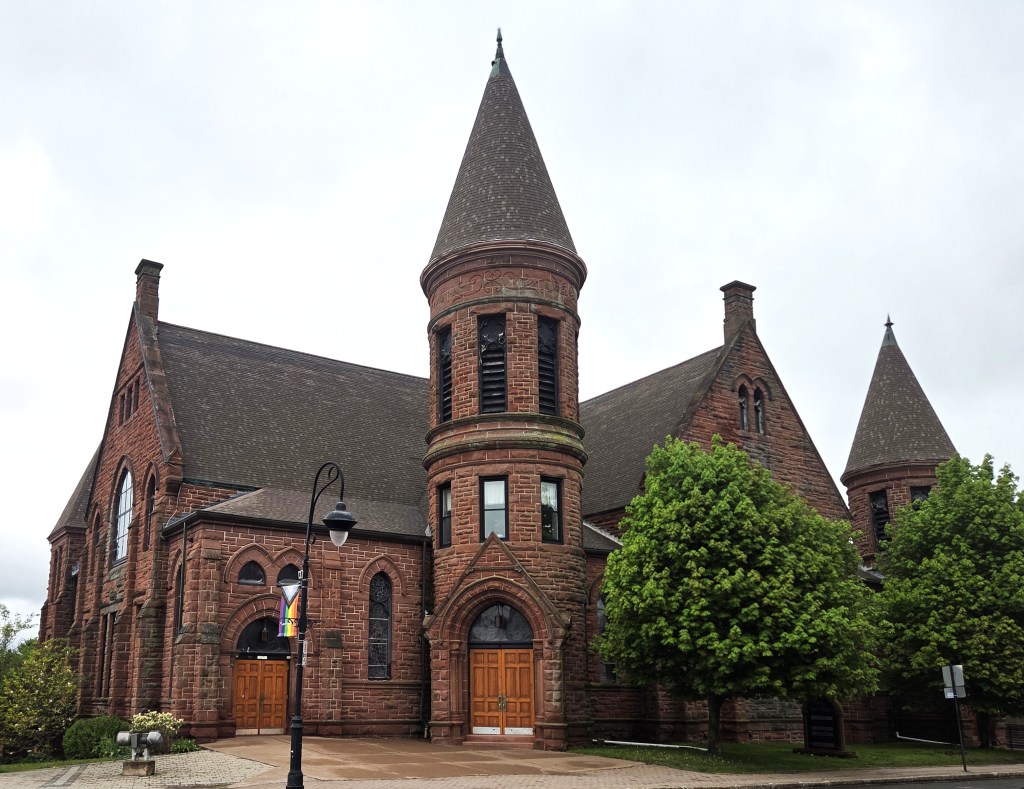
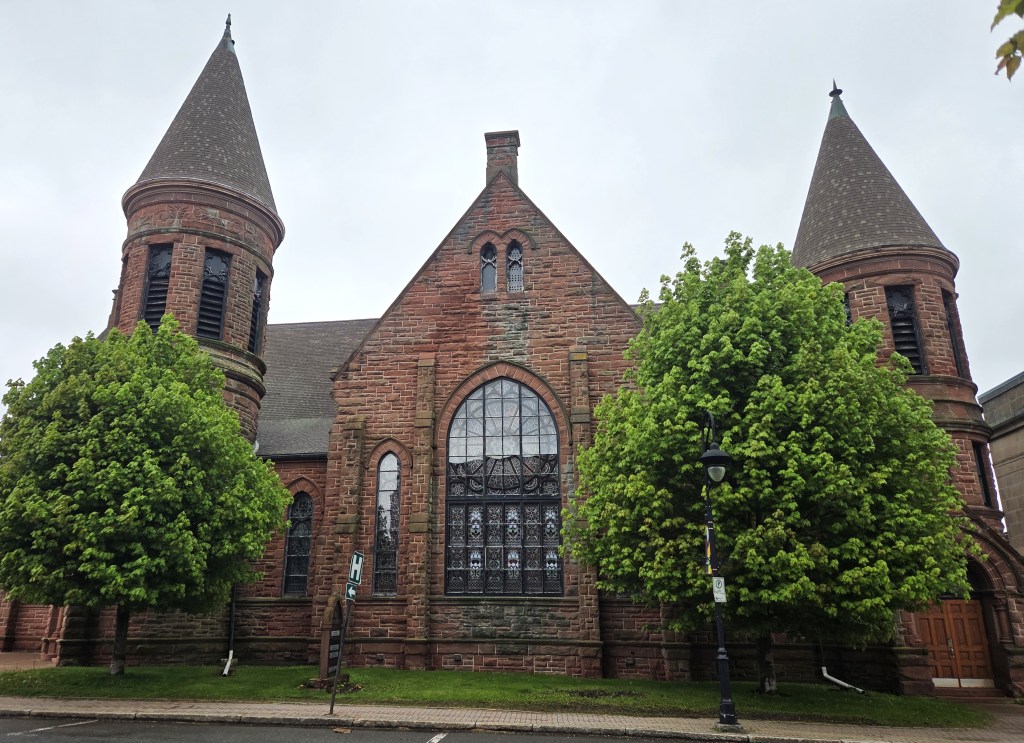
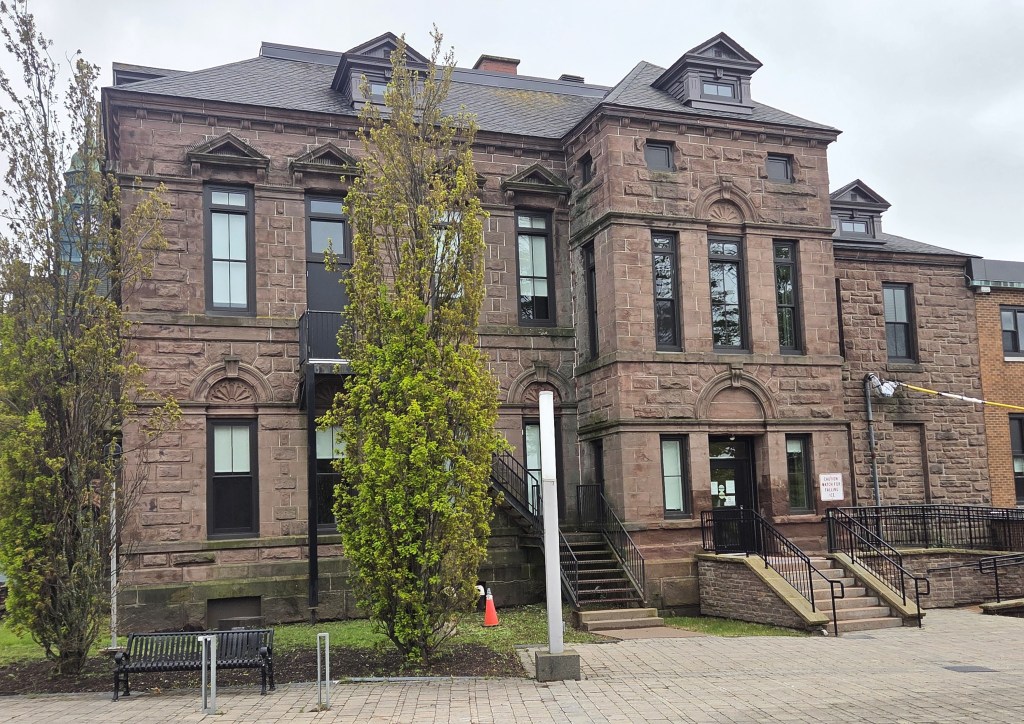
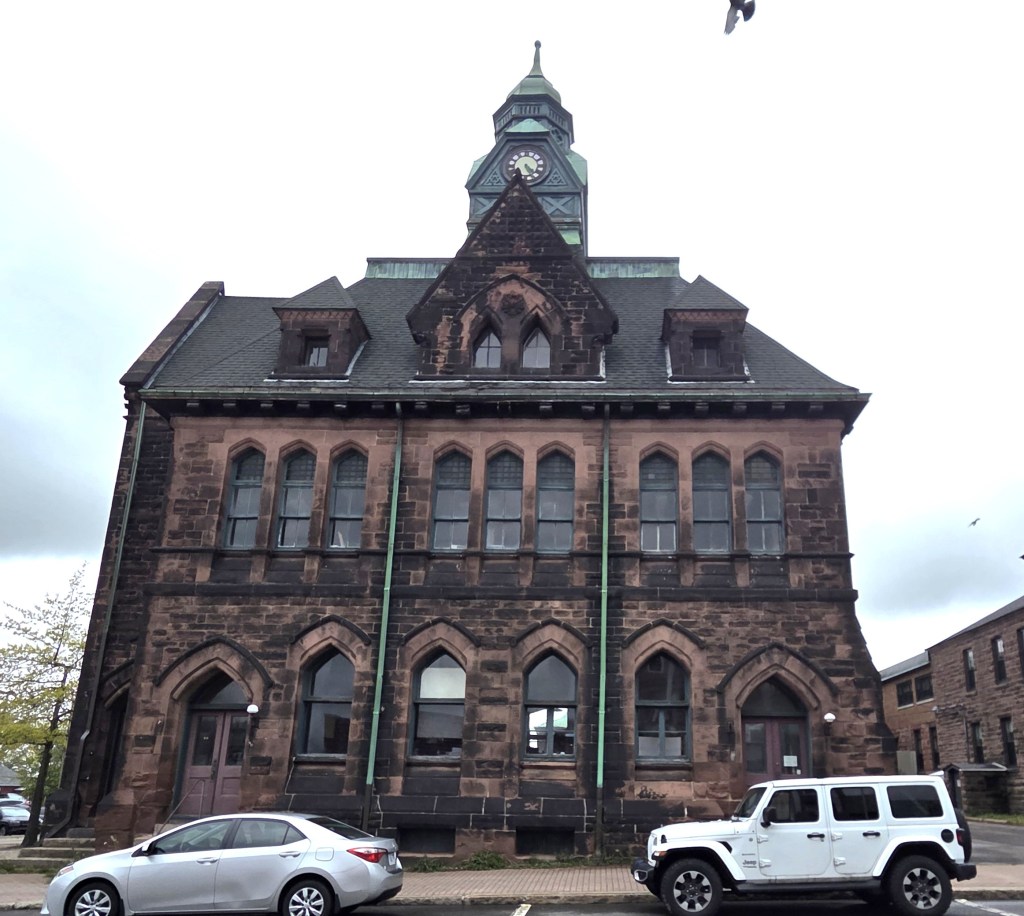
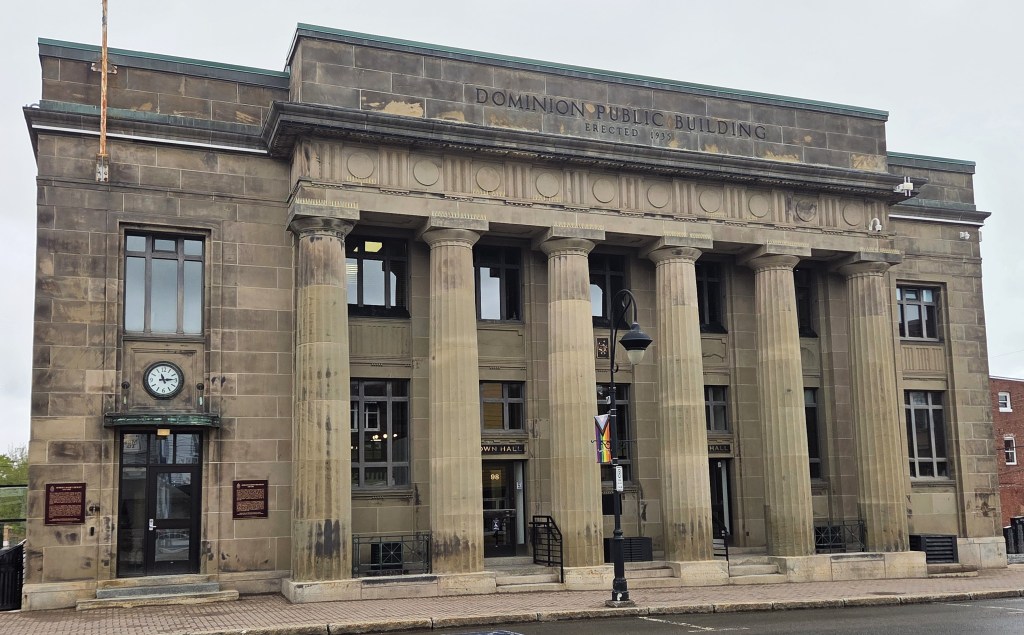
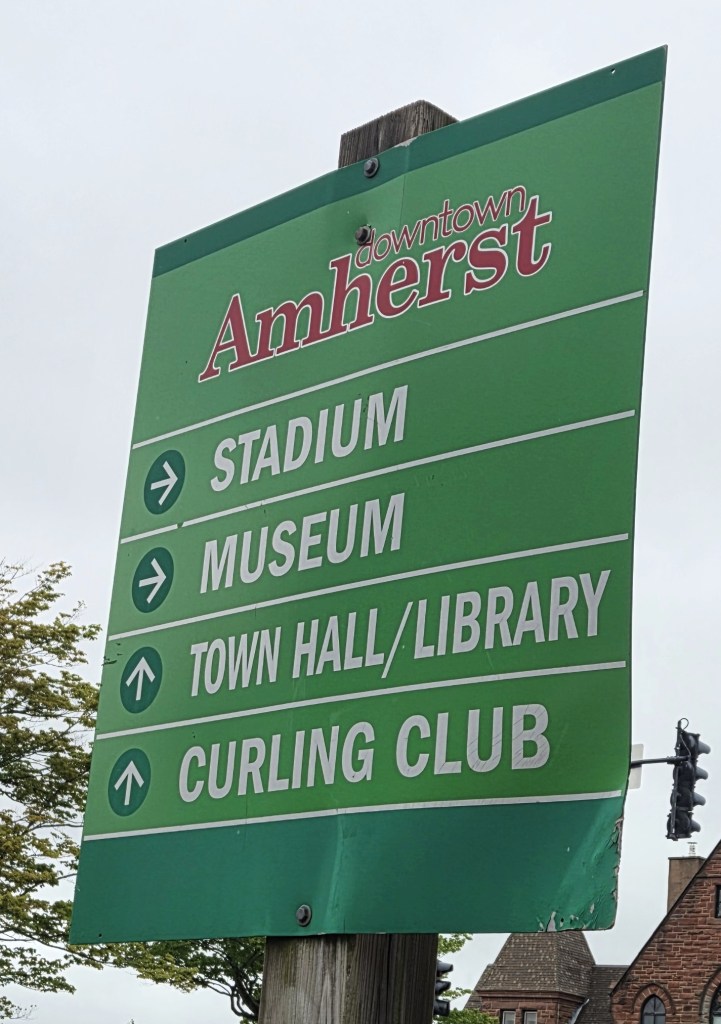
Afterwards we headed downtown and had a nice stroll on Amherst’s Main street, Victoria. A number of impressive brownstone buildings (pics) and a very blocky official building built in the 1930s.
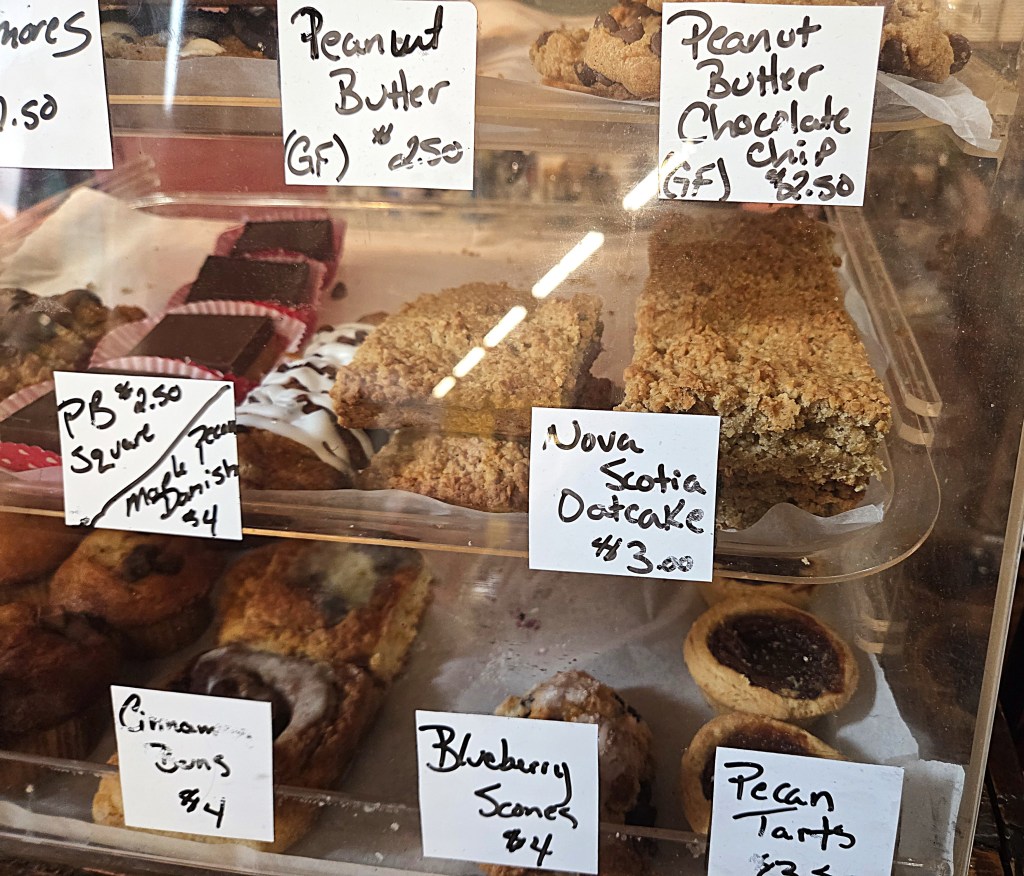
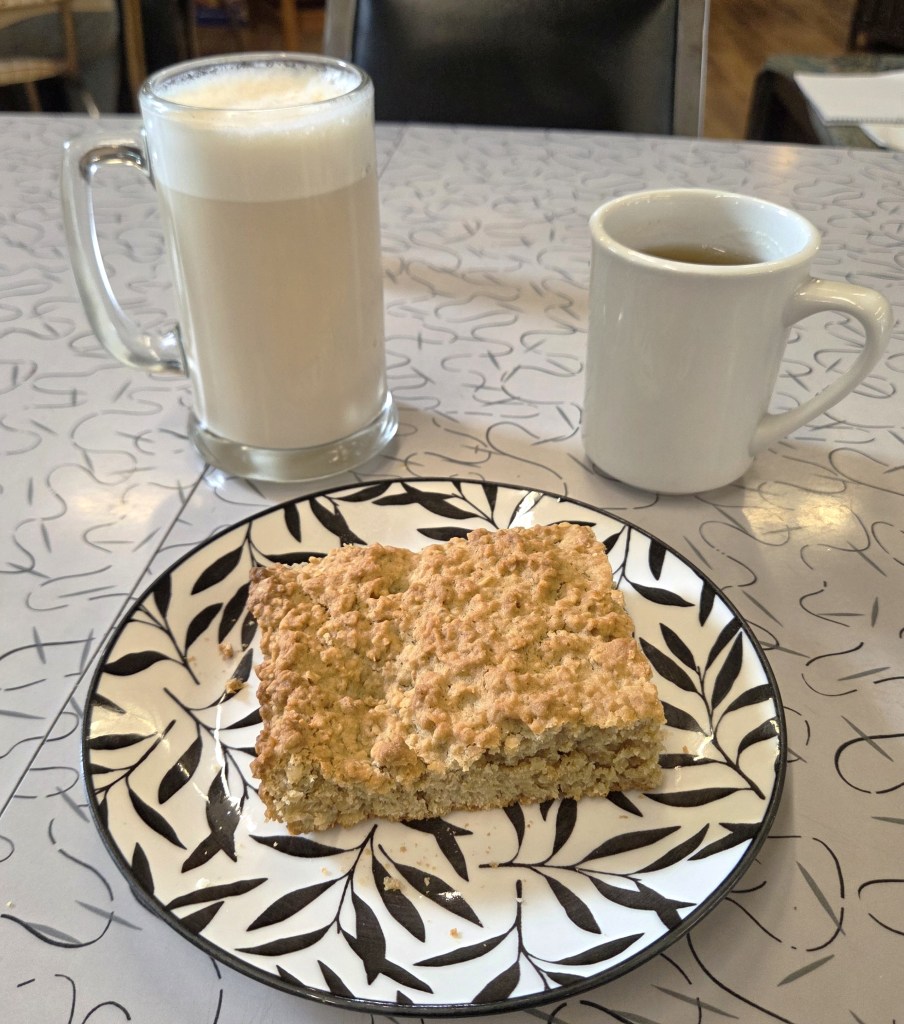
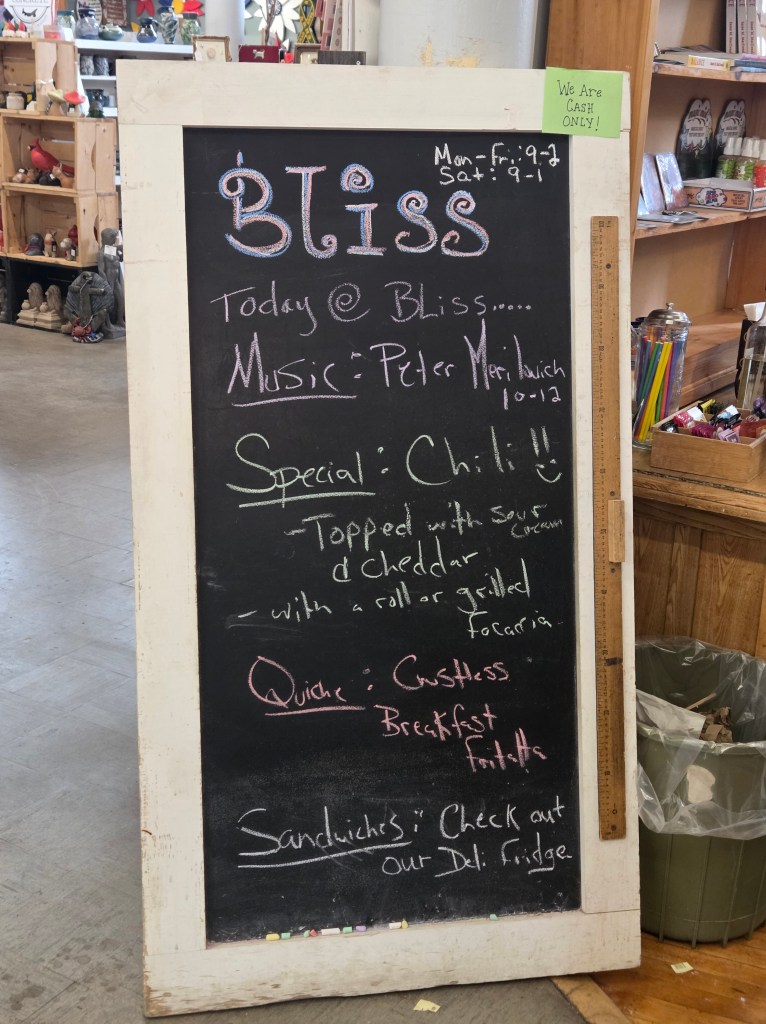
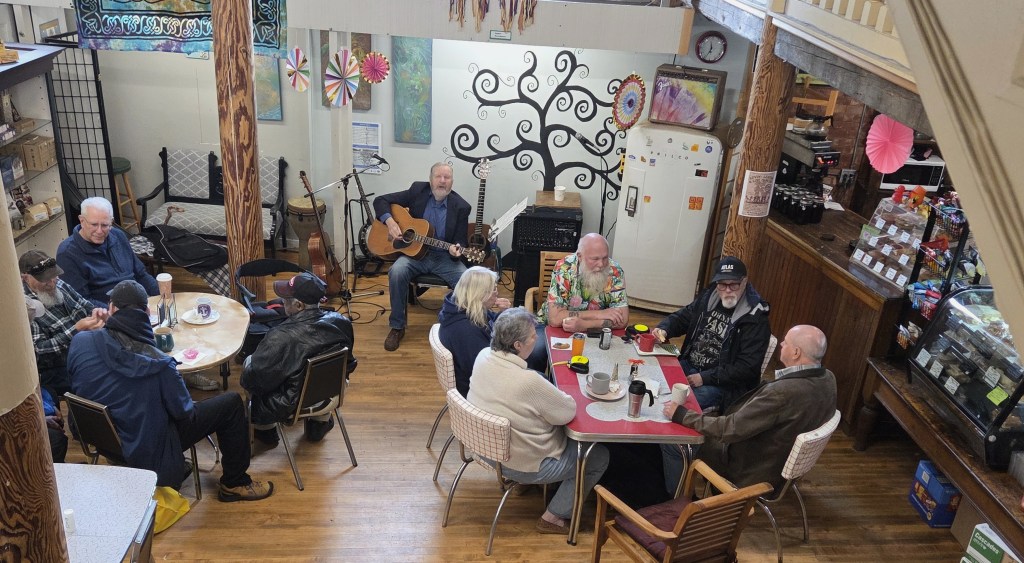
We walked into a big brownstone Victorian building that at one time was a huge department store. Inside were various open air shops and the Bliss Café. A folk singer was playing live so we decided to grab a beverage and take in the scene for a little bit. (pics) Charlene, the owner, has been running the café for 10 years, along with a shop, Crystals and Mystical Gifts. She said they made it through covid and Trump, so far.
We were glad that Marjorie and Tammy gave us those tips of where to go. Even though we had just a short time in Amherst before getting out on the road, it gave us a better sense of what the area is like.
After Amherst we pretty much just motored on down the road to North Sydney where we were putting in for the night before catching the ferry next morning to Newfoundland.
Along the way, when passing over a height of land on Cape Breton there were patches of snow still remaining. That led to my Daily Spontaneous Poem at night:
Daily Spontaneous Poem #4146 (5/29/2026)
along side of road
on height of land
in Cape Breton
snow still lingered
nearly June
—
how some
feelings linger
way beyond
what one
would have thought
So, three days of traveling the long highway to get to the point of finally getting to Newfoundland! It’s a seven hour Ferry ride and then we have two and a half hour drive to get to where we will be staying the next three days. We’re almost there!
(Click on thumbnail for larger picture.)
5/28
A second day of mostly being on the road. This time from York, ME to Amherst, NS.
Again, the first part of the day’s travels was on familiar, often-traveled-over-the-years roads: I-95, I-295, I-95 again and then I-395 to Brewer, ME. These are the roads often traversed on the annual Acadia National Park trek.
There were three toll booths along the interstate route. We don’t have ezpass, so pay cash. The first toll was $4. Carolyn was driving. When I handed her a $5 bill I told her to tell the toll keeper to keep the change. He was very surprised and thankful. The next two tolls were $1 each, so I gave Carolyn two dollar bills each time. The first toll keeper, a young woman, said “It’s only $1.” When Carolyn said the other dollar was for her she smiled. The next toll keeper was an older woman. She again said the toll was only a dollar. When Carolyn said the other one was for you, she said in a surprised tone, “Really. Oh, thank you!” Toll keeper people are becoming a rare breed.
From Brewer though, the route took us along Maine Route 9, locally known as “The Airline.” The moniker dates back to the 1850s and is an interesting story. I won’t go into it now, but here’s a link for anyone interested in delving into the story:
The Airline connects Brewer to Calais and I have traveled on it a few times over the years. One memorable trip was the first time, back in 1972. Terry and I were hitchhiking to Nova Scotia and caught a ride from an Allied Moving truck in Brewer that was going the length of the Airline to Calais. When we got to Calais, his destination, he offered us to stay in “Allied Motel” by which he meant the truck trailer. We took him up on the offer and then in the morning he bought us breakfast and then we went on our way into Canada. When I visited Terry in Sweden two years ago, she admitted that when she heard the driver close and latch the trailer doors behind us she felt some trepidation. I didn’t feel that at the time, but could understand her feeling that way.
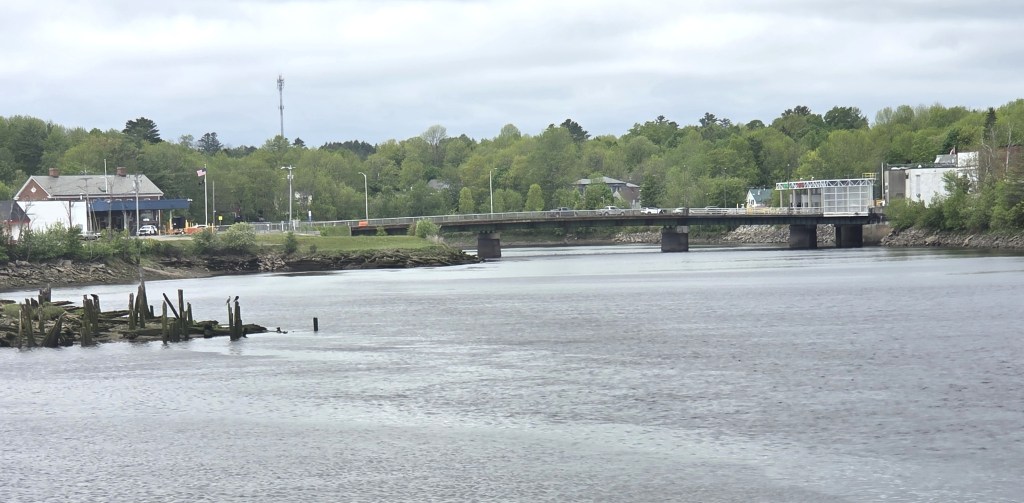
Calais is a border city along the St. Croix River. Across the river is the town of St. Stephen in the Canadian province of New Brunswick. The border crossing is a small bridge spanning the river. (pic)
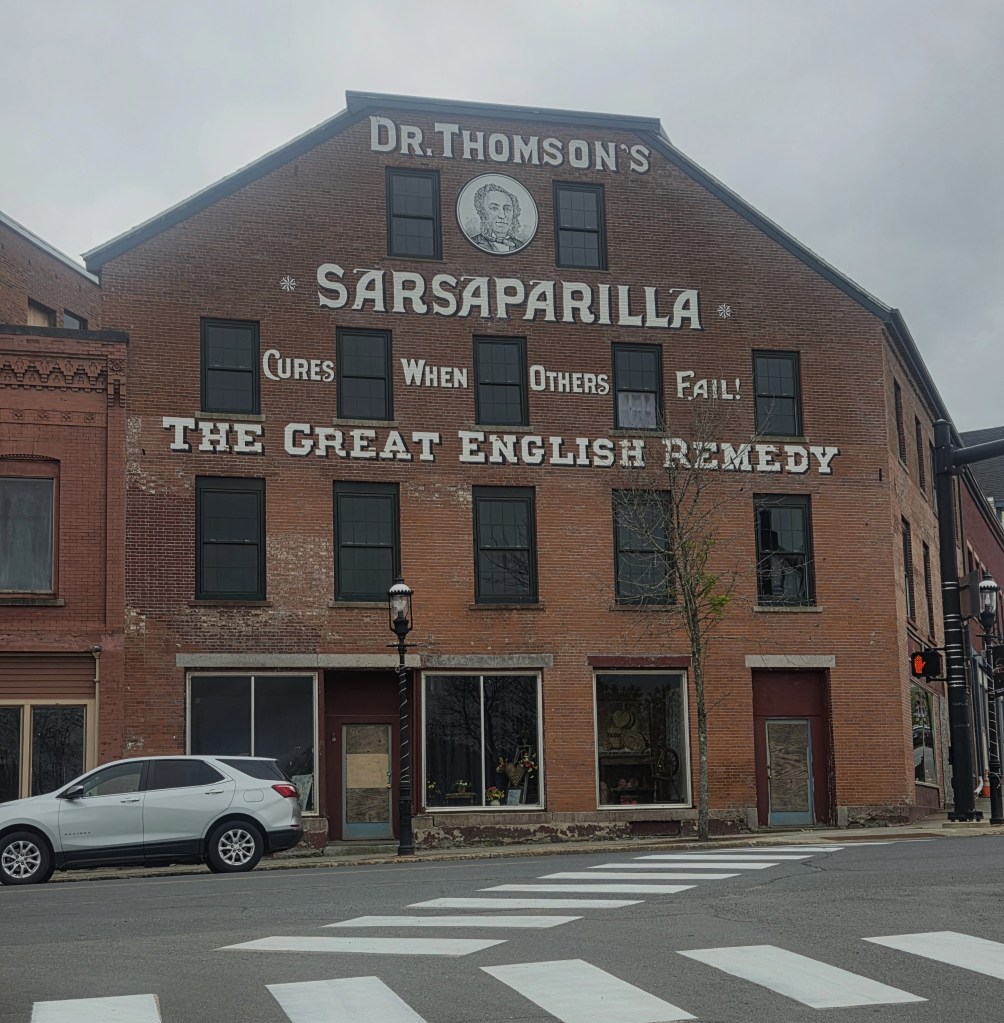
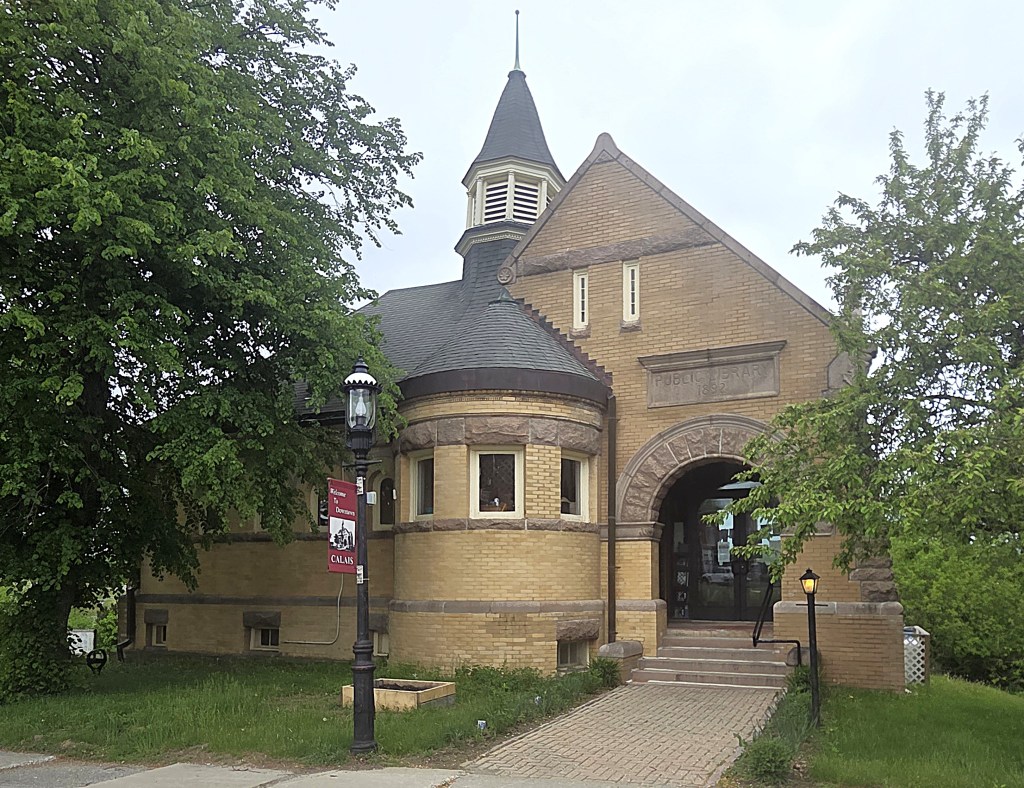
Two interesting buildings in Calais are the “Sarsaparilla” building and the Calais Free Library.
The former was built in 1847 and later became famous for the production of Dr. Thomson’s Medicinal Tonics in the latter part of the 19th Century. (pic) Again, I won’t go into it all now, but here’s a link if you want to do more delving:
The Calais Free Library is a Richardsonian Romanesque building built in 1893 and is listed on the National Register of Historic Places. (pic)Thirty years ago I facilitated a poetry workshop there. An elderly woman in her early 80s told me that she used to write poetry but then a college professor criticized her poems and she stopped writing. She came to the workshop because, as she said, “It’s time I started to write poetry again!”
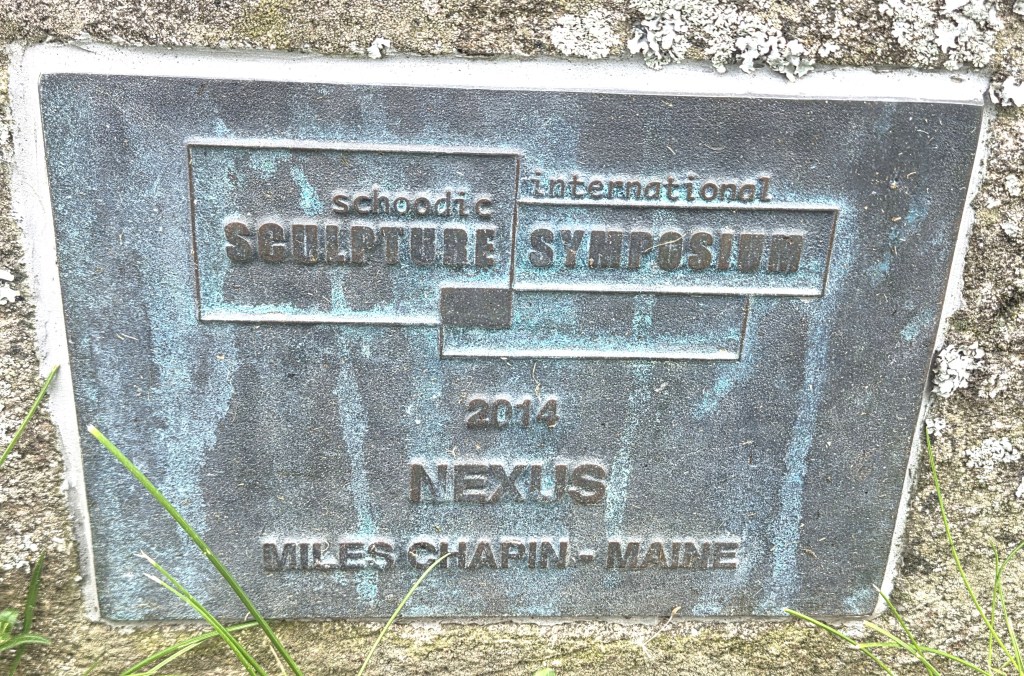
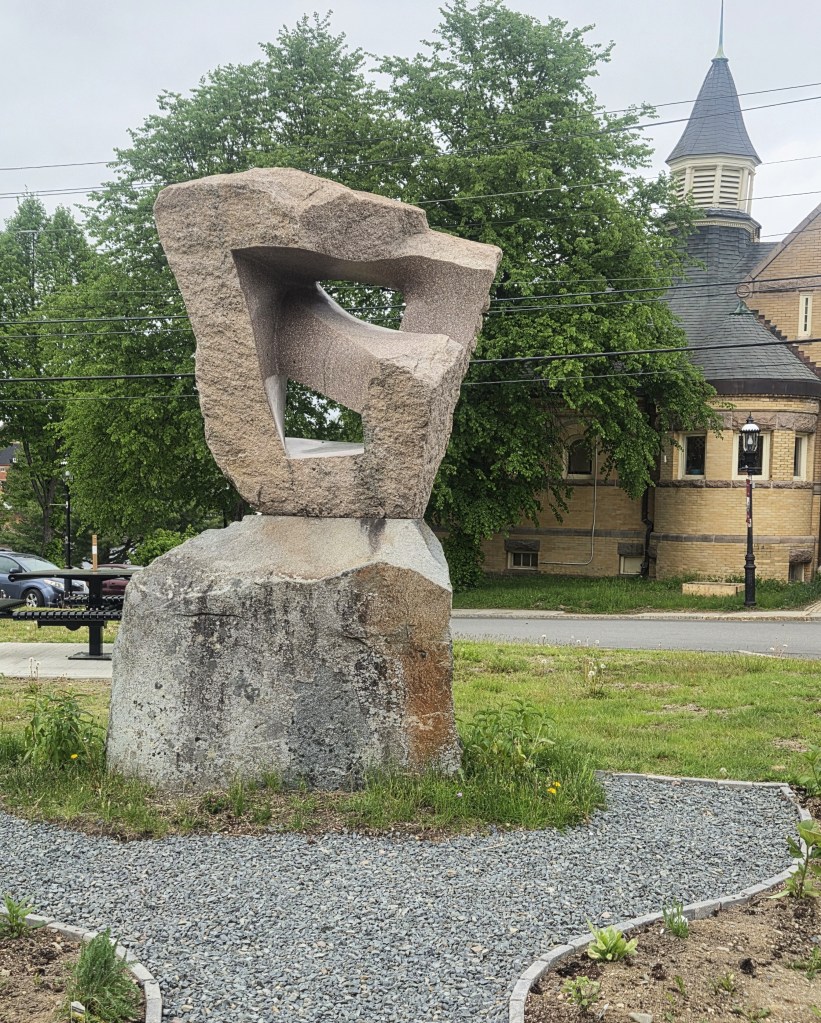
Across from the library is a sculpture that was created in 2014 at the Schoodic International Sculpture Symposium. (Pics)
Crossing the border was super easy, The woman custom’s agent was very pleasant asked if we had been to Newfoundland before. I said no, first visit. She said, “Have a wonderful time” as we drove away.
The rest of the day was spent driving on to Amherst, NB where we have reservations at a motel. A light rain fell at times and we didn’t make any stops. But, I did reminisce to myself the other journeys on these roads, starting with hitchhiking with terry in 1972 and two trips to Grand Manan Island in the Bay of Fundy.
Tomorrow we head up to North Sydney where we will catch the ferry to Newfoundland. Some of tomorrow’s journey will be along where Terry and I hitchhiked. After that, it will be all new roads for me.
(Click on thumbnail for larger picture.)
5/27
After months of planning, departure day finally arrived. The last few days before have been hectic, getting all those things done that you feel needed to get done before leaving on a month-long journey. Amazingly, all of that was actually completed!
Morning presented a colorful pre-dawn sky on Wheeler Hill. (pic) A nice going away from home scene to remember.
This was a day of mostly moving down the road, as will be the first three days of the journey as we make our way to North Sydney, NS and the ferry ride to Newfoundland. This was also moving down the road on familiar roads driven many, many times previously. Interstates from home to Troy, NY. I-86, I-88, I-90, I-87. Then on regular roads to Bennington, VT for a short visit with friend and poet Charlie Rossiter.
Always good to see Charlie in the midst of traveling to somewhere else. As I now often go through Bennington when heading to the northeast, I often used to visit him when traveling west when he lived in Oak Park, IL.
Before stopping at Charlie’s we stopped at Robert Frost’s gravesite in Bennington. He, and his family, are buried in the Old Bennington Cemetery by the Old First Church. I’ve stopped there many times over the years. Frost was the first of my poetic mentor’s when I began writing poetry. (pics)
After a short visit with Charlie we motored on to York, Maine, the first night’s layover. Route 9 out of Bennington takes you through the lower Green Mountains. A scenic stopover along the way is Hogback Mountain lookout, which affords an inspiring view of the forested covered mountains. (pic) There is also a tourist store there, and more recently, a distillery. We didn’t stop at the distillery this time, but did stop at the store. Mark O’Brien mentioned on my weekly Tuesday Zoom the night before that they had wonderful maple ice cream there. So, of course, Carolyn had to try some. (pic) I did too, though I don’t have ice cream very often. She thought it was very good and I thought it was just ok. Not as mapley as I thought it would be.
Before settling in for the night in York, ME we took a walk in the Old Burial Grounds Cemetery. I always find it fascinating to view the centuries old tombstones there. One I always stop to look at when there: the Elder Joseph Sayward one. (pic) The “Death’s Head” at the top and the simplicity of the wording, with no dates inscribed on the slate stone, have always intrigued me. I have since learned that he lived from 1684 – 1741.
The cemetery grounds were dotted with patches of small flowers, Azure Bluets, (pic) that were actually white. Another name for them is “Quaker Ladies”.
We then took a short stroll by the waterfront before dinner. The first of many days over the next month to be spent near salt water. The last picture is of a clump of Dames Rocket flowers, that bracketed our day in pink.
After dinner we settled in for the night at the motel. An enjoyable first day on the road. Now, on to Amherst, NS tomorrow!
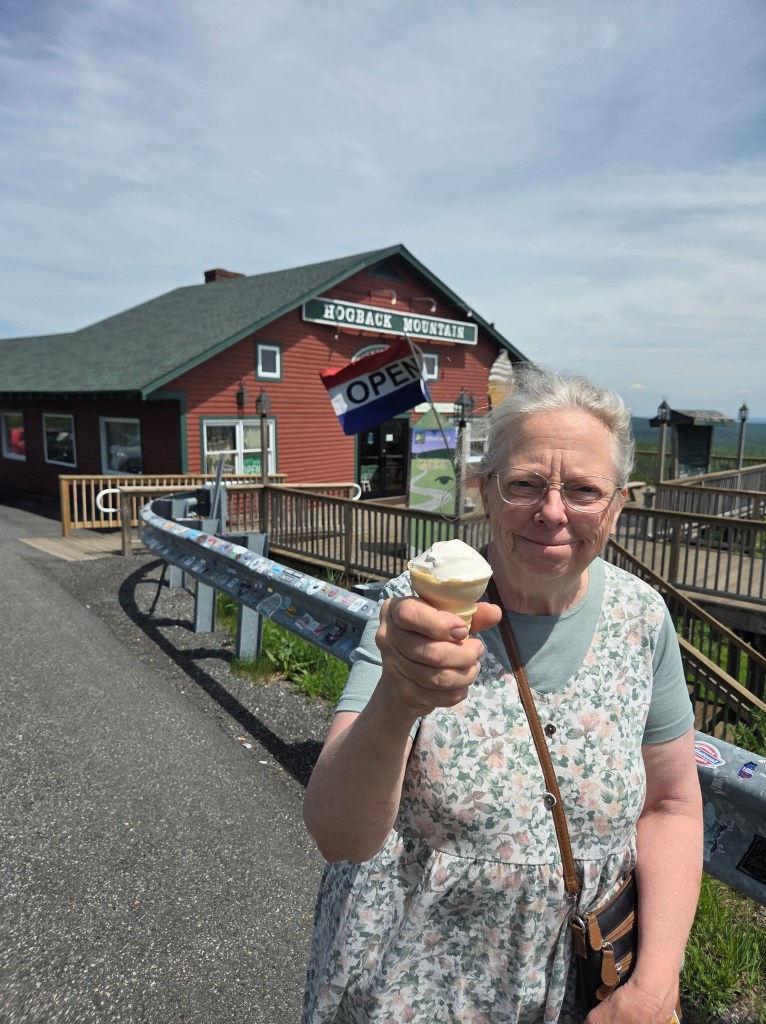
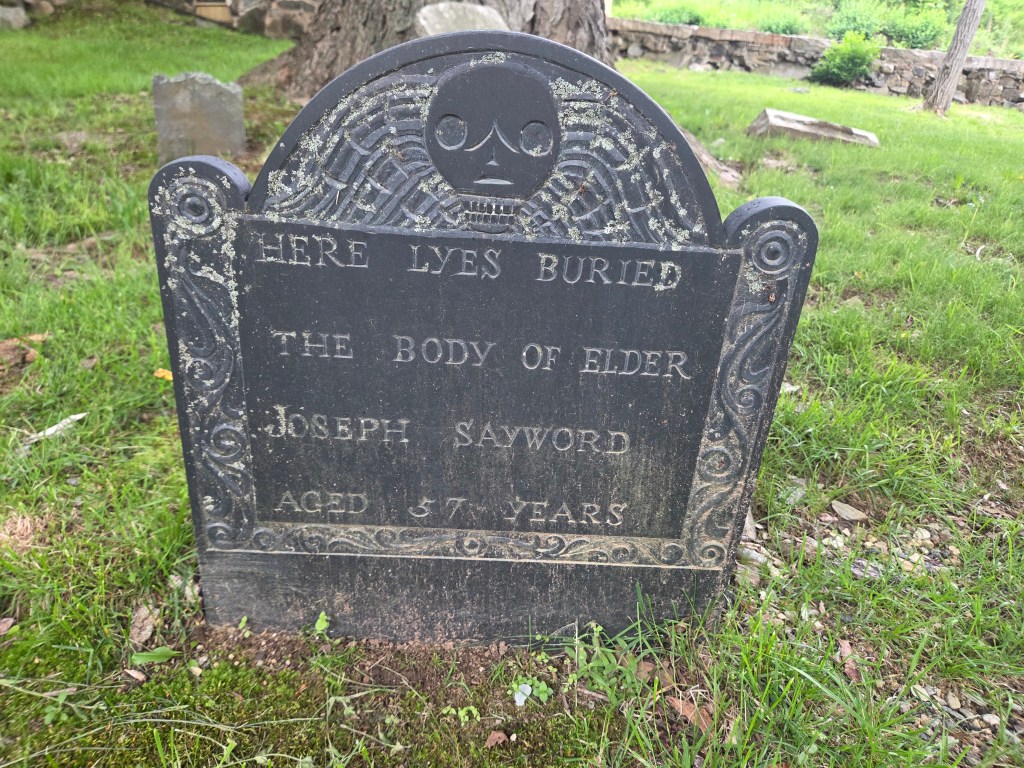
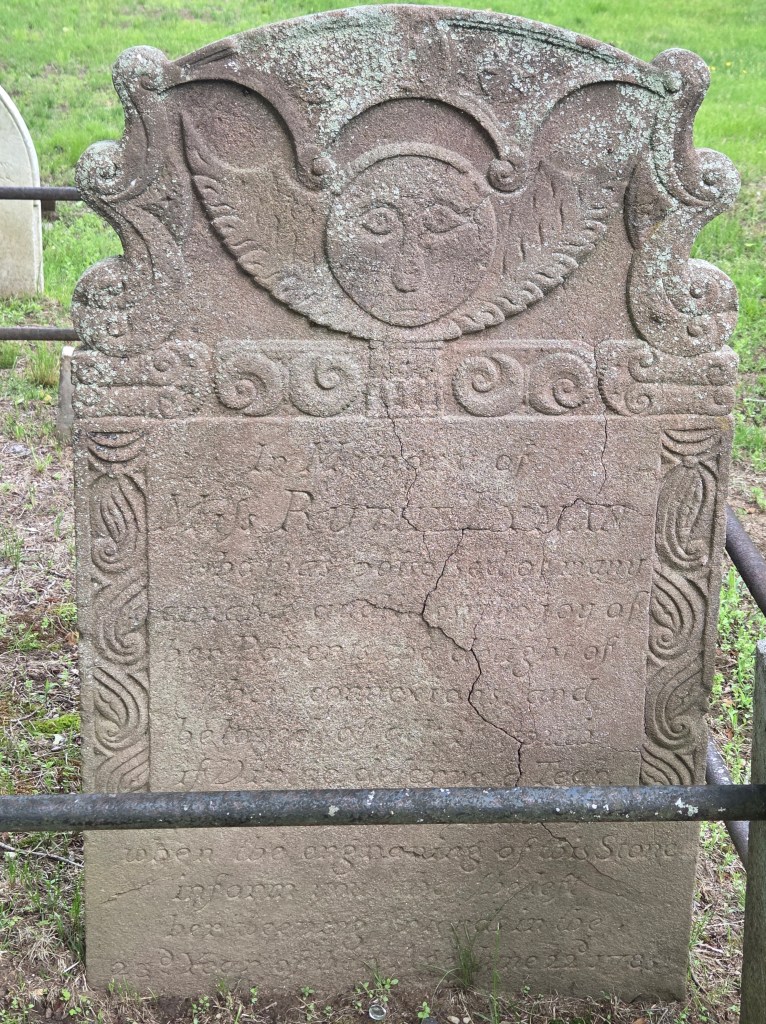
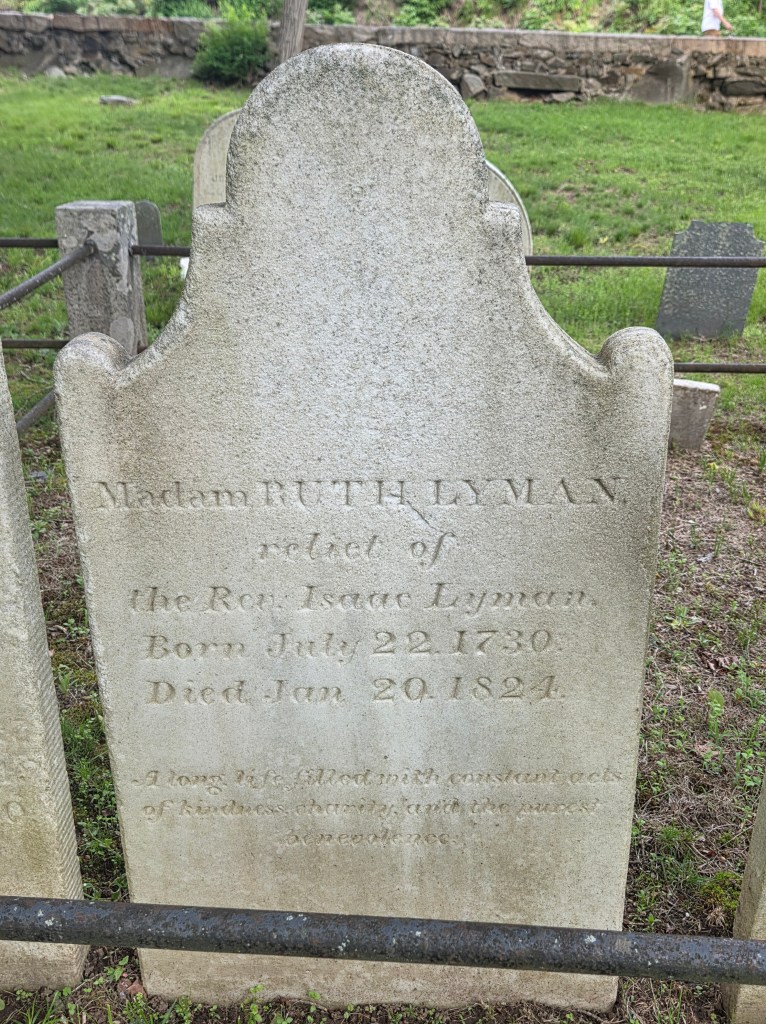
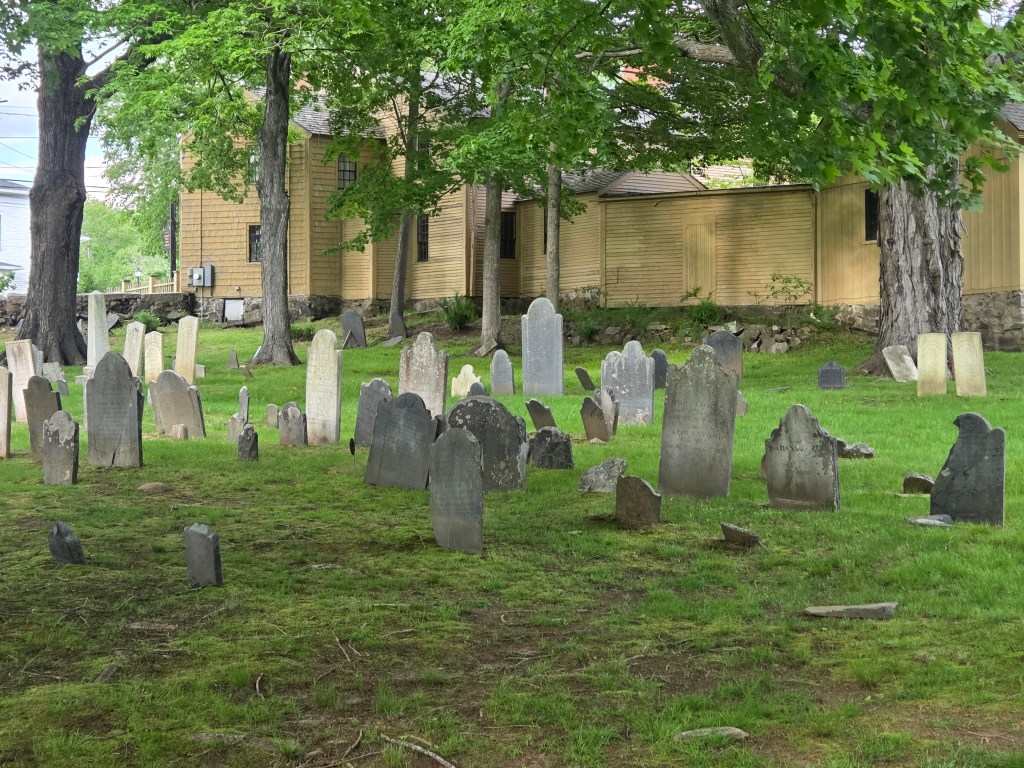
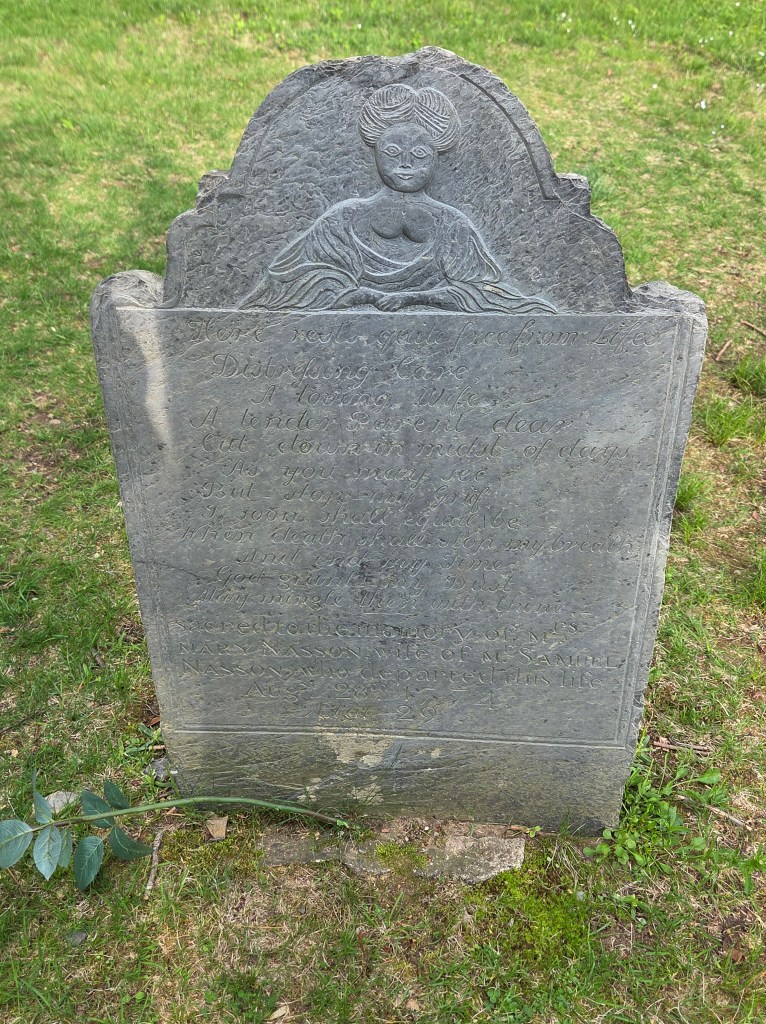
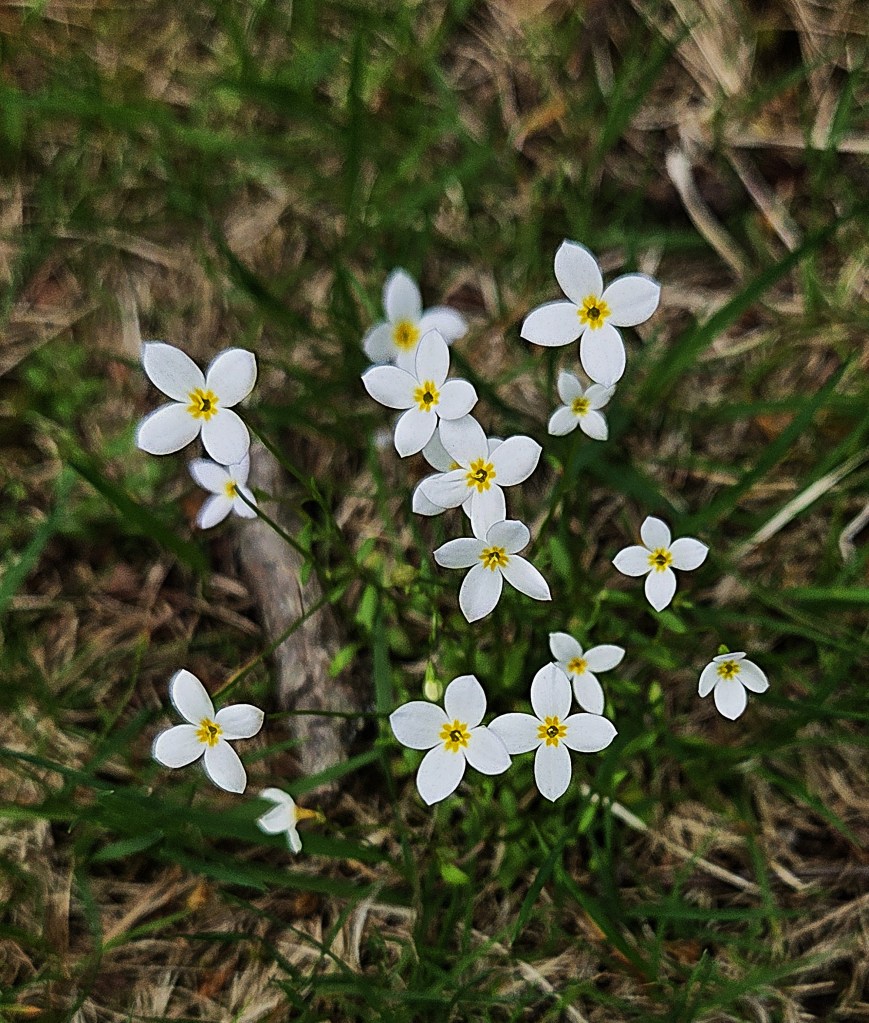
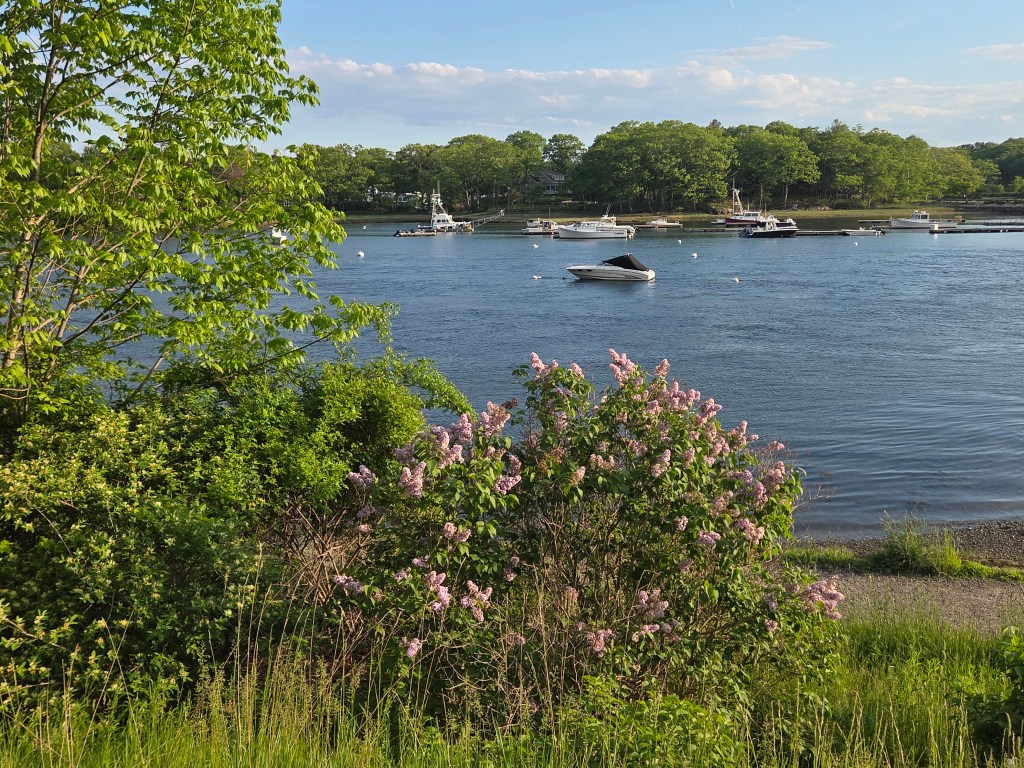
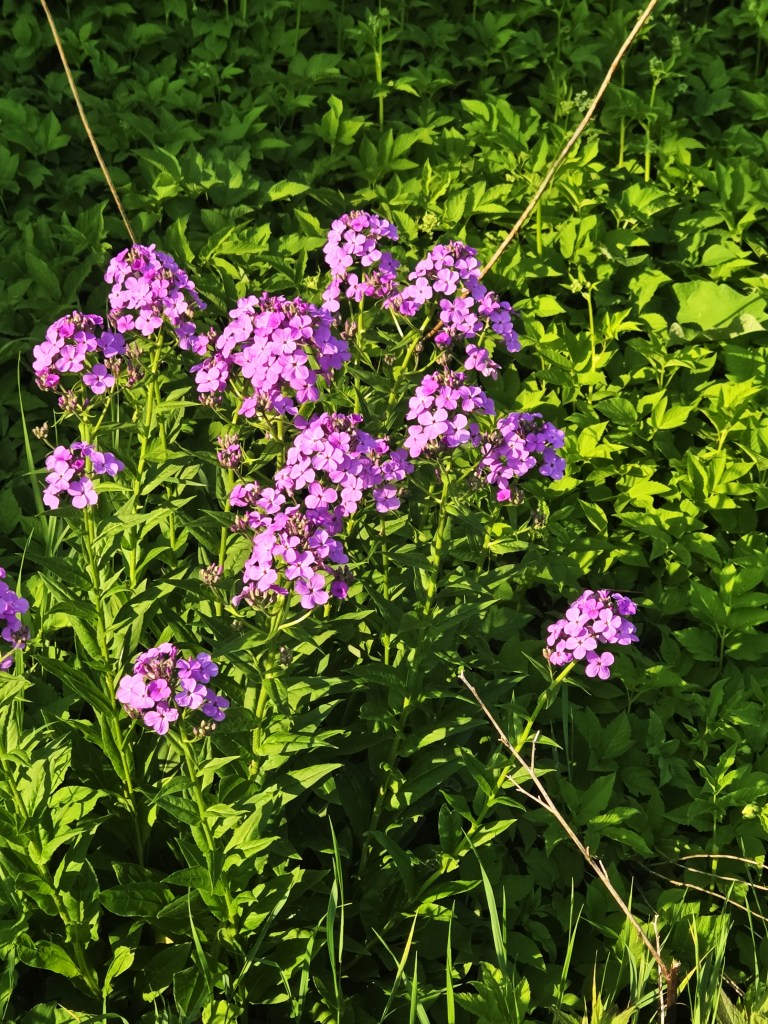


 FootHills Publishing/Michael Czarnecki
Leave a comment